Karakalpakstan – Ancient and Modern

Where the heck is Karakalpakstan, you ask? We had the same question. It’s a theoretically autonomous region of Uzbekistan. As usual, the history of the region is kind of complicated. (Come to think of it, most history everywhere is kind of complicated.)
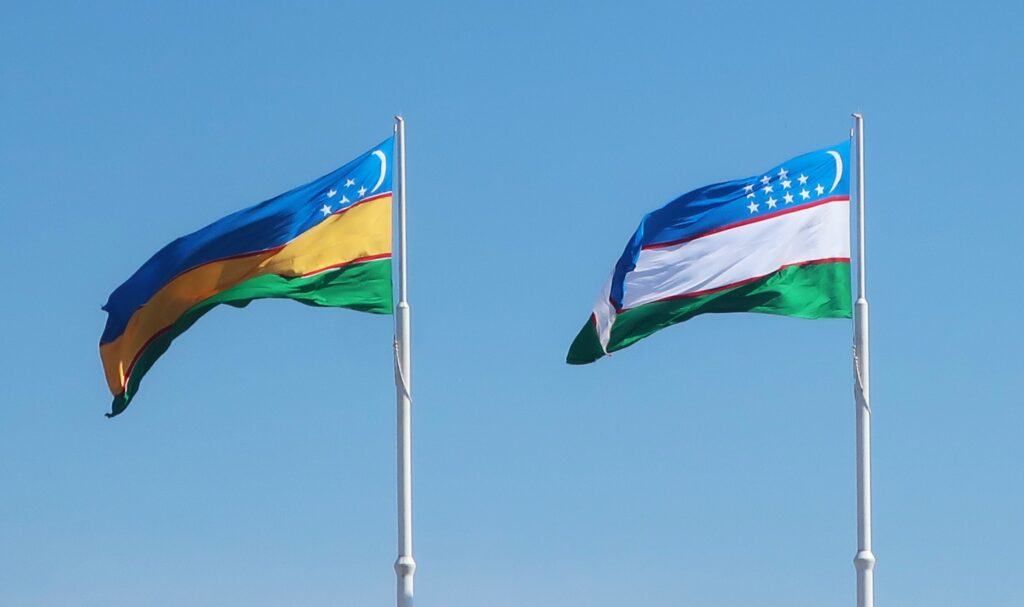
Karakalpakstan flag, left, and Uzbekistan flag, right

We hire a car and driver to take us from Khiva to Nukus, a distance of about 270 KMs. We make four stops to visit some archaeological sites.

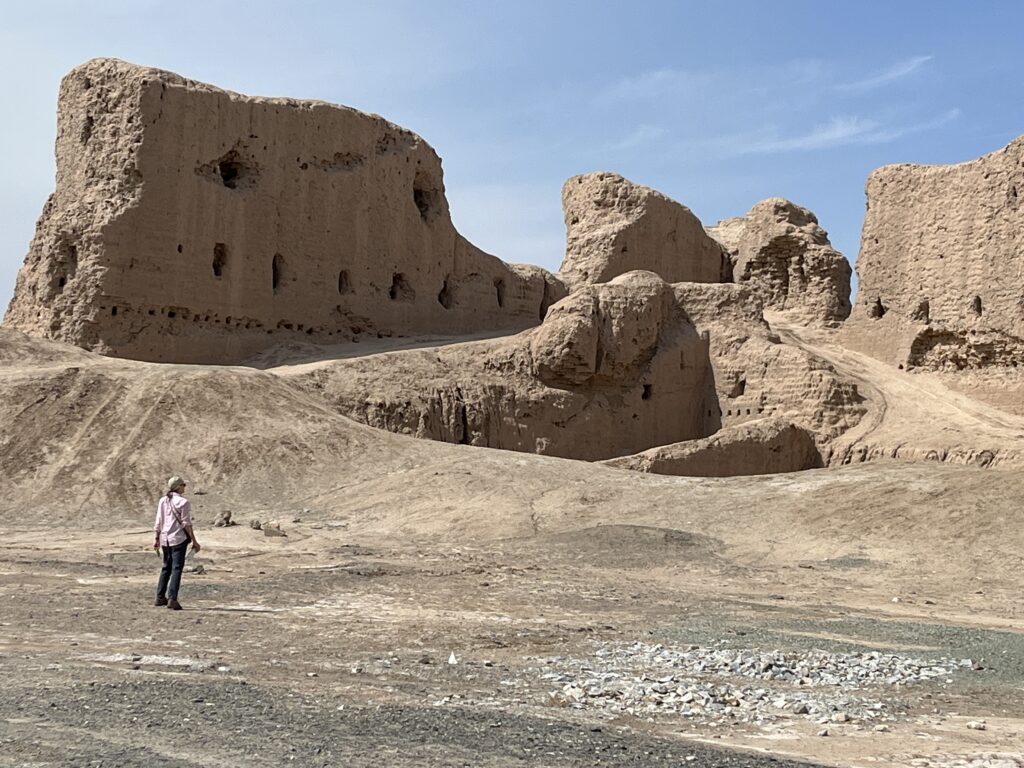
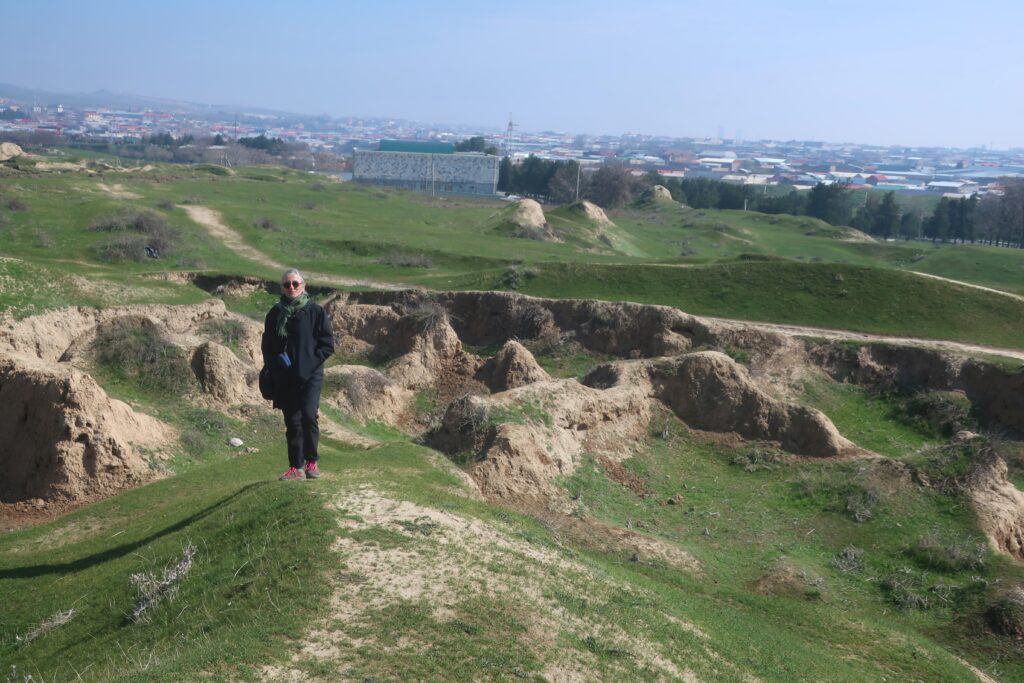
Our first stop, by special request is the Koi Krylgan Kala.
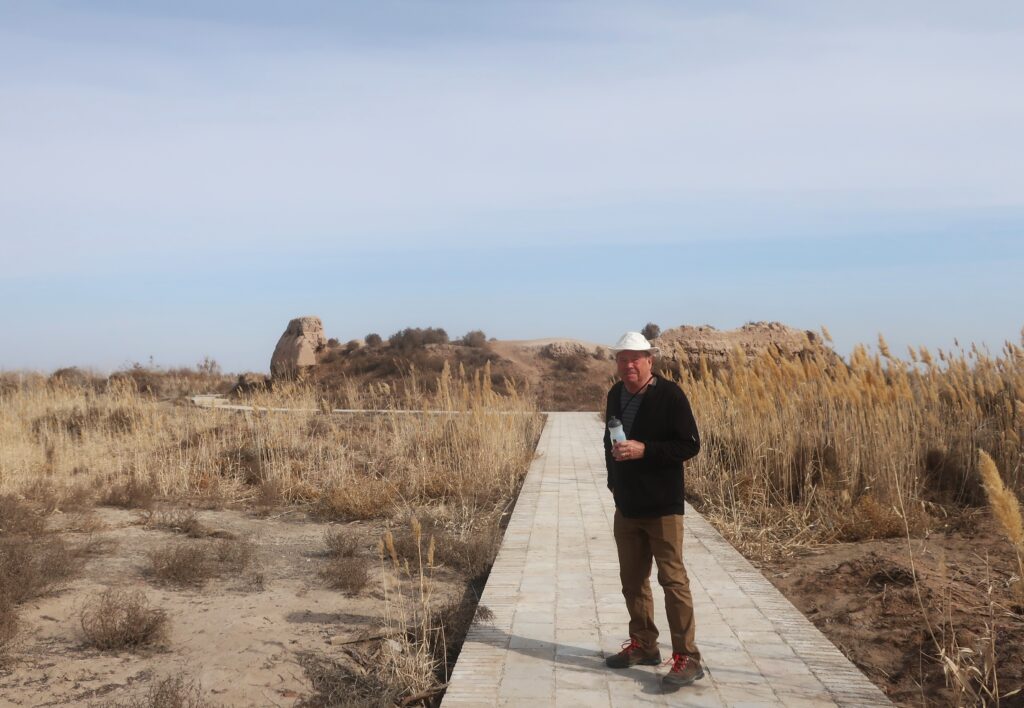
Koi Krylgan Kala means ‘fortress of the dead sheep’

From the first time we see it in Uzbek tourist material, we wanted to visit. Mainly because of the dramatic aerial views taken when the foundations were first exposed.
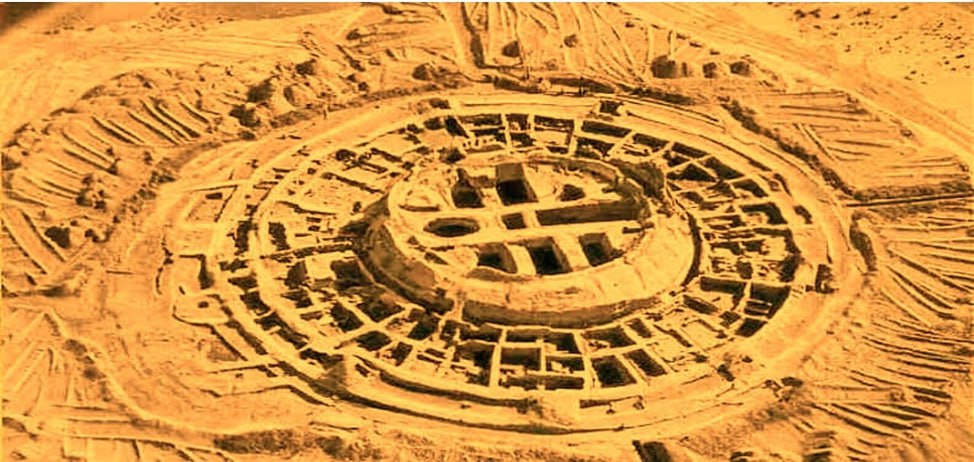
Koi Krylgan Kala under excavation, photo cribbed from the Web

It sort of resembles the Millenium Falcon.
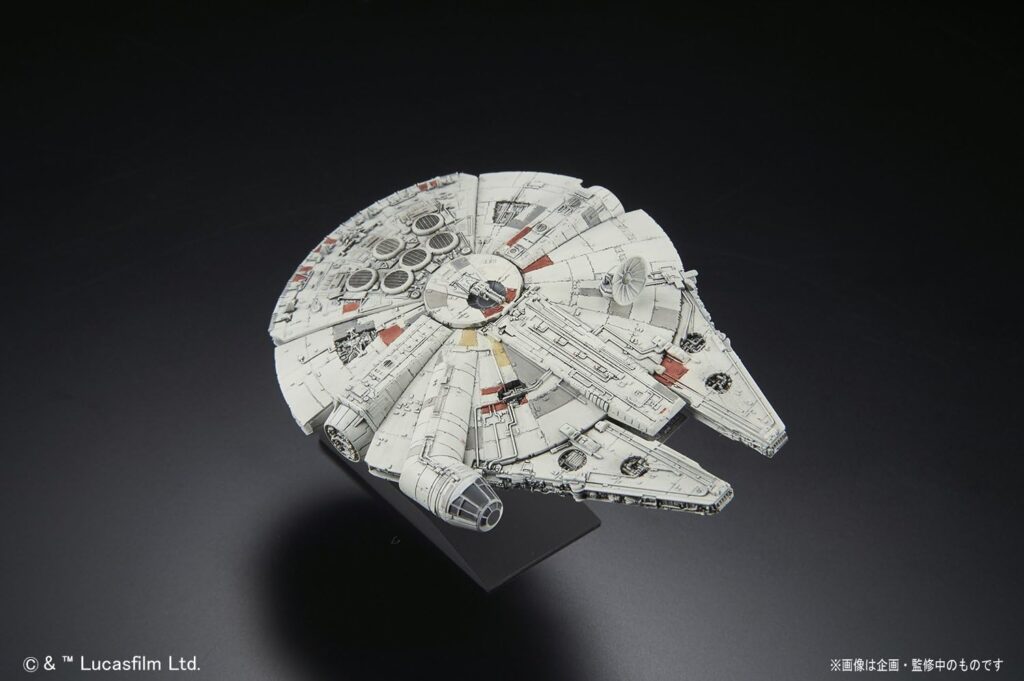
Prototype?

It’s also featured on the 20,000 sum banknote.
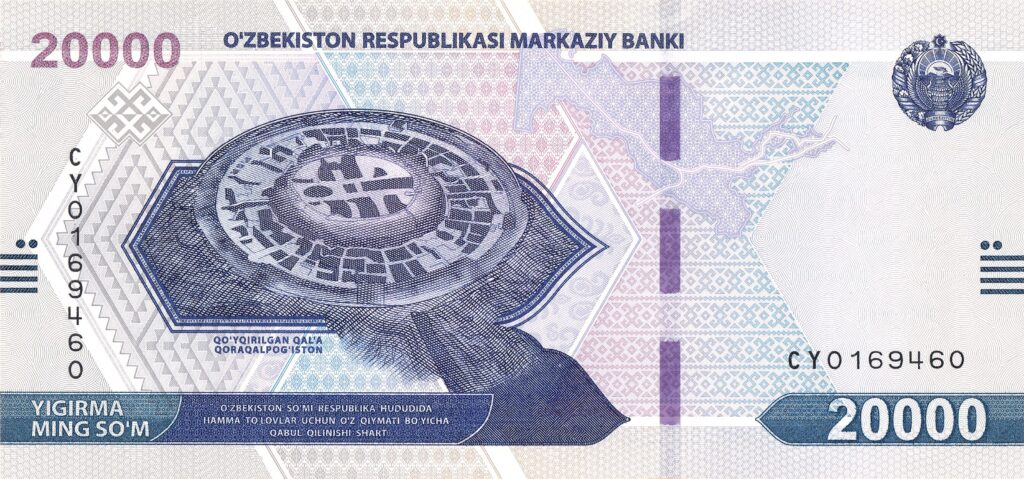
20,000 sum banknote

It no longer looks like this. It appears to have been filled in again. Or the locals have pilfered the material to be re-used in modern buildings.

That’s OK. It leaves a lot of scope for the imagination, as Anne of Green Gables would say.
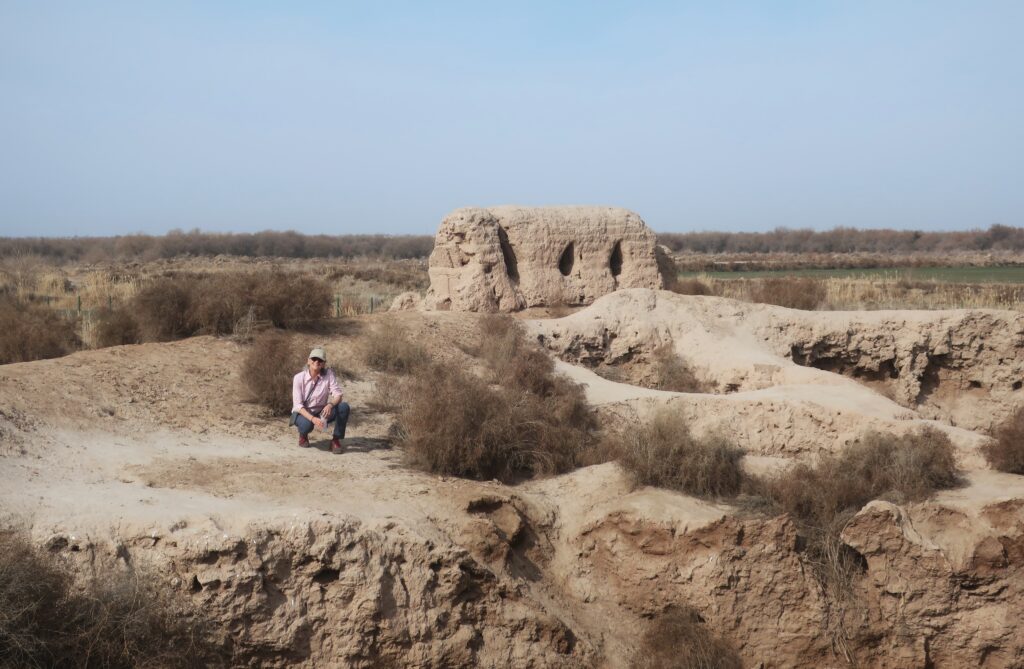
There are many fortresses in this region, known as Elliq Kala, meaning ‘fifty forts’. We also visit Jampik Kala.
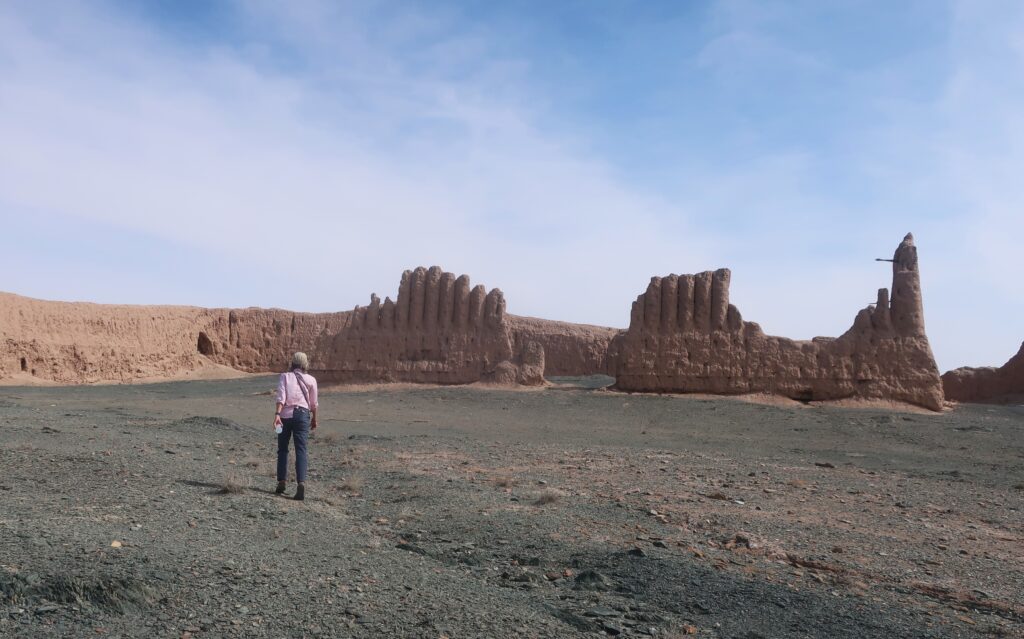
Jampik Kala

Our driver – with a white Chevrolet, of course – takes us down some barely-there desert tracks to get to these places.
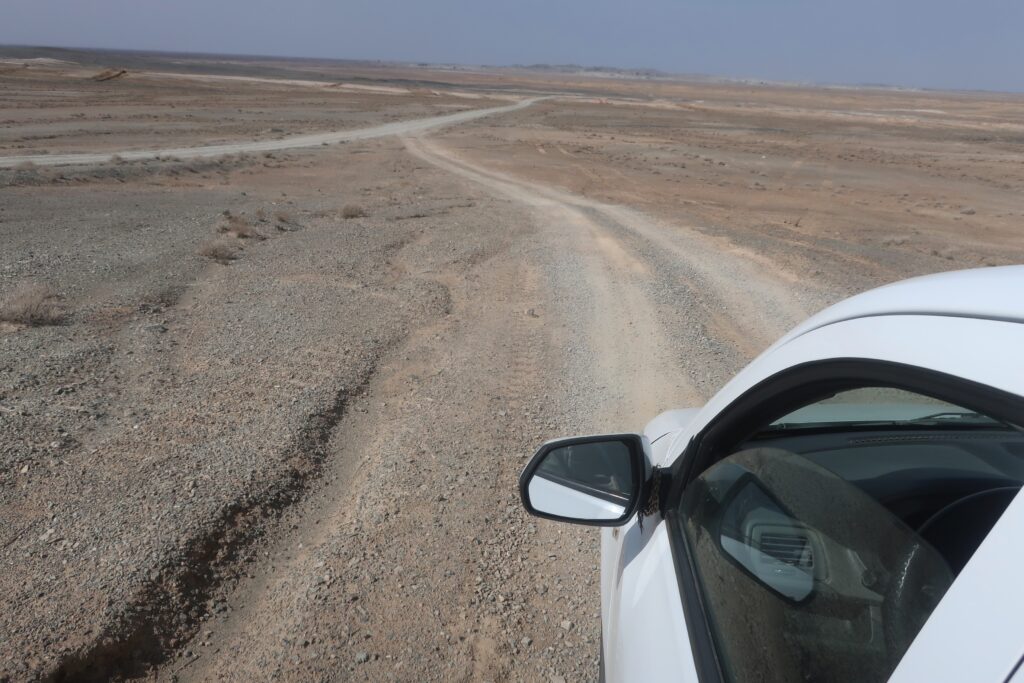
There’s no ‘there’ there – Gertrude Stein

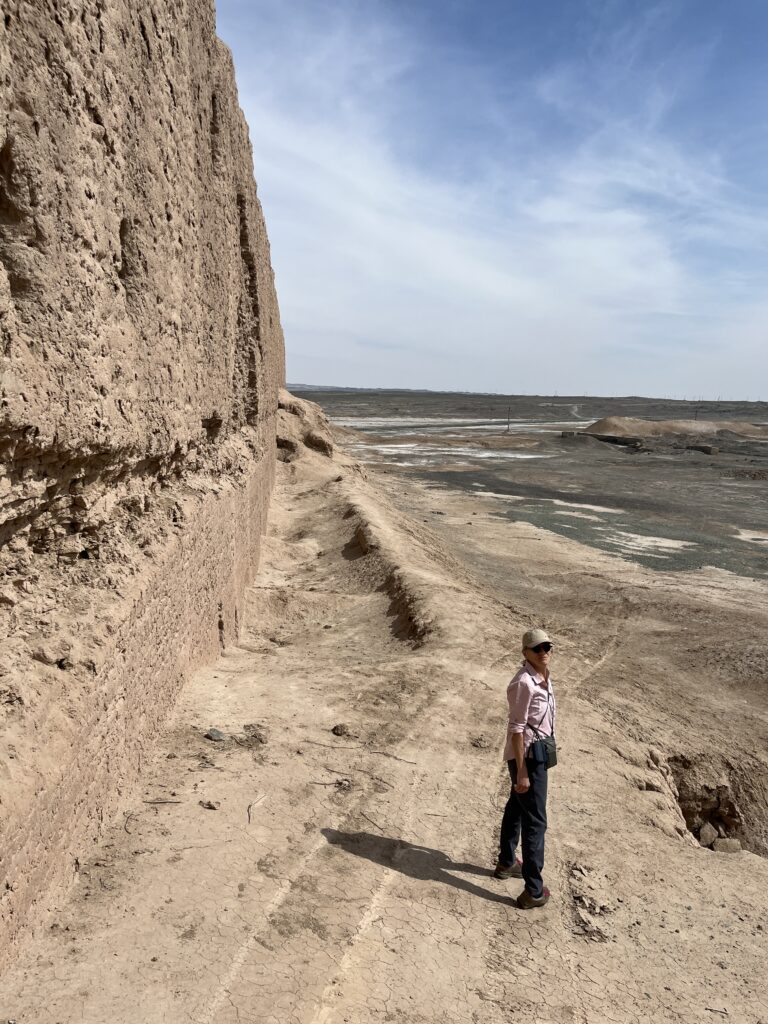
Next is Gyaur Kala

Tell me what you’ve seen, in faraway forgotten lands, where empires have turned back to sand.’ – The Moody Blues, Lovely To See You
Last place is Chilpik Kala, which is in fact an old ‘tower of silence‘, that is, a place where Zoroastrians would expose their dead so that the bodies could be picked clean by vultures.
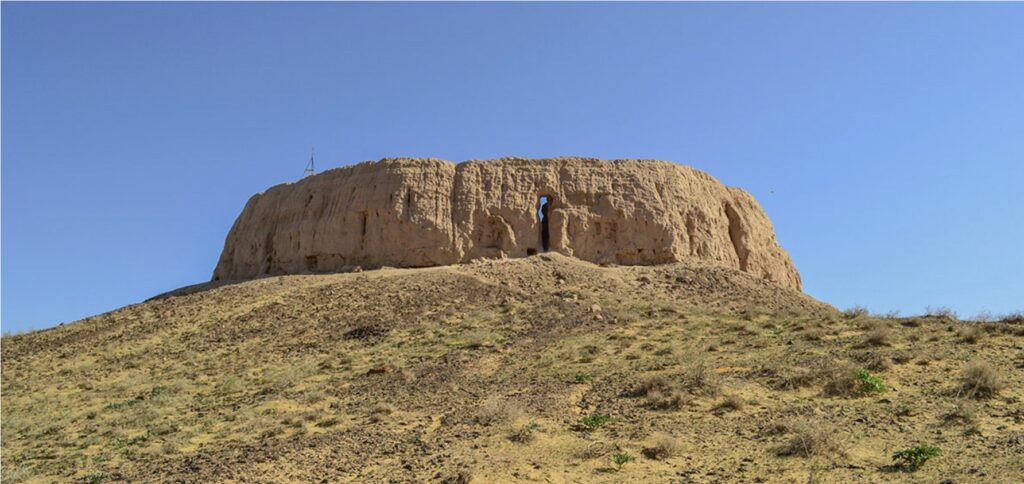
Chilpik Kala

The bones would then be placed in ossuaries. Zoroastrians were at one time dominant in this part of the world over two thousand years ago. Difficult to imagine, considering the overwhelming presence of Islam since that time.
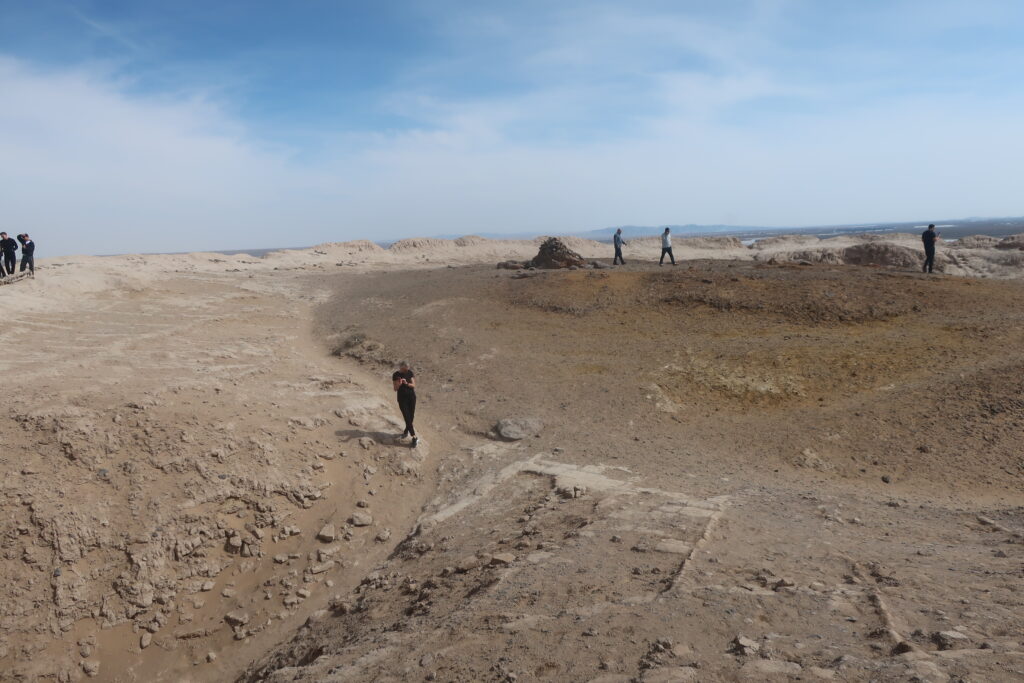
At the top

The forts are the ‘ancient’. Now for the ‘modern’. We arrive in Nukus. The chief attraction for us here is the Savitsky Museum.
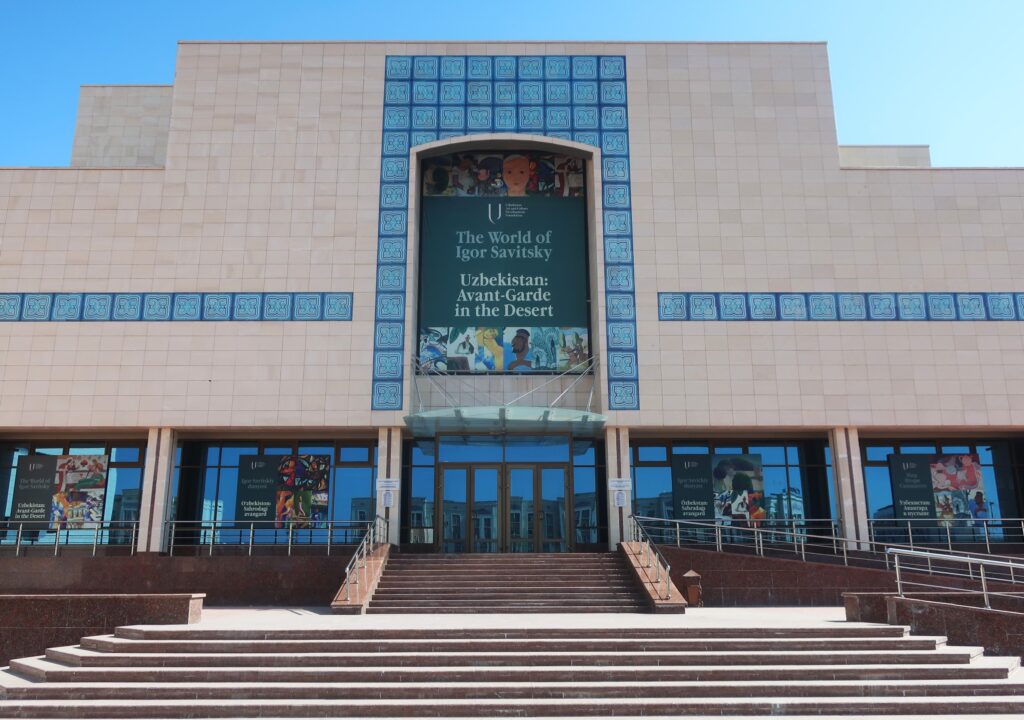
Thanks, Igor

The story of Igor Savitsky and his efforts to preserve endangered art from the Soviet times is fascinating and inspiring. It’s been made into a documentary, ‘The Desert of Forbidden Art‘, available on several platforms, including Dailymotion.

This is my personal favourite. I like that neither the canvas nor the frame are square.
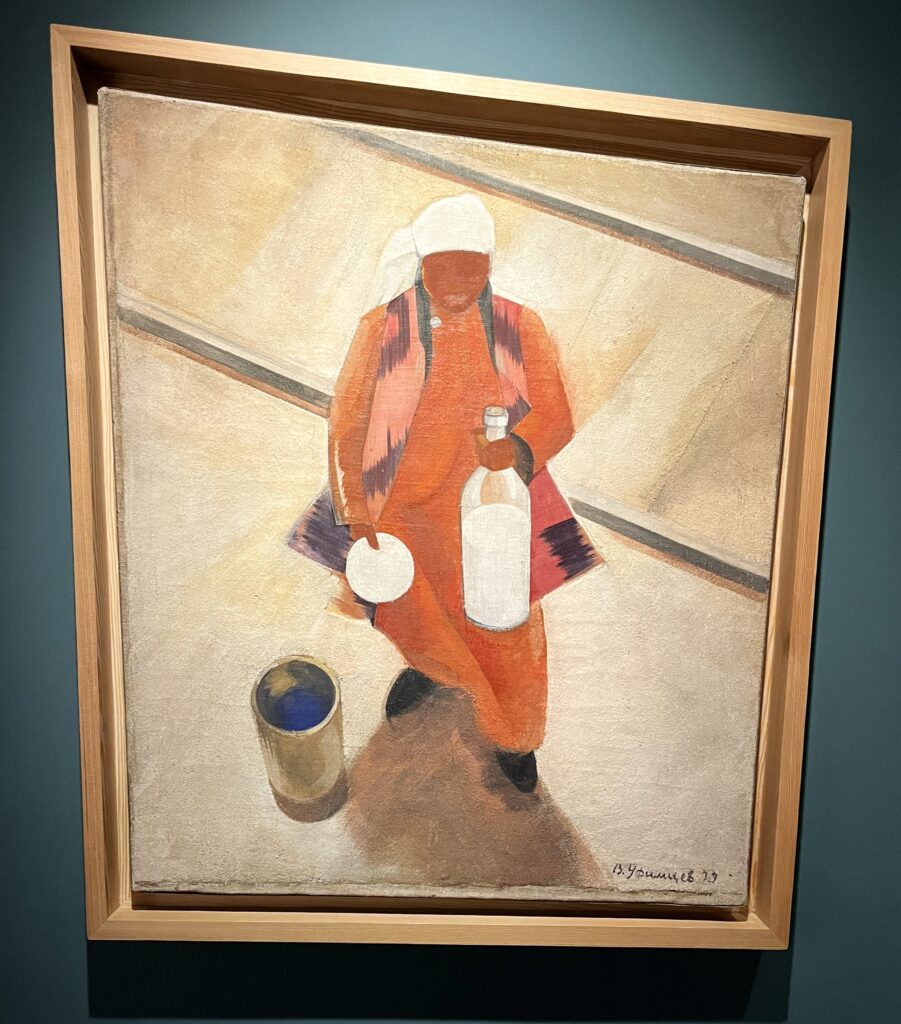
Many paintings showcase local industries, past and present.
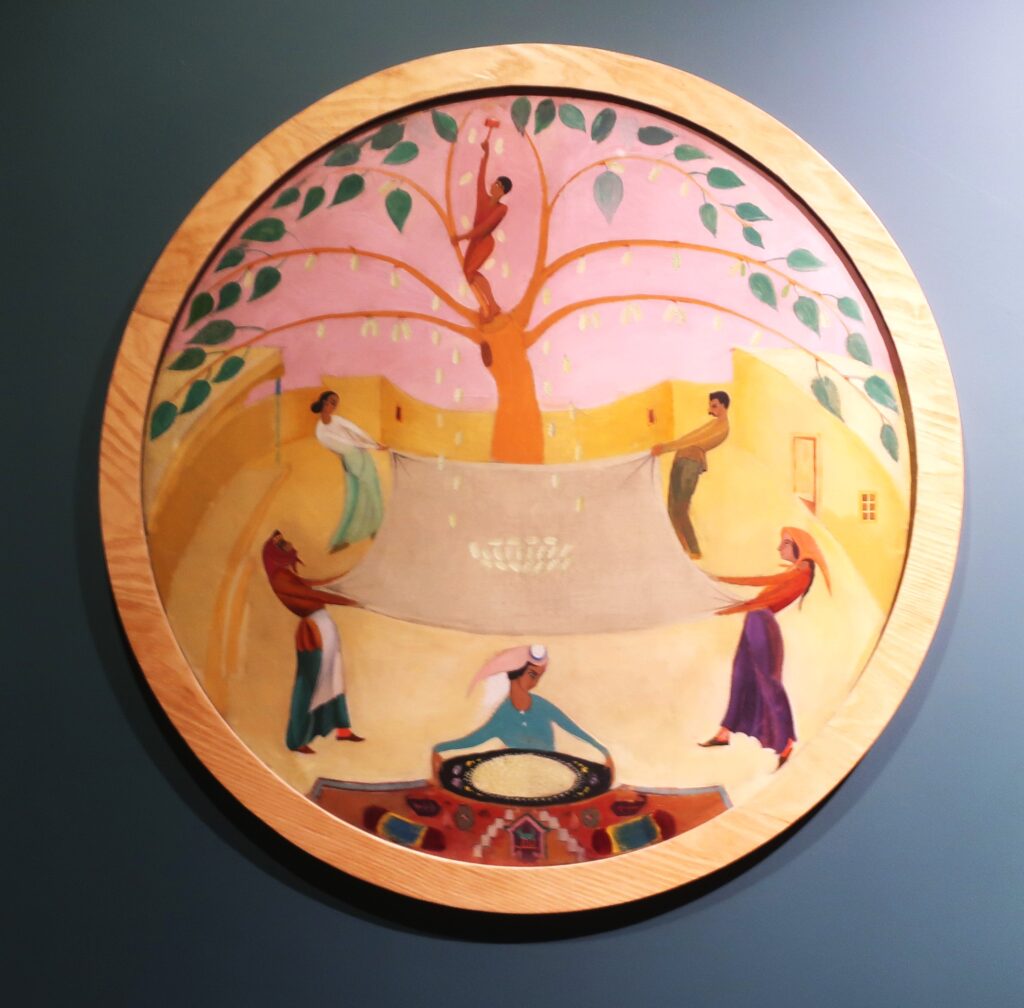
Harvesting silkworm cocoons

Besides being a collector and archivist, Savitsky himself was an accomplished painter.
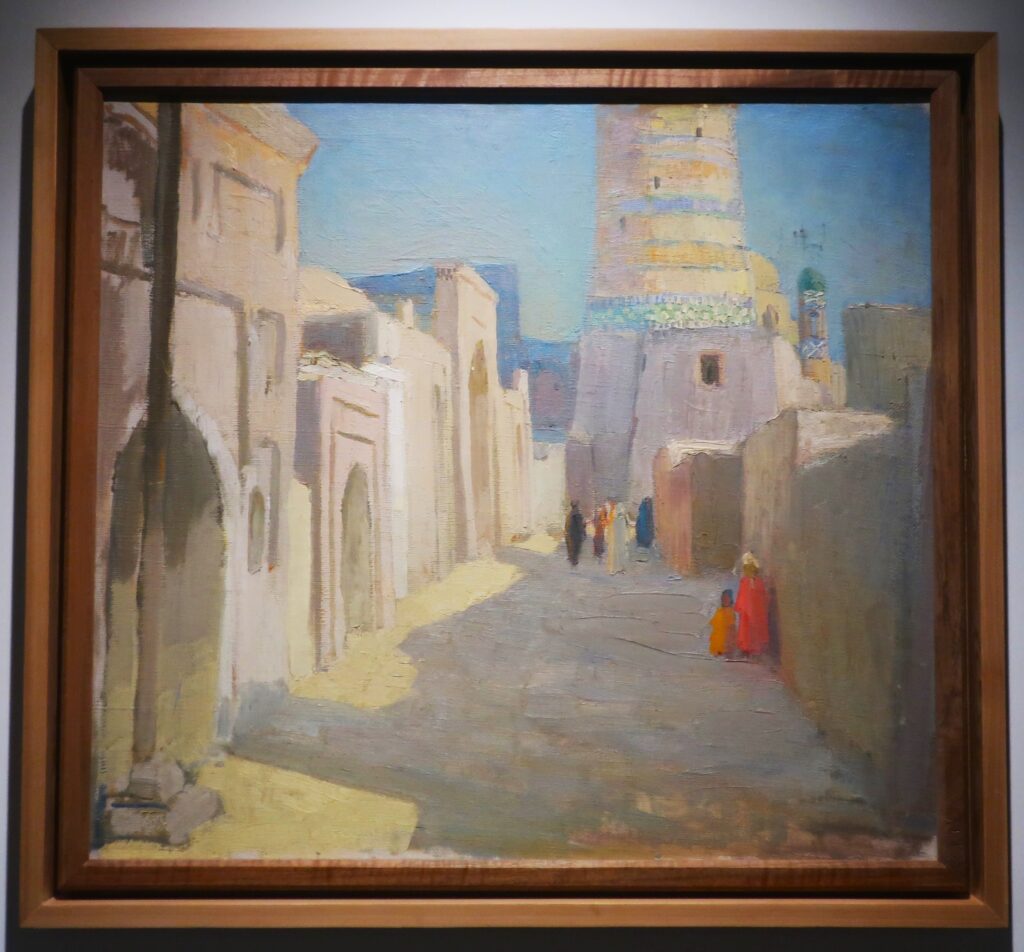
View of Khiva, we think

Nukus has a reputation as being a dull town in the middle of nowhere, but we have a good time here.

While strolling the streets, we come across some ladies whipping up a batch of sumalak, an activity with a lot of folklore attached. Maria is invited to stir the pot while making a wish. As is tradition.
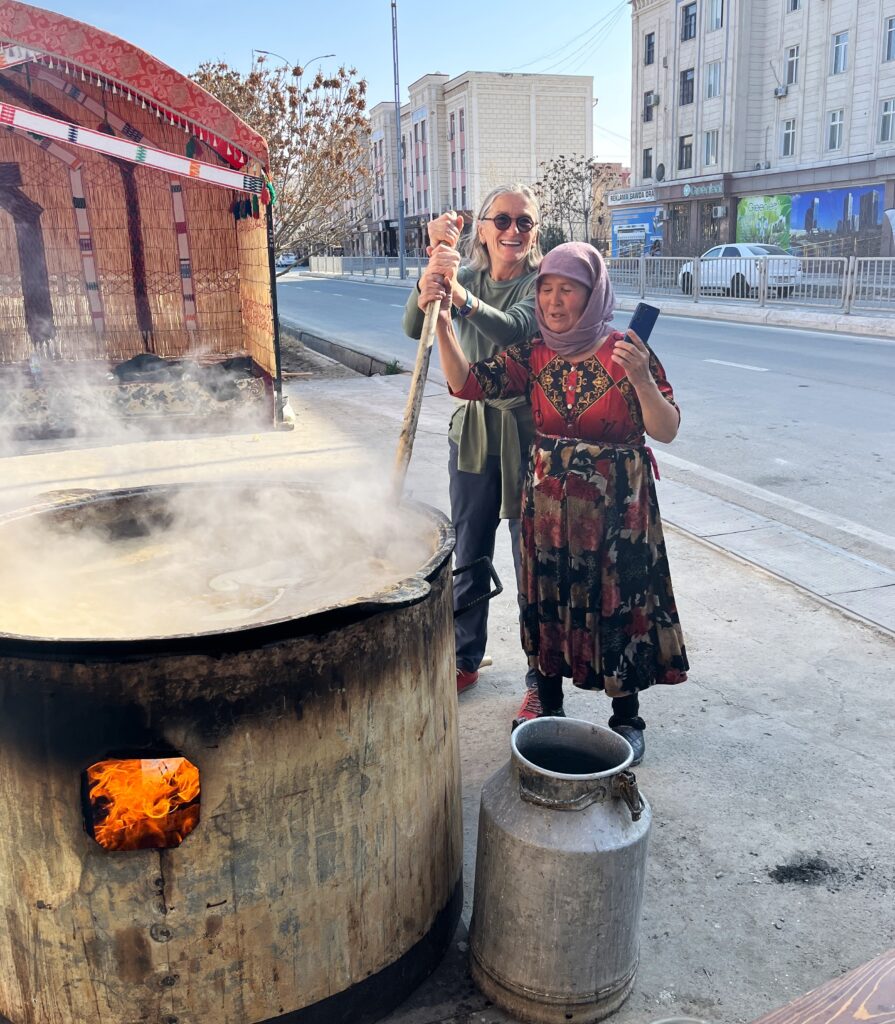
For ladies only

People dress well here. And are well groomed. Everybody seems to have someplace to go, as opposed to the sidewalk-dwelling inertia of many places elsewhere in the world.
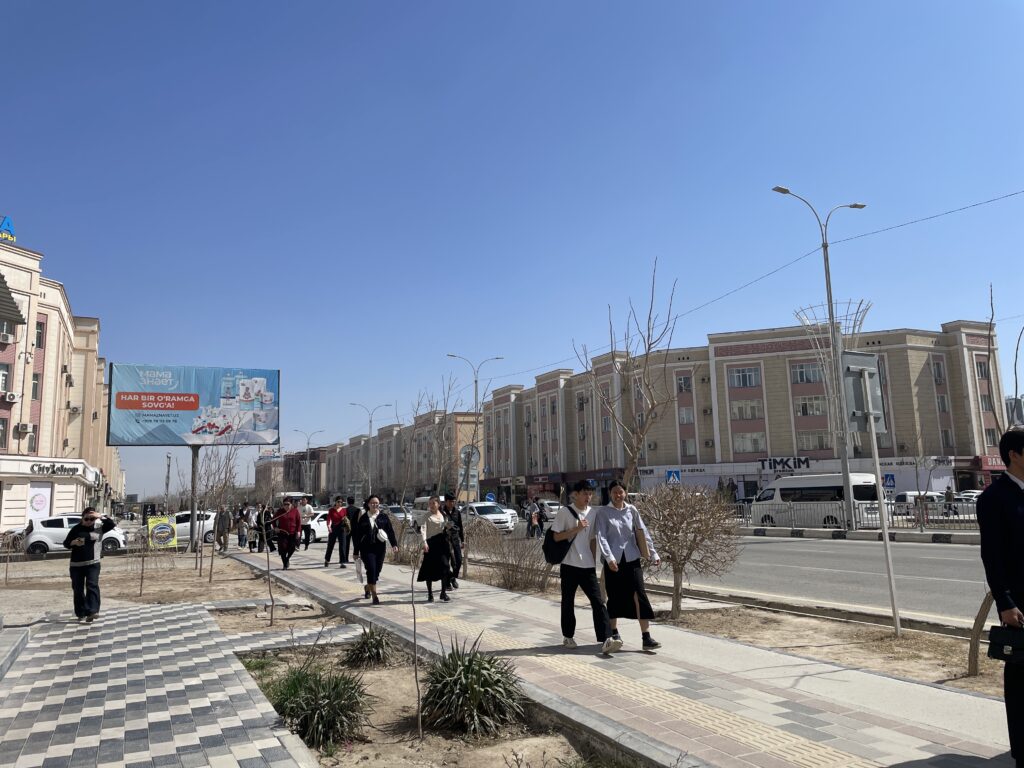
Notice the Soviet-era apartments

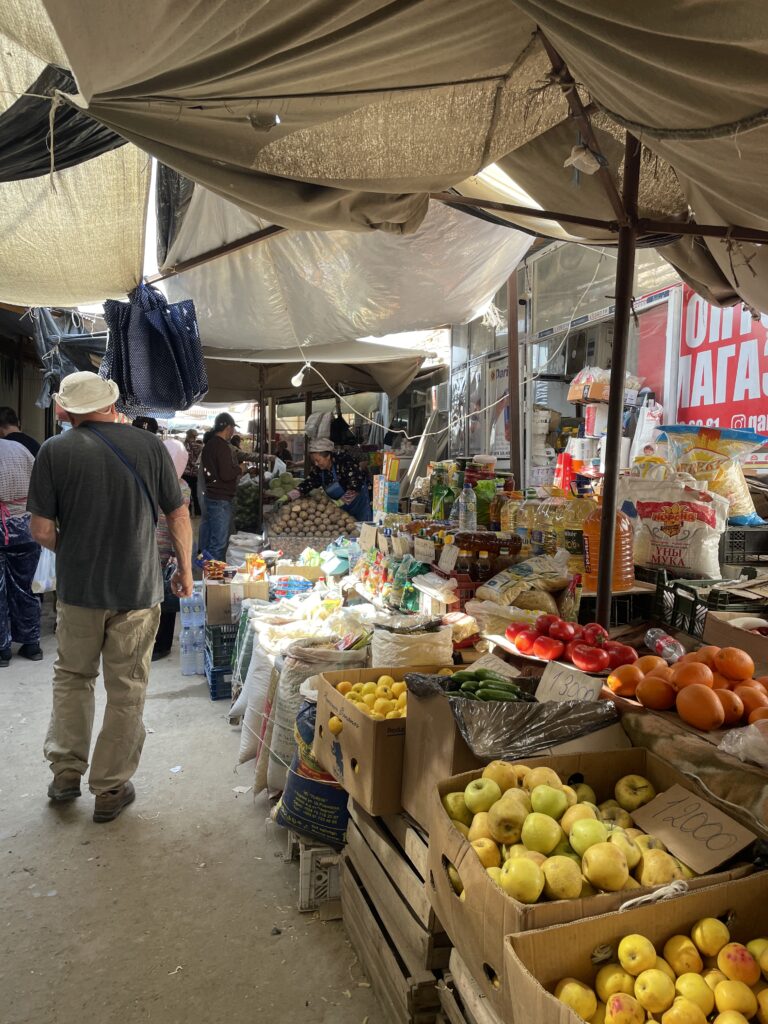
There’s a lively market.

(Incidentally, our hotel has a film crew in temporary residence. They’re filming a segment of The Amazing Race here. We speak with a hopeful Dutch participant.)
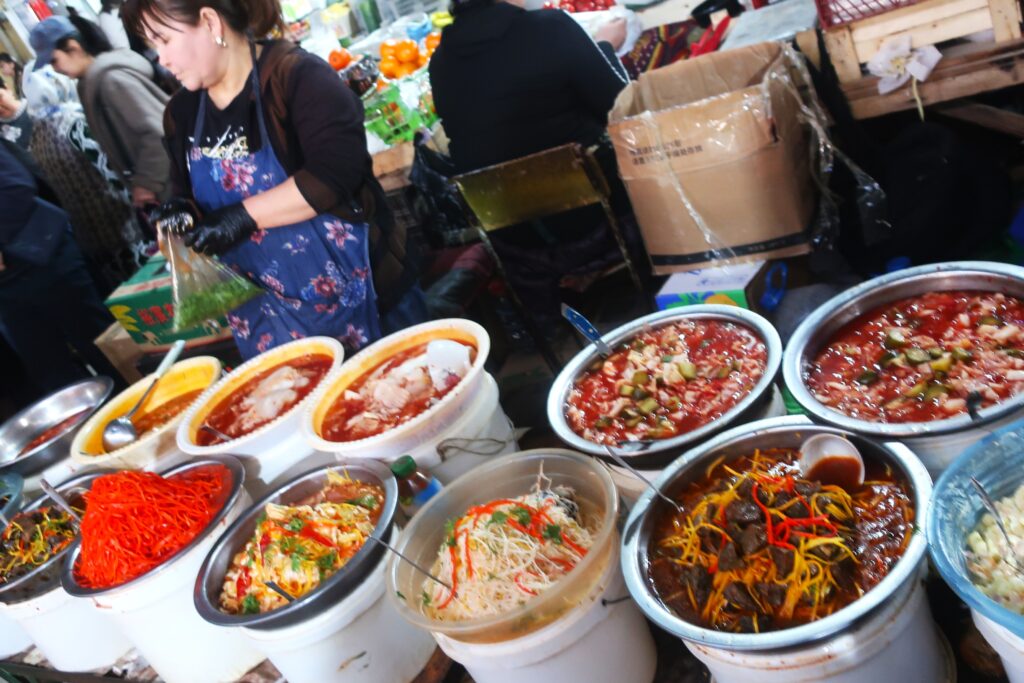
Unidentified foodstuffs

You can find just about anything here. Except sunscreen.
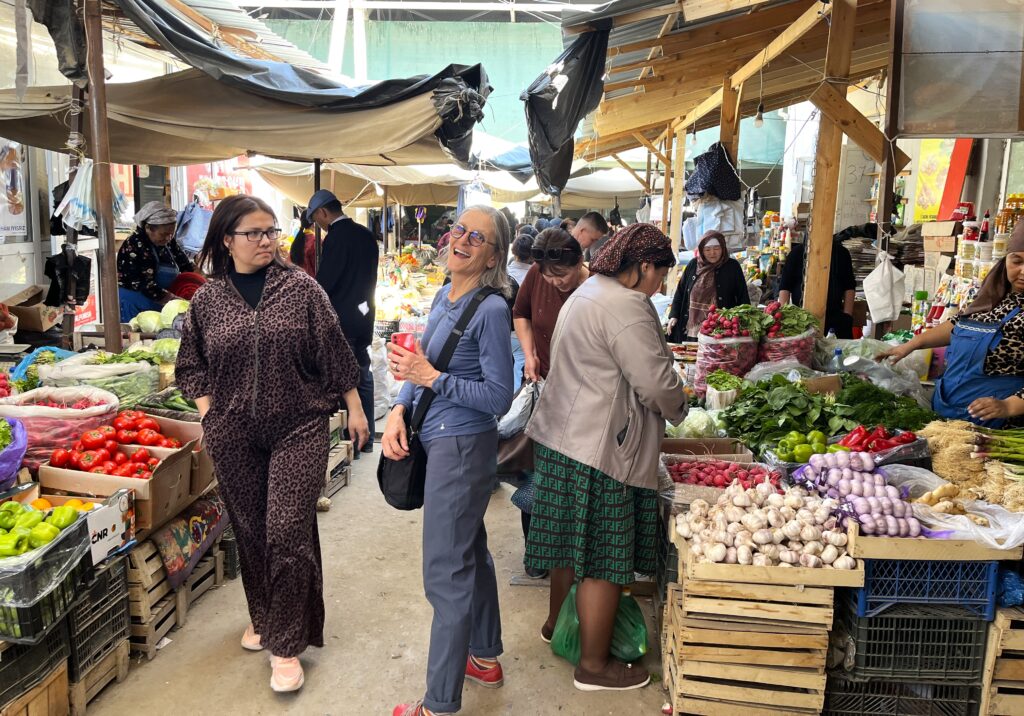
In search of sunscreen

Many people do their regular shopping in markets like this. There aren’t many supermarkets around.
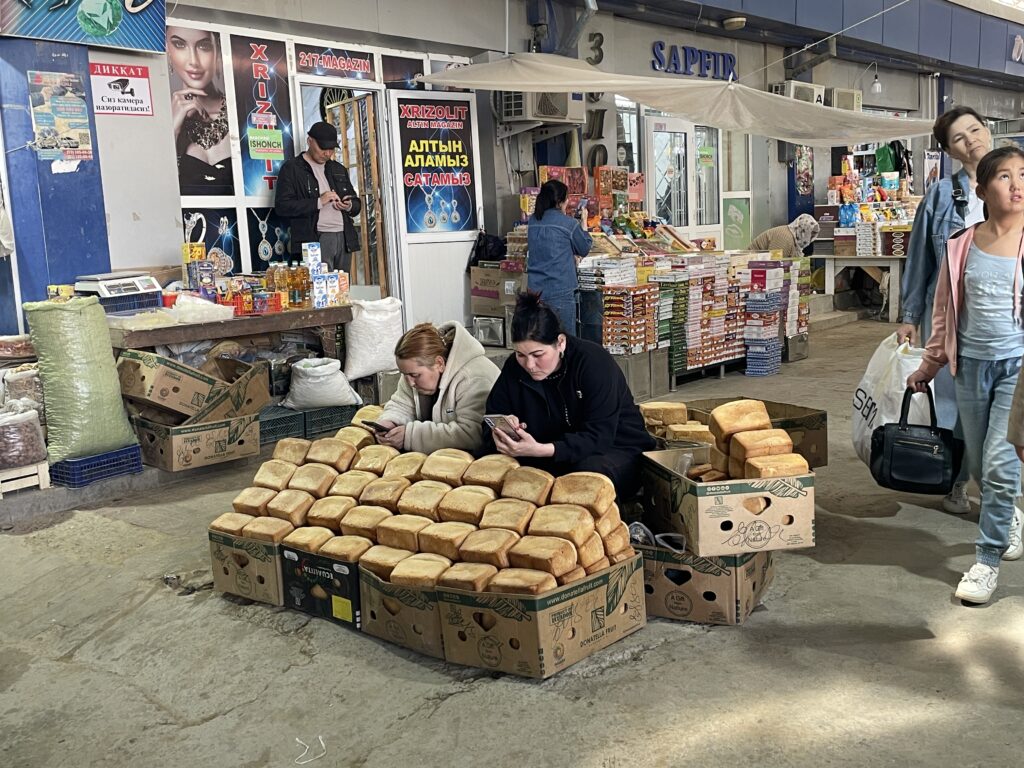
Bread vendors

A pair of local girls want to have their photo taken with Maria. This happens regularly.
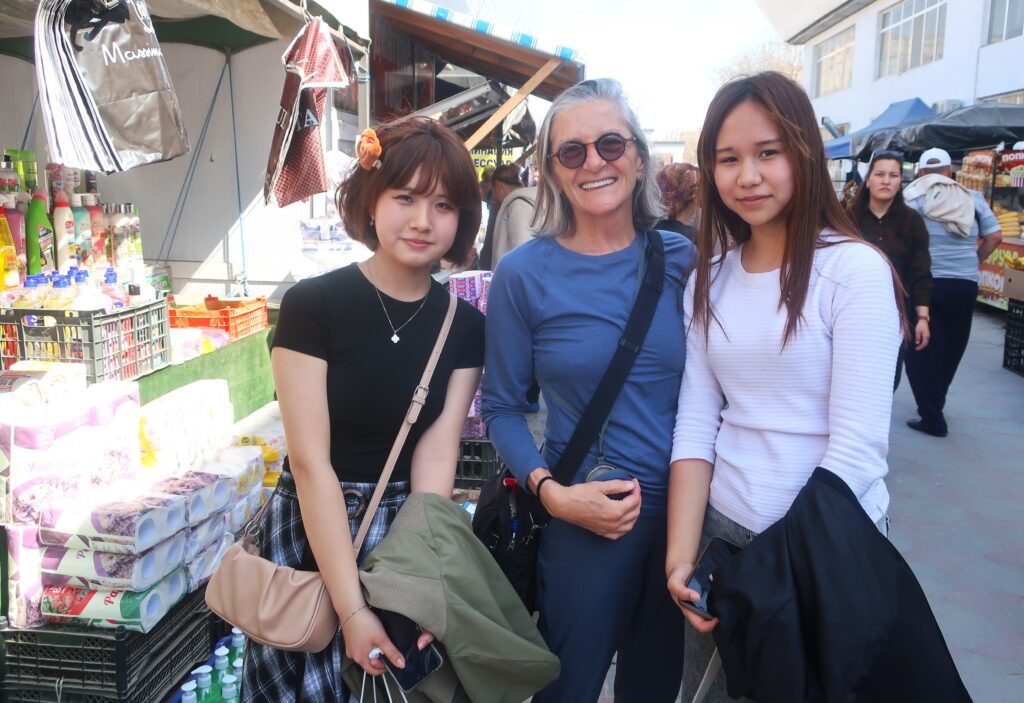
Denis thinks: ‘What am I, chopped liver?’

One activity that we do NOT pursue: usually if visitors come this far, they book a multiday expedition across the desert to view the last sad remnants of the Aral Sea. Yeah, no – we’re not interested in an expensive and uncomfortable excursion simply to witness the brutal fallout of yet another man-made catastrophe.

Speaking of man-made catastrophes…

Sight or Insight of the Day

One good thing about traveling where we are: we hear very little news about Donald Trump’s continuing lurch into global Dystopia. As Trump and his minions drag the rest of the world down into a swirling vortex of imbecility, people here are simply going about their lives. So are we.

Sometimes I almost – operative word being ‘almost‘ – feel sorry for the president’s inner circle. I imagine being cooped up in the Oval Office with Donald Trump must feel like being locked in an enclosed space with an agitated chimp wielding a fully-loaded assault rifle.
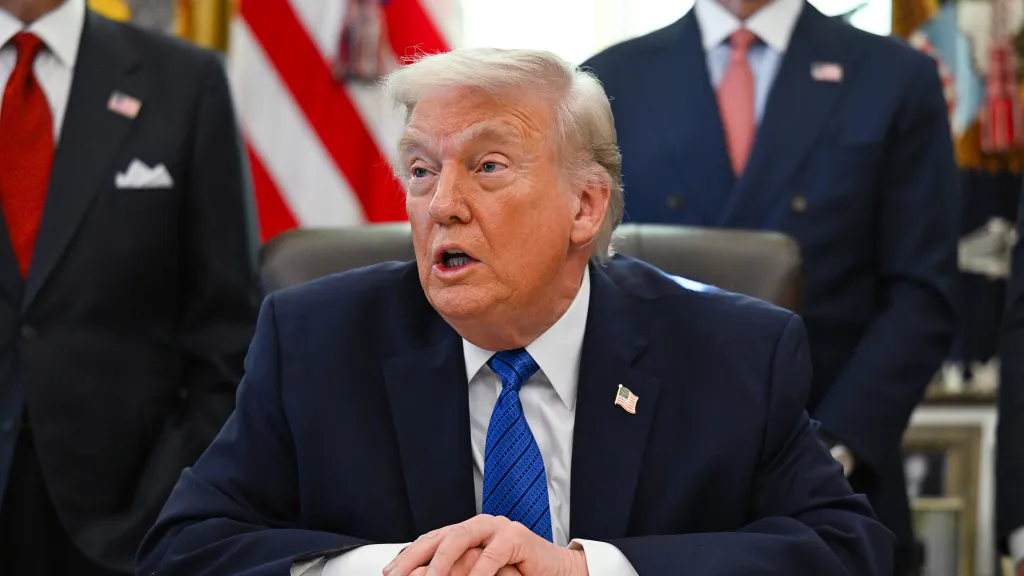
Monkey with a machine gun

I’m not the first to think of this analogy. I remember hearing it on a late-night comedy show. (Probably Stephen Colbert.)

As we’ve said in previous entries – May God have mercy on our souls.
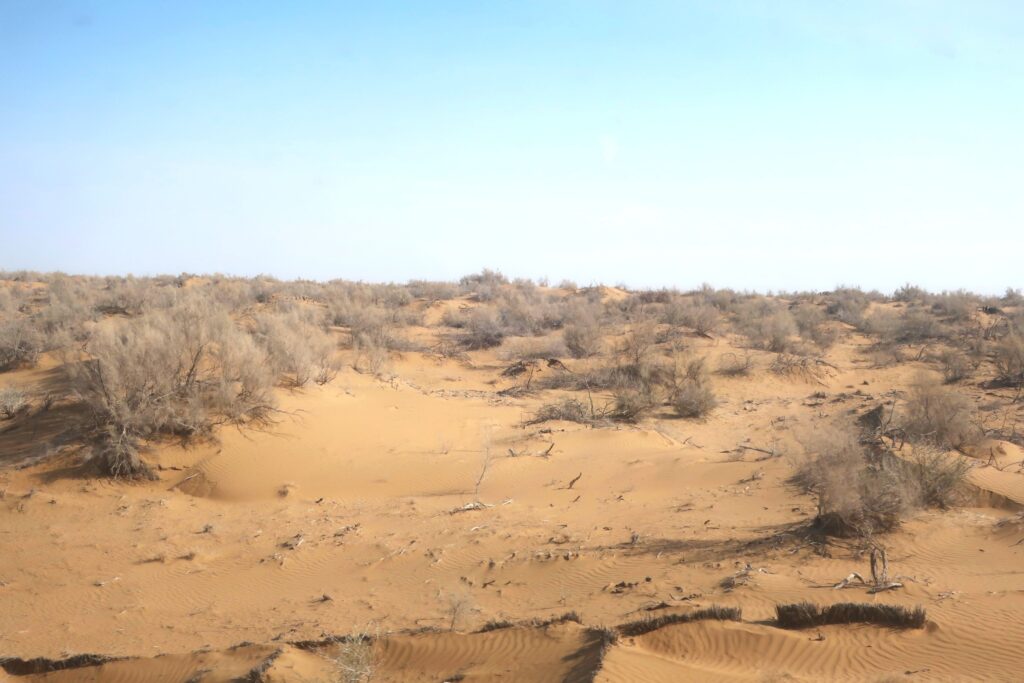
The Slow Train to Khiva

We take a slow train – six hours – from Bukhara to Khiva.

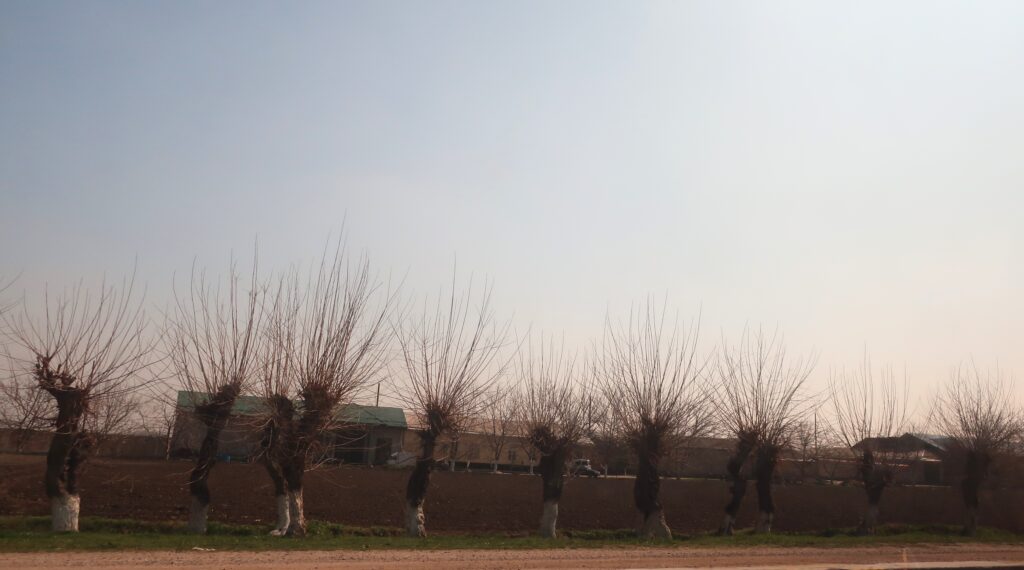
Two things we can say about this part of Uzbekistan. It’s very flat, and it has a lot of canals.
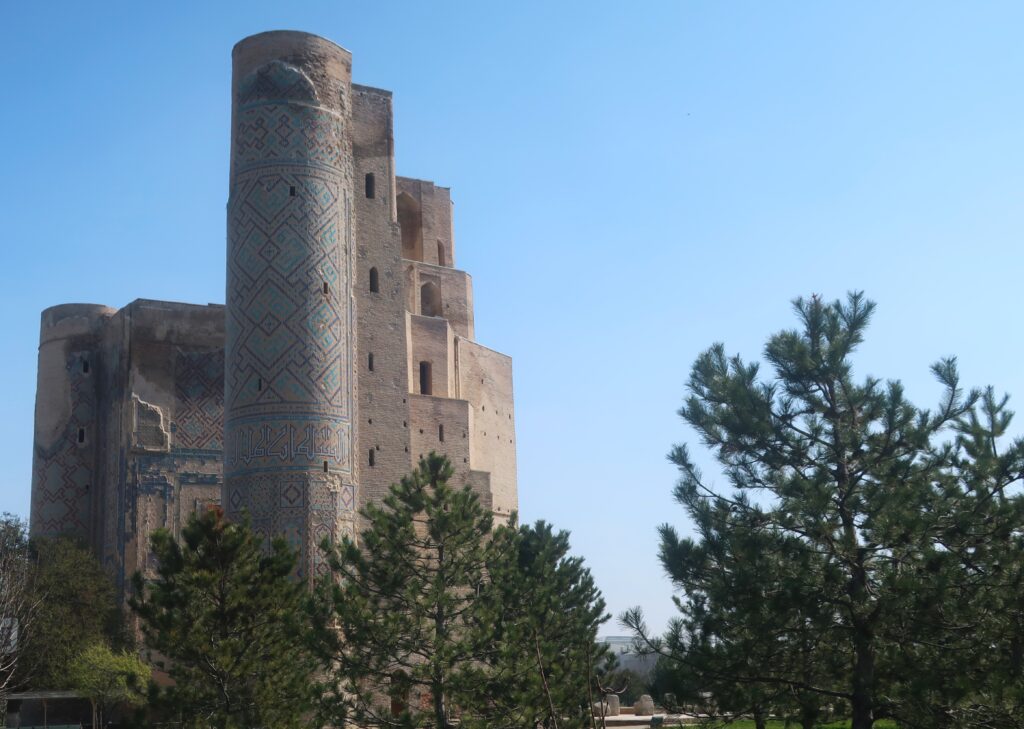
Kind of like the Netherlands? Not quite. Minus the canals, it looks more like Australia.

Khiva was at one time a major centre for the slave trade in Central Asia. Much like Oman, which until very recently ruled a trading empire based on the commerce of human flesh, it’s not really mentioned in the present day.

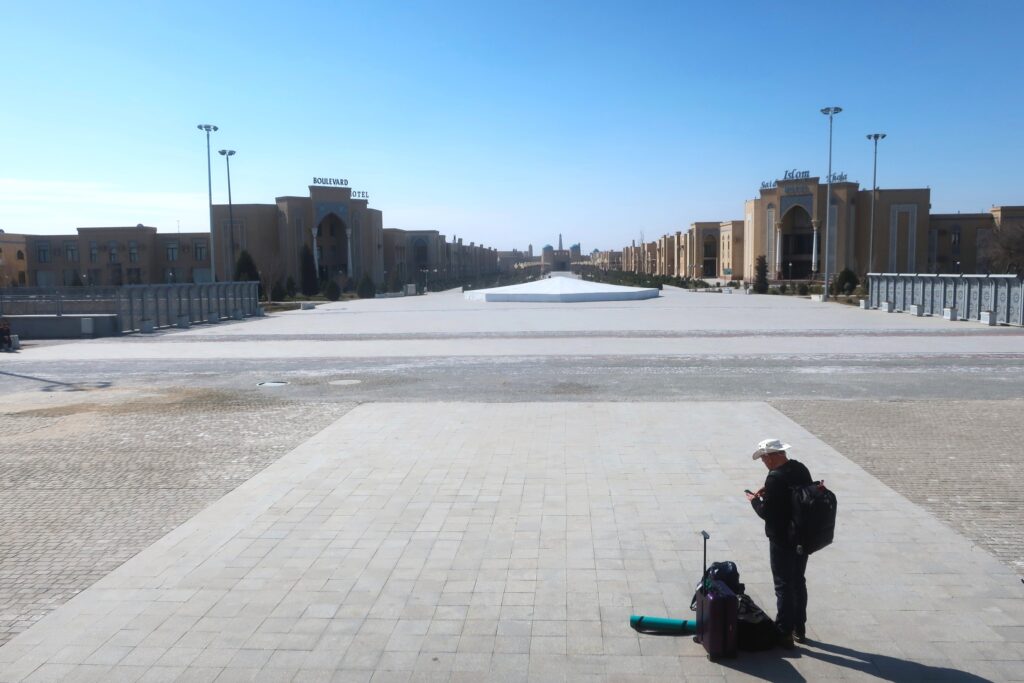
On arrival, we find a broad avenue leading 1.5 KM down to the Old Town. This is a not-uncommon feature of Central Asian cities: gargantuan roads flanked by brand new (largely empty) buildings.
Let’s take a Yandex…

We haven’t really described our positive impressions of Uzbekistan so far. So let’s talk about what we like about the place.
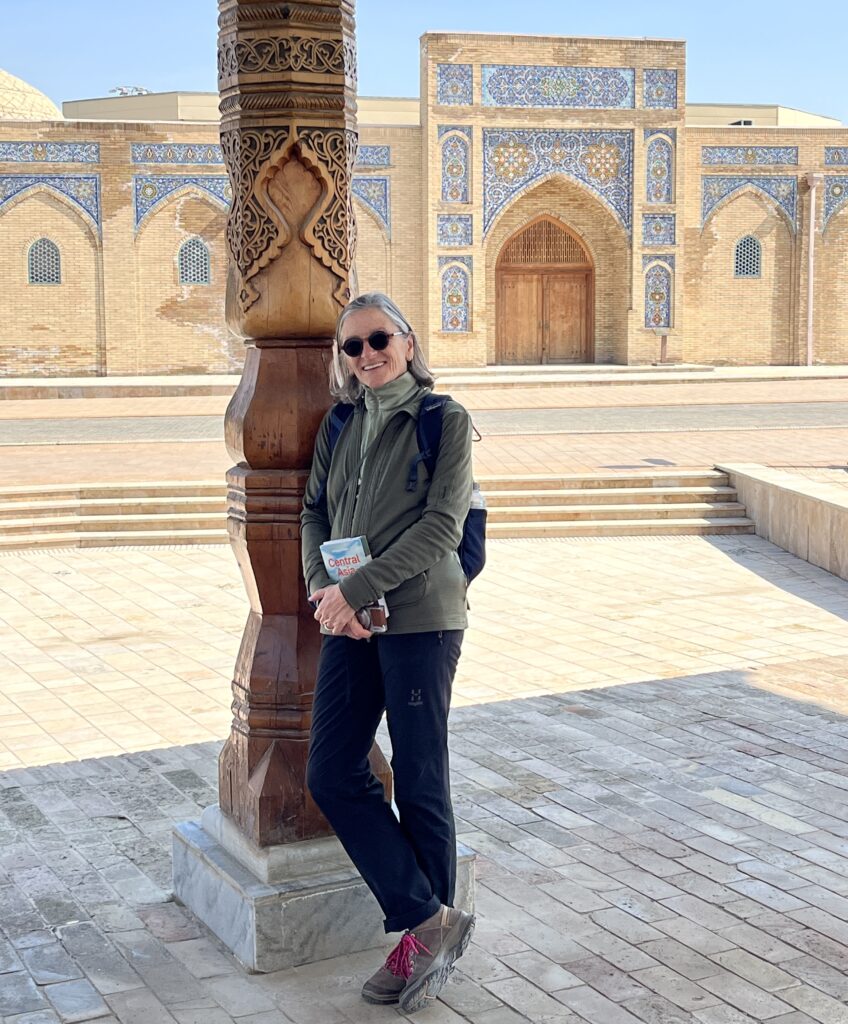
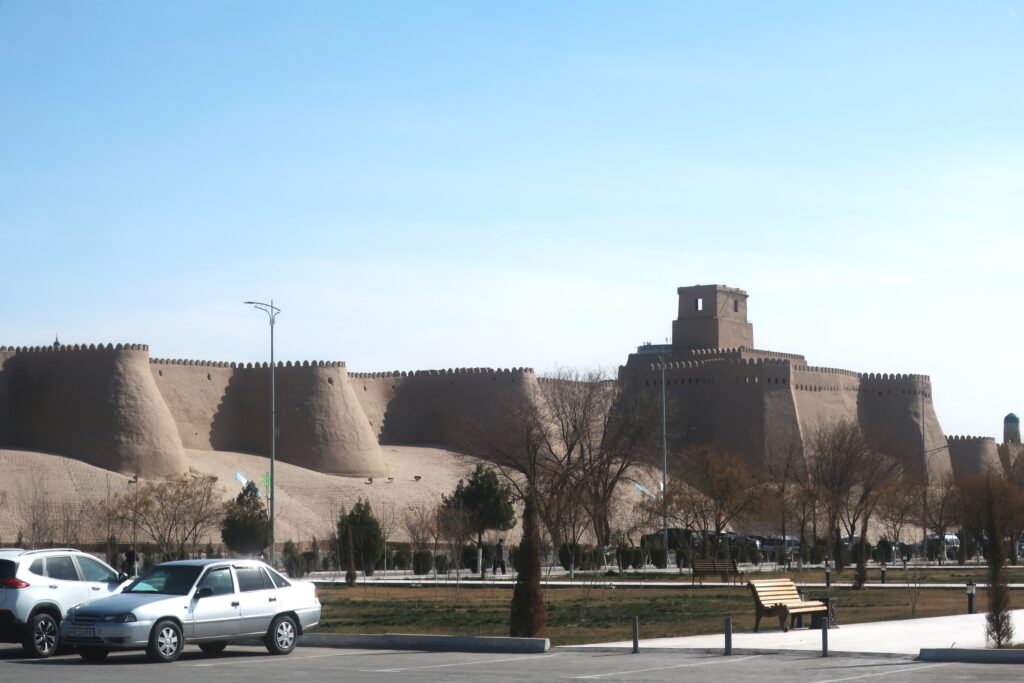
Walls of the Old Town

Besides the many interesting historical places, the human element contributes a lot to our visit. We’re really enjoying our time in Uzbekistan. People have been very kind and generous to us.

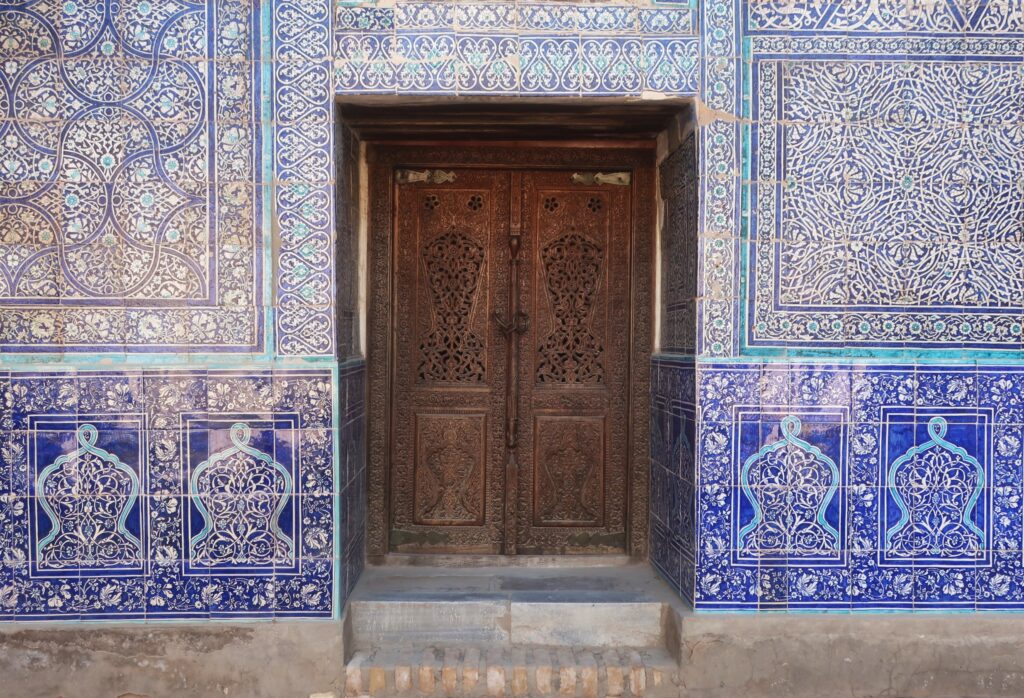
Door and tiles, Khiva

It’s extremely safe here. A high-trust society. People often leave valuables and merchandise unattended without fear of it being swiped.

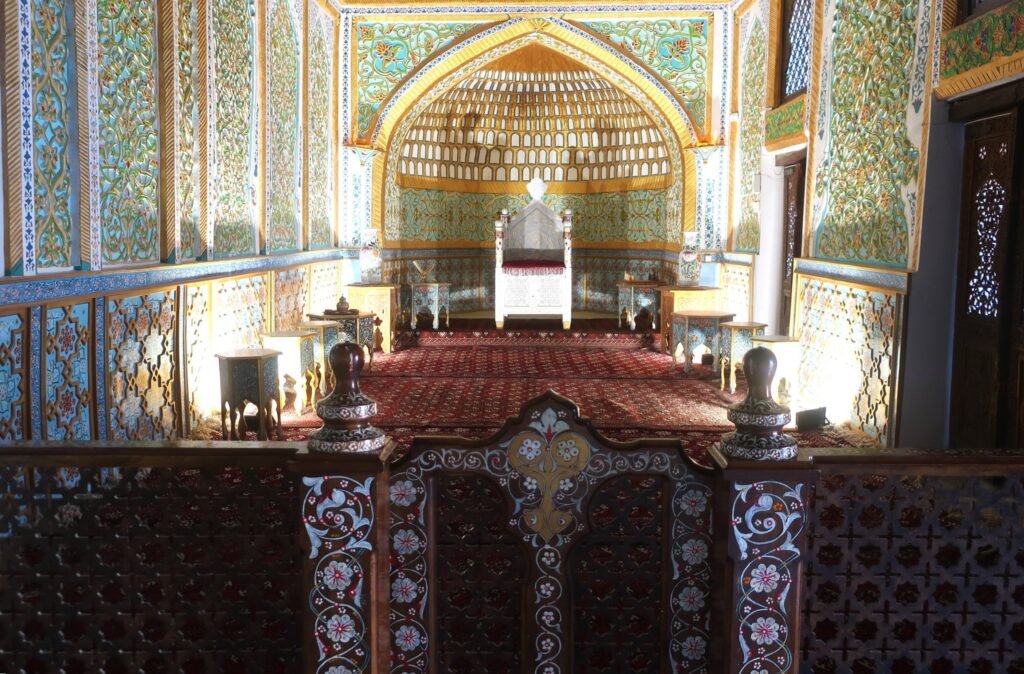
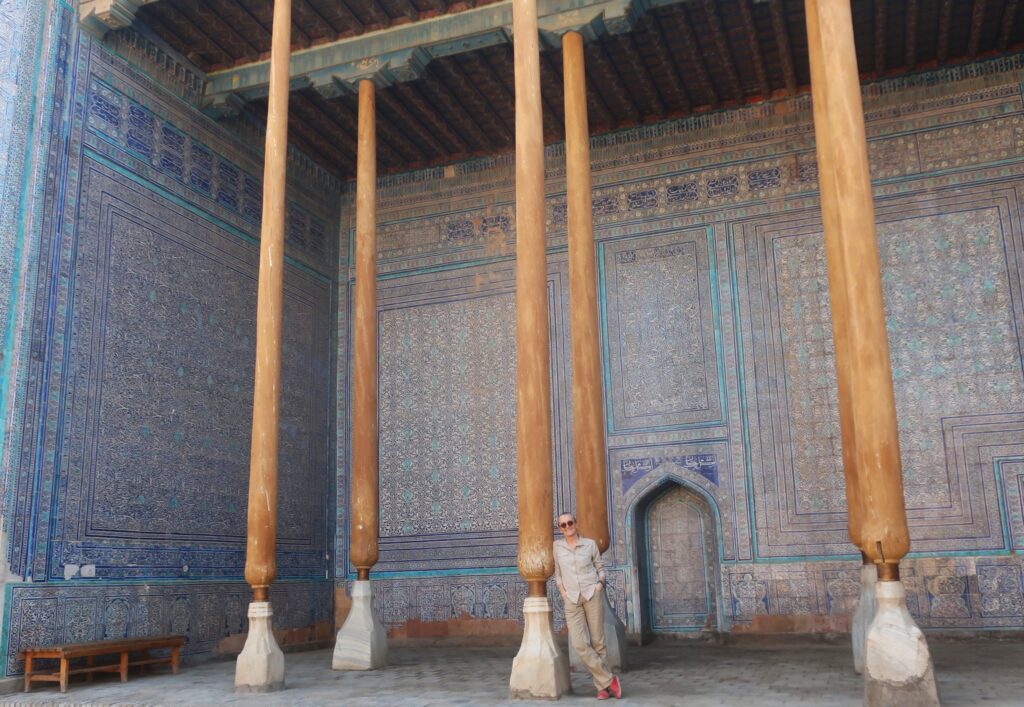
Throne room, Khiva

And they’re scrupulously honest. They make a point of counting out exact change when they see how puzzled we are by the multiple zeros of prices in Uzbek sum.

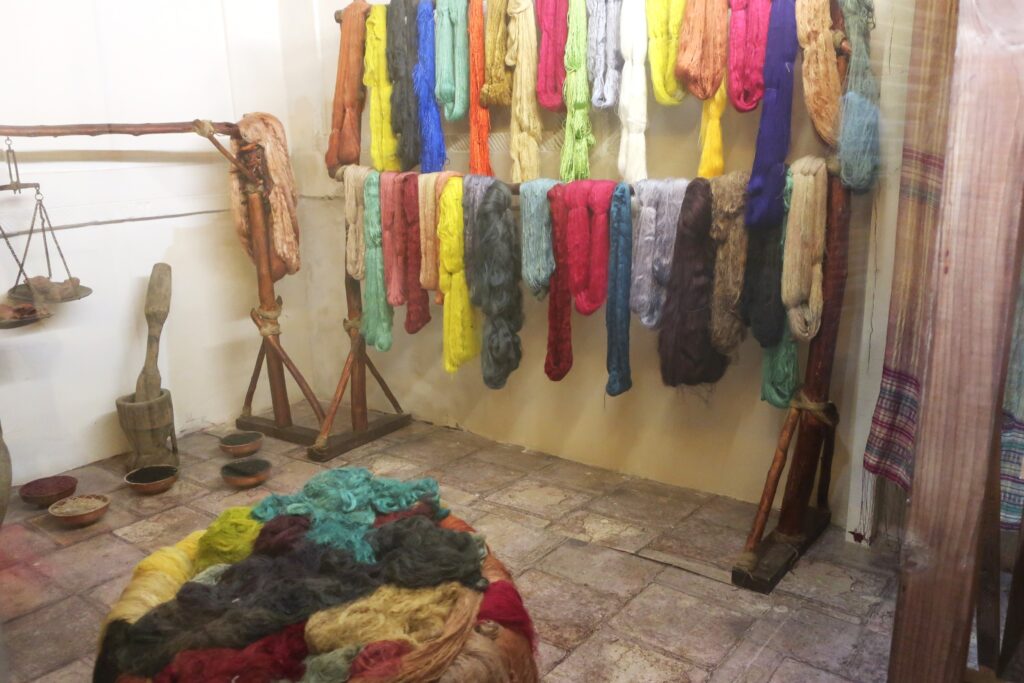
Dyed skeins of silk in the Silk Museum

It’s very clean, for the most part. Marble-tiled public bathrooms, spotless and free. No graffiti. None of the casual vandalism that is so common at home, people no longer notice it.

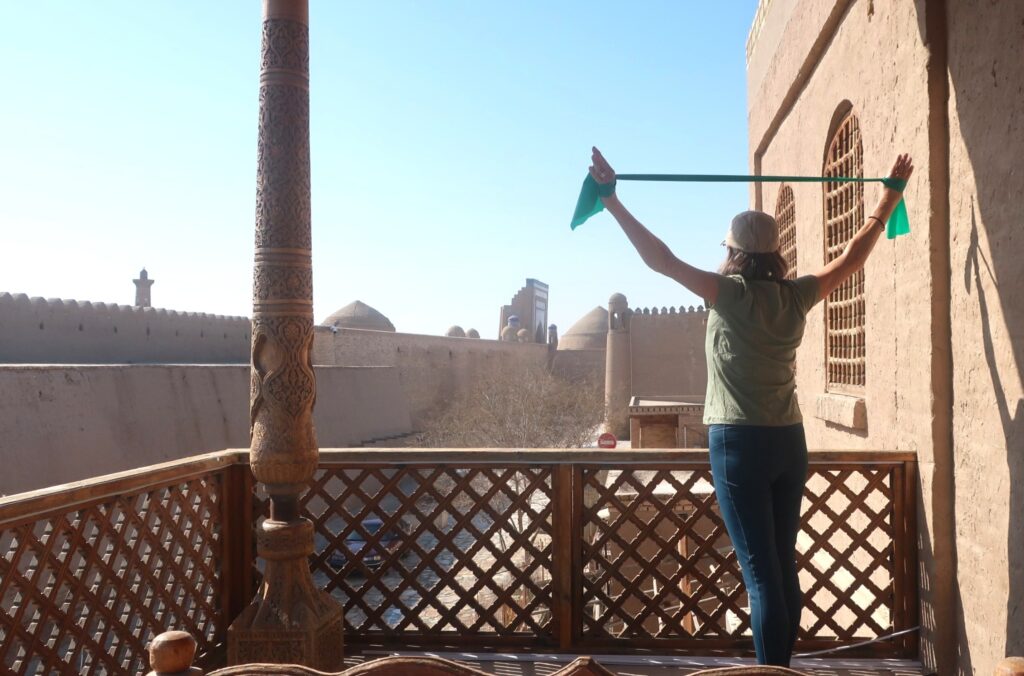
Maria diligently does her exercises

Tourism from Europe is increasingly common. Lots of Russian visitors, too. Very few North Americans.

Uzbeks seem delighted and surprised when we tell them we’re from Canada. On at least three occasions, when we tell them, they’ve responded, unprompted by us, ‘Ah, Canada. Ottawa!’ So Uzbeks are more aware than probably 90% of Americans which city is the nation’s capital.

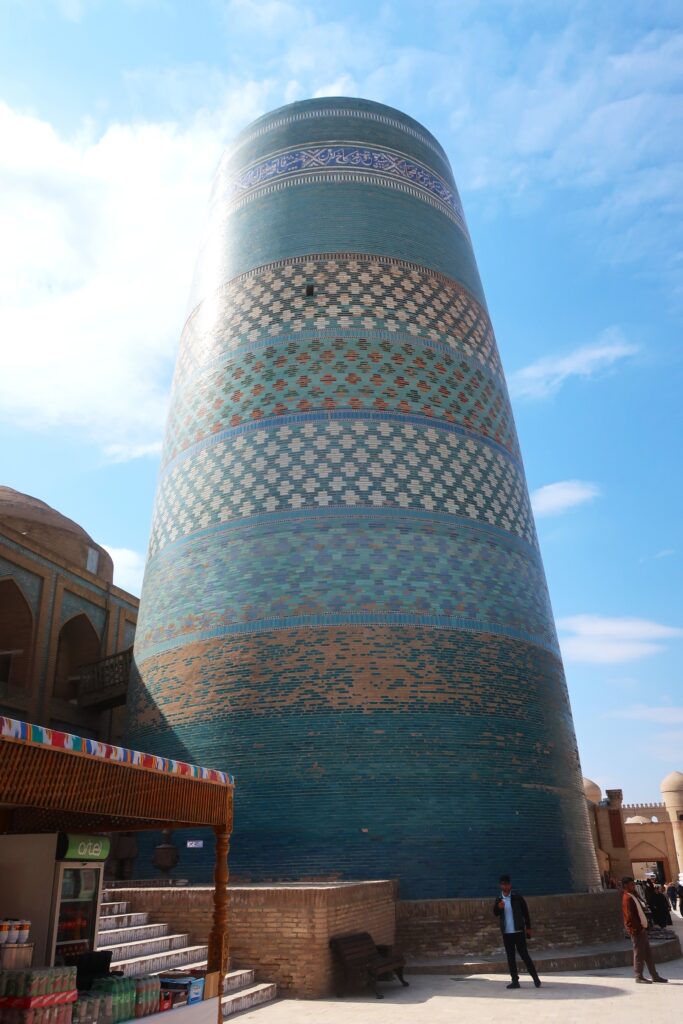
Kaltaminor minaret, Khiva

If we have one gripe, it’s this: both Uzbekistan Railways and Uzbekistan Airways have English-language sites that let you purchase tickets, reserve seats, and so on. But after half an hour or so of filling out info, when it comes to payment, the site WILL NOT accept foreign credit cards, even though they claim they do.

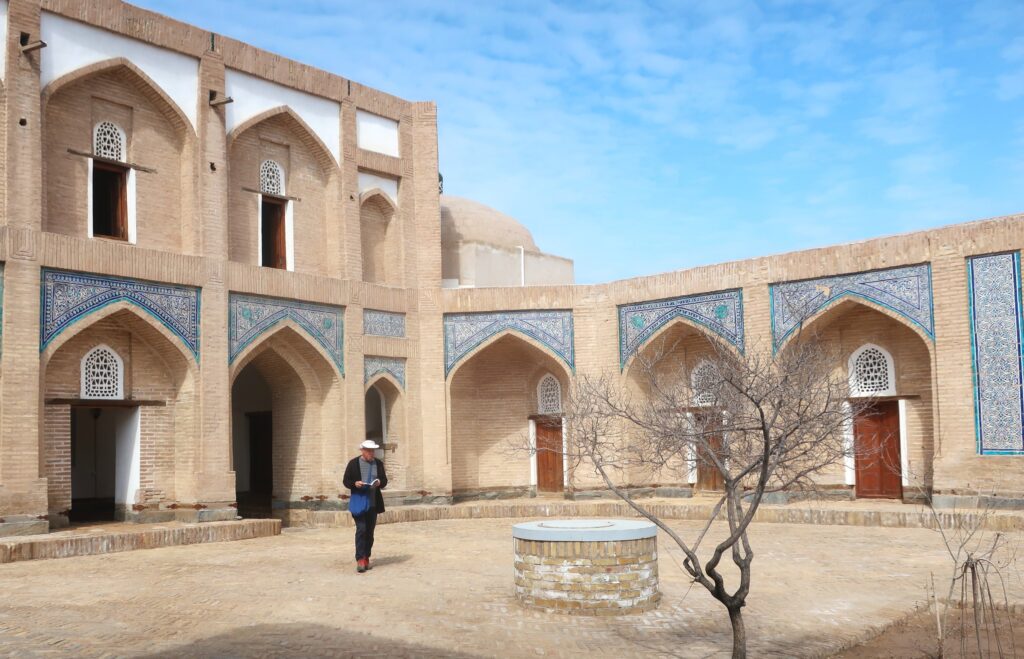
Amir Tora madrassa

Uzbekistan is a muslim-majority country. People seem observant, but not fanatical. Women and girls don’t seem to be overly oppressed, free to be as covered or uncovered as they like.

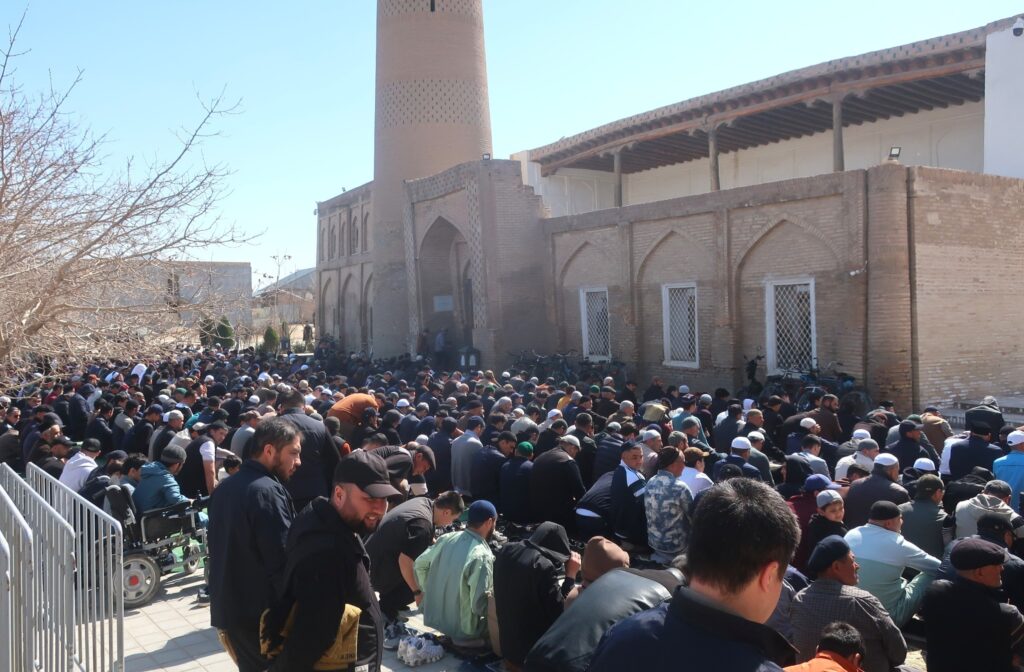
Men attending a Nowruz (Persian New Year) sermon

All in all, the niceness of Uzbekistan comes as a pleasant surprise. In books as recent as ten years ago, the place is described as a somewhat paranoid, xenophobic police state. It’s certainly not like that now (as far as we can tell).

Maria in front of the Summer Mosque, Khiva

We hope the other places we plan to visit have progressed as much.

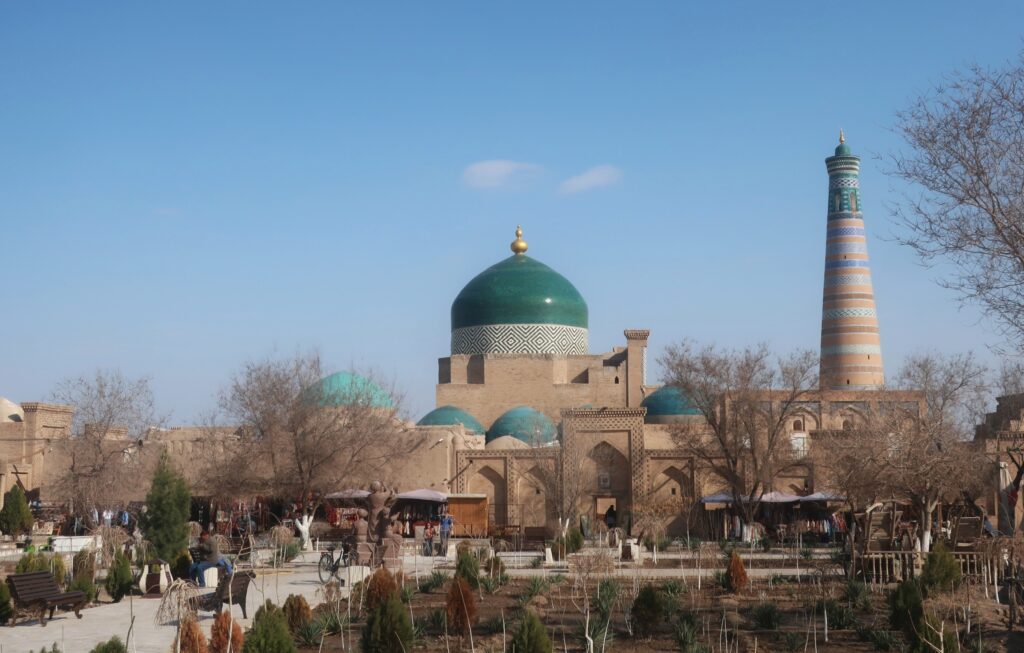
Khiva

Sight or Insight of the Day

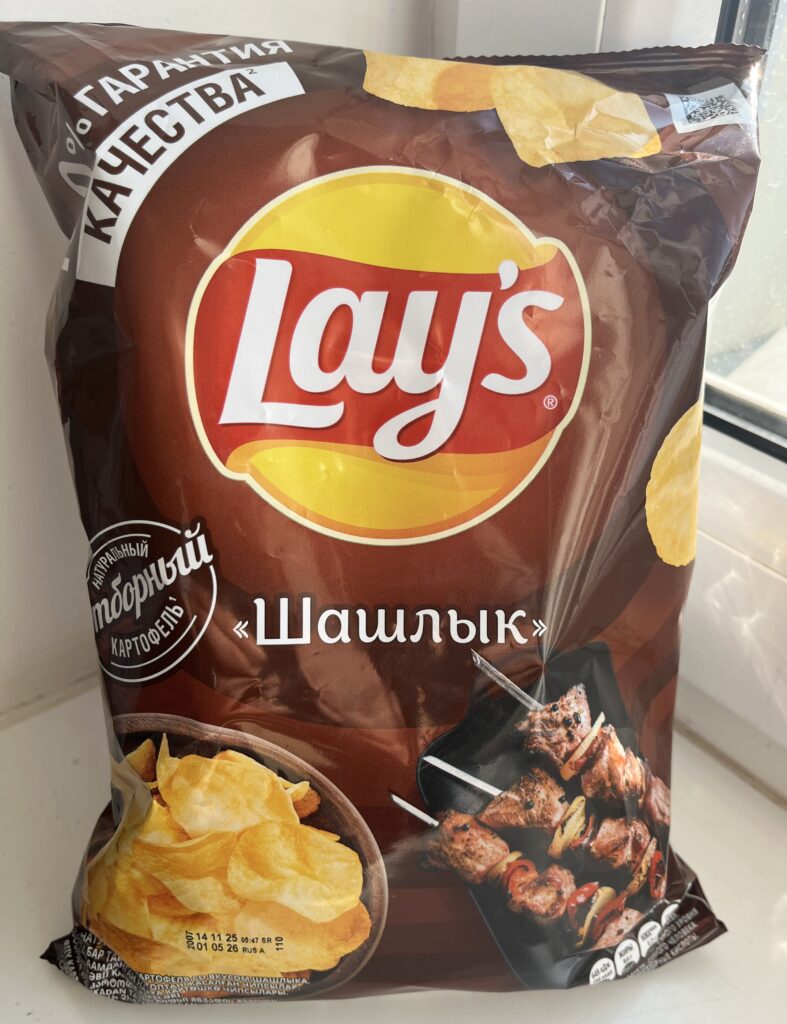
You’ve got to hand it to Big Chip. They really cater to the tastes of their international customers.

Shashlik-flavoured potato chips

Of course, I have to try a bag. They actually taste like shish kabob.

Bukhara Backstreets

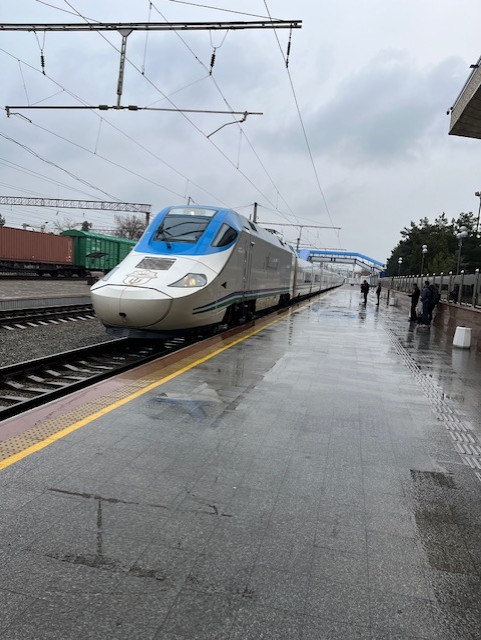
One rainy morning, we take another high-speed train to Bukhara. These trains are Talgo models, from Spain. We like the platypus-esque snout on the engine.

The train from Spain arriving in the rain

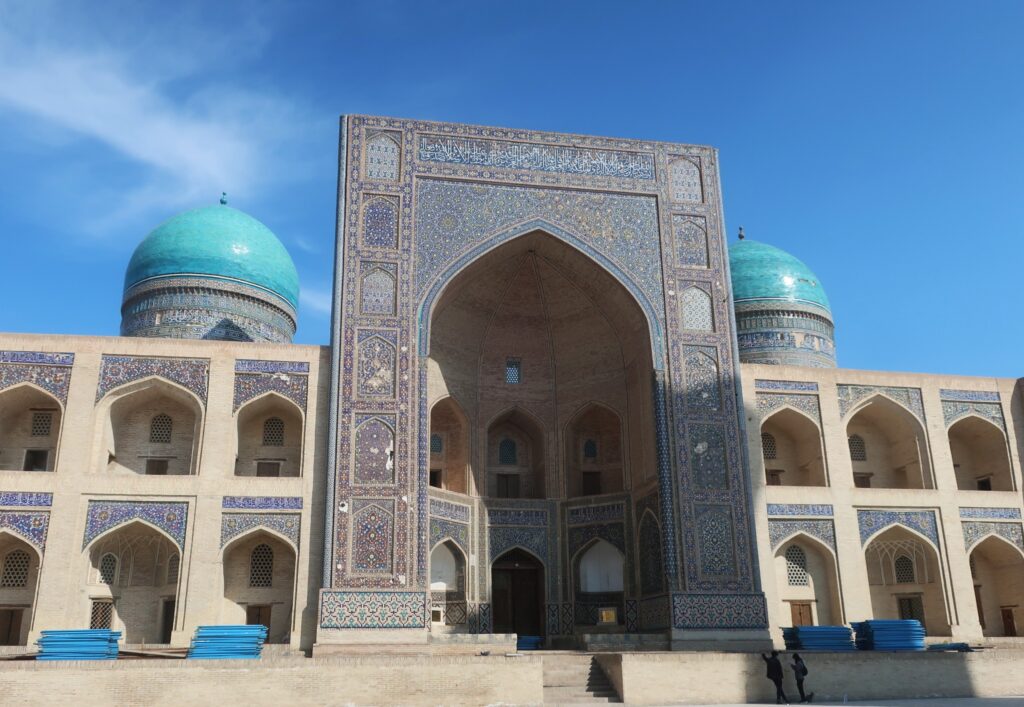
Bukhara is another Silk Road city, bristling with mosques and madrassas and bazaars.

Kalon mosque

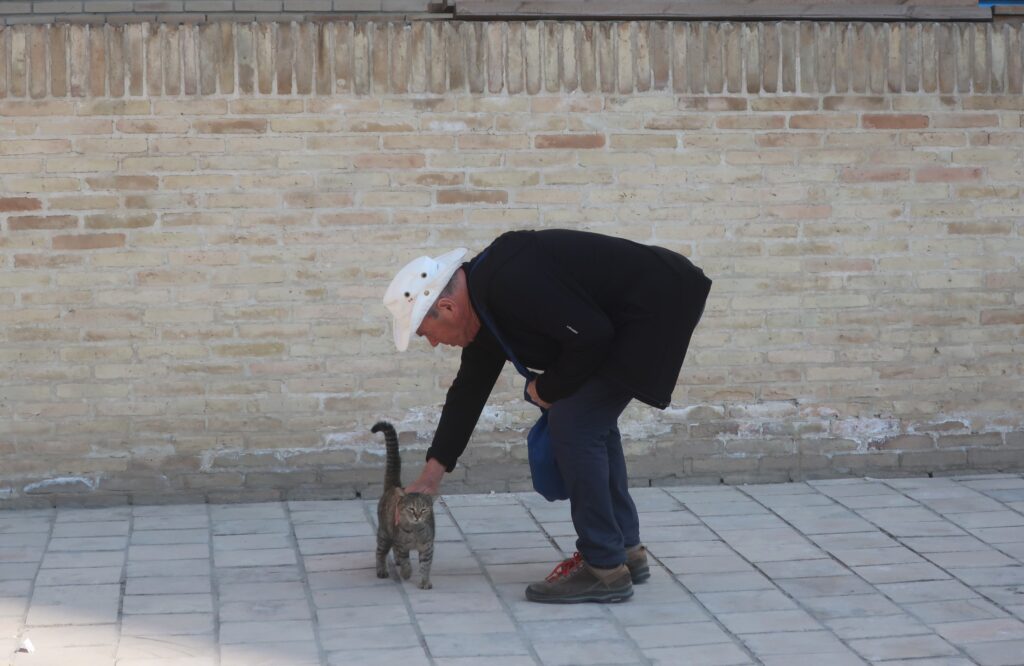
There’s usually a cat around that likes attention. Sometimes tourists from China take videos, as if they’ve never seen anyone pet a stray cat before.

Good kitty

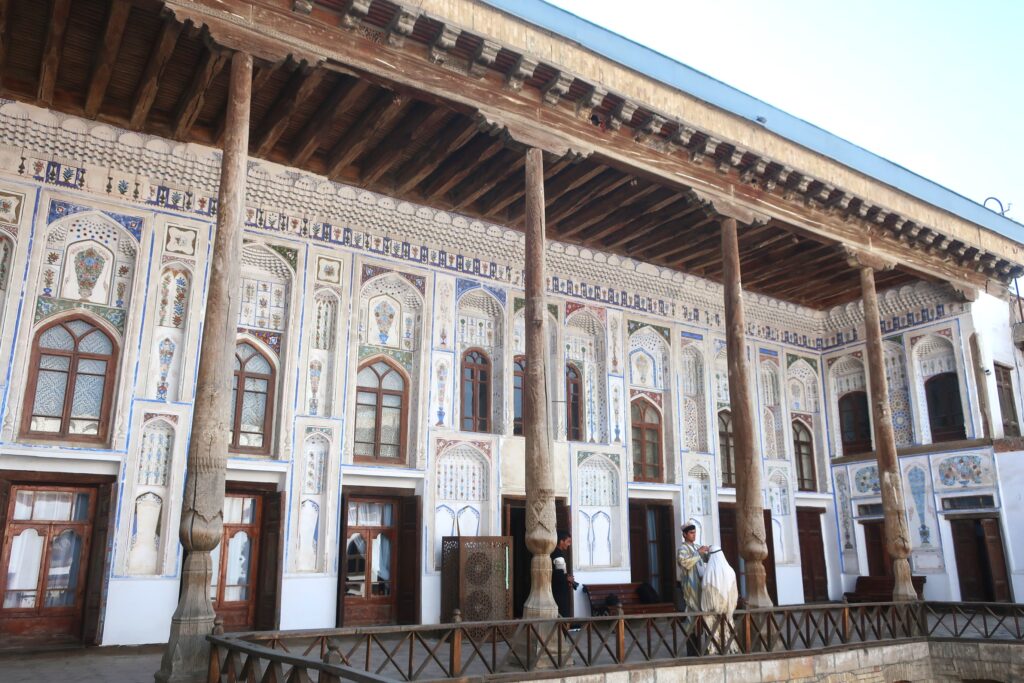
We visit the house of Fayzulla Khojaev. Actually, the house of his his father, a wealthy merchant. It’s a popular place for photo shoots and wedding pictures.

House of Fayzulla Khojaev

Poor comrade Khojaev ended up being liquidated by Stalin, along with a few million of his fellow Soviet citizens.

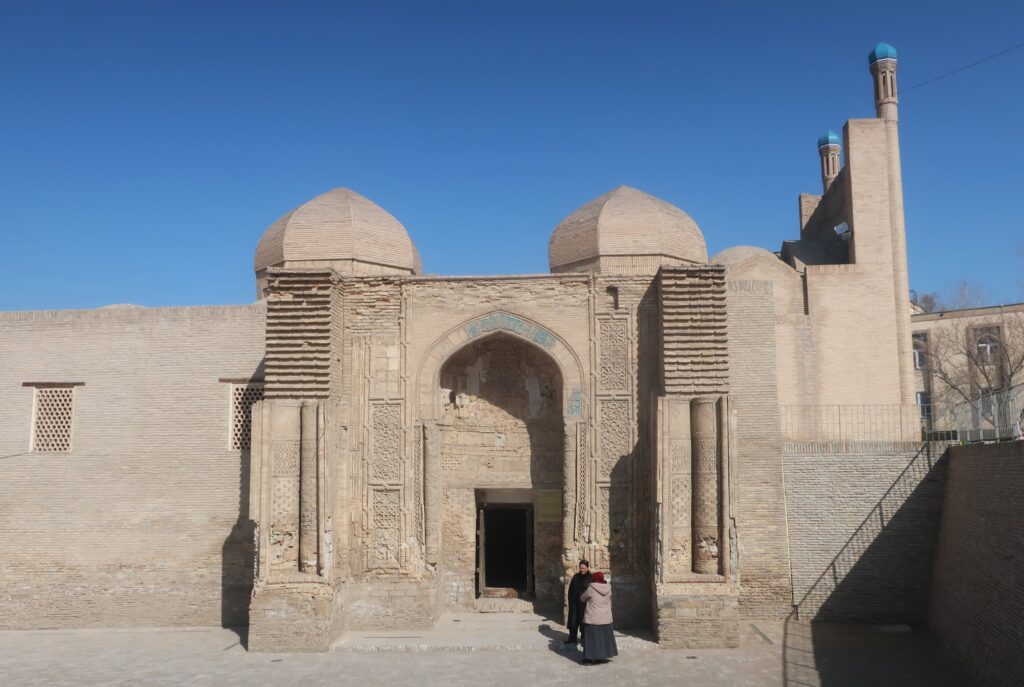
Magok-i-Attari, one of the oldest buildings in the city. Before the Arab conquest, it was a Zoroastrian fire temple, acted as a synagogue, and was eventually a mosque. Ancient-looking outside, the interior is now a modern exhibition space.

Magok-i-Attari

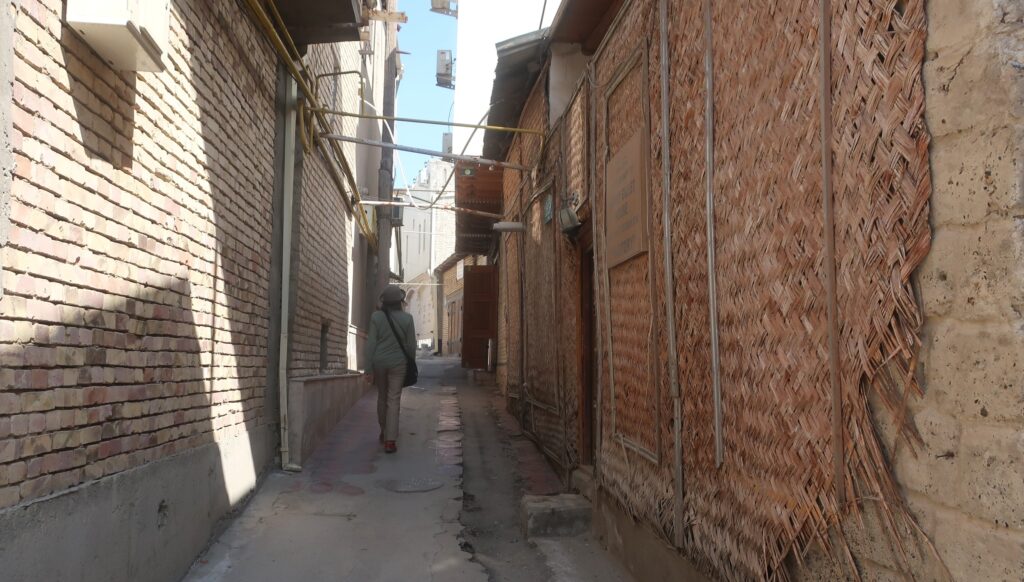
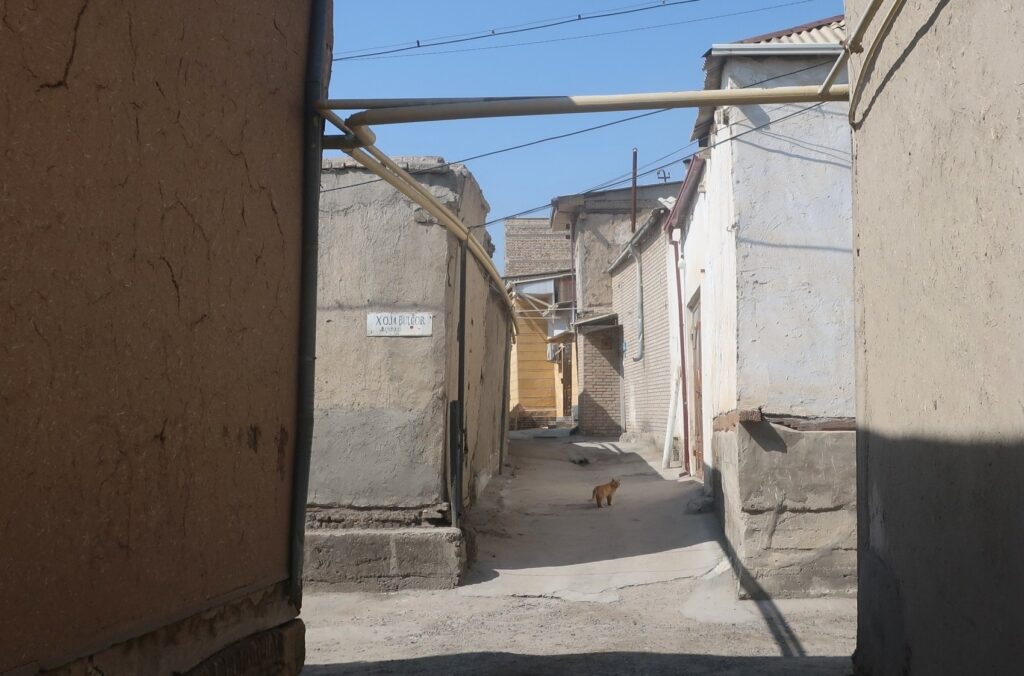
One interesting activity in Bukhara is simply wandering the many backstreets of town.

Alley girl

Believe it or not, motorists here (including our Yandex drivers) think nothing of venturing down these incredibly narrow alleyways. .

Alley cat

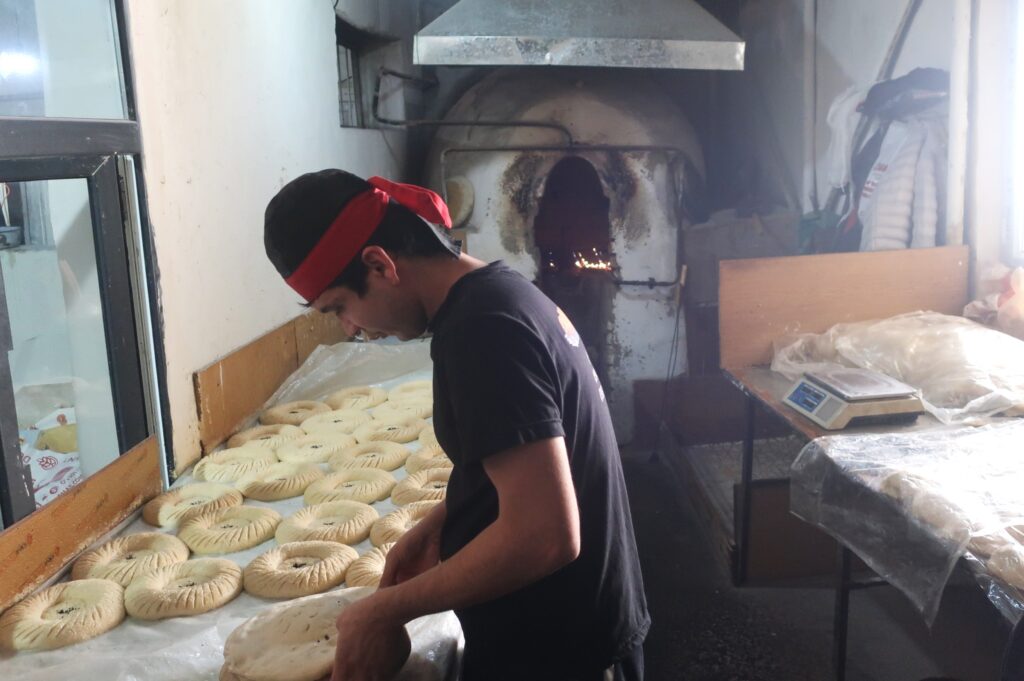
We come across a bakery hard at work producing loaves of non – cognate with ‘naan – bread.

Doughboy

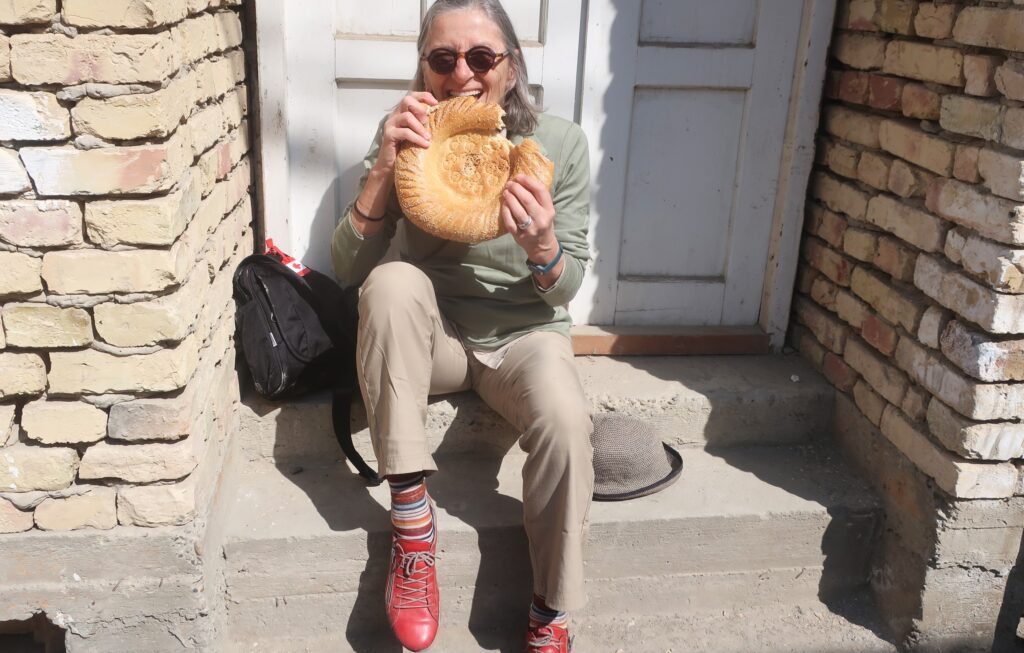
Maria, of course, has to sample some.

Daily bread

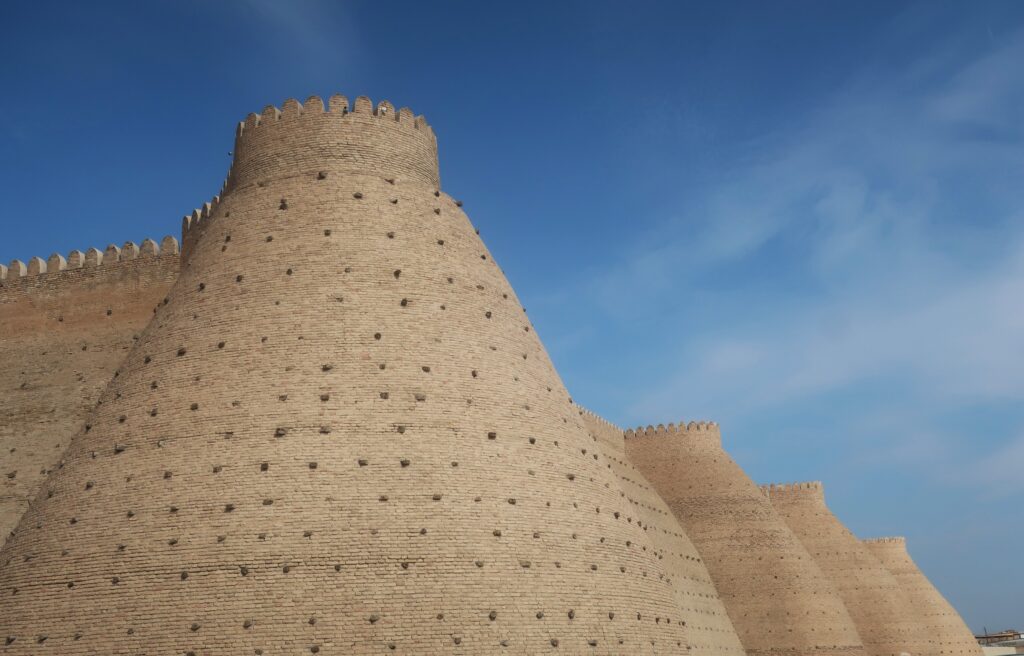
A main feature of the town is the Ark, a fortress and former residence of the emirs of Bukhara, including the unfortunate last one.

Fortress walls

A morbid tale often told about the Ark is how the emir at the time tossed a pair of British emissaries, Charles Stoddart and Arthur Conolly, into a bug-infested pit for three years before making them dig their own graves and beheading them. Not very diplomatic.

The fortress has footpaths around the archaeological work being done in the area.

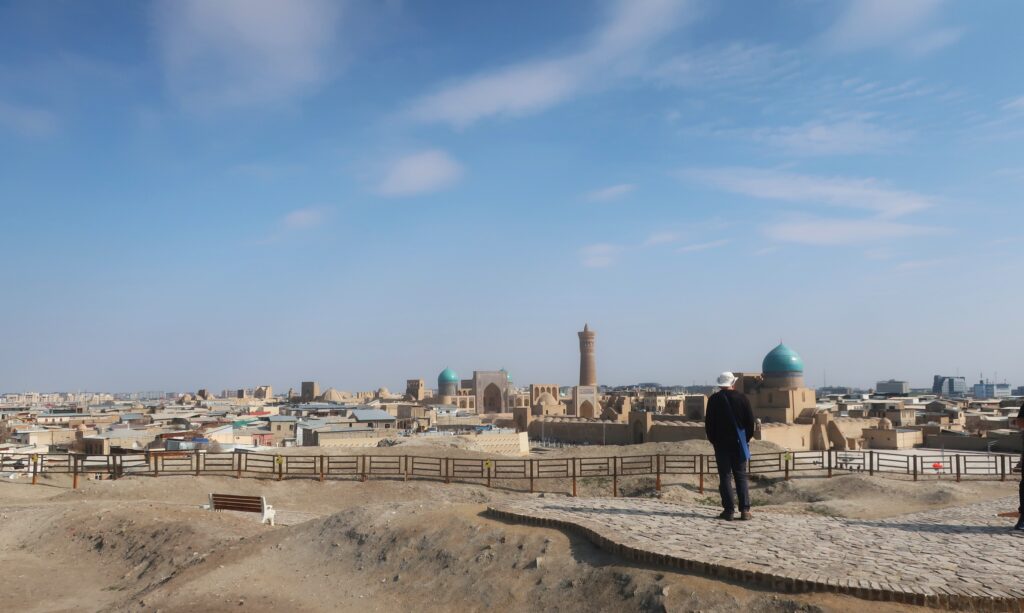
Bukhara skyline

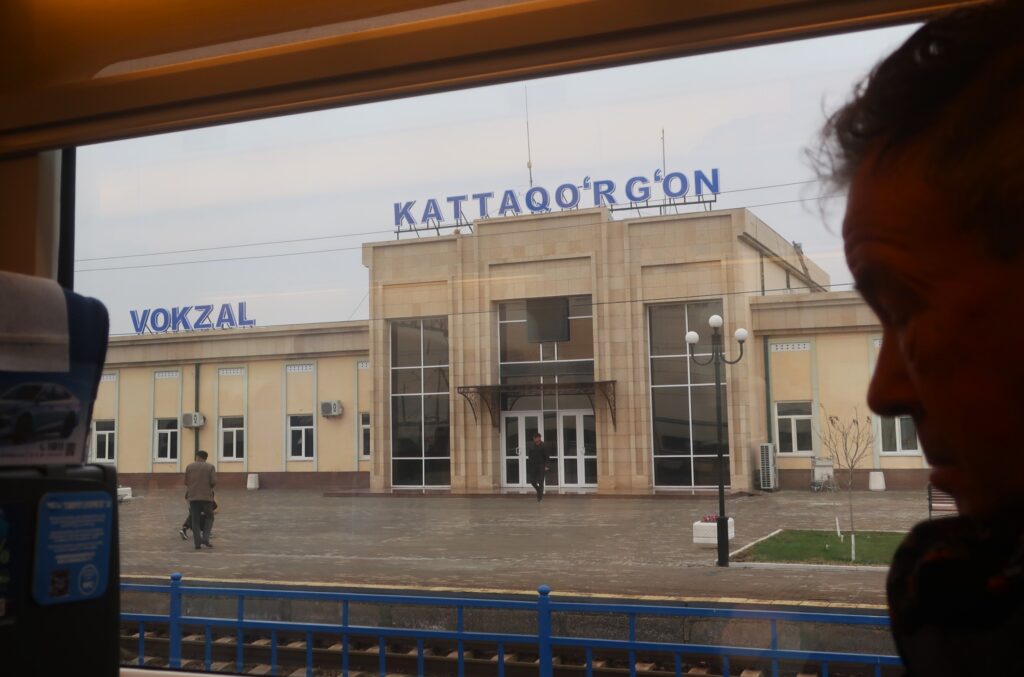
Linguistic fun fact: the Russian word for train station is ‘вокзал’, pronounced ‘voksal’. I wonder if this is related to the well-known Vauxhall station in London. According to Wikipedia, my surmise may be correct:

The name Vauxhall is phonetically similar to the Russian word for a railway station, Ð²Ð¾ÐºÐ·Ð°Ð» (vokzal). One theory for this similarity is that Tsar Nicholas I visited Britain in the mid-19th century to study the railway network. At the time, every train on the South Western Railway called at Vauxhall as a ticket stop. From this, the Tsar concluded that Vauxhall was a major transport interchange, and the word was introduced as the generic term in Russian.

Sight or Insight of the Day

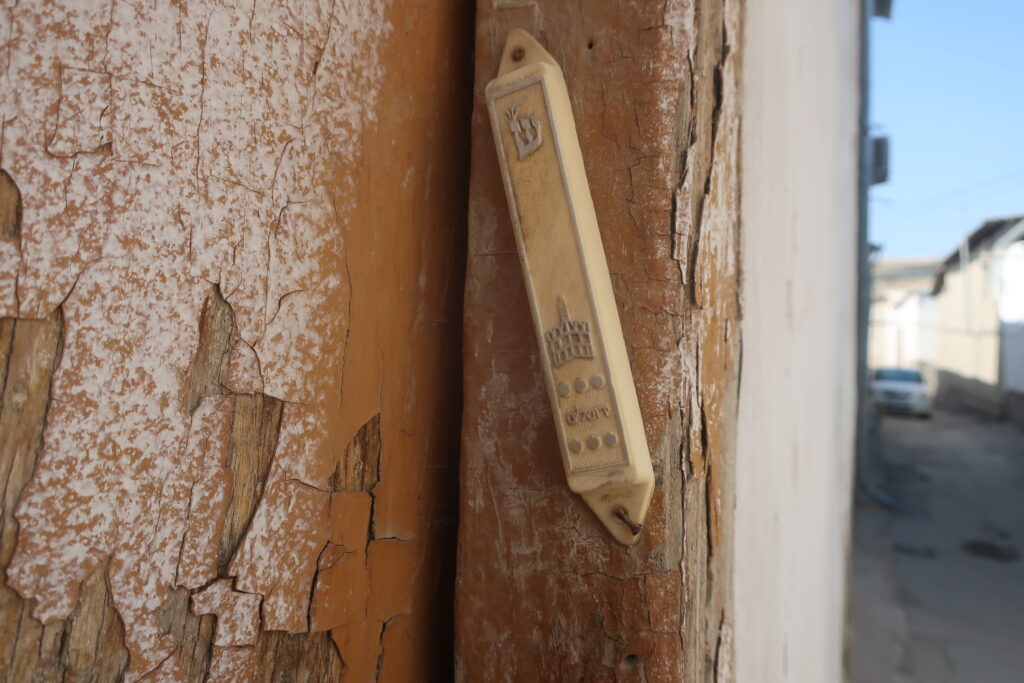
While strolling the back alleys of Bukhara, we come across this on the lintel of an abandoned house.

‘Hear, O Israel…’

It’s a mezuzah. A cheap plastic one, but still a ghostly reminder of a departed population.

According to Lonely Planet, ‘Jews made up 7% of Bukhara’s population at the time of the Soviet Union’s collapse. Only about 100 remain.

Samarkand – Amir Timur Territory

After acclimatizing for a few days in Tashkent, we take the high-speed train to Samarkand.

I remember rainy afternoons in the fourth grade learning about Marco Polo and his travels to places with magical names like ‘Bokhara’ and ‘Samarkand’. Our teacher made it come alive in the telling. (Thanks, Miss Legault!)

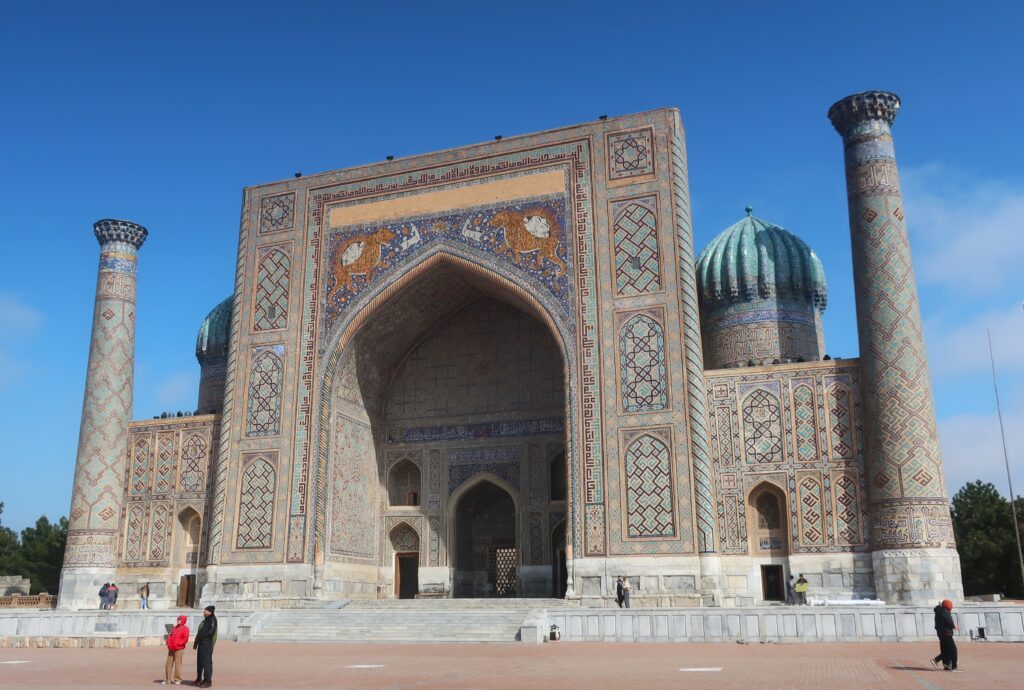
Registan – Sherdar madrassa
Interior

Samarkand is closely connected to the deeds of Amir Timur, known in English as Tamburlaine. That still won’t ring any bells for most people besides those interested in Asian history and fans of Elizabethan theatre. (‘Tamburlaine the Great‘ was a big hit for Christopher Marlowe.)

Tamburlaine ruled over a vast empire from Egypt to India, ‘spacious in the possession of dirt’, as Shakespeare says. Lots of bloodshed involved. Samarkand was his capital.

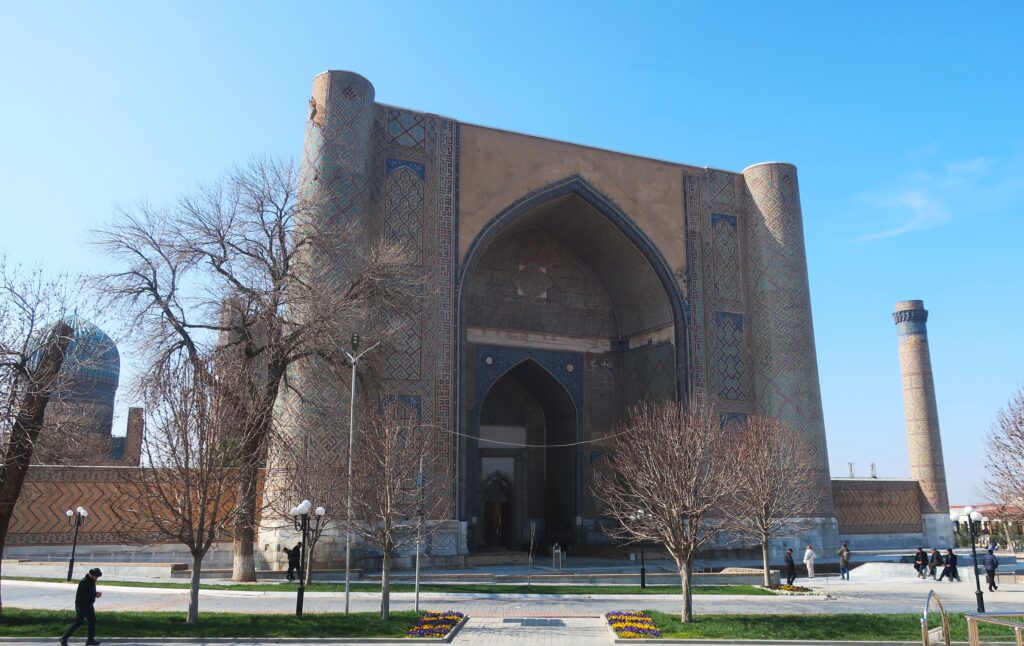
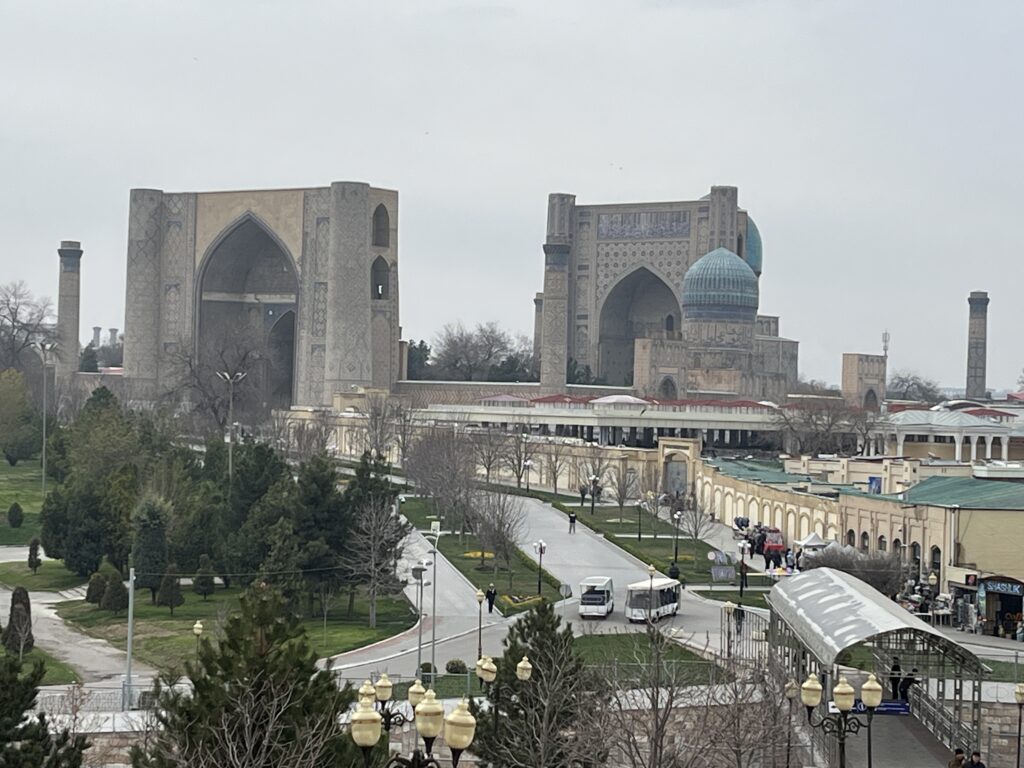
This is the Bibi-Khanym mosque. Bibi was one of Timur’s 18 wives. You can judge the size of the place by the pedestrians walking in the square.

Bibi-Khanym Mosque

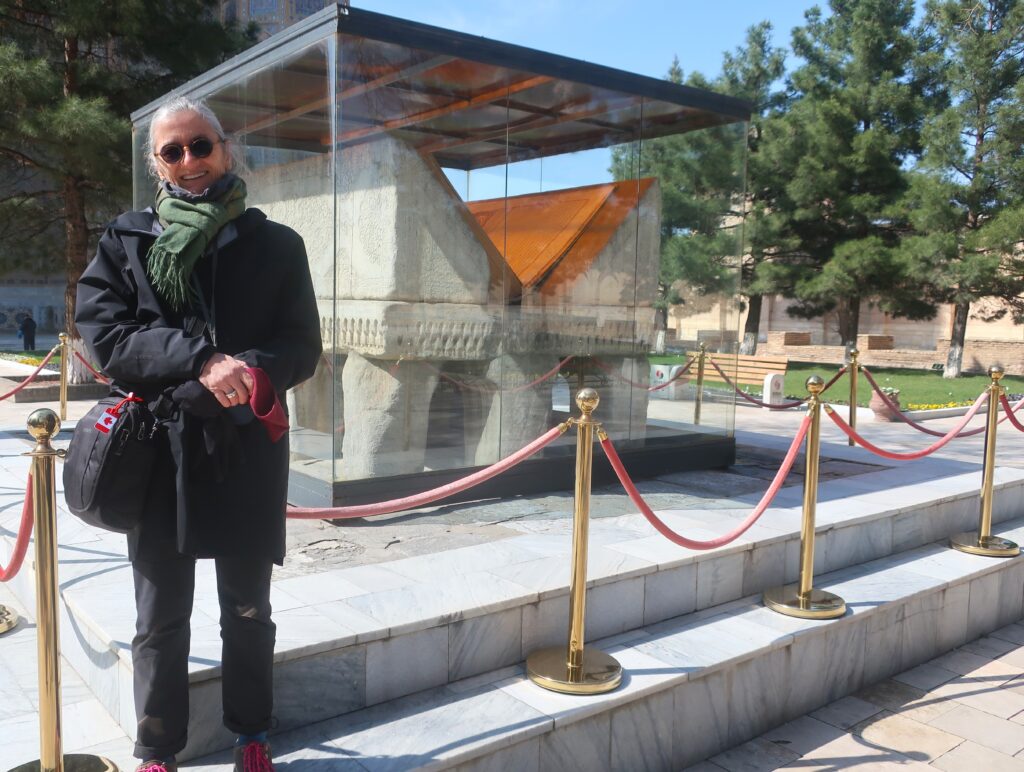
In the the courtyard is a giant Koran.

Heavy reading

If you’re wondering why Maria looks so bundled up, it’s because we have a few days of bone-chilling cold.

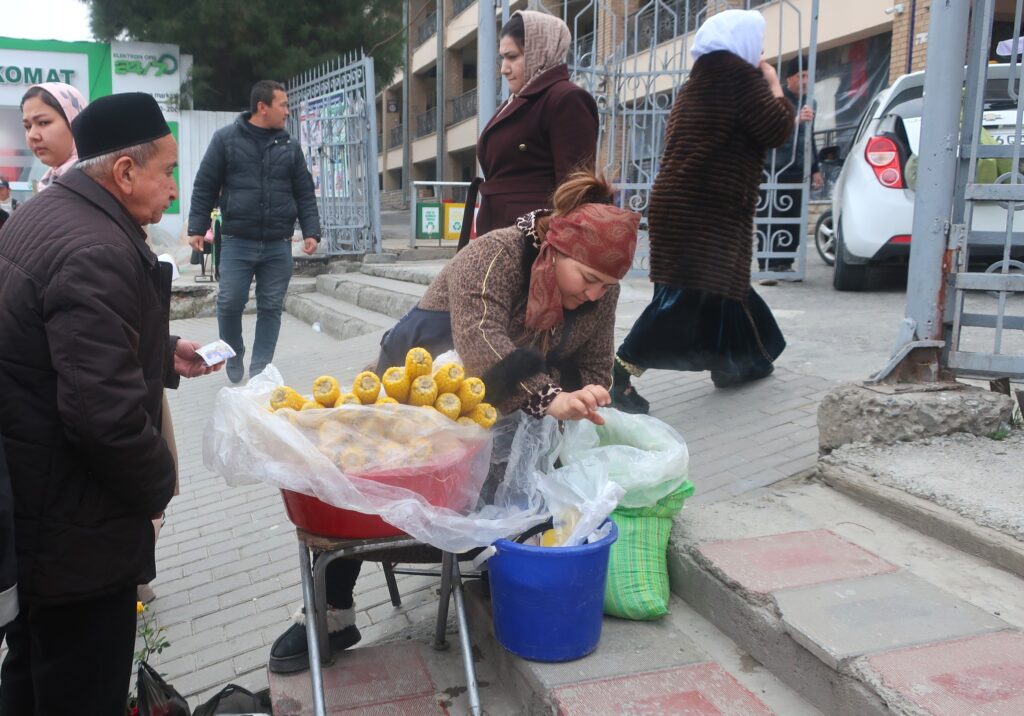
Everyone else in town is also trying to stay warm.

Corn-on-the-cob vendor

This is another view from afar. On the left is the Bibi Khanym mausoleum.

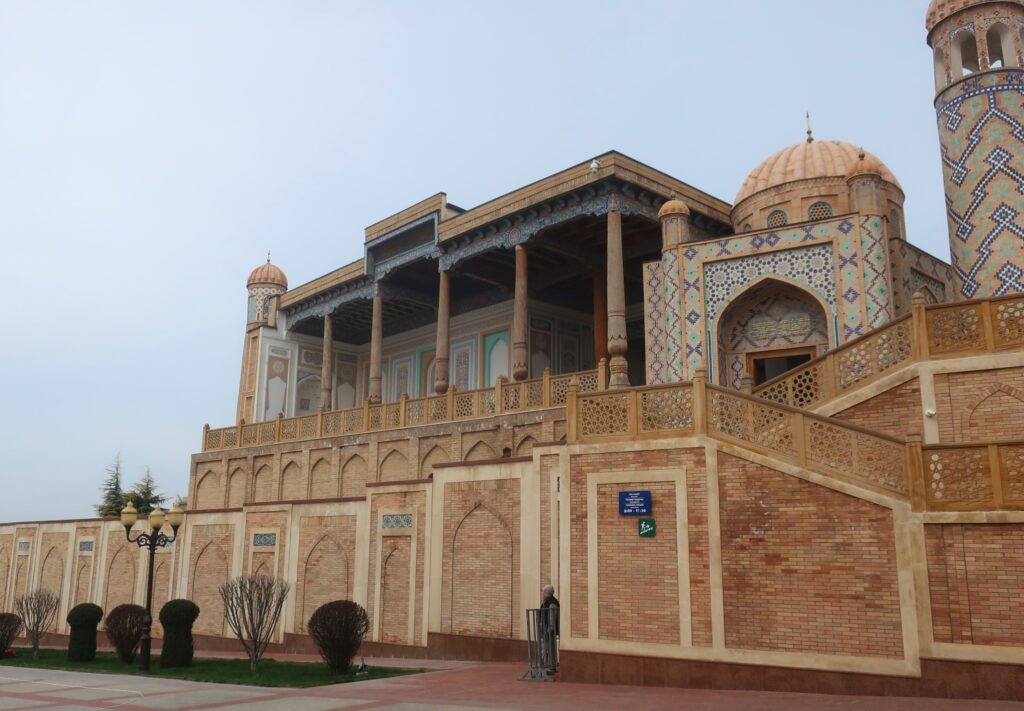
Taken from the balcony of the Hazrat Khizr mosque. This is where the remains of Islam Karimov, Uzbekistan’s first president, slumber in eternity.

Hazrat Khizr Mosque

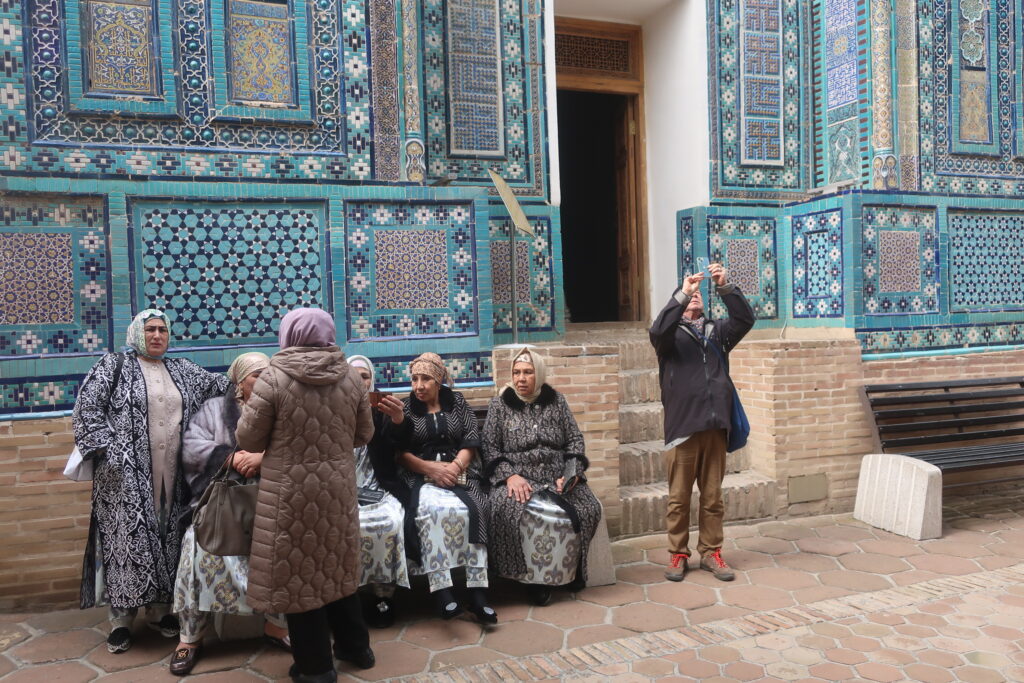
In the vicinity is the Shah-i-Zinda, a necropolis of brightly-coloured mausolea for highly-placed people, including several of Timur’s relatives.

Shah-i-Zinda

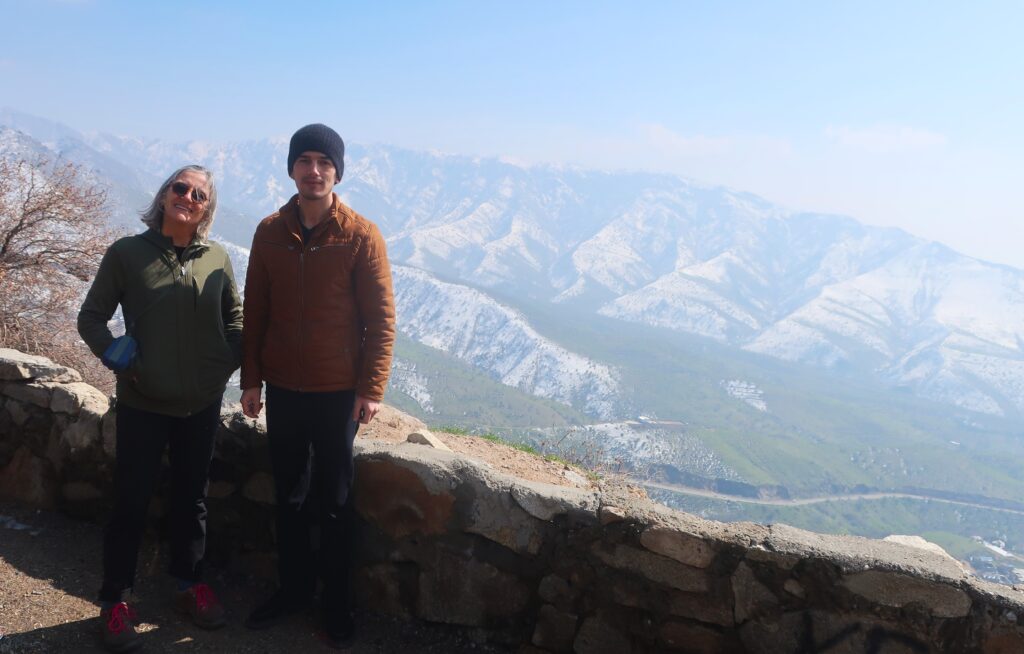
In search of more Timur sites, we hire a car and driver for a day trip to Shahrisabz, Timur’s birthplace. We drive over the snow-clad Tahtakaracha Pass.

Maria and our driver

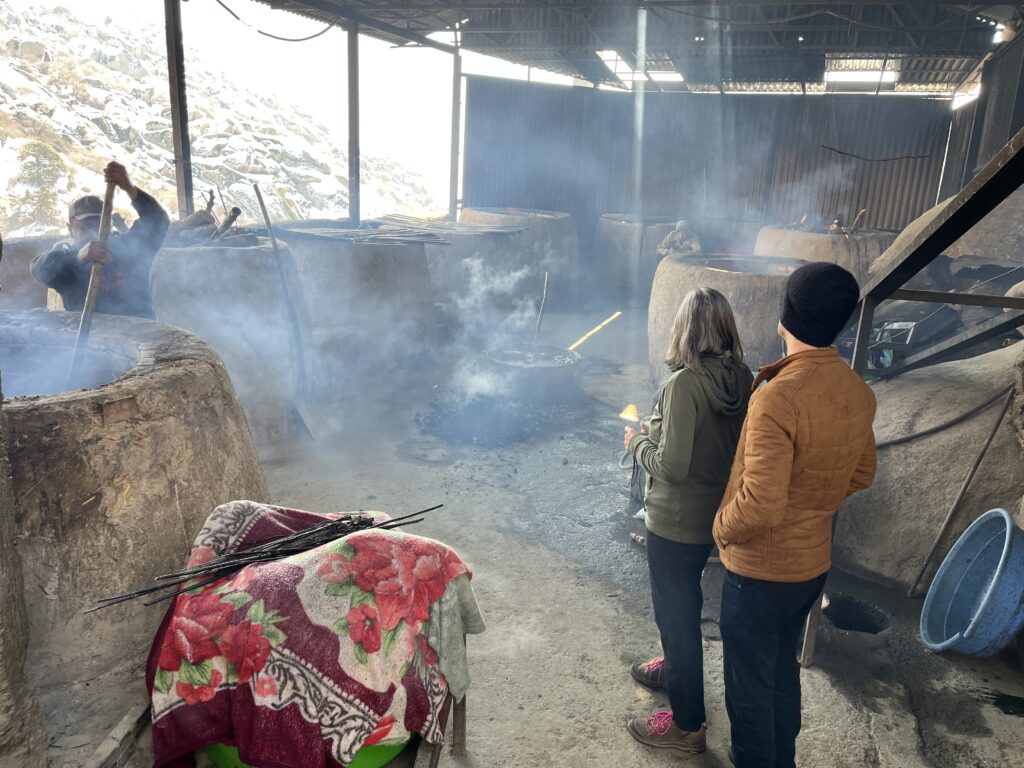
The top of the pass has many restaurants specializing in tandori BBQ. The small sample we tried was delicious.

The smokehouse

Shahrisabz is a bit of a disappointment. This is all that remains of Timur’s once-extensive summer palace after being destroyed in the 16th century, along with the entire town, by the forces of Abdullah Khan II, a fellow autocrat.

38m-high ‘pishtak’ (entrance portal)

Still, the drive is scenic, and it’s interesting to see Uzbek life out in the countryside.

Mulberry trees

Mulberry trees line the road everywhere. Later, their leaves will feed the silkworms that supply Uzbekistan’s silk industry.

In the footsteps of Amir Timur

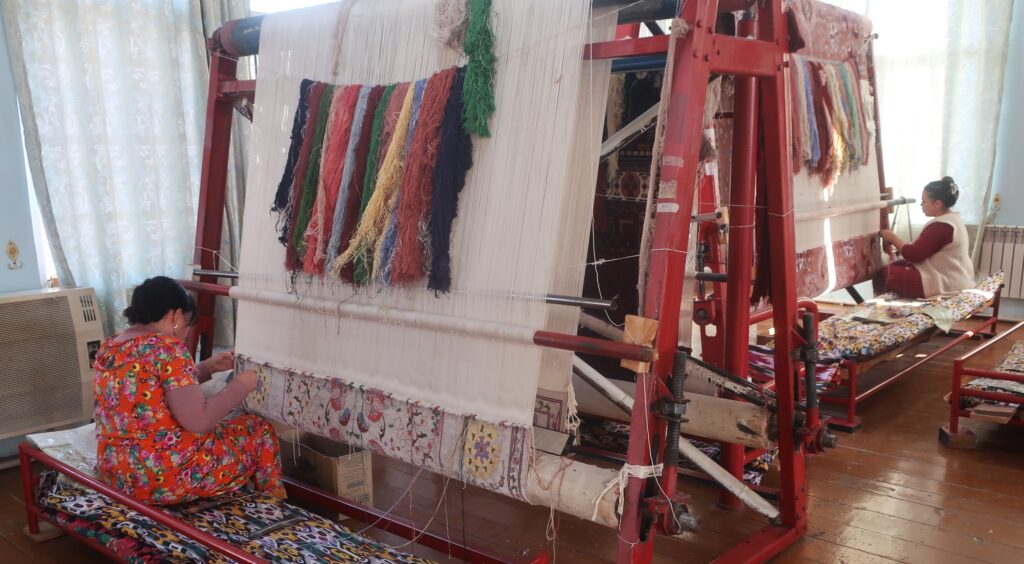
Back in town, we visit a carpet factory. Some attractive carpets, but no gotta-haves.

Knotty and nice

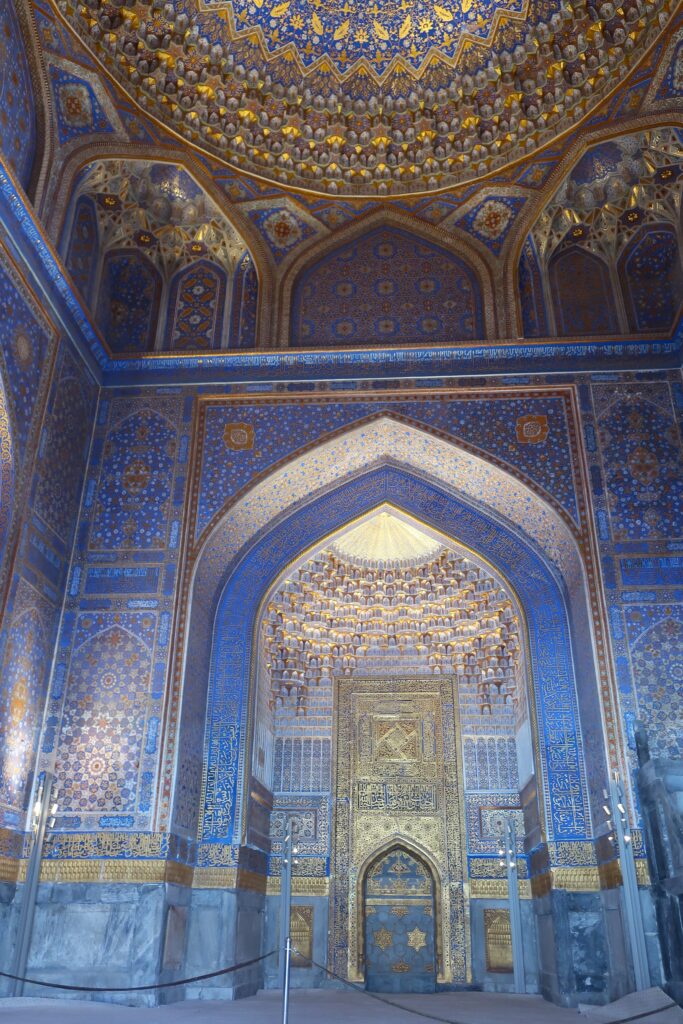
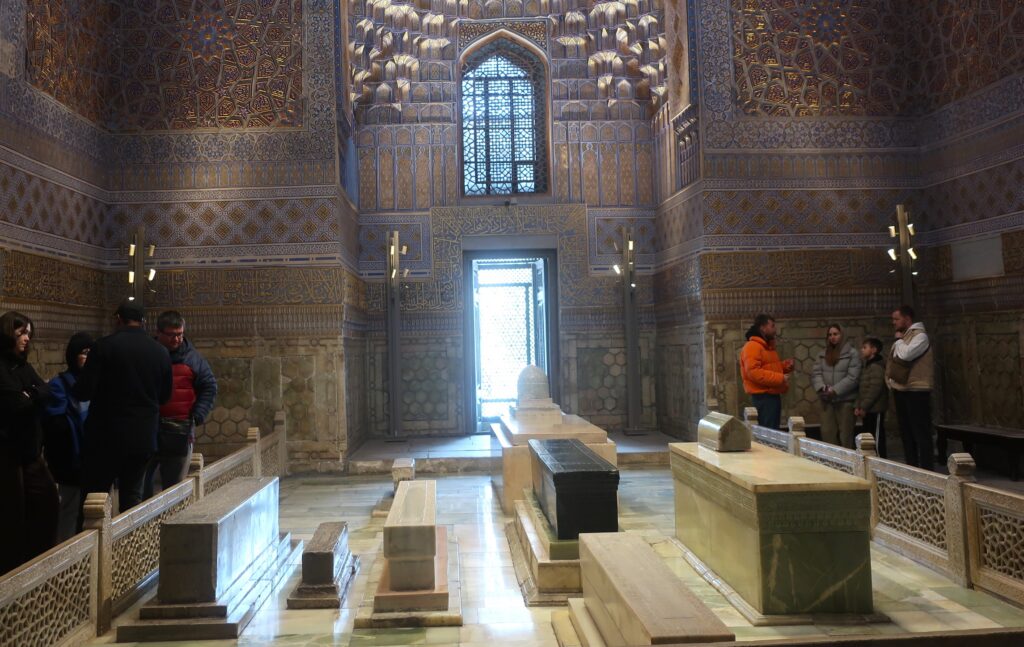
Lastly, we visit Gur-e-Amir, Timur’s final resting place.

Gur-e-Amir, interior

Samarkand may be a household name – sort of – but we’d never heard of Afrasiyob before coming here. We see the name on hotels and businesses. Even the high-speed train that whisks us here is named the ‘Afrasiyob’.

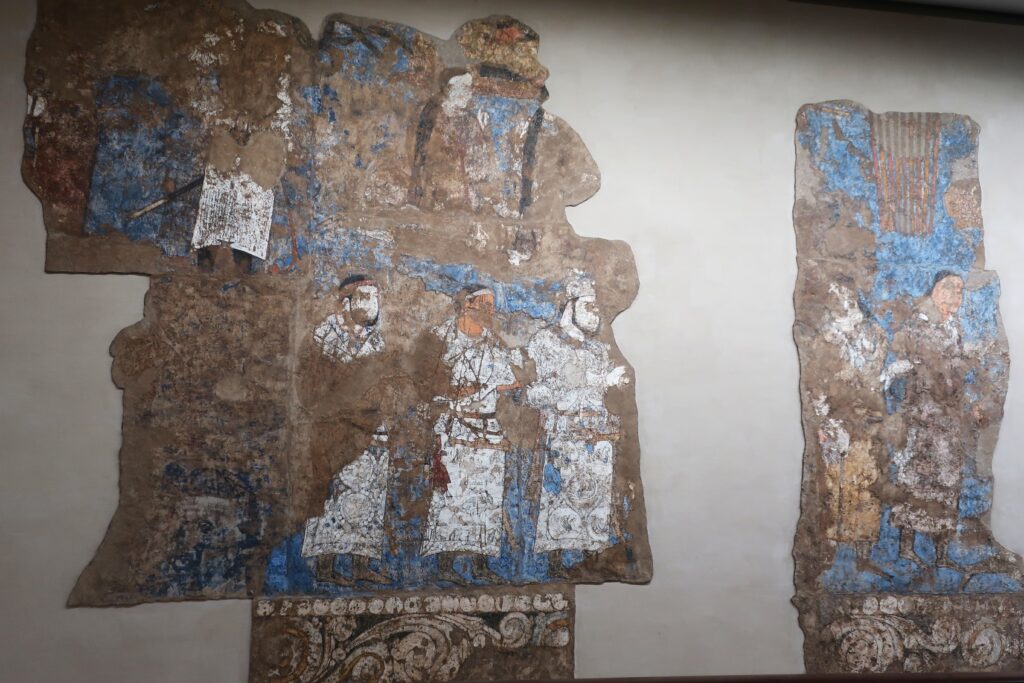
Afrasiyob was a Sogdian precursor of Samarkand. Alexander the Great dropped in for a visit.

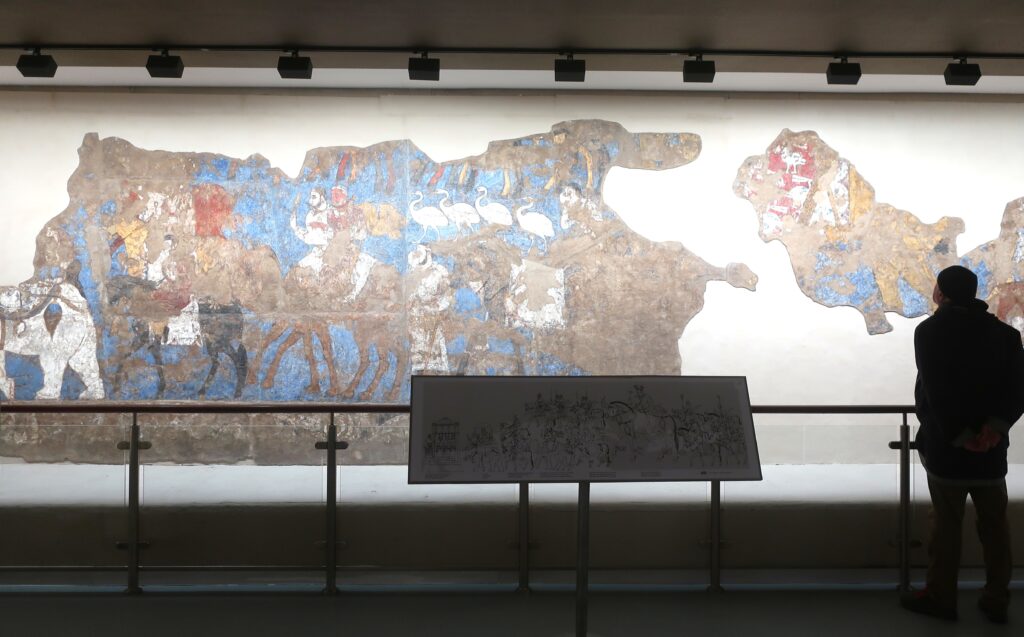
The ambassadors arrive

This recently-discovered mural dates from pre-Islam Afrasyob.

Messengers come calling, too

So there you have it – a populous, vibrant city until the arrival of the Mongols, who razed it to the ground. (I’ve always thought it’s ironic that ‘razed‘ has the meaning of ‘utterly flattened‘.)

Reminds us of our visit to Enkomi in Cyprus. Another bustling city-of-the-world, now just ruined foundations in a field of grazing sheep.

Toronto, 3,000 years from now?

Sight or Insight of the Day

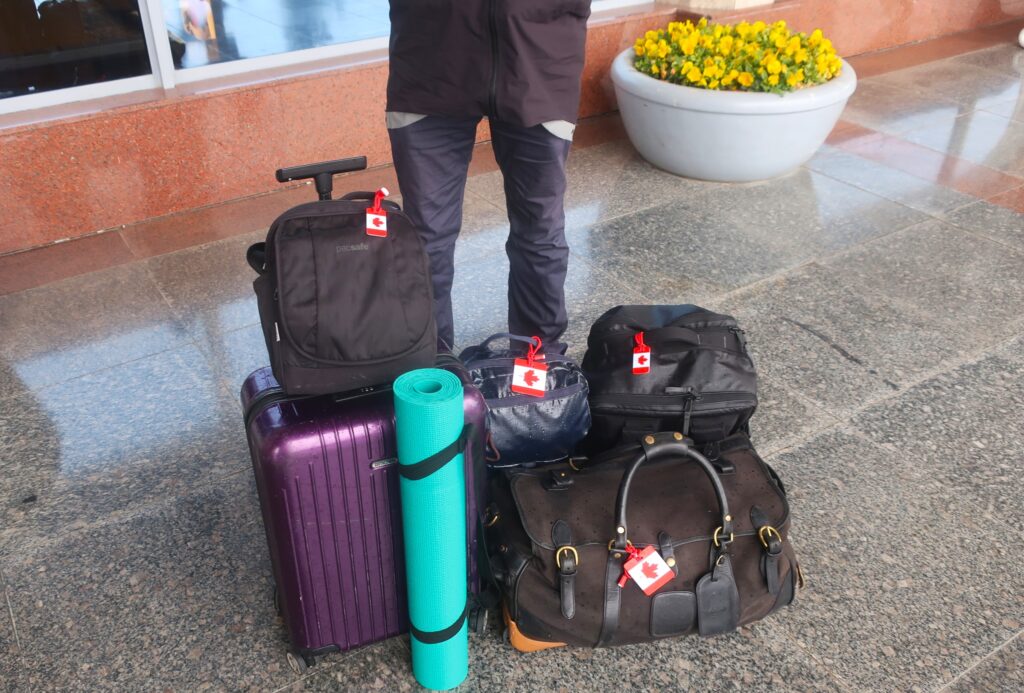
Normally, we don’t make a big deal out of being Canadian. However, in this day and age, we feel it’s a good idea to make plain that we are not Trumplandians.

No truck nor trade with the Yankees!

So our luggage is now prominently labeled with maple leaf luggage tags.

Tashkent – White Chevrolets & Men in Black

It’s been a while since we returned from our South American trip last year. Spring, summer, fall, and most of winter have gone by. President Trump continues to spread peace and prosperity throughout the globe. Uncharacteristically for us, we spent the winter at home, enjoying time with family and friends.

But inevitably, it was time to dig the travelling shoes out from the back of the closet. First stop on this trip is Tashkent, the capital of Uzbekistan and the largest city in Central Asia.

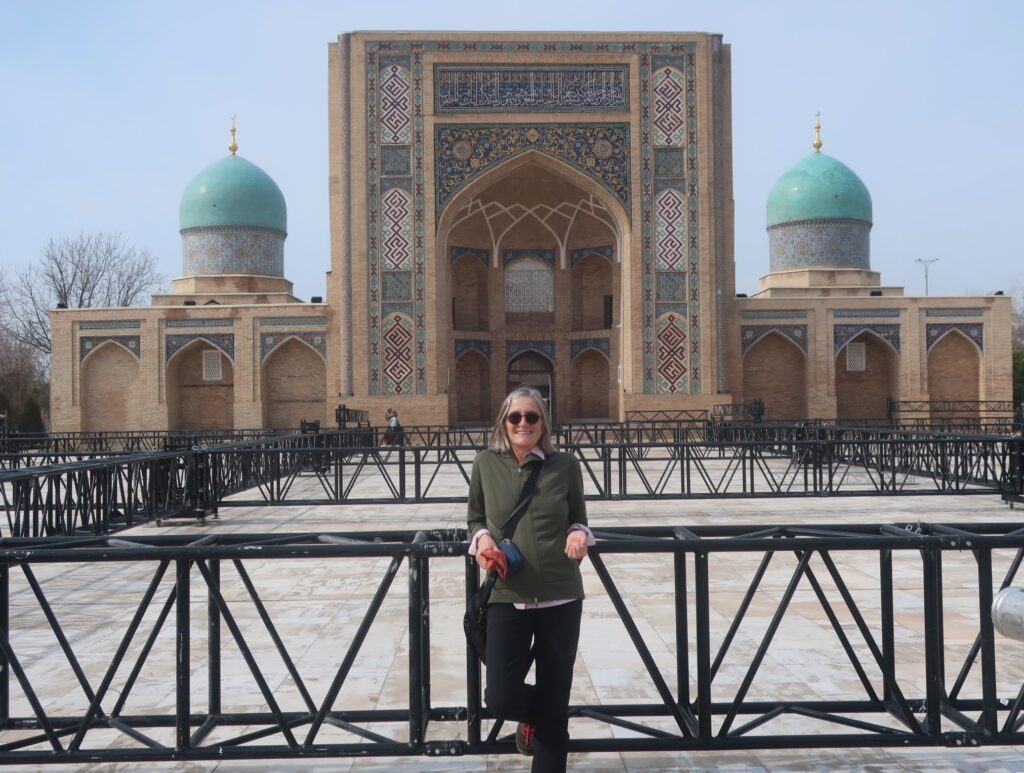
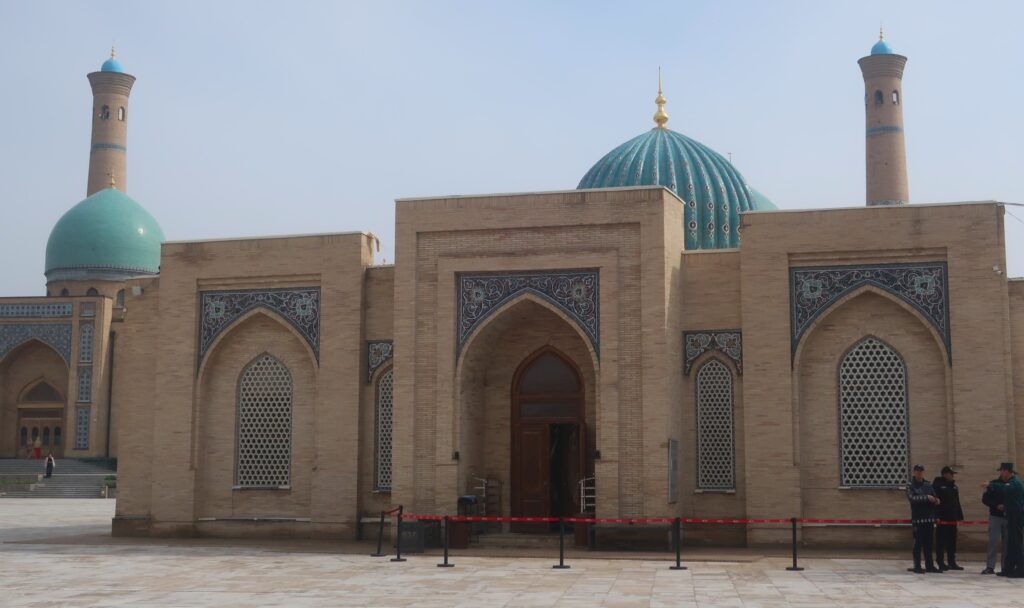
Barak Khan Madrassa

This unassuming little building is the home of one of the world’s oldest Korans.

Moyie Mubarek library/museum

Tashkent contains a mix of Imperial Russian, Soviet-era, and post independence buildings. People are very friendly and relaxed.

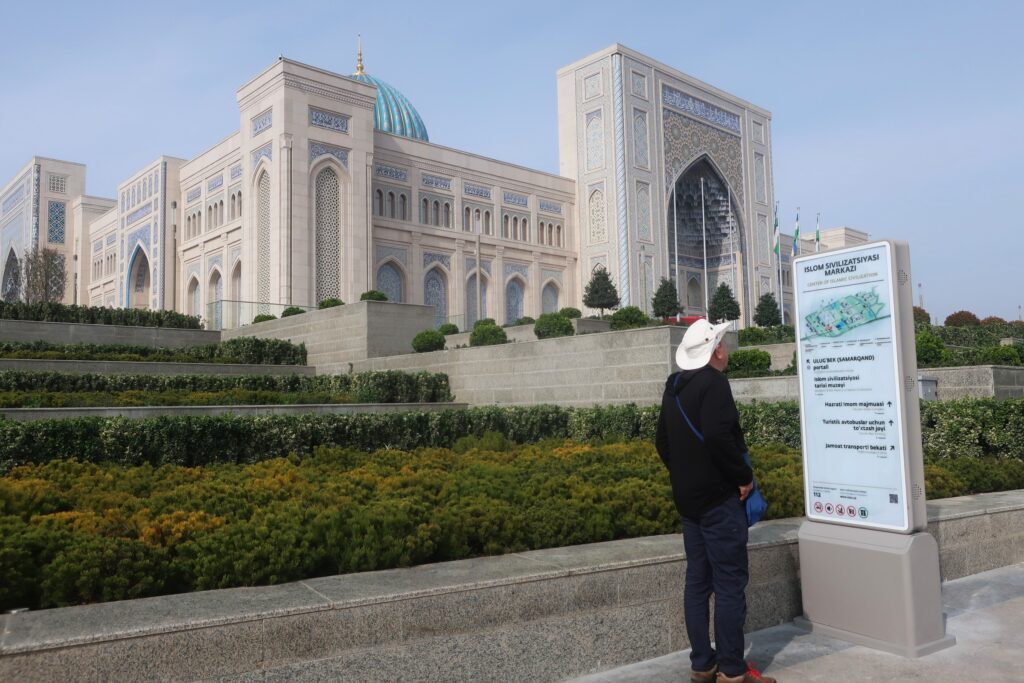
Coming soon: the Center for Islamic Civilization. It is enormous. It’s scheduled to open later this month.

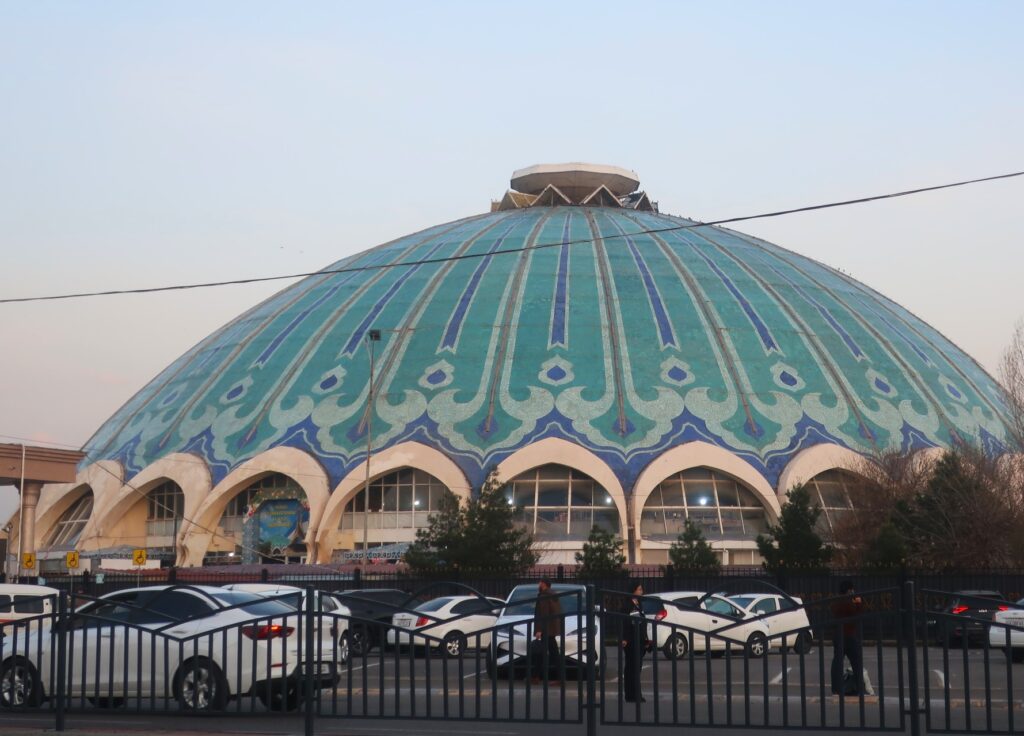
Our accommodation is near the Chorsu Bazaar. Run by a nice family. Close to a Metro station, but on a quiet side street.

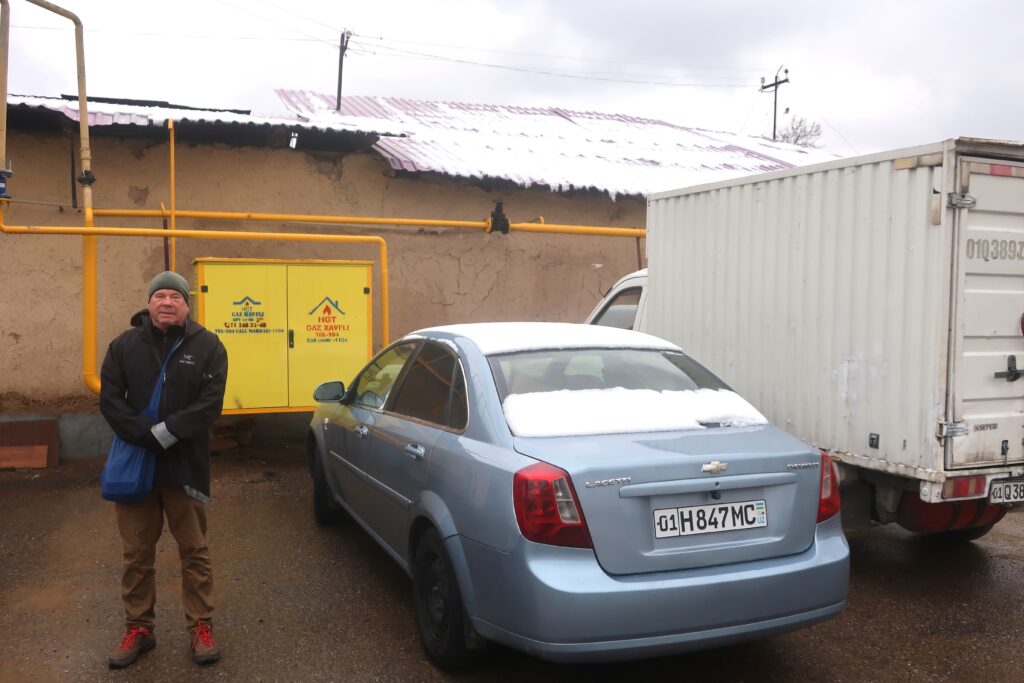
In a sea of white Chevrolets

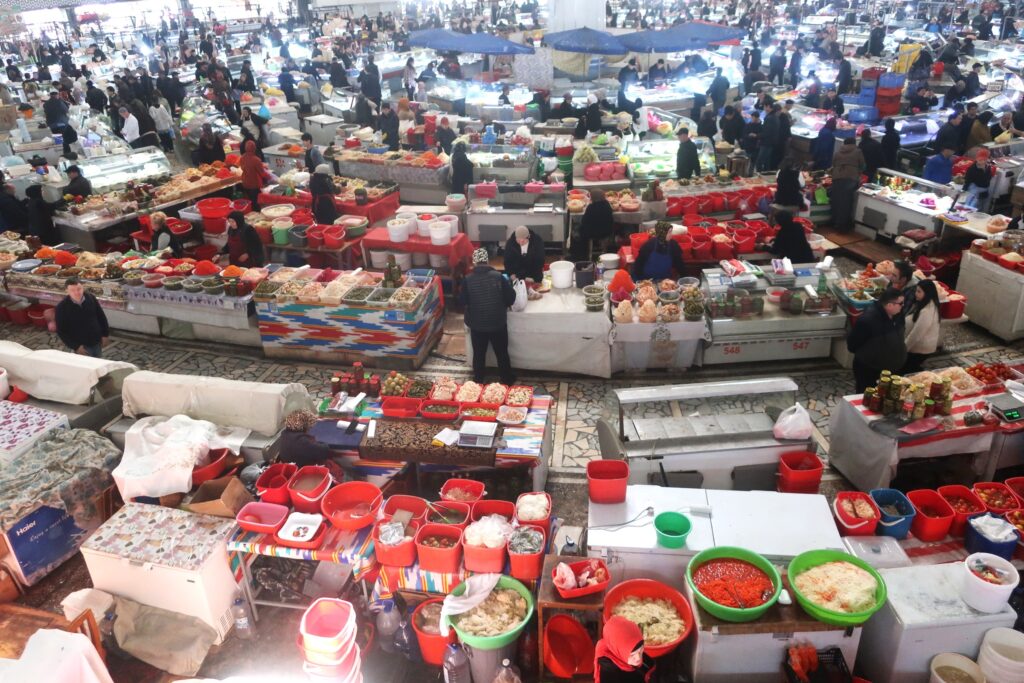
Lots of the usual commercial hubbub in the market. We track down the Consumer Electronics sector, because somebody forgot to pack a power bar.

Market
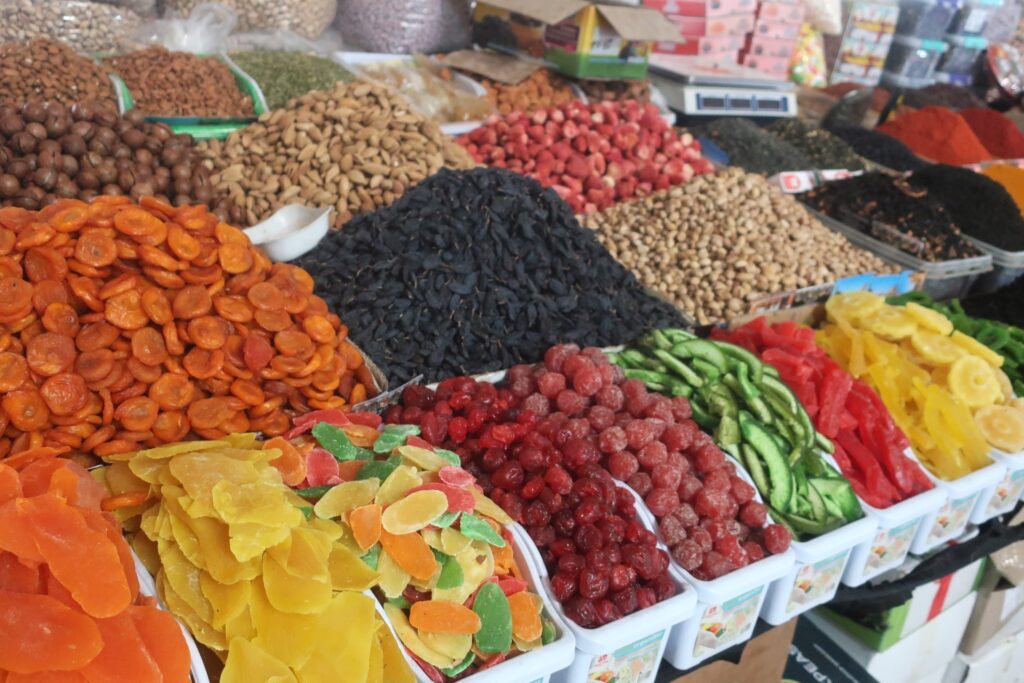
Nuts and candied fruits

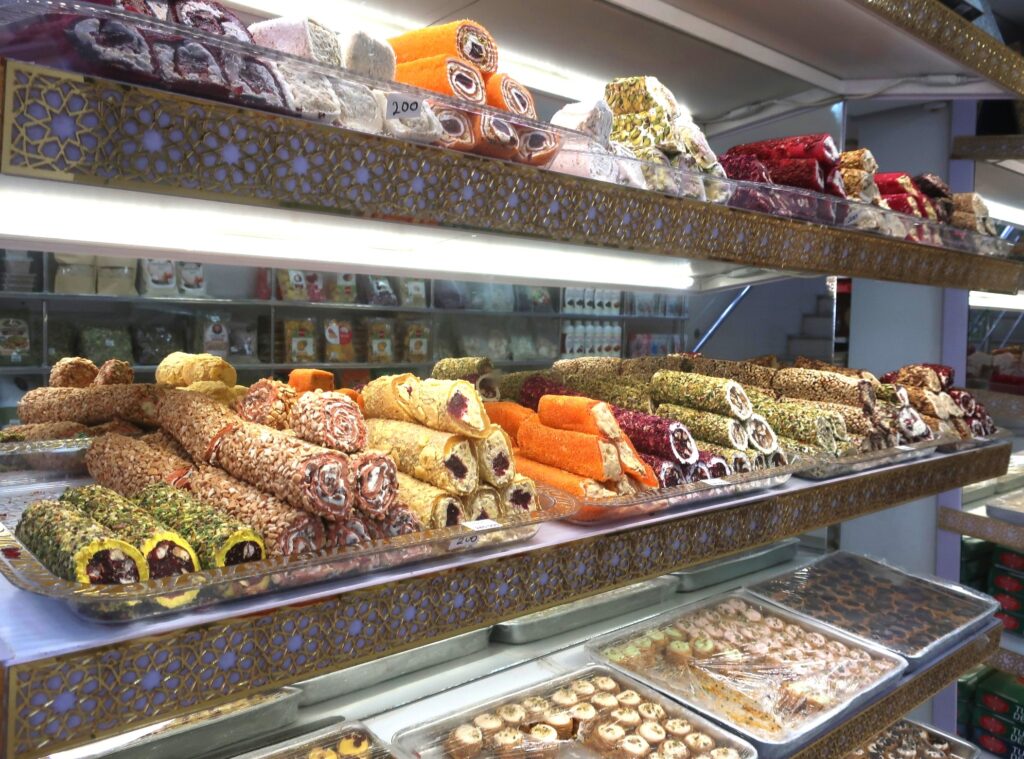
Typical of people in Muslim countries, Uzbeks are keen on sweet things.

Look out, blood sugar!

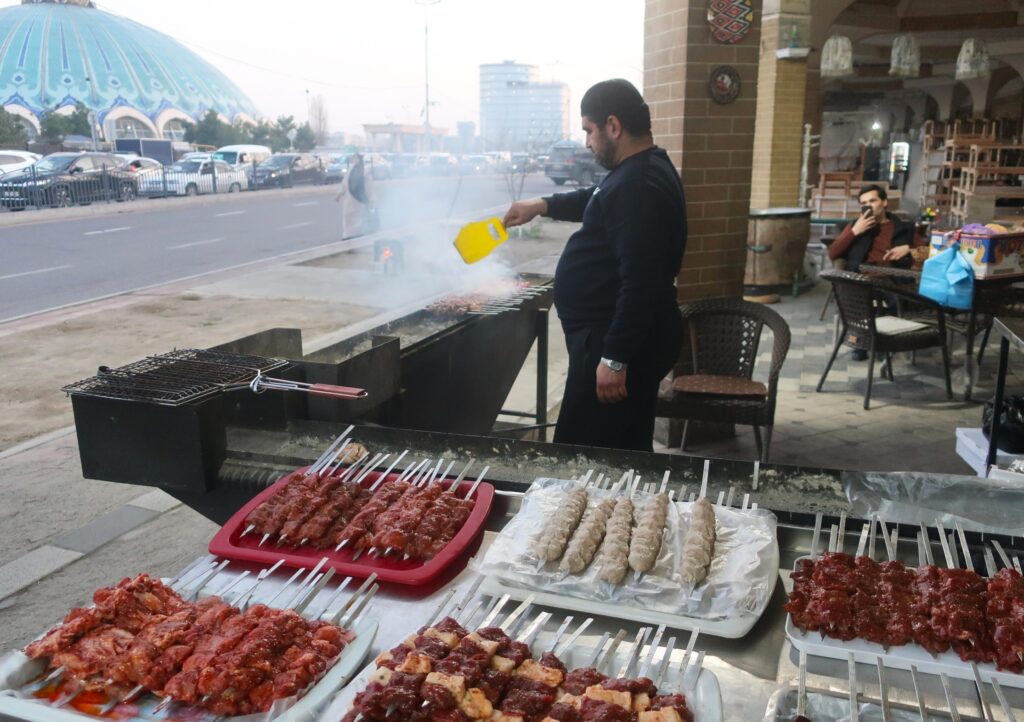
They also eat a lot of meat here.

True story: on our flight from Warsaw to Tashkent, the flight attendant passes out sandwiches, which she says contain ‘meat’. ‘What kind of meat’, someone asks. ‘I don’t know. Not pork.’

Kabob’s your uncle

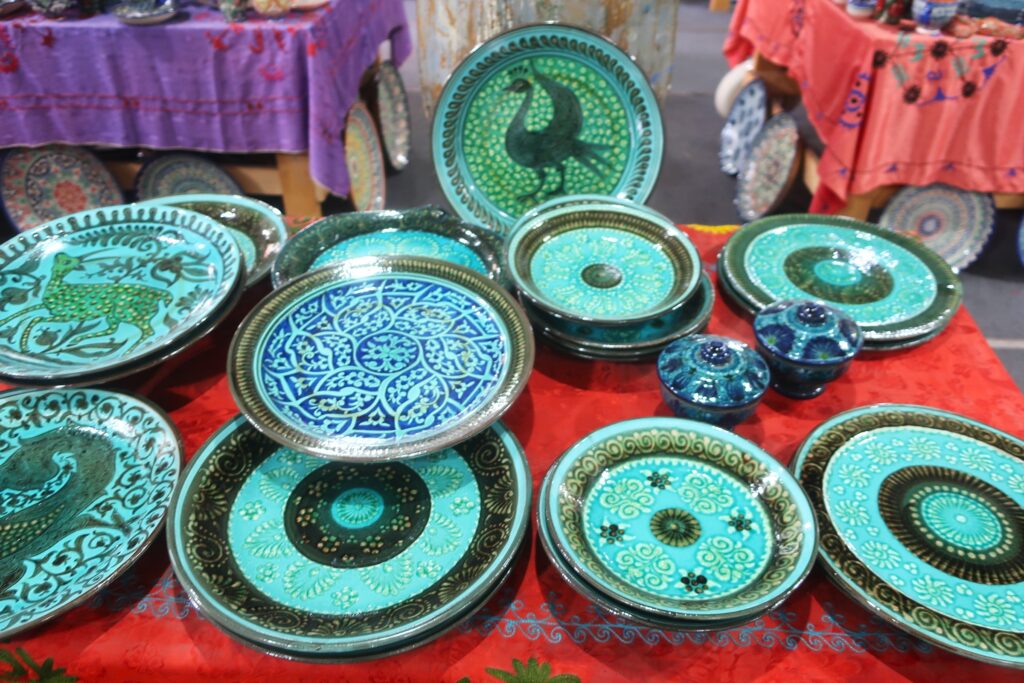
Uzbekistan produces excellent ceramics. Too bad they’re bulky, heavy, and fragile.

Uzbek ceramics

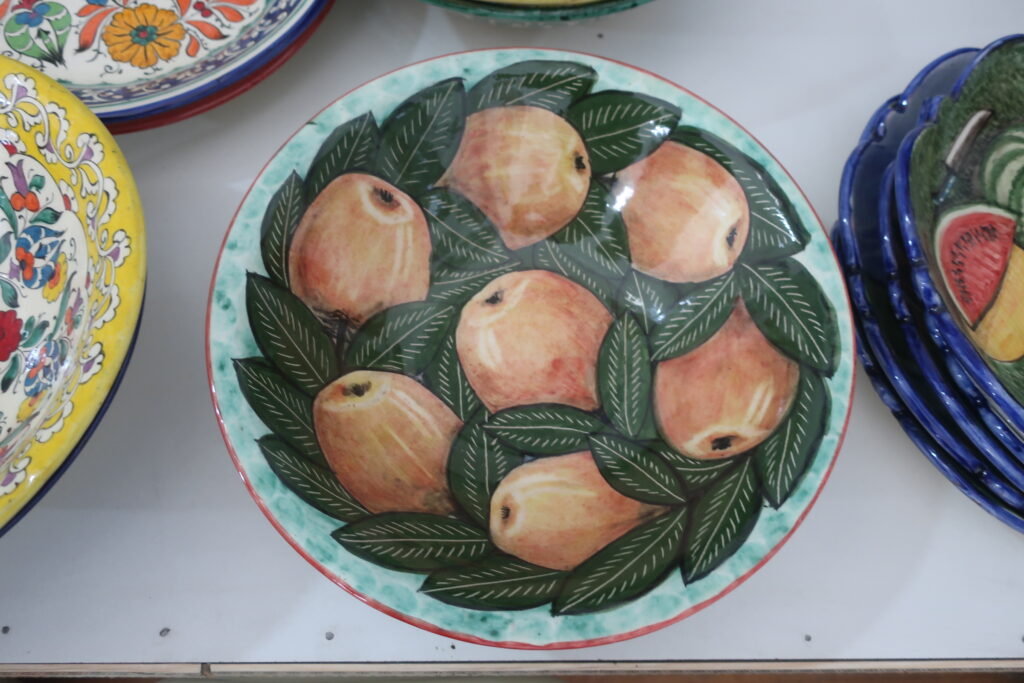
Besides traditional designs, people also come up with unique pieces. I would buy this in a heartbeat if I had a way to get it home.

Quinces, I think

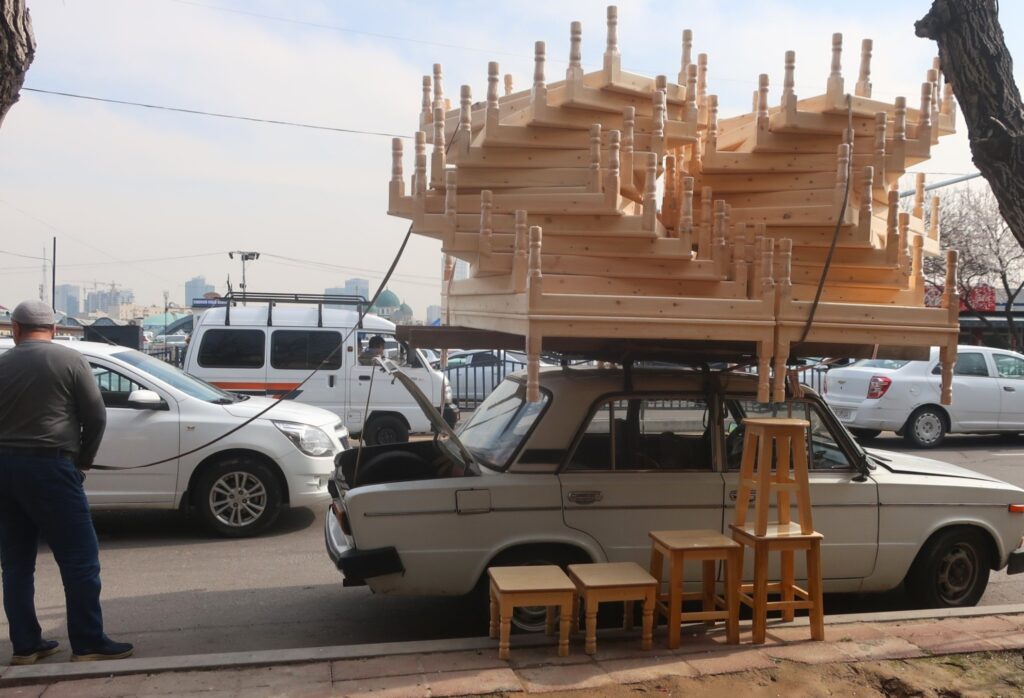
Like markets everywhere, there is always merchandise being freighted by unconventional means. This vintage Lada is delivering its weight in wood furniture.

Gonna take a Lada love

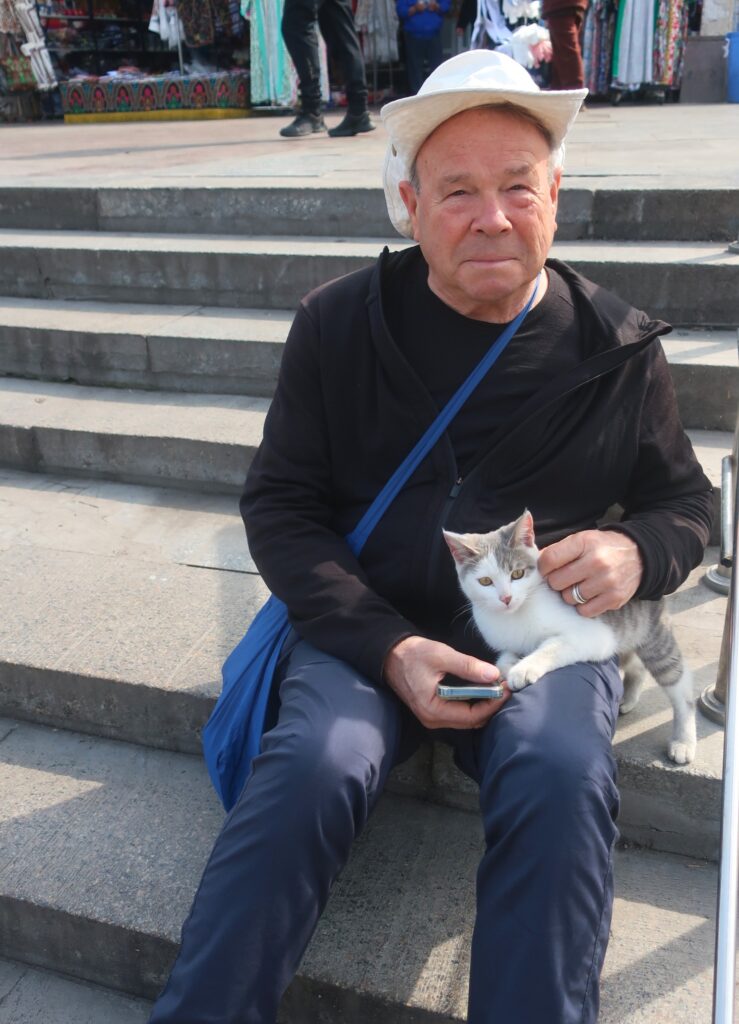
On our first day, I make a new cat friend. We were just taking a rest when this kitty decides to climb into my lap for a snooze.

A fine judge of character

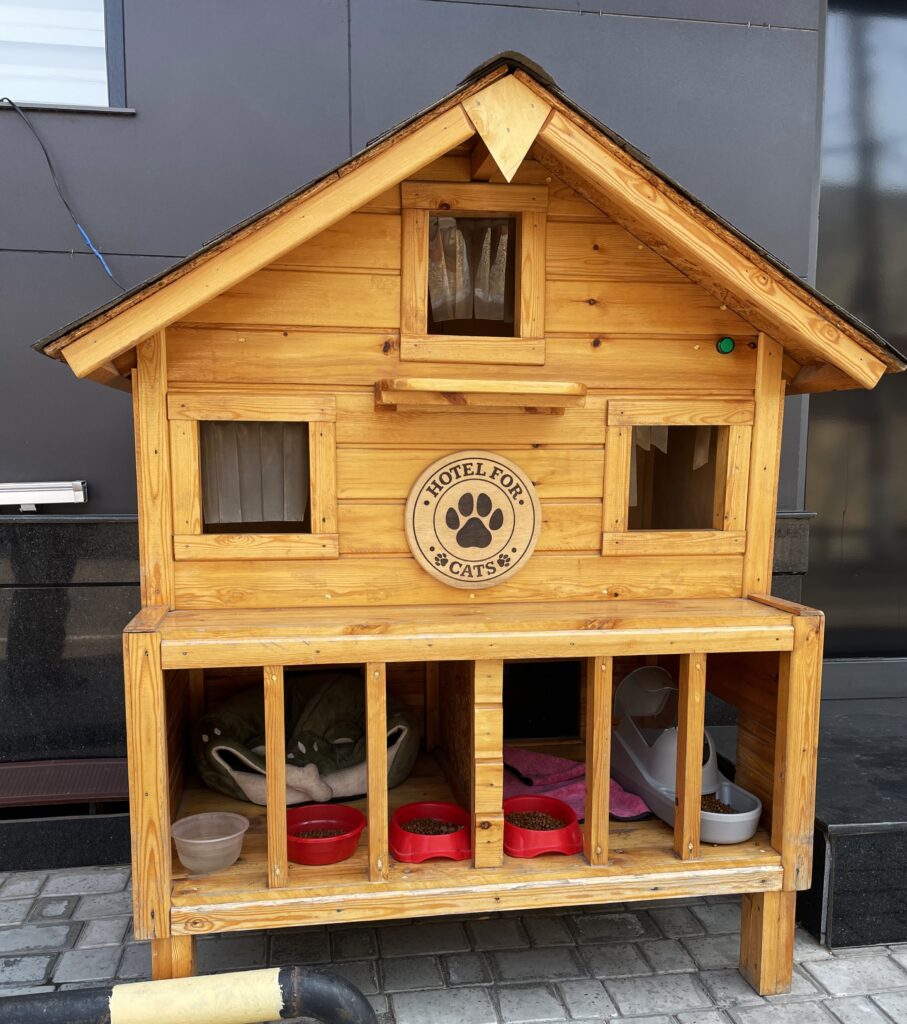
There are very few stray dogs around. People are generally nice to cats. We pass this cat hotel in the swanky embassy district.

Hotel Meow-rriot

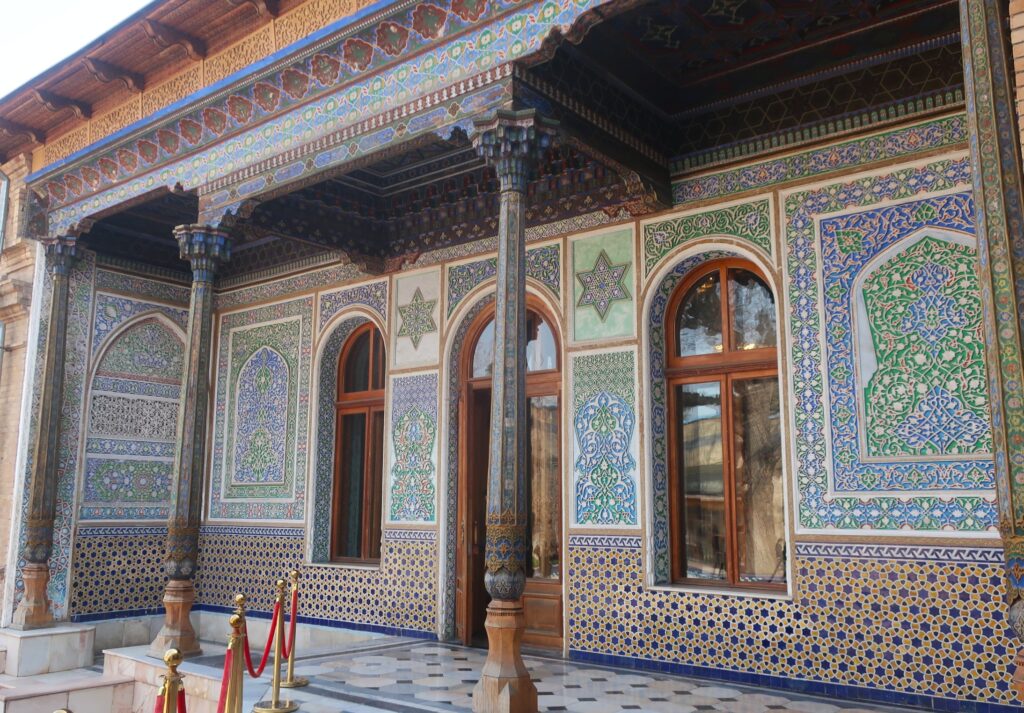
In the same diplomatic ‘hood, we visit the Museum of Applied Arts.

Entrance

Nice house. It used to belong to a Russian diplomat.

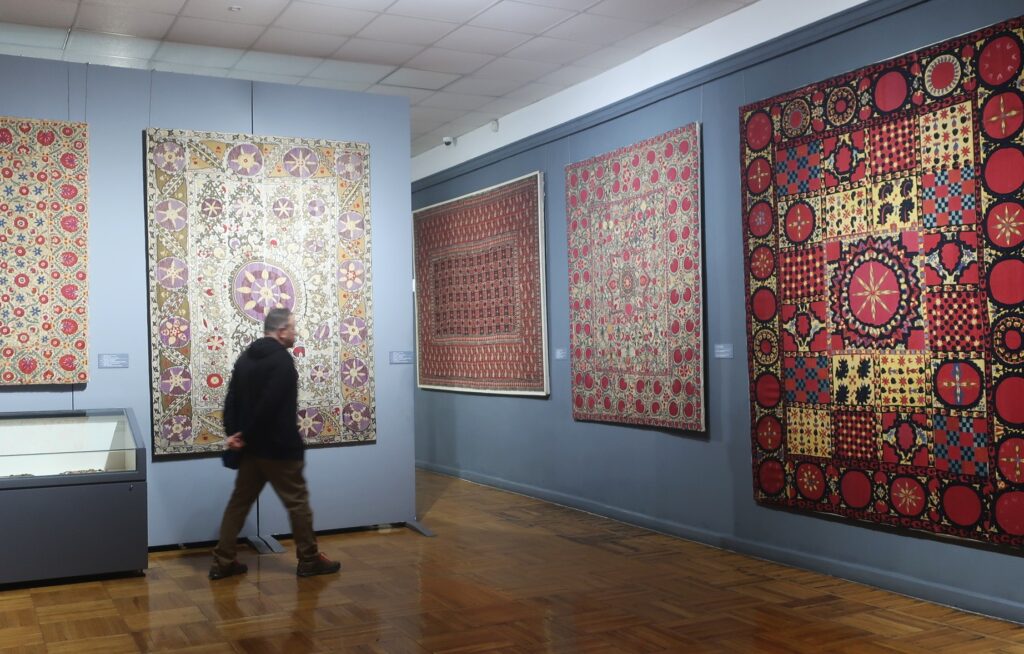
Uzbek textiles

A Yandex (local Uber-type app) ride takes us across town, where we begin a self-guided walking tour at the State Art Museum. Cost of a 20-minute ride: less that $3.00 CAD.

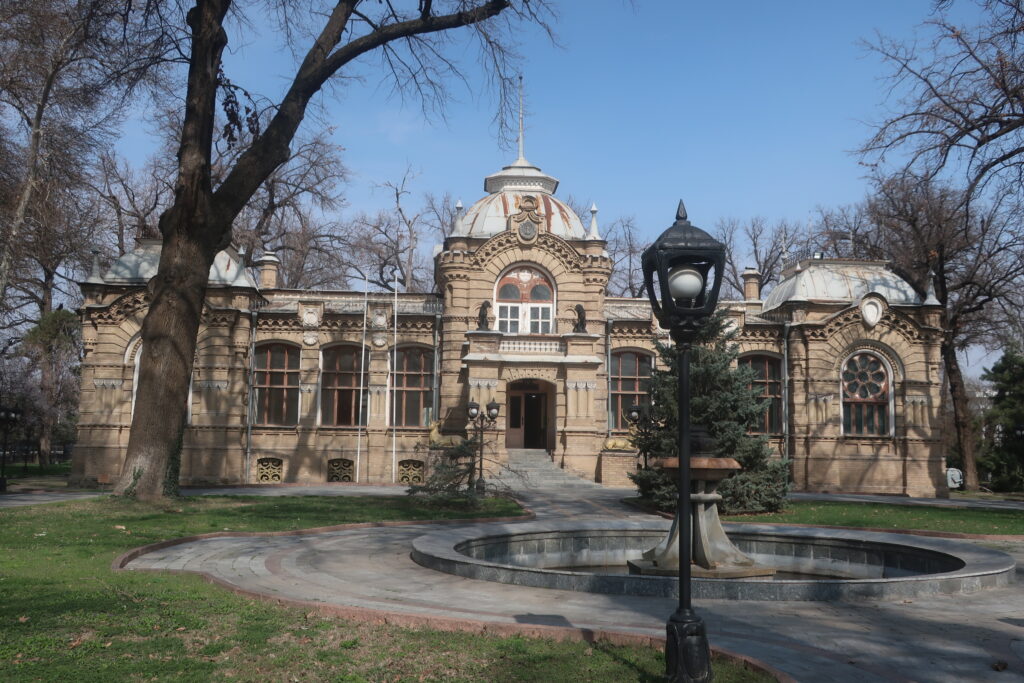
The Romanov Palace was the home of exiled bad-boy Grand Duke Konstantin Nikolayevich. Not coincidentally, he provided the original collection of paintings for the nearby Art Museum.

Romanov Palace

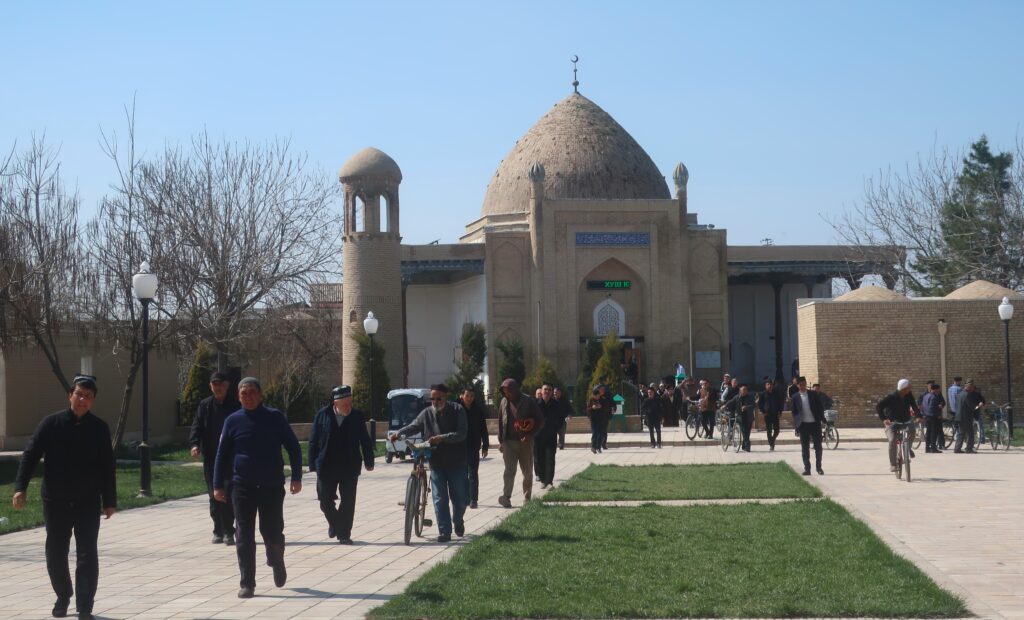
Many men here like to wear black clothing – like, A LOT of men. Maybe it’s some kind of Johnny Cash/ Steve Jobs thing. We ask a local if he can tell us why. He says ‘Really? I’ve never noticed. And I have no idea.’

Men in Black

On our last day in Tashkent we get a dump of snow. The previous day, we were lounging in a sunny park in our shirtsleeves.

Let it snow.

Note the Soviet-era network of gas pipes in the background. Just like the Caucasus, as noted in earlier entries.

Sight or Insight of the Day

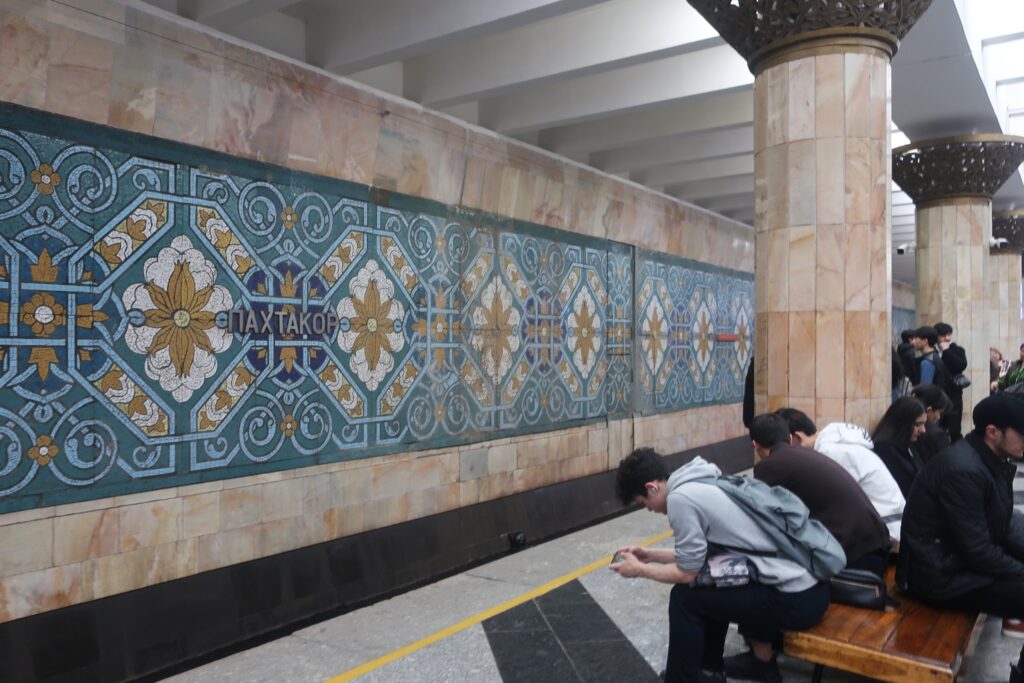
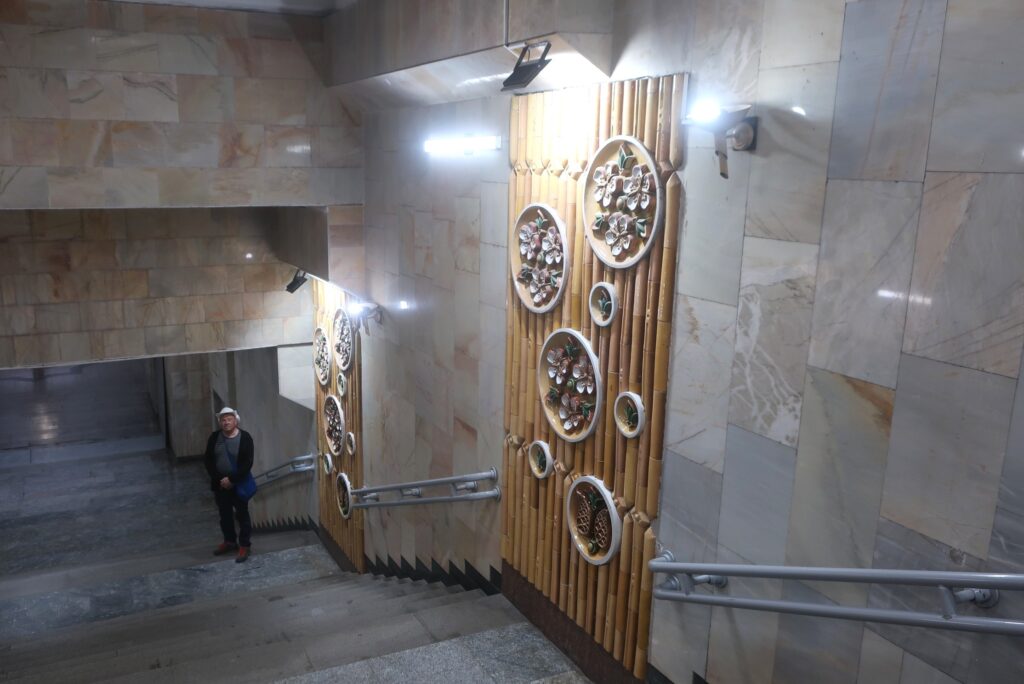
Tashkent is well known for its elegant Metro stations.

Paxtakor Station

It’s the best way to get around town. Tashkent is mostly made up of long, wide, grandiose boulevards, a Soviet city-planning habit. Not very good for walking, though.

Alisher Navoi Station

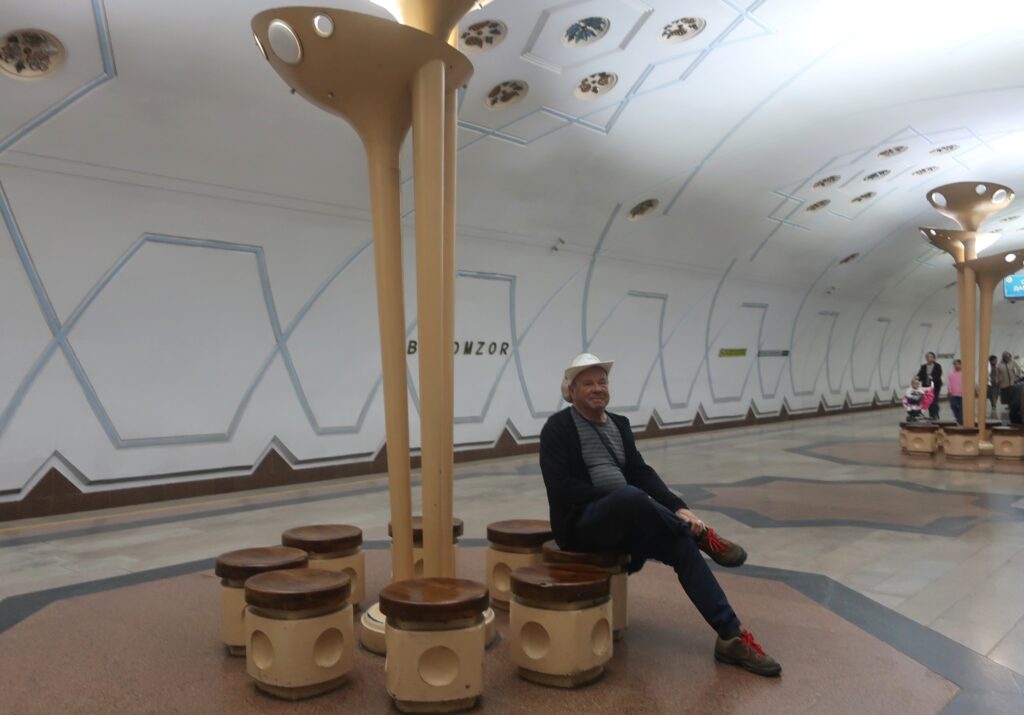
Each station has a theme.

Bodomzor Station

The price for a ticket anywhere on the extensive system? A princely 19 cents Canadian. Just flash a Visa card at the turnstile and go. Beats the pants off the O Train in Ottawa.

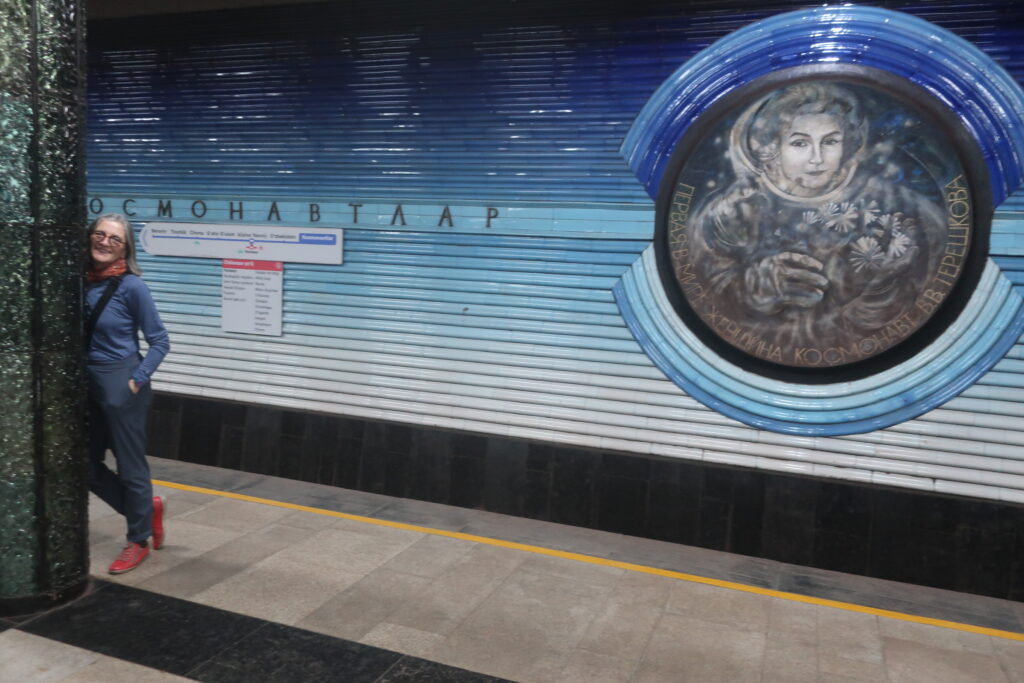
Cosmonauts Station