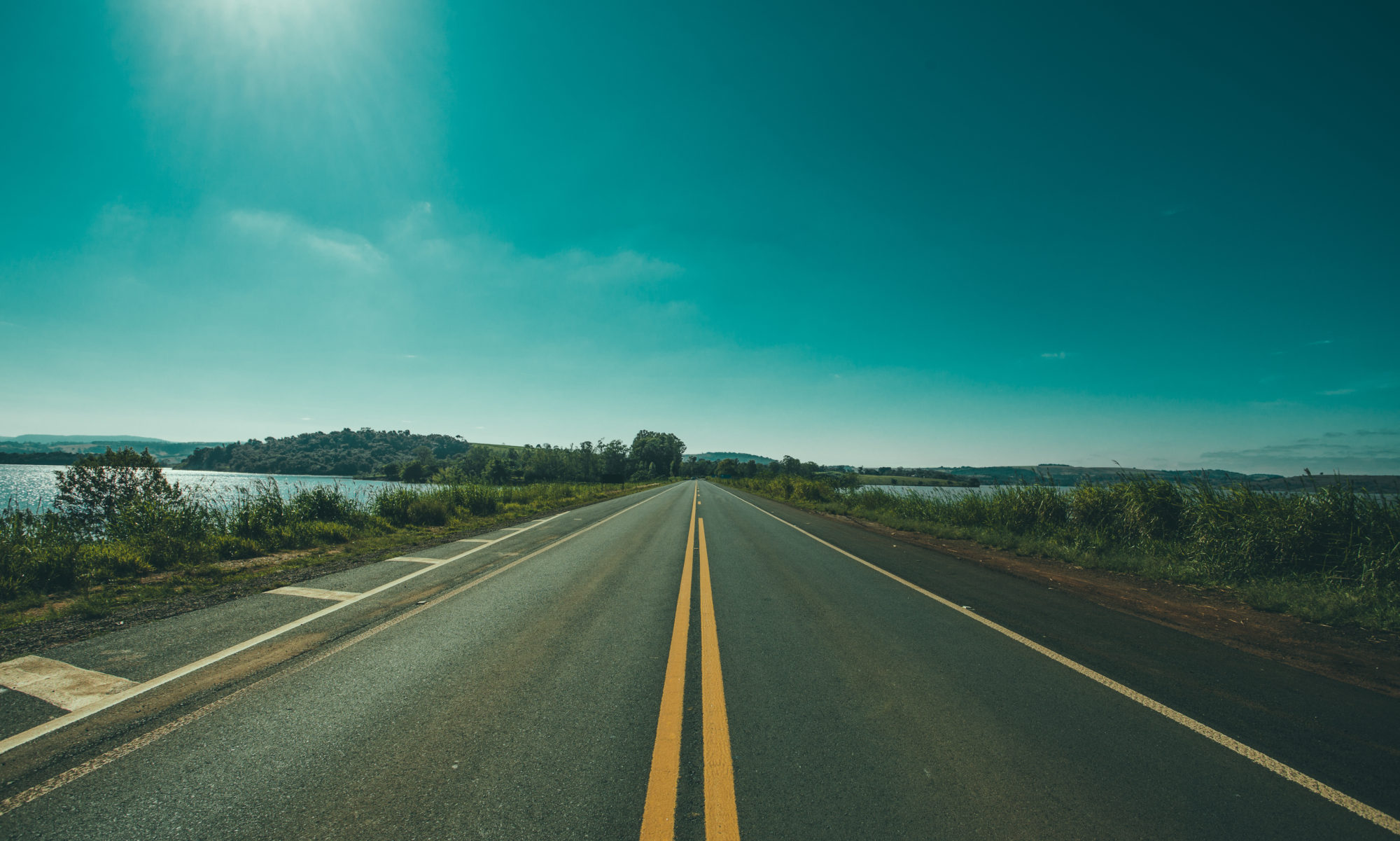
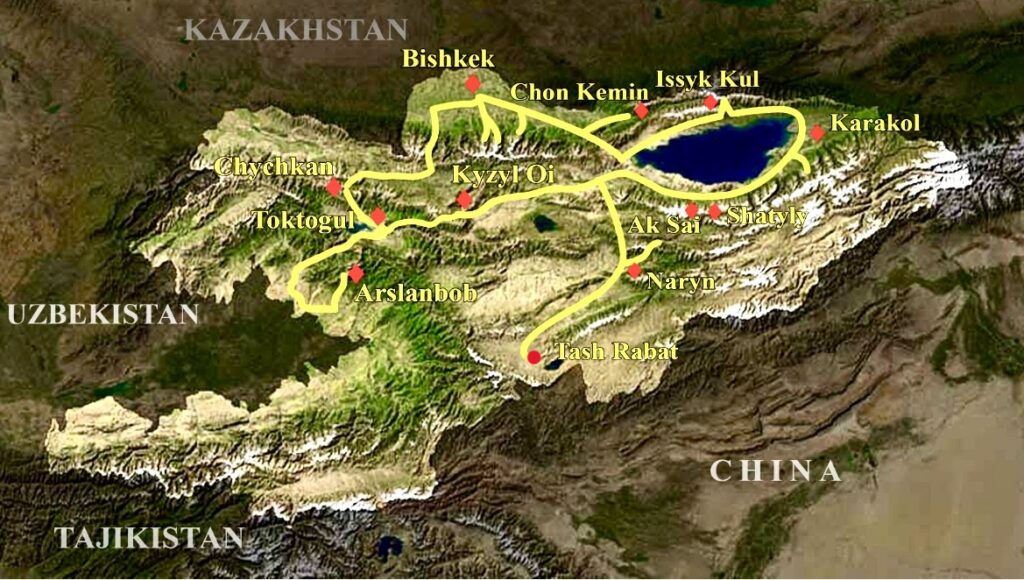
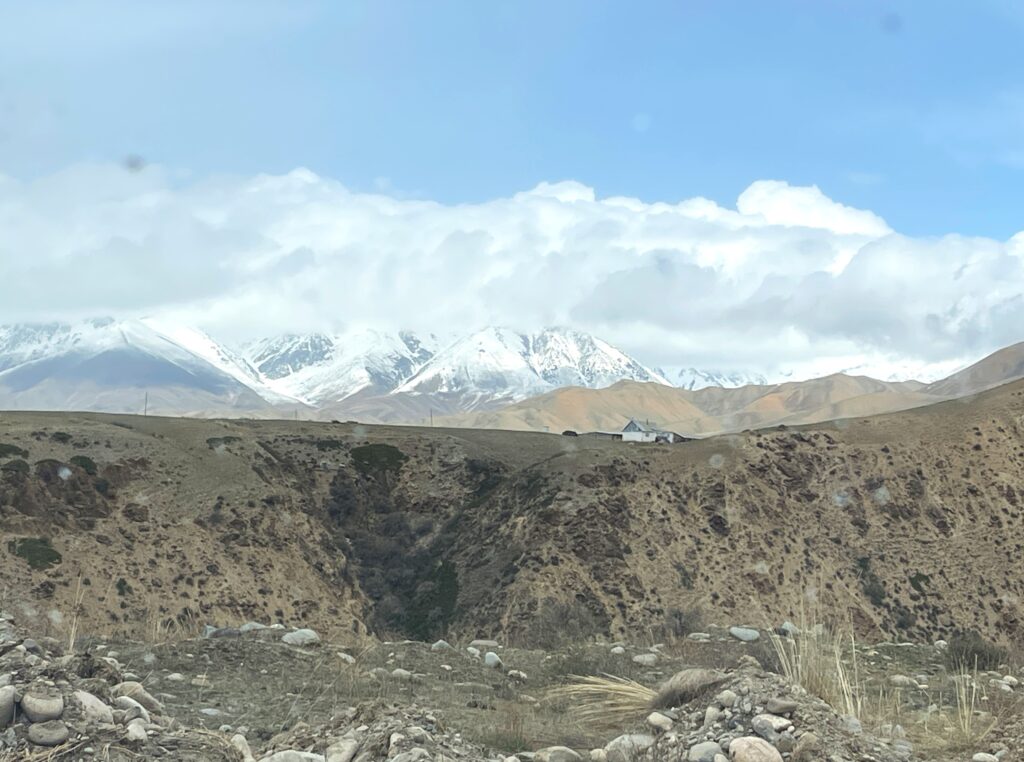
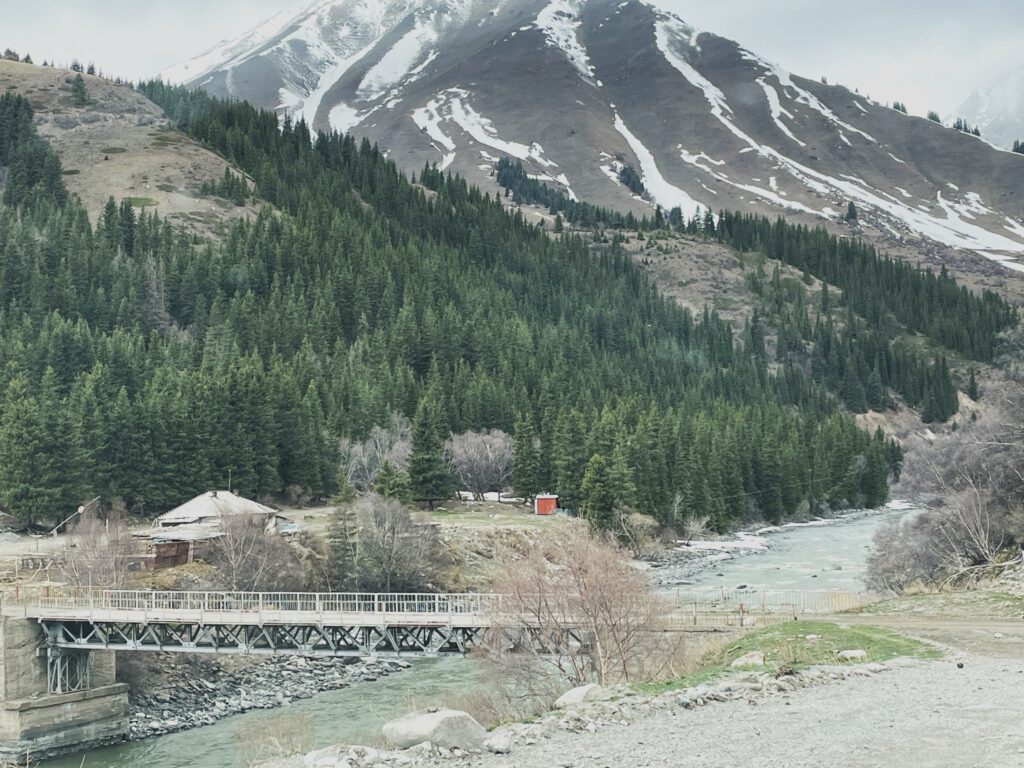
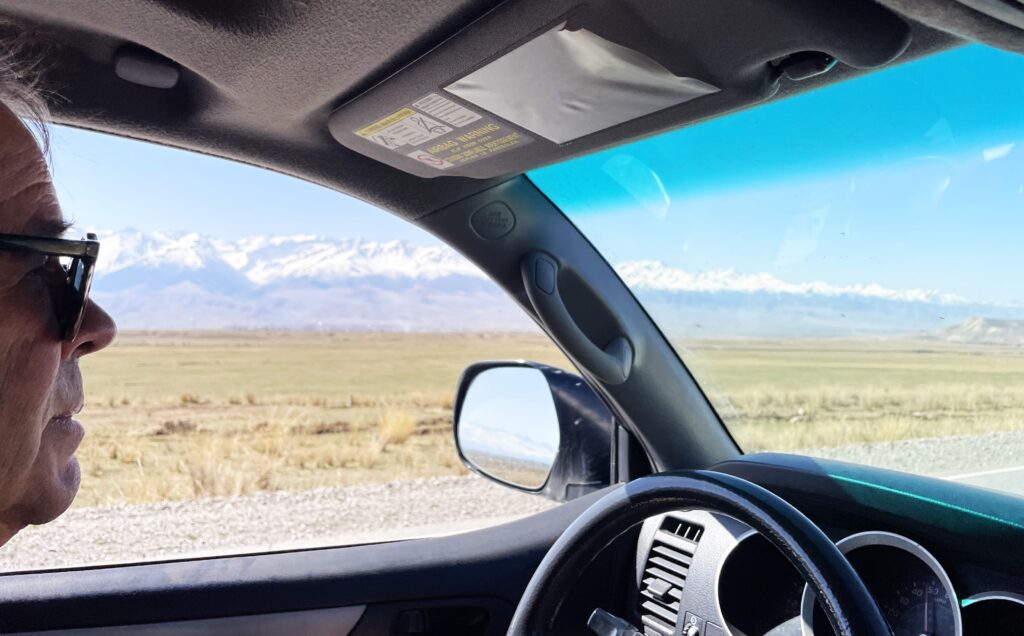
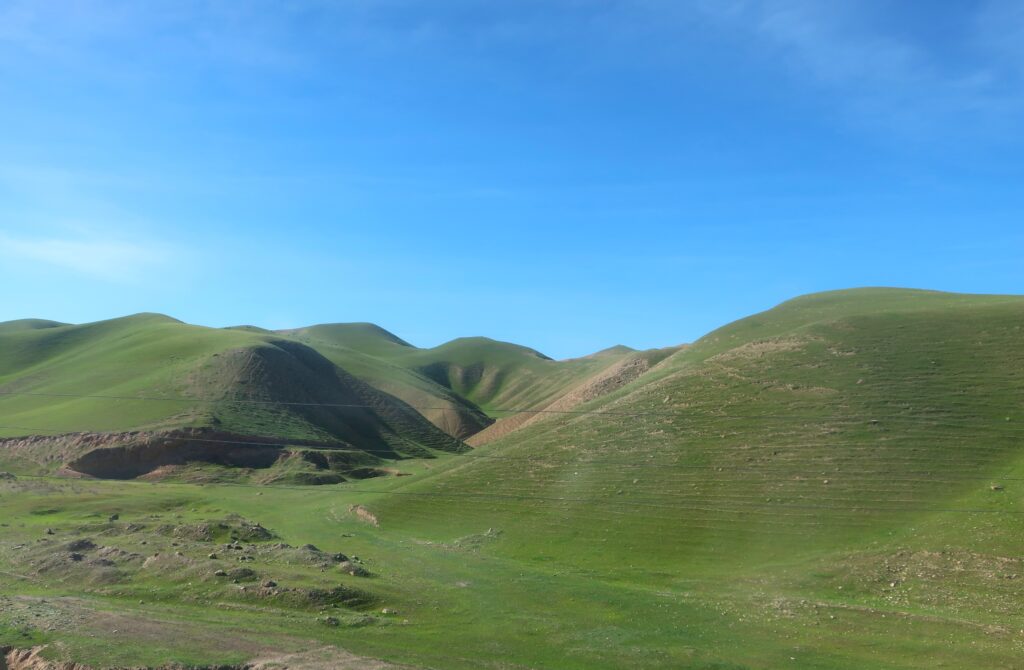
Almost everywhere we go, we’re beside soaring mountains and rushing alpine streams. The scenery is breathtaking. Unfortunately, this doesn’t show up in photos, but all this magnificence is stored in the old silicon chip <taps skull>.
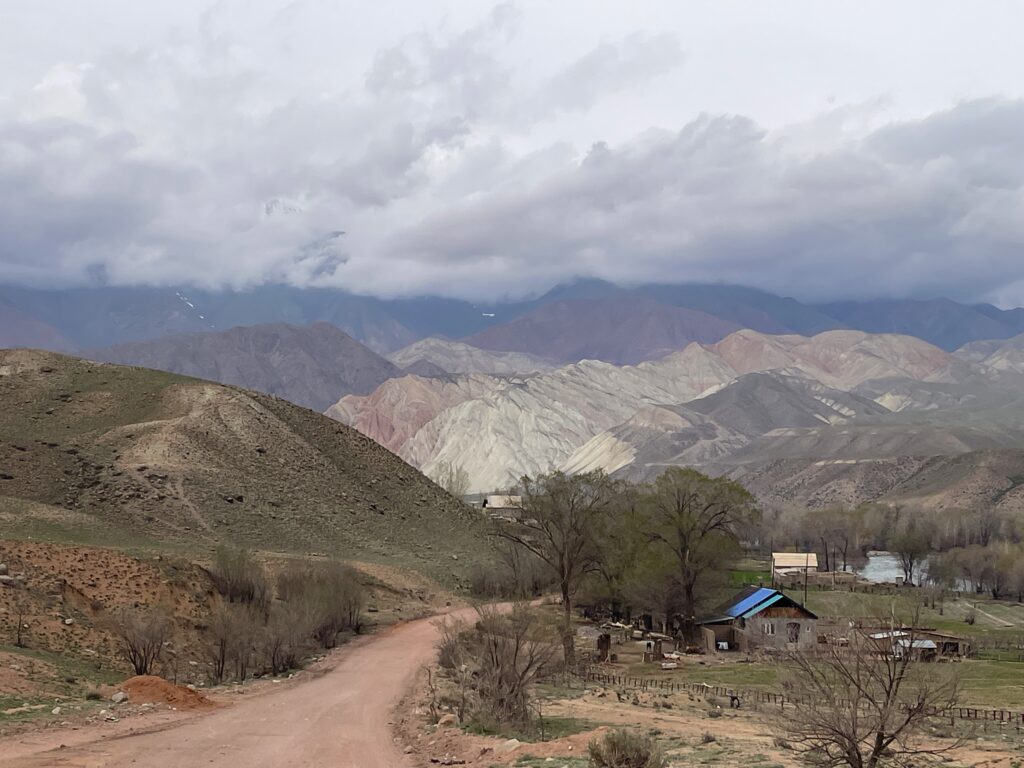
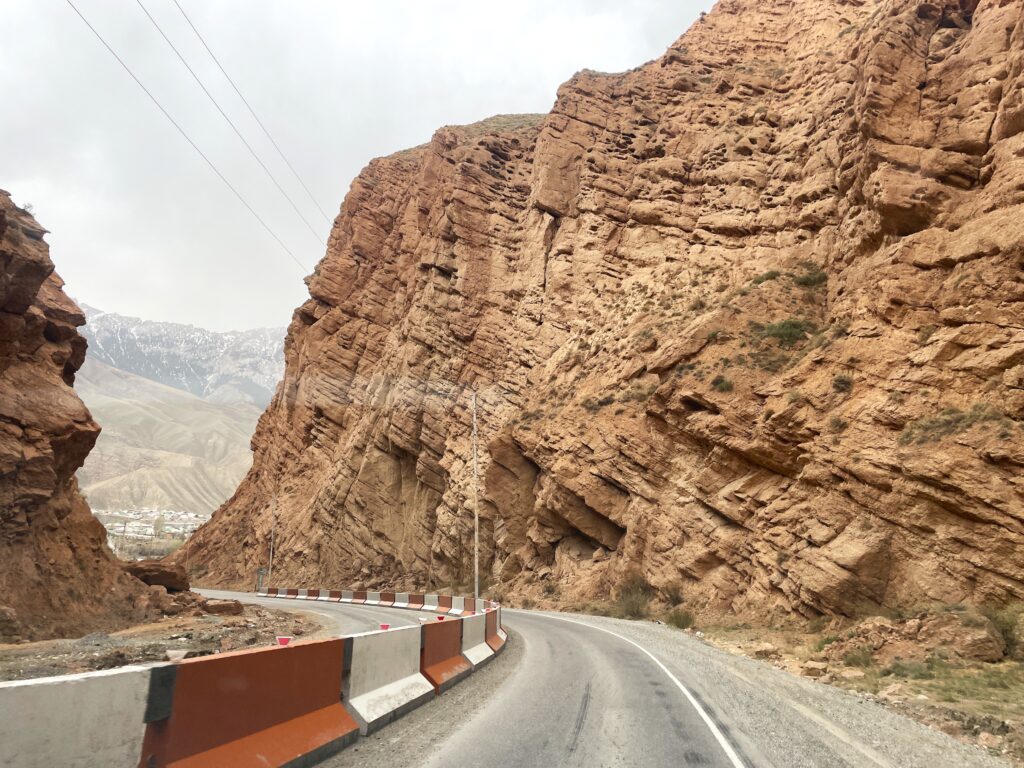
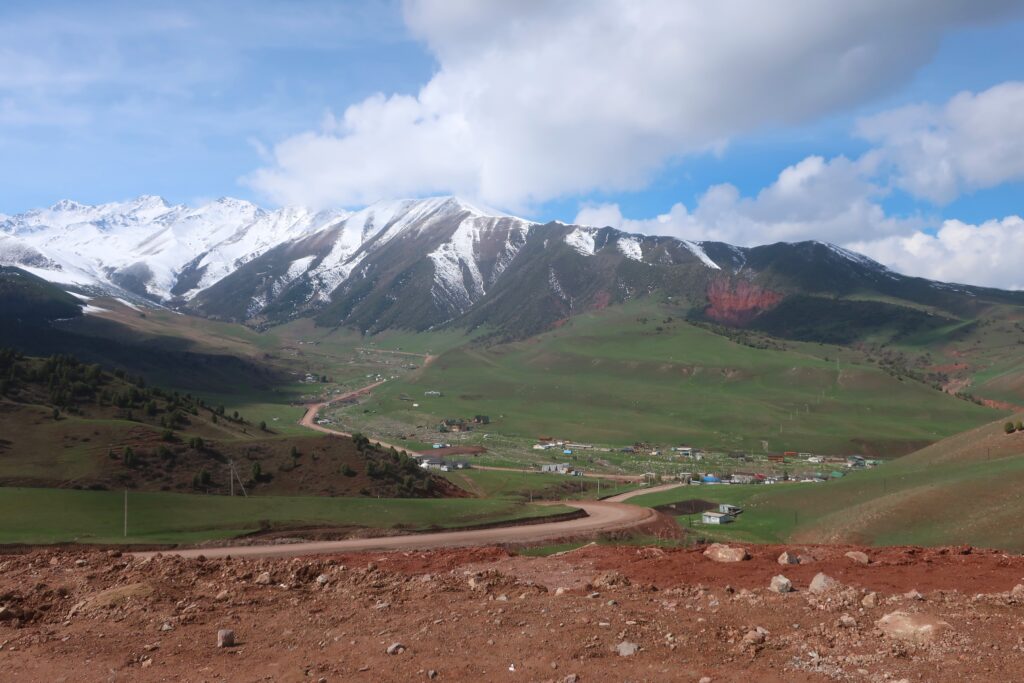
Road to Kyzyl Oi
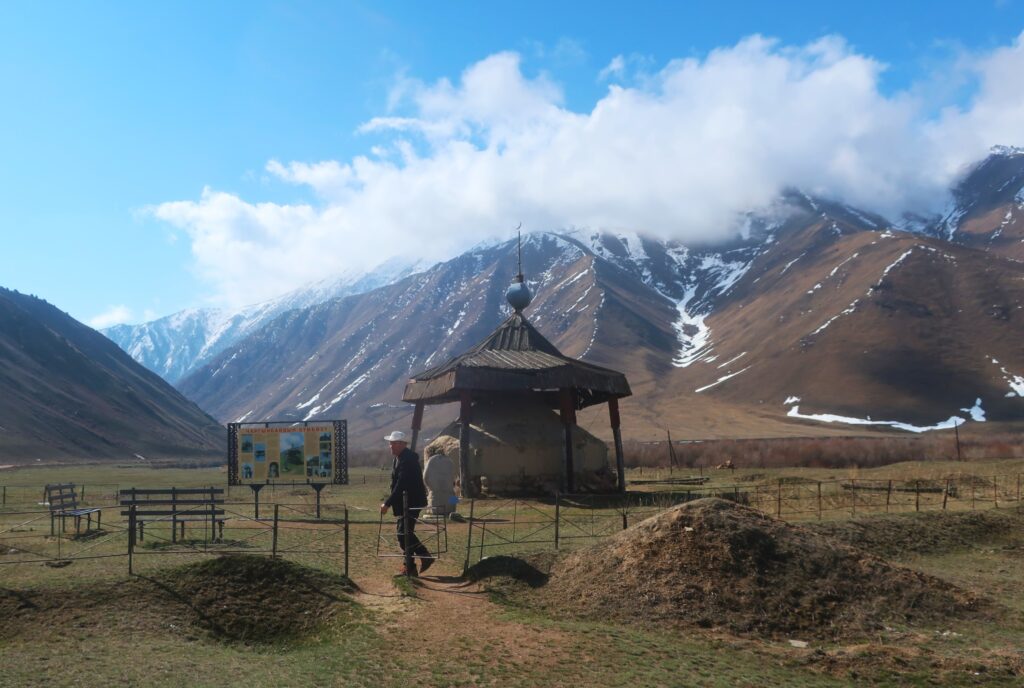
On the outskirts of the village of Kojomkul, we see a strange temple-like object. It’s a memorial to a legendary strongman, born in the nearby village of Suusamyr.
Like something Nepalese
So we have dozens of mountain photos. We’ll just select a few.
Mountain photoAnother mountain photo
We mentioned before that Kyrgyzstan is ‘all about the mountains’. It’s also all about felt. (As in, the material made from wool.) So many things here are manufactured using felt; carpets, clothing, footwear, yurt material, headgear, bags and other containers, blankets, and more.
(We remember there was a German artist, Joseph Beuys, who made a career largely out of his felt creations.)
Yet another mountain photo
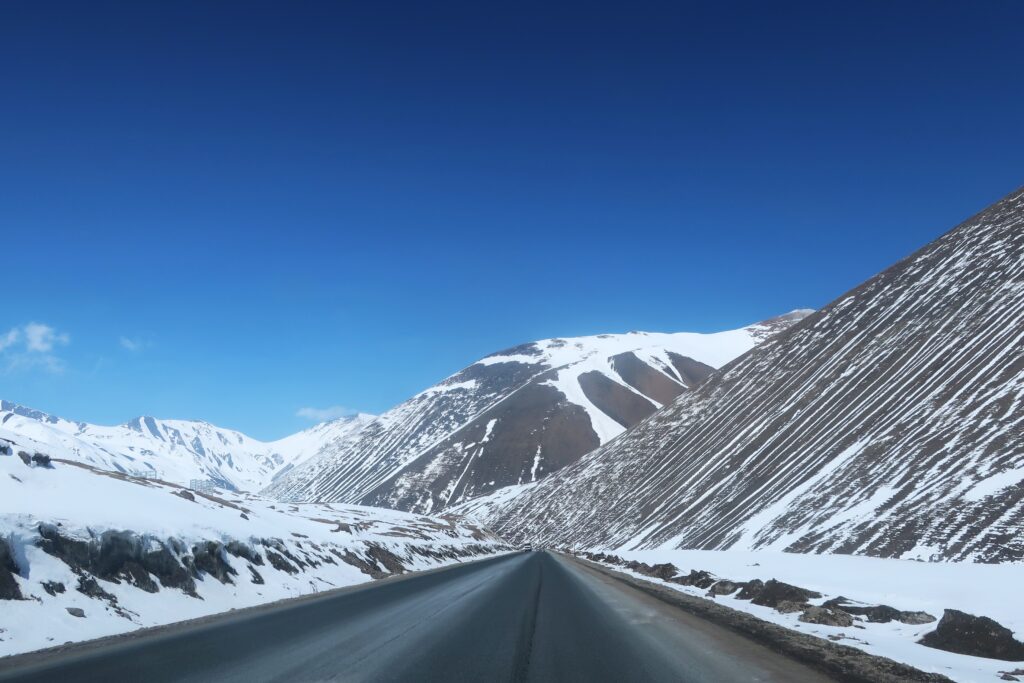
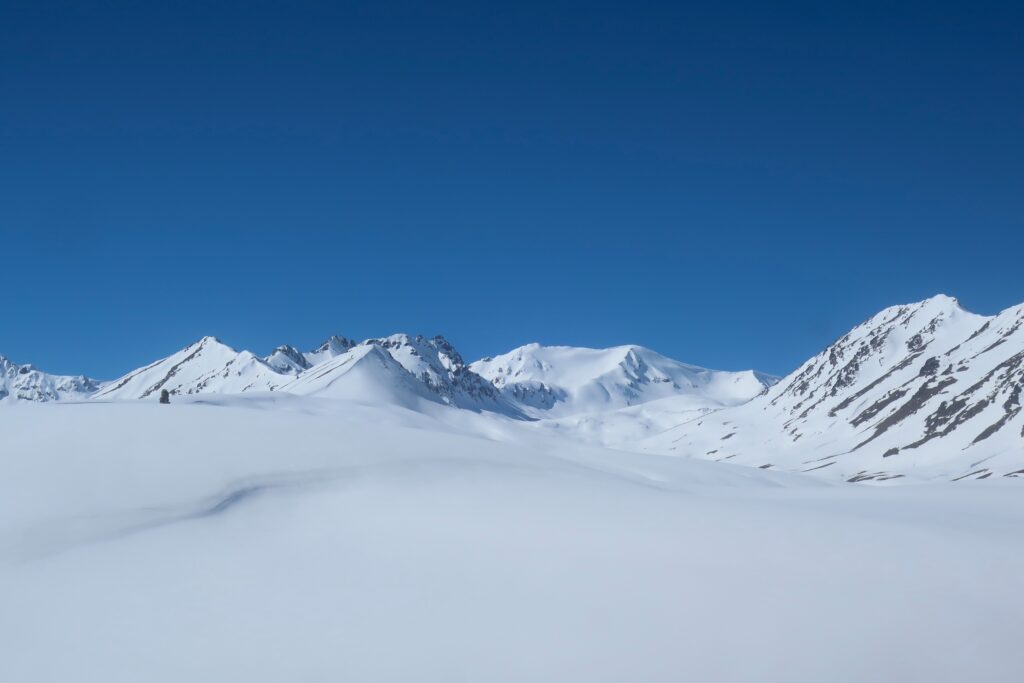
We go through one pass which is completely covered in a blanket of show (except for the road). It’s like driving a highway at the top of the Himalayas.
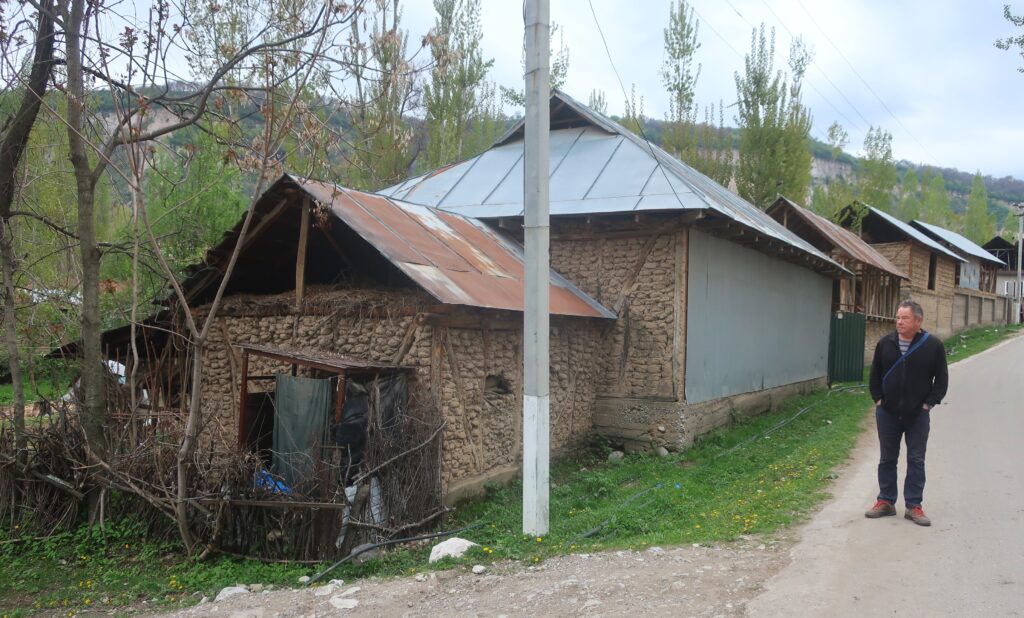
We spend a few days in the snicker-inducing town of Arslanbob, popular with hikers. Many of the buildings in town look like mangers from the middle ages.
Medieval-style outbuildings
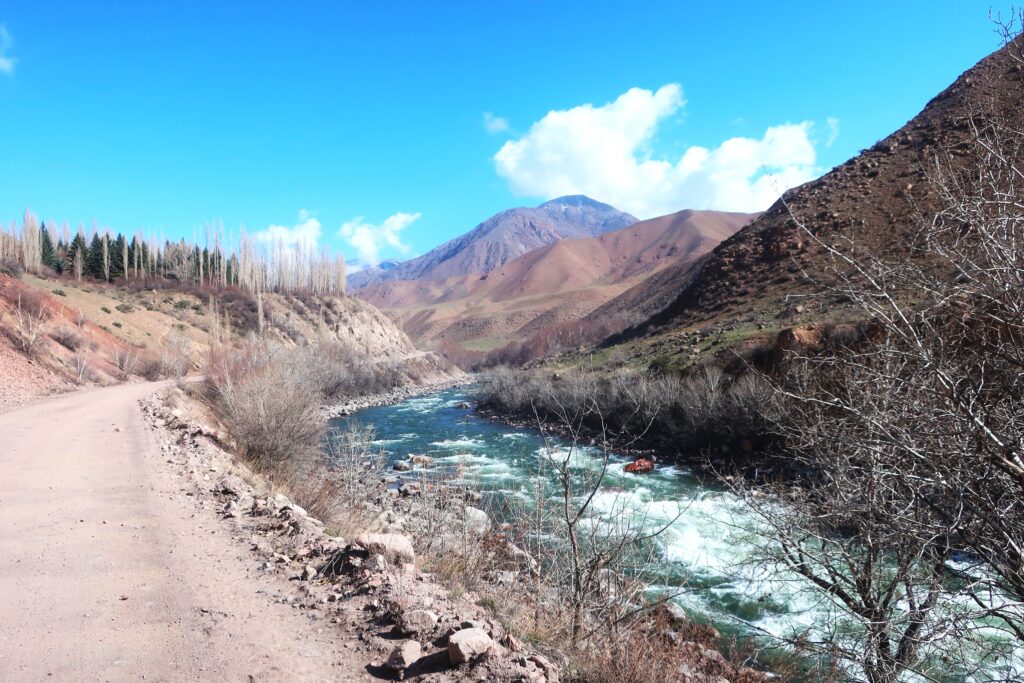
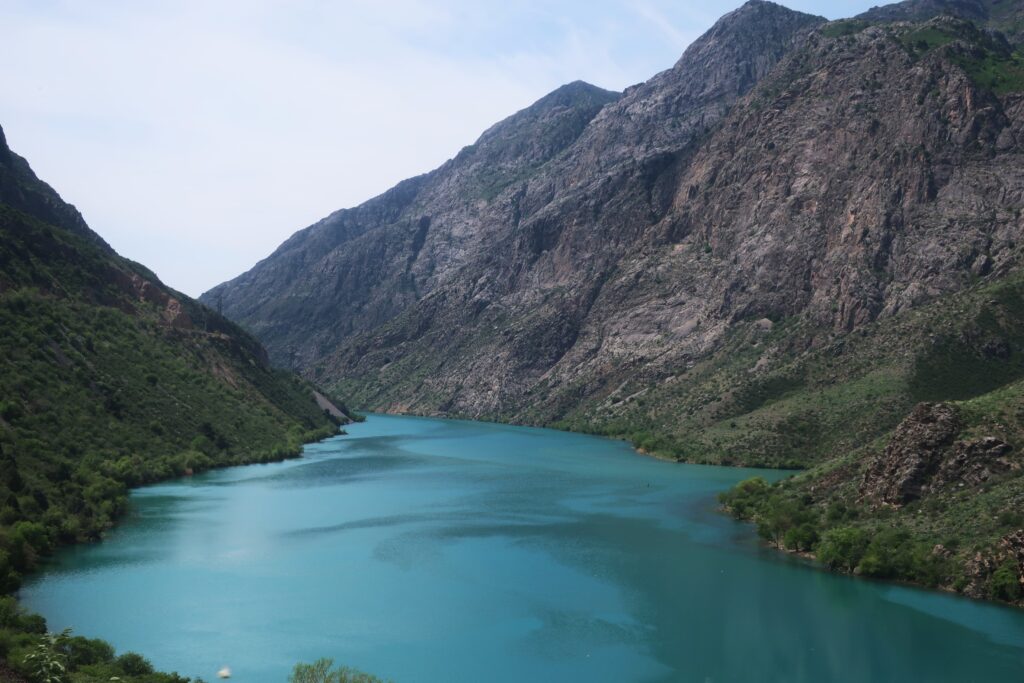
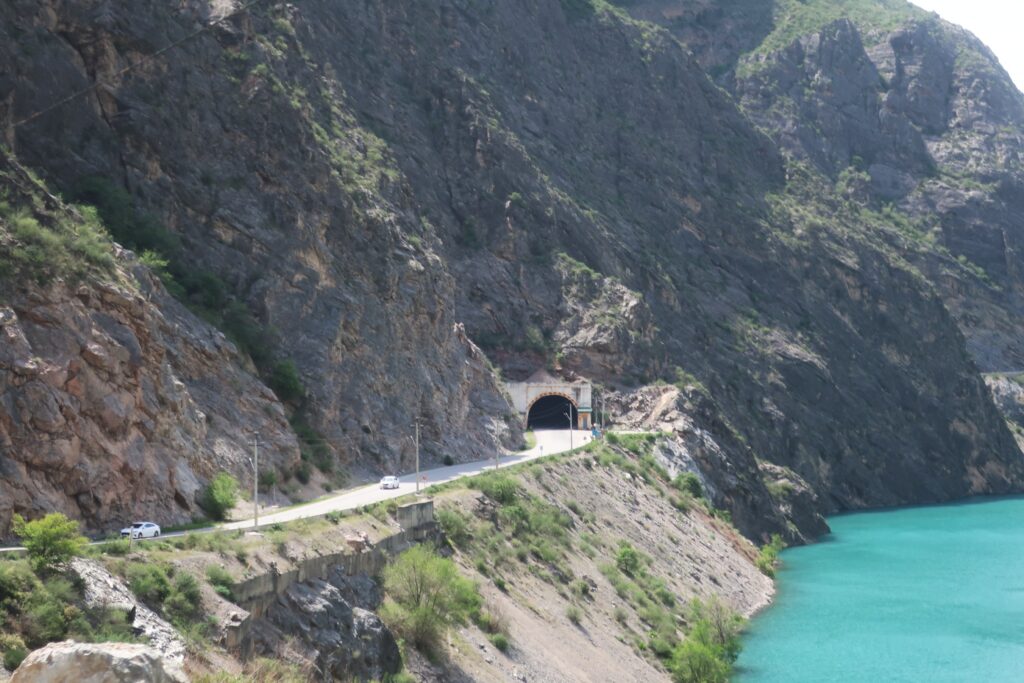
The road winds along the Naryn River, a bright teal colour in this section. (yes, the same river we saw in Naryn town in previous entries.)
Naryn River
At one point, we pass through a series of four tunnels. These are kind of scary – the lighting is bad, and for a few brief seconds, we can’t see anything in the dark.
Not quite the ‘Tunnel of Death’
Apparently, in Tajikistan there’s a tunnel known as the ‘Tunnel of Death‘. You can be assured we aren’t going anywhere near that one.
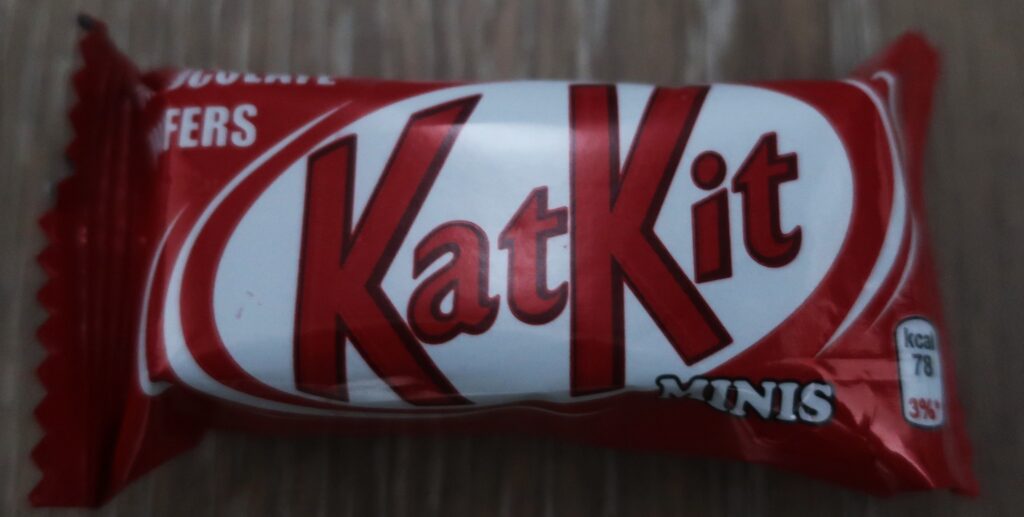
Most of the places we have been staying at include breakfast. Usually with an assortment of chocolate bars and other sweet things. Like this surprisingly familiar item, a KatKit bar.
Holy copyright infringement!
Our last stop before returning to Bishkek is the Belek Dream Hotel, one of the nicest places we’ve stayed so far. Gourmet food, lovely location on a mountain stream.
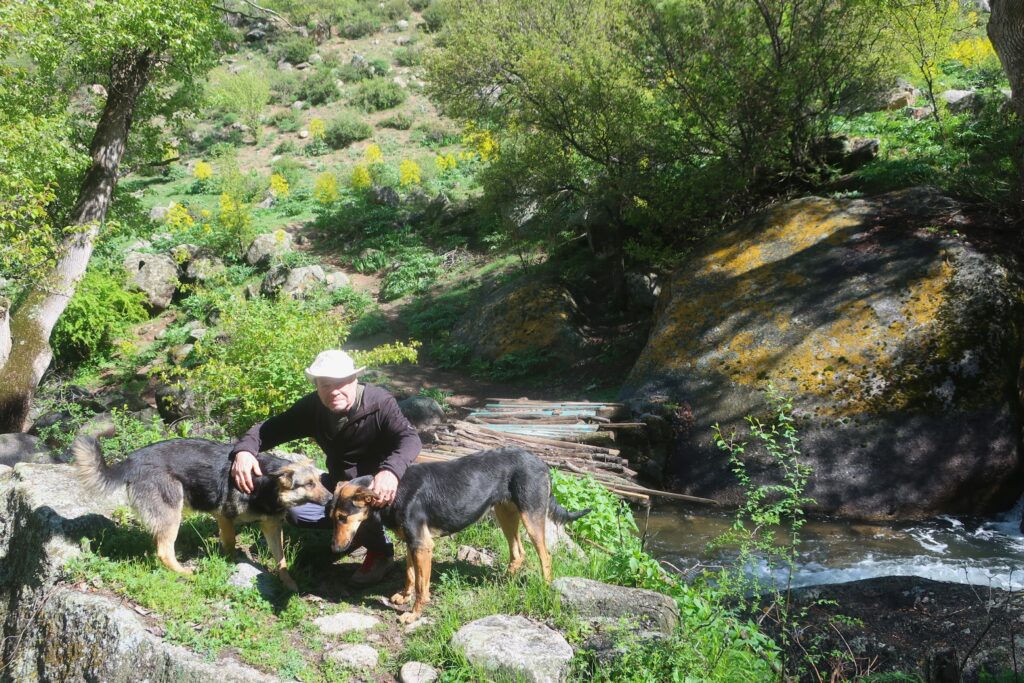
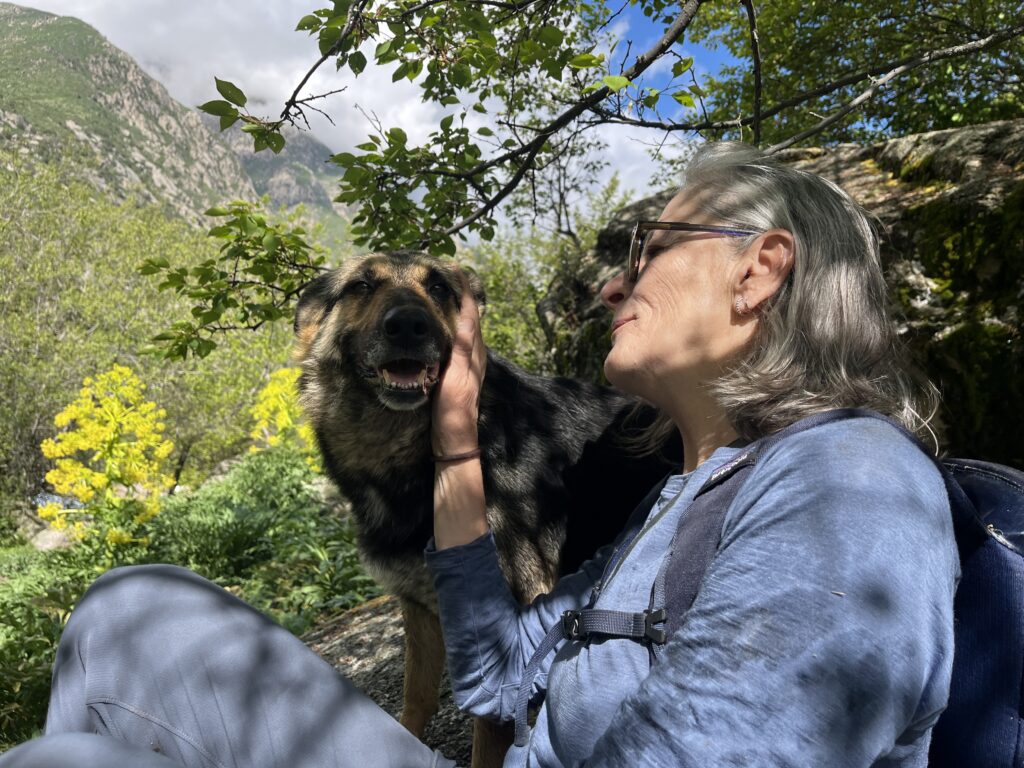
We go for a hike in search of petroglyphs. The groundskeeper has three dogs. They probably don’t get that much human attention, this being Kyrgyzstan, so when we shower them with kind words and a vigorous patting , they follow us for the duration of our hike with, well, dog-like devotion.
Man’s best friendsWoman’s too
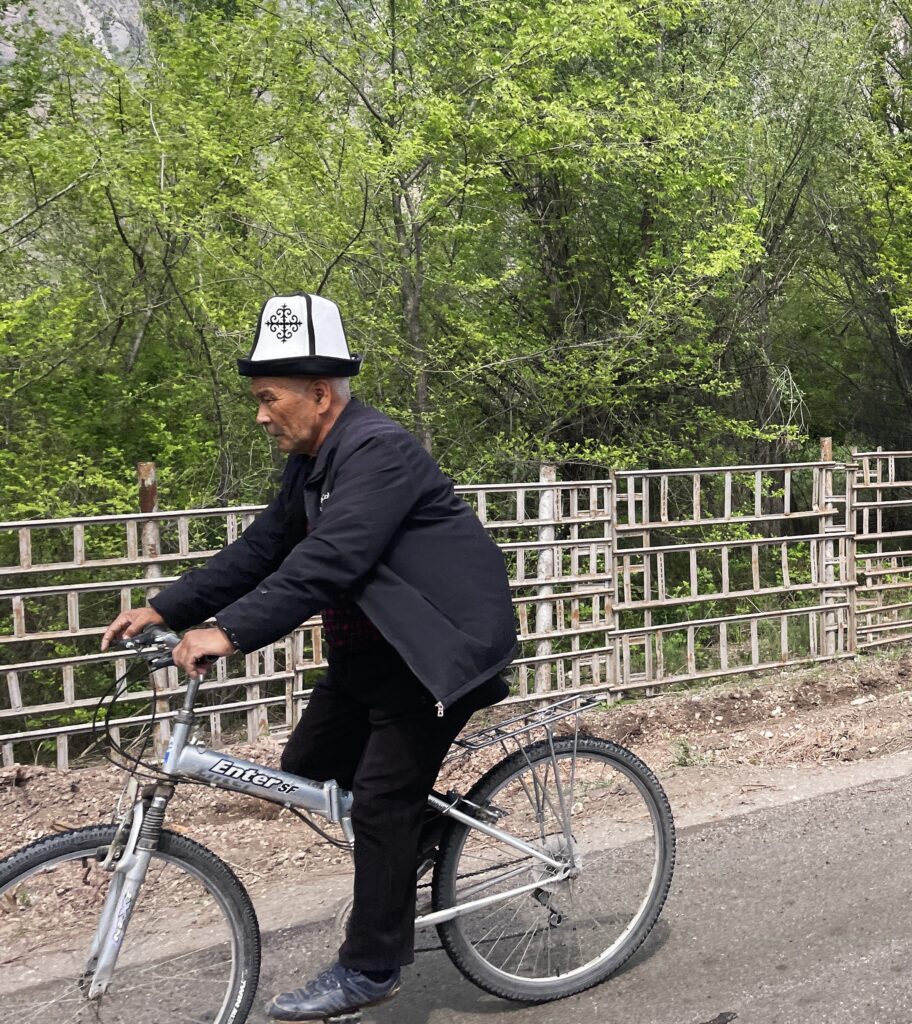
A couple of things we can mention about Kyrgyzstan: a lot of the men sport distinctive bell-like headgear, the Ak-kalpak.
In Kyrgyzstan, March 5 is ‘National Ak-kalpak Day’
Also, they like horses. They like to eat them, too.
‘…so hungry, I could eat a horse!‘
Sight or Insight of the Day
We are back in Bishkek after our 16-day road trip, soon to depart for Tajikistan. We’re supposed to bring the vehicle back clean – Maria dragoons a young man at a self-serve carwash to do our car inside and out. (‘We can’t read the instructions’ we plead.)
It’s a treat getting back to our familiar neighbourhood. When traveling, it always nice returning to a place you’ve been before – like getting home.
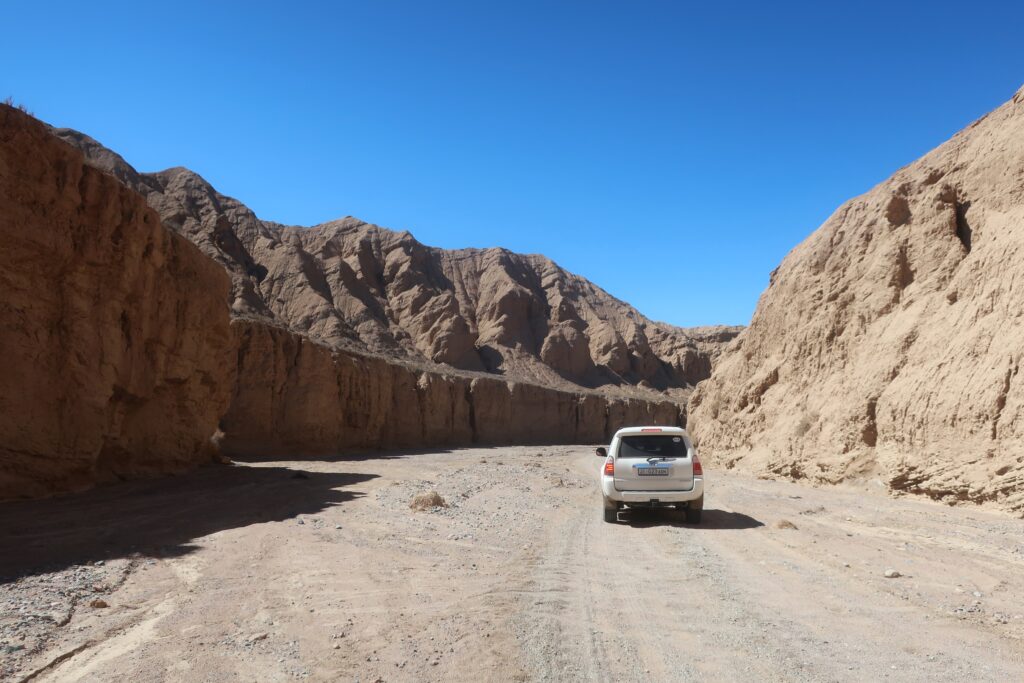
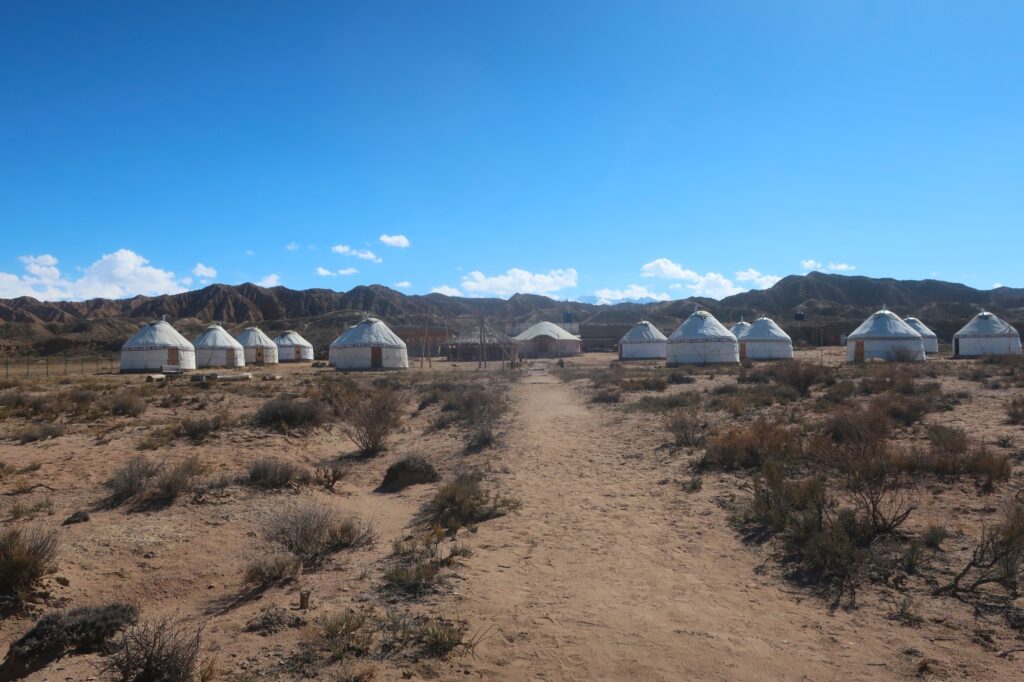
We’ve seen a lots of yurts in the landscape: it’s time to stay in one for a few days. The yurt camp we choose is on the south side of the big lake. To get there, we drive 14 KMs from the main road down the Ak Sai Canyon.
Ak Sai Canyon
It’s wonderfully isolated, not a soul around (almost).
‘In my solitude, you haunt me…’ – Billie Holiday
Usually, small groups arrive late in the afternoon, have a meal, sleep over, and depart next morning. So we have most of the days completely to ourselves.
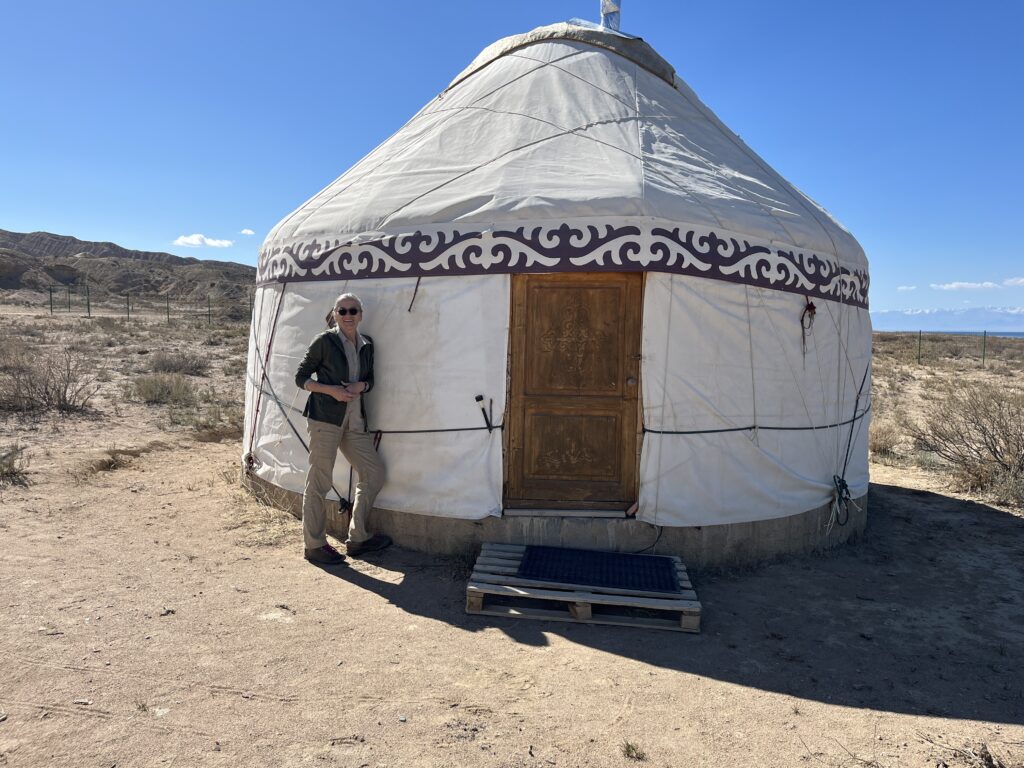
Home sweet home
These yurts are almost as authentic in build and appearance as the ones we saw in the National History museum. (There are a lot of cheap versions around.)
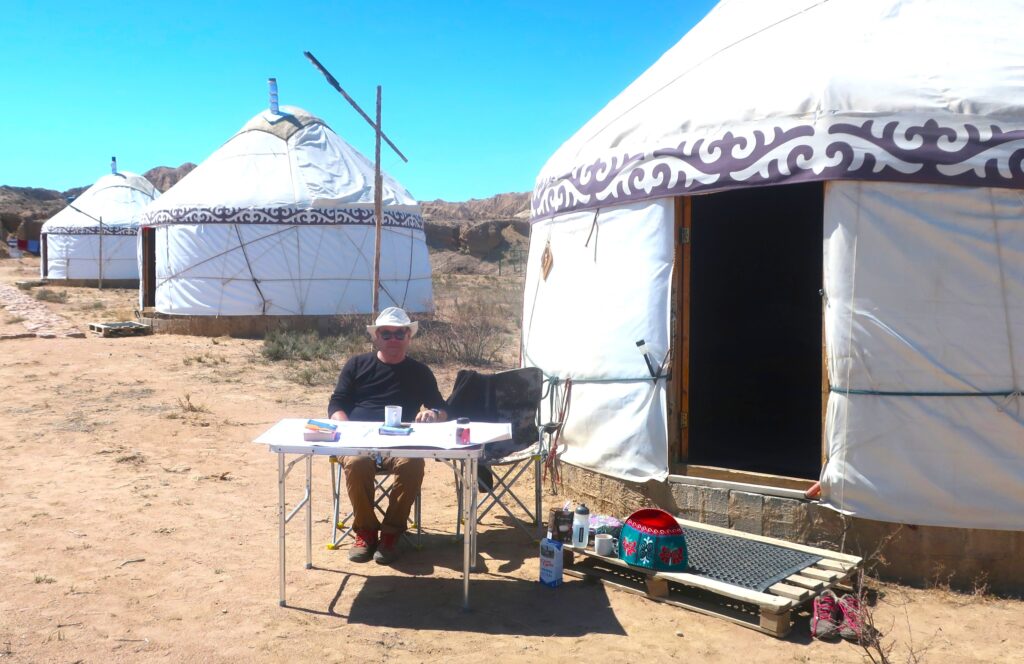
Plotting our next destination
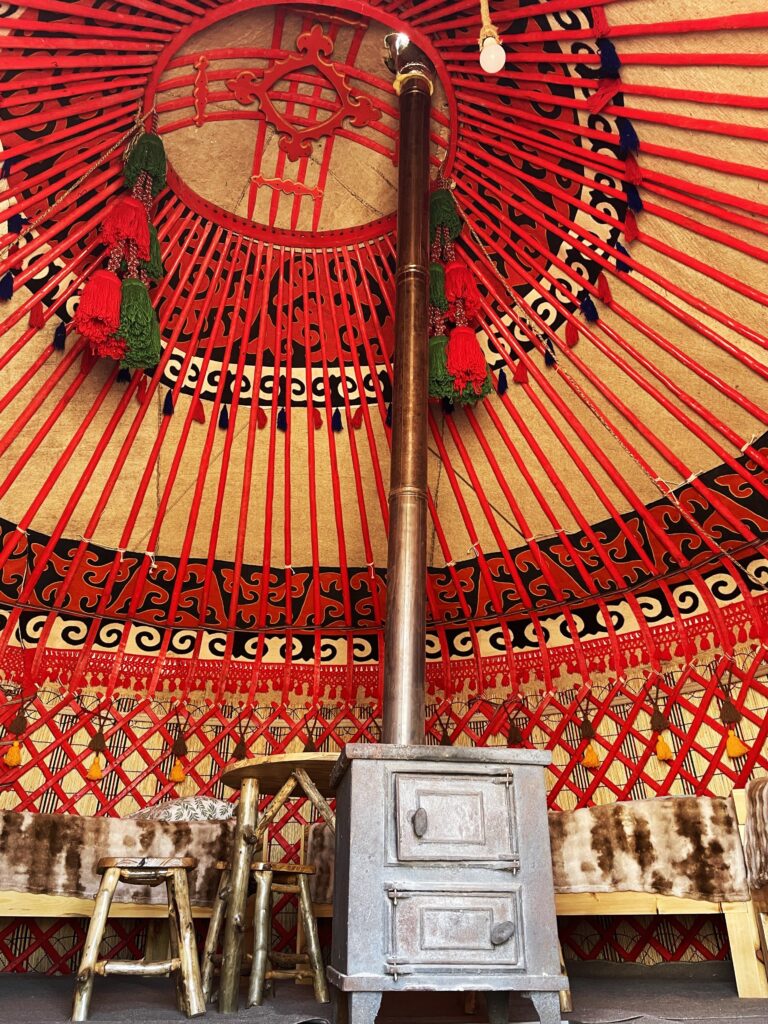
A woodstove keeps things warm at night.
Comfy inside
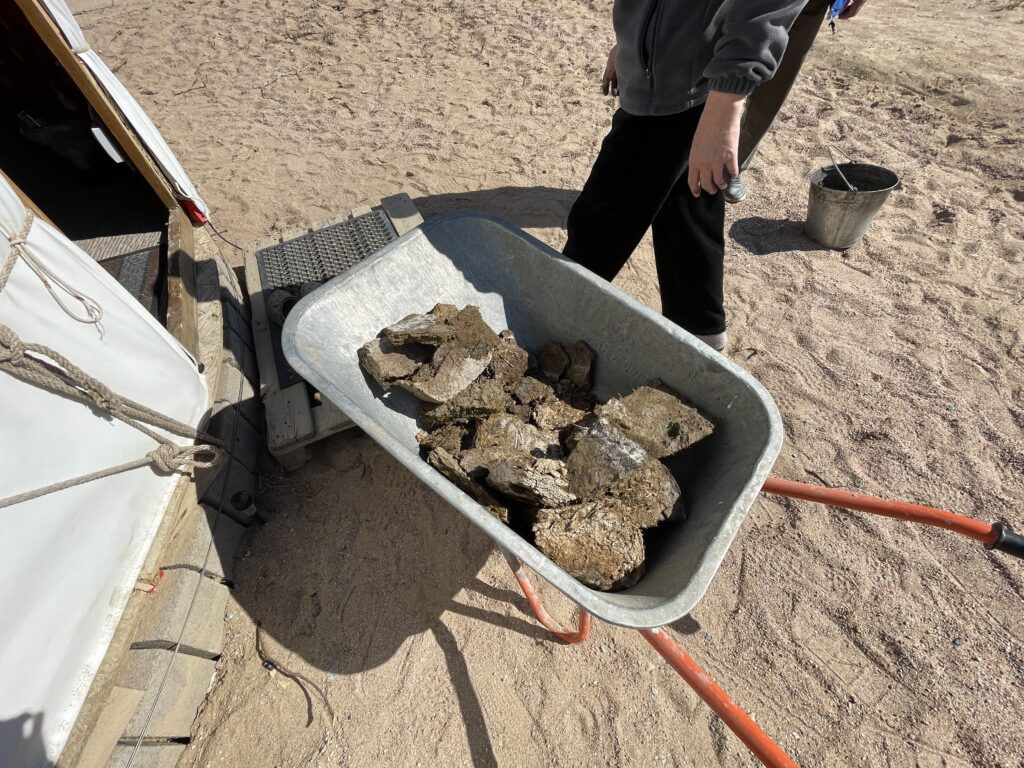
‘Woodstove’ is a bit of a misnomer: these are fueled nightly with a mix of compressed cattle dung and coal.
Renewable fuel
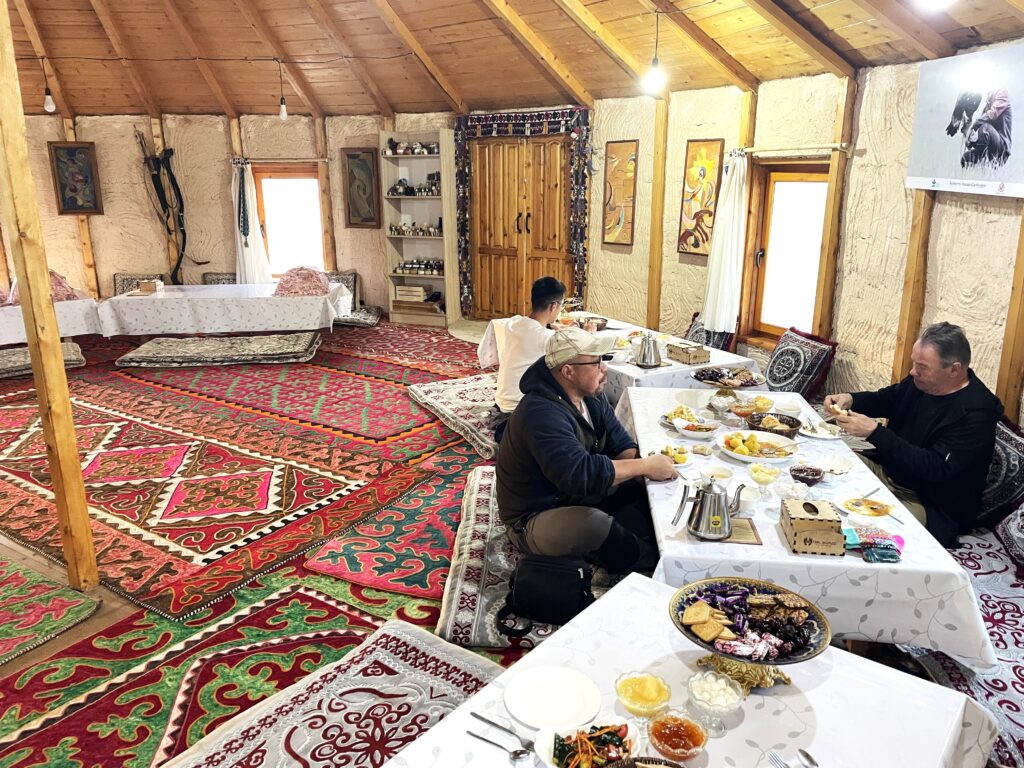
Meals are served in the Dining Yurt. Well-carpeted in shyrdak carpets (as are the guest yurts.)
You can get good info talking with the guides that accompany groups.
Chatting with a Kyrgyz guide
If you enjoy seeing small animals ripped to bits for your entertainment, you can arrange to see an ‘eagle show’. We skip this.
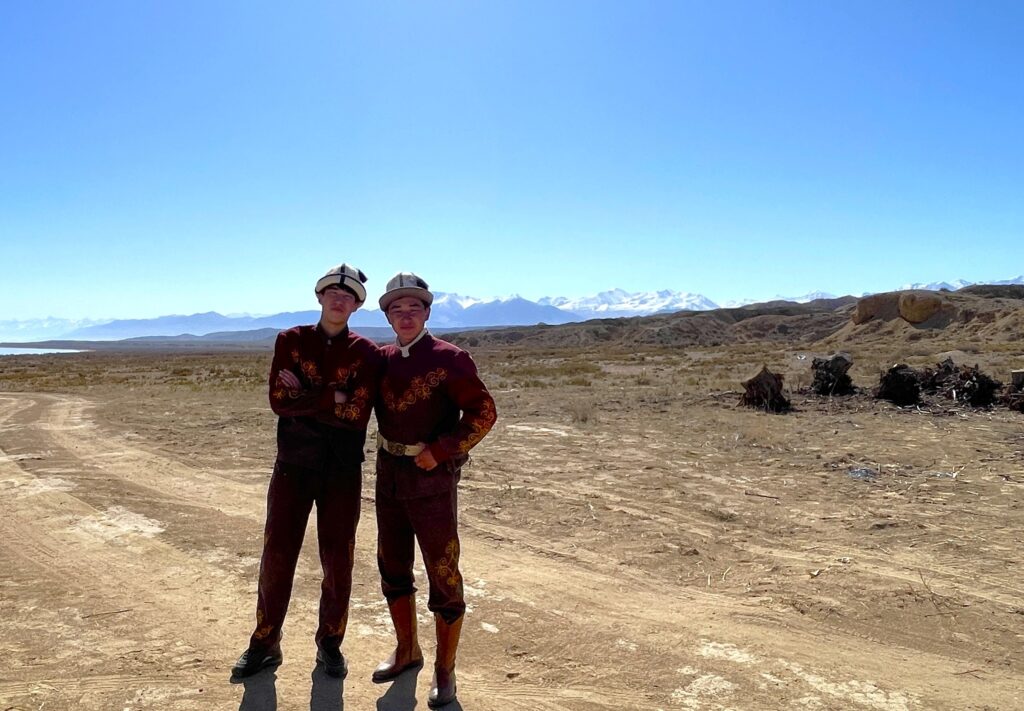
Theeagle men
Our next stop is a couple of days in the central town of Naryn.
It’s a scenic drive to the beginning of the gorge, but partway, we find the road still muddy and not cleared of the winter snow yet. We do the mature thing and bail.
Bridge over the Naryn River
The next day, we head south for a daytrip to Tash Rabat, near the border with China.
The Tien Shan Range in the distance
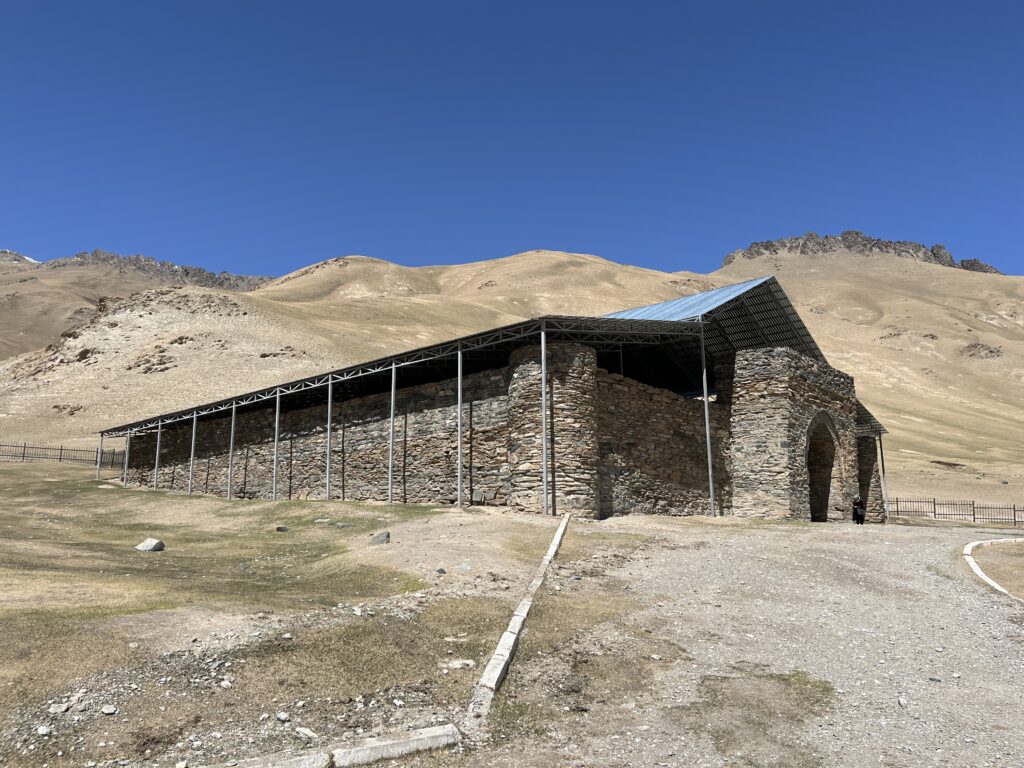
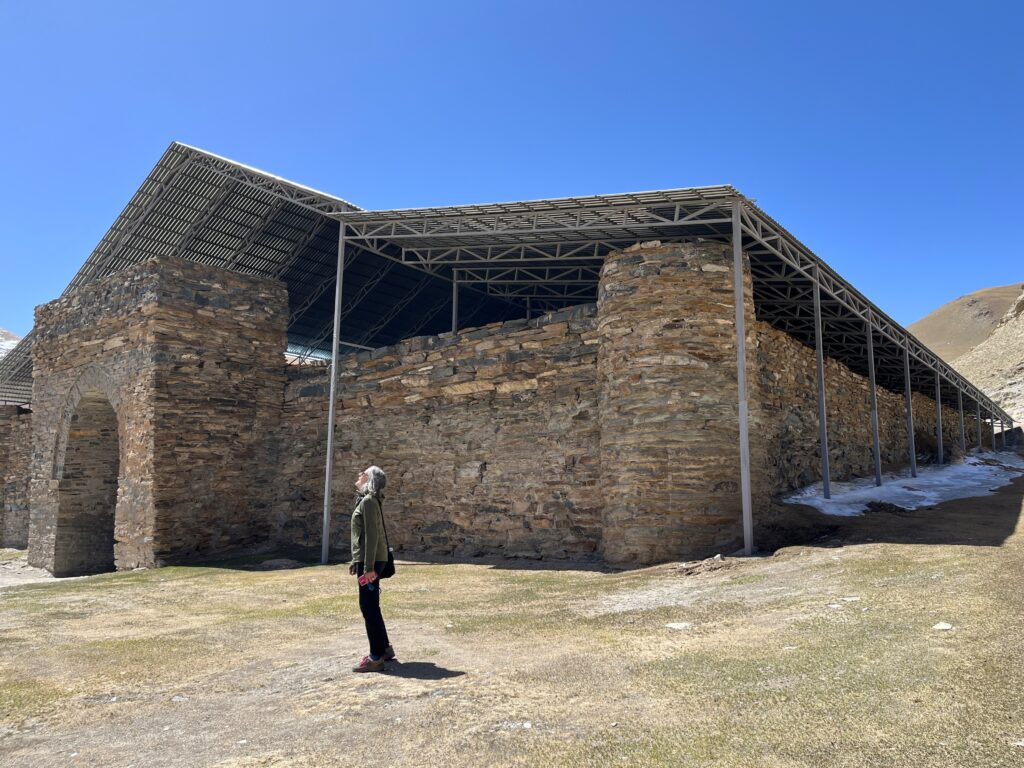
The road traffic is almost exclusively large trucks coming in from over the Torugart Pass. Our destination is the Tash Rabat ‘Caravanserai’.
New tin roof for protection
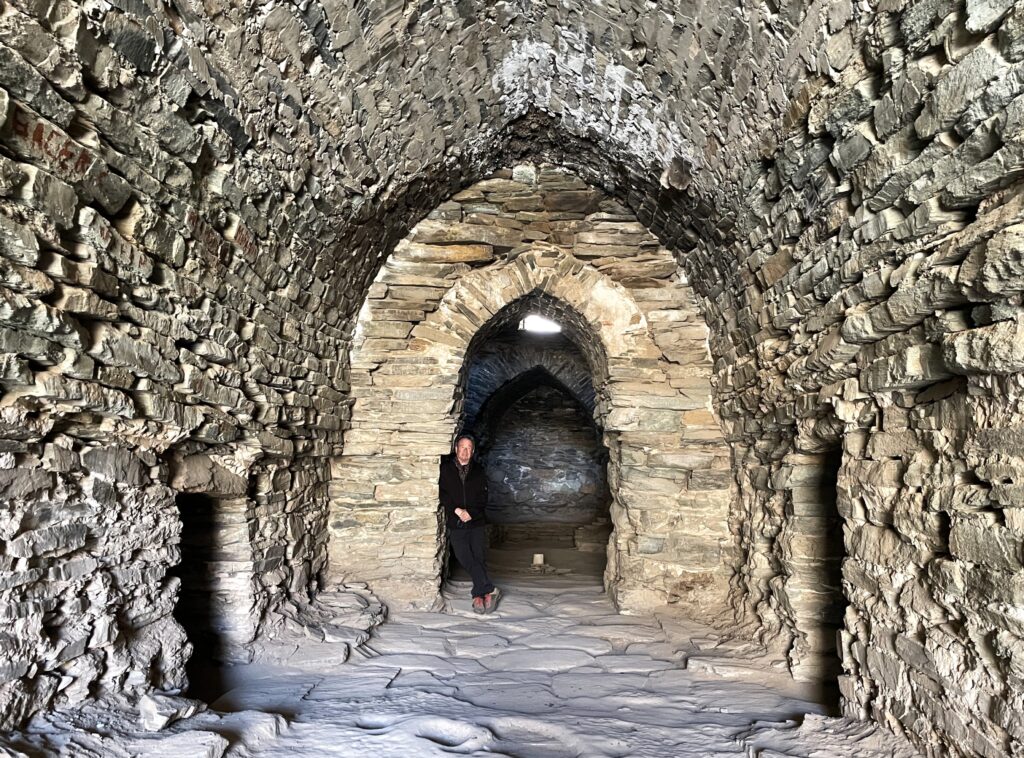
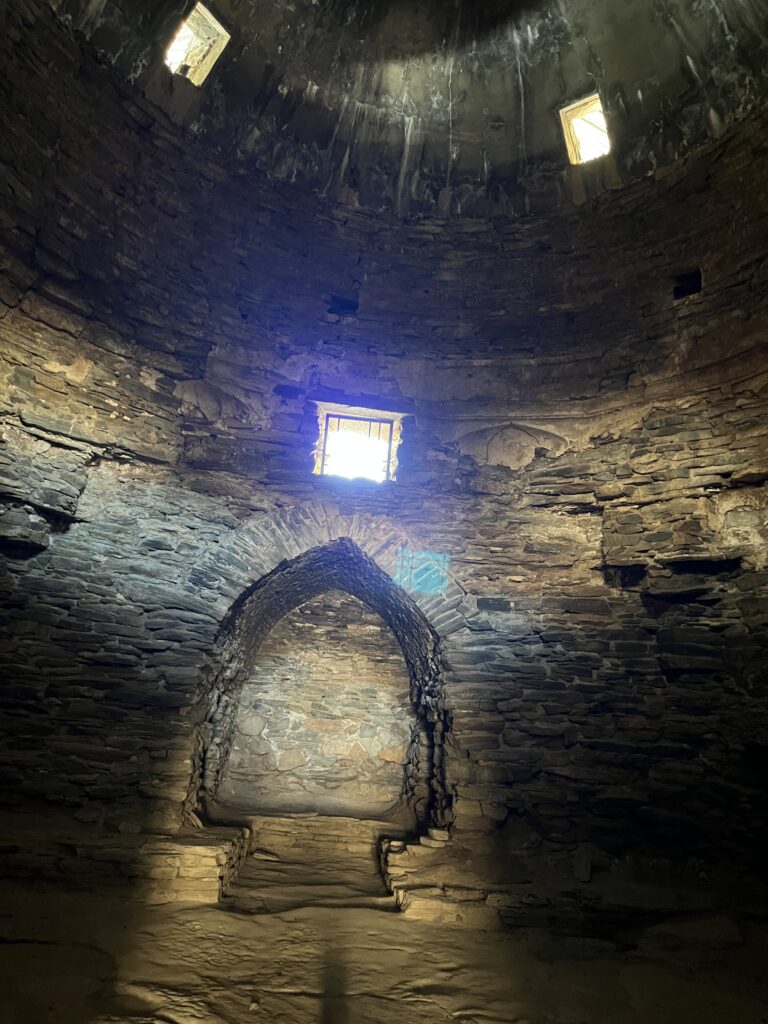
I put ‘caravanserai’ in quotes because it’s not 100% certain what the function of this building was. (A caravanserai was an overnight resting house for traders on the Silk Road.)
Plenty of room at the inn
Some think it may have been a Nestorian Christian monastery. Or a Buddhist monastery.
Tash Rabat means ‘stone lodging’
Anyway, it has dozens of small, cell-like rooms. It almost looks like a Roman fort we saw once in the Tunisian Sahara.
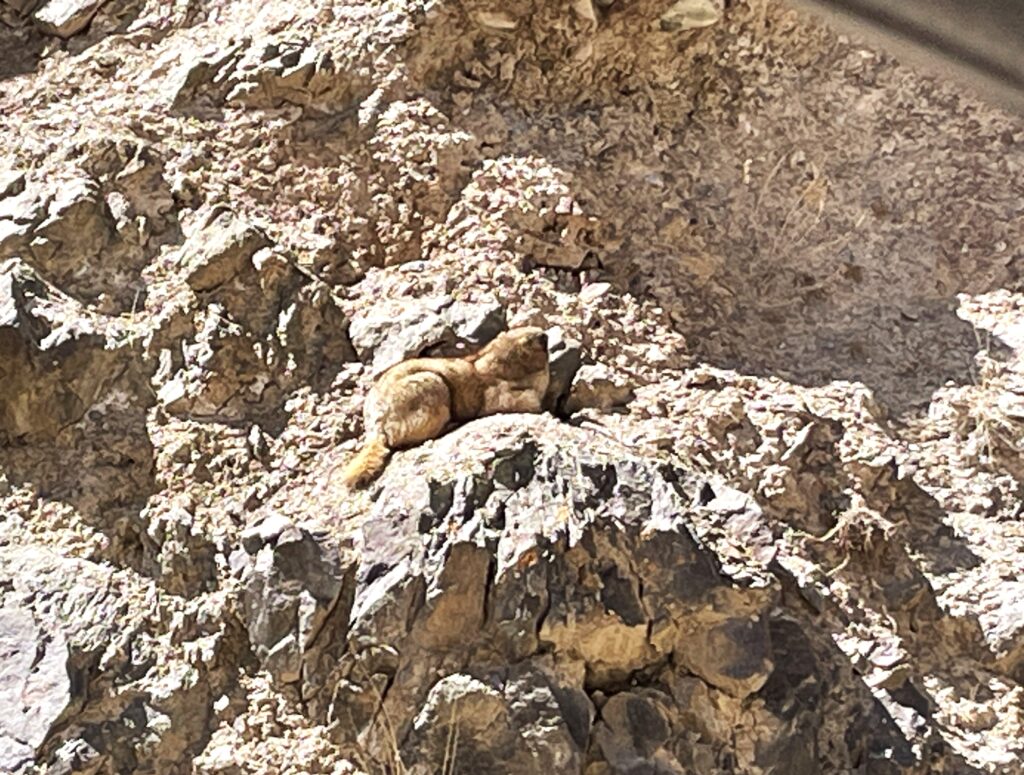
On the way to Tash Rabat, we see hundreds of creatures that resemble gophers or groundhogs. Turns out they’re long-tailed ground squirrels. It’s fun to watch them scurry to their burrows, their fuzzy tails flowing ‘like a ribbon on a fan’. (Thanks, Jane Siberry, for that image.)
Urocitellus undulatus
Sight or Insight of the Day
How did we end up visiting Central Asia? We were discussing this the other day while on the road.
Way back in July 2019, we were in Bhutan, attending an activity that included a meal. One of our fellow guests was a well-traveled Hungarian woman named Anita, who worked for a Russian bank. We mentioned that we wanted to go to the Pantanal region of Brazil one day. Of course, she’d been there, and suggested accommodations at a ranch that we subsequently stayed at years later.
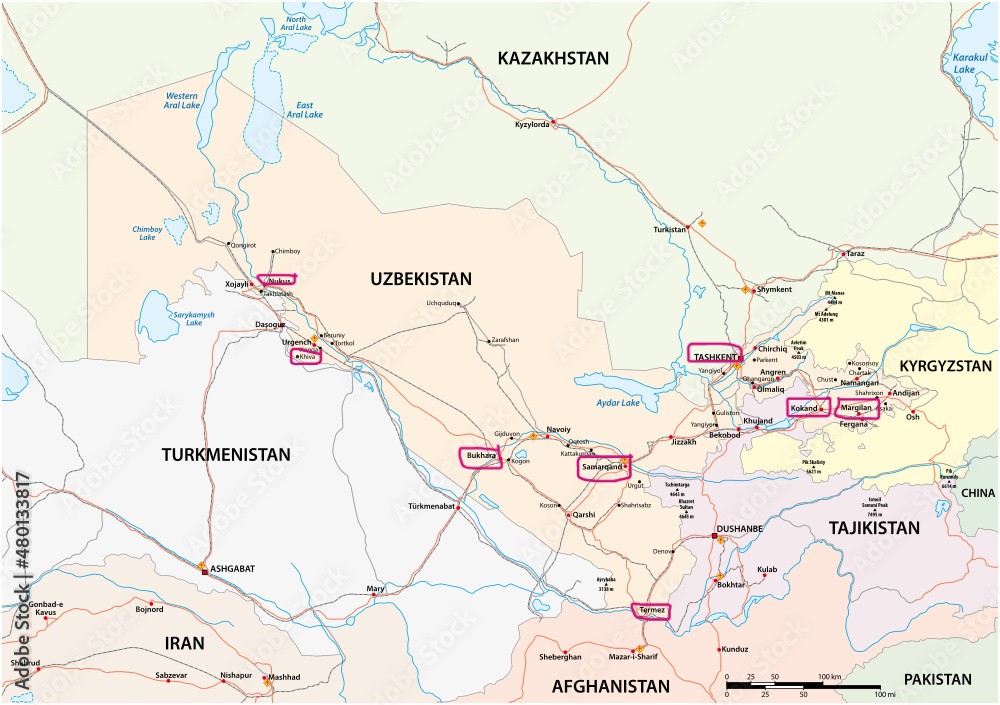
She’d also visited the ‘stans (Turkmenistan, Uzbekistan, Tajikistan, Kyrgyzstan, and Kazakhstan), driving around with a companion. Not exactly a prime destination at that time. Admittedly, she spoke fluent Russian, but she thought we’d enjoy its friendly people and interesting history, recent and ancient. She planted the seed and now here we are. Just goes to show how a couple of fleeting hours with a stranger can have reverberating effects down the line.
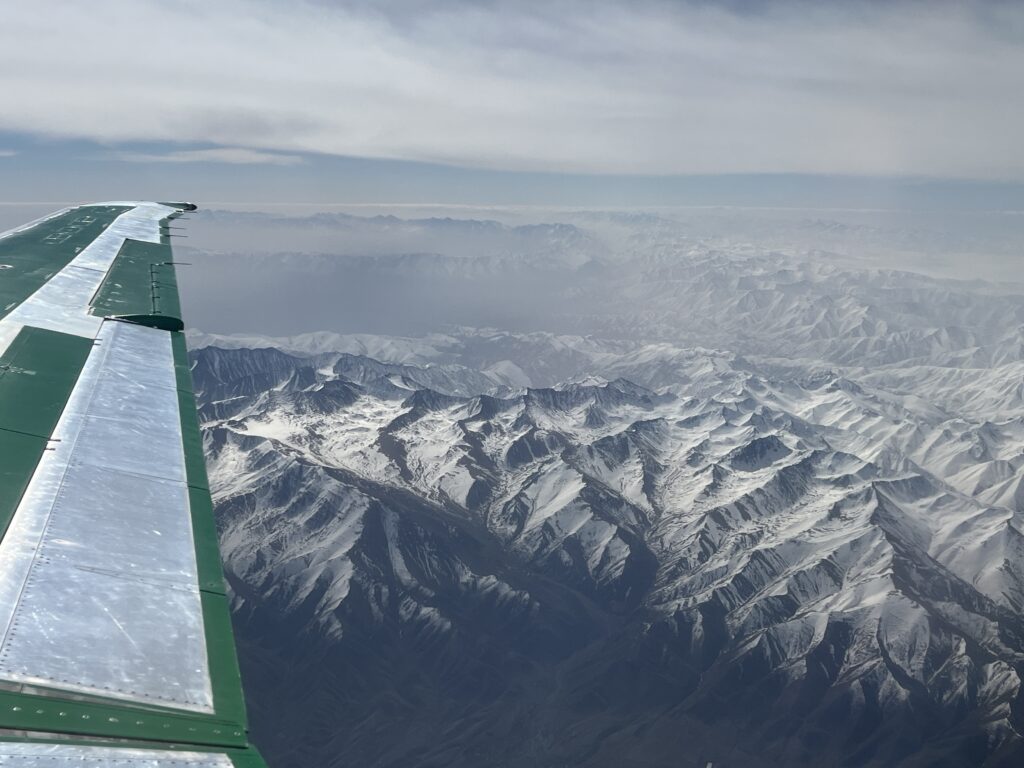
…Kyrgyzstan, that is. If Uzbekistan is all about Silk Road cities, KGZ is all about mountains. We are seldom out of sight of snow-covered peaks anywhere in the country so far.
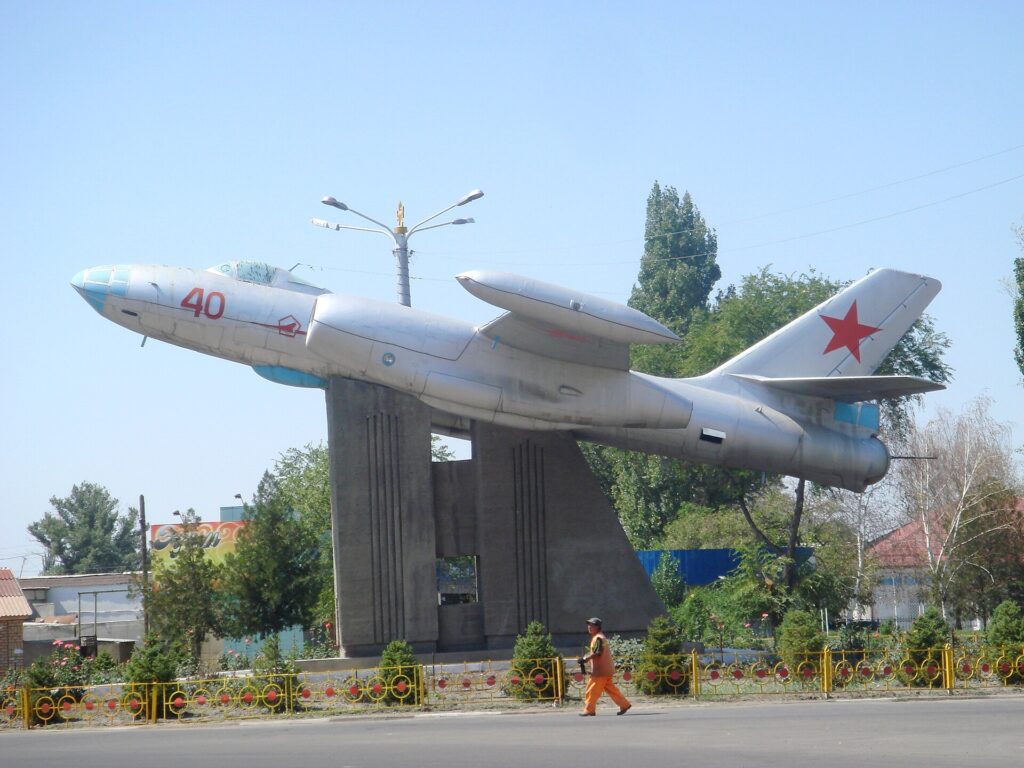
The first night of our KGZ road trip is spent in the jovial-sounding town of Tokmok. Its most visible oddity is an Ilyushin Il-28 bomber mounted in the central roundabout.
‘Ad astra per ardua’
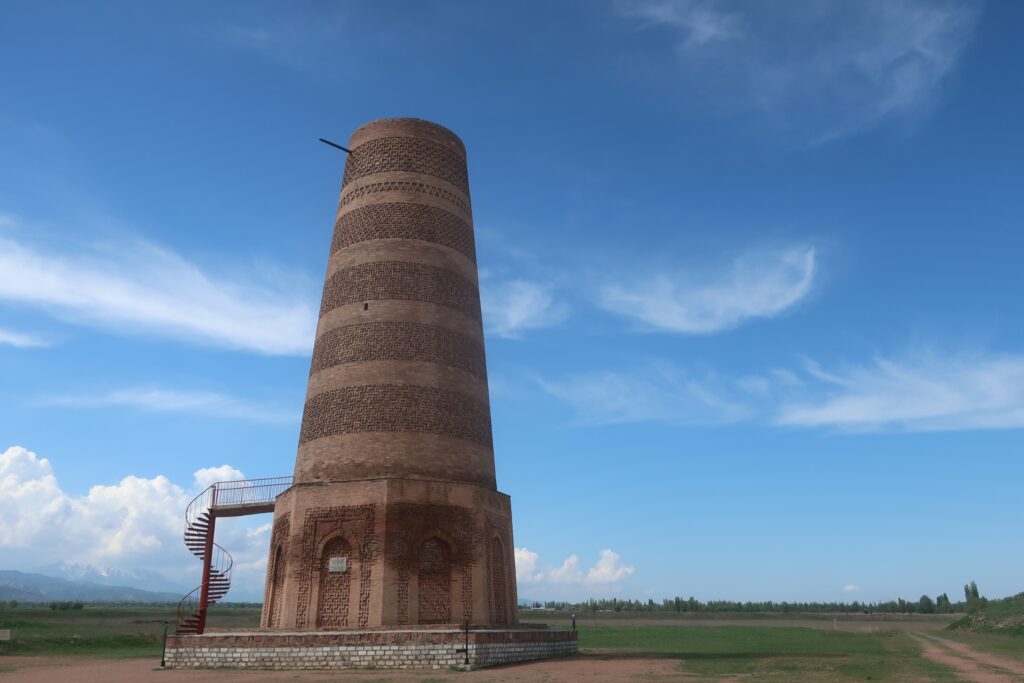
But KGZ does have some Silk Road sites. Burana tower, for example.
Burana minaret
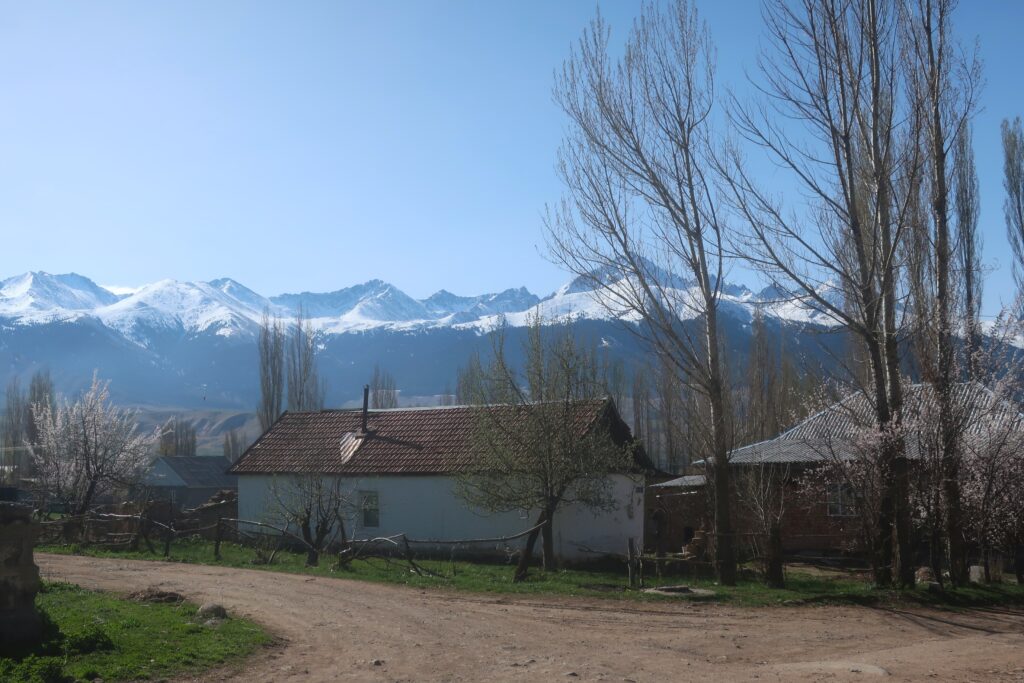
The day grows overcast. That night, we sleep in a homestay in the remote mountain village of Tegirmenti, in the Chong-Kemin Valley.
Downtown Tegamenti
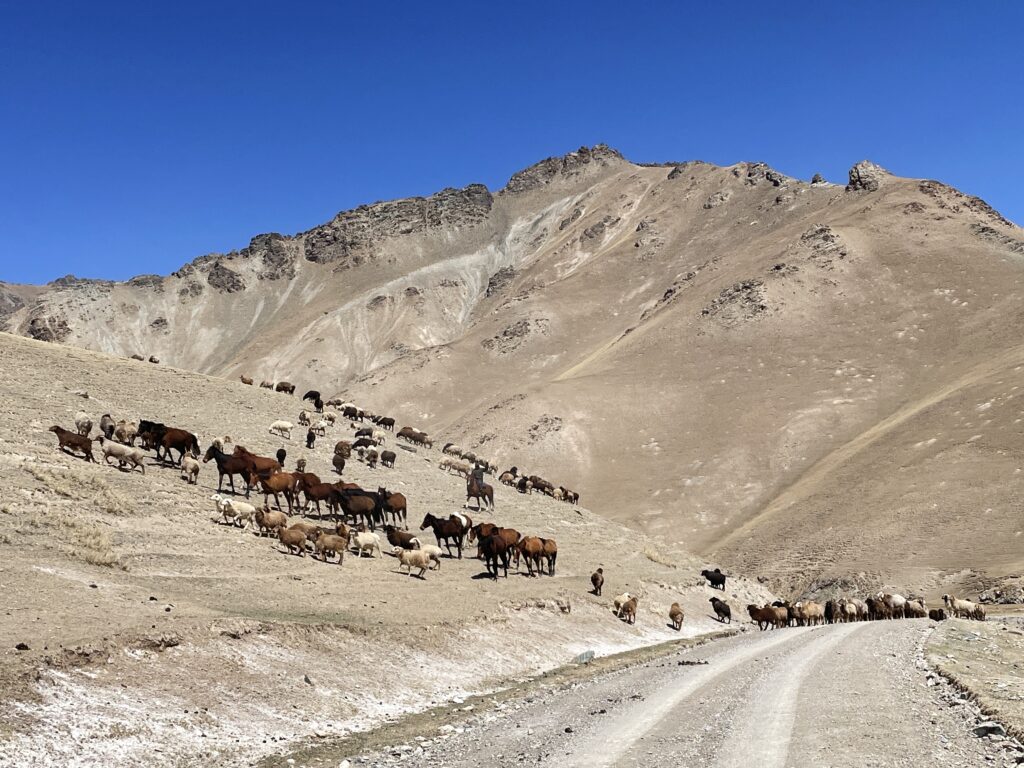
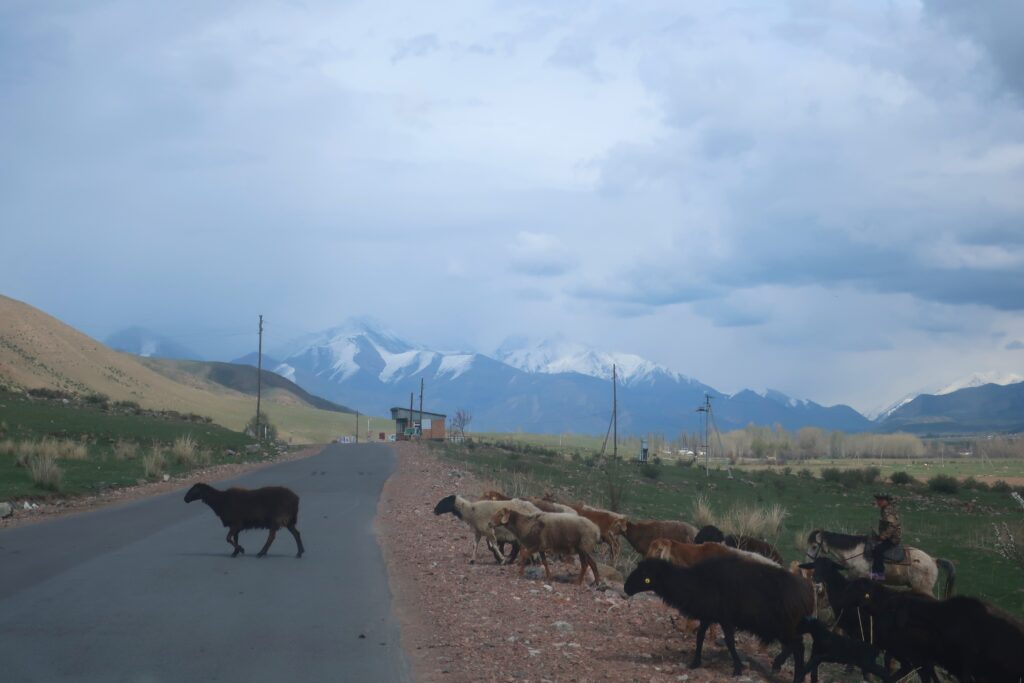
There’s always a herd of something crossing the road: sheep, goats, cattle, or horses.
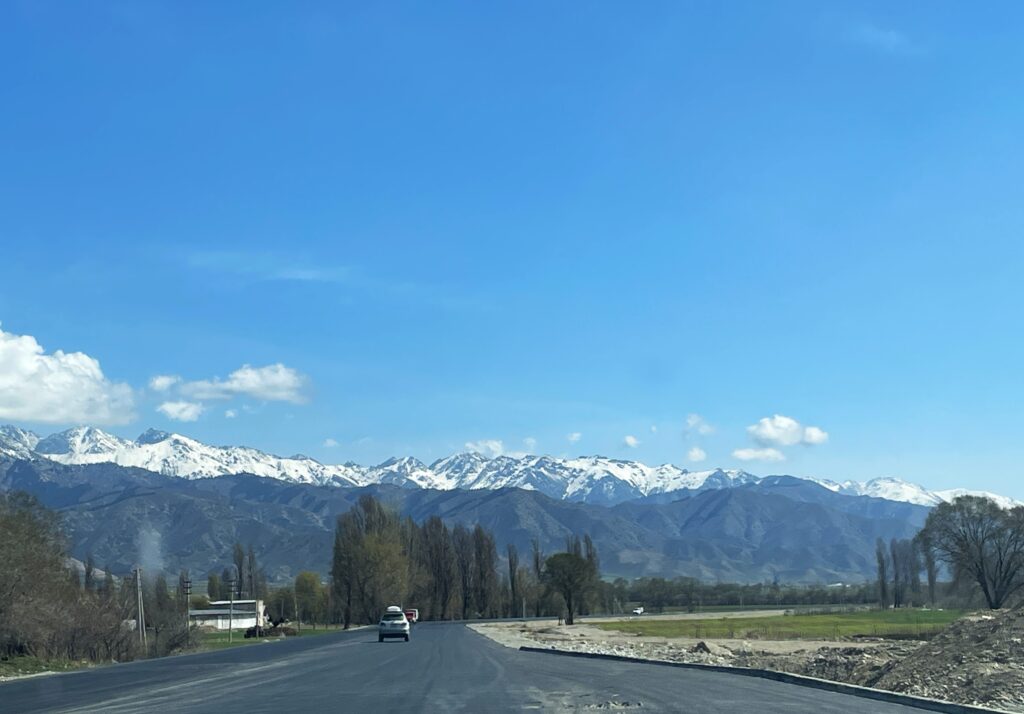
We are pleased to find driving in KGZ is not very stressful – traffic is sparse in most of the country.
Driving towards Karakol
Next day, we come within sight of Issyk-Kul, the world’s second-largest alpine lake (after Lake Titicaca).
Maria considers a dip
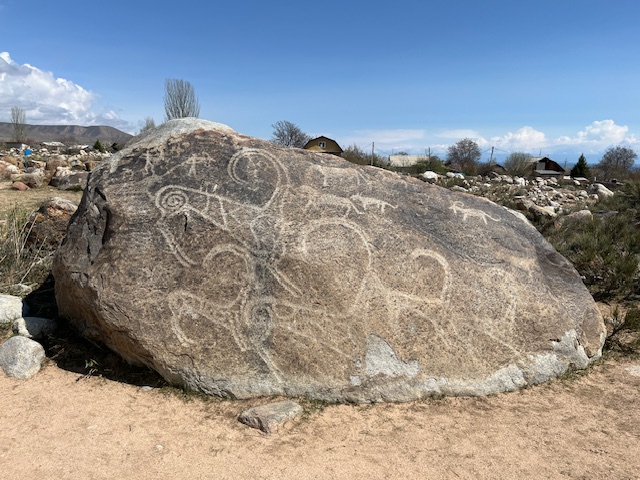
In the town of Cholpon-Ata is an open-air petroglyphs park. Most are over 2,000 years old.
Ibex hunt
Some say that the traditional decorations on Kyrgyz carpets are derived from the long horns of these creatures. That seems like a bit of a stretch to me.
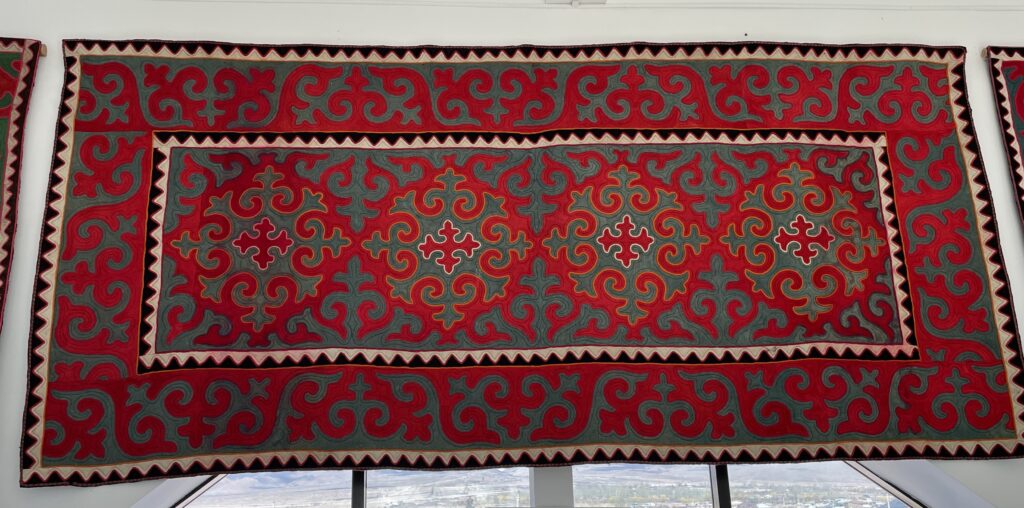
Shyrdak
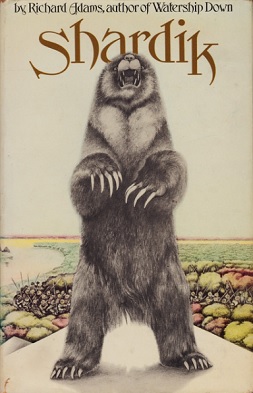
(Incidentally, this method of sewing felt on felt is called ‘Shyrdak‘. Not to be confused with the 70s novel by Richard Adams, ‘Shardik‘. The 1970s, that is.)
Shardik
A pattern emerges of reserving places to stay on Booking.com that are impossible to find, don’t exist, or are closed for the season. It begins to look like we might be homeless for the night until Maria asks at a five-star resort for directions.
‘…but the Son of Man hath nowhere to lay His head.’ – Matthew 8:20
So we end up staying at the exclusive Baytur Resort & Spa at a severely reduced rate, thanks to Maria’s innate ability to charm, and a manager with a soft spot for Canadians.
It’s kind of like the Overlook Hotel in The Shining: luxurious but virtually empty, at this time of the year.
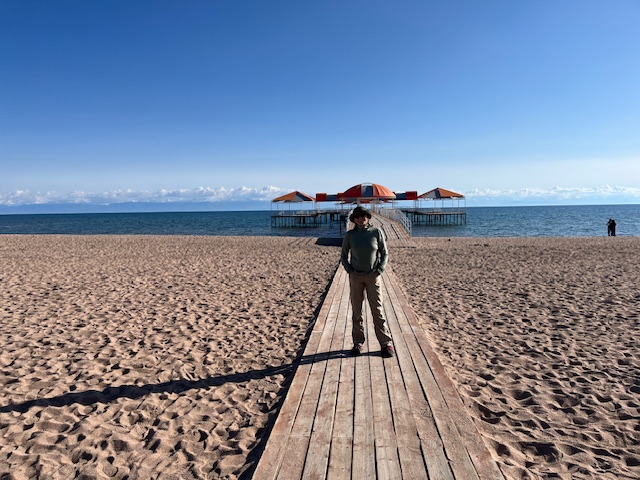
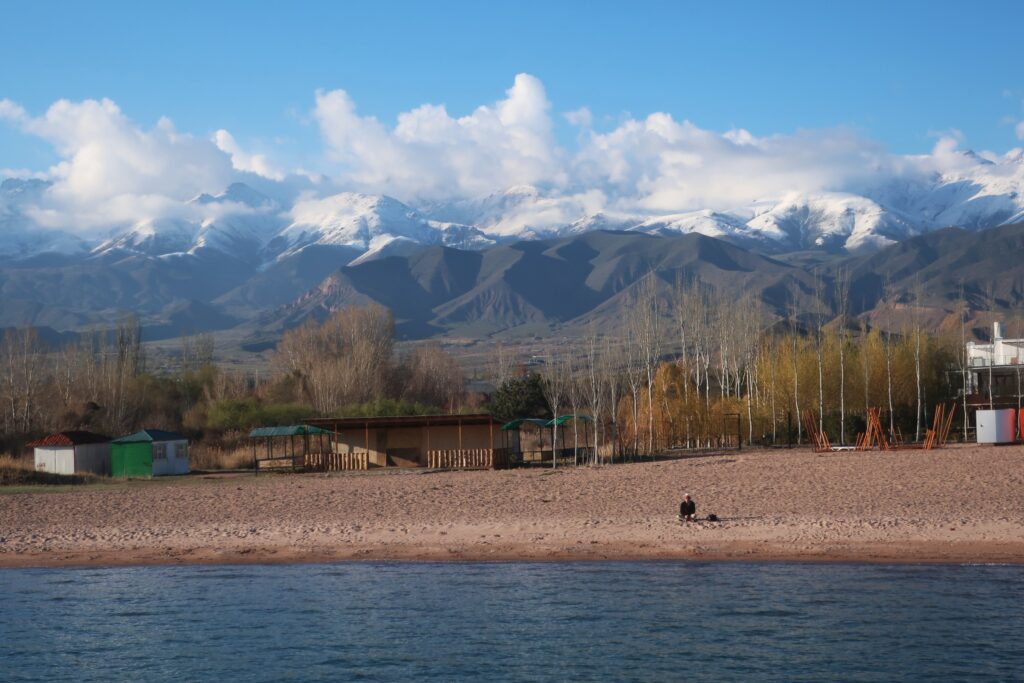
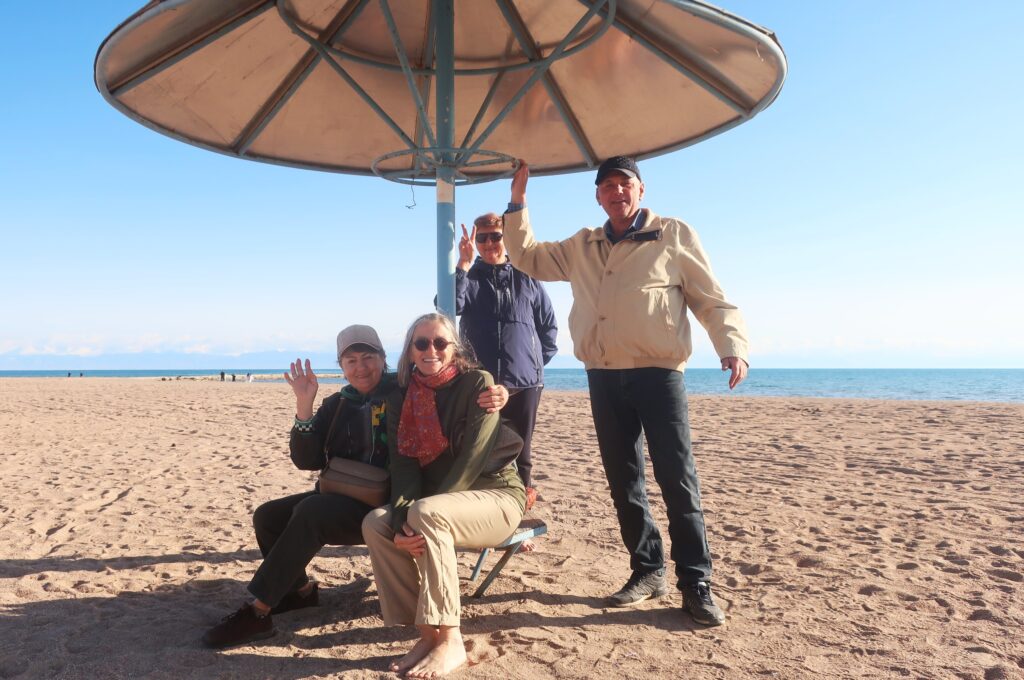
Denis, alone on the beach
Maria goes for a walk along the beach and makes friend with some locals.
Looks like a 70s album cover
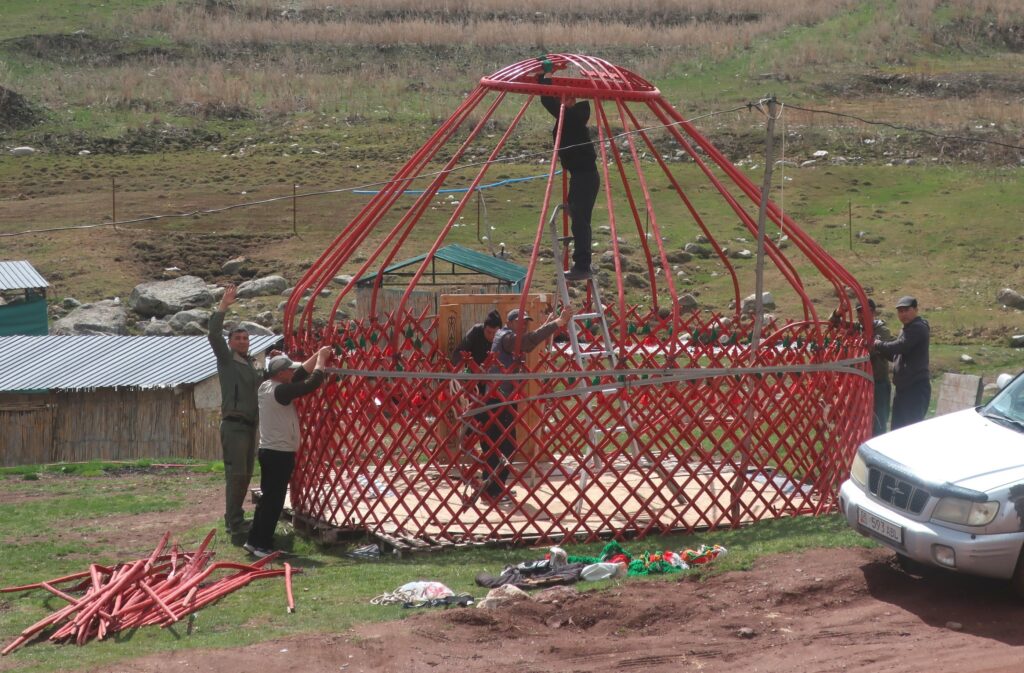
On our journey, we come across a team of men erecting a yurt.
It’s like building a silo
Sight or Insight of the Day
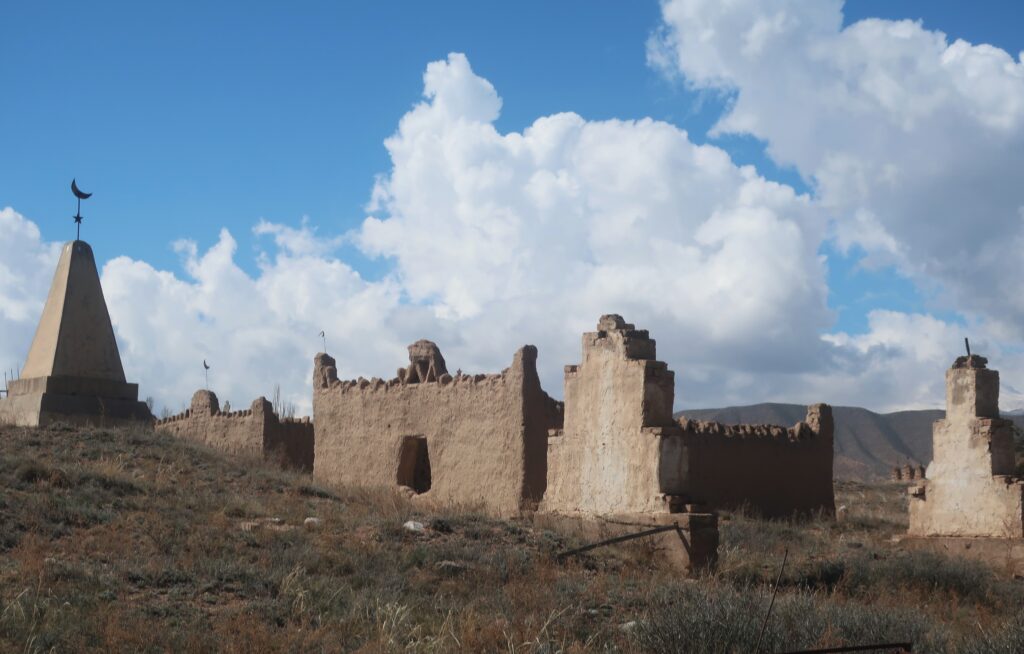
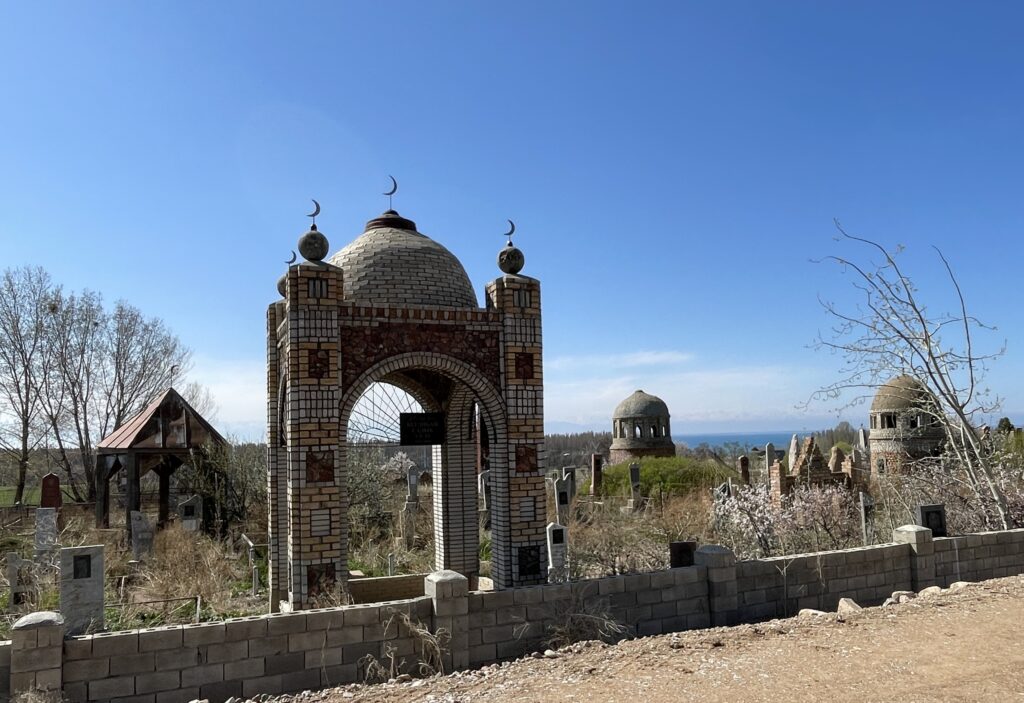
In most of the Islamic world, graves are very simple affairs. Even the most eminent people end up under a plain, unadorned slab. (In Oman, we came across places where people just put a randomly-picked-up stone over the interred person, so that a ‘cemetery’ looks like a walled-in field of rocks.)
In contrast, Kyrgyzstan cemeteries are full of fancy tomb structures.
Some villages seem to have more defunct people in residence than live ones.
This is a brief entry about settling into a new country.
Besides immediately making you think of the OshKosh B’gosh line of kiddie clothes, Osh is the second-largest city in Kyrgyzstan. We end up here by default, as it’s the nearest destination after departing Uzbekistan where we did.
As far as the physical environment goes, Kyrgyzstan and Uzbekistan are very different.
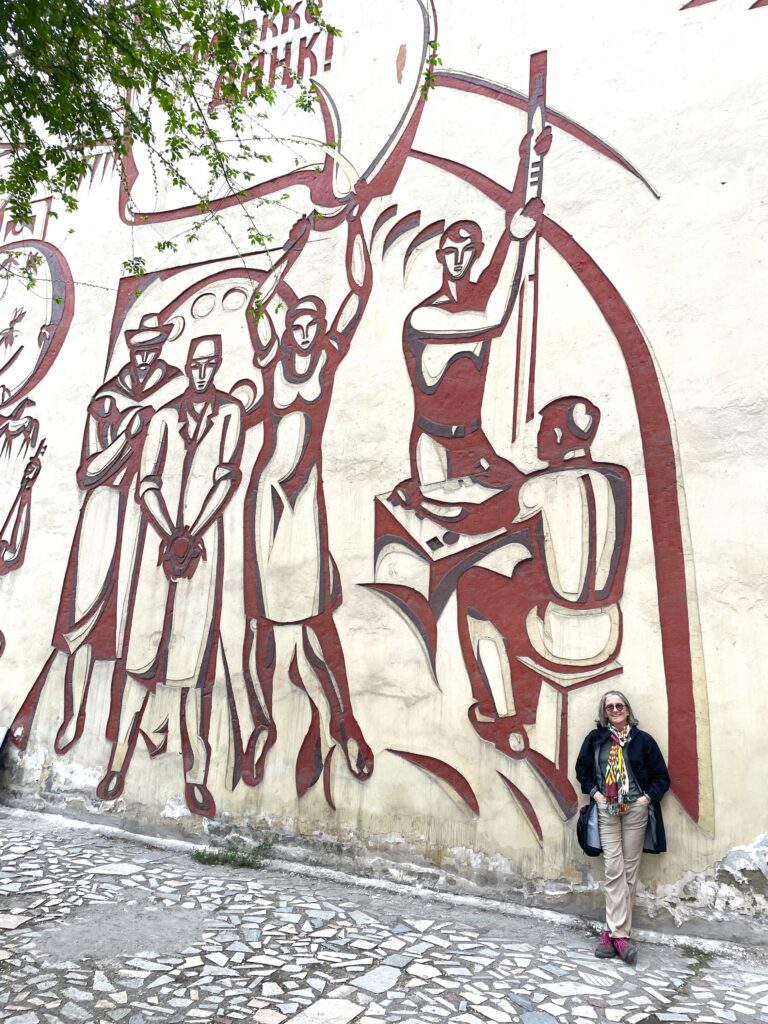
The most obvious difference is that Kyrgyzstan is much more ‘Russified’ than Uzbekistan. Kyrgyz is paired with Russian everywhere, and the language is still written in Cyrillic letters.
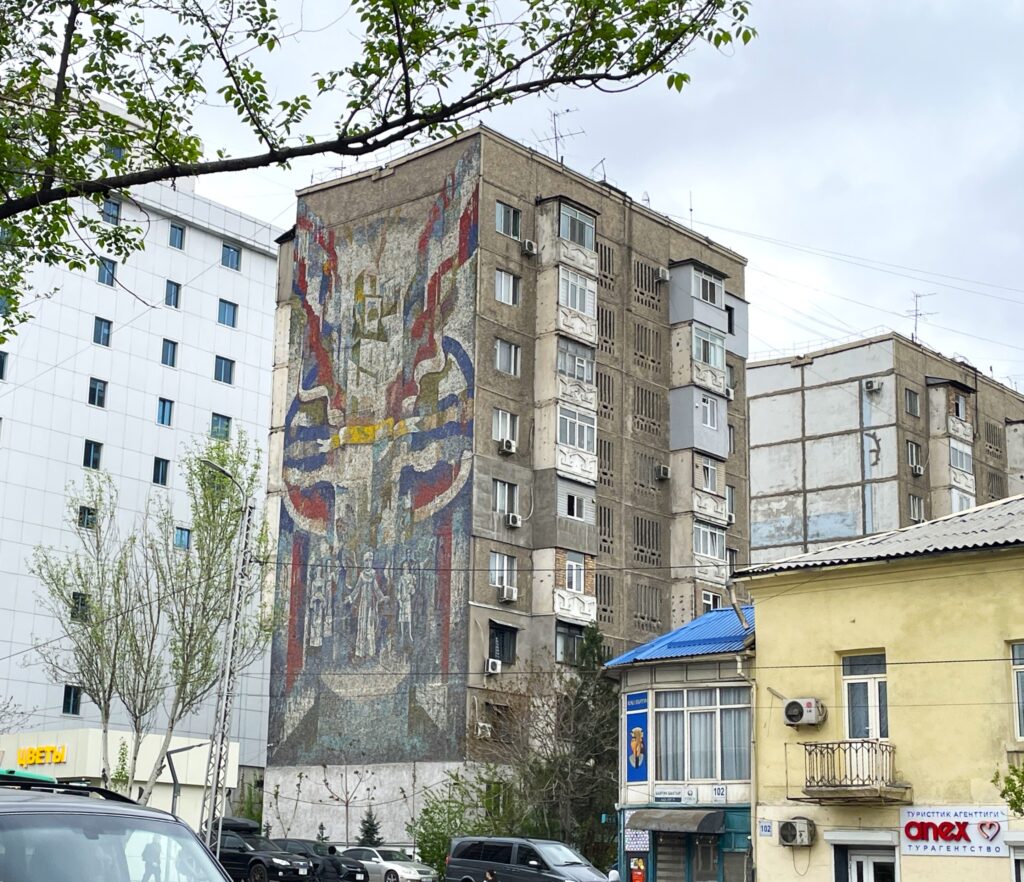
Whereas in Uzbekistan, most sad communist-era infrastructure has been torn down and replaced with brighter, modern streets and buildings, there is more of a cultural hangover of Sovietic decrepitude and drab grayness here.
Mural left over from the Soviet days
Kyrgyzstan is more Russified and less Islamified. Uzbekistan, like many Muslim-majority countries (Turkey, Malaysia, and Indonesia come to mind), tries to tie its national identity to a greater Islamic influence. This can be a bit of a tightrope-walking act – nobody wants to encourage young male hotheads to reach for their martyr’s crowns either.
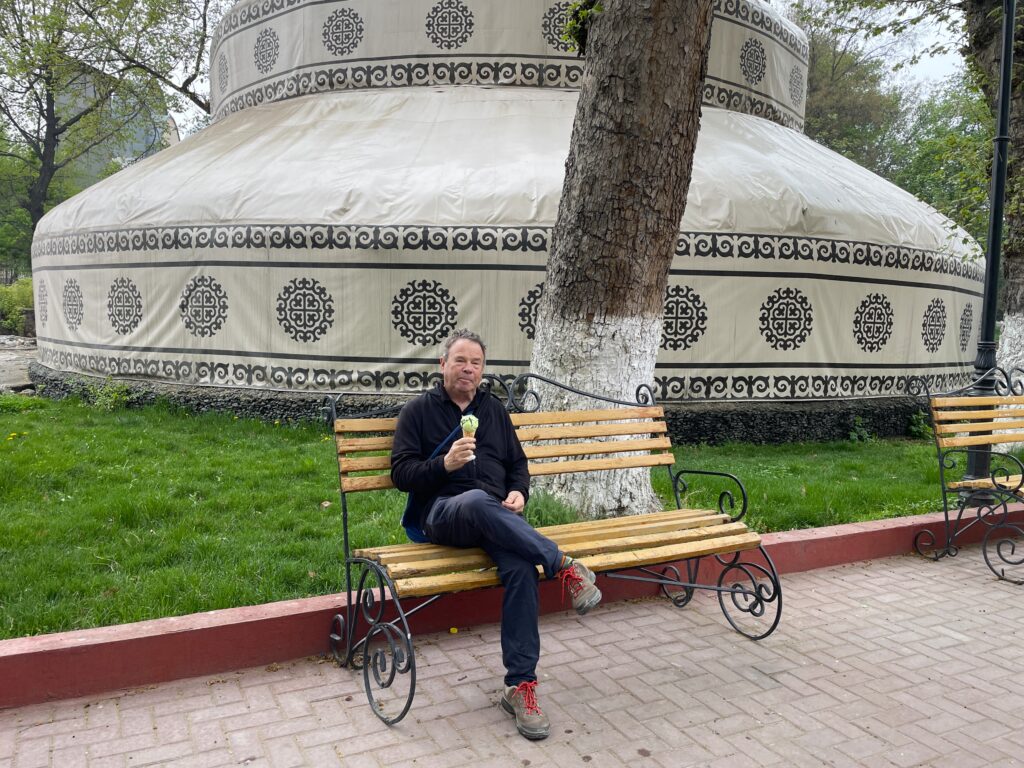
Kyrgyzstan seems much more secular. It’s also an interesting mix of Asiatic and Caucasian people.
Enjoying an ice-cream in front of a giant yurt
It doesn’t help that the weather is rainy and gray in Osh. In spite of these differences, we’re happy to report that Kyrgyz people are as friendly towards us as Uzbeks. Lucky us!
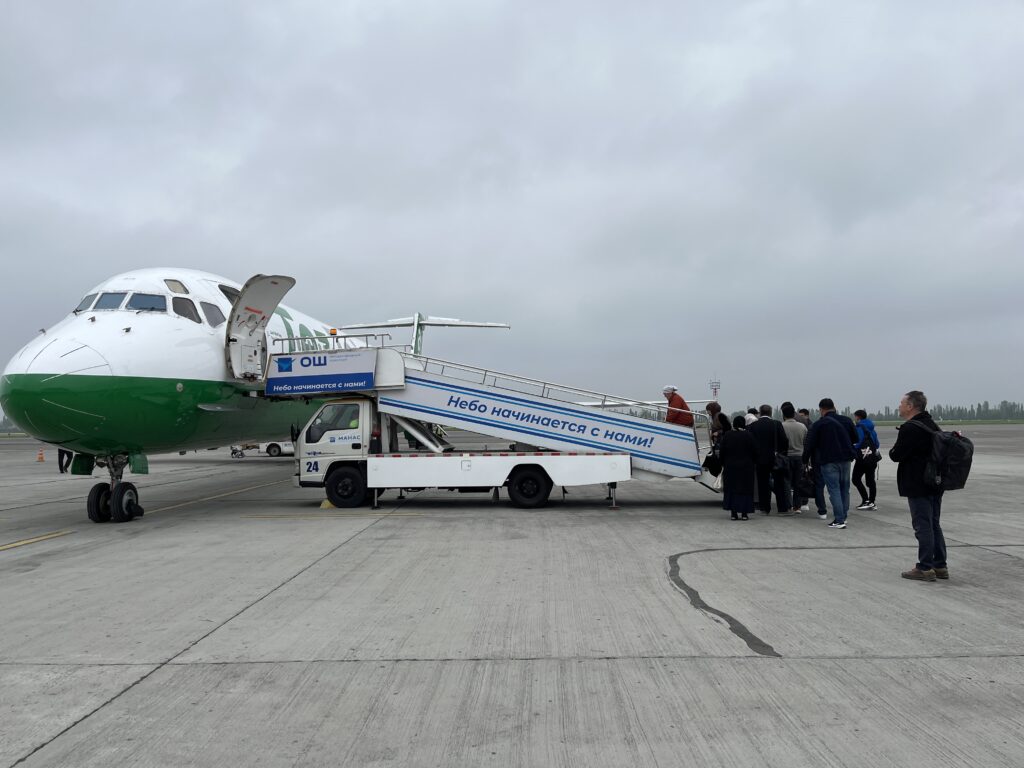
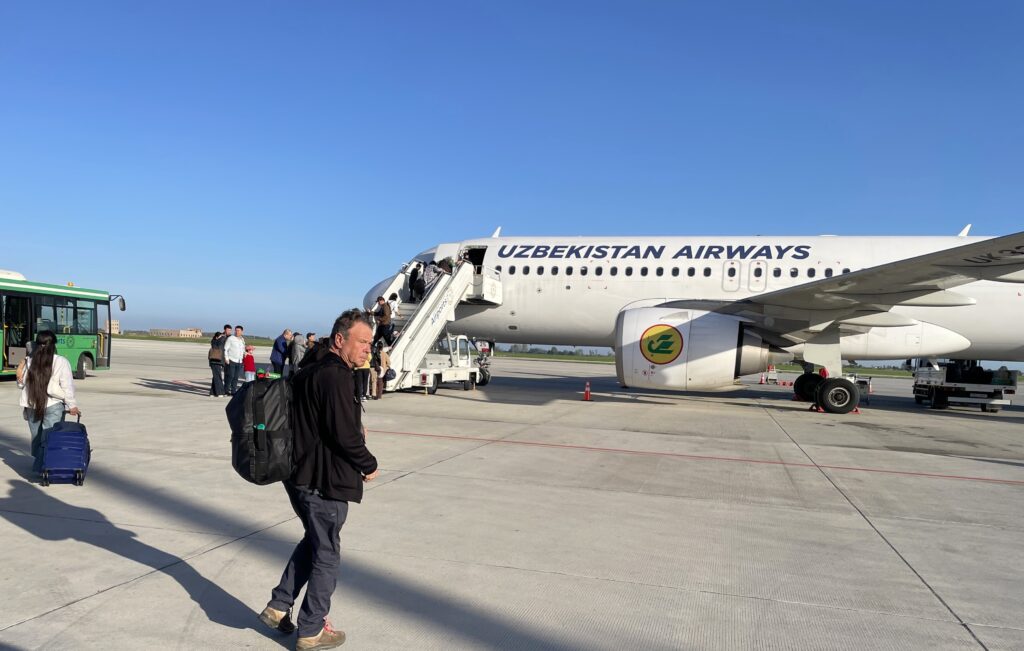
We opt to fly to Bishkek, the capital, rather than undergo a twelve-hour bus ride. At first we think we’re getting onto a Russian-built aircraft, because we don’t recognize the model as anything we’ve seen before.
Bishkek is a much different kettle of fish than Osh. It’s way more lively and modern. And way less depressing. There are still a lot of bedraggled Soviet-era flatblocks around, but in Bishkek, they add to the general interest.
Mosaic mural on side of tenement
We spend most of our time here attempting to amass enough cash to rent a vehicle. (The company we deal with only accepts cash. Preferably US dollars.) This means multiple visits to different ATMs.
At least one afternoon is enjoyed at the extraordinarily excellent National History Museum of Kyrgyzstan.
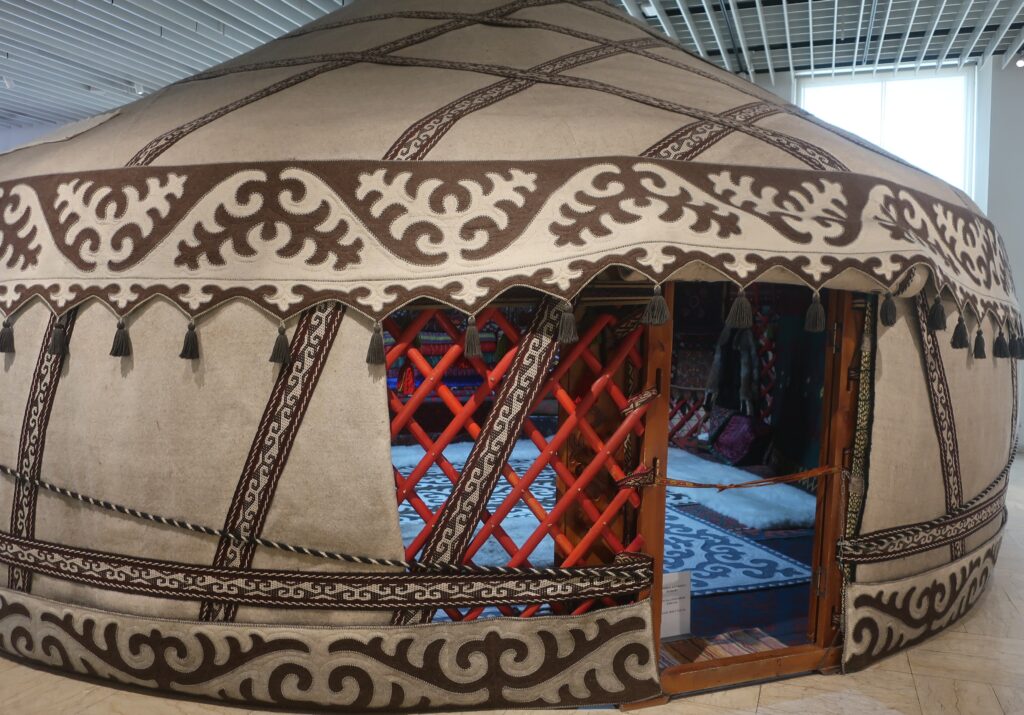
Yurt, exterior
Unfortunately, we can’t find a link that does justice to this recently-revamped museum and its wonderful exhibits.
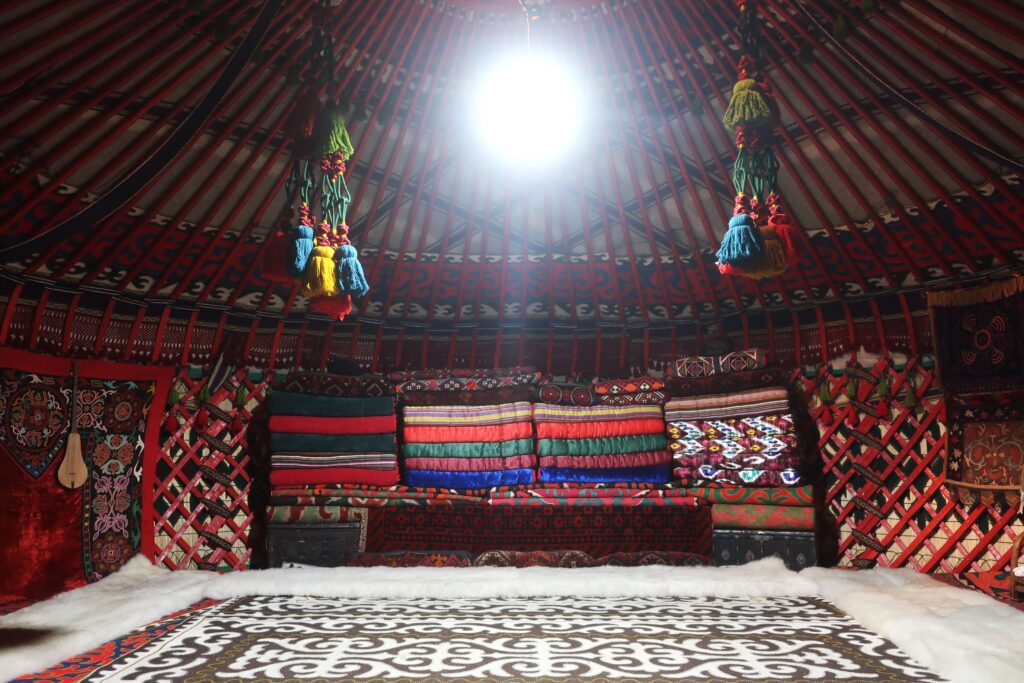
Yurt, interior
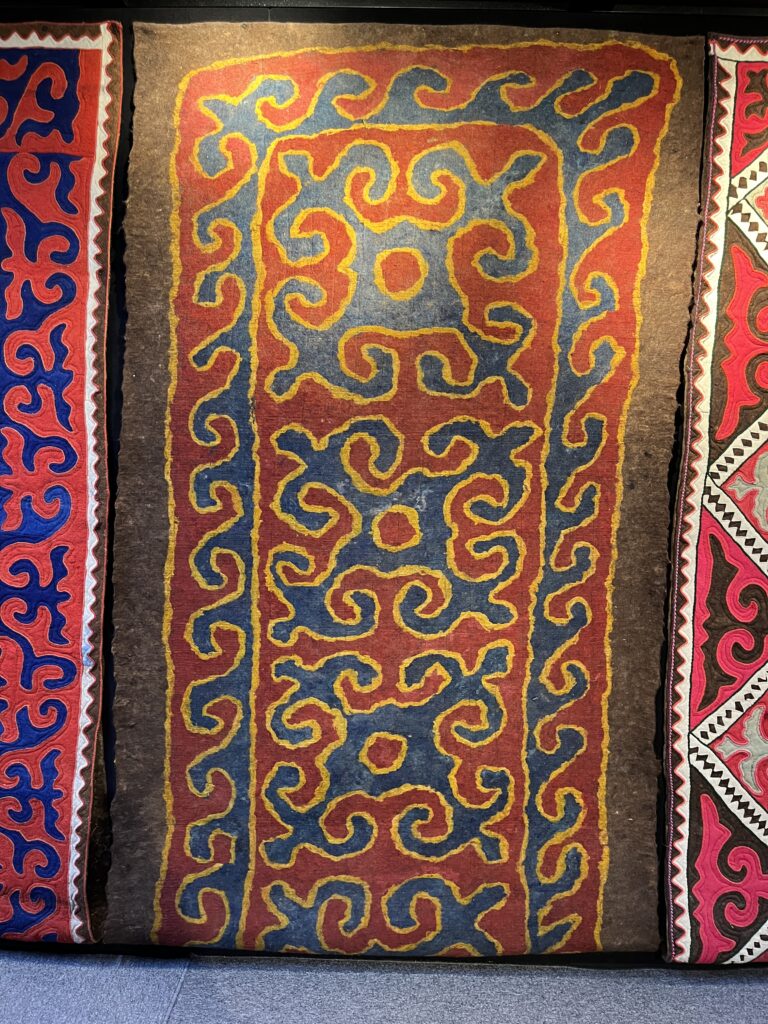
This is a Kyrgyz specialty – Ala Kiyiz carpets, with colourful patterns dyed into the felt with which they’re made. We’d love to bring one of these puppies home.
Ala Kiyiz felt carpets
Sight or Insight of the Day
At last, our vehicle is delivered and we’re ready to hit the road.
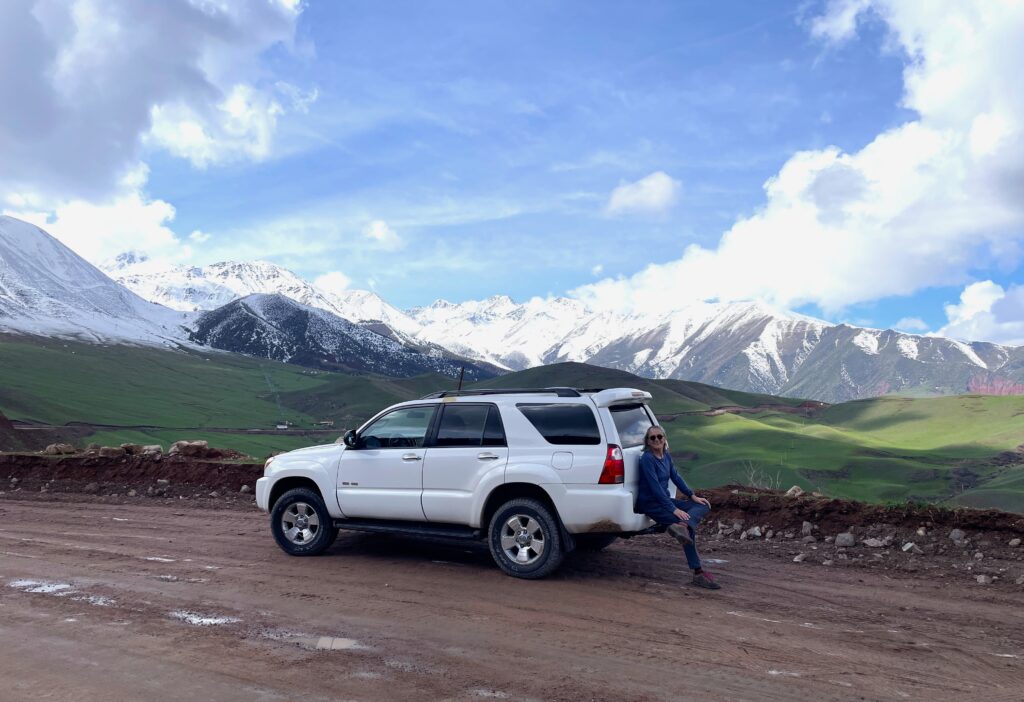
We are hopeless anthropomorphisers. Our 2002 Toyota 4Runner is dubbed Sergei.
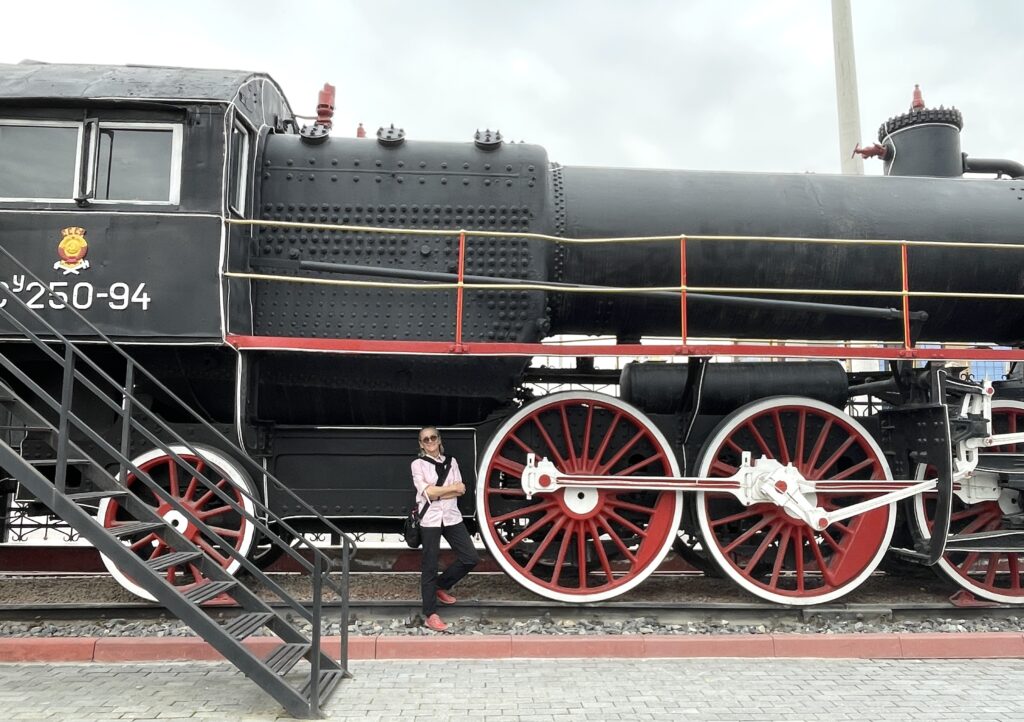
From Termez, we fly back to Tashkent – the train is booked solid – and spend a couple of days there. Among other things, we visit the Railway Museum.
Russian locomotive
In a pleasant gentrifying neighbourhood, we find Ming Uruk, an ancient settlement in the middle of Tashkent.
‘Ming Uruk’ means ‘a thousand apricots’
On the train again, from Tashkent to Kokand. We spend 15 minutes in darkness passing through the Kamchiq Tunnel and emerge into the fertile, often-turbulent Fergana Valley.
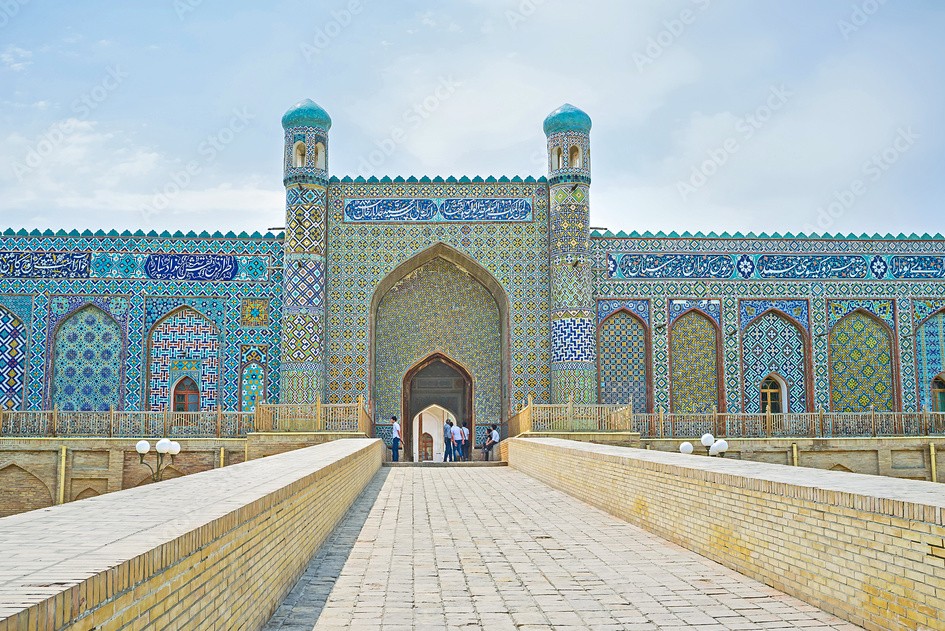
We stop in Kokand overnight, a quiet medium-sized town. Its claim to fame is the palace of Khudáyár Khán.
Elaborately-tiled palace
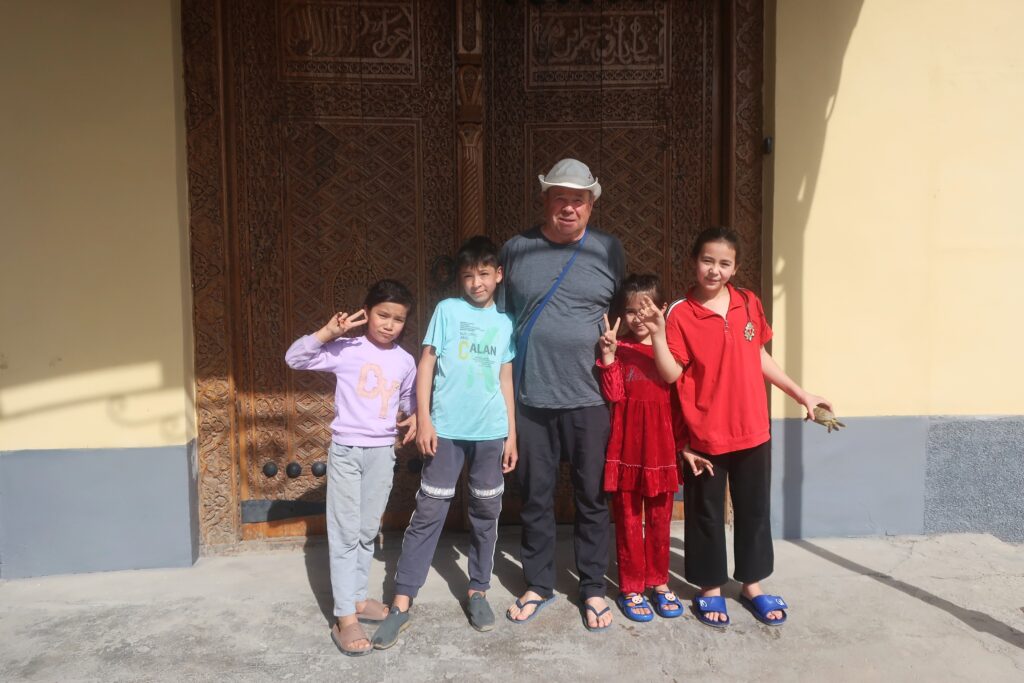
Remember I complained that people want a photo taken with Maria all the time? Finally, some kids want a photo taken with me.
Fan club
A white-knuckle Yandex ride takes us to Margilan, 76 KMs away, in record time. Wikipedia informs us: ‘Margilan has been renowned for its silk goods as far back as the 10th century.’
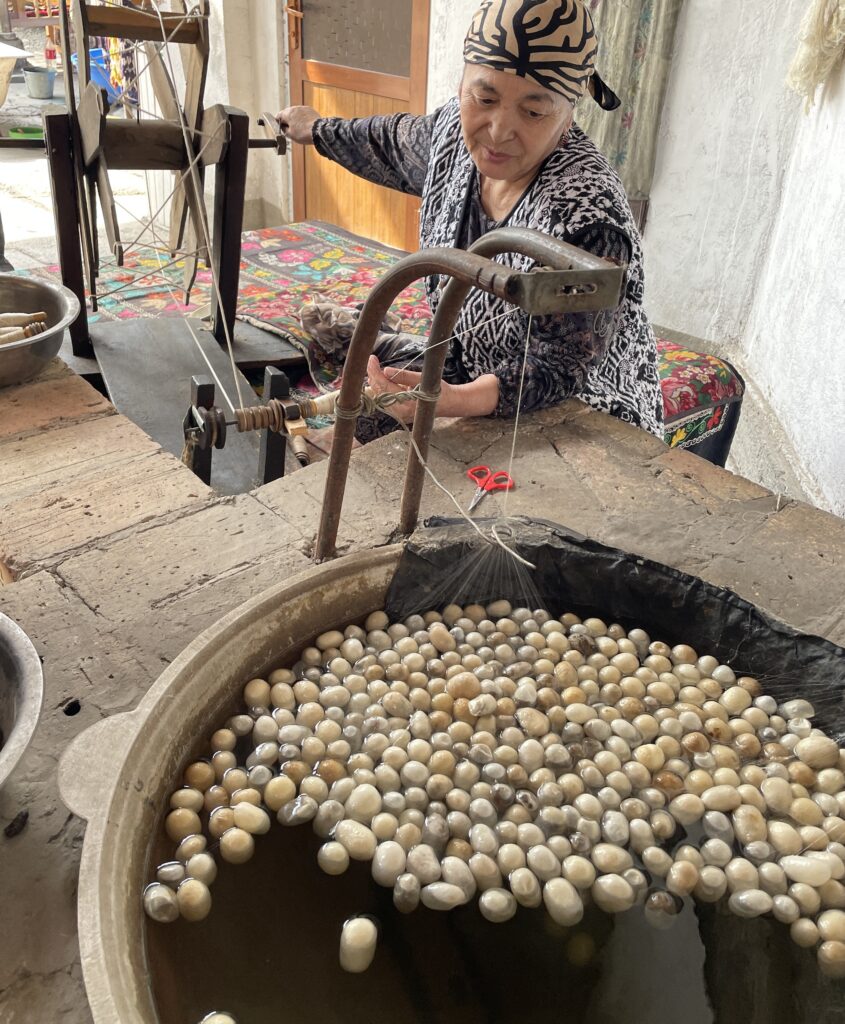
We visit a couple of producers ‘in the old style’. Each silkworm cocoon is a single thread, from 600 to 900 metres long (or more!)
Cocoons in warm water
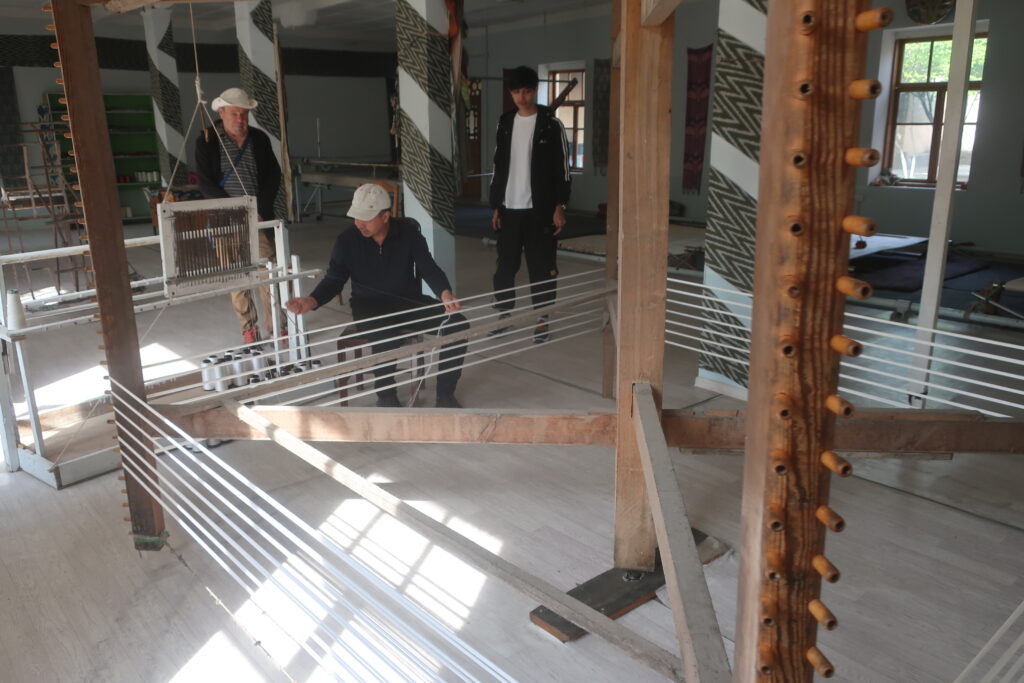
In another factory, a man is doing the same thing on a larger scale.
Spinning single threads into thicker threads
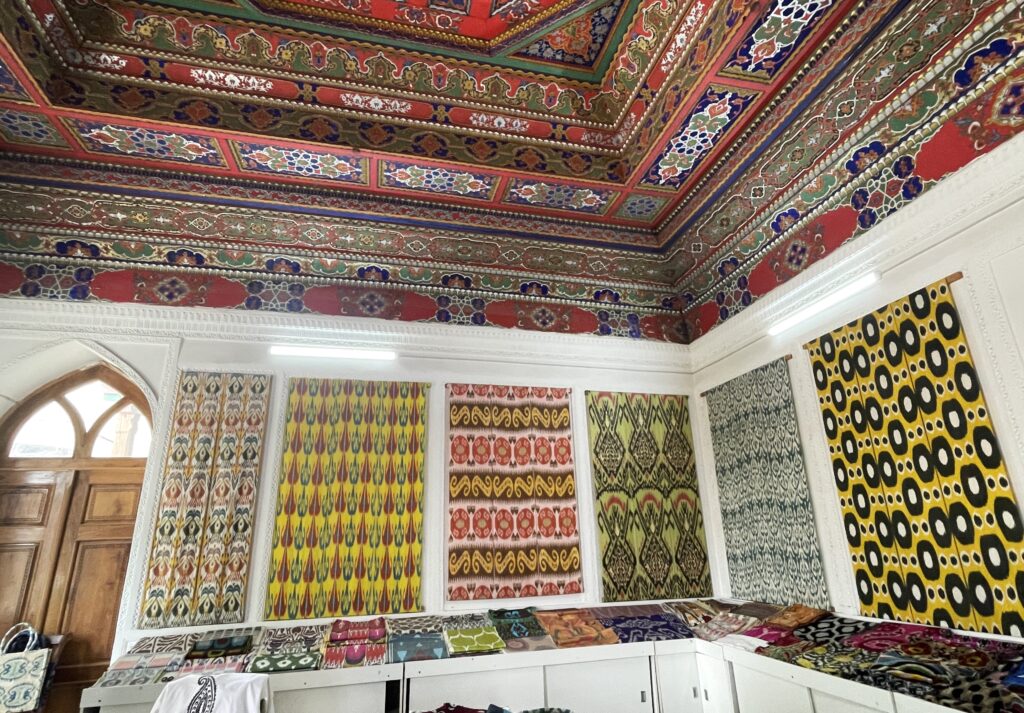
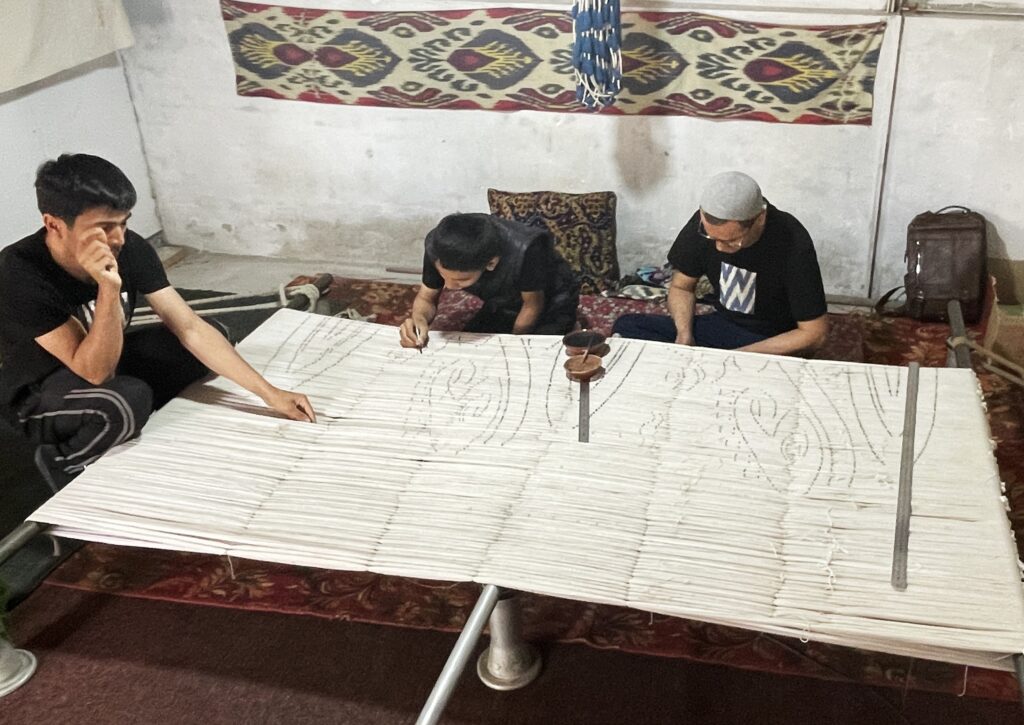
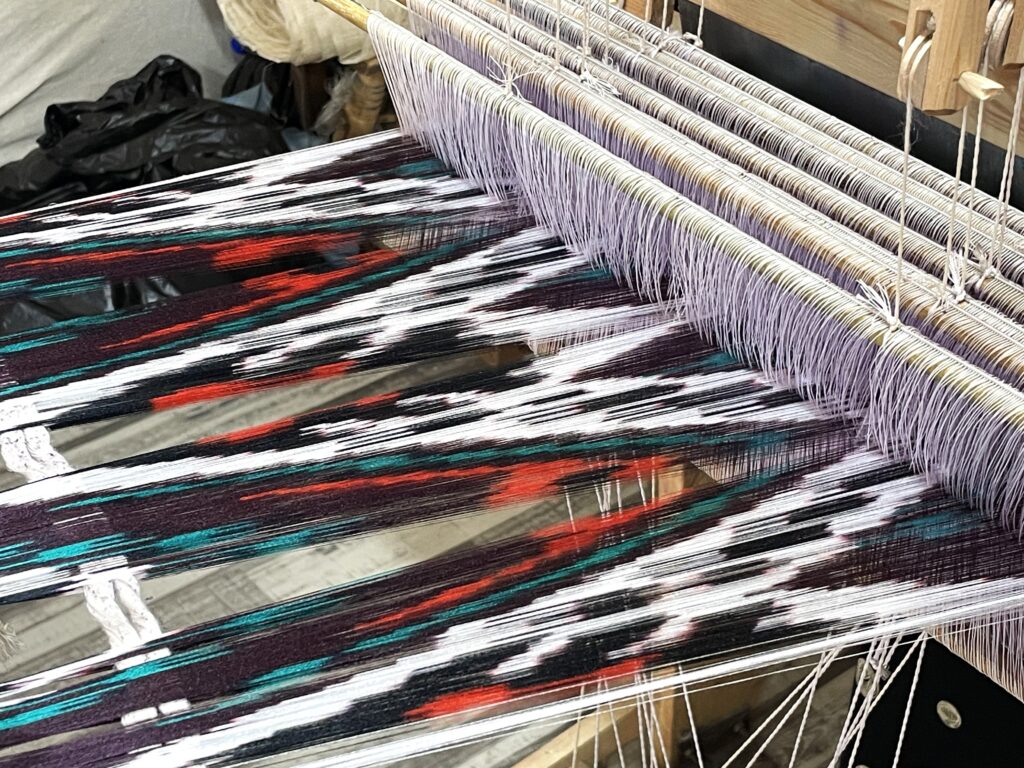
This silk is turned into textiles using the ikat dying process. The ikat process comes from Southeast Asia originally.
Drawing a pattern
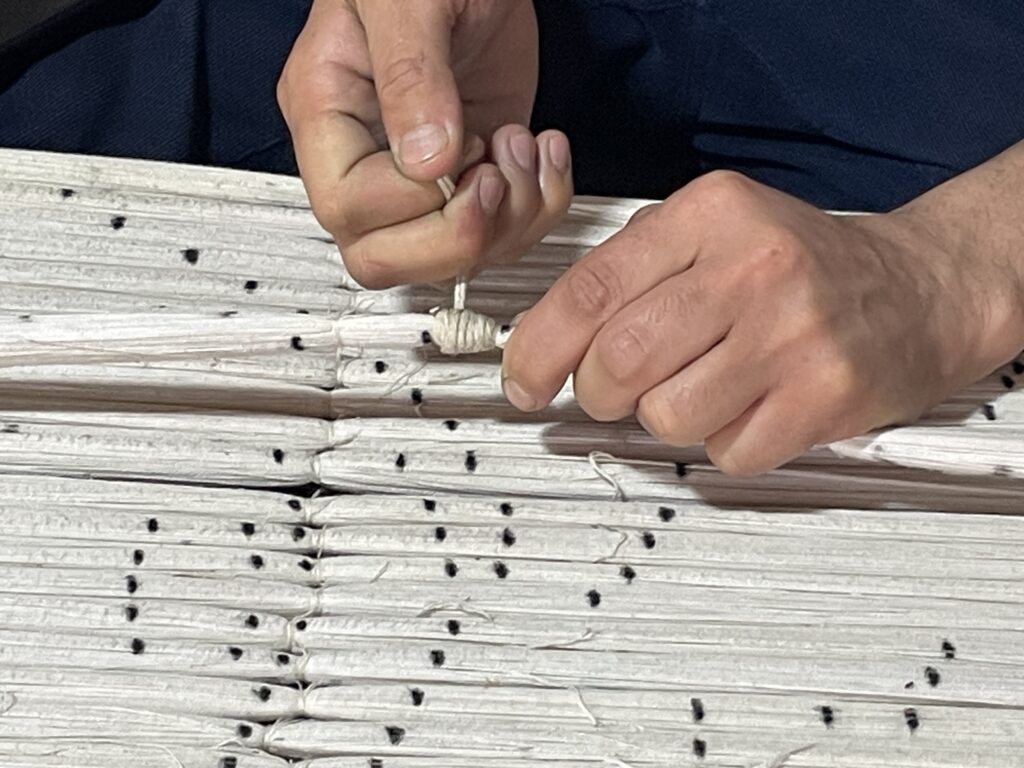
According to Wikipedia: ‘Ikat (literally “to bind” in Malayo-Polynesian languages) is a dyeing technique used to pattern textiles that employs resist dyeing on the yarns prior to dyeing and weaving the fabric.’
This is where the ‘binding’ comes in
The dyed threads are then woven by a roomful of old ladies with a good sense of humour.
‘Abr’ patterns – ‘Abr’ means ‘clouds’
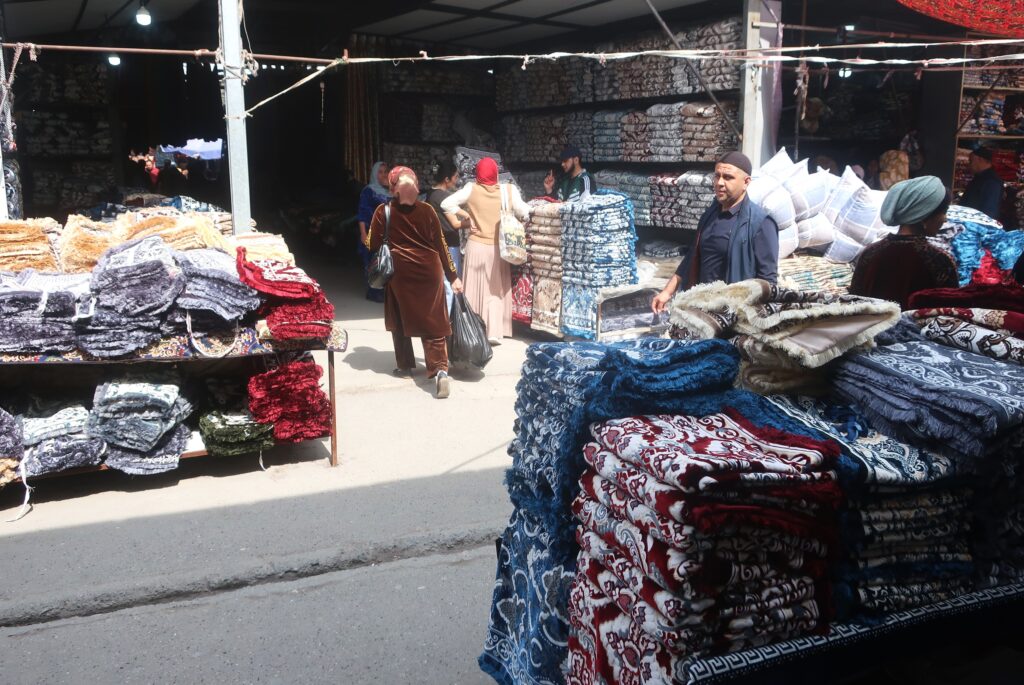
We go to the Kumtepe bazaar, almost exclusively the haunt of locals. I’m looking for a camel bell, but no luck.
Kumtepe bazaar
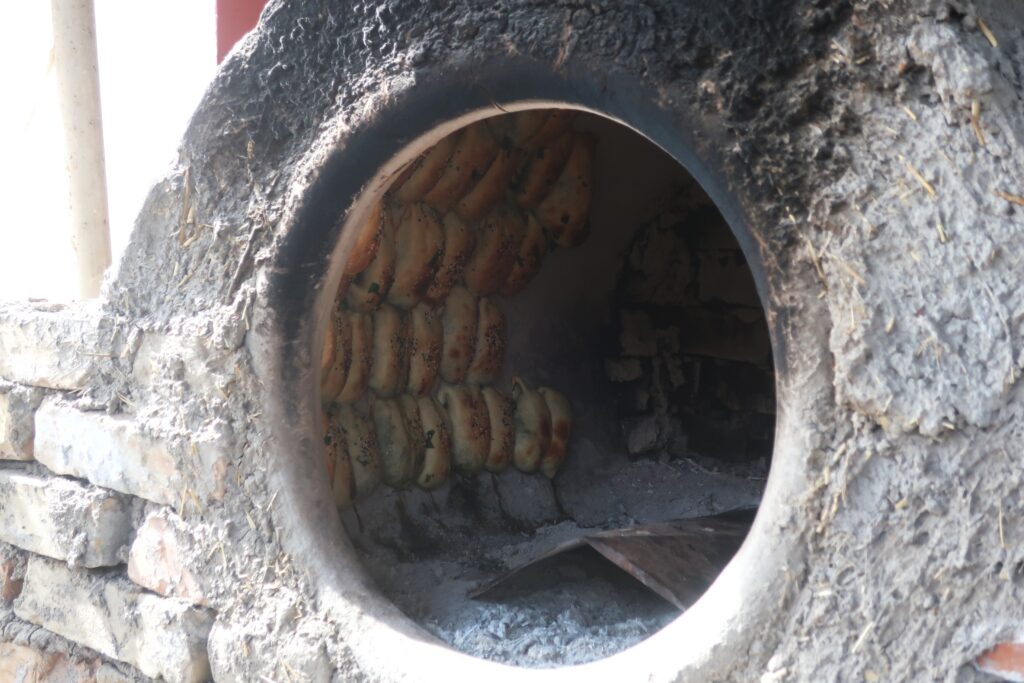
Some samsas baking in a tandor oven. The freshly-made samsas are slapped onto the sides of the oven and peeled off when done.
Samsas in the oven
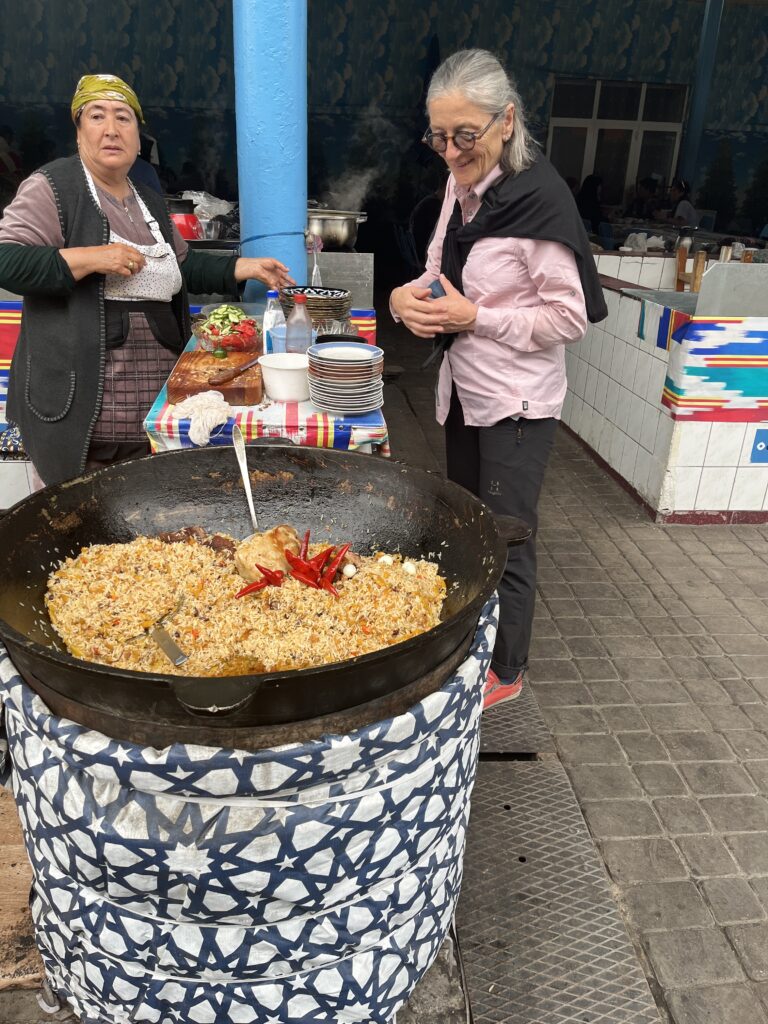
Uzbeks love plov as their national dish and swear up and down it’s the gift of the gods. It’s not for everyone, though. We find it way too fatty and kind of bland. Sorry.
‘All you need is plov’ – The Beatles
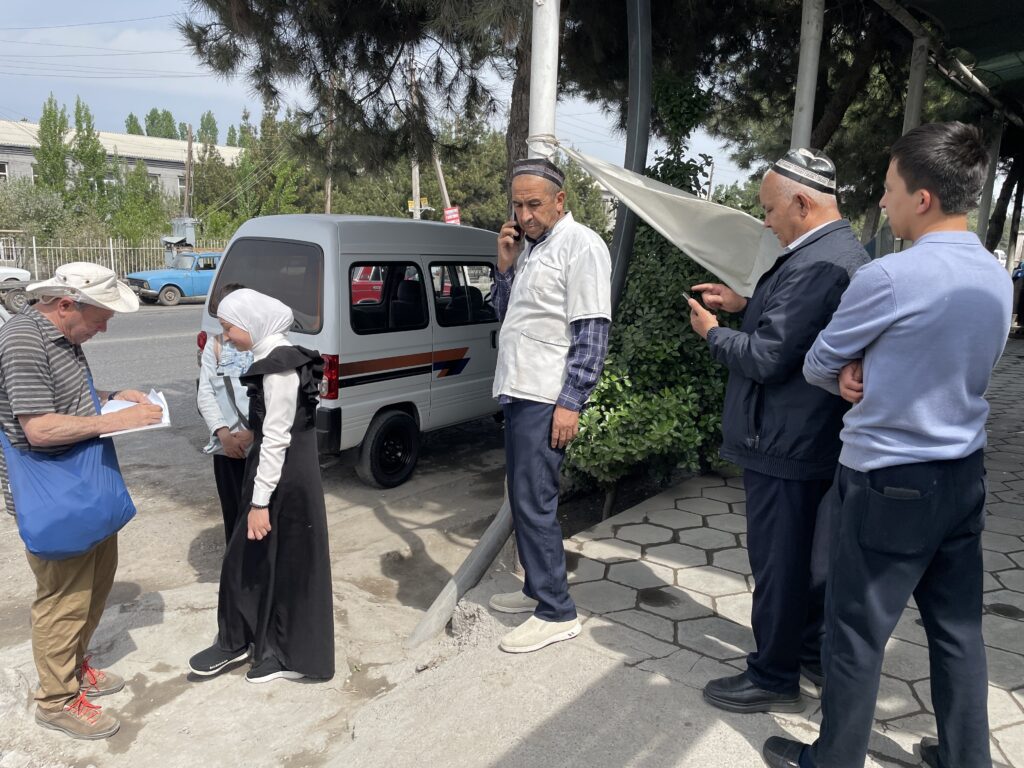
Getting back to our distant hotel turns into a comedy. The internet isn’t working on my phone, and Maria’s phone is dead. Our efforts to call a non-Yandex taxi is a challenge. After a few minutes, we are being helped by two schoolgirls, a cafe owner, and two random passers-by.
It takes a village
Sight or Insight of the Day
After approaching the end of our 30-day limit, we head for Kyrgyzstan. This means one last train ride to Andijan, then a crowded minibus to the town of Dostyk on the Kyrgyzstan border. A few formalities, a brief walk in the pouring rain, and voila! – we’re in a new country.
We’ve really enjoyed our time in Uzbekistan. It’s a very calm, welcoming place. The world needs more of these.
Our plan is to fly back to Tashkent and take an overnight train to Termez, far to the south. Economy seats are sold out, so we’re forced to fly Business Class.
So long, Nukus
The last time we had to fly Business Class out of necessity was with Royal Brunei Airlines. <Sigh> On both occasions, they are short hops on the airlines of Islamic countries, so no free champagne.
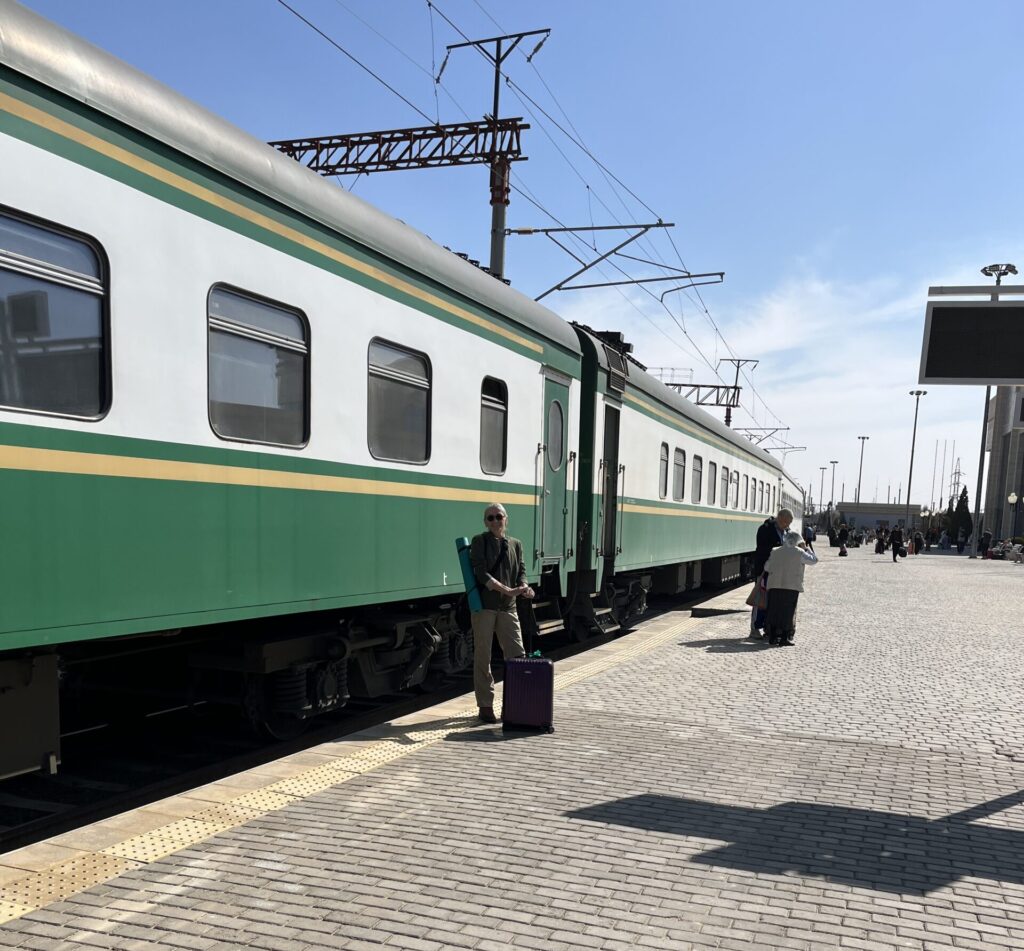
We book an overnight train to Termez.
At the station
We now have most of a day back in Tashkent. In our first entry for Uzbekistan, we mention the Islamic Centre. It’s now open, so we spend a few hours there. It’s very popular – we have to wait several hours for entry.
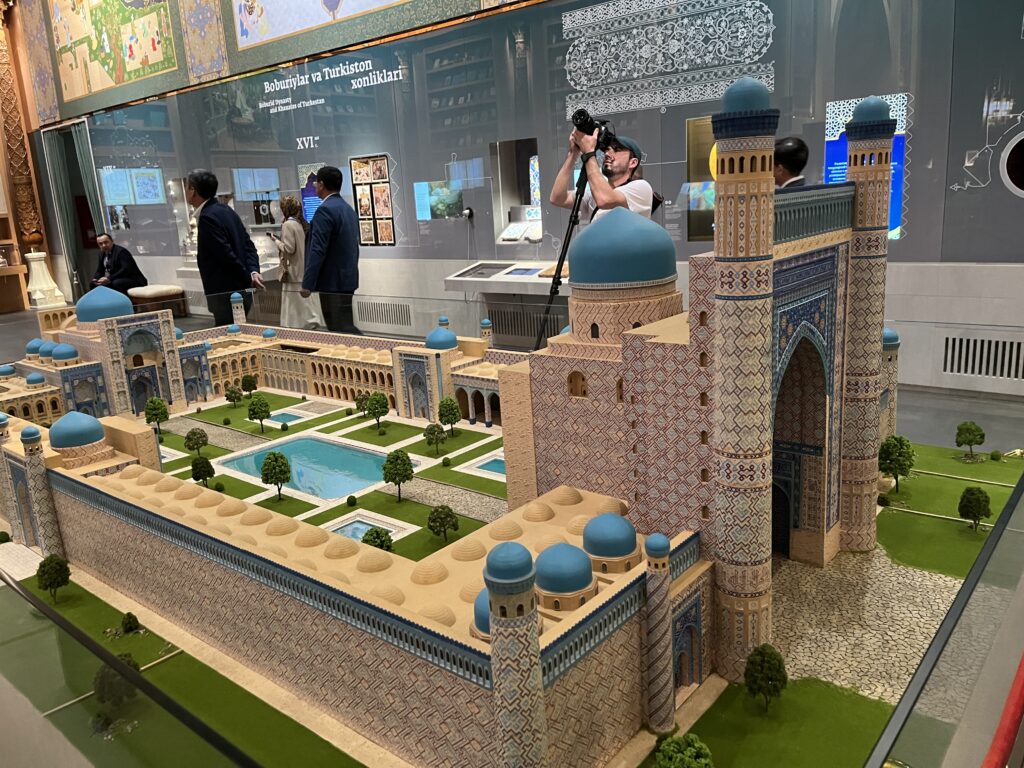
I complained when we were in Shakhrisabz that there was so little left of Timur’s summer palace. I’m happy to see at least an imaginative model of the place.
Modeler’s rendering
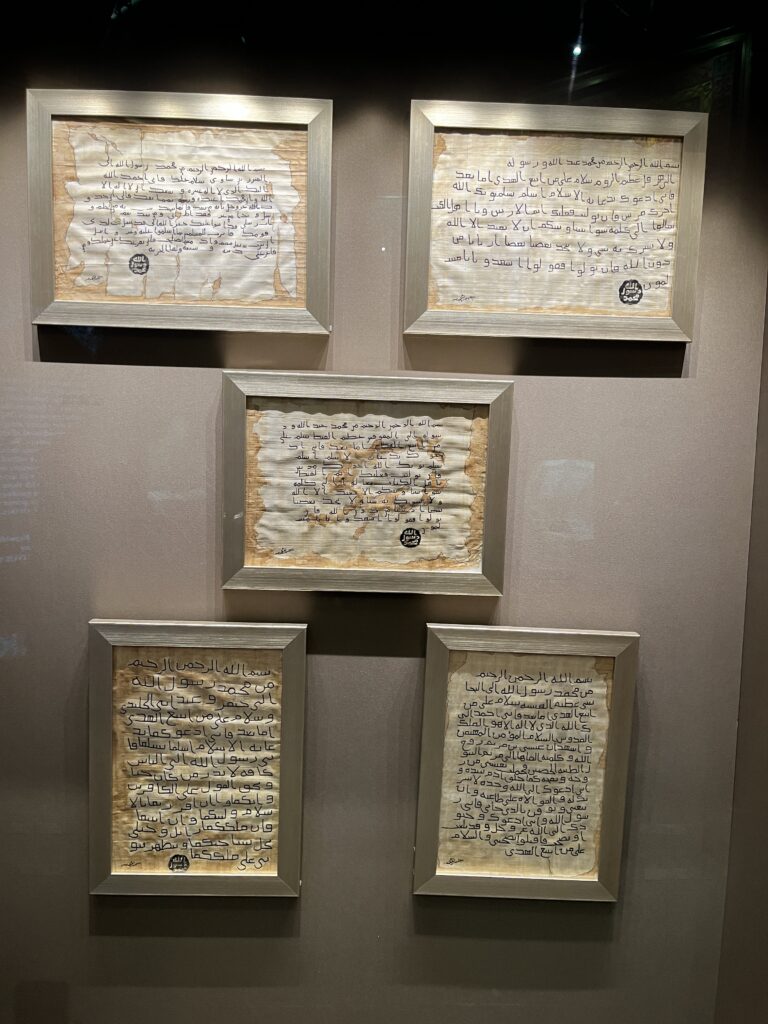
Also exhibited are a showcase of letters purported to have been written by the prophet Mohammed (PBUH). Sorry, I have to call BS on this one.
THANK YOU FOR YOUR ATTENTION TO THIS MATTER!!!
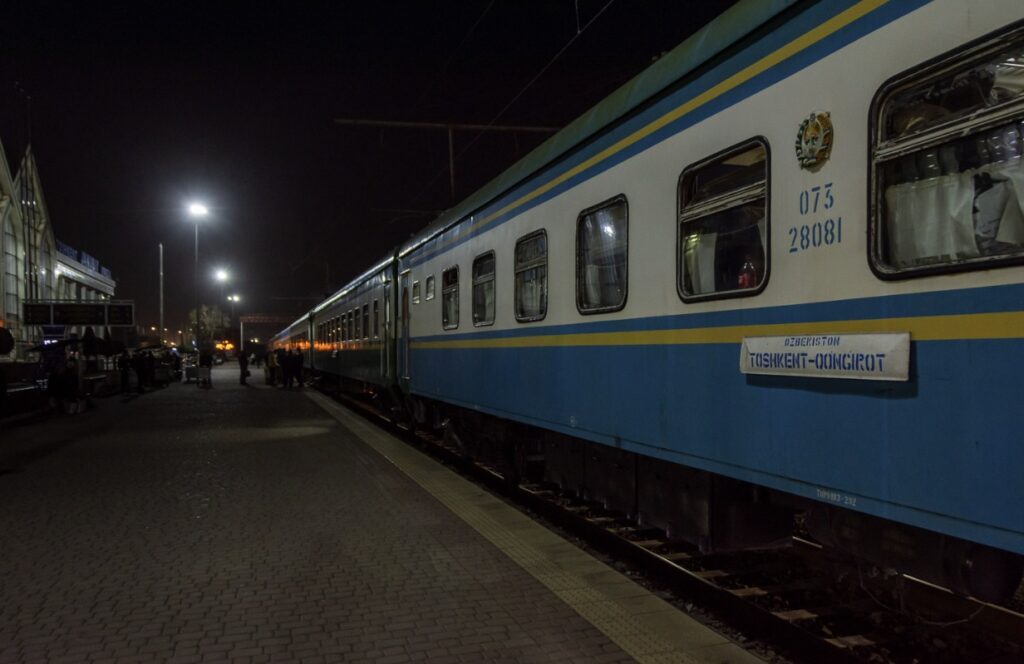
It’s back to the Southern Station for the night train.
‘A’ night train, not ‘our’ night train
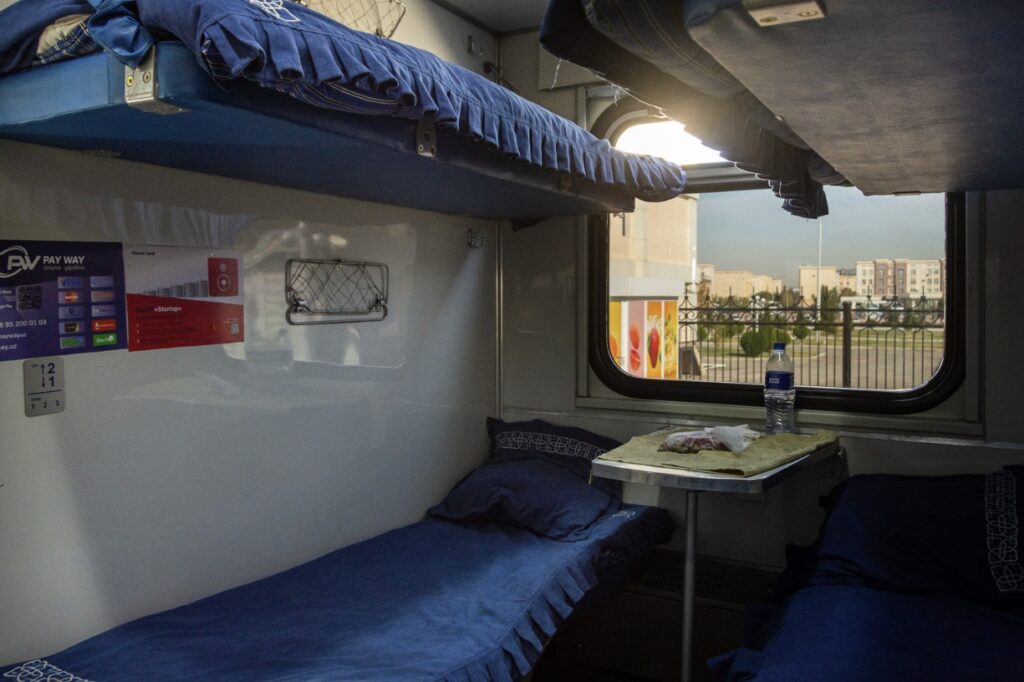
Because of our late booking date, only top bunks are available. These require the skills of an Olympic gymnast to get into or out of. But they’re comfortable enough, and clean.
Uzbekistan Railways sleepers
Our cabinmates are at first a mother and daughter. They get off in Samarkand and we are joined by a pair of ladies who treat us very well. They kindly share their breakfast with us.
In the morning, the landscape is much greener than it has been up in Karakalpakstan.
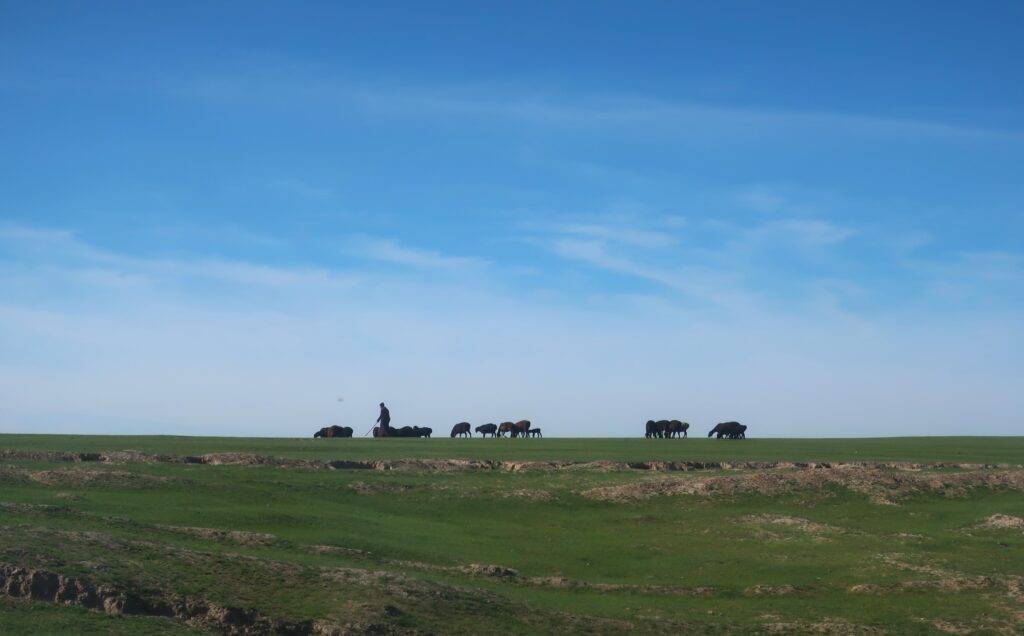
Heading southHerdsman and his flock
On arrival, we soon learn that Termez seems to have the most aggressive taxi drivers we’ve experienced so far. And not just taxi drivers – anyone with a car slams on the brakes, rolls down the window, and tries to inveigle us into hopping in, for a price. Sheesh.
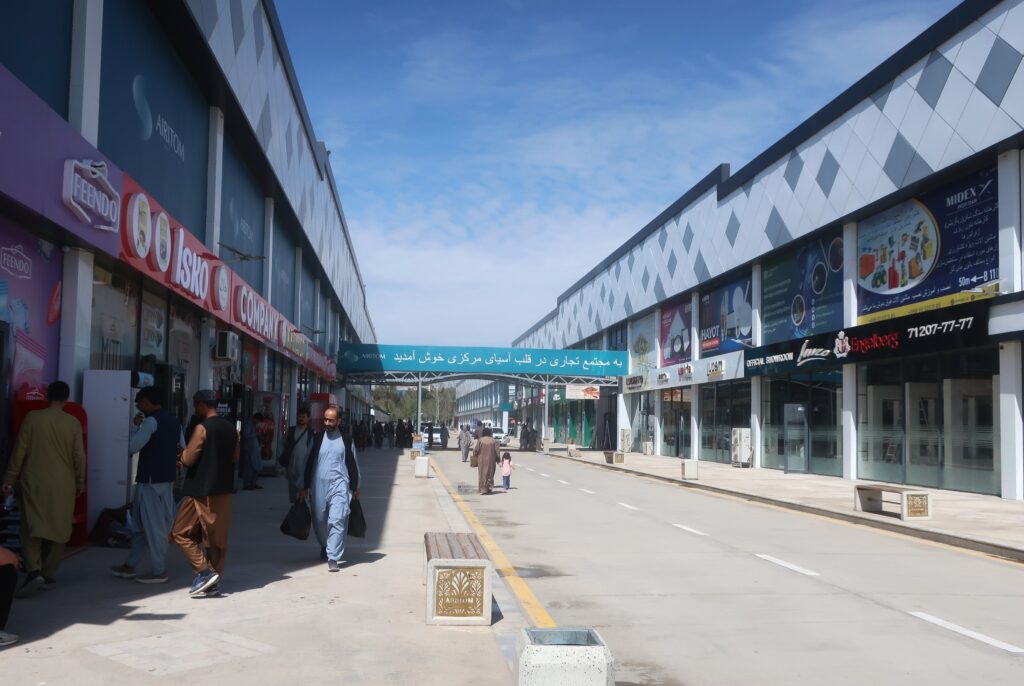
Termez is on the border of Afghanistan. We hear about a free trade zone where Afghanis can buy and sell stuff. We hire a driver to take us there.
Airotom Free Trade Zone
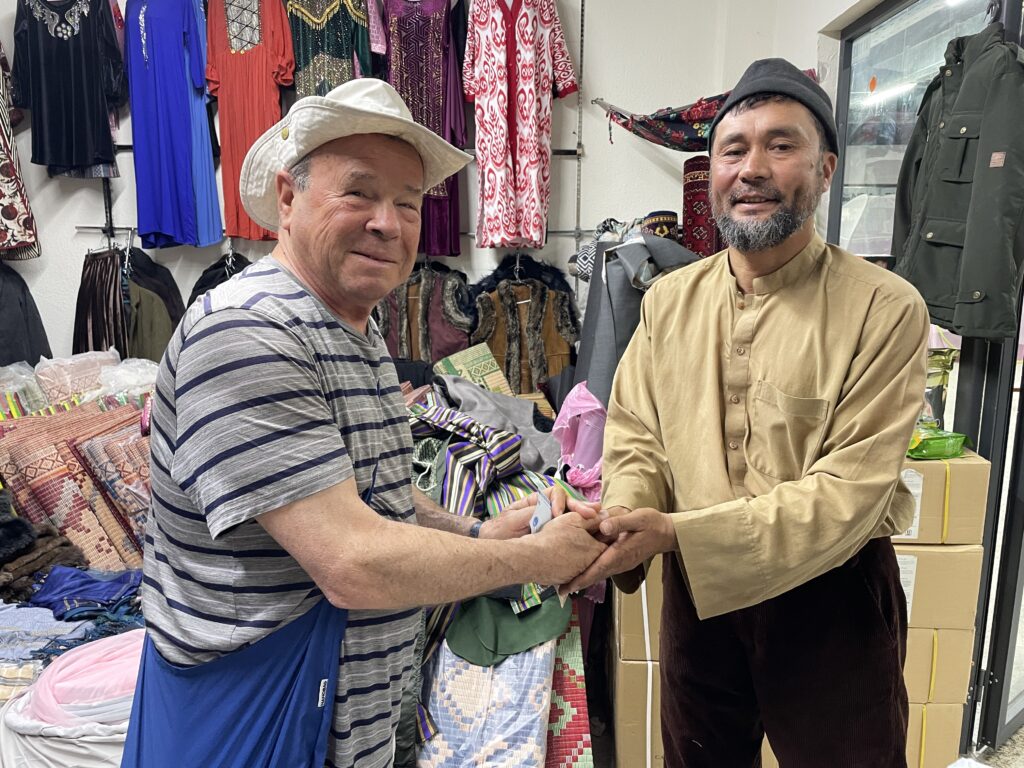
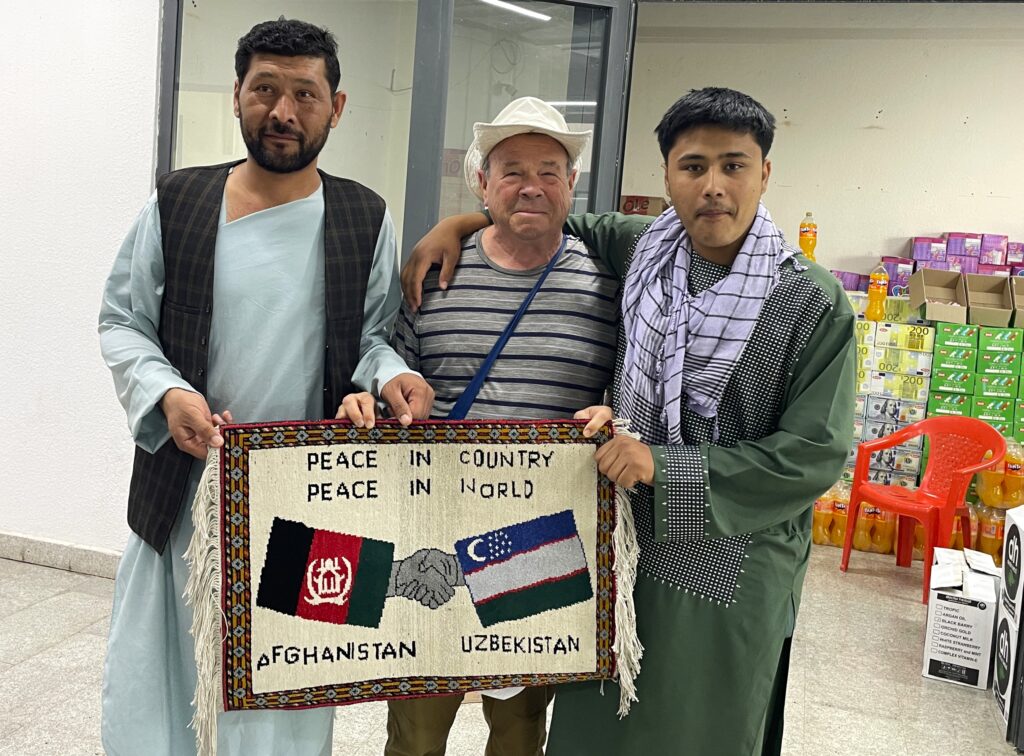
There isn’t much here for the souvenir-seeking tourist. It’s mostly cheap wholesale goods. A small rug in a window catches our eye, a sort of roughly-made, folk-art-y kind of thing.
The proprietor is puzzled why we would want such a trifle and tries to interest us in real (not very nice) carpets. We convince him to part with it.
Here we seal the deal, Afghan style: I place the payment cash vertically between my hands and the seller places my hands between his.
The Art of the Deal
Here is our prize on display. The Afghanis find us just as exotic as we find them.
So true
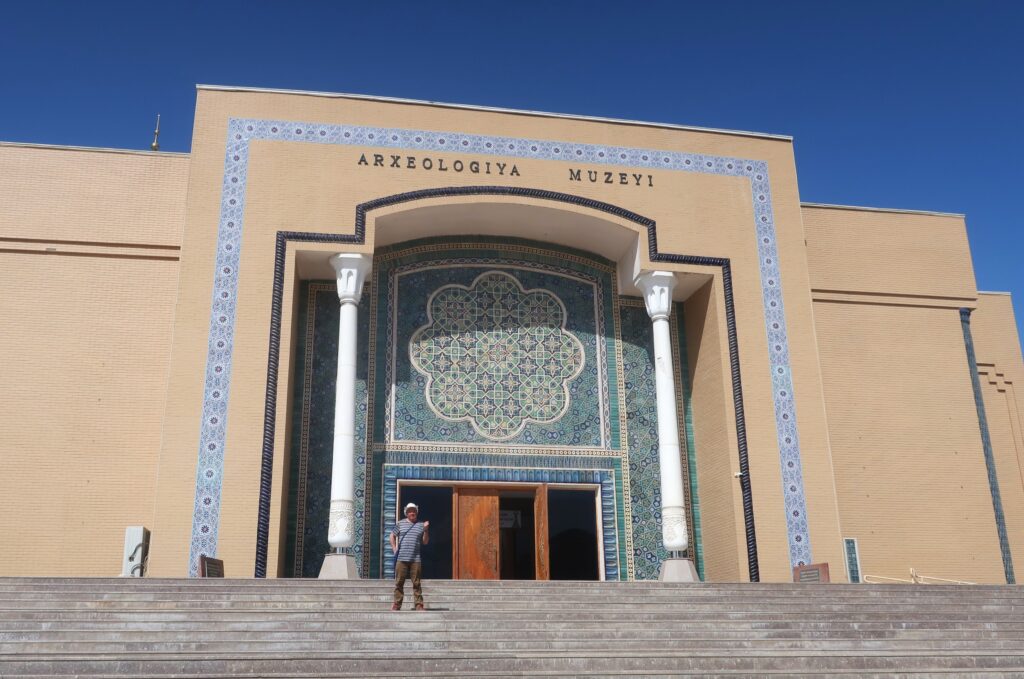
On the way back to town, we stop at the Archeological Museum. It contains finds from the places we want to visit.
Termez Archeological Museum
For the next two days, we hire Mahsud as a driver and guide. He has a white Chevrolet, of course, as did our driver of the previous day.
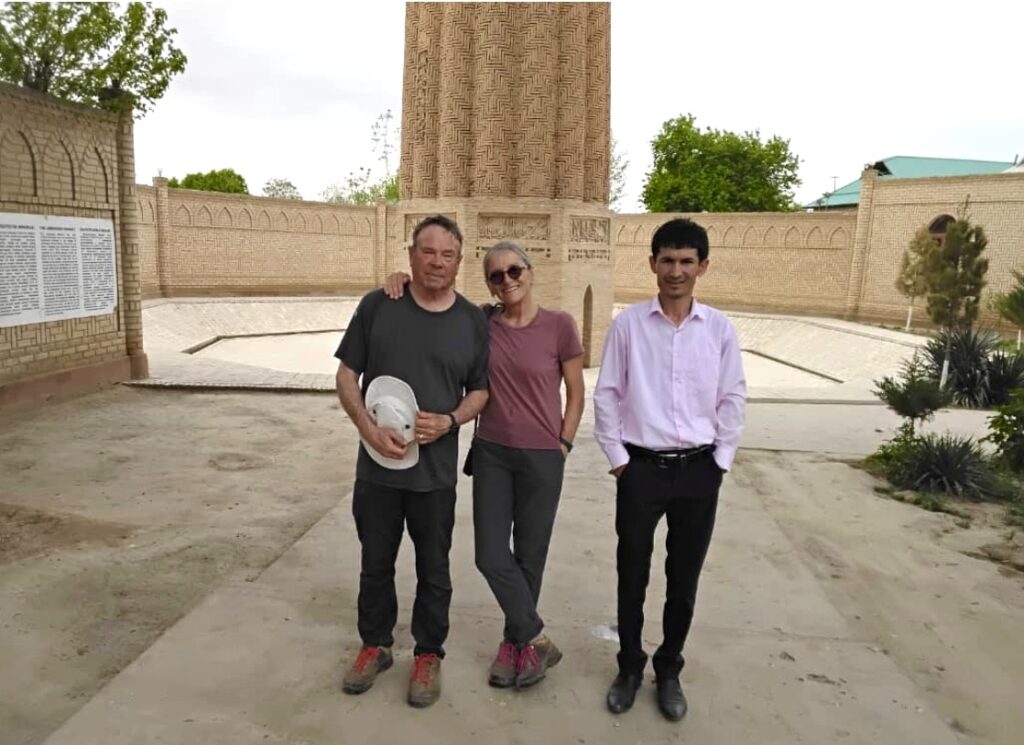
Denis, Maria, and Mahsud at the Jarkurgan minaret
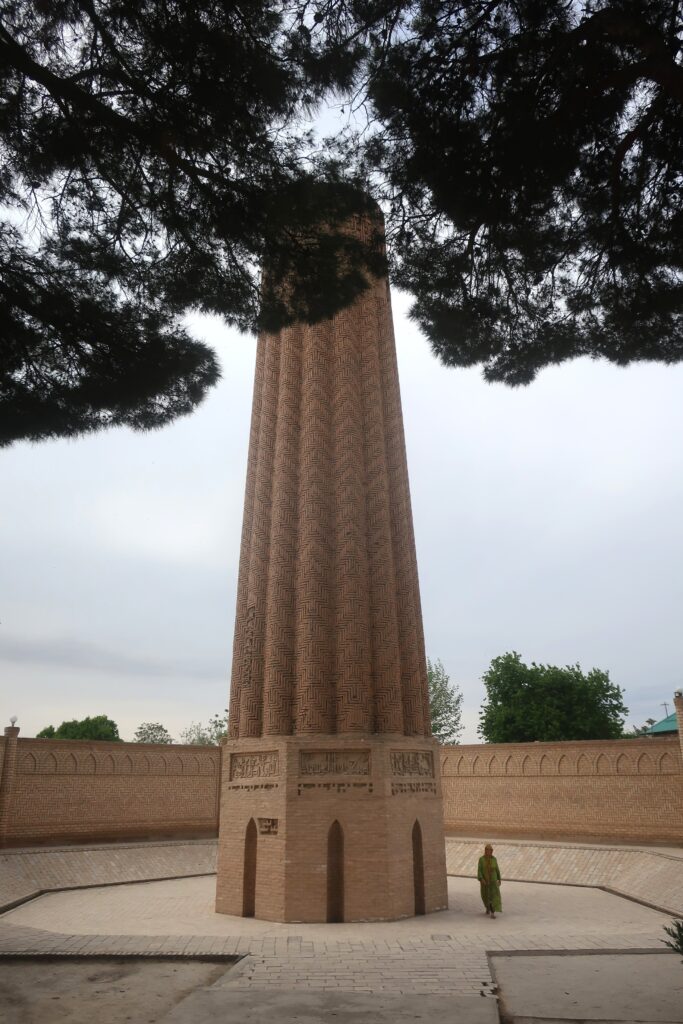
We climb to the top, which is fun crawling up the dark, narrow staircase.
Jarkurgan minaret
On the agenda is the Sultan Saodat mausoleum complex.
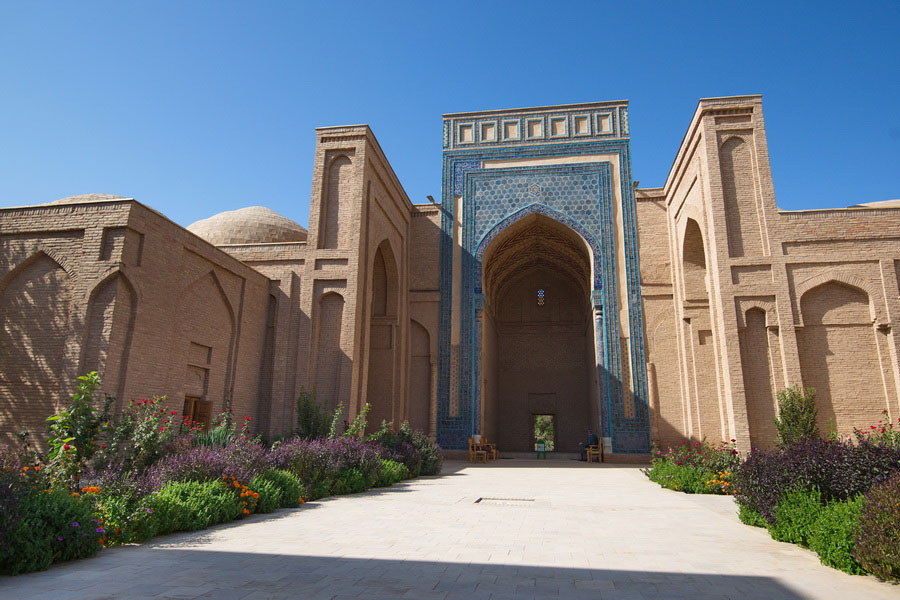
Entryway
We are let into the structure by the guardian and clamber up to the rooftop.
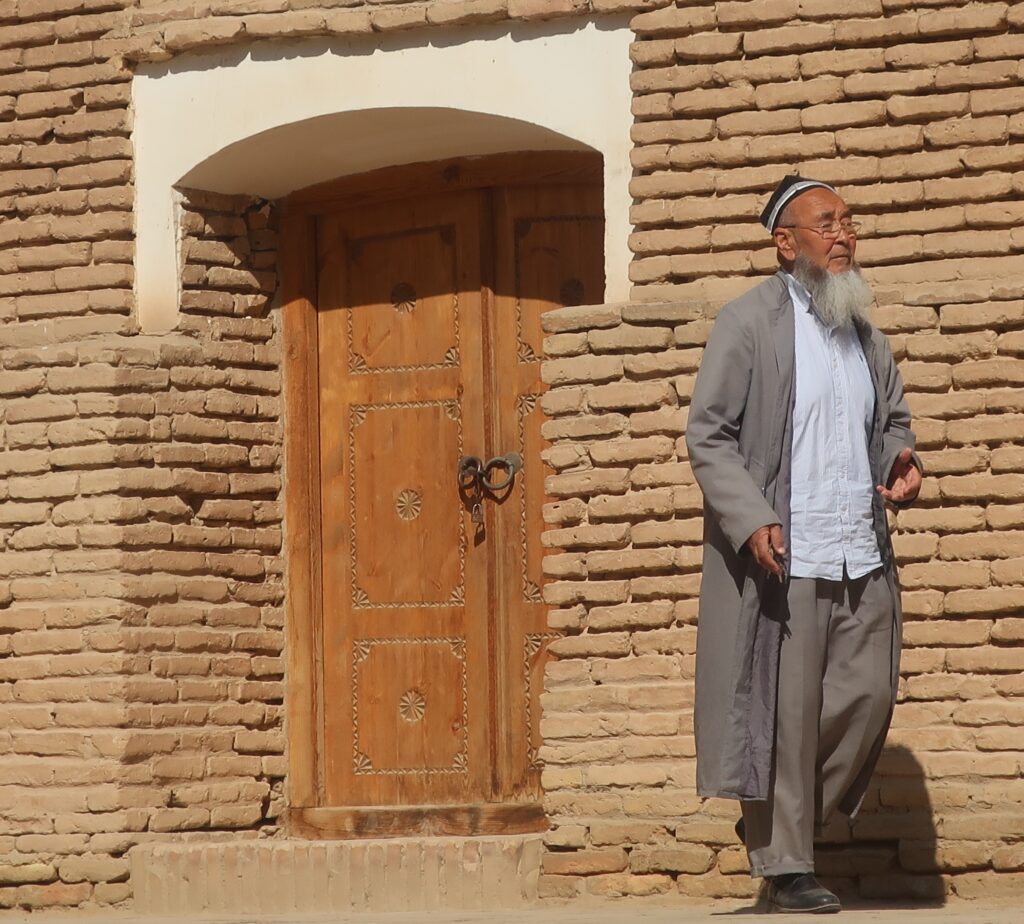
The keeper of the keys
The Kyrk Kyz fortress has quite a story behind it involving forty girls holding off a siege by Ghengis Khan.
Right, pull the other one
Mahsud goes into great detail about this story and believes it implicitly. (The idea that the army of Ghengis Khan – slayer of millions – could be fended off by a handful of girls is, um, highly unlikely.)
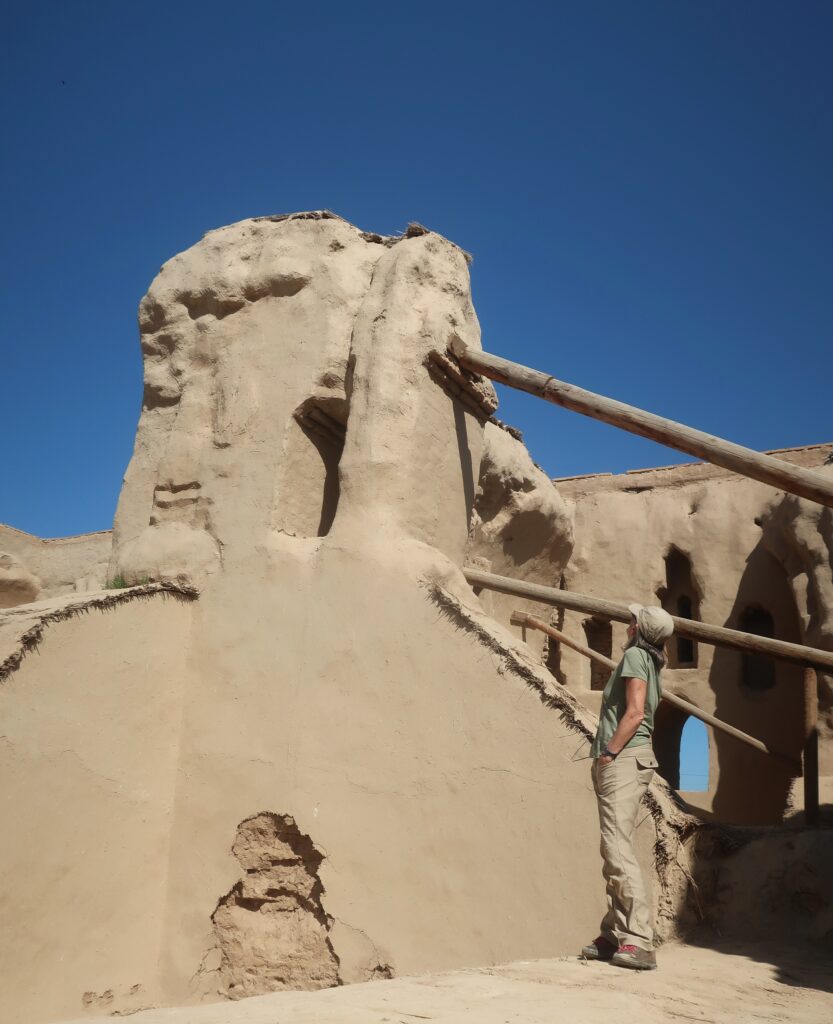
Earthquakes are common here. Cities in the region seem to get destroyed either by earthquakes or marauding invaders. Supports are needed to keep things together.
‘Thy rod and staff, they comfort me’ – Psalm 23
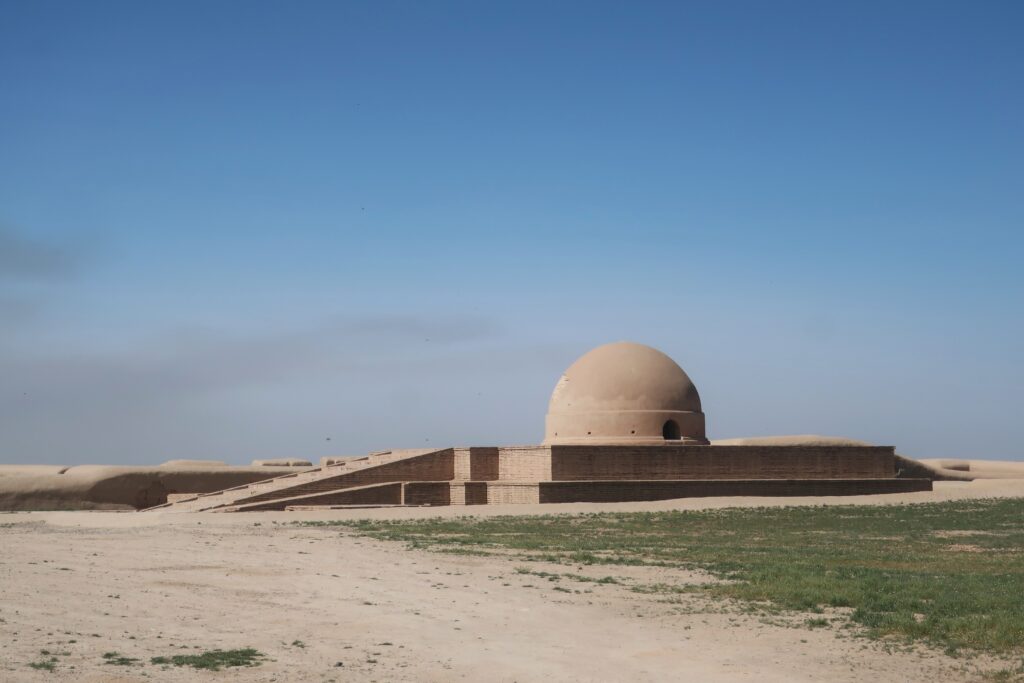
It’s a short drive to Fayoz Tepe. In the early days of Buddhism, the faith spread throughout Asia, including around here. Fayoz Tepe contains the ruins of a Buddhist monastery. Its prominent feature is a restored stupa.
Fayoz Tepe
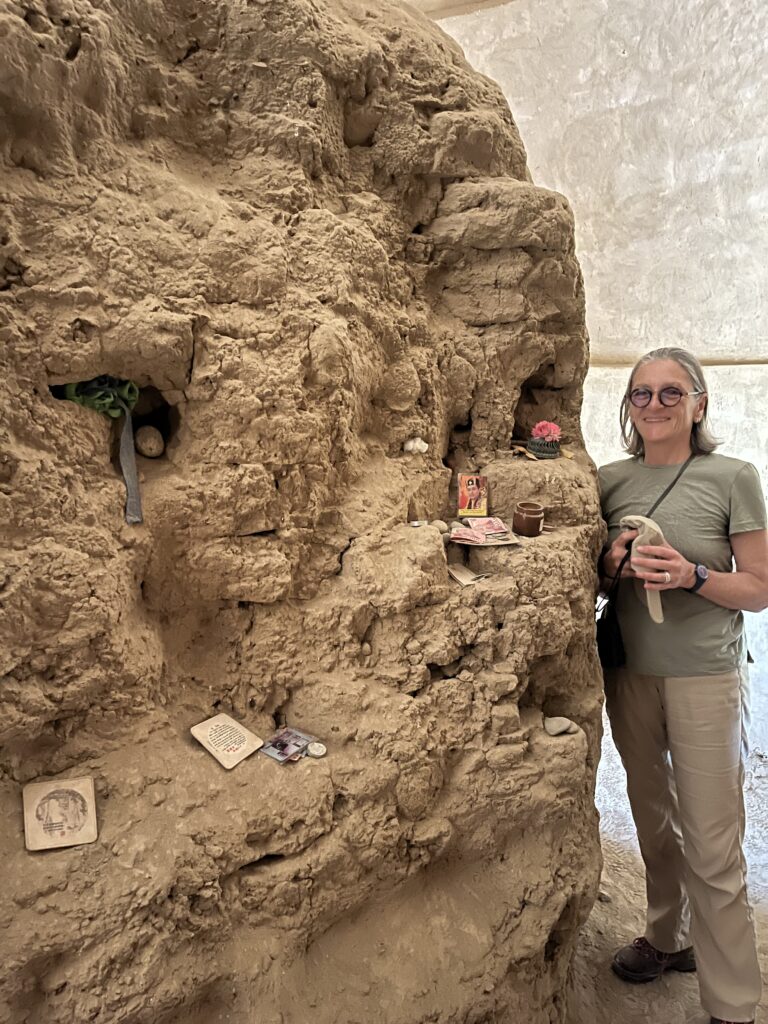
Inside the stupa is a much-eroded smaller stupa. Japanese visitors still leave small offerings.
Offerings
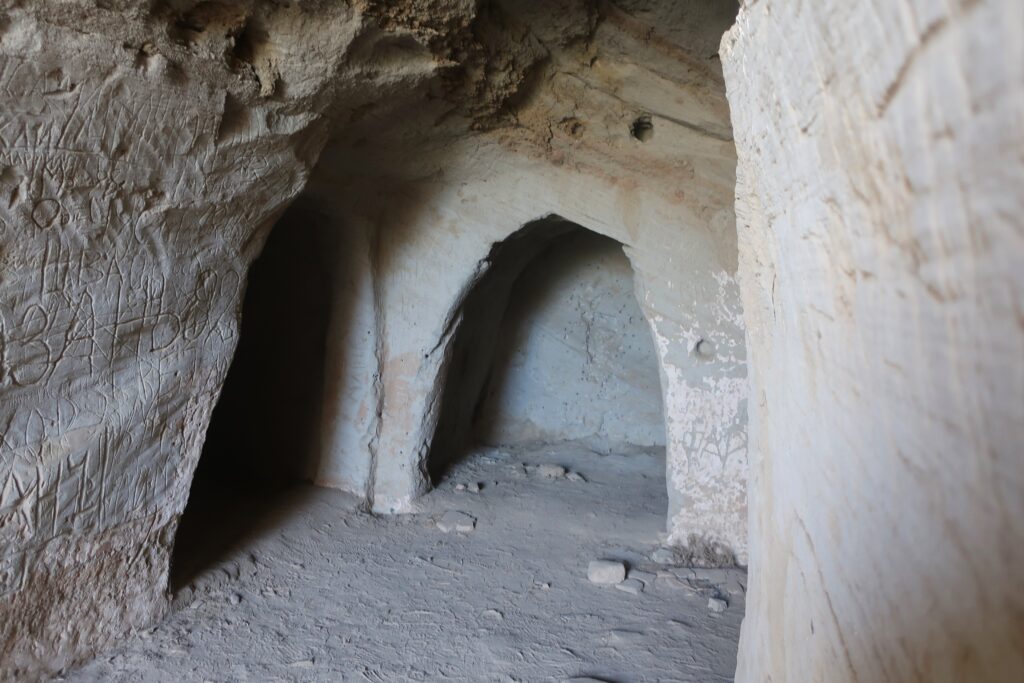
Nearby is Kara Tepe. This is a series of Buddhist caves. You can still see the remains of ancient wall paintings. (Mahsud peels some away to show us before we convince him to stop.)
The caves were also visited by many bored Russian soldiers during the 1979-1989 Soviet-Afghan war. They left behind many inscriptions carved into the soft limestone.
Caves
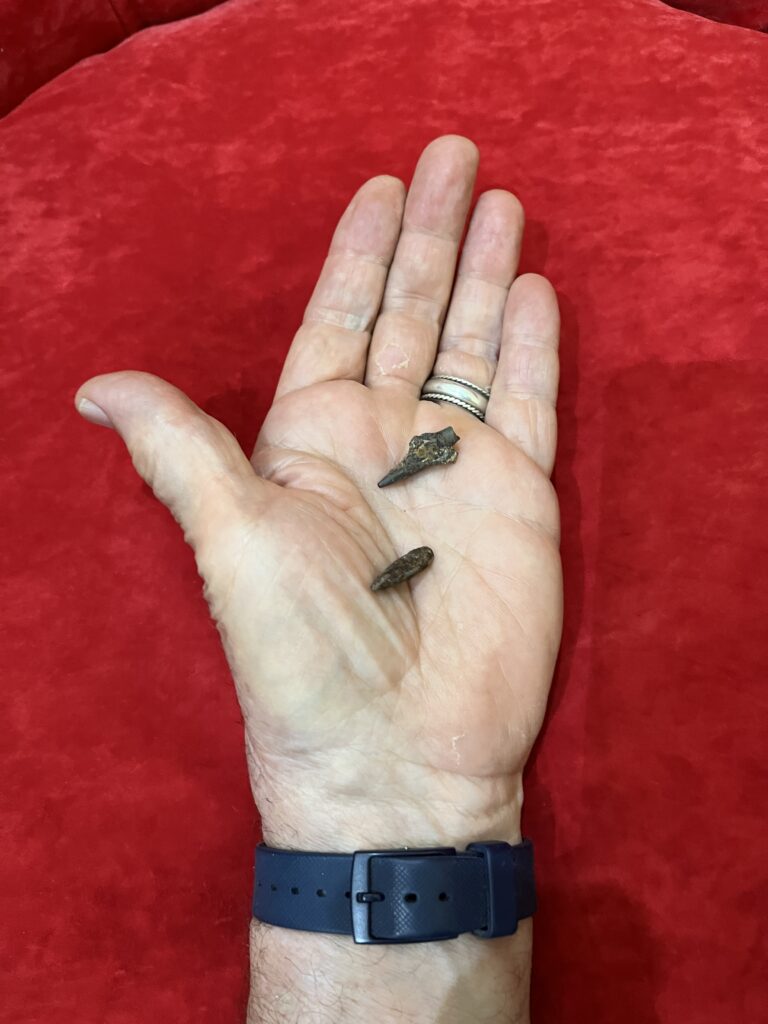
They also seemed to have let off steam by firing hundreds of rounds of ammunition. The ground is littered with old bullets.
AK-47 bullets
We take a break. In the background is the Amu Darya River – known as the Oxus River in classical times. On the other side is Afghanistan.
You can almost hear the burkhas rustling
Another day, we visit Kampir Tepe. It has been identified (but not conclusively) with a city founded by Alexander the Great.
Alexandria on the Oxus?
Mahsud regales us with tales of Alexander, and points out a nondescript square as being ‘Alexander’s bedroom’ with complete certainty.
In the footsteps of Alexander the Great
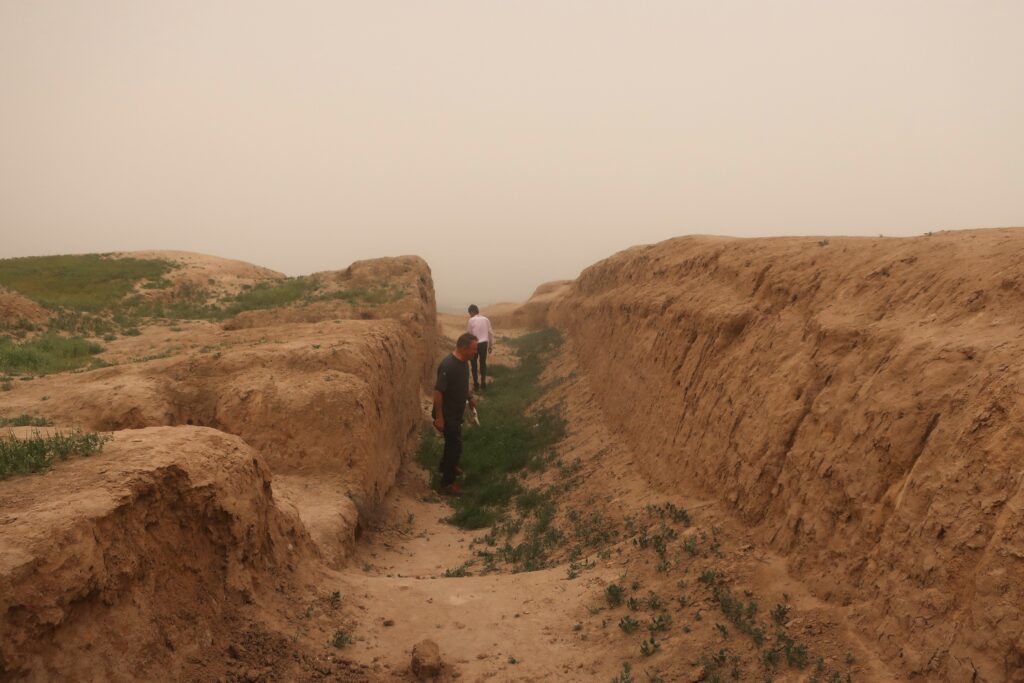
The last few hours of our tour, we are hit by a violent sandstorm, with heavy winds and limited visibility.
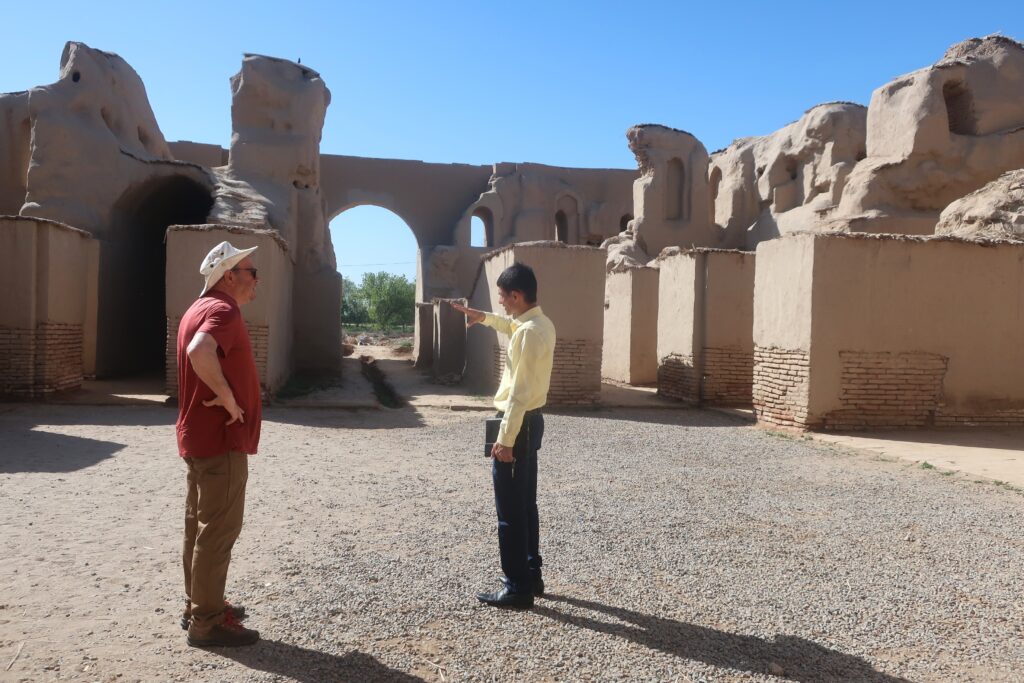
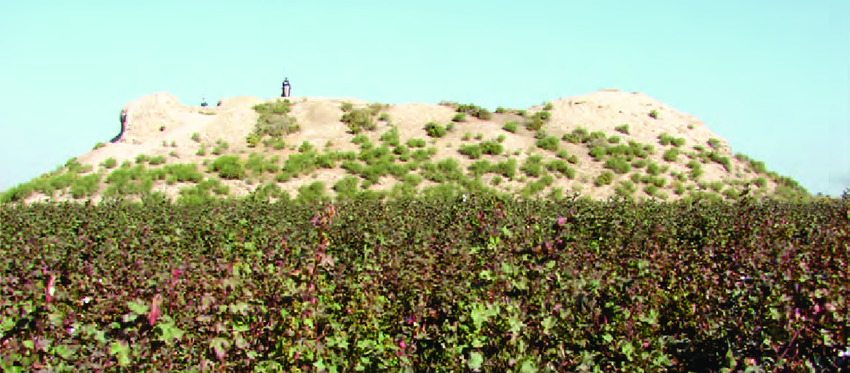
On the outskirts of a small village, we visit the remains of Talitogora, an off-the-beaten-path site. It’s a small mound, mysterious and virtually unexplored.
Sandstorm at Talitogora
Personally, I’m fascinated by these not-yet-unearthed sites around the world. The only info I could find is here. There must be thousands of these sites, waiting patiently for the archeologist’s trowel.
Talitogora on a sunnier day – photo by Jaloliddin Annaev
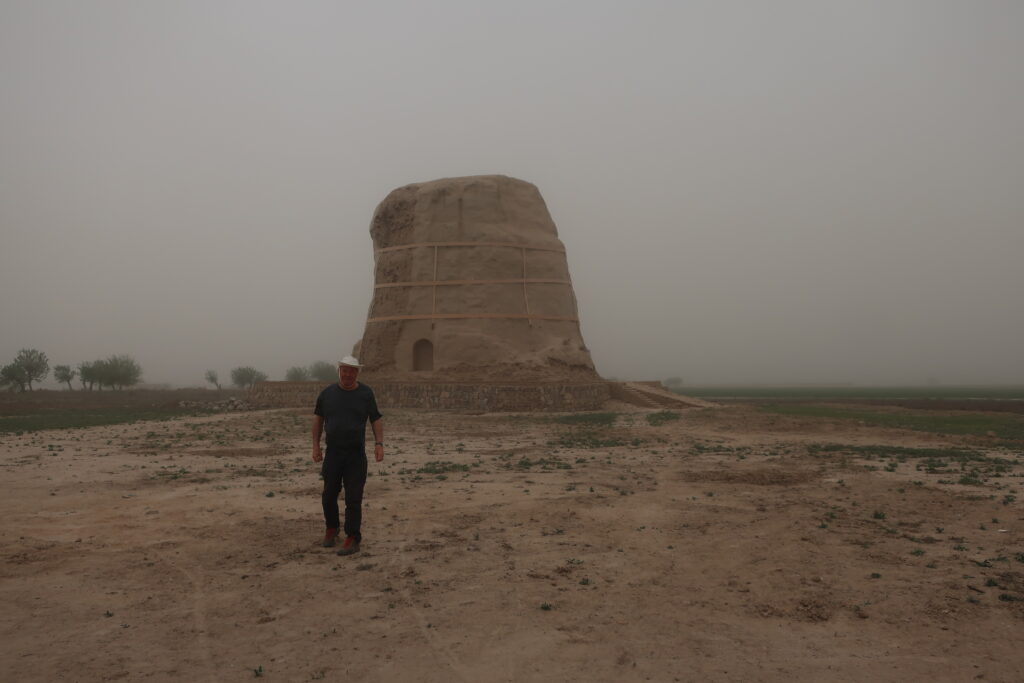
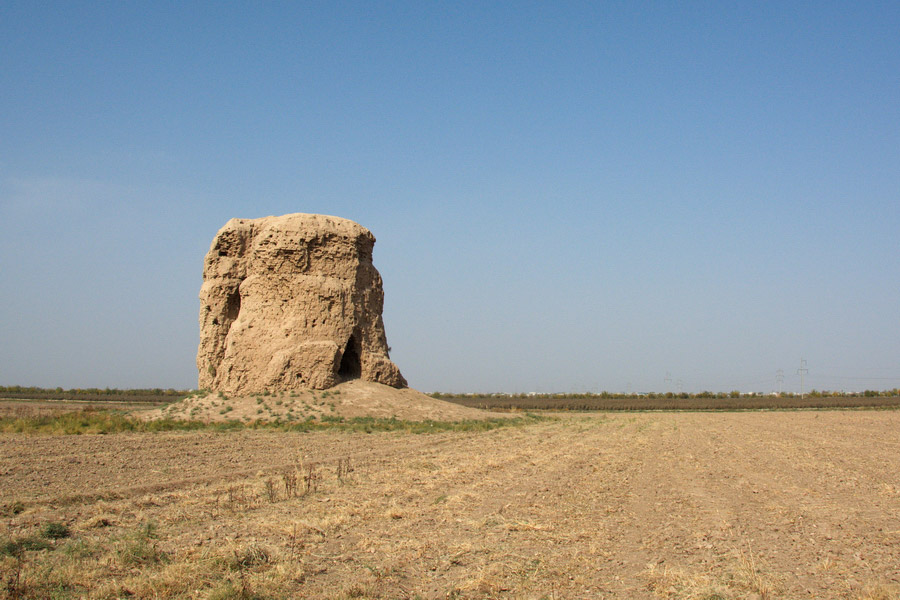
Lastly, we visit the Zurmala stupa. This is another Buddhist ruin, made up of 1.2 million bricks (according to Lonely Planet). These bricks now need iron bands around the structure to keep it from falling to bits.
Zurmala stupa in a sandstormZurmala stupa on a sunnier day – photo by Advantour
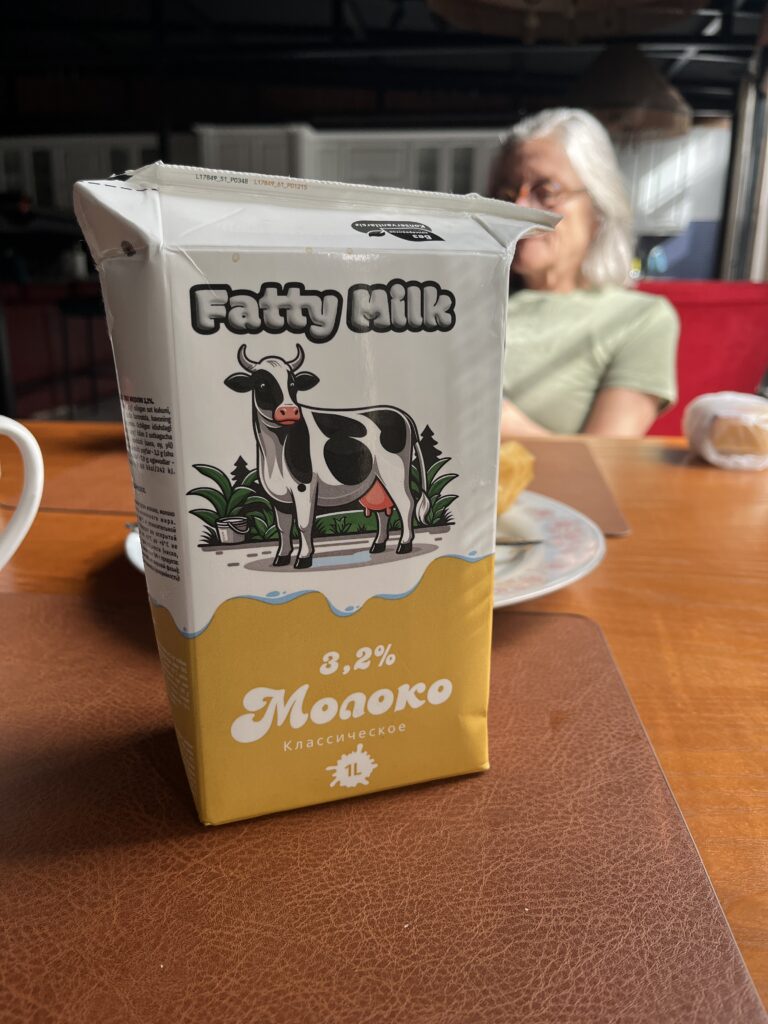
One word in Russian I remember from my teenage reading of A Clockwork Orange: ‘Moloko’. that is, ‘milk’. In the novel, ‘Moloko Plus‘ was imbibed in preparation for a night of mayhem.
Plain old moloko is available everywhere for less than two bucks a litre. We drink a lot of it.
Truth in advertising
Sight or Insight of the Day
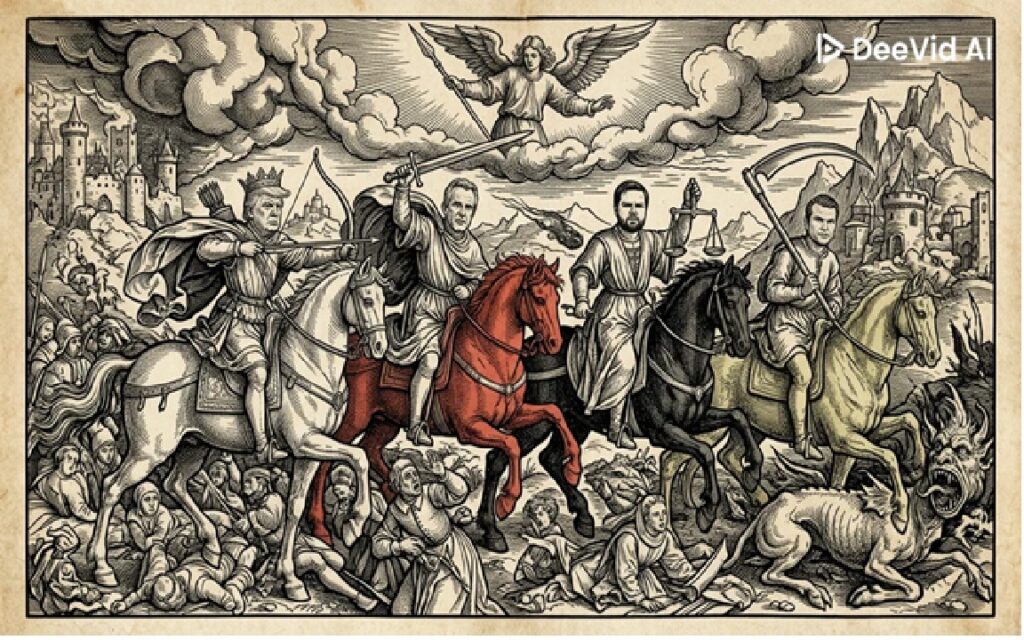
Hey! I’ve created my first-ever AI image! Now it really feels as though I’ve joined the modern age.
‘The Four Whore’s Men of the Apocalypse‘ – after Dürer, with apologies