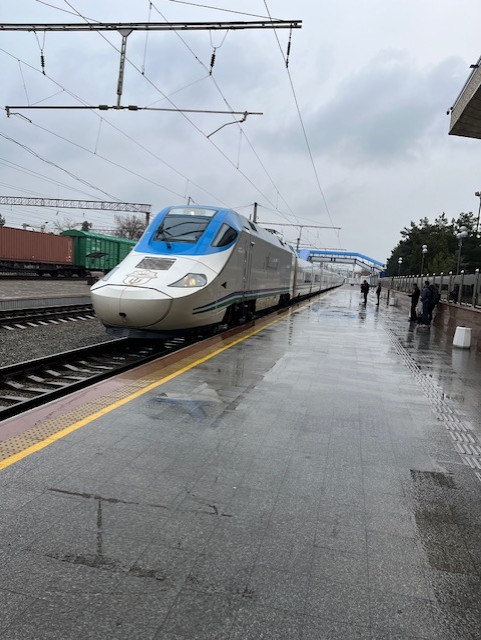
One rainy morning, we take another high-speed train to Bukhara. These trains are Talgo models, from Spain. We like the platypus-esque snout on the engine.
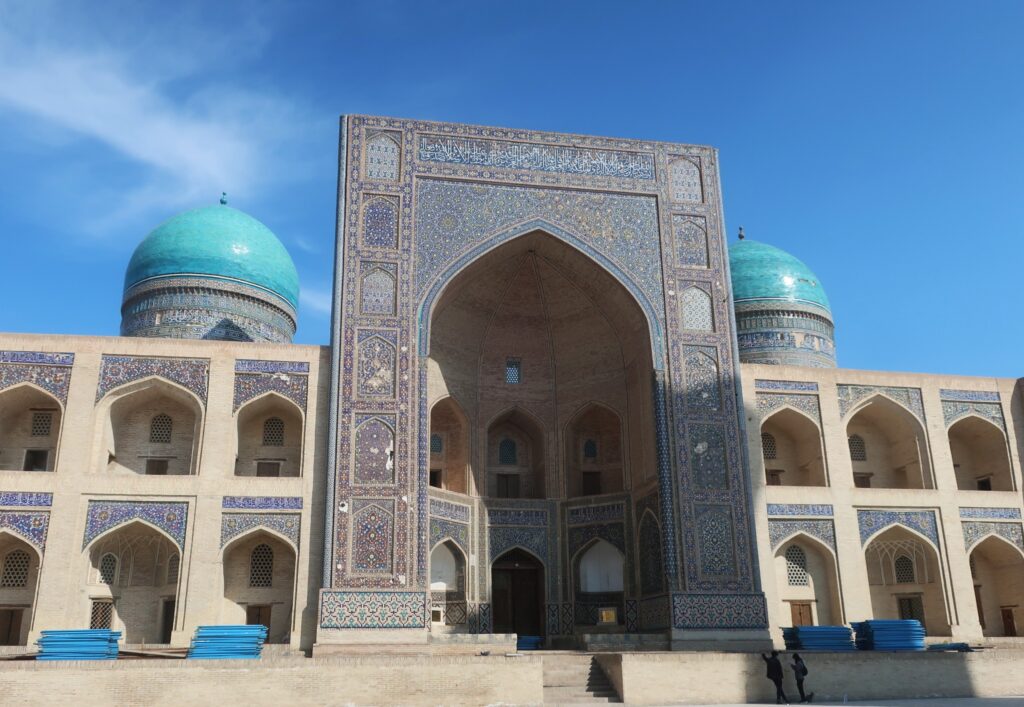
Bukhara is another Silk Road city, bristling with mosques and madrassas and bazaars.
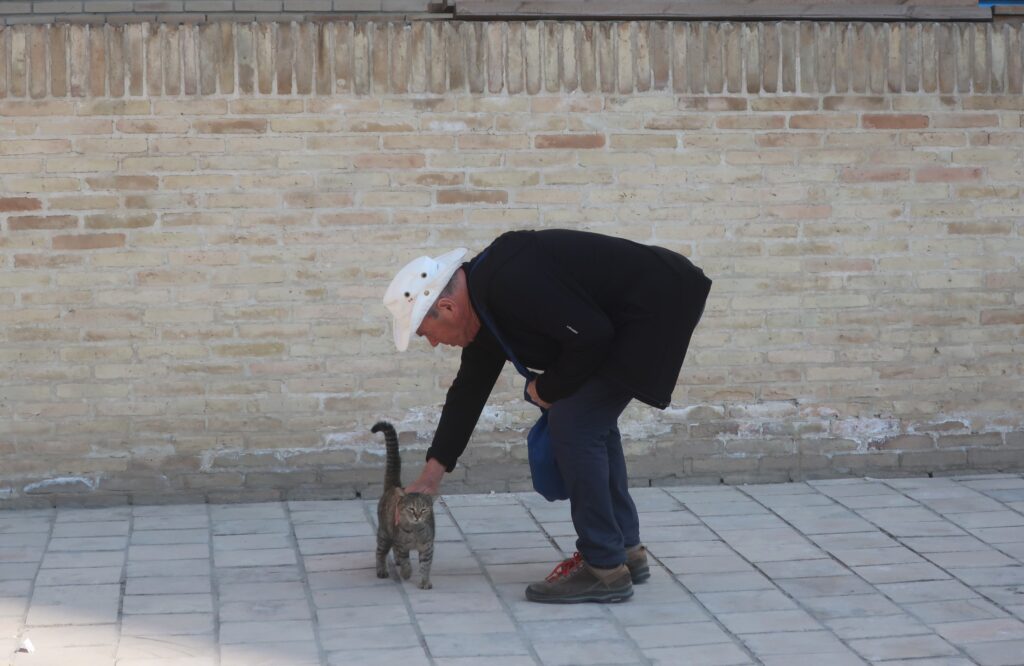
There’s usually a cat around that likes attention. Sometimes tourists from China take videos, as if they’ve never seen anyone pet a stray cat before.
We visit the house of Fayzulla Khojaev. Actually, the house of his his father, a wealthy merchant. It’s a popular place for photo shoots and wedding pictures.
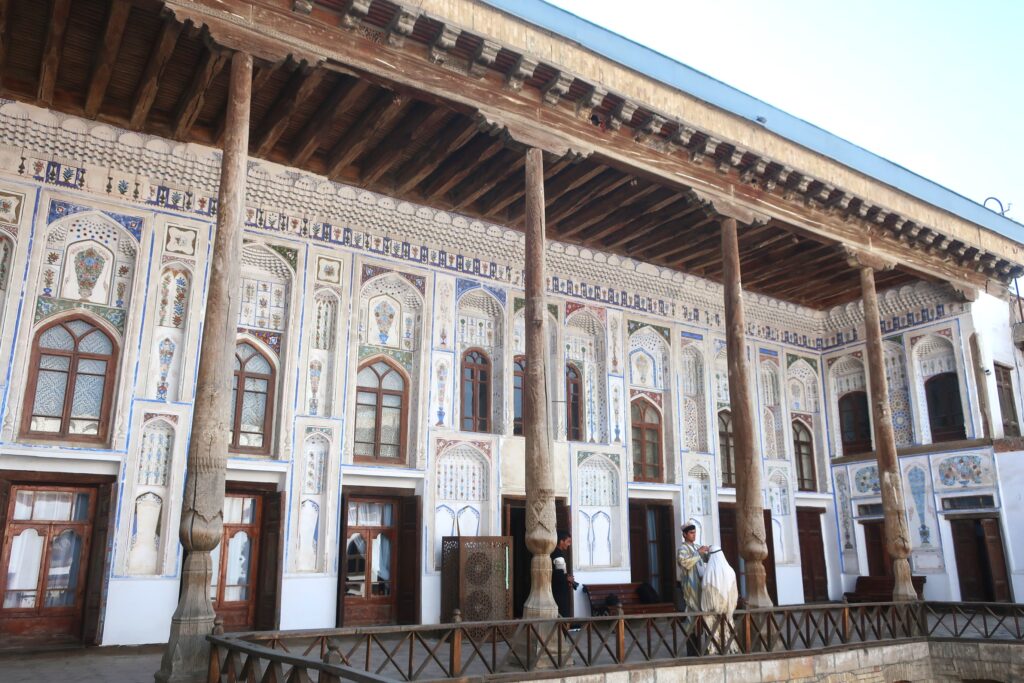
Poor comrade Khojaev ended up being liquidated by Stalin, along with a few million of his fellow Soviet citizens.
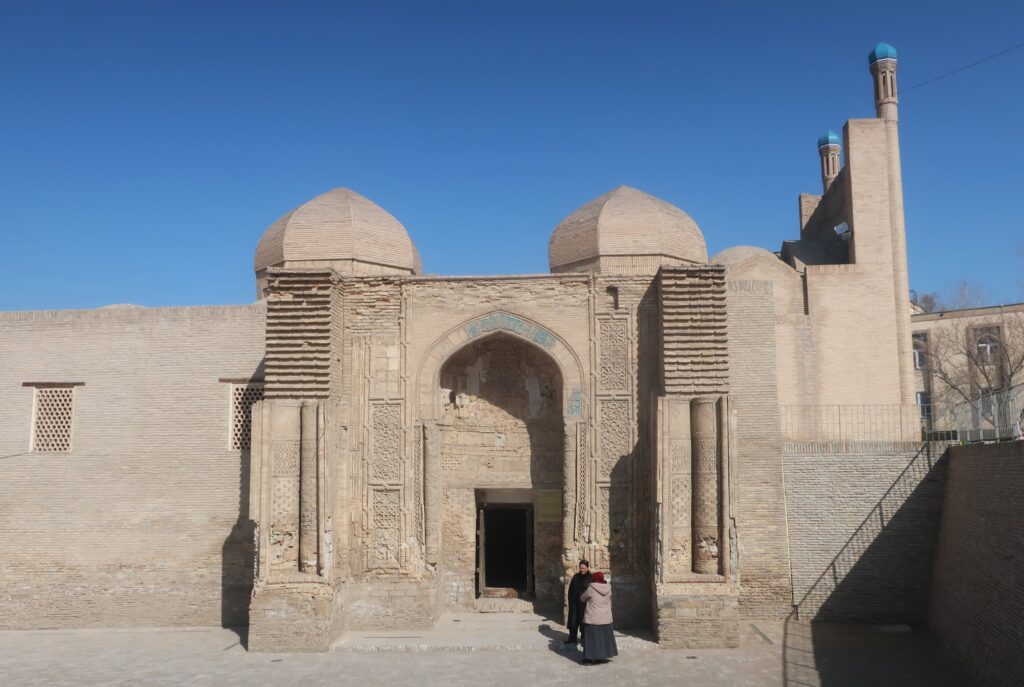
Magok-i-Attari, one of the oldest buildings in the city. Before the Arab conquest, it was a Zoroastrian fire temple, acted as a synagogue, and was eventually a mosque. Ancient-looking outside, the interior is now a modern exhibition space.
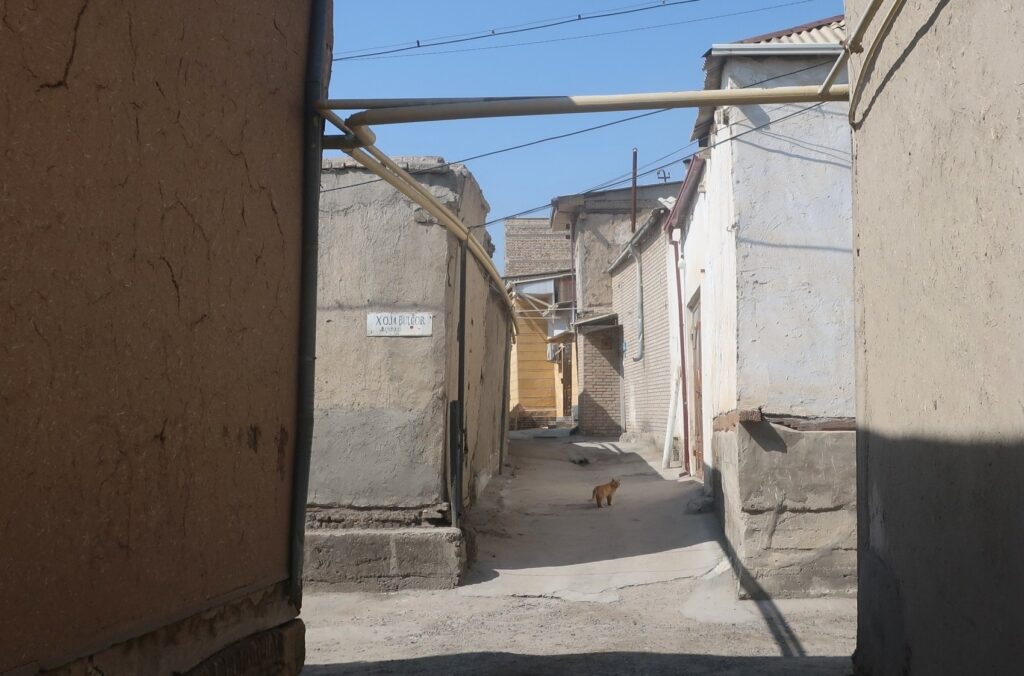
One interesting activity in Bukhara is simply wandering the many backstreets of town.
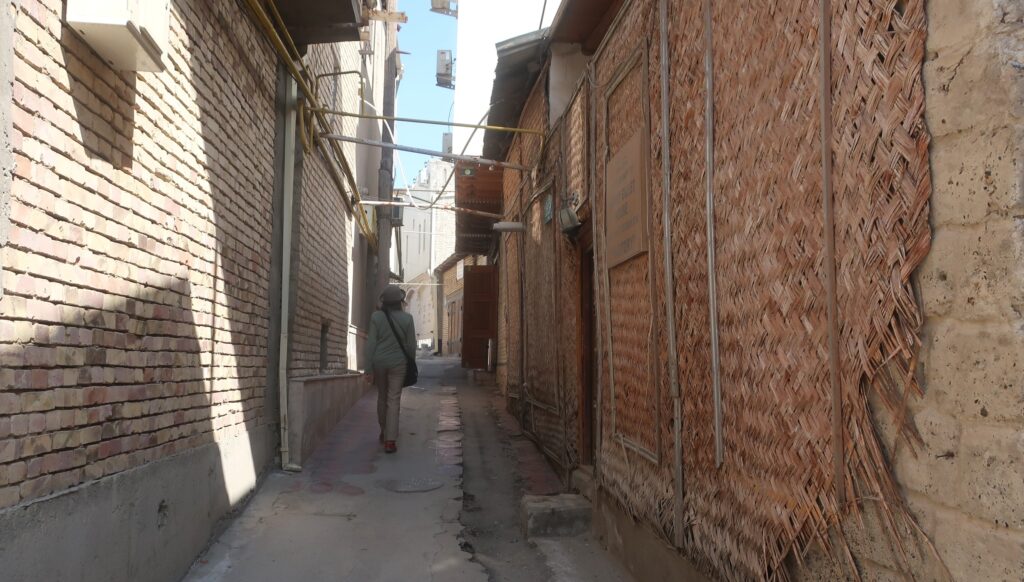
Believe it or not, motorists here (including our Yandex drivers) think nothing of venturing down these incredibly narrow alleyways. .
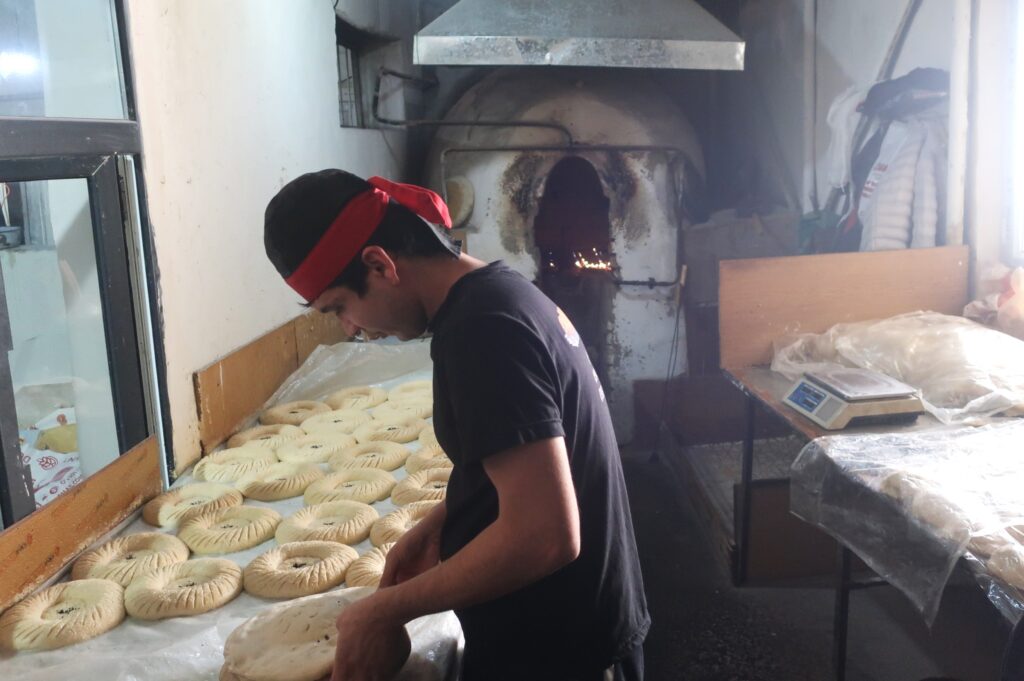
We come across a bakery hard at work producing loaves of non – cognate with ‘naan‘ – bread.
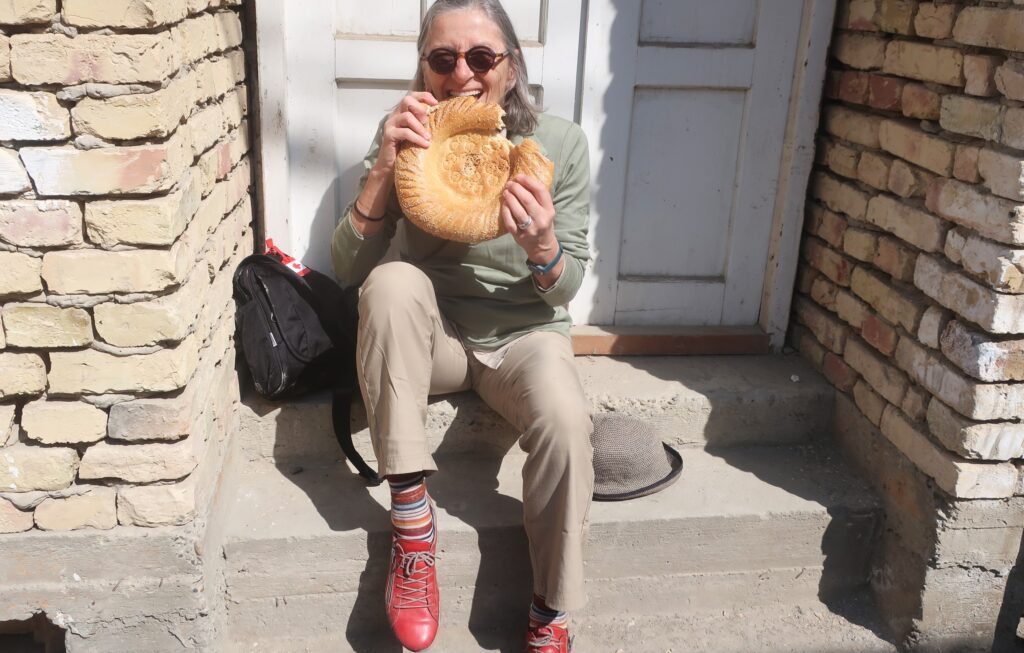
Maria, of course, has to sample some.
A main feature of the town is the Ark, a fortress and former residence of the emirs of Bukhara, including the unfortunate last one.
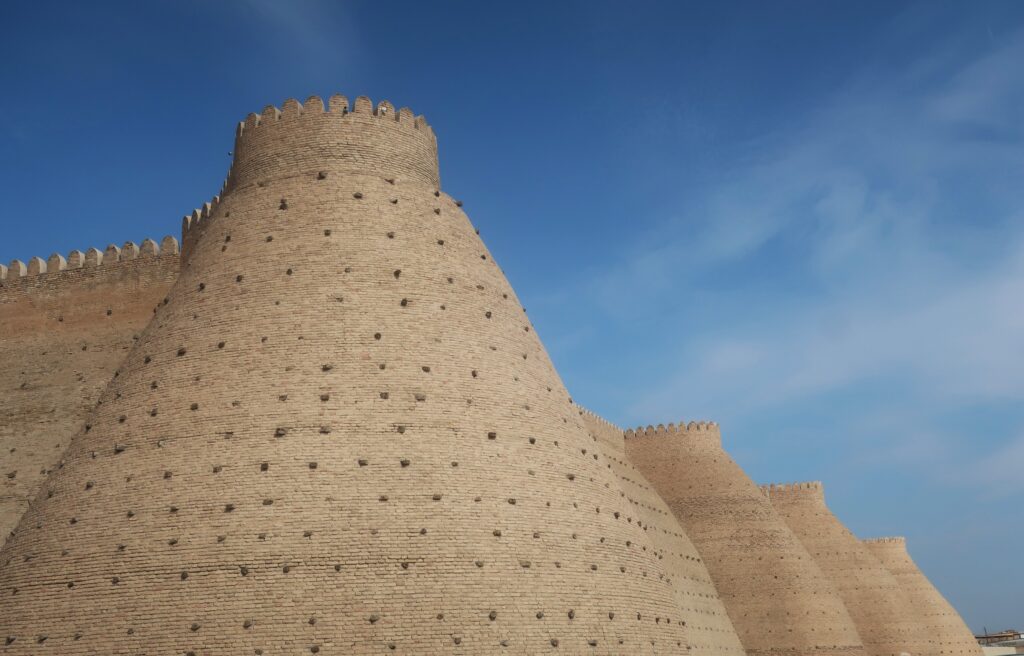
A morbid tale often told about the Ark is how the emir at the time tossed a pair of British emissaries, Charles Stoddart and Arthur Conolly, into a bug-infested pit for three years before making them dig their own graves and beheading them. Not very diplomatic.
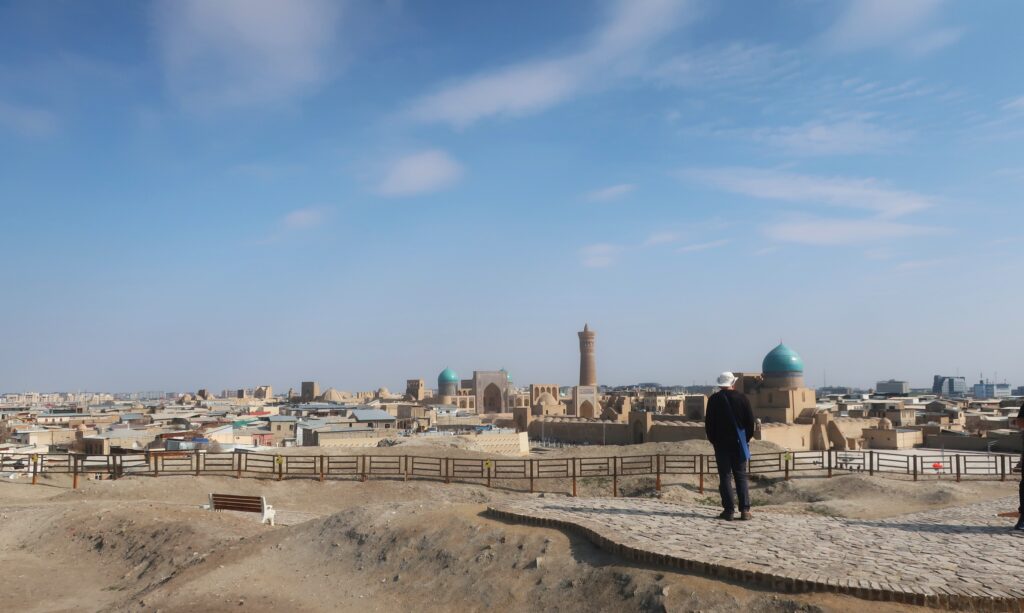
The fortress has footpaths around the archaeological work being done in the area.
Linguistic fun fact: the Russian word for train station is ‘вокзал’, pronounced ‘voksal’. I wonder if this is related to the well-known Vauxhall station in London. According to Wikipedia, my surmise may be correct:
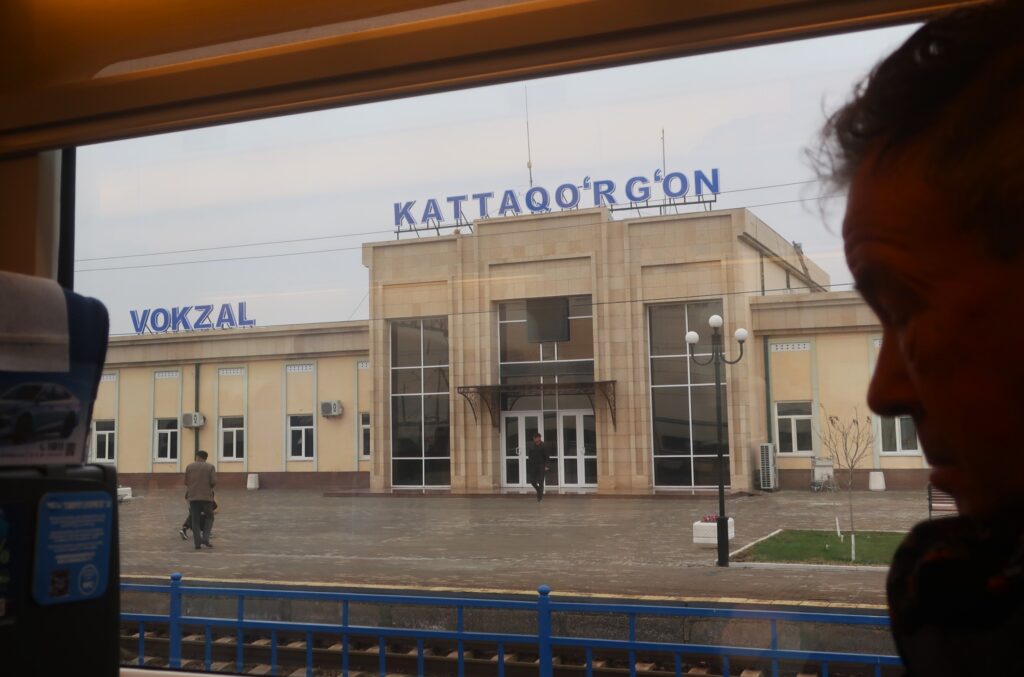
‘The name Vauxhall is phonetically similar to the Russian word for a railway station, вокзал (vokzal). One theory for this similarity is that Tsar Nicholas I visited Britain in the mid-19th century to study the railway network. At the time, every train on the South Western Railway called at Vauxhall as a ticket stop. From this, the Tsar concluded that Vauxhall was a major transport interchange, and the word was introduced as the generic term in Russian.‘
Sight or Insight of the Day
While strolling the back alleys of Bukhara, we come across this on the lintel of an abandoned house.
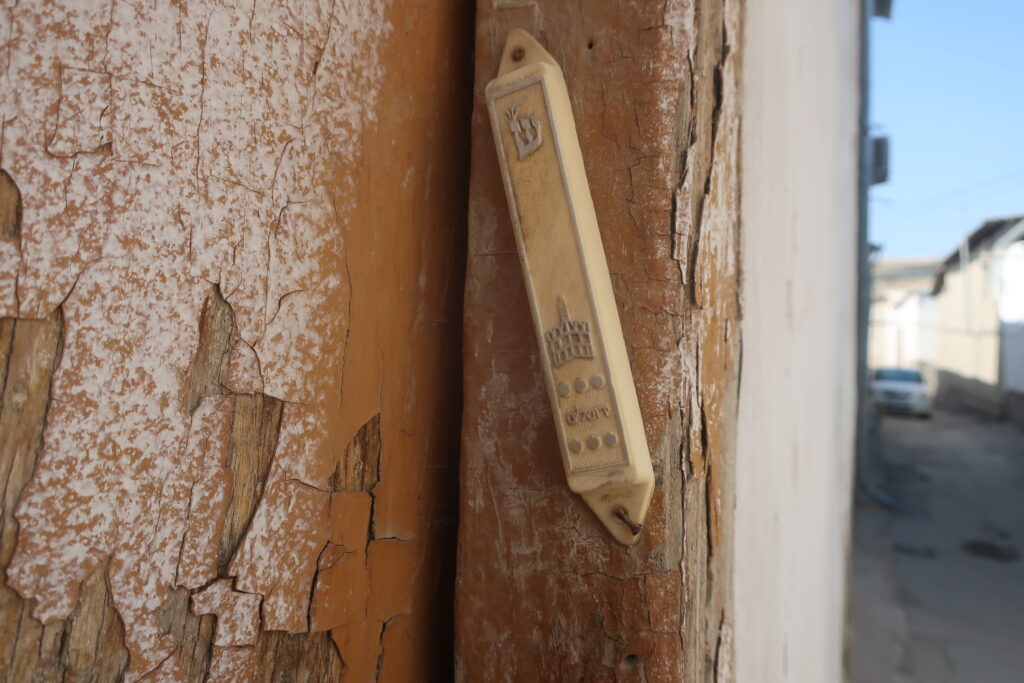
It’s a mezuzah. A cheap plastic one, but still a ghostly reminder of a departed population.
According to Lonely Planet, ‘Jews made up 7% of Bukhara’s population at the time of the Soviet Union’s collapse. Only about 100 remain.‘