Our plan is to fly back to Tashkent and take an overnight train to Termez, far to the south. Economy seats are sold out, so we’re forced to fly Business Class.
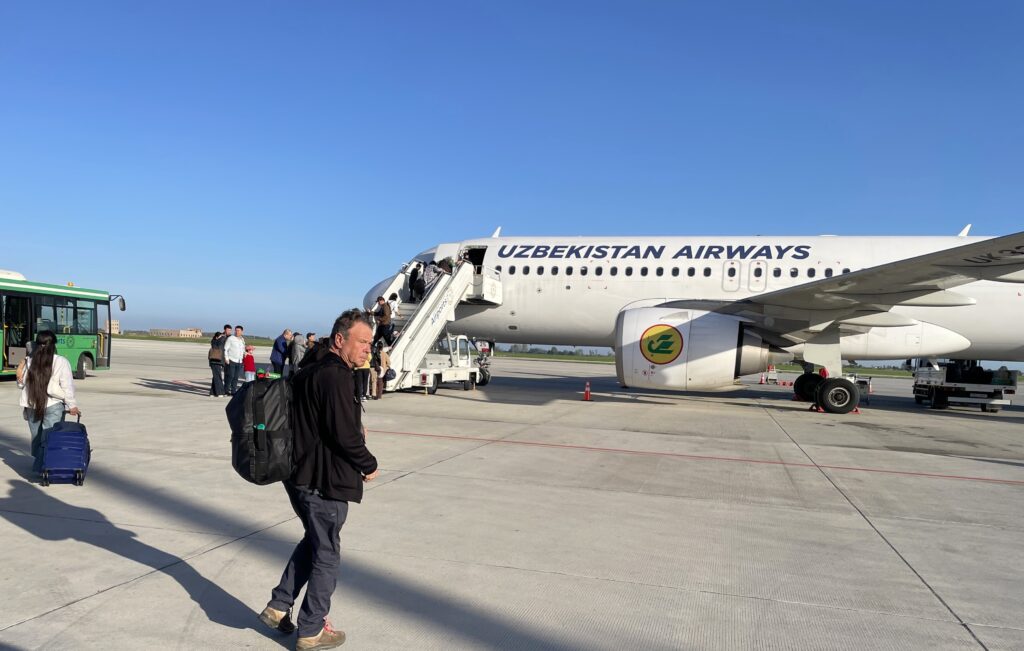
The last time we had to fly Business Class out of necessity was with Royal Brunei Airlines. <Sigh> On both occasions, they are short hops on the airlines of Islamic countries, so no free champagne.
We book an overnight train to Termez.
We now have most of a day back in Tashkent. In our first entry for Uzbekistan, we mention the Islamic Centre. It’s now open, so we spend a few hours there. It’s very popular – we have to wait several hours for entry.
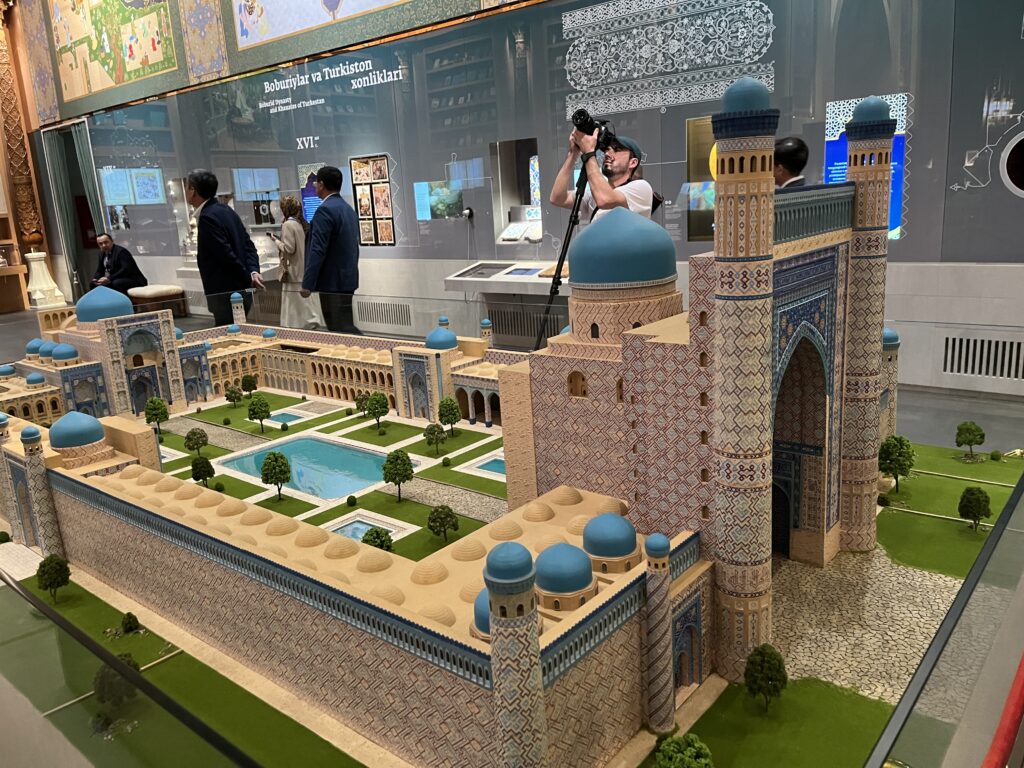
I complained when we were in Shakhrisabz that there was so little left of Timur’s summer palace. I’m happy to see at least an imaginative model of the place.
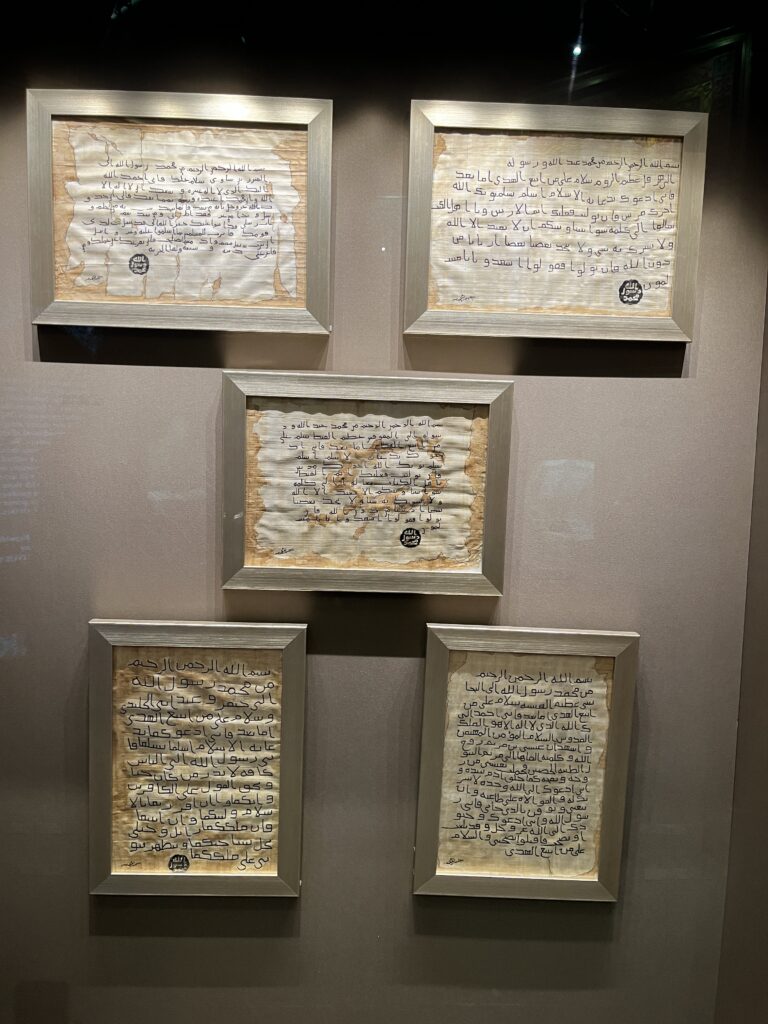
Also exhibited are a showcase of letters purported to have been written by the prophet Mohammed (PBUH). Sorry, I have to call BS on this one.
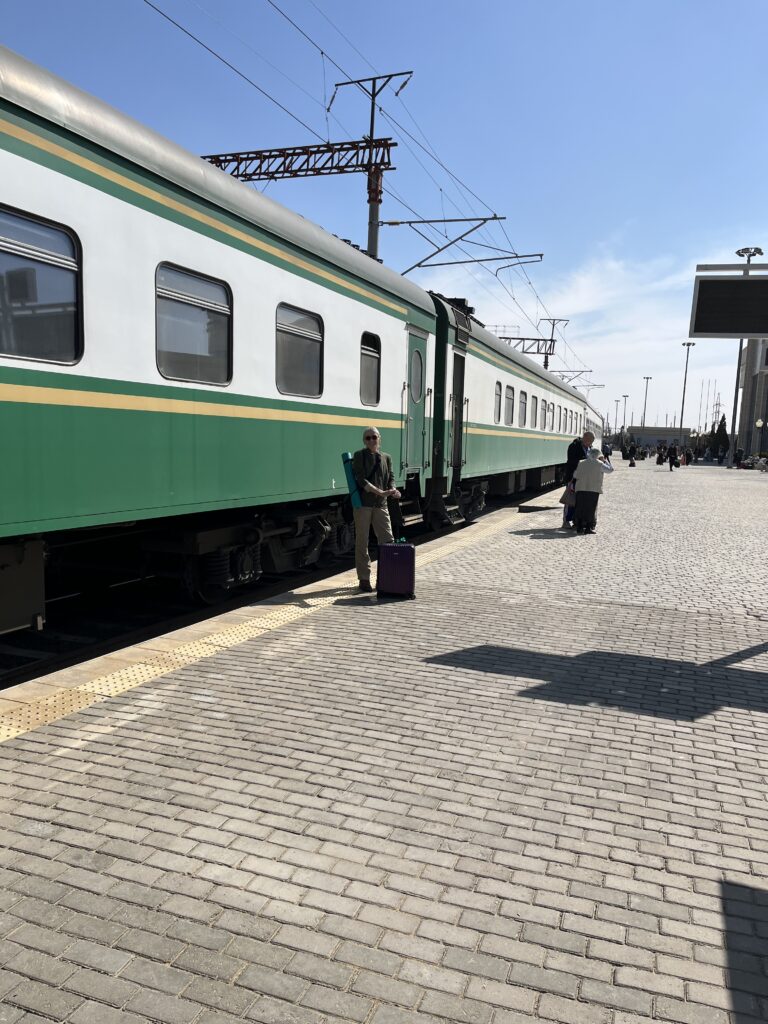
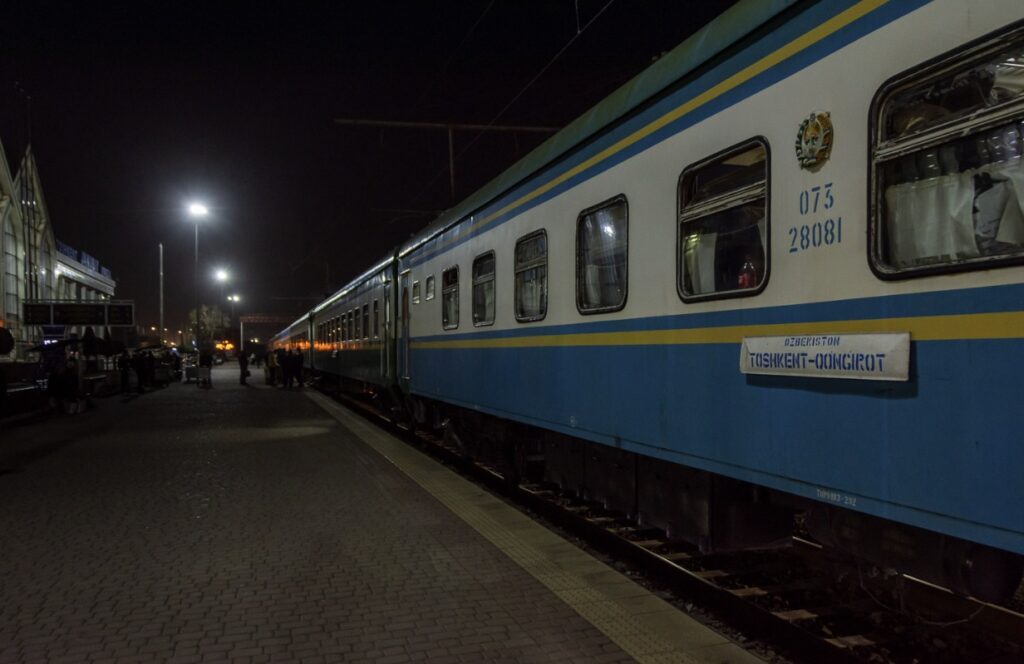
It’s back to the Southern Station for the night train.
Because of our late booking date, only top bunks are available. These require the skills of an Olympic gymnast to get into or out of. But they’re comfortable enough, and clean.
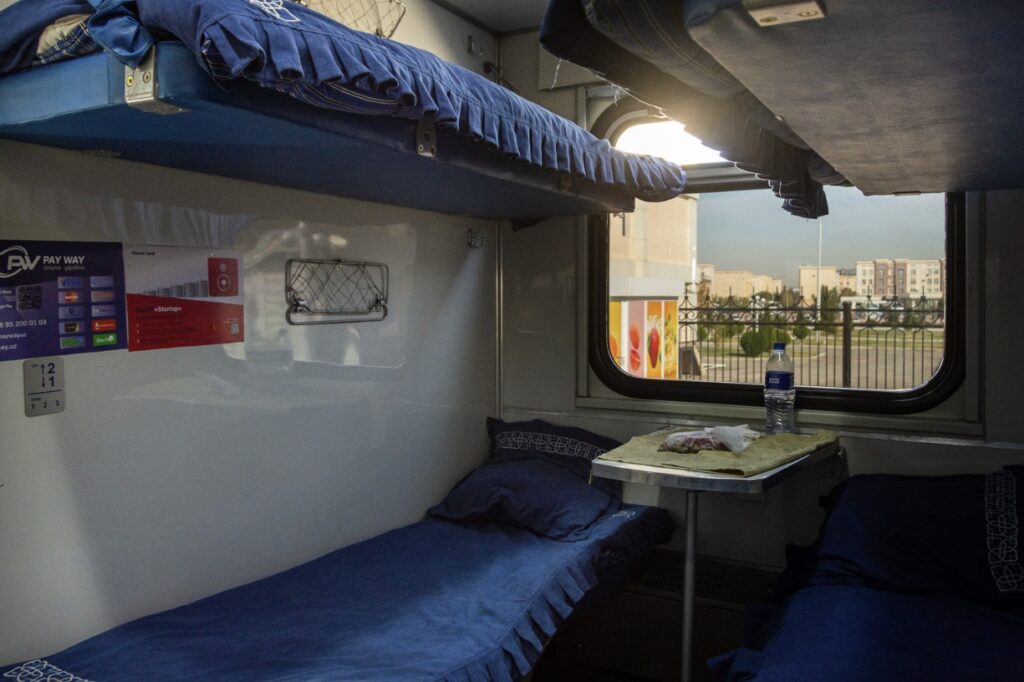
Our cabinmates are at first a mother and daughter. They get off in Samarkand and we are joined by a pair of ladies who treat us very well. They kindly share their breakfast with us.
In the morning, the landscape is much greener than it has been up in Karapakstan.
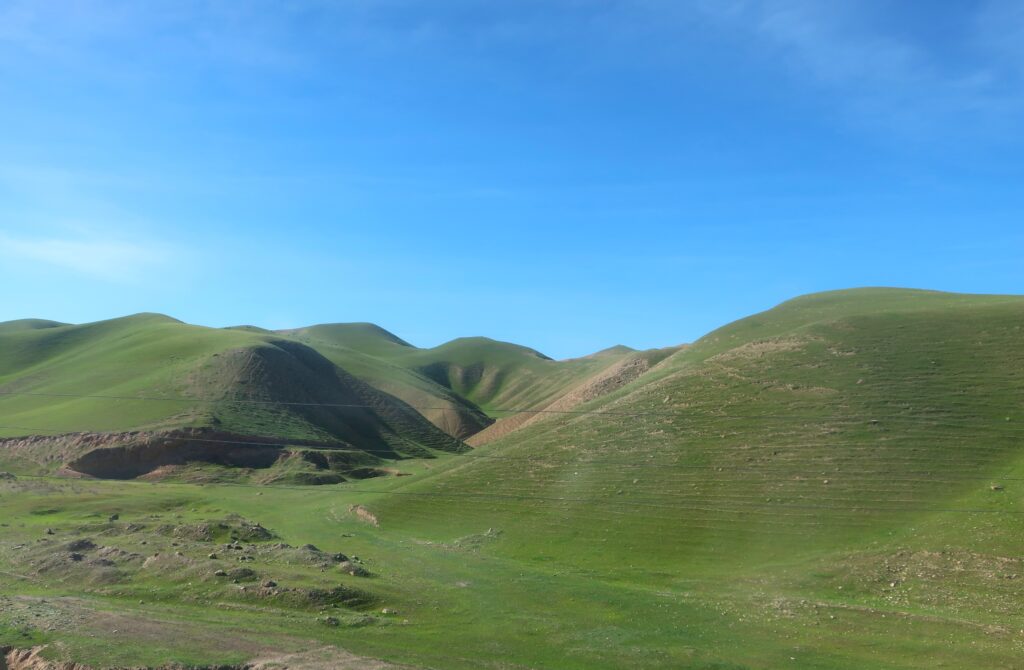
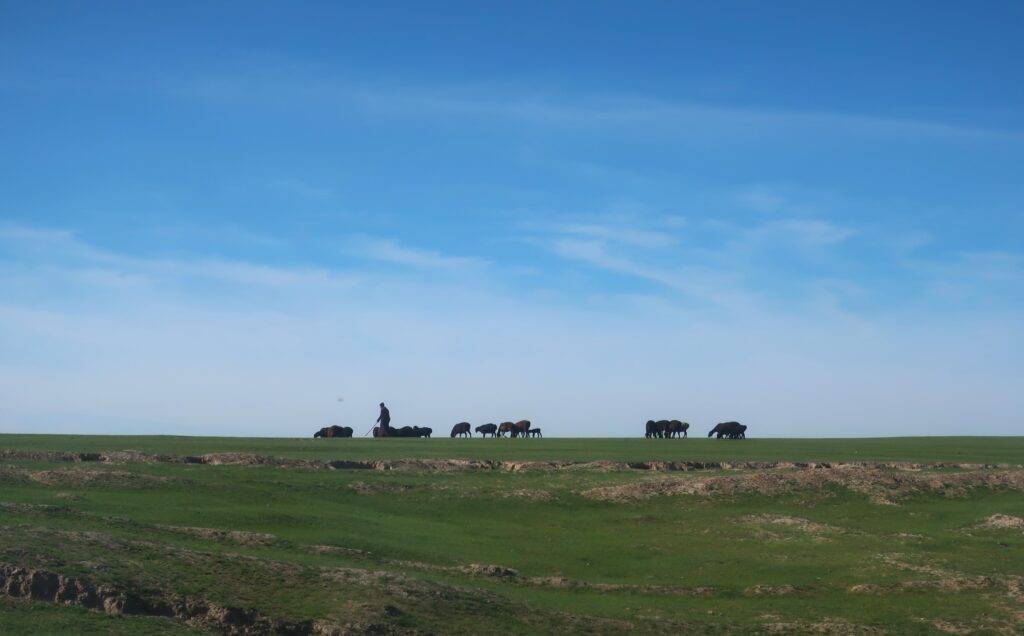
On arrival, we soon learn that Termez seems to have the most aggressive taxi drivers we’ve experienced so far. And not just taxi drivers – anyone with a car slams on the brakes, rolls down the window, and tries to inveigle us into hopping in, for a price. Sheesh.
Termez is on the border of Afghanistan. We hear about a free trade zone where Afghanis can buy and sell stuff. We hire a driver to take us there.
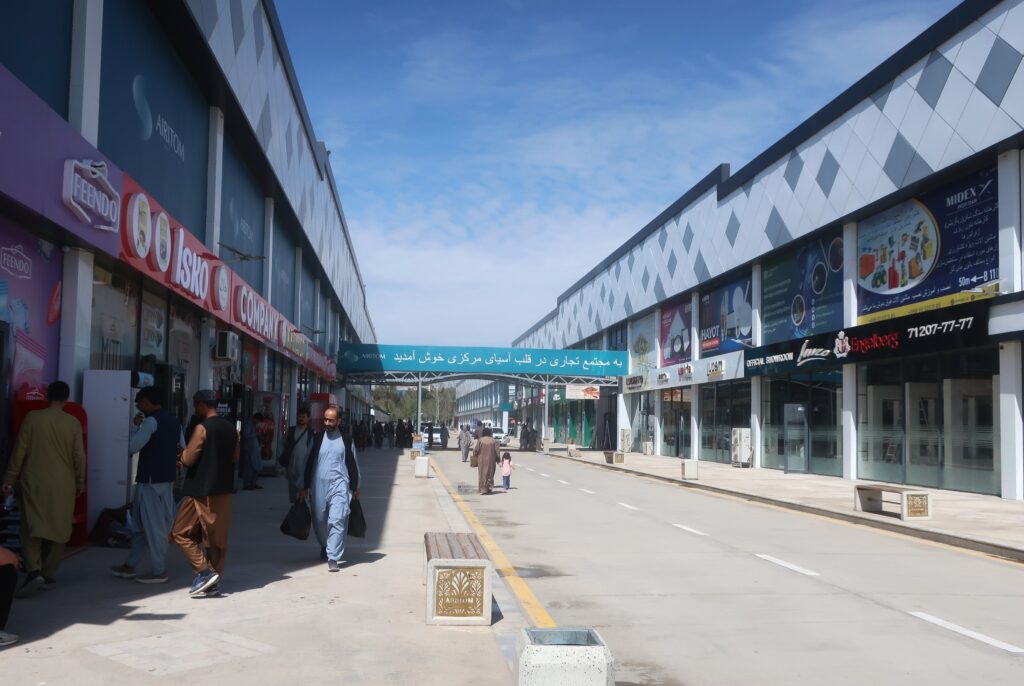
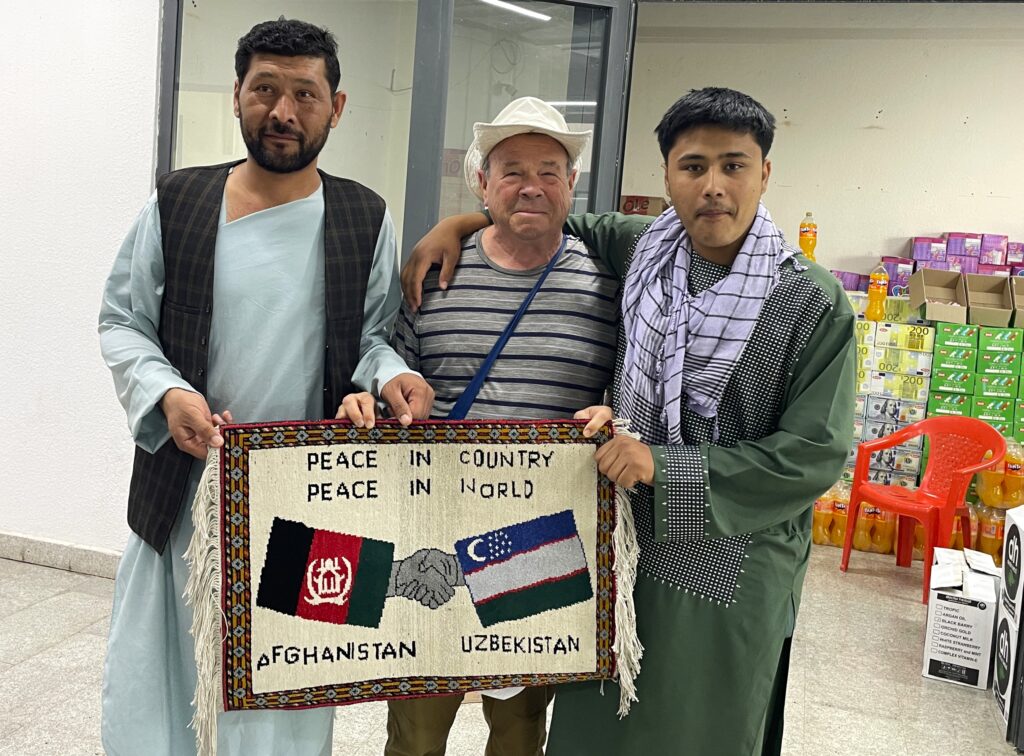
There isn’t much here for the souvenir-seeking tourist. It’s mostly cheap wholesale goods. A small rug in a window catches our eye, a sort of roughly-made, folk-art-y kind of thing.
The proprietor is puzzled why we would want such a trifle and tries to interest us in real (not very nice) carpets. We convince him to part with it.
Here we seal the deal, Afghan style: I place the payment cash vertically between my hands and the seller places my hands between his.
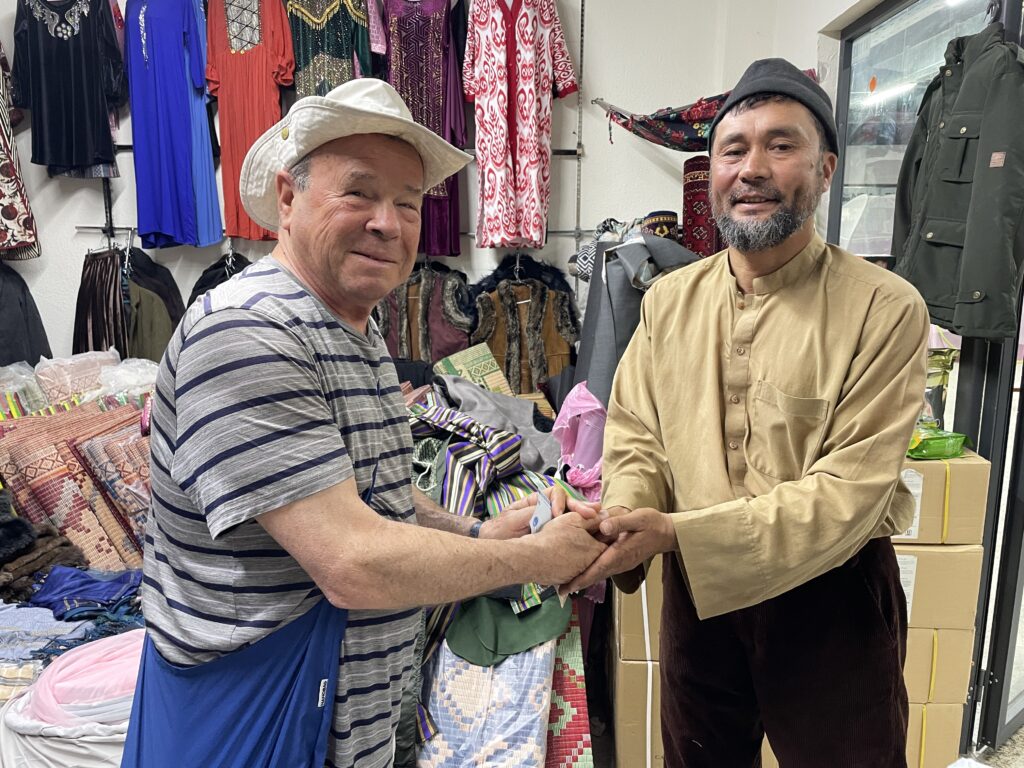
Here is our prize on display. The Afghanis find us just as exotic as we find them.
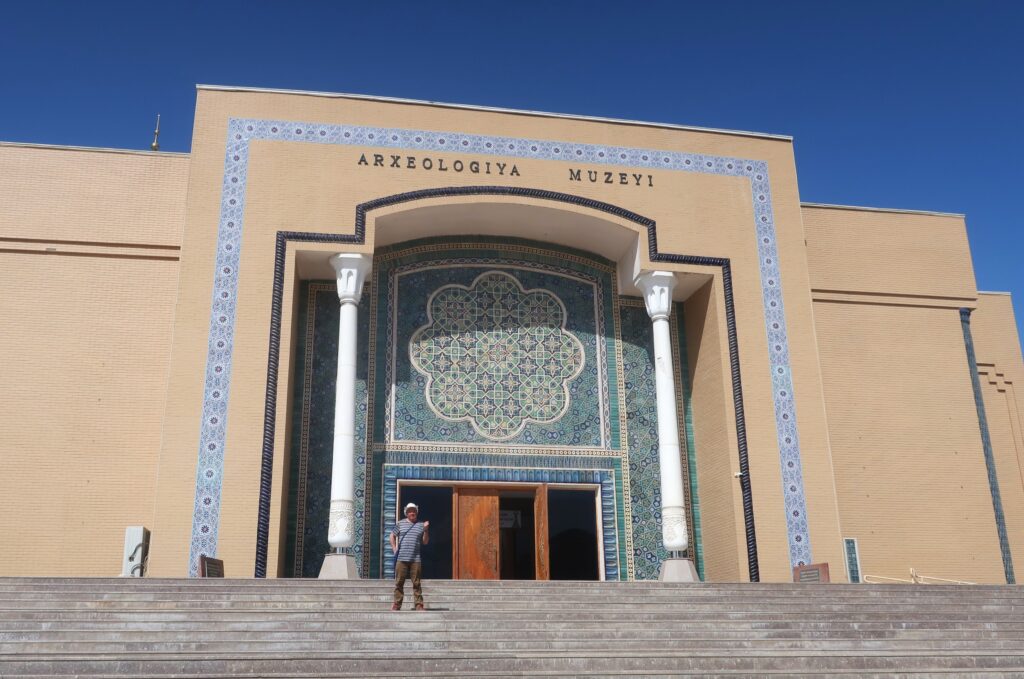
On the way back to town, we stop at the Archeological Museum. It contains finds from the places we want to visit.
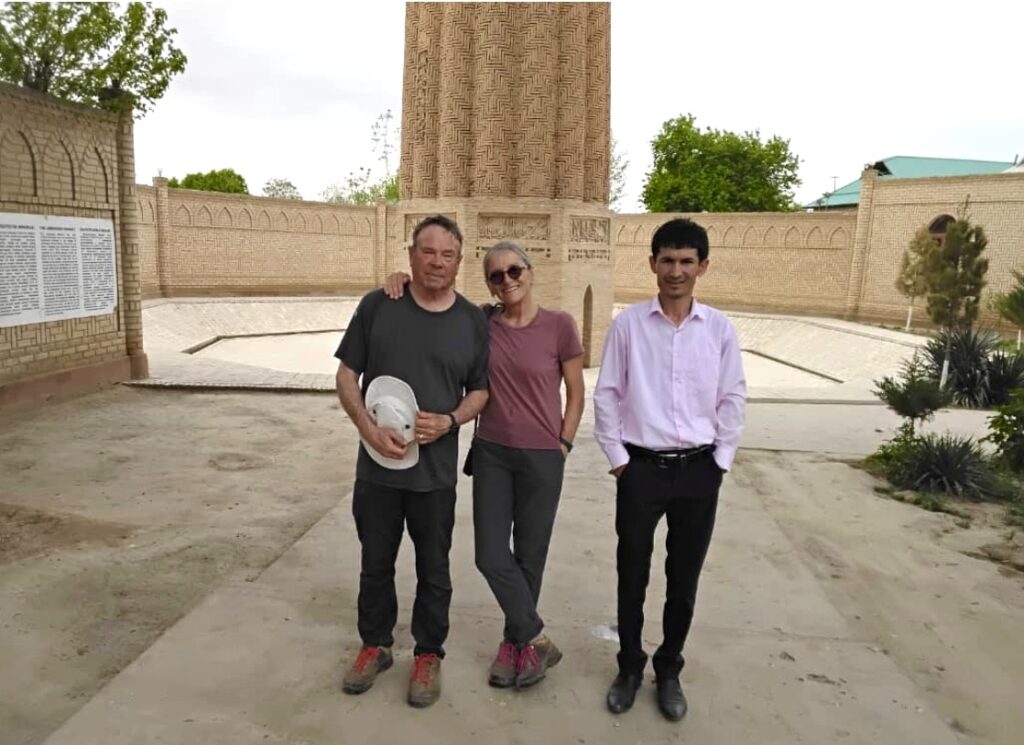
For the next two days, we hire Mahsud as a driver and guide. He has a white Chevrolet, of course, as did our driver of the previous day.
We climb to the top, which is fun crawling up the dark, narrow staircase.
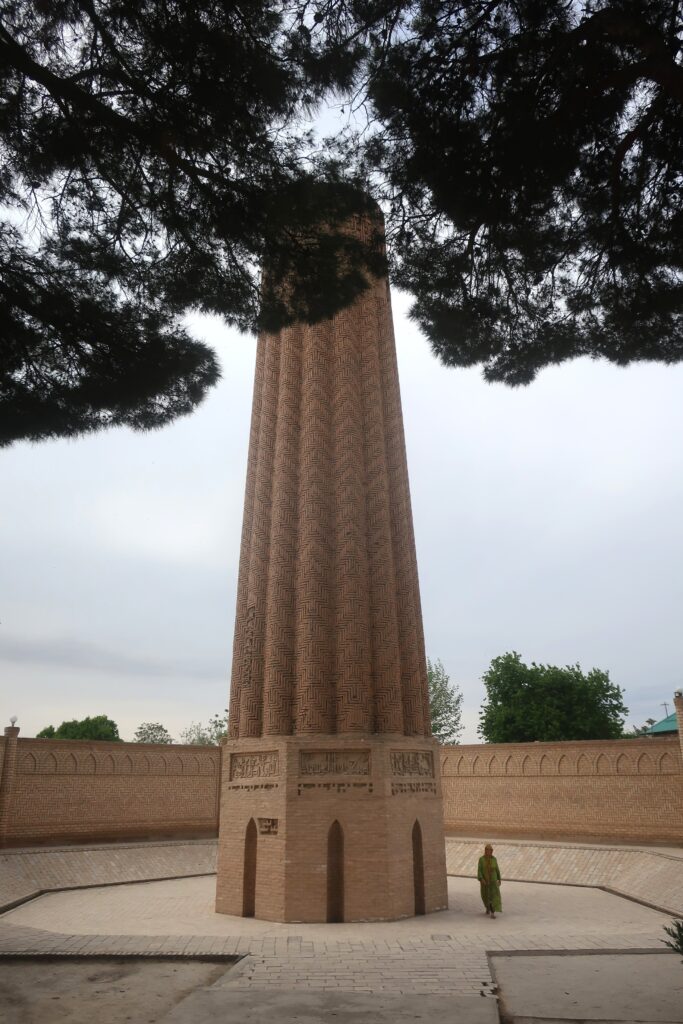
On the agenda is the Sultan Saodat mausoleum complex.
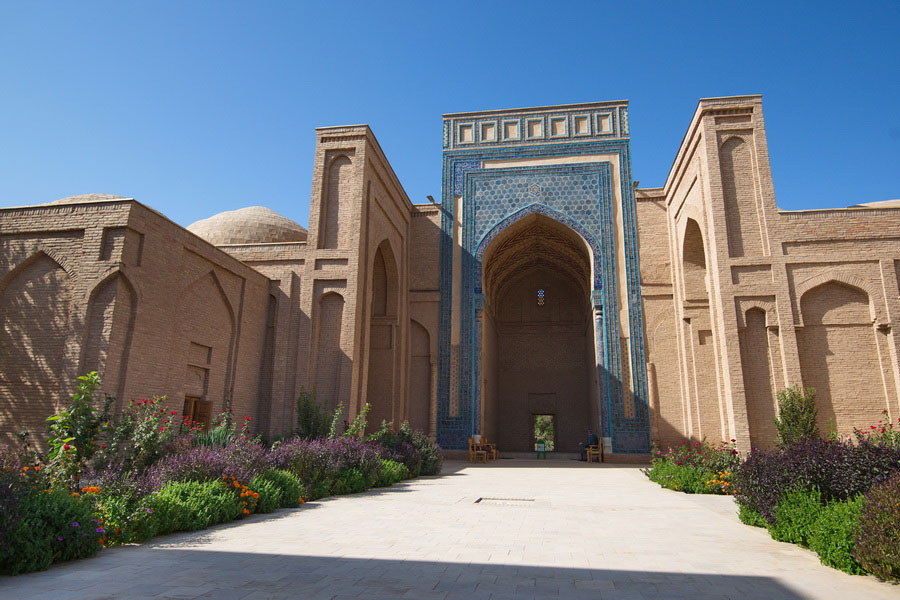
We are let into the structure by the guardian and clamber up to the rooftop.
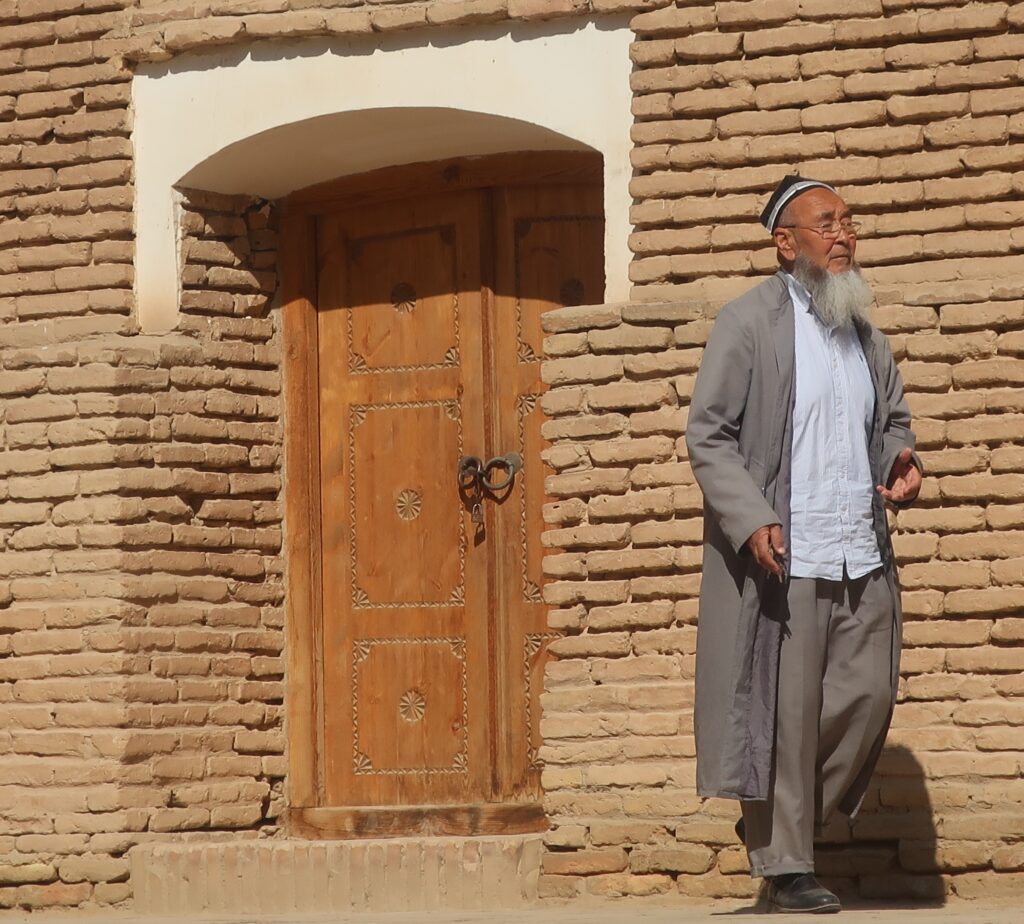
The Kyrk Kyz fortress has quite a story behind it involving forty girls holding off a siege by Ghengis Khan.
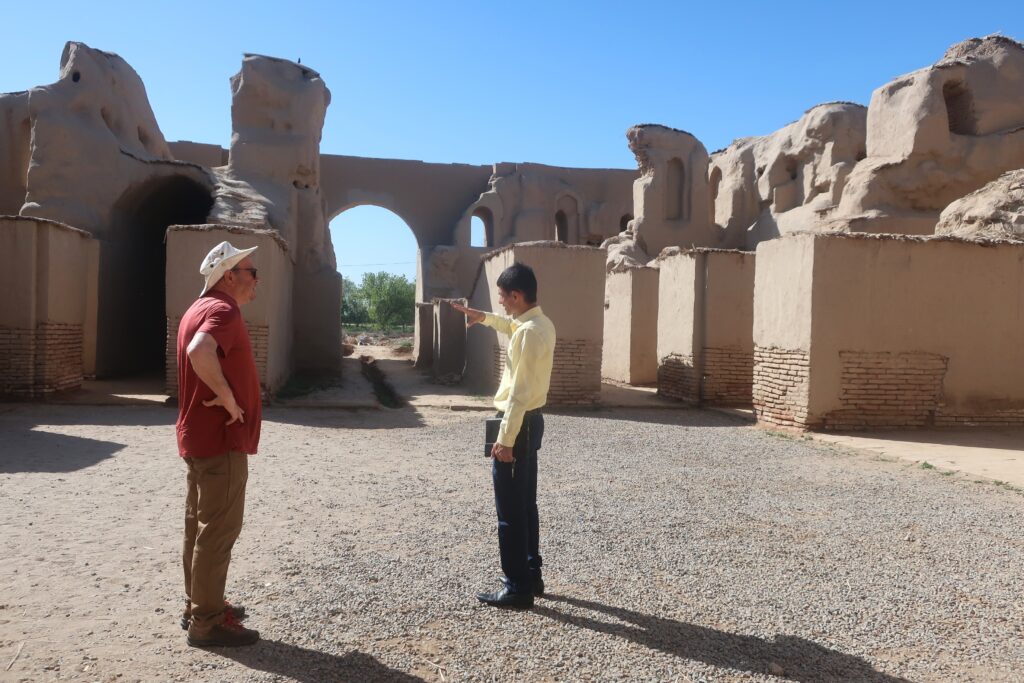
Mahsud goes into great detail about this story and believes it implicitly. (The idea that the army of Ghengis Khan – slayer of millions – could be fended off by a handful of girls is, um, highly unlikely.)
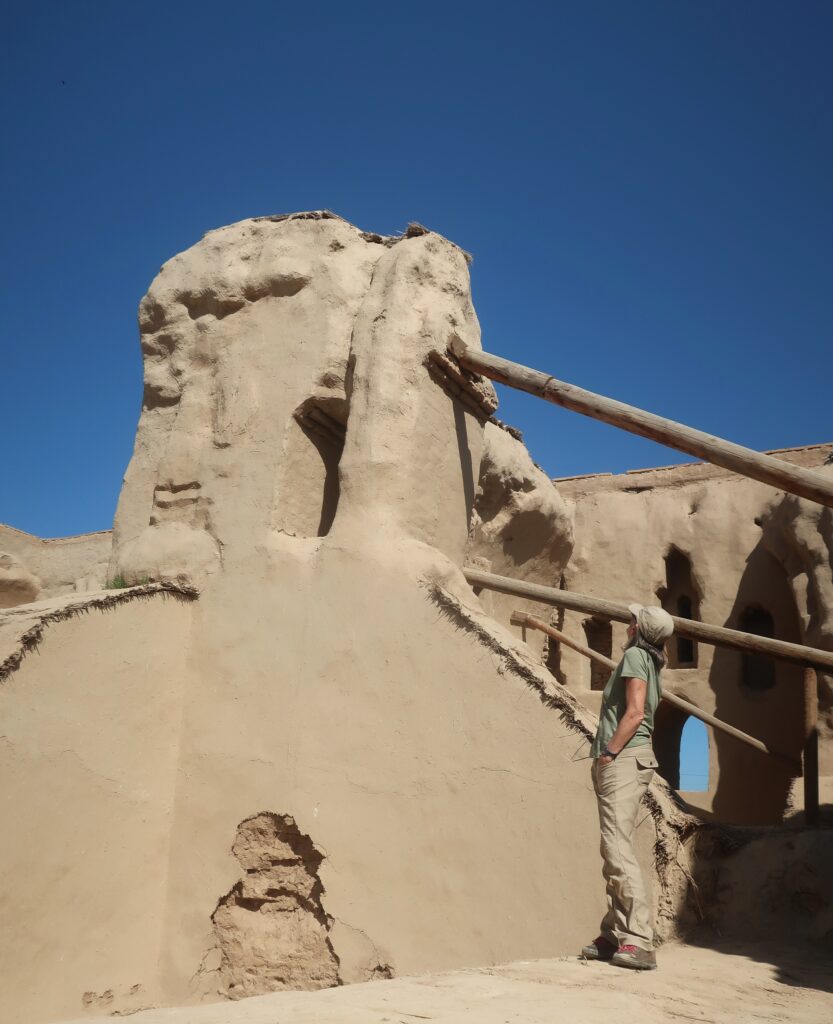
Earthquakes are common here. Cities in the region seem to get destroyed either by earthquakes or marauding invaders. Supports are needed to keep things together.
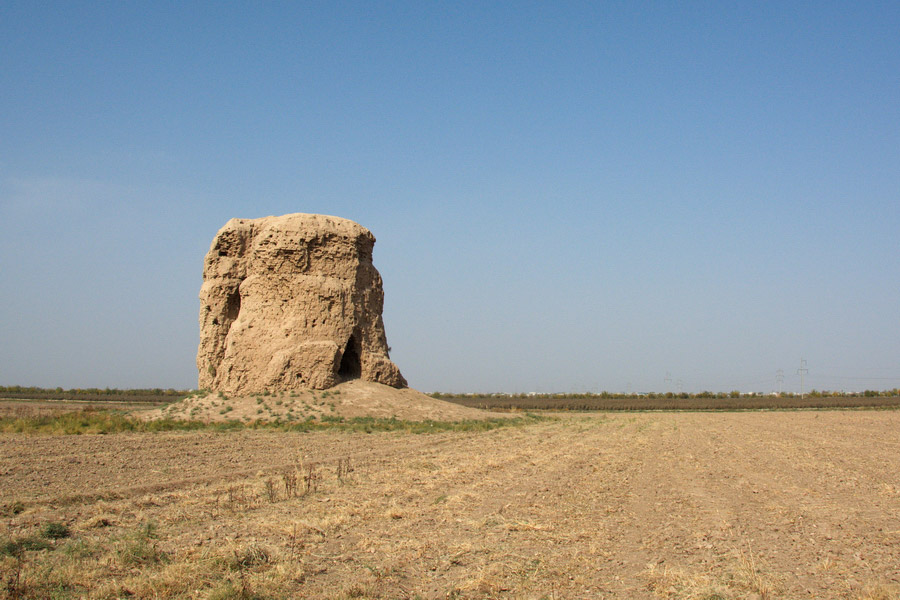
It’s a short drive to Fayoz Tepe. In the early days of Buddhism, the faith spread throughout Asia, including around here. Fayoz Tepe contains the ruins of a Buddhist monastery. Its prominent feature is a restored stupa.
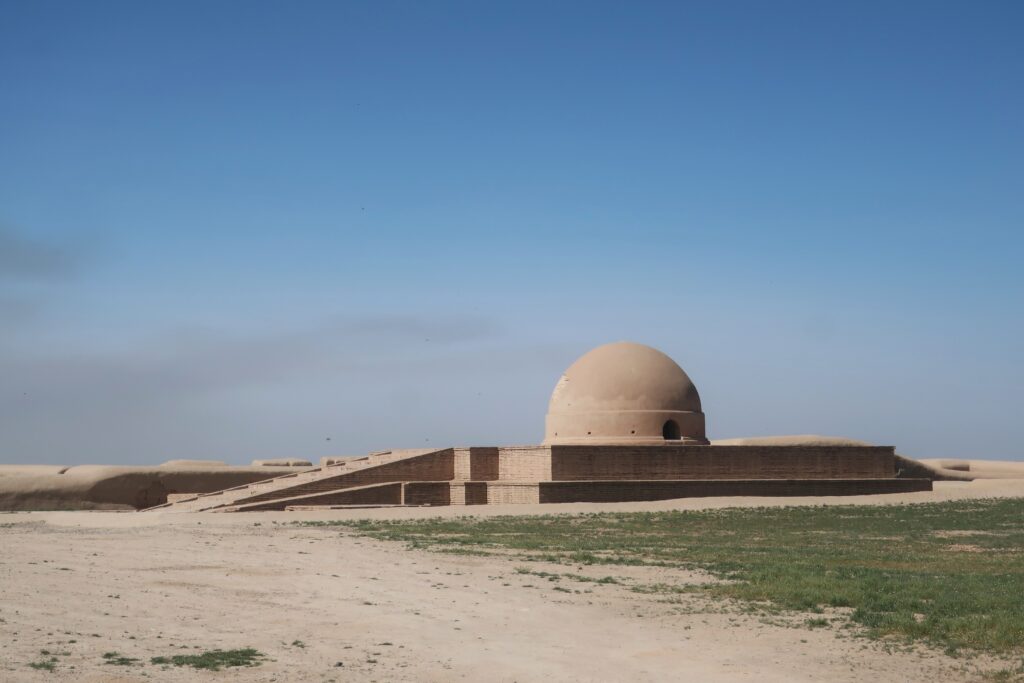
Inside the stupa is a much-eroded smaller stupa. Japanese visitors still leave small offerings.
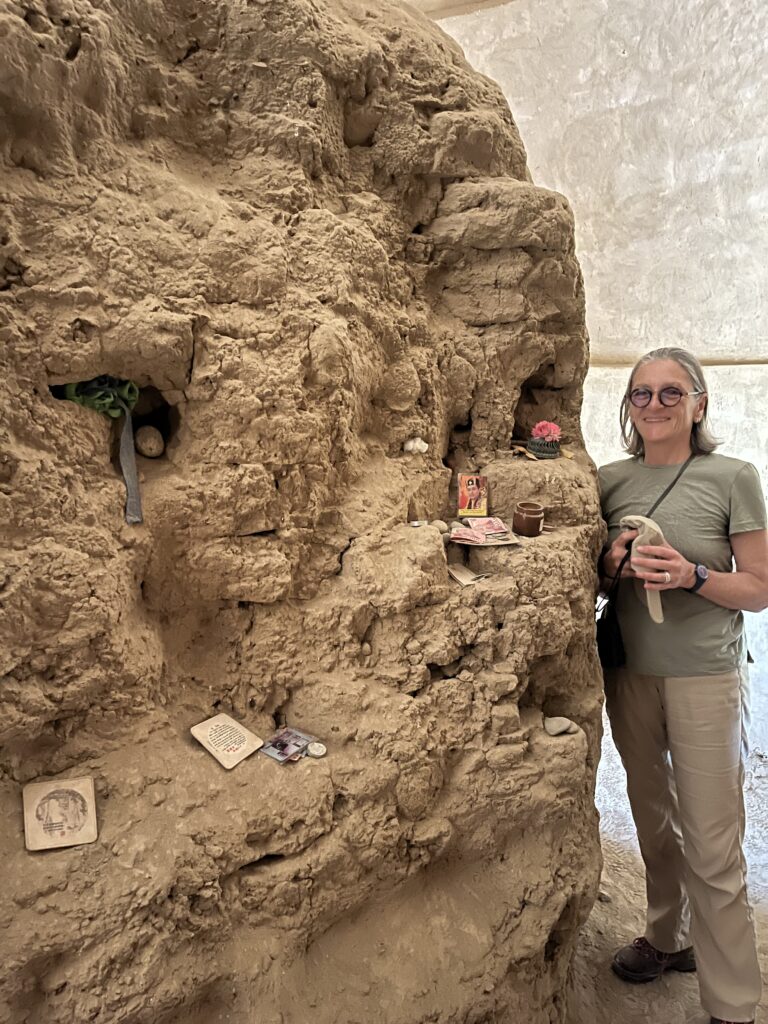
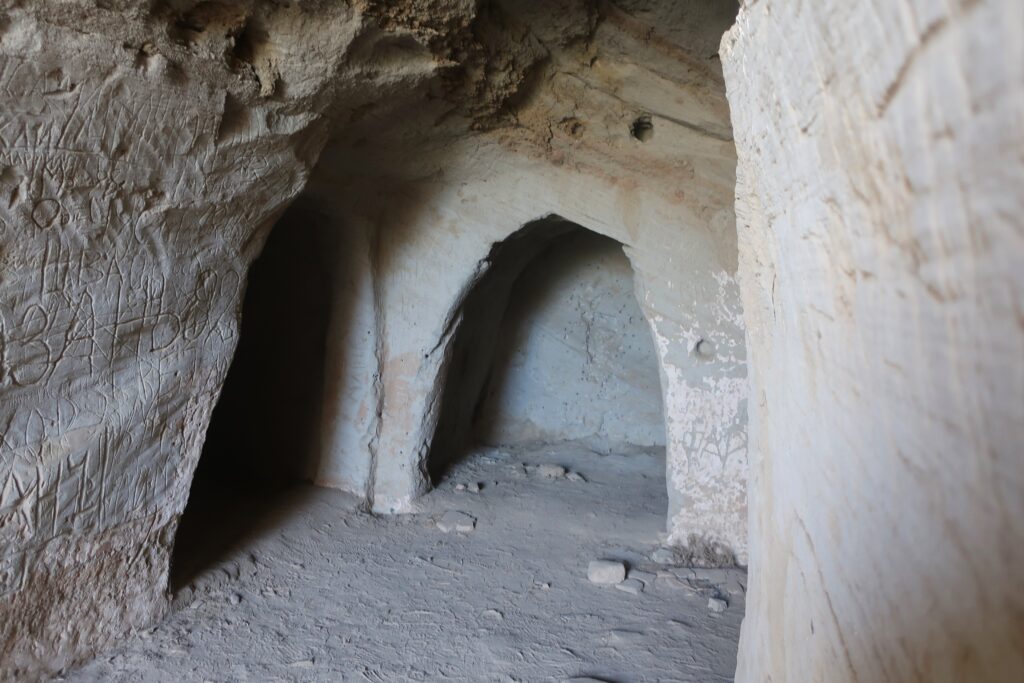
Nearby is Kara Tepe. This is a series of Buddhist caves. You can still see the remains of ancient wall paintings. (Mahsud peels some away to show us before we convince him to stop.)
The caves were also visited by many bored Russian soldiers during the 1979-1989 Soviet-Afghan war. They left behind many inscriptions carved into the soft limestone.
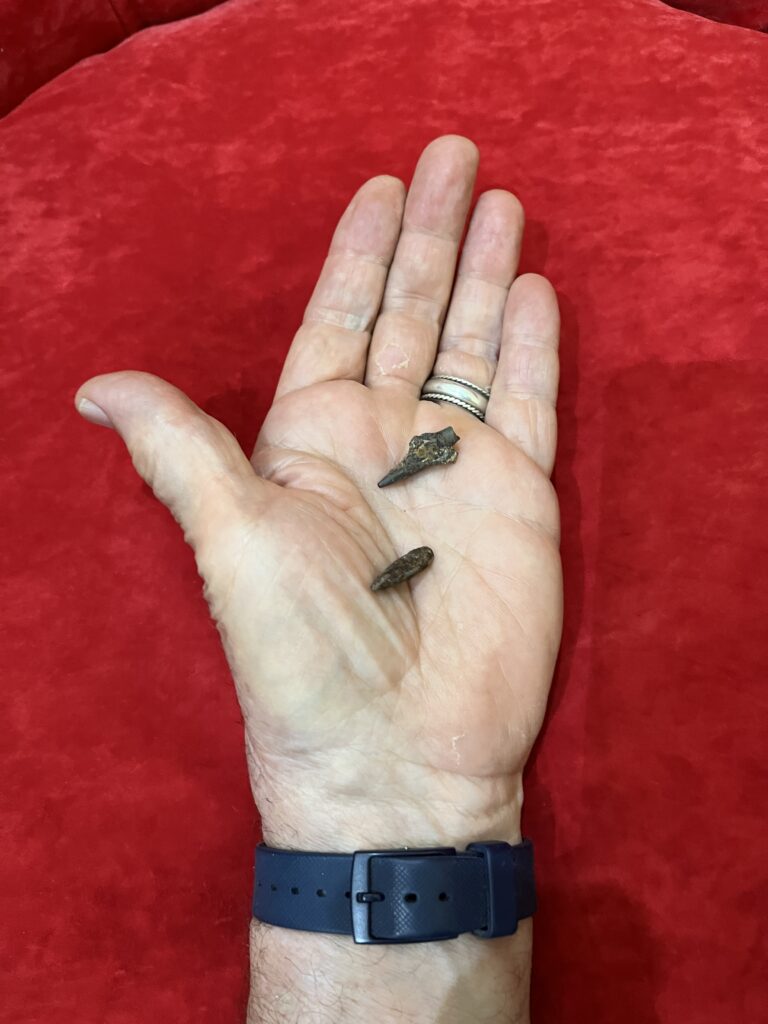
They also seemed to have let off steam by firing hundreds of rounds of ammunition. The ground is littered with old bullets.
We take a break. In the background is the Amu Darya river – known as the Oxus River in classical times. On the other side is Afghanistan.
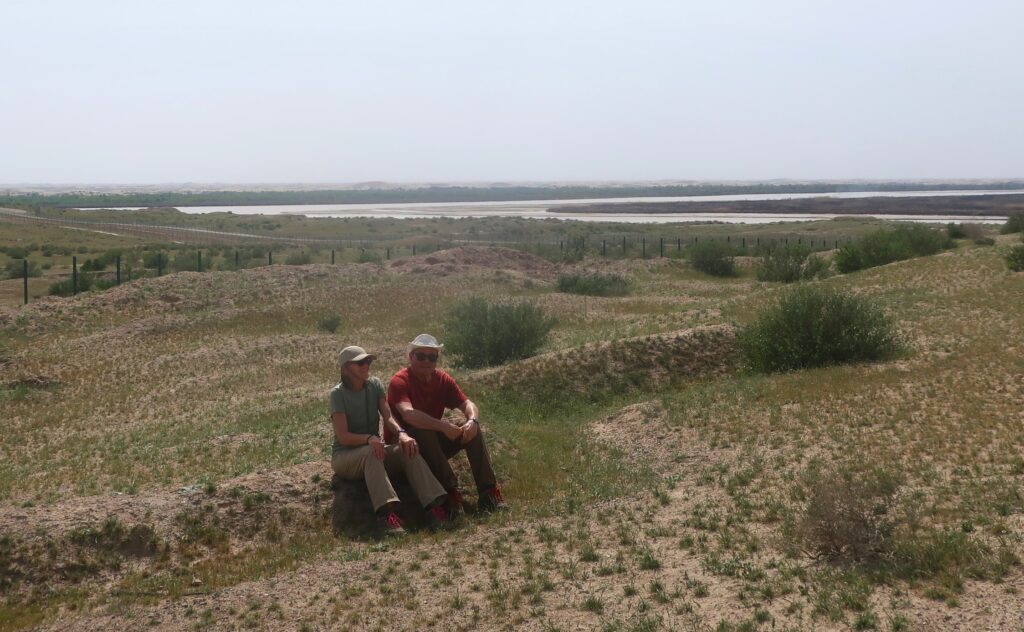
Another day, we visit Kampir Tepe. It has been identified (but not conclusively) with a city founded by Alexander the Great.
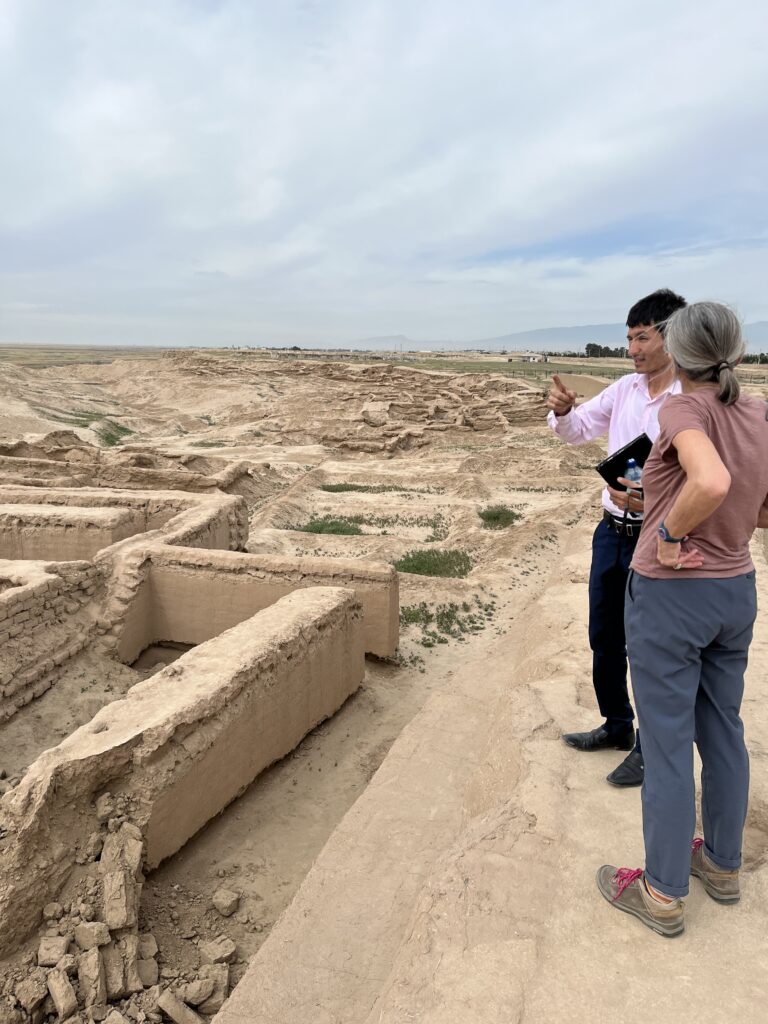
Mahsud regales us with tales of Alexander, and points out a nondescript square as being ‘Alexander’s bedroom’ with complete certainty.
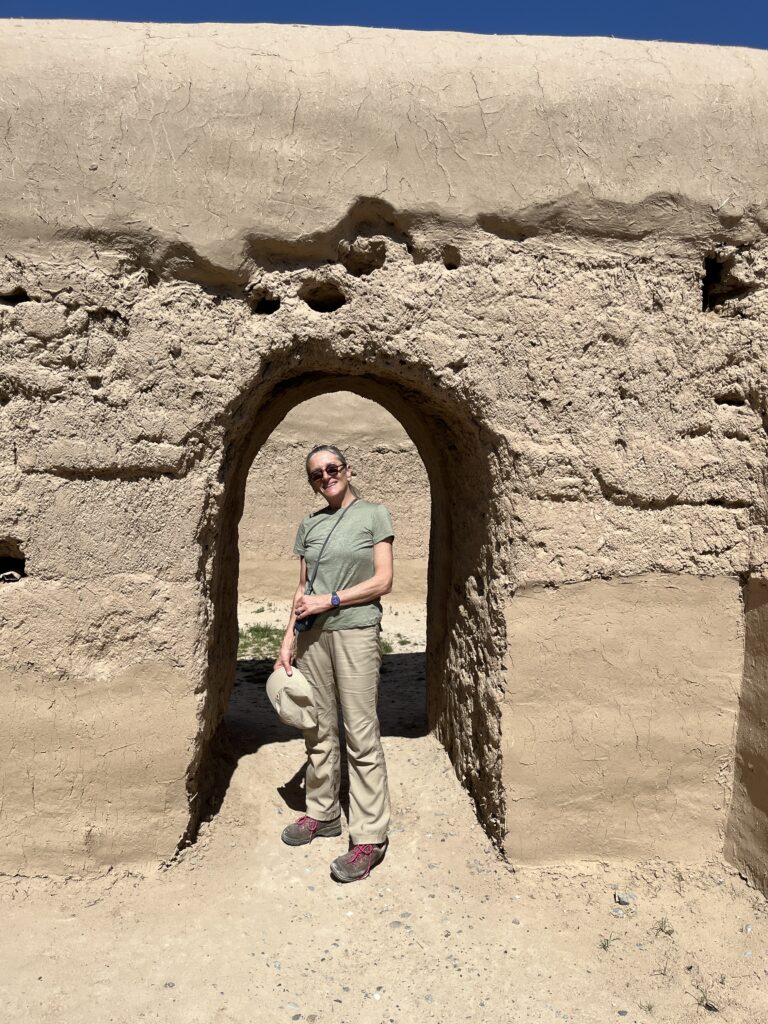
The last few hours of our tour, we are hit by a violent sandstorm, with heavy winds and limited visibility.
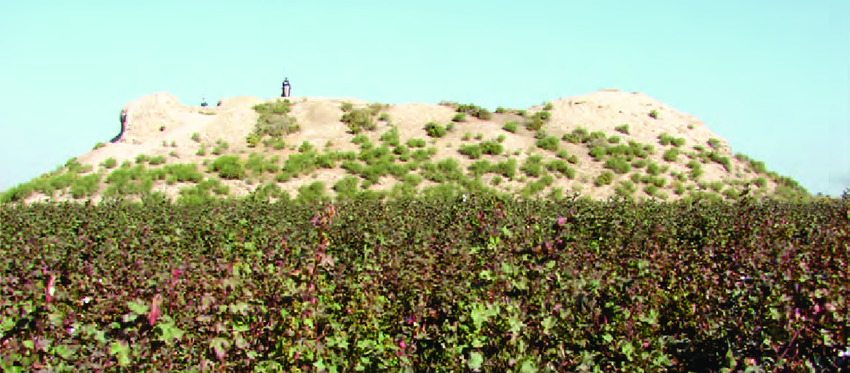
On the outskirts of a small village, we visit the remains of Talitogora, an off-the-beaten-path site. It’s a small mound, mysterious and virtually unexplored.
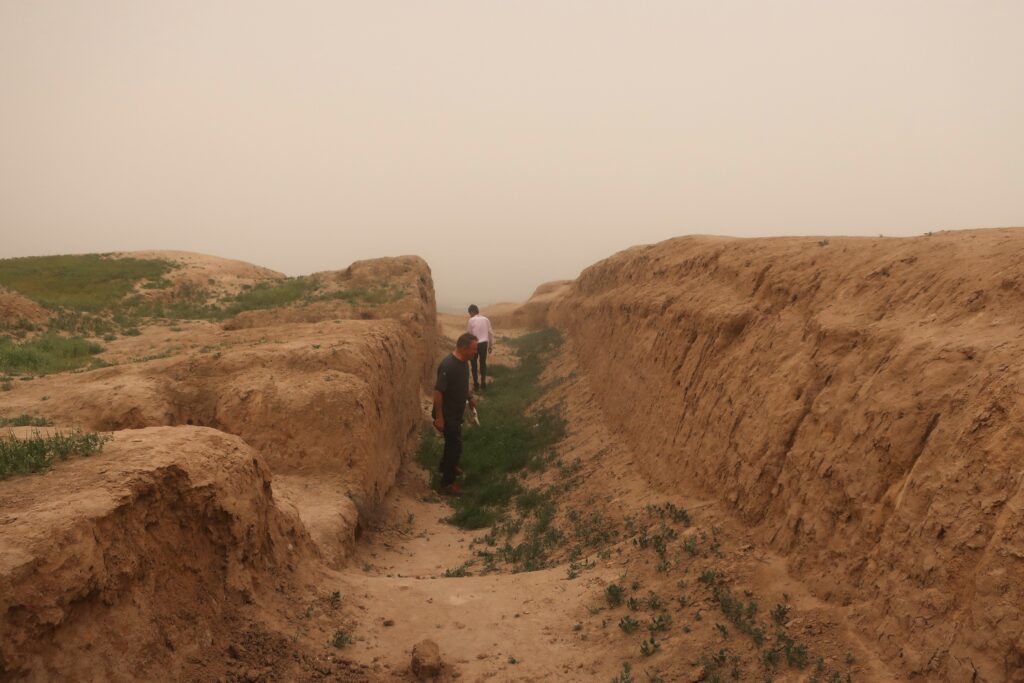
Personally, I’m fascinated by these not-yet-unearthed sites around the world. The only info I could find is here. There must be thousands of these sites, waiting patiently for the archeologist’s trowel.
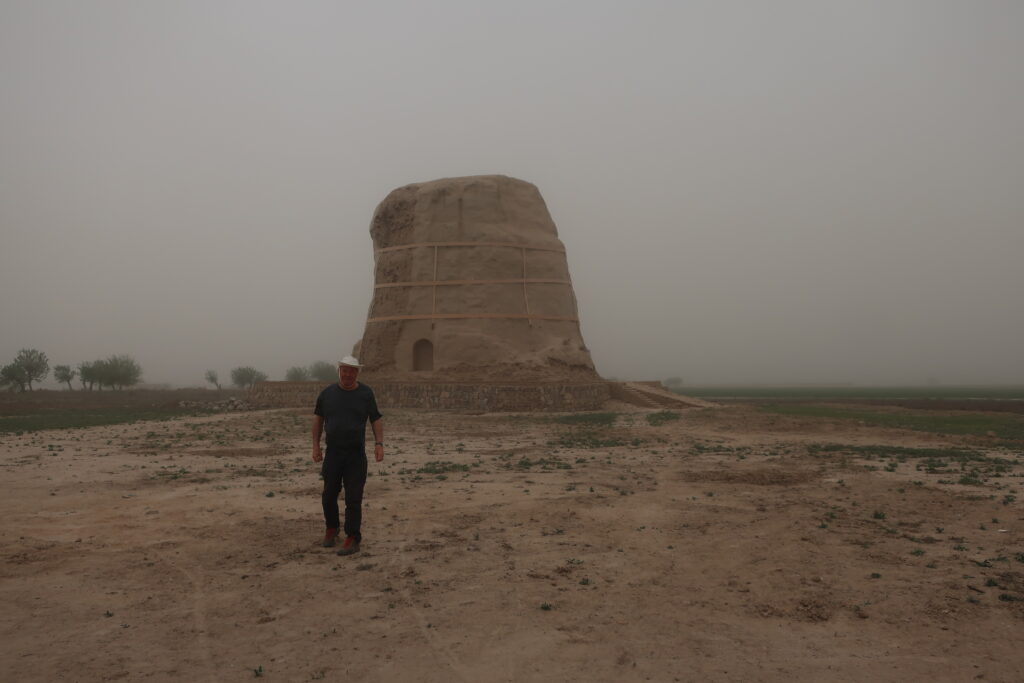
Lastly, we visit the Zurmala stupa. This is another Buddhist ruin, made up of 1.2 million bricks (according to Lonely Planet). These bricks now need iron bands around the structure to keep it from falling to bits.
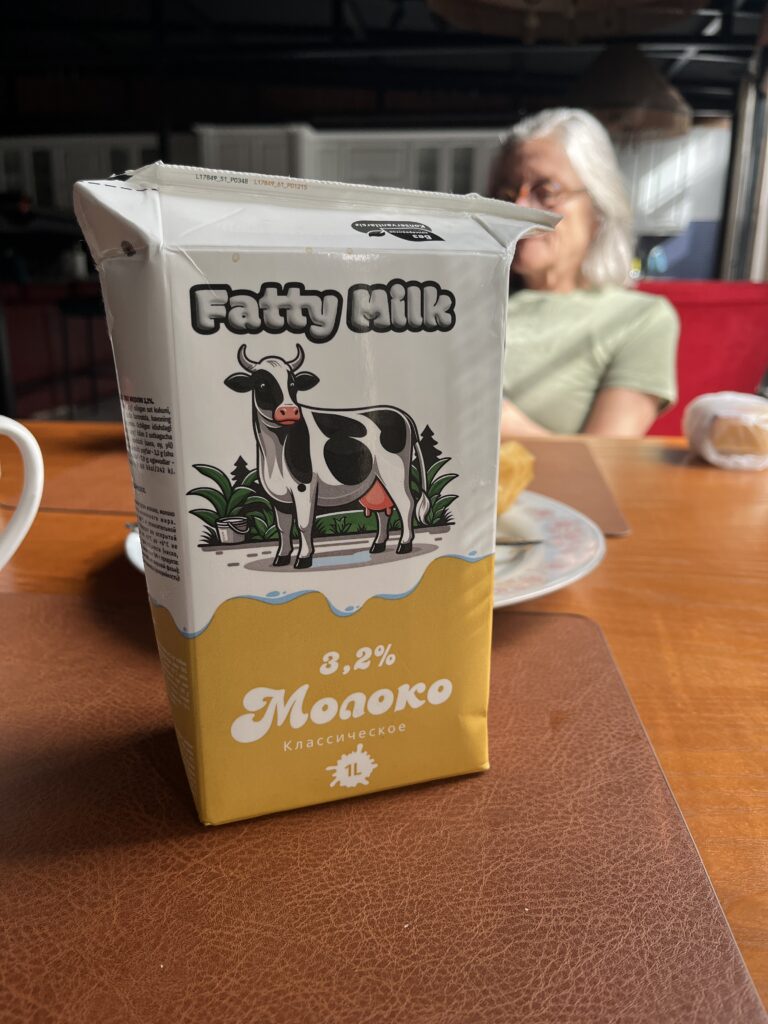
One word in Russian I remember from my teenage reading of A Clockwork Orange: ‘Moloko’. that is, ‘milk’. In the novel, ‘Moloko Plus‘ was imbibed in preparation for a night of mayhem.
Plain old moloko is available everywhere for less than two bucks a litre. We drink a lot of it.
Sight or Insight of the Day
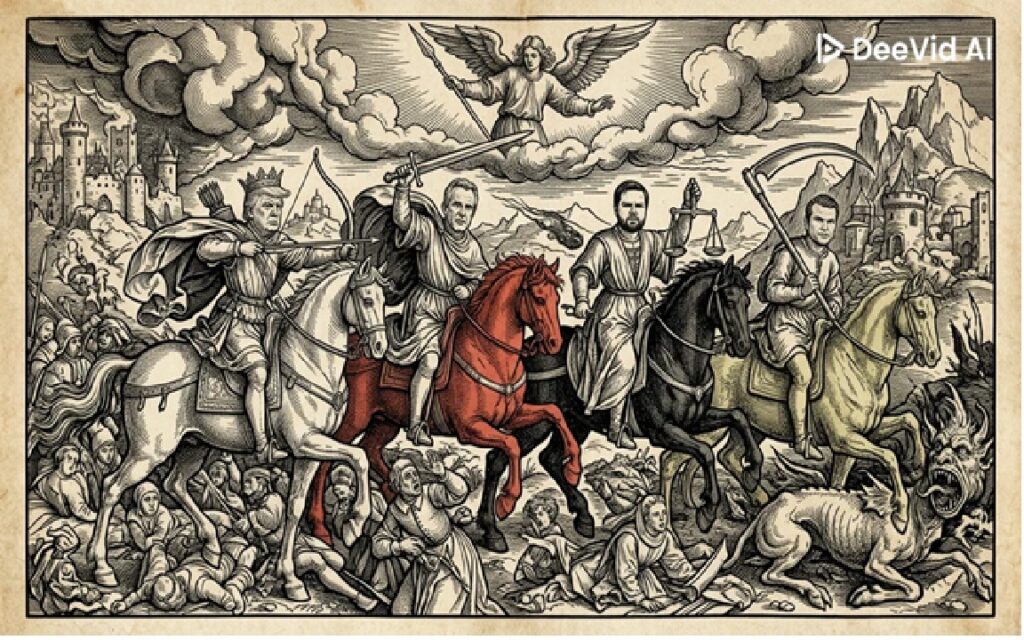
Hey! I’ve created my first-ever AI image! Now it really feels as though I’ve joined the modern age.