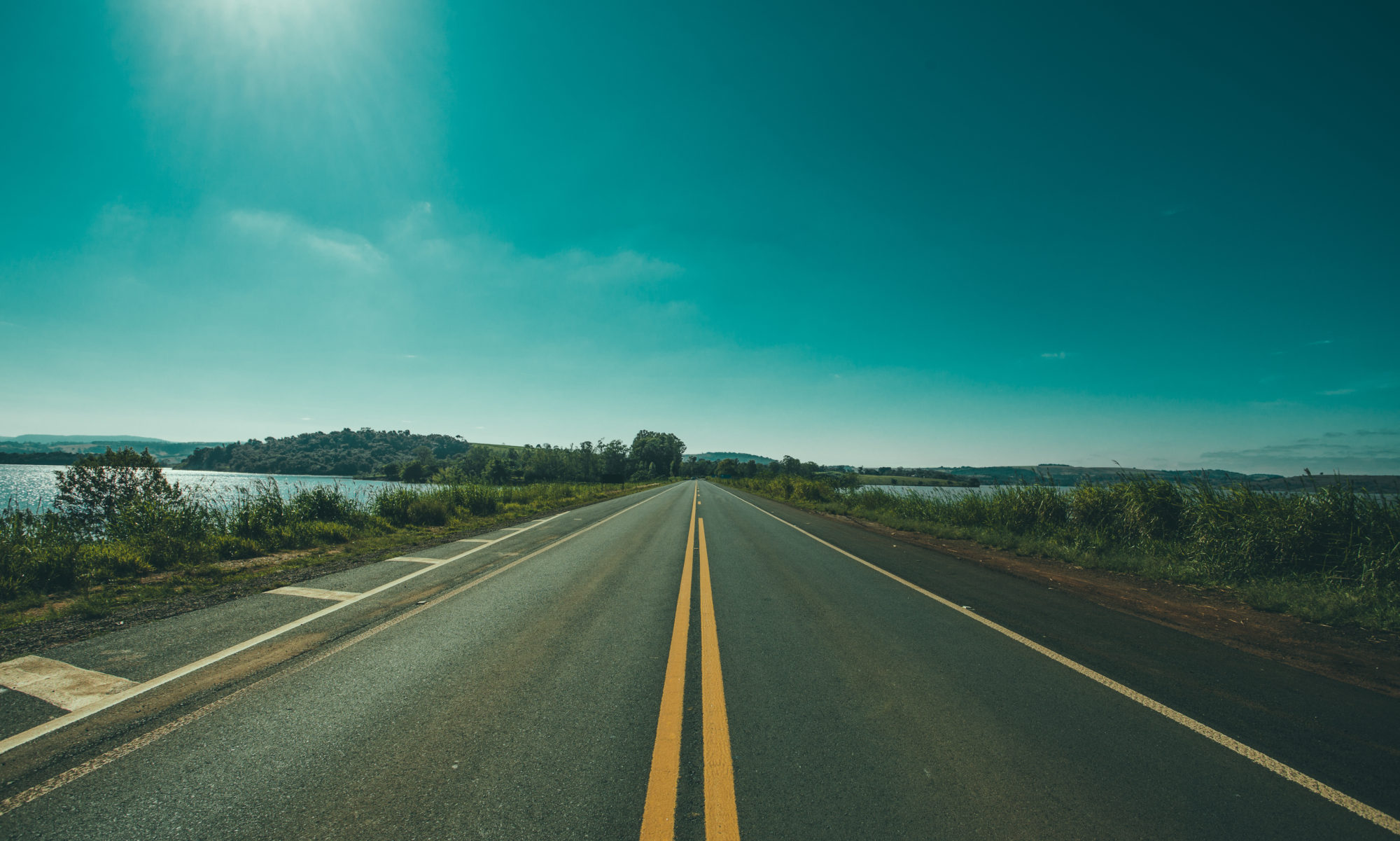
We continue driving ‘Khan’ – our third rented Toyota Land Cruiser of this trip – around the country. (Mongolia has had many noble Khans in its history.)
Next stop is the ruins of the Ongi Monastery.
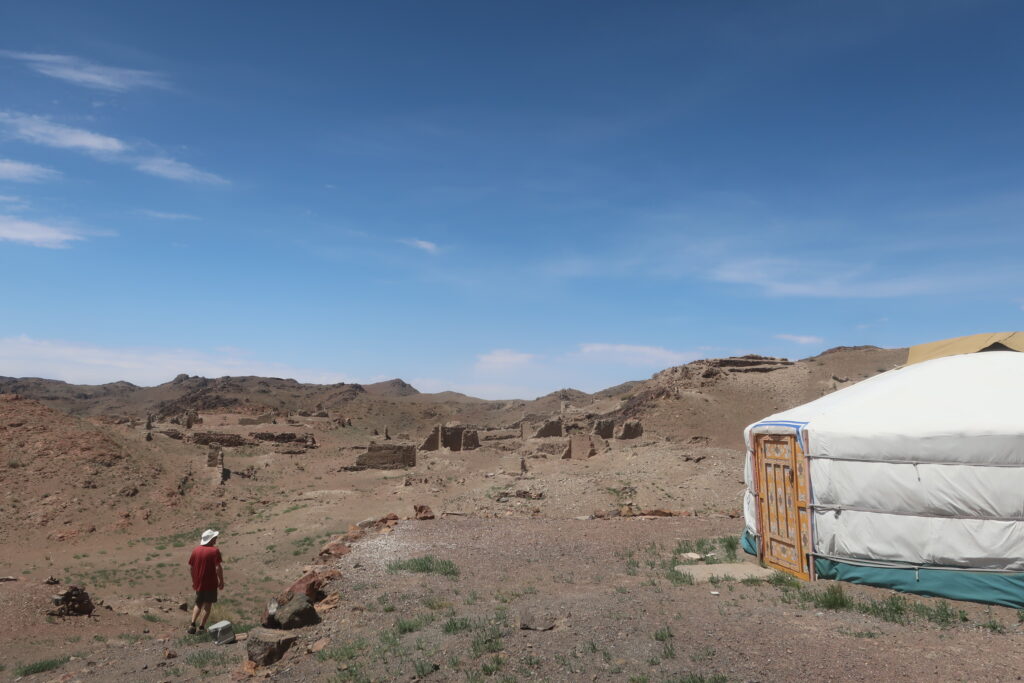
This was an extensive monastery that came to its end when the communists destroyed all of the buildings and executed 200 monks, scattering the survivors to the four winds. So it goes.
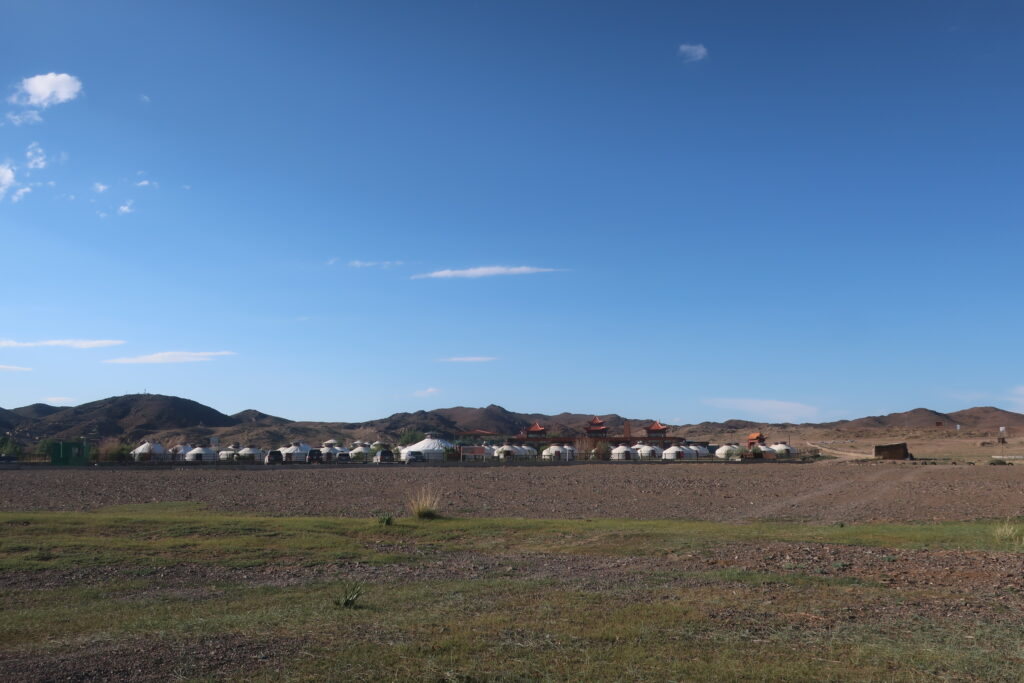
We pitch our tent by the Ongi River near the posh ‘Secrets of Ongi’ yurt camp. For a nominal fee, we can use their facilities. Maria comes back in a state of bliss after getting a massage there.
Several reasons why finding your way in Mongolia is such a challenge: it’s impossible for us to keep in mind the multisyllabic placenames of such entities as ‘Amarbayasgalant‘, or ‘Dalanzadgad‘, or’Övörkhangai‘.
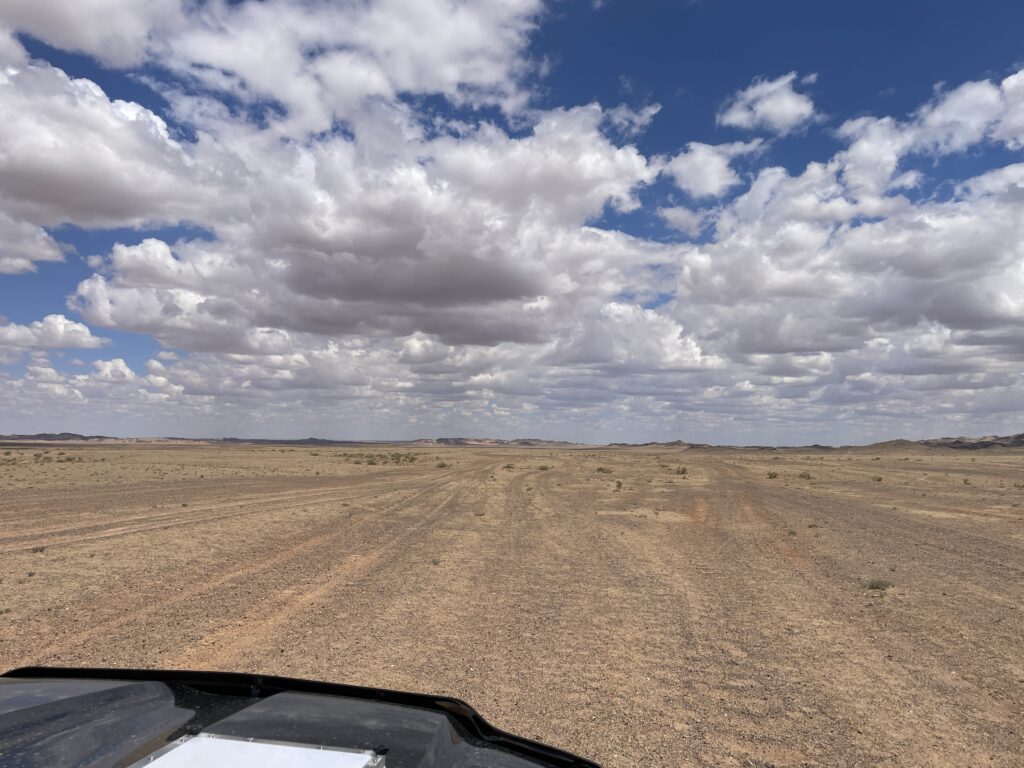
Not to mention these places can be transliterated in several different ways in English (Mongolian uses Cyrillic characters). When you attempt to load a destination into Maps.Me, it as often as not doesn’t recognize it.
Speaking of placenames, we find this signpost in Kharkhorin/Kharakorum/Harharin. Ottawa lies almost 10,000 KMs due East.
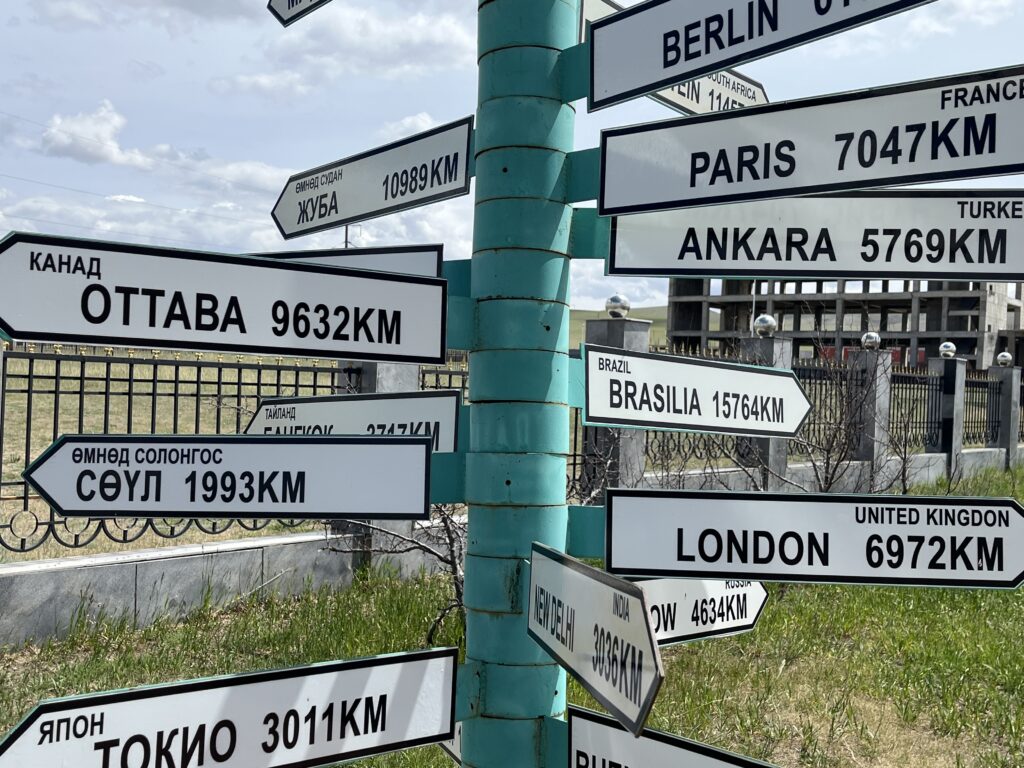
Let’s call it Karakorum. Genghis Khan proclaimed this as the new capital of his new empire. His successors built it into a grand walled city until eventually Kublai Khan moved the capital to what is now Beijing.
All very historic, but there’s virtually nothing left of the city. There is, however, an excellent museum with well-displayed artifacts.
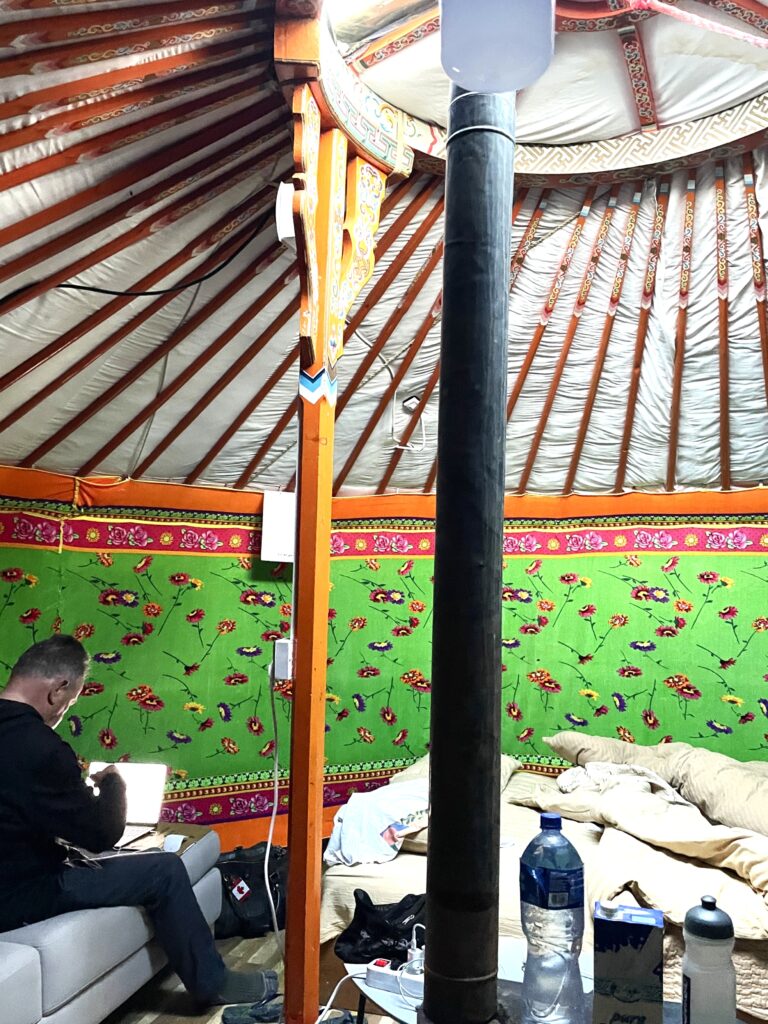
We really enjoy Karakorum and spend several days there in a yurt. One night, it goes down to -6 Celsius.
You see these shrines everywhere in Mongolia, even in the least likely places. They’re called ‘ovoos‘, a holdover from traditional shamanistic practices that are still visible throughout Mongolia.
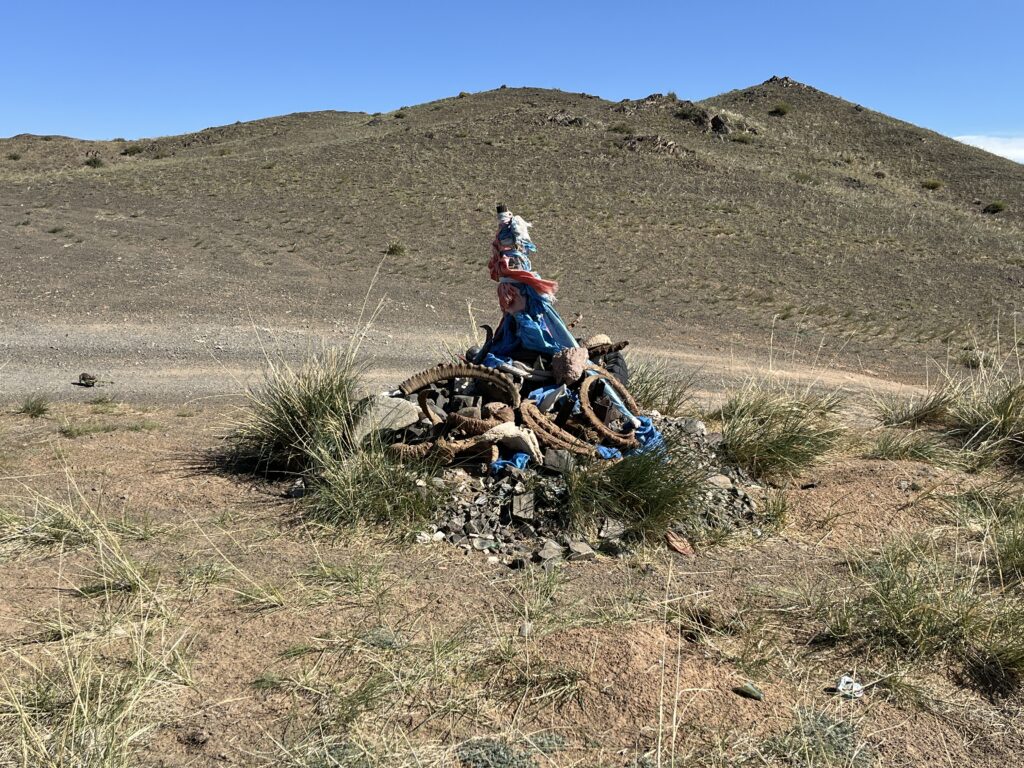
Shamanism, in case you don’t know, is an ancient, animistic belief system centered on nature reverence, ancestor worship, and healing. In the enlightened Western world, we have more up-to-date methods of healing.
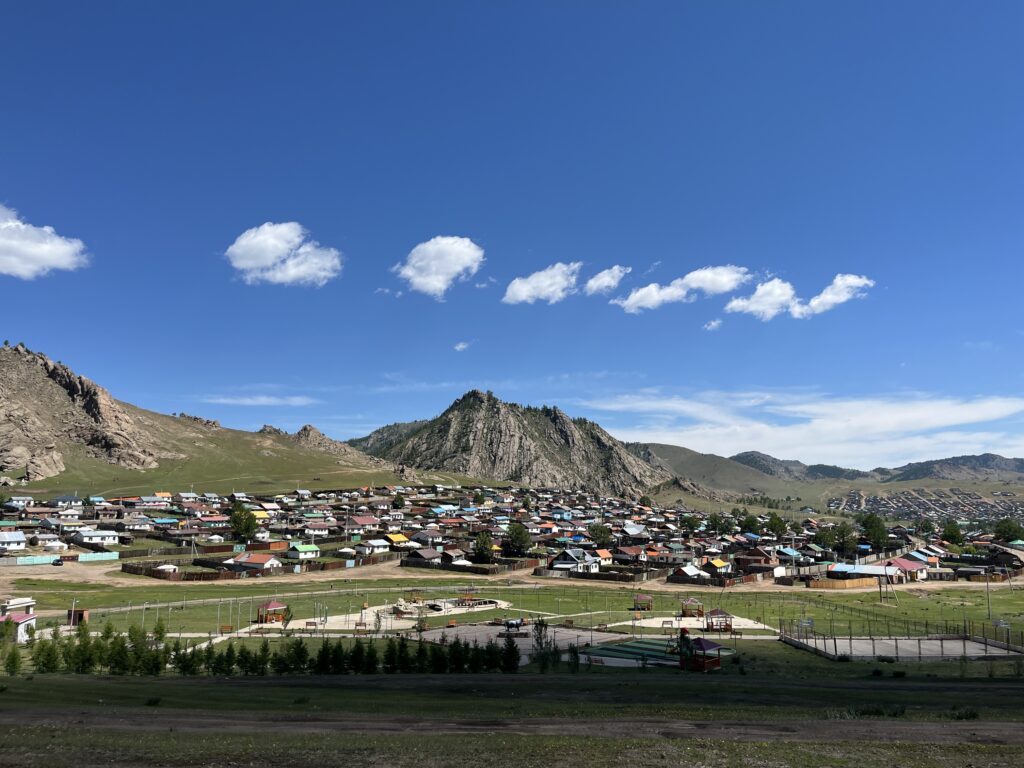
Many small towns in Mongolia have an impermanent look, as if everyone’s ready to pull up stakes at the drop pf a hat.
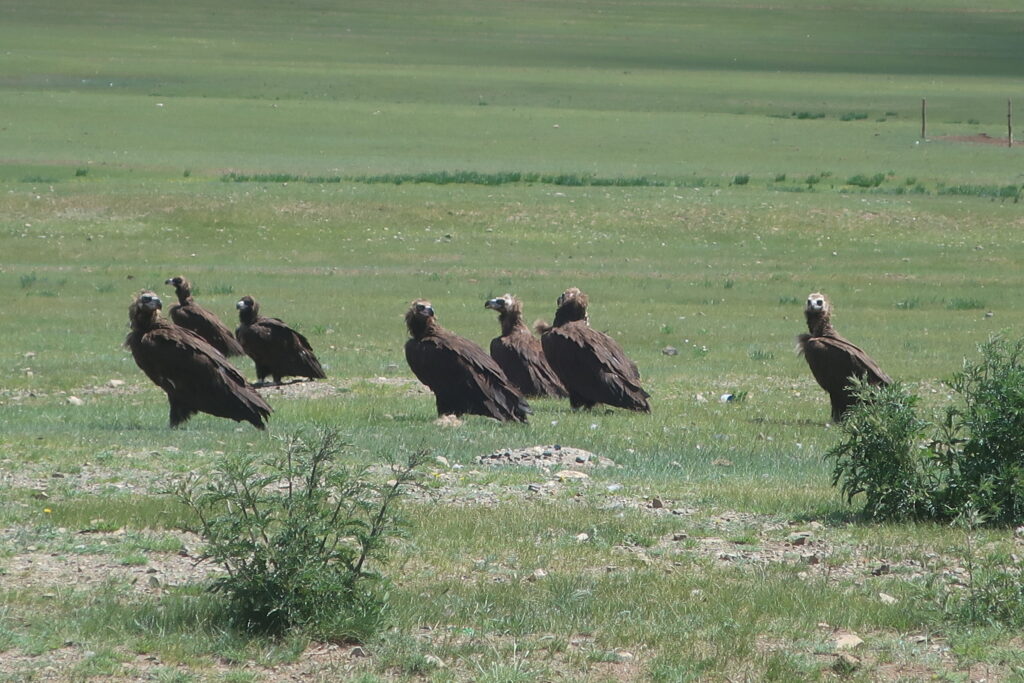
Along the way, we spy a bunch of vultures chowing down on a sheep carcass mere metres away from the road. Fun fact: a group of vultures dining together on the ground is called a ‘wake’.
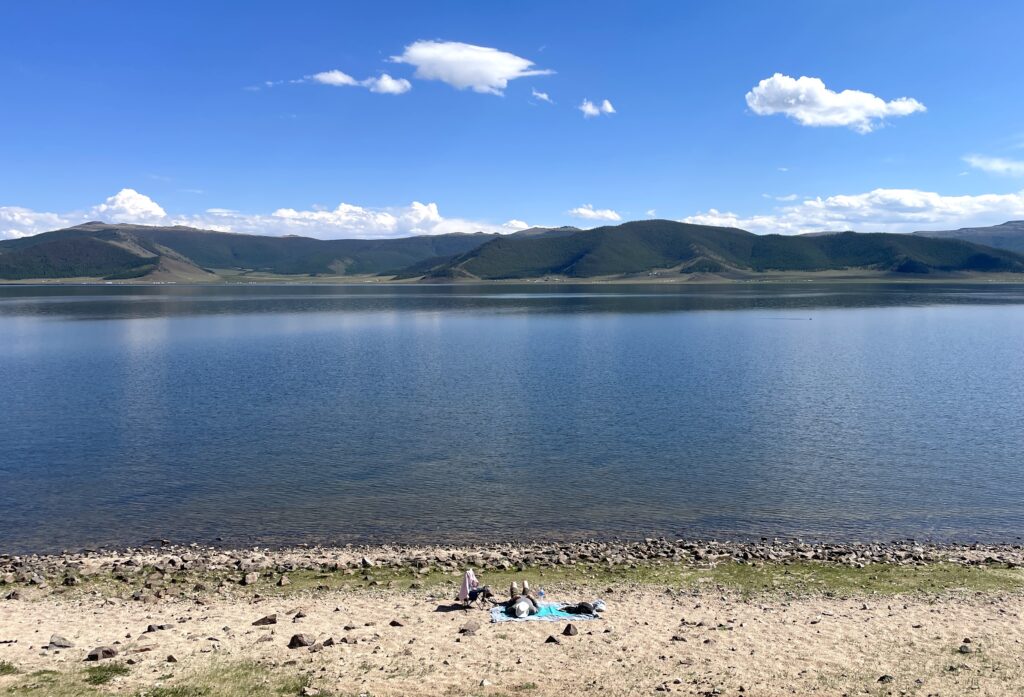
From Karakorum, we drive to Terkhiin Tsagan Lake.
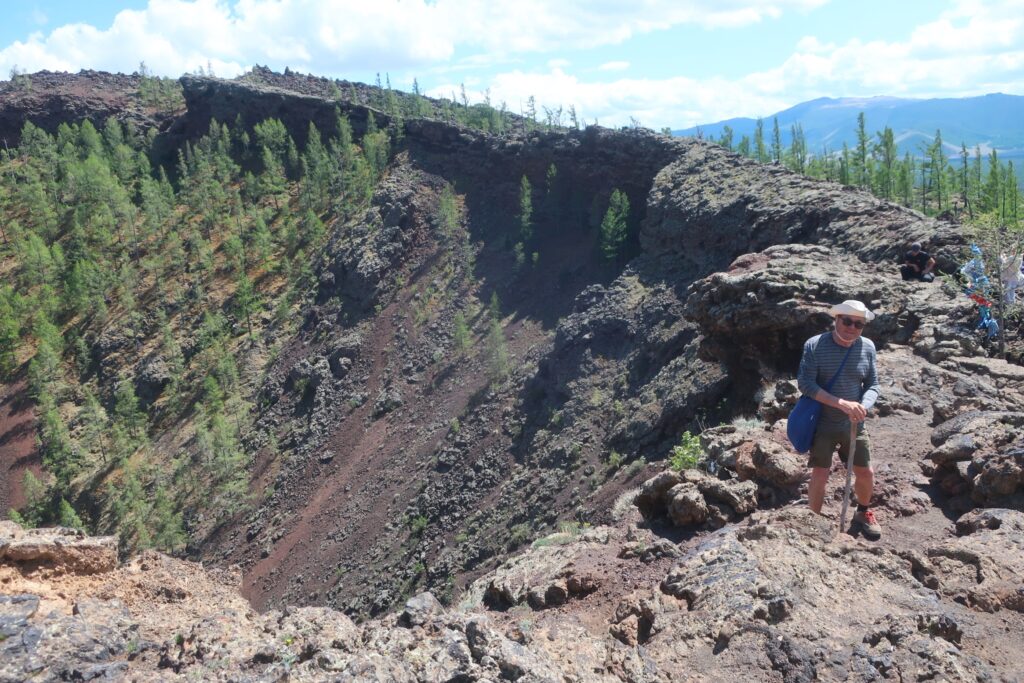
The Khorgo volcano is located near the eastern end of the lake. Now dormant, around 8,000 years ago the Khorgo cinder cone erupted.
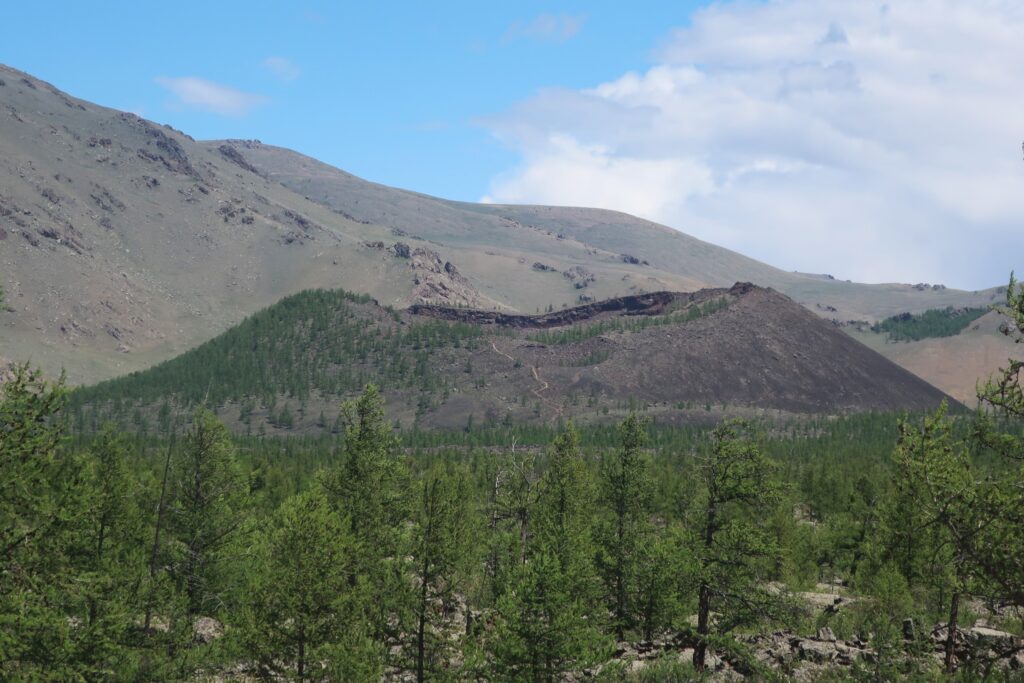
Lava flooded the valley below, forming a lava dam, which eventually created the lake.
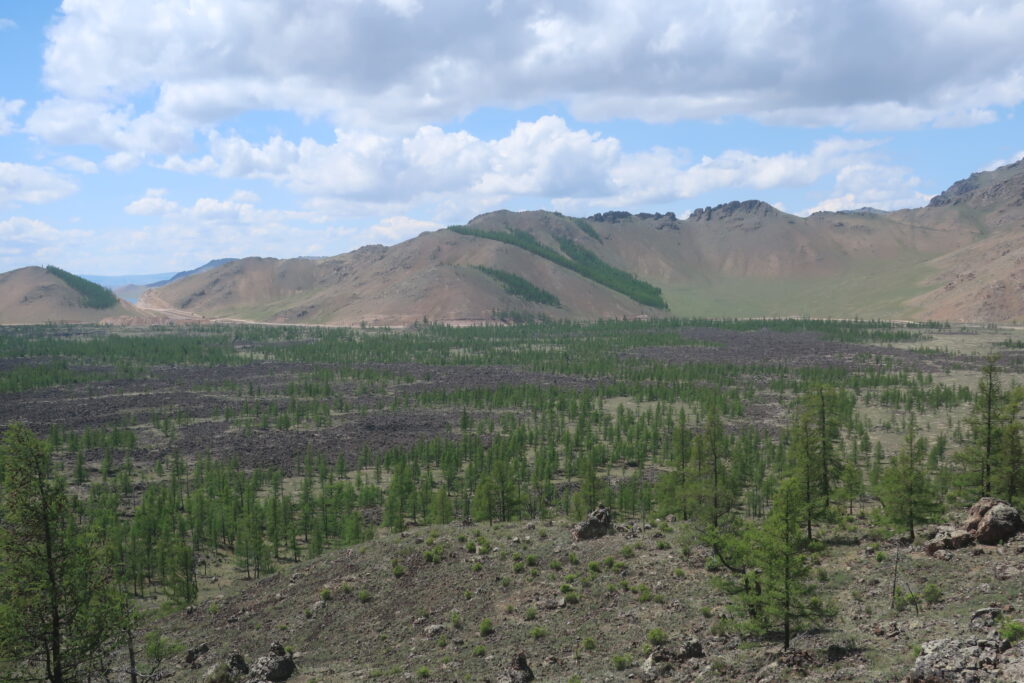
We spend a leisurely afternoon hiking to the rim and back.
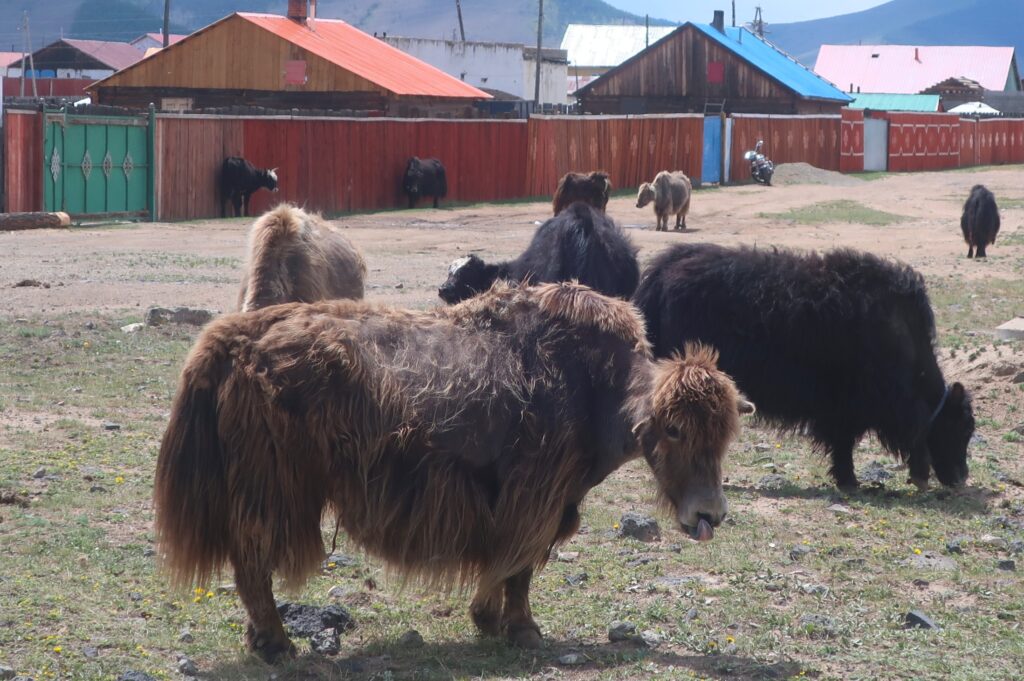
You can’t go far in Mongolia without encountering yaks. These pre-historic-looking beasts look like they just stepped out of a cave painting.
Sight or Insight of the Day
‘A Mongol without a horse is like a bird without wings’ – Mongolian proverb
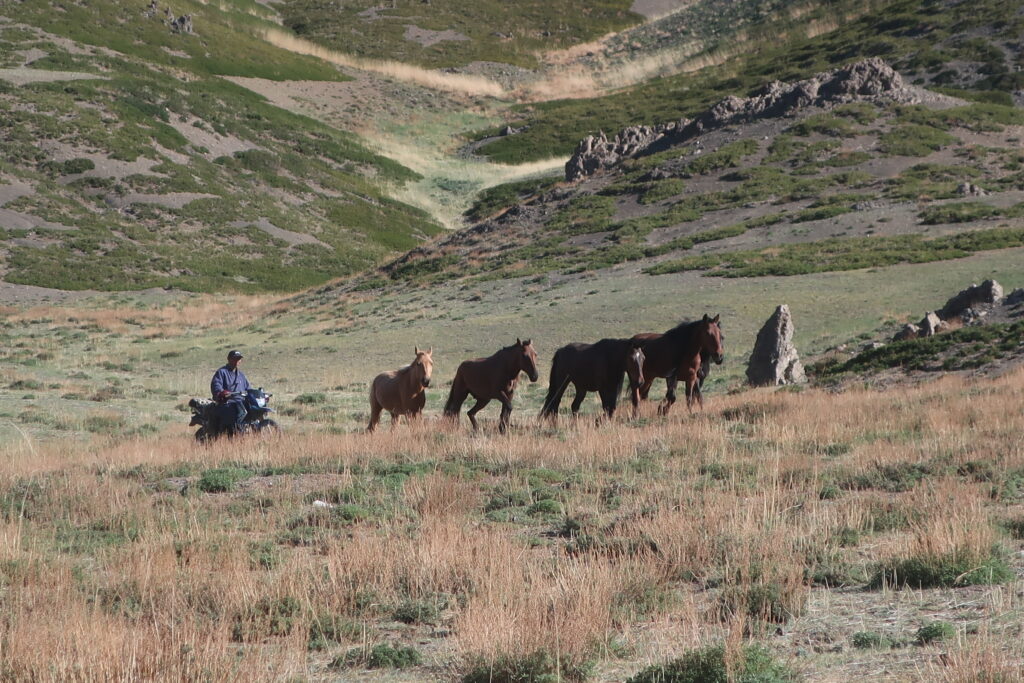
In common with other Central Asia countries, Mongols love horses. They are, in fact, central to their culture.
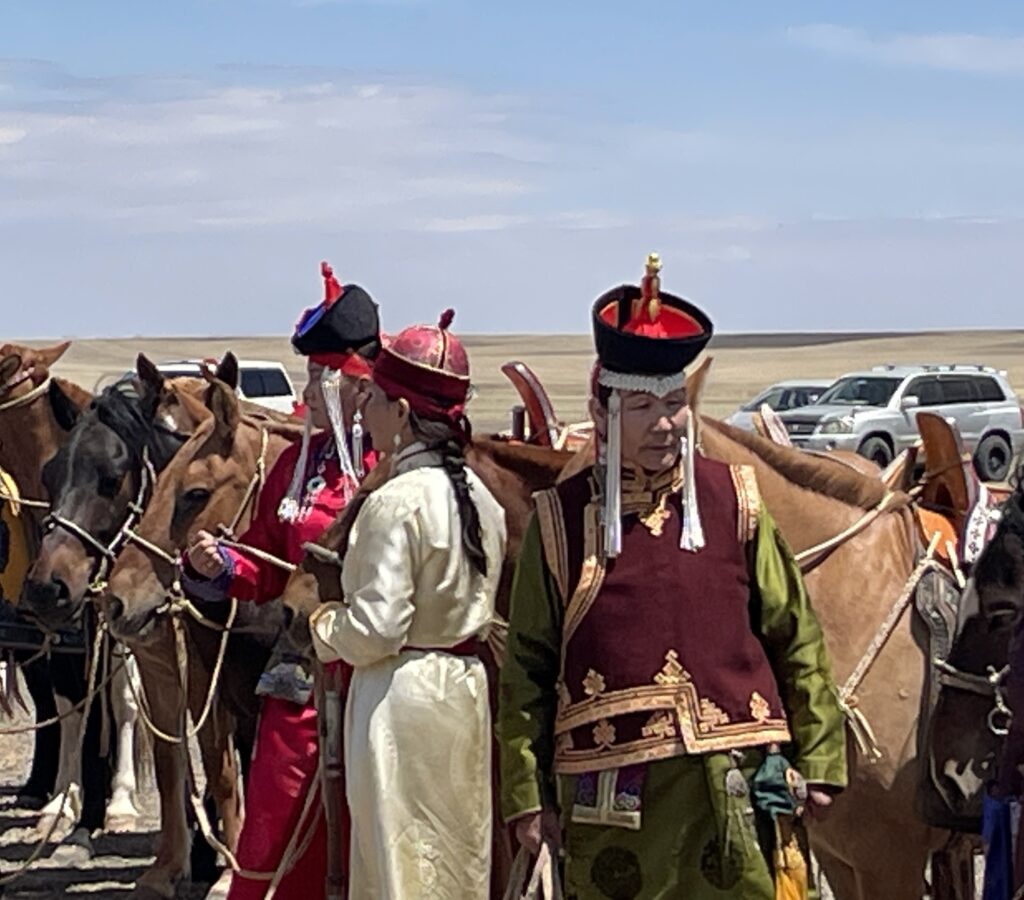
There are more horses in Mongolia than people.
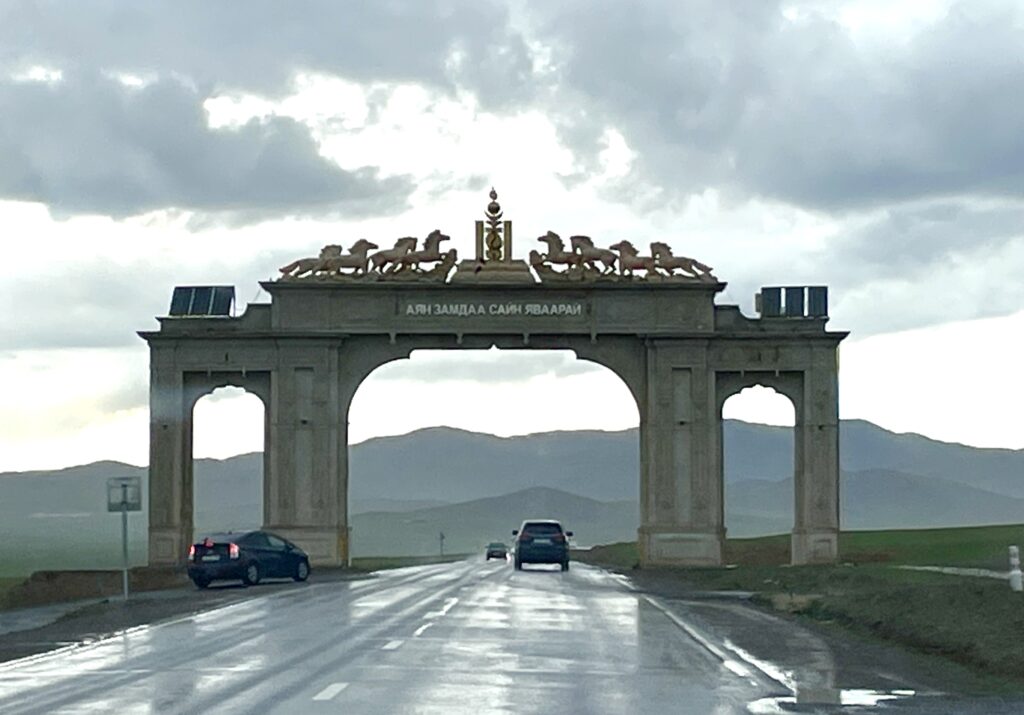
Mongolia is full of horse-y imagery, including on the gates that mark the entrance of many towns.
Just before arriving back in Ulaanbaatar, we spend our last camping night in Hustai National Park. This park is home to herds of Przewalski’s horse, a wild horse species successfully restored to its native habitat.