Across the Steppe to Aktau

A quick update: from Turkistan, we continue our train journey 1560 KMs to the city of Aktau on the Caspian Sea.

The Kazakhstan stations we’ve seen have been traditional, as opposed to the sleekly modern ones in Uzbekistan.
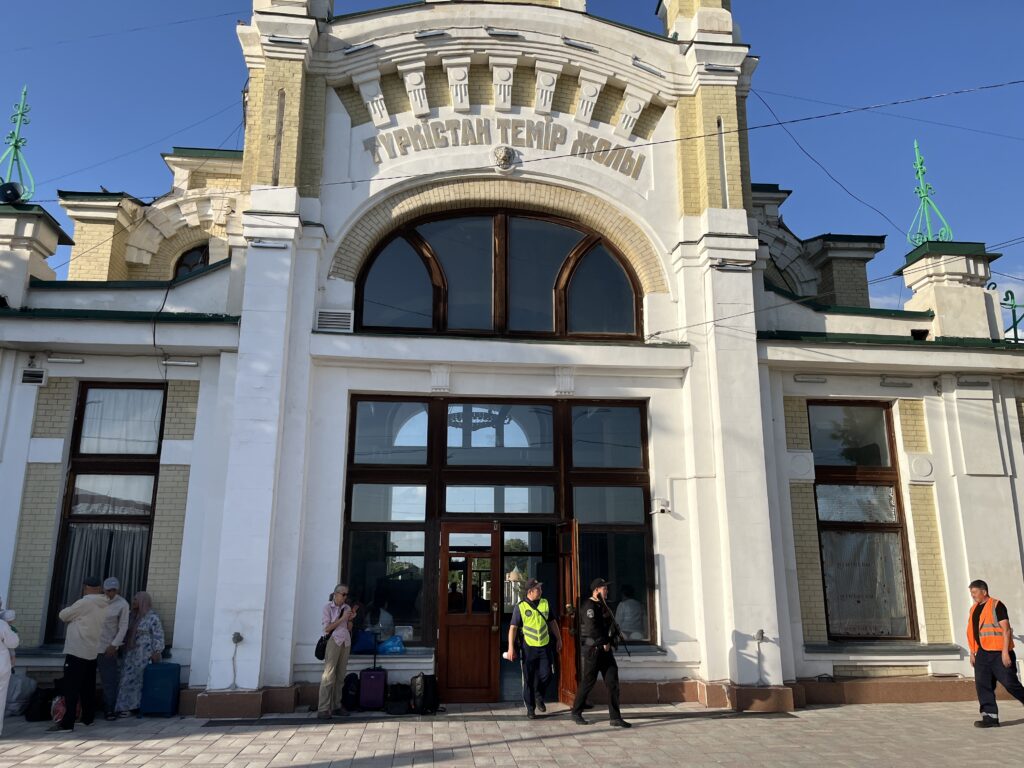
Turkistan railway station

Unusually for Kazakhstan Railways, our train is half an hour late. But hey, we’re going to spend 36 hours on board, so what’s a mere half-hour?
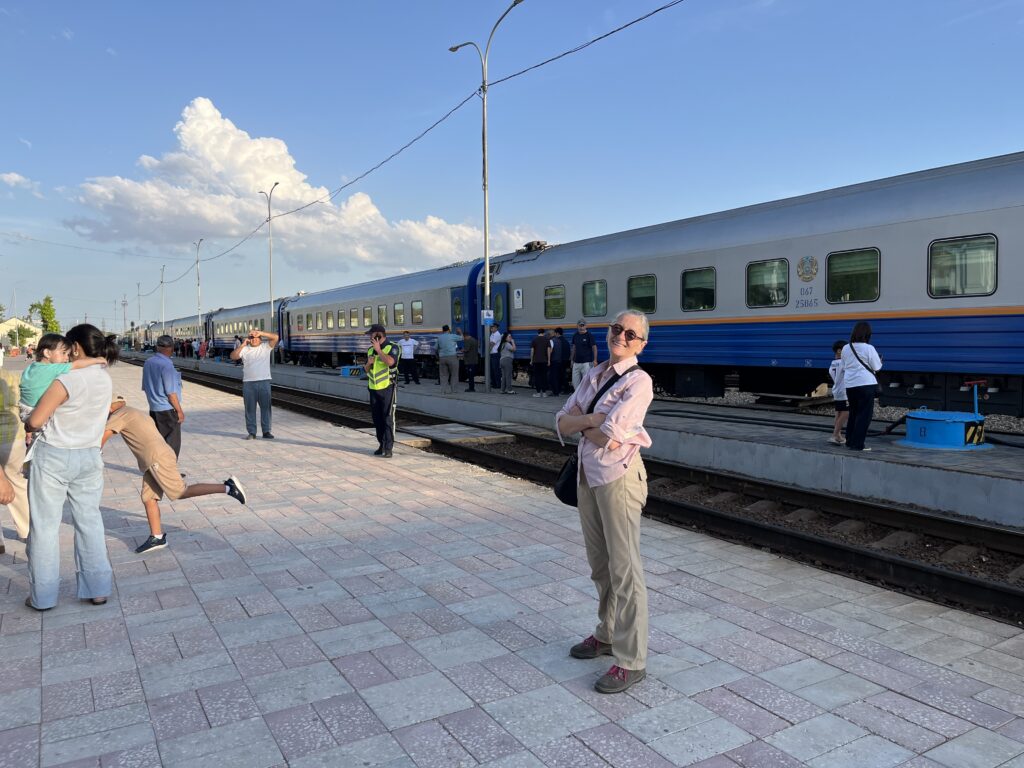
Waiting for the train

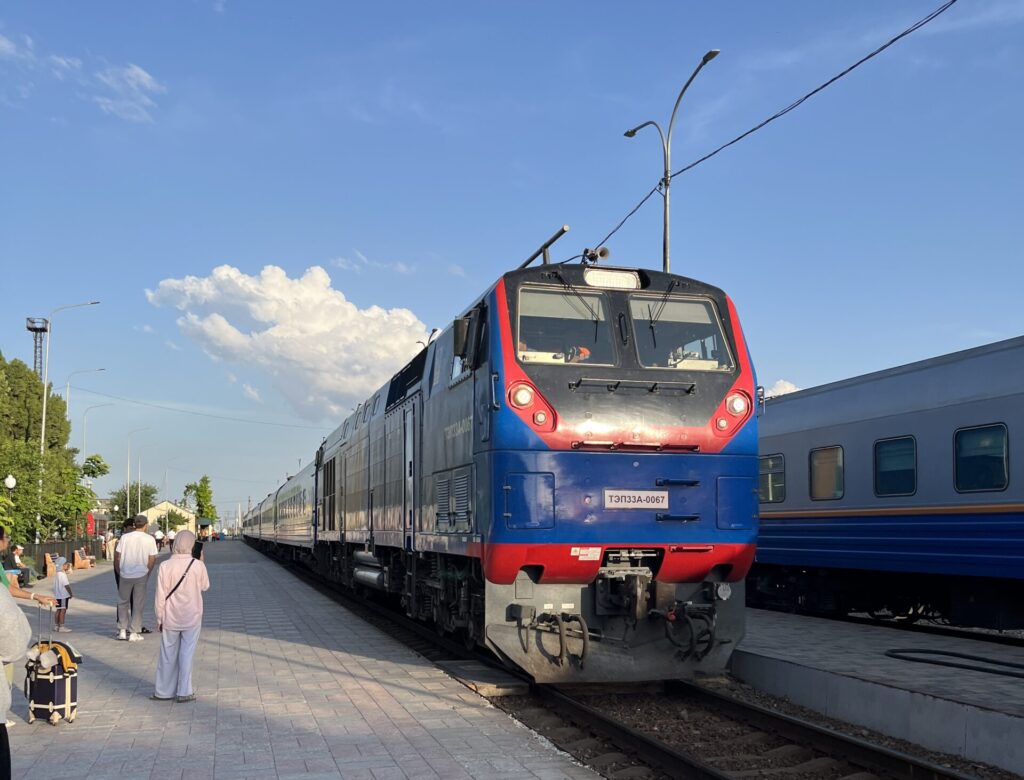
Finally, our train pulls into the station.
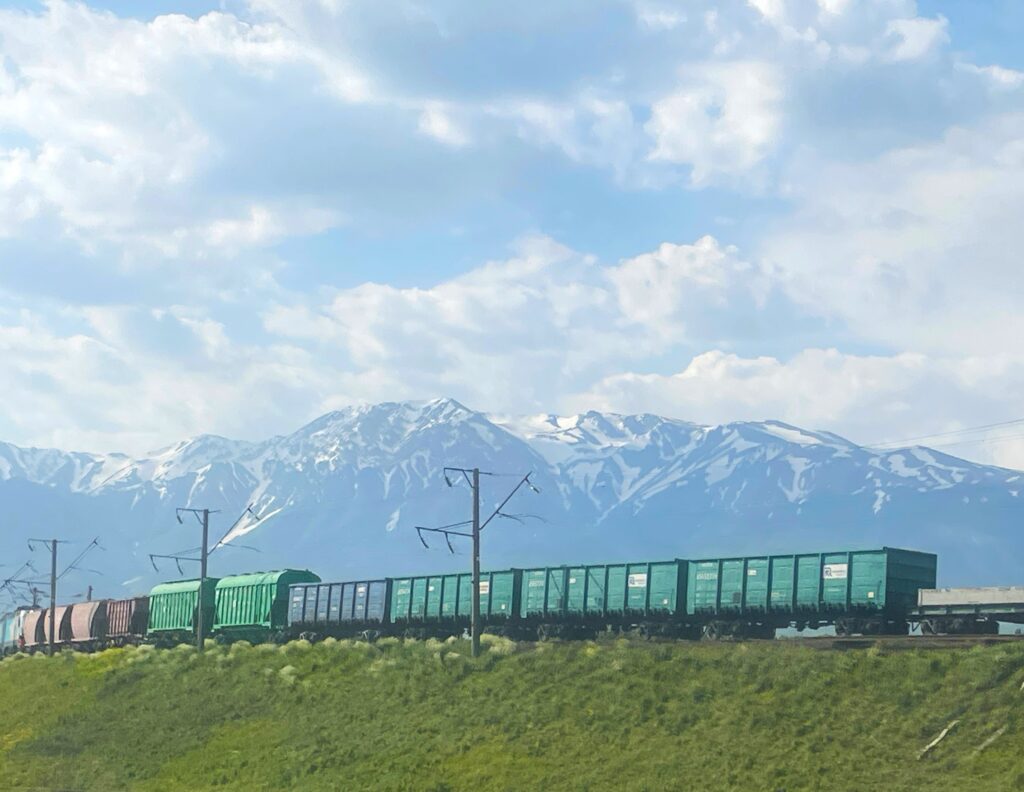
It’s 1560 KMs of almost unrelieved flatness. After spending many weeks in the high mountains, this takes some getting used to.

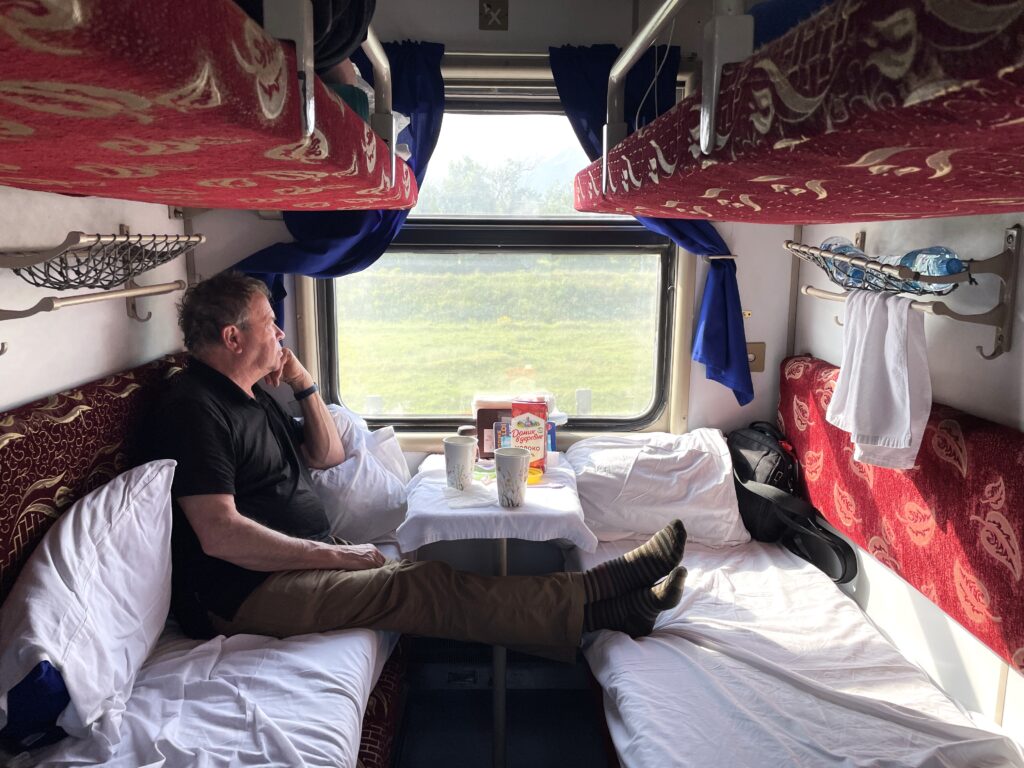
For a day and two nights, we read, chat, sleep, or watch the countryside roll by. It’s very relaxing – for us, that is. Some people would find it boring.
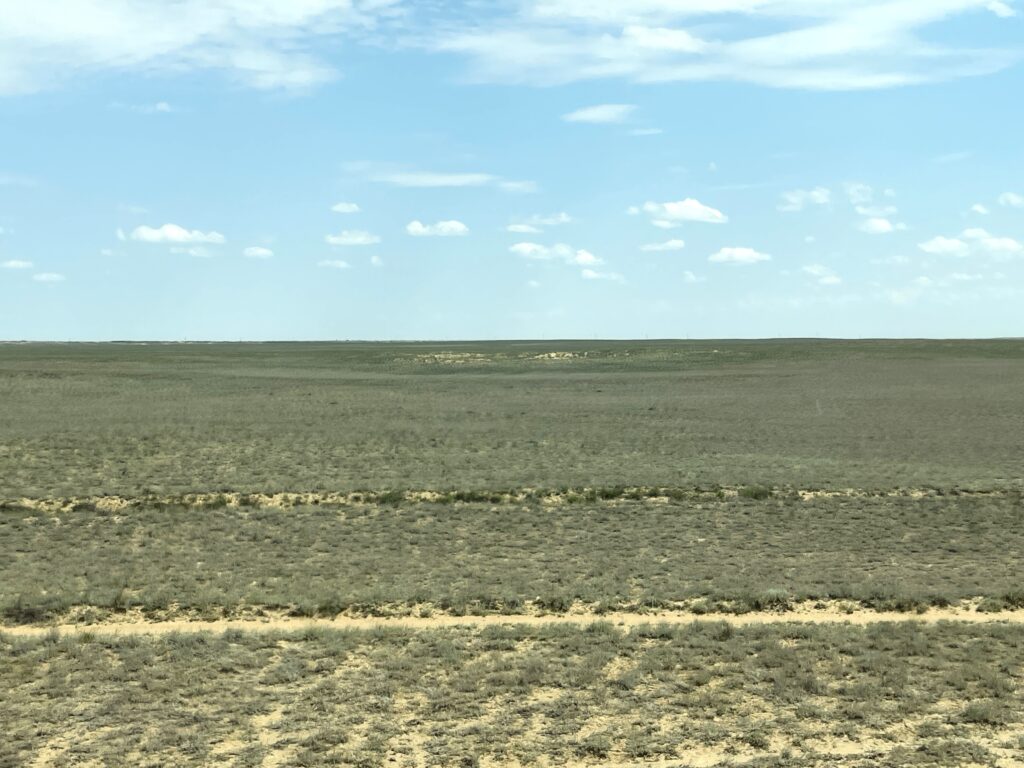
Flat as a pool table

We see isolated small towns and groups of camels. (The one-humped kind.)

Aktau is as far as you can go before the getting wet in the Caspian Sea. It has beaches, but they aren’t really inviting. At least around Aktau, there’s lots of industry.
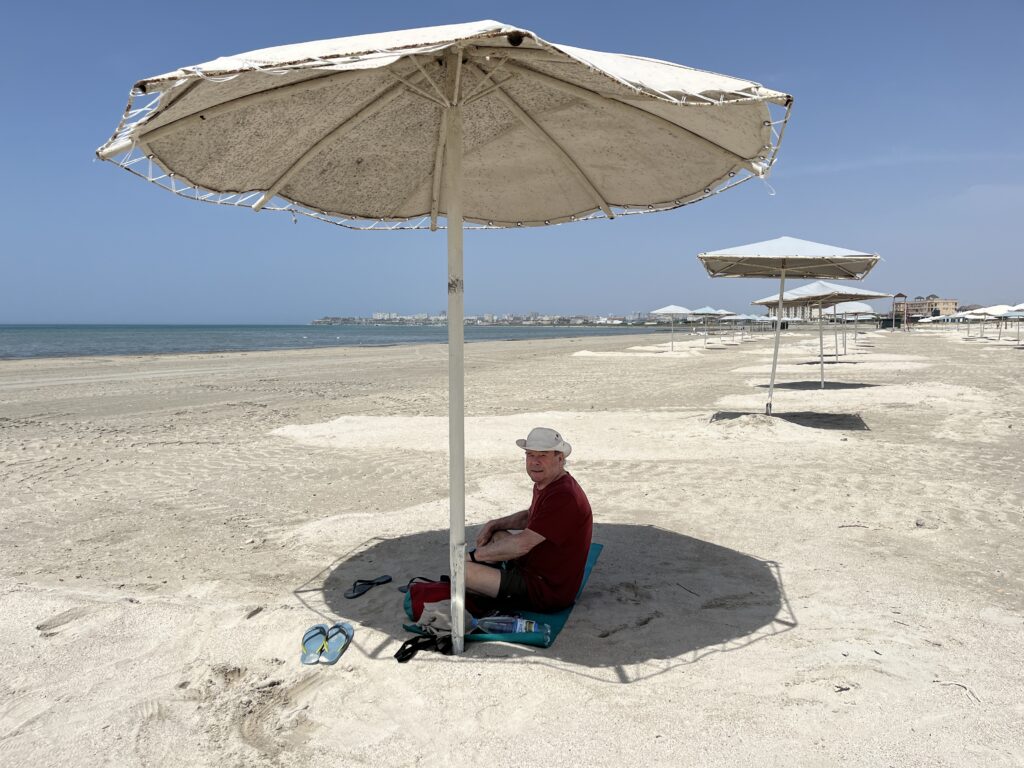
Sun-baked gringo

Even Maria barely dips her toes in. This doesn’t stop the locals from gathering on a Saturday afternoon.
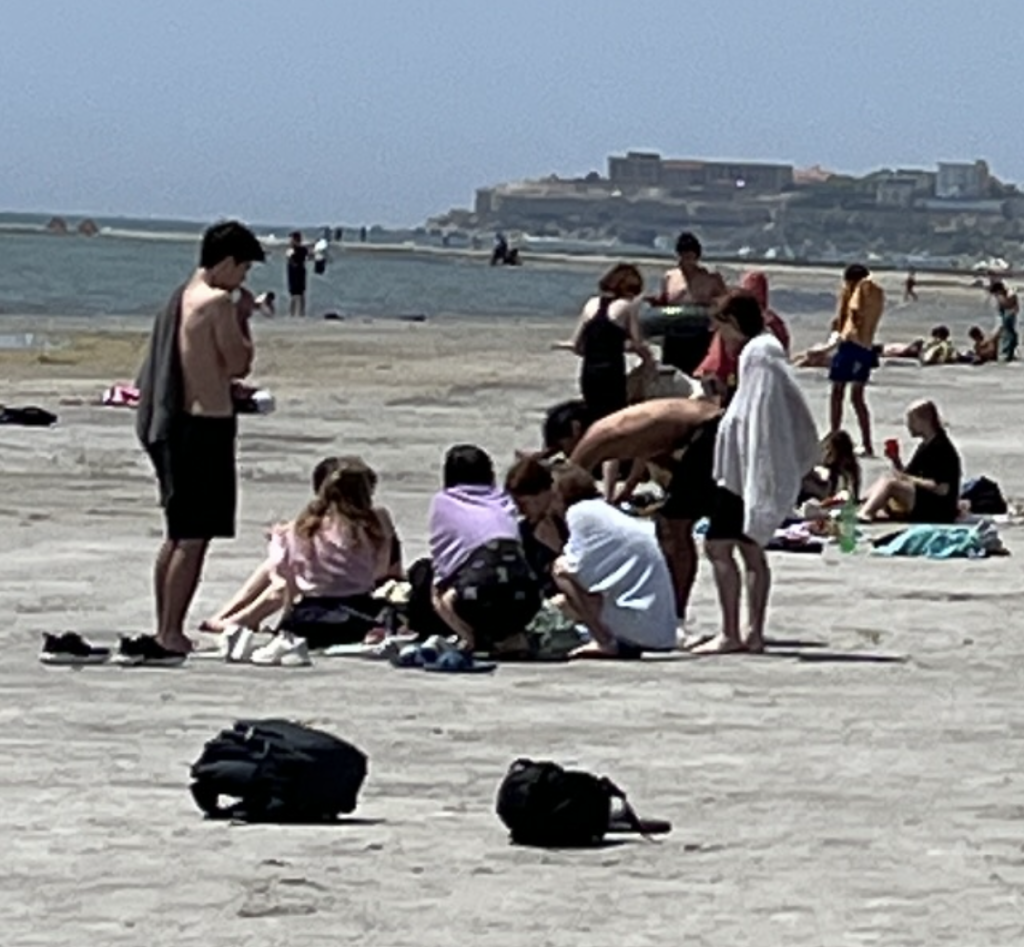
Aktau beach

We see the Aktau coat of arms on all kinds of city furniture, like these park benches. We recognize the salute to the oil & gas industry, the local uranium mining industry, and the shipping industry. Not sure what the bottom right corner represents – looks like a garden gnome with his hat pulled low.
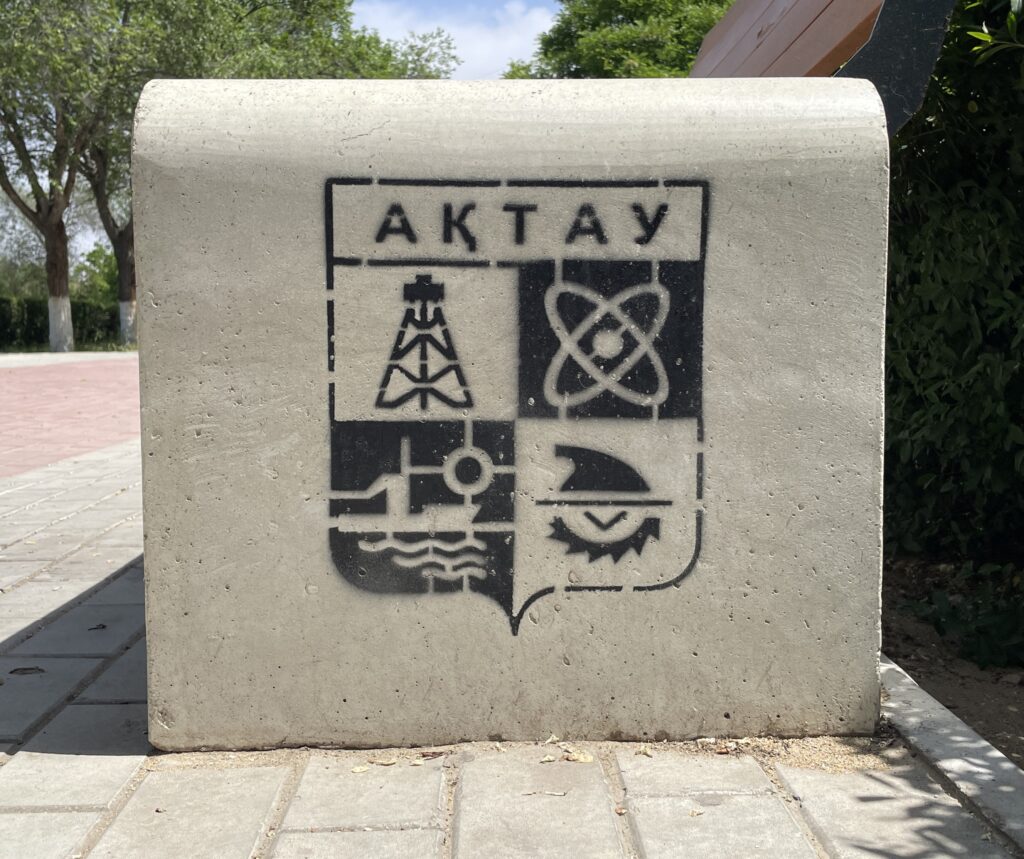
Aktau proud

Speaking of city furniture, another mounted fighter jet looms over this particular park.
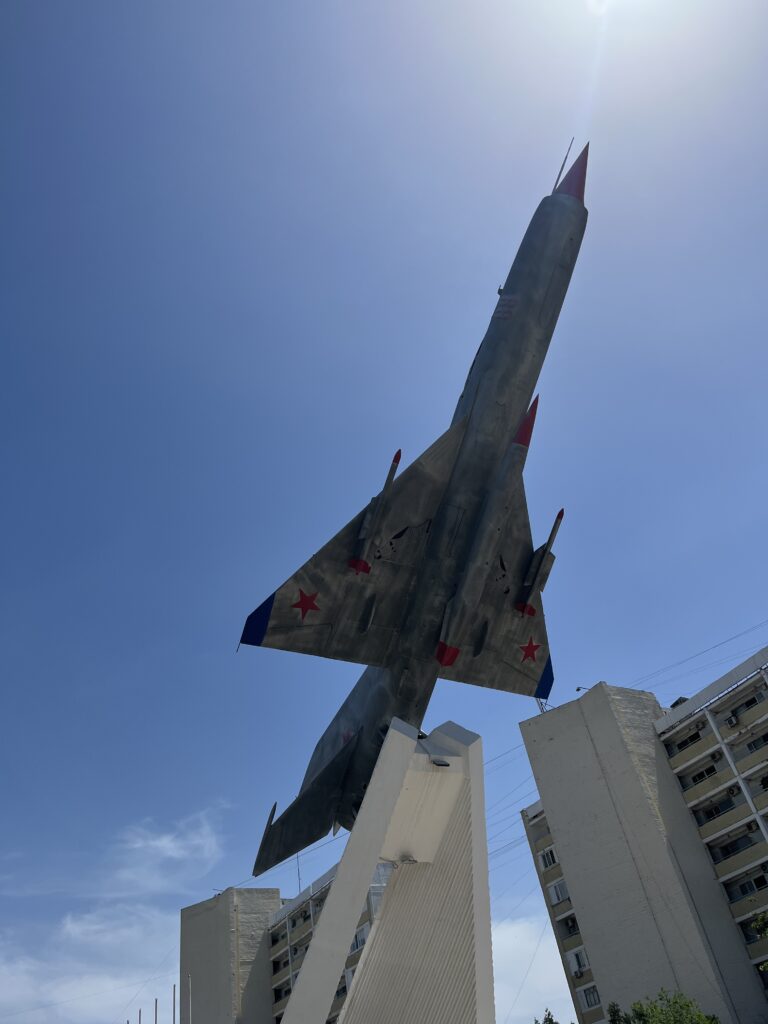
NATO reporting name: Fishbed

It’s a MiG-21. Apparently the USSR produced over 10,000 of these.

These fish probably come fresh from the Caspian. We see them at the Sary Bazaar.
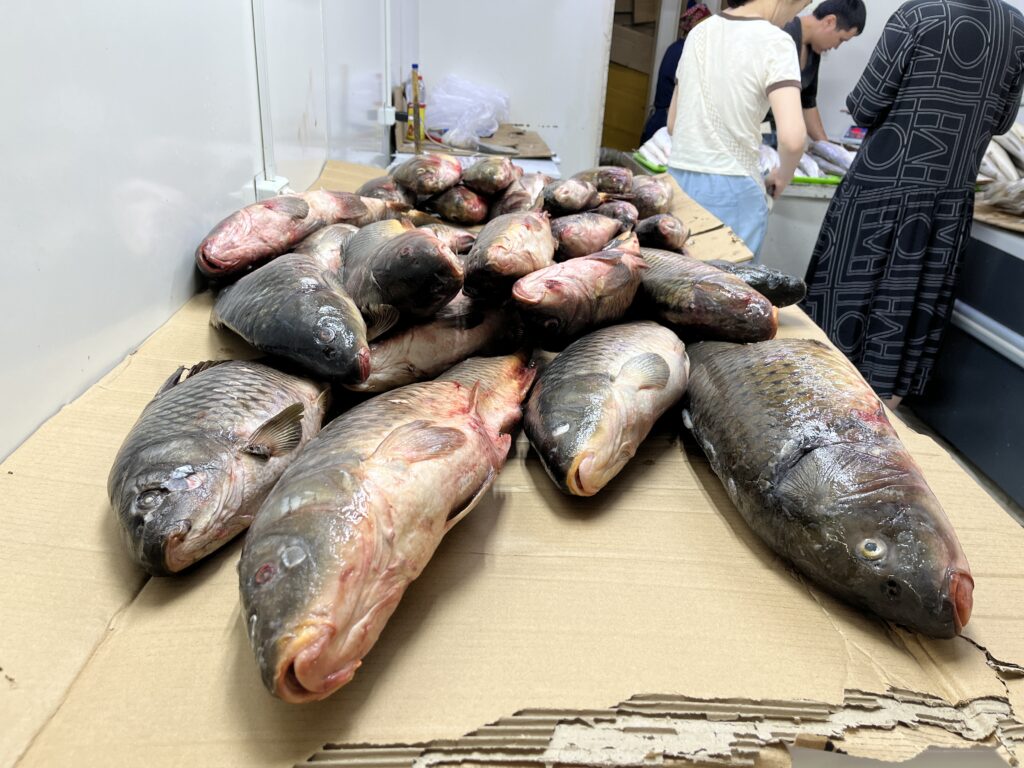
Carp-e Diem

…which has all kinds of stuff. Like these musical instruments. The dombra is the ‘national instrument of Kazakhstan’.
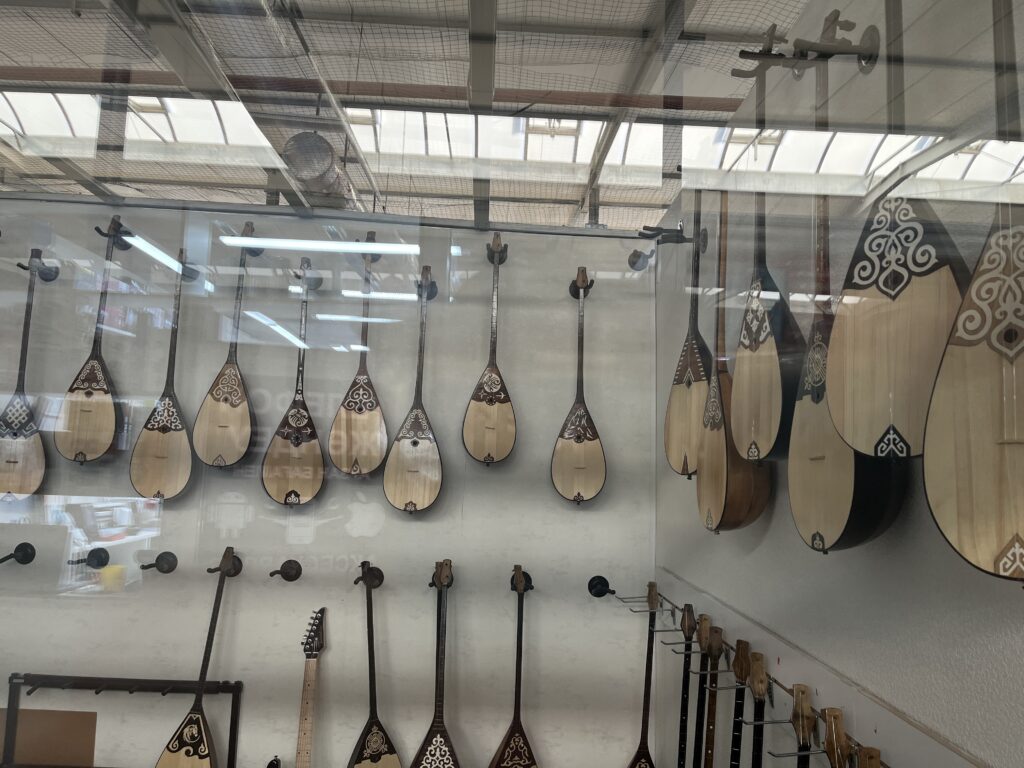
Things going pear-shaped

(I still haven’t found a camel bell, by the way.)

Some things we notice in Aktau – English here is practically non-existent – which results in a lot of amusing lively dumbshow and fumbling for Google Translate on the phone.

Also, there are a lot of Georgians here. (From Tblisi, not Atlanta.) Not sure why, besides the poor state of the Georgian economy since they decided to go back to being Russia’s sidekick.

One nice feature of Aktau is the Skal’naya Tropa, a scenic boardwalk by the sea.
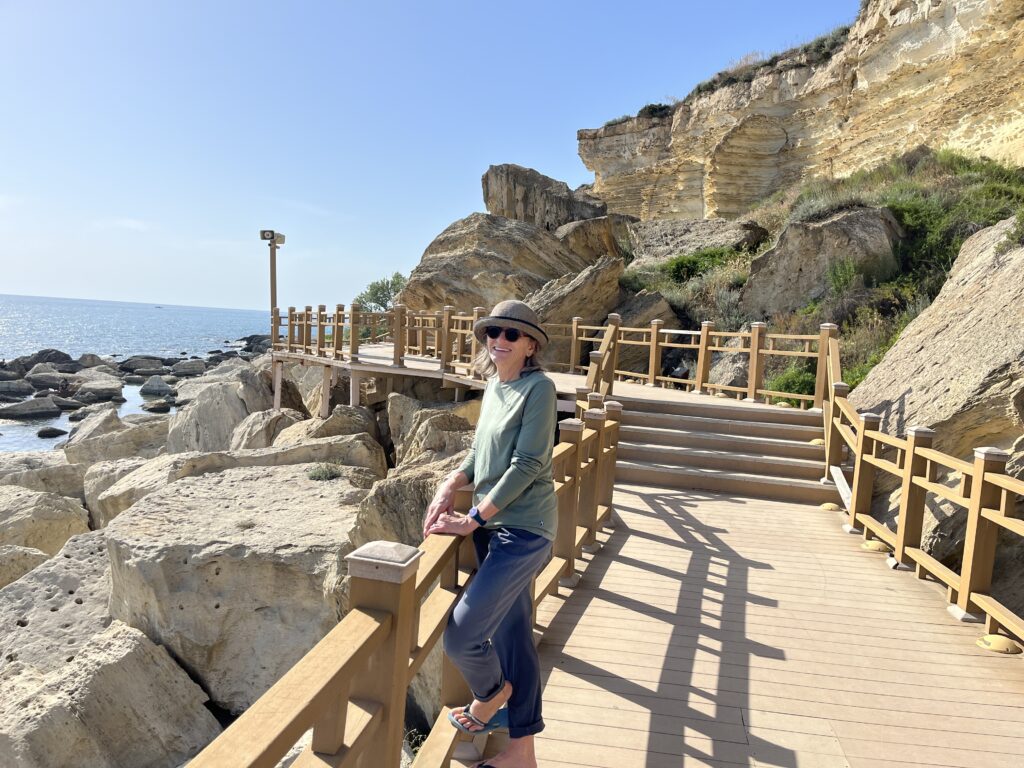
Treading the boards

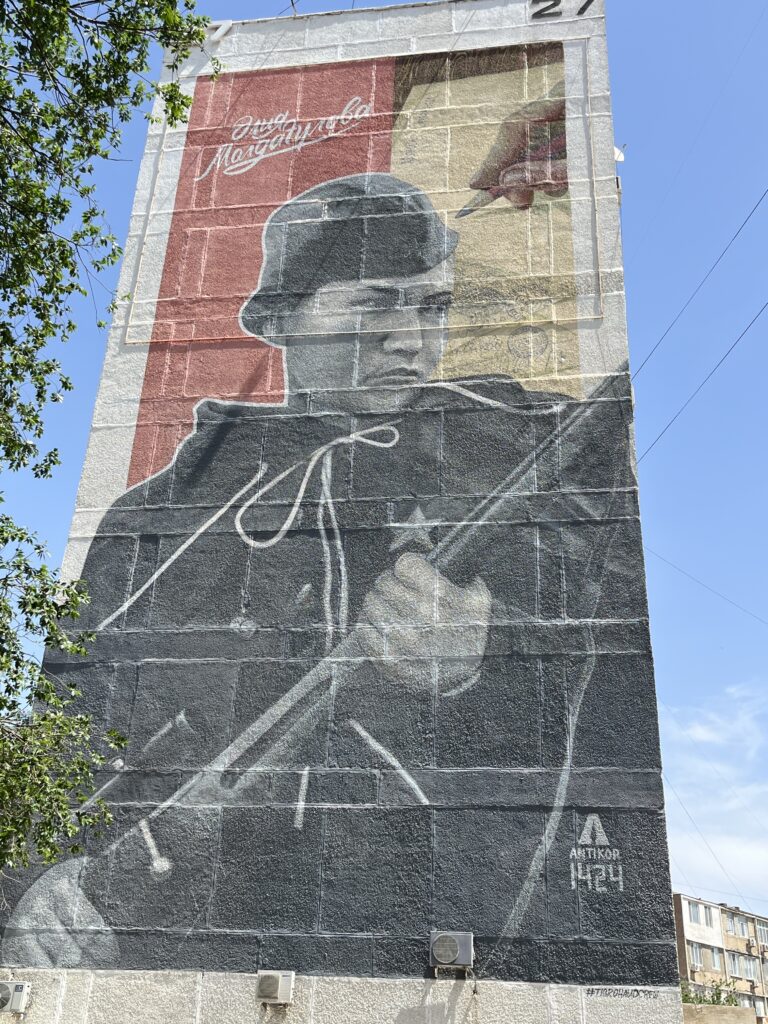
Like many cities here, Aktau boasts some badass murals from the Soviet times. One housing estate has a matching set of three.
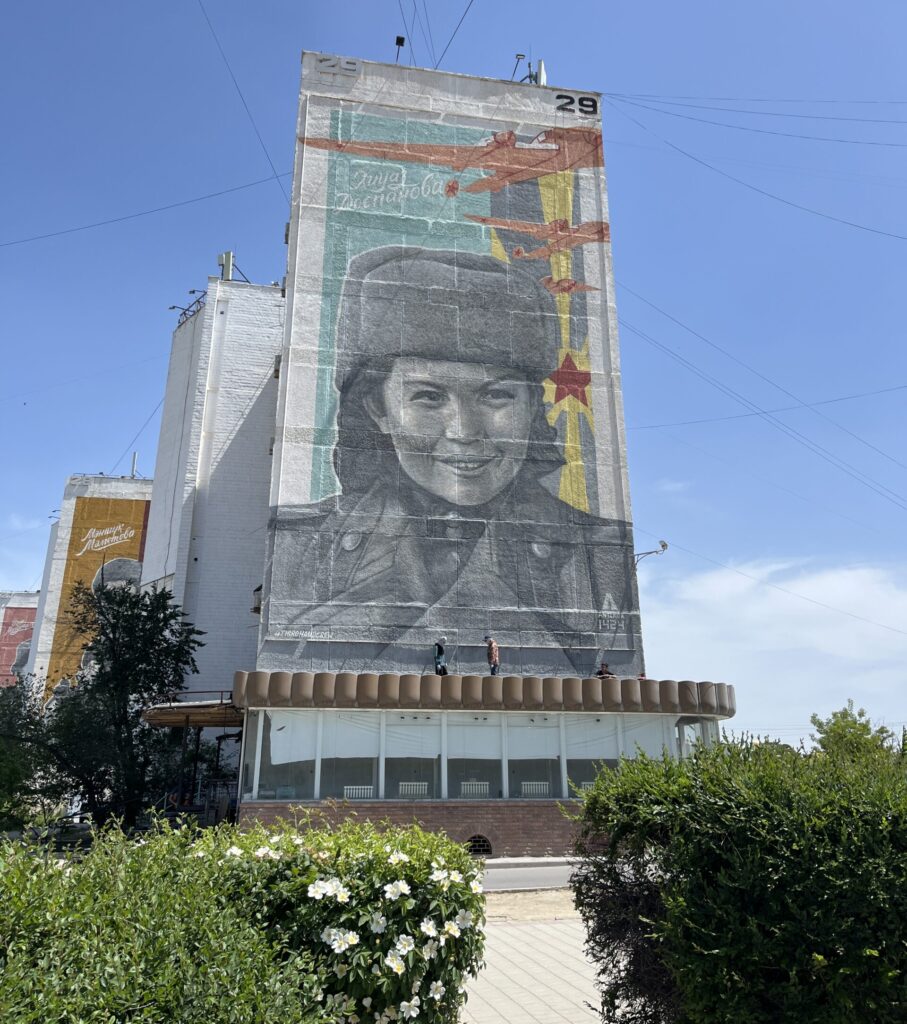
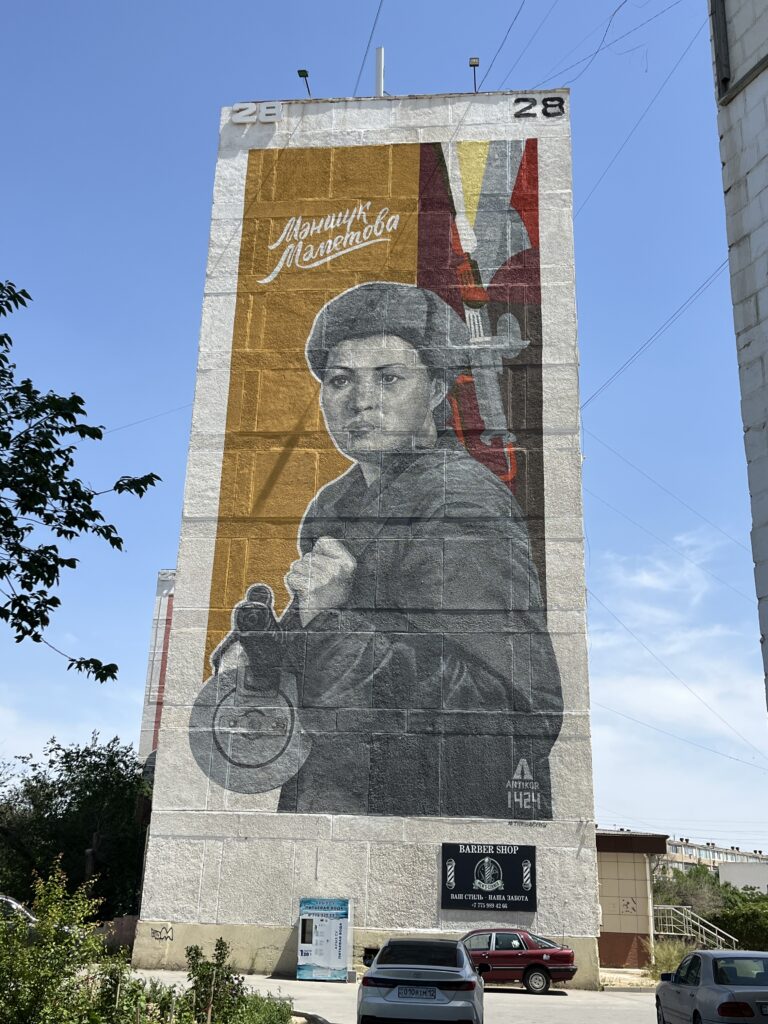
With the Soviet Union forever and never otherwise!
Long live the Soviet Union – the greatest guarantee of world peace
‘Proletarians of all countries, unite!’

(This text isn’t actually on the murals – I just grabbed it at random from a search of trite Soviet-era slogans.)

Sight or Insight of the Day

Completely by accident, we check into the same hotel in Aktau as Norwegian writer Erika Fatland did in her book Sovietistan.
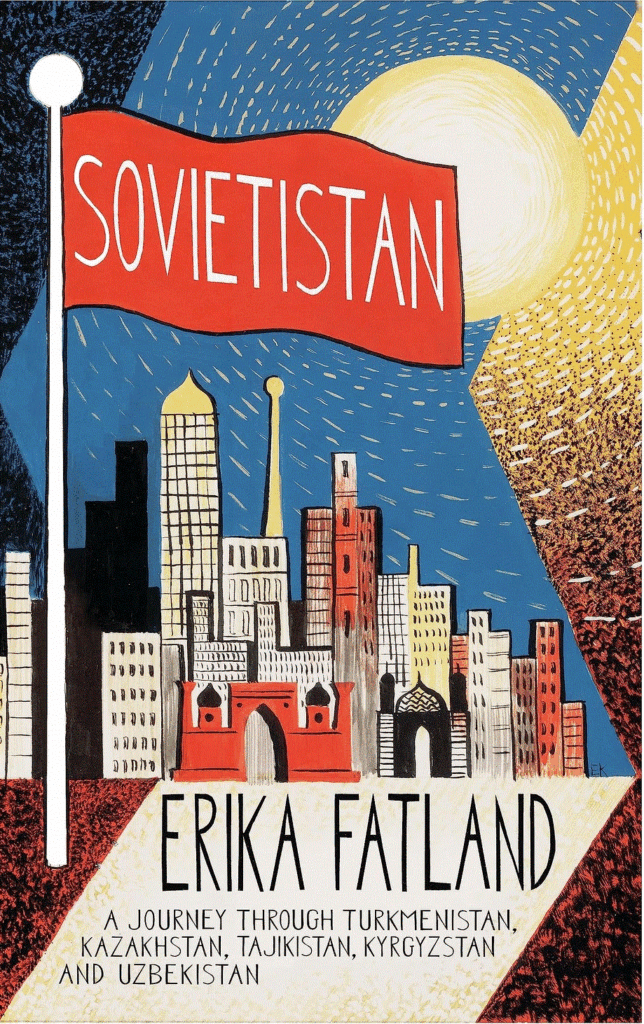
This was the first book we looked at when thinking about this trip. We’re happy to report that even though the book came out in 2018, many things in the area have changed for the better since that time.
From Tajikistan to Kazakhstan

We fly from Dushanbe to Almaty, the former capital and main city of Kazakhstan.

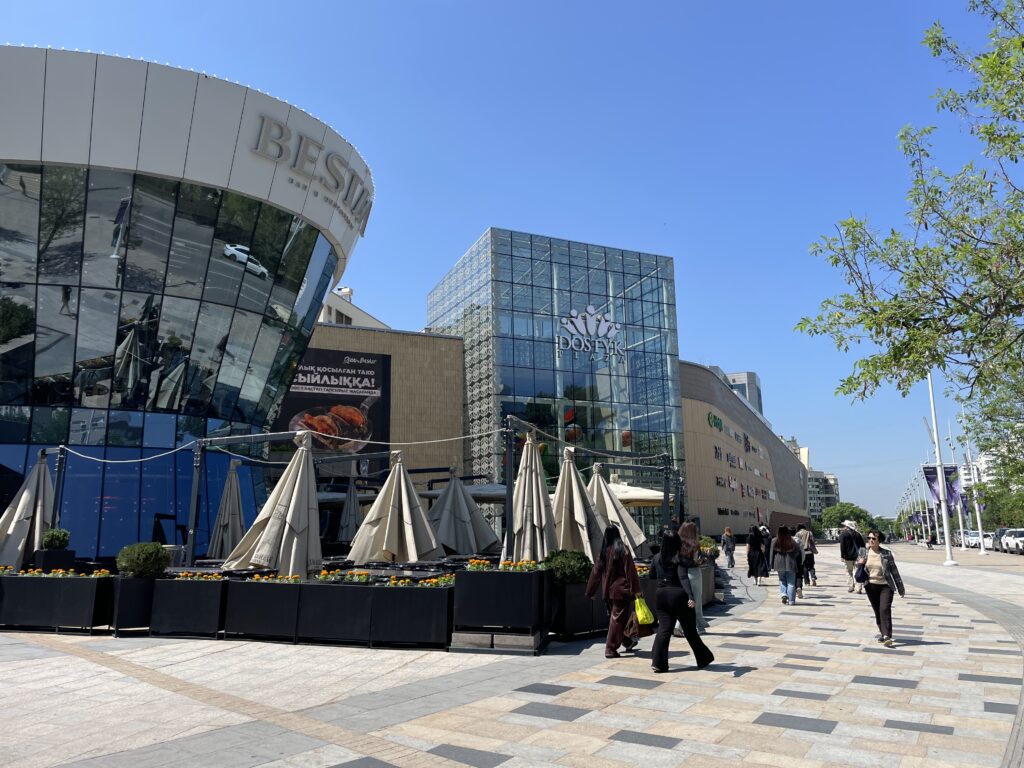
Kazakhstan is supposed to be the most prosperous of the ‘stans’: it’s resource-rich. (Tajikistan, where we have just come from, is the least prosperous.) Almaty is certainly a modern, thriving place.

Dostyk Plaza, across the street from our lodgings

At first glance, KZ also looks like the most secular of the ‘stans’ we have visited so far. The vast majority of people are ‘normal-looking’, which admittedly to us means ‘non-religious’.

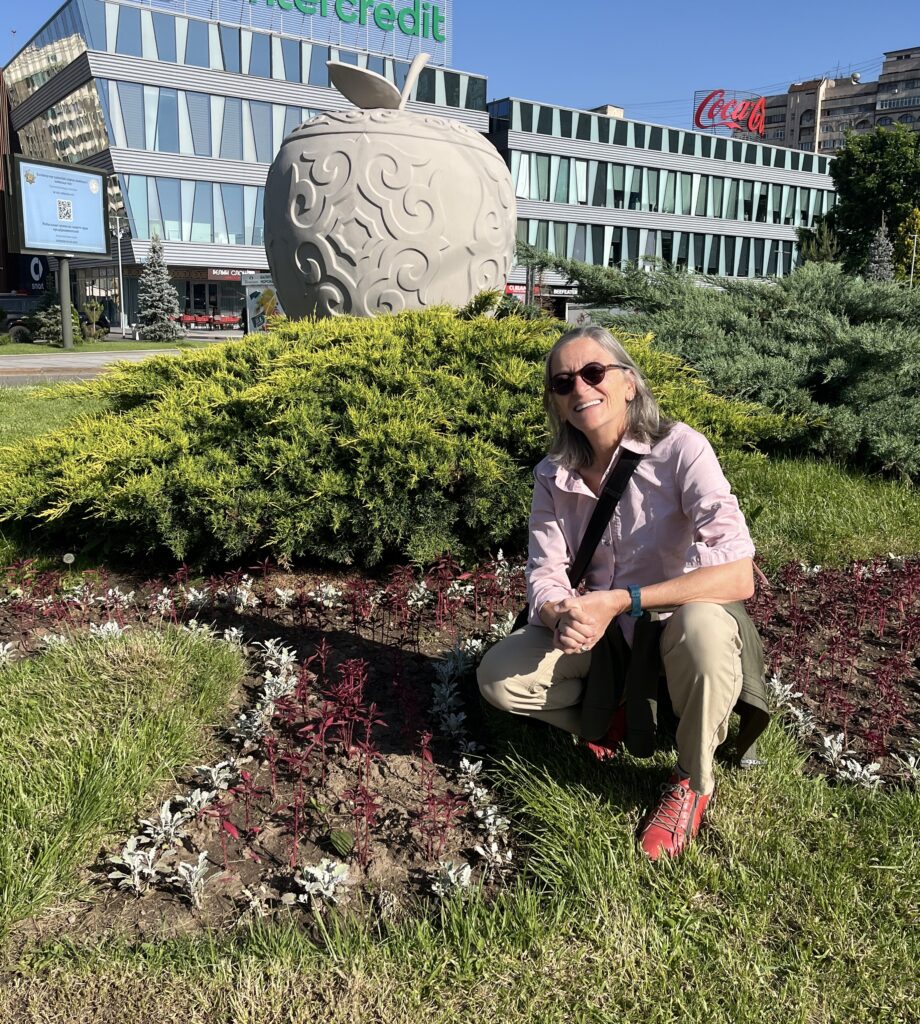
Especially in cosmopolitan Almaty. The name ‘Almaty’ comes from the Kazakh word for apple (alma), and it literally translates to ‘rich in apples’ or ‘father of apples’. AI adds this:

The Birthplace of Apples: Scientific research and DNA sequencing have proven that the region around Almaty is the ancestral homeland of the modern apple (Malus sieversii).

Of course, that’s according to AI, so it might be total slop.

The Big Apple

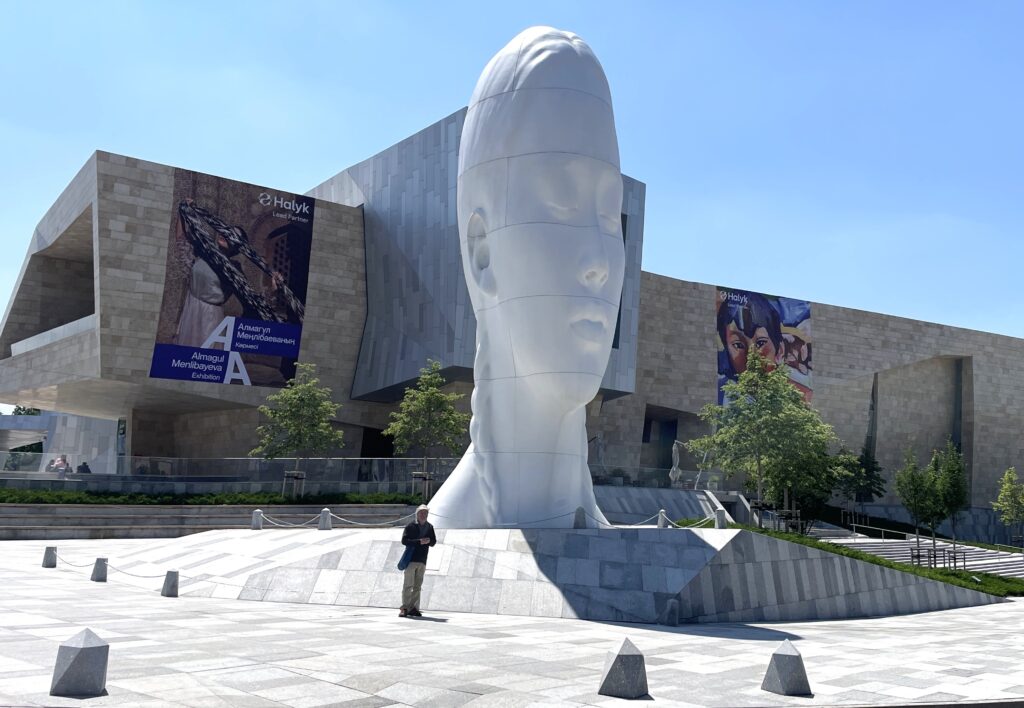
One of our first stops is the impressive Almaty Museum of Arts. It’s brand new (opened in 2025).

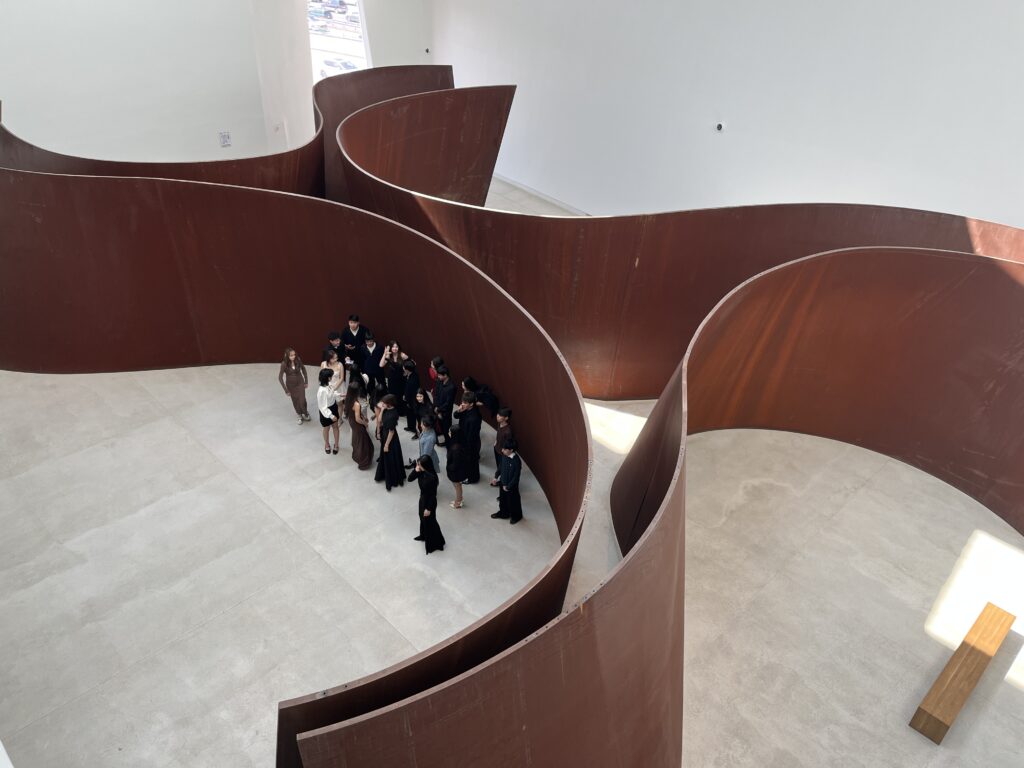
Among its collection is a signature gigantic iron sculpture by Richard Serra. (There’s also one in Pearson Airport.)

Go with the flow

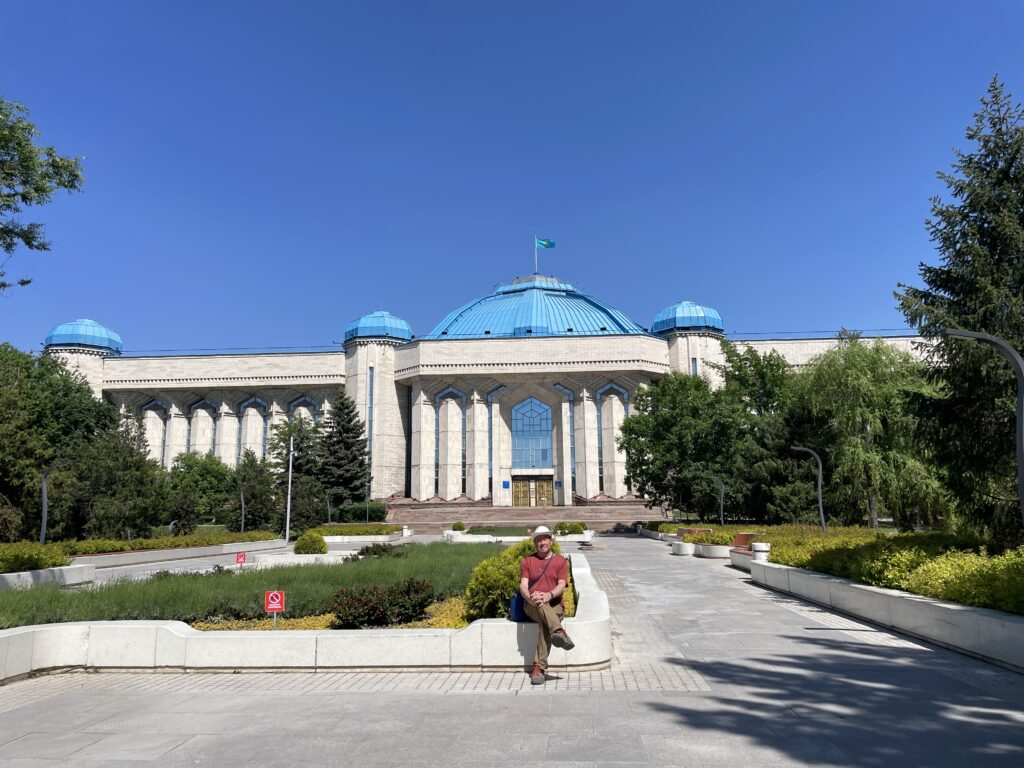
We also visit the Central State Museum of Kazakhstan.

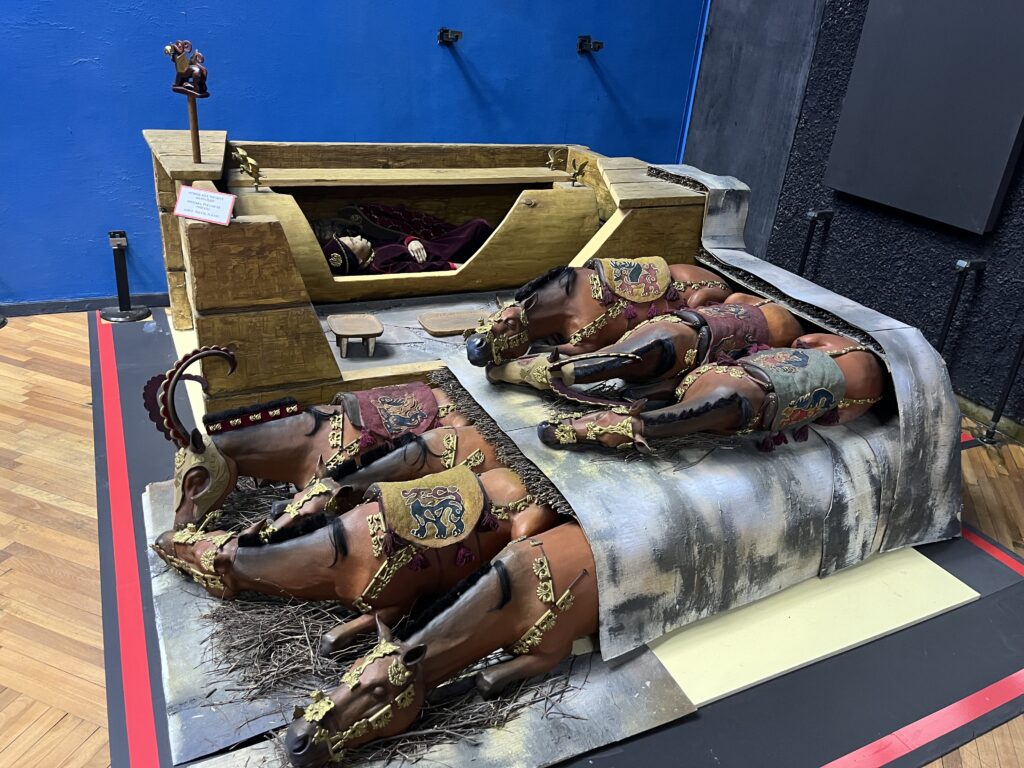
Like the other ‘stan’ dwellers, Kazakhs are crazy about horses. This goes back to their history of nomadism and early horse-taming, stretching back millennia. One exhibit displays a replica of the Berel burial, where a chieftain was found buried with his wife and favourite horses.

You can’t take it with you…

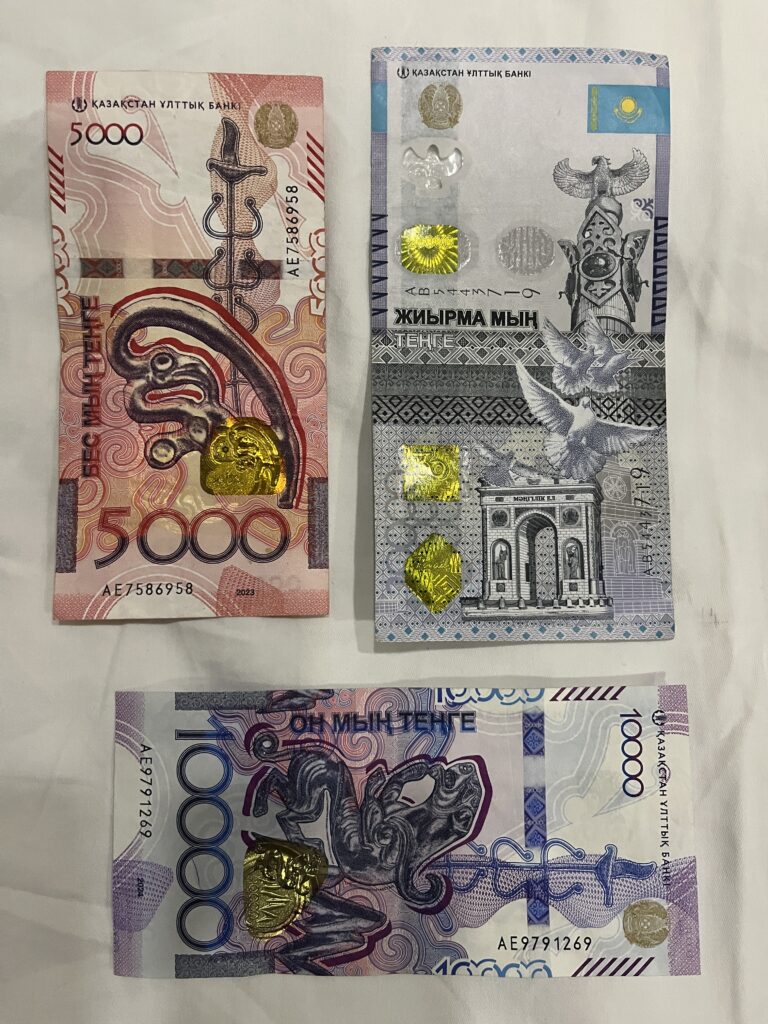
Another thing about Kazakhstan: they have the funkiest currency, the tenge. It takes 470 tenges to make a US dollar.

…though you can pile it up high

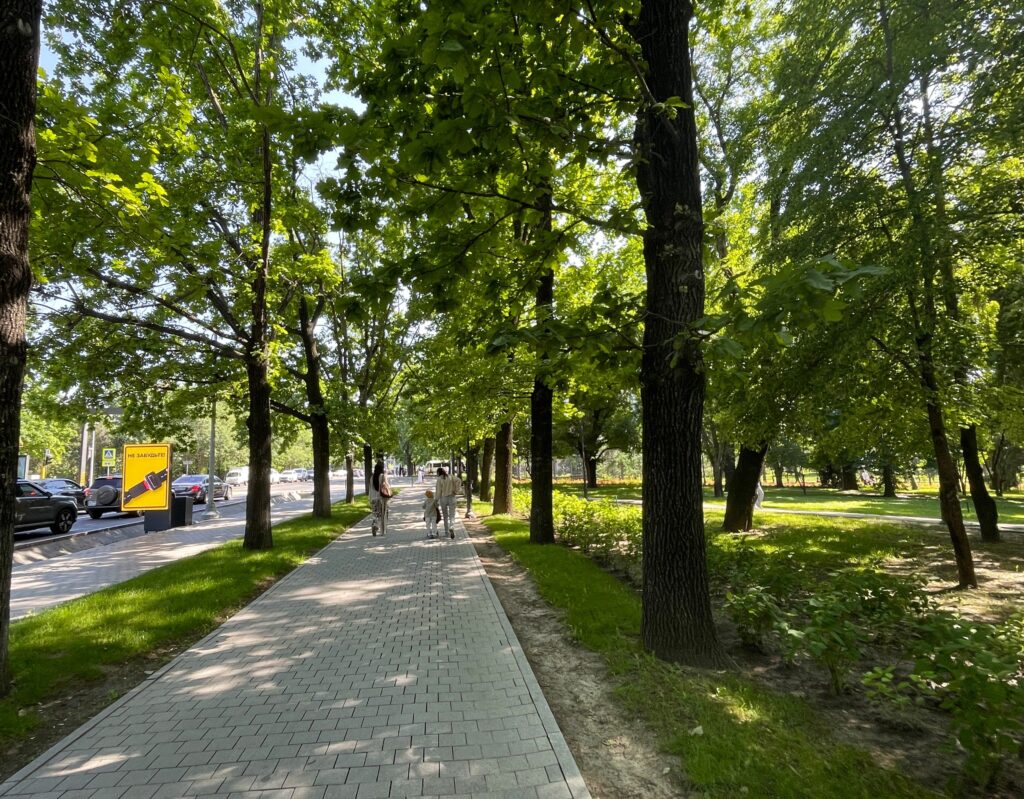
Almaty has an enviable amount of green space and parks. It’s very civilized.

Almaty boulevard

Kazakhstan is an enormous country, the world’s ninth largest. Fortunately, it has a really good rail network and good flight connections with national discount airlines, so the long distances are not a problem.

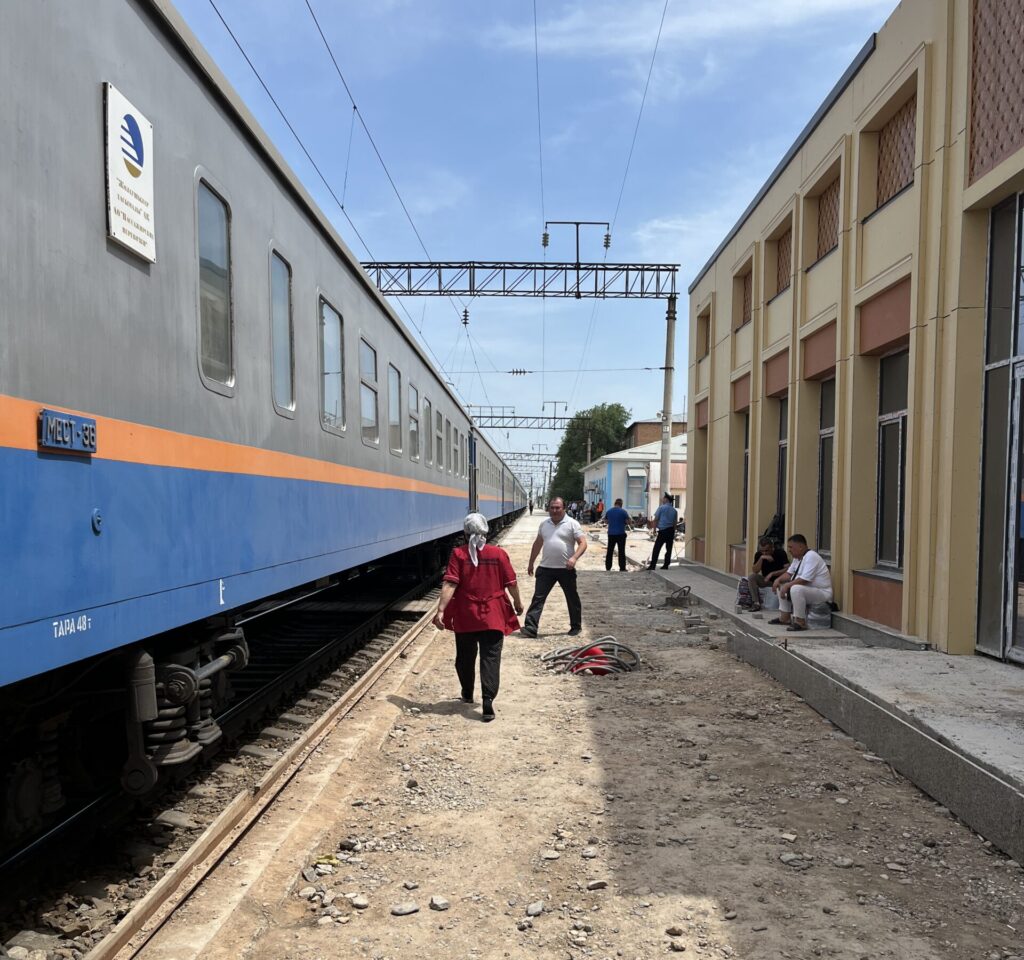
Station platform being refinished

Like we did in Uzbekistan, we travel by public transport, mostly by rail. But now we increase our comfort level exponentially by purchasing all four places in a four-place sleeping compartment, an affordable extravagance.

Sheer luxury

KZ is famous for its almost unlimited flat steppes, but our window is still full of mountain views duringour first day on the train.

Typical scenery heading west

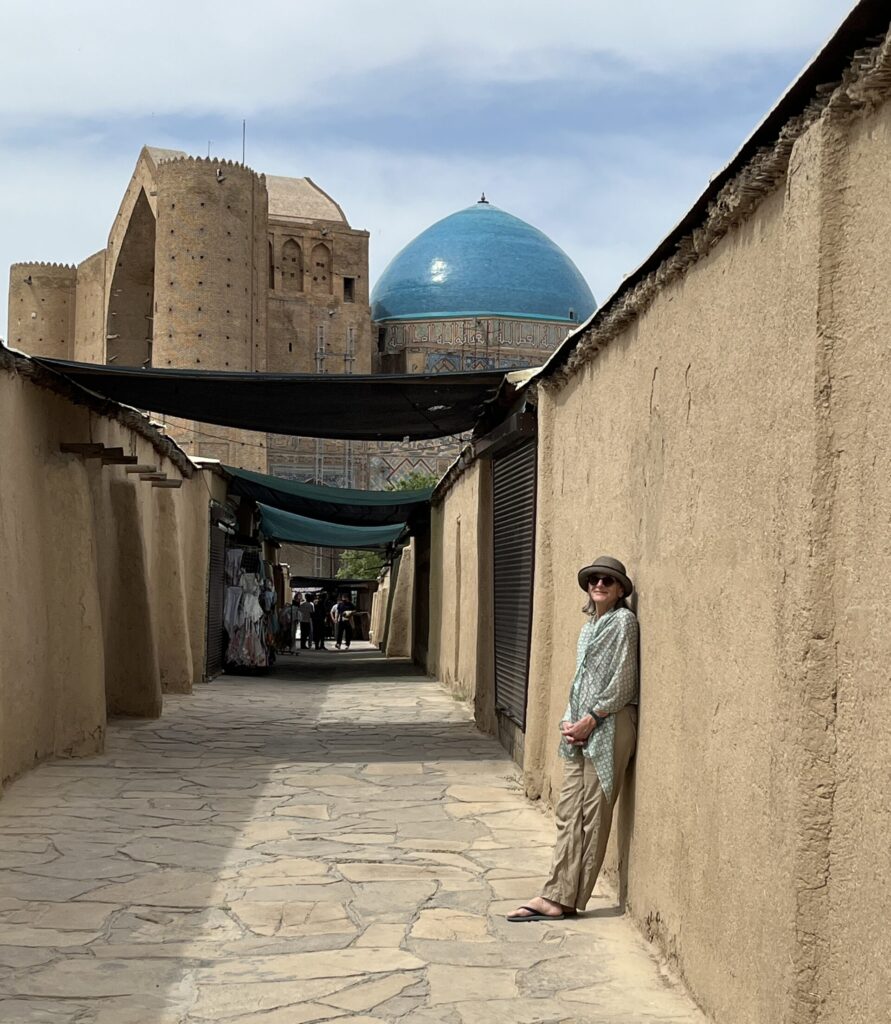
Our first destination is Turkistan. It sounds like a country but is, in fact, a city.

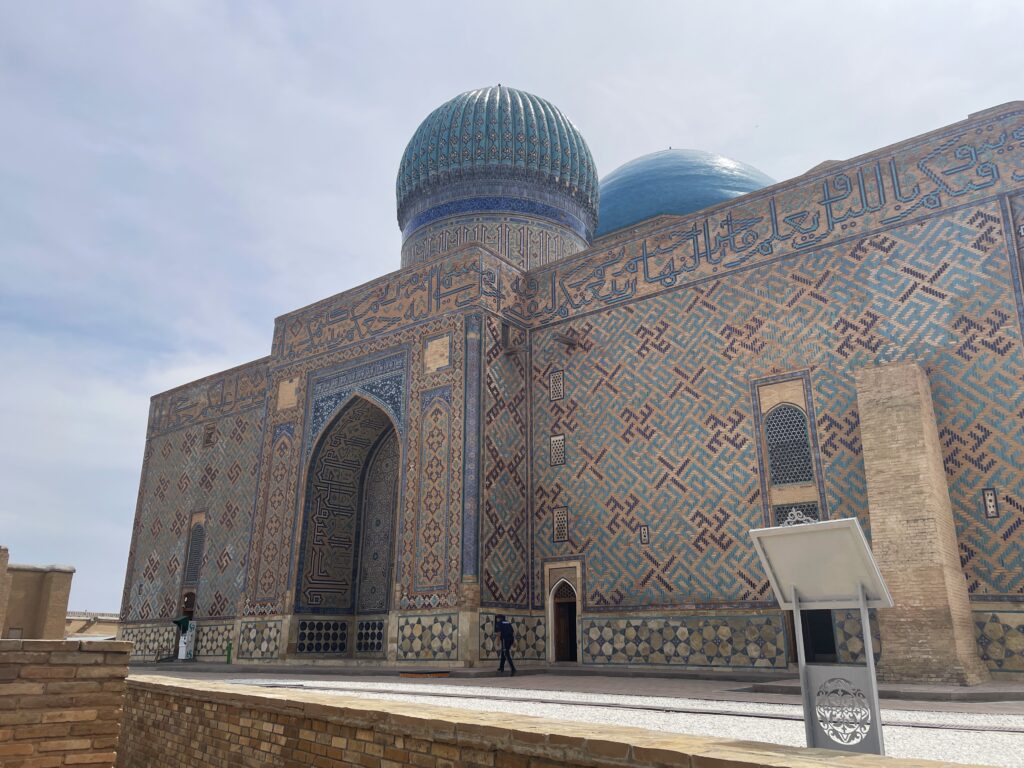
Turkistan’s claim to fame is the mausoleum of Khoja Ahmed Yasawi, a Sufi poet of the 12th century.

This is the rear – the front remains unfinished

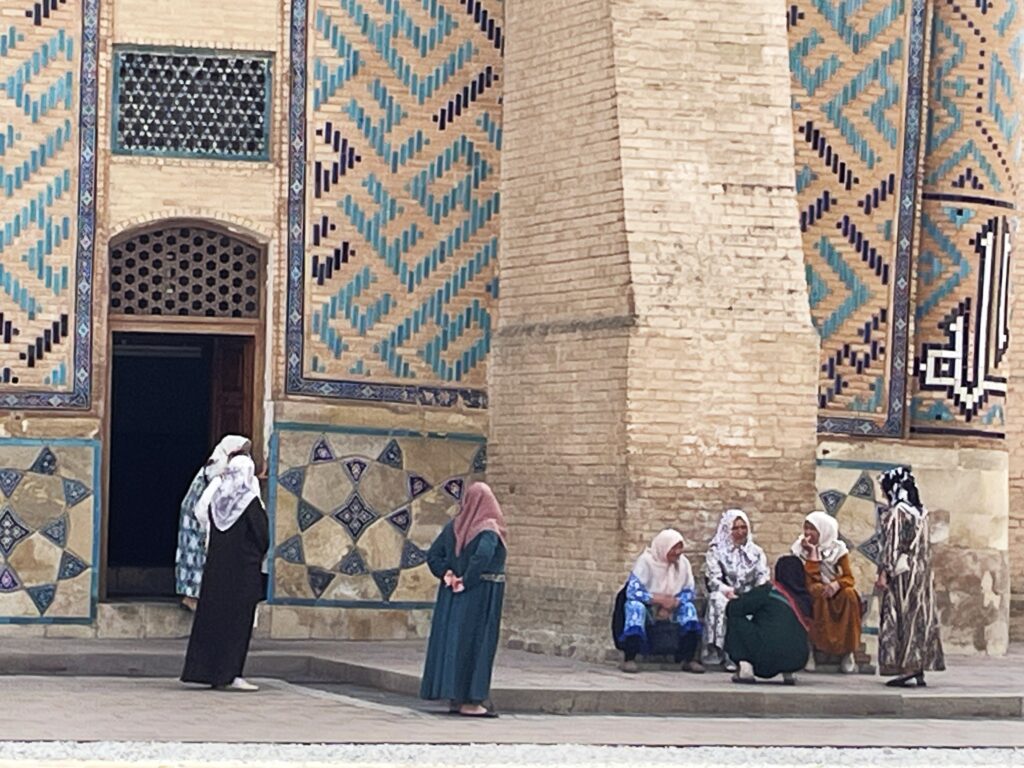
It’s a site of pilgrimage. Especially for women, it seems.

Probably not from Almaty

The mausoleum is part of a complex that includes an underground mosque and the archeological remains of the old town within a stretch of restored city walls.

Did we mention that it was Timur who constructed this mausoleum?

Sight or Insight of the Day

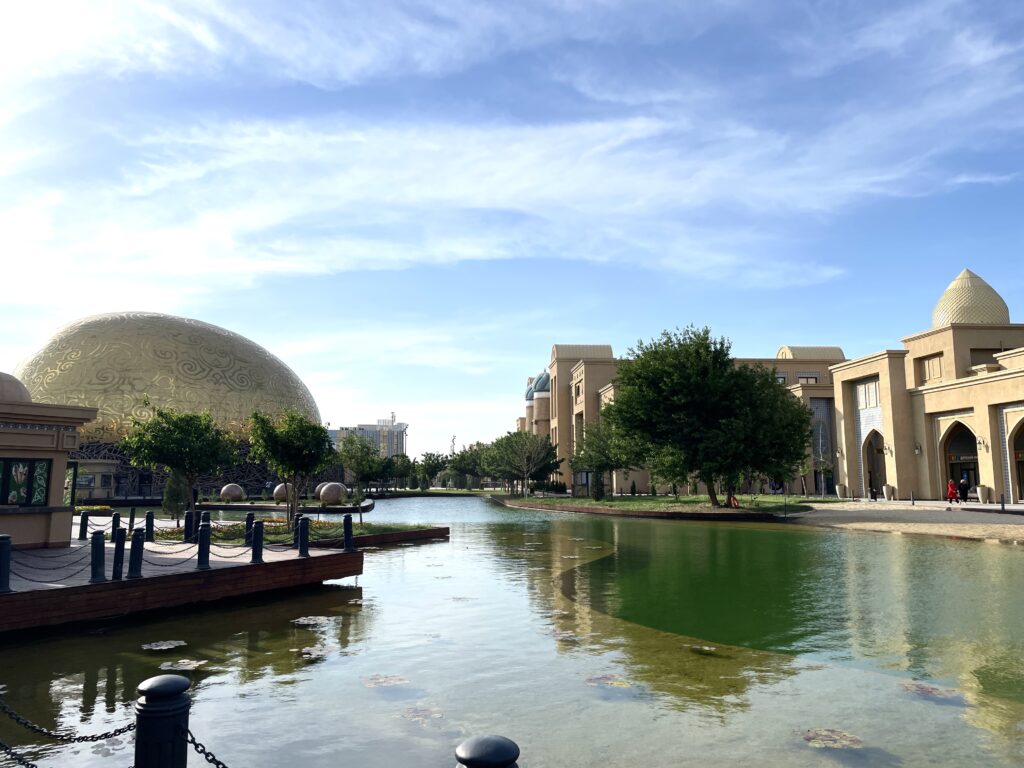
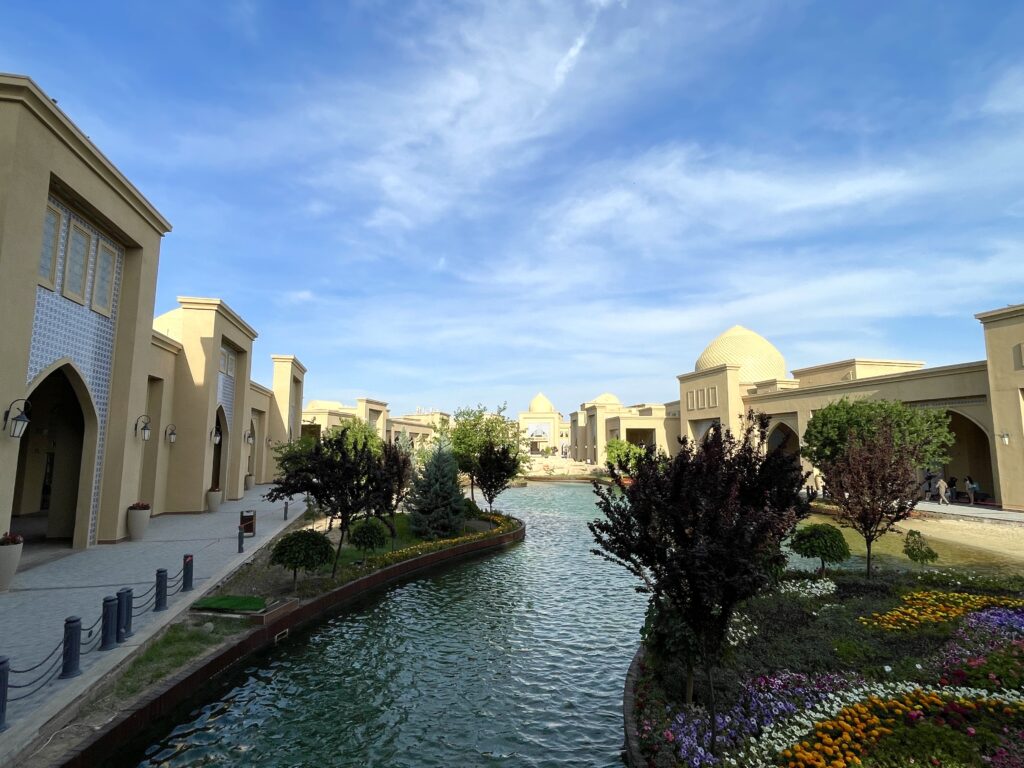
KZ doesn’t have the many historic towns that Uzbekistan has, so they’re keen on developing Turkistan as a destination that attracts visitors beyond the pious pilgrim sort. There is now a ‘new town’, built in the style of a Silk Road city, complete with an IMAX theatre in the shape of a golden Roc’s egg.

IMAX theatre on the left

It seems strangely devoid of visitors. Maybe it’s too earl in the season to expect throngs of tourists?

Kind of pretty, kind of tacky

Tajikistan – the Pamir Highway, Part 2

A few interesting facts about Tajikistan:

  • The other ‘stans’ speak Turkic languages, but Tajik is essentially the same as Persian/Farsi/Iranian
  • Politically, Tajikistan has much more of a Stalin-esque cult of personality, with images of the leader everywhere
  • Many Tajik women wear ‘modest’ clothing, but with lots of colour and bright patterns, covered with sparkly stuff (at least in Dushanbe)
  • 47.9 percent of Tajikistan’s GDP comes from remittances by Tajiks working in Russia (where they are treated – big surprise! – very poorly)
  • It’s illegal to have a dirty car in Dushanbe

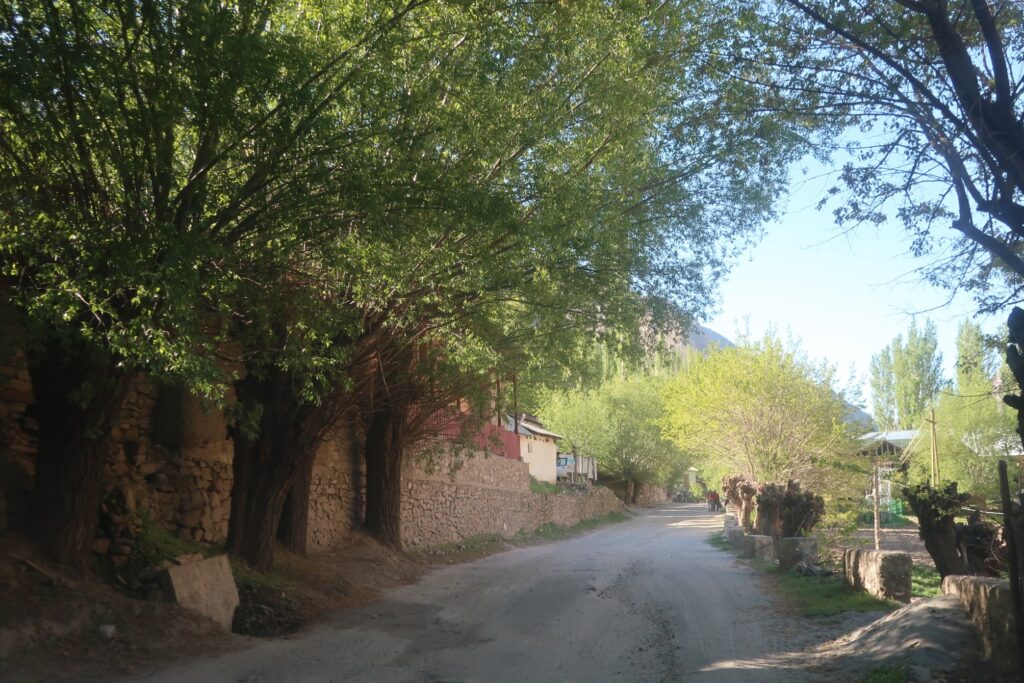
Our journey continues. Some parts pass through quaint, leafy villages every ten KMs or so.

Quaint and leafy

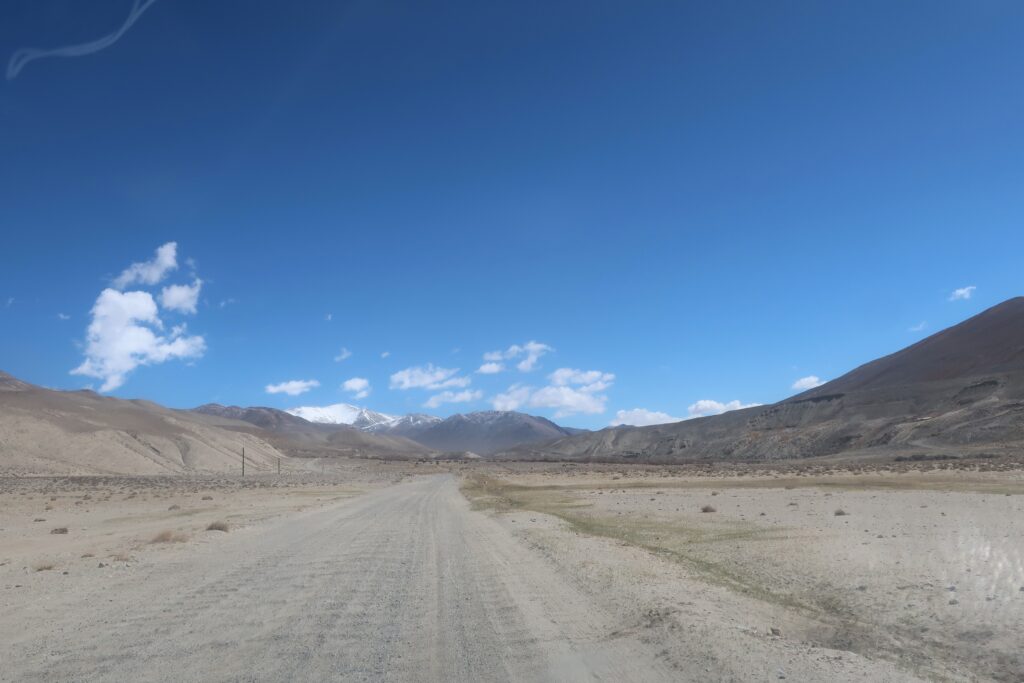
Other parts, you can drive for hours without encountering a soul.

Bone-shattering corrugated road

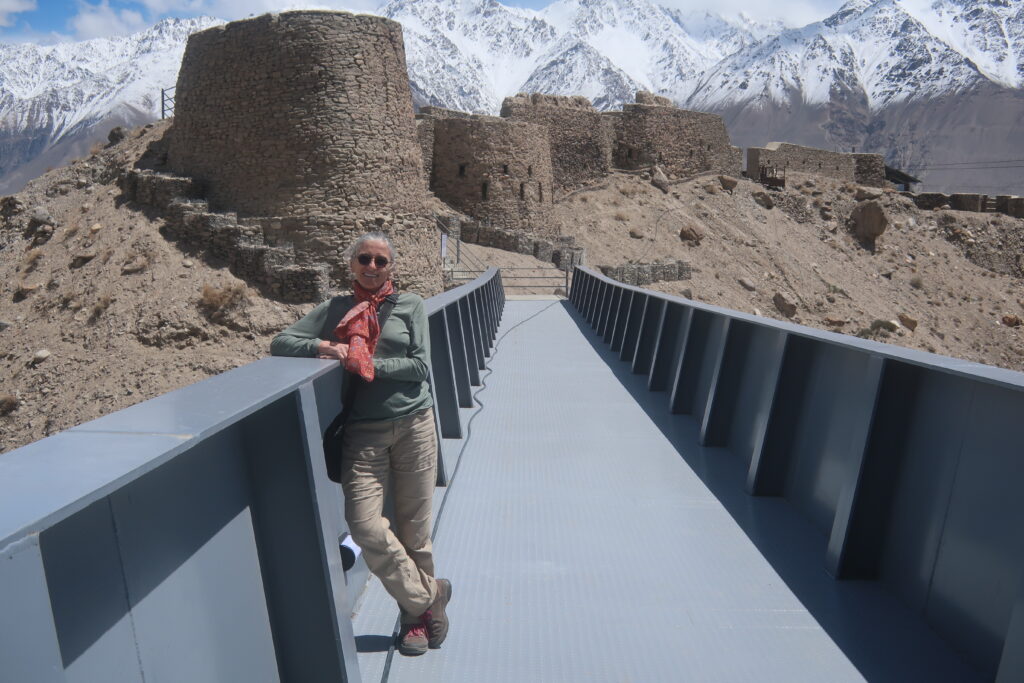
We visit the Yamchun Fortress.

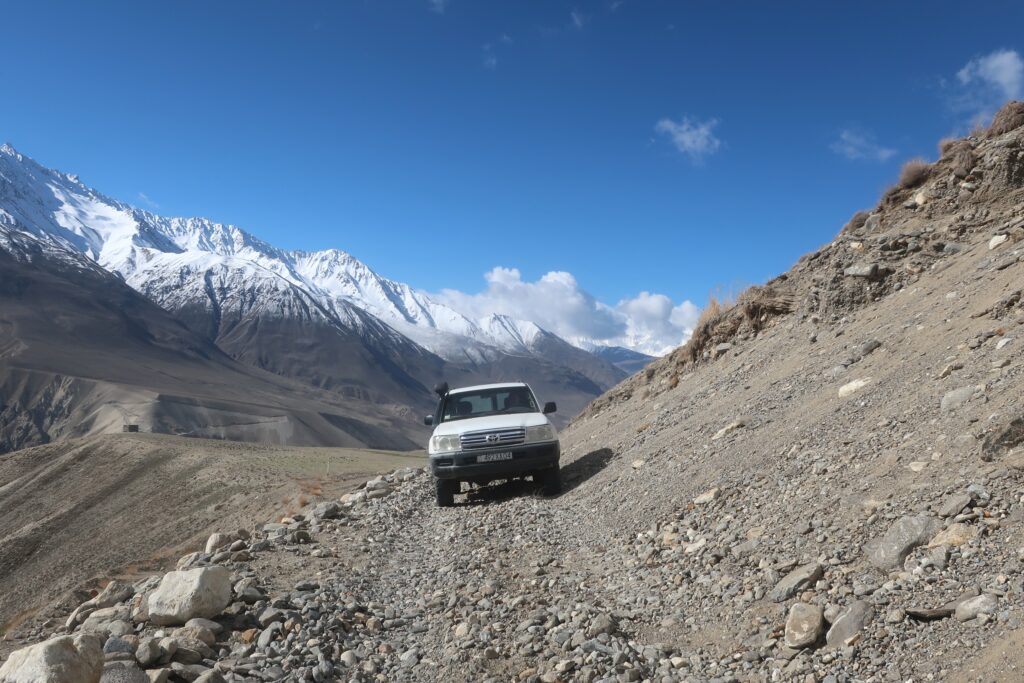
Remember we mentioned ‘cyclists with a masochistic streak a mile wide’? Imagine cycling up vertiginous, stony mountain tracks like this.

Vin coming

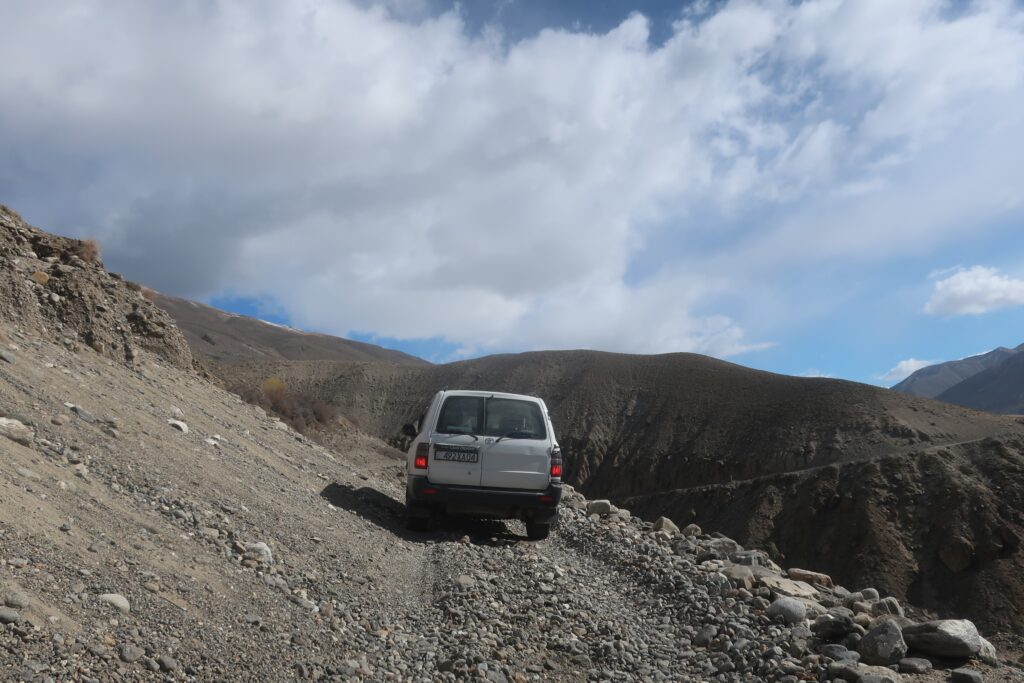
(We drive through such lonely territory all day. When we arrive at Murghab, the car goes completely dead. Luckily, it was just the cables vibrating off of the battery due to all the, um, turbulence – an easy fix.)

Vin going

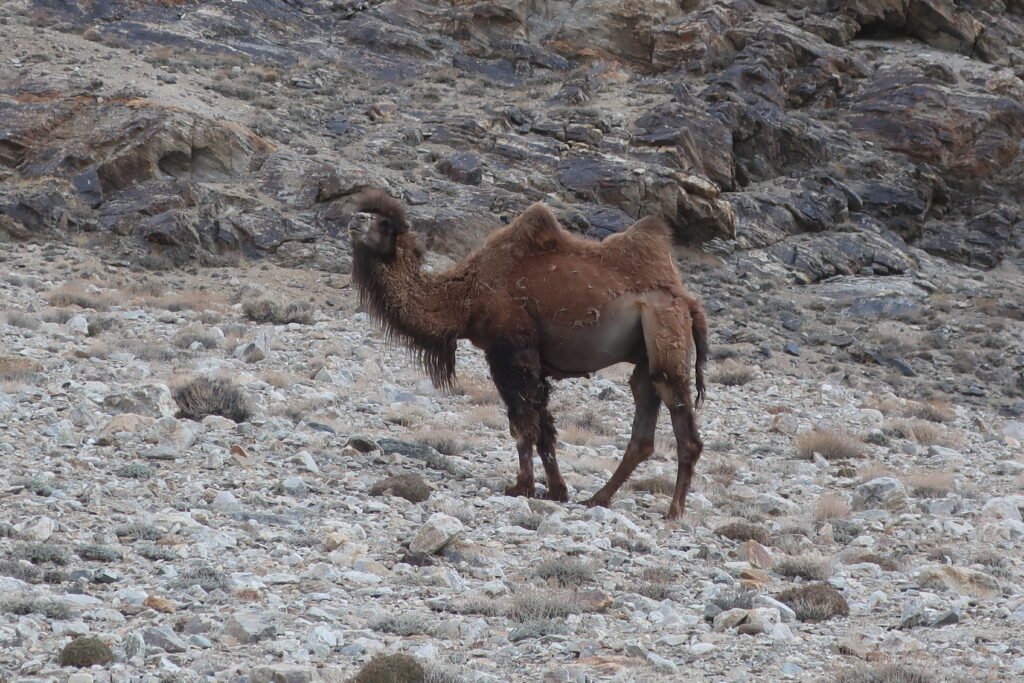
We cross paths with a Bactrian camel.

‘One hump or two?’

At first we think it must be a wild camel, the locale being so very remote. But apparently, genuine wild Bactrian camels are virtually extinct. If you see a camel – even in the remotest of places – it belongs to somebody.

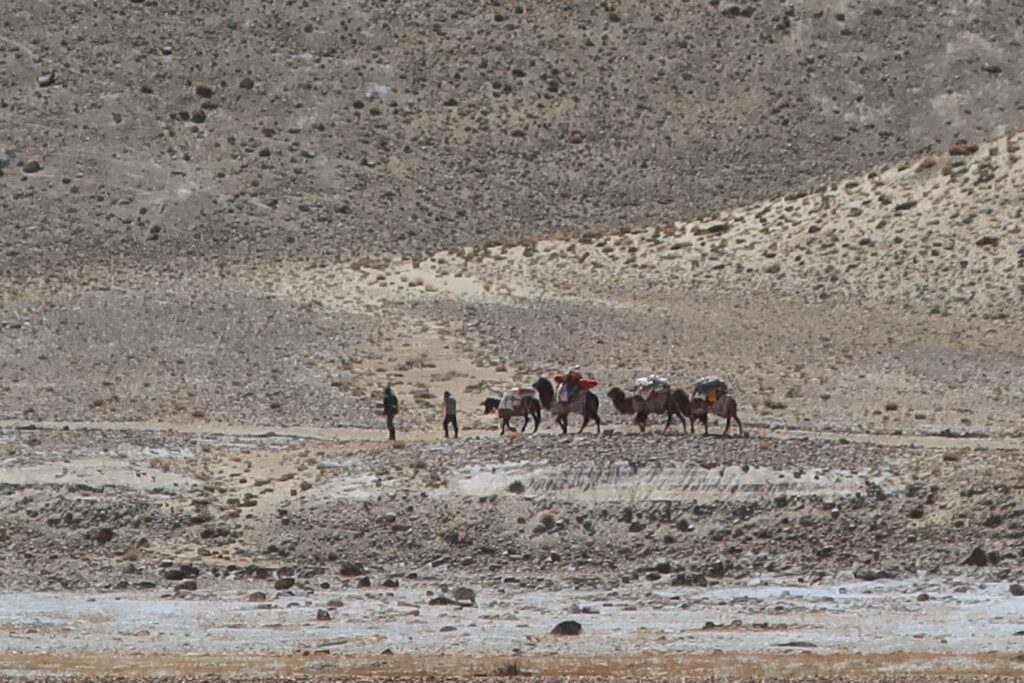
In the distance, we also see some nomads. Like, REAL nomads – not the ‘come into my tent and I’ll serve you tea for 10$’ kind of nomad.

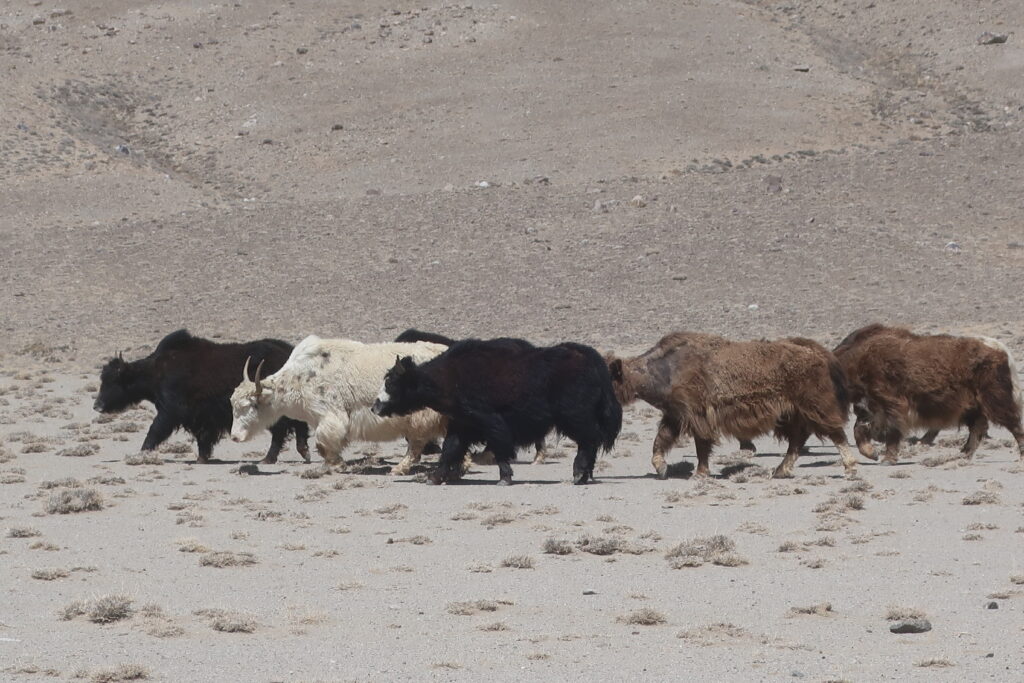
They are shifting their herd of yaks.

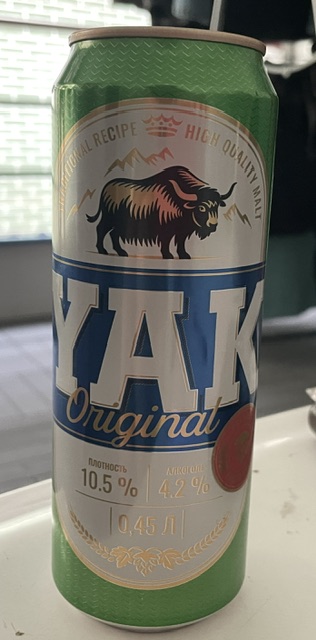
(Incidentally, ‘Yak’ is also a popular brand of beer here.)

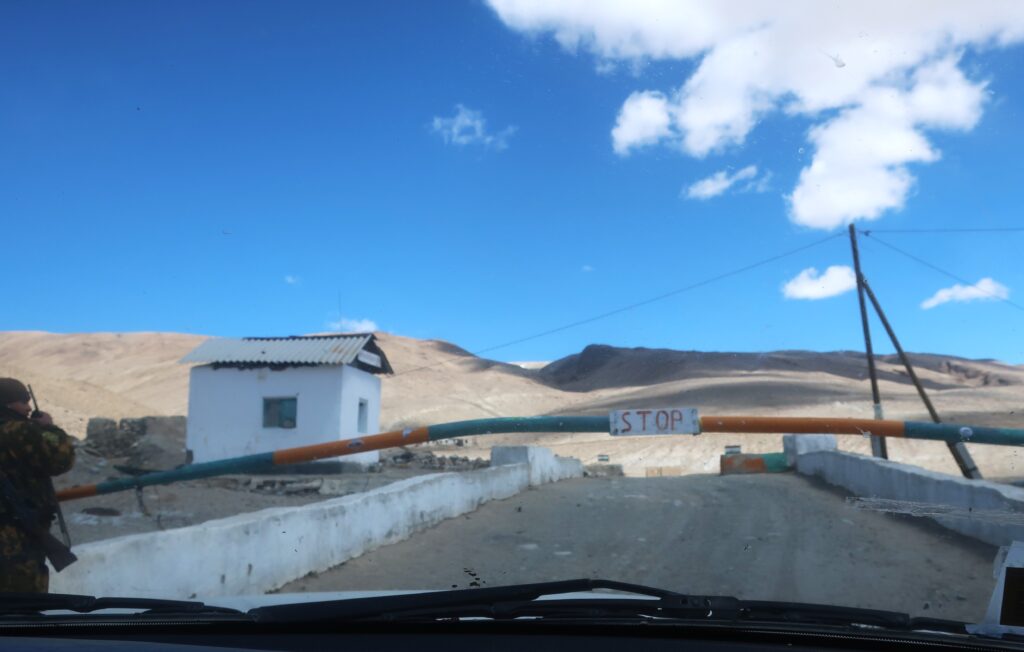
We mention in passing that travel in this region is subject to having a GBAO special pass, which we obtained in Dushanbe. The Gorno-Badakhshan Autonomous Oblast (GBAO) covers nearly 45% of Tajikistan’s territory.

We have to go through eight checkpoints and present a copy of our passports and GBAO permits.

Note the gun-totin’ guard in the corner

So why is travel so controlled in nearly half the country? No doubt it has something to do with the Tajikistan Civil War (in the 90s). The opponents to the then-ruling clique were mostly from the GBAO. So the locals here are kept on a tight leash.

Toss in the proximity to Afghanistan and you’d expect a seething cauldron of unrest and instability. But being here, all seems calm and serene. People are friendly and helpful. The grandness of nature makes the affairs of mere humans seem petty and forgettable.

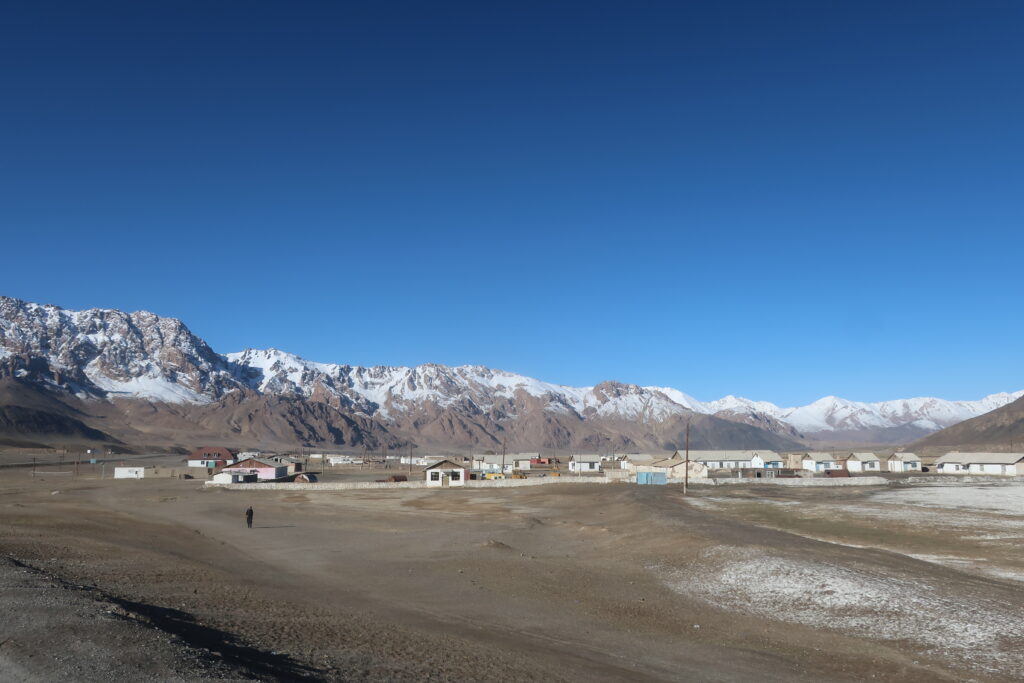
The furthest point on the Pamir Highway (for us) is the town of Murghab. Some people continue on into Kyrgyzstan and end their trip in Osh. Been there, done that.

Murghab

Murghab has the forlorn, shabby look of an Arctic outpost. It’s at an elevation of nearly 4,000 m. above sea level.

(Regarding elevation: we both take medication to avert altitude sickness. It seems to have hallucinatory side-effects. Driving through boulder-strewn landscapes, we both keep seeing people, things, and animals in the shapes of the rocks in our peripheral vision. Very entertaining.)

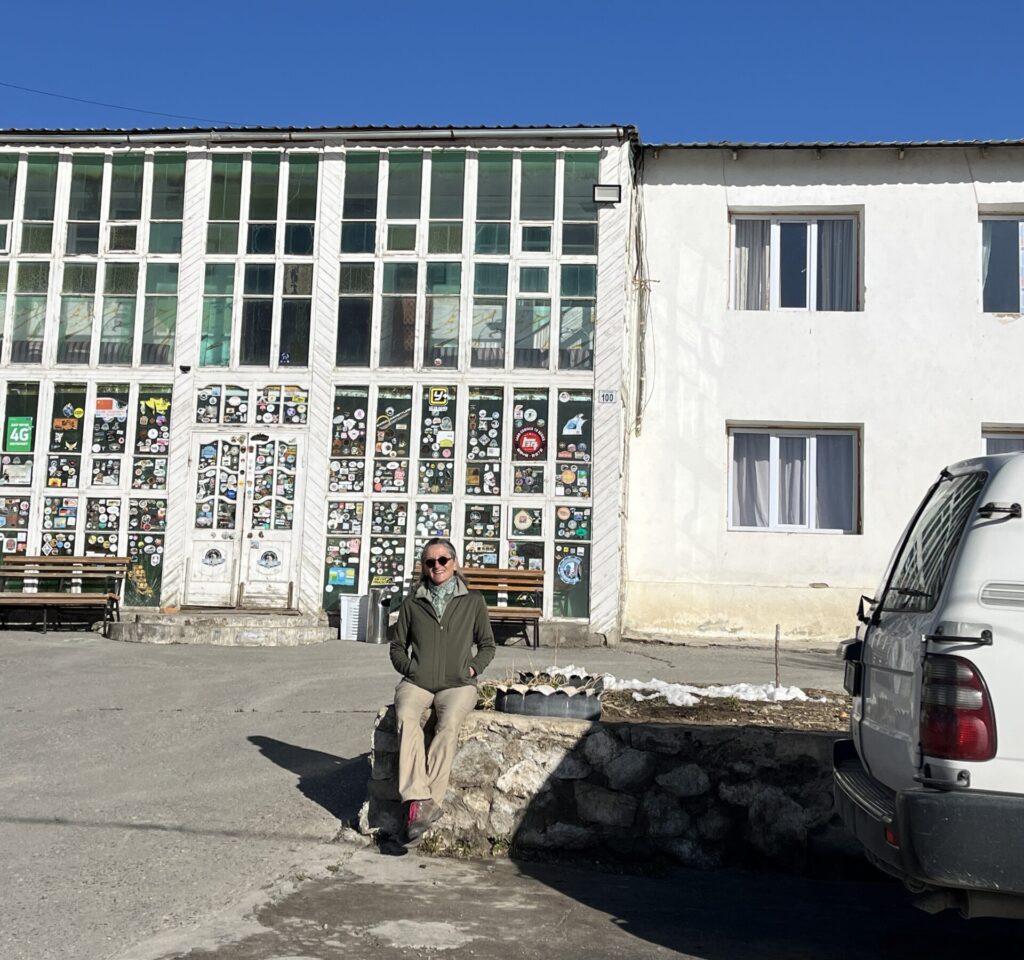
Our forlorn, shabby hotel in Murghab

About the stickers on the windows of our hotel: it’s a thing for travelling groups of motorcyclists (mostly) to leave their mark by plastering them onto every available surface.

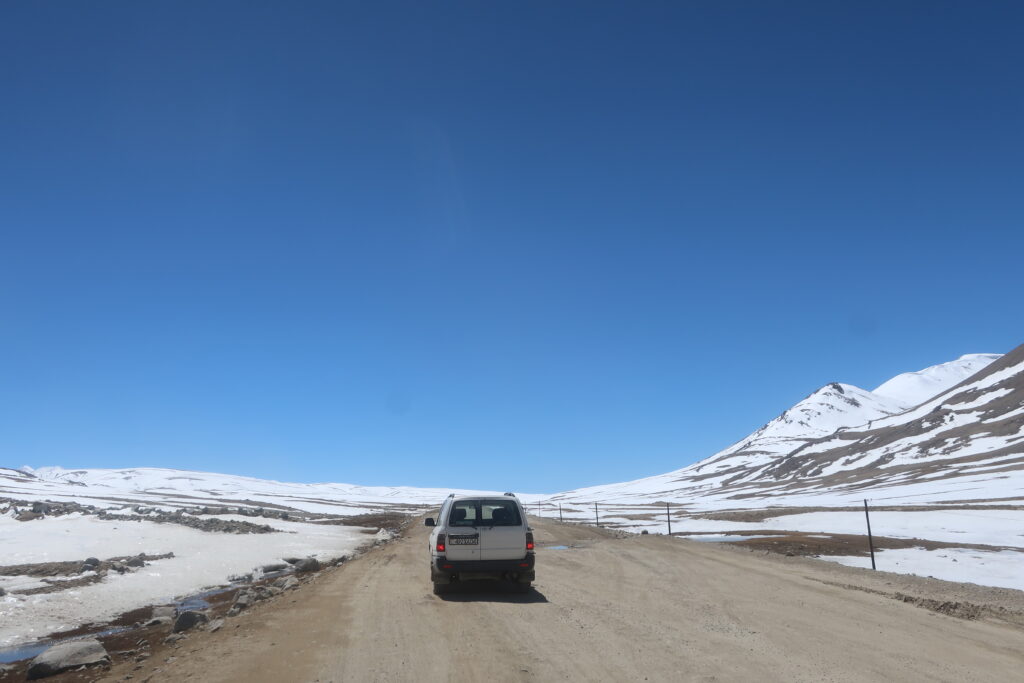
Time to make the return trip to the fleshpots of Dushanbe, this time via the Koitezek Pass. (On the journey here, we took the Wahkan Valley route.)

Koitezek Pass, elevation 4,271 M

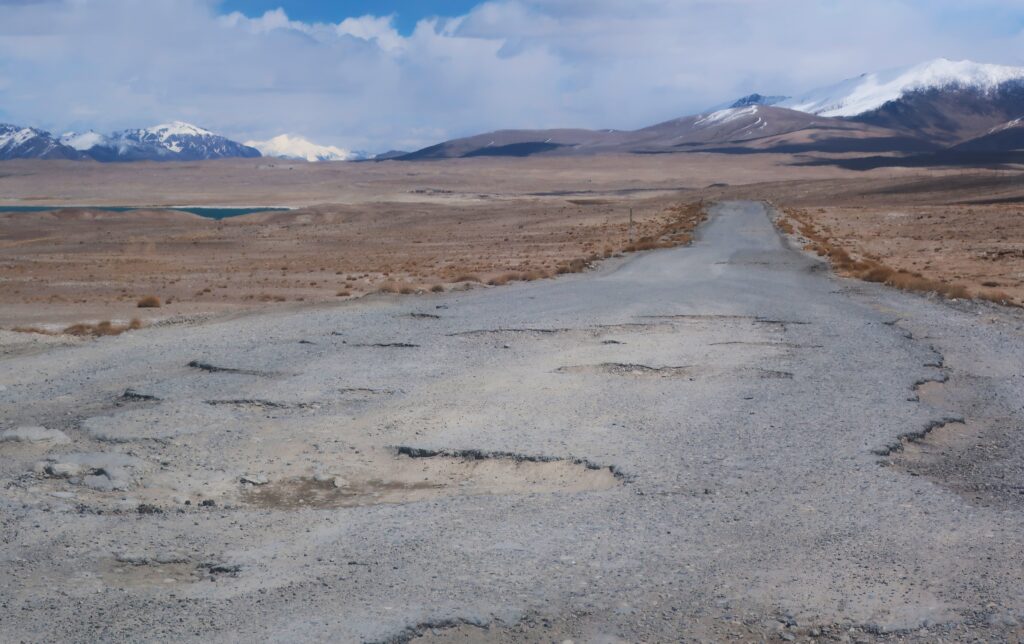
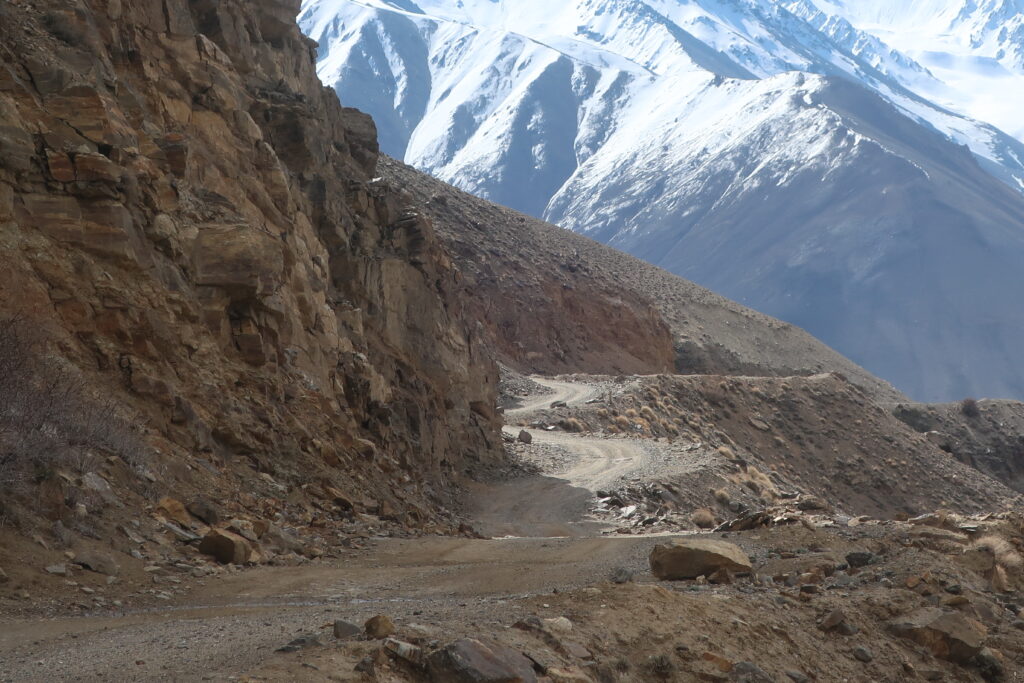
The first 100 KMs or so south of Murghab are a practically undriveable minefield of cavernous potholes. Probably the second (or third?) worst potholes we’ve ever experienced.

Pothole Alley

On the way north, we notice intriguing side roads. Maybe they’re private? Or for military use?

It turns out they were probably used by the people responsible for constructing the road. But nobody uses them now. So they have NO POTHOLES. (They cross deep ditches, so big trucks can’t use them.) We gratefully take them wherever we find them and shave at least an hour off of our travel time.
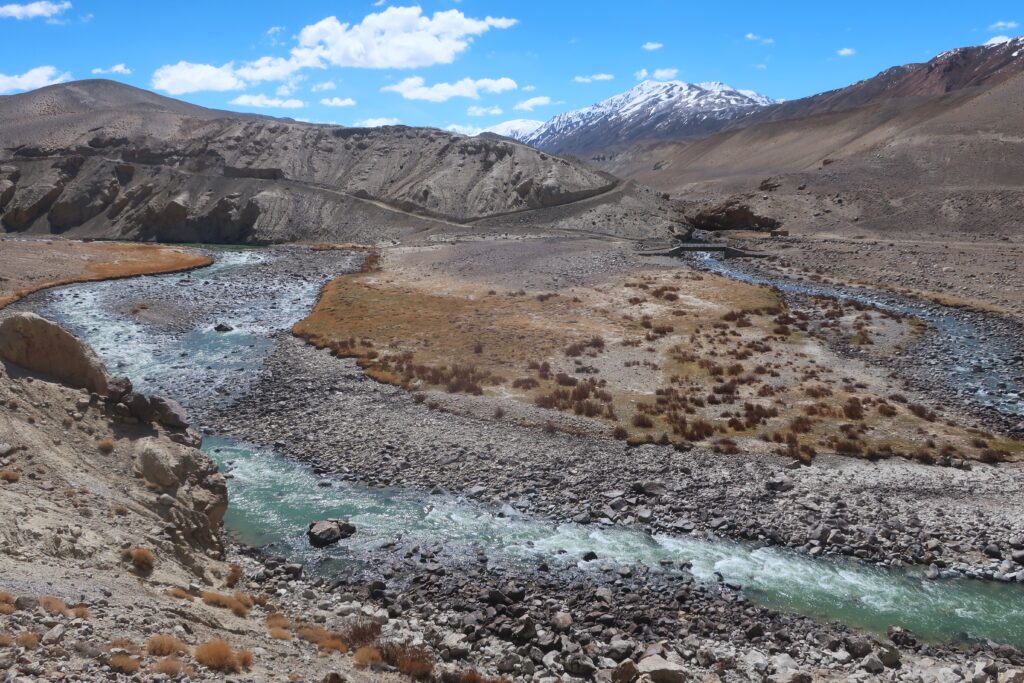
‘You take the high road. We’ll take the low road.’
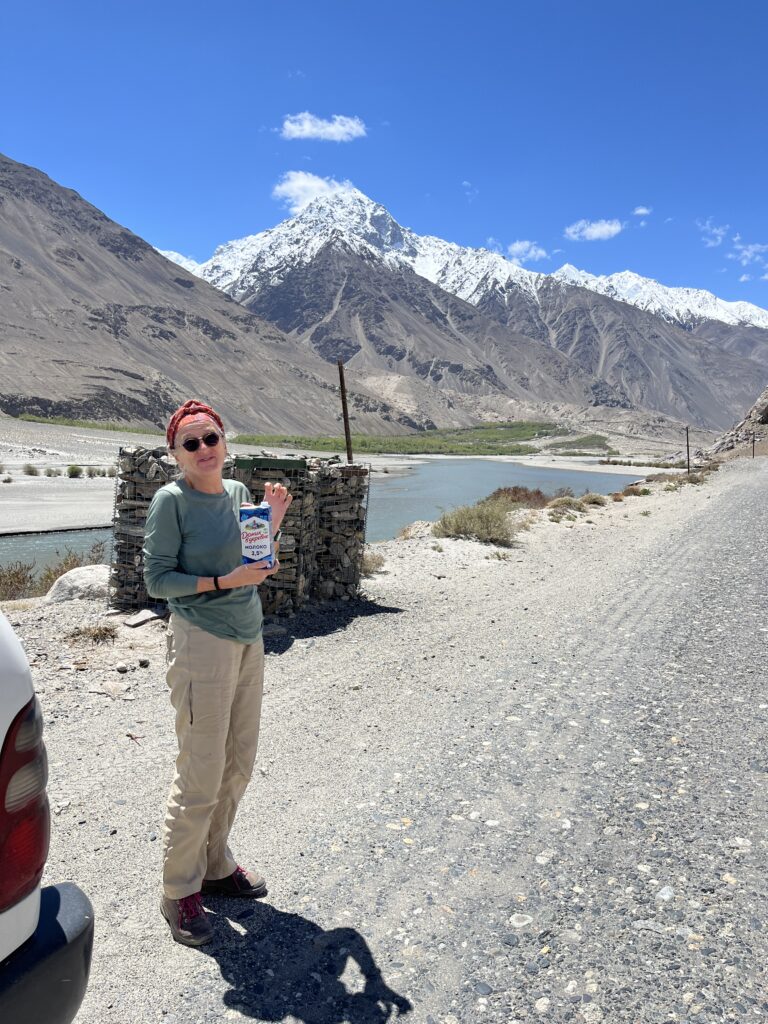
We stop for a milk break

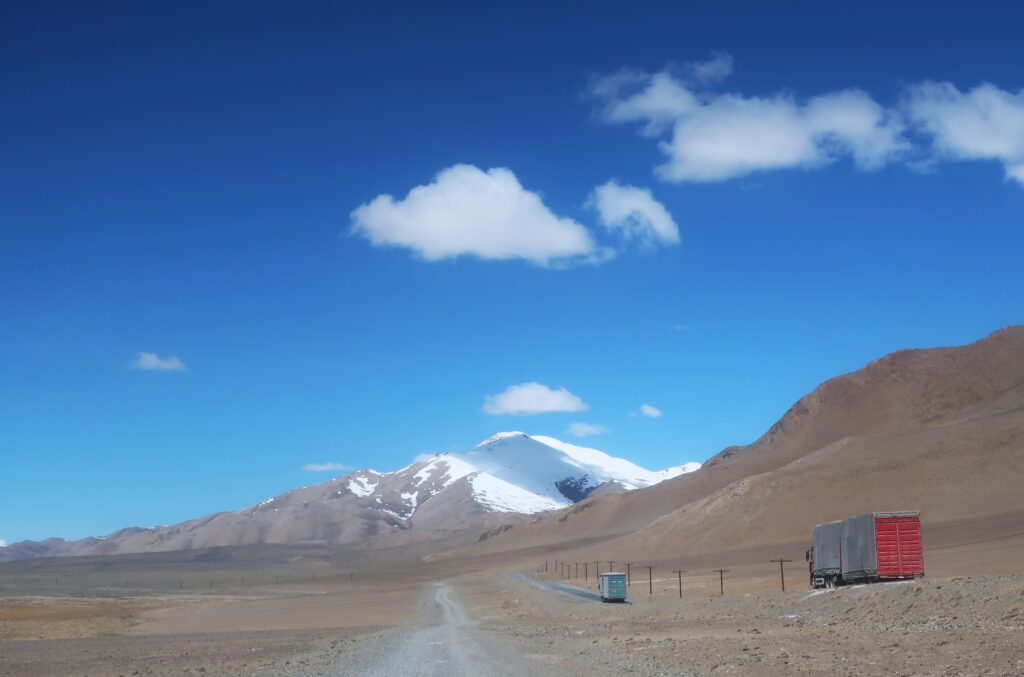
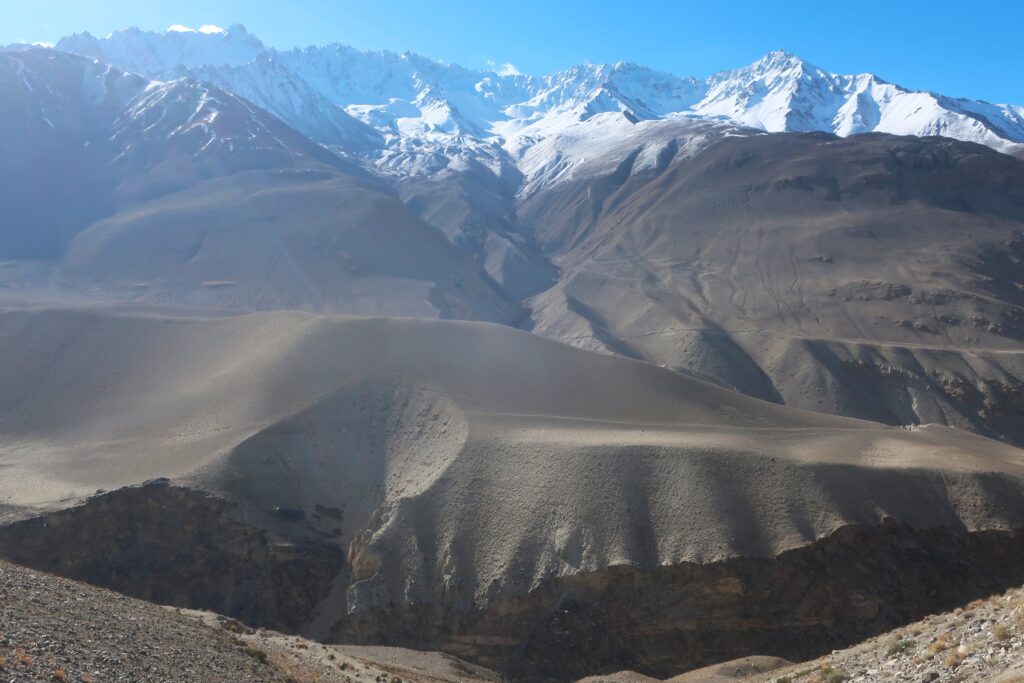
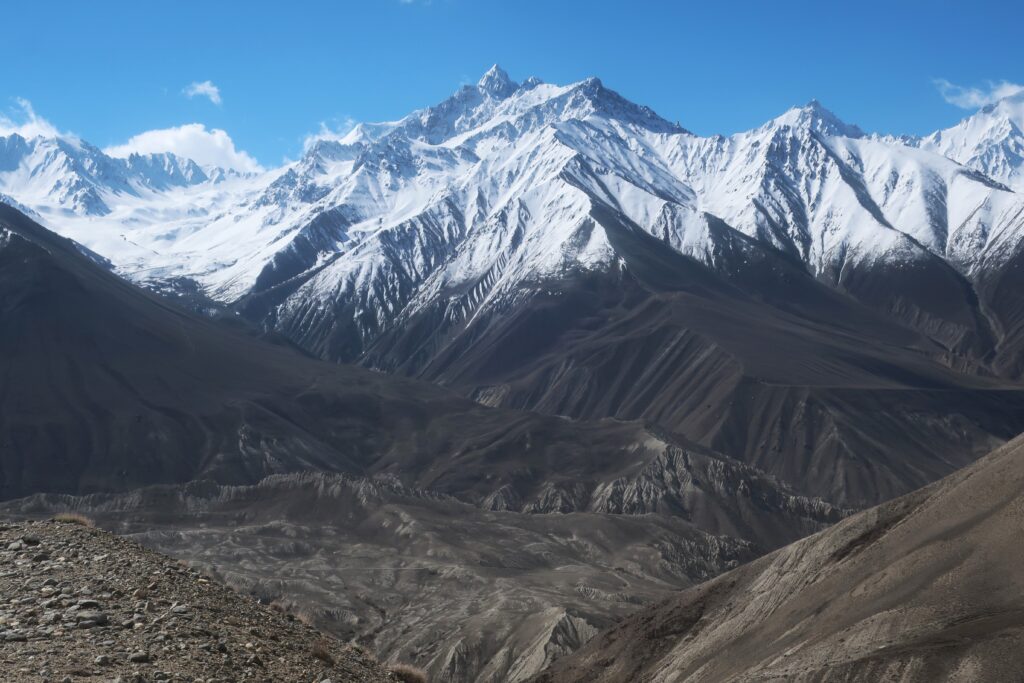
OK, just a few more scenic shots of the Pamir Highway.

Pamir Highway 1
Pamir Highway 2
Pamir Highway 3
Pamir Highway 4

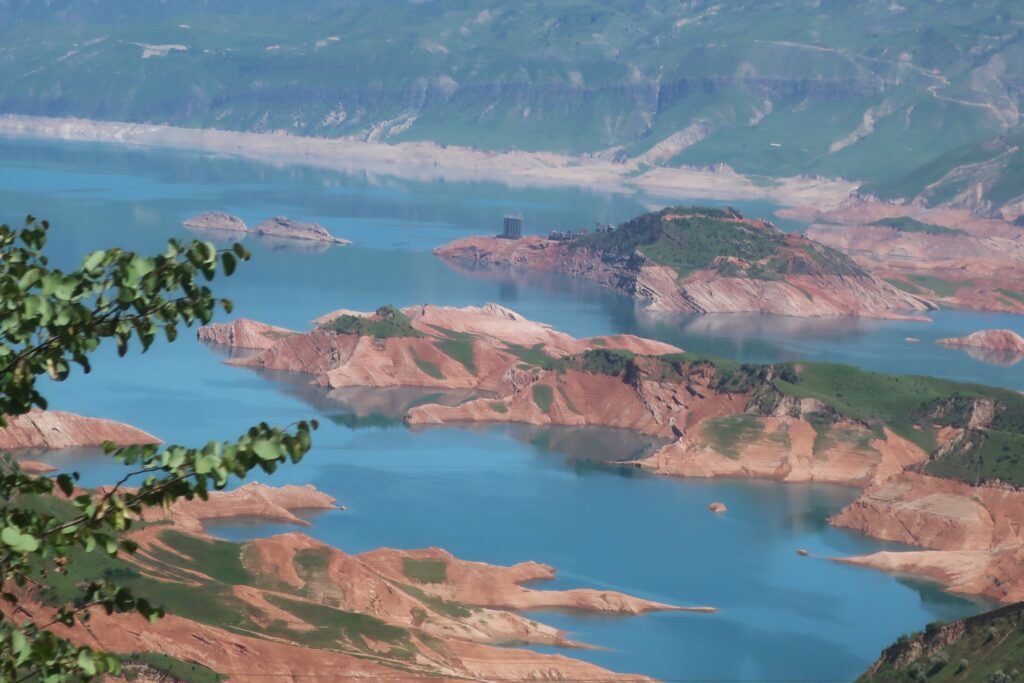
Just before arriving back in Dushanbe, we pass the Nurek Reservoir.

So in town, we prepare for our flight to Almaty in Kazakhstan. Хайр, Тоҷикистон!

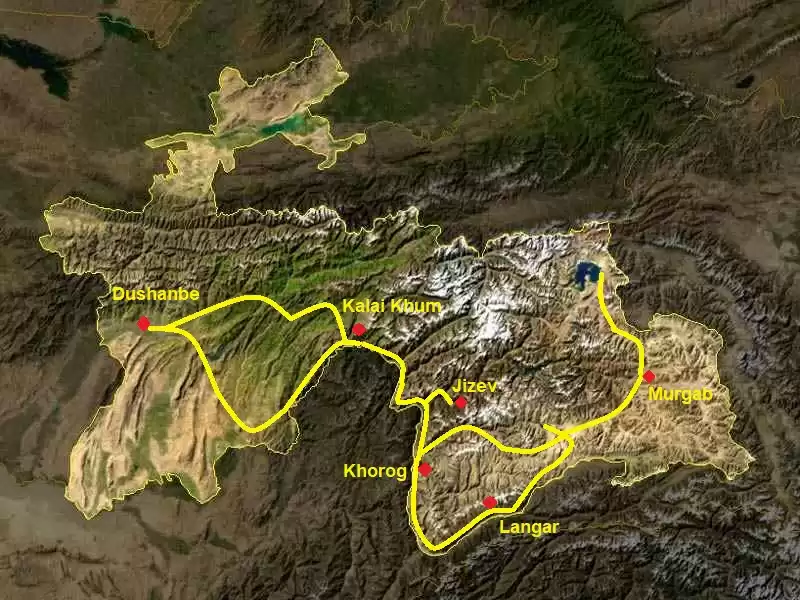
Our route in Tajikistan, not exactly as illustrated

Sight or Insight of the Day

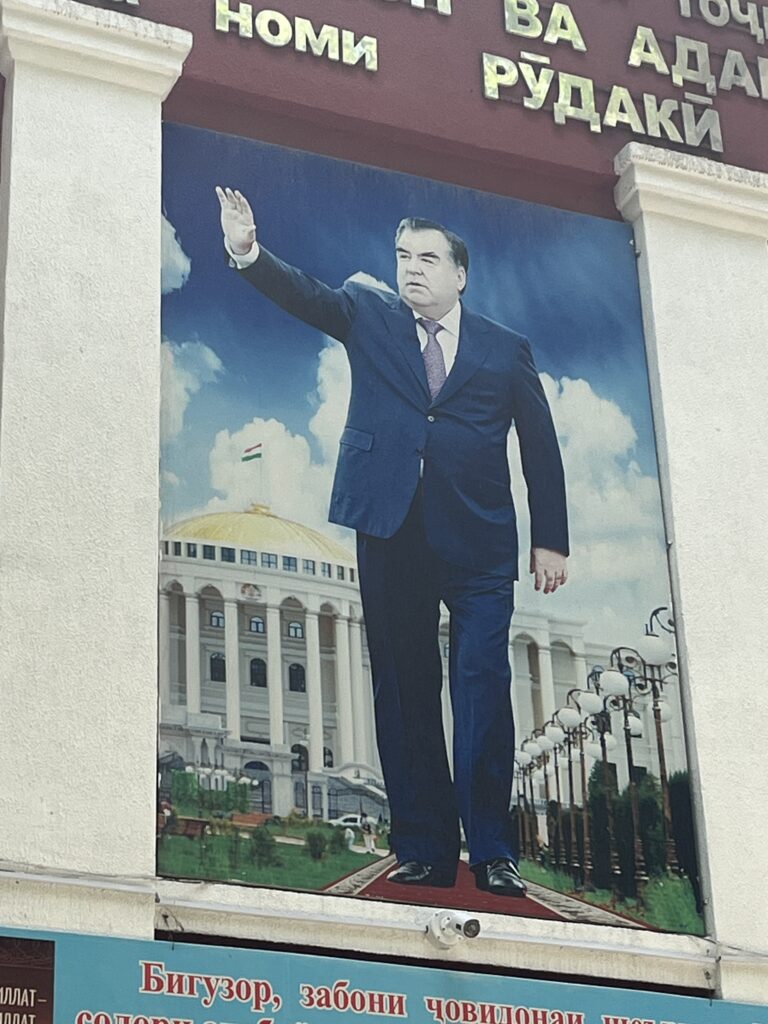
We mentioned that Tajikistan has the most serious personality-cult leadership style we have seen so far on this trip. Its leader, Emomali Rahmon, is so beloved by his people, they keep voting him into office.
He doth bestride the narrow world like a Colossus‘ – Julius Caesar, Act 1, Scene 2

Just kidding. Now that we’re out of the country, it can be safely said: he’s an asshole. According to Wikipedia:
‘Rahmon heads an authoritarian government in Tajikistan. Political opponents are repressed, violations of human rights and freedoms are severe, elections are not free and fair, and corruption and nepotism are rampant.’

To be honest, sounds like the Trump administration. But he’s an asshole that the American electorate, in its infinite wisdom, freely elected.

People here, like the other two countries we’ve visited, are so kind. How the Tajiks end up with such a brute as a president is a mystery. (Like Chile during the Pinochet regime.)

Tajikistan – the Pamir Highway, Part 1

After arriving in Dushanbe, Tajikistan’s modern-ish capital, we find a vehicle for rent to travel the Pamir Highway. That seems to be what people do when visiting this part of the world (that is, people usually hire someone else to do the driving, but we value our independence), including cyclists that we can only surmise must have a streak of masochism a mile wide.

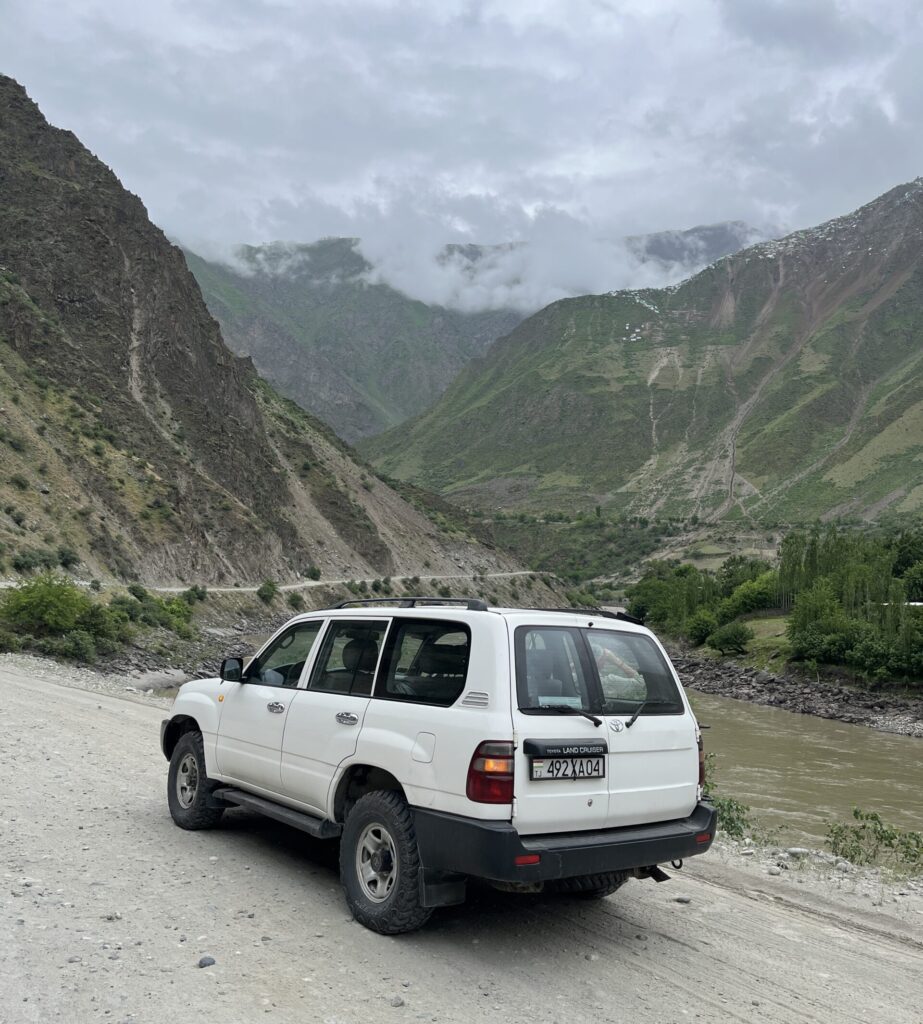
We come across a tank-like 2004 Toyota Land Cruiser. He’s a tough guy, and a Diesel, so we name him Vin.

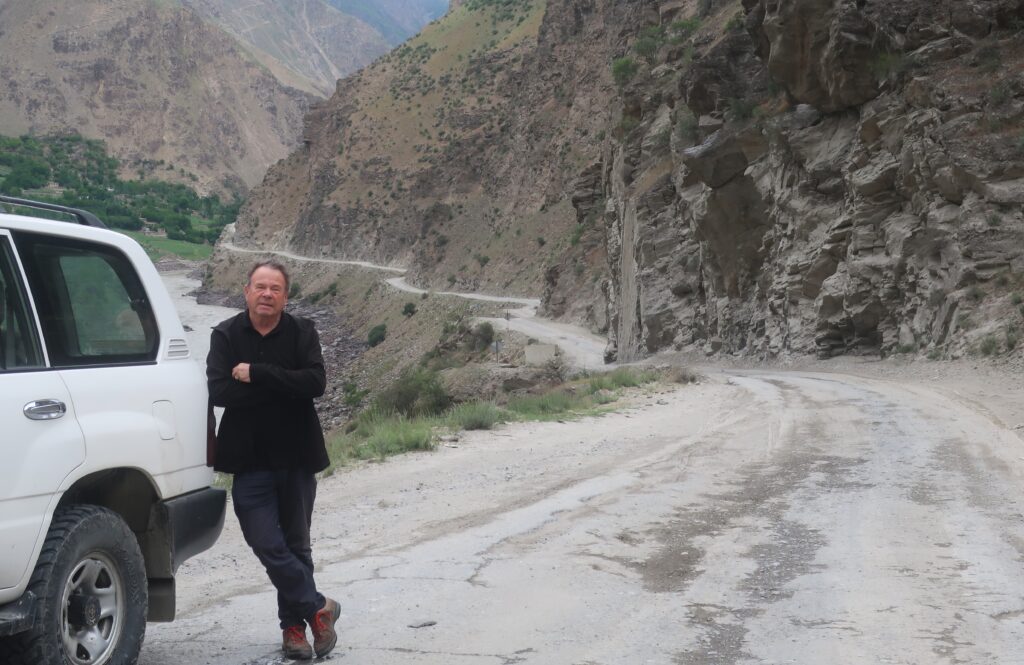
Ain’t afraid of nothin’

If you want to know more about the Pamir Highway, there are plenty of documentaries on YouTube. It’s definitely not for the faint-hearted.

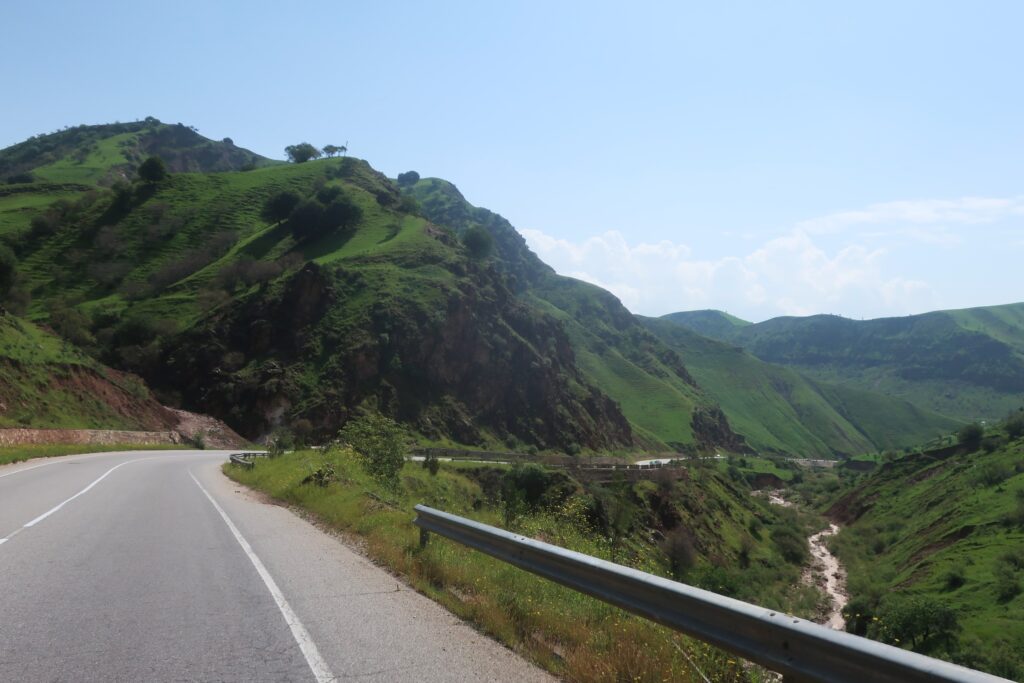
Early parts of the route are deceptively well-maintained

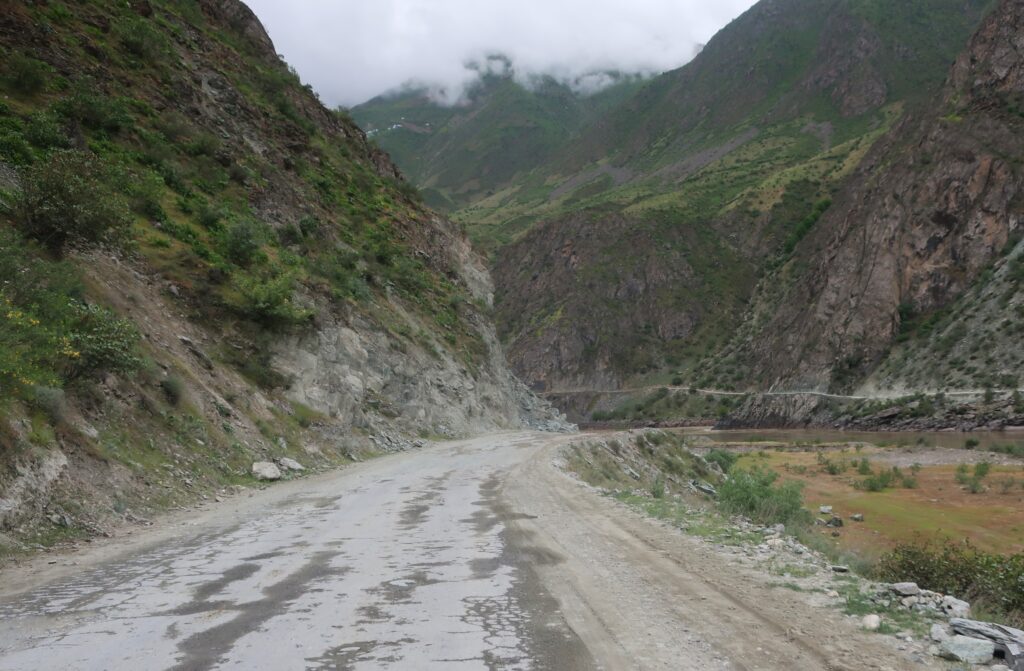
Gradually, the quality of the surface degrades.

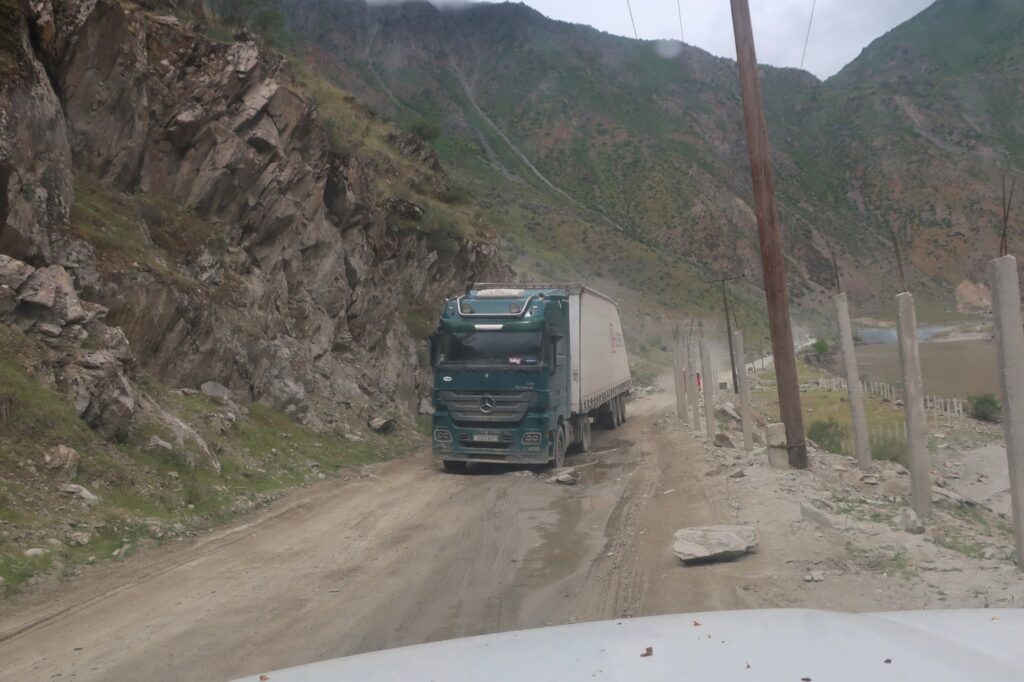
From time to time, we come across some stretches that are narrow tracks. Occasionally a giant truck appears around a bend, so someone has to move.

Truck coming

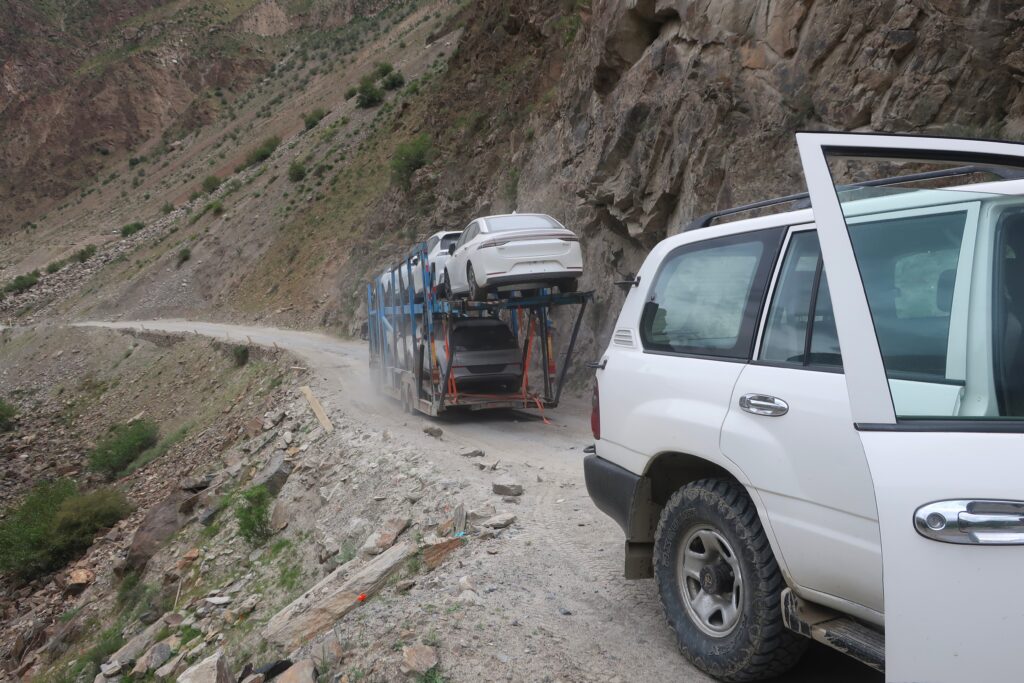
If you’re lucky, you’ll be close to a wide spot to pull into. Otherwise, you may have to reverse a bit down the guardrail-less mountain.

Truck going

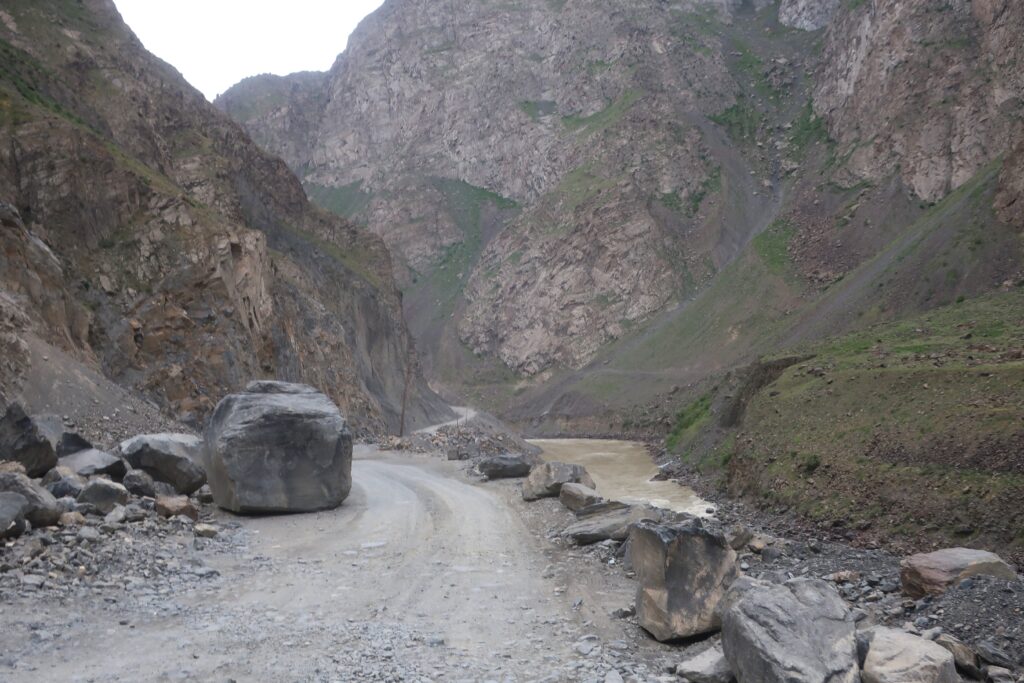
Another regular hazard are rockslides spilling down over the road, making the passage even narrower.

Elephant-sized boulder

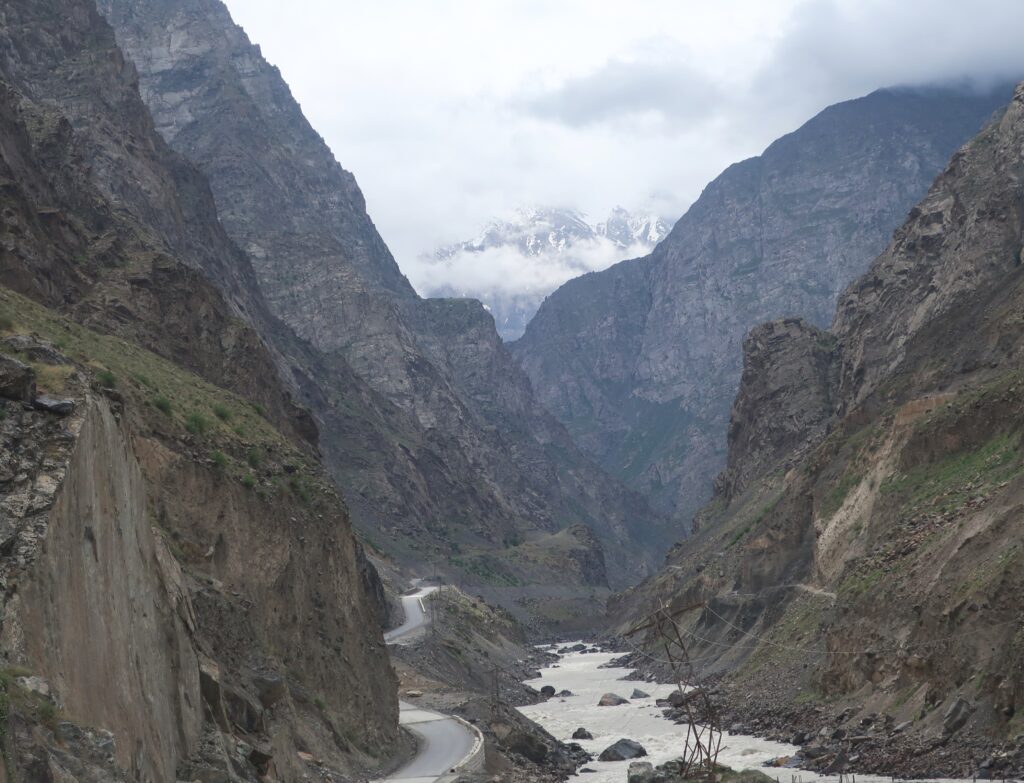
It’s the spectacular scenery that makes the minor hardship worthwhile.

The roof of the world

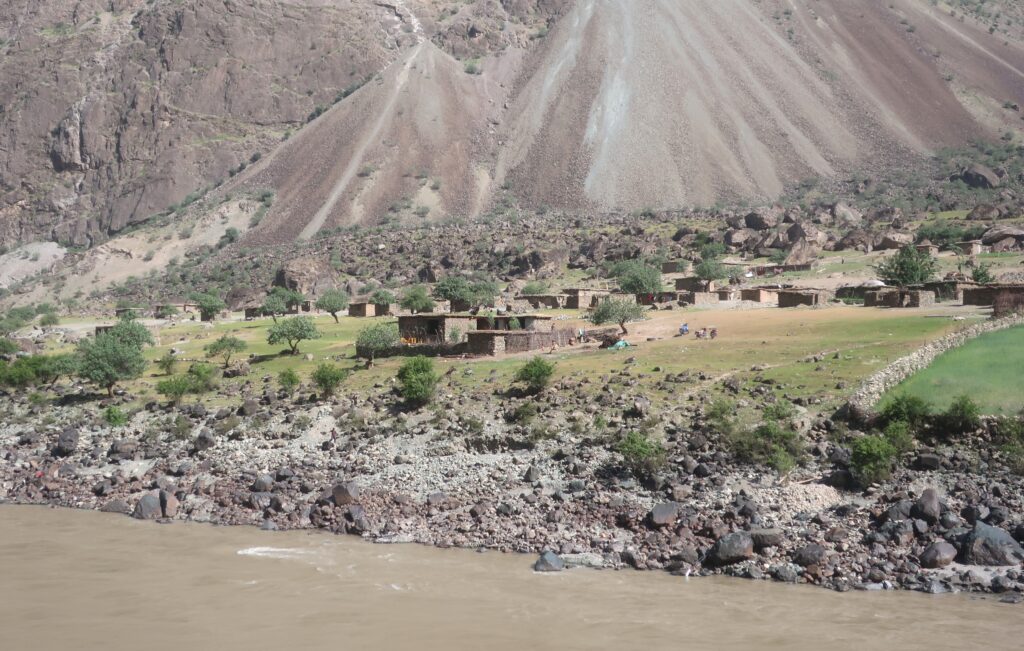
On the other side of the Panj River is Afghanistan.

Afghan village

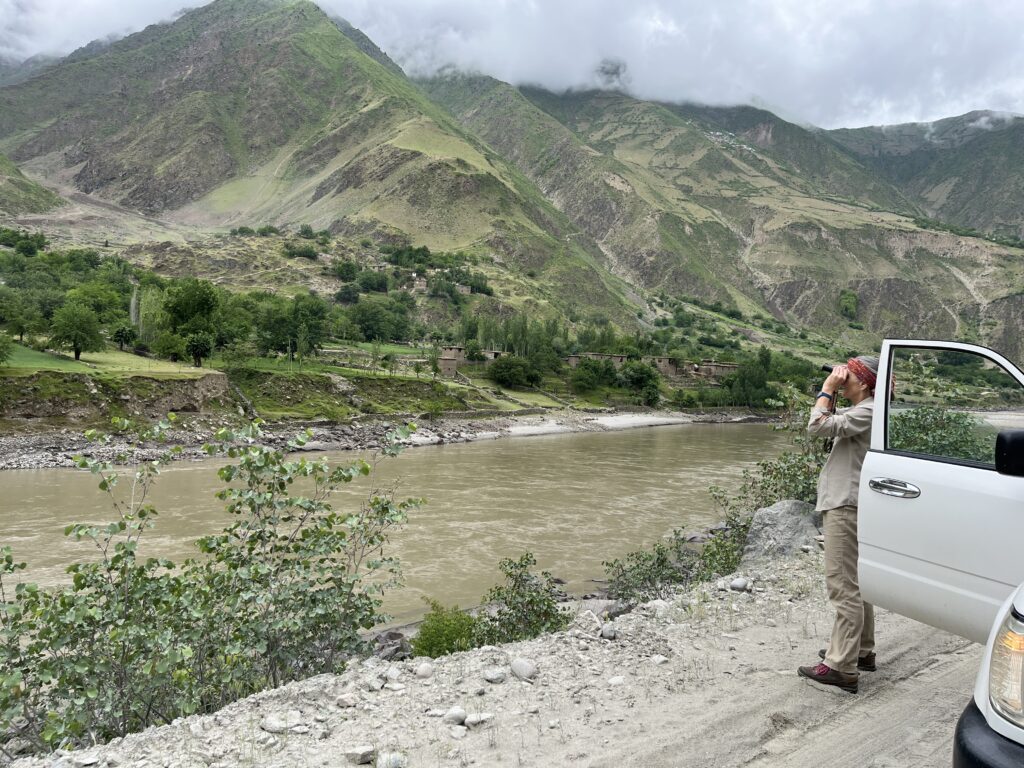
It’s always interesting to see what the neighbours are up to.

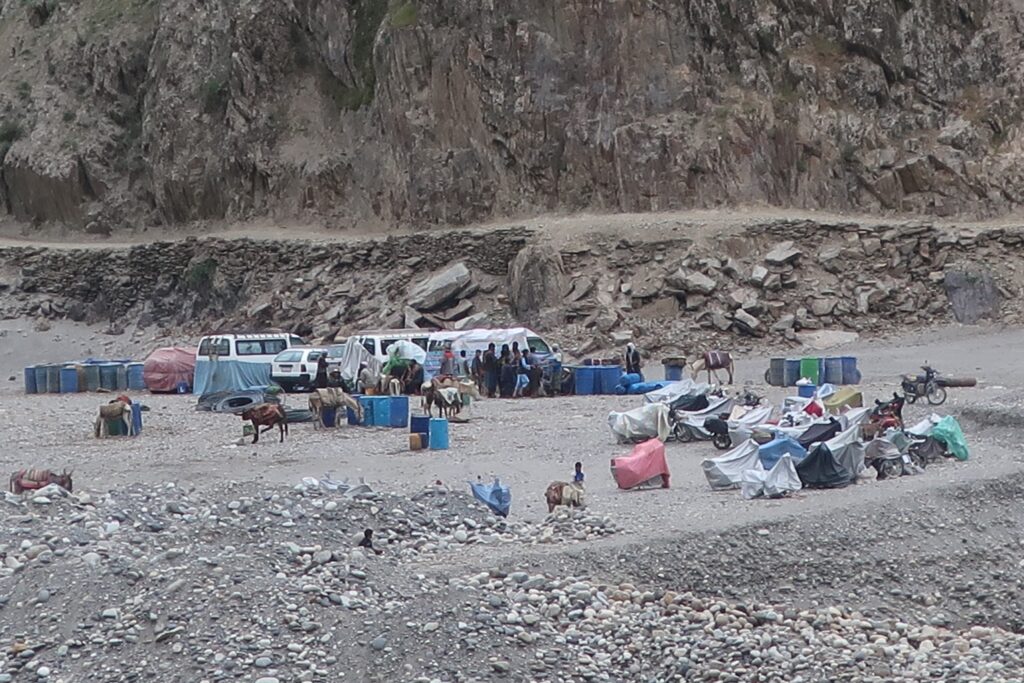
Across the river, a group of men are involved in some unidentified activity. Maybe a market for motorcycles?

We eventually cover two thousand KMs on this trip. The freedom to stop where we want is a bonus. Besides, we see 4X4s that we suspect are foreign tourists driven by locals who drive like madmen – not something we’d be comfortable doing.

Mr. Safe Driver

Sight or Insight of the Day

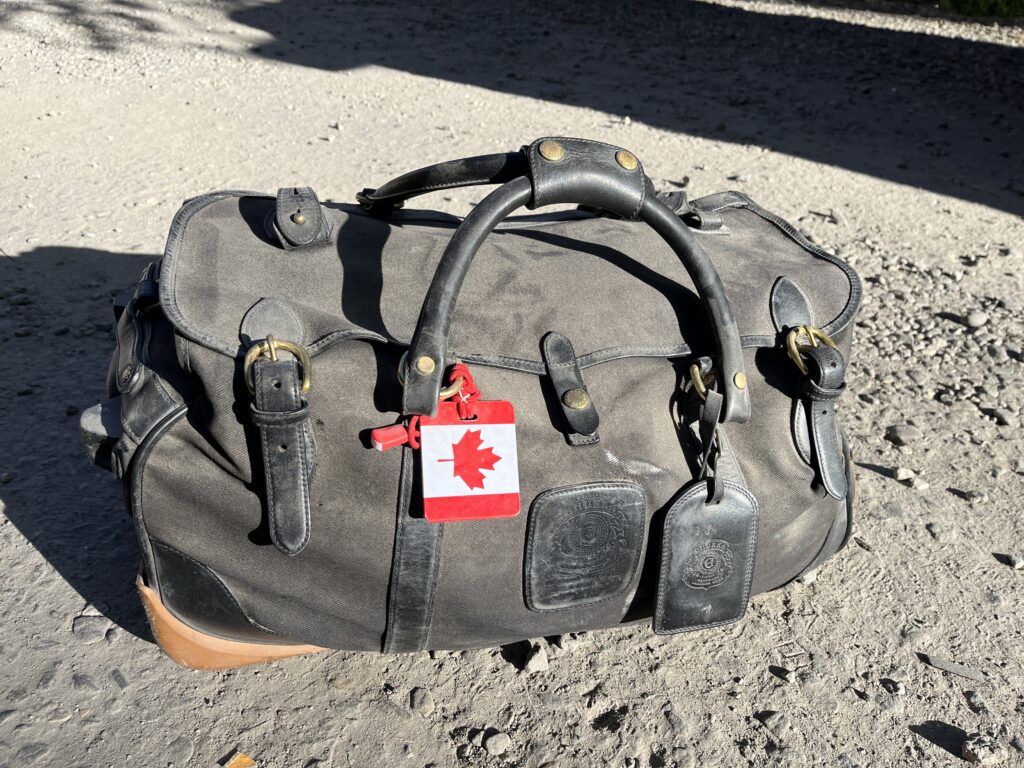
After a few days of travel in Vin, we and our belongings are covered in dust. I wonder if Gurkha, the manufacturer of my travel bag, would be interested in using it in some promotional material?

World traveler takes a lickin’

It may look like it’s been through the wars, but it’s still in great shape.