We fly from Dushanbe to Almaty, the former capital and main city of Kazakhstan.
Kazakhstan is supposed to be the most prosperous of the ‘stans’: it’s resource-rich. (Tajikistan, where we have just come from, is the least prosperous.) Almaty is certainly a modern, thriving place.
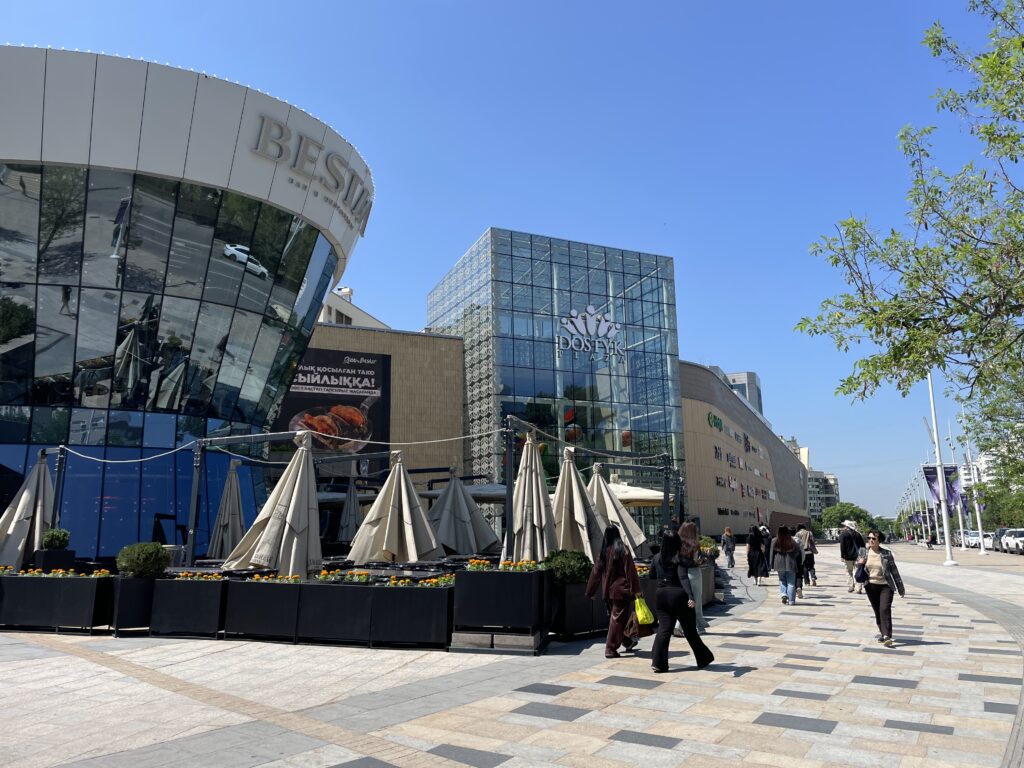
At first glance, KZ also looks like the most secular of the ‘stans’ we have visited so far. The vast majority of people are ‘normal-looking’, which admittedly to us means ‘non-religious’.
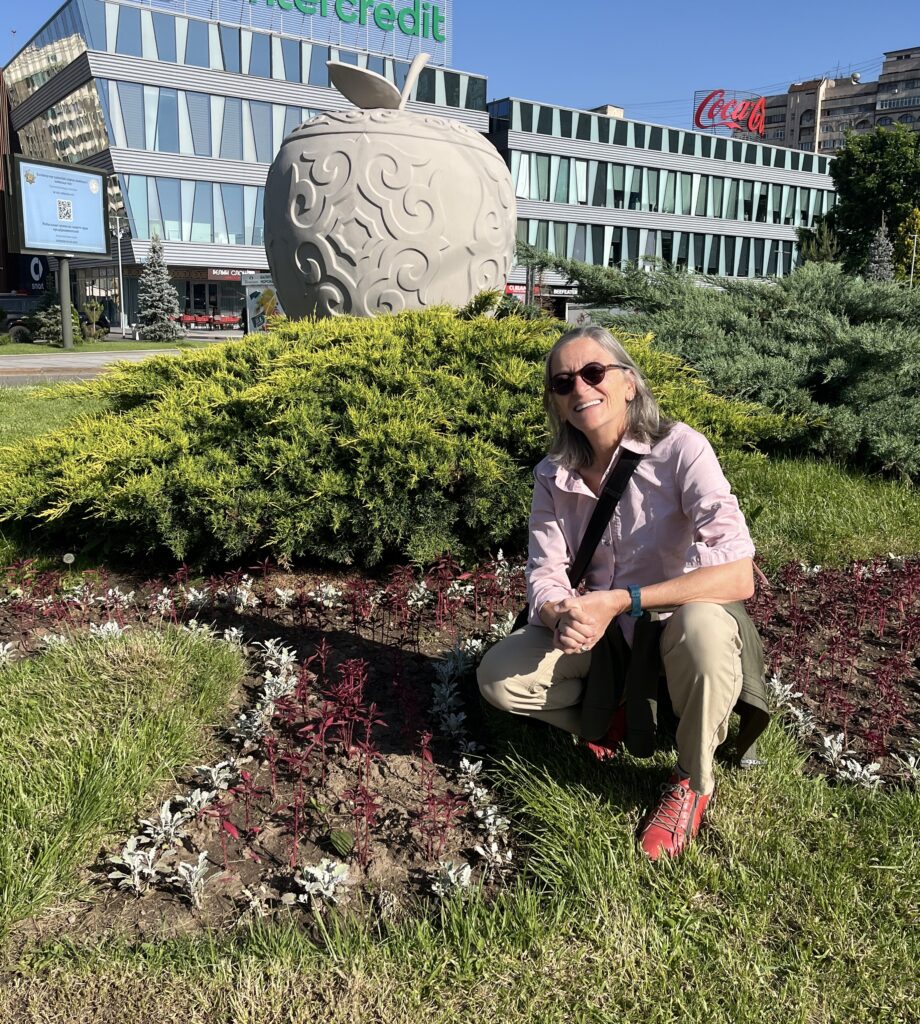
Especially in cosmopolitan Almaty. The name ‘Almaty’ comes from the Kazakh word for apple (alma), and it literally translates to ‘rich in apples’ or ‘father of apples’. AI adds this:
‘The Birthplace of Apples: Scientific research and DNA sequencing have proven that the region around Almaty is the ancestral homeland of the modern apple (Malus sieversii).‘
Of course, that’s according to AI, so it might be total slop.
One of our first stops is the impressive Almaty Museum of Arts. It’s brand new (opened in 2025).
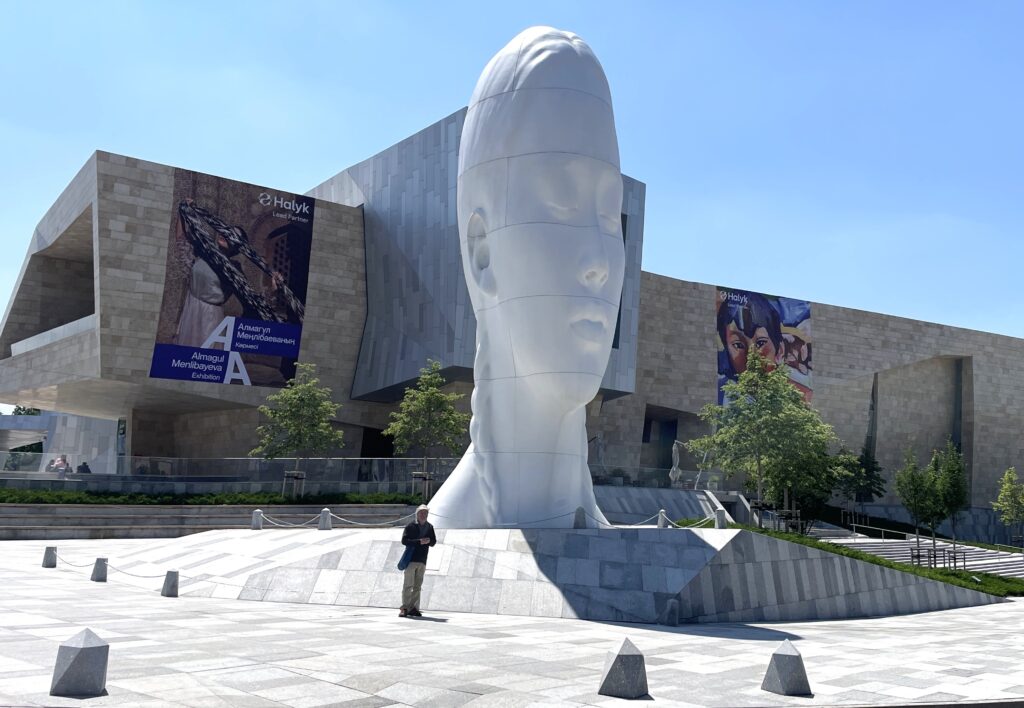
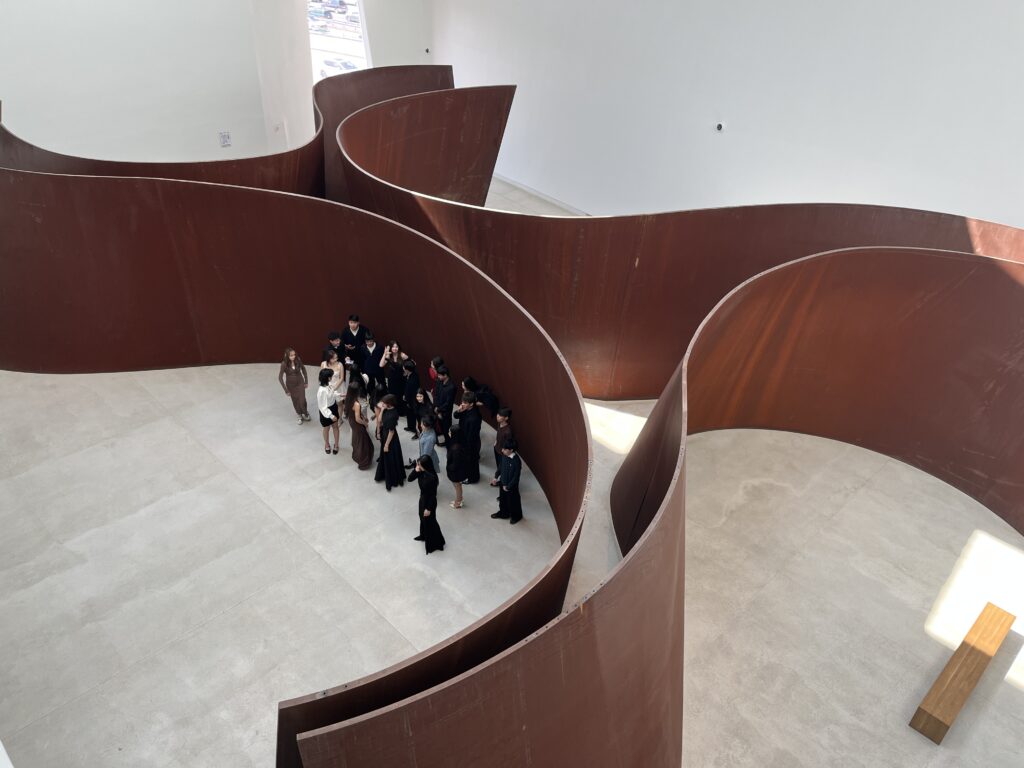
Among its collection is a signature gigantic iron sculpture by Richard Serra. (There’s also one in Pearson Airport.)

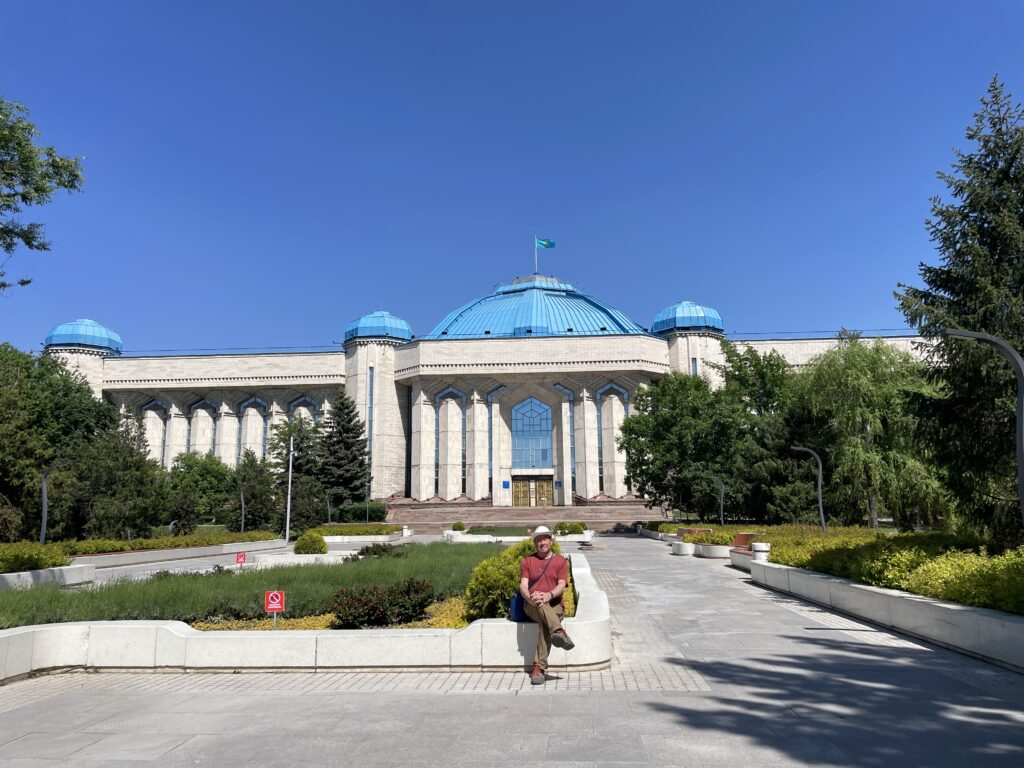
We also visit the Central State Museum of Kazakhstan.
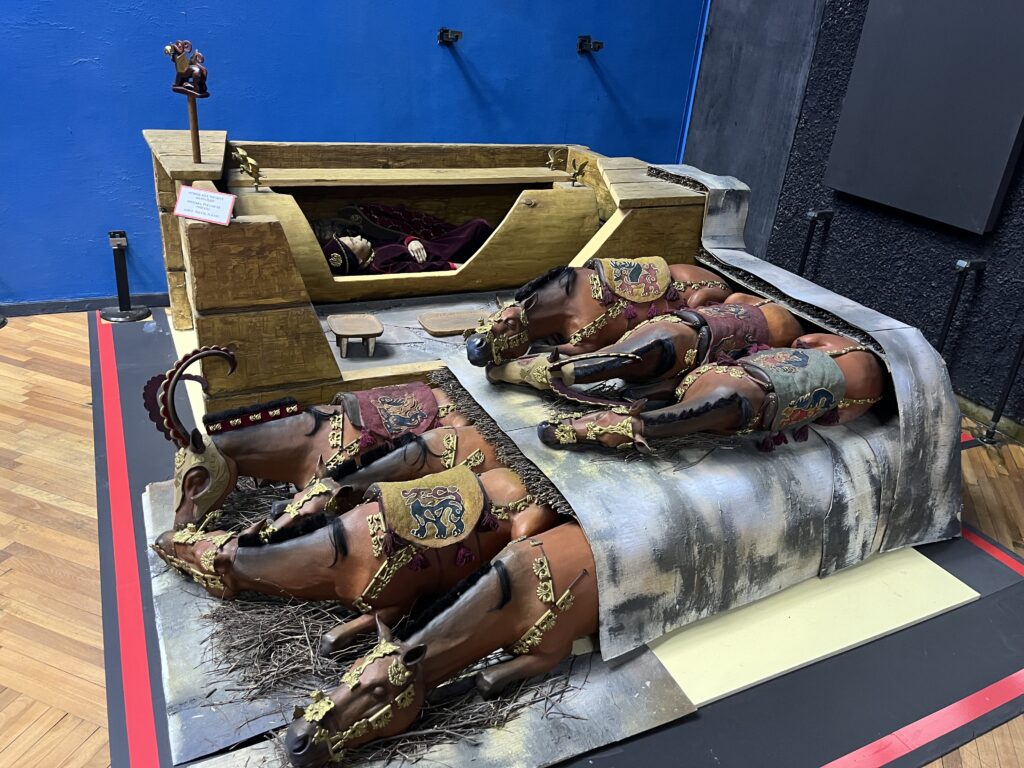
Like the other ‘stan’ dwellers, Kazakhs are crazy about horses. This goes back to their history of nomadism and early horse-taming, stretching back millennia. One exhibit displays a replica of the Berel burial, where a chieftain was found buried with his wife and favourite horses.
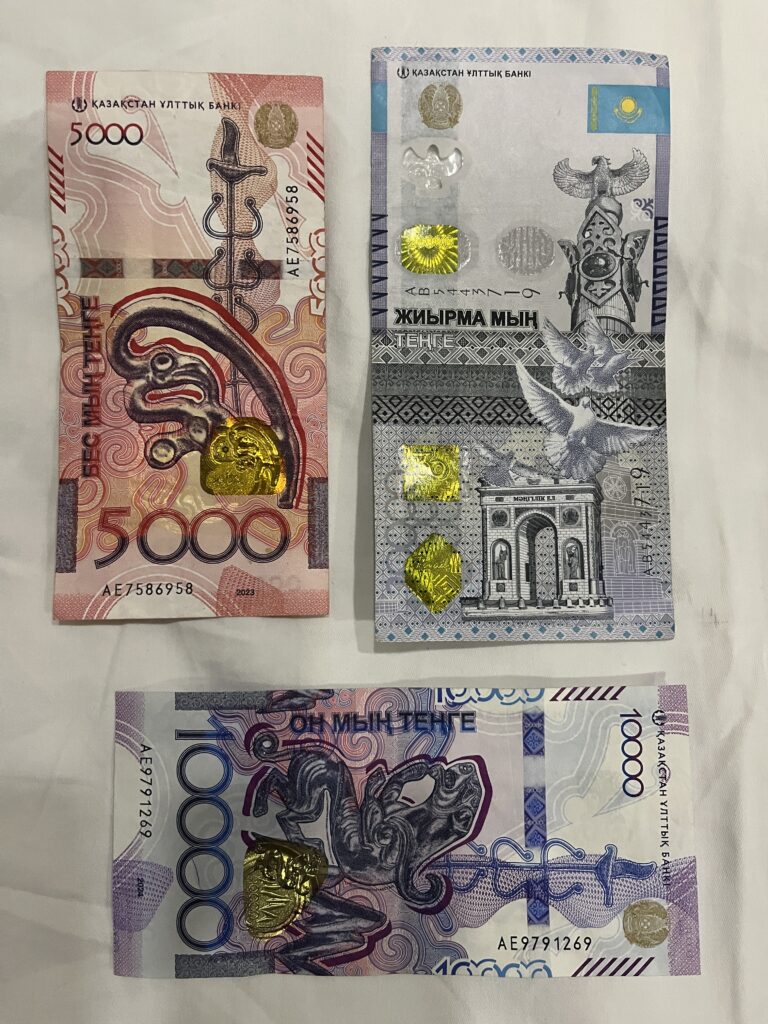
Another thing about Kazakhstan: they have the funkiest currency, the tenge. It takes 470 tenges to make a US dollar.
Almaty has an enviable amount of green space and parks. It’s very civilized.
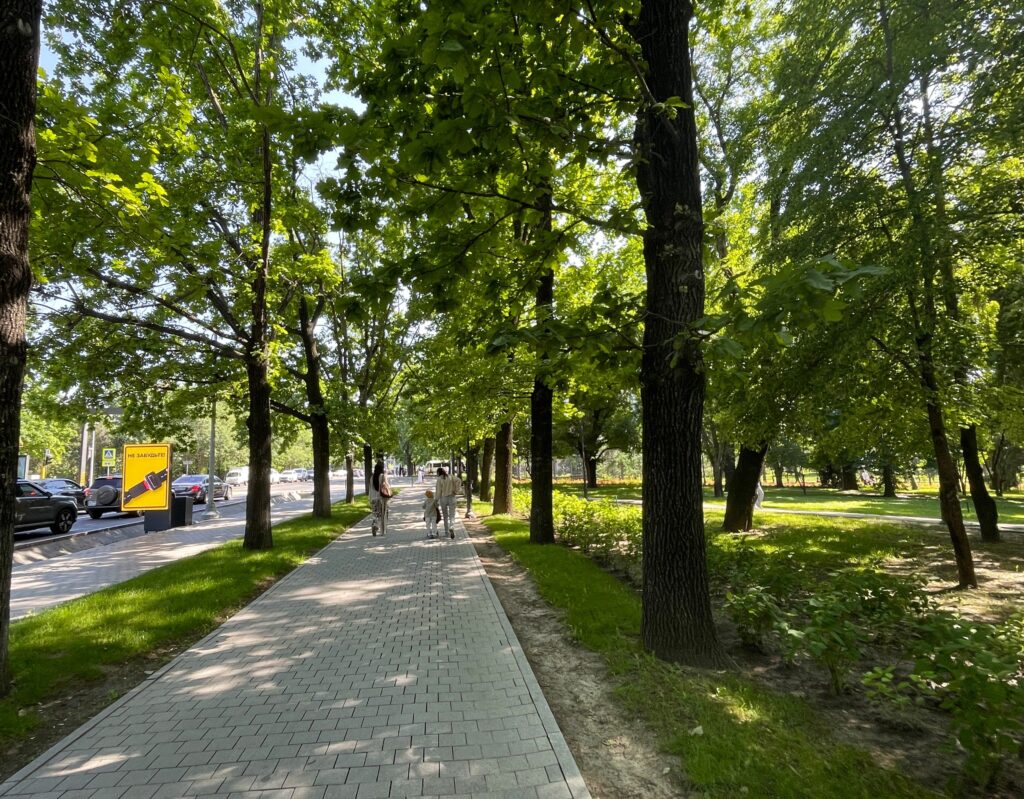
Kazakhstan is an enormous country, the world’s ninth largest. Fortunately, it has a really good rail network and good flight connections with national discount airlines, so the long distances are not a problem.
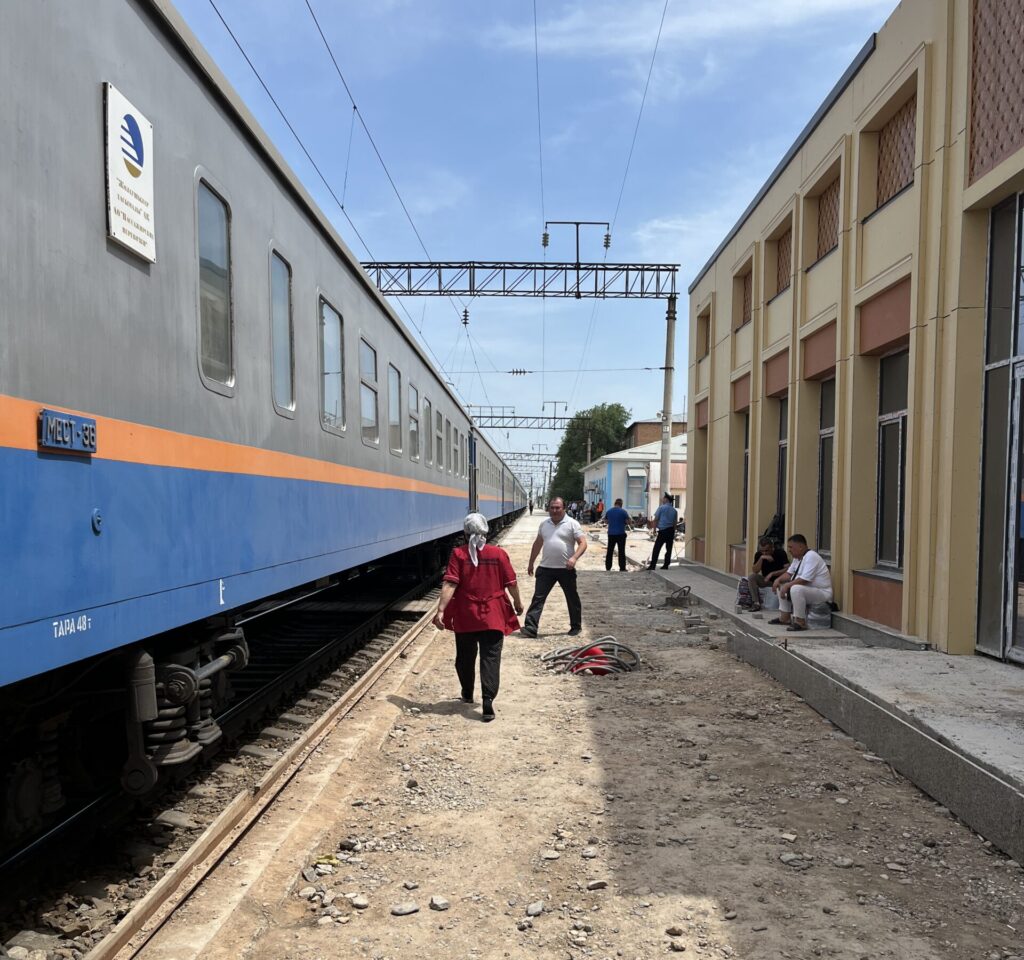
Like we did in Uzbekistan, we travel by public transport, mostly by rail. But now we increase our comfort level exponentially by purchasing all four places in a four-place sleeping compartment, an affordable extravagance.
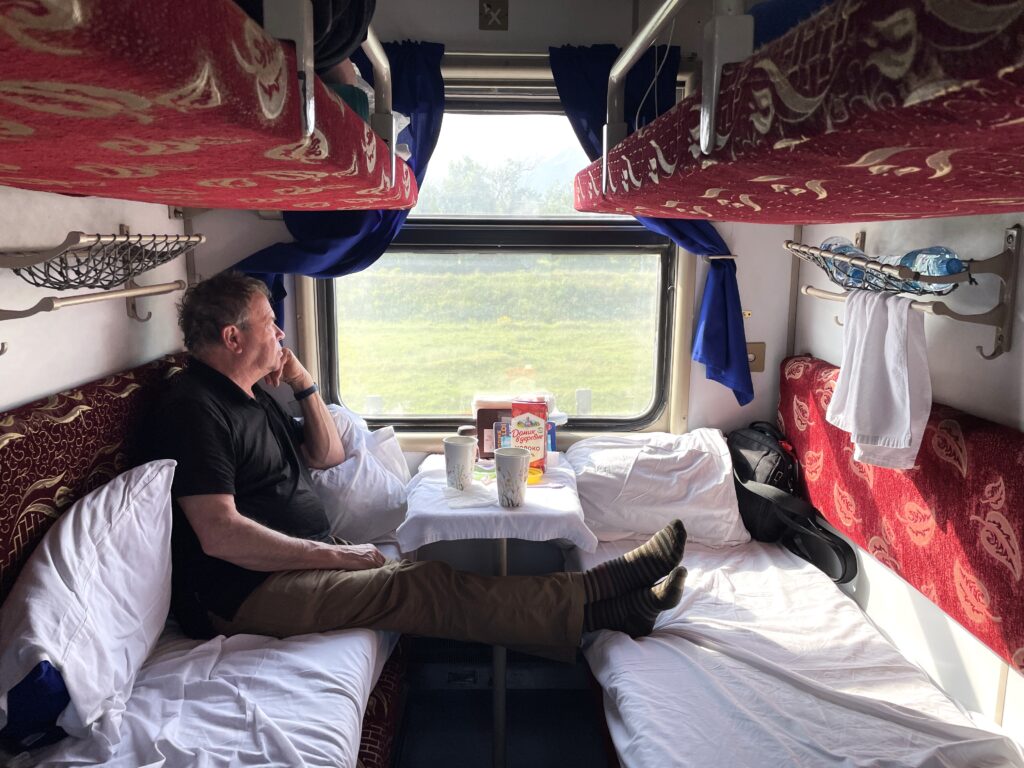
KZ is famous for its almost unlimited flat steppes, but our window is still full of mountain views duringour first day on the train.
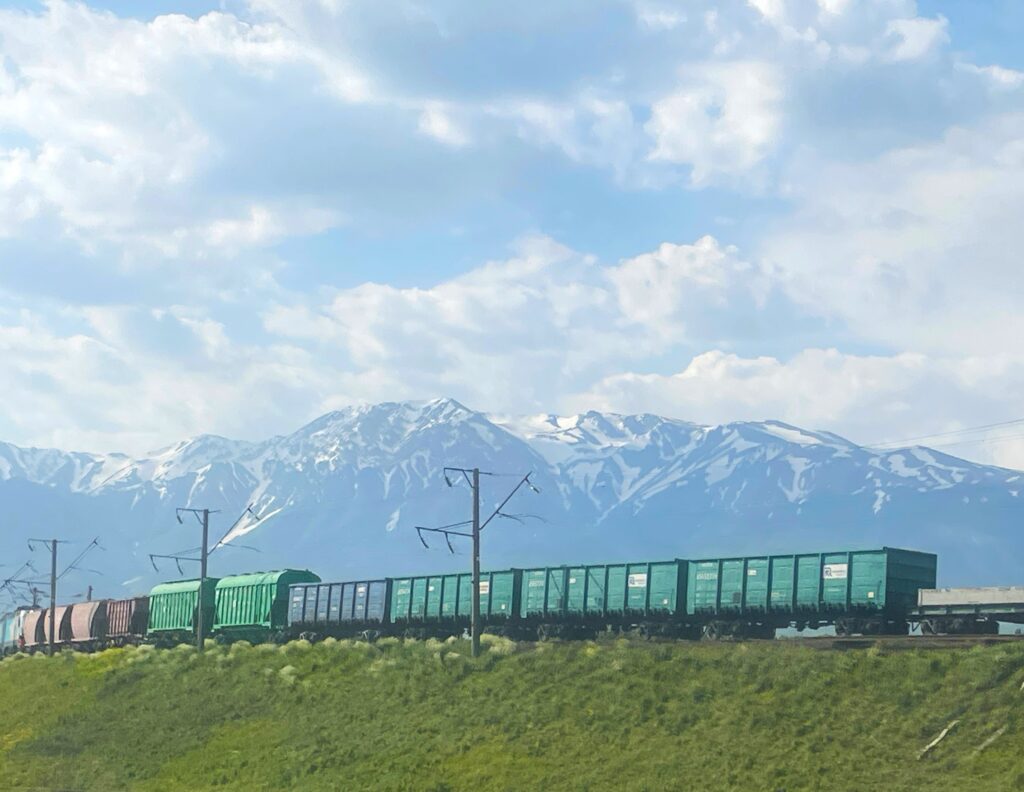
Our first destination is Turkistan. It sounds like a country but is, in fact, a city.
Turkistan’s claim to fame is the mausoleum of Khoja Ahmed Yasawi, a Sufi poet of the 12th century.
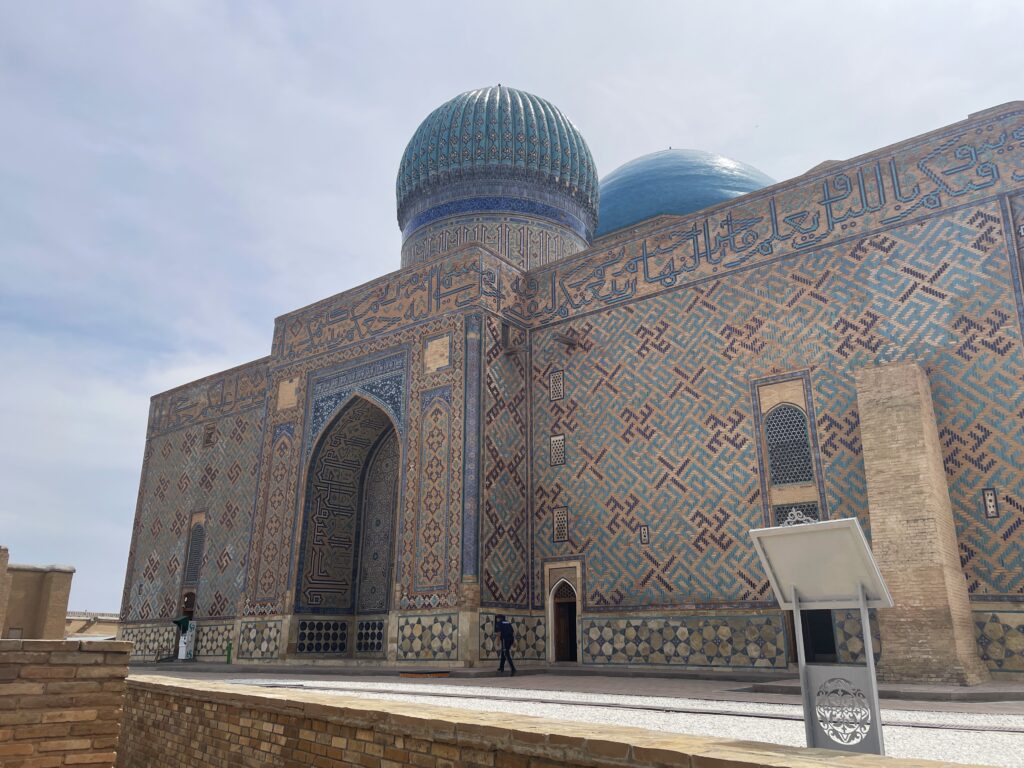
It’s a site of pilgrimage. Especially for women, it seems.
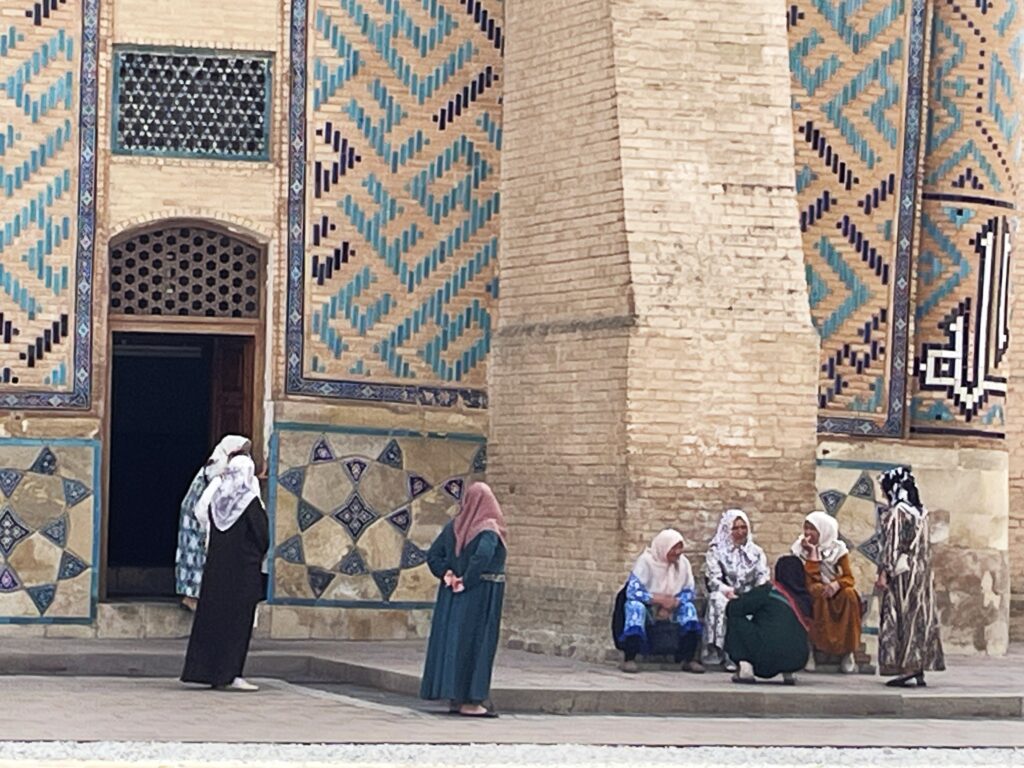
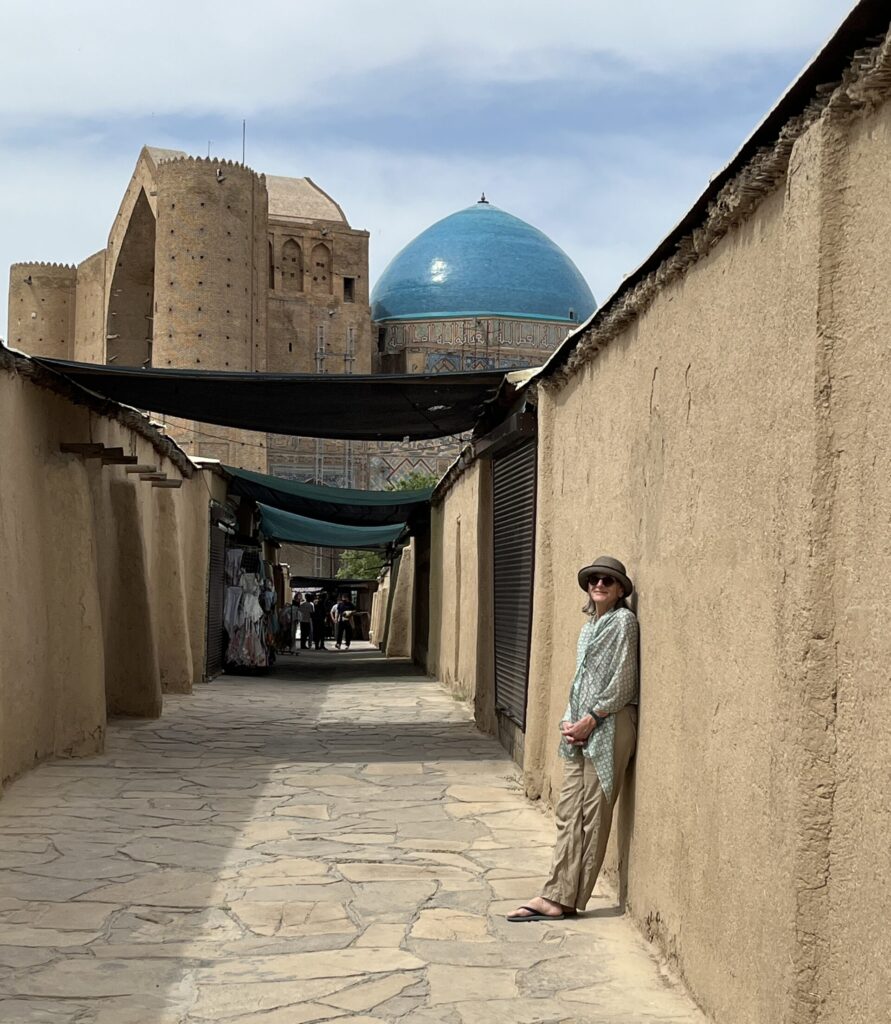
The mausoleum is part of a complex that includes an underground mosque and the archeological remains of the old town within a stretch of restored city walls.
Sight or Insight of the Day
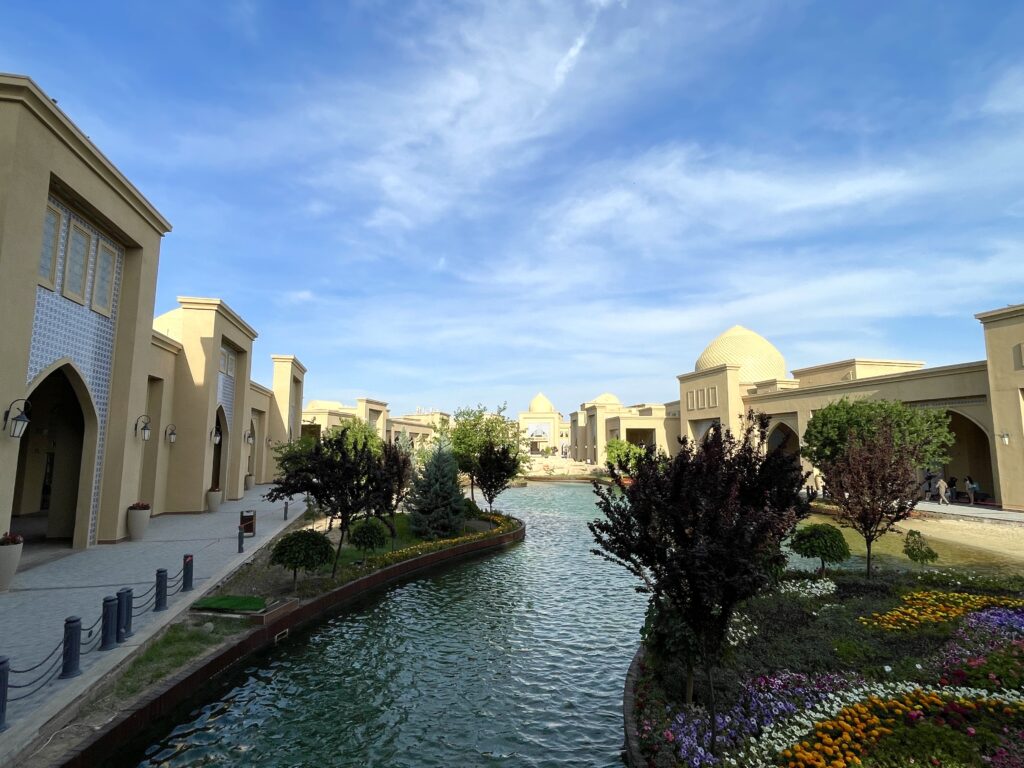
KZ doesn’t have the many historic towns that Uzbekistan has, so they’re keen on developing Turkistan as a destination that attracts visitors beyond the pious pilgrim sort. There is now a ‘new town’, built in the style of a Silk Road city, complete with an IMAX theatre in the shape of a golden Roc’s egg.
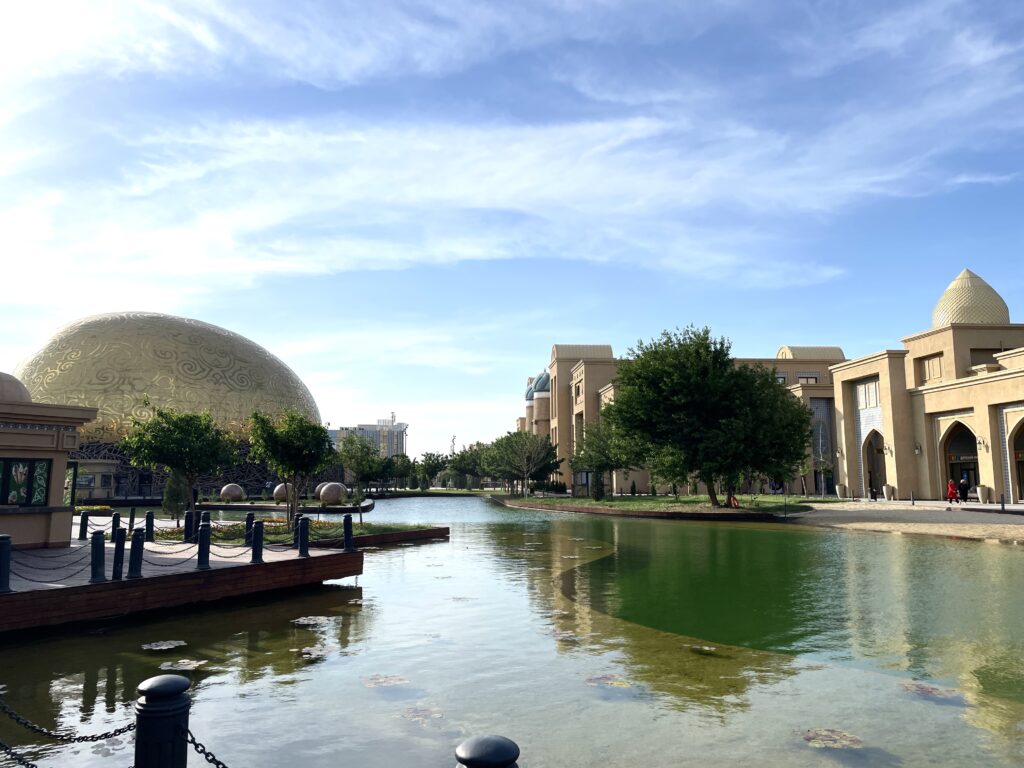
It seems strangely devoid of visitors. Maybe it’s too earl in the season to expect throngs of tourists?