We have a good week exploring Ulaanbaatar before flying home. Ulaanbaatar isn’t everyone’s idea of a beautiful city, but we find a lot to keep us busy.
(One of the first things we notice: there are a LOT of Koreans here. Korean restaurants, karaoke bars, and businesses are everywhere. They also make up the largest group of foreign visitors.)
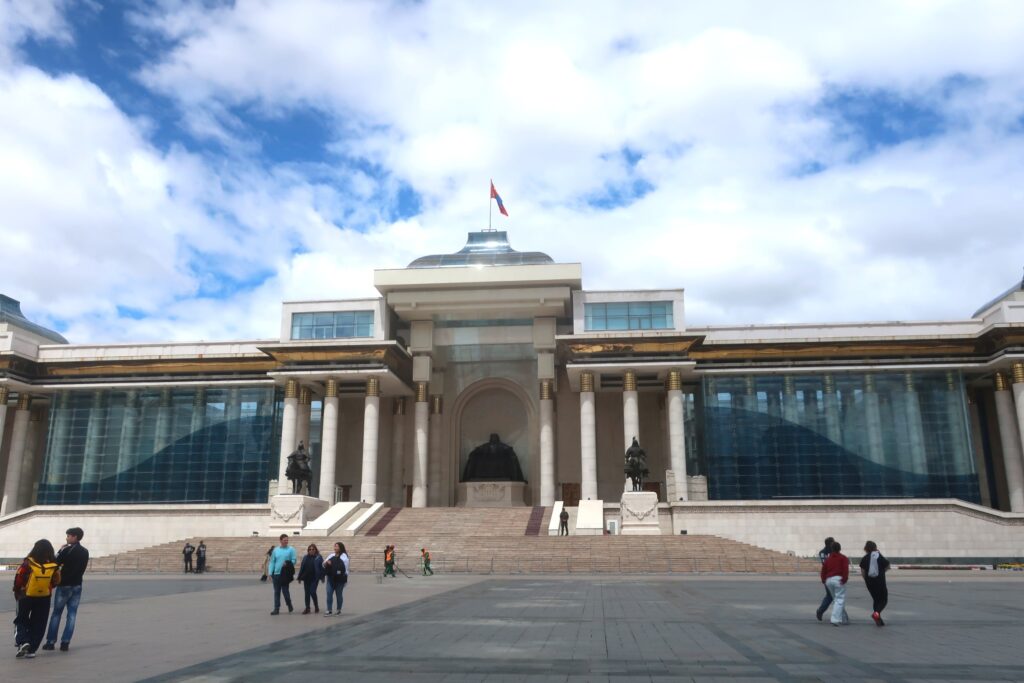
Sükhbaatar Square is the undisputed centre of the city. A government building facing the square has a mammoth colonnade monument featuring – of course – Genghis Khan.
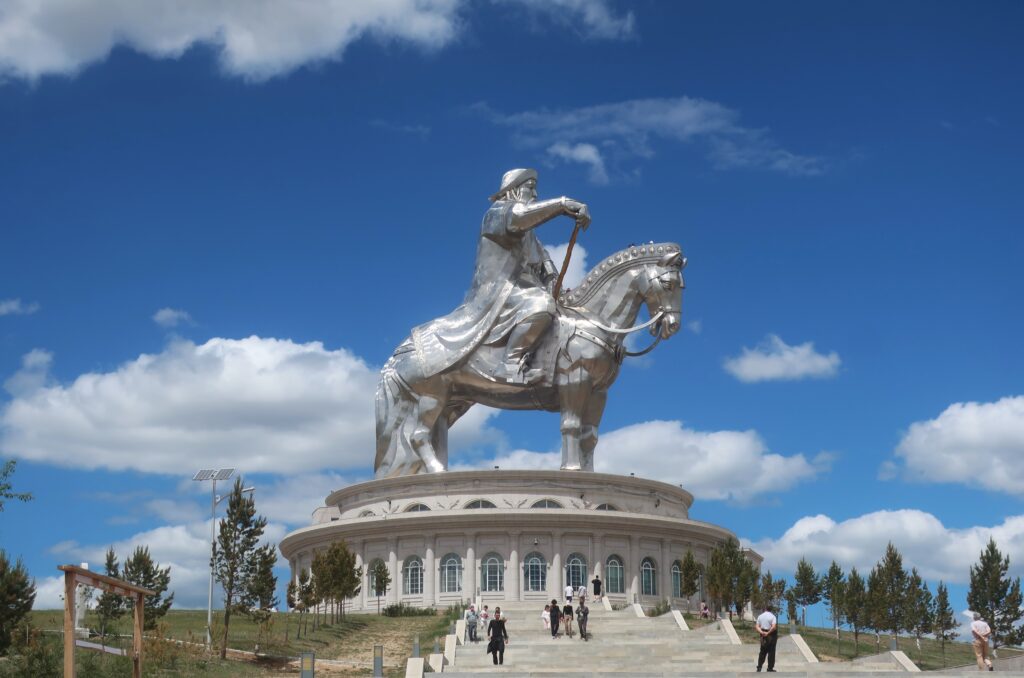
Speaking of the man, we hire a car and driver for an excursion out of town to the Chinggis Khaan Statue Complex. The star attraction is the 40-metre tall stainless steel statue of Genghis Khan on horseback.
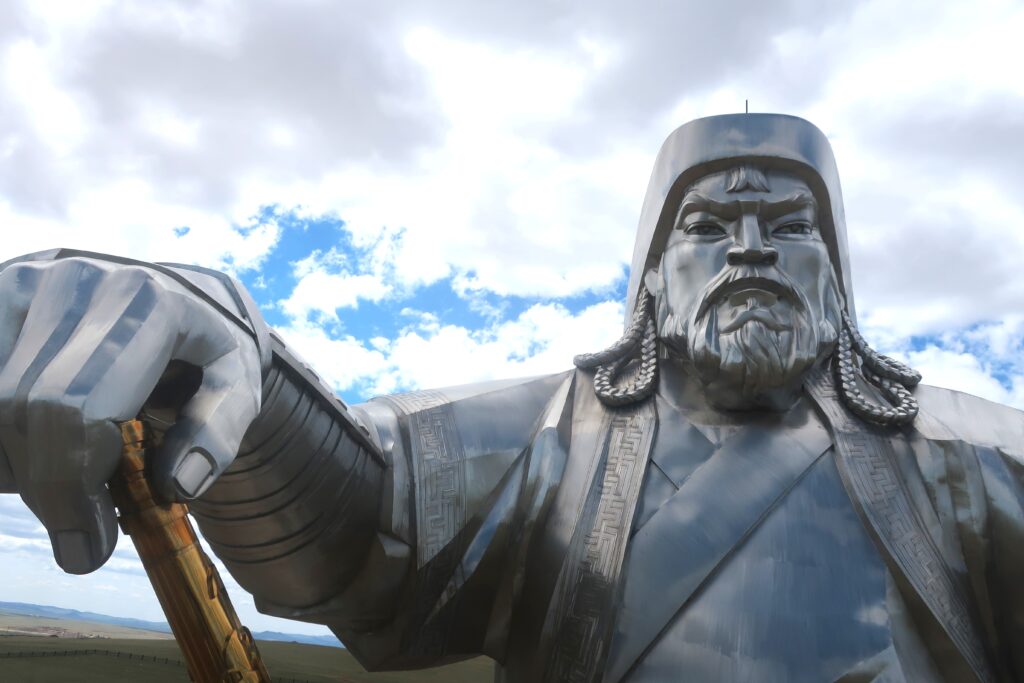
You can climb up flights of stairs for a panoramic view of the surrounding countryside.
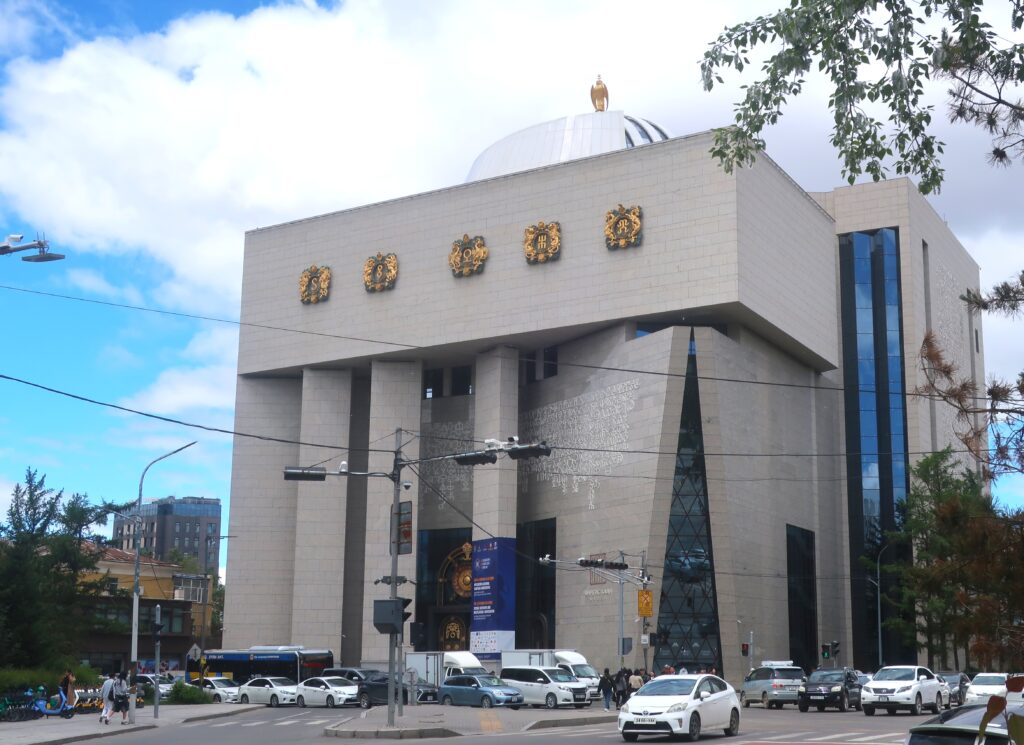
The Genghis-mania continues. Back in UB, we visit the new-ish Genghis Khan Museum. This explains everything you might want to know about the Mongol Empire and its founder.
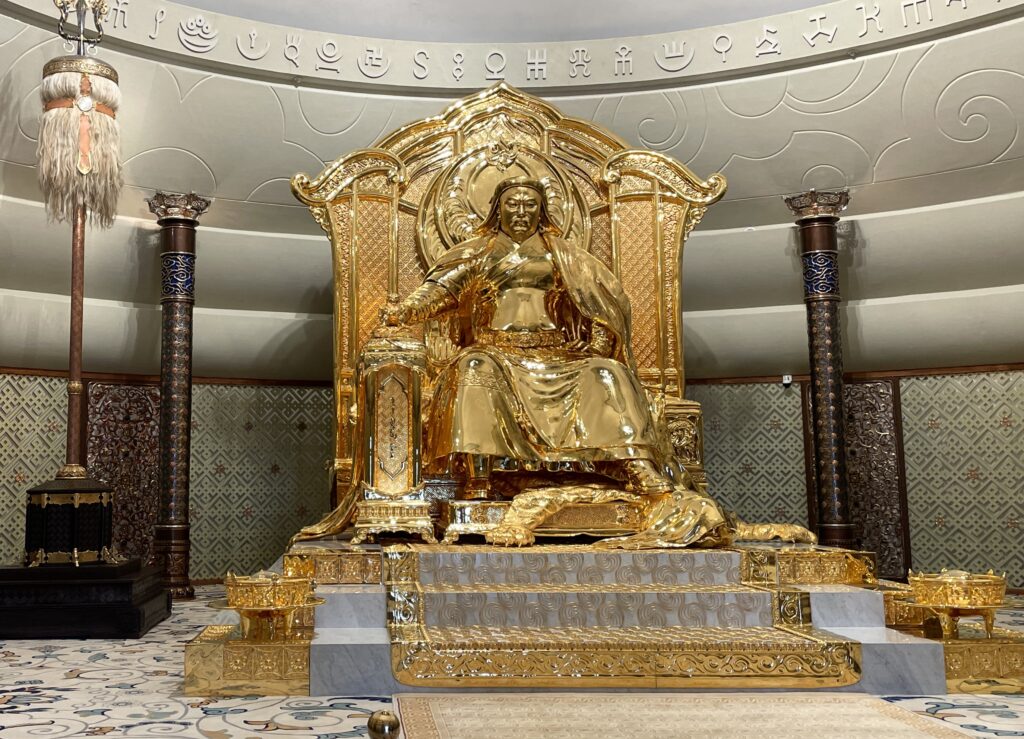
At the top is a palatial yurt-like structure with a golden statue.
There’s an almost religious veneration for the man. Visitors are advised to remove their shoes before entering, pay their respects, and exit slowly without turning their back on him.
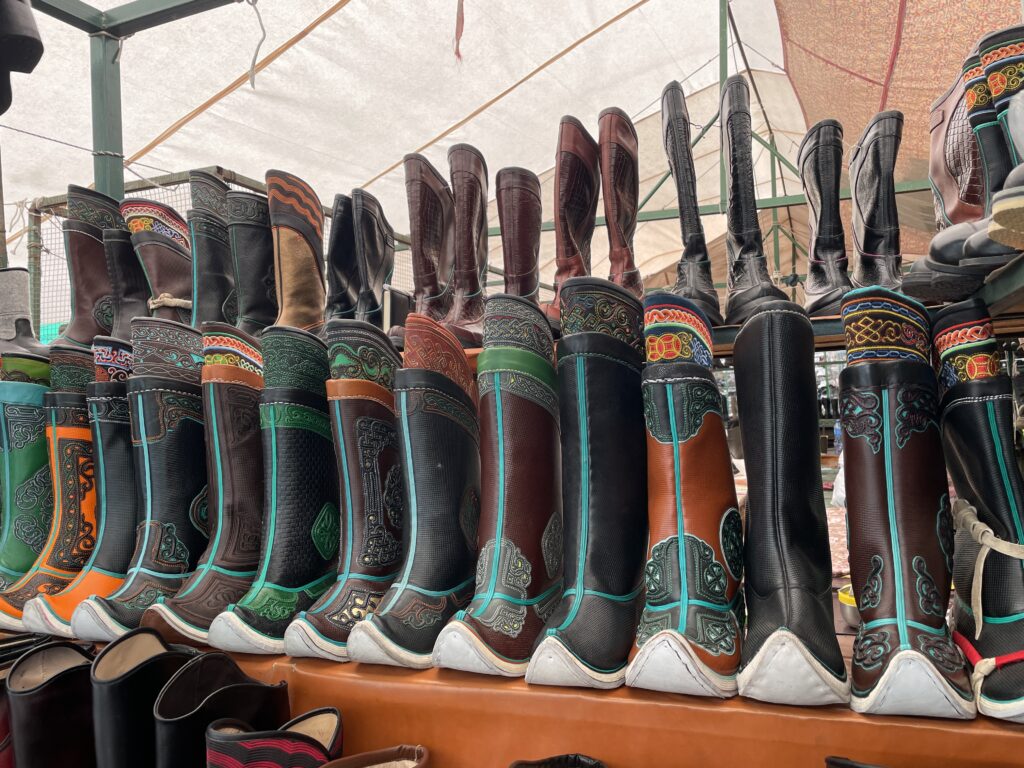
One day we visit the Narantuul market. Some so-called ‘influencers’ like to boast about daring to enter ‘the most dangerous market in Mongolia’. What a load of old codswallop. YouTubers will say anything for clicks. Narantuul is about as dangerous as Disneyland.
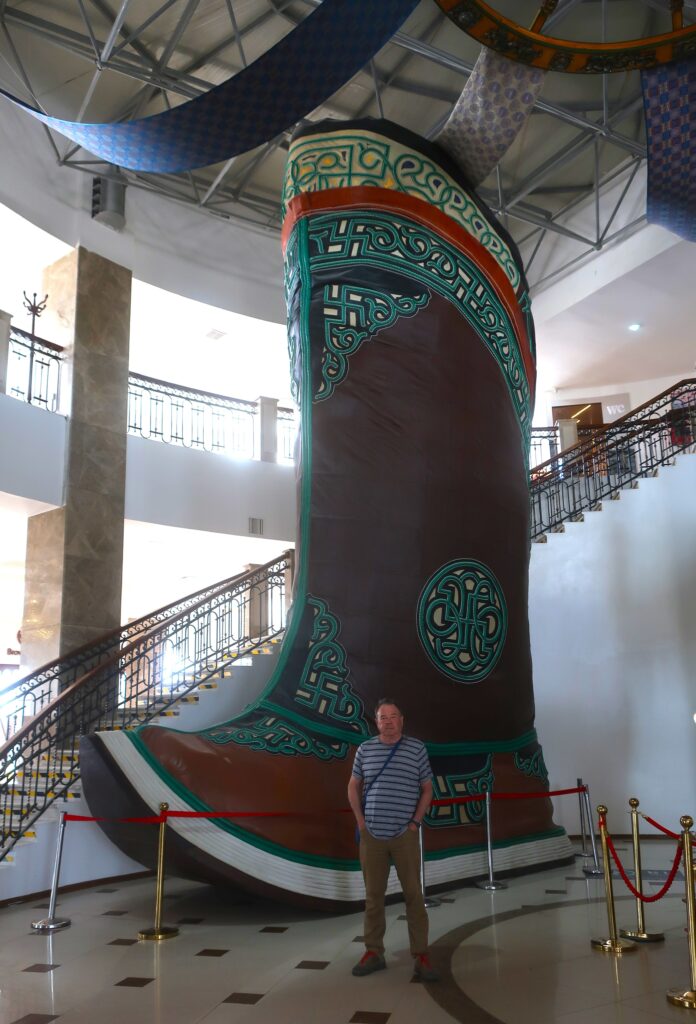
(Incidentally, the Chinggis Khaan Statue Complex has, for some unknown reason, a gigantic Mongolian boot on display.)
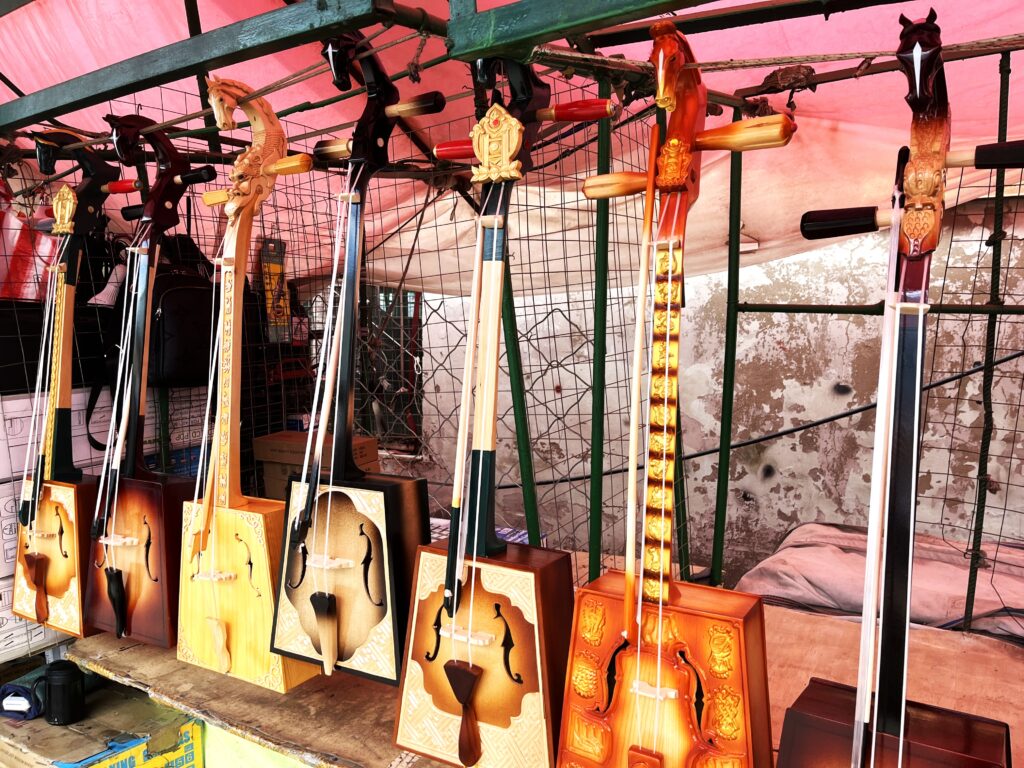
Narantuul is a good place to pick up a morin khuur, the two-stringed national instrument. These produce the main sound in the traditional music of Mongolia. Note the decorative horse-heads.
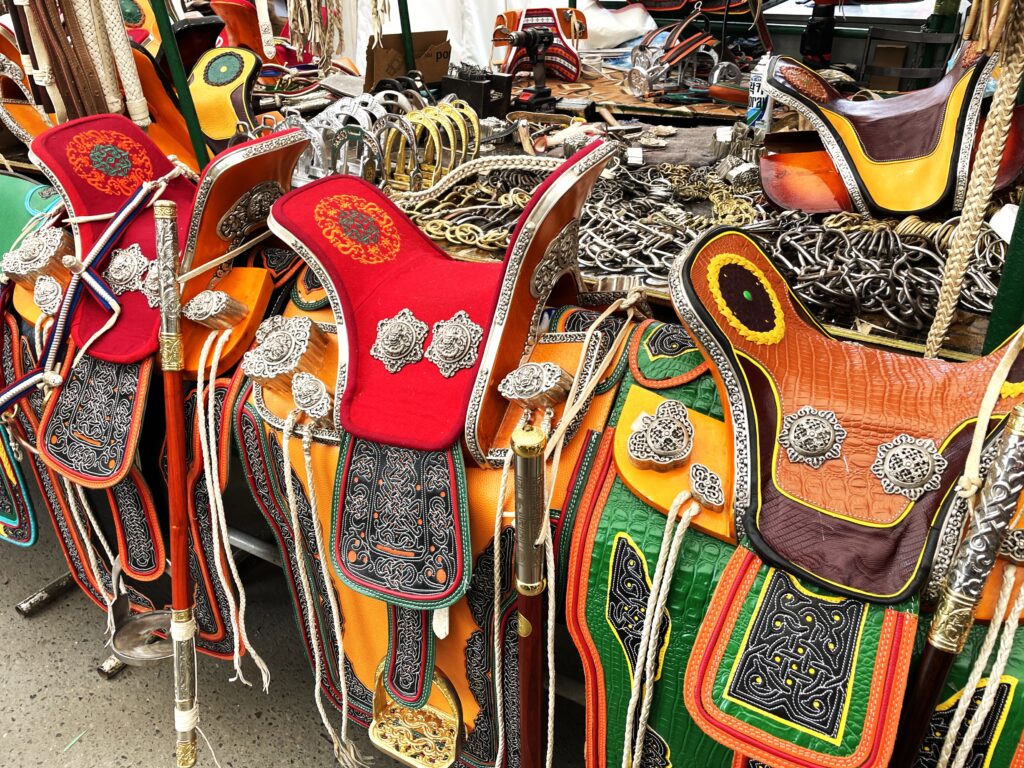
Of course, there’s lots of horse tackle for sale. You can watch people making it.
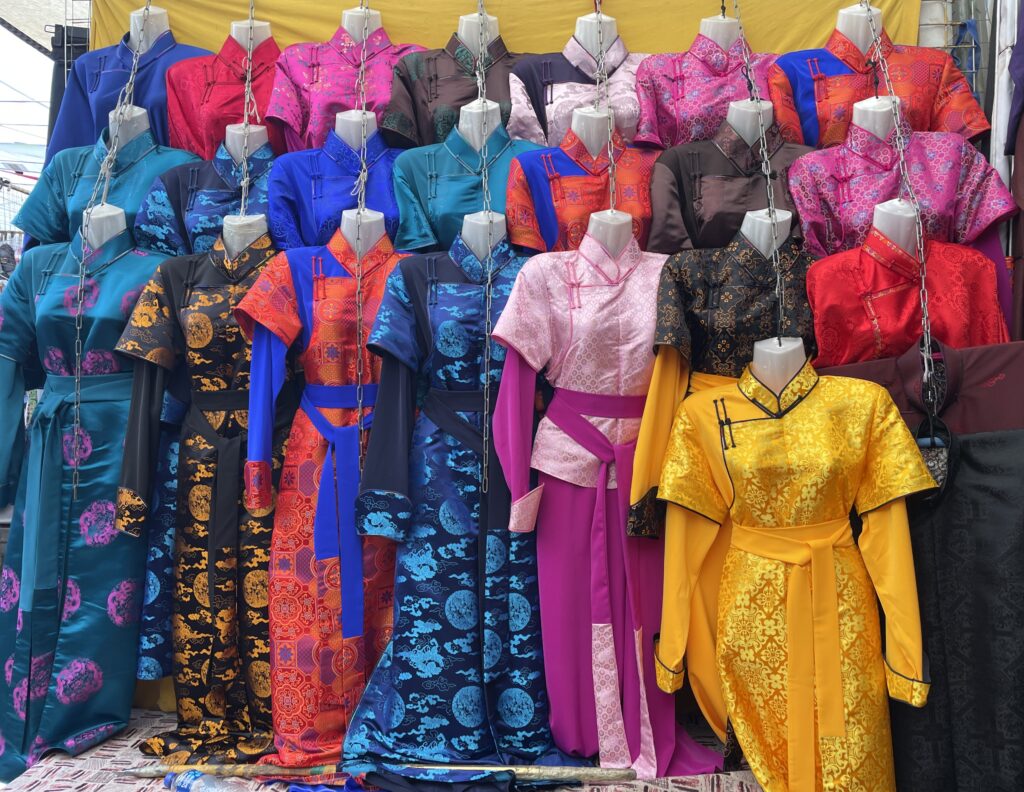
There are aisles and aisles of brightly-coloured traditional clothing, too, called deels. Men and women wear similar robe-like clothing.
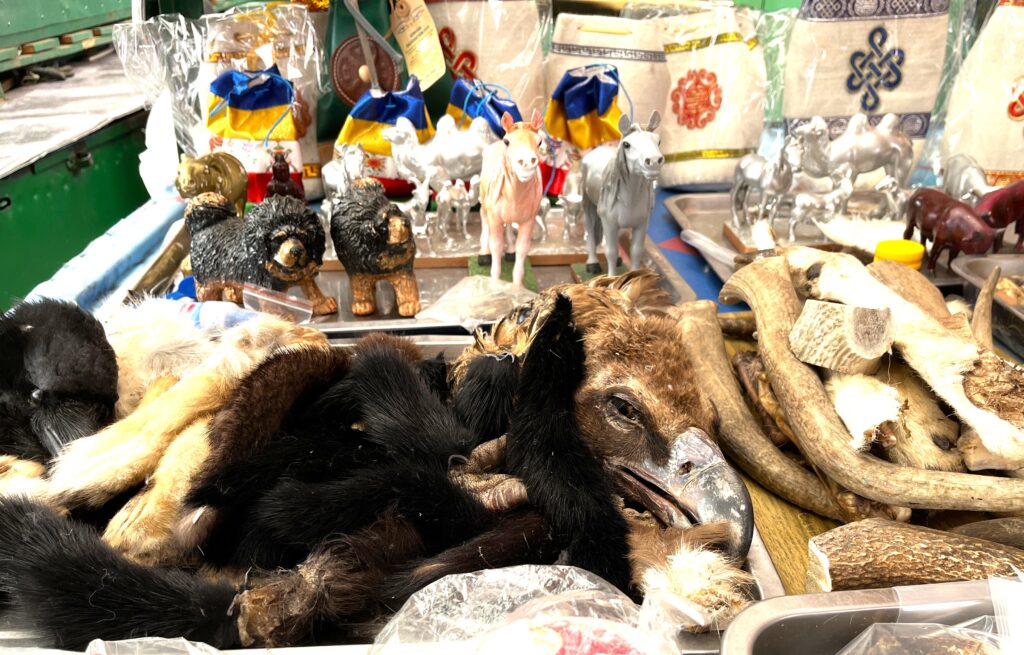
Also lots of items of interest to practising shamans, such as animal parts and bird heads.
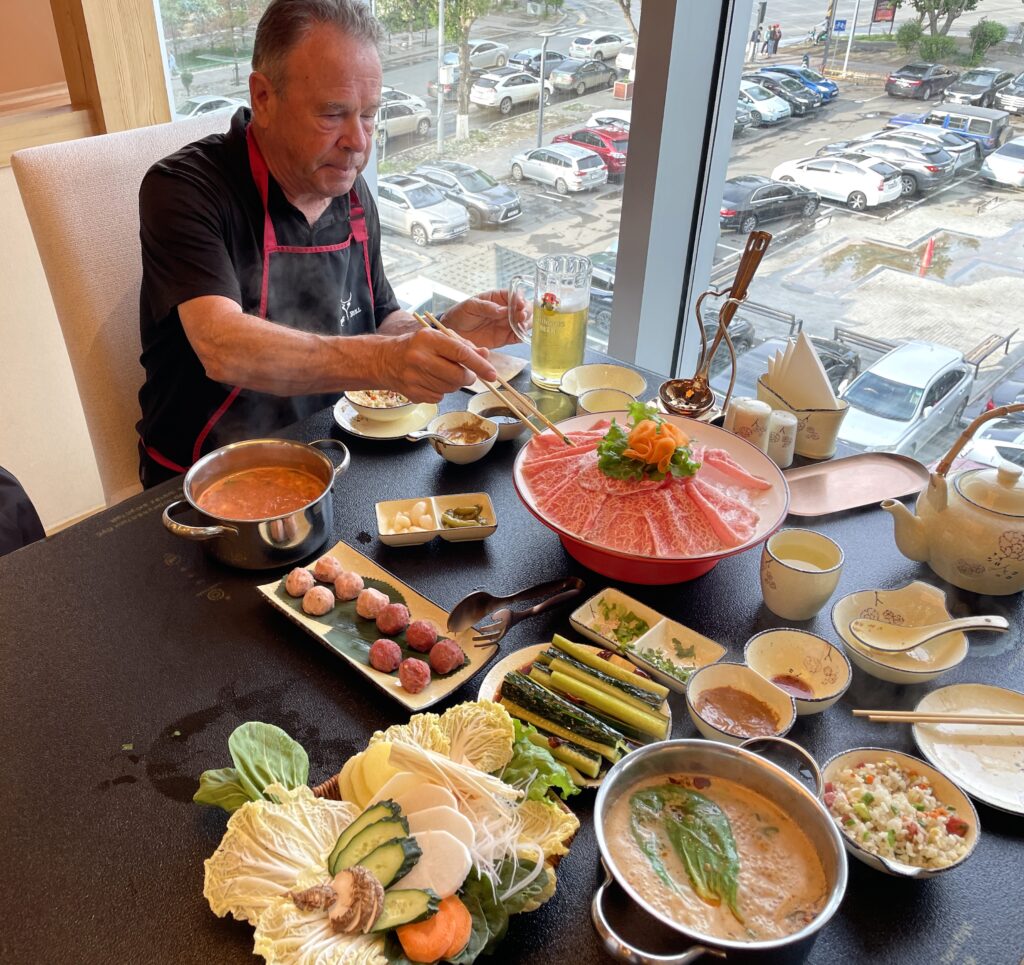
You can’t visit Mongolia without indulging in a Mongolian Hot Pot meal. We find a great place and go there twice.
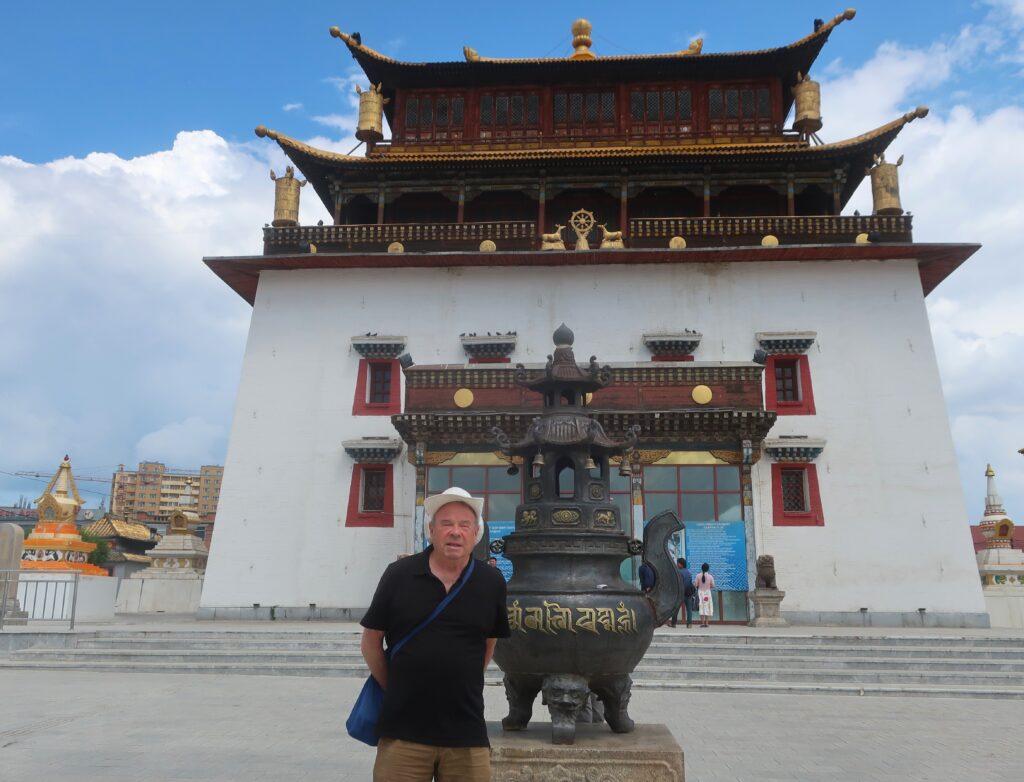
Next day, we visit the Gandantegchinlen Monastery.
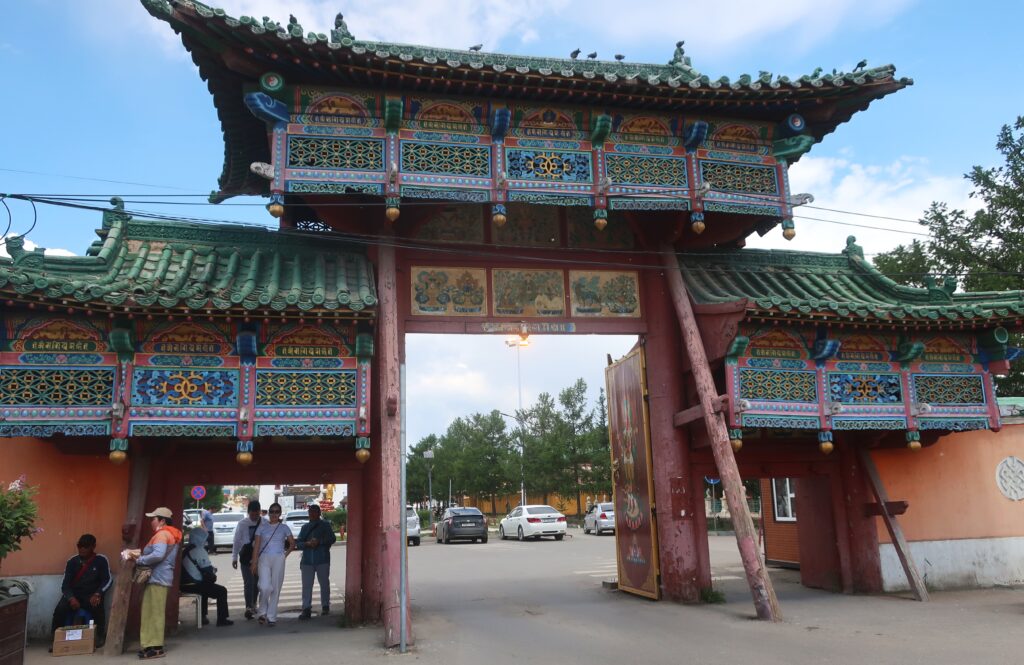
One of the few Buddhist monasteries that avoided complete destruction during the Communist purge of the 1930s.
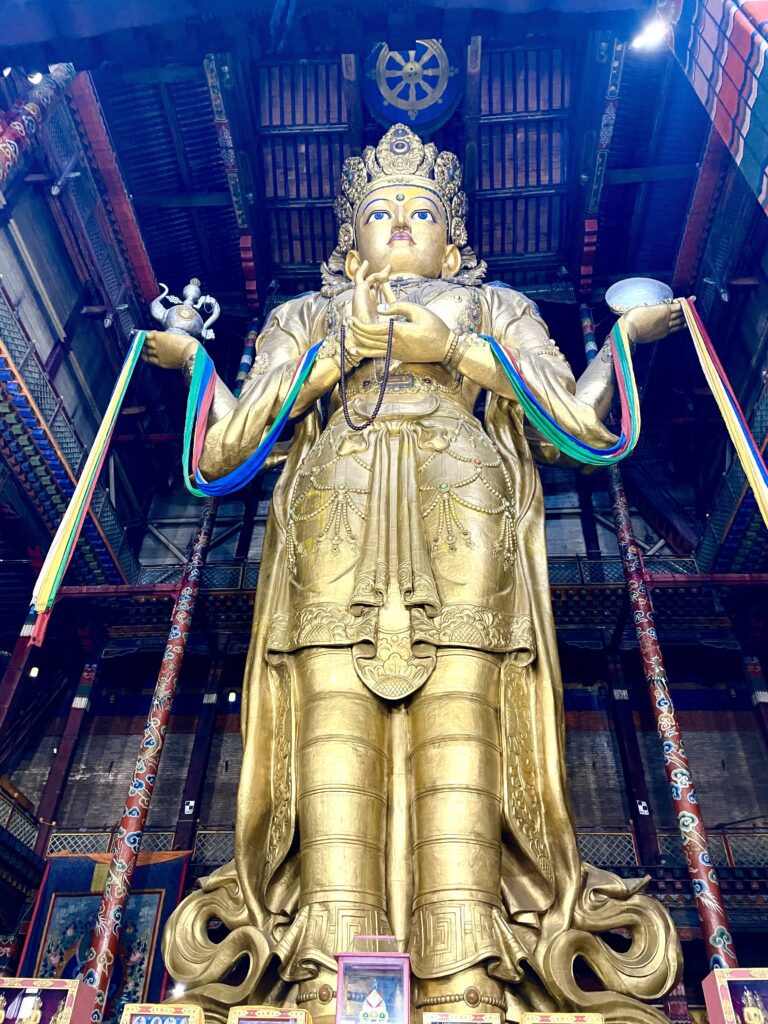
Inside is a statue of Avalokiteśvara, 26 metres tall, we’re told. He’s a bodhisattva.
There are lots of prayer wheels around to spin, and the locals do just that.
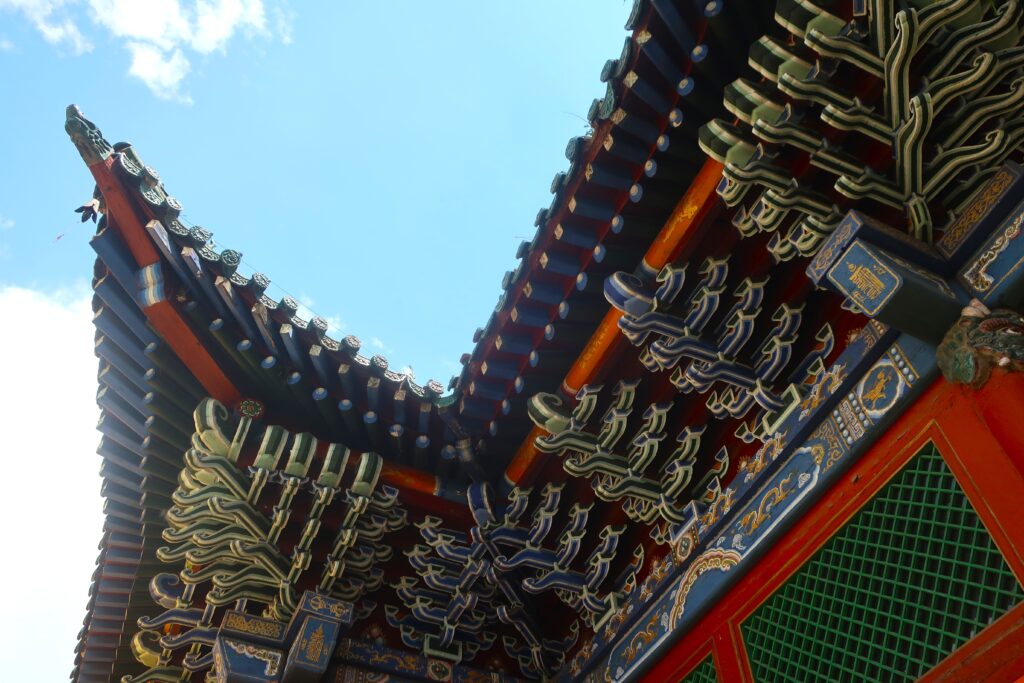
According to Wikipedia: ‘As of 2004, Gandan is Mongolia’s largest active monastery, with 100 monks. ‘
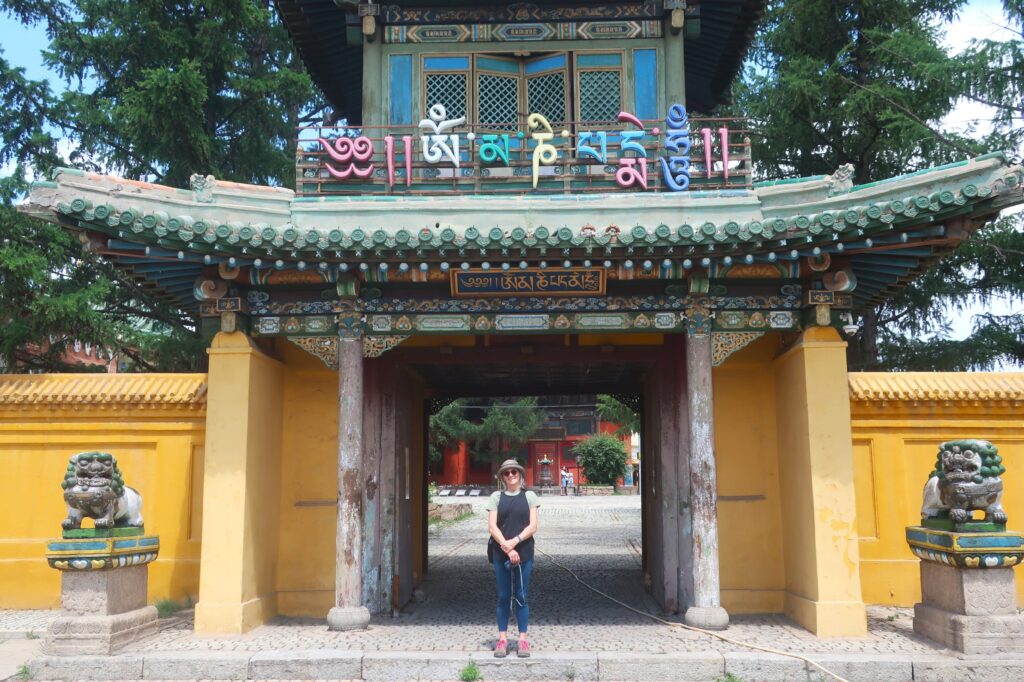
And so we bid a fond adieu to Central Asia, after four months of travel. We’d like to give a big shout-out to the hundreds of people here who have treated us with kindness and a welcoming attitude. (Also, heartfelt thanks to our sure-footed automotive companions, Sergei, Vin, and Khan, for transporting us in safety in all conditions.)
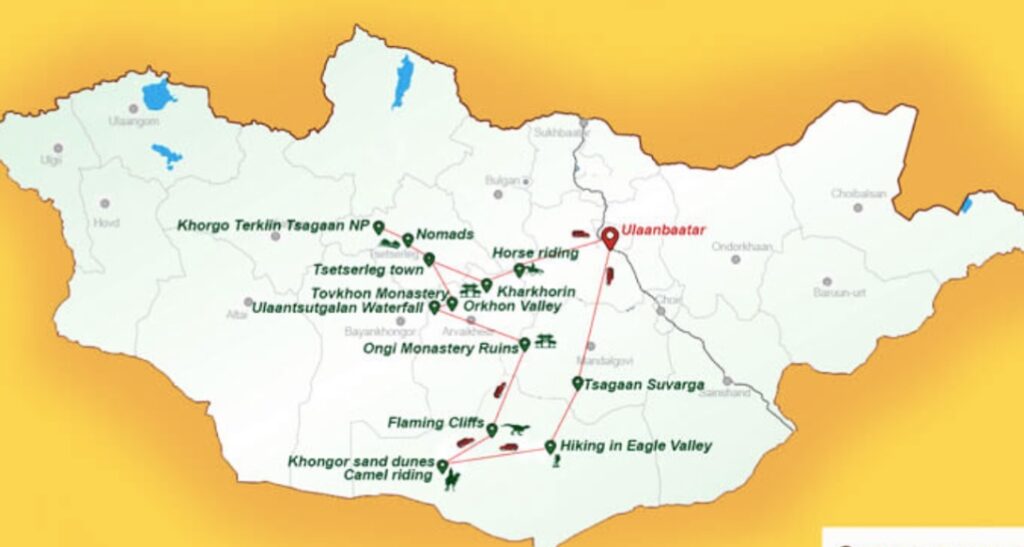
Time to be headin’ home. Tomorrow, we depart from Ulaanbaatar to Tokyo, Tokyo to Vancouver, Vancouver to Ottawa.
Sight or Insight of the Day
Housing in the Soviet world seems to have been a problem that eventually got solved.
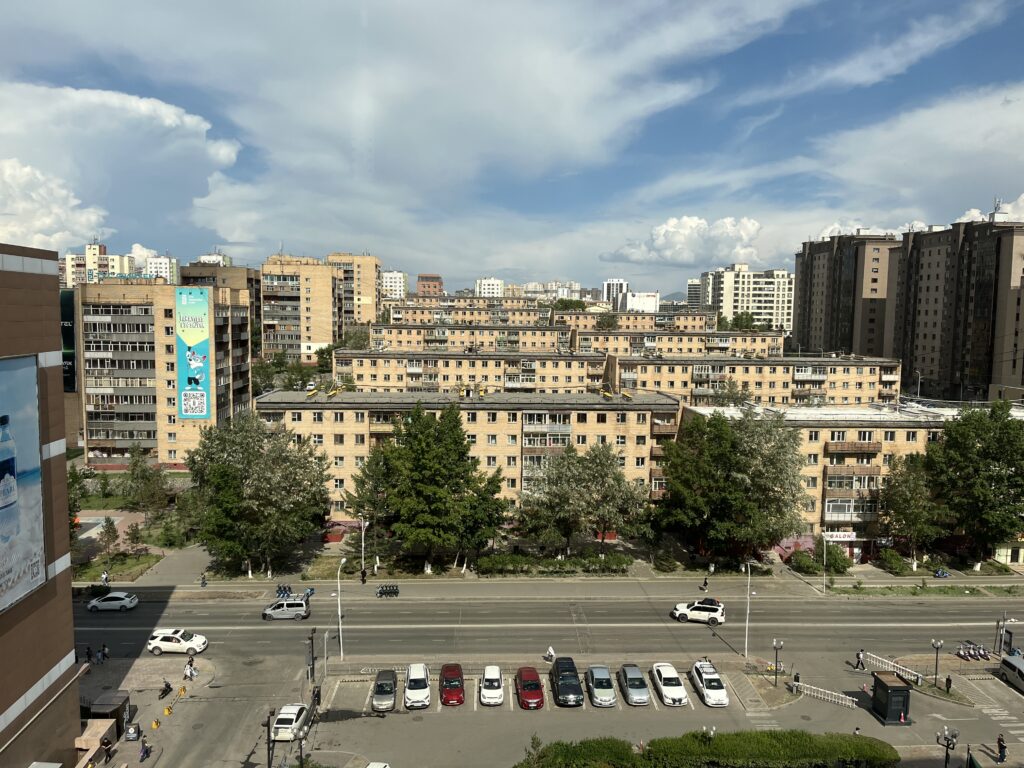
These are the same apartment blocks we’ve seen all over the ex-USSR territory, including the Caucasus countries we visited a few years ago. They’re known as ‘Khrushchevka‘ or ‘Brezhnevka‘, depending on under whose regime they were constructed.
North America is currently undergoing a catastrophic lack of affordable housing, and promises to build even a fraction of needed shelter seems to be so much political hot air. We have seen no homeless people in our four months in Central Asia. (Well, one or two people sleeping on grates here in UB.) Everyone has a roof over their head.
Even today, these countries are raising housing complexes of ten, fifteen, twenty flatblocks, all being built simultaneously. Maybe we should ask how they do it?