A few interesting facts about Tajikistan:
- The other ‘stans’ speak Turkic languages, but Tajik is essentially the same as Persian/Farsi/Iranian
- Politically, Tajikistan has much more of a Stalin-esque cult of personality, with images of the leader everywhere
- Many Tajik women wear ‘modest’ clothing, but with lots of colour and bright patterns, covered with sparkly stuff (at least in Dushanbe)
- 47.9 percent of Tajikistan’s GDP comes from remittances by Tajiks working in Russia (where they are treated – big surprise! – very poorly)
- It’s illegal to have a dirty car in Dushanbe
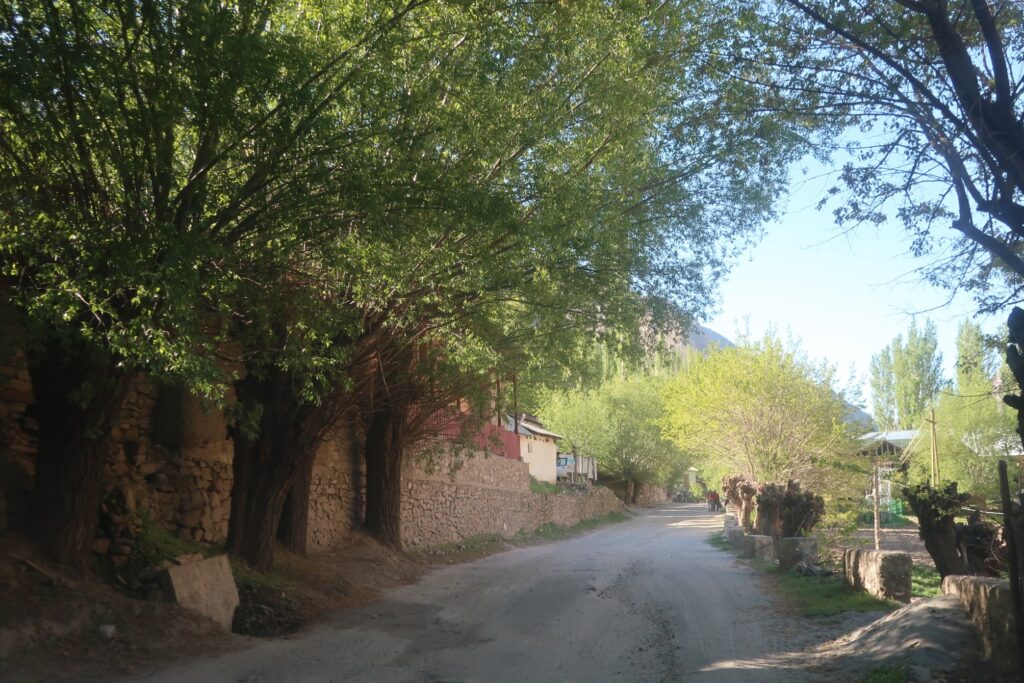
Our journey continues. Some parts pass through quaint, leafy villages every ten KMs or so.
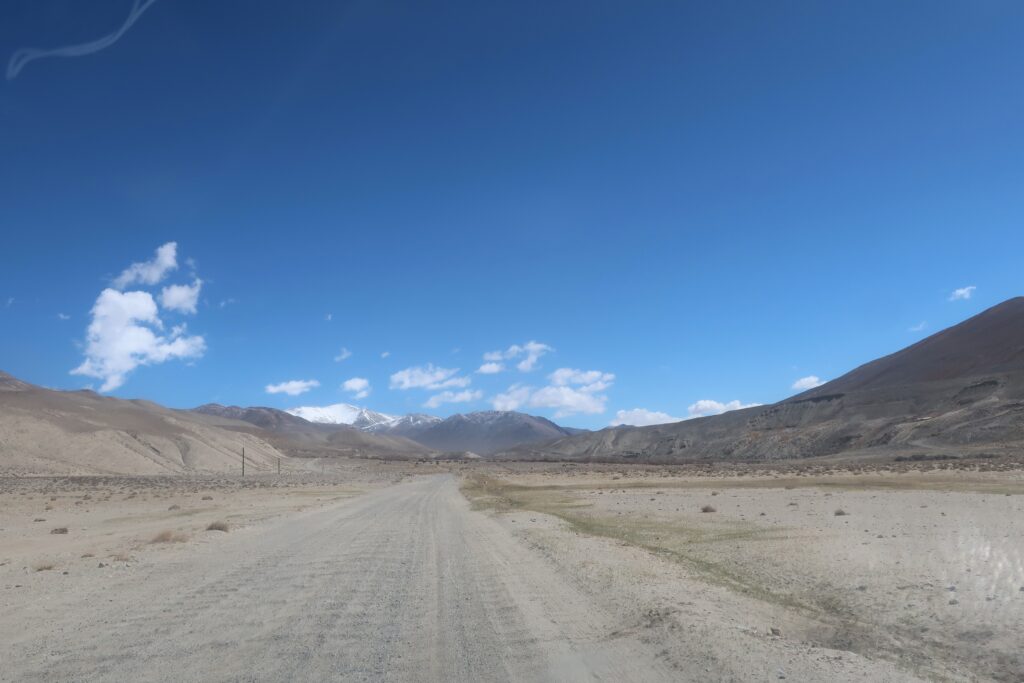
Other parts, you can drive for hours without encountering a soul.
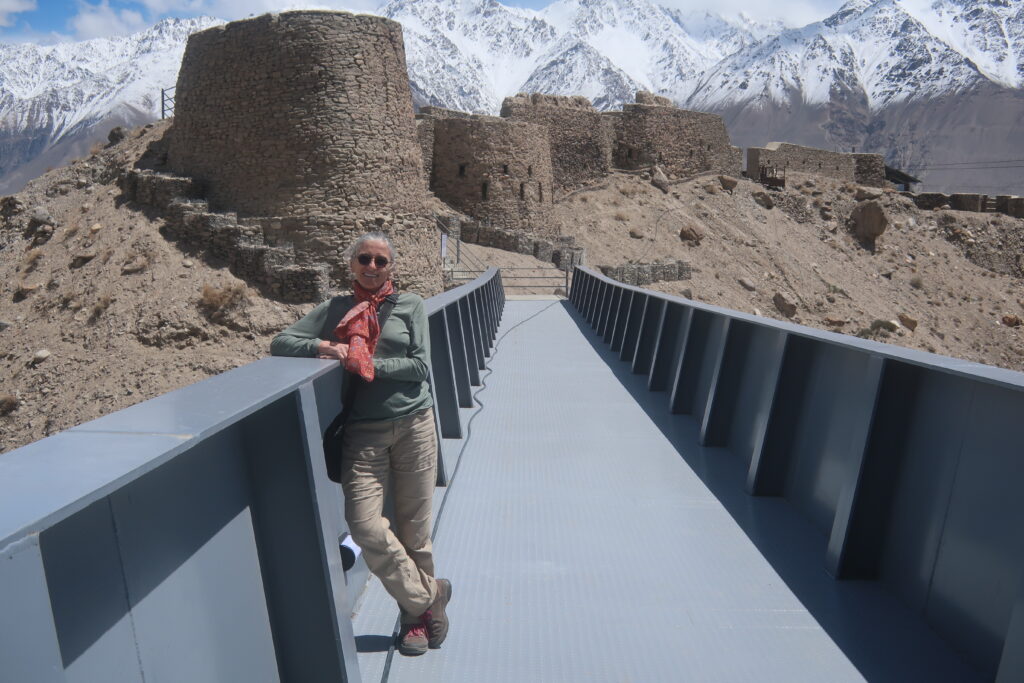
We visit the Yamchun Fortress.
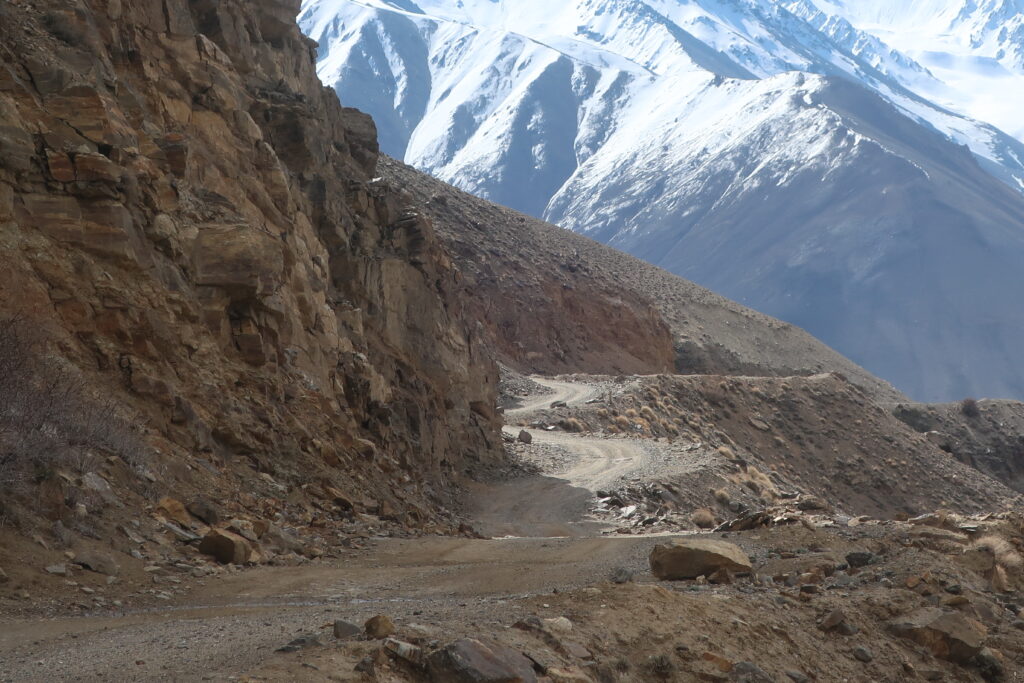
Remember we mentioned ‘cyclists with a masochistic streak a mile wide’? Imagine cycling up vertiginous, stony mountain tracks like this.
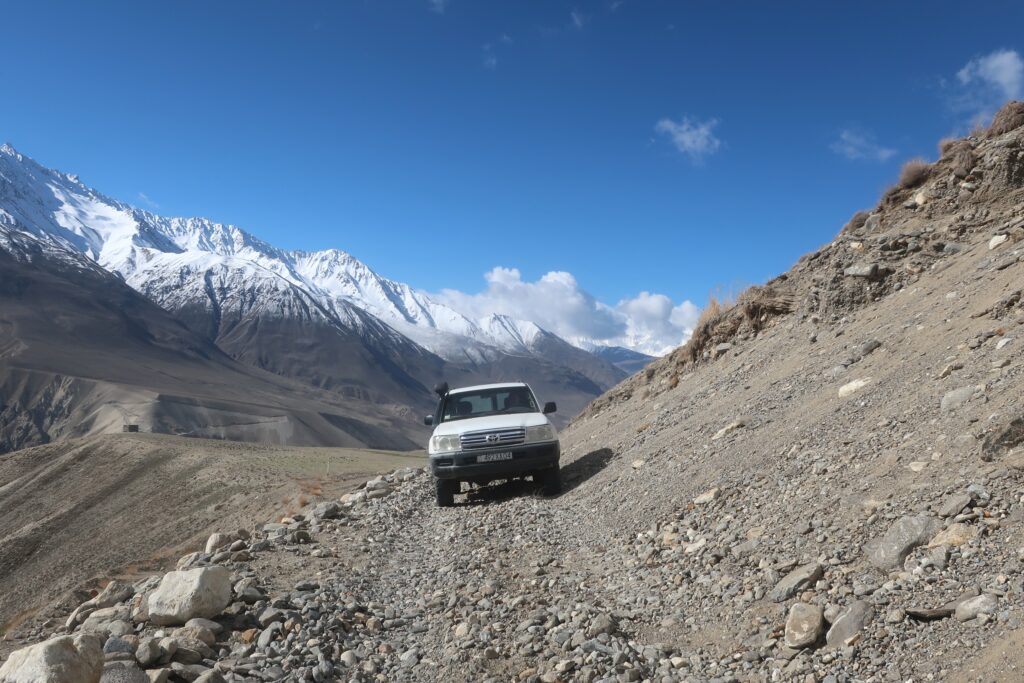
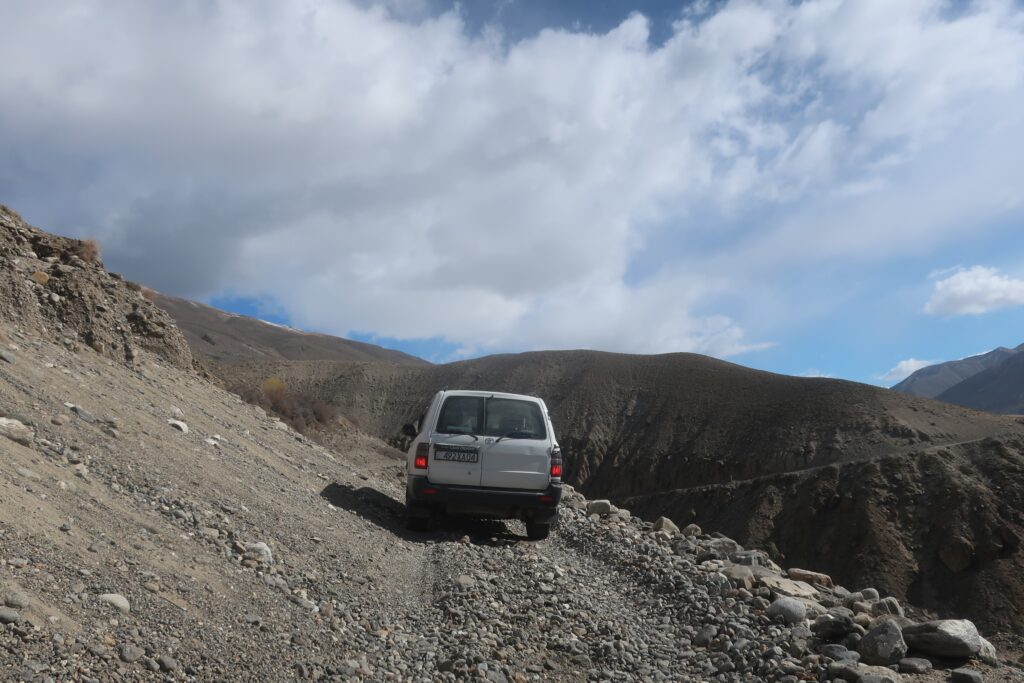
(We drive through such lonely territory all day. When we arrive at Murghab, the car goes completely dead. Luckily, it was just the cables vibrating off of the battery due to all the, um, turbulence – an easy fix.)
We cross paths with a Bactrian camel.
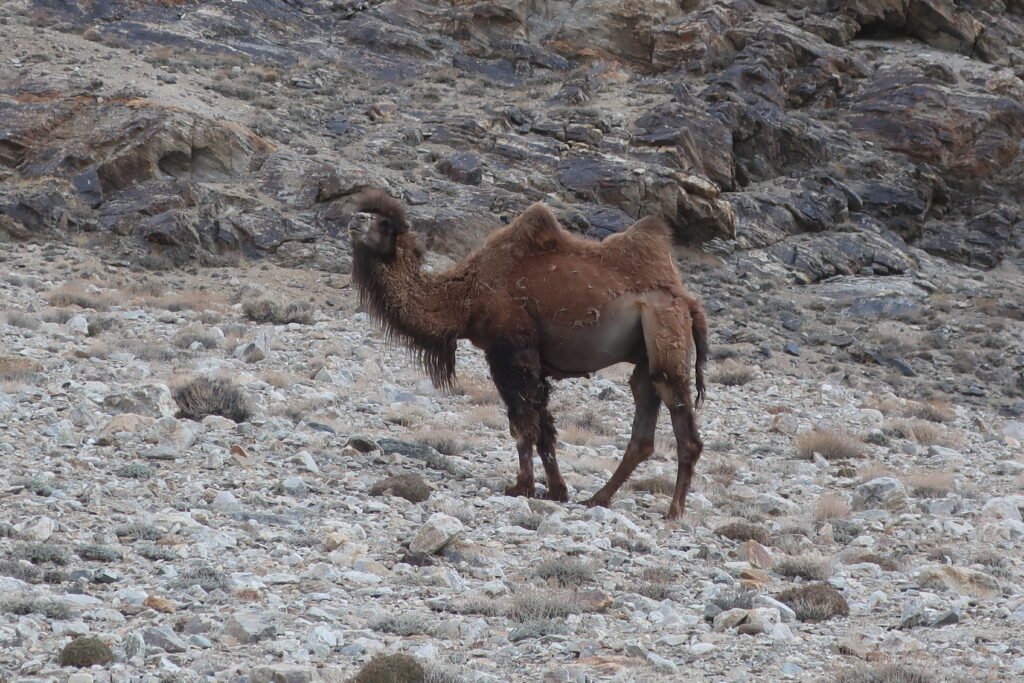
At first we think it must be a wild camel, the locale being so very remote. But apparently, genuine wild Bactrian camels are virtually extinct. If you see a camel – even in the remotest of places – it belongs to somebody.
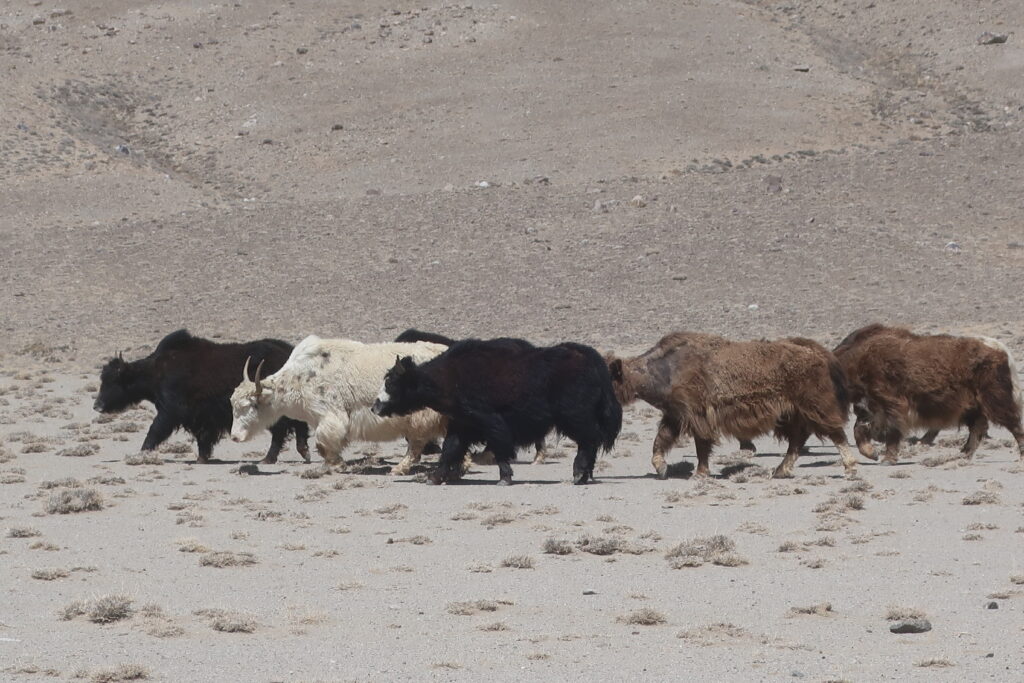
In the distance, we also see some nomads. Like, REAL nomads – not the ‘come into my tent and I’ll serve you tea for 10$’ kind of nomad.
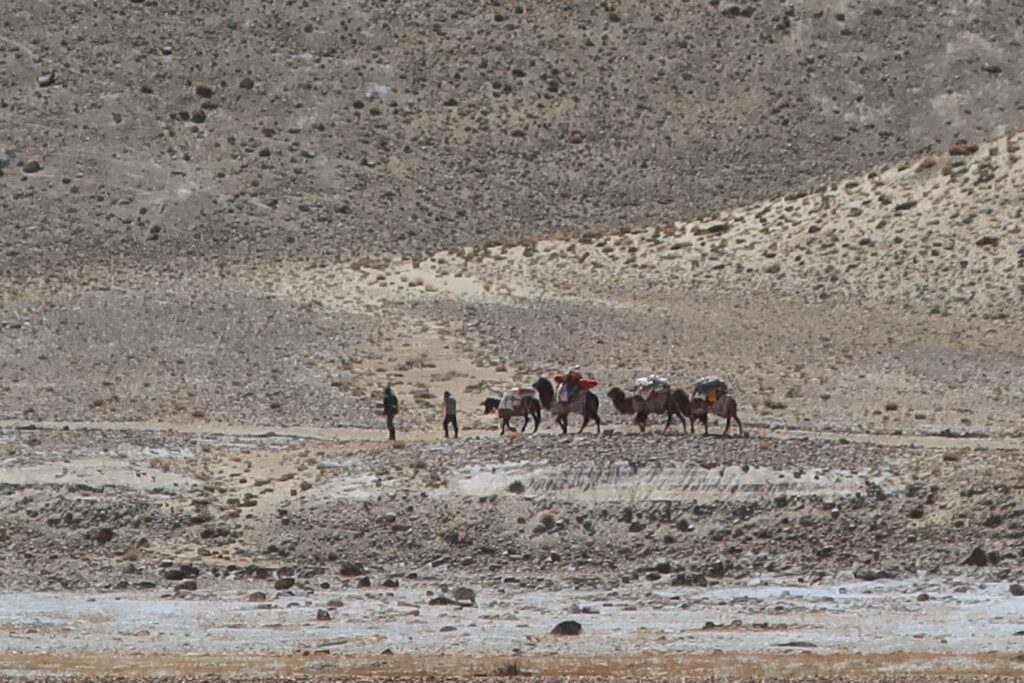
They are shifting their herd of yaks.
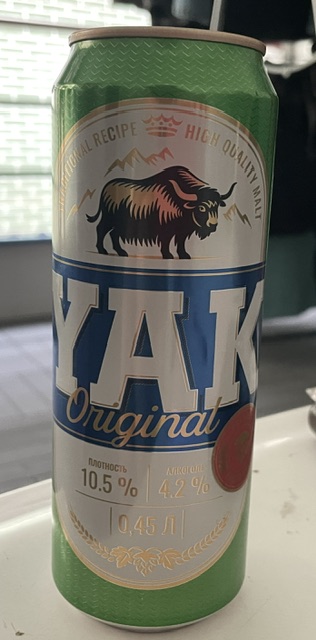
(Incidentally, ‘Yak’ is also a popular brand of beer here.)
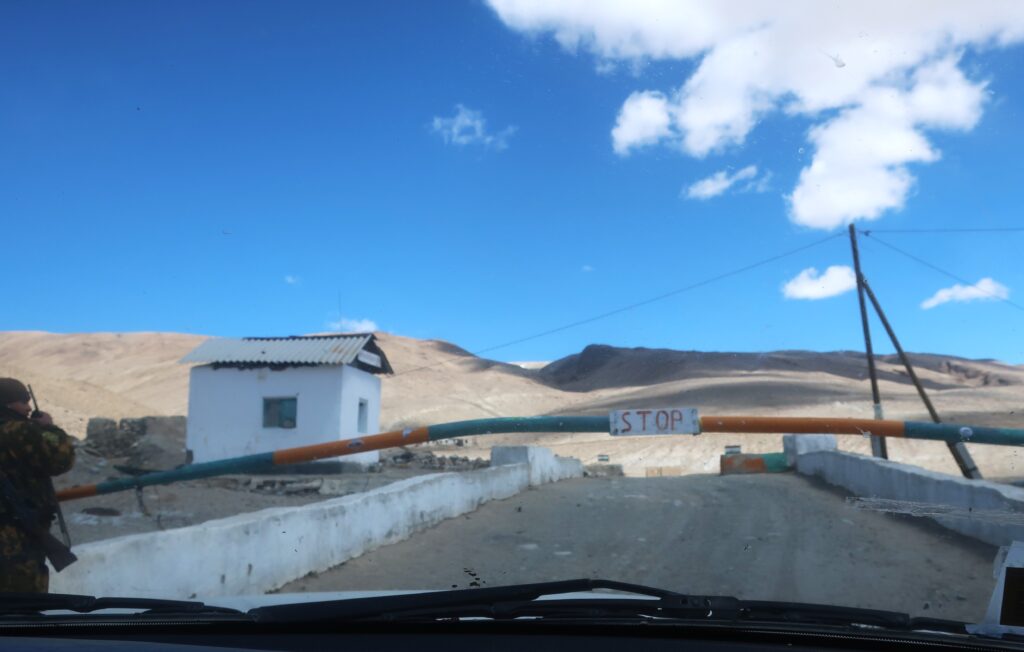
We mention in passing that travel in this region is subject to having a GBAO special pass, which we obtained in Dushanbe. The Gorno-Badakhshan Autonomous Oblast (GBAO) covers nearly 45% of Tajikistan’s territory.
We have to go through eight checkpoints and present a copy of our passports and GBAO permits.
So why is travel so controlled in nearly half the country? No doubt it has something to do with the Tajikistan Civil War (in the 90s). The opponents to the then-ruling clique were mostly from the GBAO. So the locals here are kept on a tight leash.
Toss in the proximity to Afghanistan and you’d expect a seething cauldron of unrest and instability. But being here, all seems calm and serene. People are friendly and helpful. The grandness of nature makes the affairs of mere humans seem petty and forgettable.
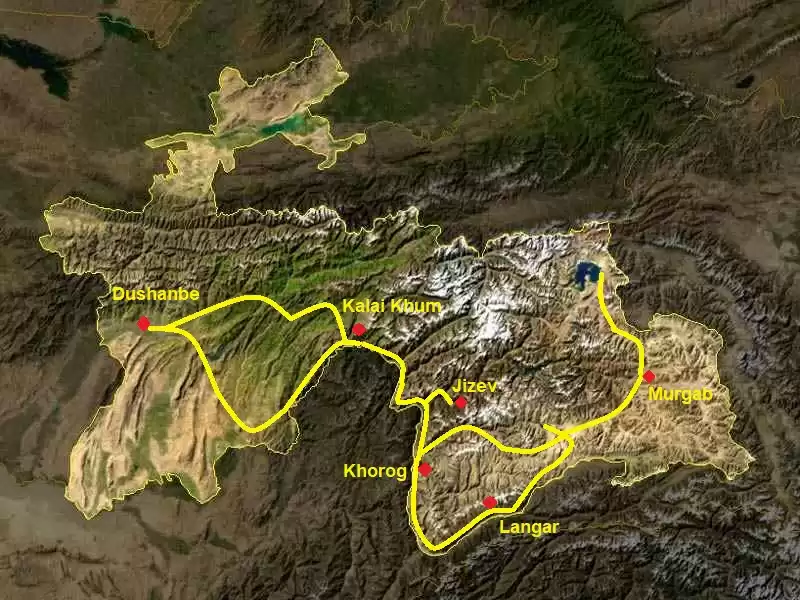
The furthest point on the Pamir Highway (for us) is the town of Murghab. Some people continue on into Kyrgyzstan and end their trip in Osh. Been there, done that.
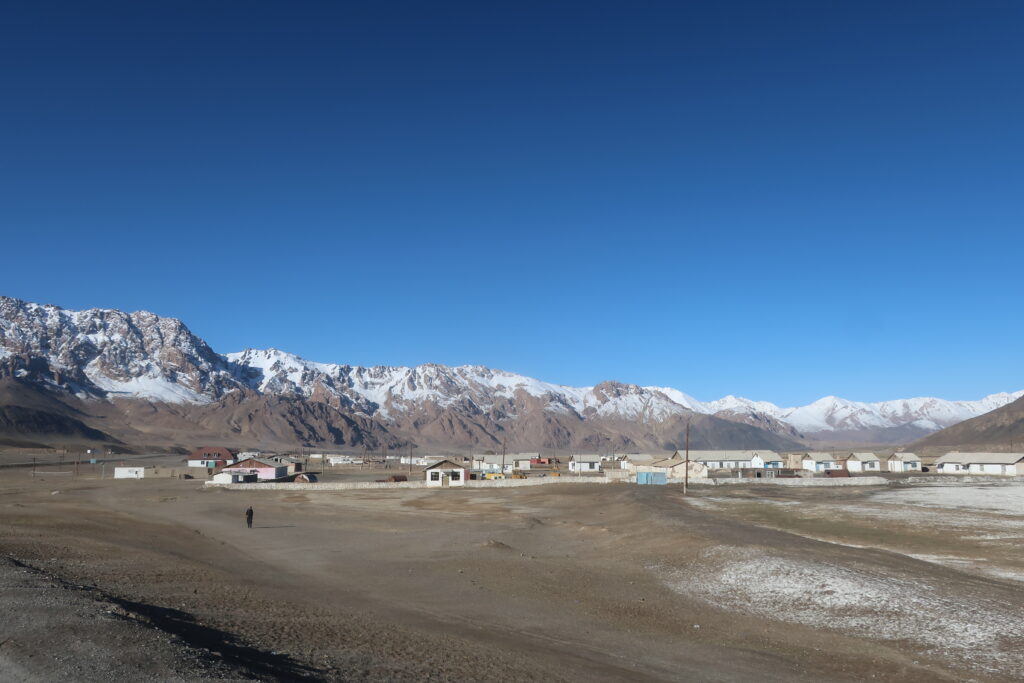
Murghab has the forlorn, shabby look of an Arctic outpost. It’s at an elevation of nearly 4,000 m. above sea level.
(Regarding elevation: we both take medication to avert altitude sickness. It seems to have hallucinatory side-effects. Driving through boulder-strewn landscapes, we both keep seeing people, things, and animals in the shapes of the rocks in our peripheral vision. Very entertaining.)
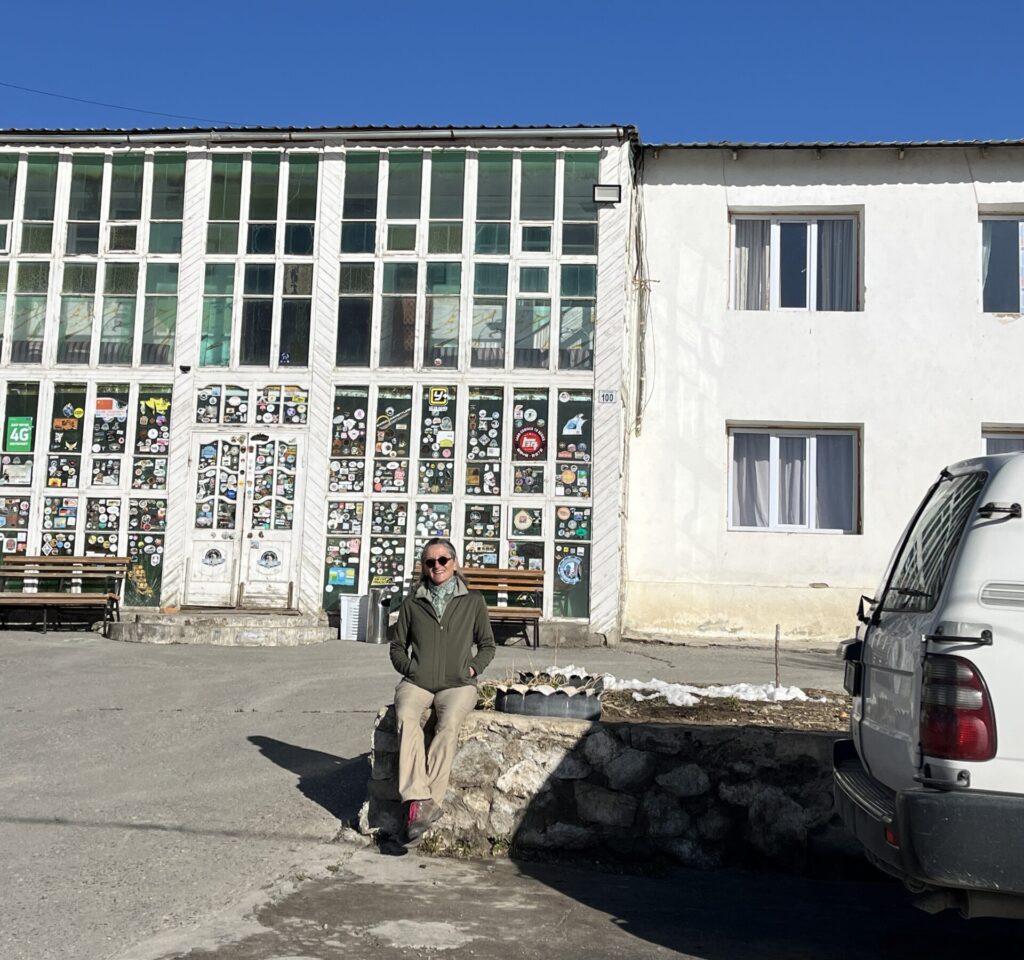
About the stickers on the windows of our hotel: it’s a thing for travelling groups of motorcyclists (mostly) to leave their mark by plastering them onto every available surface.
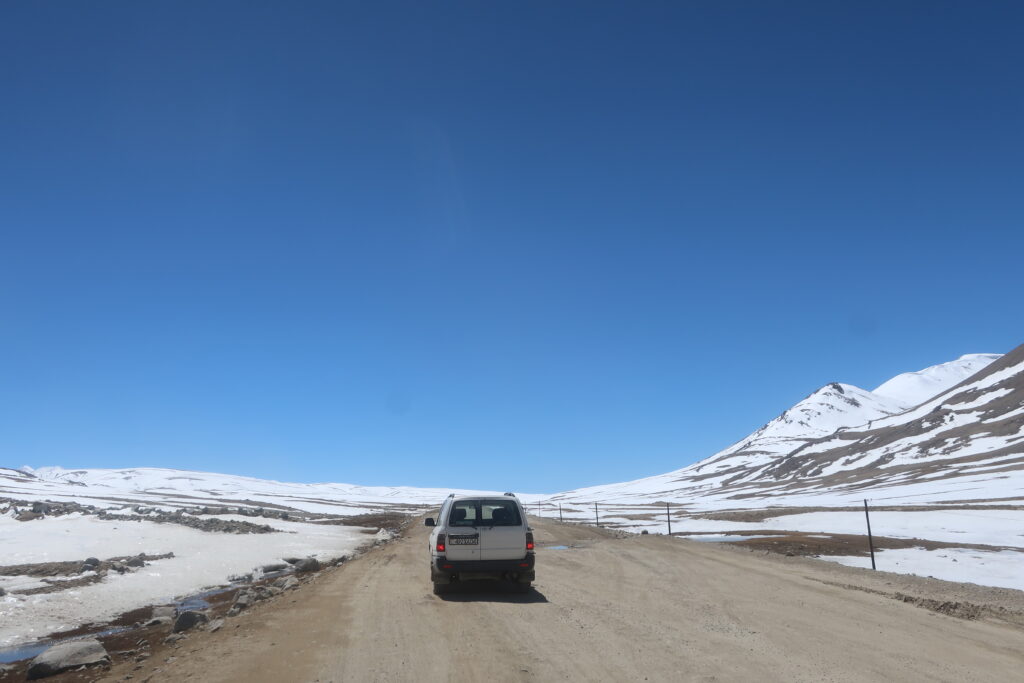
Time to make the return trip to the fleshpots of Dushanbe, this time via the Koitezek Pass. (On the journey here, we took the Wahkan Valley route.)
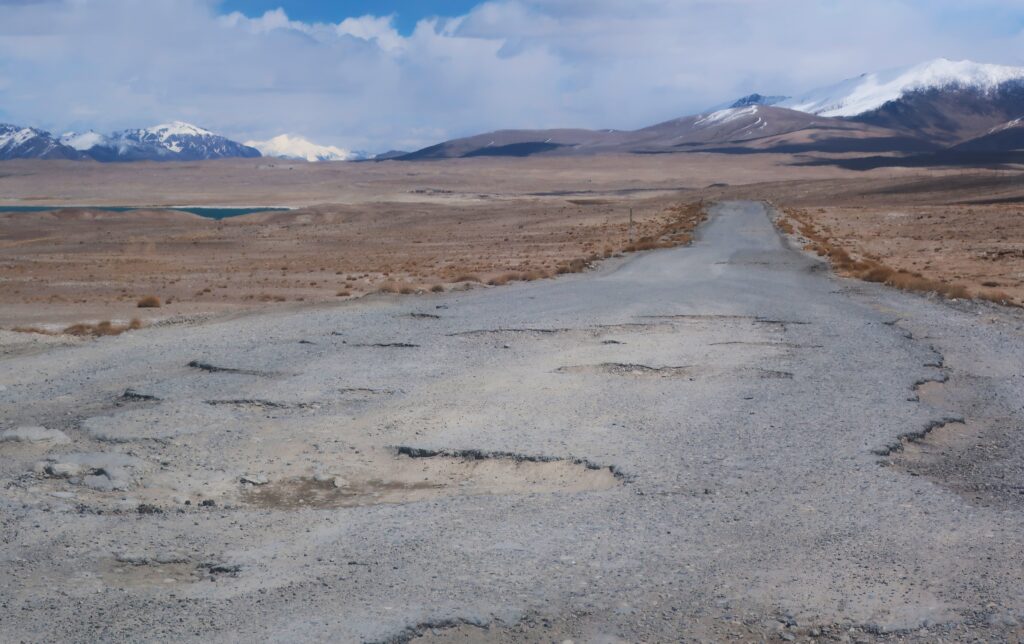
The first 100 KMs or so south of Murghab are a practically undriveable minefield of cavernous potholes. Probably the second (or third?) worst potholes we’ve ever experienced.
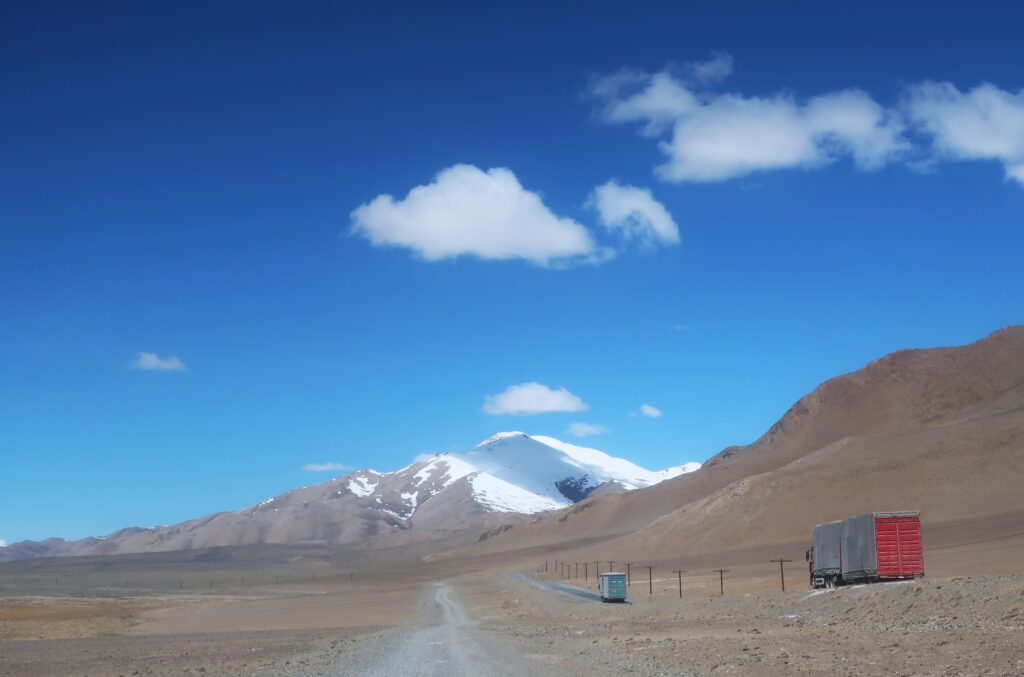
On the way north, we notice intriguing side roads. Maybe they’re private? Or for military use?
It turns out they were probably used by the people responsible for constructing the road. But nobody uses them now. So they have NO POTHOLES. (They cross deep ditches, so big trucks can’t use them.) We gratefully take them wherever we find them and shave at least an hour off of our travel time.
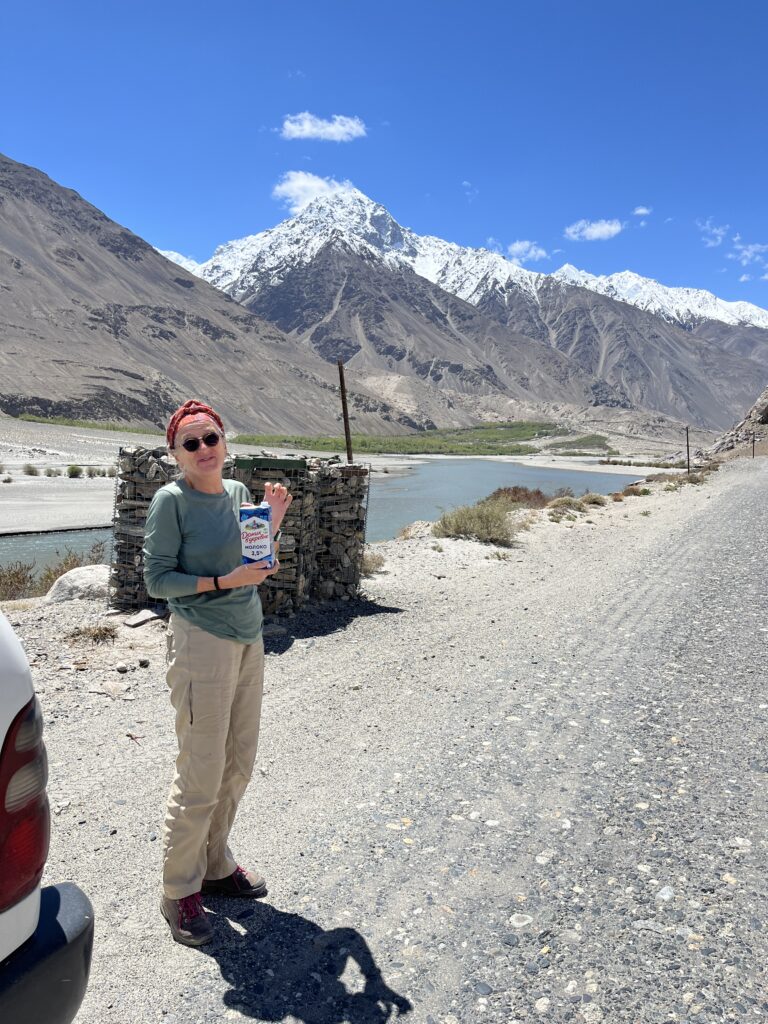
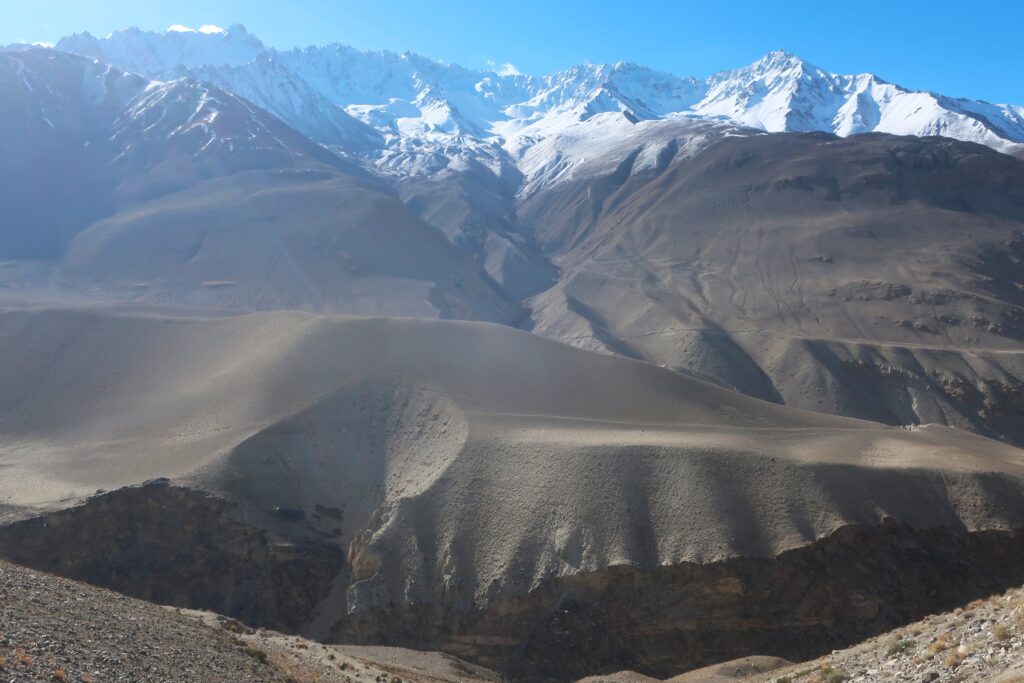
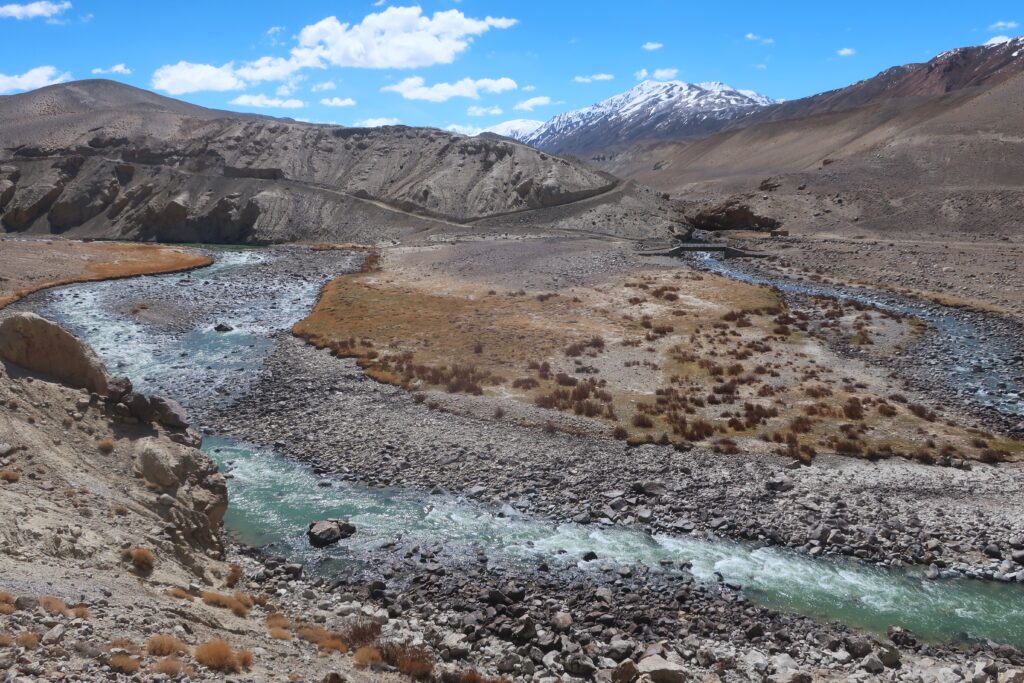
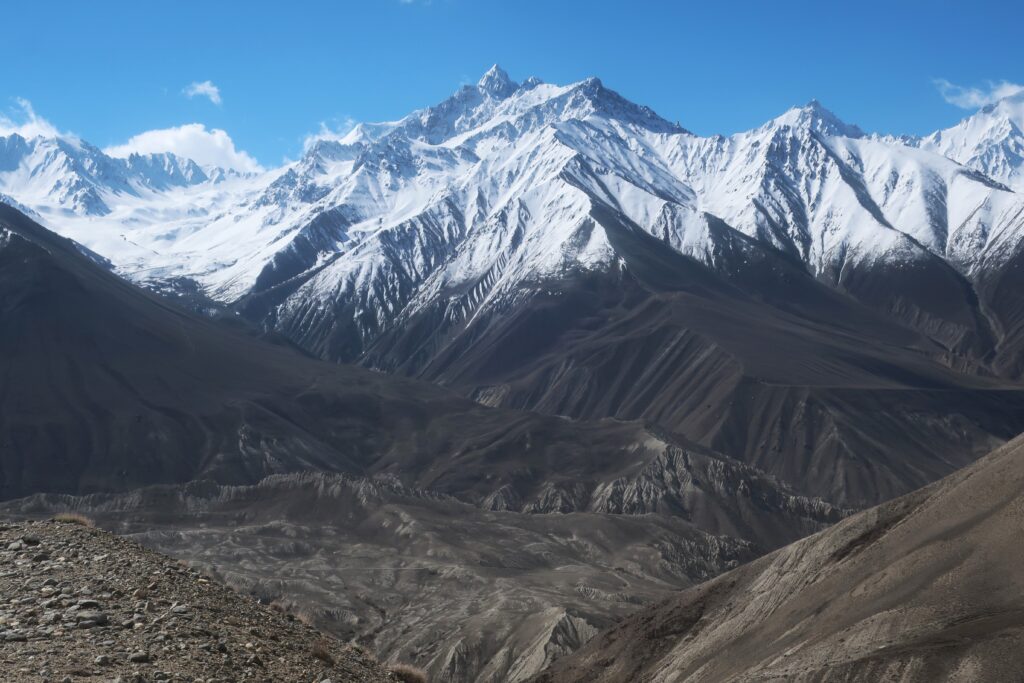
OK, just a few more scenic shots of the Pamir Highway.
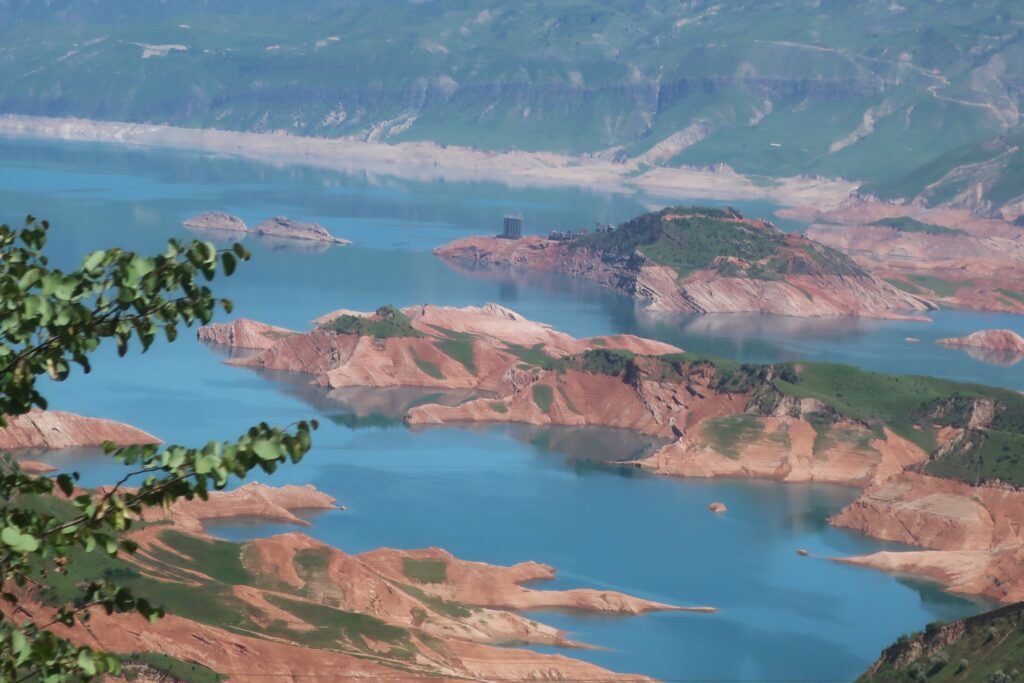
Just before arriving back in Dushanbe, we pass the Nurek Reservoir.
So in town, we prepare for our flight to Almaty in Kazakhstan. Хайр, Тоҷикистон!
Sight or Insight of the Day
We mentioned that Tajikistan has the most serious personality-cult leadership style we have seen so far on this trip. Its leader, Emomali Rahmon, is so beloved by his people, they keep voting him into office.
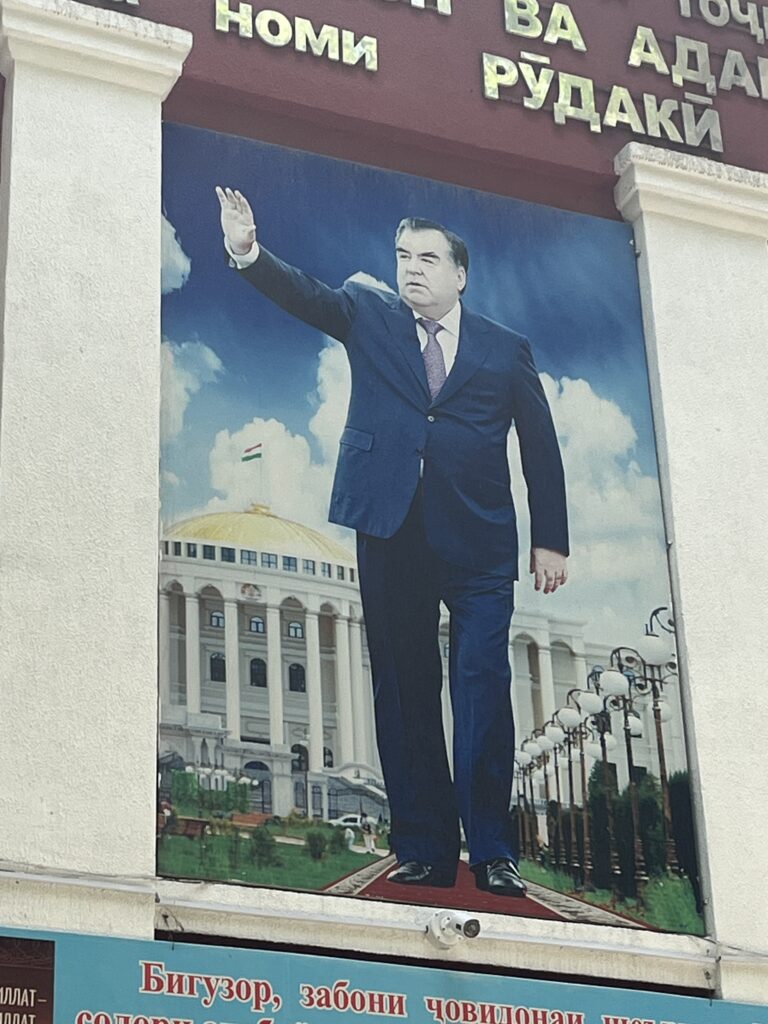
Just kidding. Now that we’re out of the country, it can be safely said: he’s an asshole. According to Wikipedia:
‘Rahmon heads an authoritarian government in Tajikistan. Political opponents are repressed, violations of human rights and freedoms are severe, elections are not free and fair, and corruption and nepotism are rampant.’
To be honest, sounds like the Trump administration. But he’s an asshole that the American electorate, in its infinite wisdom, freely elected.
People here, like the other two countries we’ve visited, are so kind. How the Tajiks end up with such a brute as a president is a mystery. (Like Chile during the Pinochet regime.)