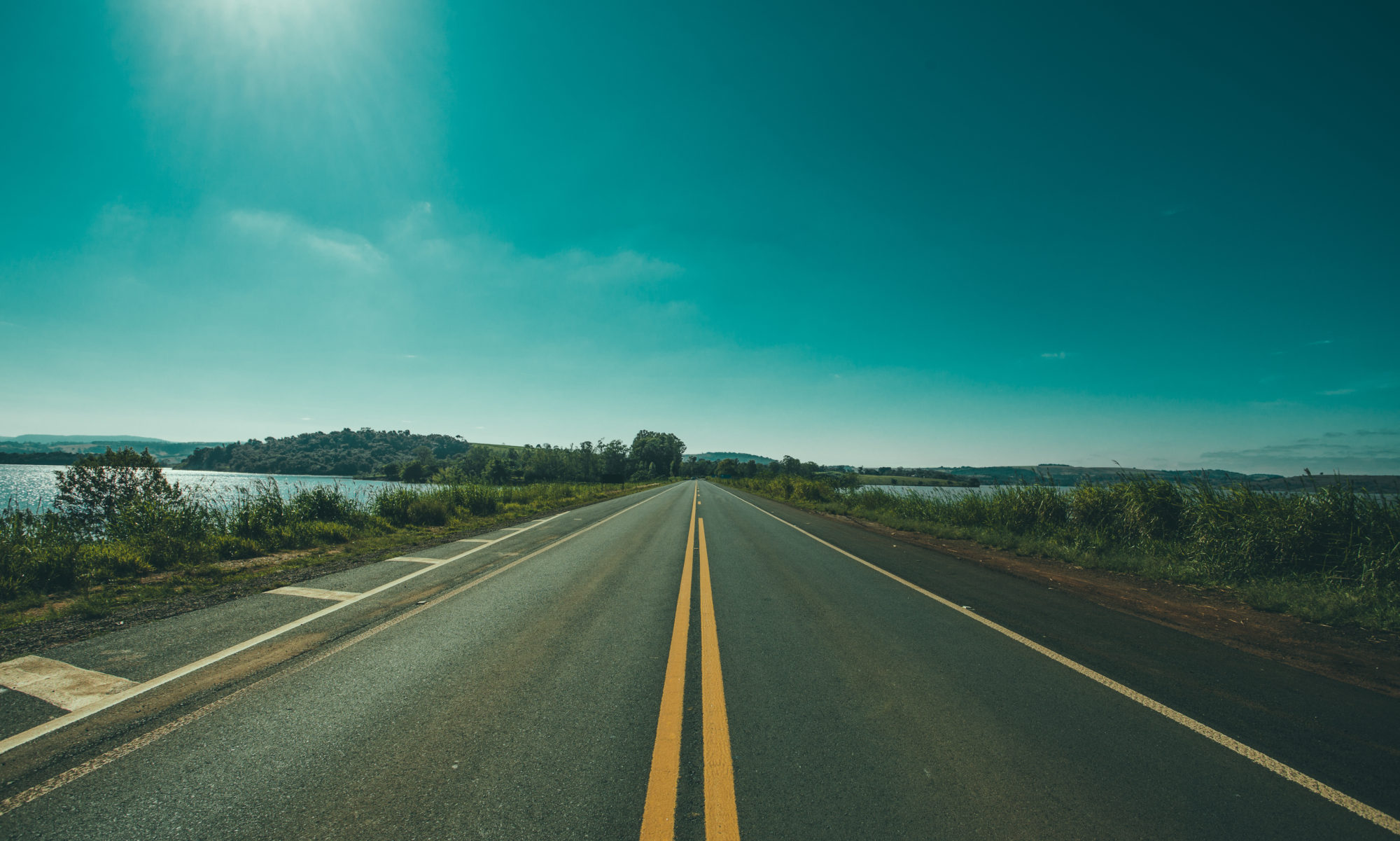
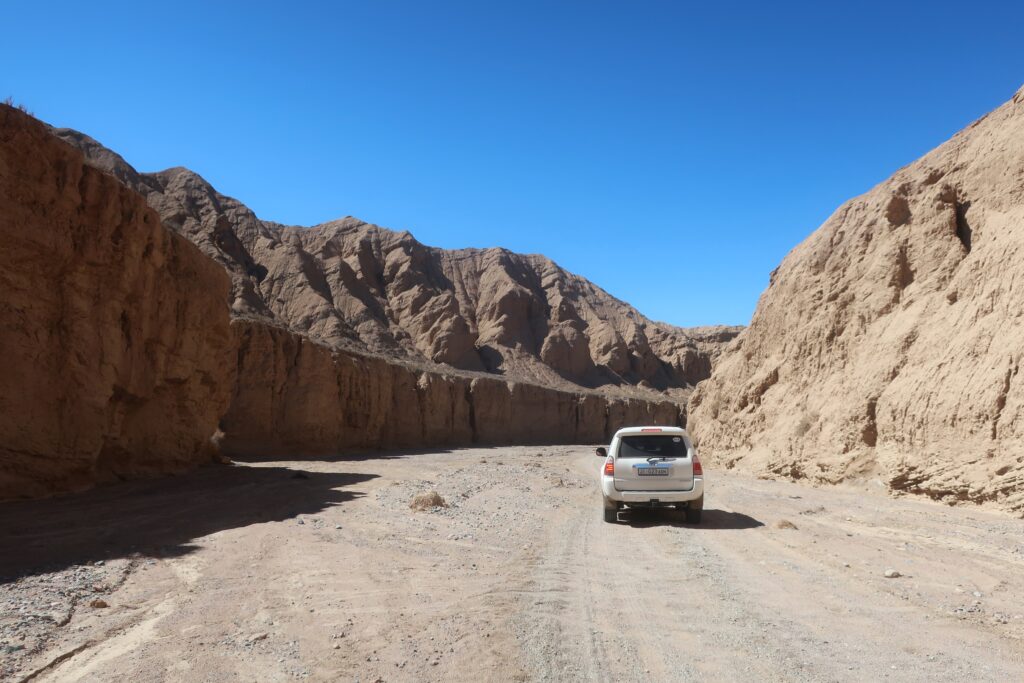
We’ve seen a lots of yurts in the landscape: it’s time to stay in one for a few days. The yurt camp we choose is on the south side of the big lake. To get there, we drive 14 KMs from the main road down the Ak Sai Canyon.
It’s wonderfully isolated, not a soul around (almost).
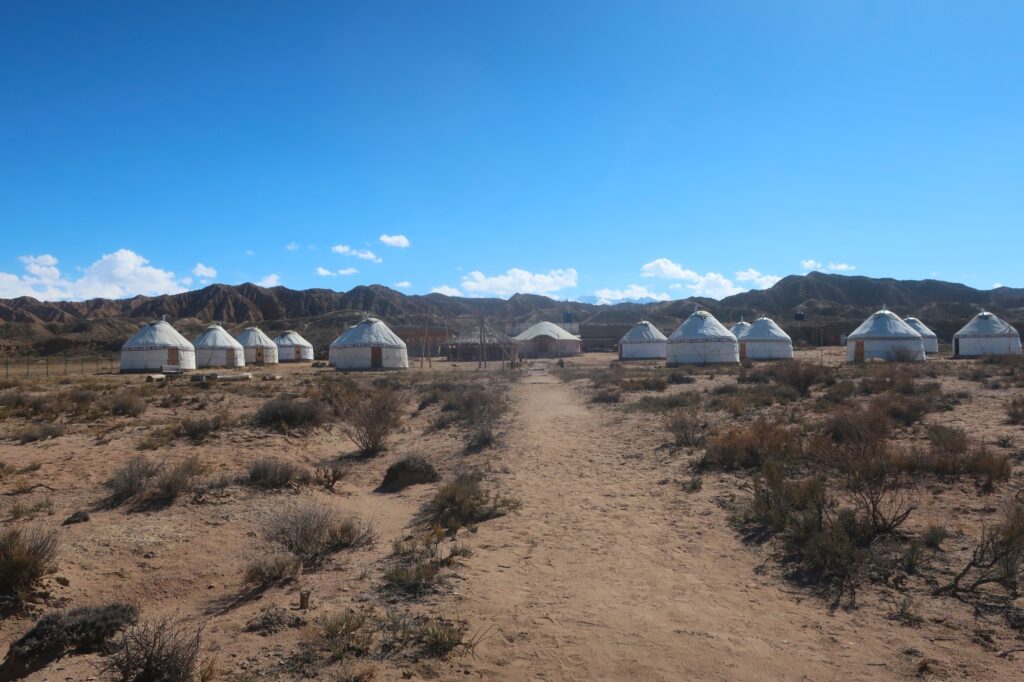
Usually, small groups arrive late in the afternoon, have a meal, sleep over, and depart next morning. So we have most of the days completely to ourselves.
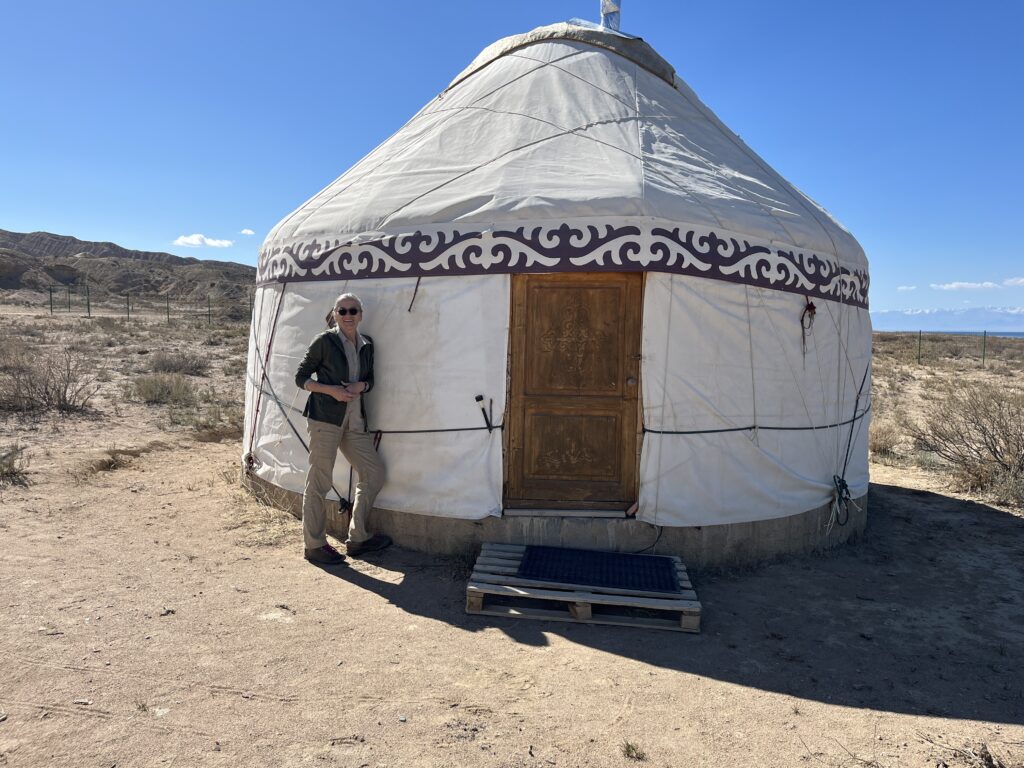
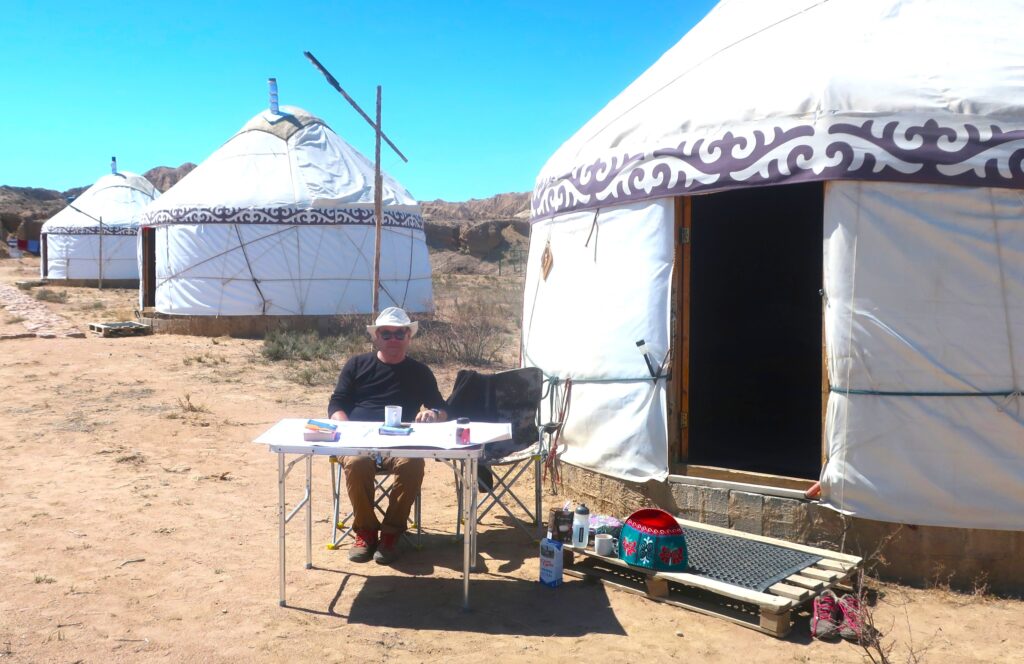
These yurts are almost as authentic in build and appearance as the ones we saw in the National History museum. (There are a lot of cheap versions around.)
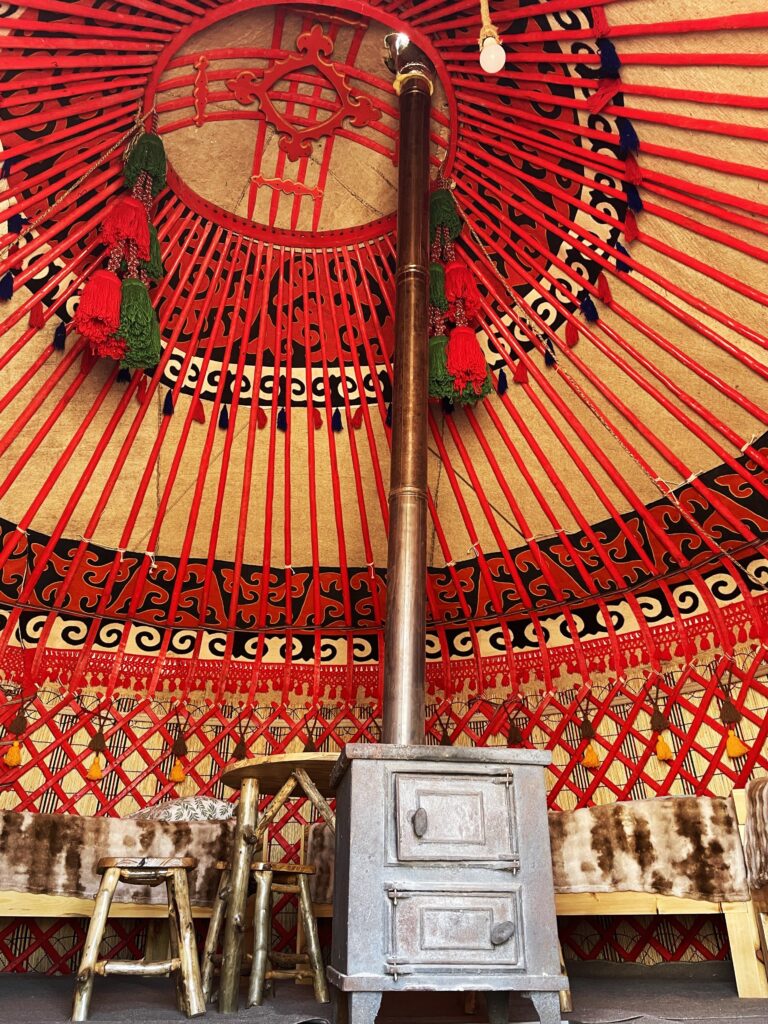
A woodstove keeps things warm at night.
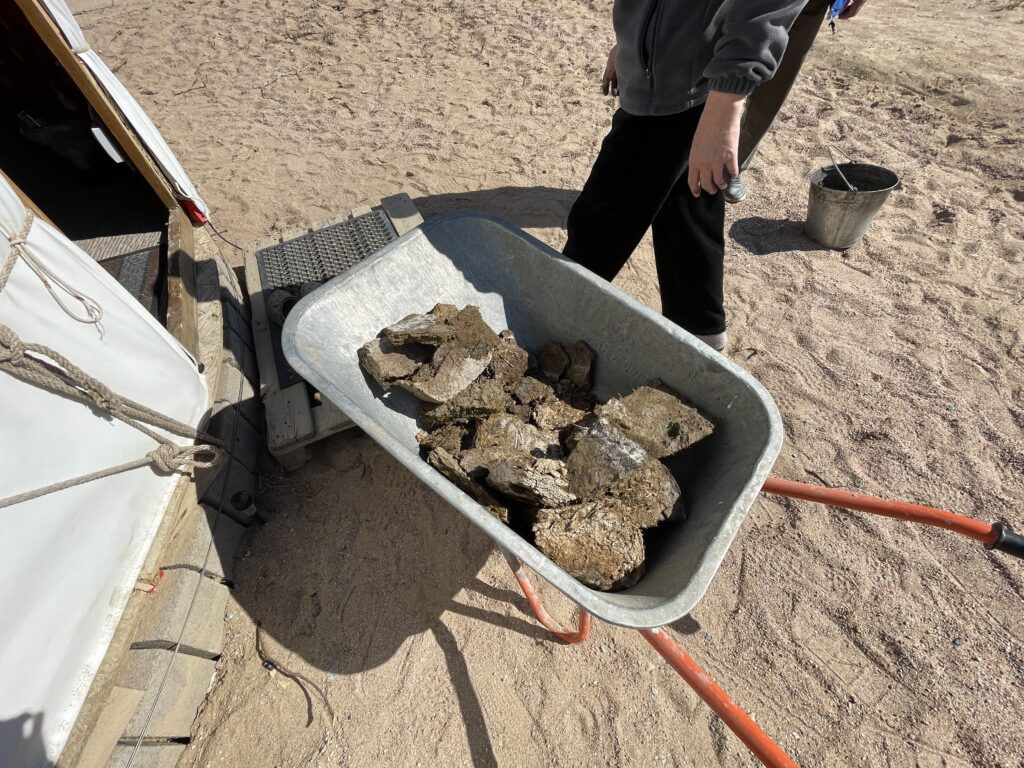
‘Woodstove’ is a bit of a misnomer: these are fueled nightly with a mix of compressed cattle dung and coal.
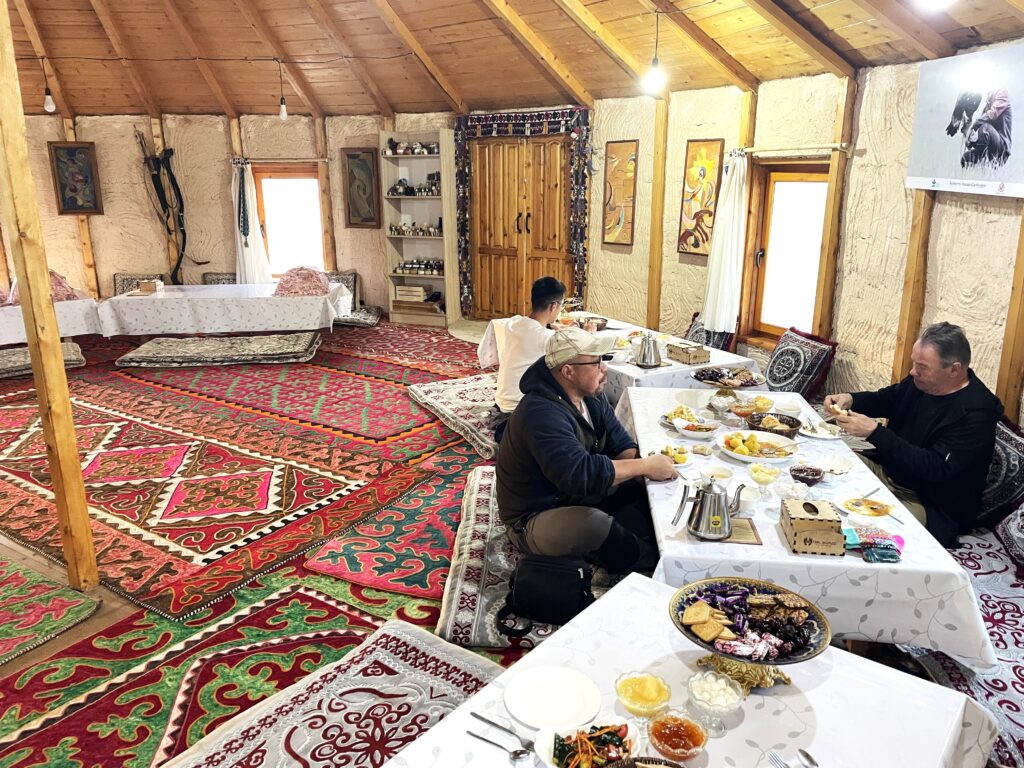
Meals are served in the Dining Yurt. Well-carpeted in shyrdak carpets (as are the guest yurts.)
You can get good info talking with the guides that accompany groups.
If you enjoy seeing small animals ripped to bits for your entertainment, you can arrange to see an ‘eagle show’. We skip this.
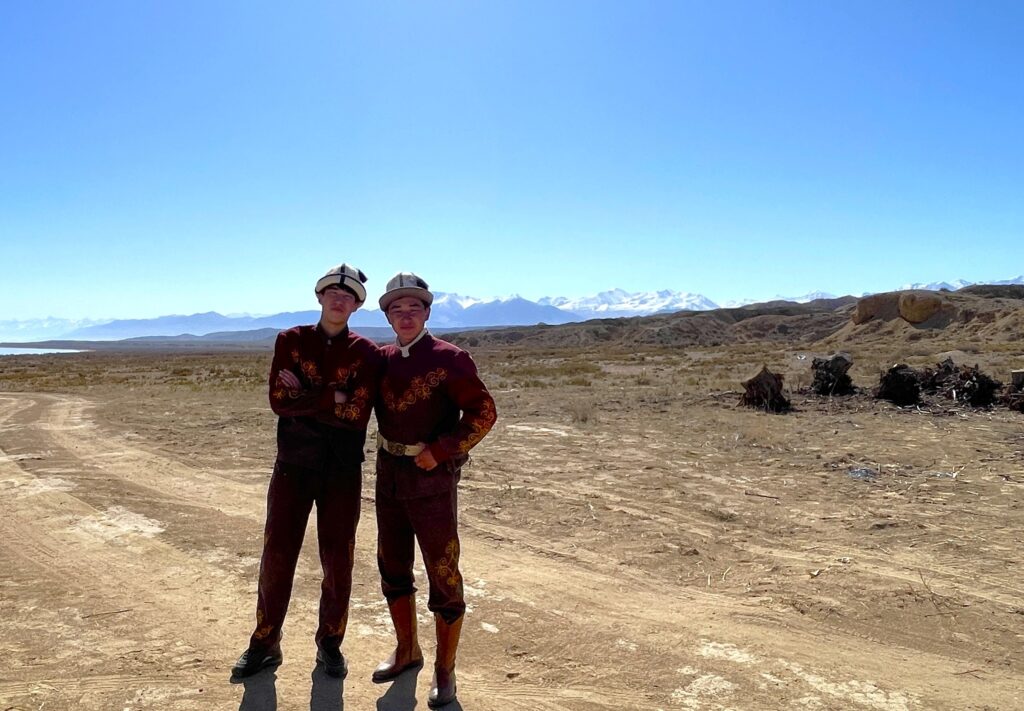
Our next stop is a couple of days in the central town of Naryn.
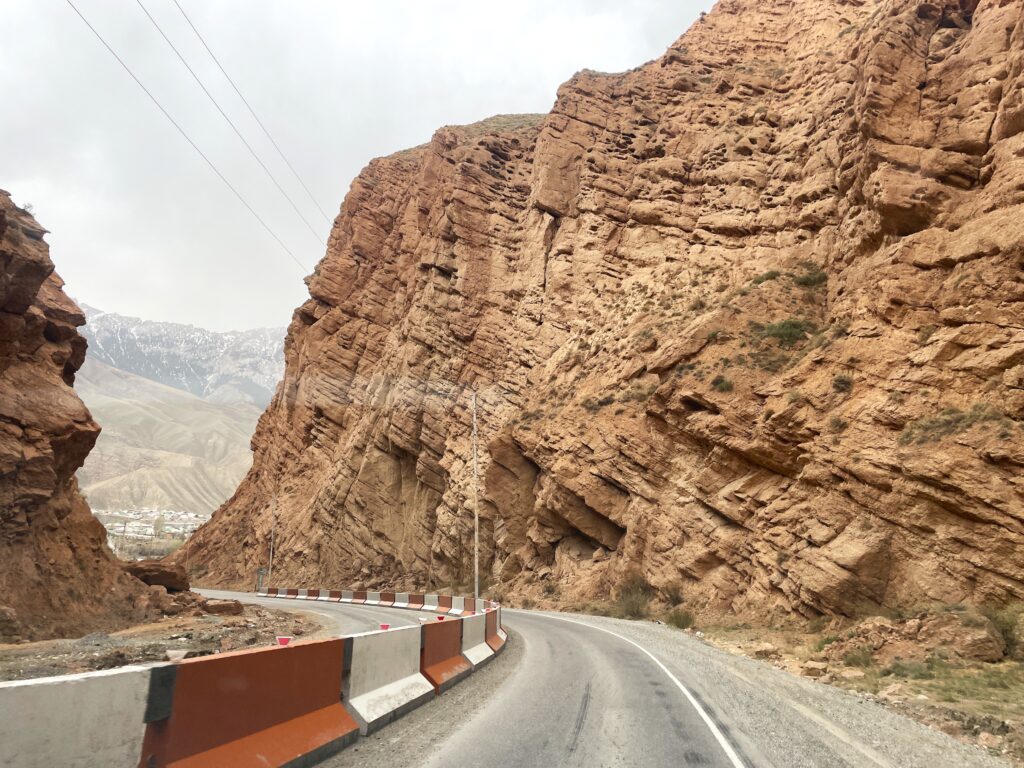
On a whim, we set out for a drive along the Kichi-Naryn Gorge.
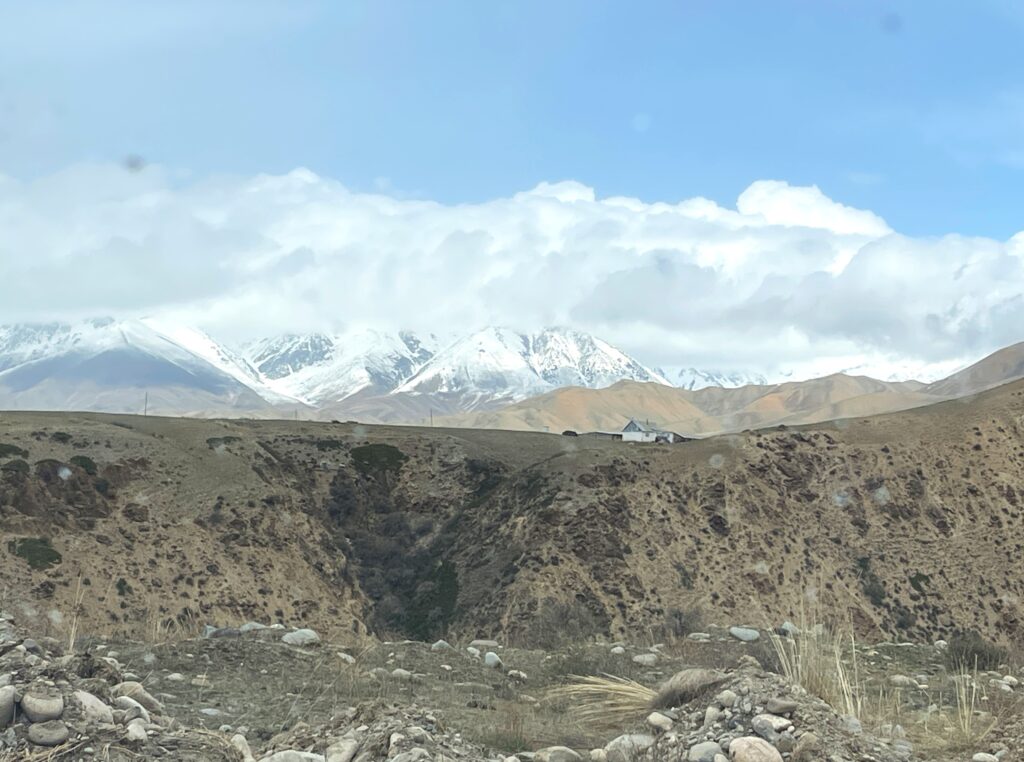
It’s a scenic drive to the beginning of the gorge, but partway, we find the road still muddy and not cleared of the winter snow yet. We do the mature thing and bail.
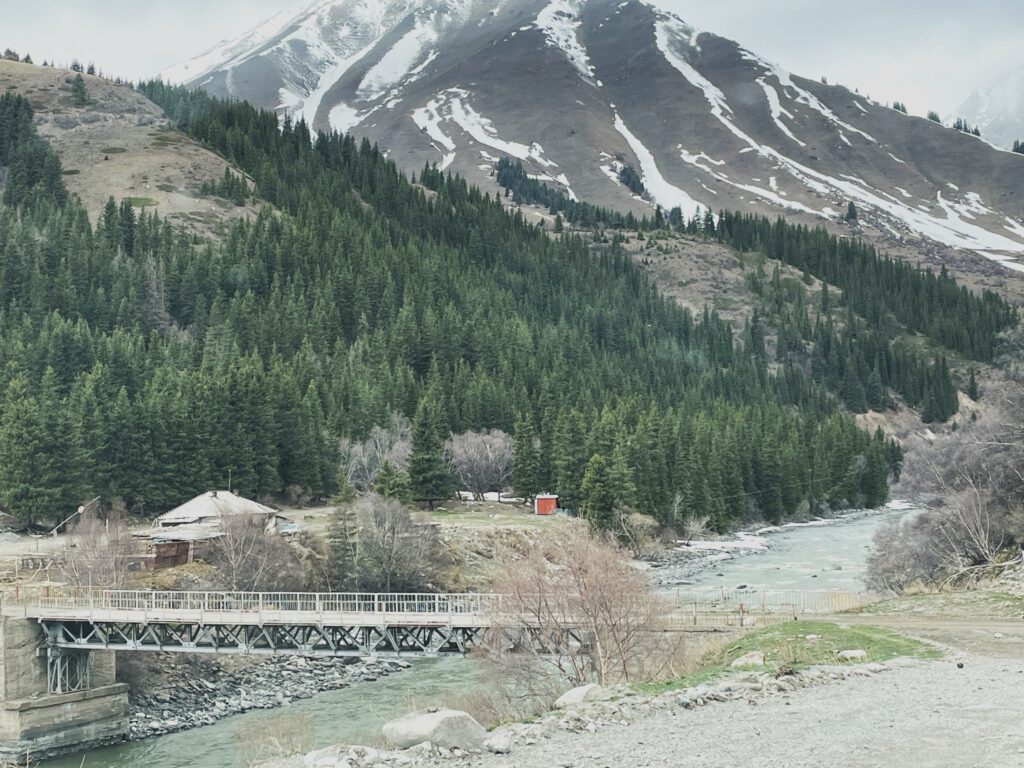
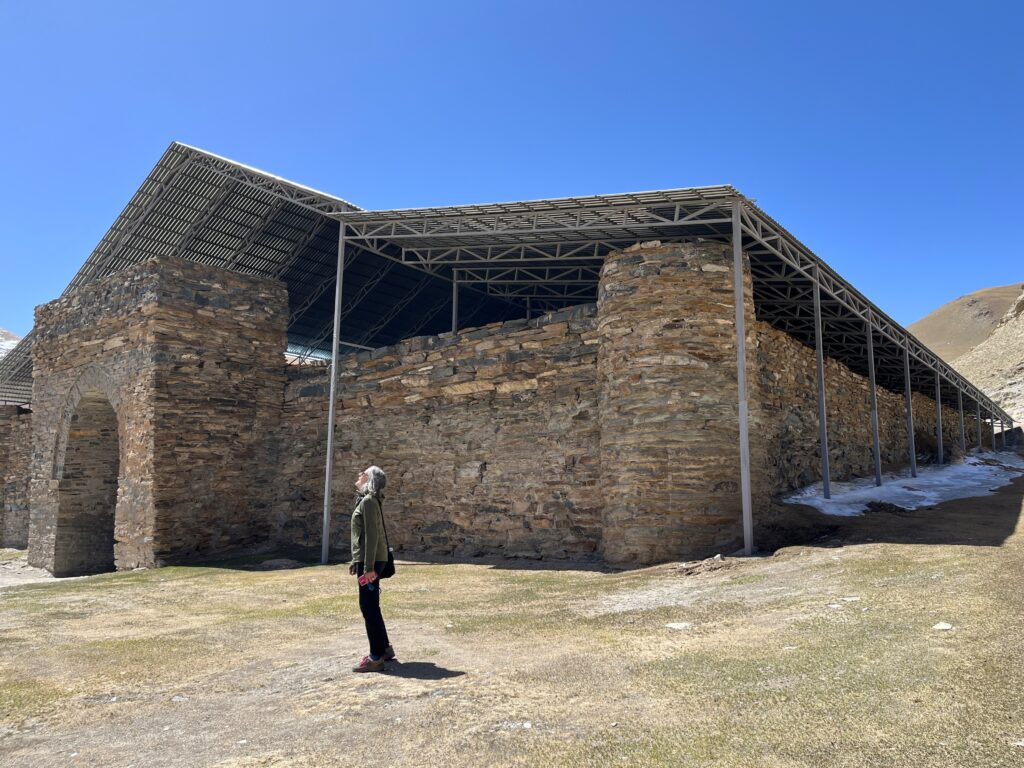
The next day, we head south for a daytrip to Tash Rabat, near the border with China.
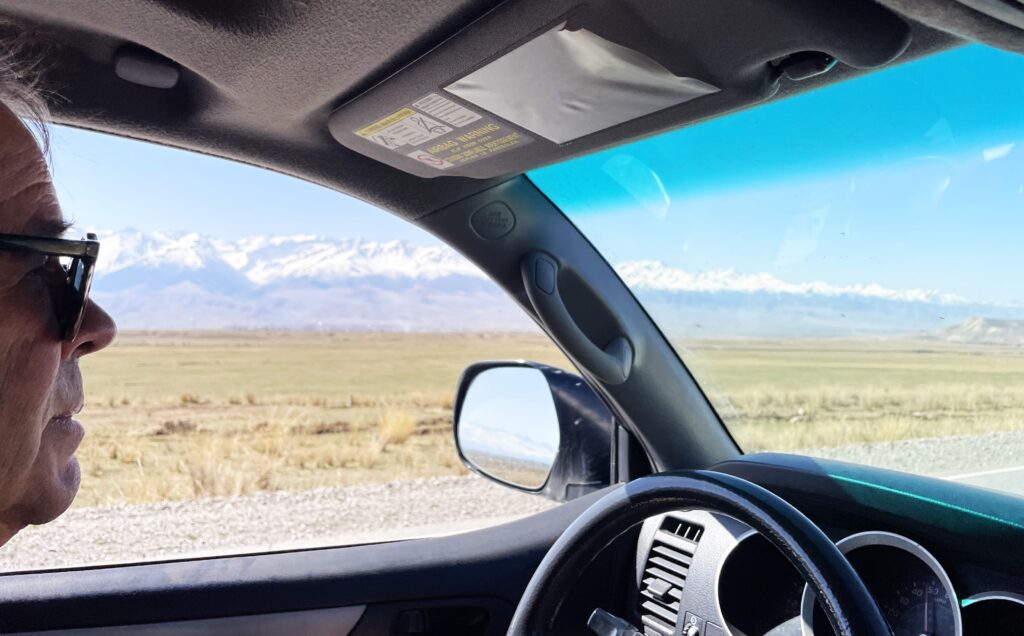
The road traffic is almost exclusively large trucks coming in from over the Torugart Pass. Our destination is the Tash Rabat ‘Caravanserai’.
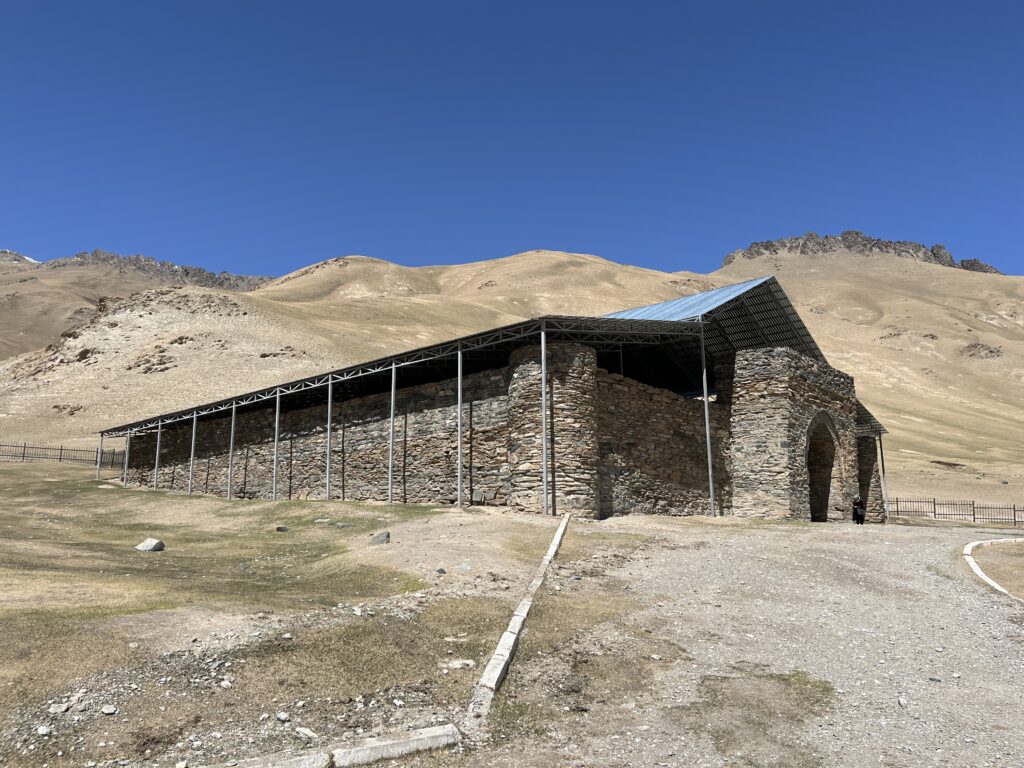
I put ‘caravanserai’ in quotes because it’s not 100% certain what the function of this building was. (A caravanserai was an overnight resting house for traders on the Silk Road.)
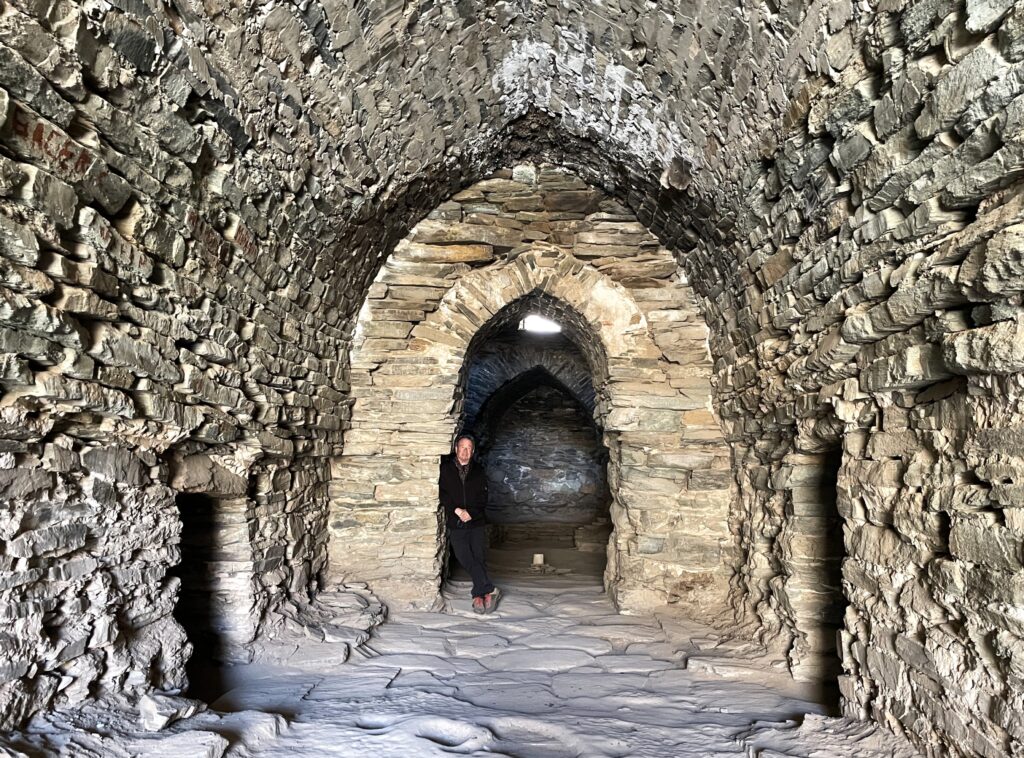
Some think it may have been a Nestorian Christian monastery. Or a Buddhist monastery.
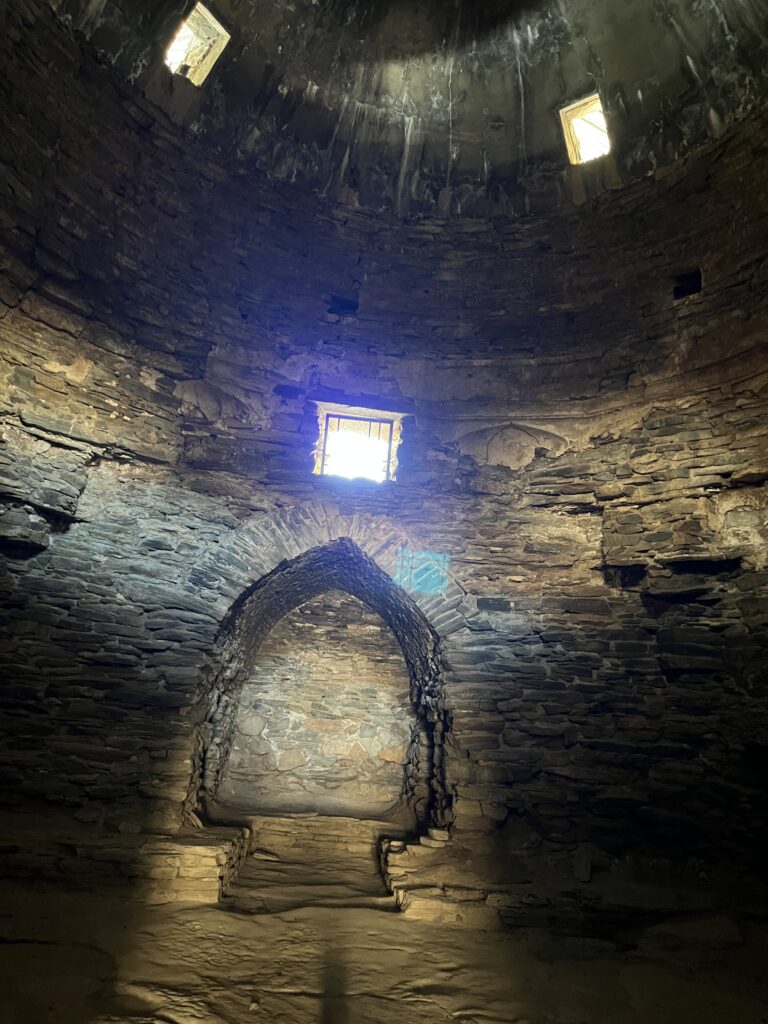
Anyway, it has dozens of small, cell-like rooms. It almost looks like a Roman fort we saw once in the Tunisian Sahara.
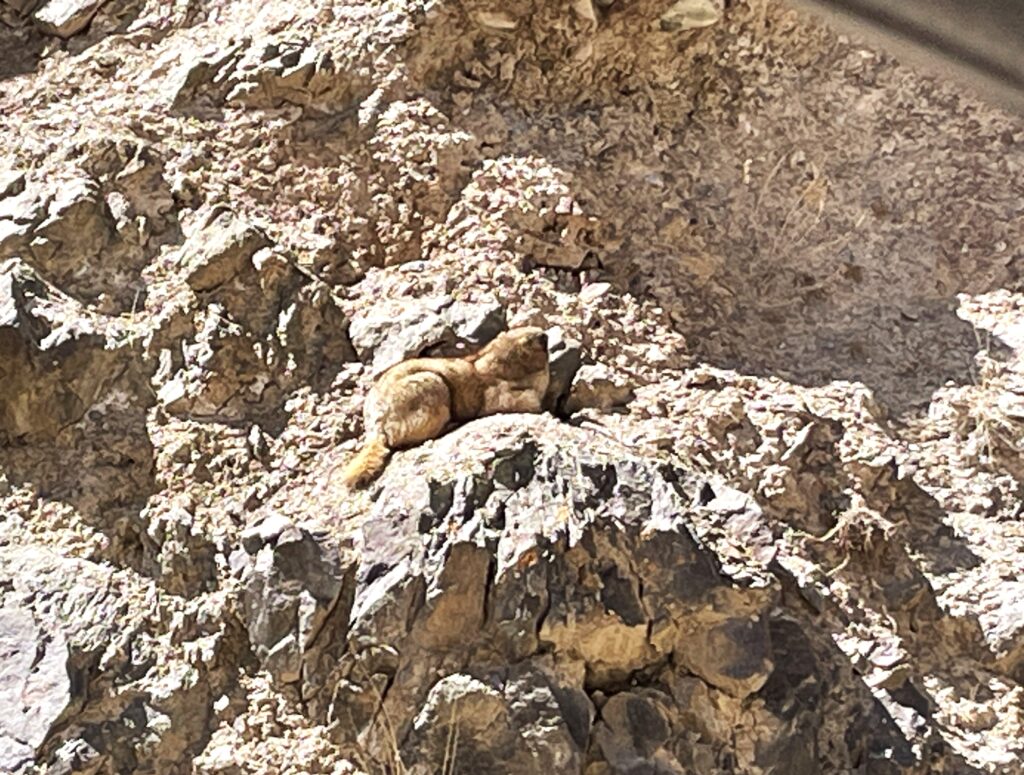
On the way to Tash Rabat, we see hundreds of creatures that resemble gophers or groundhogs. Turns out they’re long-tailed ground squirrels. It’s fun to watch them scurry to their burrows, their fuzzy tails flowing ‘like a ribbon on a fan’. (Thanks, Jane Siberry, for that image.)
Sight or Insight of the Day
How did we end up visiting Central Asia? We were discussing this the other day while on the road.
Way back in July 2019, we were in Bhutan, attending an activity that included a meal. One of our fellow guests was a well-traveled Hungarian woman named Anita, who worked for a Russian bank. We mentioned that we wanted to go to the Pantanal region of Brazil one day. Of course, she’d been there, and suggested accommodations at a ranch that we subsequently stayed at years later.
She’d also visited the ‘stans (Turkmenistan, Uzbekistan, Tajikistan, Kyrgyzstan, and Kazakhstan), driving around with a companion. Not exactly a prime destination at that time. Admittedly, she spoke fluent Russian, but she thought we’d enjoy its friendly people and interesting history, recent and ancient. She planted the seed and now here we are. Just goes to show how a couple of fleeting hours with a stranger can have reverberating effects down the line.
Thanks, Anita, wherever you are!