It’s been a wonderful summer in Ottawa. We’ve spent most of our time at the cottage, enjoying the season with friends and family. Inevitably, the days grow shorter, the leaves change colour, and we get that urge for going. ‘Winter’s closing in’, as Ms. Mitchell says.
It’s been a banner year for travel. In February, we had a brief holiday in Cuba and arrived home mere hours before the collapse of its tourist infrastructure. Then we had a great three months in Central Asia and an adventurous month in Mongolia. And there’s still over a month left in 2026.
So it’s off to Cabo Verde. We’ve been thinking of visiting this outpost of the lusophone world for a few years now, and 2026 is the year.
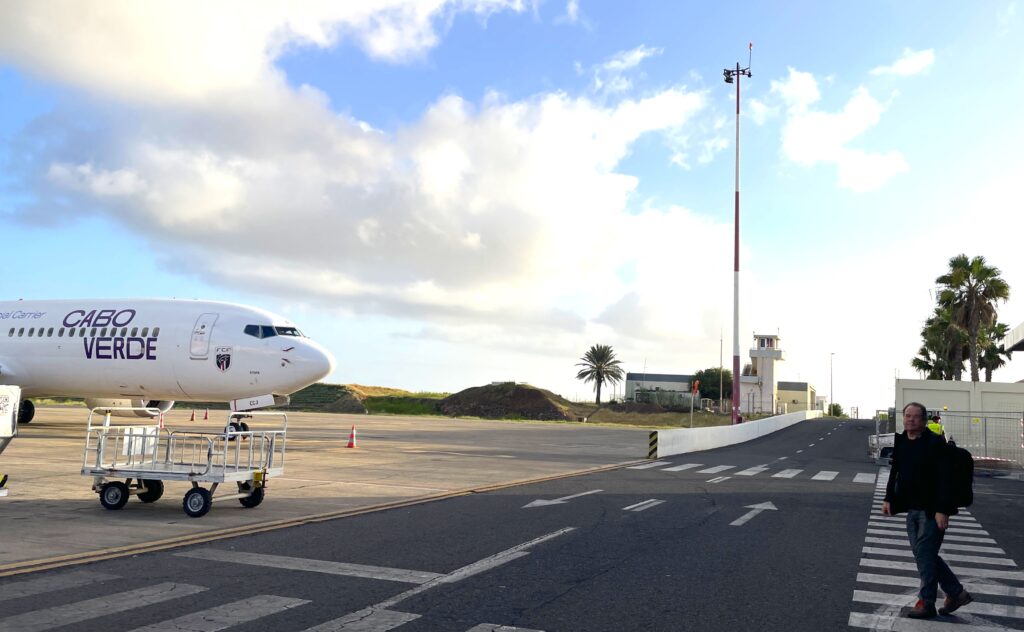
Our journey begins in Ottawa with a flight to Lisbon, via Toronto-Pearson. From Lisbon, after nearly five hours of flying back out over the Atlantic, we arrive in Cabo Verde. Some eminent previous visitors include Vasco de Gama, Christopher Columbus, Sir Francis Drake, and Charles Lindbergh.
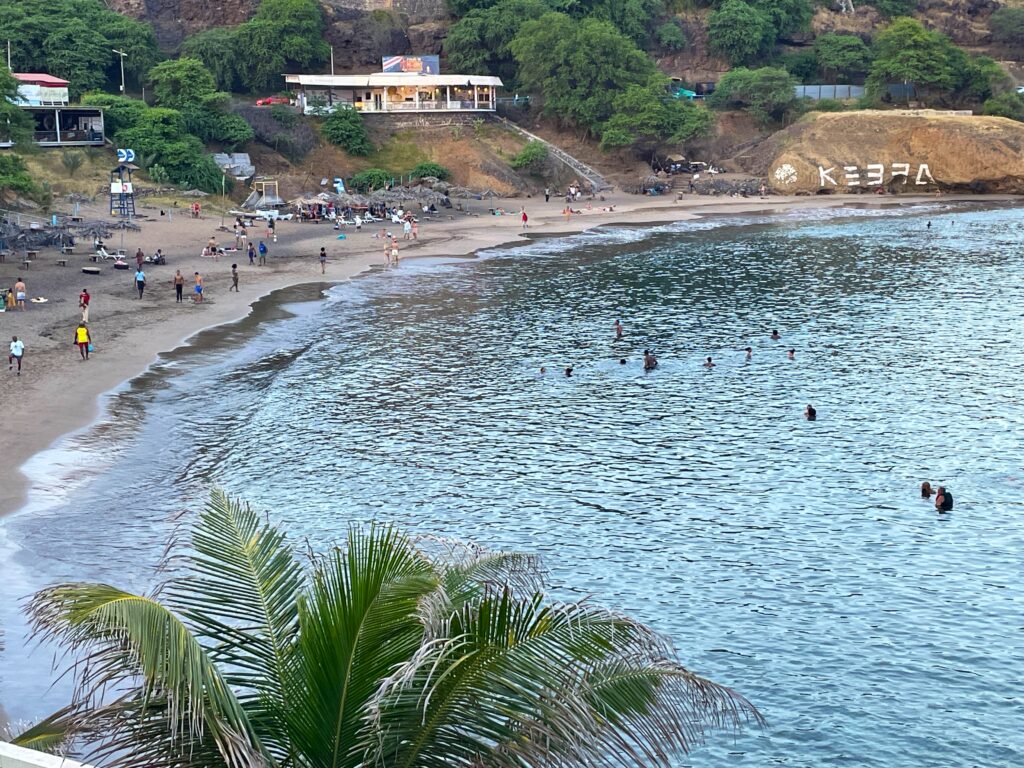
In Praia, the national capital and major town of Santiago, we stay in a nice neighbourhood close to Kebra Canela beach. We’re happy to find that cabo-verdianos are fond of spending time at the seaside. It’s kind of like Brazil that way.
One of our first stops out of town is the Fortress of São Filipe in Cidade Velha. It was founded in 1587. William Shakespeare was still walking around at the time.
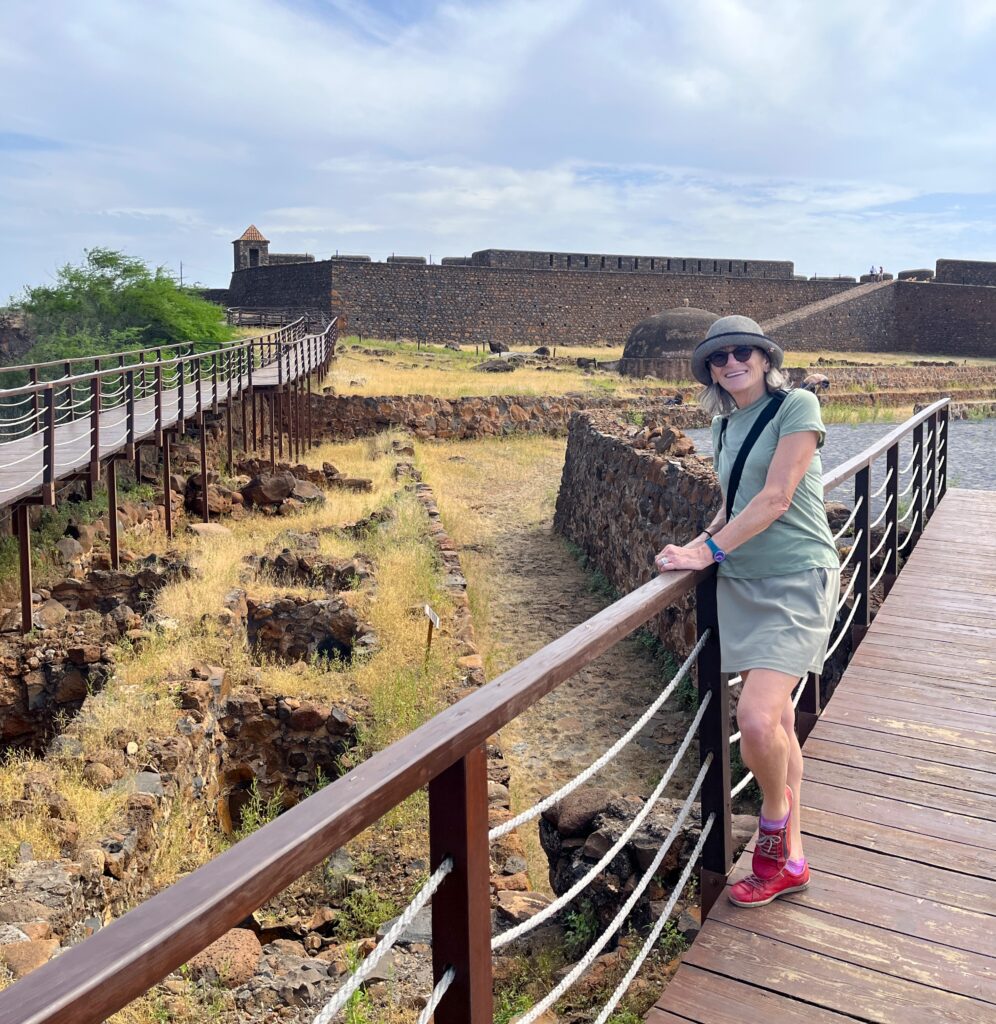
(Personal aside – I have an eccentric habit of thinking of eras in the 16th and early 17th centuries in relation to the lifetime of Shakespeare (born 1564 – died 1616). As in, ‘When this fortress was built, William Shakespeare was alive’.)
A trail leads down to the town itself.
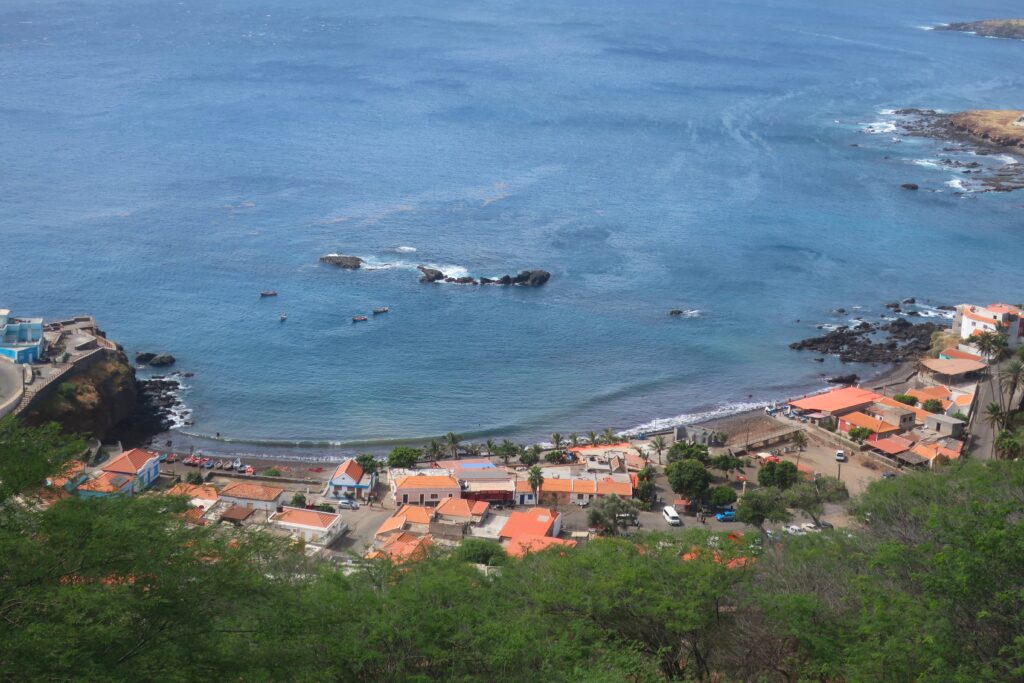
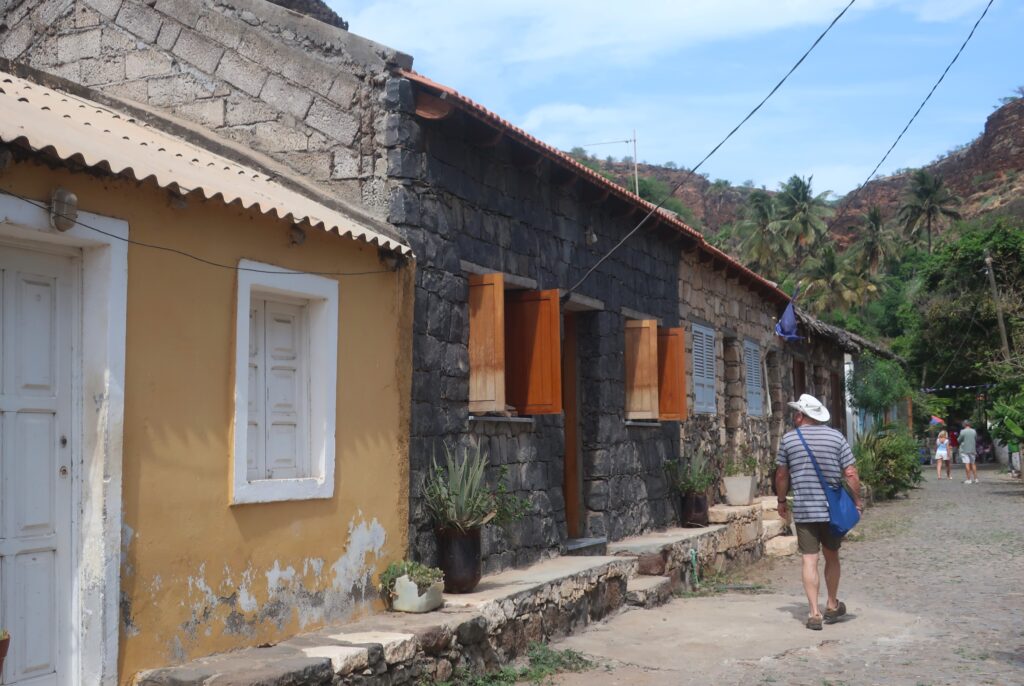
Not surprising, considering its status as one of the oldest European settlements outside of the Old World, there are lots of interesting old buildings.
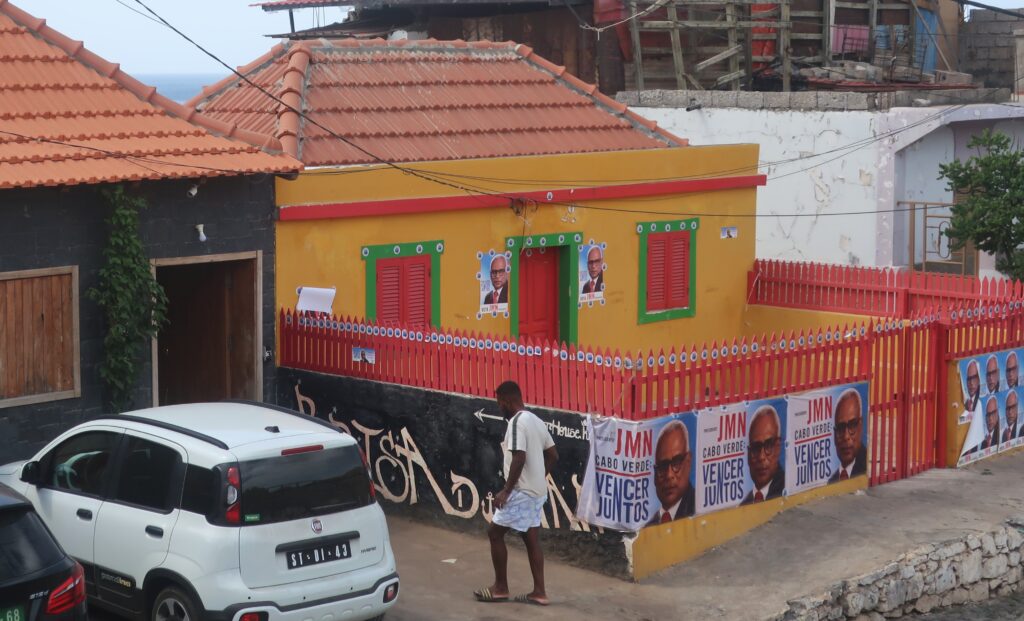
There was an election here a few weeks ago. José Maria Neves won. Cabo Verde ranks a healthy 92 on the Freedom House scale. (Healthy for Africa, anyway. The democratic Republic of the Congo scores 18. Canada scores 97.)
These old building are usually built with blocks of volcanic stone that make up much of the island.
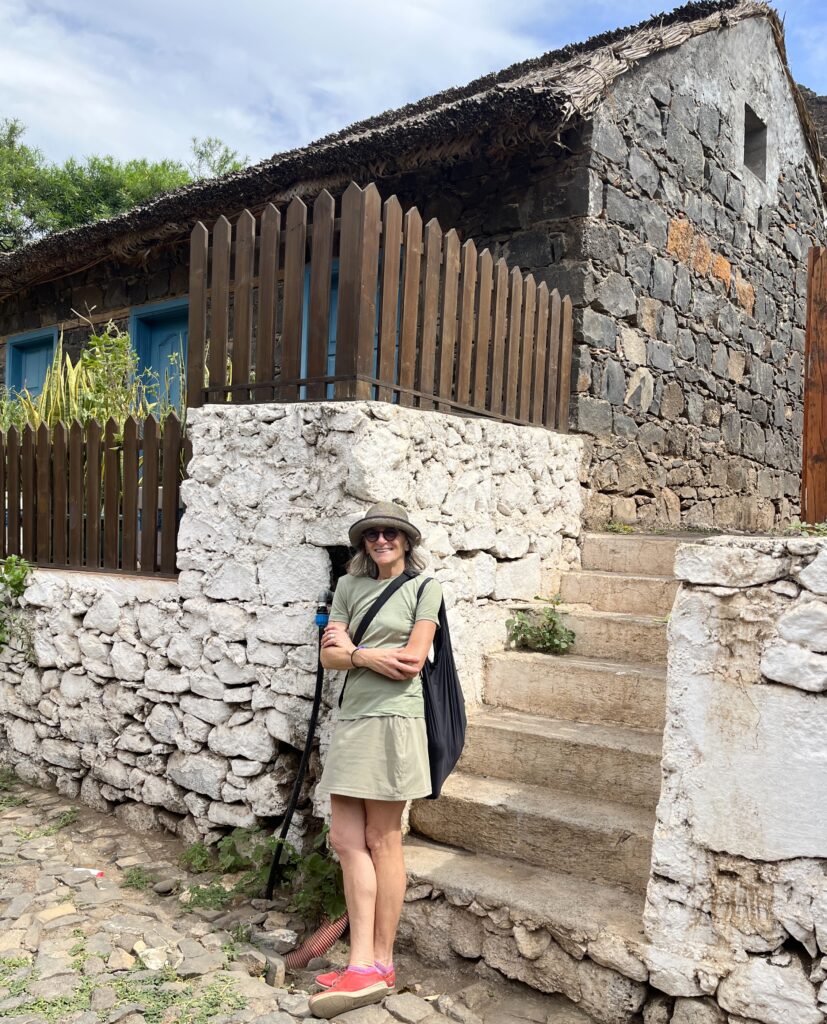
Cabo Verde is at an interesting point in its transition to a more popular tourist destination. The people are very laid back. And kind. (A sure-fire measure of this is the way stray animals are treated.)
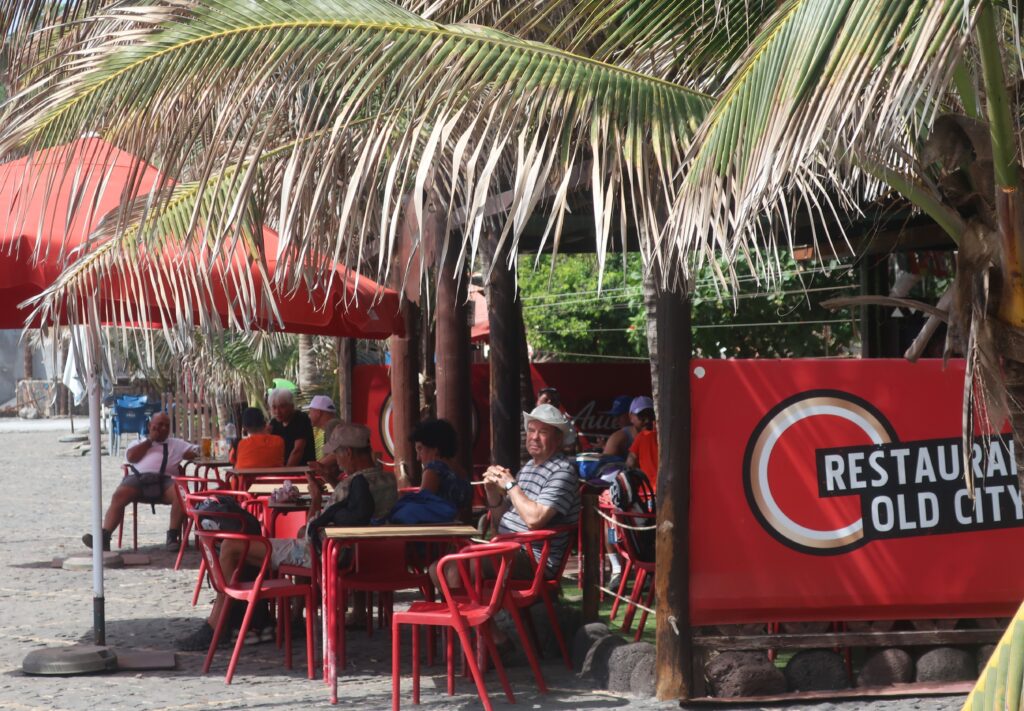
There’s a healthy stream of European tourists already. But there are signs of impending overbuilding and subsequent abandonment of unofficial, jerry-built ‘resorts’.
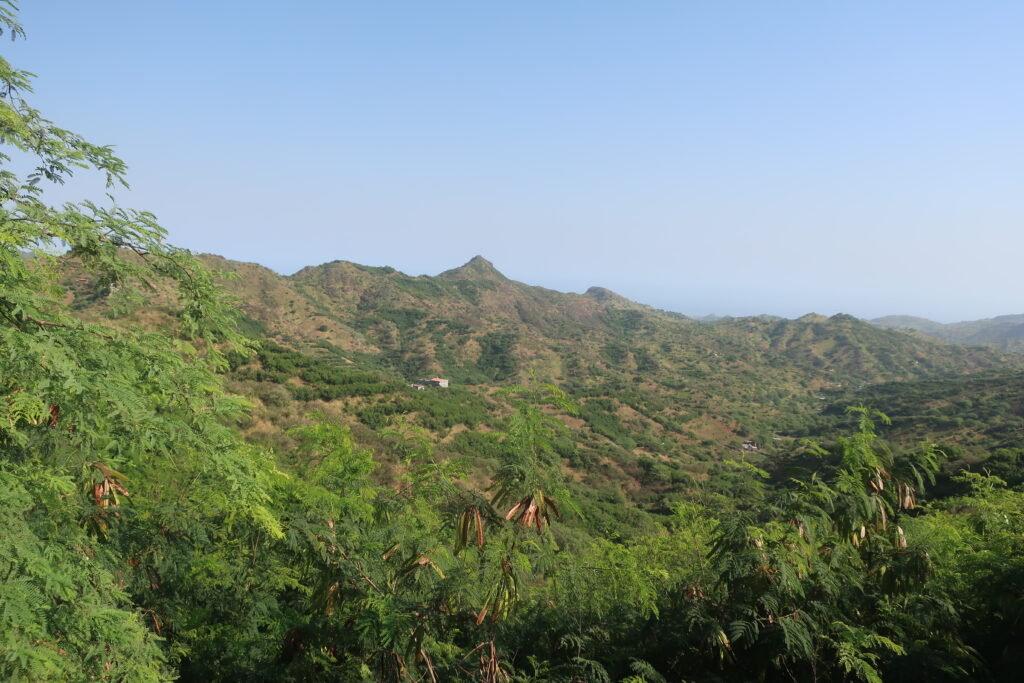
We hire a taxi to take us to Tarrafal, a beach town up the coast. This is typical scenery for Santiago, the island we’re currently on. (Each island in the archipelago is different, so we’re told.)
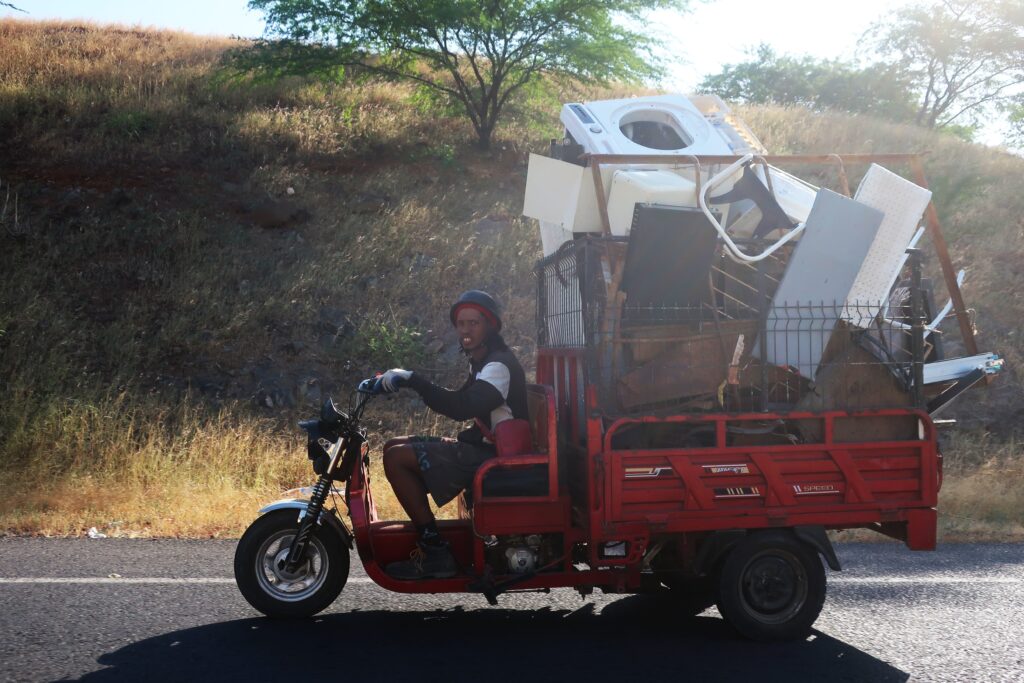
As always in the developing world, severely-overloaded transport is the norm.
Tarrafal is a pleasant small town. Our hotel is right on the beach.
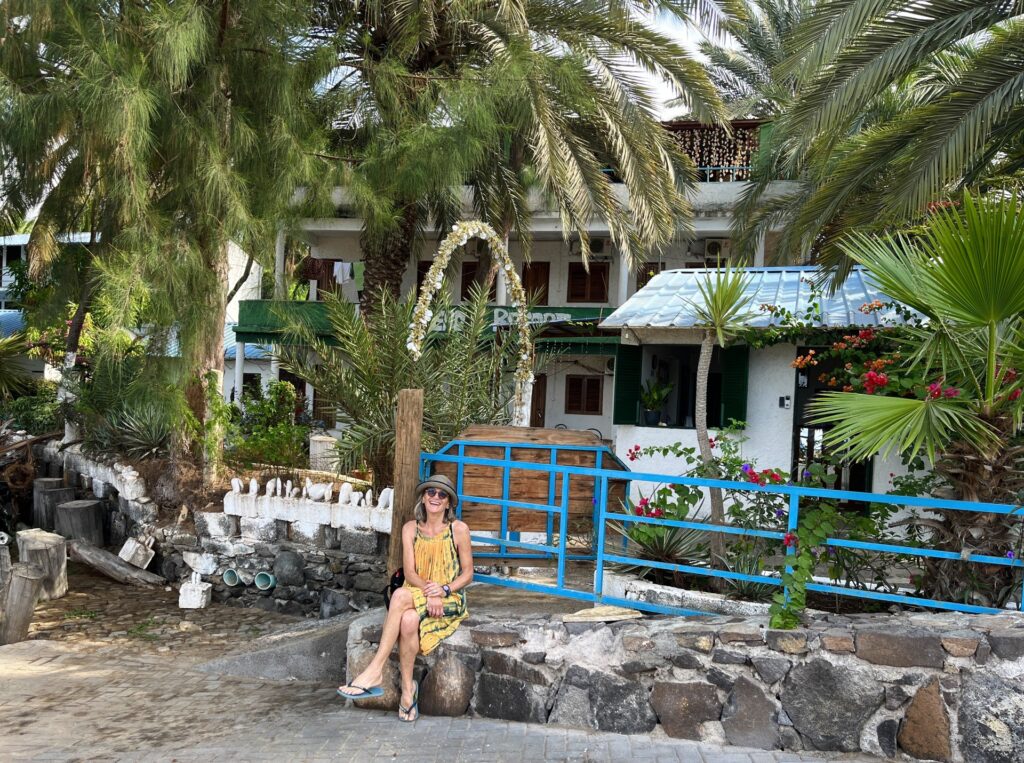
Small-scale fishing is how many locals earn a crust, as the Aussies say.
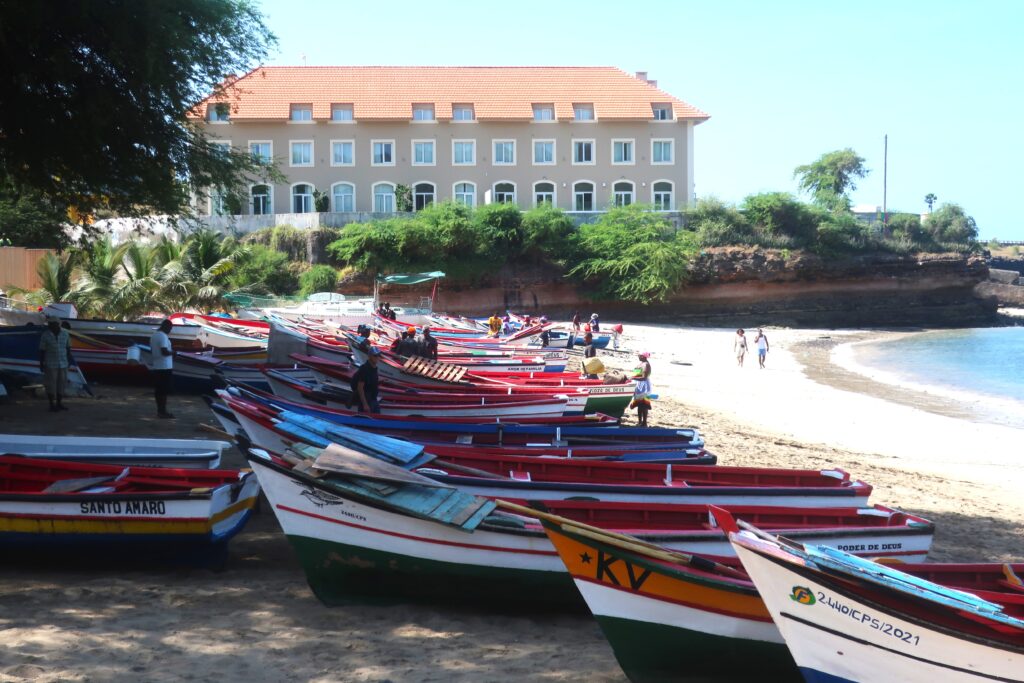
Nearby is small fish market.
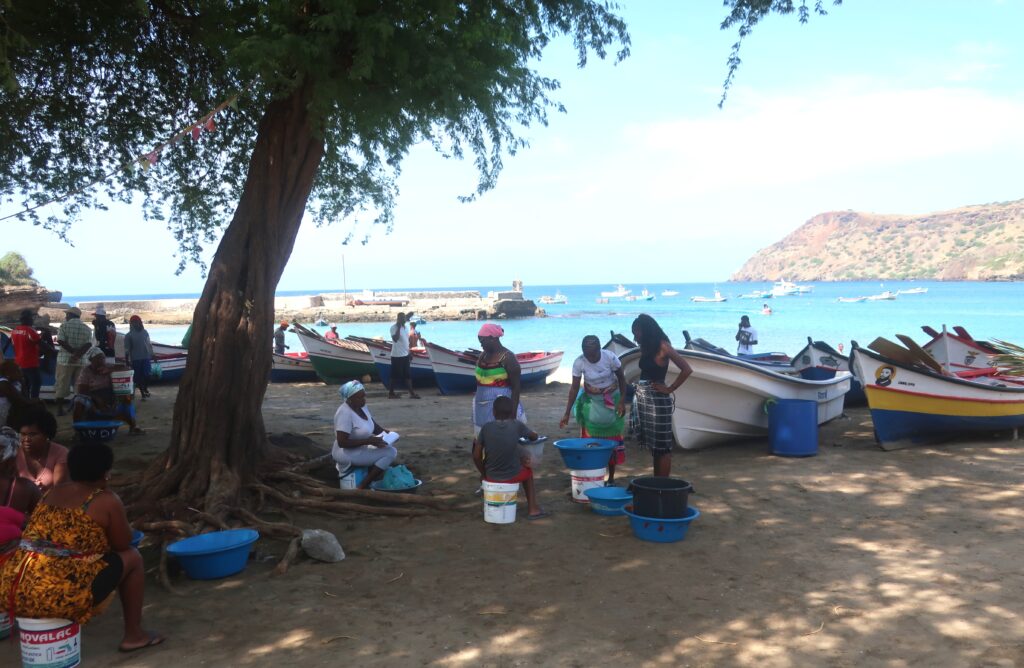
Interesting that all of the fishermen (CBC would insist on ‘fishers’) are men and virtually all of the vendors are women.
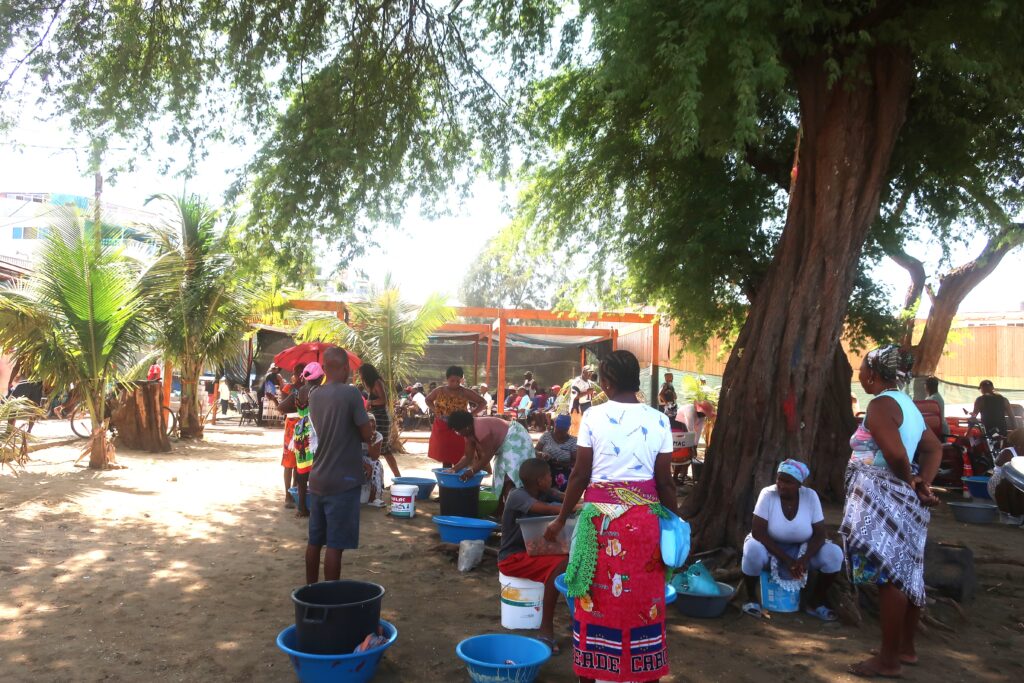
The town itself is a short walk from the beach.
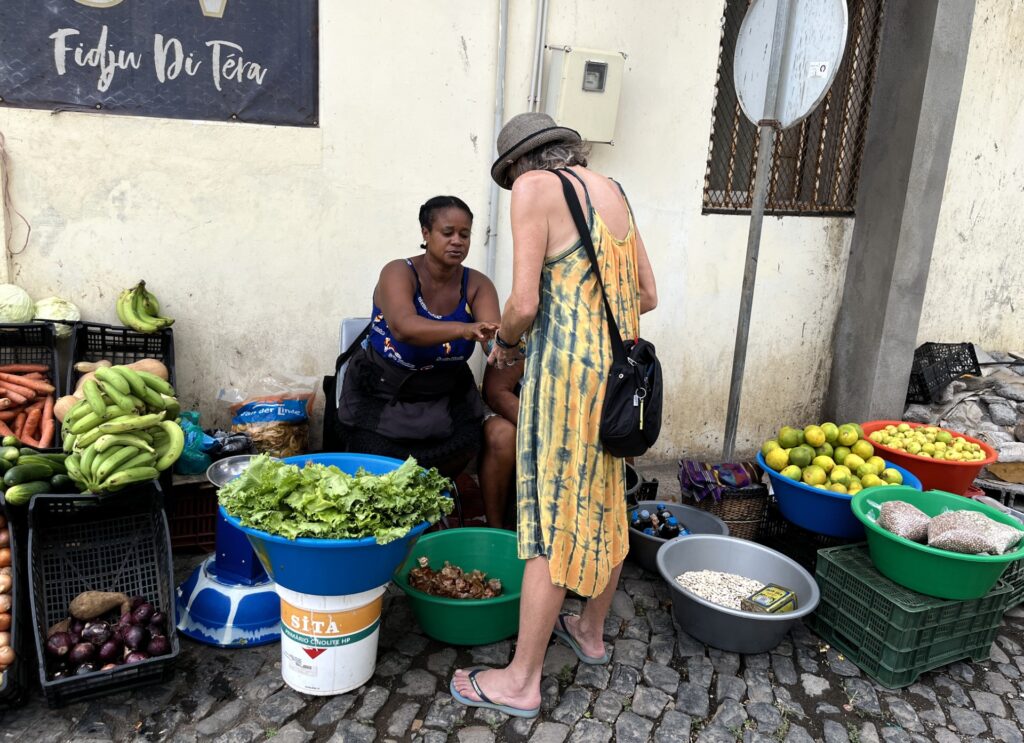
Sight or Insight of the Day
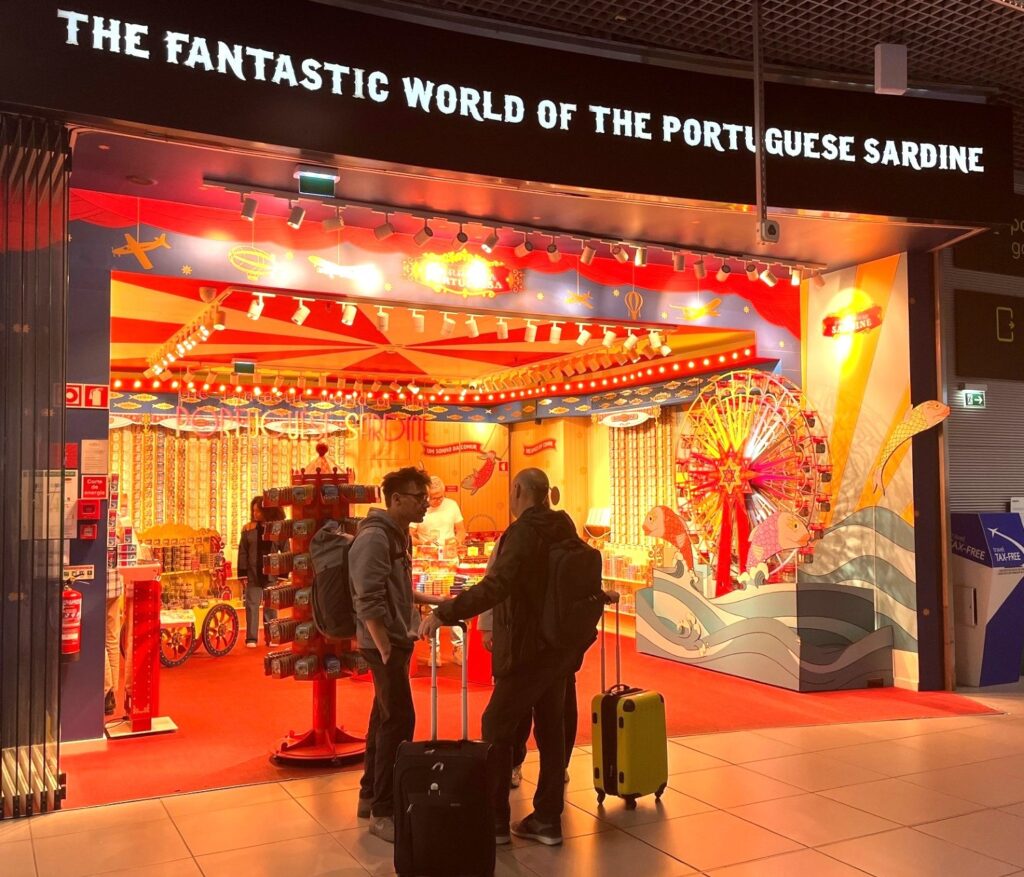
We spend a few hours in Lisbon Airport. Unique among the plethora of international luxury chain stores is this circus-themed specialty shop extolling the delights of the Portuguese sardine. Note the sardine-can Ferris wheel.