After acclimatizing for a few days in Tashkent, we take the high-speed train to Samarkand.
I remember rainy afternoons in the fourth grade learning about Marco Polo and his travels to places with magical names like ‘Bokhara’ and ‘Samarkand’. Our teacher made it come alive in the telling. (Thanks, Miss Legault!)
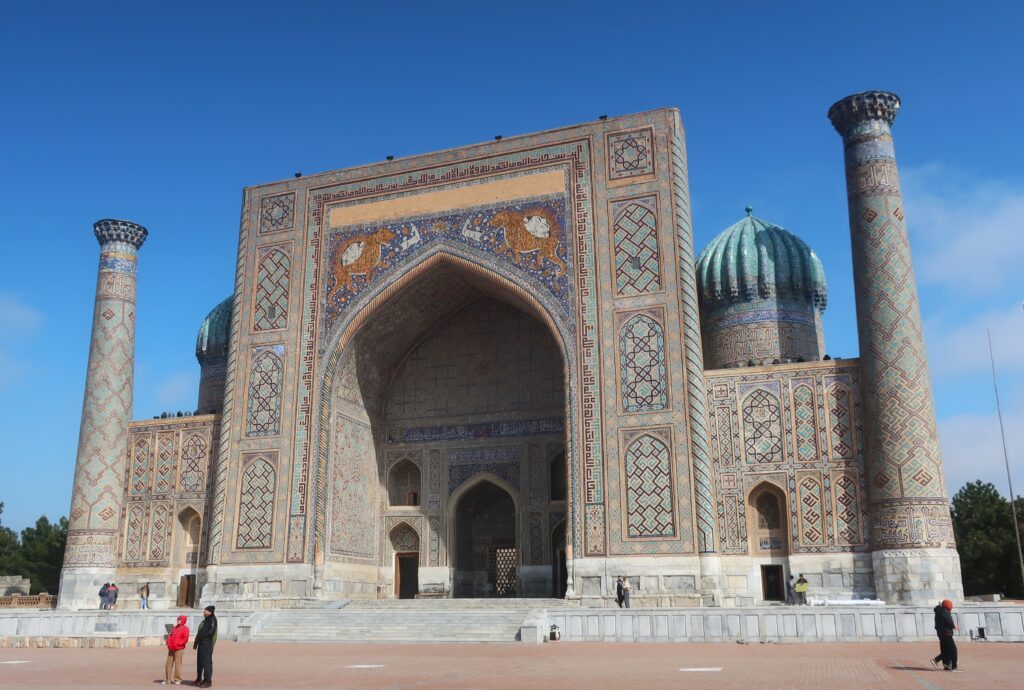
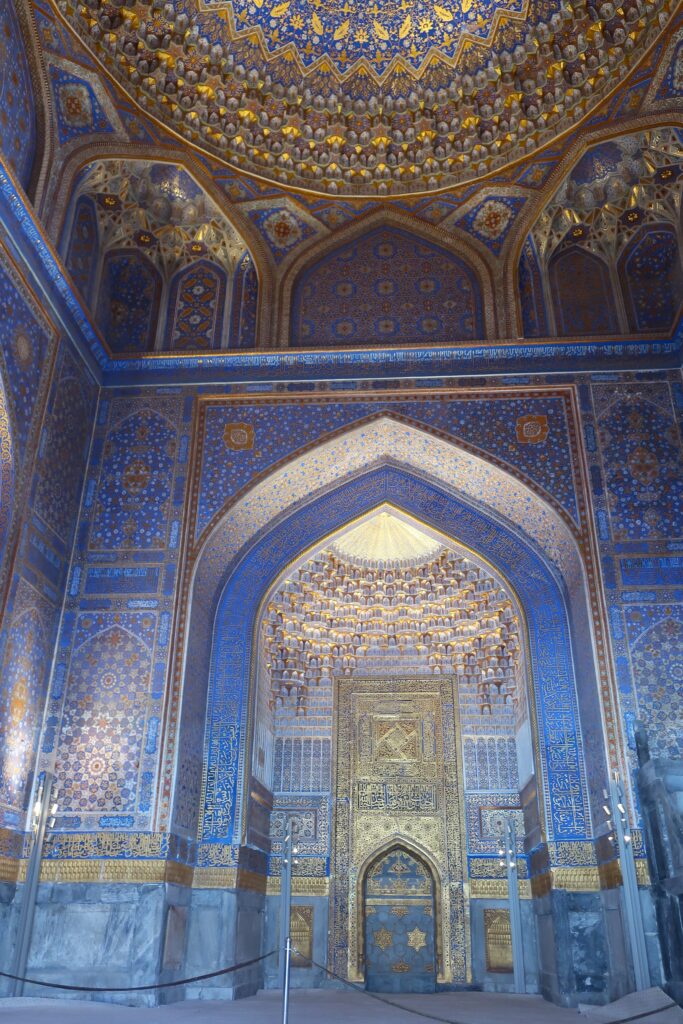
Samarkand is closely connected to the deeds of Amir Timur, known in English as Tamburlaine. That still won’t ring any bells for most people besides those interested in Asian history and fans of Elizabethan theatre. (‘Tamburlaine the Great‘ was a big hit for Christopher Marlowe.)
Tamburlaine ruled over a vast empire from Egypt to India, ‘spacious in the possession of dirt’, as Shakespeare says. Lots of bloodshed involved. Samarkand was his capital.
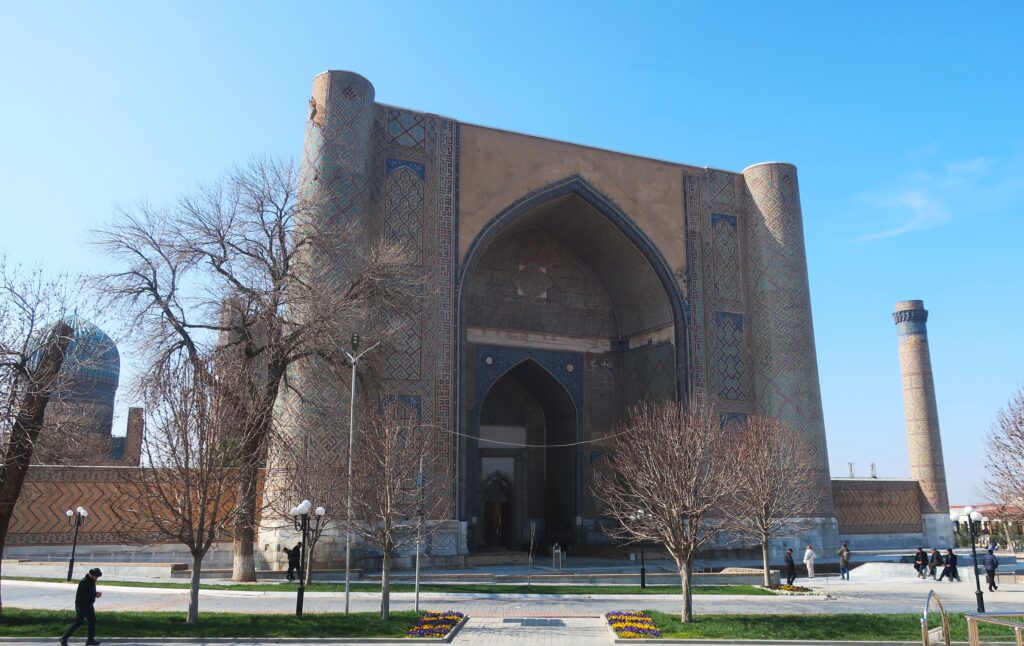
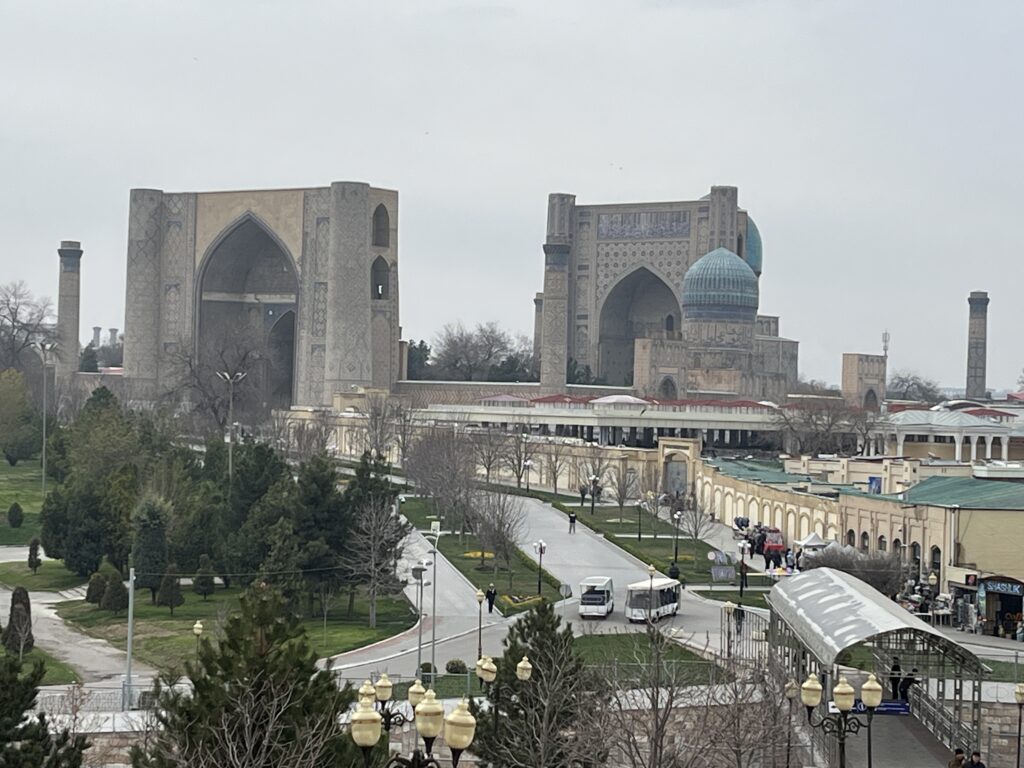
This is the Bibi-Khanym mosque. Bibi was one of Timur’s 18 wives. You can judge the size of the place by the pedestrians walking in the square.
In the the courtyard is a giant Koran.
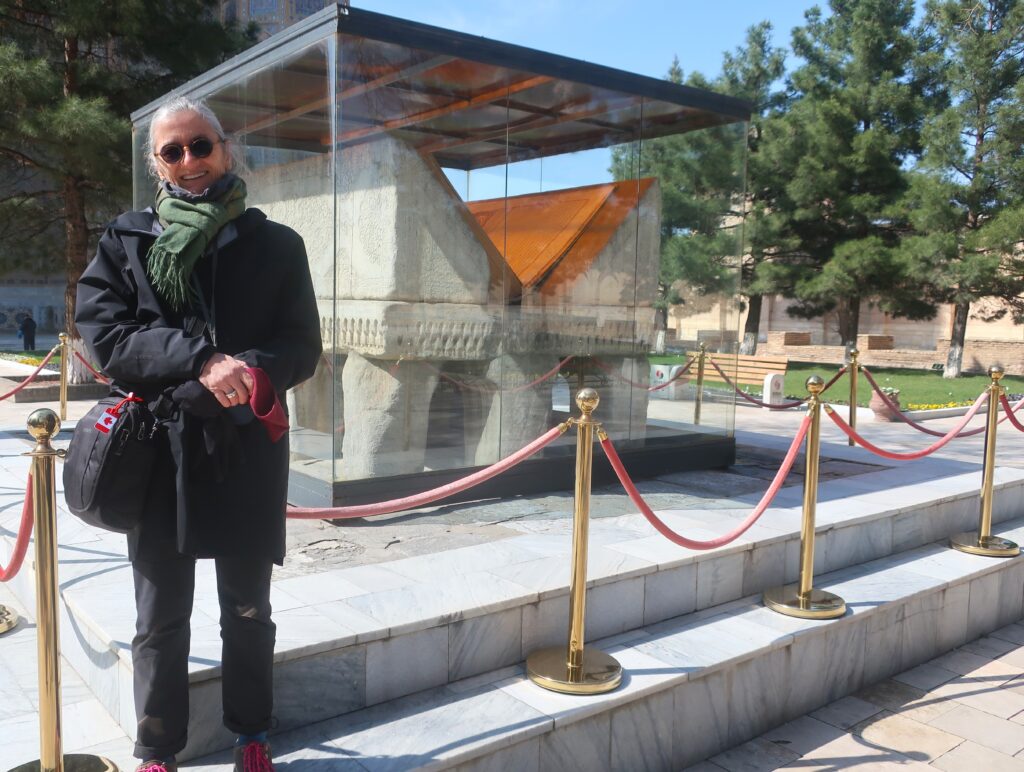
If you’re wondering why Maria looks so bundled up, it’s because we have a few days of bone-chilling cold.
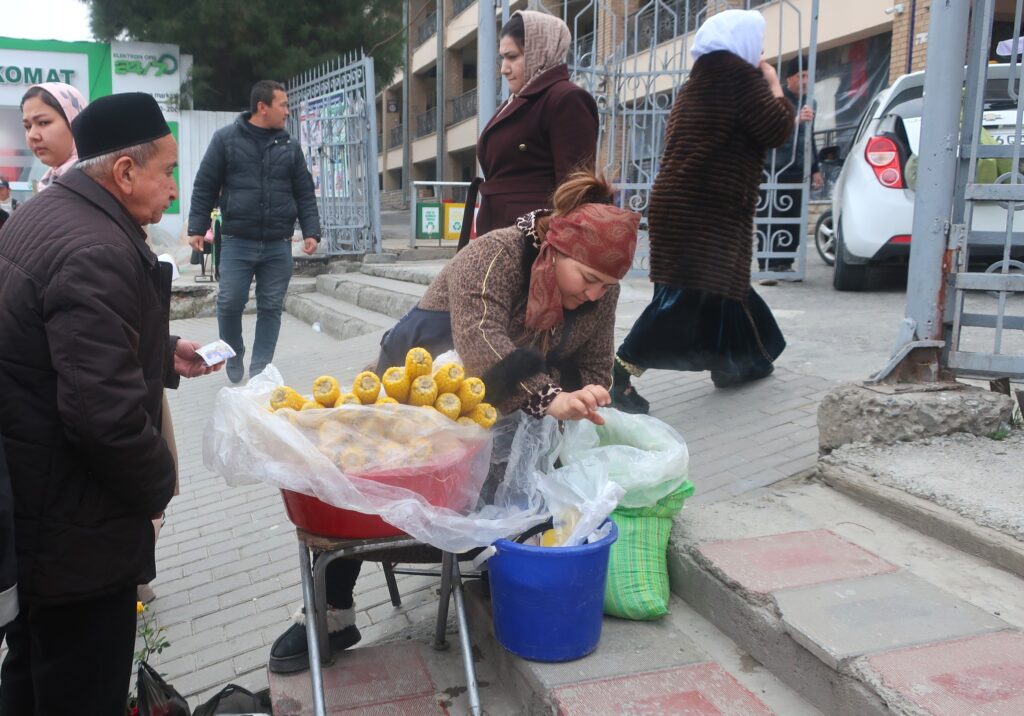
Everyone else in town is also trying to stay warm.
This is another view from afar. On the left is the Bibi Khanym mausoleum.
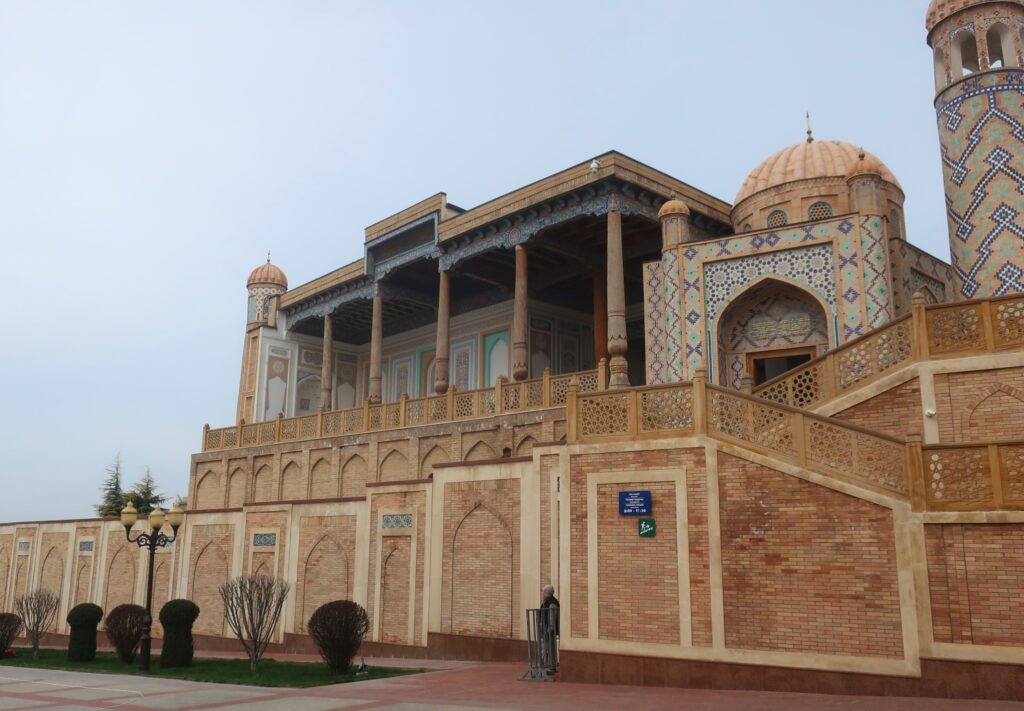
Taken from the balcony of the Hazrat Khizr mosque. This is where the remains of Islam Karimov, Uzbekistan’s first president, slumber in eternity.
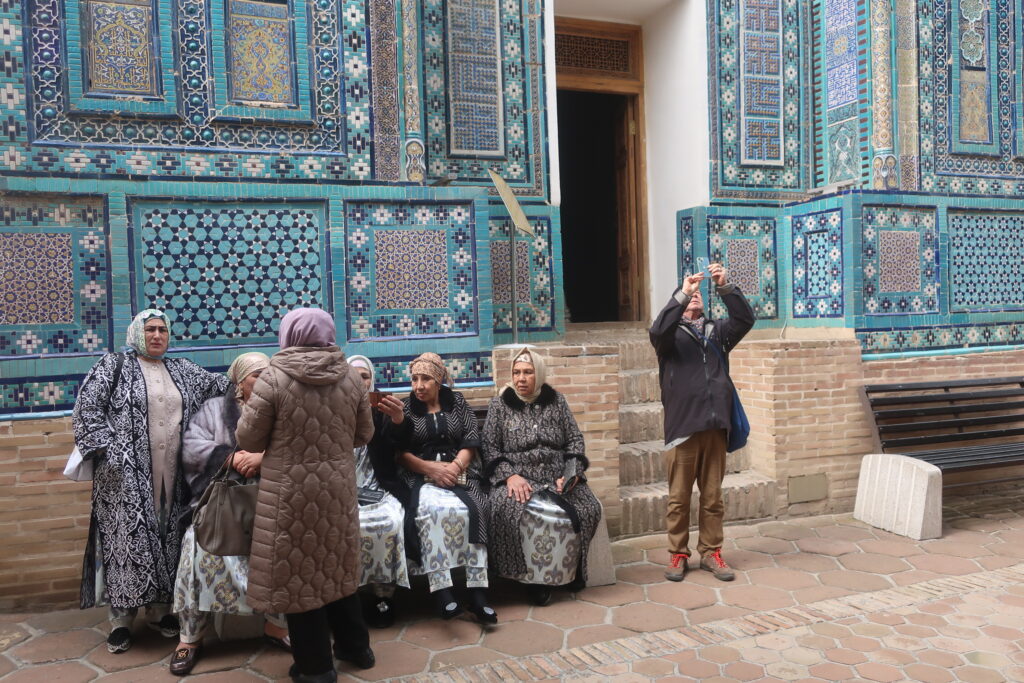
In the vicinity is the Shah-i-Zinda, a necropolis of brightly-coloured mausolea for highly-placed people, including several of Timur’s relatives.
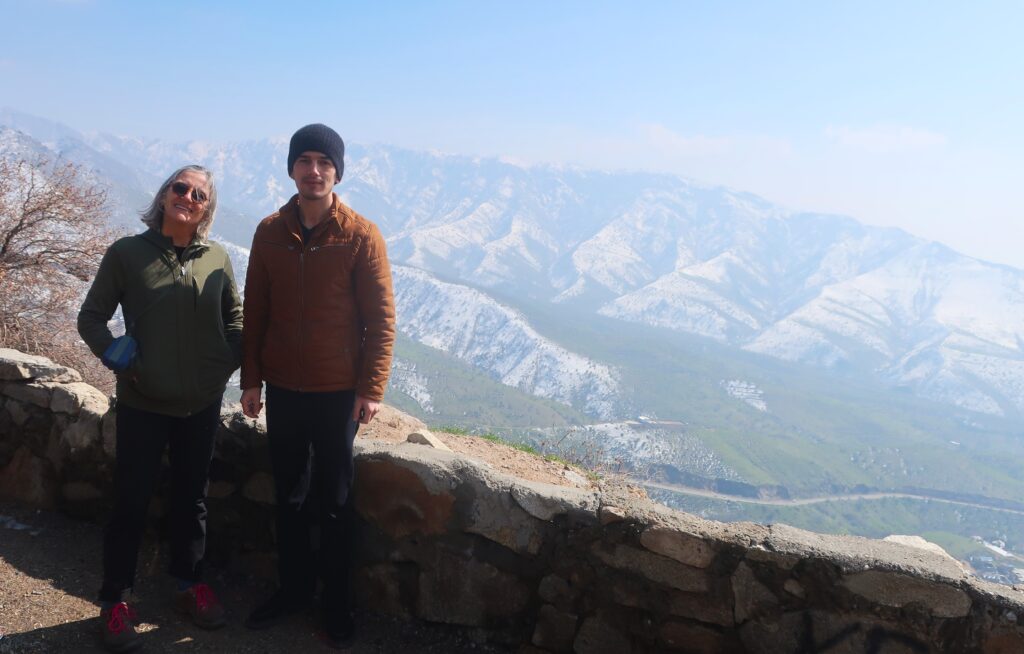
In search of more Timur sites, we hire a car and driver for a day trip to Shahrisabz, Timur’s birthplace. We drive over the snow-clad Tahtakaracha Pass.
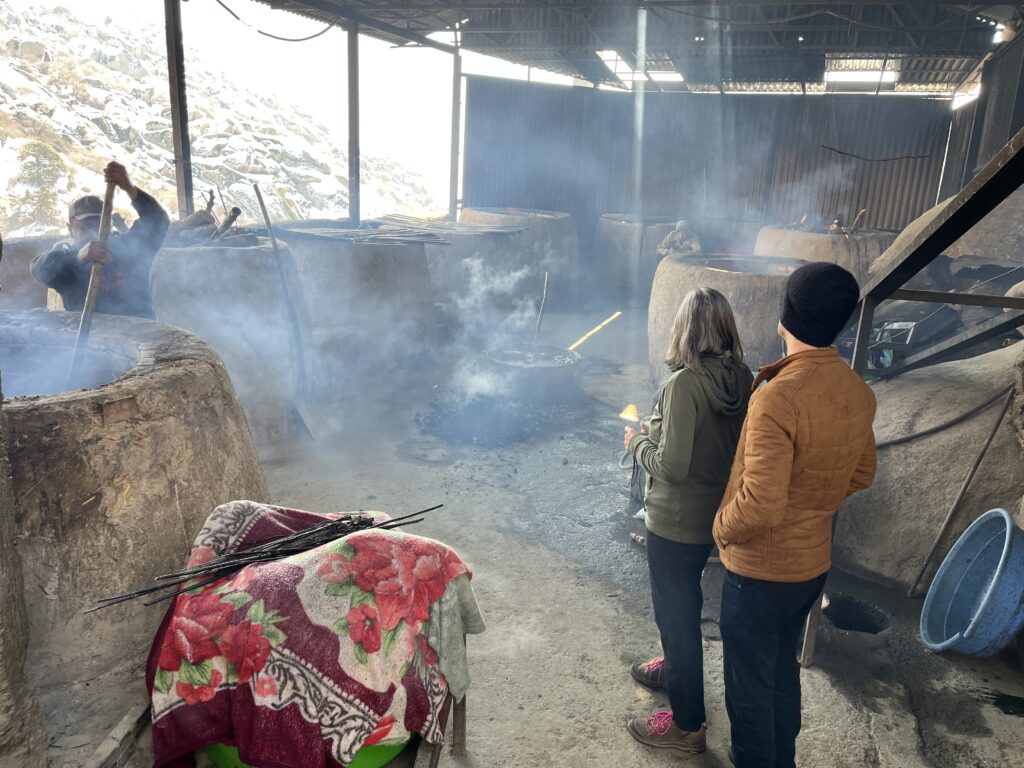
The top of the pass has many restaurants specializing in tandori BBQ. The small sample we tried was delicious.
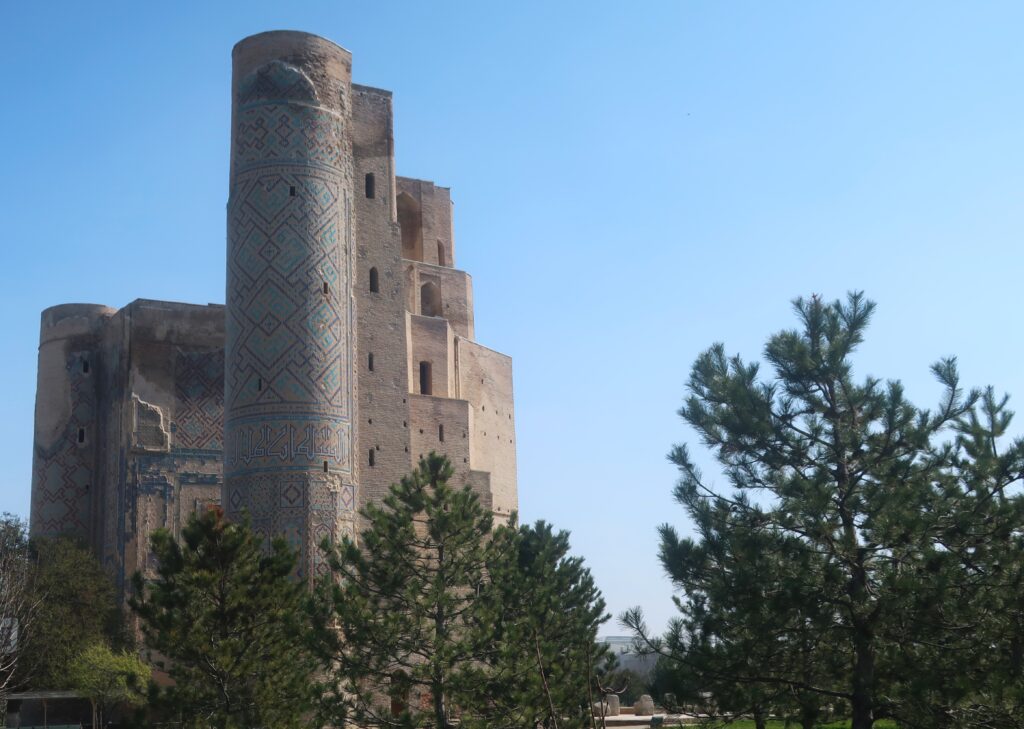
Shahrisabz is a bit of a disappointment. This is all that remains of Timur’s once-extensive summer palace after being destroyed in the 16th century, along with the entire town, by the forces of Abdullah Khan II, a fellow autocrat.
Still, the drive is scenic, and it’s interesting to see Uzbek life out in the countryside.
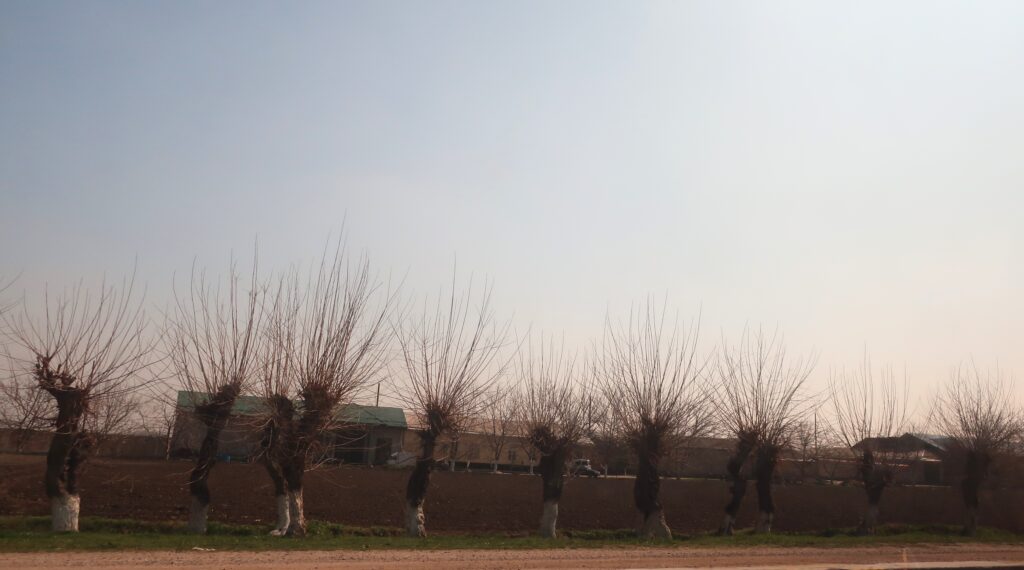
Mulberry trees line the road everywhere. Later, their leaves will feed the silkworms that supply Uzbekistan’s silk industry.
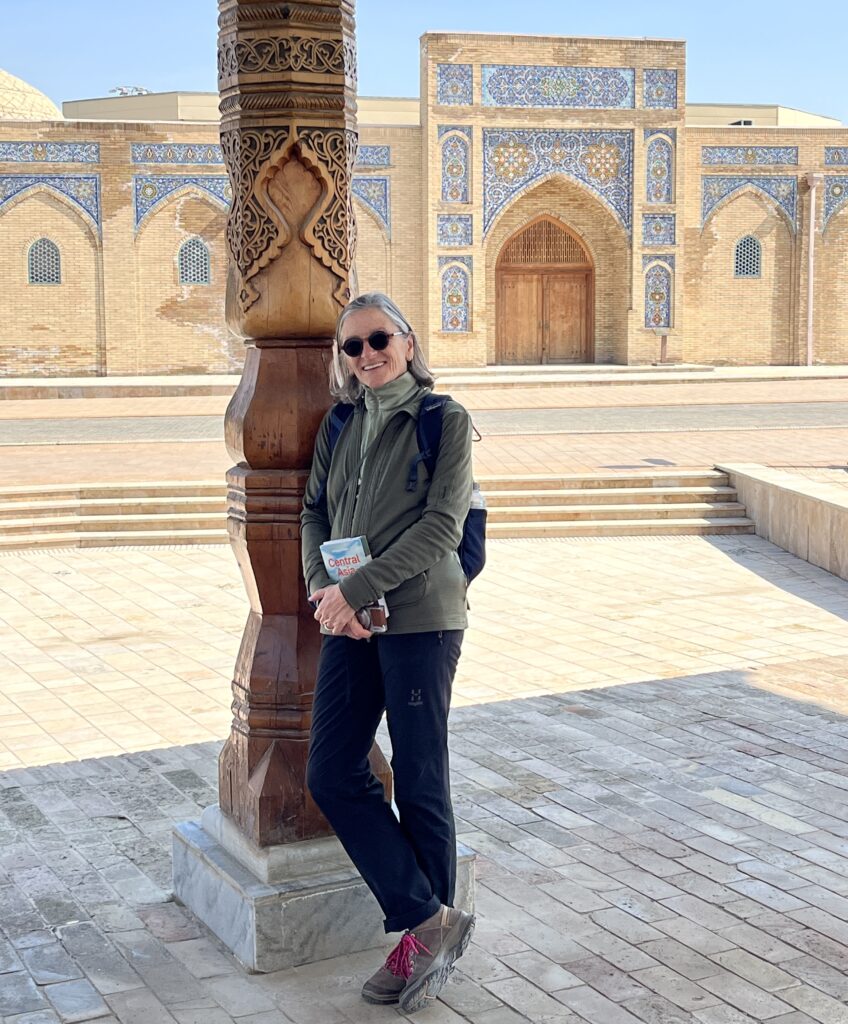
Back in town, we visit a carpet factory. Some attractive carpets, but no gotta-haves.
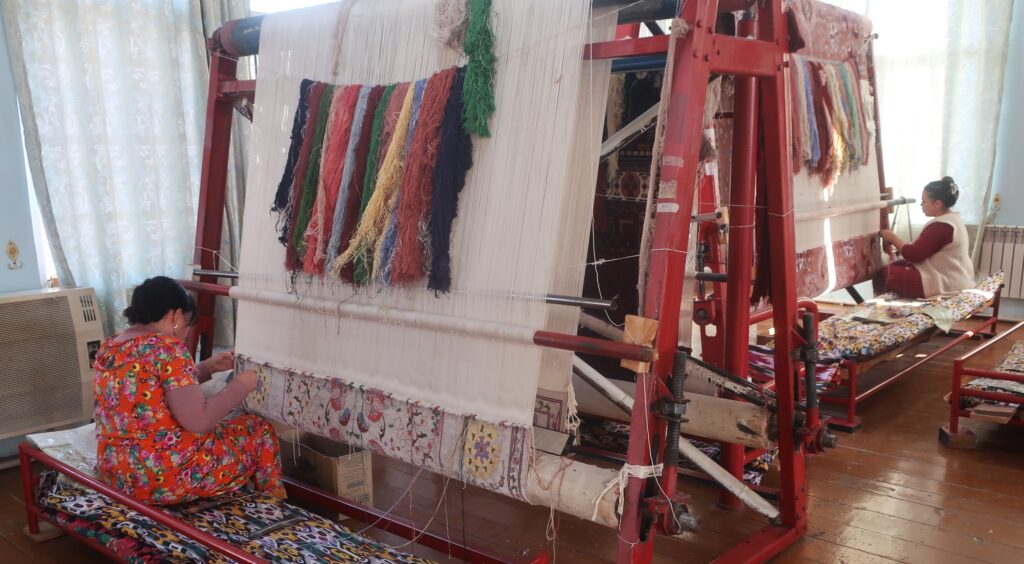
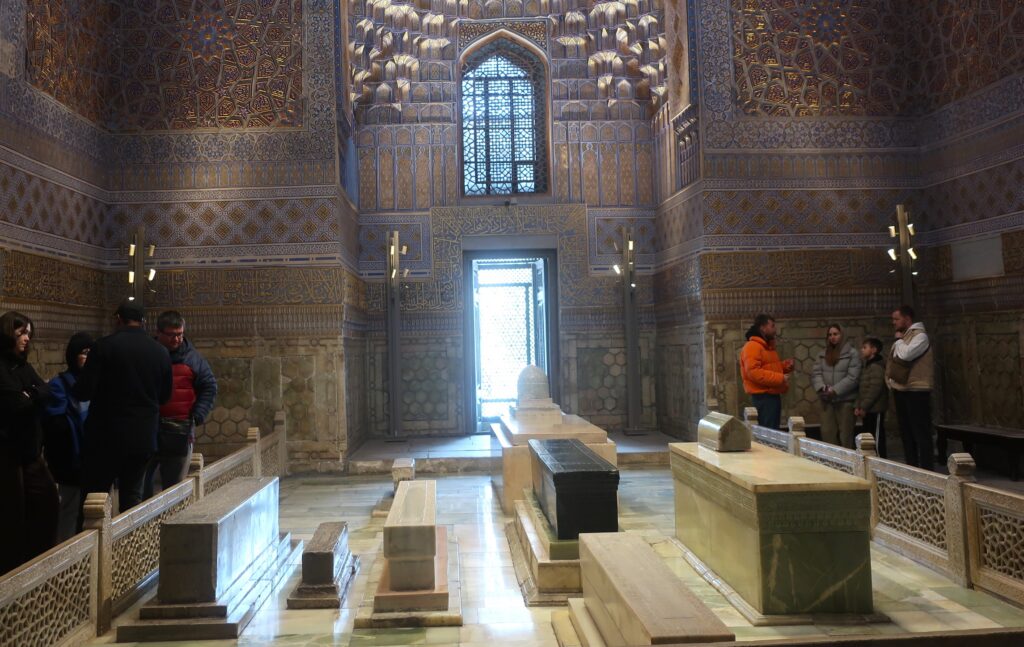
Lastly, we visit Gur-e-Amir, Timur’s final resting place.
Samarkand may be a household name – sort of – but we’d never heard of Afrasiyob before coming here. We see the name on hotels and businesses. Even the high-speed train that whisks us here is named the ‘Afrasiyob’.
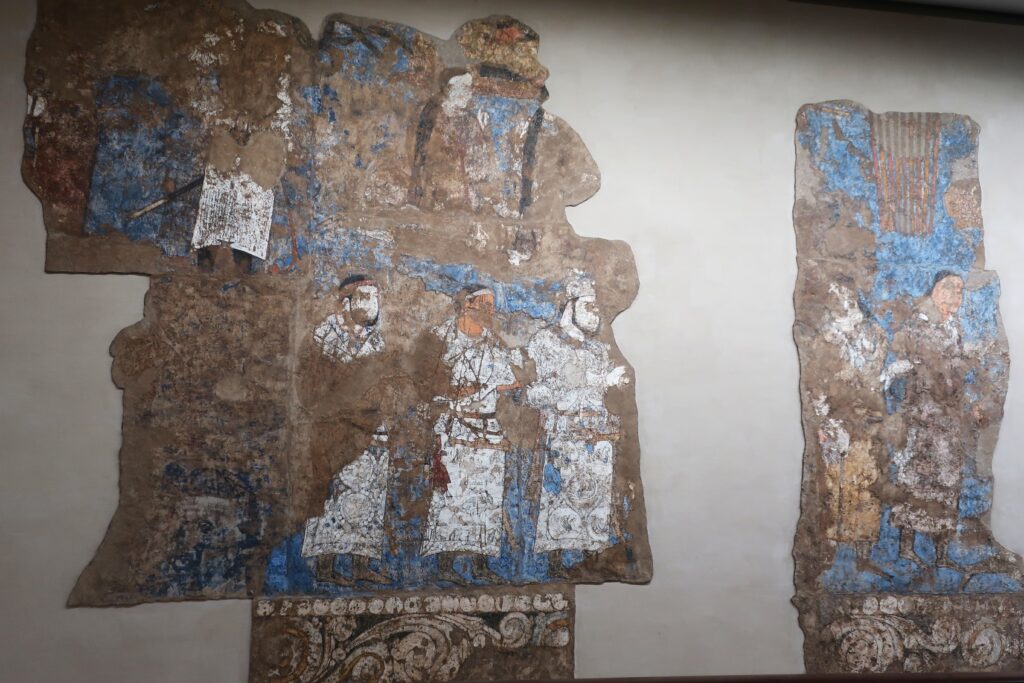
Afrasiyob was a Sogdian precursor of Samarkand. Alexander the Great dropped in for a visit.
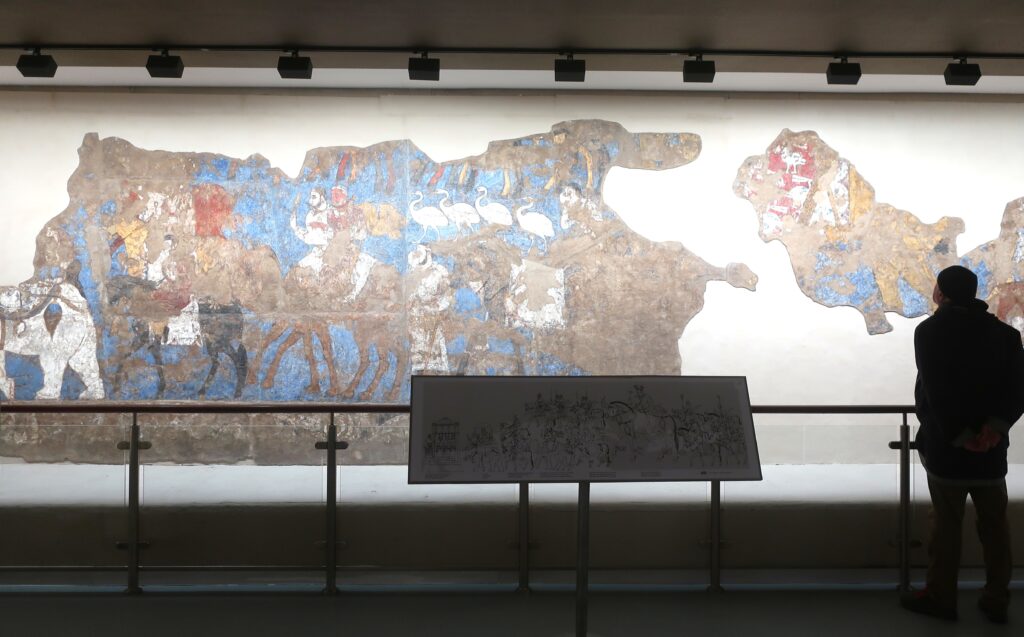
This recently-discovered mural dates from pre-Islam Afrasyob.
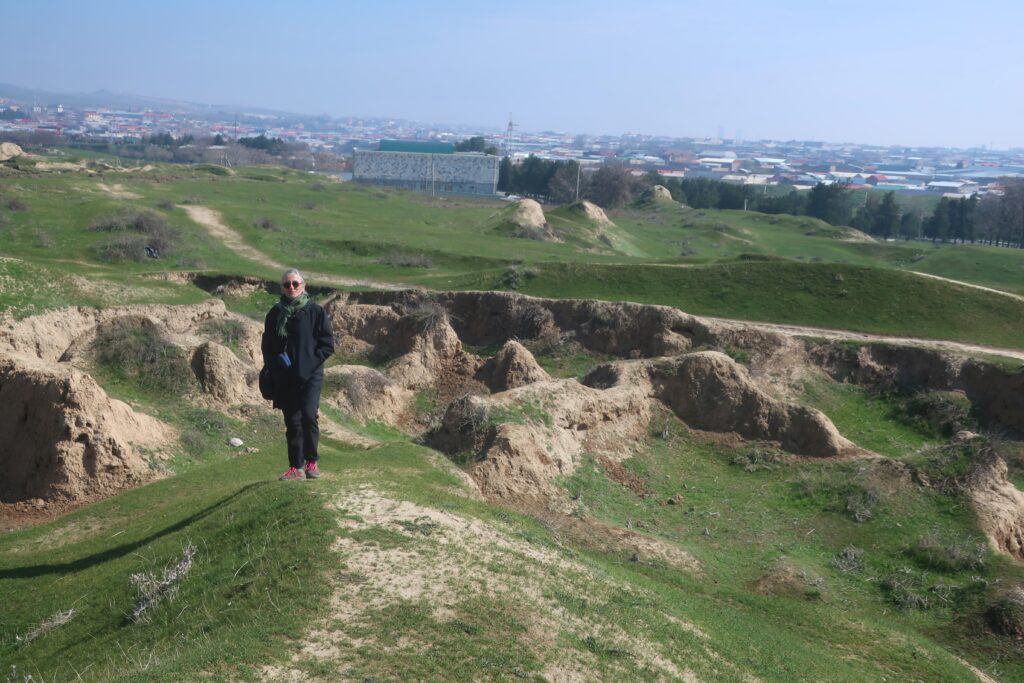
So there you have it – a populous, vibrant city until the arrival of the Mongols, who razed it to the ground. (I’ve always thought it’s ironic that ‘razed‘ has the meaning of ‘utterly flattened‘.)
Reminds us of our visit to Enkomi in Cyprus. Another bustling city-of-the-world, now just ruined foundations in a field of grazing sheep.
Sight or Insight of the Day
Normally, we don’t make a big deal out of being Canadian. However, in this day and age, we feel it’s a good idea to make plain that we are not Trumplandians.
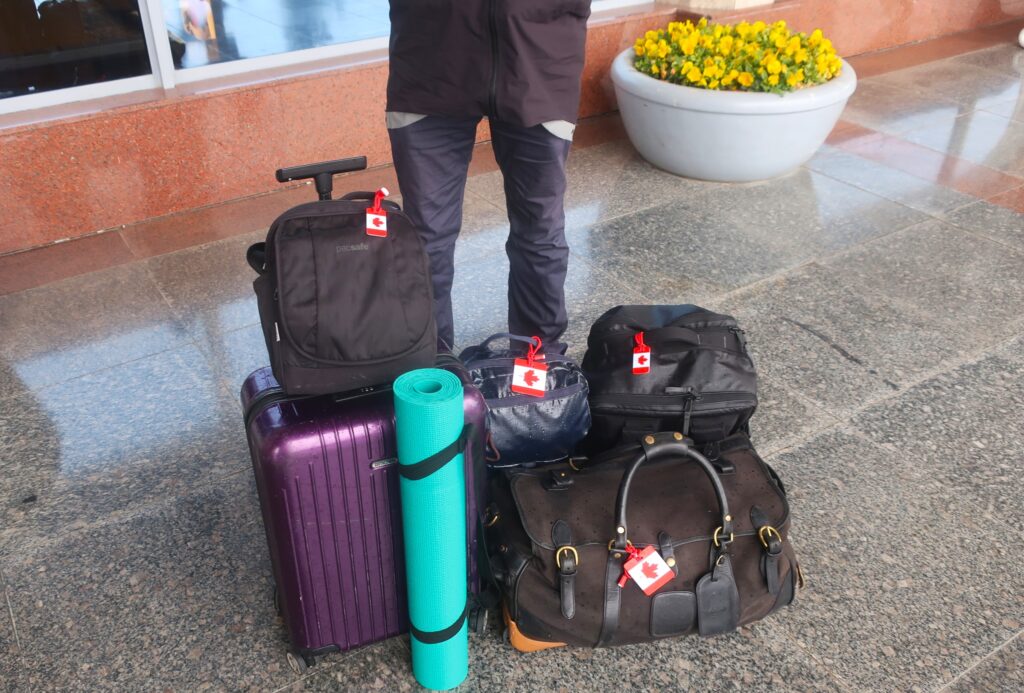
So our luggage is now prominently labeled with maple leaf luggage tags.