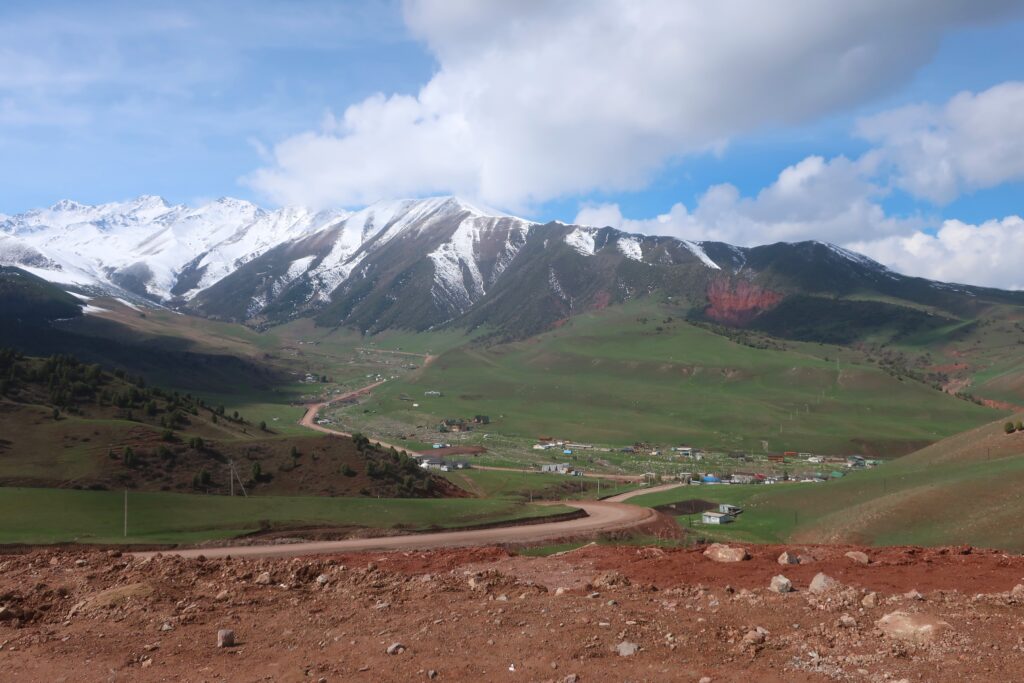
…Kyrgyzstan, that is. If Uzbekistan is all about Silk Road cities, KGZ is all about mountains. We are seldom out of sight of snow-covered peaks anywhere in the country so far.
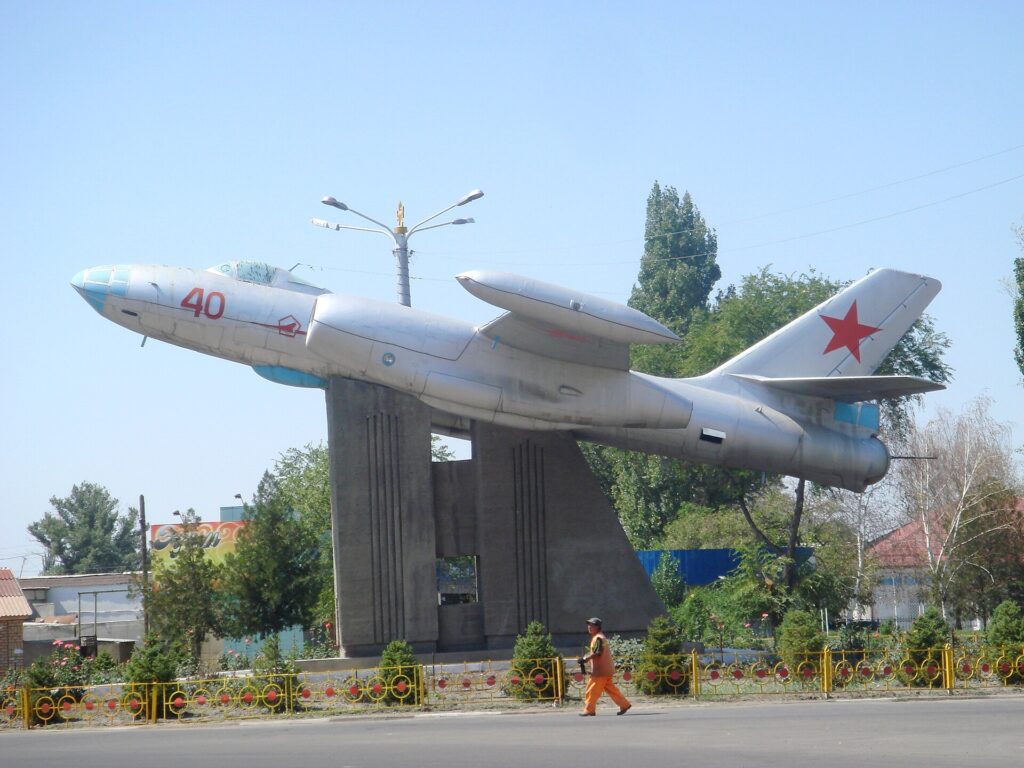
The first night of our KGZ road trip is spent in the jovial-sounding town of Tokmok. Its most visible oddity is an Ilyushin Il-28 bomber mounted in the central roundabout.
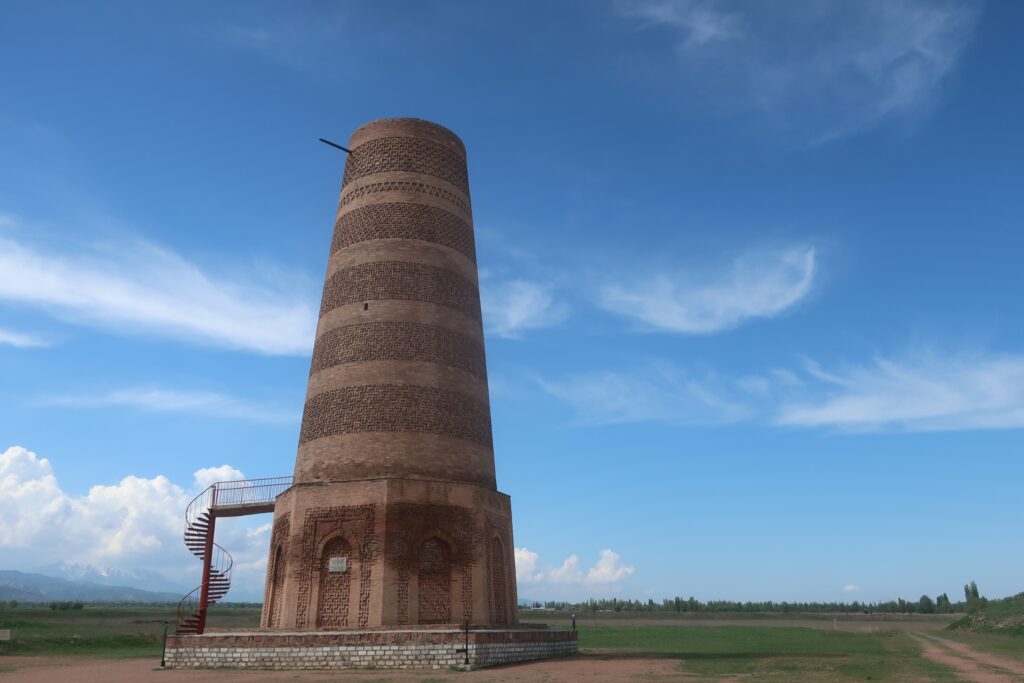
But KGZ does have some Silk Road sites. Burana tower, for example.
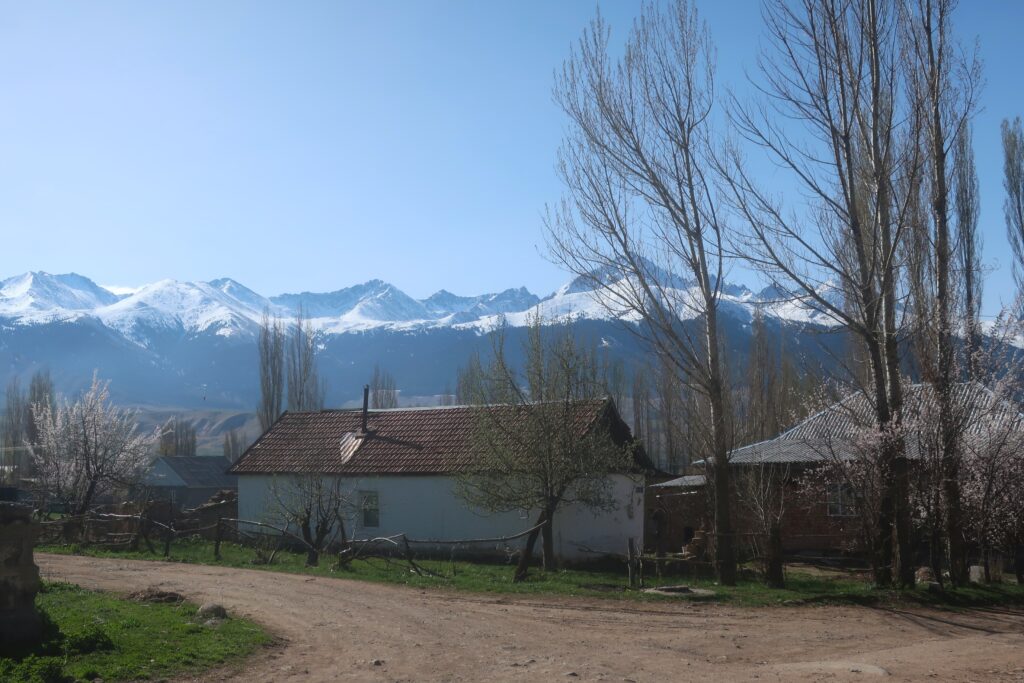
The day grows overcast. That night, we sleep in a homestay in the remote mountain village of Tegirmenti, in the Chong-Kemin Valley.
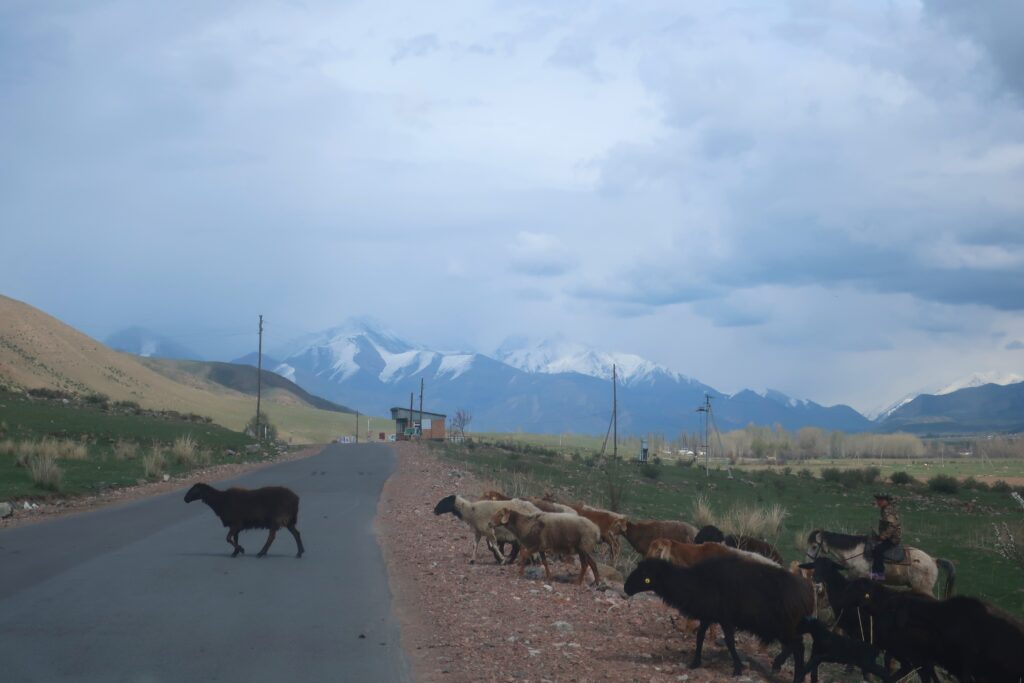
There’s always a herd of something crossing the road: sheep, goats, cattle, or horses.
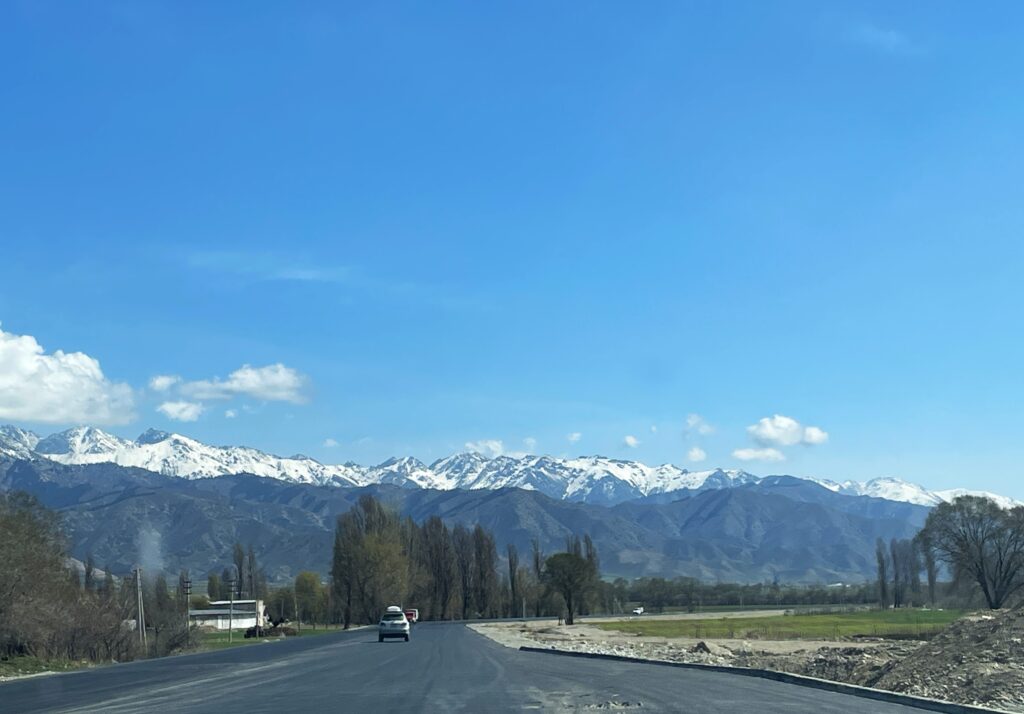
We are pleased to find driving in KGZ is not very stressful – traffic is sparse in most of the country.
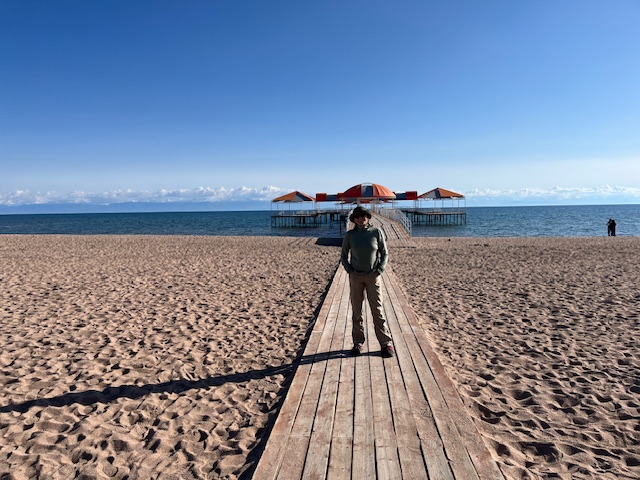
Next day, we come within sight of Issyk-Kul, the world’s second-largest alpine lake (after Lake Titicaca).
In the town of Cholpon-Ata is an open-air petroglyphs park. Most are over 2,000 years old.
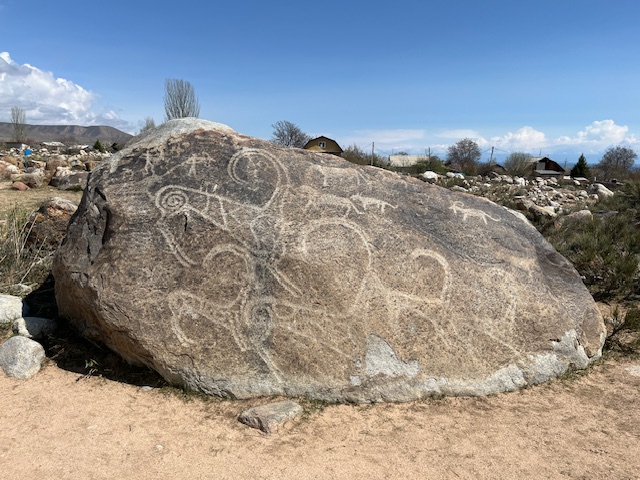
Some say that the traditional decorations on Kyrgyz carpets are derived from the long horns of these creatures. That seems like a bit of a stretch to me.
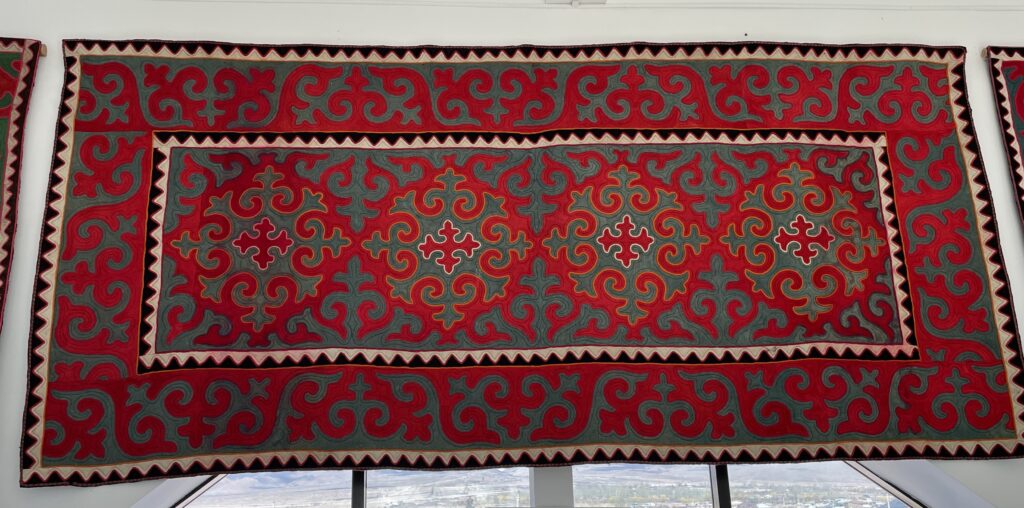
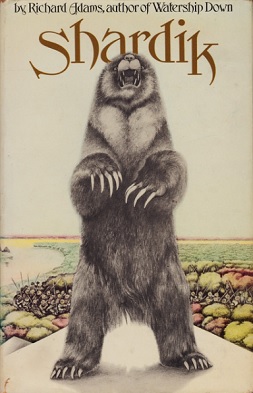
(Incidentally, this method of sewing felt on felt is called ‘Shyrdak‘. Not to be confused with the 70s novel by Richard Adams, ‘Shardik‘. The 1970s, that is.)
A pattern emerges of reserving places to stay on Booking.com that are impossible to find, don’t exist, or are closed for the season. It begins to look like we might be homeless for the night until Maria asks at a five-star resort for directions.
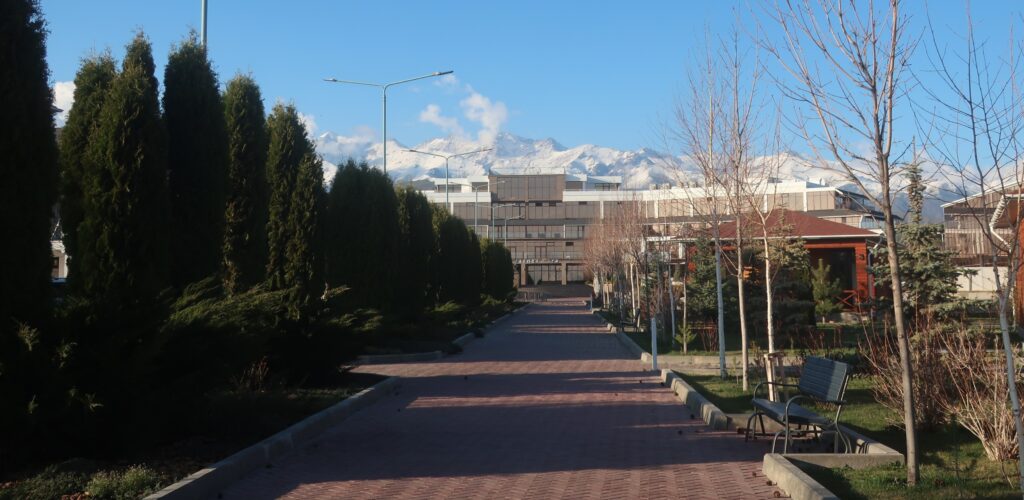
So we end up staying at the exclusive Baytur Resort & Spa at a severely reduced rate, thanks to Maria’s innate ability to charm, and a manager with a soft spot for Canadians.
It’s kind of like the Overlook Hotel in The Shining: luxurious but virtually empty, at this time of the year.
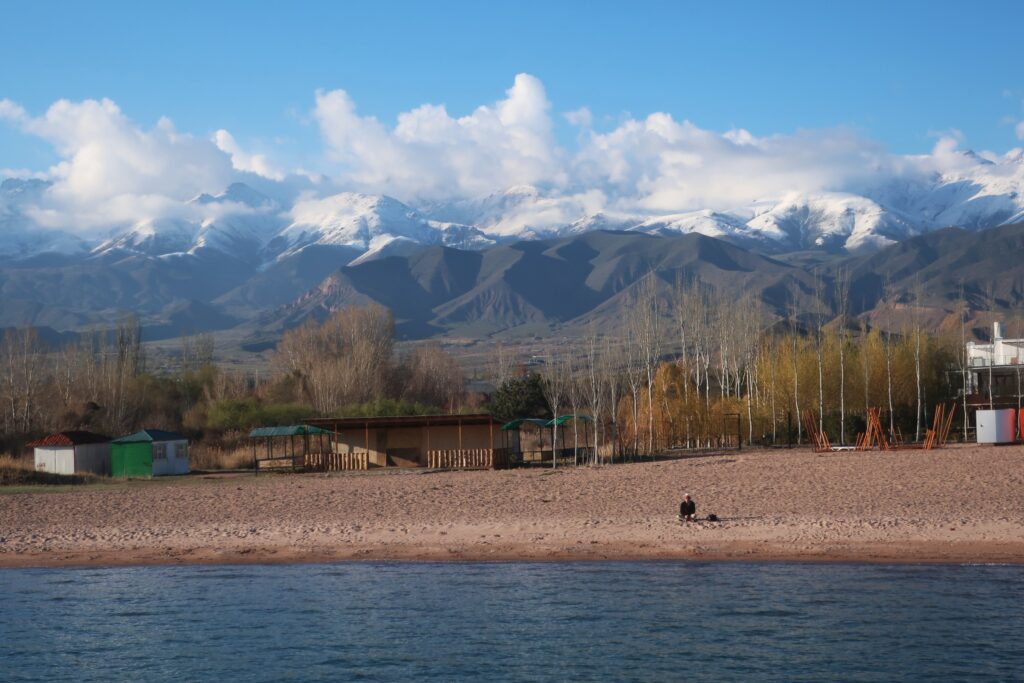
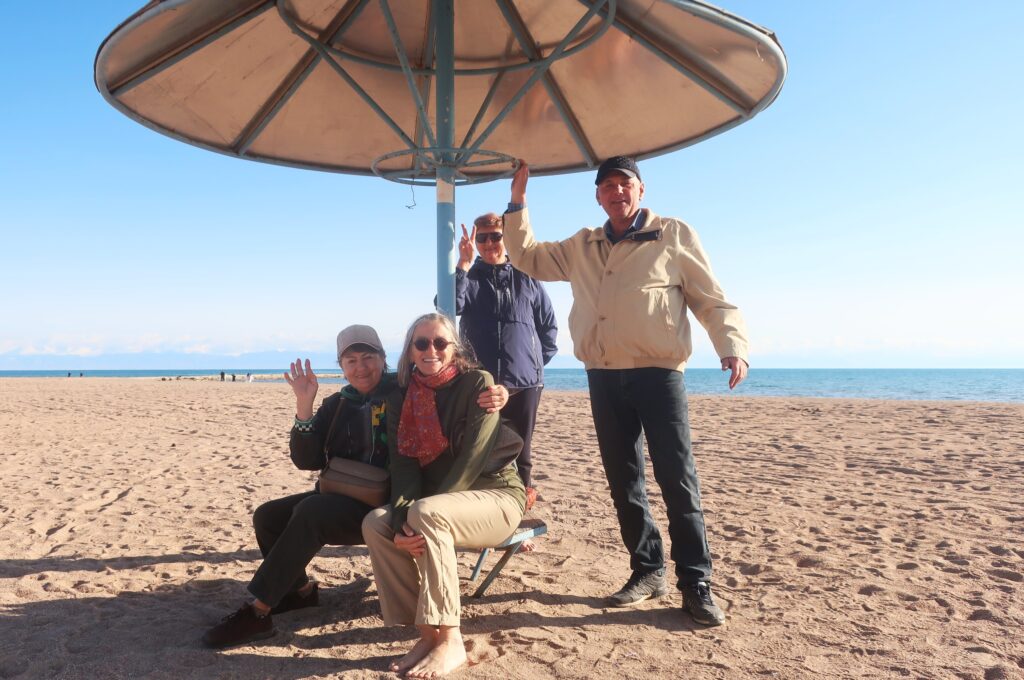
Maria goes for a walk along the beach and makes friend with some locals.
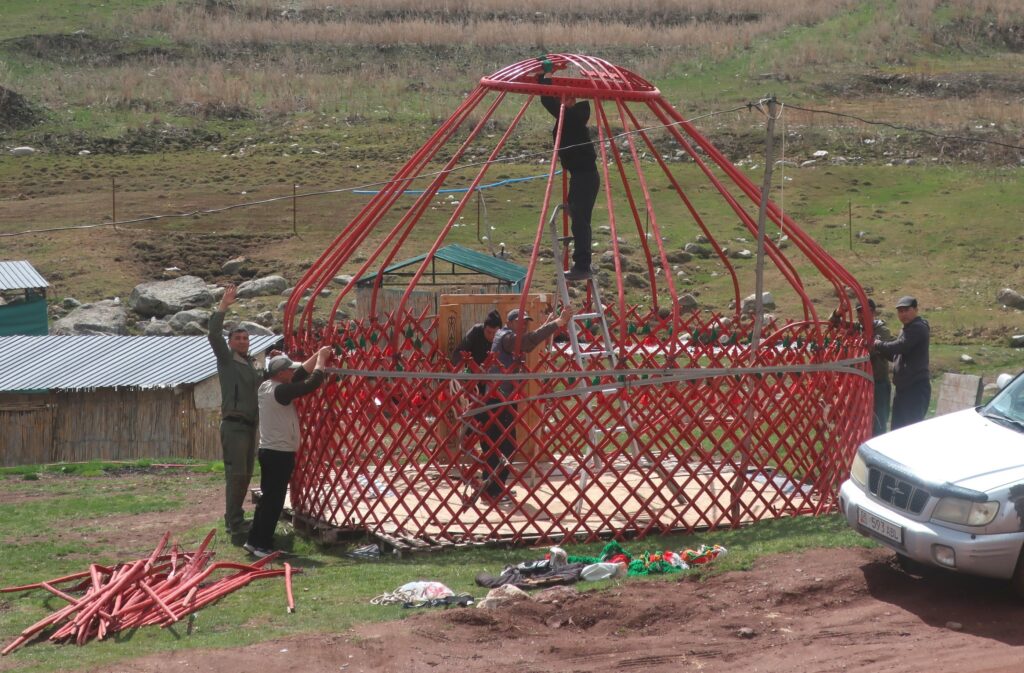
On our journey, we come across a team of men erecting a yurt.
Sight or Insight of the Day
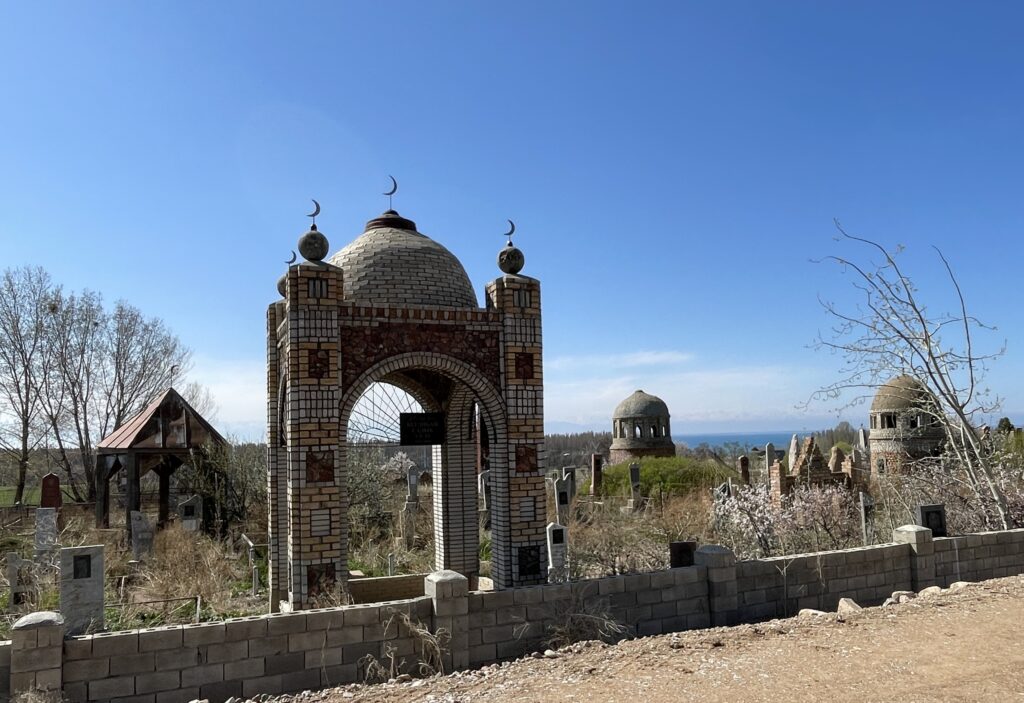
In most of the Islamic world, graves are very simple affairs. Even the most eminent people end up under a plain, unadorned slab. (In Oman, we came across places where people just put a randomly-picked-up stone over the interred person, so that a ‘cemetery’ looks like a walled-in field of rocks.)
In contrast, Kyrgyzstan cemeteries are full of fancy tomb structures.
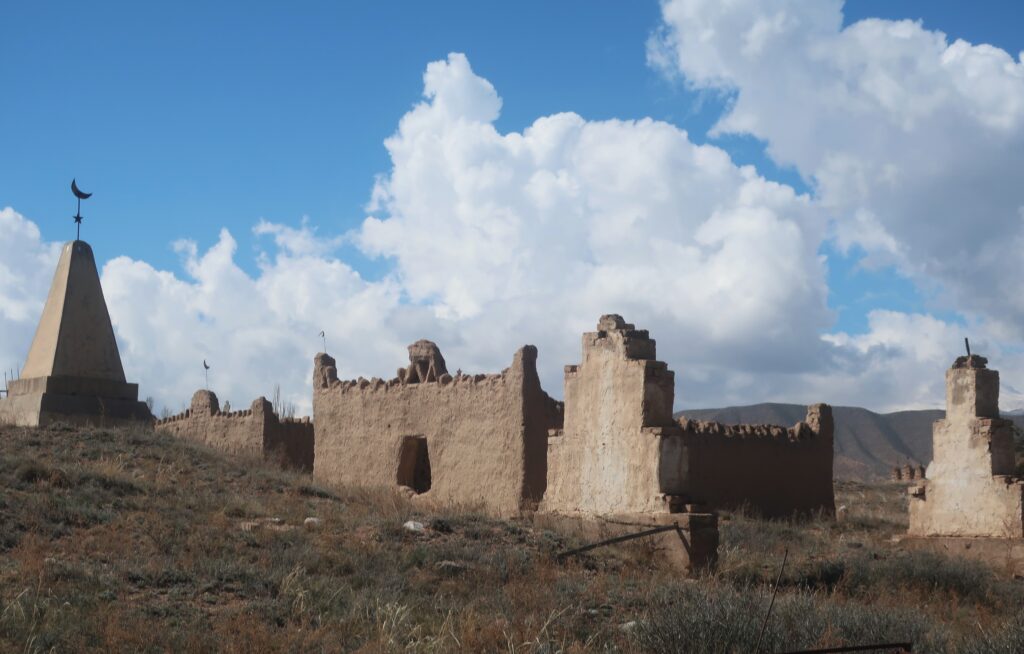
Some villages seem to have more defunct people in residence than live ones.