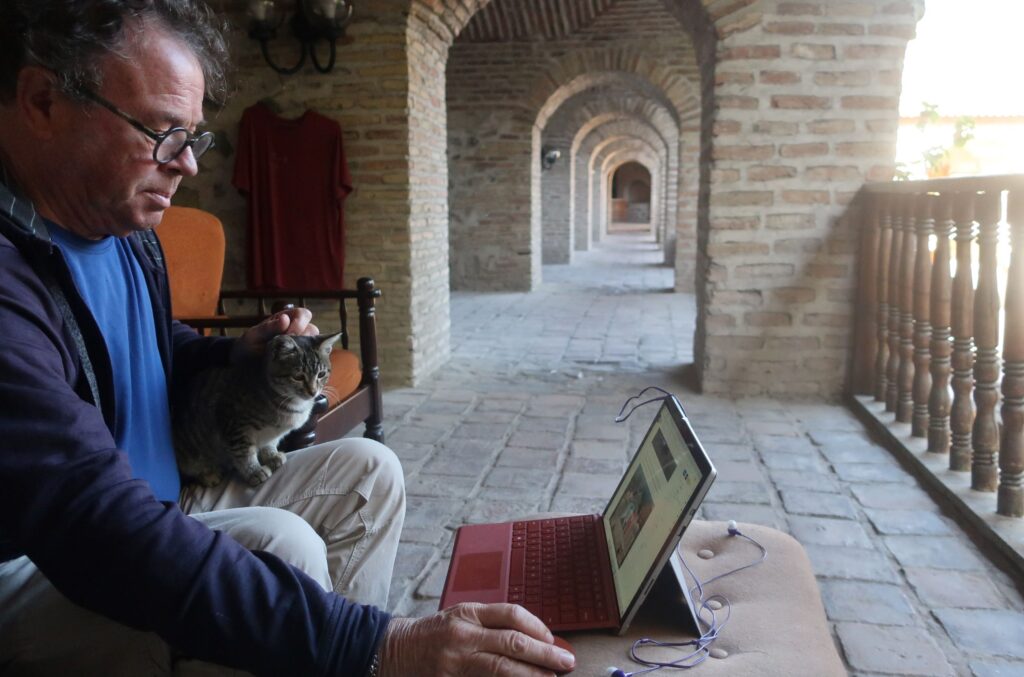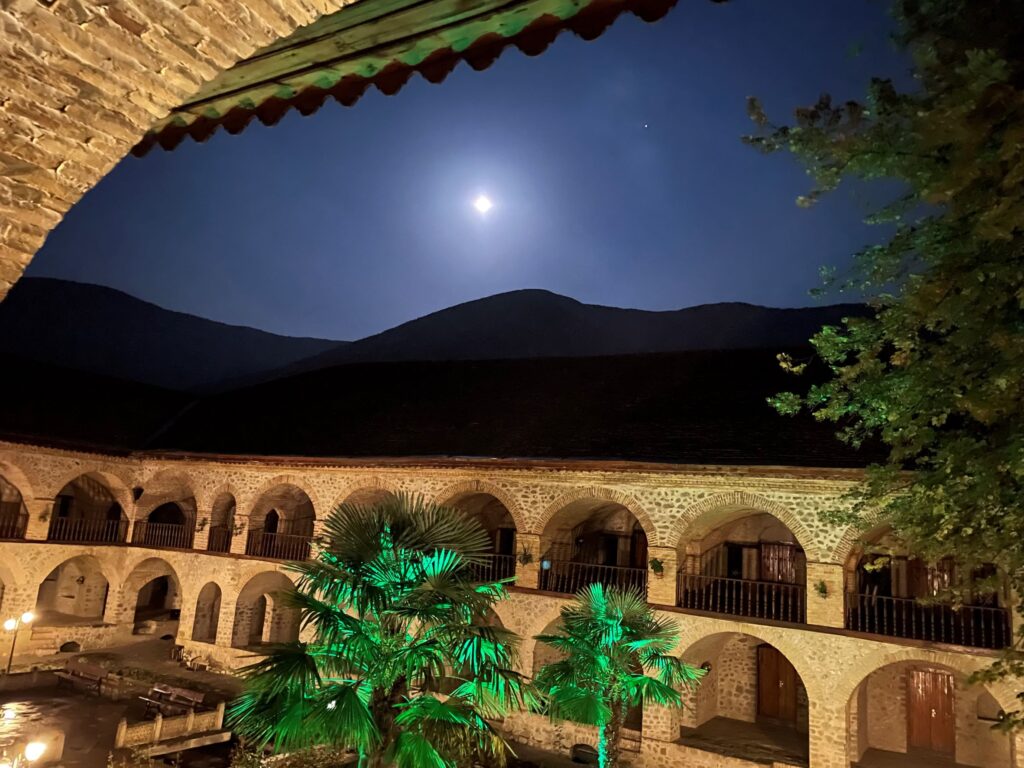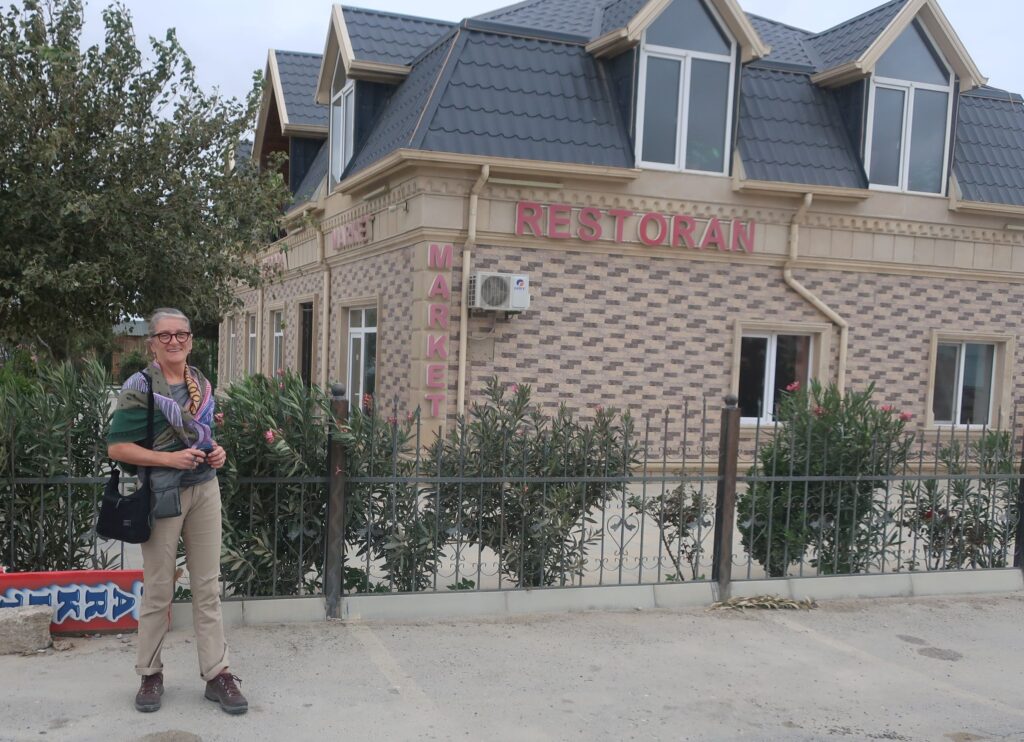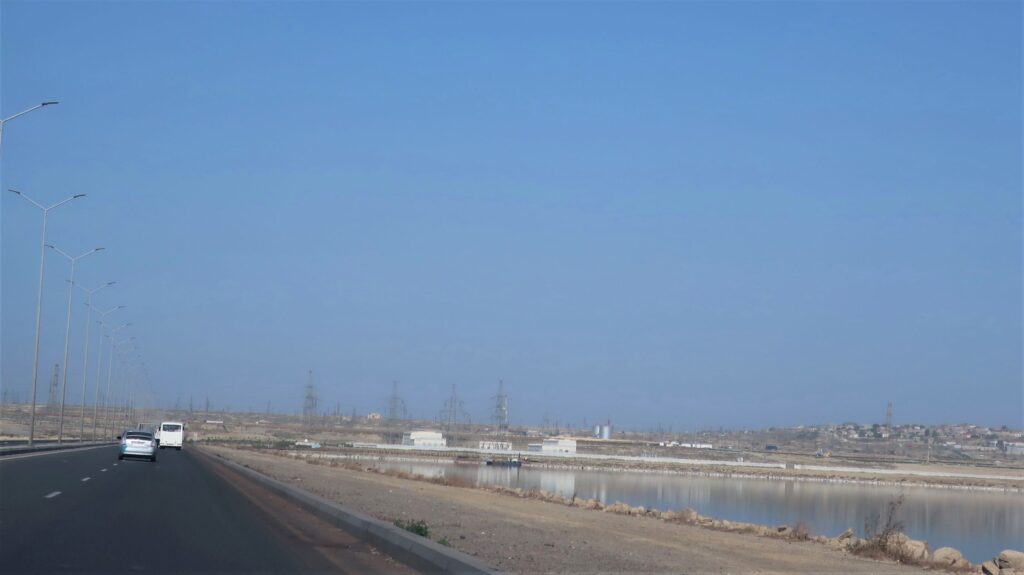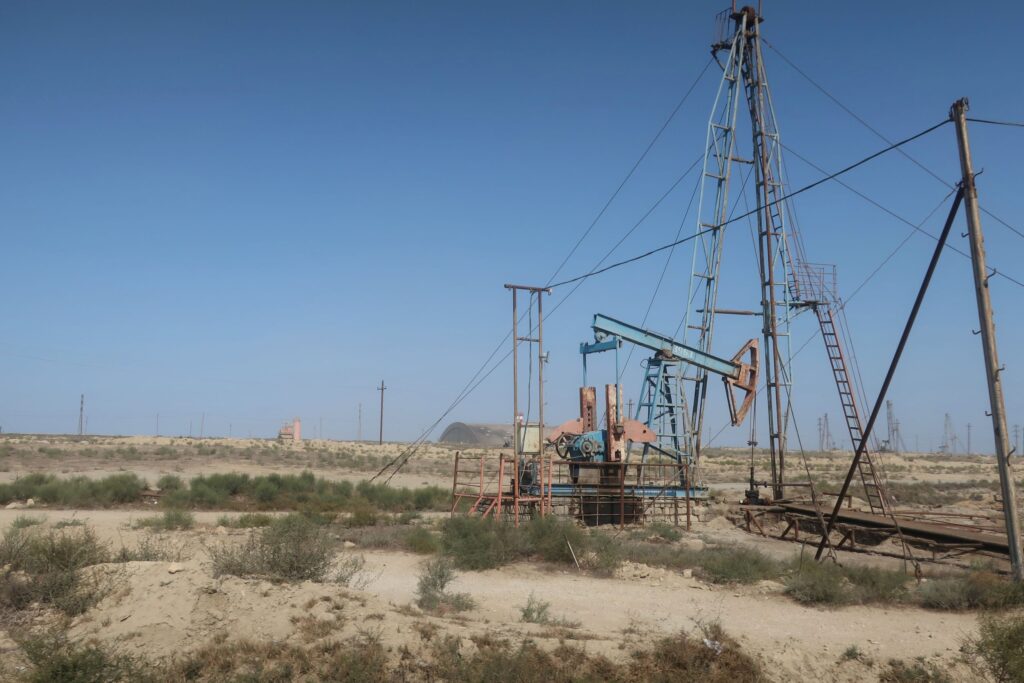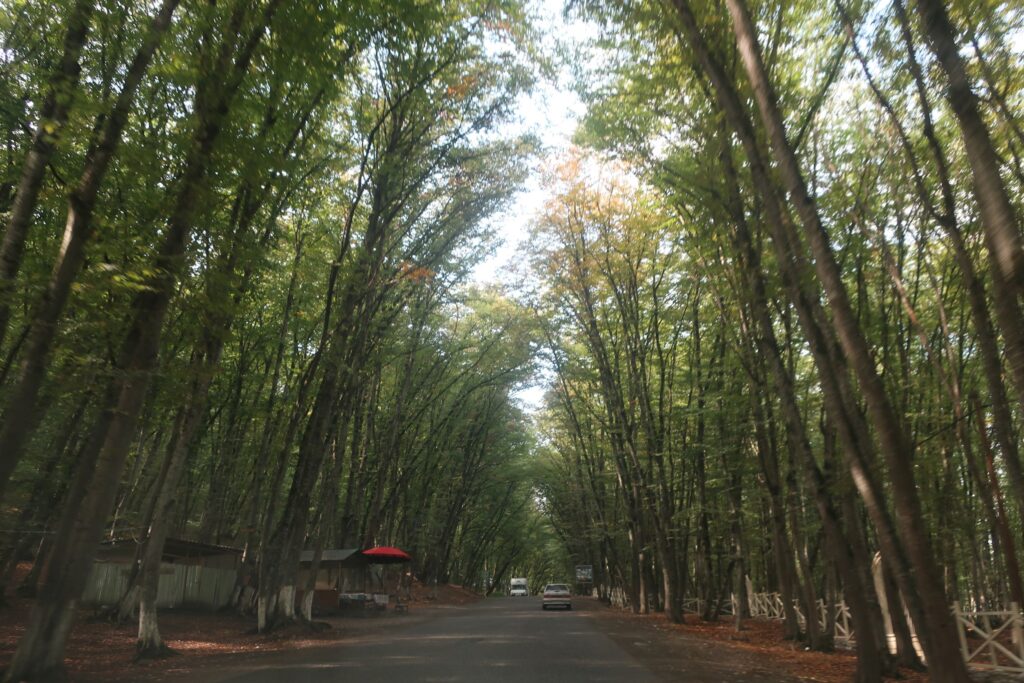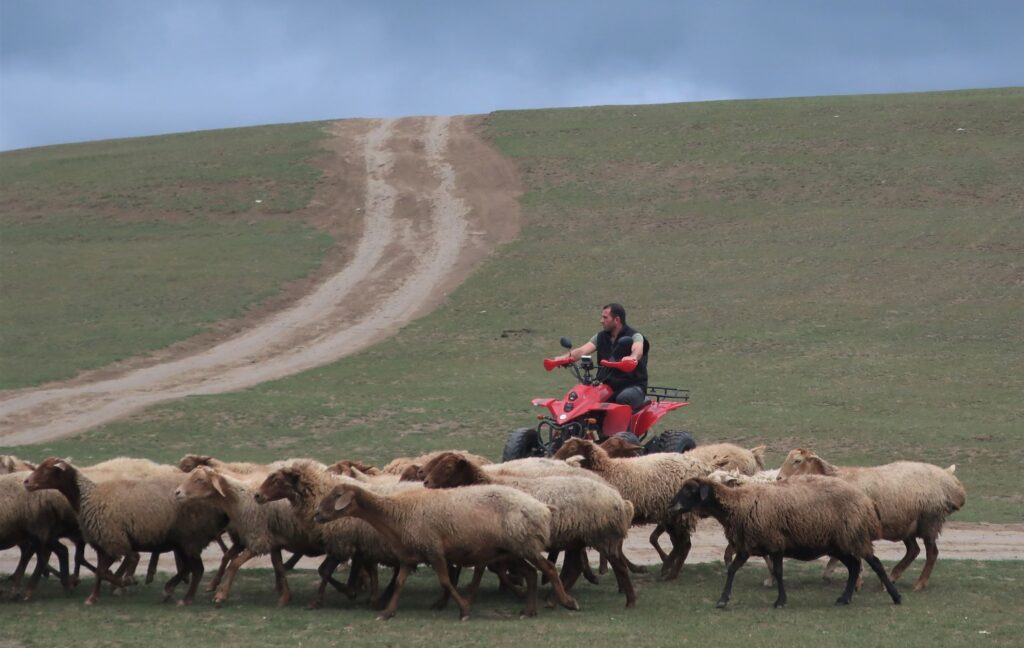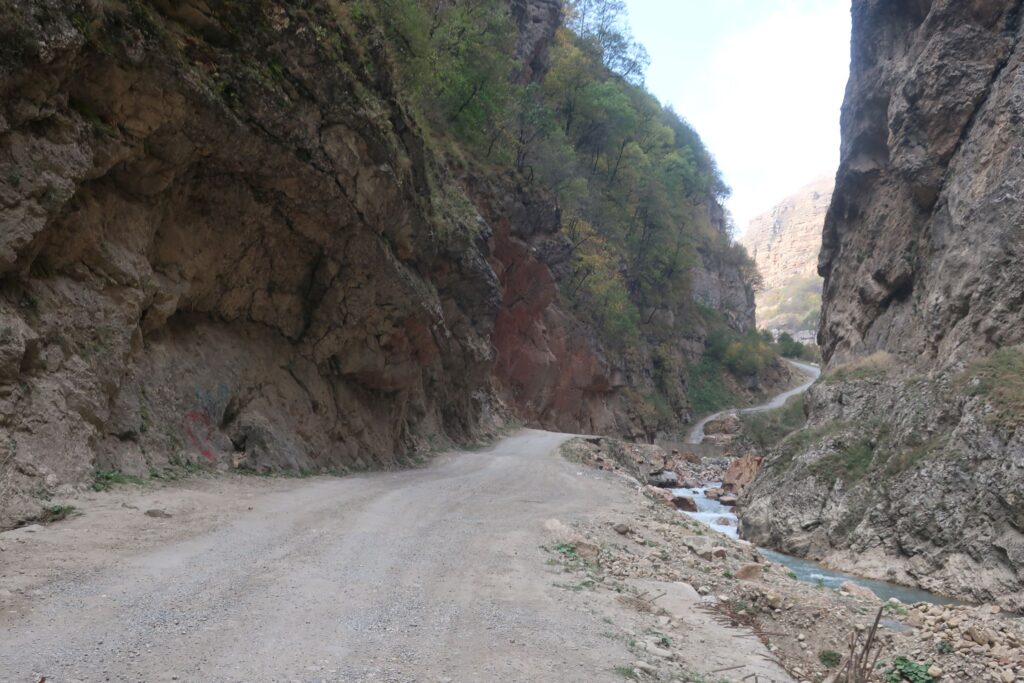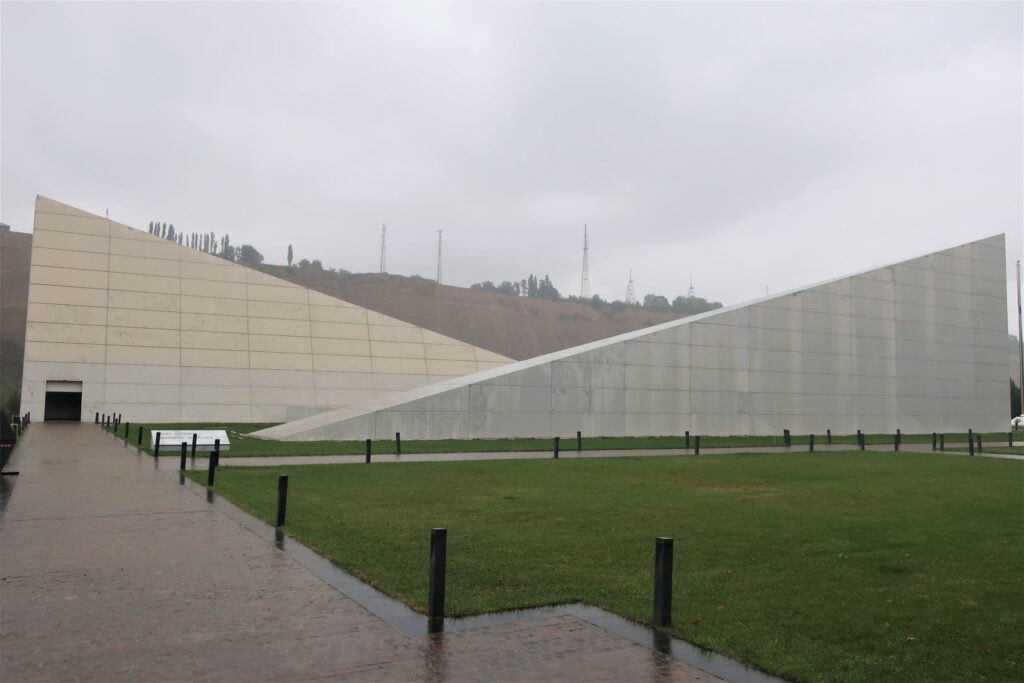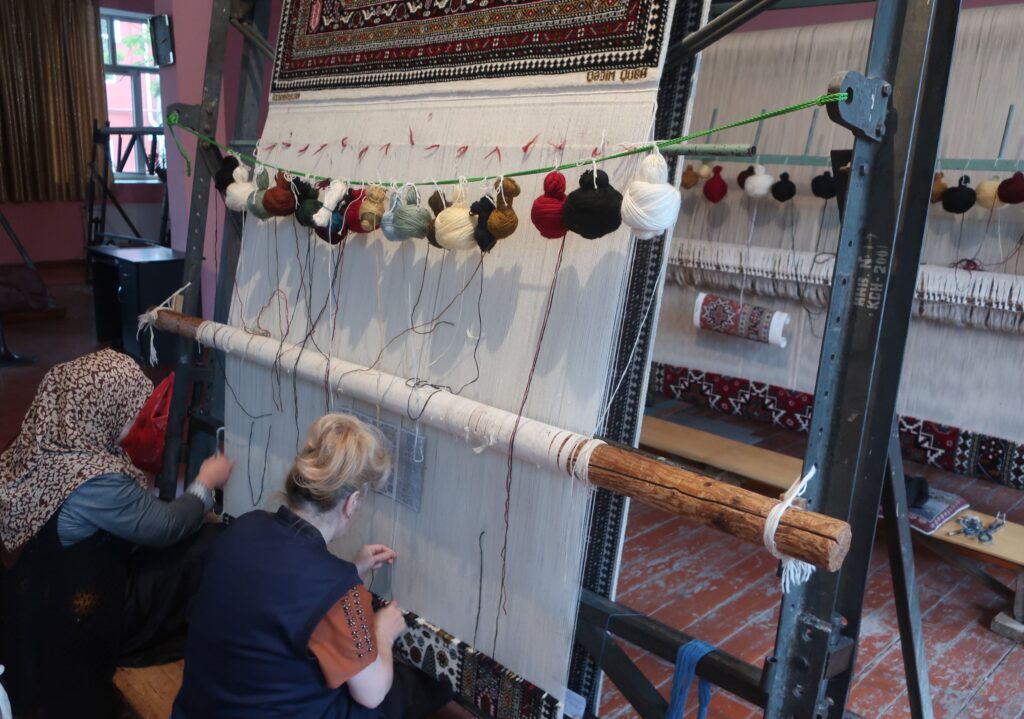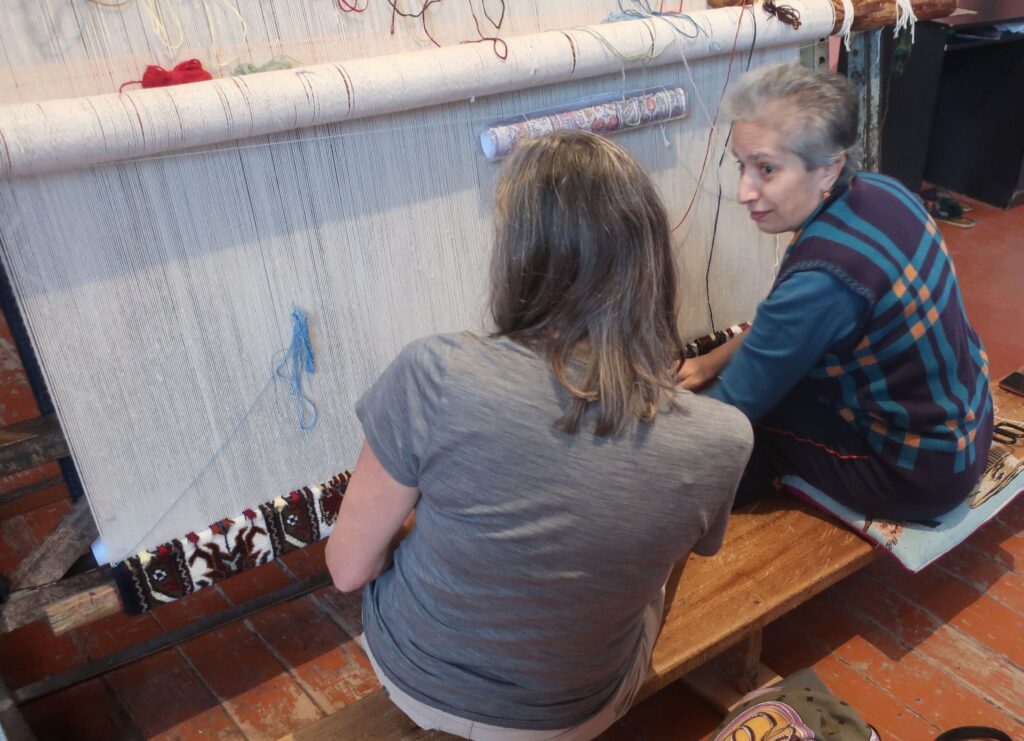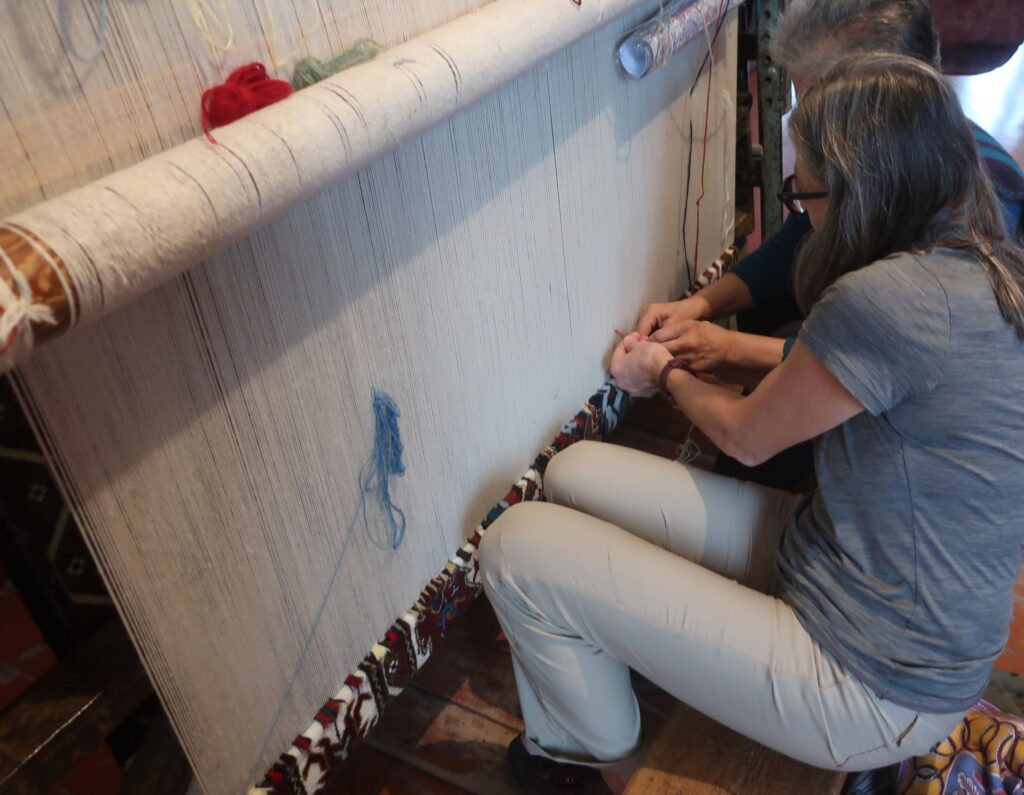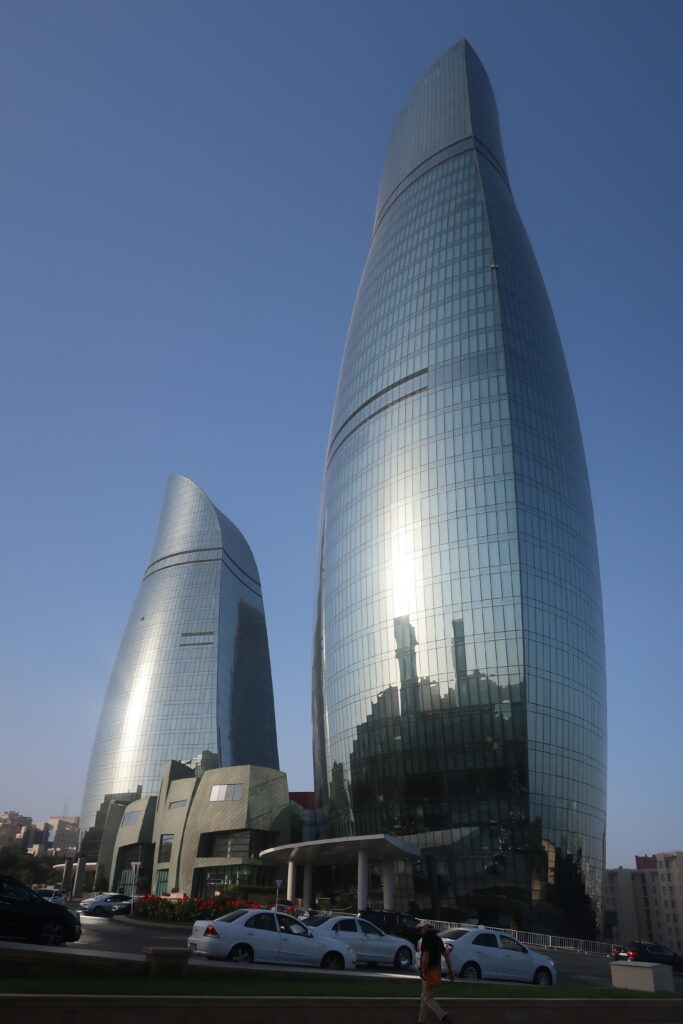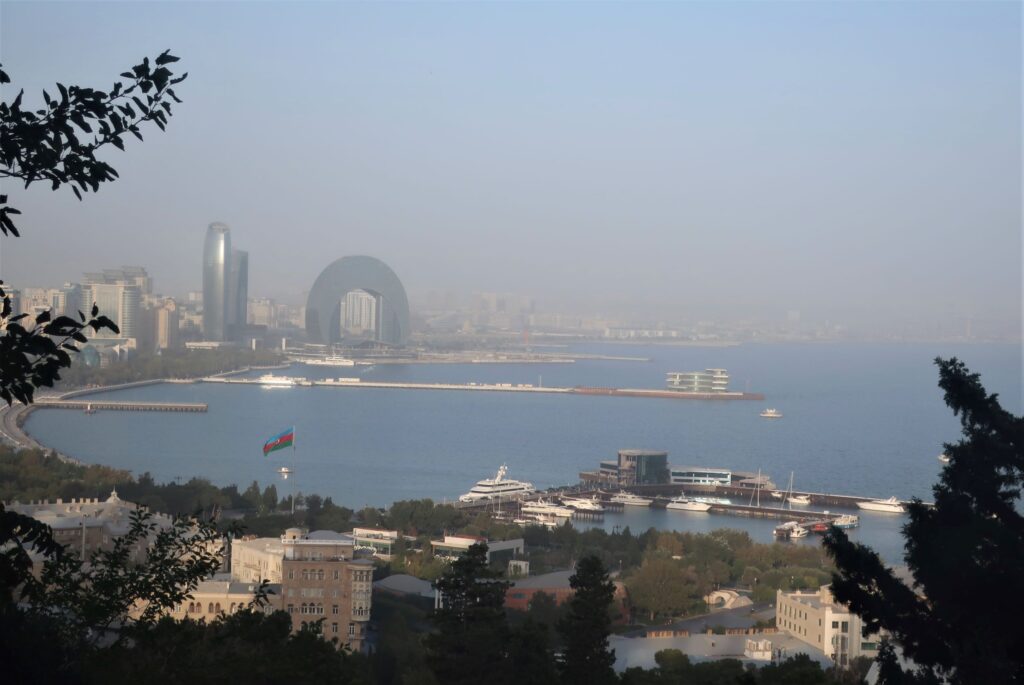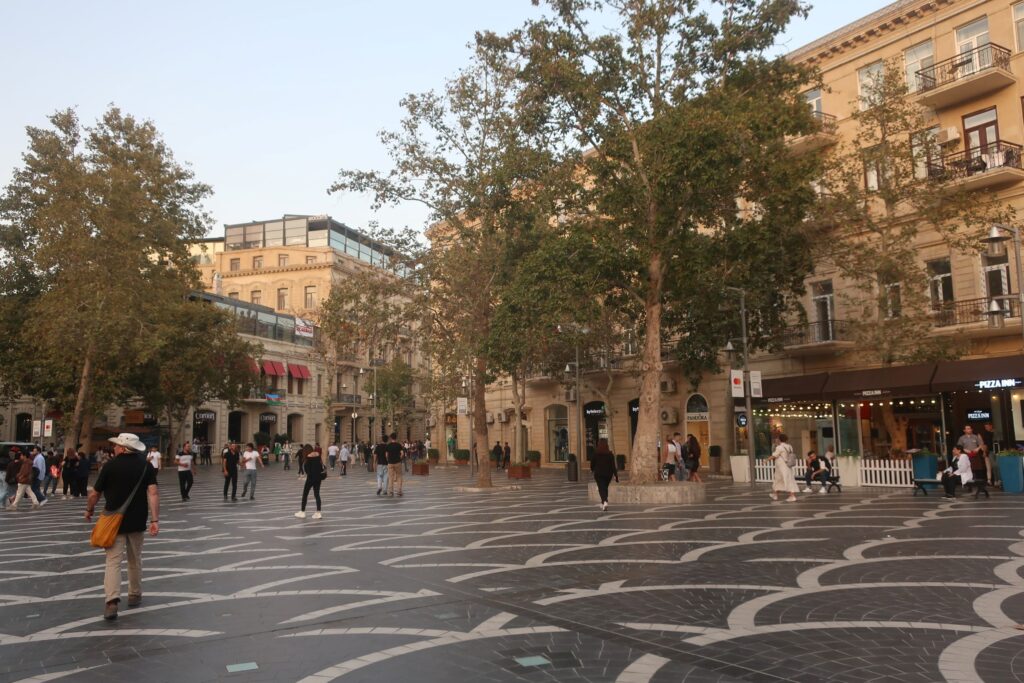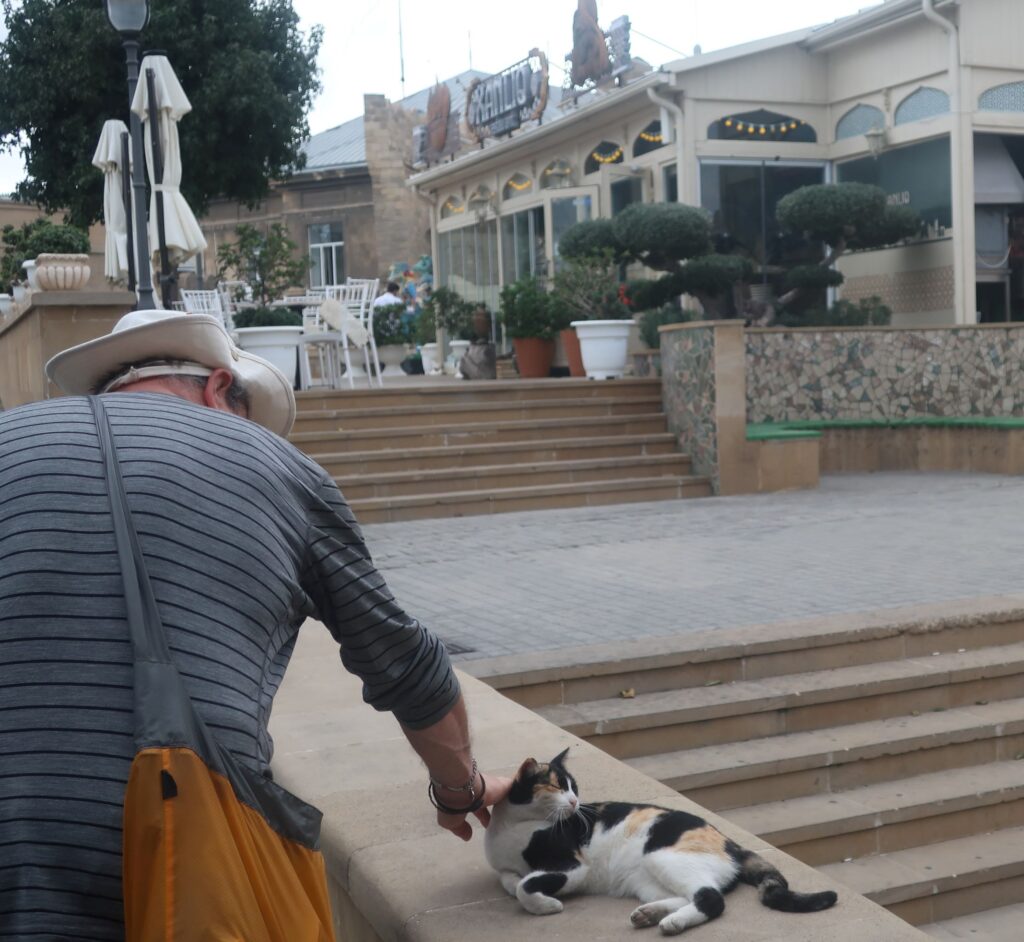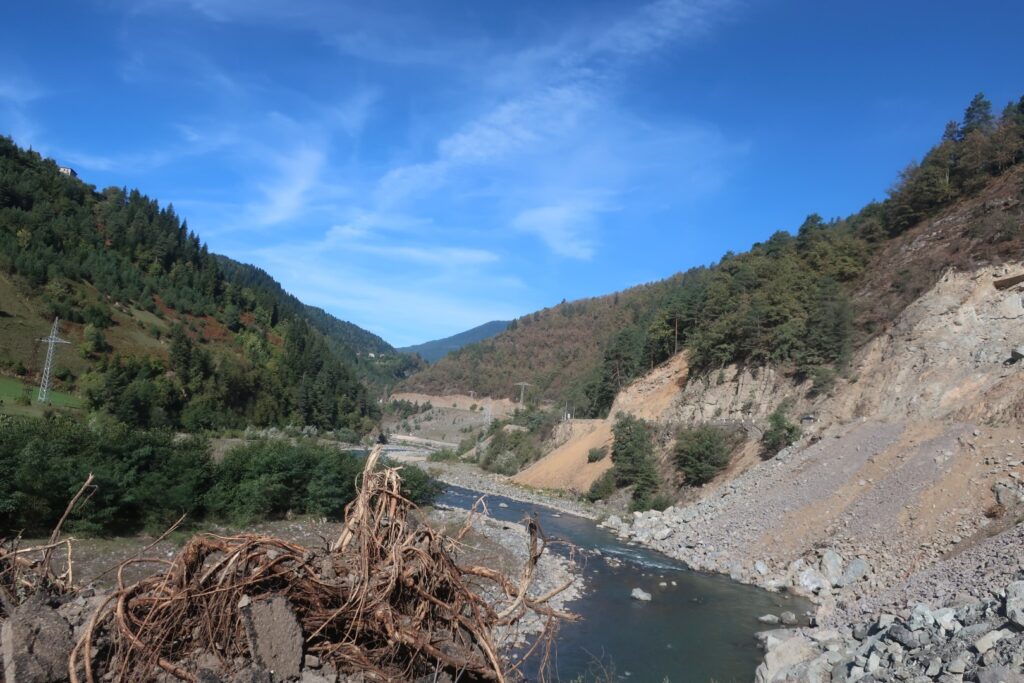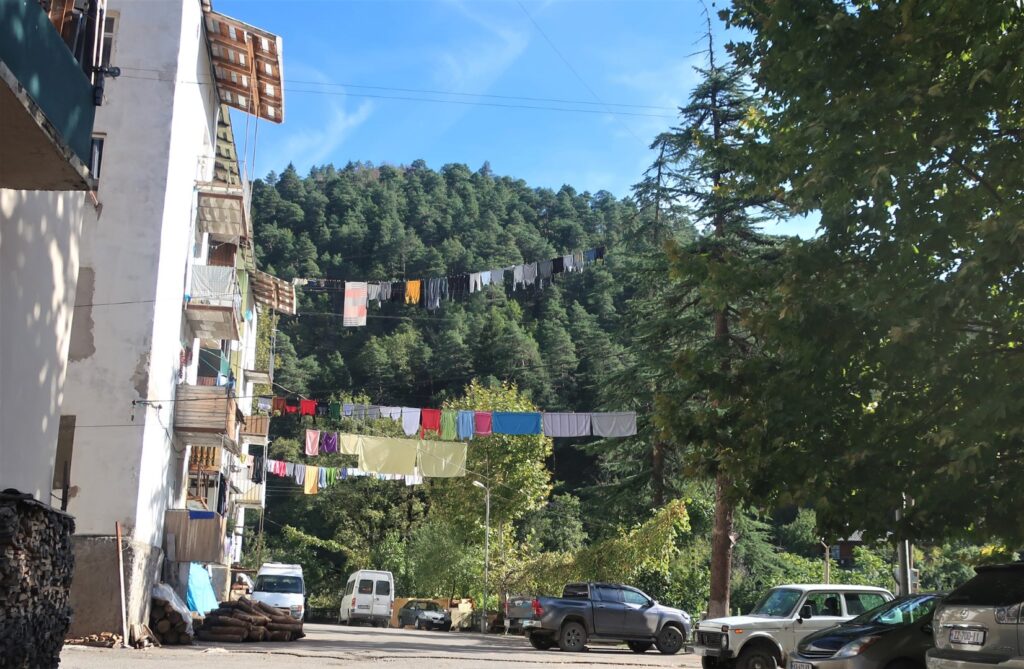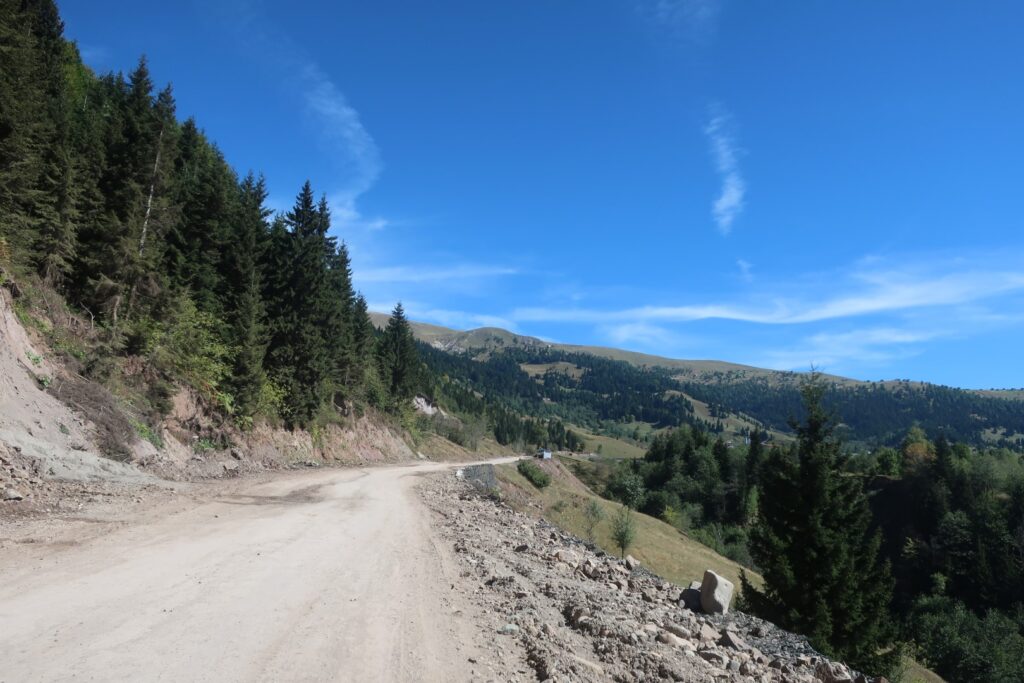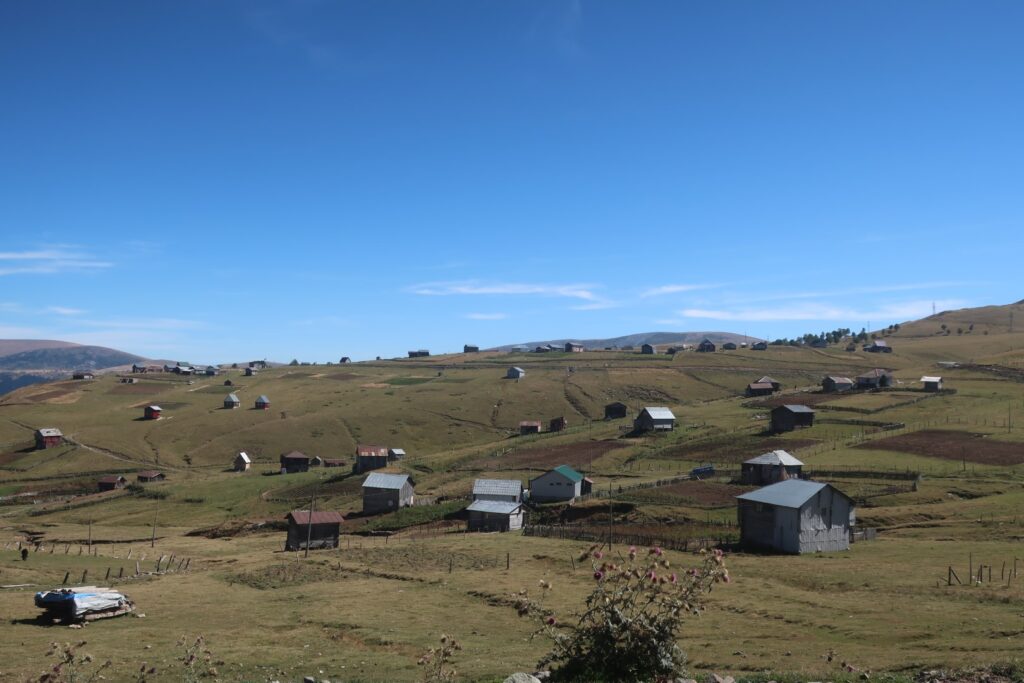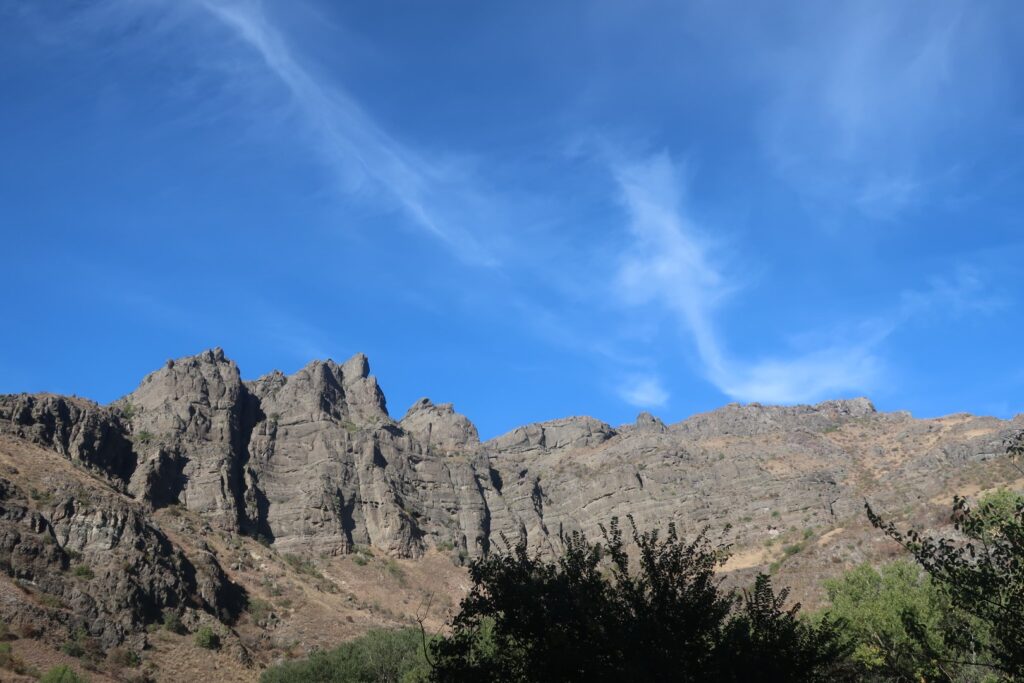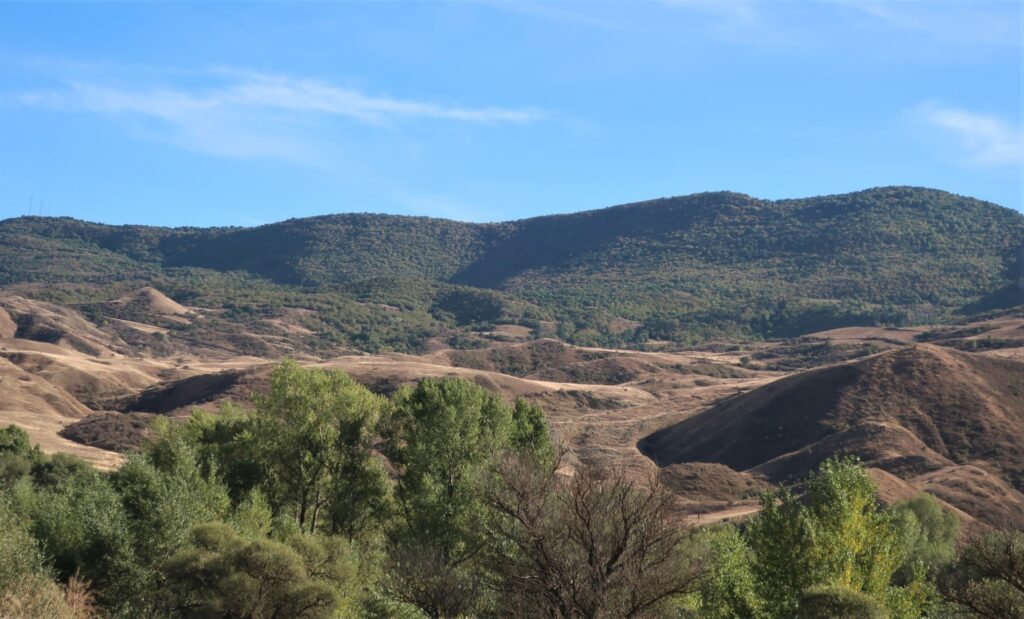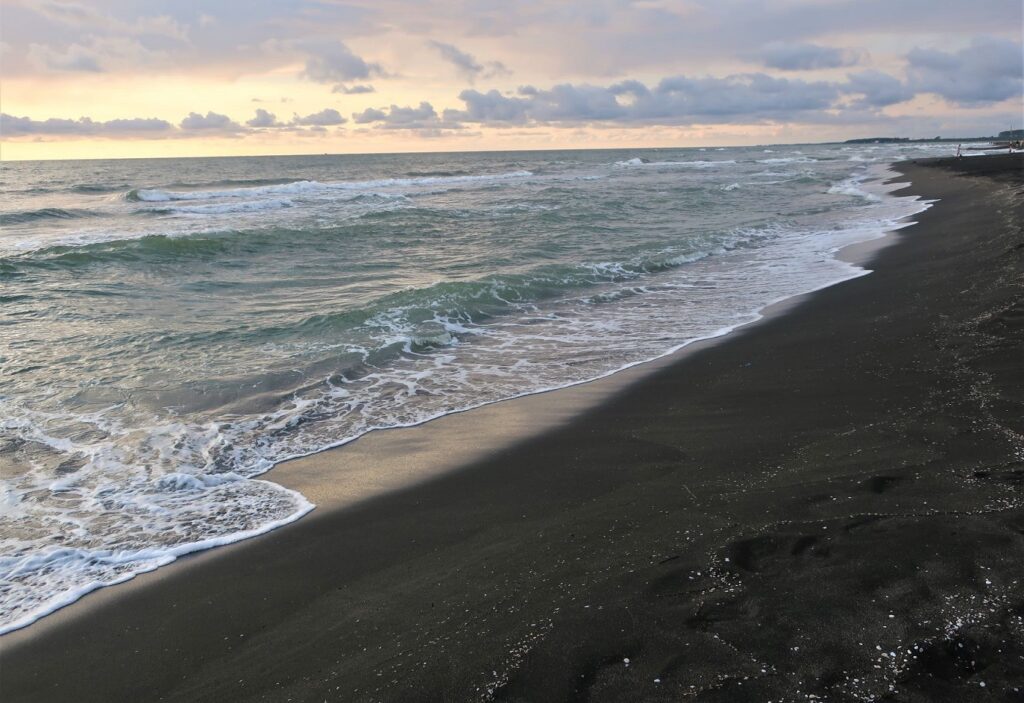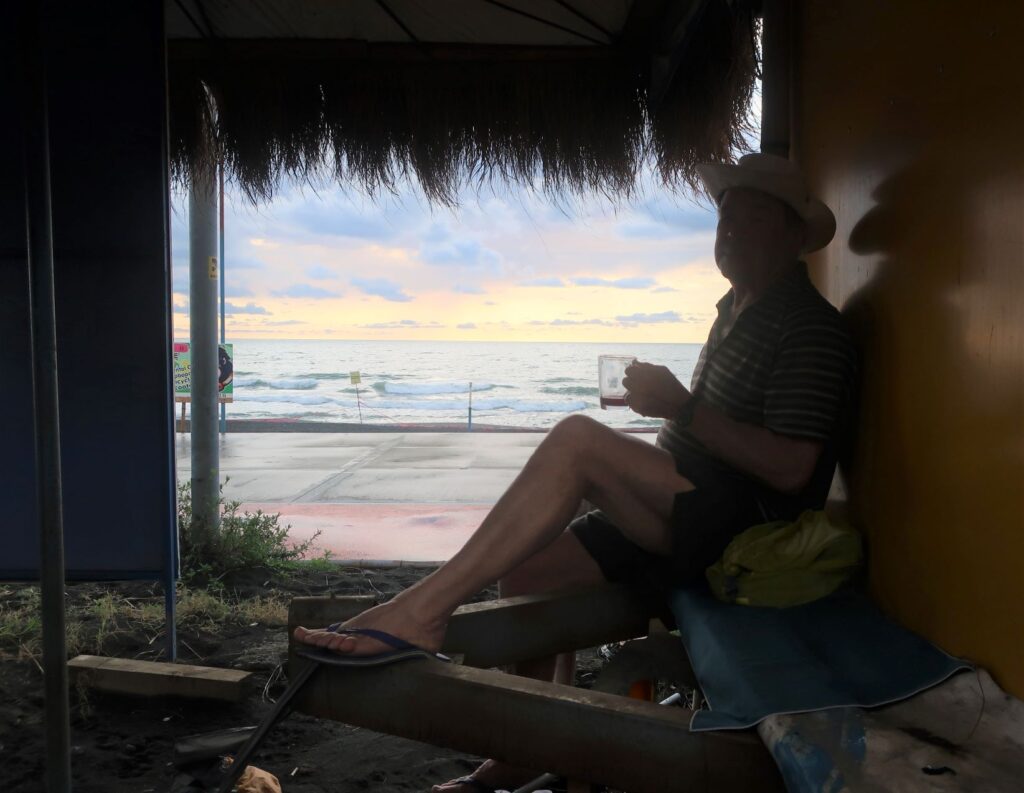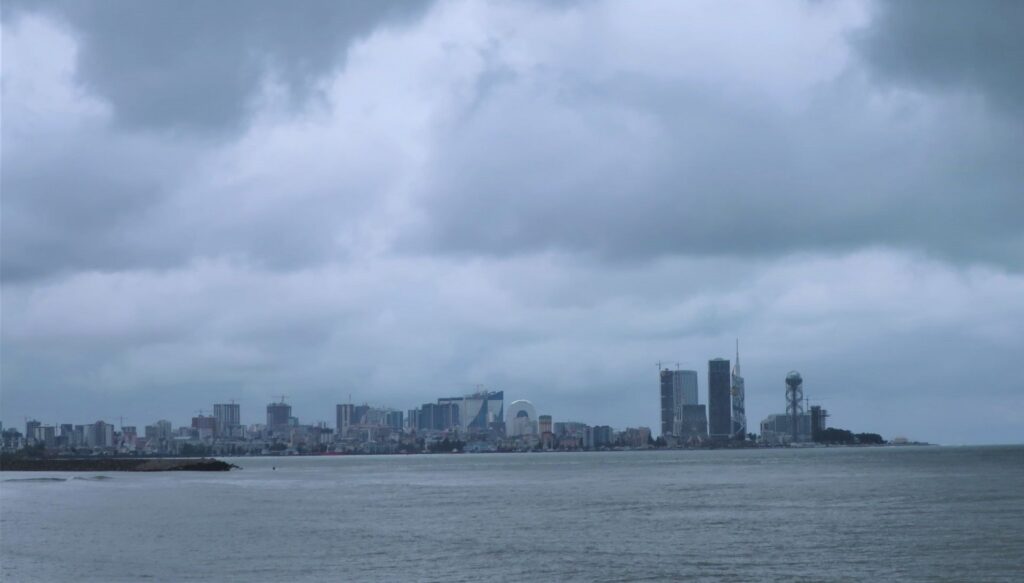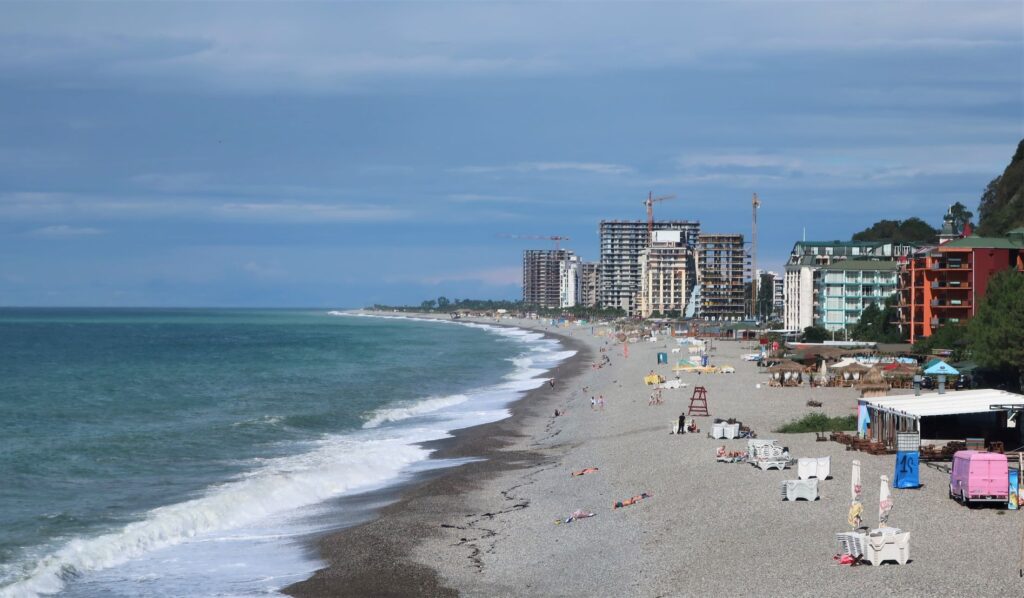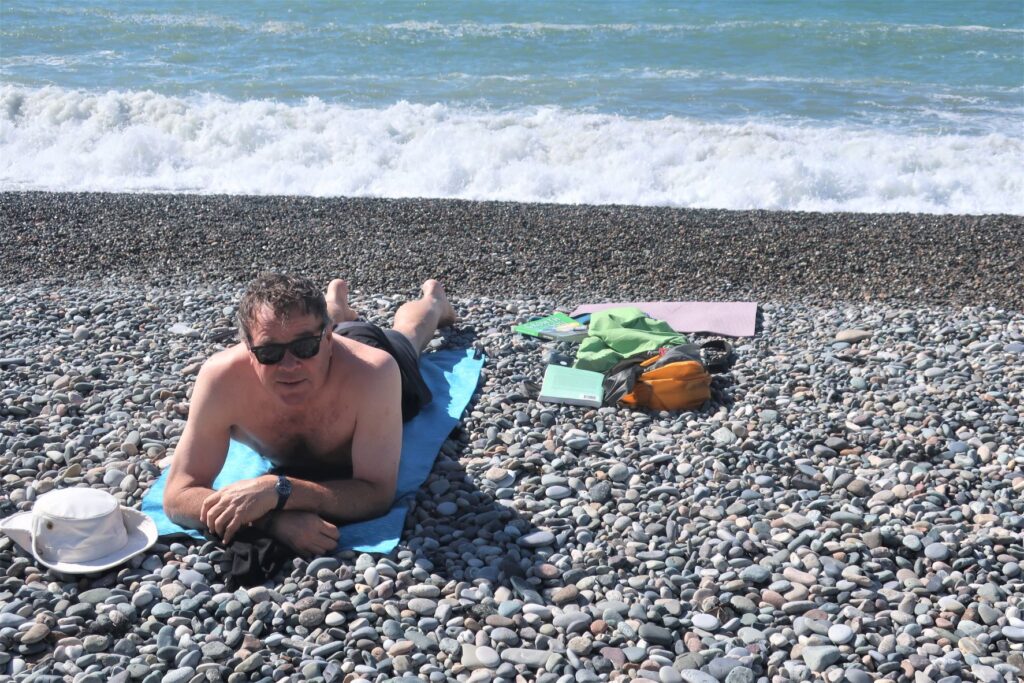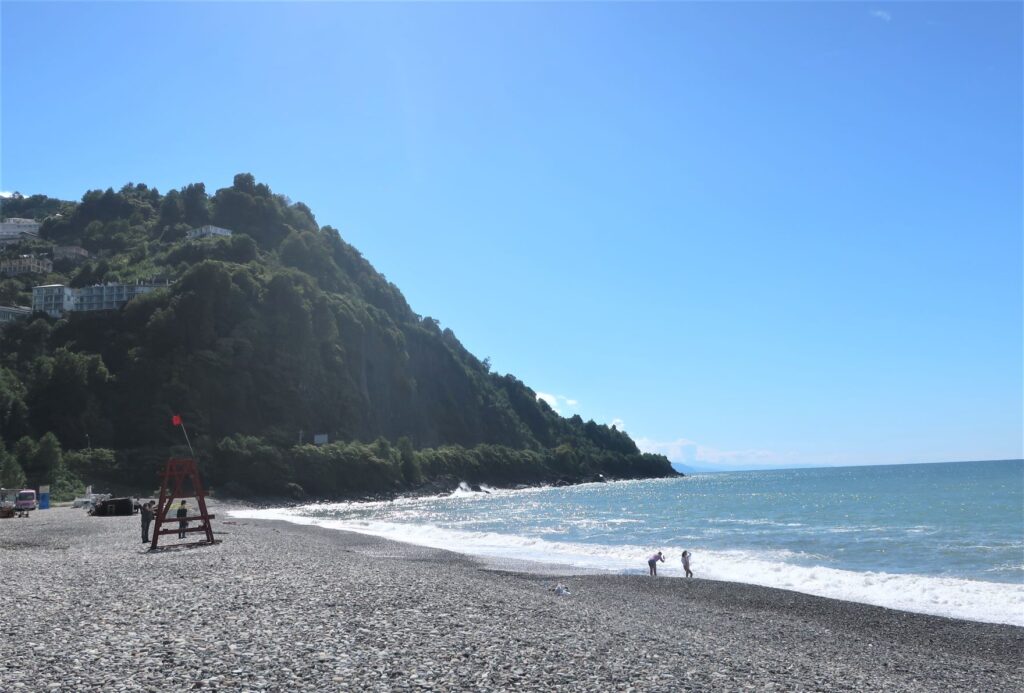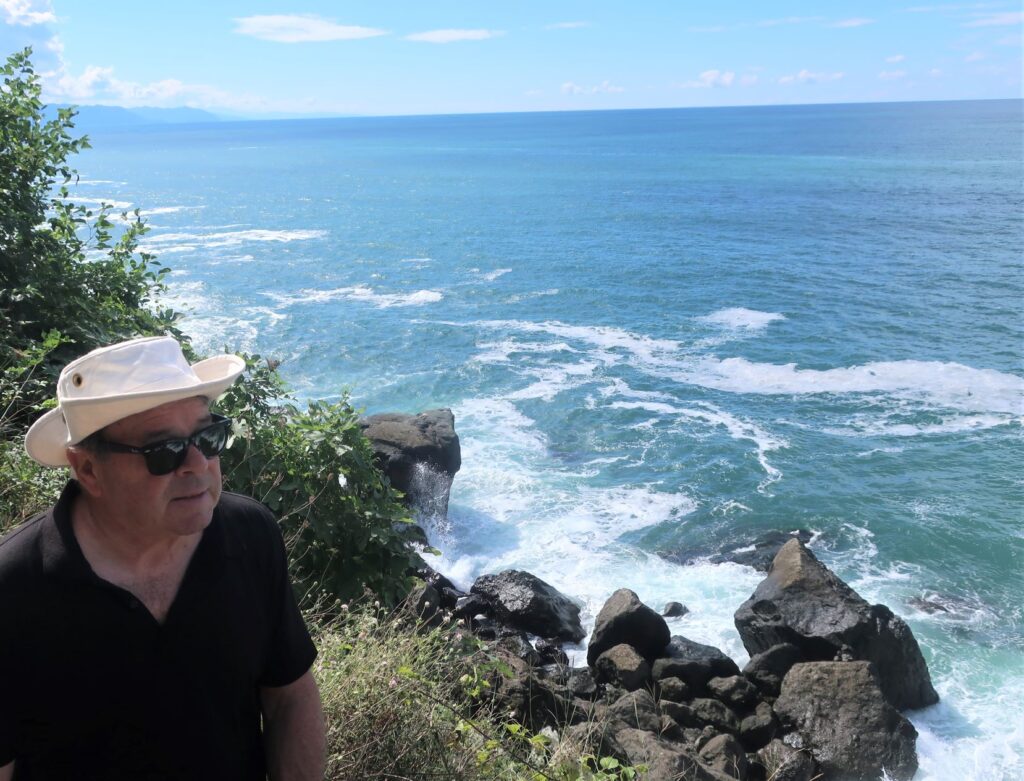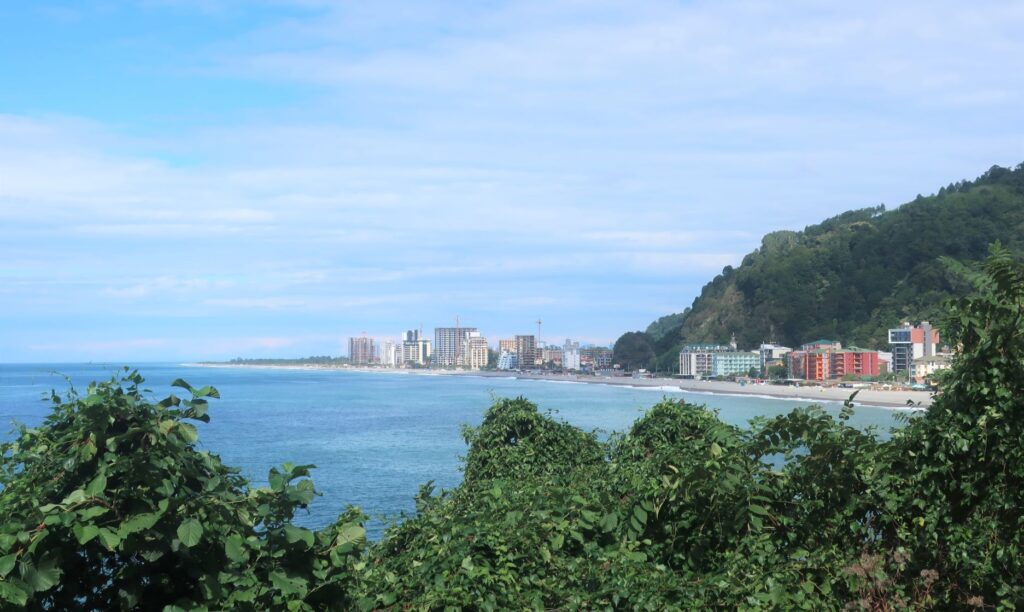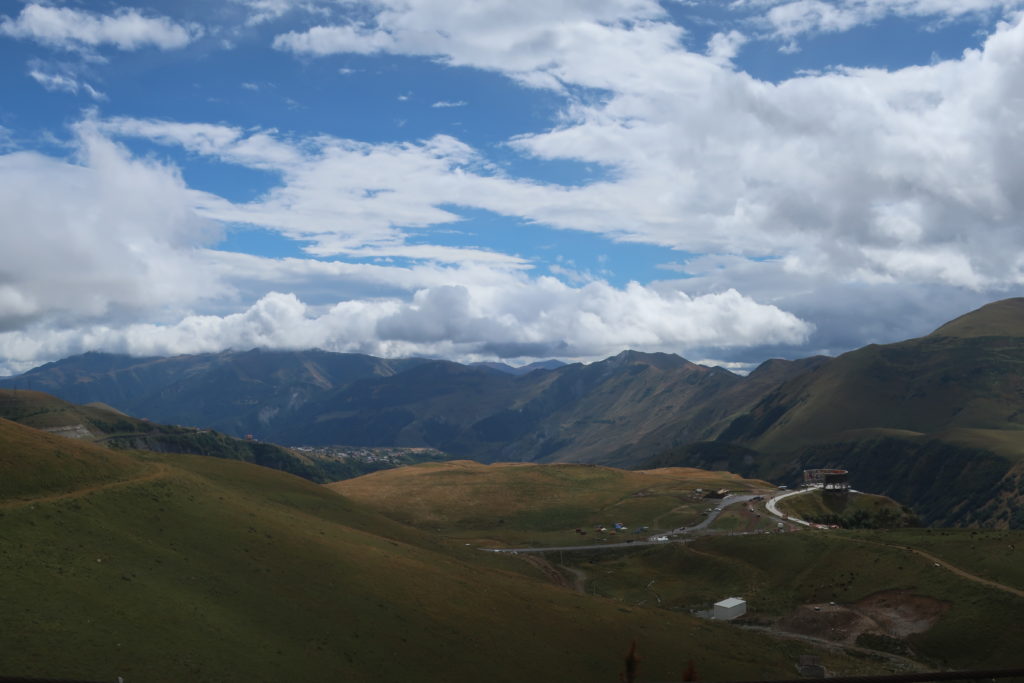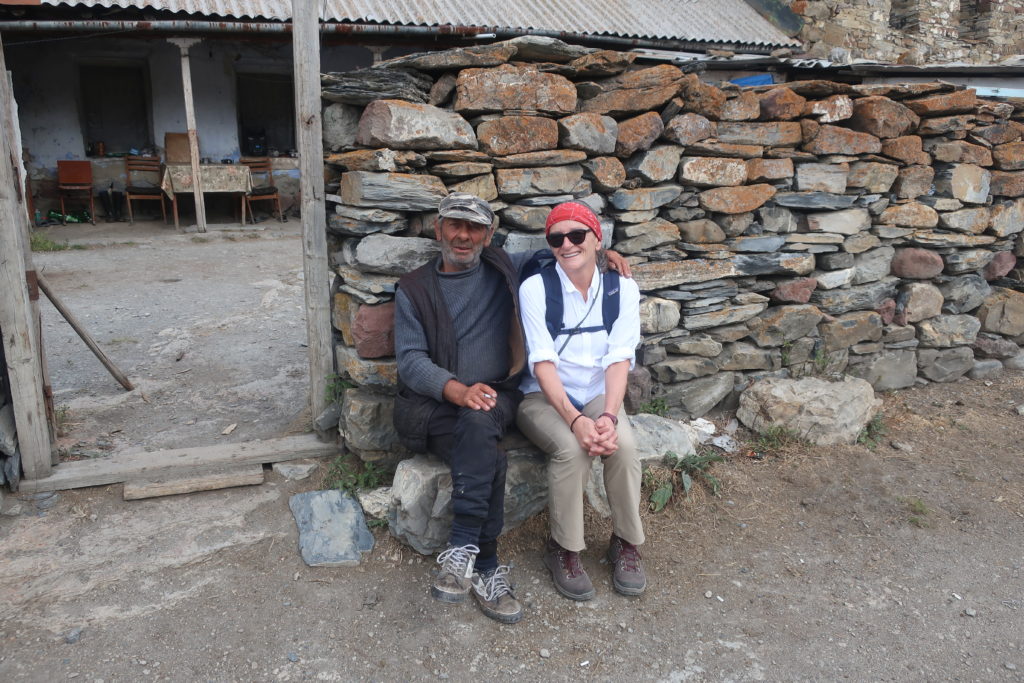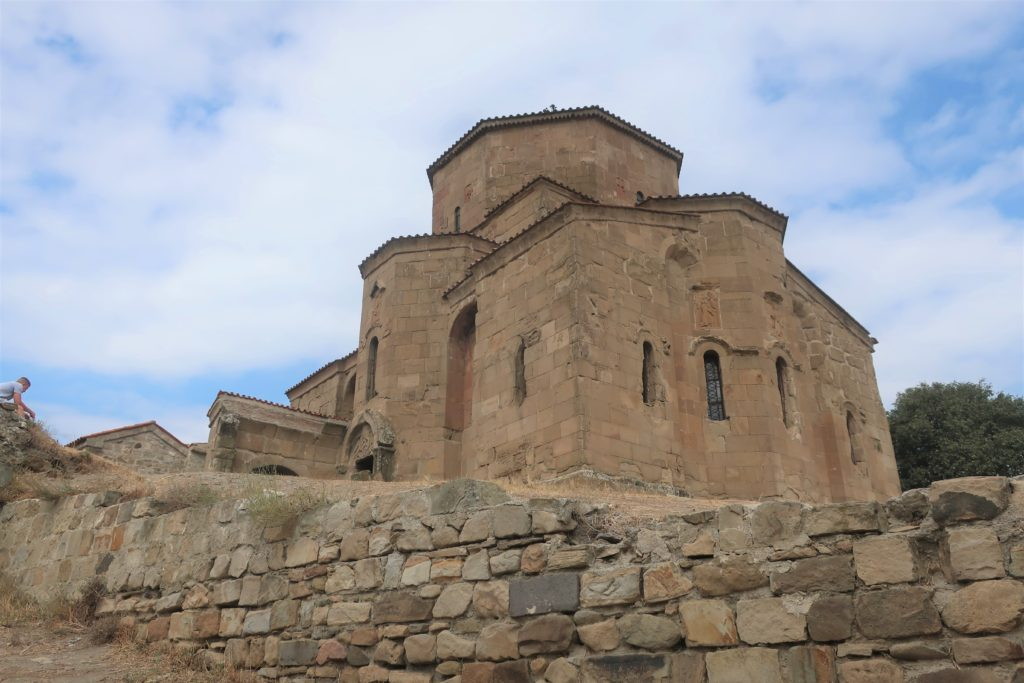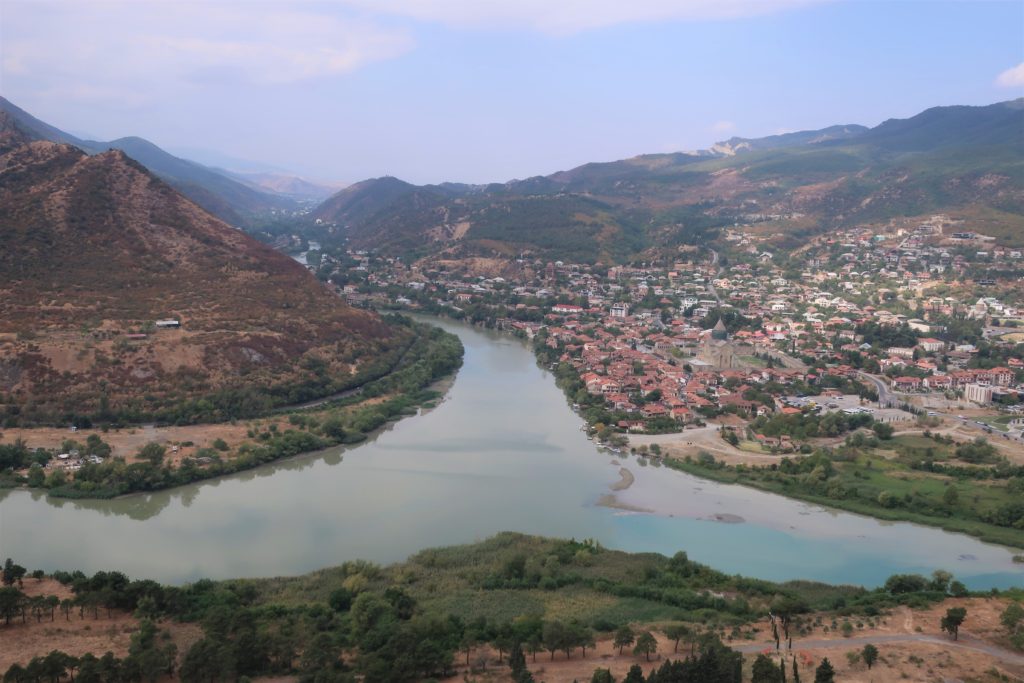
The Black Sea, that is. We drive down to sea level and spend a few nights at Ureki, a beach on the Black Sea south of Poti.
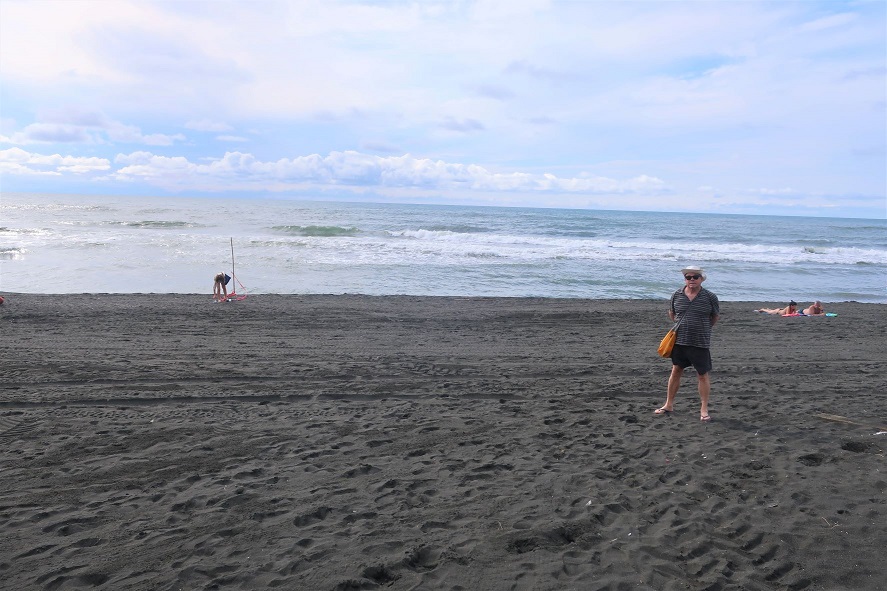
Black Sea, black sand
Seeing the Black Sea is one of the things that attracted me to visit Georgia in the first place.
When I was a kid, I went to see this movie, ‘Jason and the Argonauts‘. Great special effects, eh?
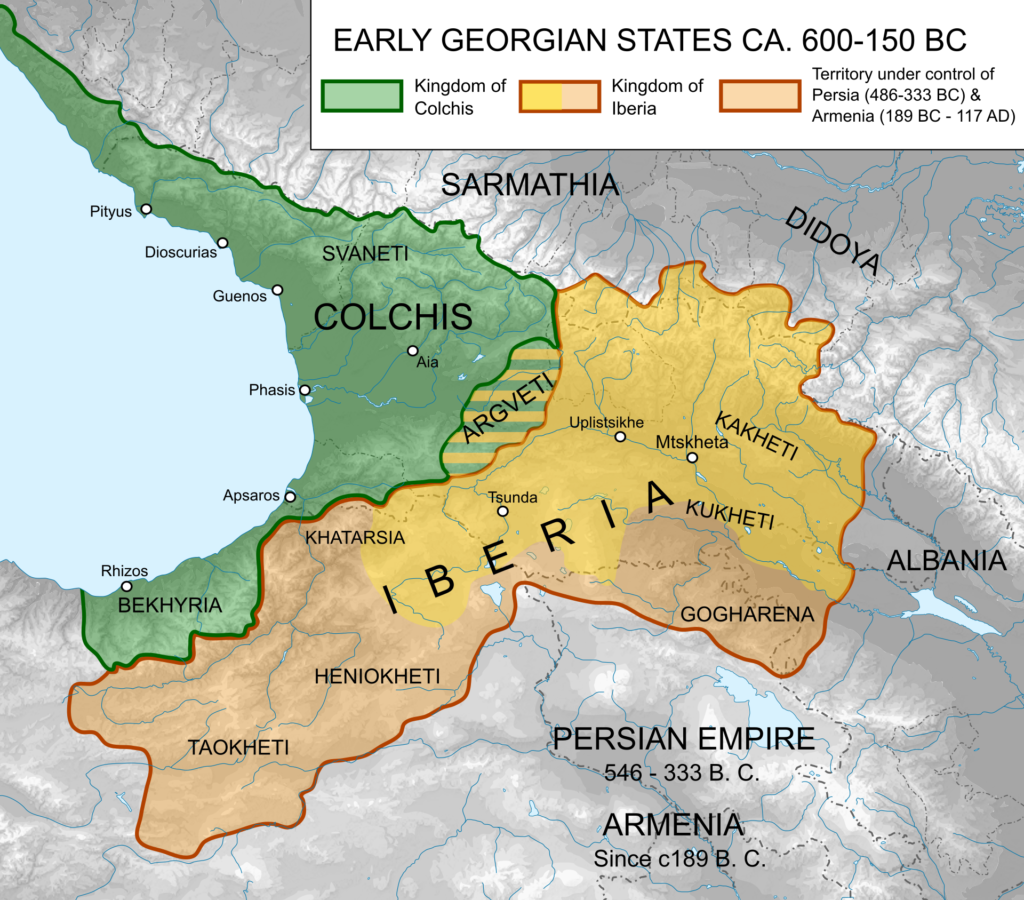
Where Jason goes in search of the Golden Fleece is Colchis, an actual kingdom that existed on these shores over 2,000 years ago.
Map courtesy of Wikipedia
It was the easternmost edge of the known world in classical antiquity. Colchis was famous for having lots of gold, as well as skilled goldsmiths. We saw many examples of this at the Georgian National Museum in Tbilisi.
The story passes down through the ages, from Euripide’s Medea to Apollonius of Rhodes’s Argonautica to the cinematic sword-and-sandal opera of my childhood memory.
Today, ‘Golden Fleece’ means ‘overcharging tourists’
Ureki is an interesting place. It’s popular with Russians and has a slightly run-down vibe. Few people speak English. We can imagine hordes of workers vacationing here in the Soviet days.
On our second day here, rain comes down in buckets.
Sheltering in place
It continues to rain for the next two days. Traveling south, we go through Batumi, Georgia’s second-largest city. It has a lot of somewhat bizarre architecture.
The Miami of the Black Sea
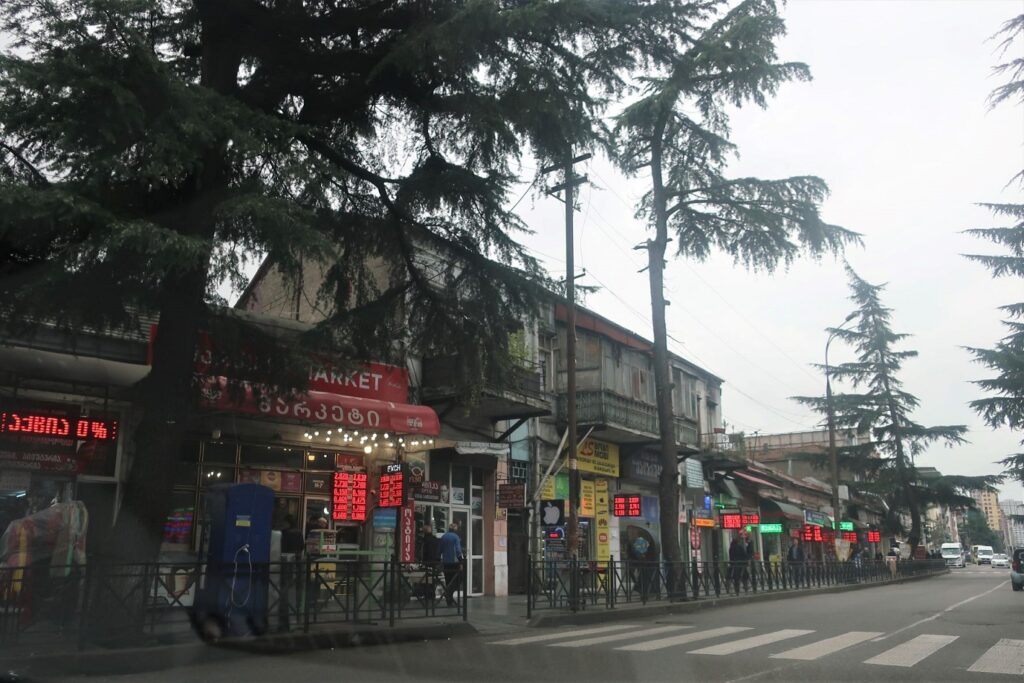
We drive on through the centre of town. It’s a busy place.
Lots of currency exchange places
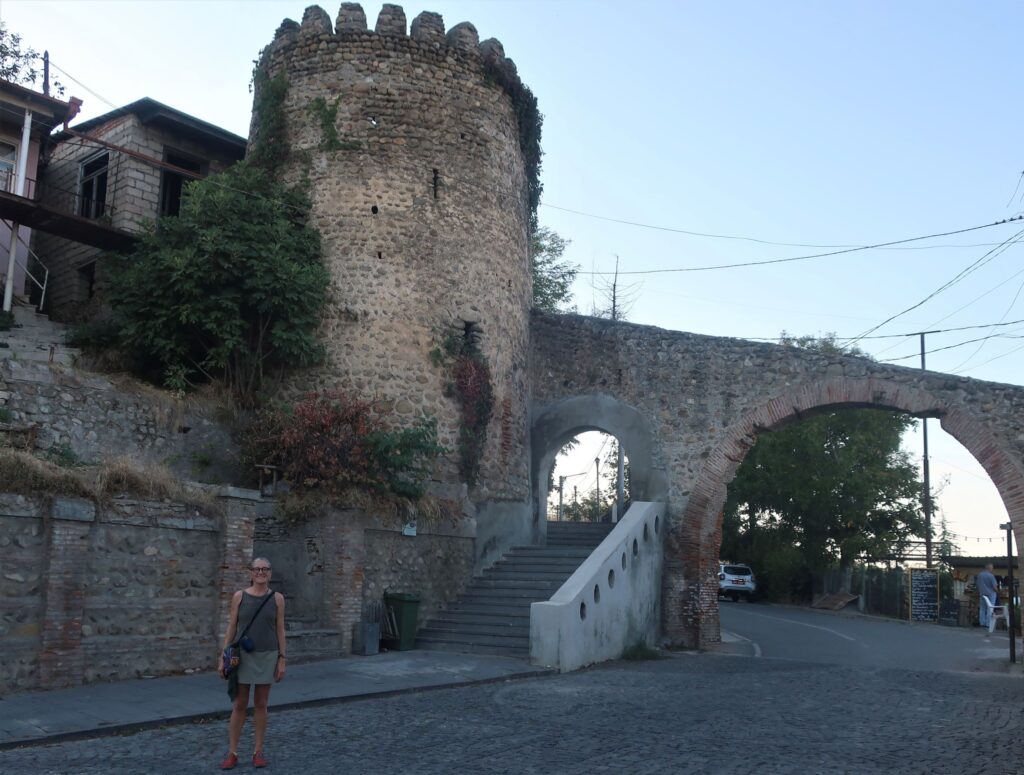
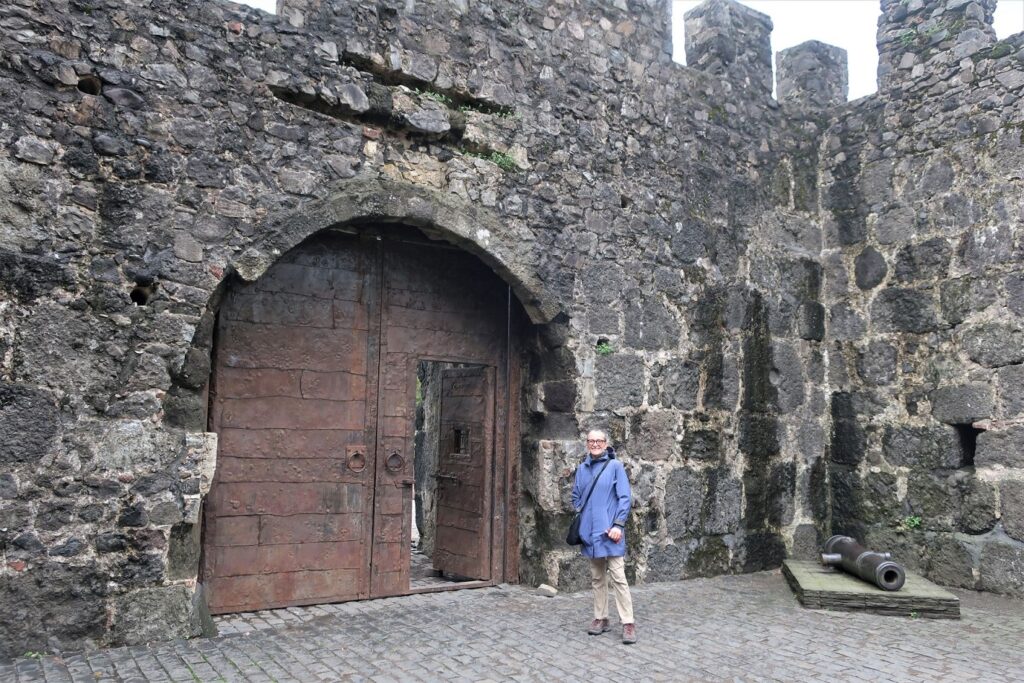
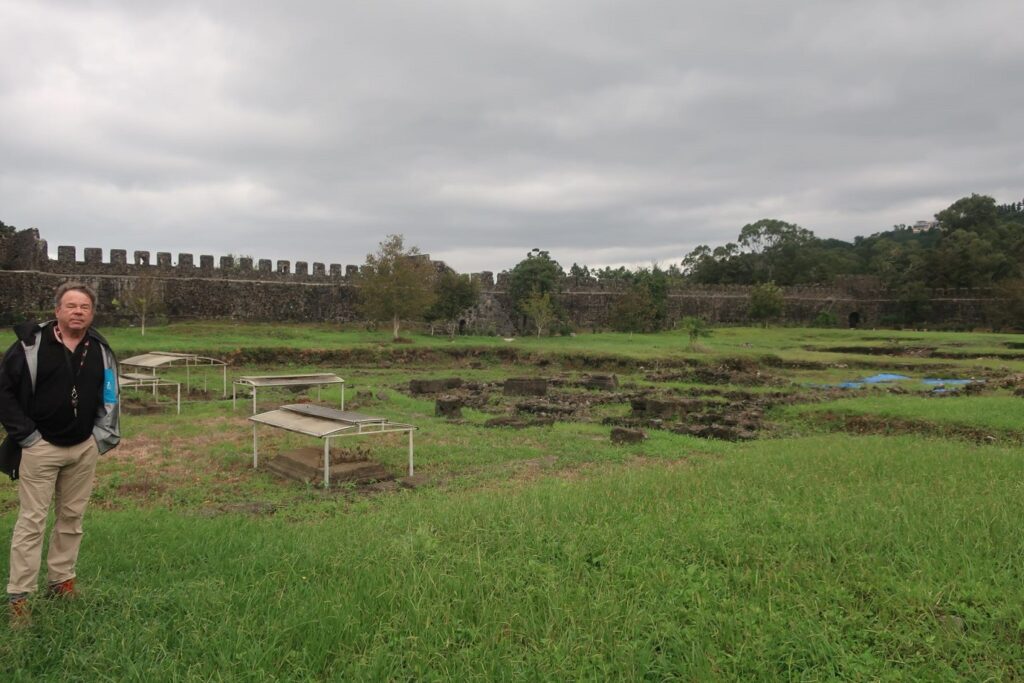
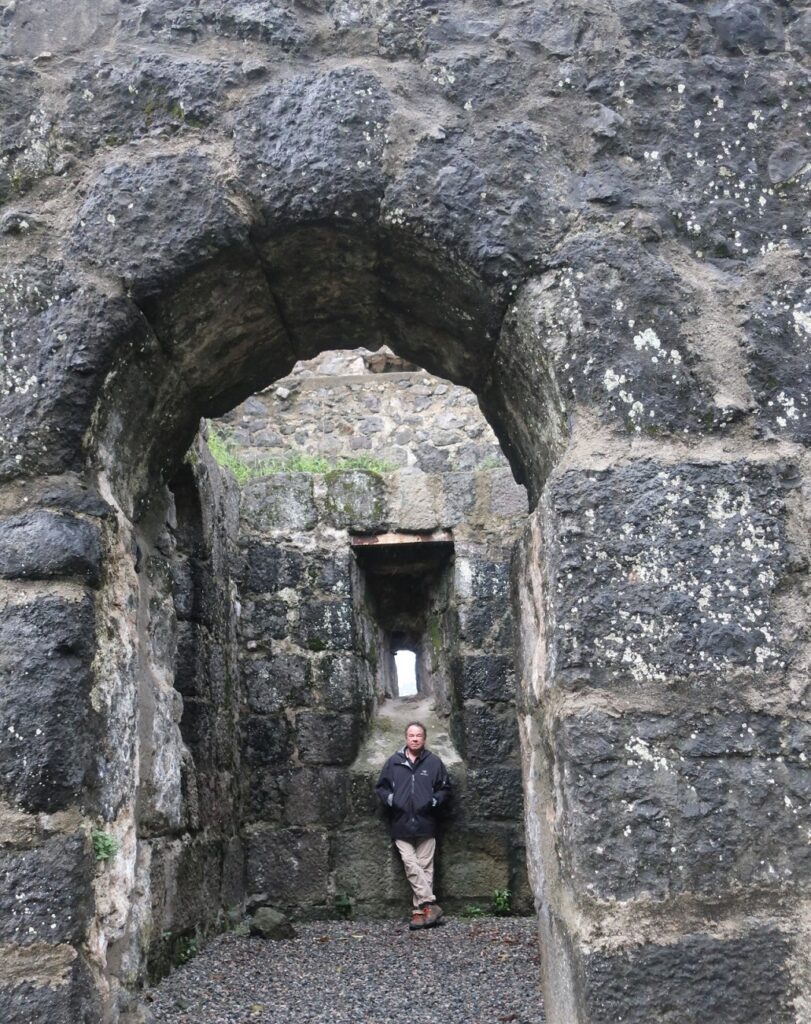
We take advantage of a lull in the rain to visit the Gonio Fortress. Also known as Ἄψαρος’ (Apsaros).
This is a mostly Roman fort, with Byzantine and Ottoman add-ons.
Finally, a break in the weather and we spend a couple of days at Kvariati Beach, just before the border with Turkey.
The Georgian Riviera?
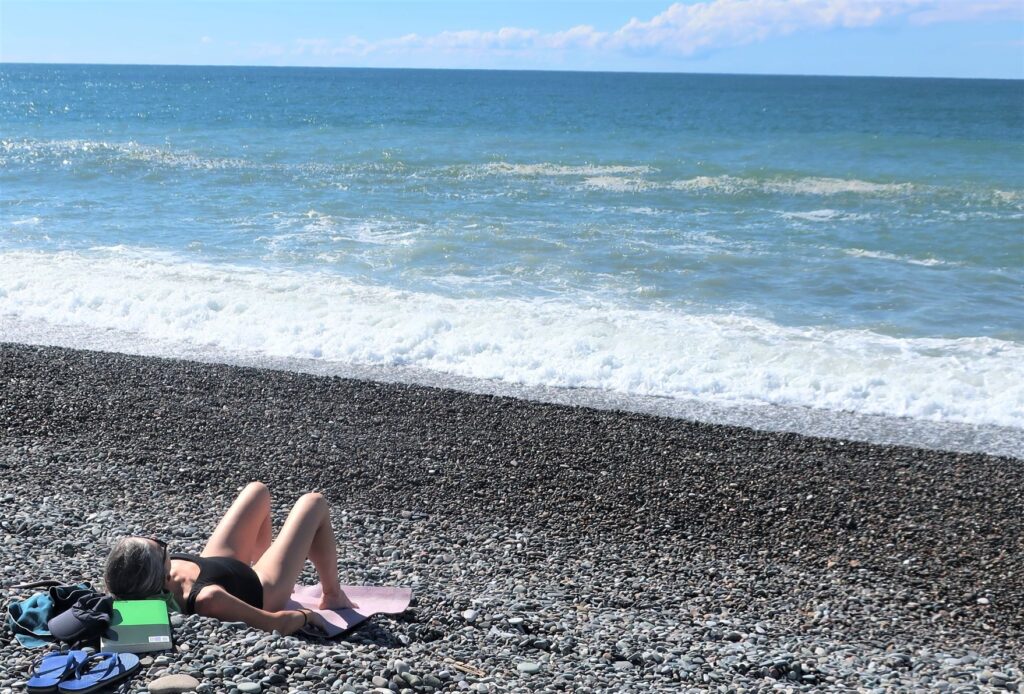
This beach has smooth pebbles instead of black sand.
Beach girl
But it’s clean. And quiet.
Beach boy
Well, except for a few restaurants that insist on blasting out loud, bad music. This is another third-world trait. Unfortunately, it drives the both of us right up the wall.
We walk down the road to see how close the Turkish border is.
We decide it’s not close enough and turn back. Besides, there are trucks thundering down the road in both directions.
We get a good view of the beach, though.
Our balcony is a great place for a sundowner.
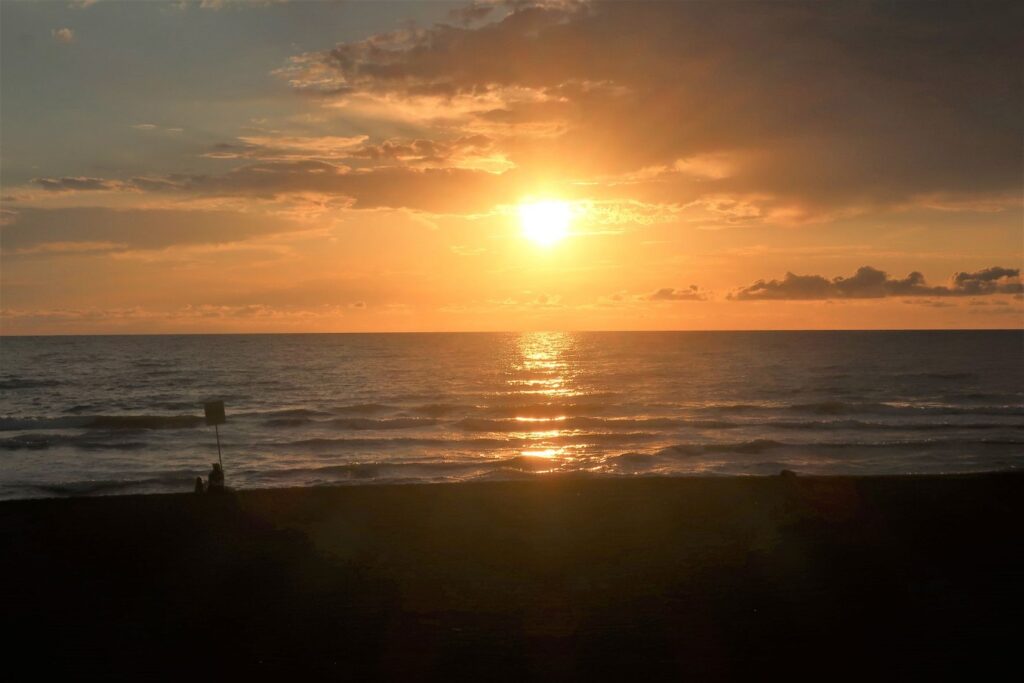
The sun sets in the Eύξεινος Πόντος
Almost three weeks we’ve been here already. Feels like longer than that. We agree it’s been an enjoyable trip so far. Laughs aplenty. Lots of Zen moments. Indeed, these are the days.
Sight or Insight of the Day
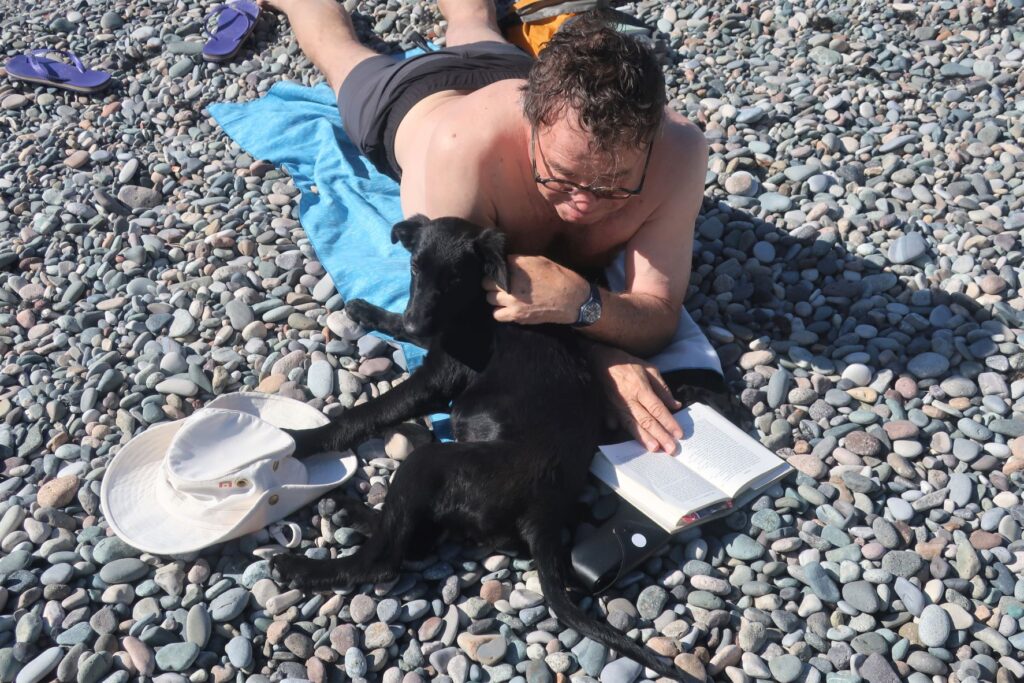
We might have to start calling this the daily dog entry. While trying to read my book, a young dog – a pup, really – walks up and begins rolling around under and around me, begging me to play with her.
Dog Day Afternoon
I give in and combine reading with a canine wrestling match.
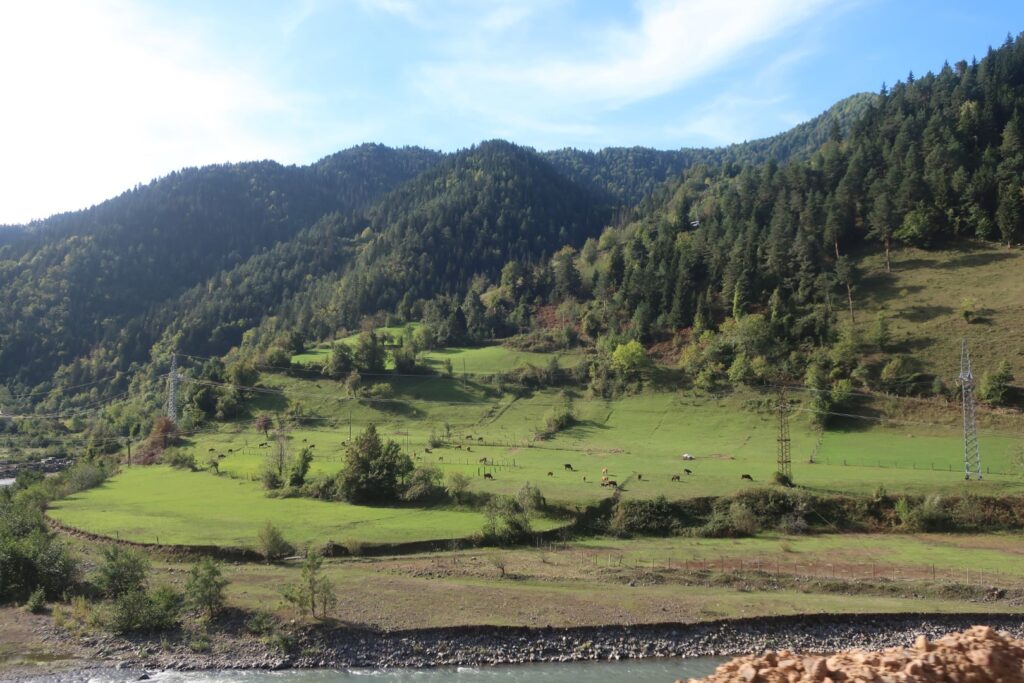
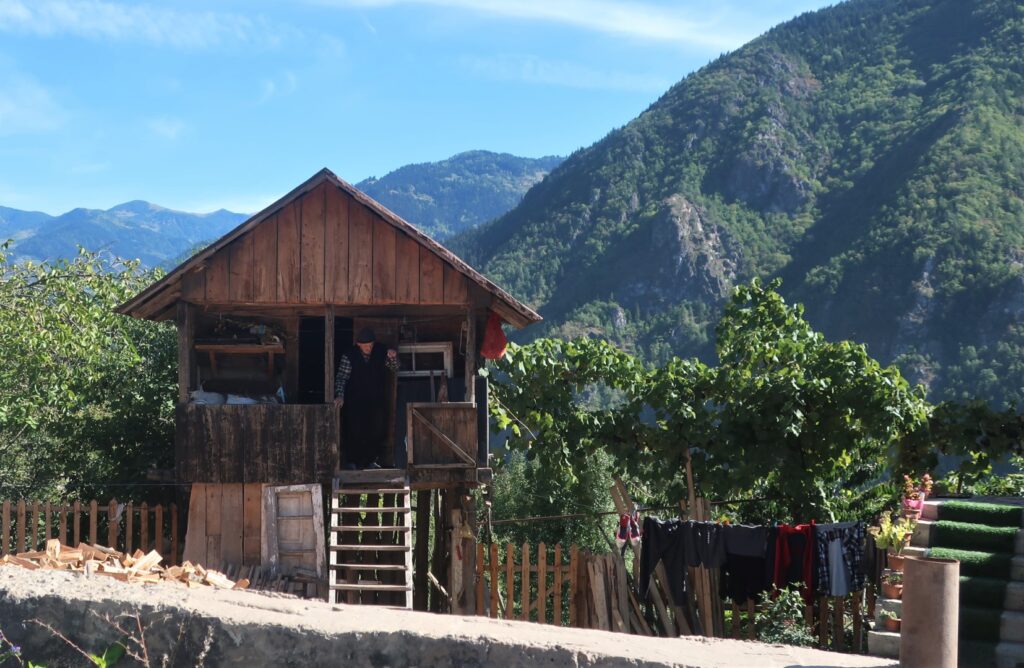
In the north of Georgia is an area called Svaneti. After spending a night in Zugdidi, another pleasant mid-sized city, we drive up into the mountains again.
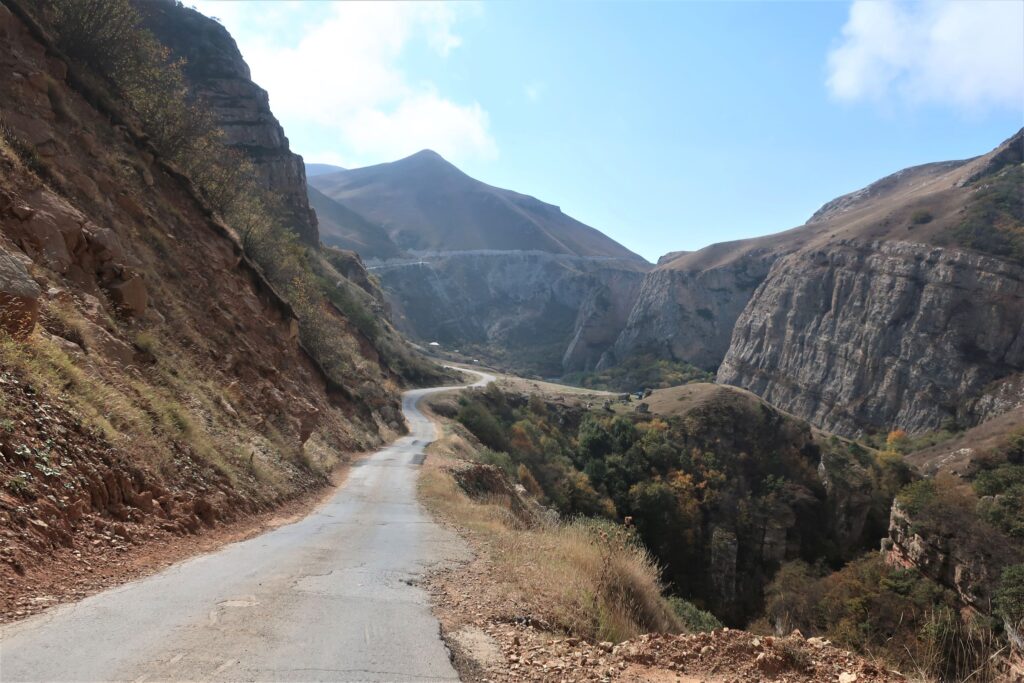
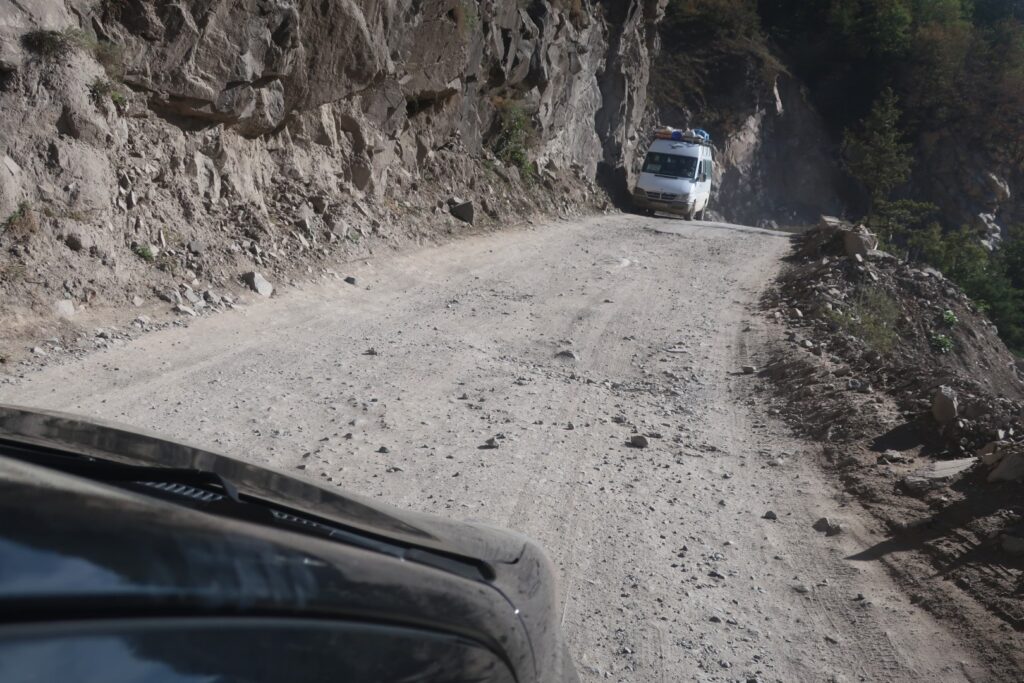
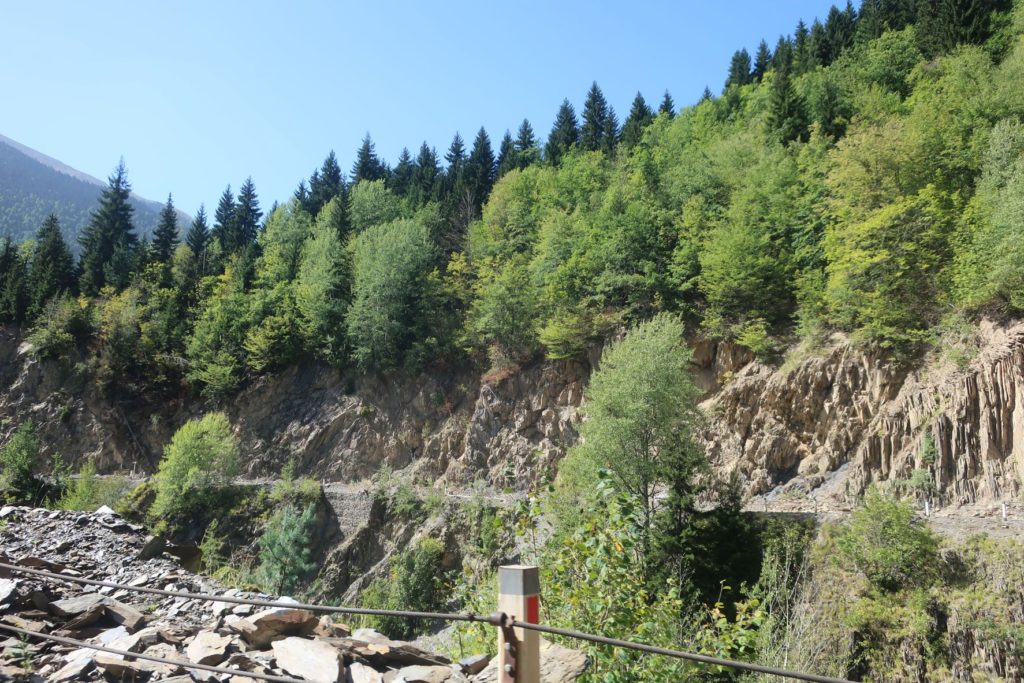
The road is switchback much of the way.
Switchback
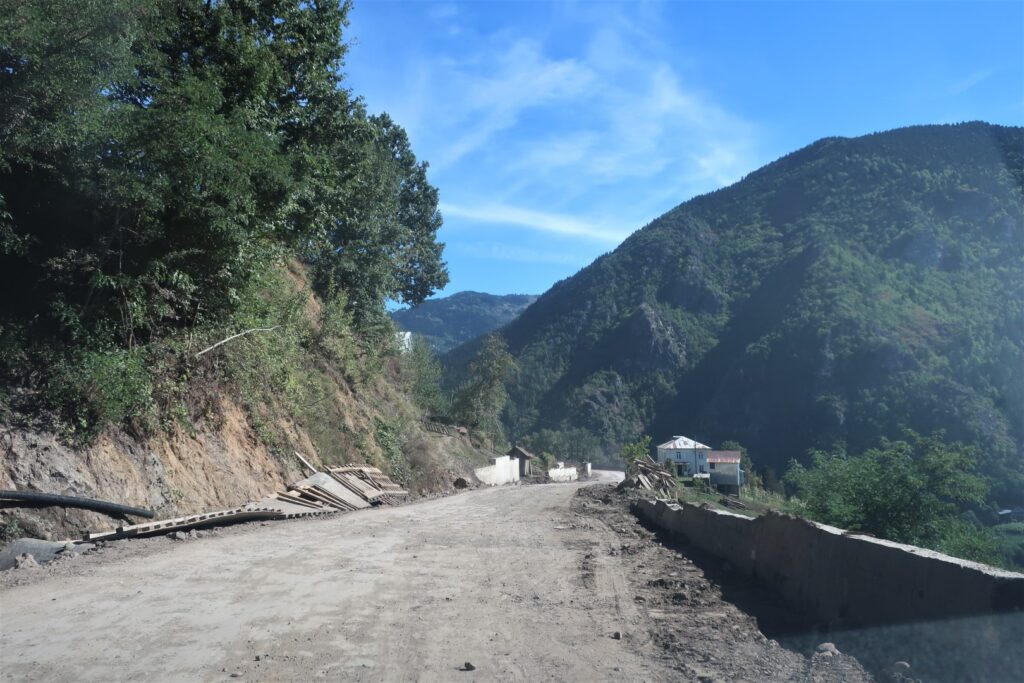
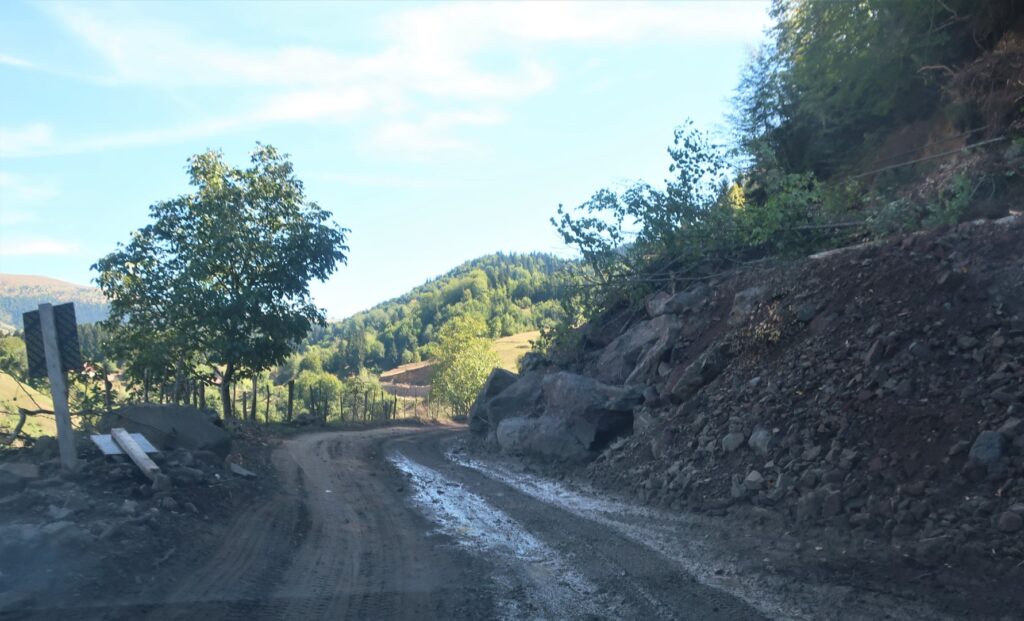
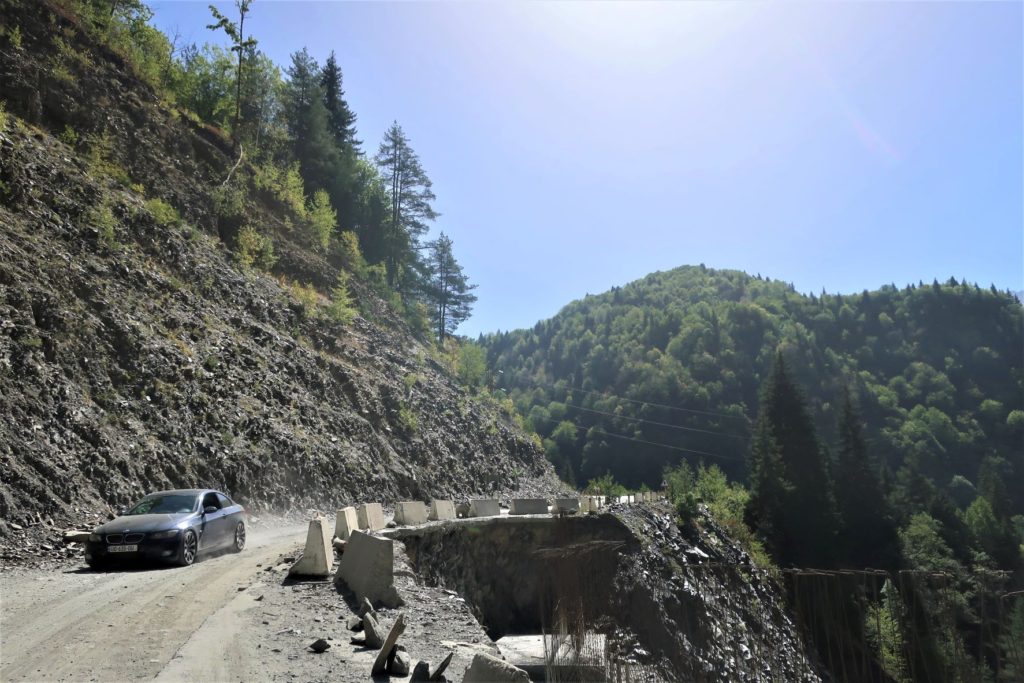
Frequent landslides take out chunks of the road.
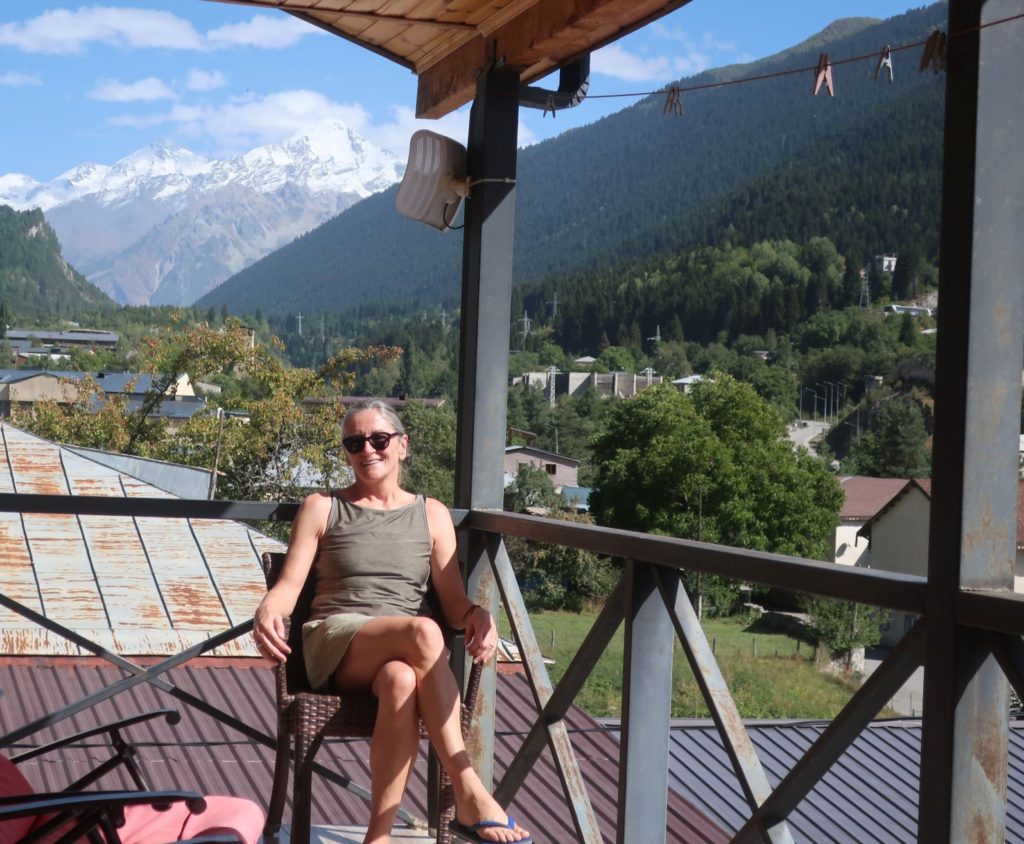
We arrive in Mestia, the main town. Our room has a great view. We stay here a total of three nights.
Room with a view
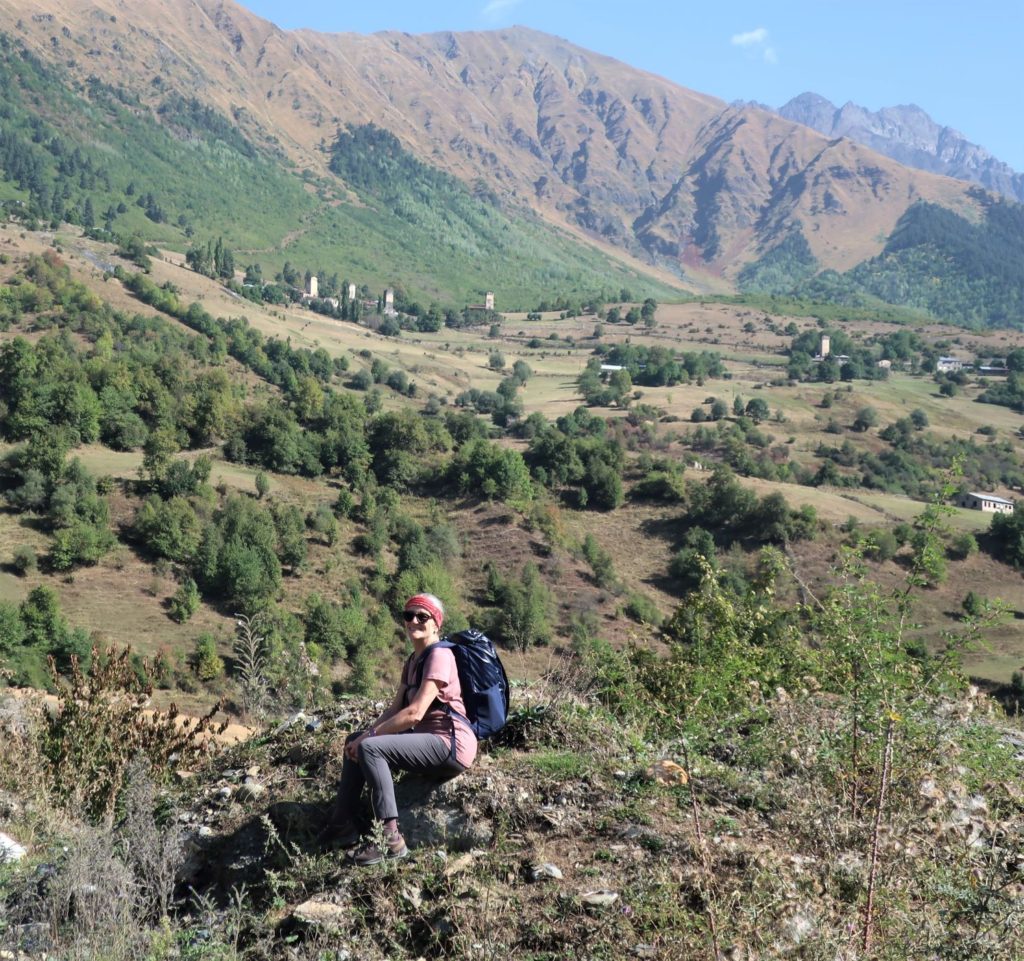
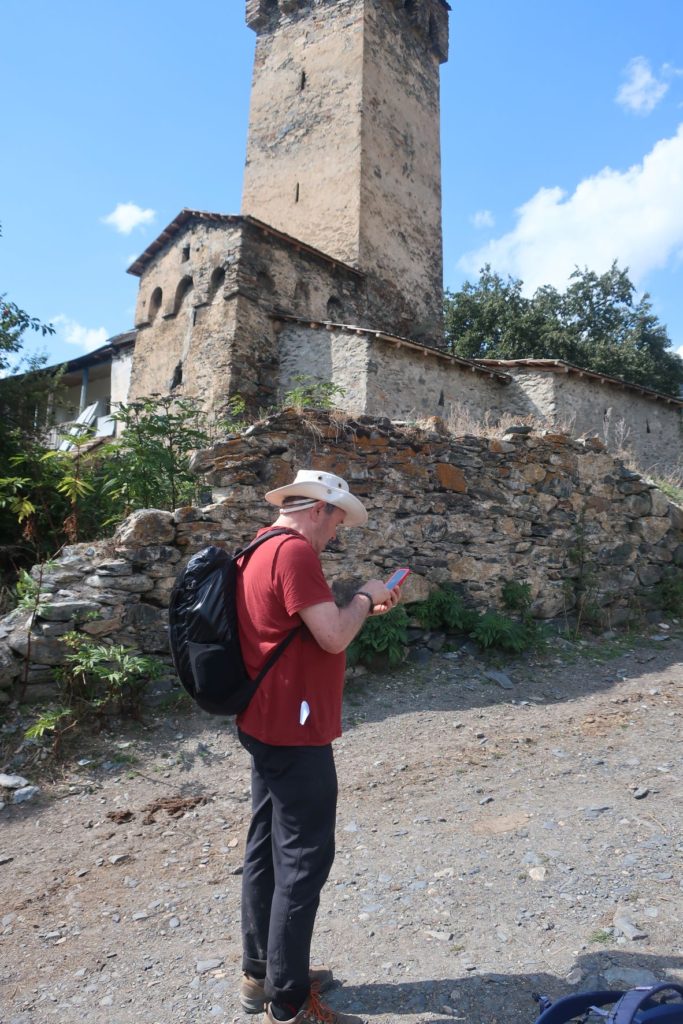
A popular hike is the four-day trek from Mestia to Ushguli. We are not keen on leaving the car unused for that long, so we do the first stage from Mestia to Zhabeshi. We wind up walking on the road to Zhabeshi because we couldn’t find the beginning of the trail in town. (Have we mentioned that information can be hard to come by in Georgia?)
This is not as bad as it sounds because there is very little traffic on the road and the scenery is pretty spectacular everywhere.
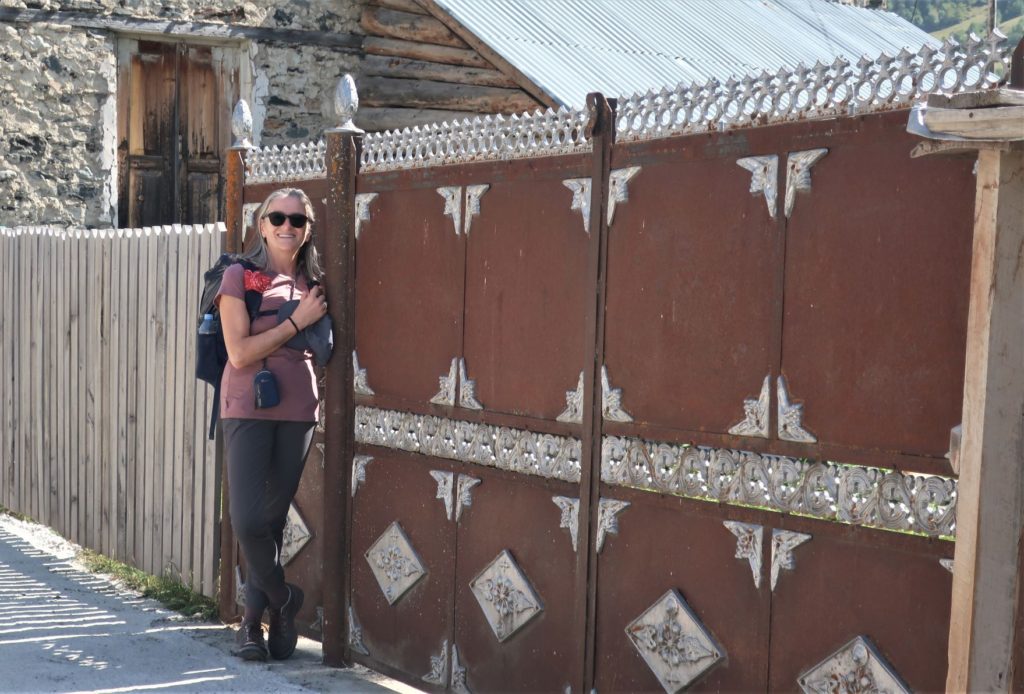
Maria likes the fancy gates on some of the houses.
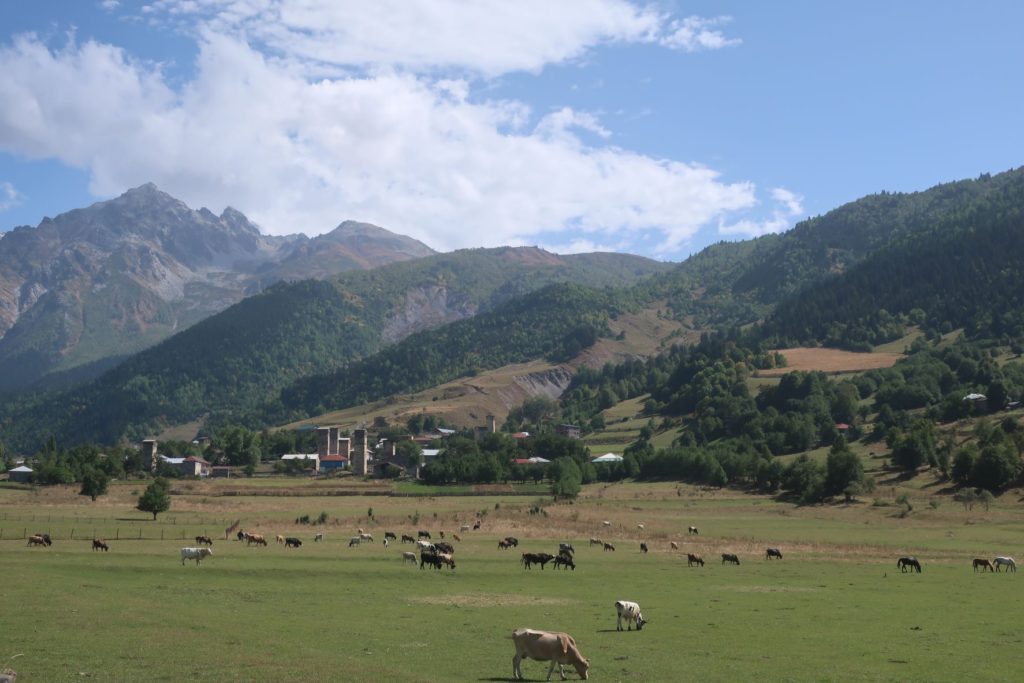
We get to Zhabeshi early in the afternoon.
Zhabeshi
We stay the night in a scrupulously-clean guesthouse and are stuffed to bursting with our hostess’s lavish cooking.
We depart from Zhabeshi the next morning, returning to Mestia by the real trail.
Unfortunately, we are completely on the wrong track. We follow what we think is the trail nearly to the top of a considerable mountain. We’re scratched mercilessly by thistles. The trail peters out to nothing. I consult my Maps.Me and find that the path actually begins way down, parallel to the river.
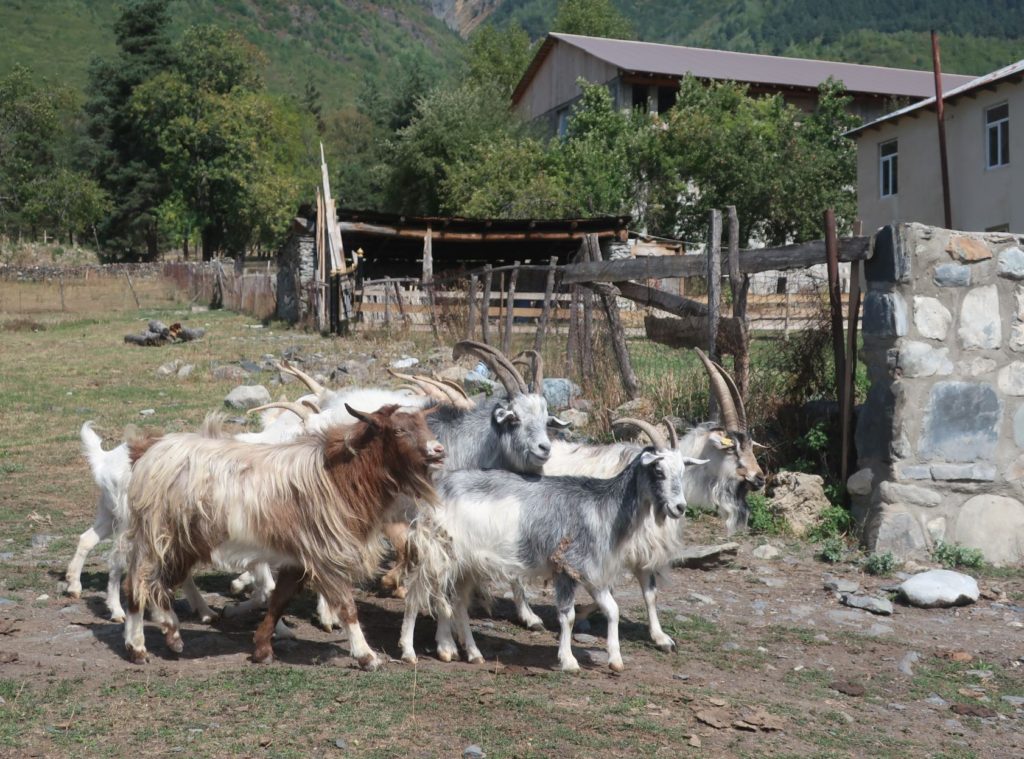
We eventually find our way. In one village, a small herd of elegant goats struts by like a party of supermodels.
Eventually, inevitably, we lose our way once more.
WTF?Not again!
We only get back on track by coming across other hikers. The signage on this trail needs improvement.
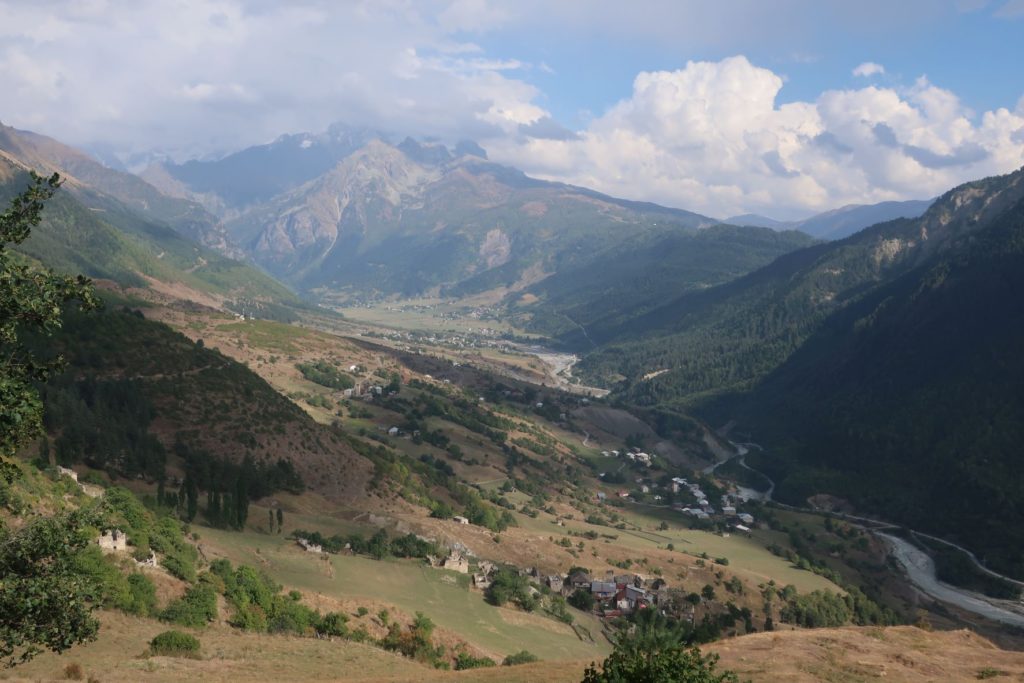
This is looking down on the valley before reaching the pass back to Mestia.
Panorama
We get back to our hotel in Mestia after 10 hours of walking, dog-tired but with a sense of accomplishment.
Next day, we take a local transport vehicle to Ushguli and back. (We can’t take our rental car because the roads are too bad.)
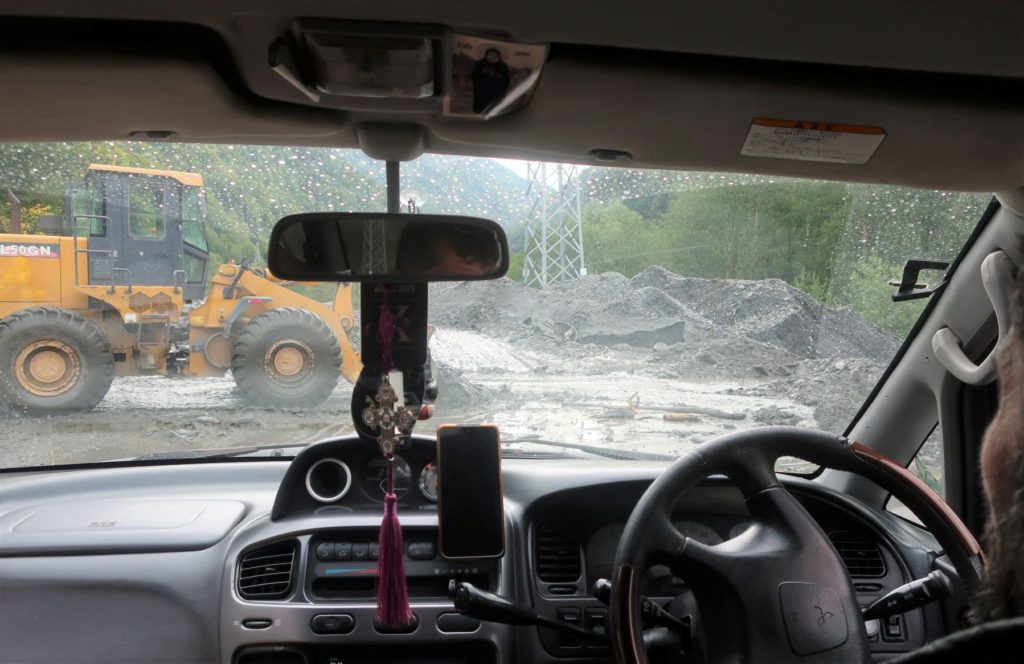
The overnight rains have cause landslides. A work crew clears the road while we wait.
Note the right-hand-drive
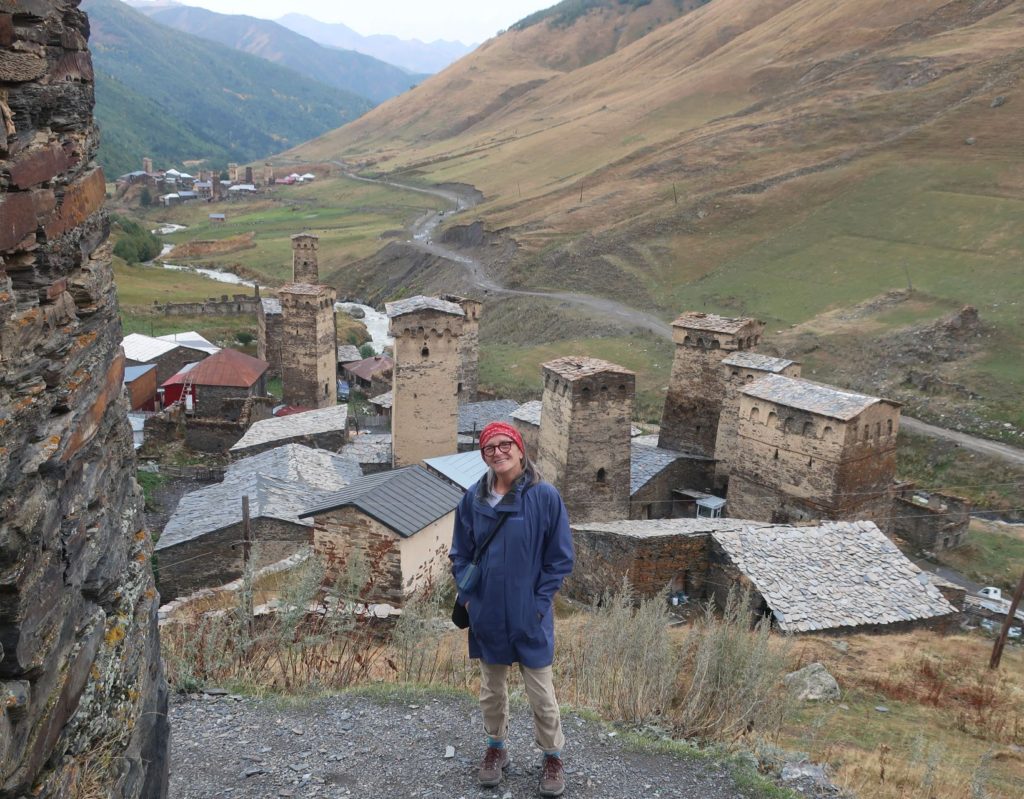
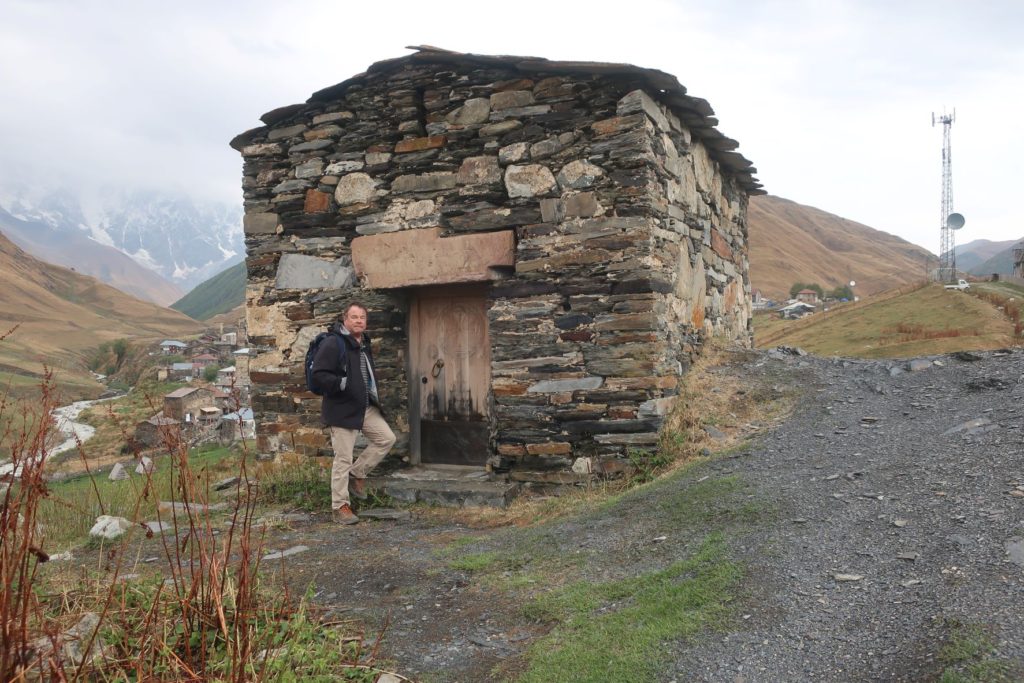
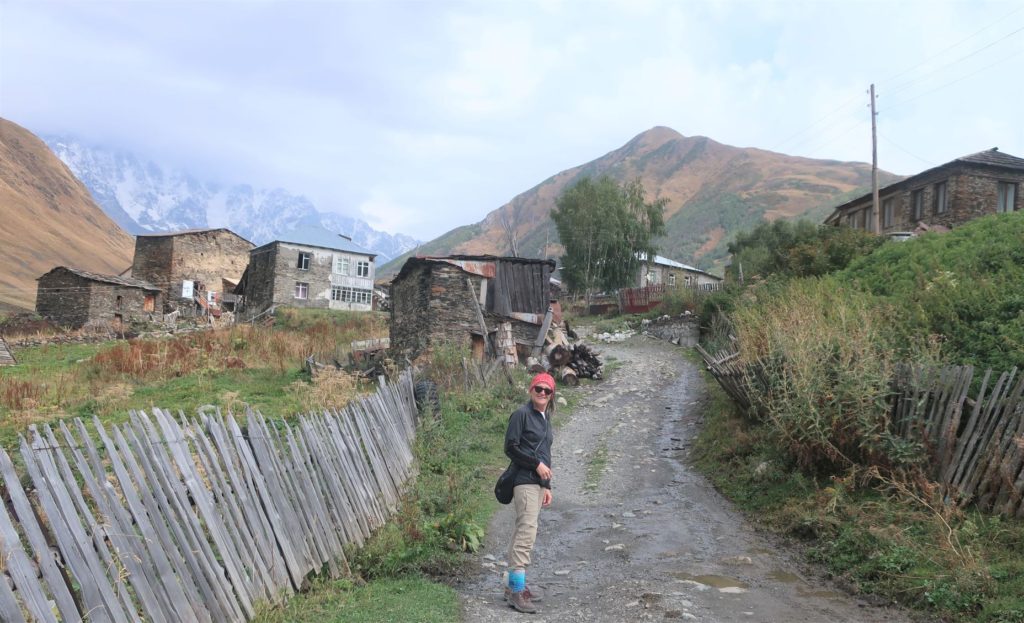
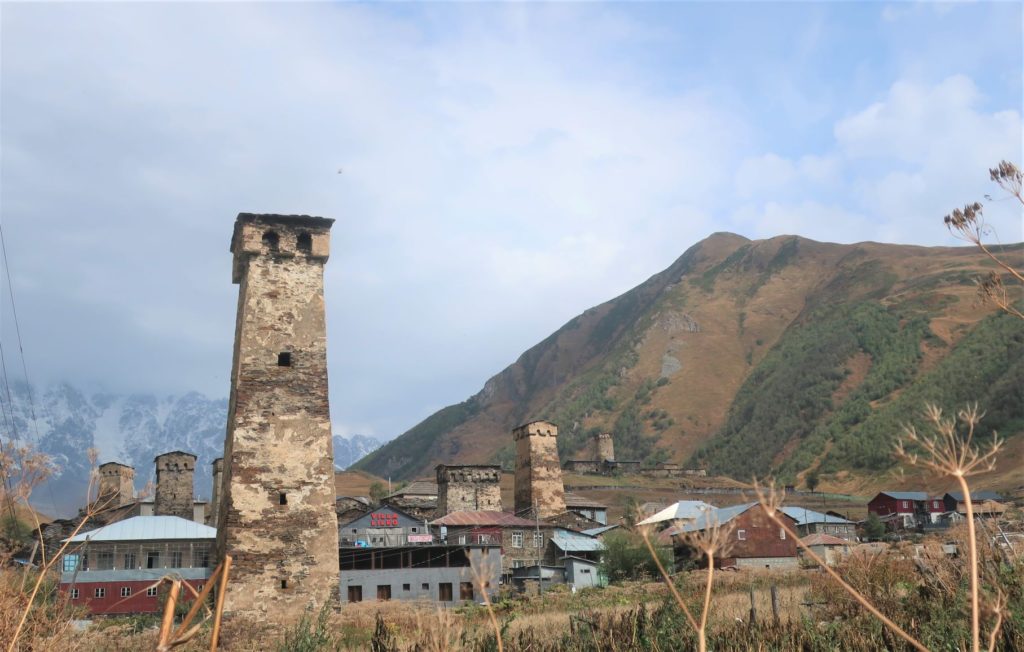
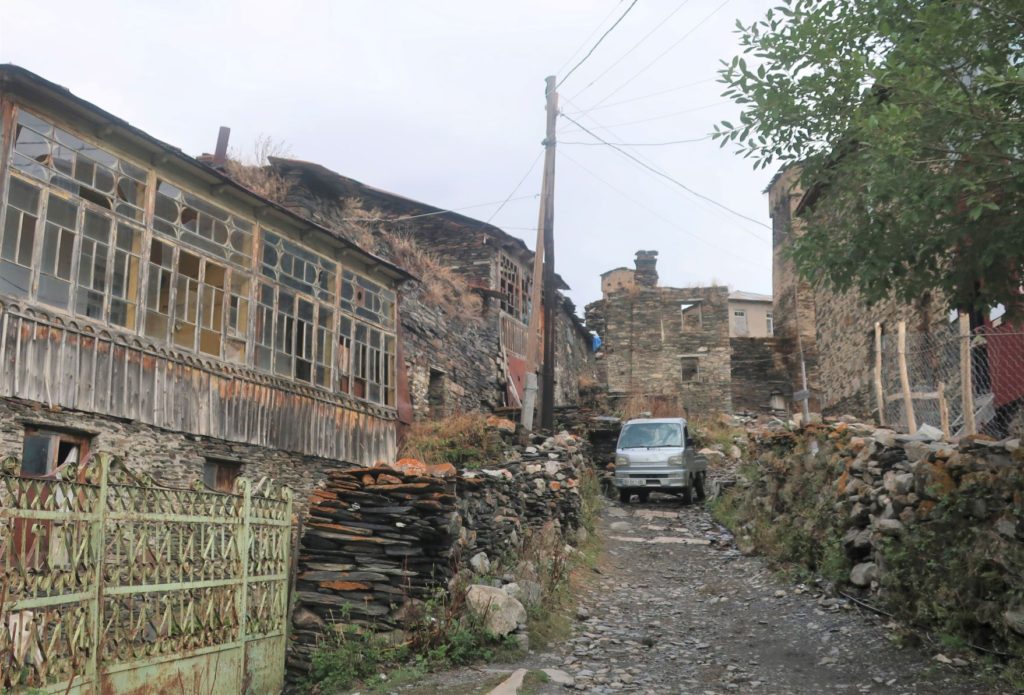
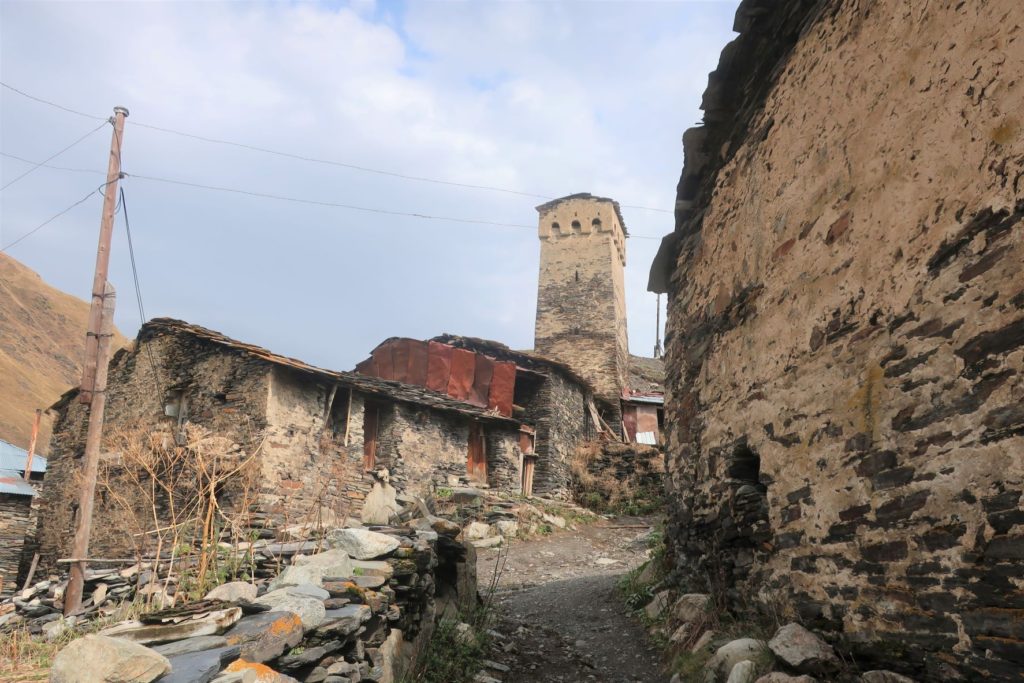
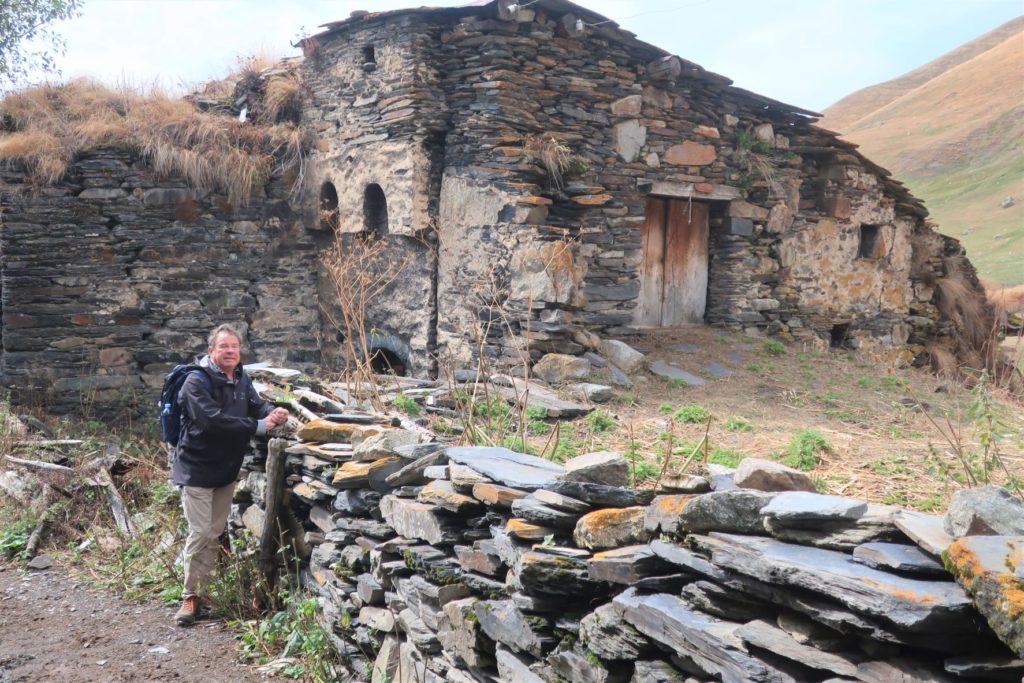
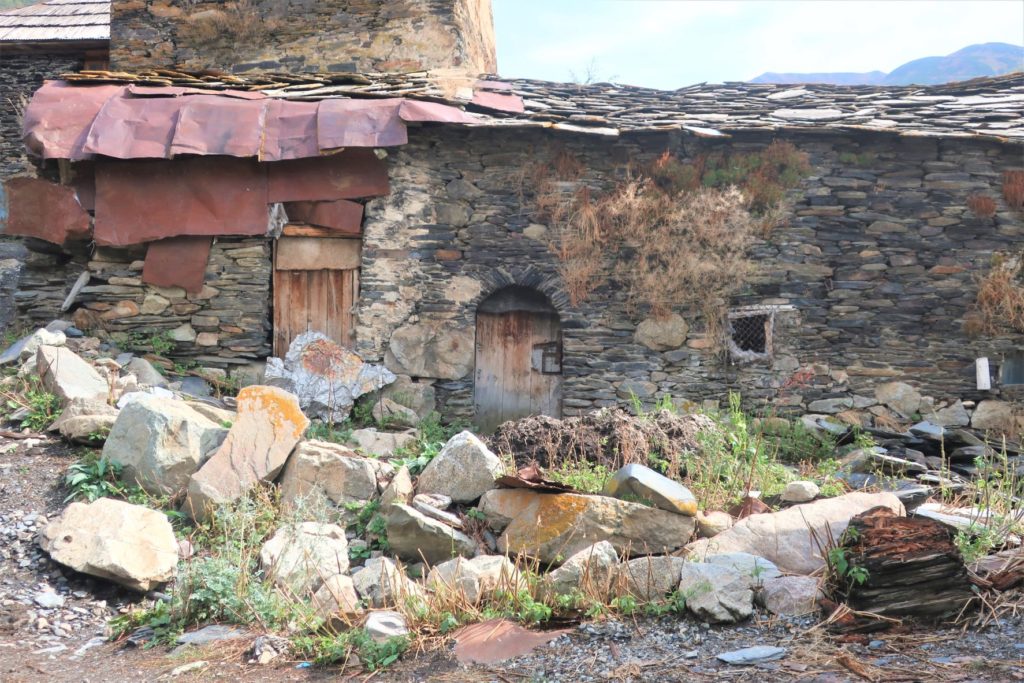
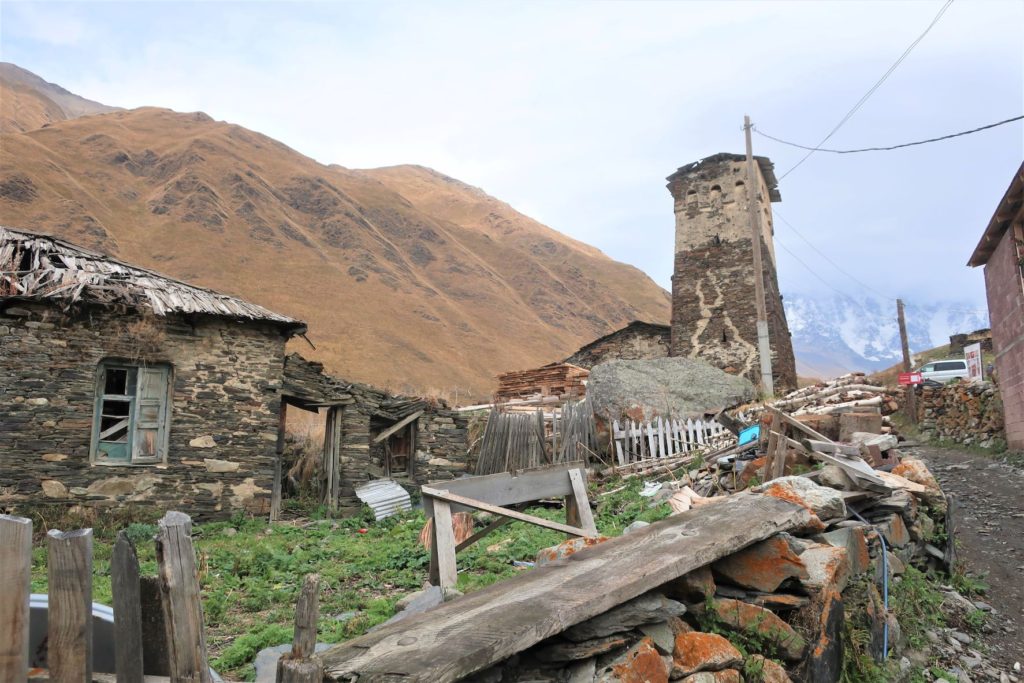
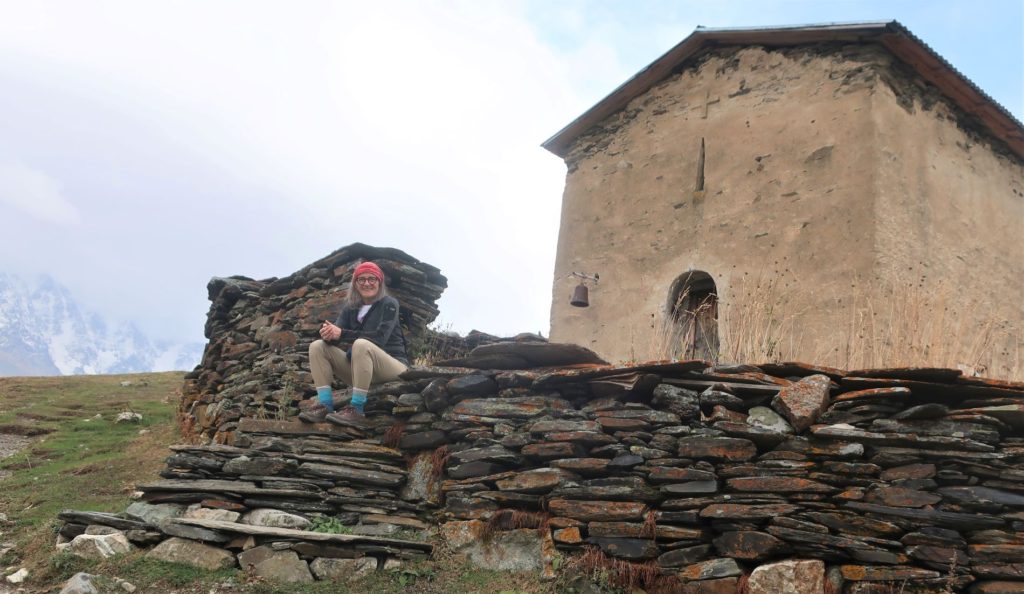
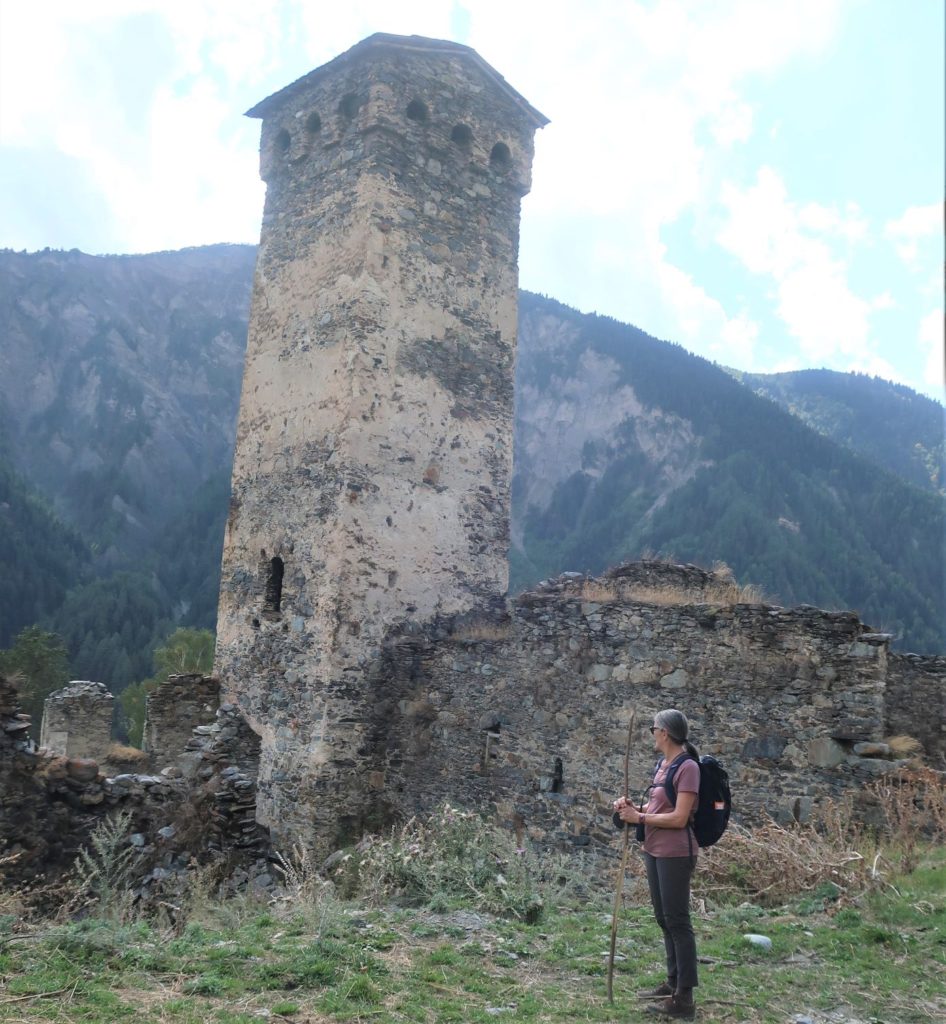
Ushguli is full of stone buildings in various states of picturesque dilapidation. We’ll let the photos speak for themselves.
Sight or Insight of the Day
On our day-trip to Ushguli, we meet a young Russian woman who has fled Russia and moved permanently to Georgia. (Sorry, no photo.) She acts as interpreter between the driver (who knows Russian, like most older Georgians, but not a word of English) and us.
It’s a shame that ordinary, non-insane Russians feel they have no choice but to leave. This woman was studying data analysis, a sought-after skill at the moment. Now she has to change career paths in a strange country.
She’s pretty adamant, though. When we part ways, I say we hoped she could go home soon. She replied without hesitation ‘My home is Tblisi!’
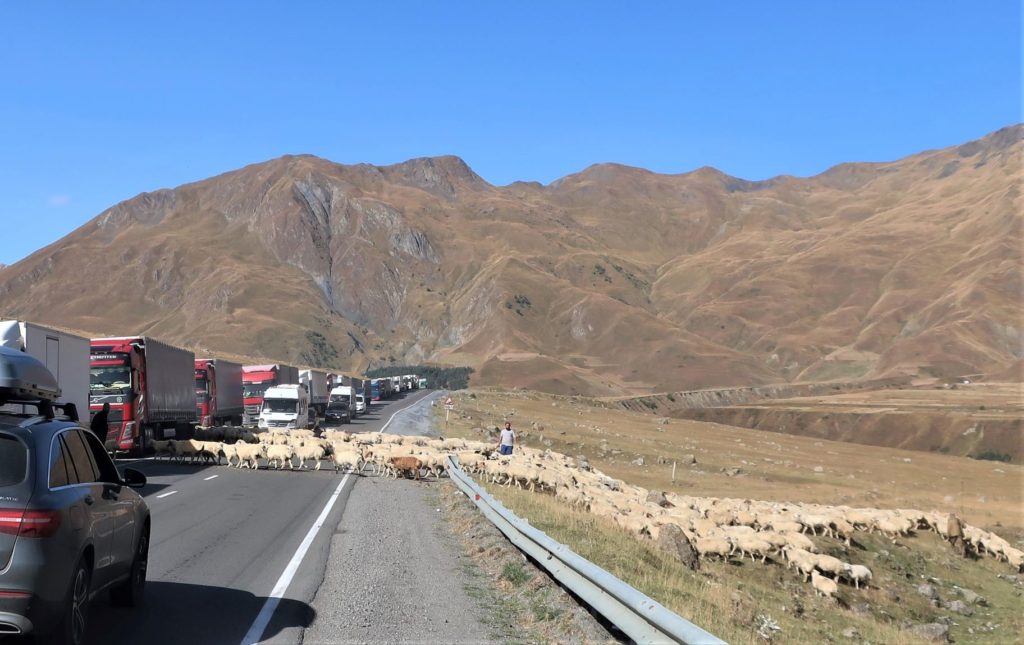
No sooner do we come across the long queue of Russia-bound trucks does a herd of sheep cross the road.
Herd on the street
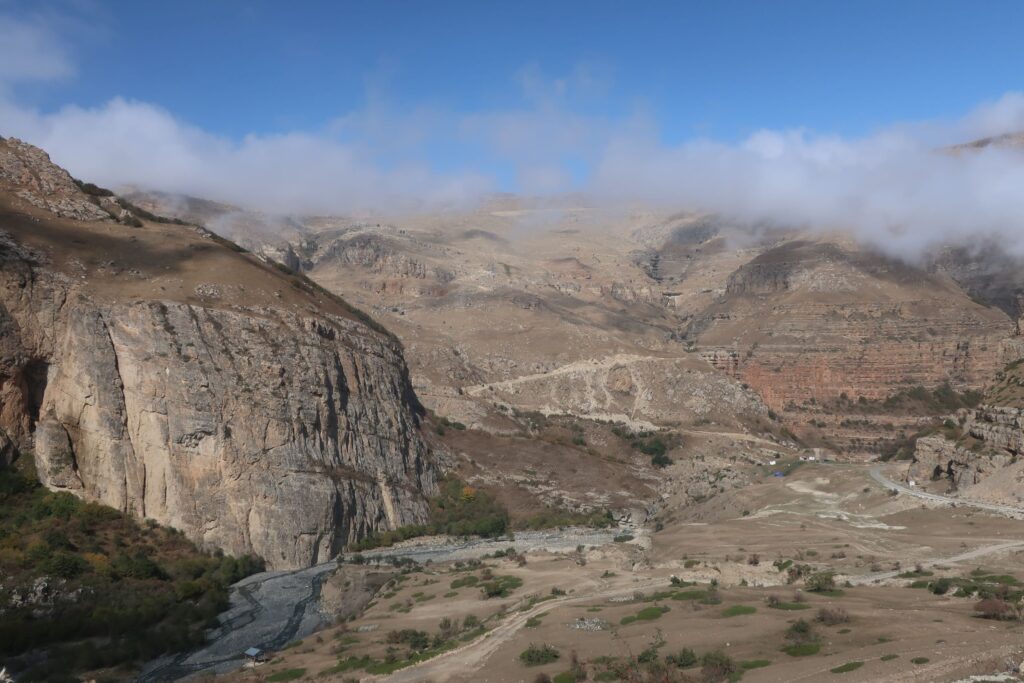
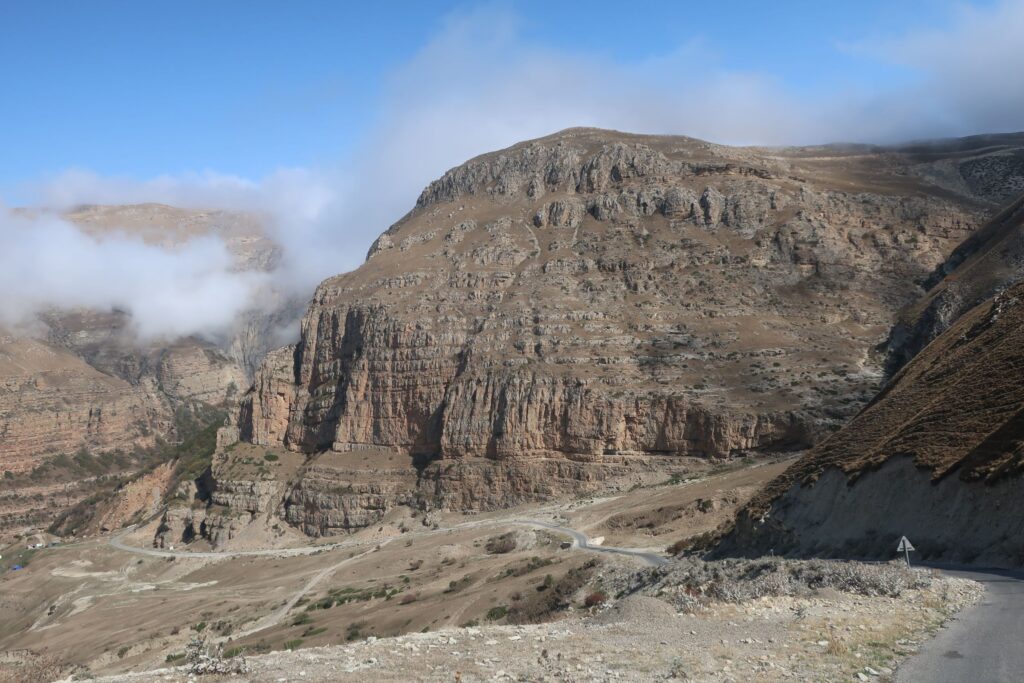
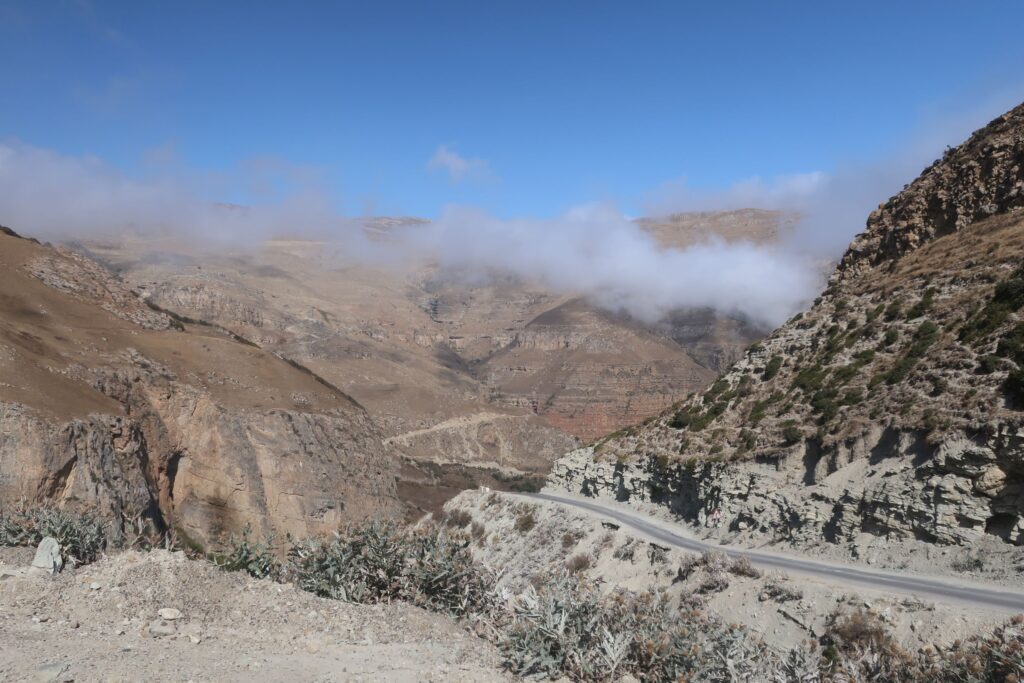
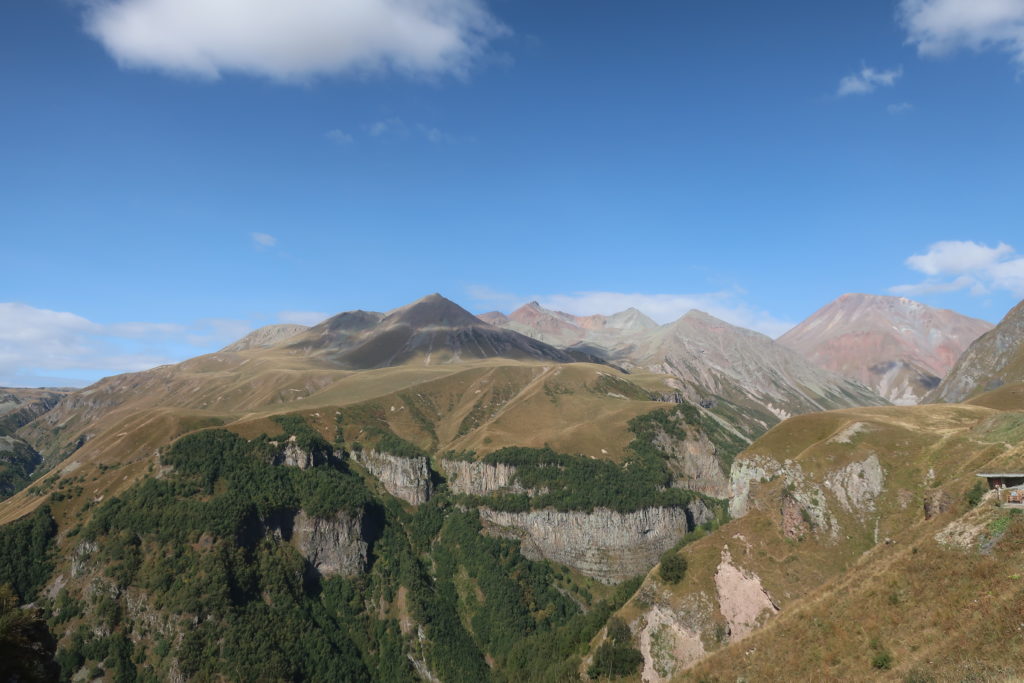
The road back to Mtskheta goes through multicoloured mountains that remind us of Iceland.
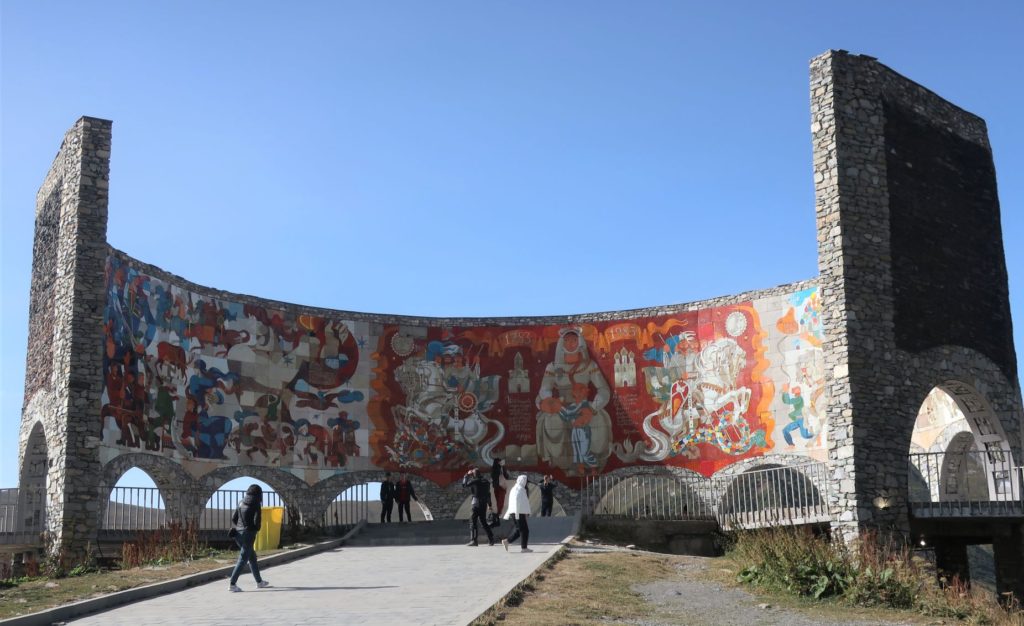
We mentioned passing by a Soviet-era monument to Russia-Georgia friendship. We stop here for a break.
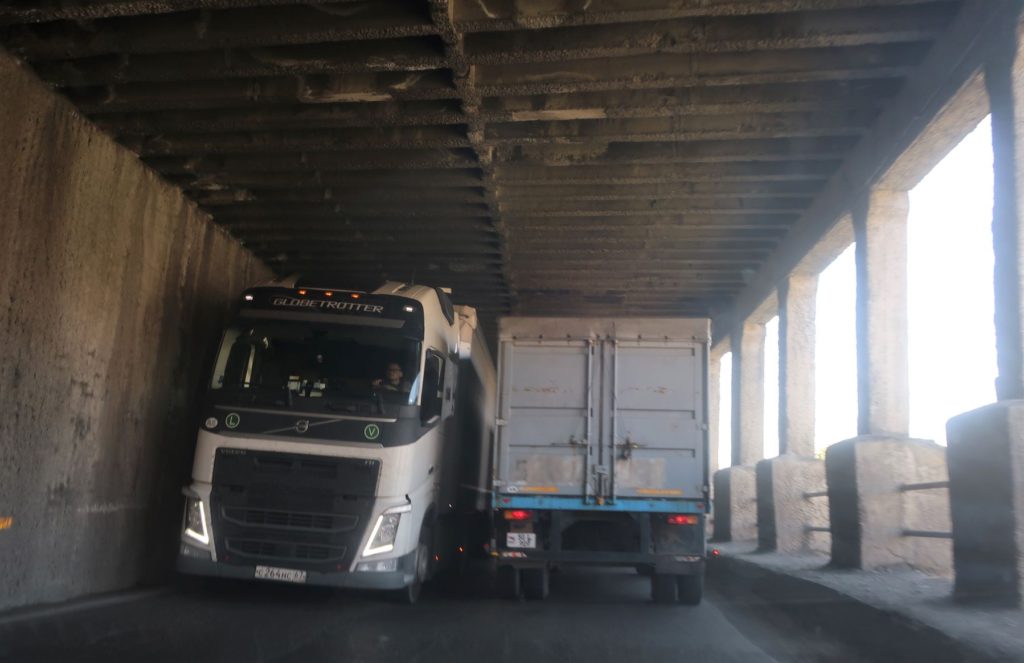
Traffic through some of the tunnels is squeaky tight.
Exsqueeze me?
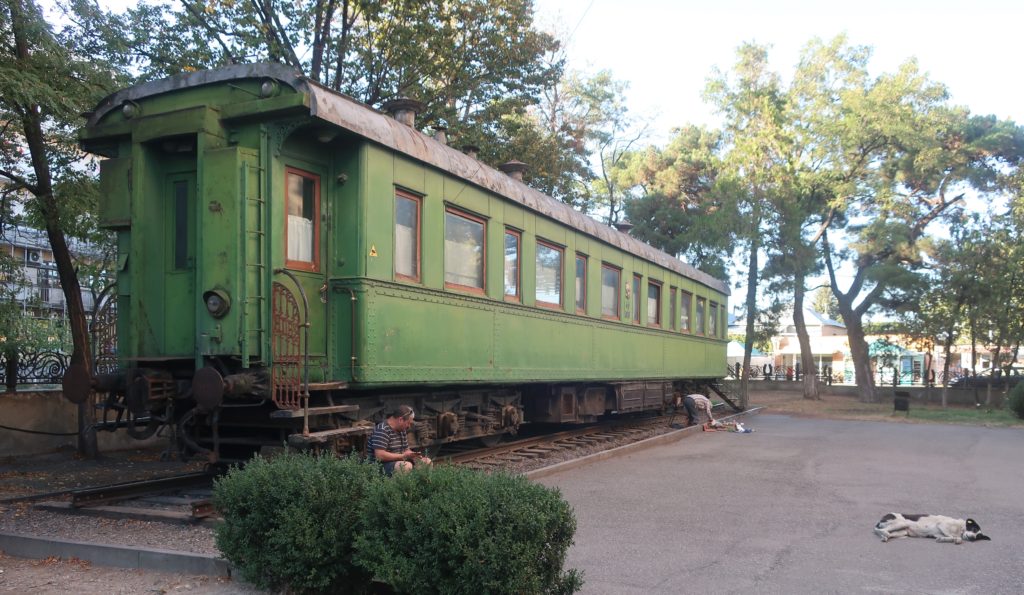
We drive through the plain that lies between the Greater Caucasus and Lesser Caucasus ranges to the town of Gori, Joseph Stalin’s birthplace.
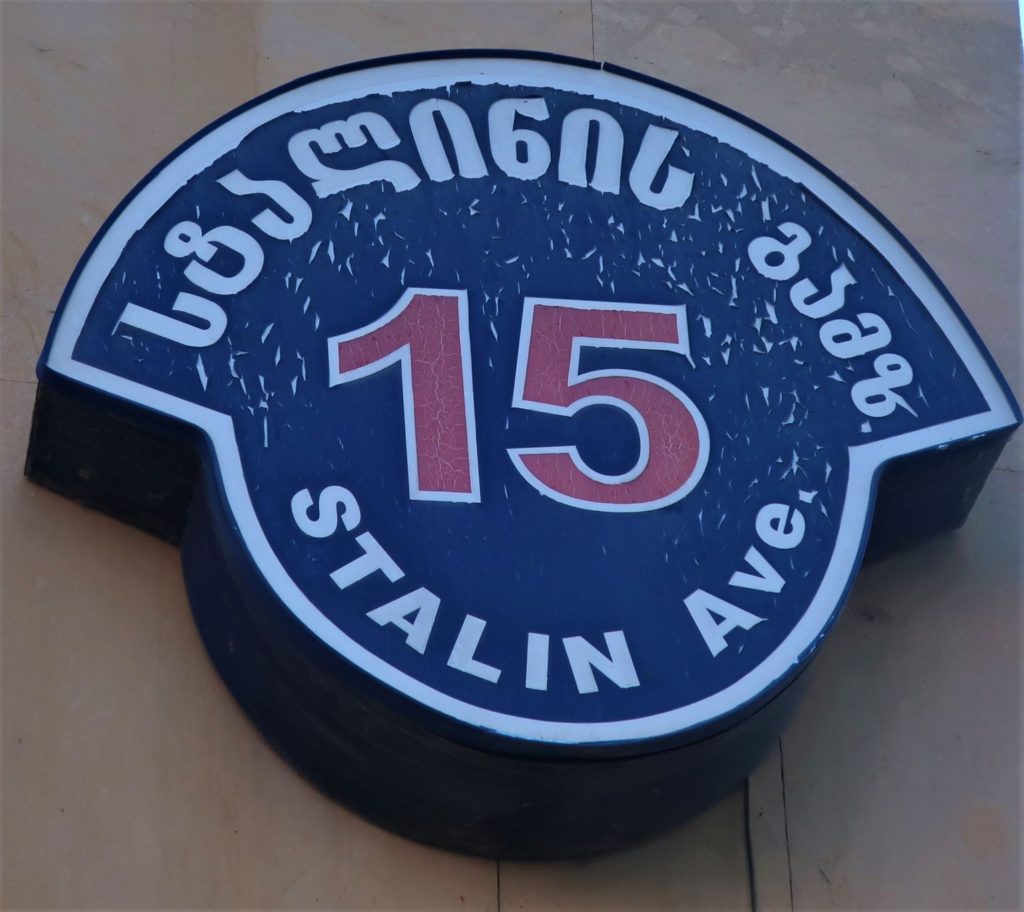
Our address
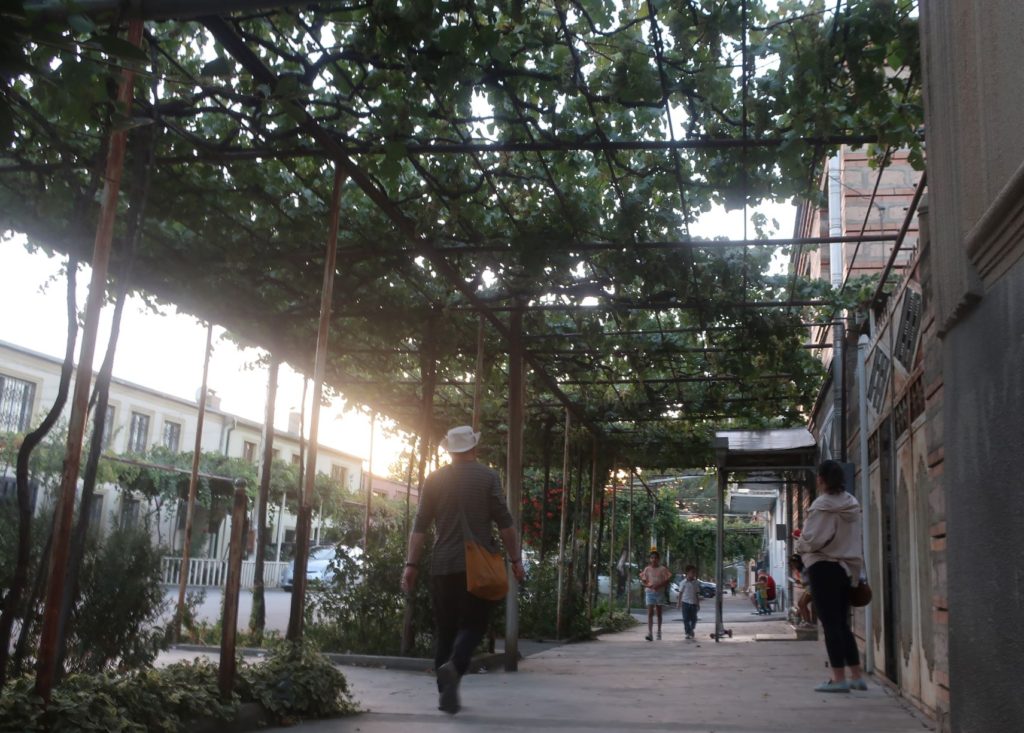
Our guesthouse is on a nice quiet street. There are grapes growing in front of every house, children playing, neighbours gossiping.
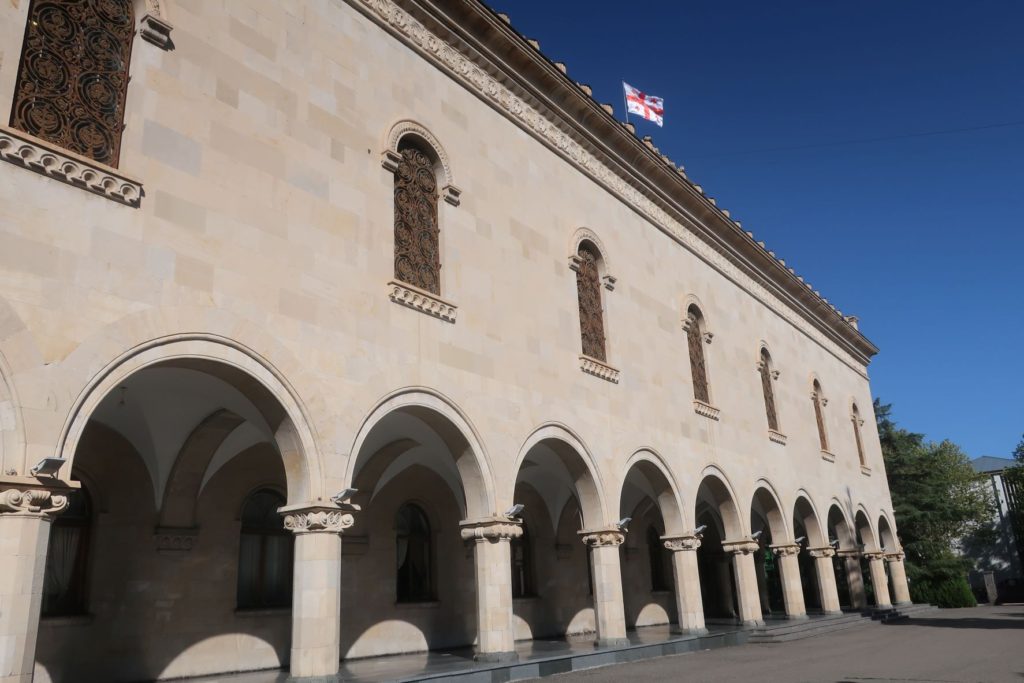
The main attraction in Gori is the Stalin Museum. Because Stalin is a local boy who made good (or at least gained prominence), it has little bad to say about the man
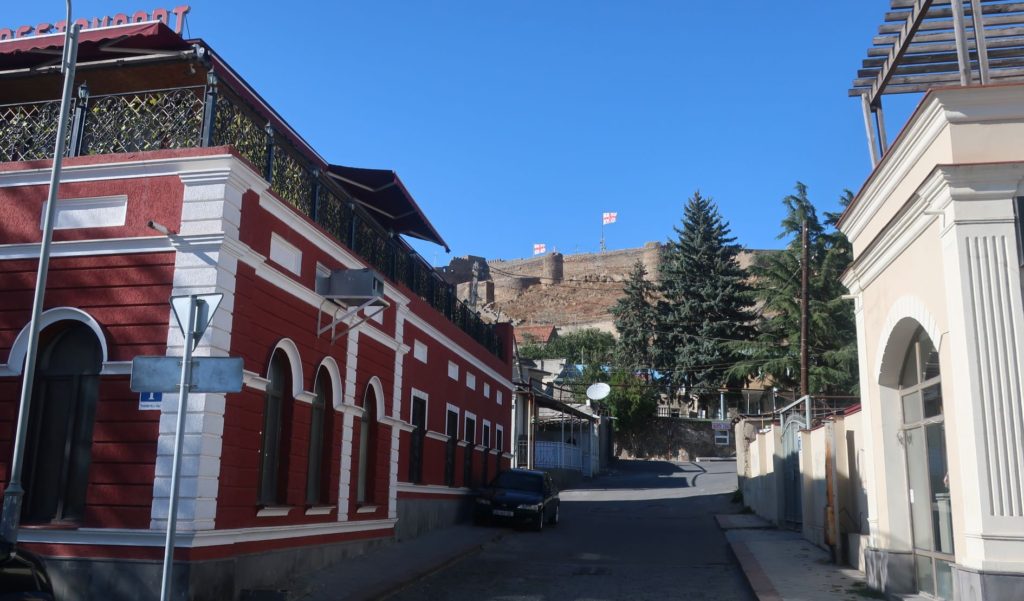
Gori is an attractive mid-size town. There are no shops geared towards tourists. Lots of second-hand clothing stores.
Gori old town
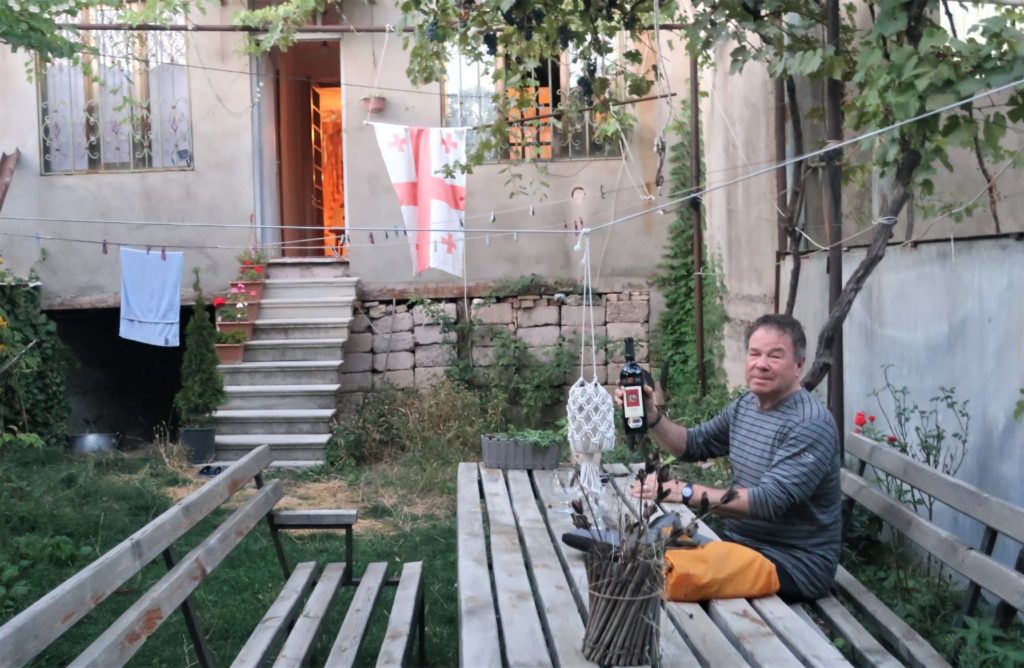
We celebrate my birthday with a fine Georgian saperavi.
Vieille tortue
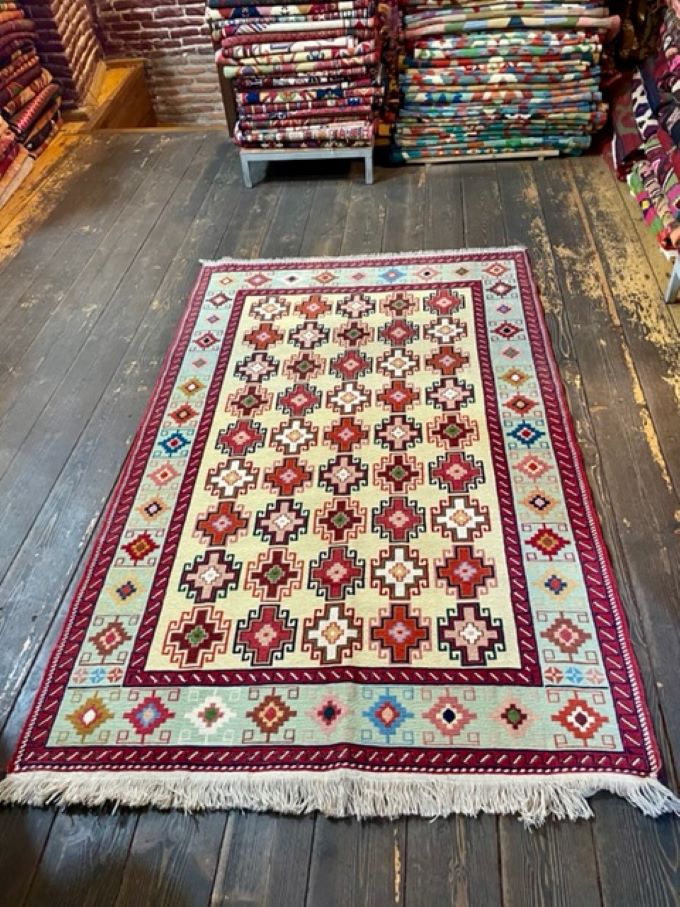
I get everything I ask for. A T-shirt from the Stalin Museum gift shop. And a carpet.
For the cottage floor
Sight or Insight of the Day
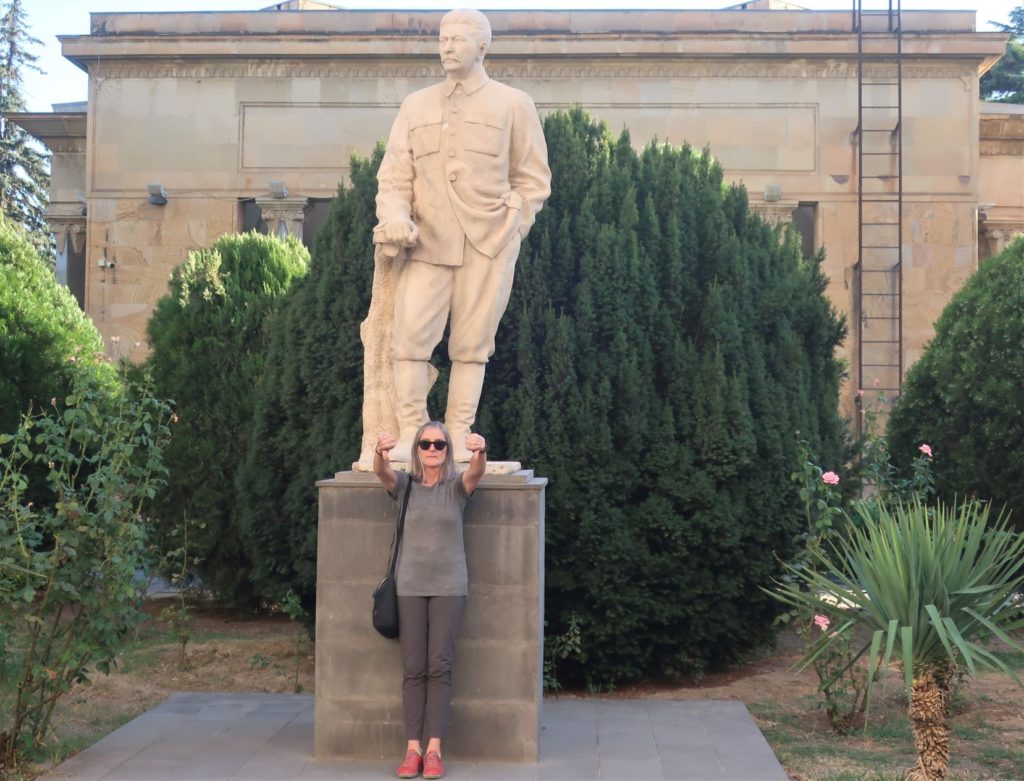
Stalin’s statue gets two thumbs down from Maria.
The perfect pigeon’s perch
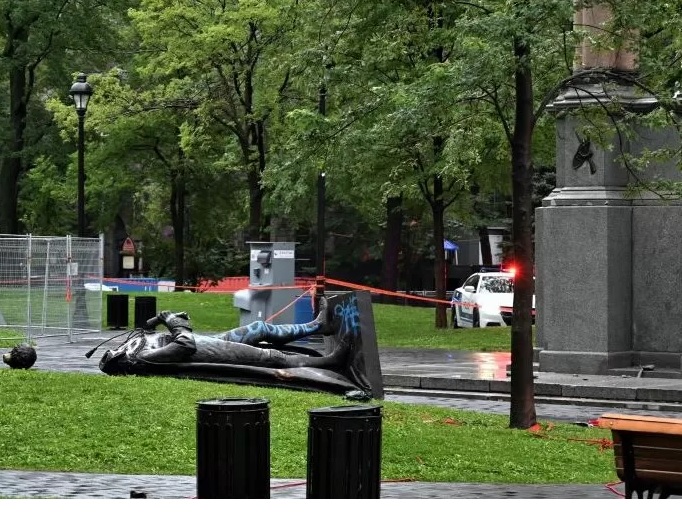
I think it’s ironic that the statue of this man directly responsible for the death of millions stands unmolested while poor old Sir John A. Macdonald’s likeness is vandalized and toppled for his misguided Victorian notions by frenzied screaming mobs with complete impunity.
‘How are the mighty fallen!’ – Samuel 1:19
As Margaret Thatcher said when she was booted from office, it’s a funny old world.
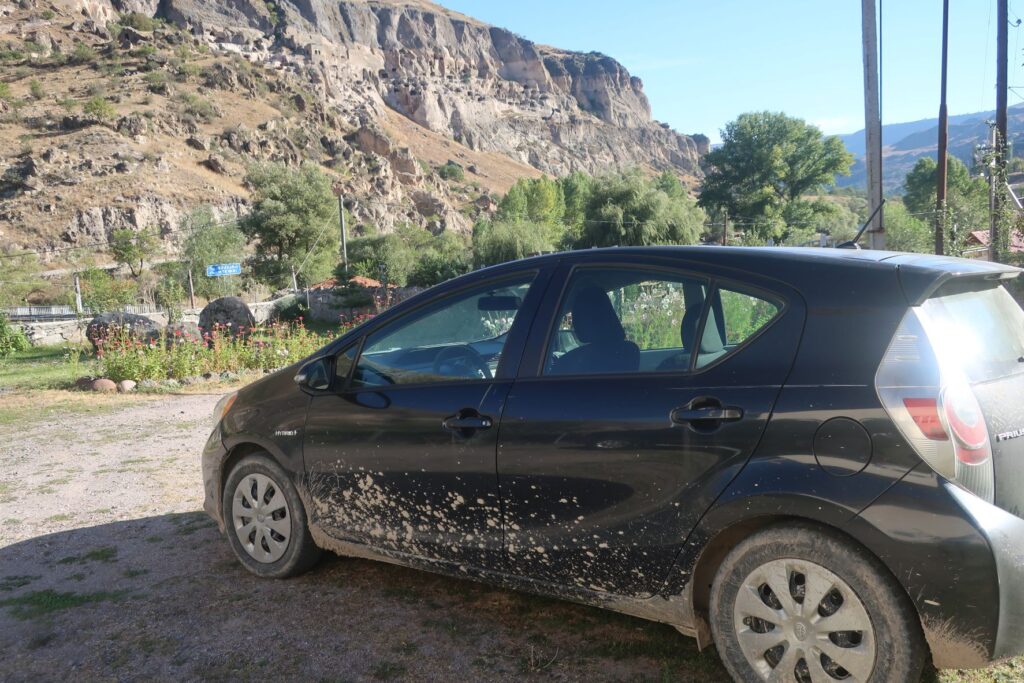
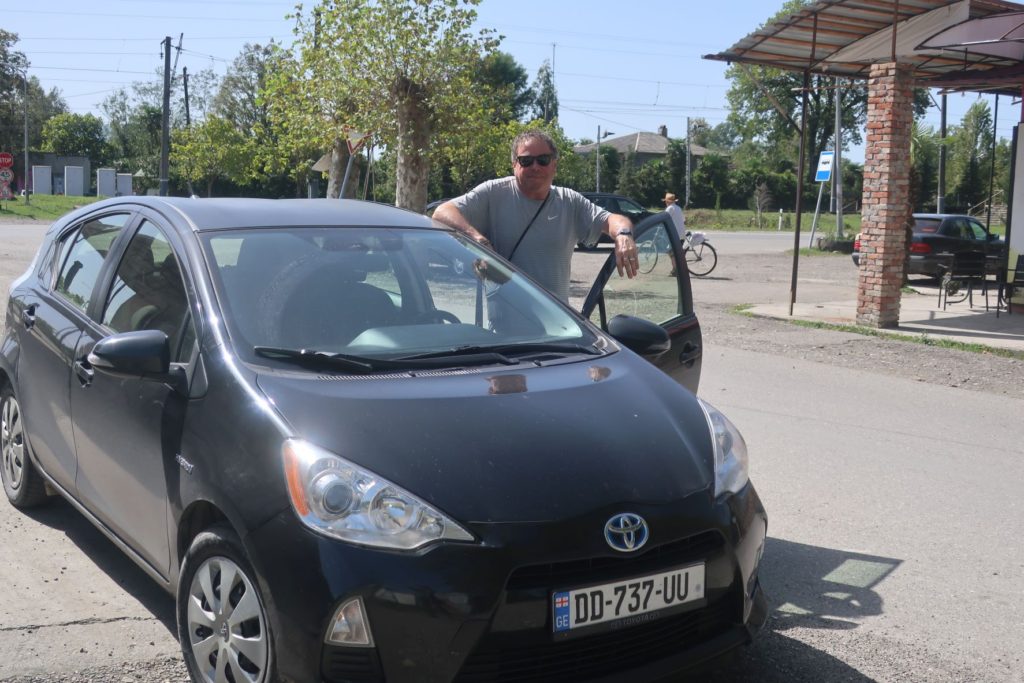
We rent a car for the next eighteen days. A Toyota Prius. It’s great on gas.
This is Uncle Joe. (The car, not me.)
Of course, driving here has its challenges. Like three quarters of the world, Georgians drive like crazed maniacs. Not to mention the hazard of animals roaming the road.
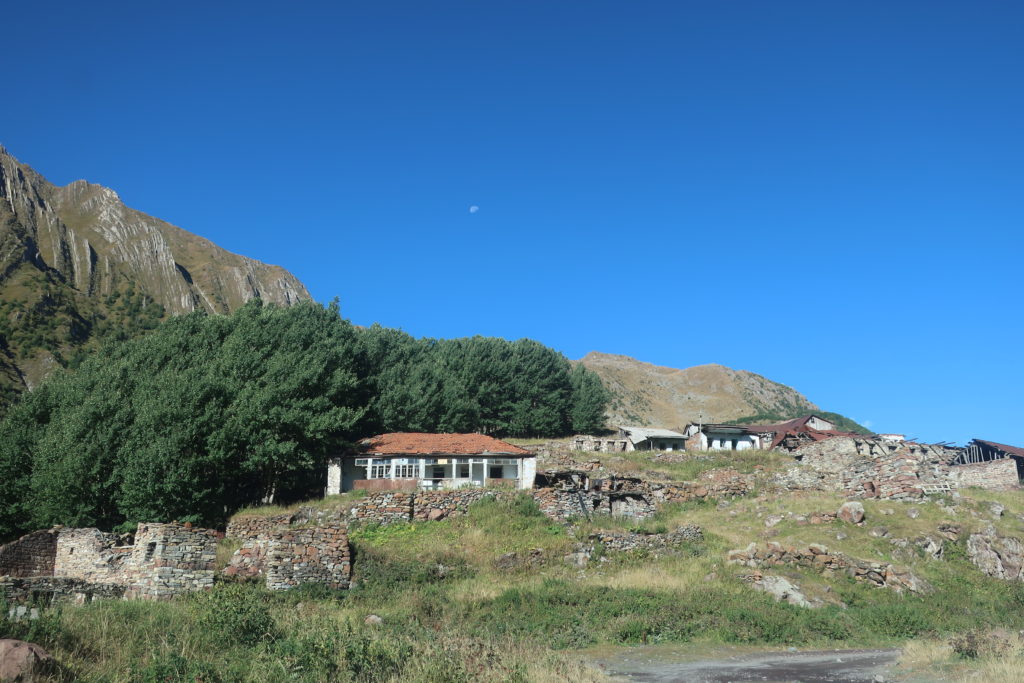
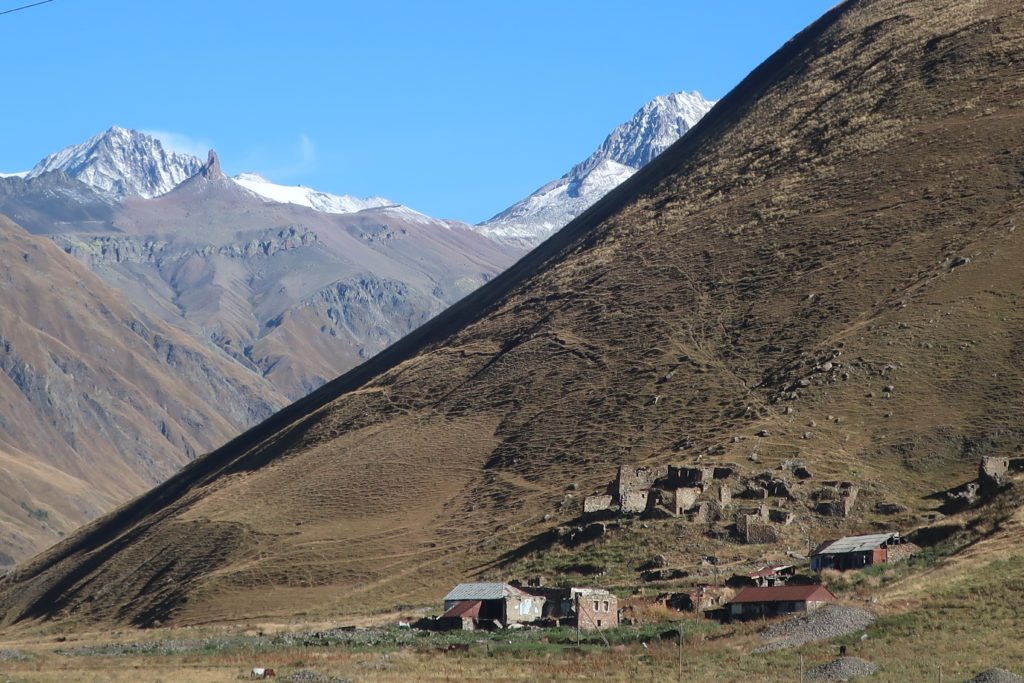
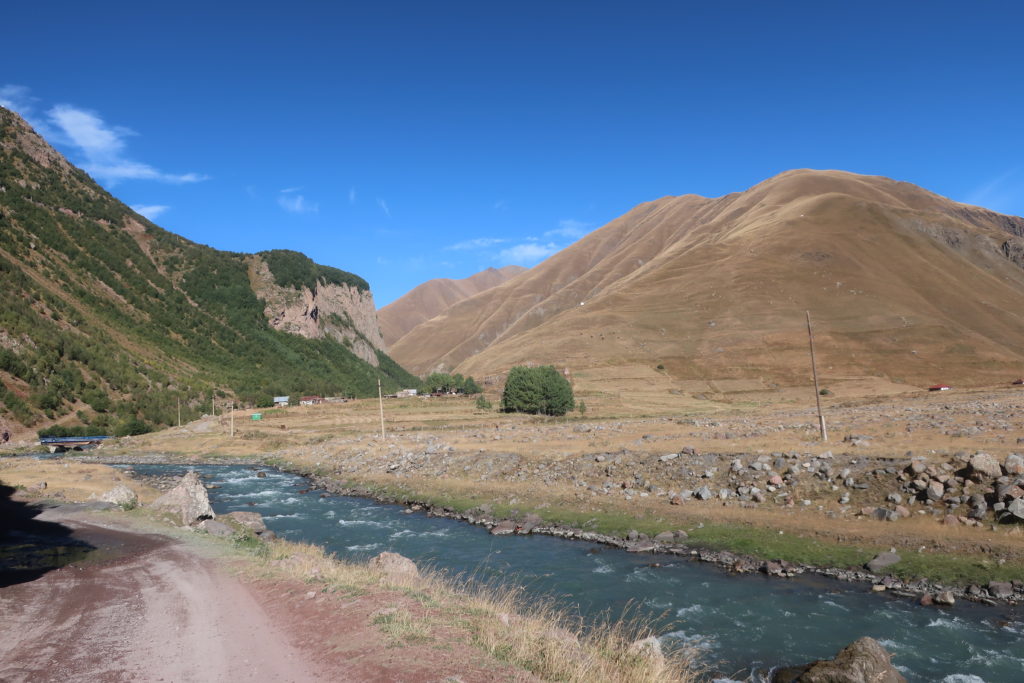
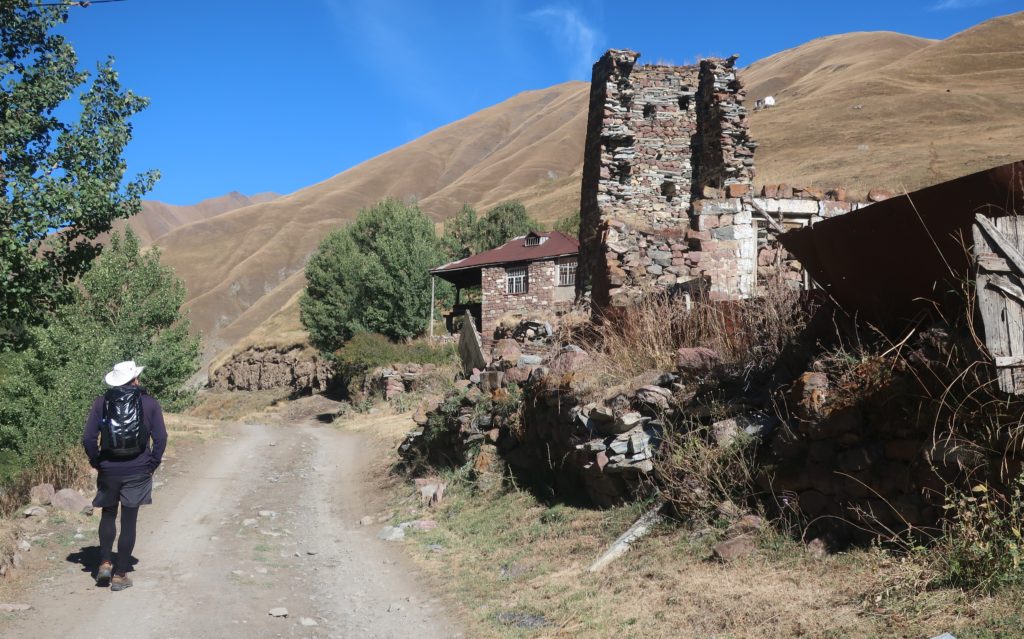
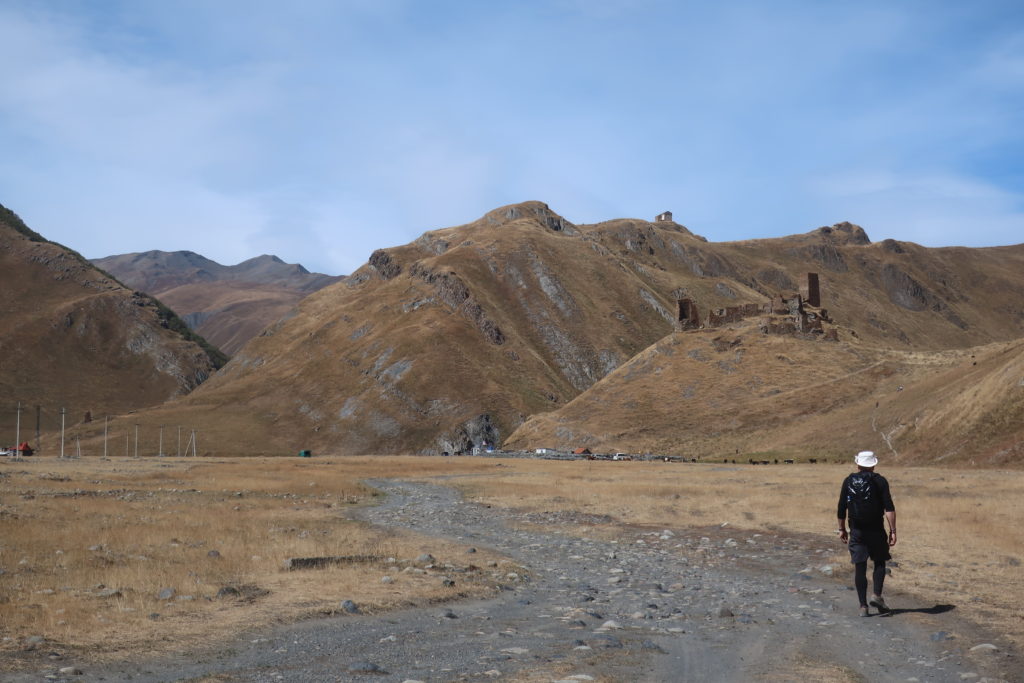
Next day, we hike into the Truso Valley, about twenty kilometres away.
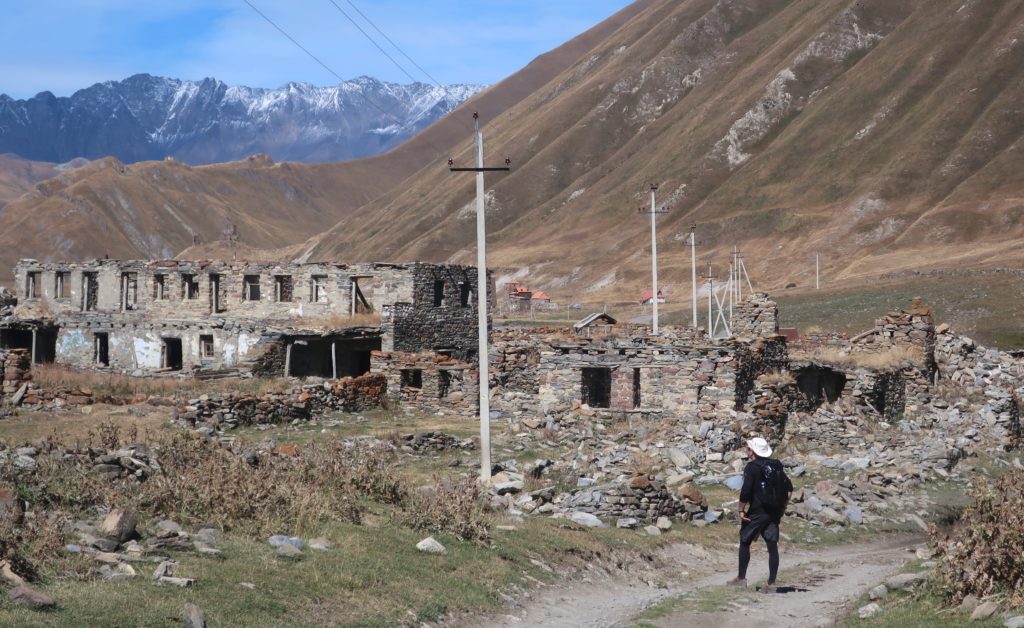
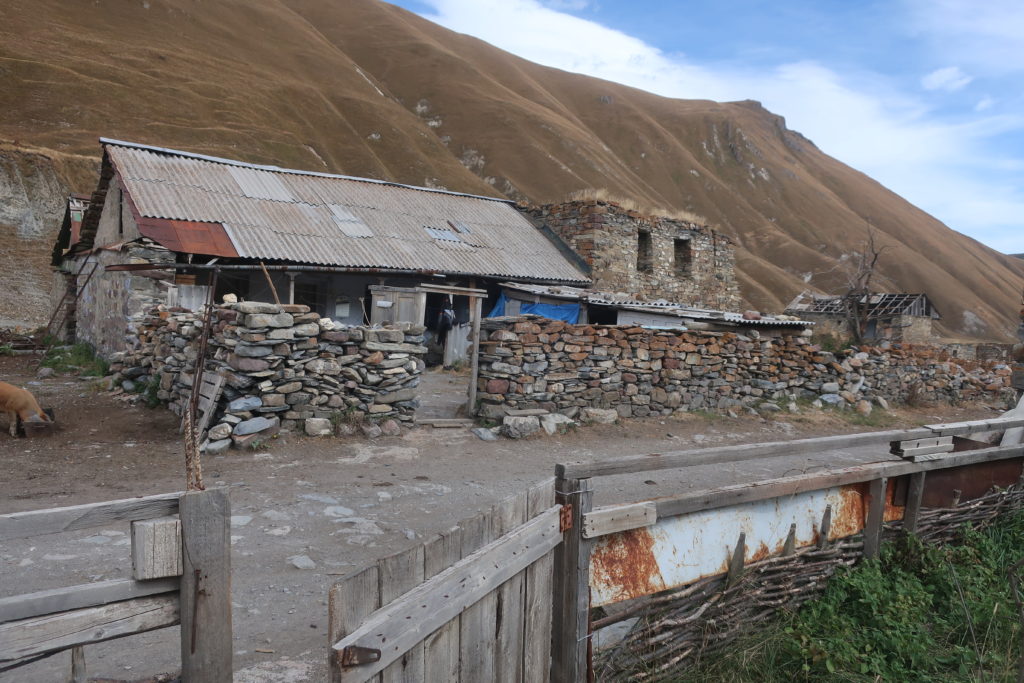
Semi-abandoned villages are everywhere.
We begin walking at Kvemo Okrokana village, after driving a few kilometres down a shitty road from the highway.
‘Kvemo Okrokana’ means ‘Lower Golden Field’
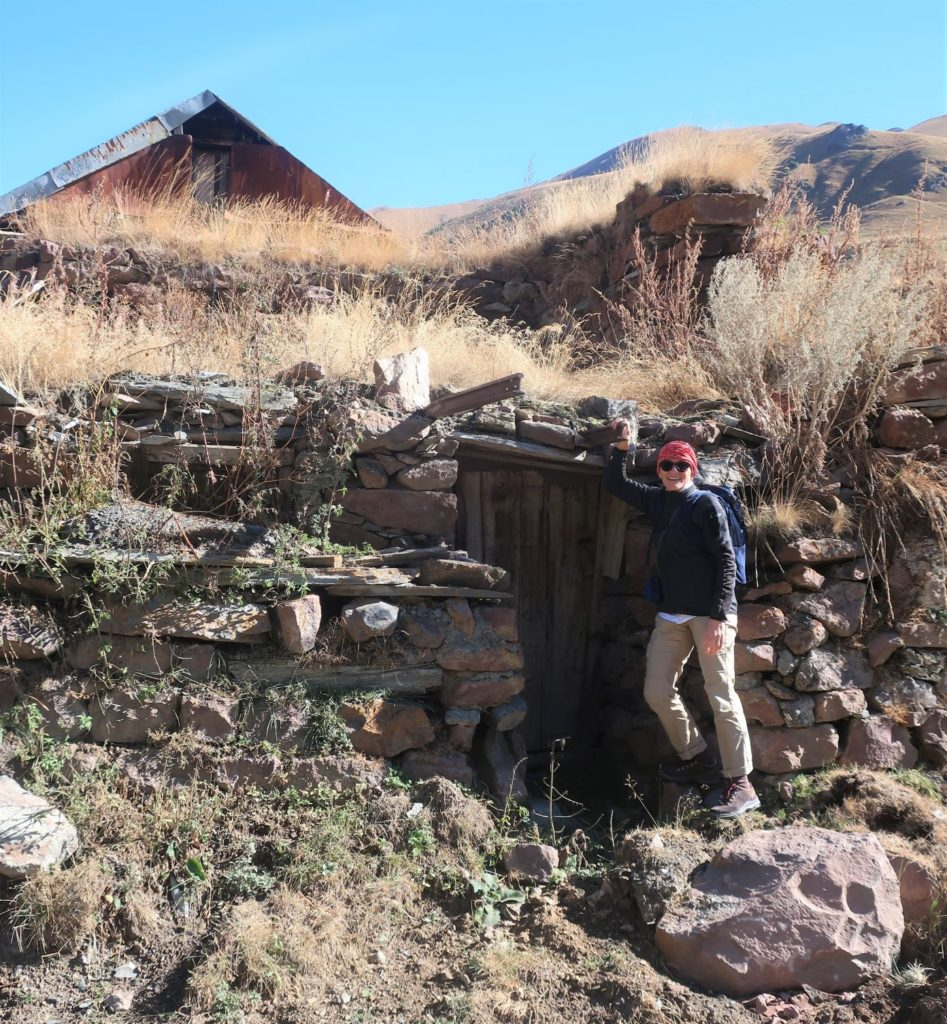
I recently read Independent People, by Halldór Laxness. It’s about the hard life of peasants in early 20th-century Iceland. A large part of the book takes place in their ‘croft’, a turf-covered shack with a single tiny window and farm animals living in the bottom part.
This structure looks similar. Strange that peasant societies thousands of kilometres apart would share the same sort of habitation.
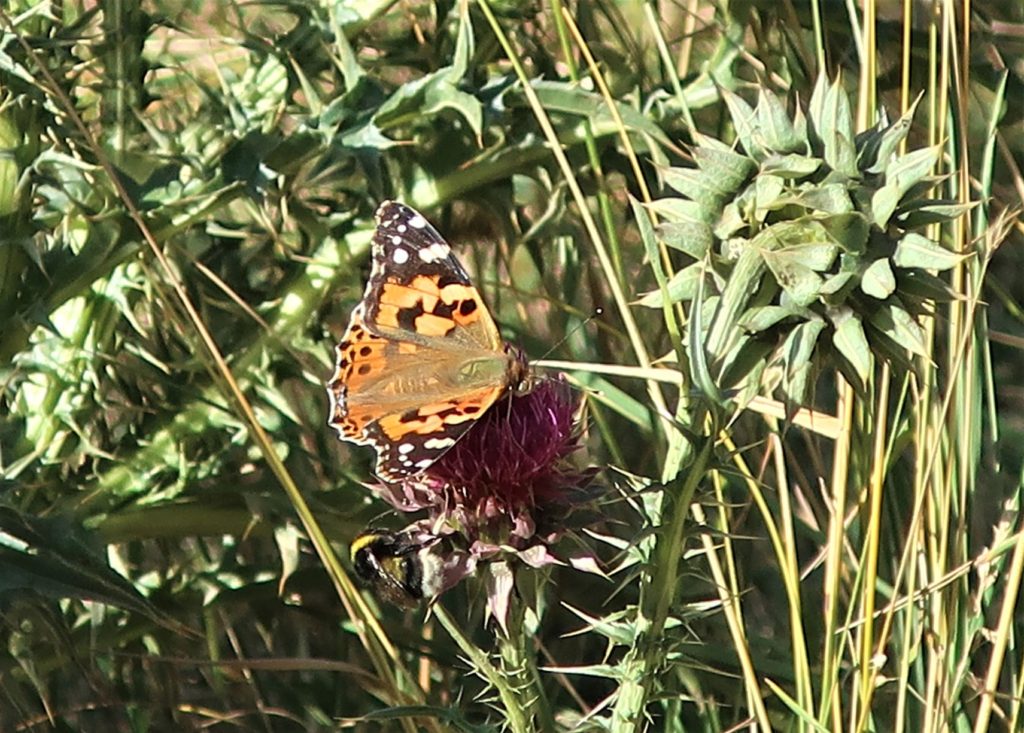
A bee and a butterfly share a thistle flower.
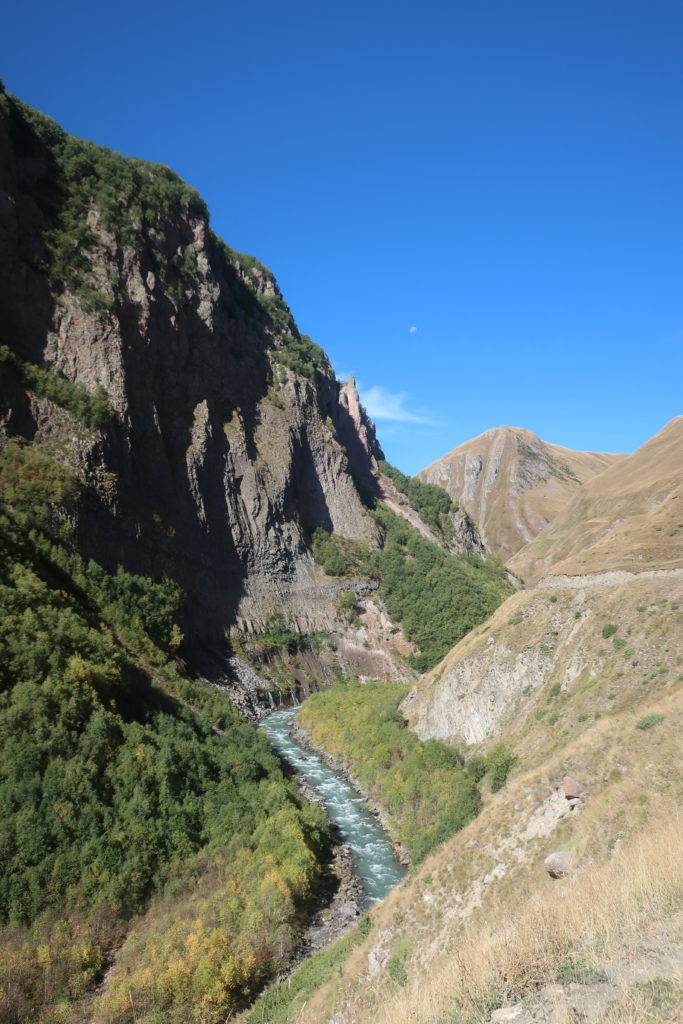
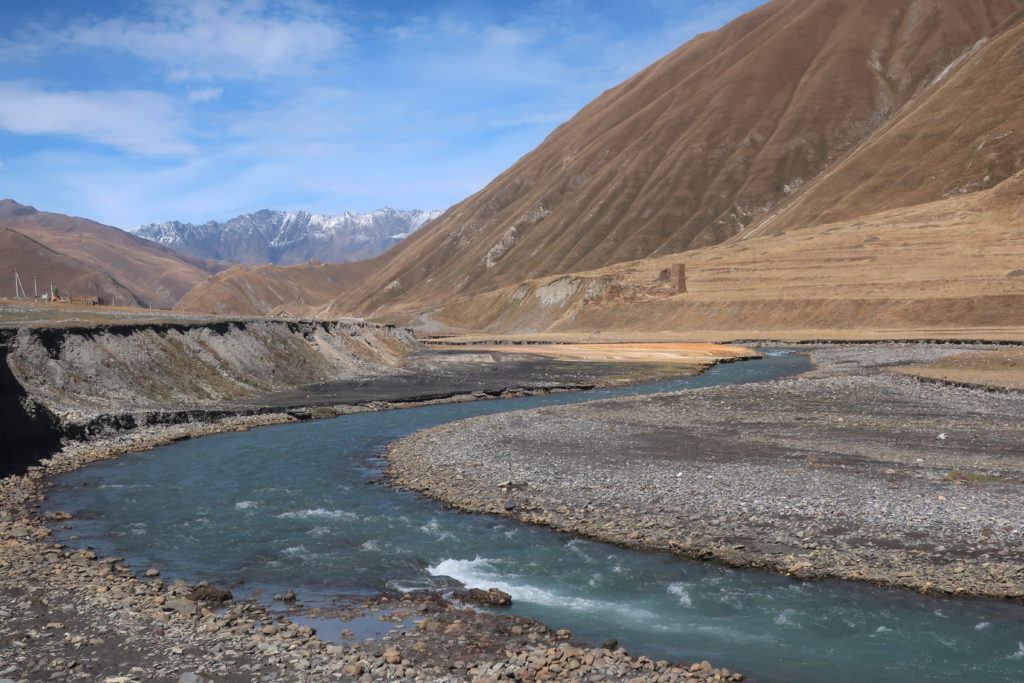
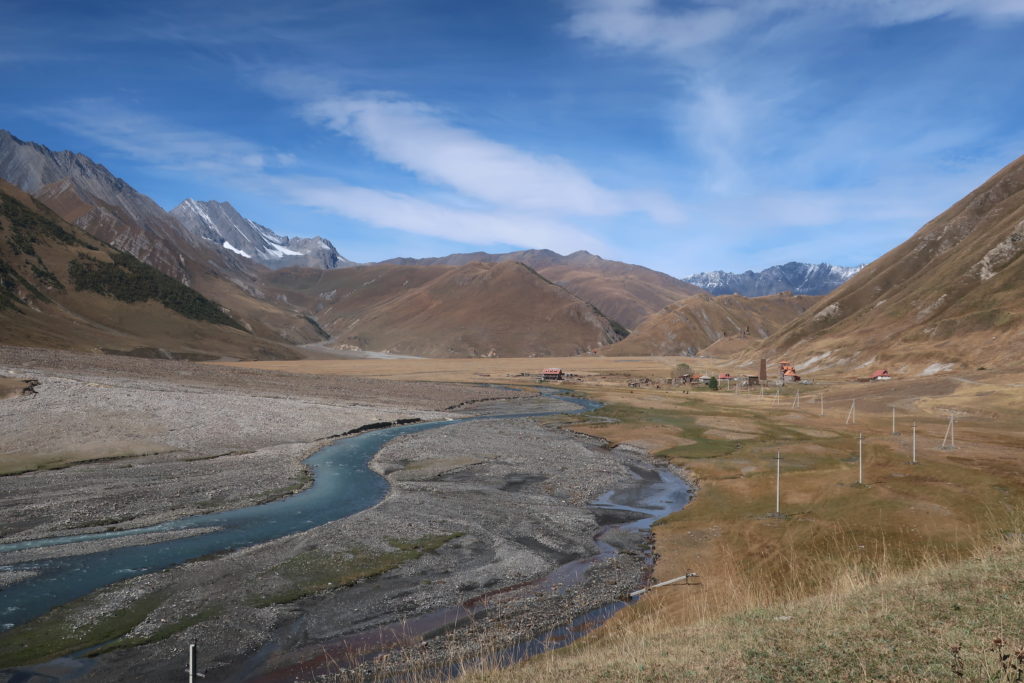
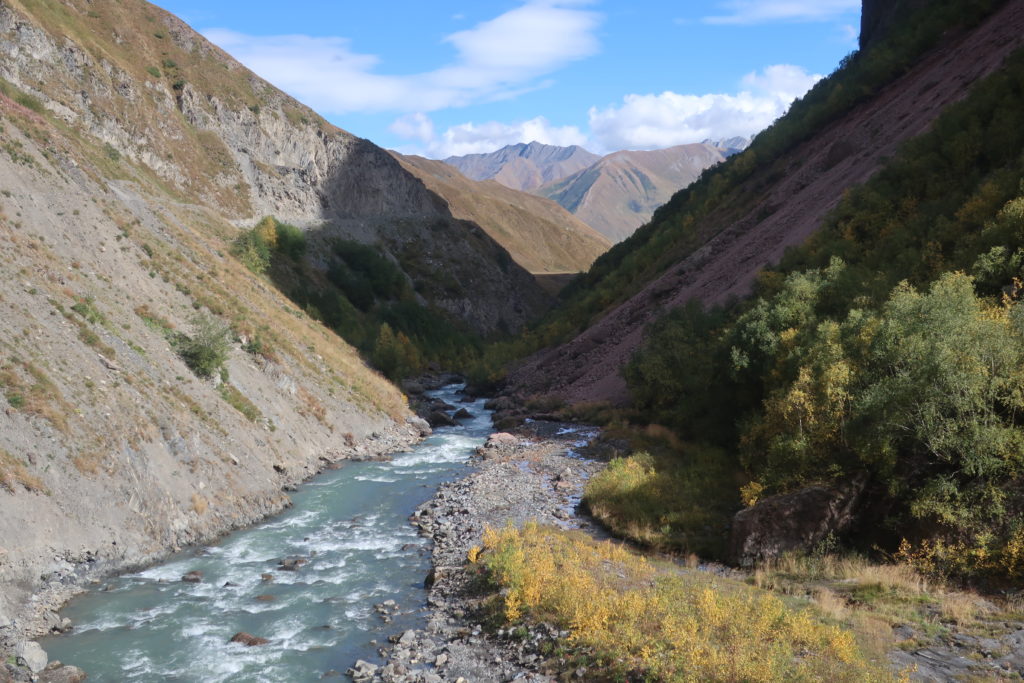
The walk starts out high above the river.
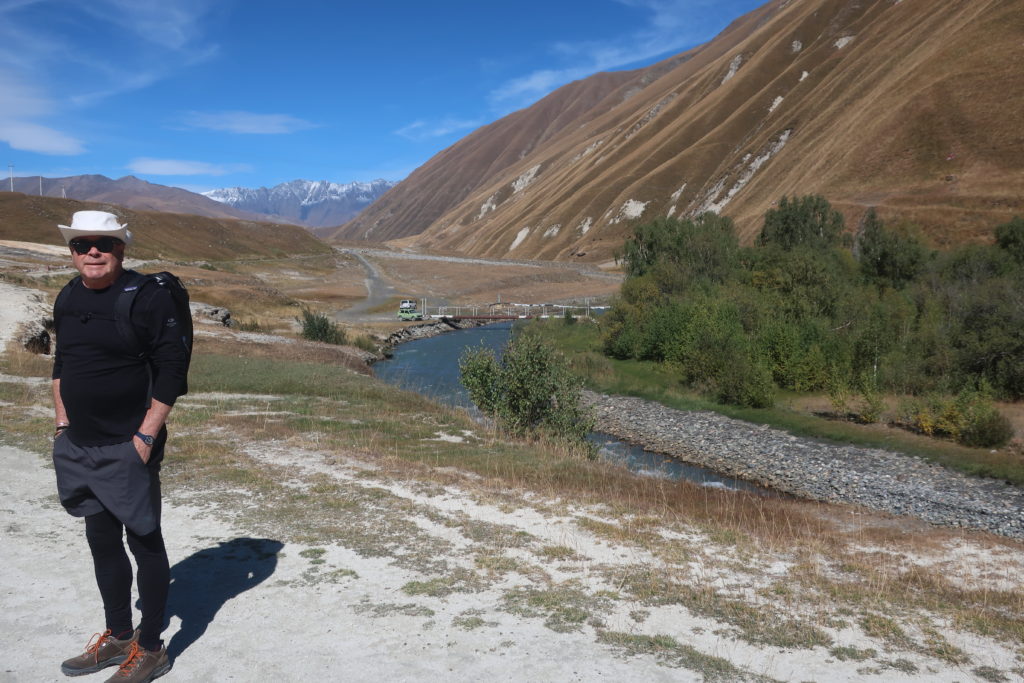
You can see snowy peaks in the distance.
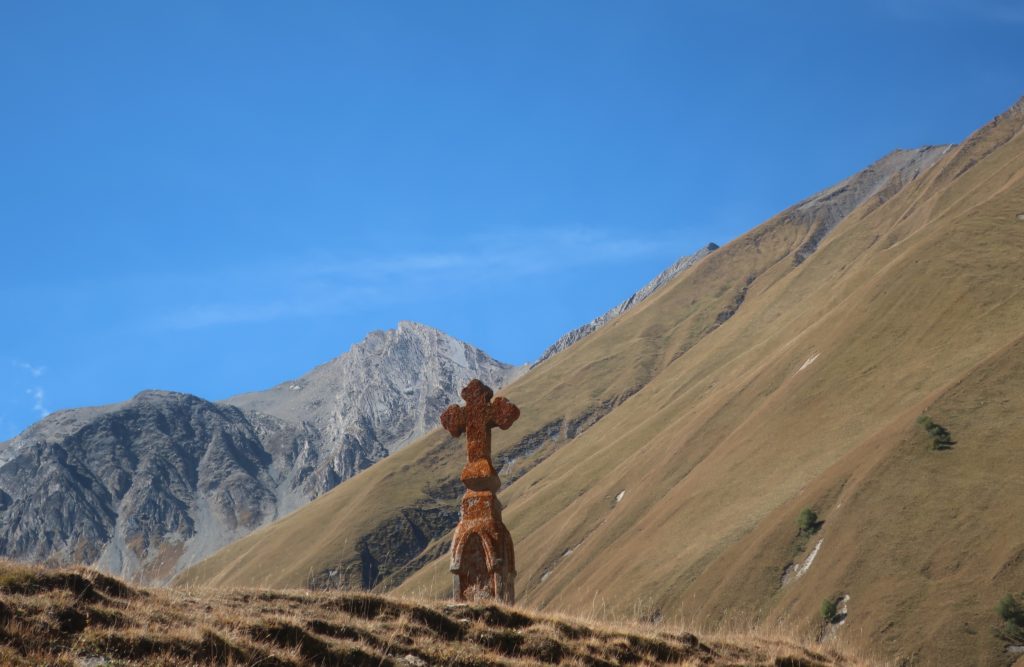
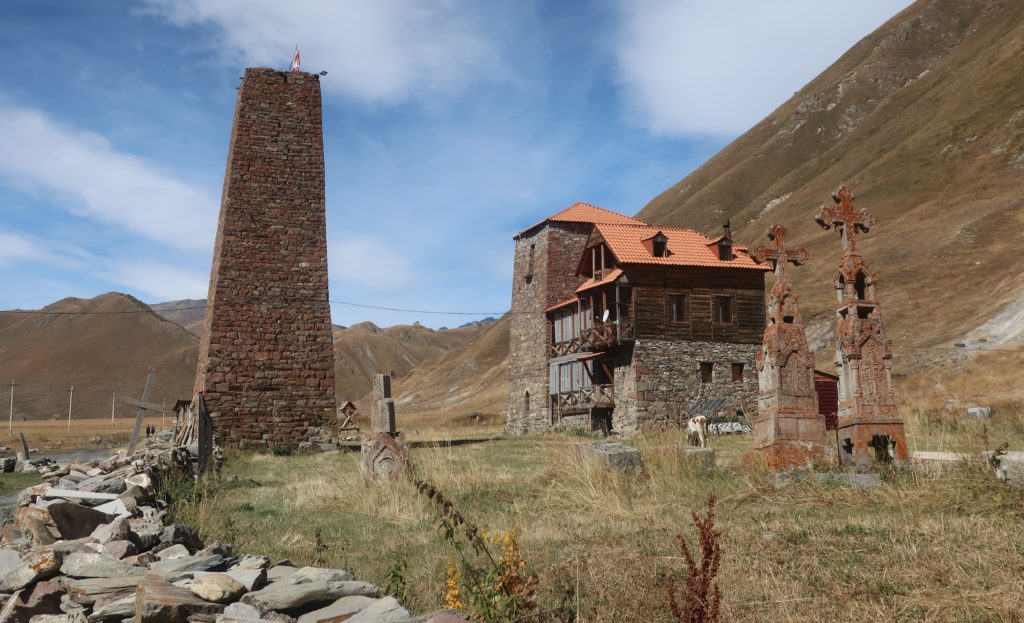
Every now and then we come across decorative grave markers.
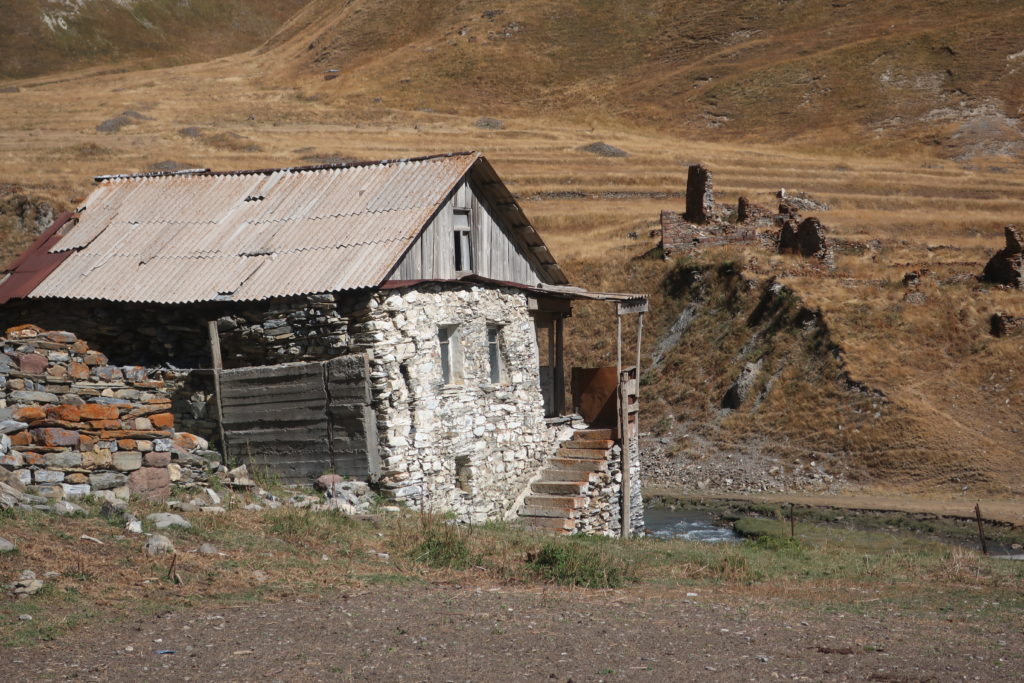
We arrive at the mostly-abandoned village of Kitrisi.
This would sell for a few million in Toronto
We’re not sure exactly why so many of these villages are abandoned. Information can be hard to come by in Georgia.
This too
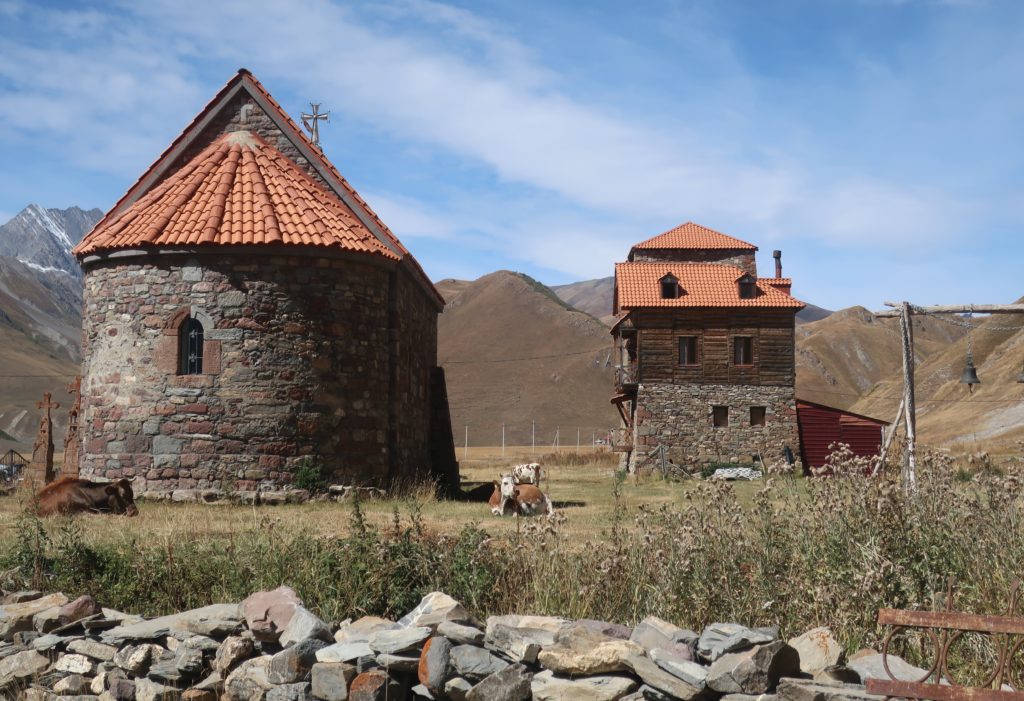
A convent lies further down the valley.
The convent has solid-looking buildings, in comparison to the ruins elsewhere in the valley.
These nuns have several streams of income. They run a cafe and a guest house.
The turnaround point is the Zakagori fortress. Beyond this is the breakaway Republic of South Ossetia.
Approaching Zakagori
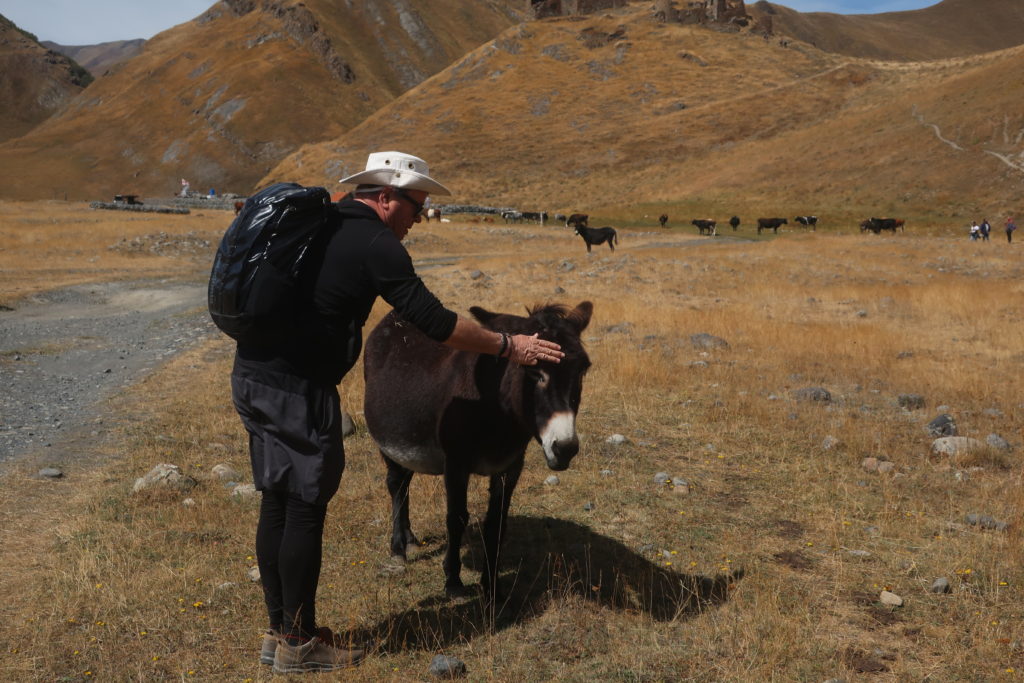
On the way, I can’t resist petting this very tame, very pregnant donkey.
A good little burrito
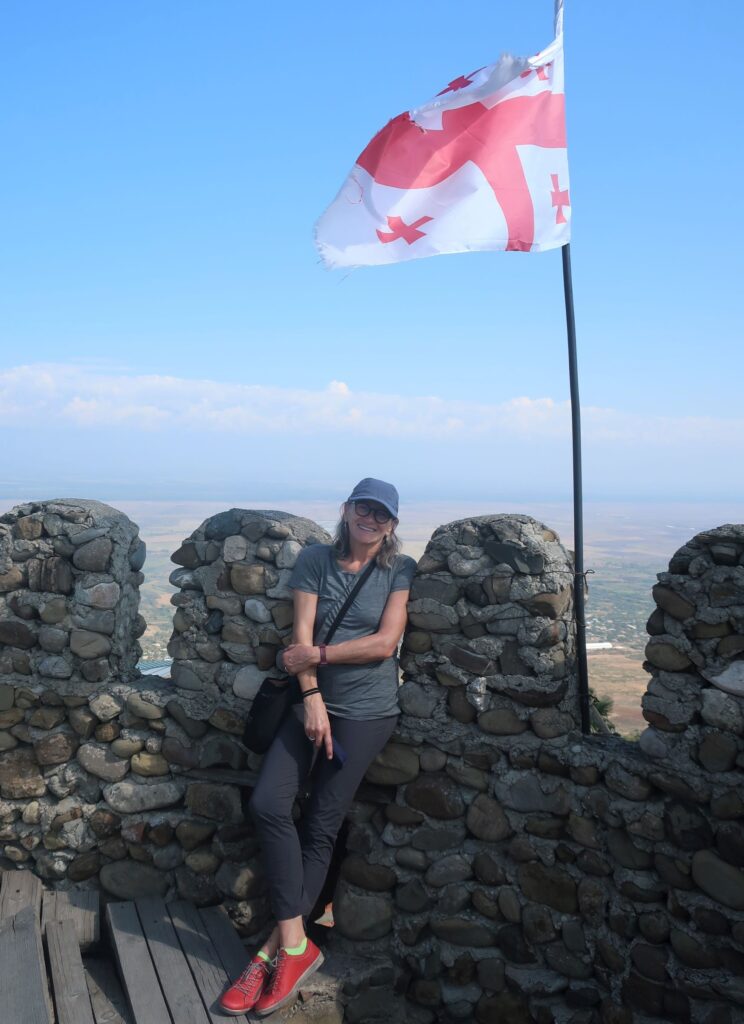
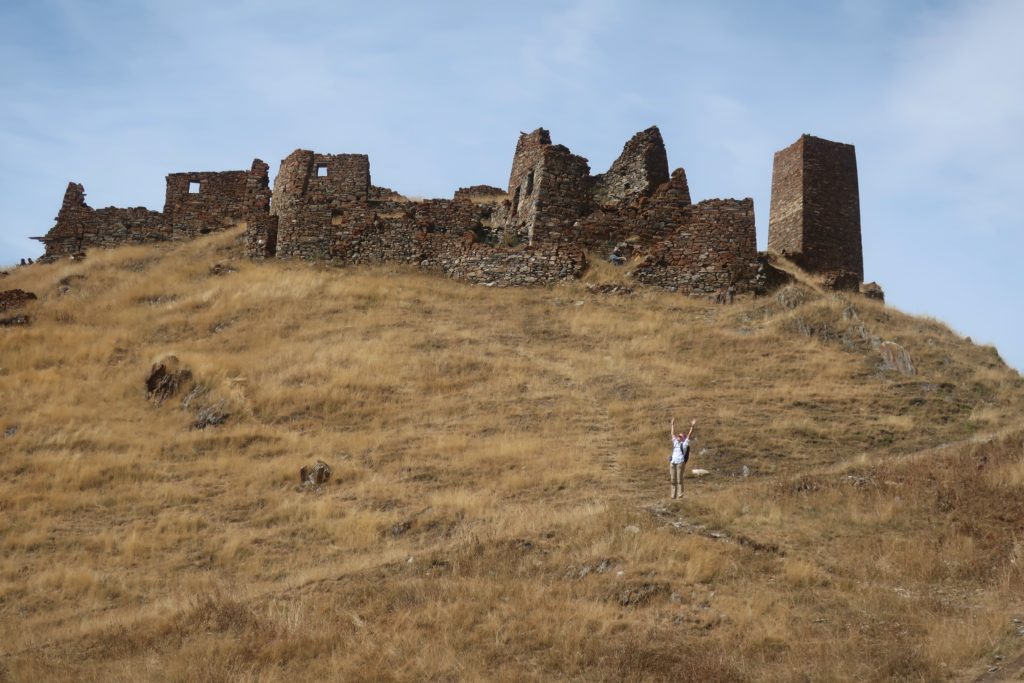
Maria hams it up on the way to the Zakagori fortress.
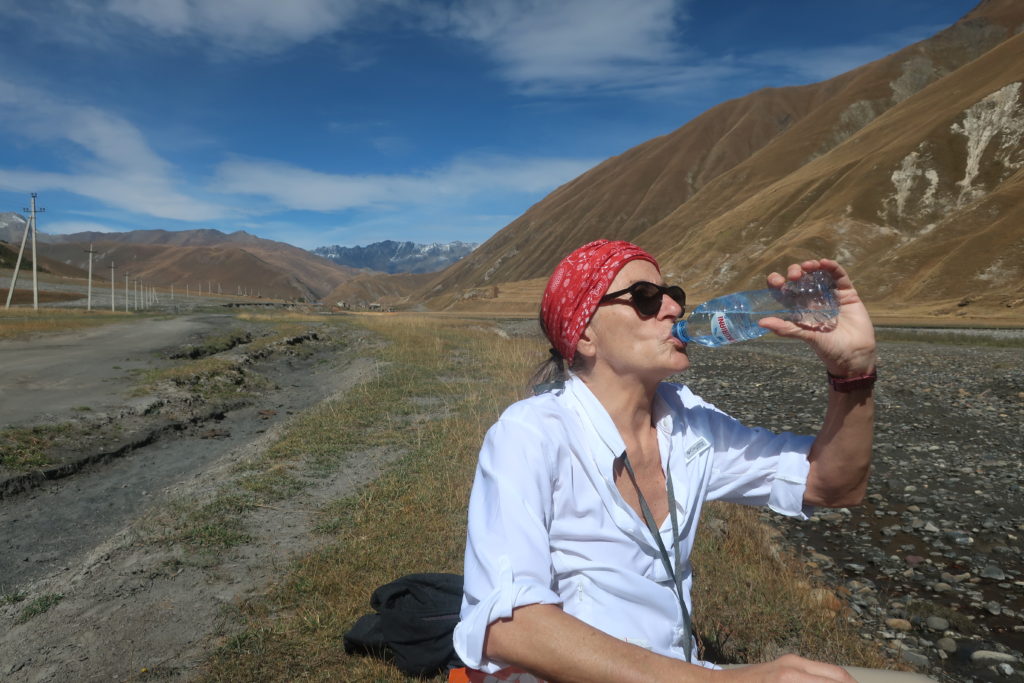
We have a picnic lunch up here.
Zakagori fortress
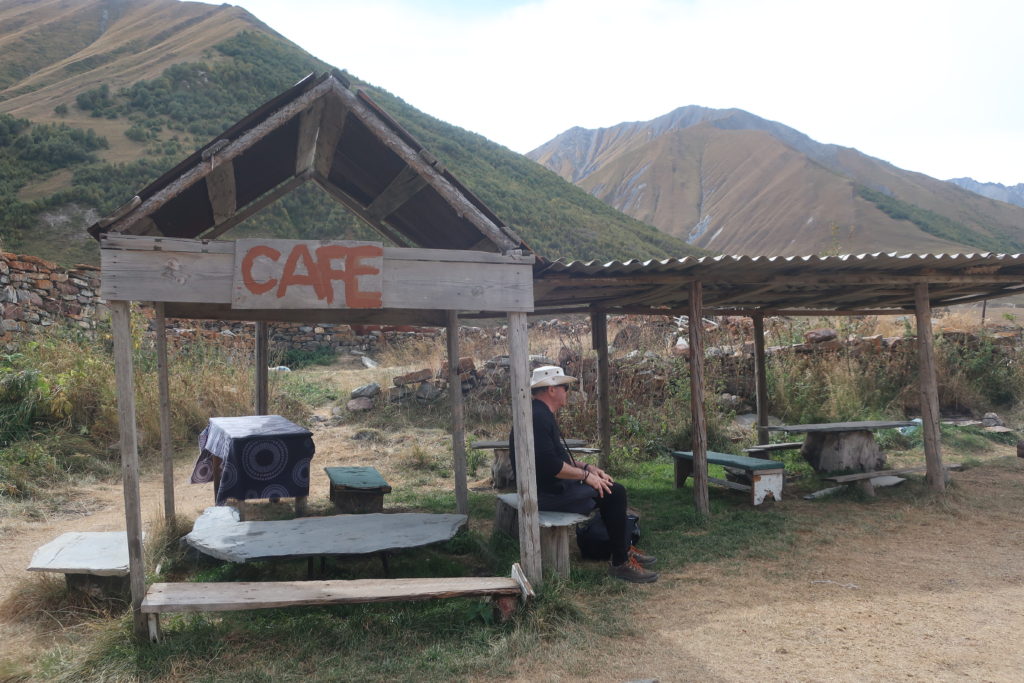
On the return trip, we stop for a cup of tea in a rustic establishment.
Café Society
The tea is from Azerbaijan.
Maria poses with the proprietor
A view of the proprietor’s house across the way.
Note the pig to the left of the house
By late afternoon, we approach the place where we left the car. The changed light gives the valley a whole new aspect.
Then it’s back to Stepantsminda.
Sight or Insight of the Day
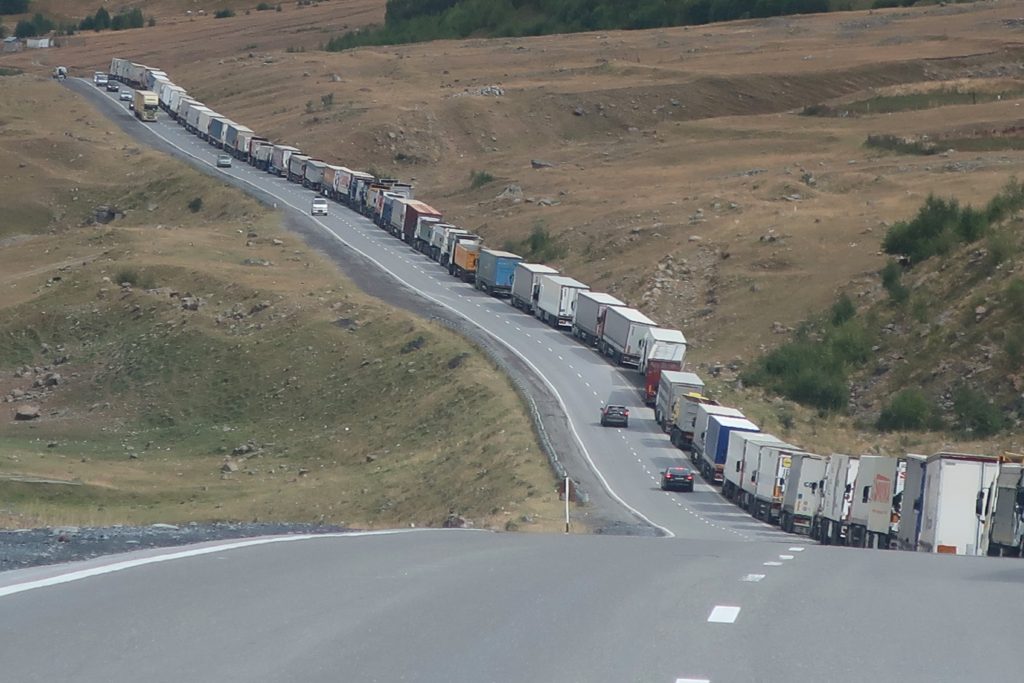
A sign of the times: about 15 KMs from the Russian border, the road is lined for several kilometres with heavy trucks stranded by sanctions against Russia.
CORRECTION: We learn that these trucks aren’t being turned back because of sanctions; in fact, there are thousands of trucks on their way to Russia with goods from all over in spite of sanctions. So many that there’s no room at the border crossing. Drivers have to camp for days at the side of the road.
BoycottBoycott-busting goes to great lengths
Which also explains why so many of these trucks are from Turkey. Turkey is in dire need of US dollars to fund Mr. Erdogan’s bizarre economic plan (it’s a long story) and has lots of stuff to sell. Russia has lots of US dollars (thanks to the sale of oceans of oil) and wants to buy lots of stuff. Voila!
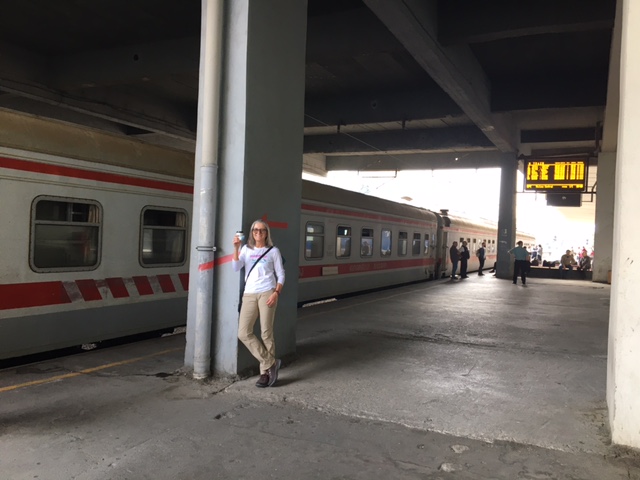
We finally depart Tblisi for the city of Mtskheta. We take the train. It’s only about 25 minutes away.
Not exactly Grand Central Station
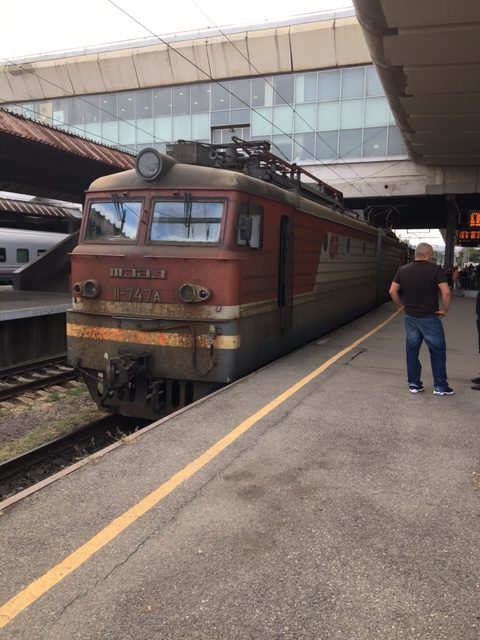
The Russian-made locomotive looks like an Indian bus – as if it’s been rolled down a mountainside and returned to service.
Not exactly the TGV
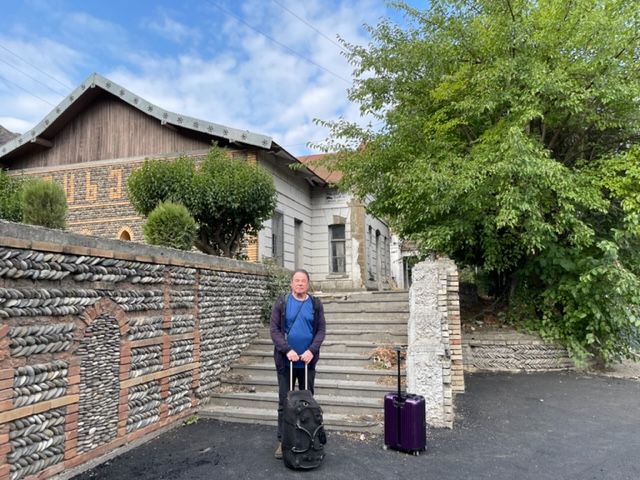
We arrive at the decaying, almost-not-there train station of Mtskheta and hail a cab into town.
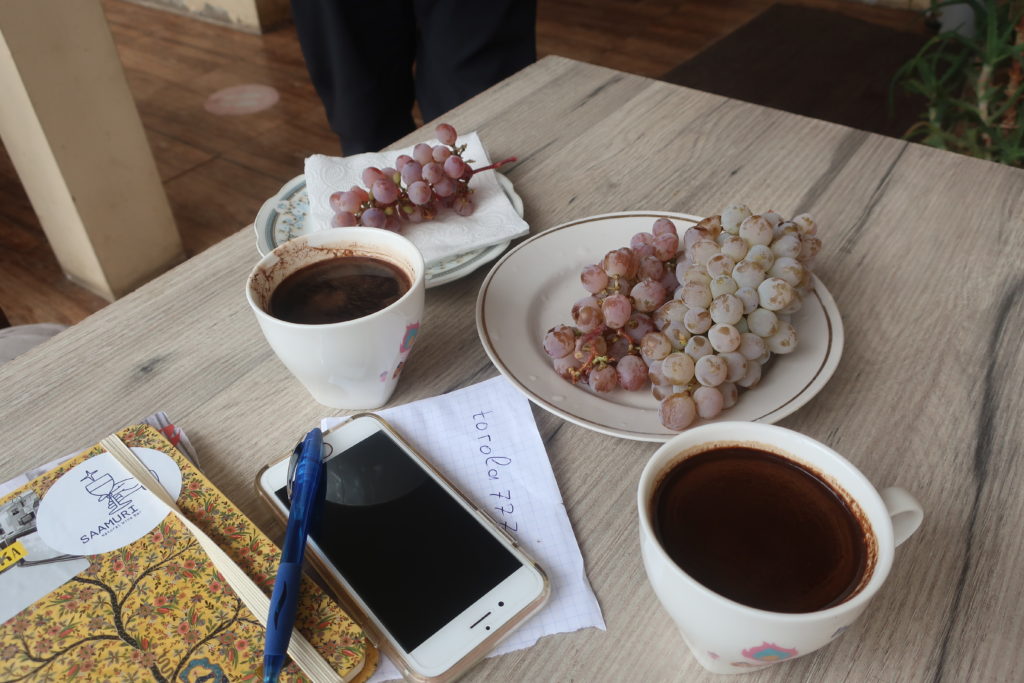
Our guest house is a stone’s throw from the Svetitskhoveli Cathedral. We are greeted with a cup of Turkish coffee and grapes plucked straight from the arbour overhead.
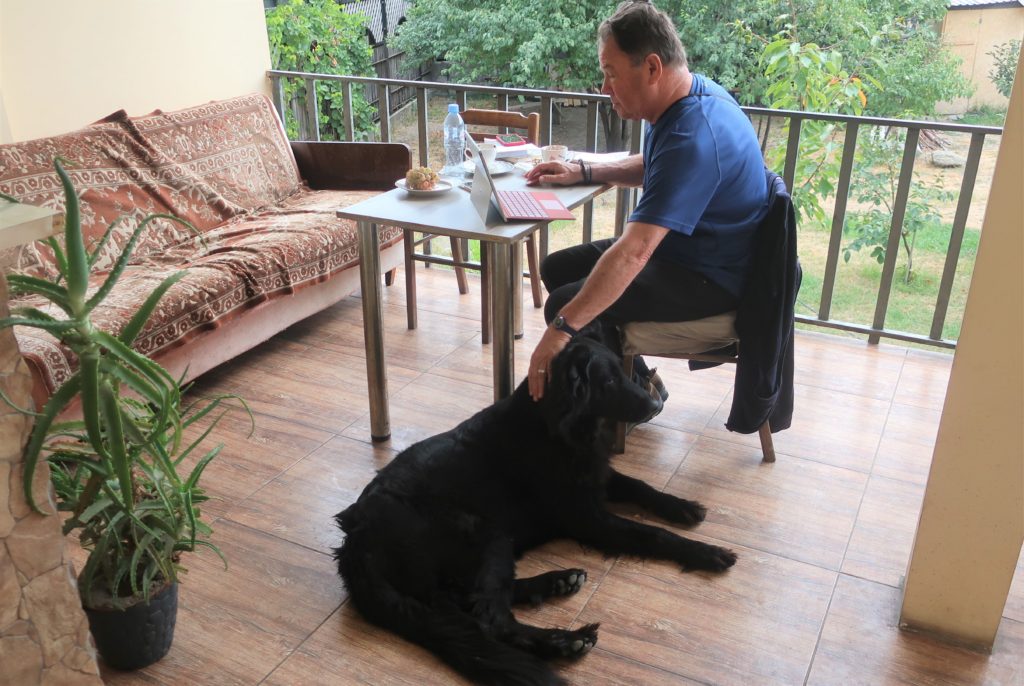
The hosts have a very large, very friendly dog.
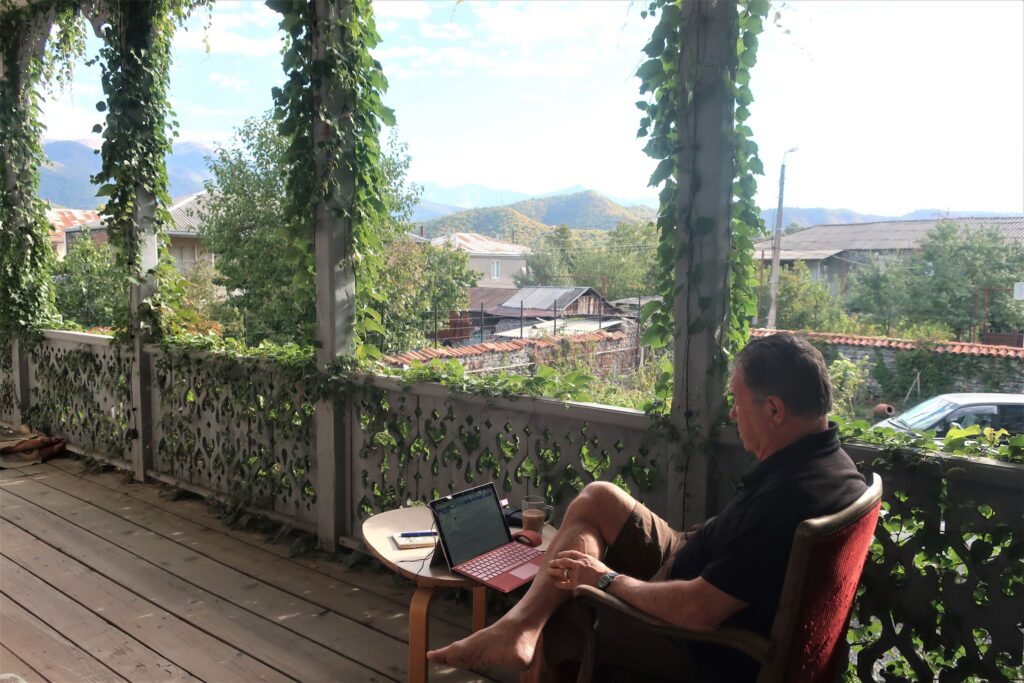
Writin’ the blog, pettin’ the dog
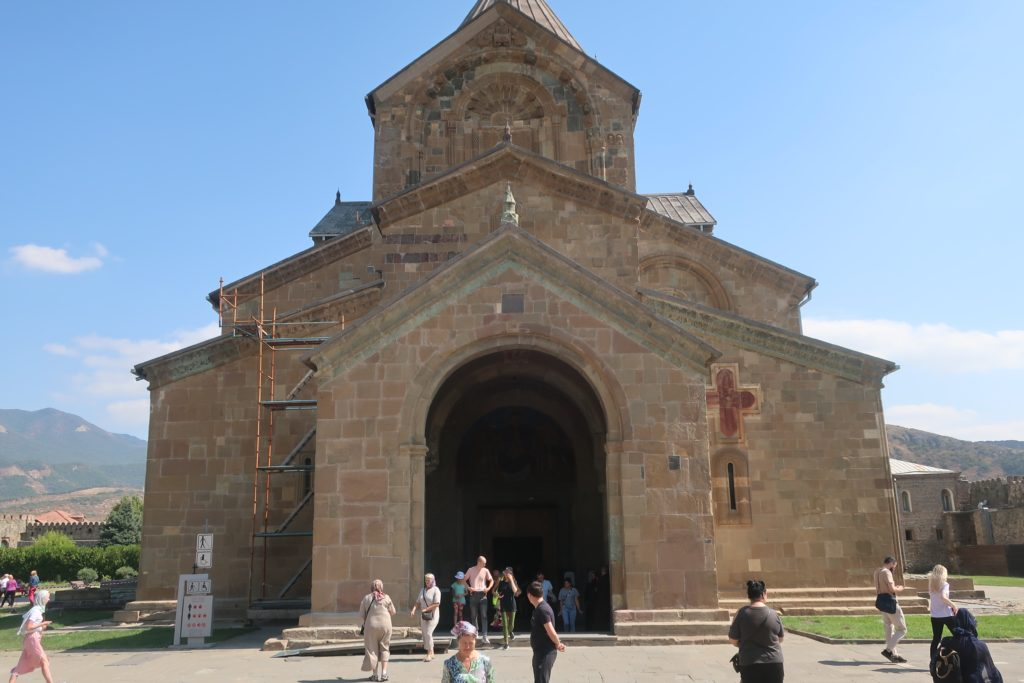
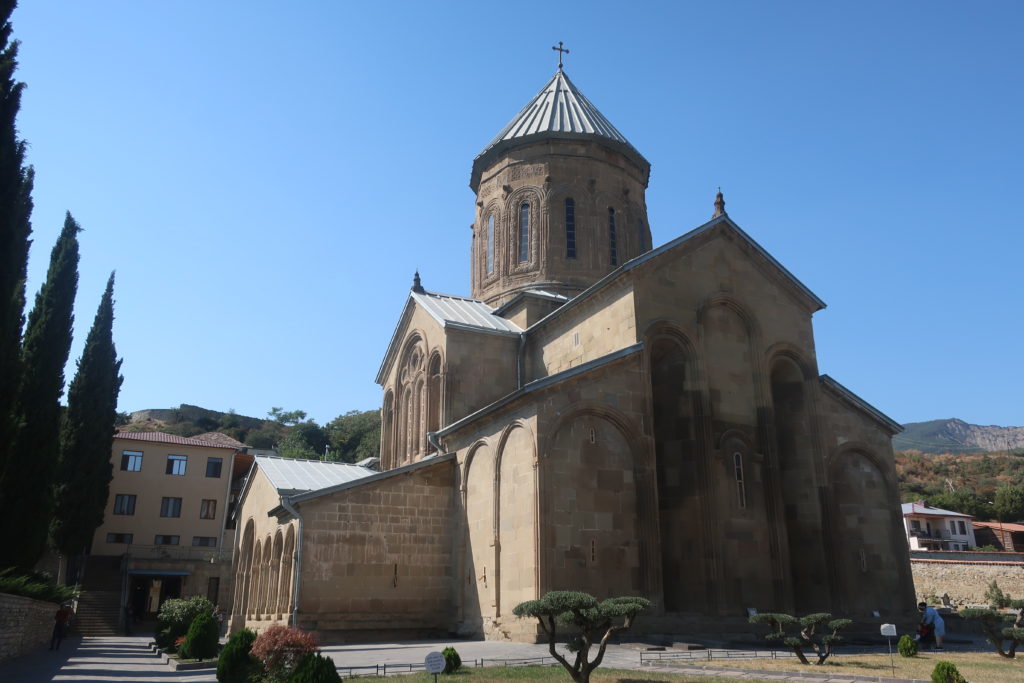
This is one of the largest churches in Georgia.
‘Svetitskhoveli’ means ‘life-giving pillar’
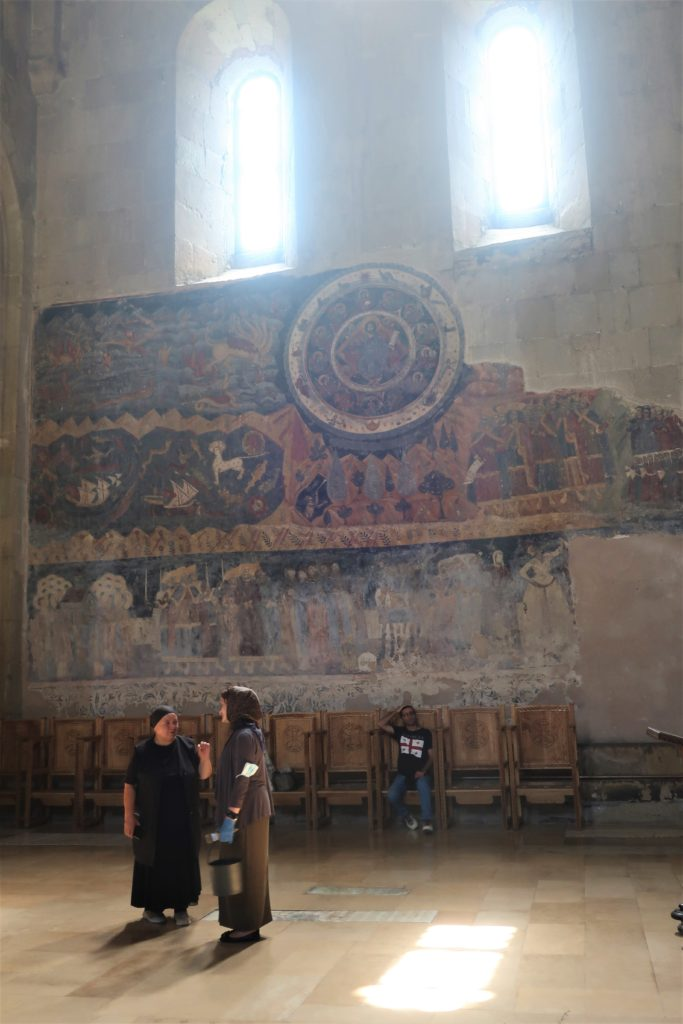
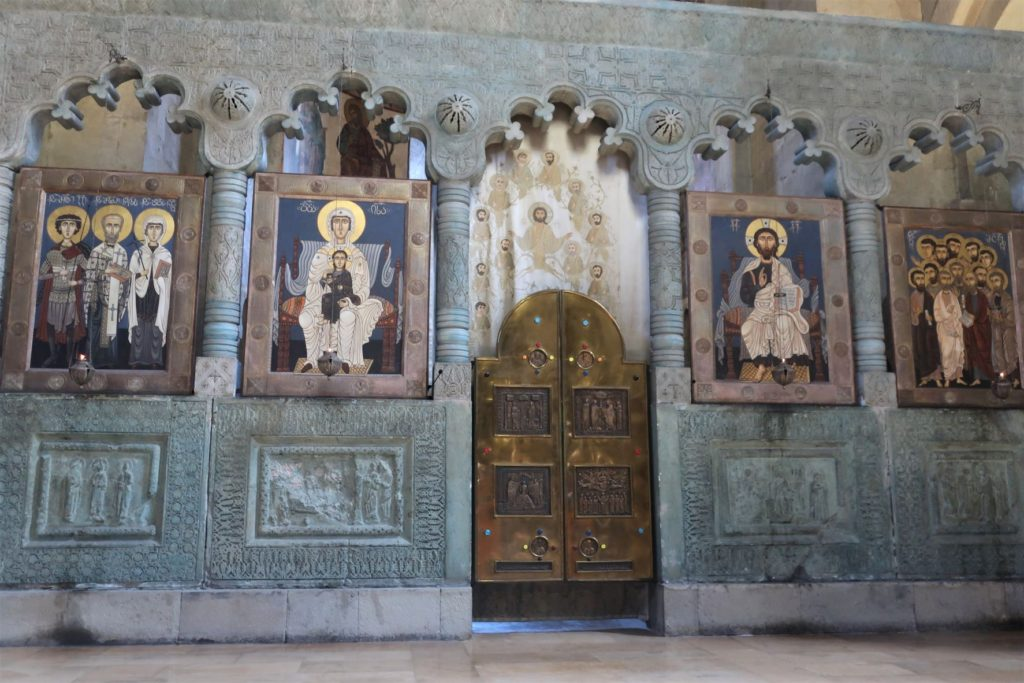
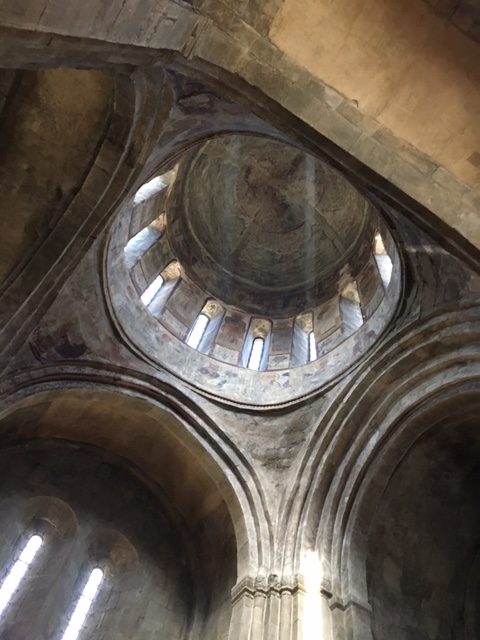
Inside, it’s full of chanting priests, singing women, and soft light.
We end up spending a week in Tblisi. We visit a few markets, including the desertirebis bazari (deserter’s bazaar) food market.
‘Ye shall know them by their fruits.’ – Matthew 7:16
We look for hidden treasure at the Dry Bridge flea market.
Not a flea in sight
Tblisi is known for its sulphur baths. Maria hopes to take the plunge one rainy afternoon, if one comes along.
Tbilisi means ‘warm place’
While crossing the Peace Bridge we come across a wedding photo session. Note the dog in a state of complete relaxation in the foreground.
For dinner, Maria chows down on Shkmeruli, which is chicken in a garlic/milk sauce. Mmmm.
Note the generous hunks of bread
Sight or Insight of the Day
People in Georgia strongly support Ukraine in its struggles in Putin’s War. There are Ukrainian colours everywhere. Sometimes the message is very obvious, as in the seat cushions of this restaurant.
Pillow talk
Sometimes subtly incorporated into everyday items, like this ad in the Metro for a local snack food.
Russian atrocities are escalating
Sometimes not so subtly, as in the message on this receipt from a pharmacy. (Georgia experienced its own ‘special military operation’ in 2008.)
Nyet, nyet, Soviet
And sometimes in undisguised loathing. This sticker is on an ATM and the message is clear.
No Russian Pigs Allowed
All this takes a certain amount of guts. The Russian border is less than 200 KMs from where we sit. Vladimir Putin could wake up any morning and decide to complete the liberation of Georgia. A simple case of chafing hemorrhoids could push him over the edge.
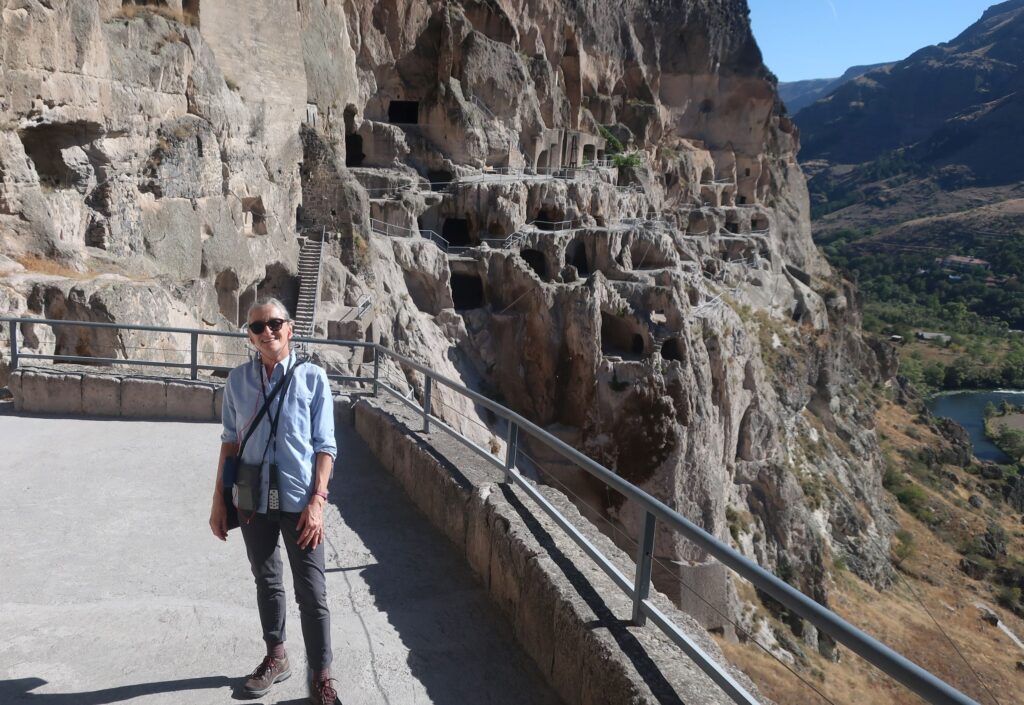
We arrive in Tbilisi after flying via Montreal and Paris.
For our first few days, we check into the Fabrika. It’s a hostel, but also has private rooms.
Full coverage
The Fabrika is in an old Soviet-era clothing factory.
The graffiti on this building is deliberate. But just about every available surface in Tblisi is covered with graffiti. Seems to be a general Euro affliction to deface all of your elegant old buildings with spray paint.
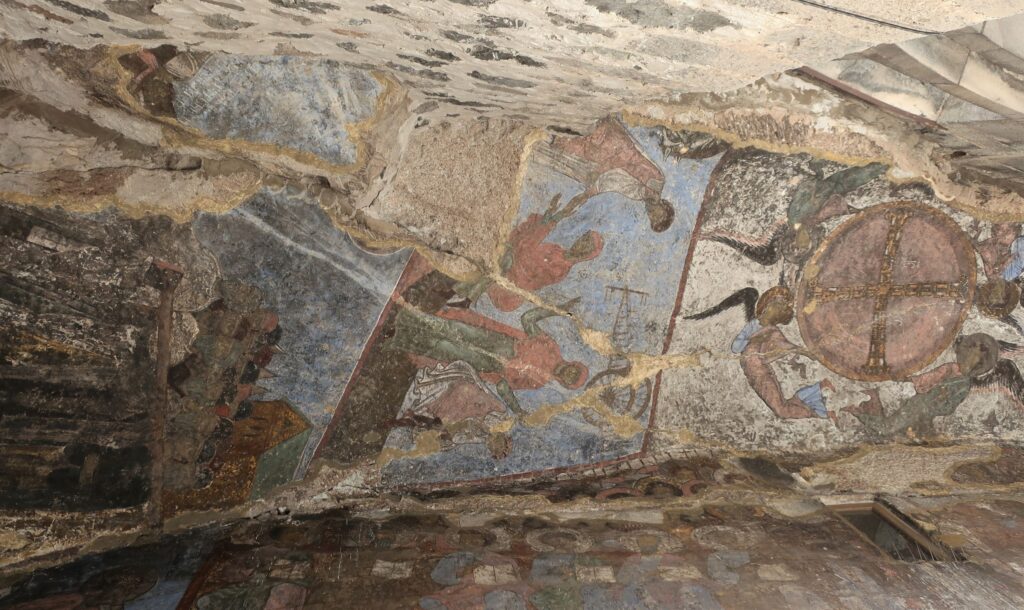
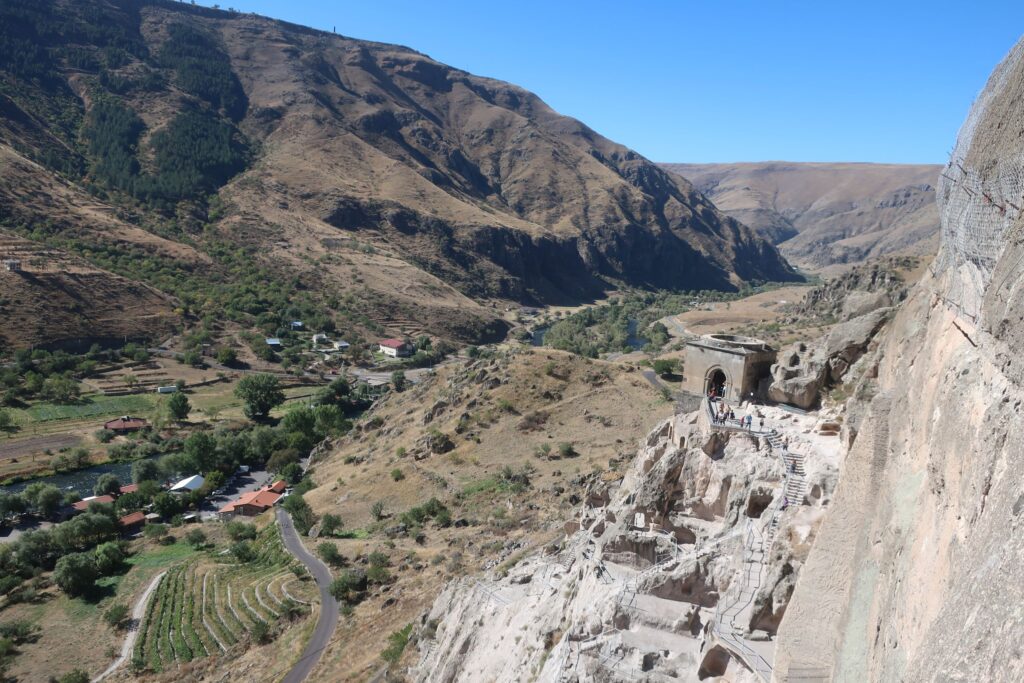
It’s very lively at night.
Fabrika courtyard at night
We spend the first few days gently coming down from jet lag. We visit some museums and sightsee at our leisure.
As in most cities that have a Metro, in Tblisi the underground is the best way to get around.
These tunnels are deep. And steep.
Built in the Soviet days, it’s a bit shabby but does the job well. And it’s cheap. Hey, compared to the O-train, it’s a model of convenience and efficiency.
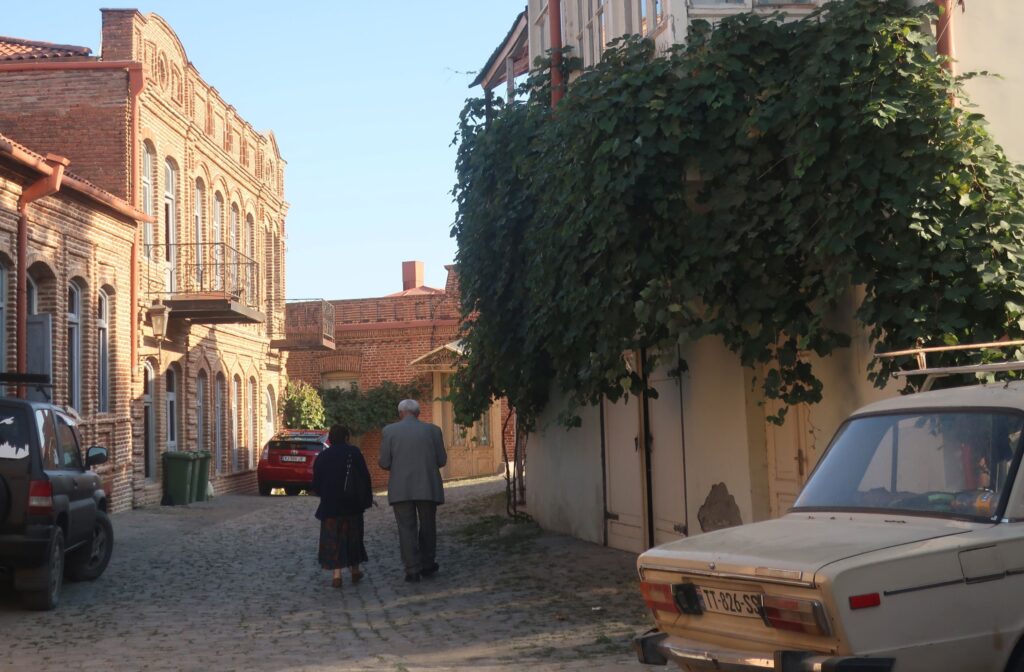
The Old Town is the oldest part of Tblisi. It’s full of winding alleys and quaint houses in various states of either full restoration or complete decay.
Old Tblisi
Tblisi is full of small hole-in-the-wall shops selling fruit, vegetables, and everything else. (SPAR mini-marts are sprouting everywhere like mushrooms, however. No doubt these tiny shops are doomed.)
Maria purchases a churchkhela. They look like candles, but they’re walnuts dipped in syrup made from grape juice.
Have Yoga Mat, Will Travel
Lots of sidewalk vendors as well.
Georgia peaches. And grapes. And apples.
There are beggars on the street, too. Probably fewer than in downtown Ottawa, though.
This is the Anchiskhati Basilica, the oldest church in Tblisi. Like, 6th-century-AD old.
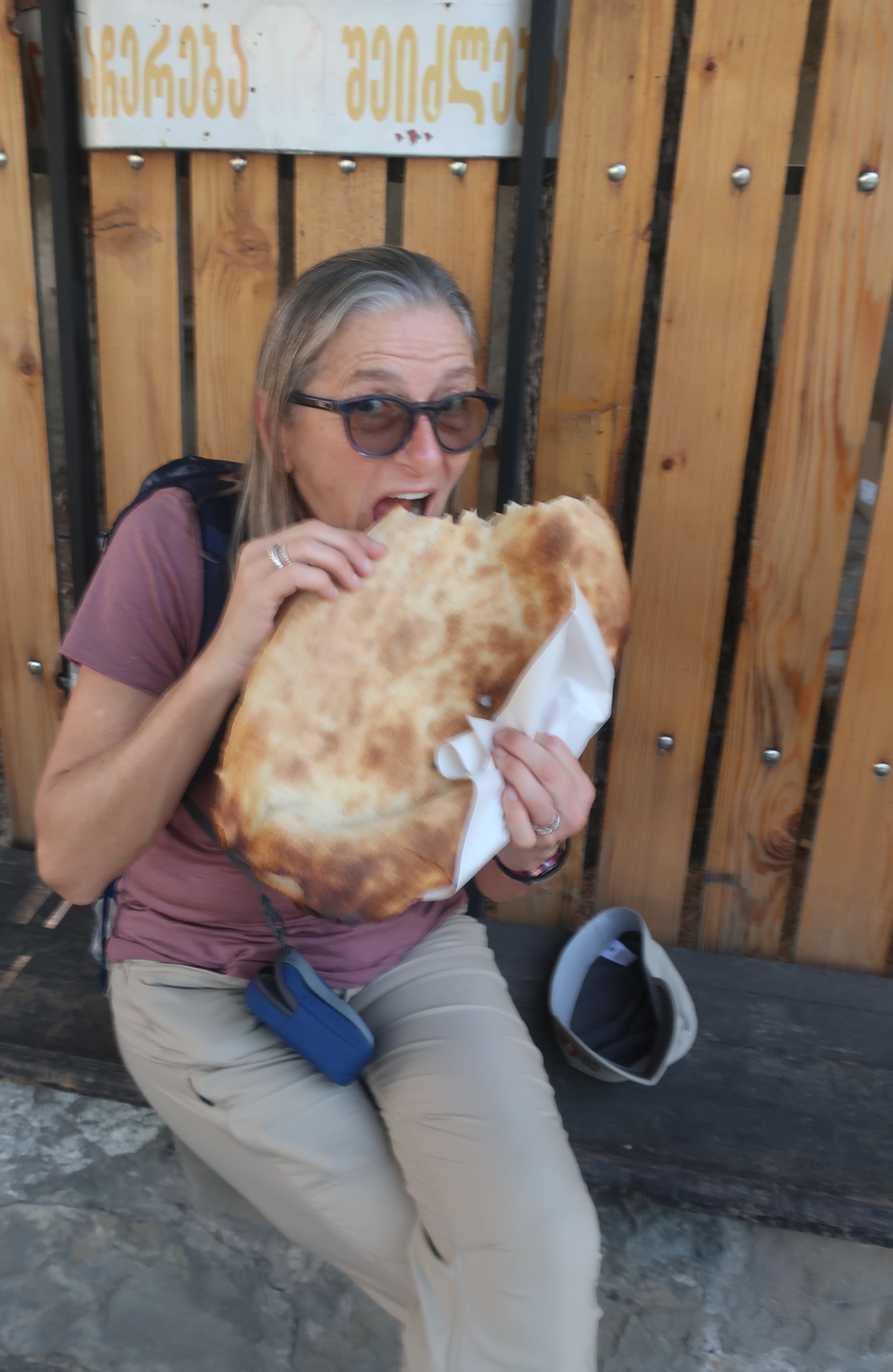
Some typical Georgian food. The pastry with the cheese and egg in it is an adjaruli khachapuri. The dumpling thingies are called khinkali. The soup is a concoction of beef, vegetables, and garlic. All washed down with a glass of tasty Georgian white.
How do you say ‘bon appétit‘ in Georgian?
Sight or Insight of the Day
Tblisi is typically third-worldy in the great number of stray animals in the streets. But there seems to be a campaign to collect strays, spay/neuter them, treat any medical conditions, then release them with a plastic tag in their ear.
They’re very friendly. I don’t think anyone mistreats them, unlike other places where strays are starving, diseased, and despised.
I can’t understand why the authorities don’t encourage individual people to actually adopt individual dogs. They’re extremely good natured (the dogs, that is.) However unthreatened they may be, road traffic is always a hazard.
If we lived here, I’m sure we’d have a houseful of mutts.
OK, enough is enough. It’s time to get back out on the road.
We leave today for the Republic of Georgia. Why Georgia, you ask? Why not? You have to start somewhere.
Originally, we planned to describe in brief how the last two-years-plus has gone. Like most people, we’ve been stuck at home. Of course, first we had to find a home.
There’s no place like home
Which we did. We are now condo-dwellers. So we won’t be quite as footloose as before.
Maria has become a pickleball enthusiast. I’ve been reading lots of books. Mostly old stuff.
As for recapping noteworthy goings-on, we just haven’t been doing that much. We weren’t even thinking of going anywhere until very recently.
Travel-wise, we went on several canoe trips with friends. And dipped our toes in international travel by visiting Old Orchard Beach, Maine, at the invitation of our friend John.
So this is a short entry in aid of re-learning how compose a blog page, basically.
Sight or Insight of the Day (Year?)
Probably the event that stands out in the recent past is our encounter with a fawn.
Deer me
It’s a long story. While at the cottage, we came across a baby deer that had lost its mother. We took it to a wildlife rehabilitation centre an hour’s drive away. The fawn stayed in Maria’s lap most of the way.
…or is it? An epilogue is defined as: “a section or speech at the end of a book or play that serves as a comment on or a conclusion to what has happened.“
We can’t believe it’s been four months since our return to Canada. After our two-week quarantine was over, we headed for our cottage, 114 kilometres west of Ottawa.
It’s cold in early April. Besides electric heaters in the bedrooms, the wood stove provides warmth.
It snows several times while we’re up here.
Maria goes for a walk on a snowy day
(Just to demonstrate how the weather has changed, we have recently gone through as heatwave. Temperatures were over 40 degrees Celsius.)
Maria goes for a refreshing dip
It doesn’t really feel as if we’ve been home for four months. We scarcely see people, we seldom go out except to the nearby town of Perth for shopping and laundry. If the idea is to avoid contact, we’re certainly doing our part.
In the early days, we have friends over for dinner. Physical distancing is observed.
Cheers! <virtual clink>
We eat well here. And it’s not only BBQs.
Penne Bolognese for two
So we live day-to-day in a sort of middle existence: our travels almost seem like a dream now, as if we never left. But the fact of COVID 19-prompted isolation means that we don’t really feel as if we’ve returned.
Maria gets a trim, lakeside
It seems unlikely – or at least impossible to predict – that in the near future, it’ll be feasible to roam if you want to.
We are resigned to staying in the country. In a concession to domesticity, we buy a car. (We borrowed one for our first few months here.)
We suppose the next step is finding a permanent place to live.
That’s right. As we create this entry, we are sitting high in a hotel suite overlooking downtown Ottawa, spending two weeks in self-isolation. It’s a long way from the African savanna. Anyway, to take up where we left off…
In Senyati Safari Camp, we enjoy a covered bathroom/living space that comes with our campsite.
We never get tired of watching the elephants at the watering hole.
We can’t take our South African rental car into Zimbabwe. So we arrange a land transfer to Victoria Falls (in Zimbabwe) and rent another car for two weeks, leaving our car at Senyati.
Zimbabwe is undergoing several crises at once (before even taking covid-19 into consideration.) Their economy is in dire straits, as usual. This is the result – as it always is – of bending over backwards and using smoke and mirrors and a labyrinth of bizarre regulations to maintain the illusion that an utterly worthless currency is actually worth anything.
We get this stack of banknotes in exchange for a handful of US$
It’s extremely professional and dedicated. (Most of the staff we meet are women.) Turns out we were phenomenally lucky to have seen those wild dogs in Moremi.
Besides hosting rescued painted dogs for recovery, rehabilitation, and release, they lead educational programs for youth.
Memorials to late inhabitants of the sanctuary
We carry on to Bulawayo, Zimbabwe’s second biggest city.
These formations are called ‘kopjes’ (sounds like ‘copies’). They’re found in many places in Africa.
Cave paintings are relics of the San people, the original inhabitants of the southern part of the African continent since, well, forever. (Black Bantu people are relative newcomers. White people even more so.)
Here’s a hunting scene.
This is recognizably a giraffe.
And this is a rhino.
We stay at the Farmhouse Lodge. Not at the lodge itself, but in their campground, a few kilometres away. We have the place entirely to ourselves.
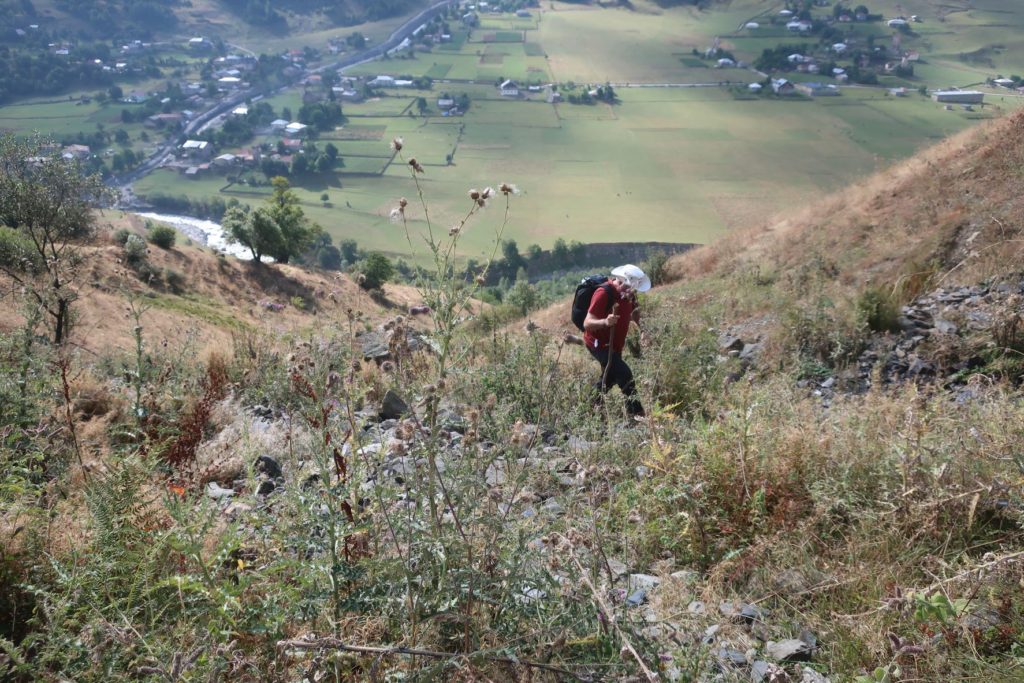
Just the way we like it
Next stop is the Zimbabwe Ruins. (A running joke since independence is that the misrule of the Mugabe regime has turned the entire country into the ‘Zimbabwe Ruins’.)
It’s a tight squeeze on the trail up to the ‘hill complex’.
View from the hill complex down to the ‘great enclosure’.
A few more views of Great Zimbabwe.
Another crisis in Zimbabwe is a shortage of fuel. We are fortunate enough to have leftover US dollars from our trip to Iran: petrol stations that charge in US dollars are few and far between, but you can fill up immediately.
Stations that charge in local currency, however, have massive lines of cars that wait hours for their turn…
These petrol queues are everywhere
…and of course, many stations have run completely out of fuel.
No petrol todayI negotiate for a tankful in Chimanimani
This little girl carries her doll in a blanket on her back, just like mom.
We hike to the Bridal Veil Falls.
We really like our accommodation in Chimanimani. Dee and Jane, our hosts, have two friendly dogs (and a friendly cat) that keep us company.
This one is Rocky.
And this one is Carny. He’s completely blind. Always has been. We’re impressed by the way he gets around the property.
After spending a few days in Harare, our plan is to visit Mana Pools National Park, then take the Kariba Ferry as a shortcut (via Lake Kariba) back to the western part of the country.
As it turns out, Mana Pools is only accessible for 4WD vehicles. And the Kariba ferry is cancelled due to a lack of paying customers. As an alternative, we visit the little-visited Mavhuradonha Wilderness, tucked up against the Mozambique border.
Remote, but beautiful
Then we begin our mad dash for Johannesburg – it’s a full day’s drive to Bulawayo and another to Victoria Falls.
We get thoroughly soaked walking the path that faces the falls.
…that is, ‘The Smoke that Thunders’
This is our last act of overt tourism before we make a beeline for Johannesburg in an attempt to beat the national border lockdowns that are nipping at our heels.
Sight or Insight of the Day – What a Long, Strange Trip It’s Been
We wind up traveling from the northeast corner of Zimbabwe all the way back to Canada with breathtaking speed.
Beginning at dawn in Mavhurdonha, we drive to Bulawayo – virtually the length of the country.
We plan to spend a few more nights in Hwange National Park, but decide to head straight to Victoria Falls instead.
We drop off our Zimbabwe rental car and get an overland transfer back to Botswana.
After a night in Senyati Lodge, we drive to Francistown, Botswana.
Next day, we cross the border into South Africa and drive to Johannesburg.
That very night, we decide we’d better try and catch a flight back to Canada ASAP. We manage to find one the next day (in theory).
We arrive at the airport. While waiting to check in, we are told by Turkish Airways that the Istanbul-Canada leg of our flight ‘is cancelled’.
My sister manages to book us on a flight that day: Johannesburg – Amsterdam – Paris – Montreal.
Next evening, we arrive in Montreal, where we are met by my sister and brother-in-law in two cars.
We overnight near the airport and drive to Ottawa the next morning.
We check into a very comfortable high-rise apartment-hotel for our obligatory two-week quarantine.
Now we stare at each other in disbelief – just a few days ago, weren’t we sitting in our shorts & T-shirts having a barbecue, marveling at the sky full of stars while a family of elephants pass silently in the dark three metres away? Today we’re looking out over downtown Ottawa at the ass-end of a Canadian winter.
So our random rambles may now be over. We don’t know what the near future brings. But neither does anyone else. Happy ramblin’, everyone. Stay safe. We’ll see you on the other side of this thing.