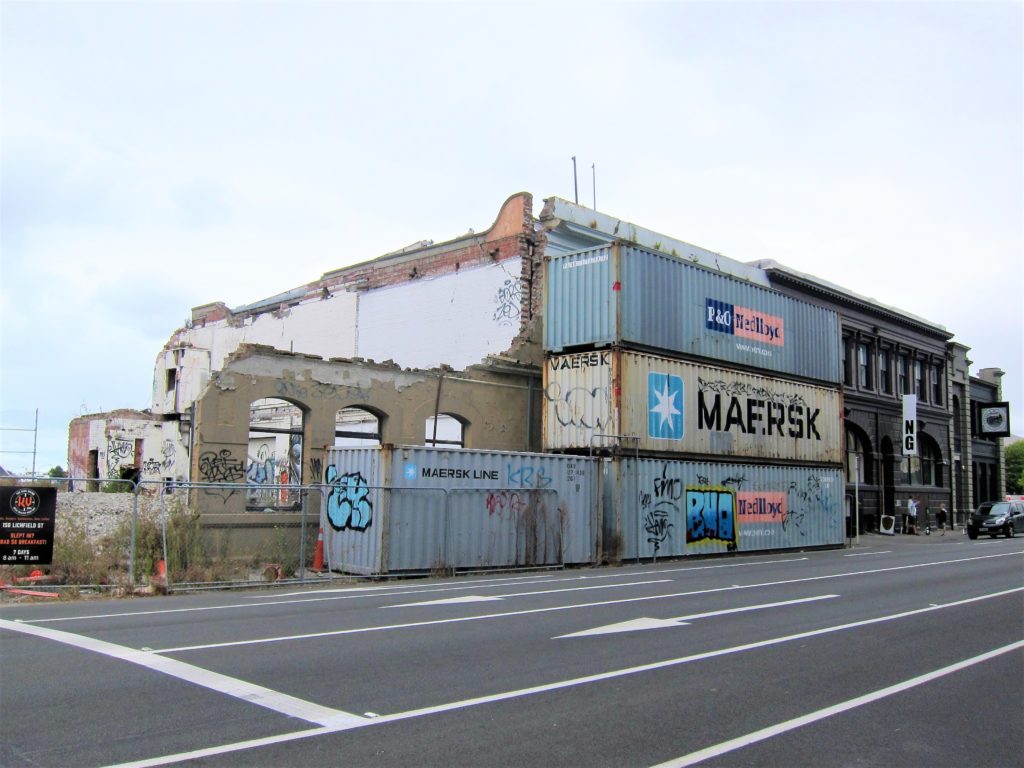
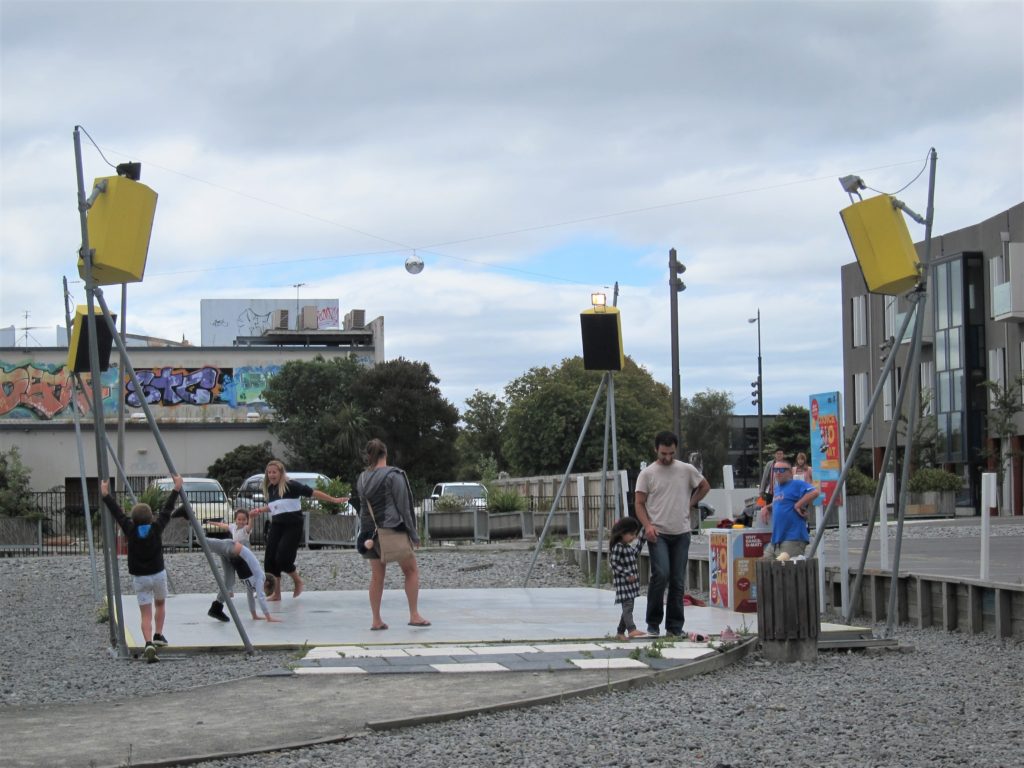
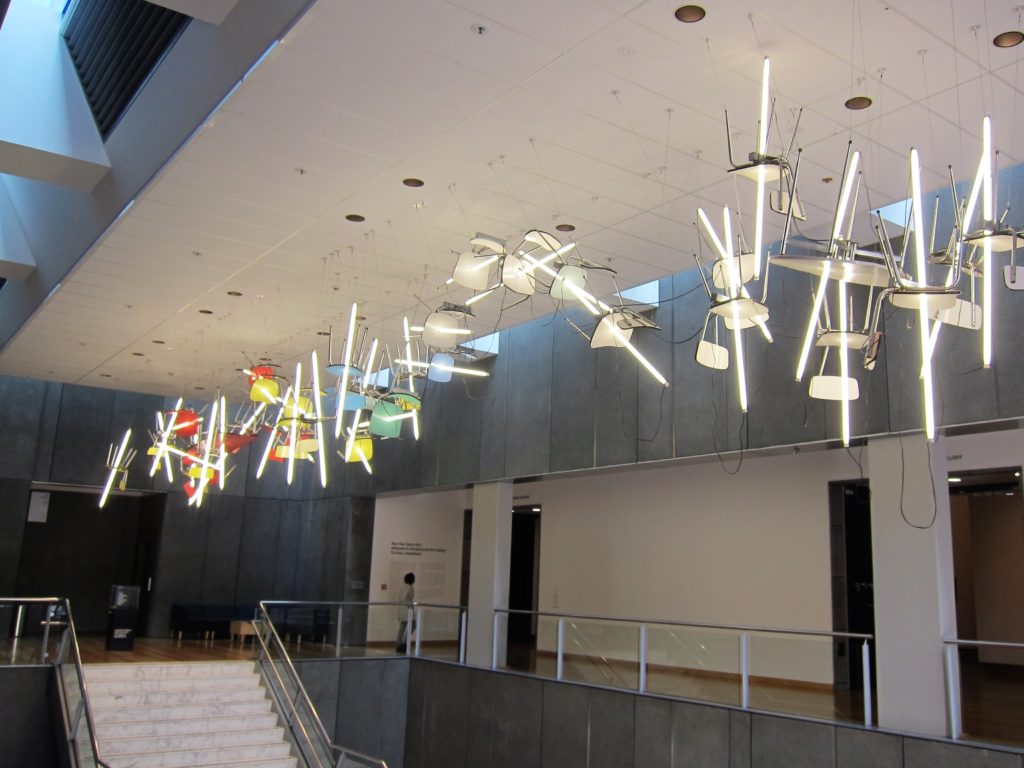
We visit Quake City, an informative exhibit about the quake and its aftermath. A worthy initiative – appropriately named ‘Gap Filler‘ – is to deliberately not leave vacant lots empty.
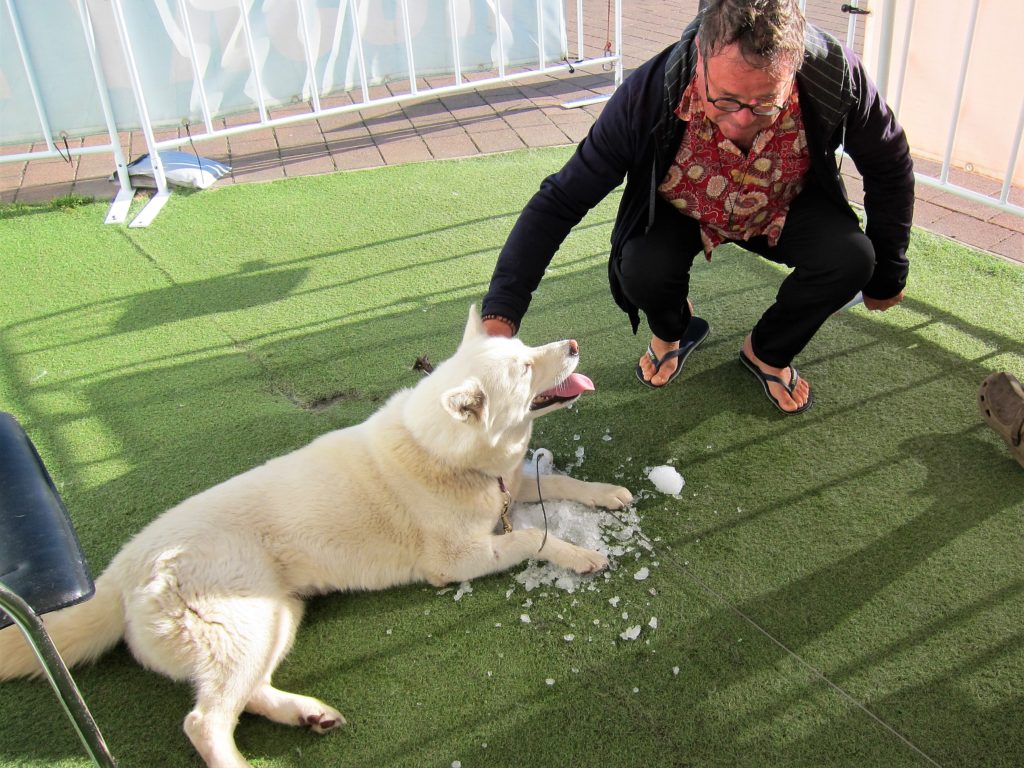
You can pet the dogs at the IAC. We arrive just as their wrangler brings buckets of ice. Which the dogs immediately love to lie on to refresh themselves.
Ice is nice
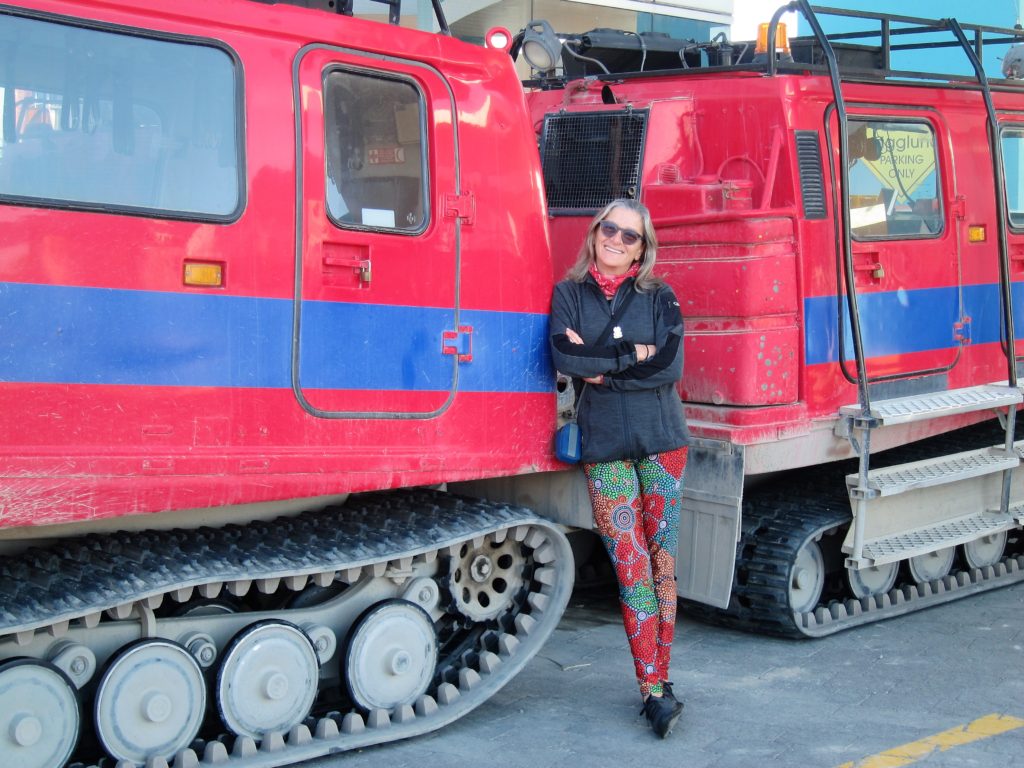
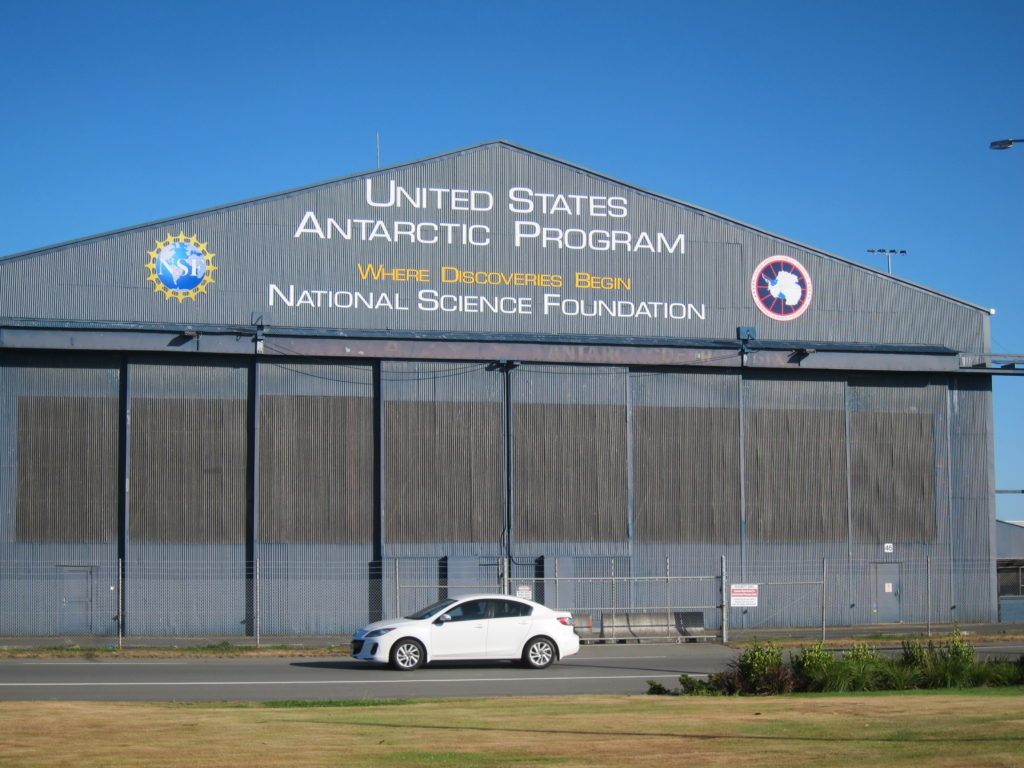
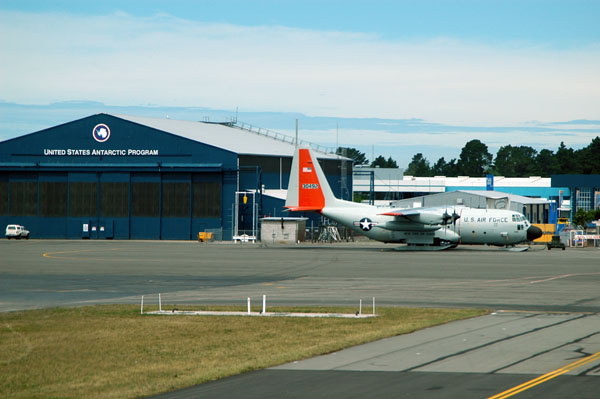
Across the street is the US Antarctic base supplier. Christchurch is a major point for shipping stuff down there.
You can see several ski-equipped C-130 Hercules aircraft used to do the heavy lifting.
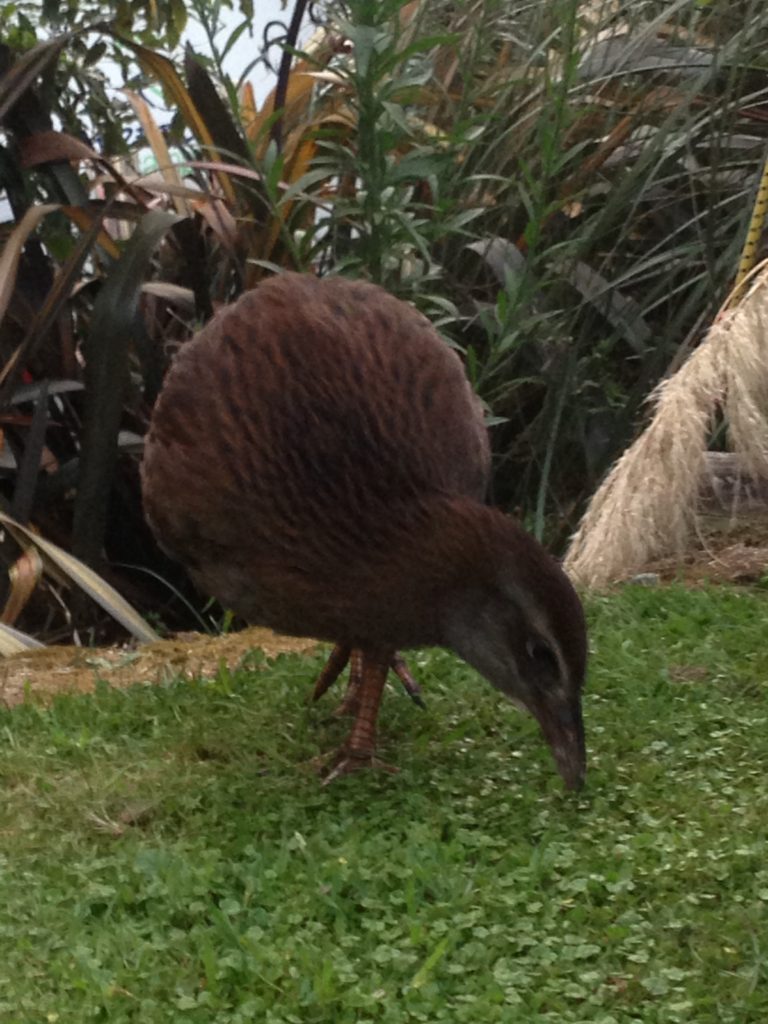
At Jackson’s Retreat, we are visited by troops of boldly curious wekas casually strolling around the campground.
Weka – also known as the ‘tourist kiwi’
We are told that one reason wekas are doing better than kiwis and other ground-dwelling NZ birds is because they are much more aggressive than these other birds in defense of their eggs, their young, and themselves. Good for you, wekas!
My goodness, it’s a couple of weeks since our last entry. We blame it on the less-than-stellar WiFi in New Zealand. We’re already rounding the southern tip. Here’s a brief entry as we begin to catch up.
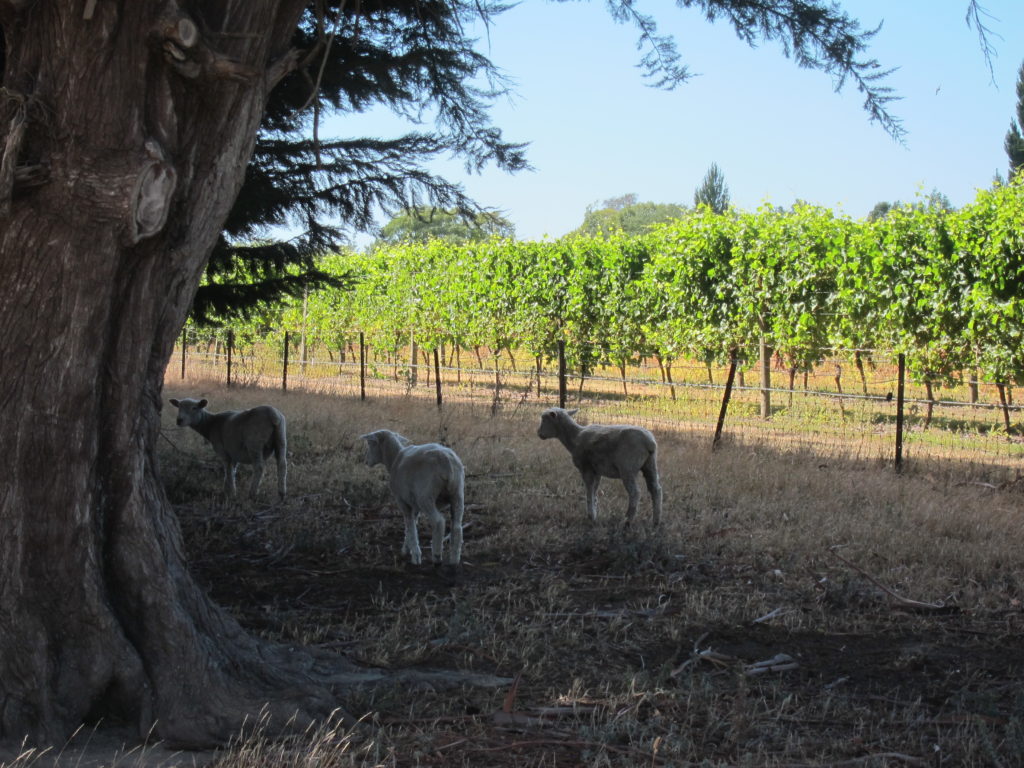
We make it safely across the Cook Strait and head for Marlborough. Marlborough, is of course, wine country. We replenish our supplies.
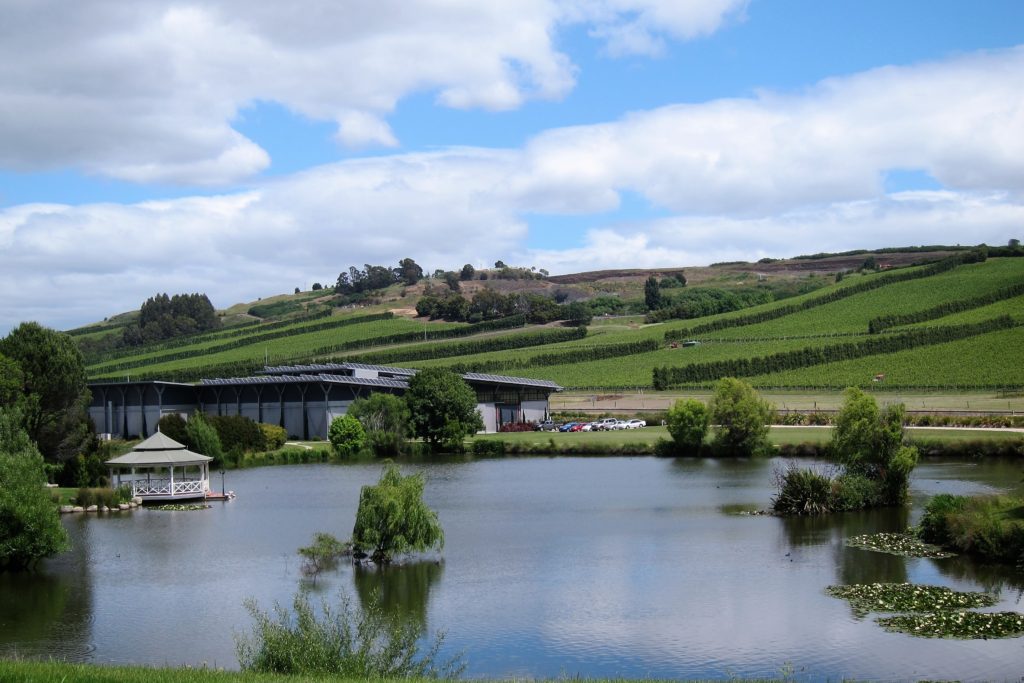
Among the wineries we visit is Spy Valley. The winery gets its name from the Waihopai Station satellite tracking base down the road. Like its much larger cousin in Alice Springs, Pine Gap, it is the object of many protests. Sad that so many people don’t realize that we are the good guys. (To be fair, the protestors’ statement that the existence of the base means NZ is ‘working for Trump’ would give anyone the heebie jeebies.)
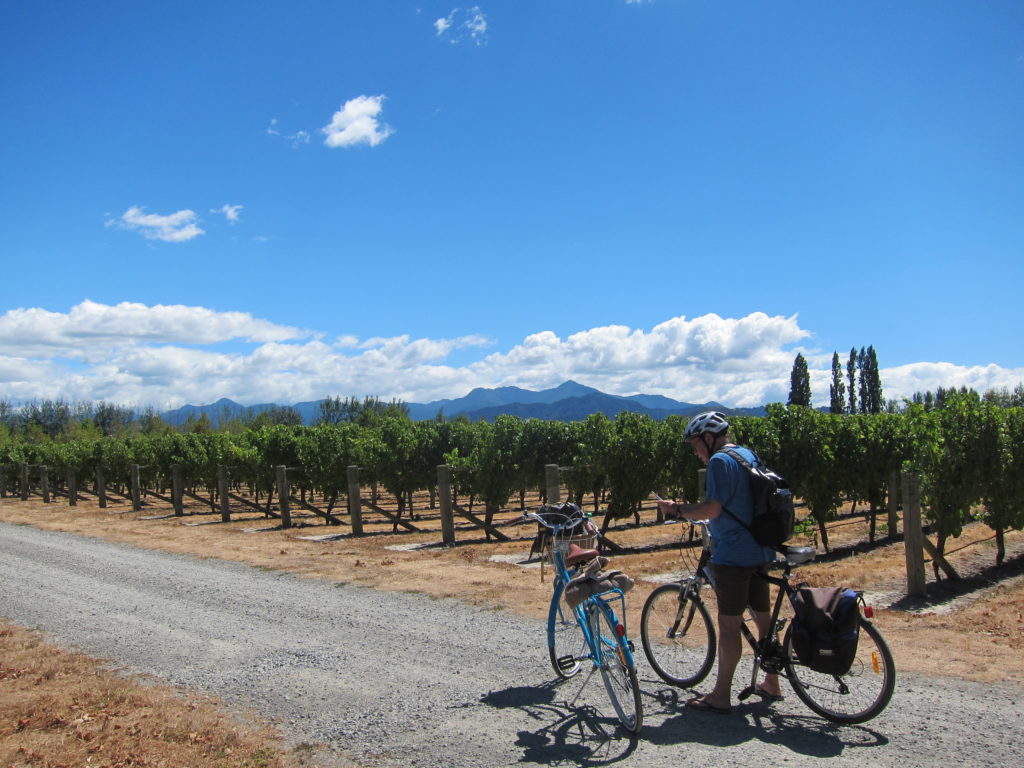
We rent bikes and cycle the Golden Mile.
Getting a bit wobbly
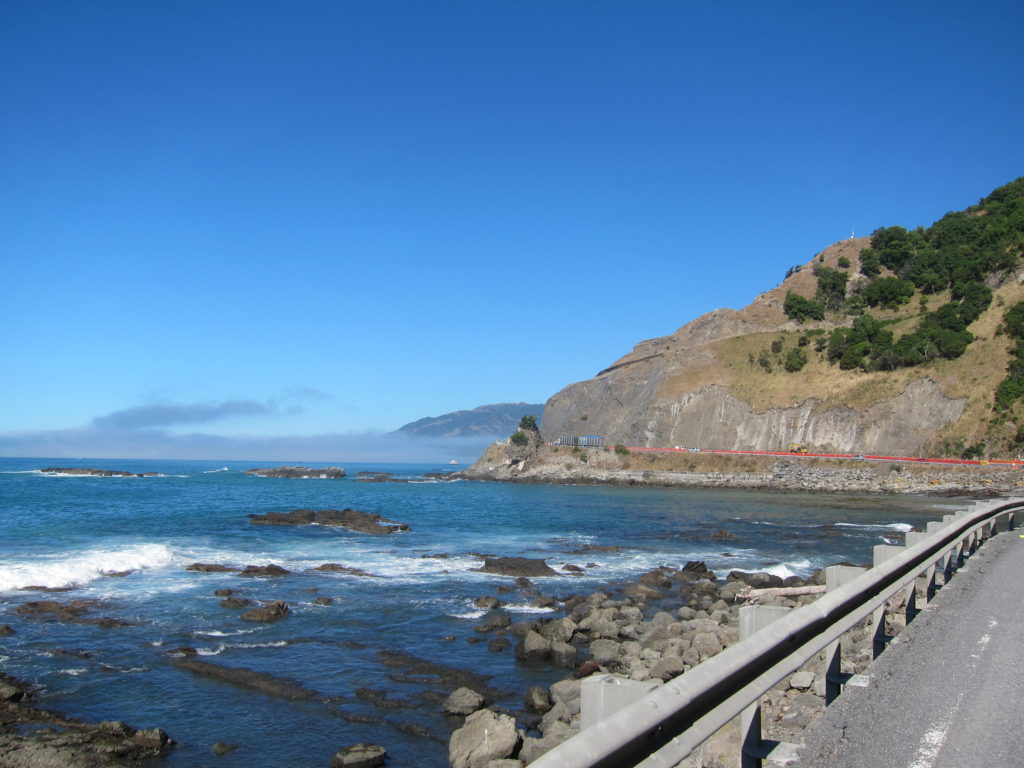
It’s hot. We love it. Finally, we head down the coast to the Kaikoura Peninsula.
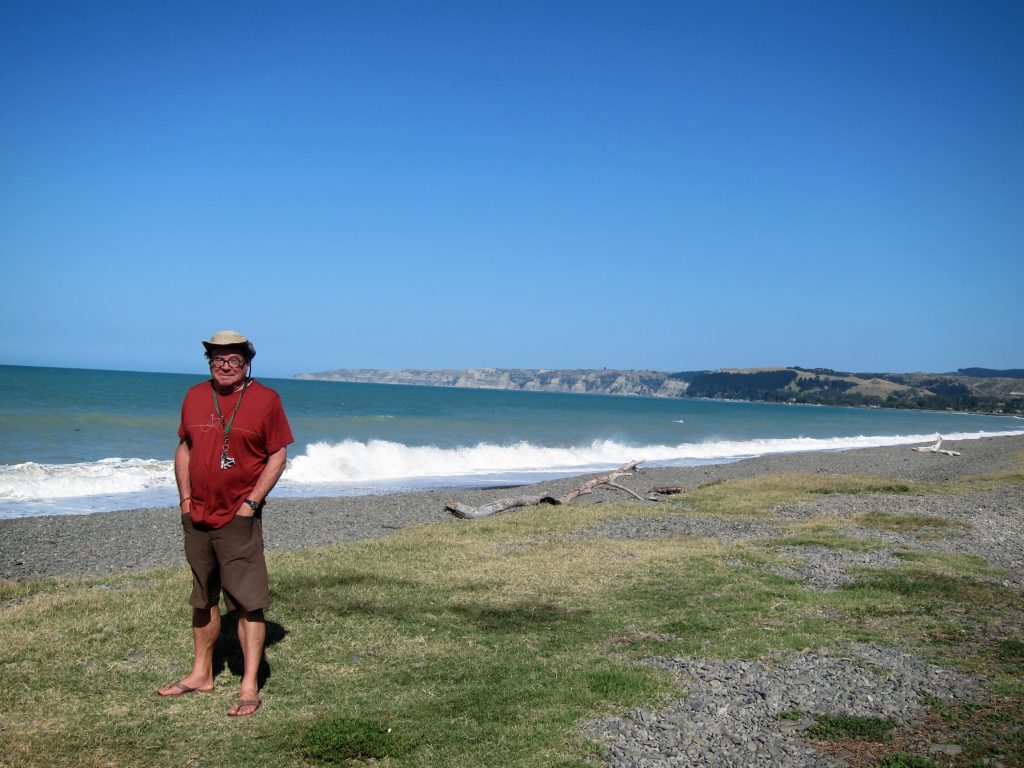
Kaikoura coast
Kaikoura is the site of the first human settlement in NZ (as far as is known) about seven hundred years ago.
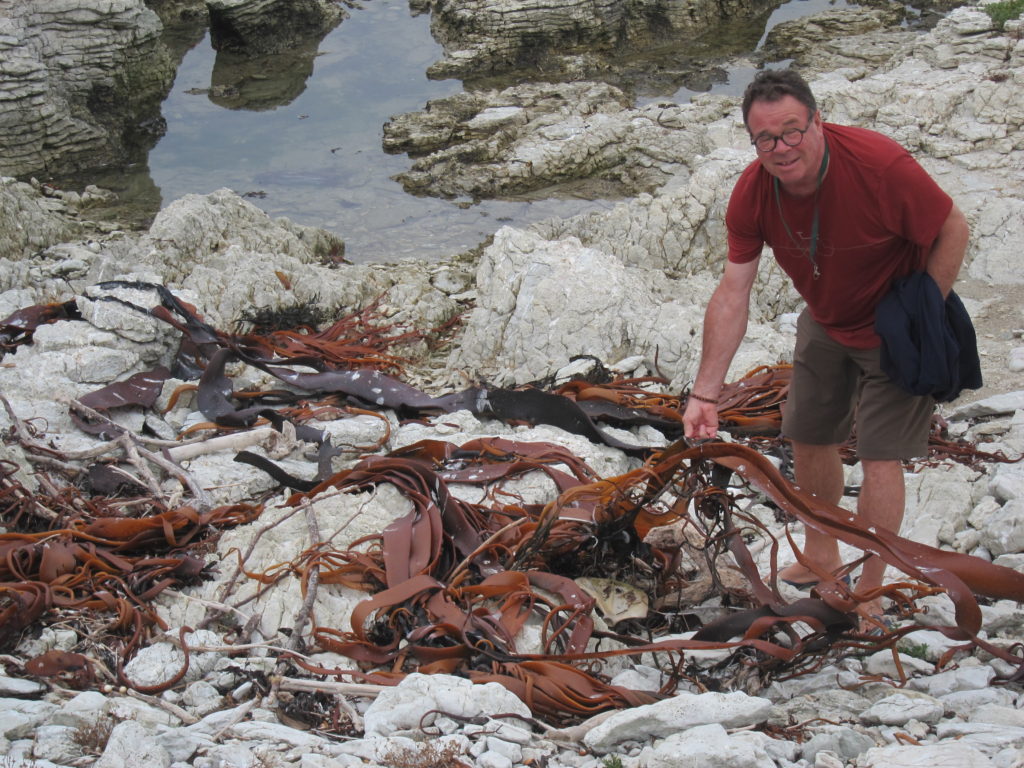
Kelp!
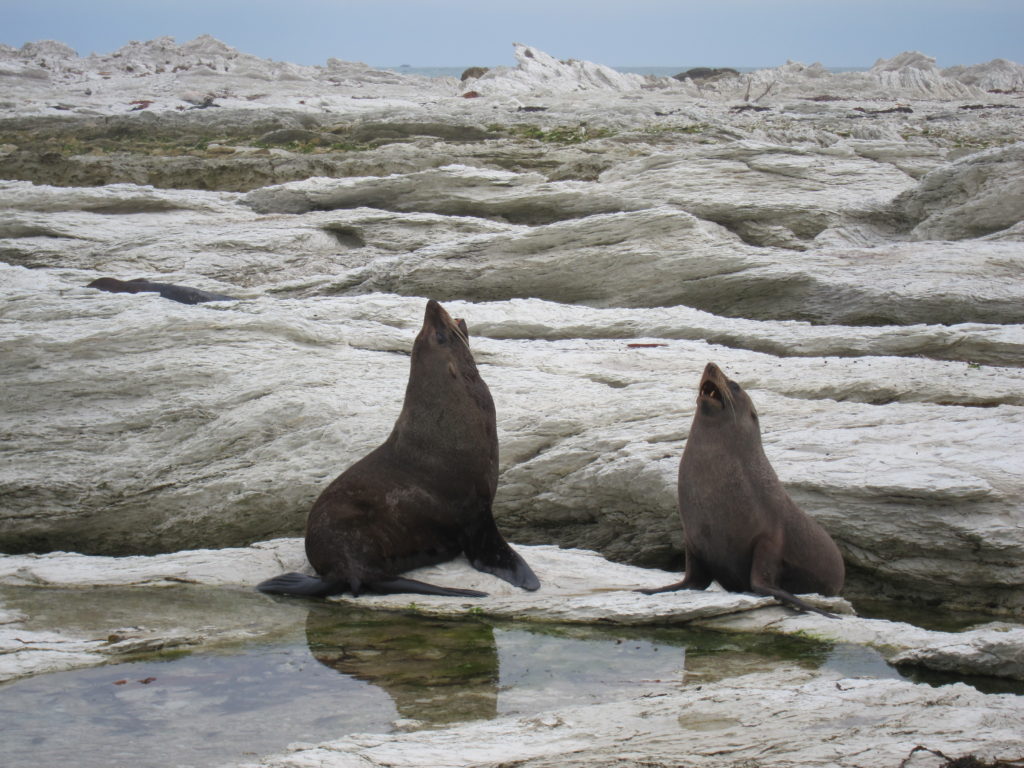
Very rugged, with lots of seals. You can get surprisingly close. According to the NZ Department of Conservation:
‘Before the arrival of humans, a population of about 2 million fur seals inhabited New Zealand. They were taken as food by Māori, and the onset of European sealing for meat and pelts in the 1700s and 1800s pushed them to the brink of extinction.’
We’re never gonna survive – unless we get a little crazy
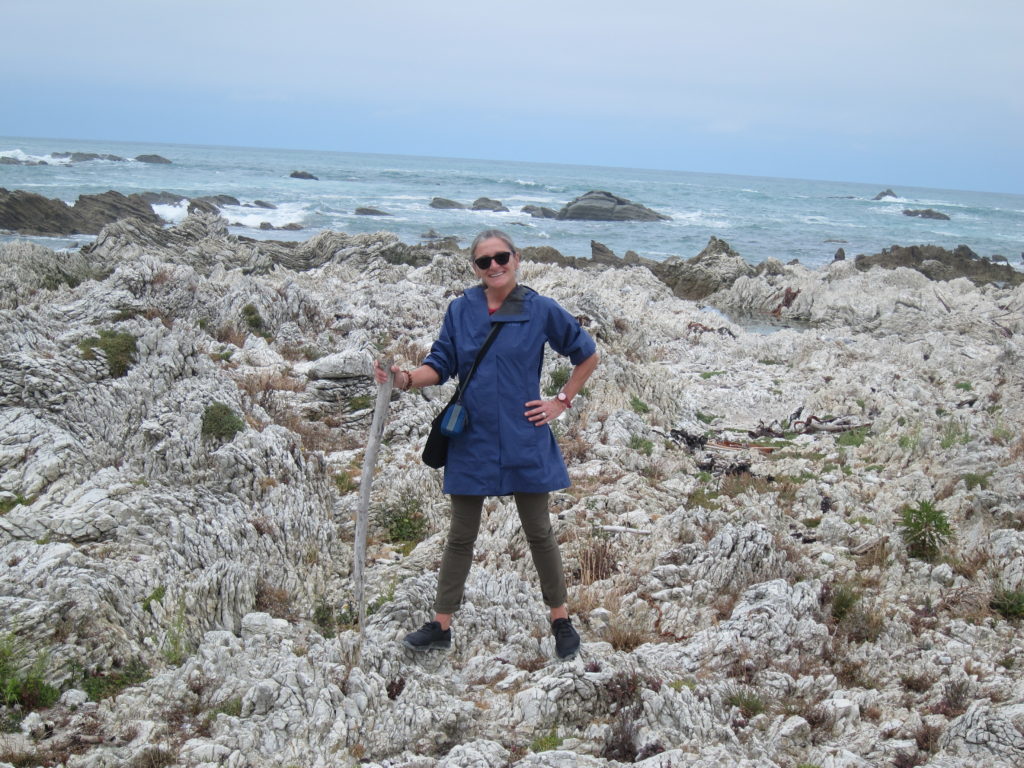
Interesting wrinkly limestone rock formations all along this coast.
Intrepid
After a drive through more beautiful countryside, we arrive in Christchurch.
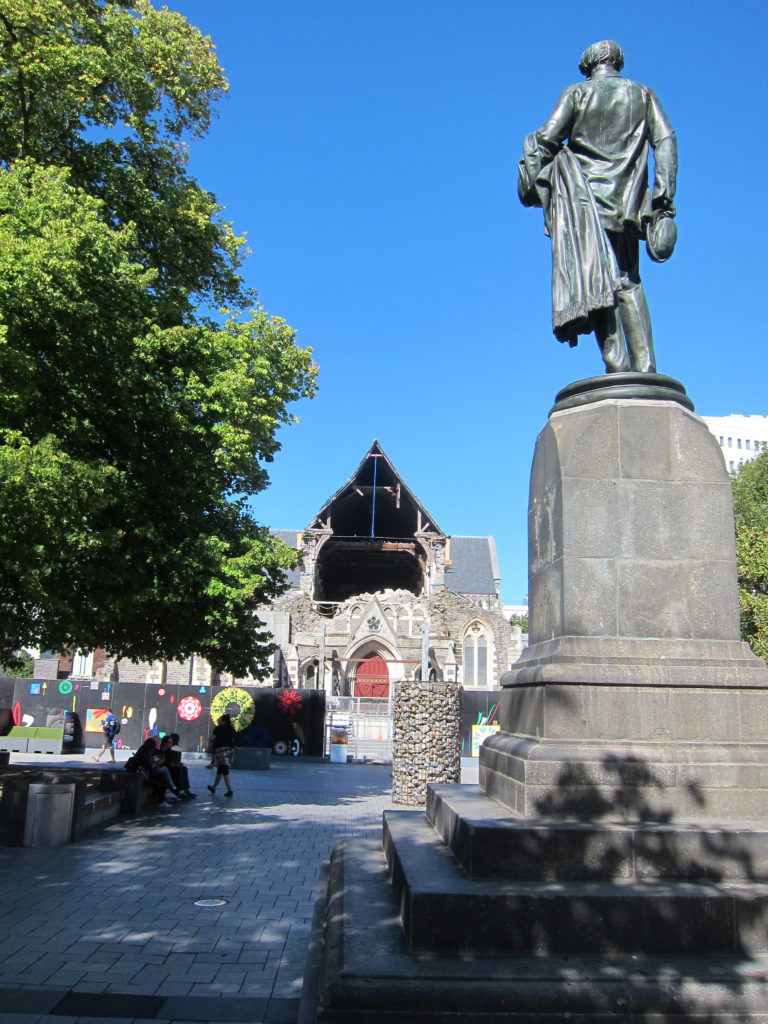
Facade of cathedral destroyed in 2011 earthquake
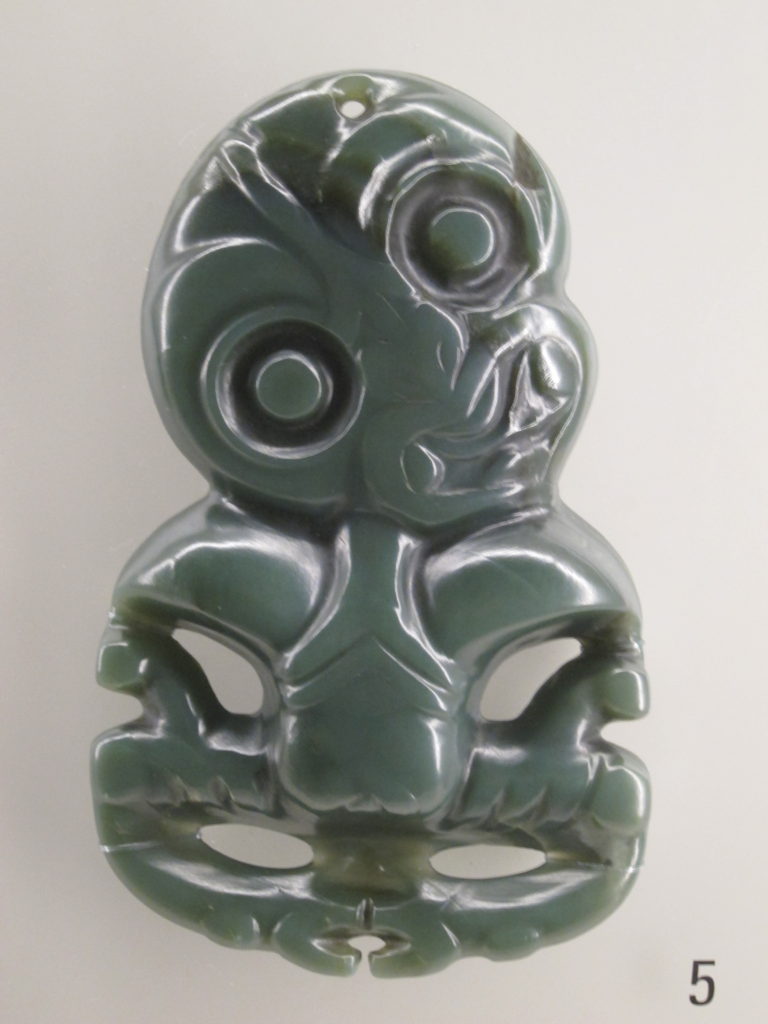
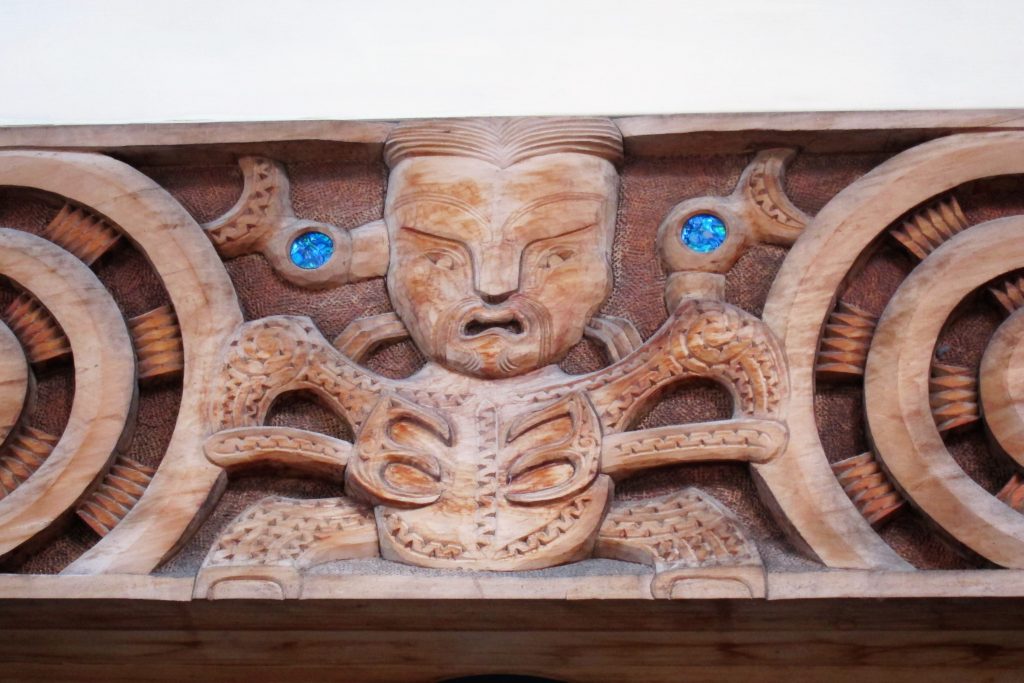
We visit the Canterbury Museum. Te Waipounamu – the Maori name for the South Island – means ‘place of greenstone’. There is an exhibit of greenstone carvings, including this hei-tiki.
Hei-tiki, you’re so fine, you’re so fine you blow my mind, hei-tiki!
I get a little one to hang around my neck.
We’ll be catching up to our present whereabouts soon. Stay tuned!
Sight or Insight of the Day – Te Waipounamu
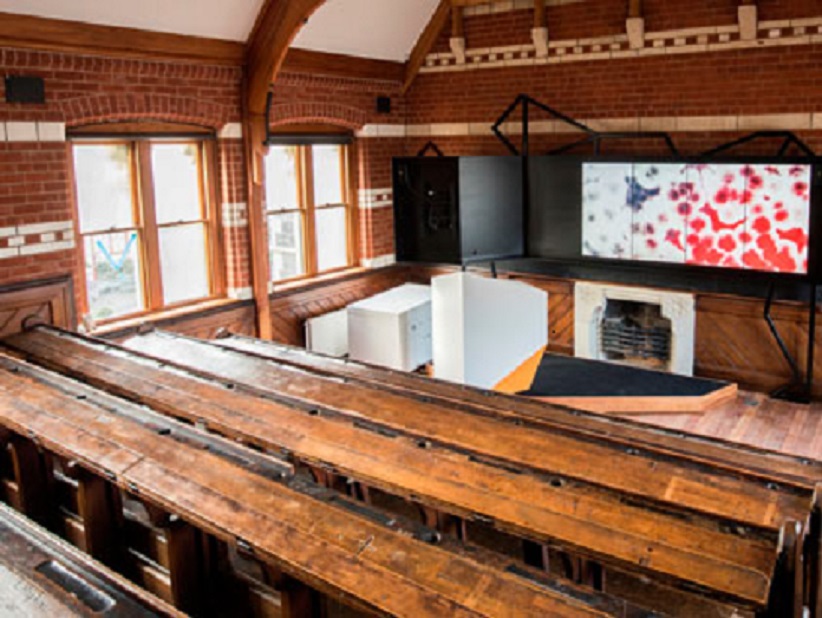
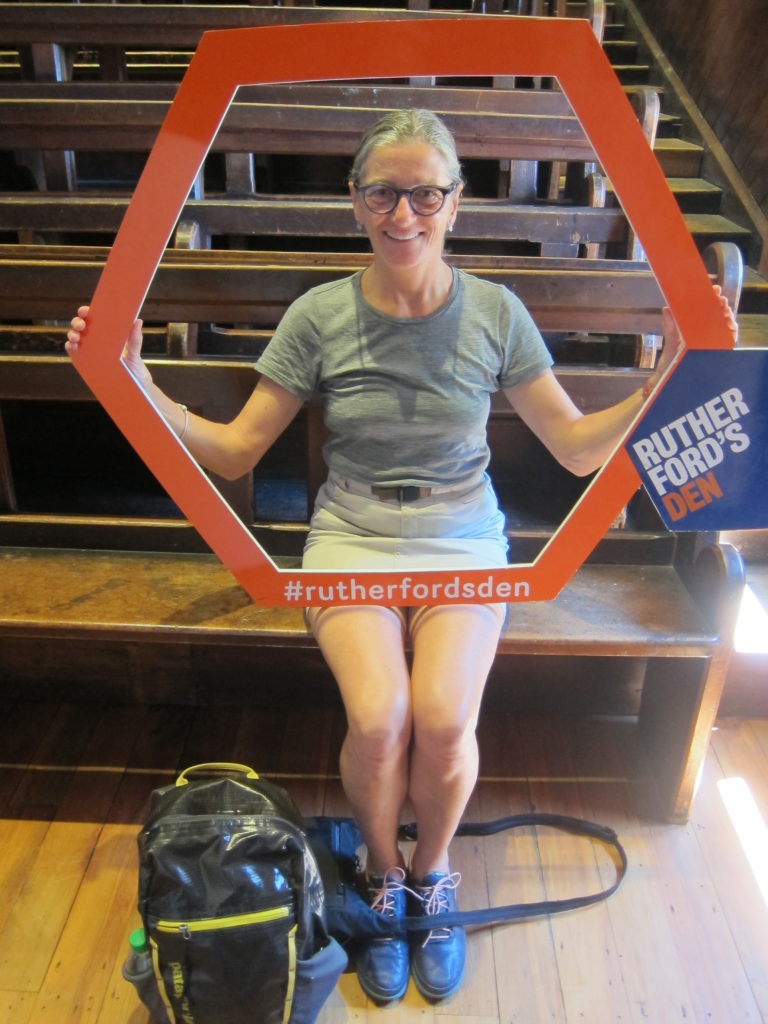
We visit Ernest Rutherford‘s old workplace at the University of Canterbury.
A bored Ernest probably carved his initials in this lecture hall.
Physics joke: A photon checks into a hotel and is asked if he needs any help with his luggage. He says, “No, I’m traveling light.”
We cut across country and spend a night in Palmerston North before going to Wellington.
We stay in a caravan park in Upper Hutt and take the train into town every day. It’s sunny and hot. And windy, which Wellington is famous for.
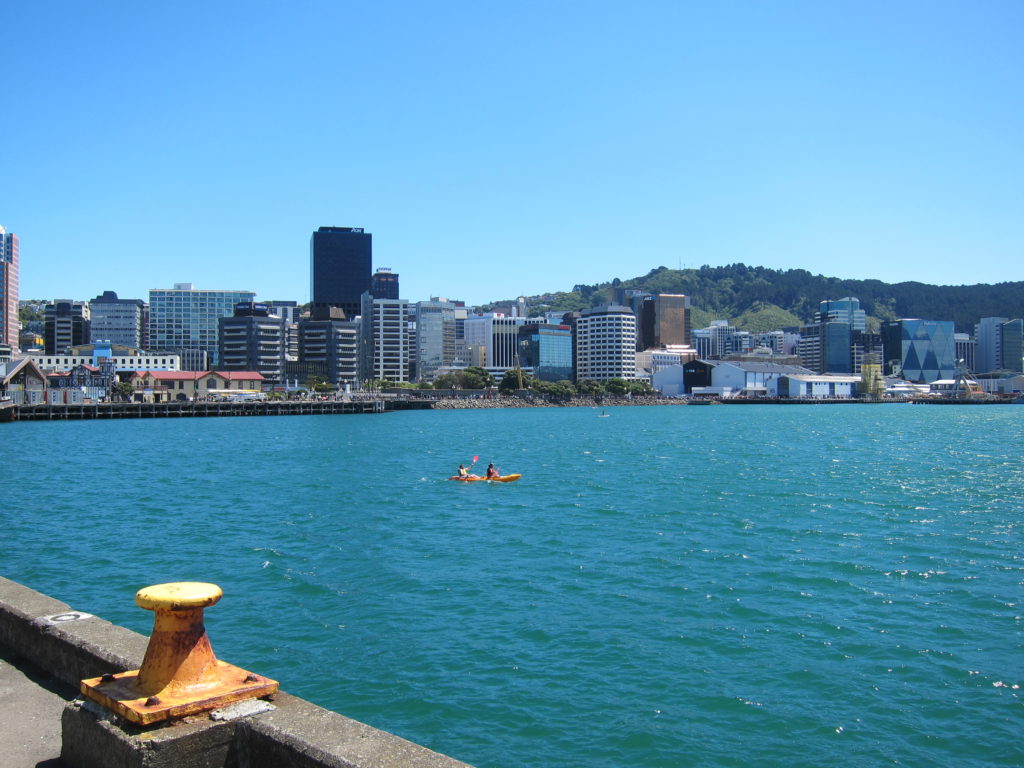
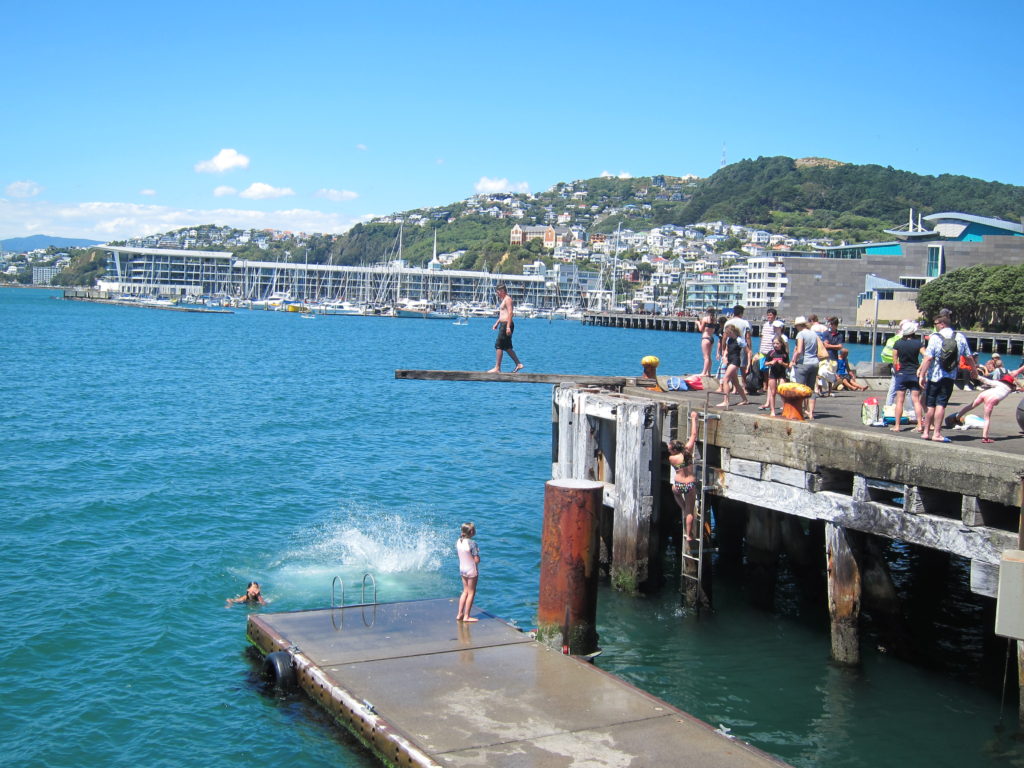
View of Wellington
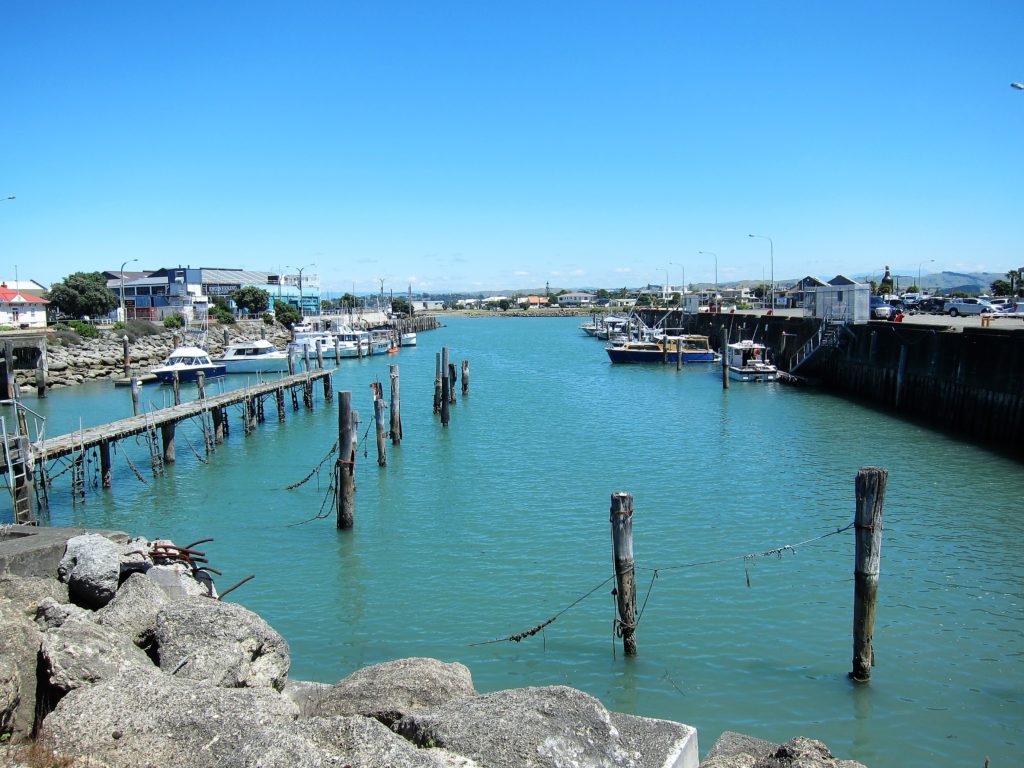
The water is delightfully clean in the harbour. Young folks cool off by jumping off the quay.
Betcha wouldn’t find people doing this in Halifax or Victoria.
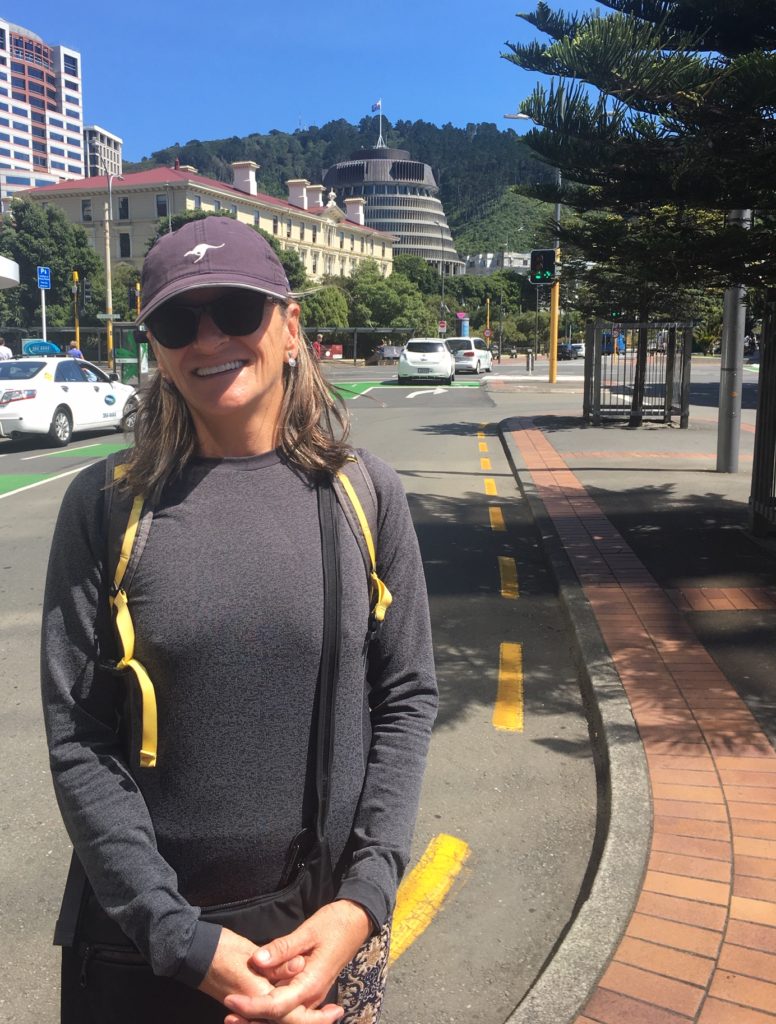
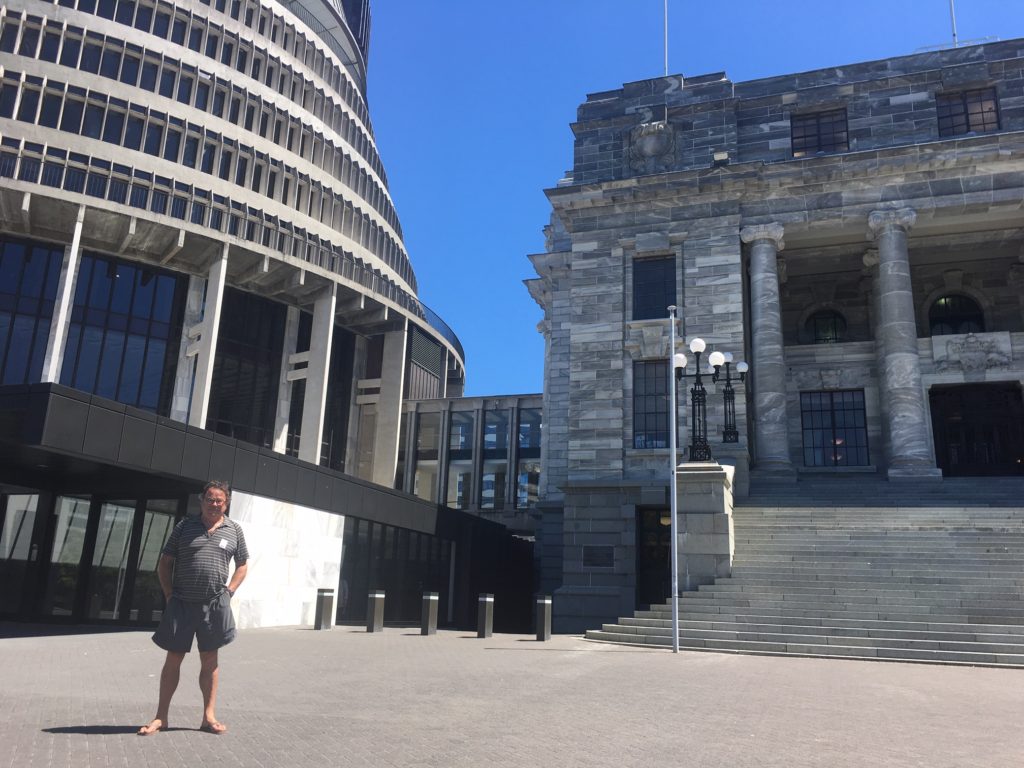
We visit the Beehive. This is New Zealand’s Parliament. (Or more accurately, the ‘Executive Wing of the New Zealand Parliament Buildings’.)
The Beehive from afar…
…and from up close
We hope to run into Jacinda Ardern, NZ’s youthful PM. We’re fans. (She’s refreshingly different from the bloated trough-snufflers and pathological liars that run most governments.) But no luck – she’s off visiting the victims of bushfires in the South Island.
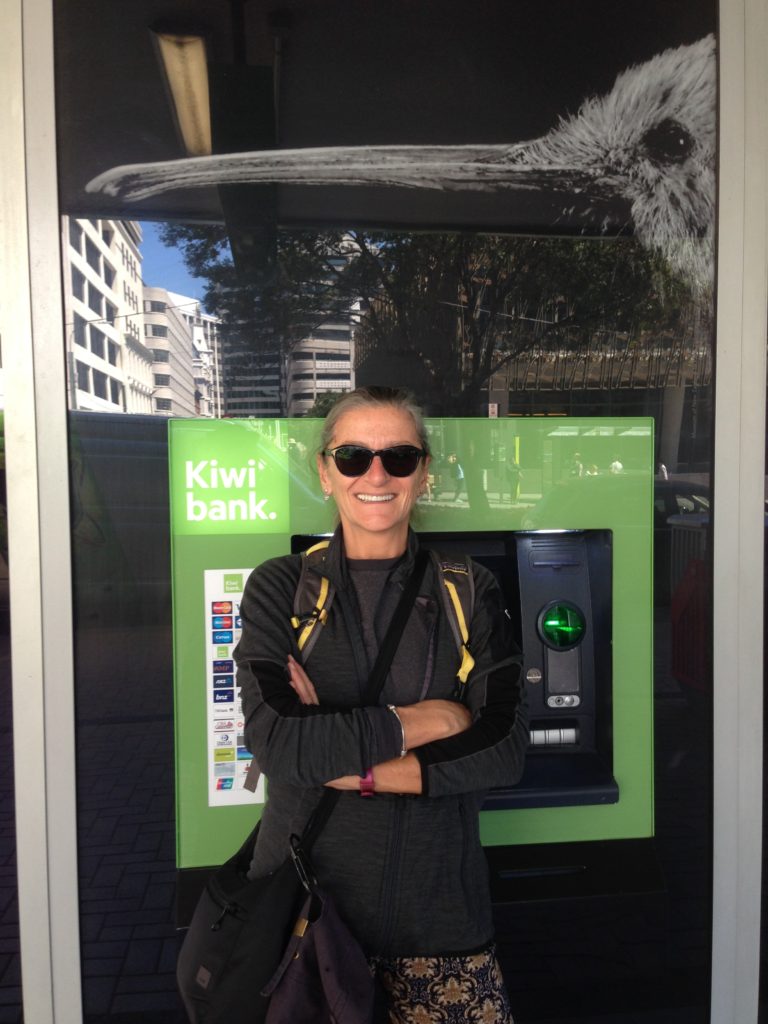
We get some walking-around money from a Kiwi Bank ATM.
That’s what I call a big beak
It’s fun being in a place where everyone sounds like Bret and Jemain on Flight of the Conchords.
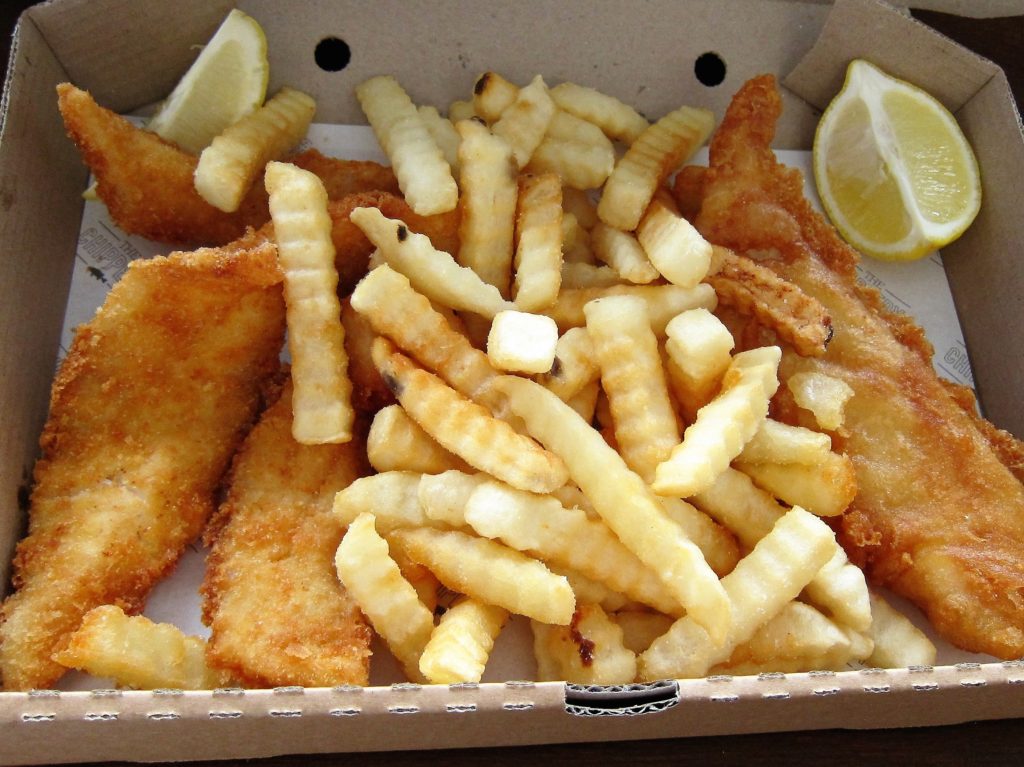
One thing that is a definite bargain in New Zealand is fish & chips.
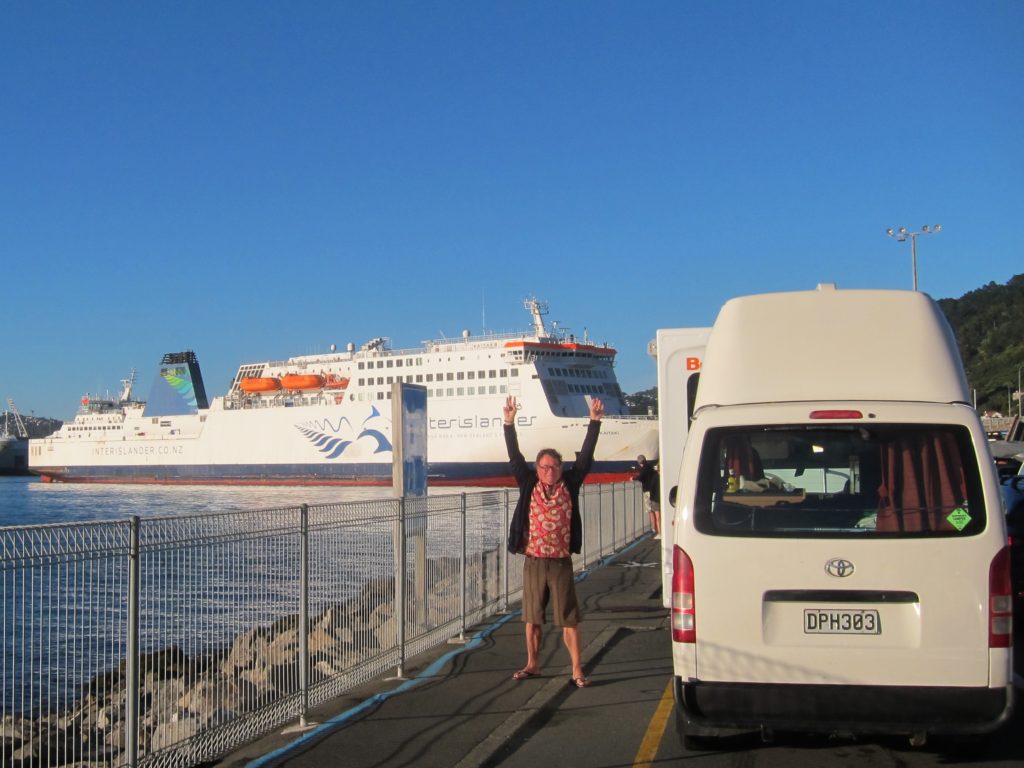
We prepare for our three-and-a-half-hour trans-Cook Strait ferry ride.
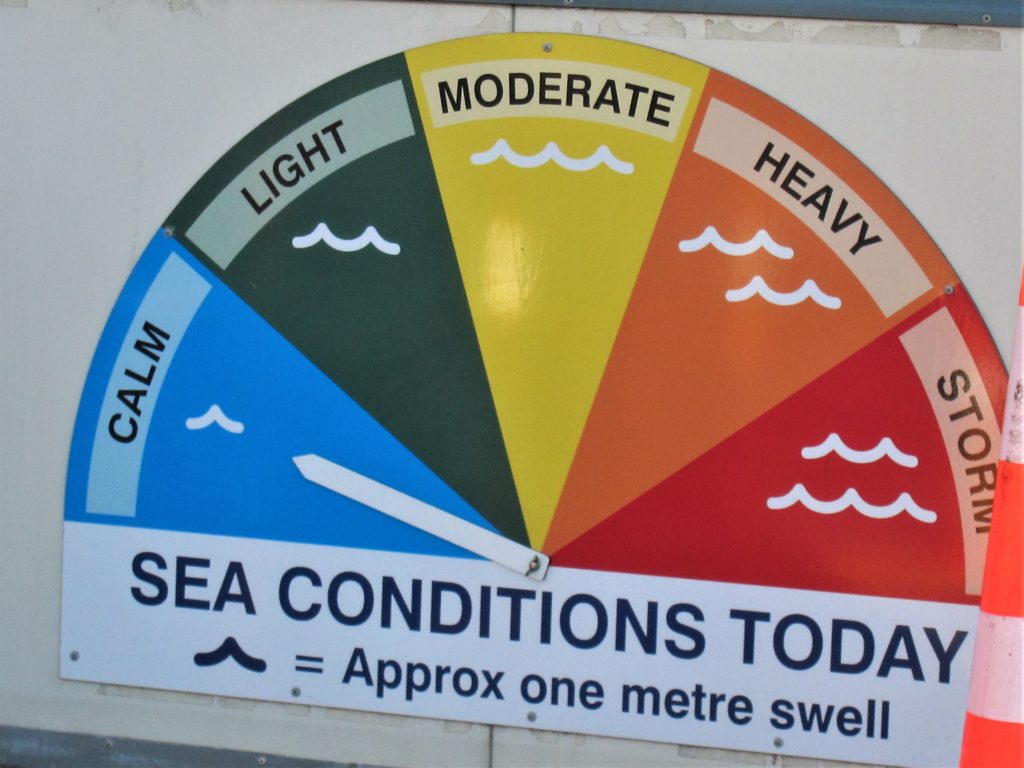
Lucky for Maria the forecast is for a smooth crossing.
The Cook Strait can have unbelievably rough weather. There have been numerous shipwrecks, including the relatively recent Wahine disaster.
Sight or Insight of the Day
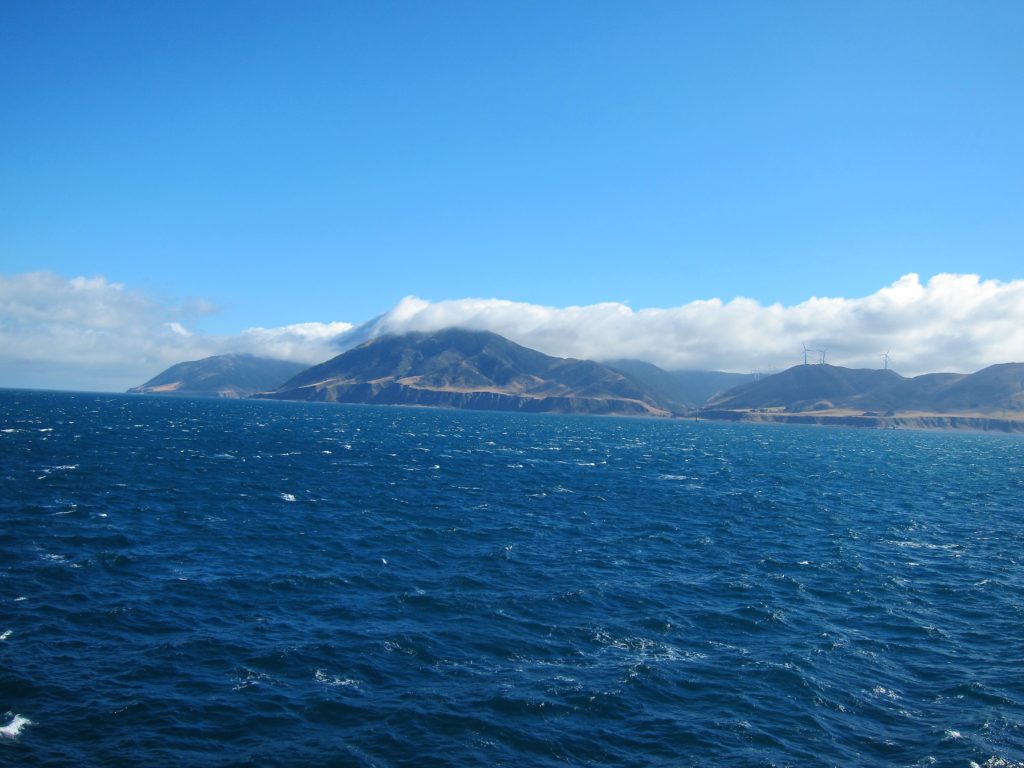
New Zealand is known in Maori as ‘Aotearoa‘. The common translation is ‘the land of the long white cloud’. You can see why in this photo taken during the crossing.
Rotorua is an infernal kind of place. Lots of sulphur-smelling hot springs.
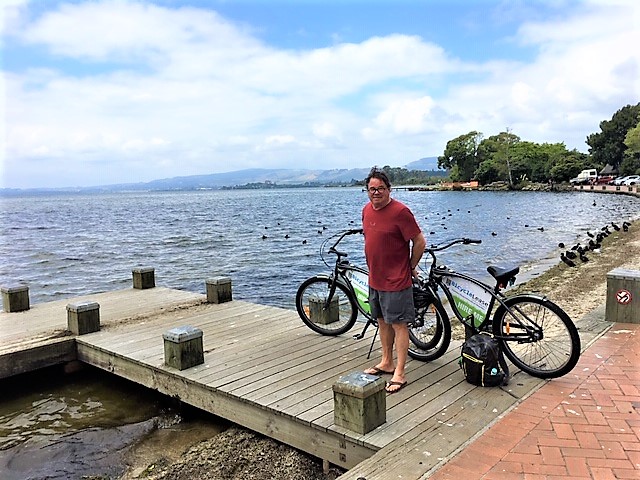
We rent bicycles and tour along the lake.
‘Whenever I see an adult on a bicycle, I do not despair for the human race.’ – H.G. Wells
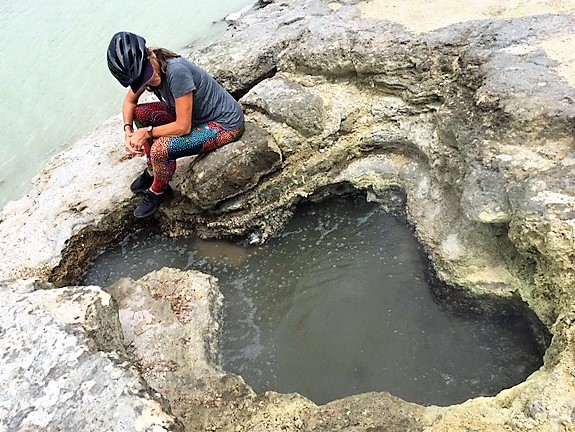
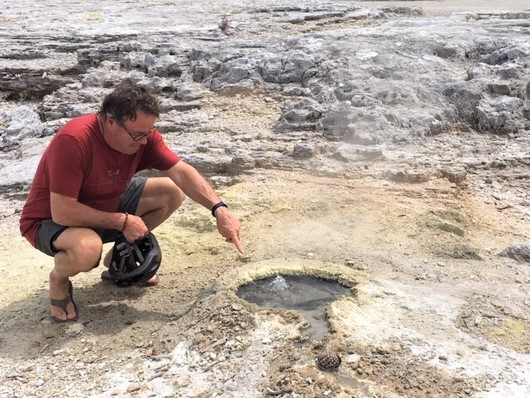
We come across bubbling witches-brews of hot springs and mud.
Wake up and smell the hydrogen sulfide…hot water
Many years ago, I went out with a girl from Rotorua for quite some time. I believe she eventually settled down in this area. A casual Google search turns up nothing of her whereabouts.
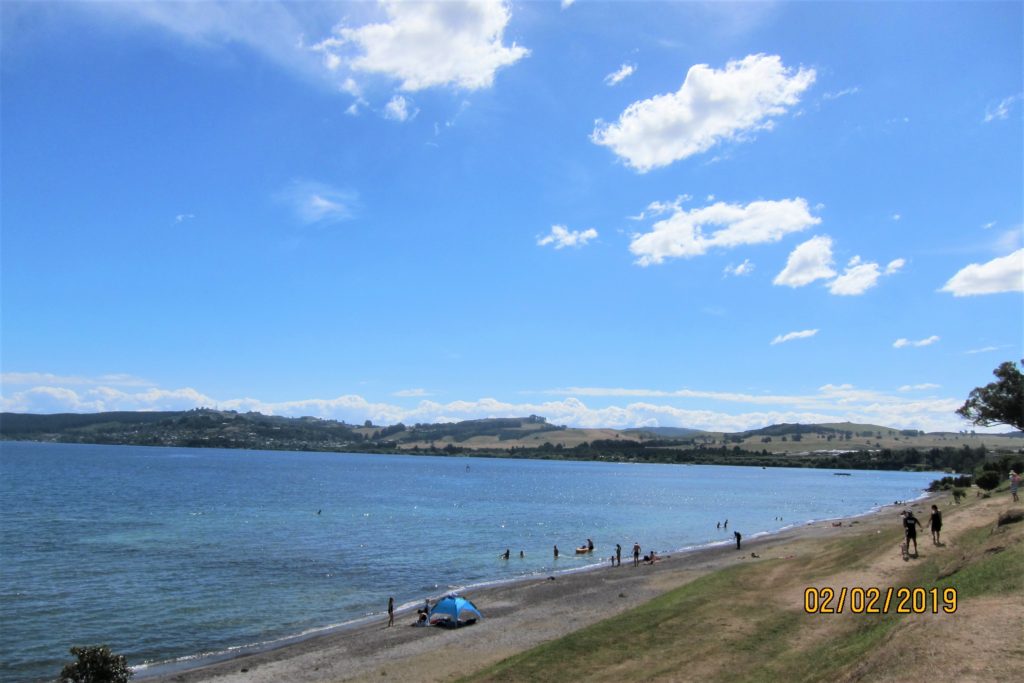
From Rotorua, we drive to Lake Taupo, NZ’s largest lake. Of course, Maria has to test out the waters.
Lake Taupo
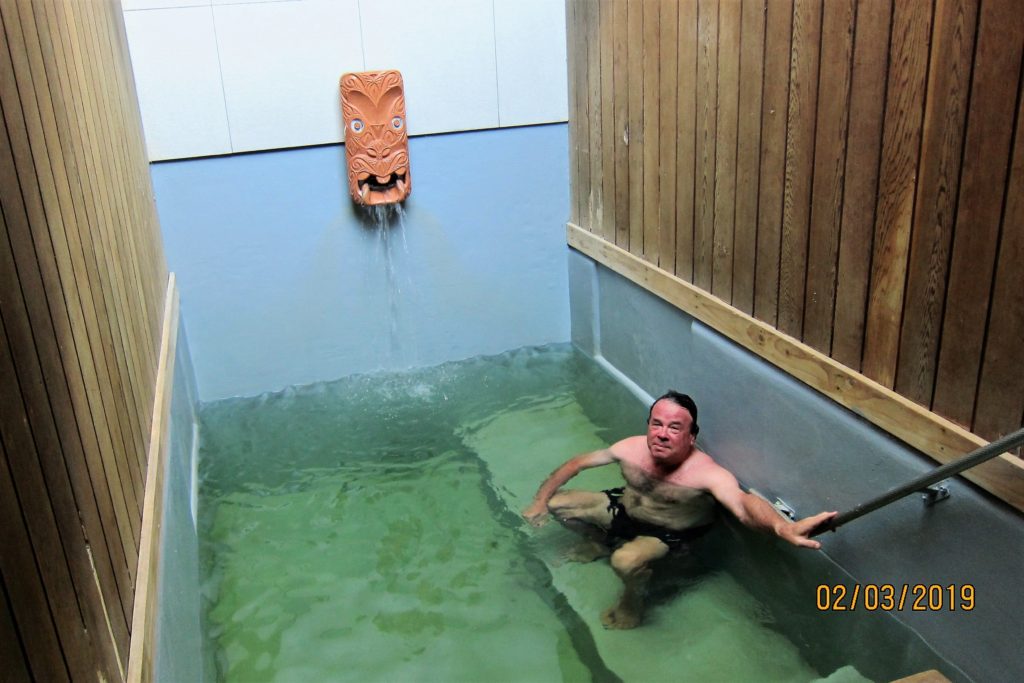
Our caravan park contains soothing mineral hot pools.
Napier is known for its many Art Deco buildings. (Art Deco was popular around the time of the earthquake – hence the binge.)
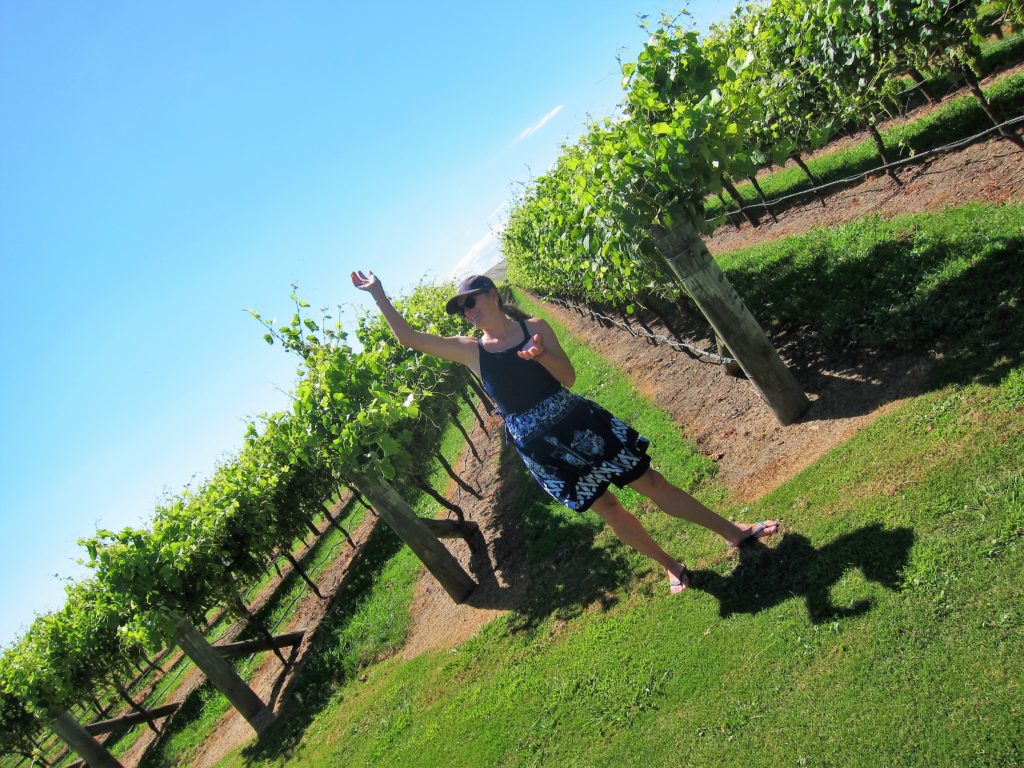
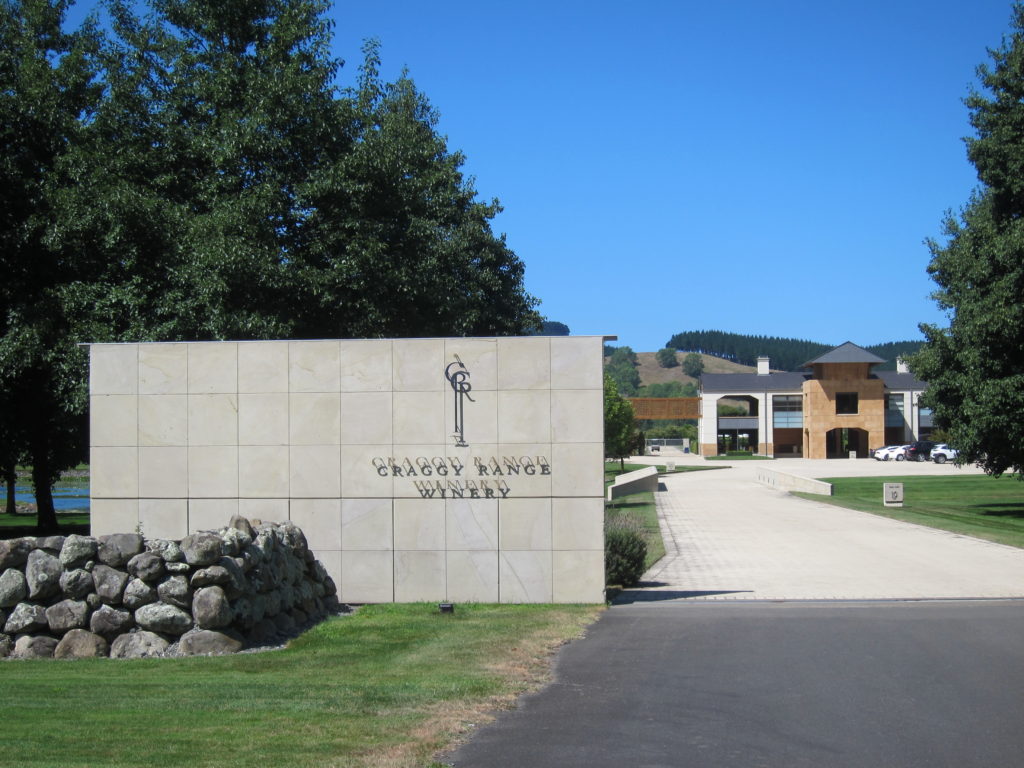
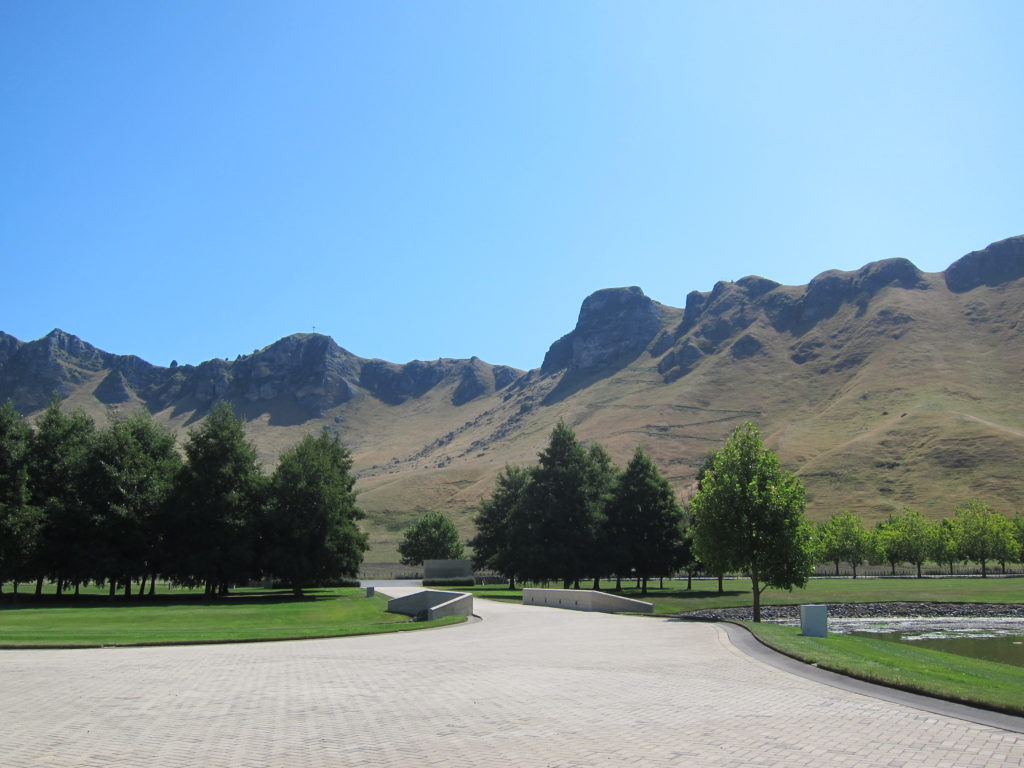
For us, however, it’s all about the wine. The Hawke’s Bay region is one of New Zealand’s best. A Google search whittles down the number of wineries we can reasonably visit.
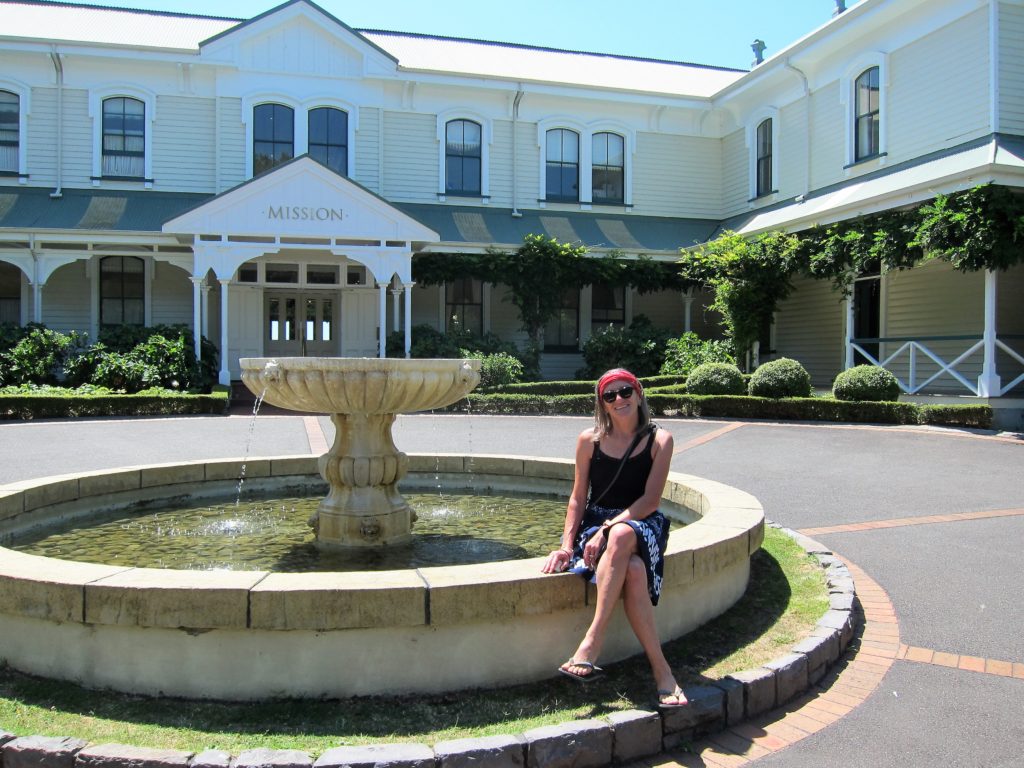
Mission Estate is the oldest winery in NZ. As we arrive for lunch at their wonderful restaurant, preparations are underway for an outdoor concert with Phil Collins. (Currently on his ‘Not Dead Yet‘ tour – I kid you not.)
This is an annual thing: last year, it was Neil Diamond. Next year, Elton John.
‘In the deserts of the heart, Let the healing fountain start.’ – W.H. Auden
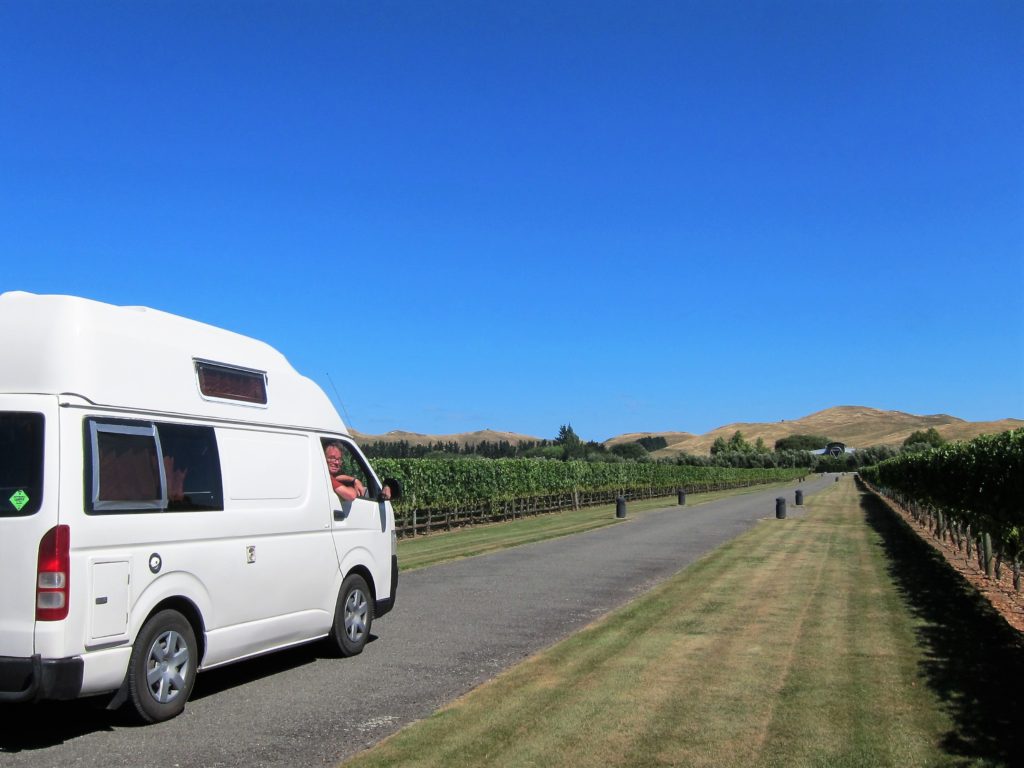
On our way to Sileni Estate. The Hawke’s Bay region is famous for its syrahs and sauvignon blancs.
Kiwi sniffs a good syrah
See the duct tape on the rear windows? That’s because our discount campervan rental has no screens. So we make our own.
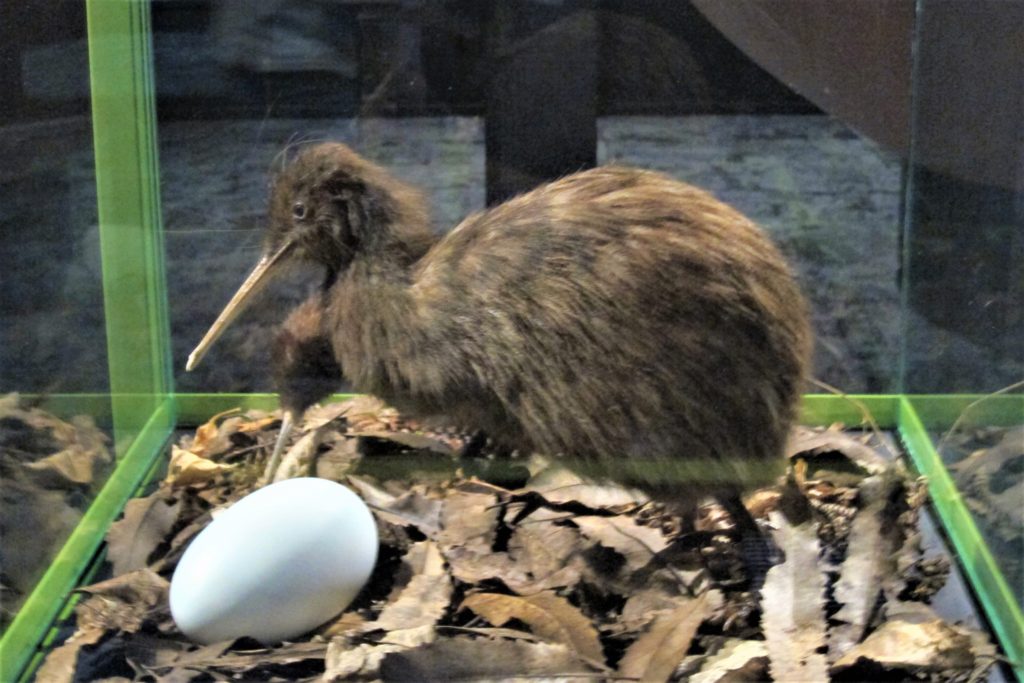
This is a stuffed kiwi – real kiwis suffer extreme stress when a flash goes off by accident, so photography is not allowed around the live birds.
Do these feathers make my ass look fat?
Note the size of the egg compared to the size of the kiwi. Ouch!
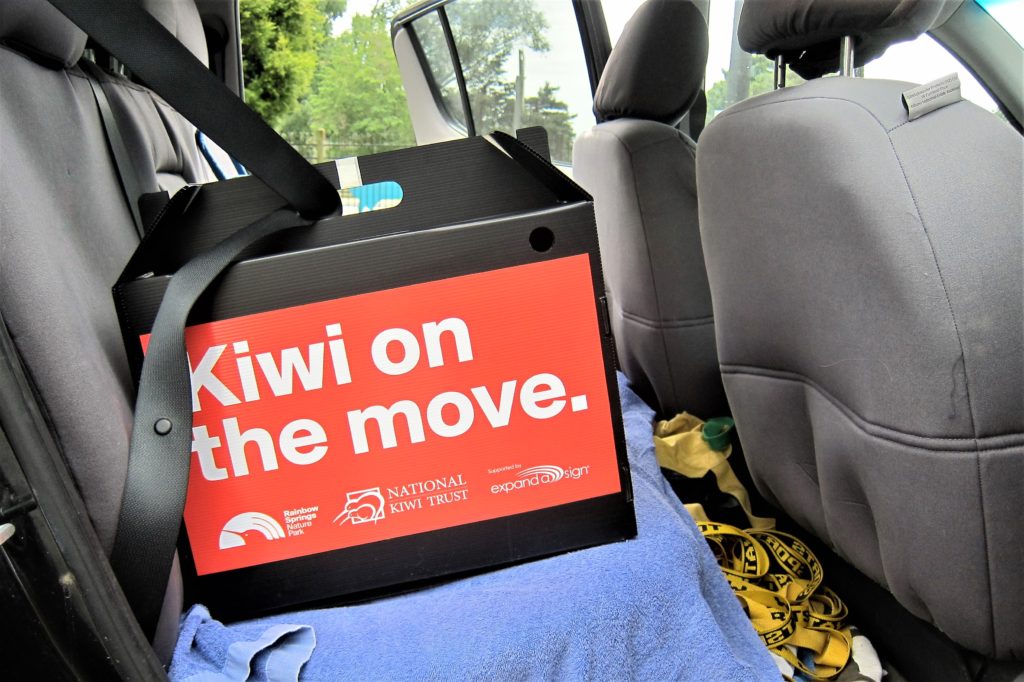
It so happens as we arrive, a pair of rangers are transporting a three-month-old kiwi to a new home in a national park.
This particular kiwi hatched during the visit of Harry Windsor and Meghan Markle (AKA the Duke and Duchess of Sussex.) They select the name ‘Tihei’, from the Māori Tihei mauriora, which means ‘sneeze of life’. (Every kiwi hatched here has a name. Over a thousand so far.)
So Sneeze is belted in and whisked away in comfort, as befits a bird of royal patronage.
So long, and thanks for all the worms
Let’s face it – New Zealand avian fauna is not very exciting after the technicolour riot that is Australian birdlife. But we love kiwis.
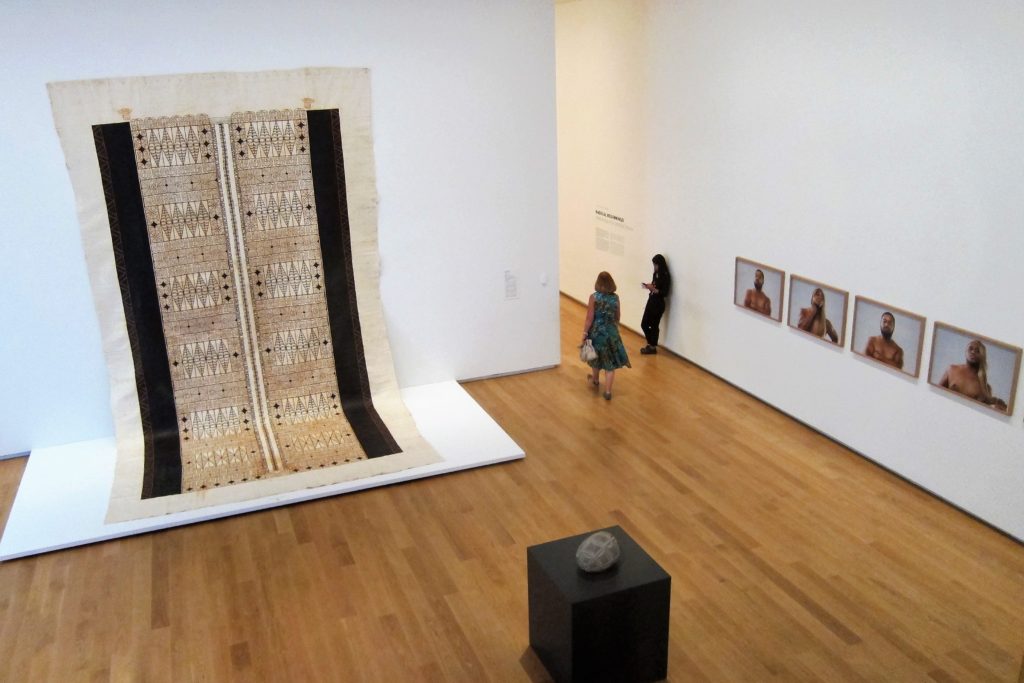
After arriving in Auckland, we spend a few days seeing the sights, including the architecturally impressive Auckland Art Gallery.
Bark cloth from some Pacific island
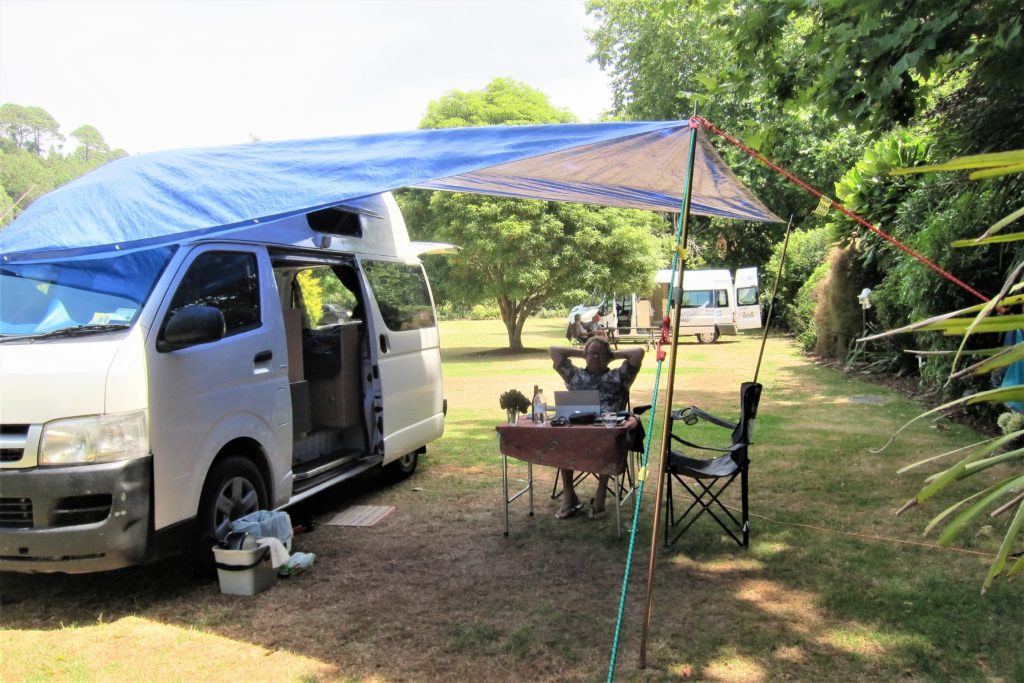
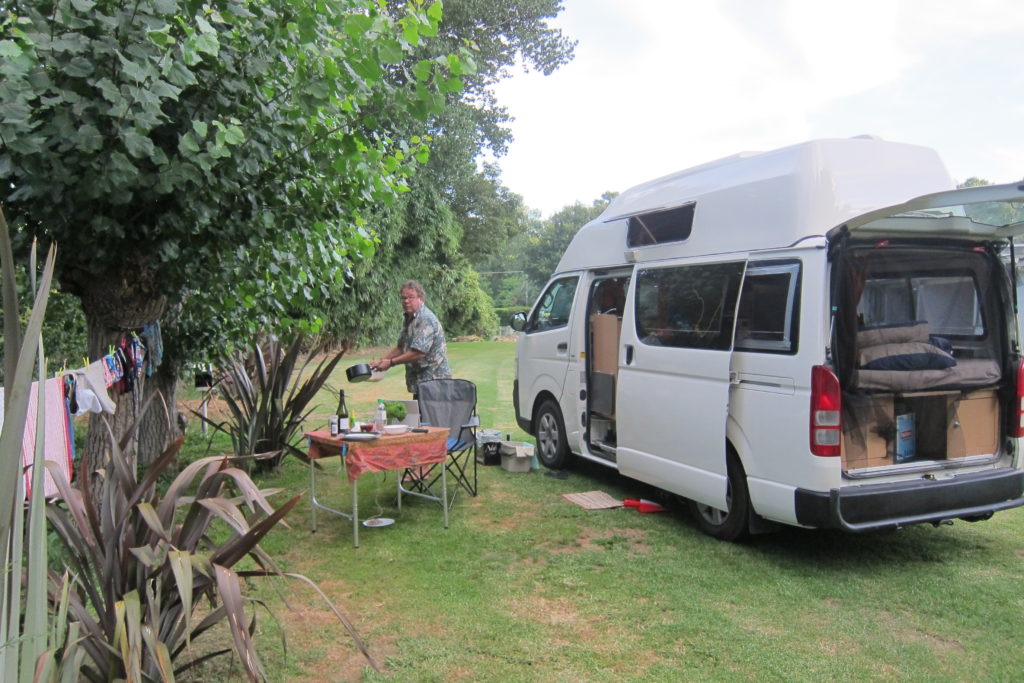
We pick up our campervan, home for the next few months. We name her ‘Kiwi’. I suggest ‘Kate’, after Kate Sheppard, the woman responsible for New Zealand being the first country to give women the vote in 1893. (For comparison, women in Switzerland got the vote in 1971.) I am overruled.
Kiwi and me
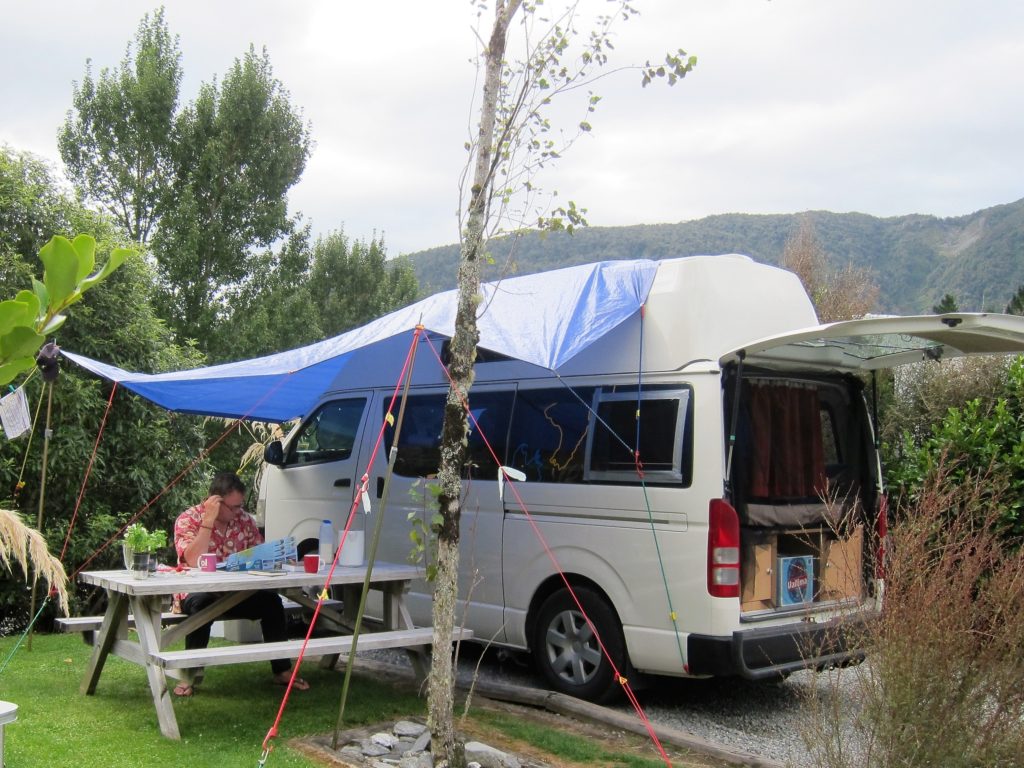
Note the homemade awning constructed from a cheap tarp, a couple of tent poles, and numerous bungee cords.
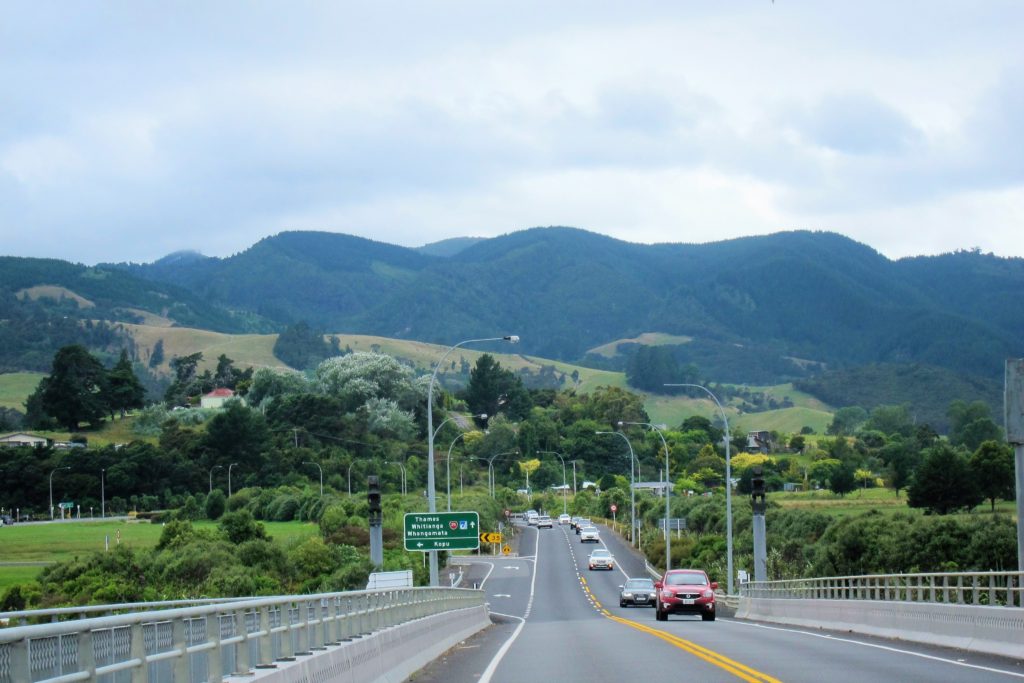
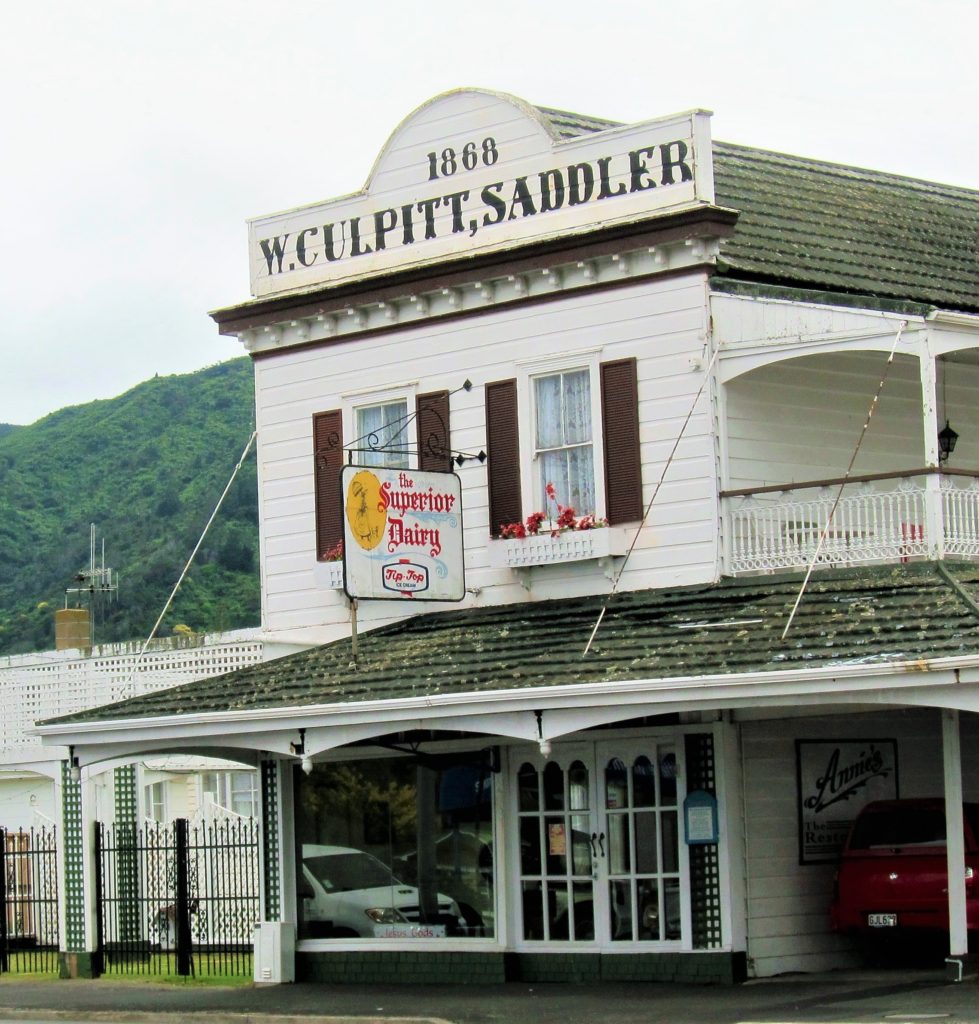
The east coast experiences a gold rush in the 19th century. This leaves towns with many Wild West-style buildings.
Storefront in Thames
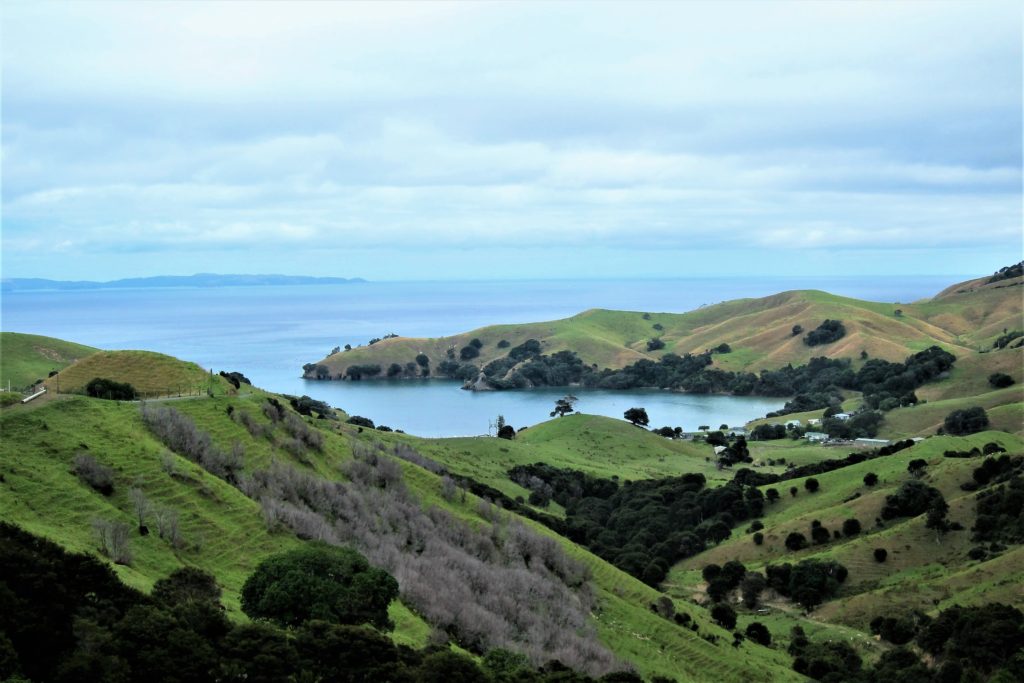
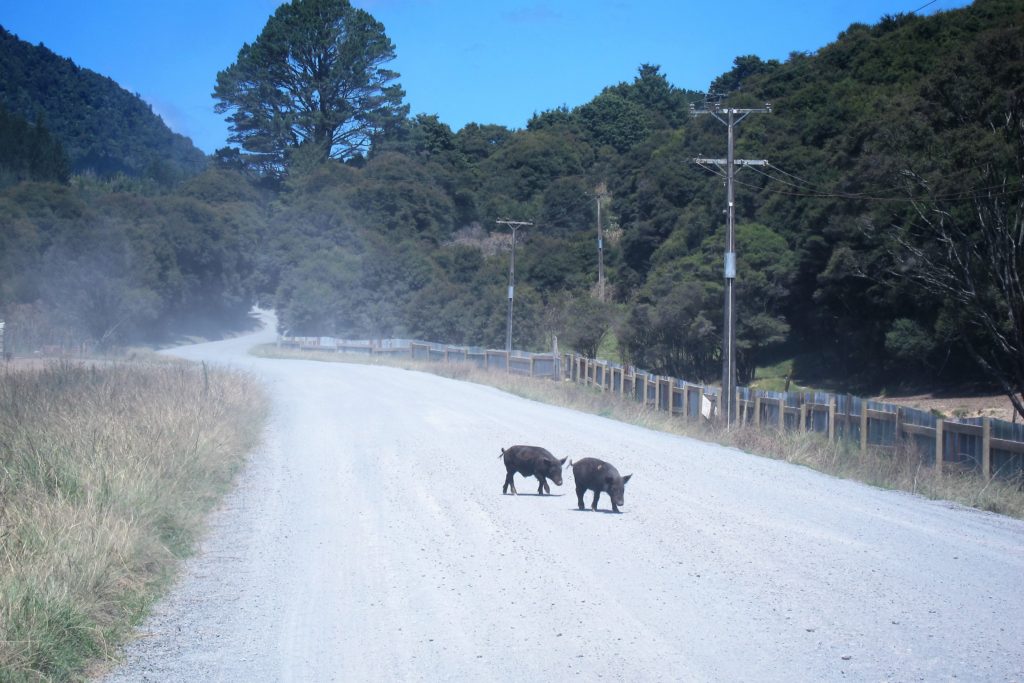
We take a shortcut known as ‘The 309‘ across the peninsula. Among the sights we see are herd of free-range pigs. Good old NZ pork on the hoof.
Slouching towards Gadara
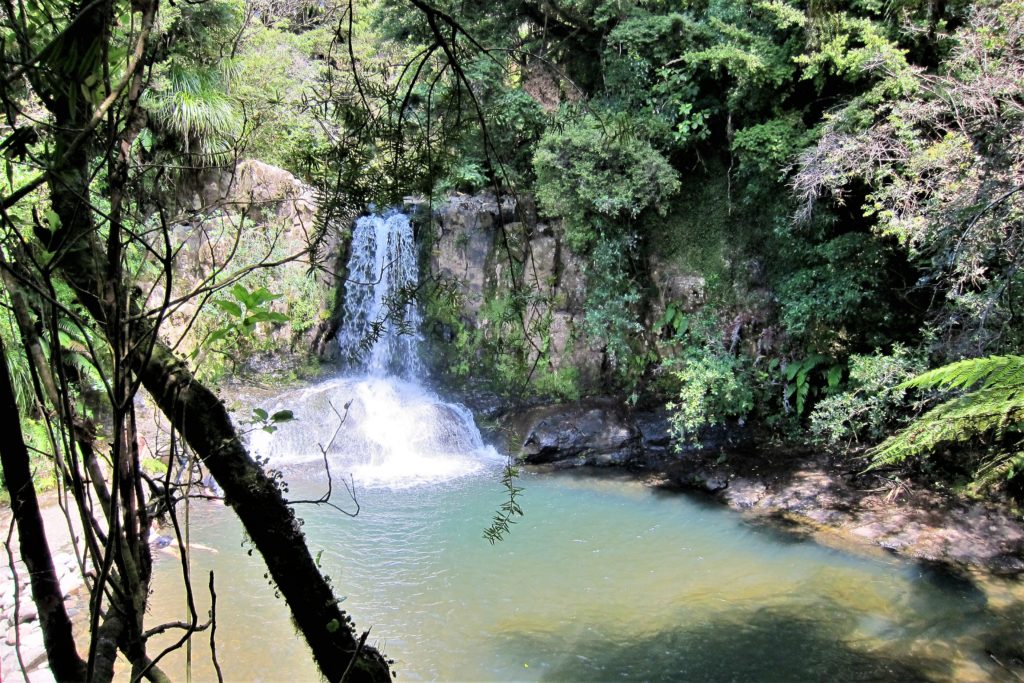
The twisty gravel road passes through some nifty rainforest.
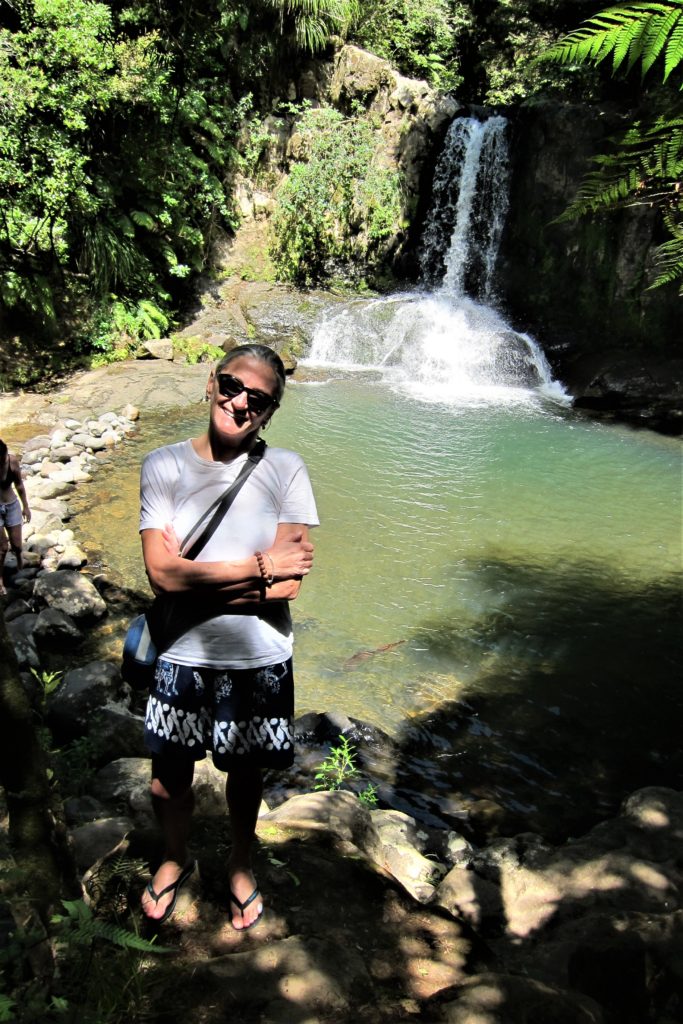
A photo of the Waiau Waterfall…
…made better by adding Maria
We drive down the coast, then inland to Matamata and camp by some hot springs.
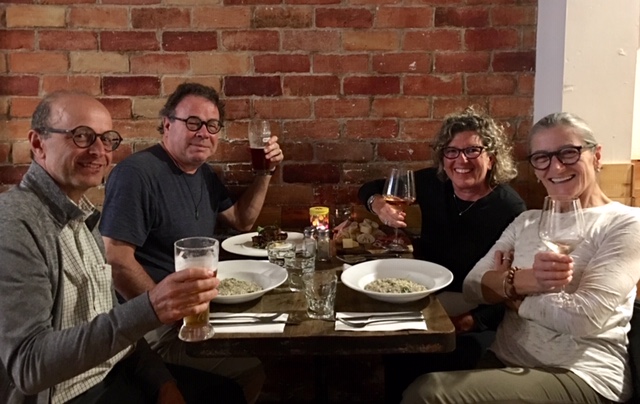
It’s pasta night
Campgrounds are expensive in New Zealand. Almost double the price of Australian campgrounds. No wonder so many people stick to ‘freedom camping’. (Not our thing at all. If you can afford a motor vehicle, surely you can afford to pay for amenities like hot water and electricity.)
Sight or Insight of the Day
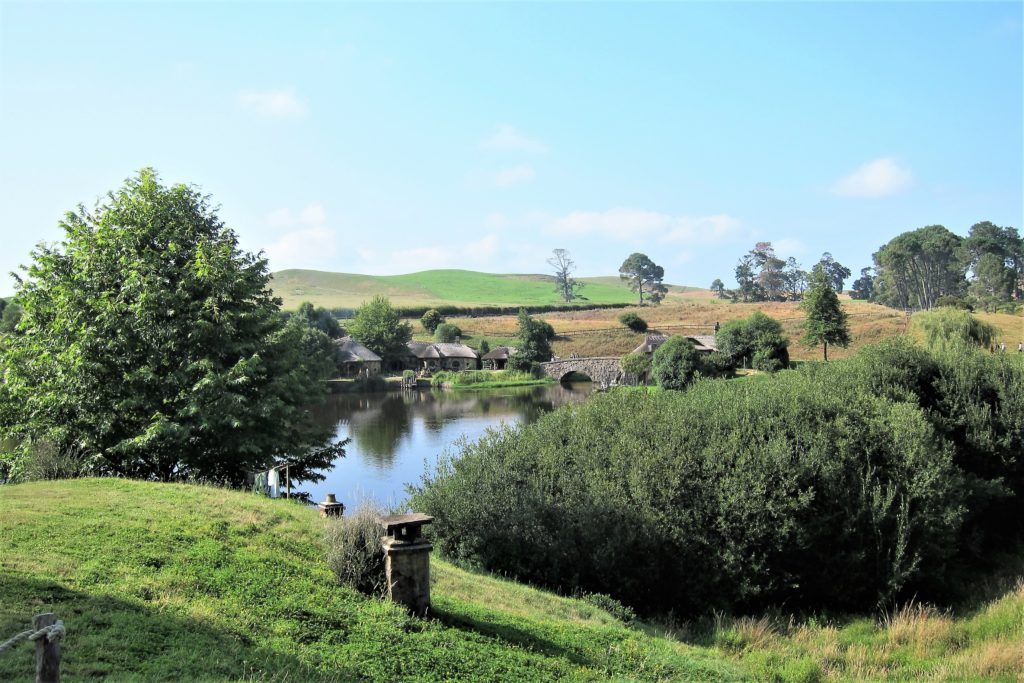
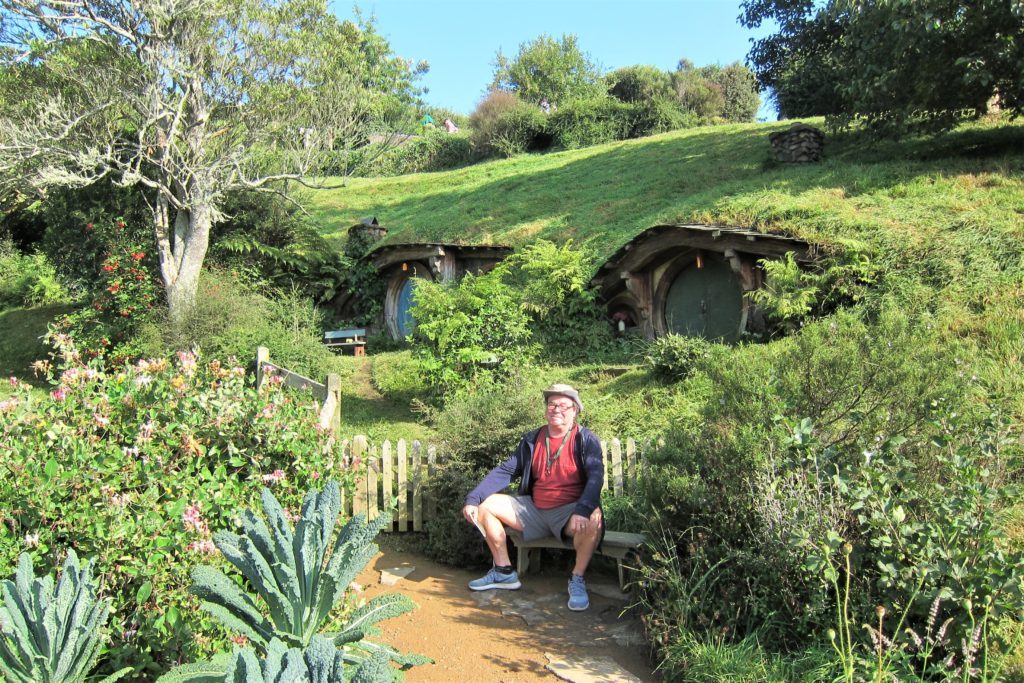
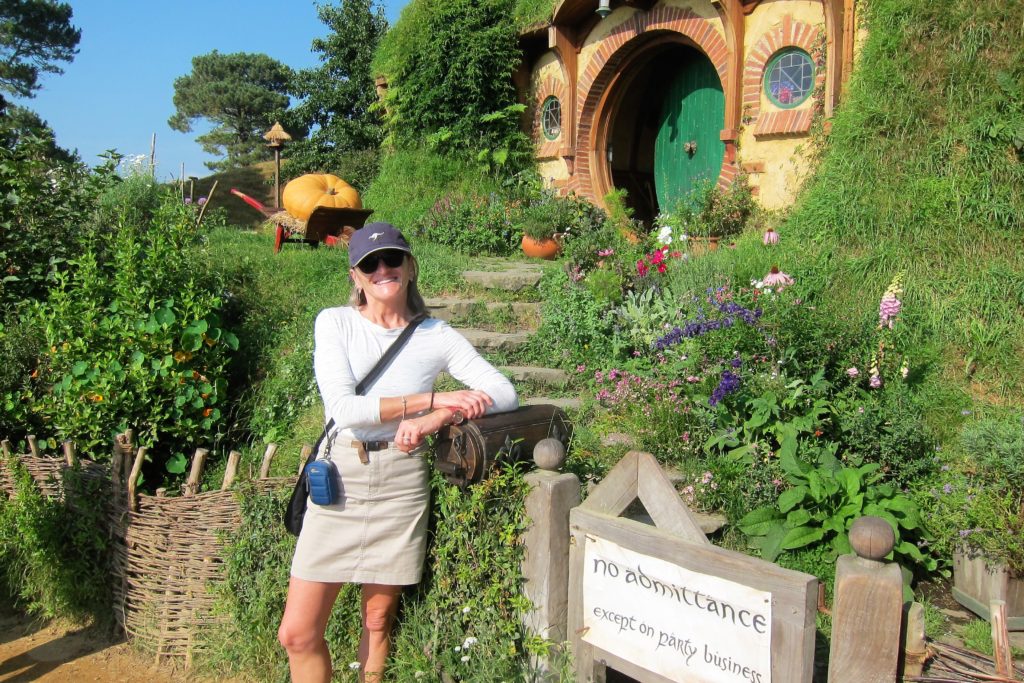
Because we are in the area, we visit the set of the Lord of the Rings and The Hobbit films. It is extremely touristic, that is, wildly popular.
So at least we’re caught up to our arrival here. More to come.
Sight or Insight of the Day –
We run into people we know from Ottawa on the streets of Auckland.
As we walk down Queen Street, we hear our names called. It’s Yves. Yves and Darlene are good friends of my brother and sister-in-law, Joanne. (Darlene and Joanne are cousins.) We knew they were on a cruise in this part of the world, but it seems unlikely our paths would cross. Kudos to Yves for recognizing us among the throngs of the city.
We meet 14,219 km from home
How improbable is that? We celebrate by going out for dinner.
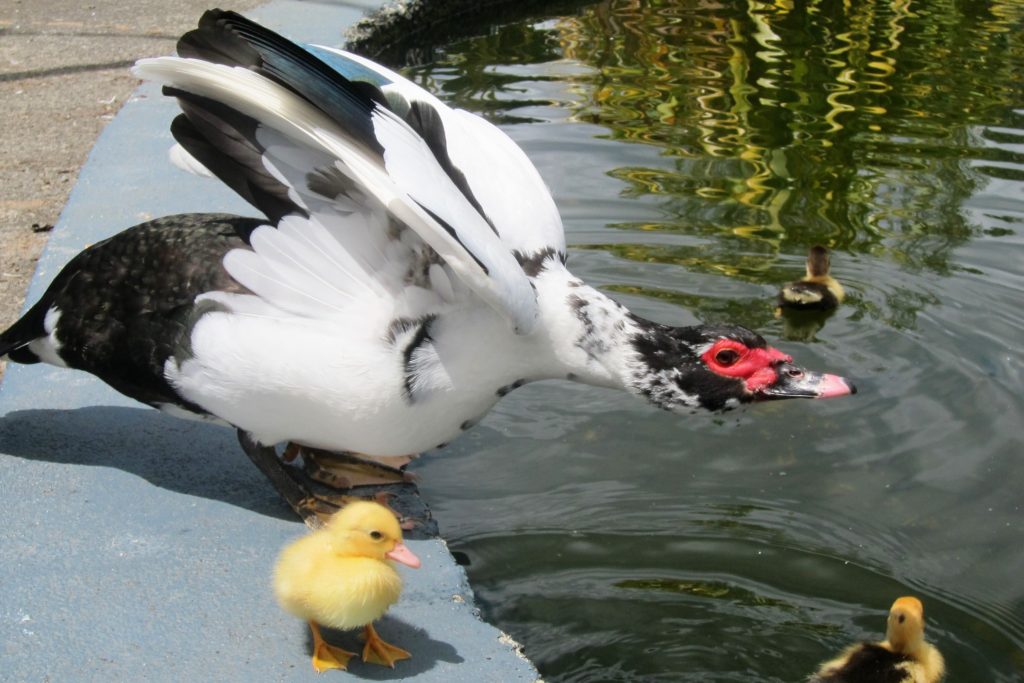
We stop for lunch in Tarraleah. In the nearby fountain, a momma duck herds her ducklings.
Falling between the quacks
On our way towards the west coast, we visit the Wall in the Wilderness. This is a project of sculptor Greg Duncan to carve a mural in wood describing life in this part of Tasmania. They have a strict ‘no photos’ policy, but fortunately, Google once again comes to the rescue, as you can see here.
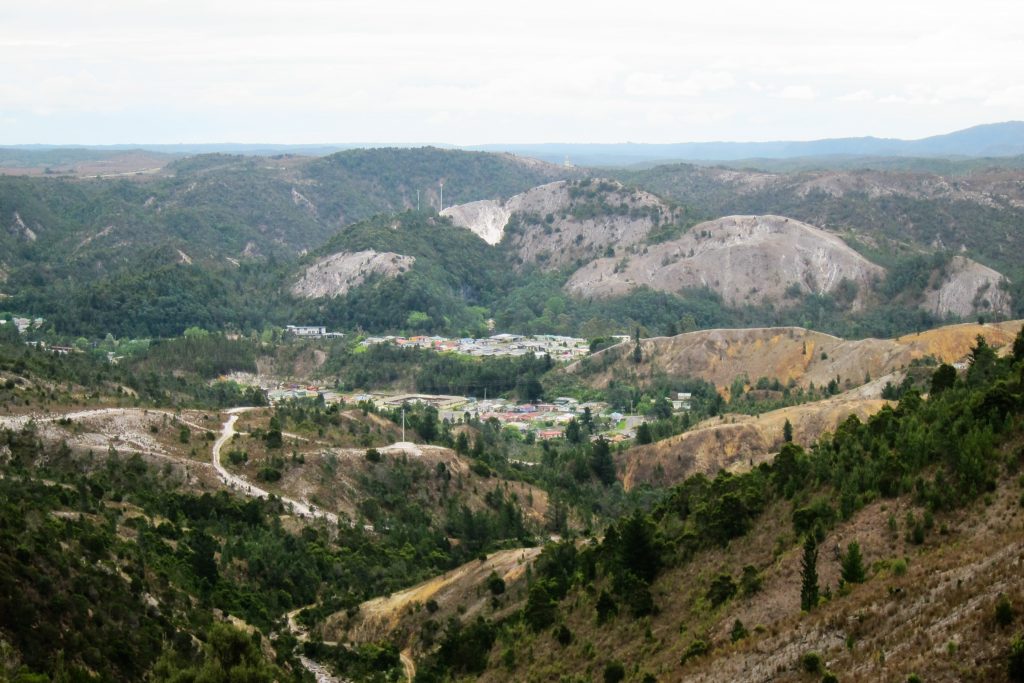
On our way to Strahan, we pass through Queenstown, a former mining area.
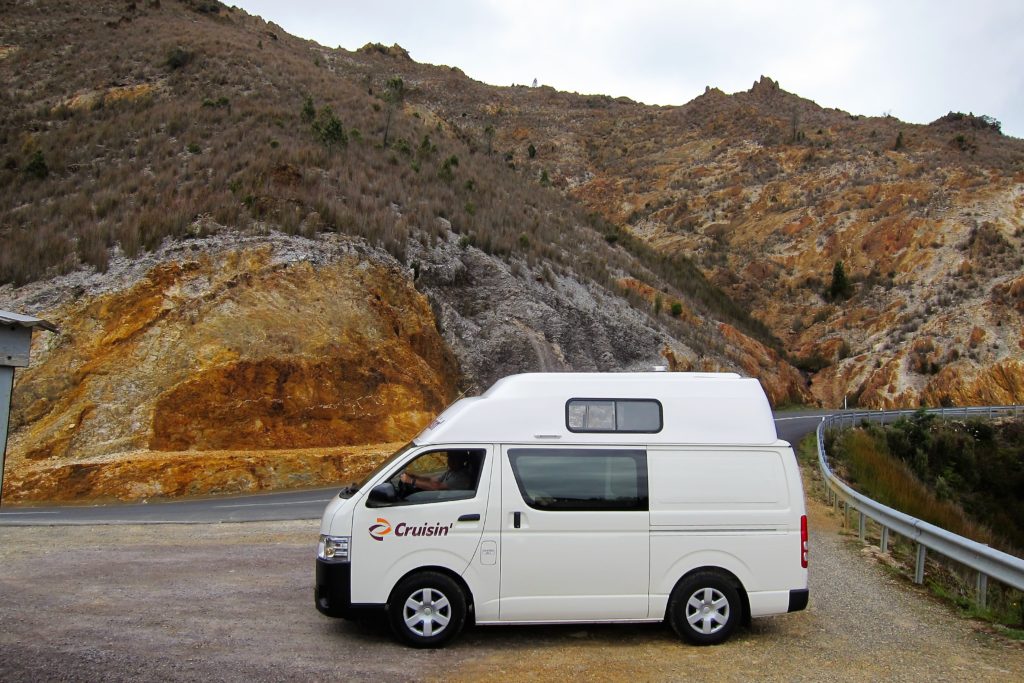
Below is Tas, our two-week campervan rental. He – yes, he’s a ‘he’ – is actually an upgrade. Much newer, but lacking in character. And an un-ergonomic configuration that has us banging our heads daily and tut-tutting about the user-unfriendly design.
Tas is no Matilda
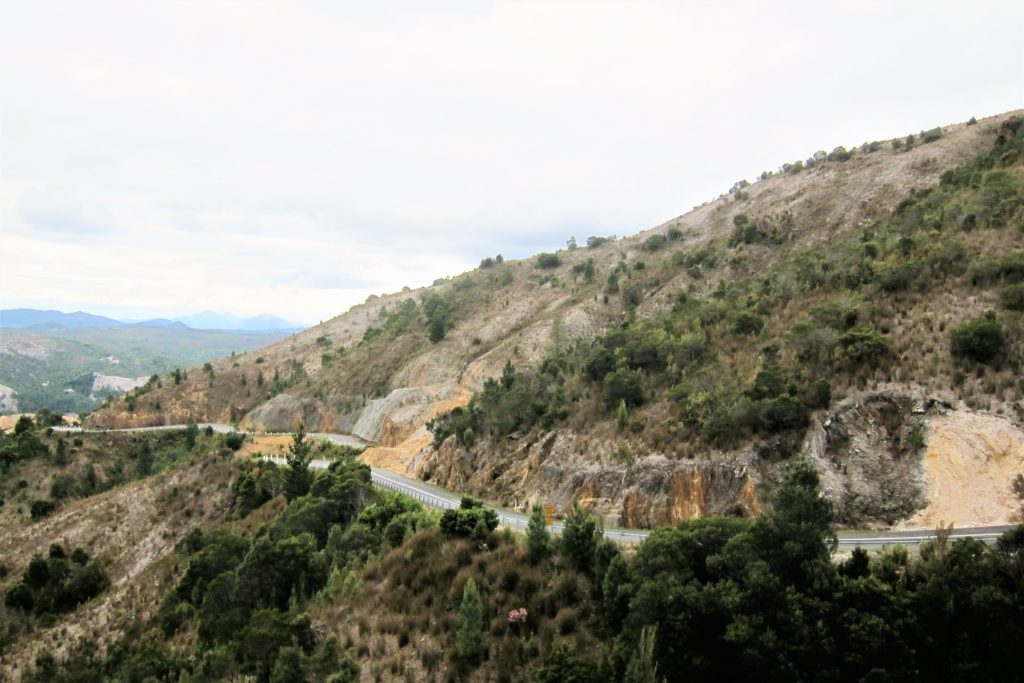
The approach to Queenstown is a windy steep road – lots of fun.
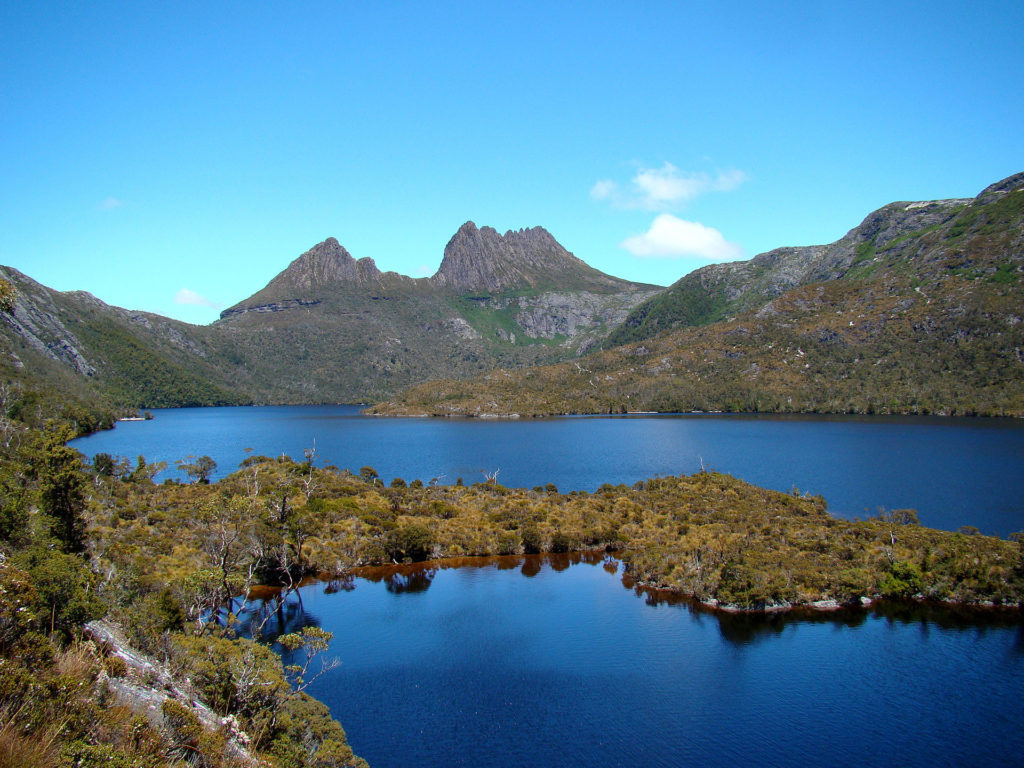
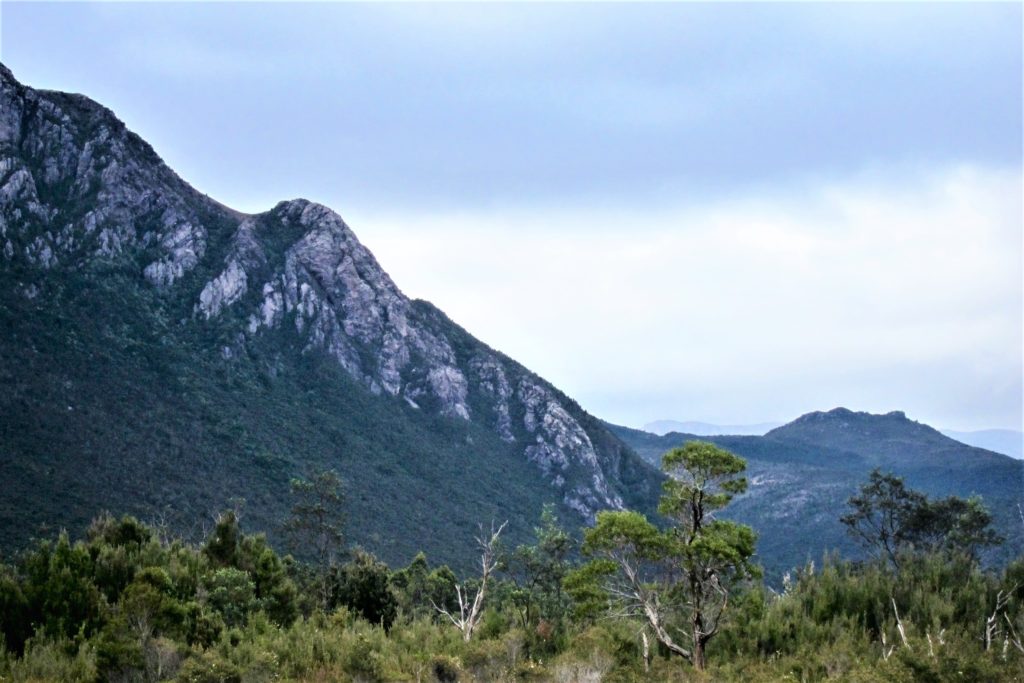
After a few days in Strahan, we drive to Cradle Mountain.
Cradle Mountain – photo courtesy of Wikipedia – not exactly as illustrated
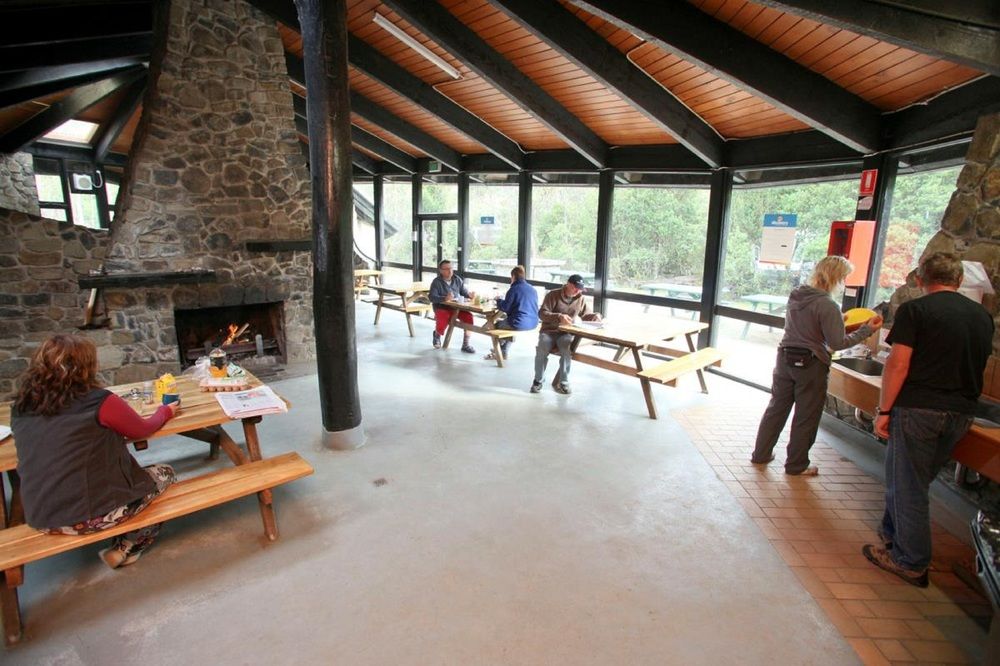
We never get to see it like this. For the entire time we are in the area, we endure gale-force winds, torrential rain, and temperatures hovering around zero. Fortunately, there’s a comfy lodge to hang around in during the day.
“Hell is empty and all the devils are here.” ― Shakespeare, The Tempest
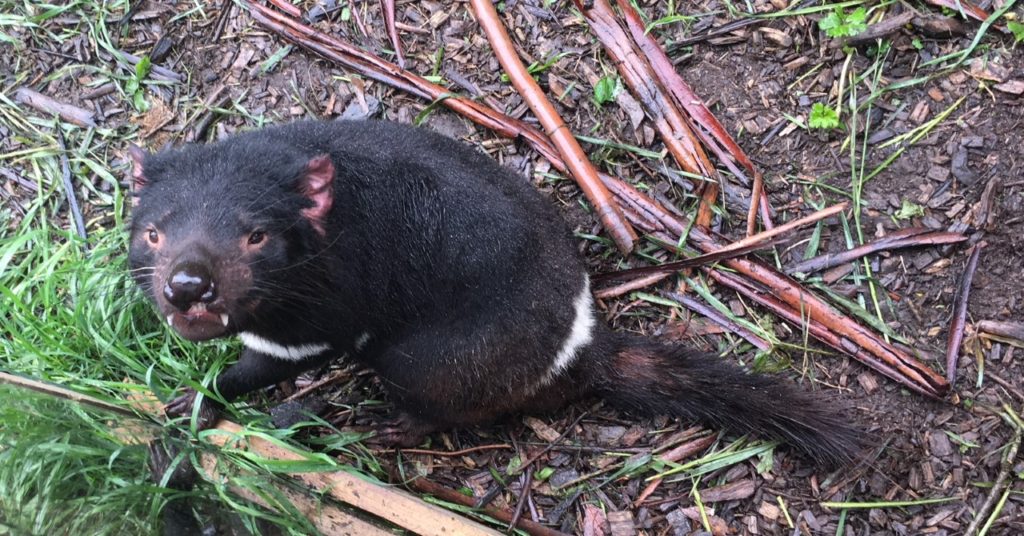
Poor devils – they’re plagued with DFTD, which threatens to wipe them out. Devil facial tumour disease only appeared in the 90s, but is taking a severe toll on the Tasmanian devil population. It’s rare that a species becomes endangered through nature itself rather than through the shitty behaviour of humans, but this is the case.
They’re cute, but not exactly cuddly. Anyway, they don’t look anything like their Warner Brothers namesake.
Although they do share unspeakably powerful jaw strength. According to Wikipedia:
‘The Tasmanian devil has the most powerful bite relative to body size of any living mammalian carnivore, exerting a force of 553 N (56.4 kgf).’
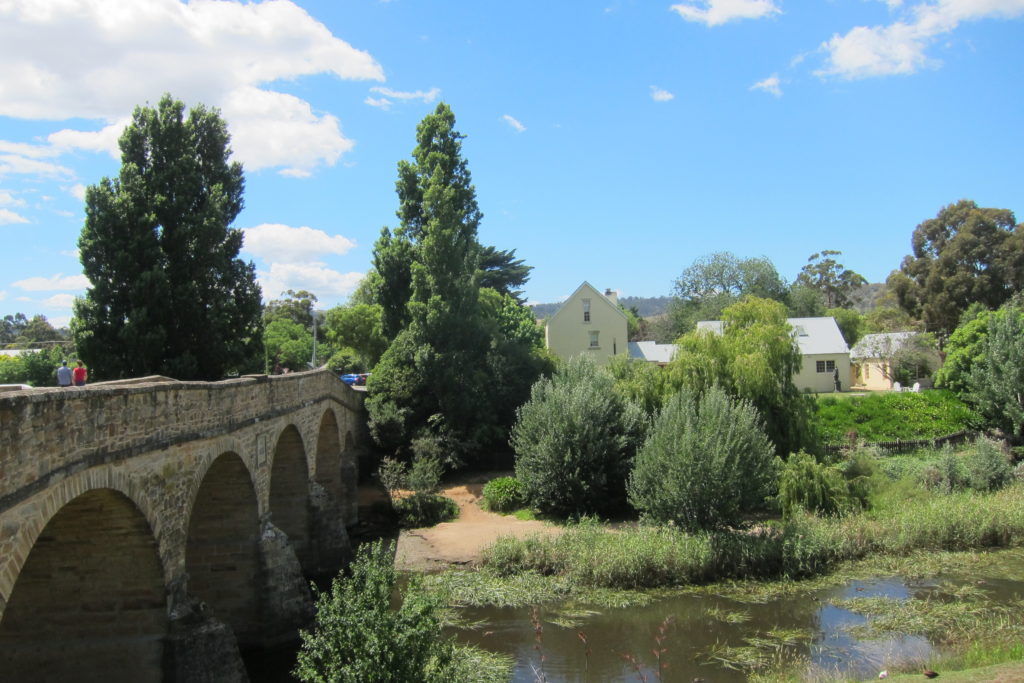
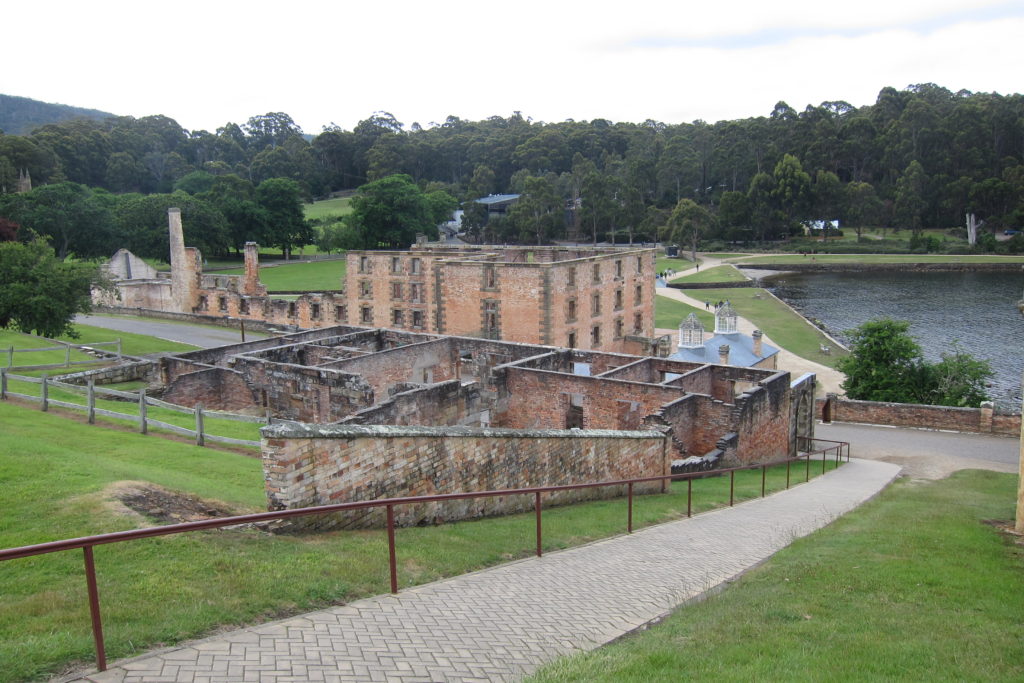
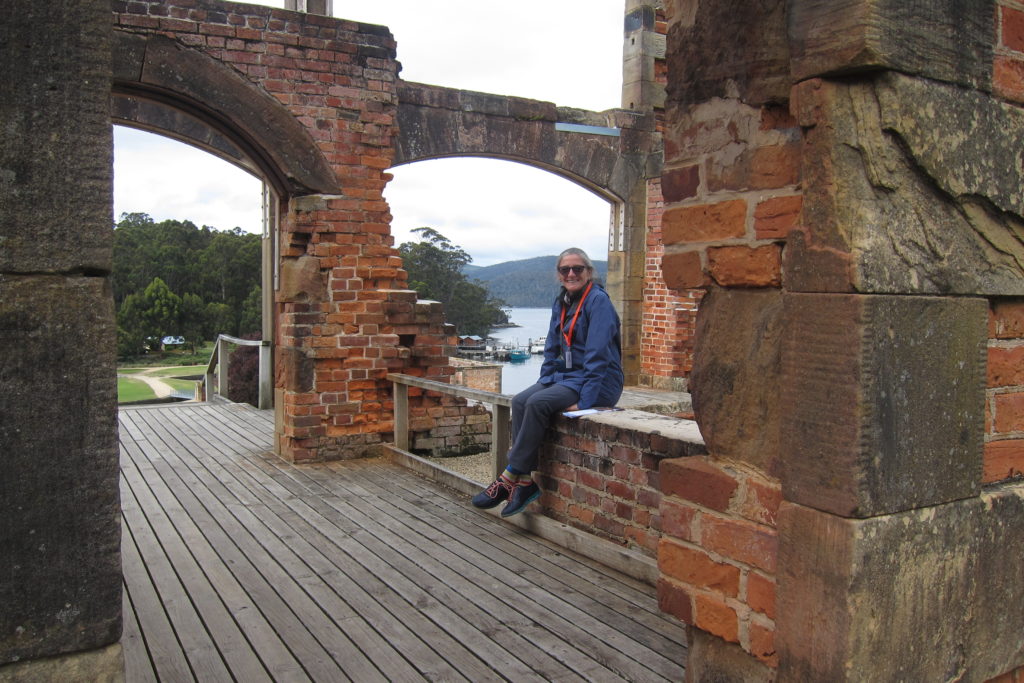
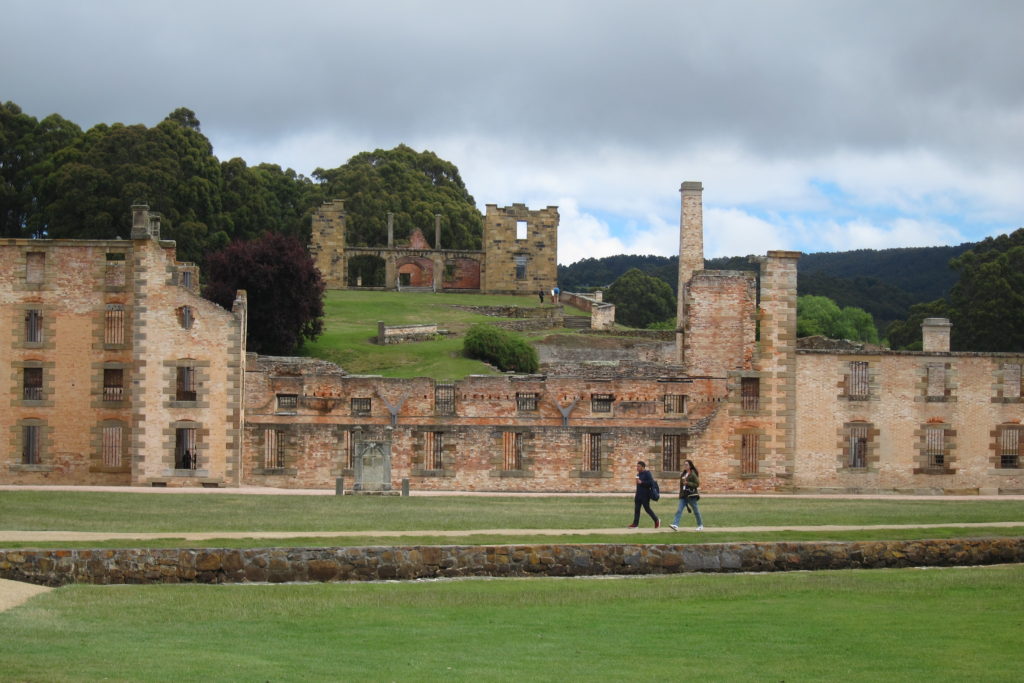
We carry on to Port Arthur. Originally a dreaded penal colony, it is now a pleasant place to walk around.
Port Arthur
Resting – Port Arthur
Prison ruins, Port Arthur
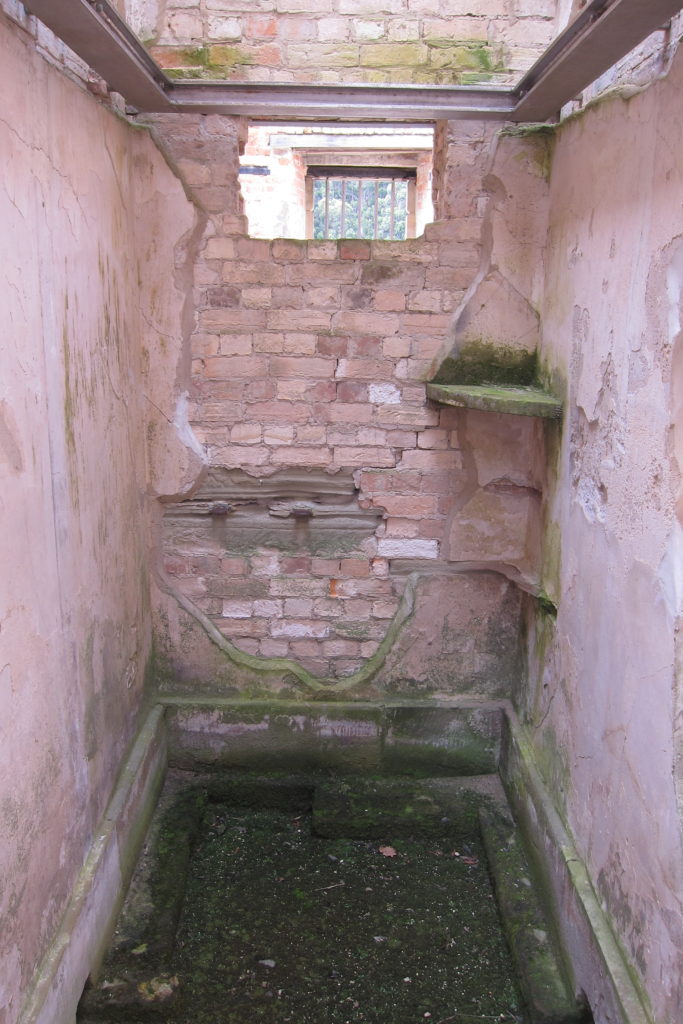
An old cell
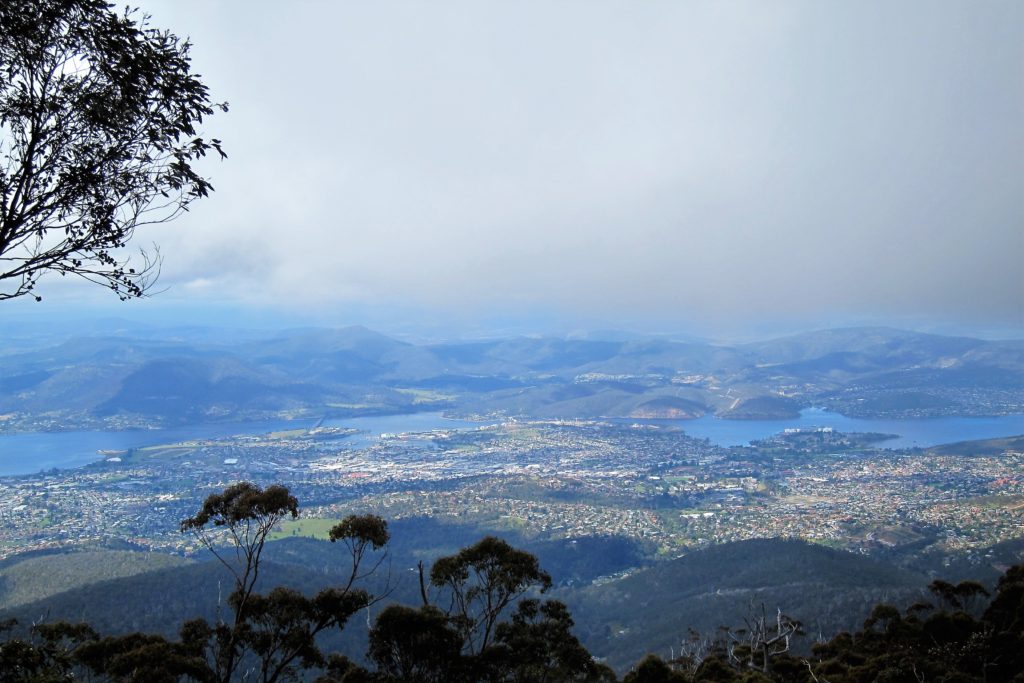
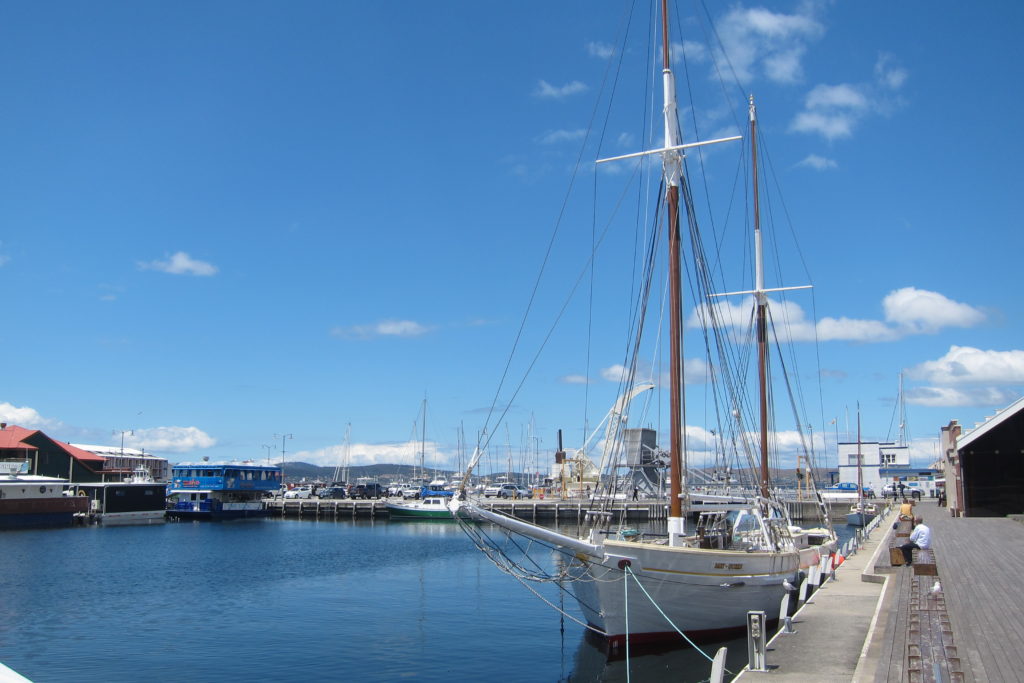
Hobart is a pleasant small port city. Very civilized.
Harbour town
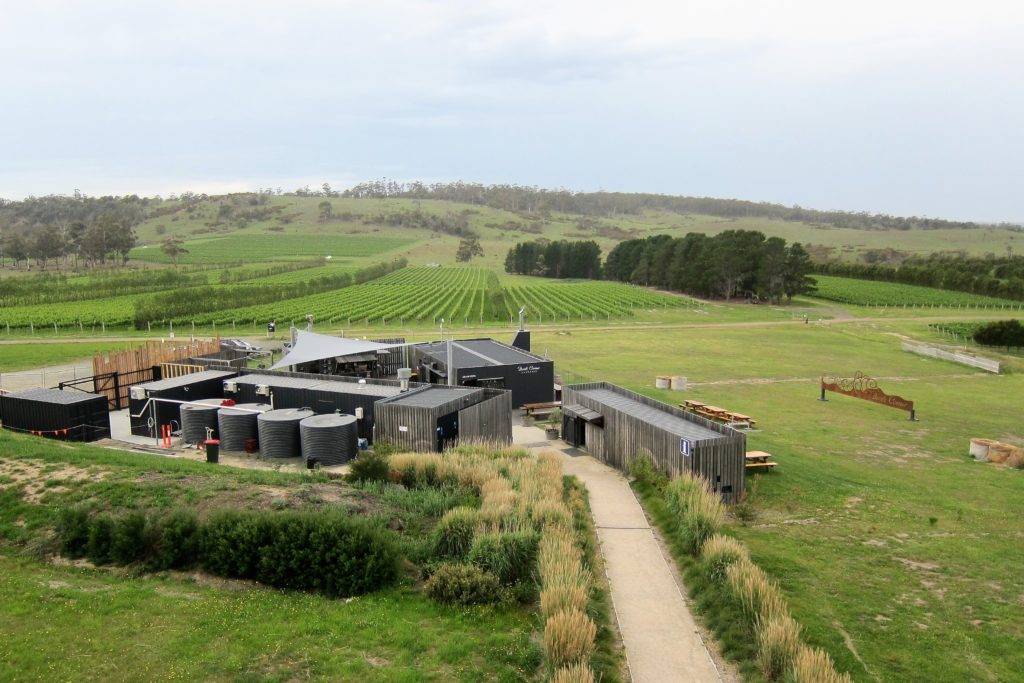
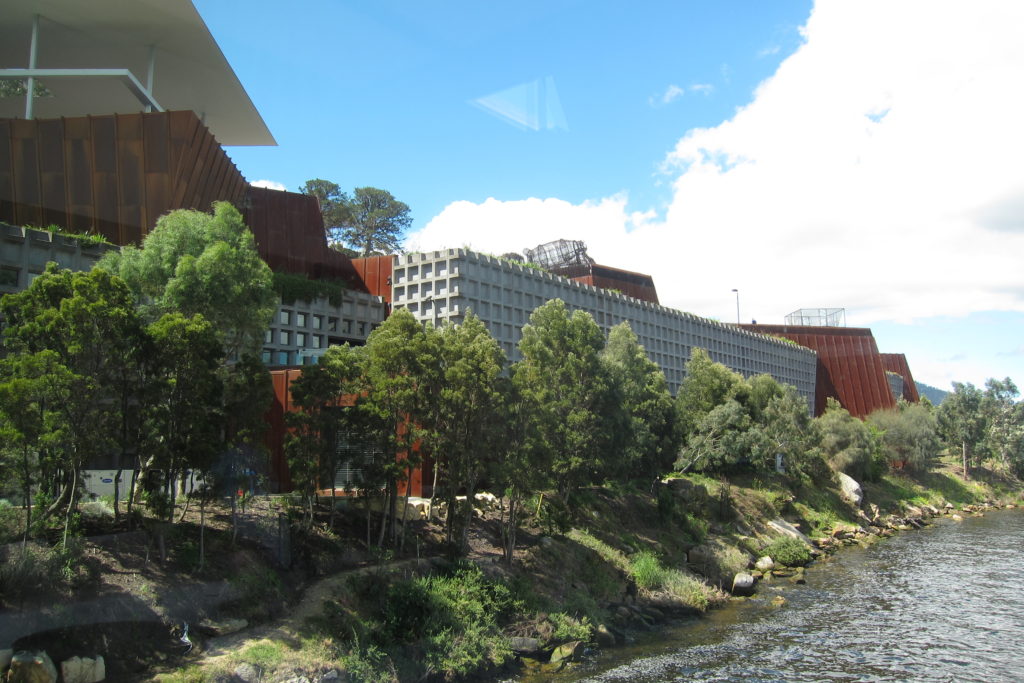
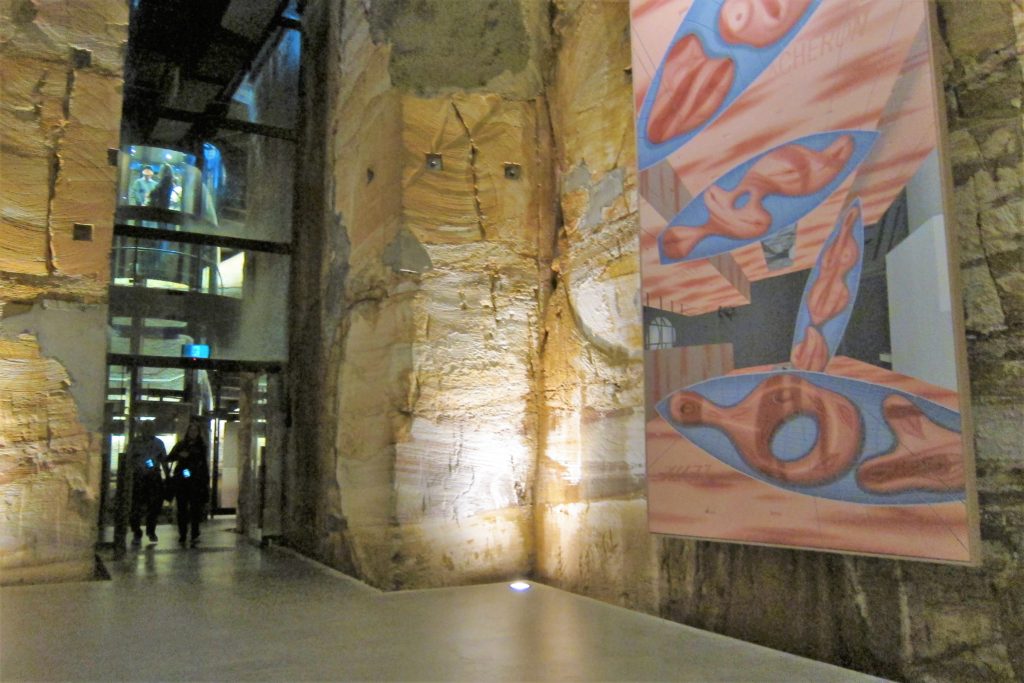
Eventually we arrive at the MONA. This place is astounding.
The Museum of Old and New Art
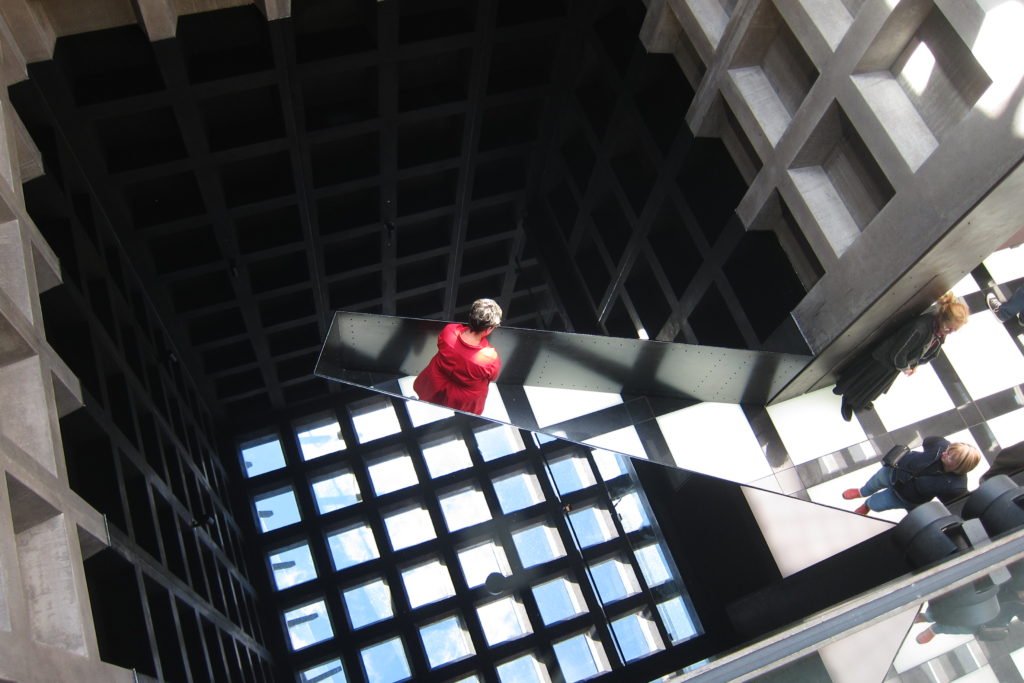
Most of it exists underground, carved out of the living Tasmanian sandstone.
Down into the bowels of the earth…
It’s private. It is founded by a local Hobart man, David Walsh. He made a lot of money as a gambler. He has no background in the art world. And he has built an institution – no, that’s too stuffy a word – the man has built a space-where-stuff-happens-that-is-endlessly-fascinating-to-experience. We need a new word for this.
New York, London, Paris, Berlin (and Sydney, and Melbourne) – eat your hearts out. You have nothing like this.
Below is UK artist Richard Wilson’s ’20:50′.
‘… a room flooded with engine oil. A waist-high barrier extends into the room allowing viewers to walk into it without touching the still, black mass. Museum staff repeatedly tells viewers not to touch it. ‘ – Marcus Teague, BROADSHEET Melbourne
I saw this at the Saatchi Gallery in London decades ago. </End of art brag>
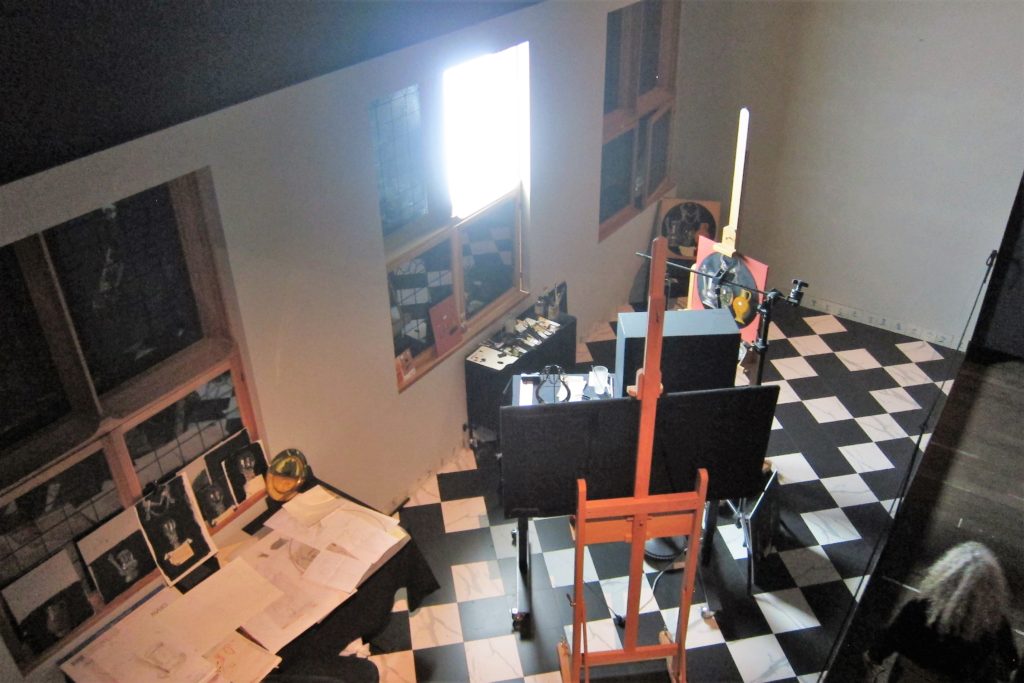
Replica of Vermeer‘s studio in the MONA, including the light (even though it’s deep underground)
The MONA combines bleeding-edge modernism and the shatteringly unconventional with a total and utter lack of pretension. (This last is a very Australian aspect.)
It’s kind of like Louisiana north of Copenhagen or the Kröller-Müller Museum in the Netherlands – if you’re never in the area, you may never know they exist. Then you stumble across it and think ‘Holy shit! Why have I never heard of this place?’ Assuming you’re the artsy-fartsy type, of course.
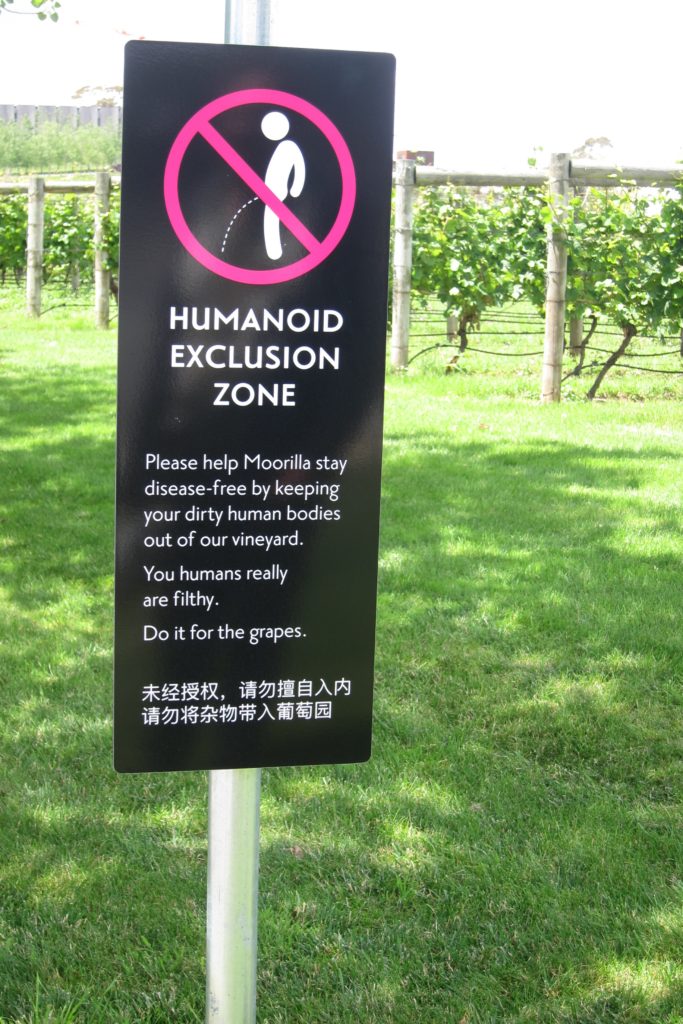
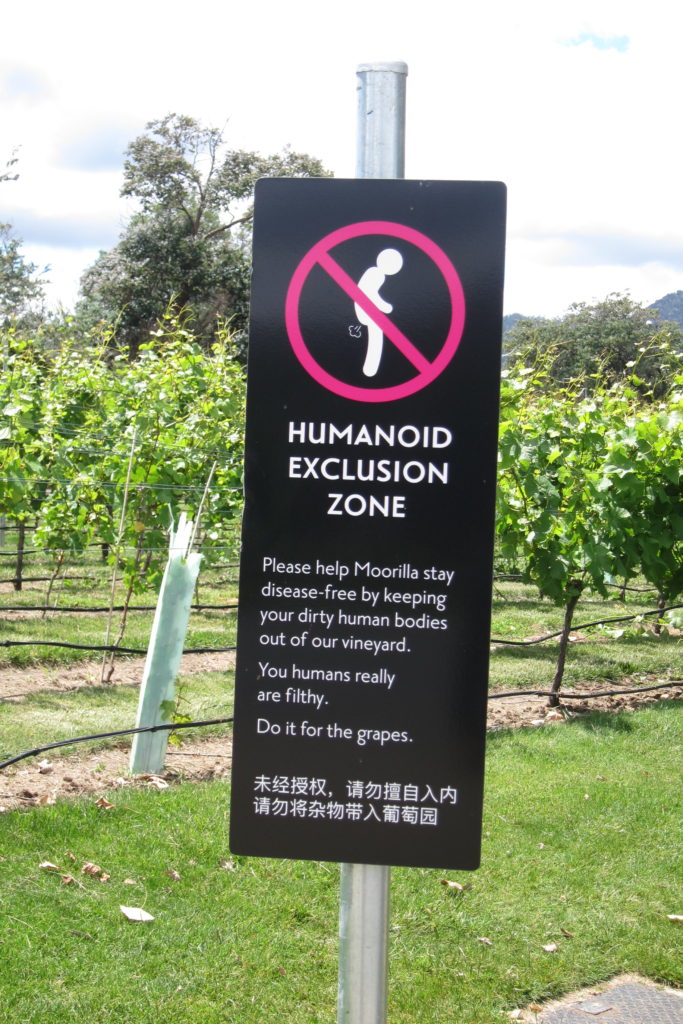
The irreverence carries on in the signs asking people not to trespass in the vineyards surrounding the MONA.
and another…
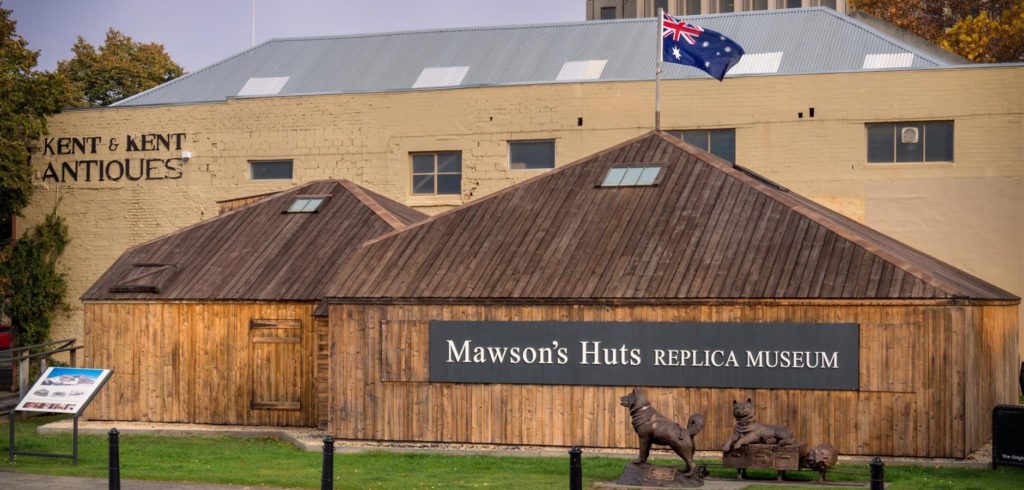
Also in Hobart, we visit a replica of Mawson’s huts. Douglas Mawson was an Antarctic explorer and geologist from South Australia.
Good place to chill
A fascinating man. He goes to the Antarctic with Shackleton, leads several other expeditions filled with derring-do, traipses around the outback doing pioneer geological surveys, then continues on in a career as a respected academic. Like Indiana Jones with an Australian accent.
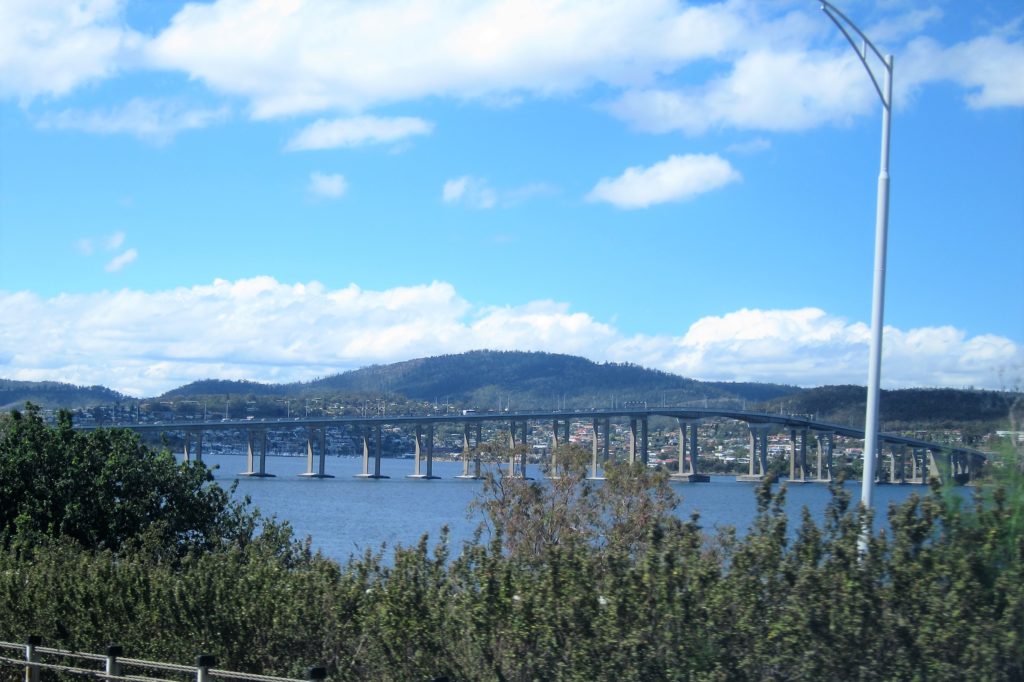
A landmark of Hobart is the Tasman Bridge.
Tasman Bridge
This was the site of a catastrophic accident in 1975.
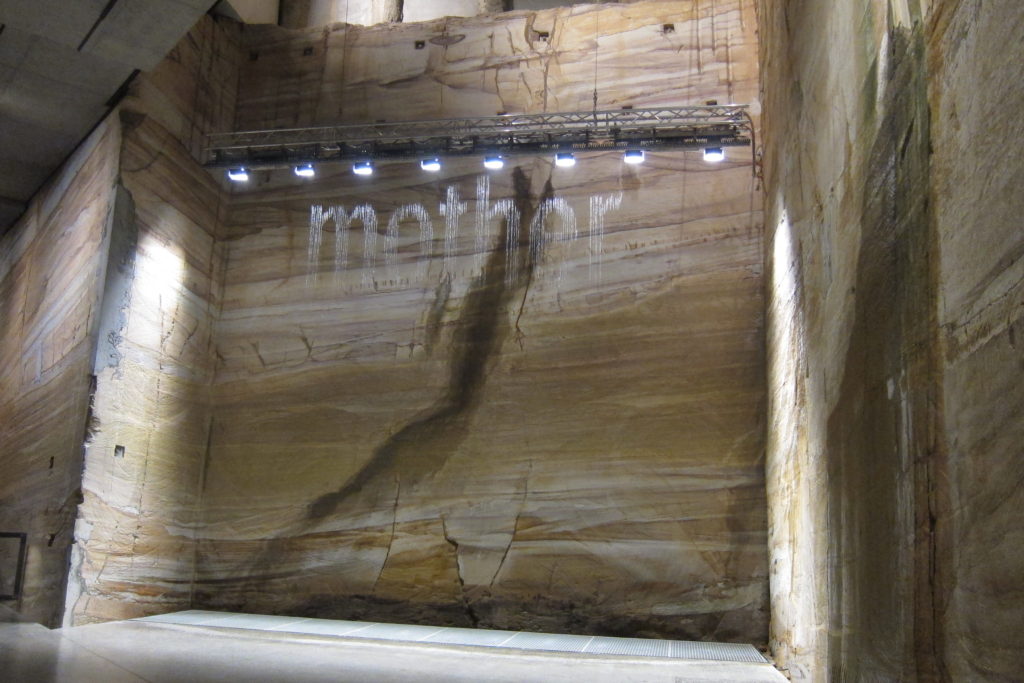
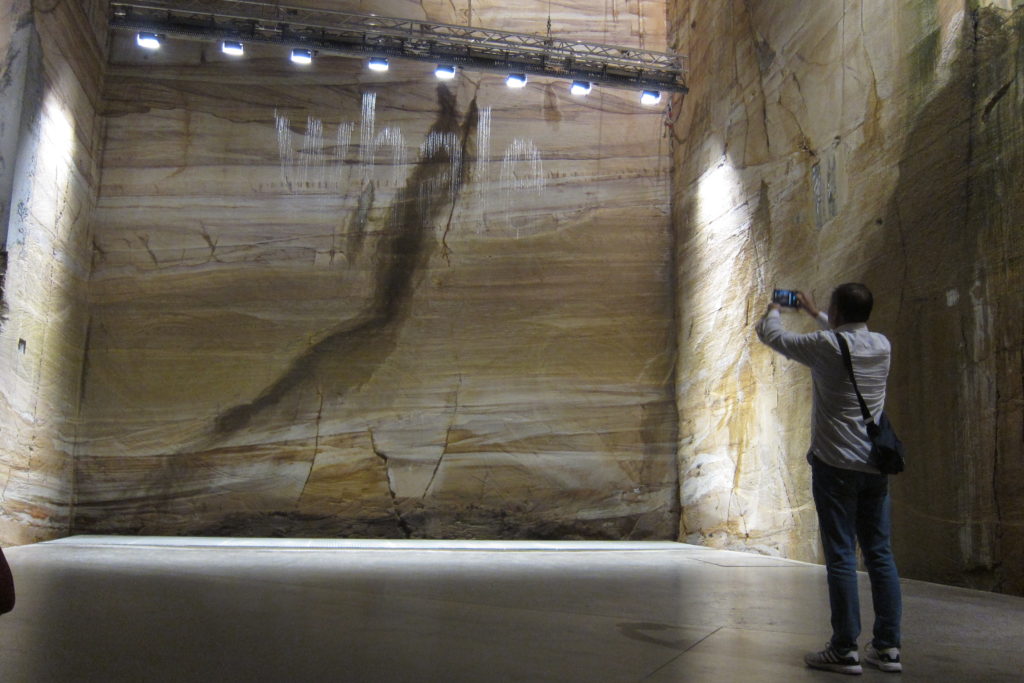
‘In BIT.FALL, information is represented by words generated by a computer program, based on a statistical algorithm. The program filters relevant terms from the current stream of news on the internet, and transmits the values to the control unit of BIT.FALL. In a split second, BIT. FALL releases hundreds of drops at specific intervals, creating a ‘waterfall’ of words. Each drop of water thus becomes a liquid and transient ‘pixel’ or ‘bit’, the smallest unit of information. ‘
So the words that appear are based on whatever’s trending on the web.
Rapt viewer
The words are crystal clear, but immediately dissolve into a mist, leaving you waiting for the next one. We stand watching this for ten minutes.
From the Australian Alps, we travel from Gippsland to Melbourne to Tasmania.
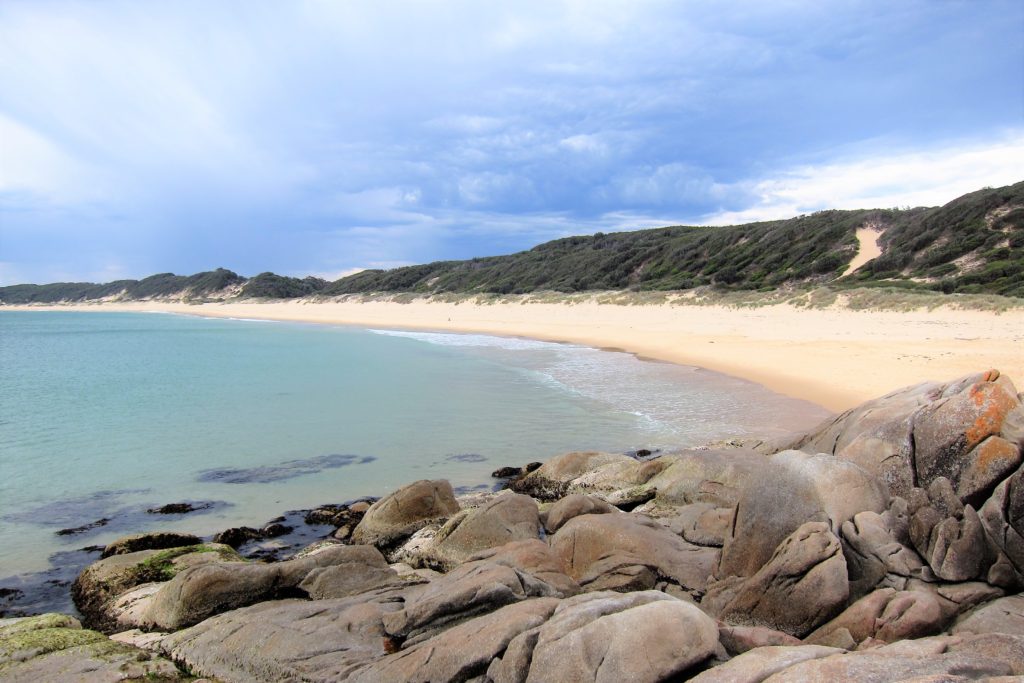
We spend a few days at Cape Conran, in East Gippsland. The beach is deserted.
Cape Conran
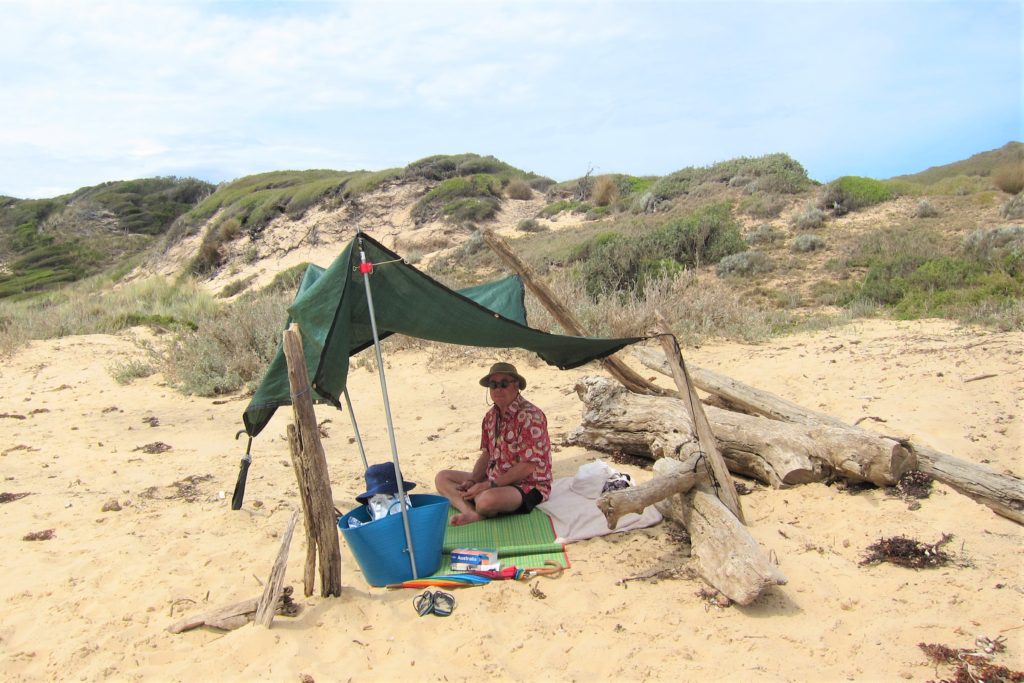
We create a shelter against the sun from whatever we can scavenge in Matilda, in addition to driftwood, because we leave most of her awning materials – pegs, guy-lines, etc – back at the campground.
Check out the umbrella in use as a tent peg
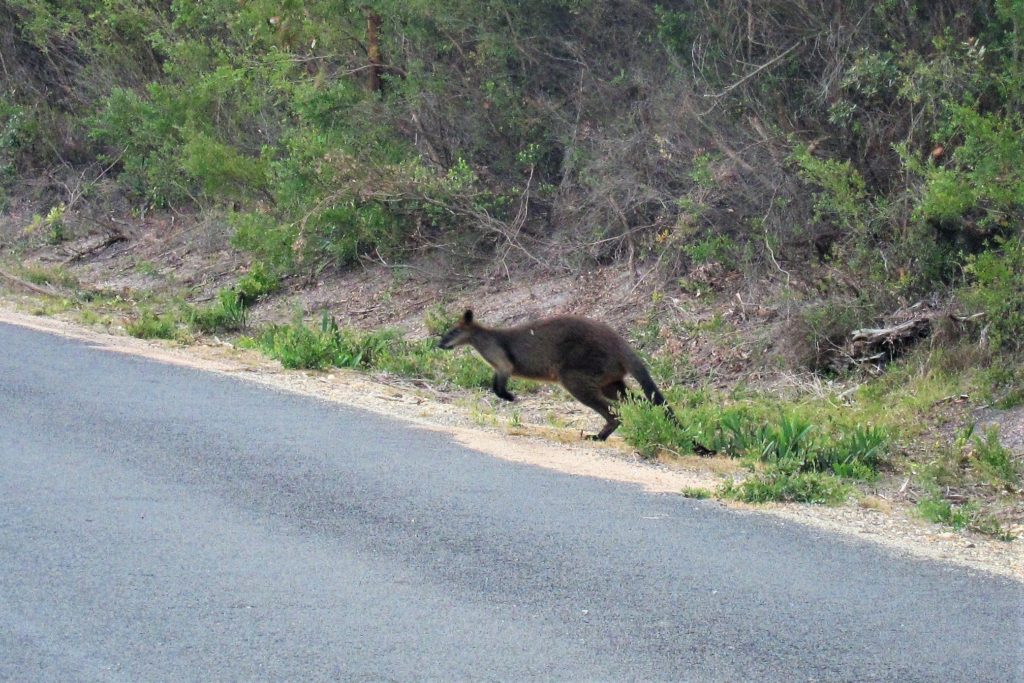
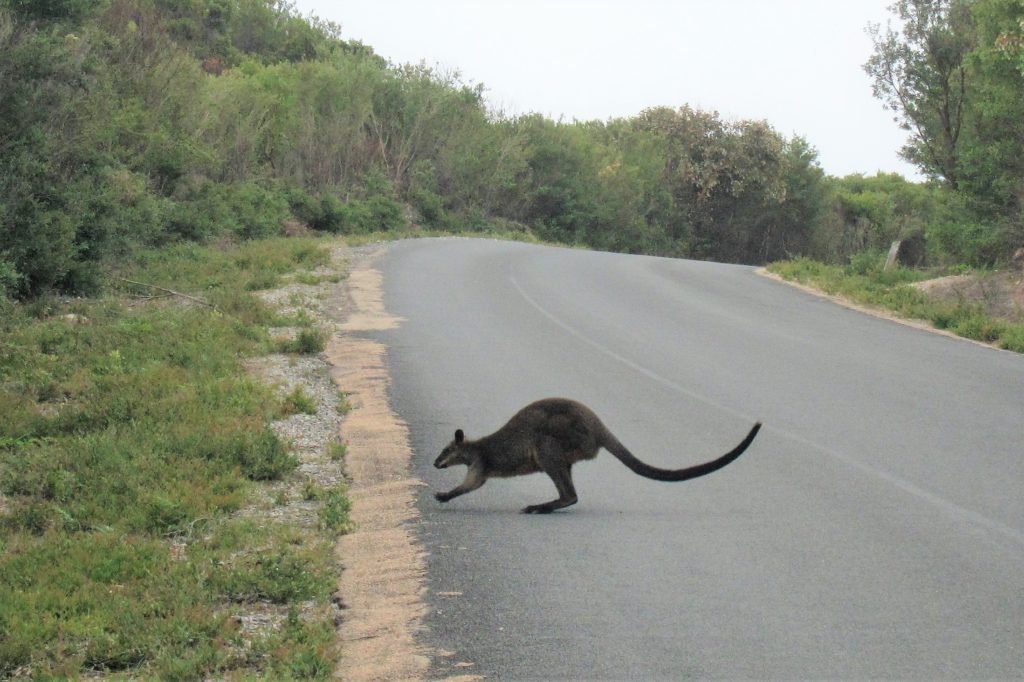
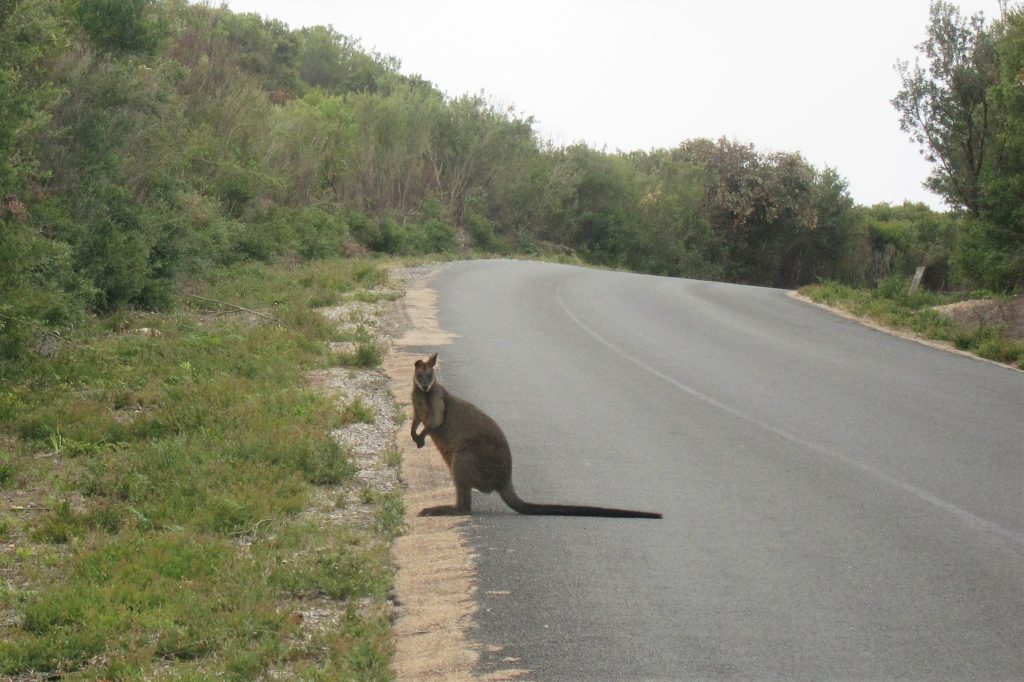
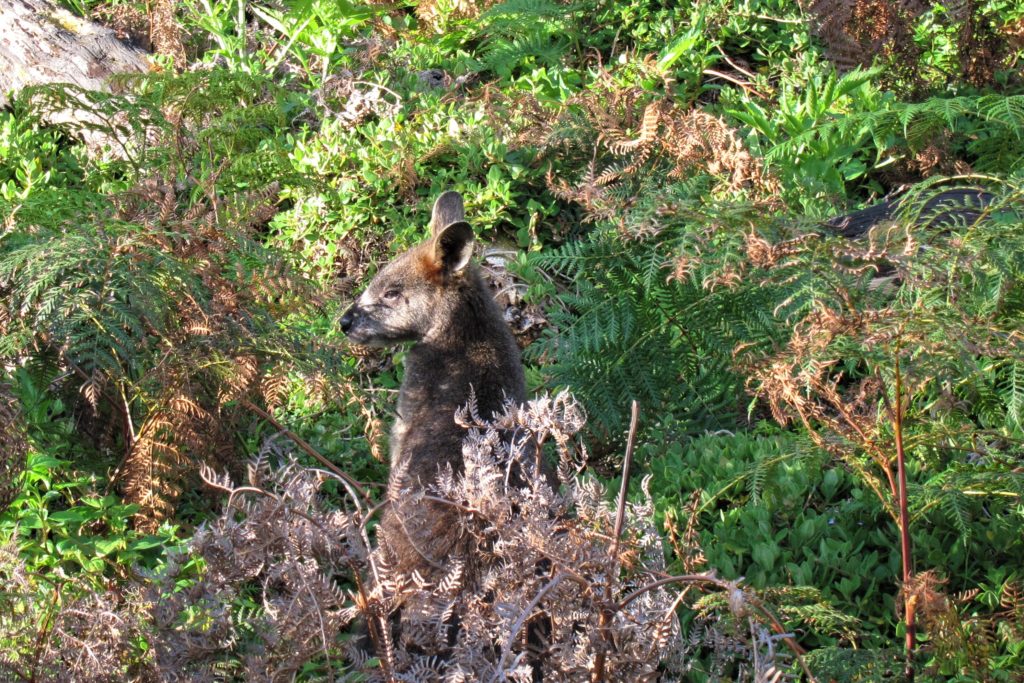
On the way back, a wallaby crosses our path.
A hop…
…a skip…
…and a jump
It would be interesting to see an Eadweard Muybridge-style study of macropeds in motion. They’re so graceful.
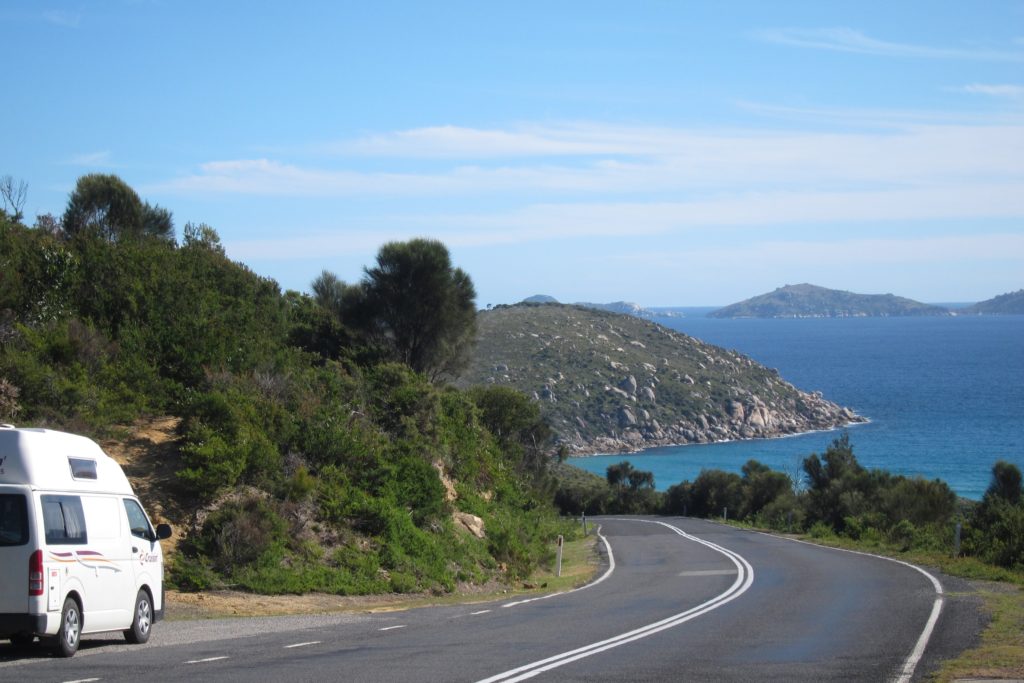
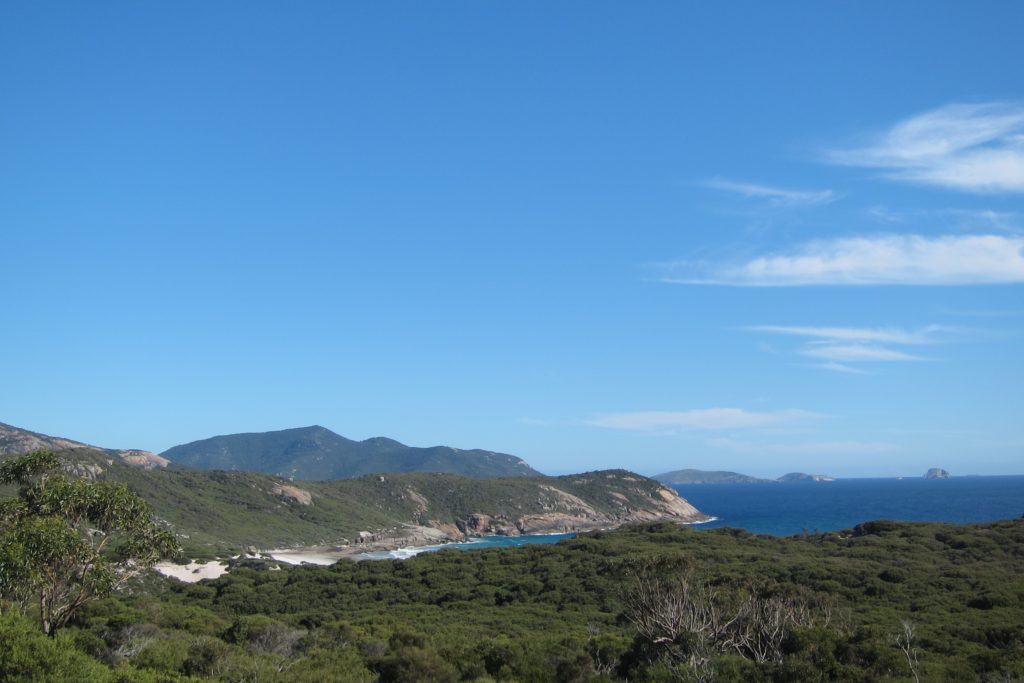
We drive across Gippsland – basically the south of the state of Victoria – on our way to Wilsons Promontory.
Wilsons Prom
It’s very scenic.
Wilsons Prom
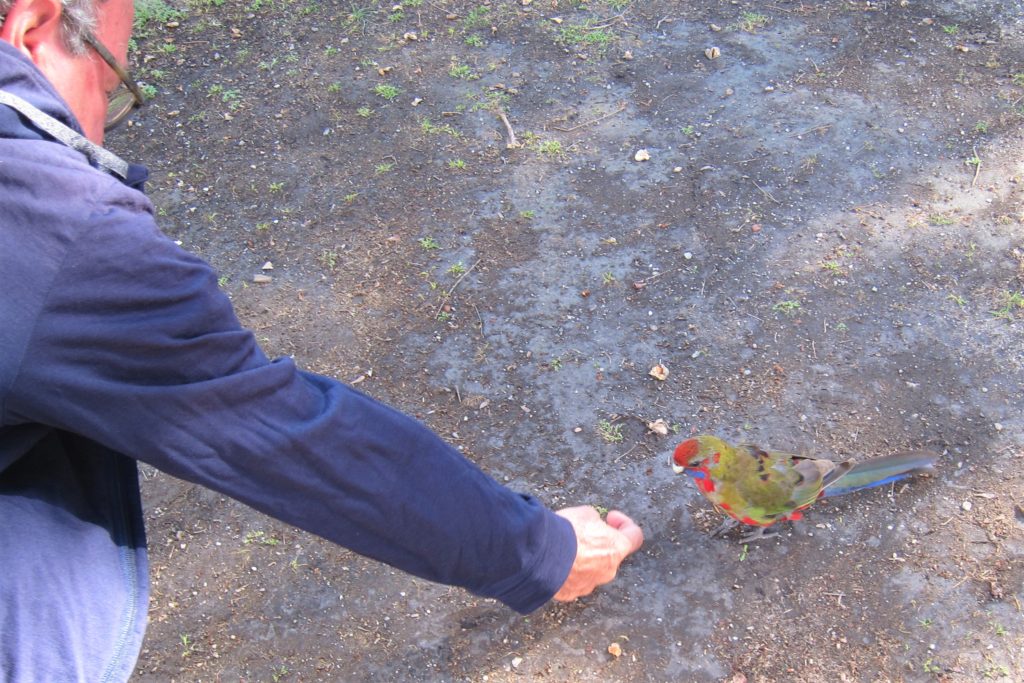
The wildlife around Tidal River, where we camp, is famously tame.
I make friends with the local avian fauna
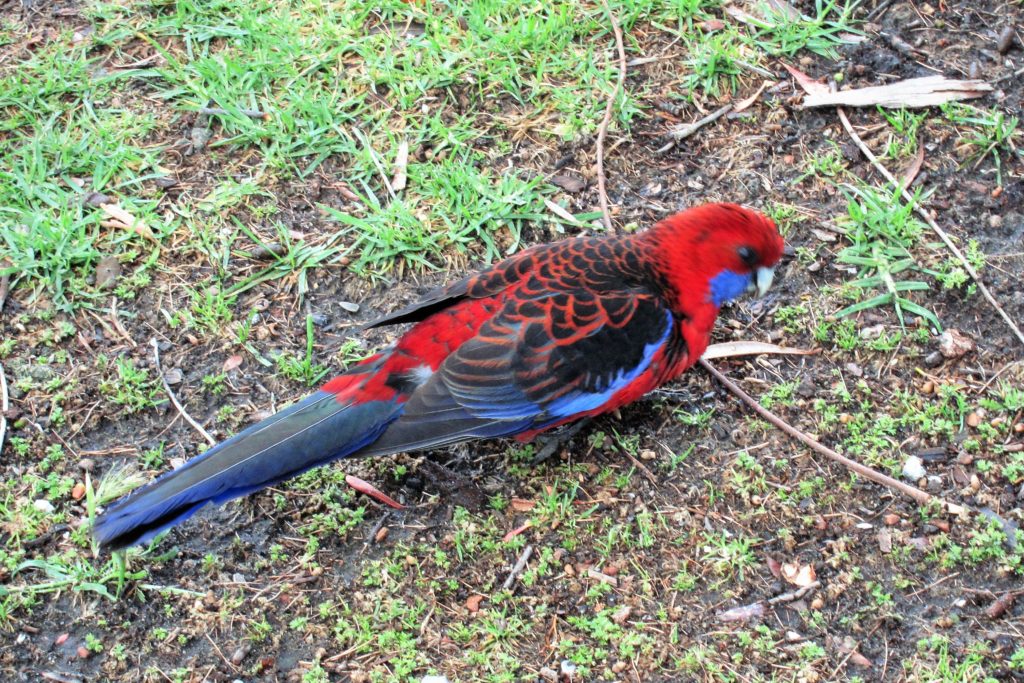
The next morning, this bird follows Maria around, waiting for a handout.
Seeing red
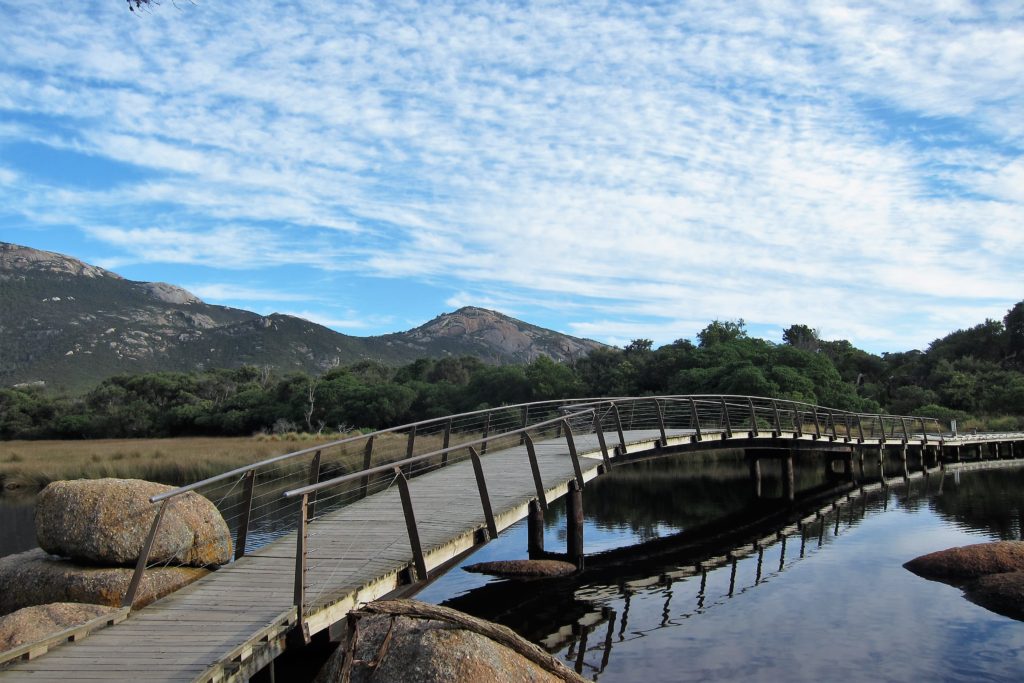
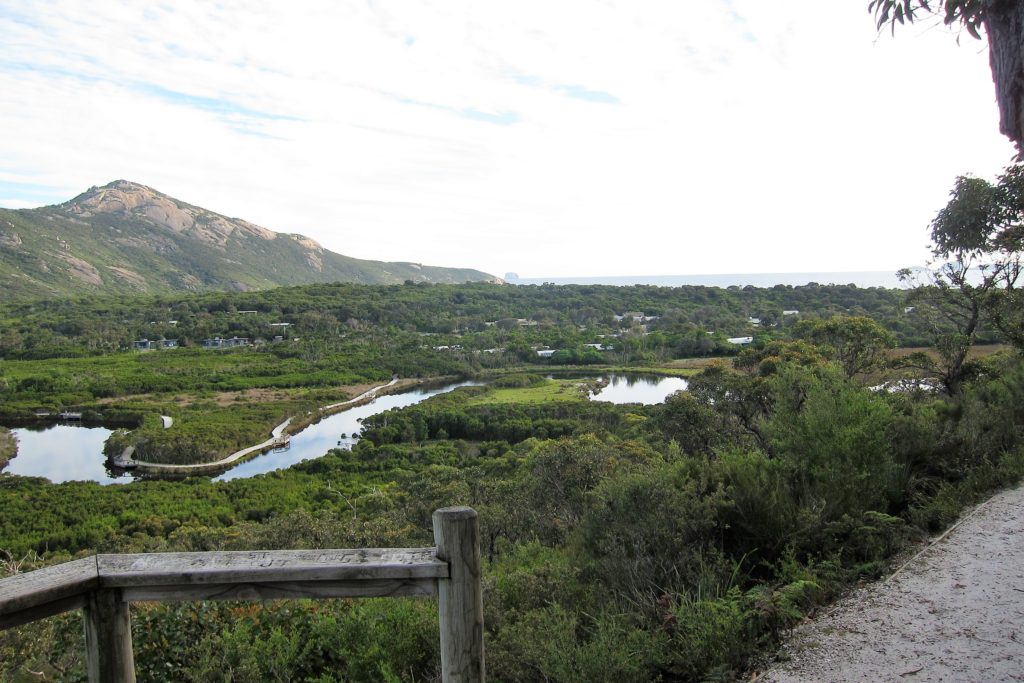
Tidal River
Tidal River
Wallaby with joey
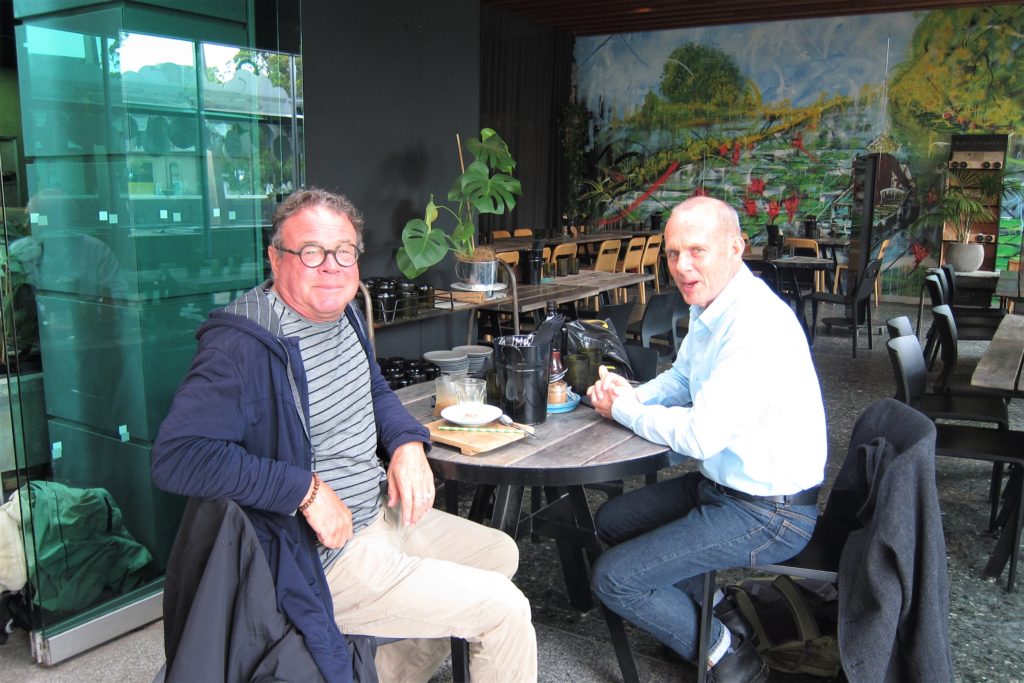
Back in Melbourne, I reconnect with Philip, an old Melbournian friend. He’s also a worker in words.
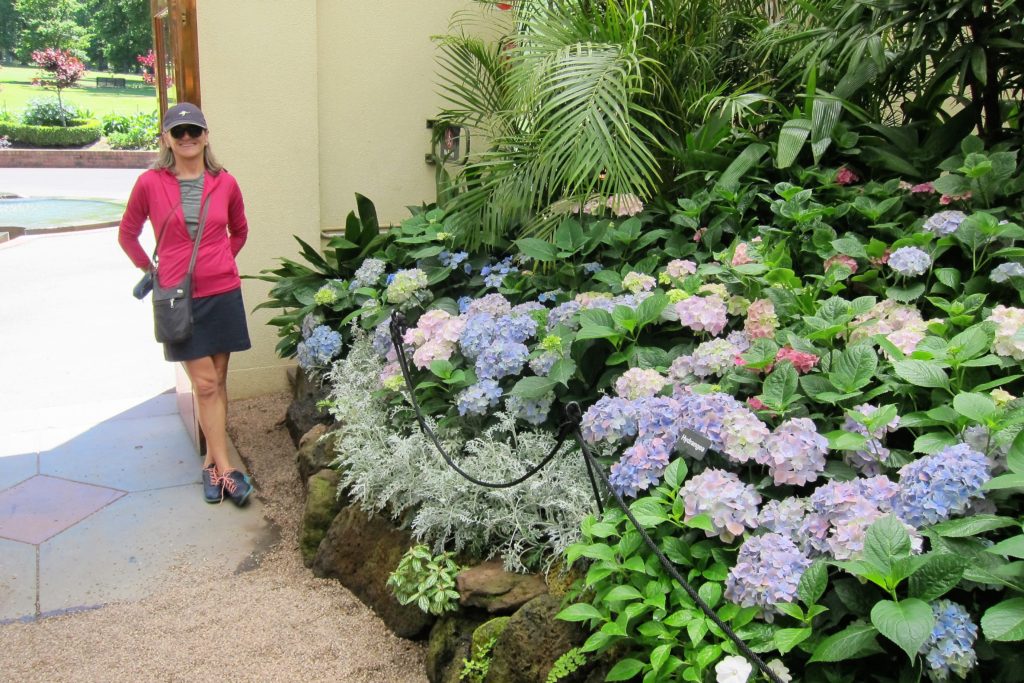
Lunch in the Botanical Gardens
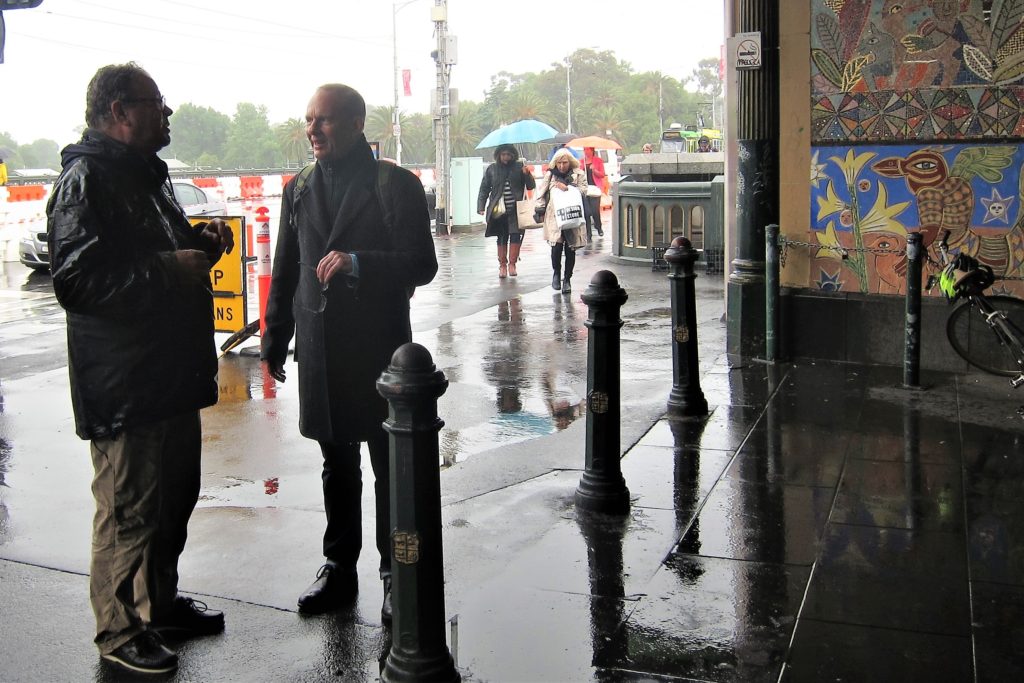
It’s rainy and cold, as it often seems to be here.
If the sun don’t come you get a tan From standing in the Melbourne rain…
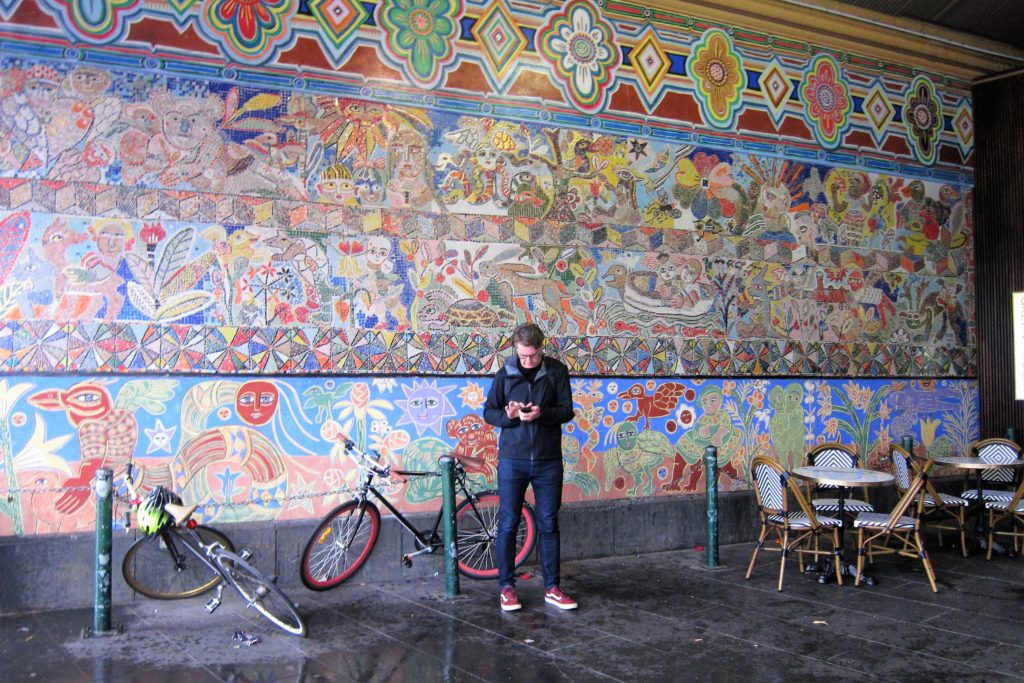
At Flinders Station is a mural by Mirka Mora, another Heide habitué.
Flinders Station
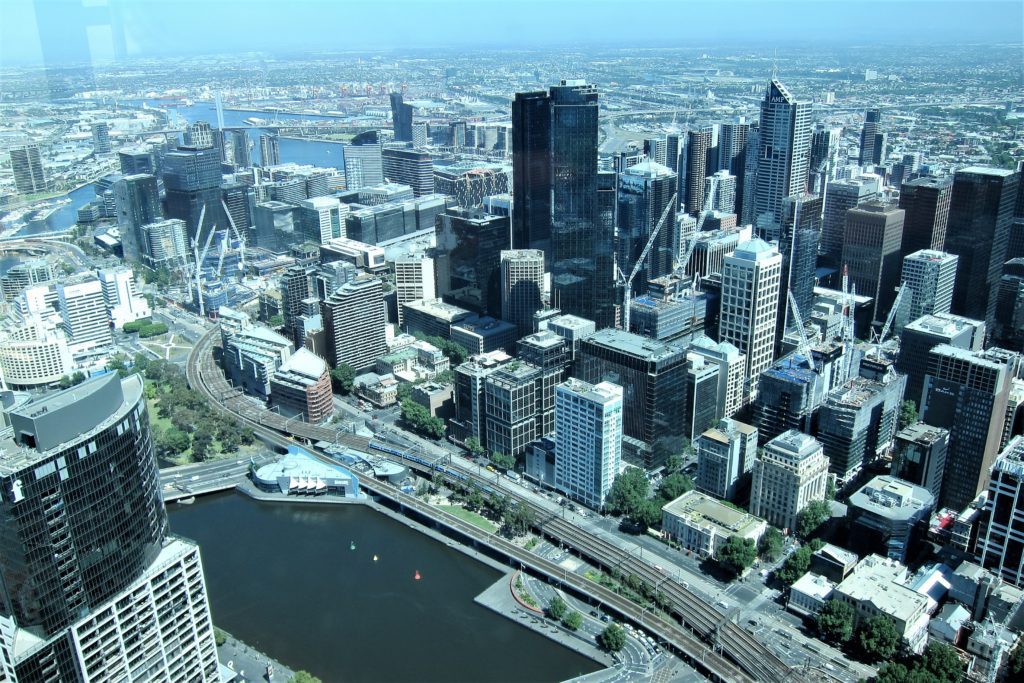
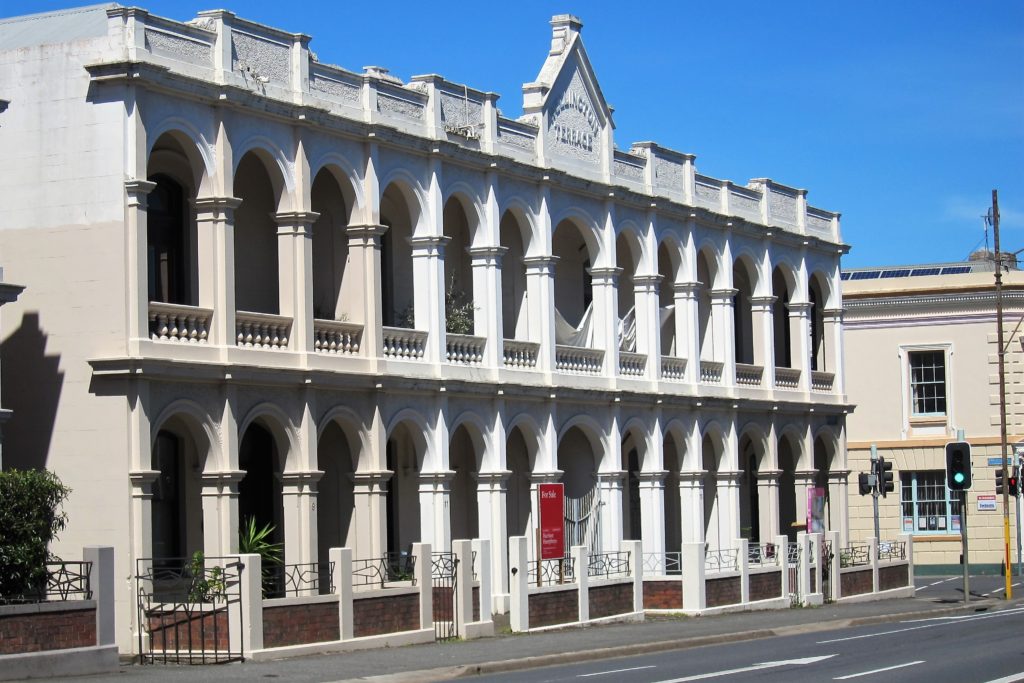
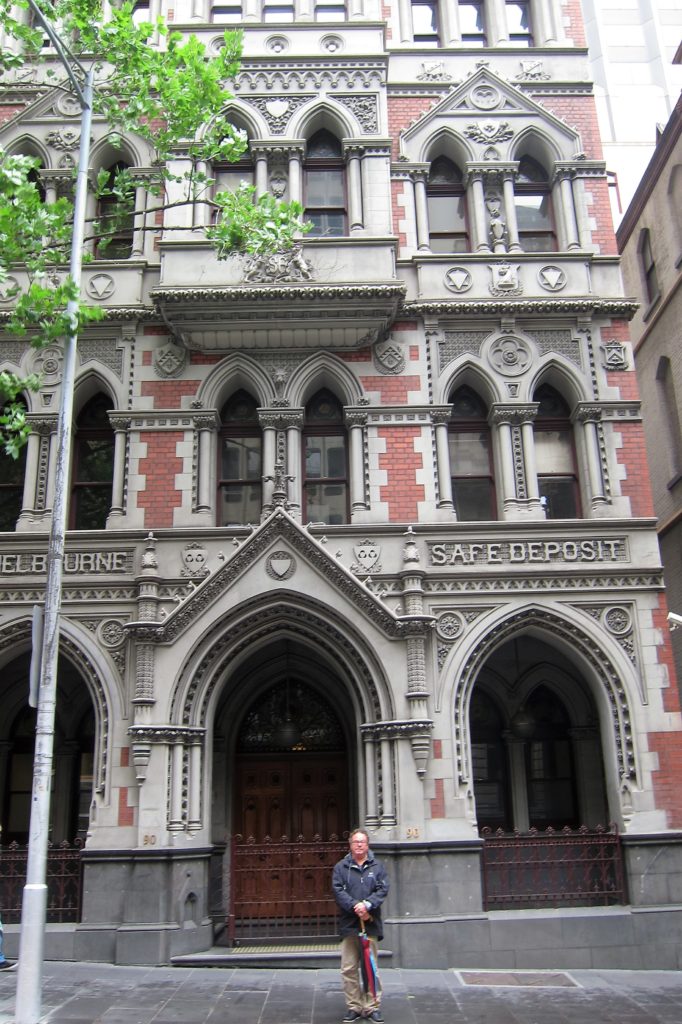
Melbourne has a lot of wedding-cake-style Victorian office buildings, besides a skyline full of 21st-century architecture.
Victoriana
While in town, we visit the Australian Centre for the Moving Image. Among its old Skippy the Bush Kangaroo clips and Mad Max memorabilia is the piano from Jane Campion’ s The Piano. Still one of our favourite films. (Has it really been 25 years?) It is in fact an early-19th-century, made-in-London antique.
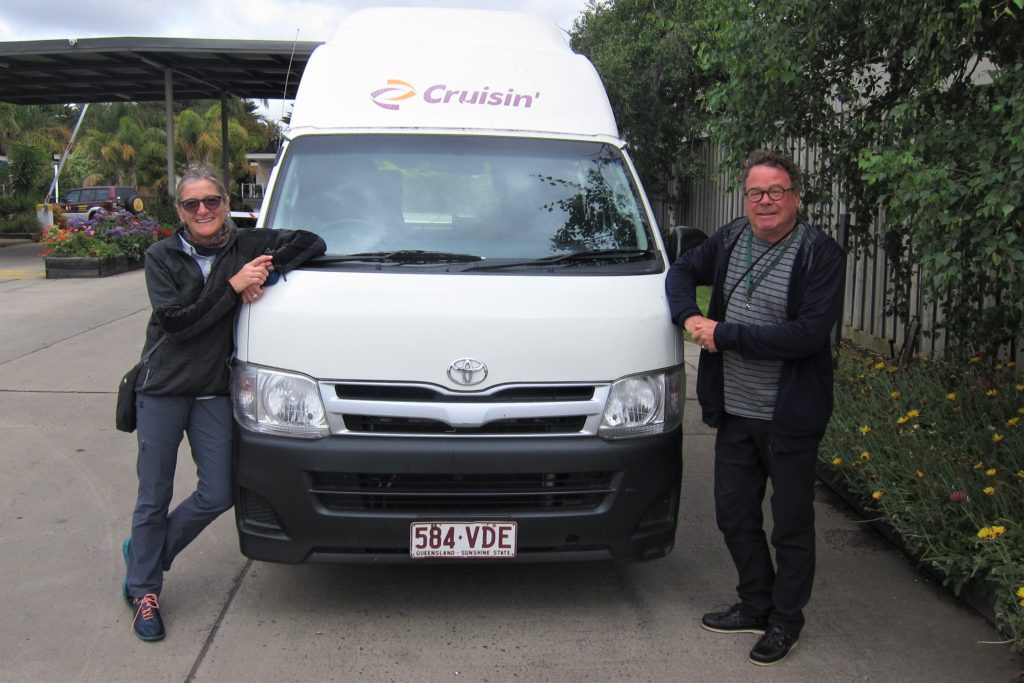
It’s with great sadness we drop off Matilda at the rental depot. She kept us safe and mobile for over 24,000 kilometres around Australia, in all conditions. Goodbye, old friend.
See you in another life, Matilda
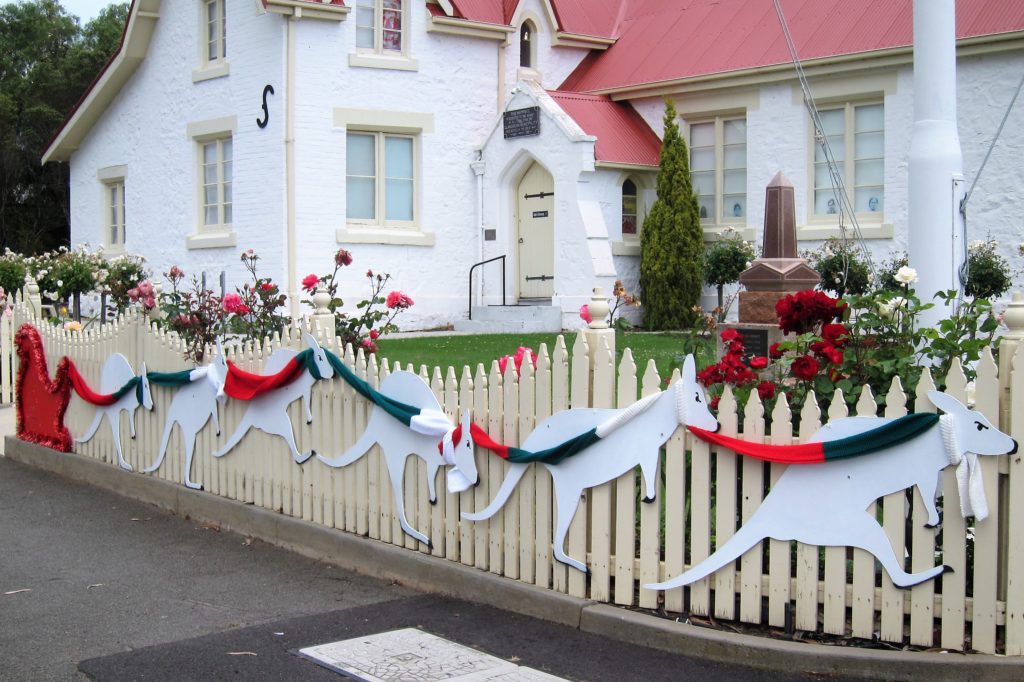
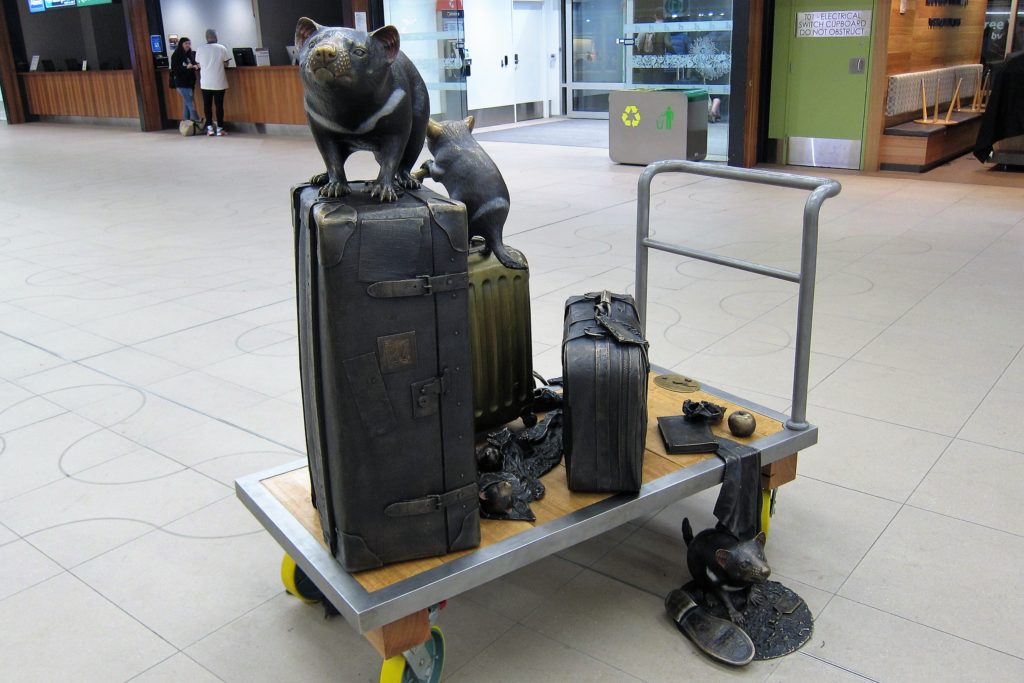
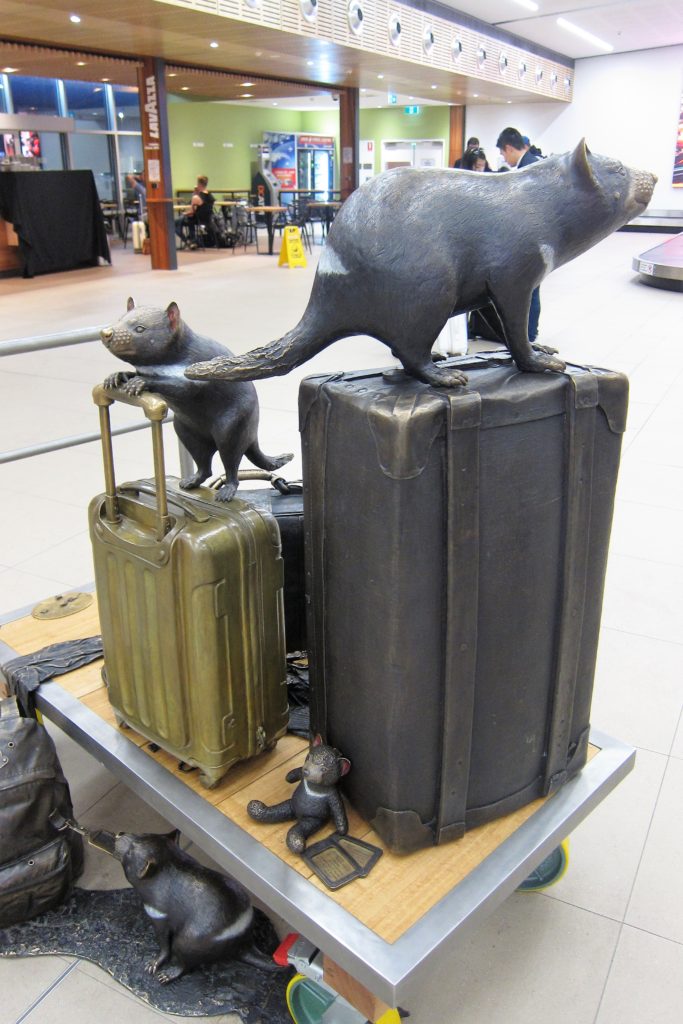
Our flight arrives late in Hobart. We like this sculpture in the arrivals hall.
Devils in the baggage
Devils in the baggage
Sight or Insight of the Day – Melbourne to Tasmania
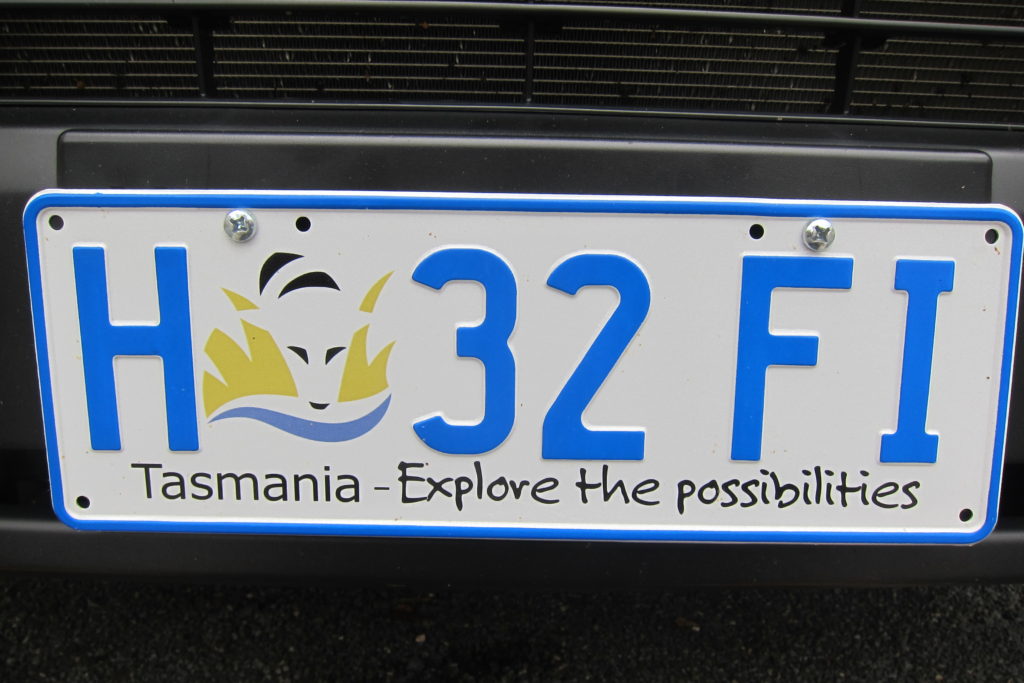
We pick up our new camper-van the next day. This is the license plate:
Tiger, tiger burning bright…
We like the stylized Tasmanian tiger drinking from a stream. We download and re-watch a good Willem Dafoe movie from 2011, The Hunter. Check it out.
Also, notice the dearth of letters and numbers in the plates of sparsely-populated Tassie. Like Prince Edward Island. Or Luxembourg.
From Canberra we make our way to Jindabyne, a gateway to the Australian Alps.
Jindabyne is one of the towns that benefit from the Snowy Mountains Scheme, a giant hydro power-and-water-conservation project.
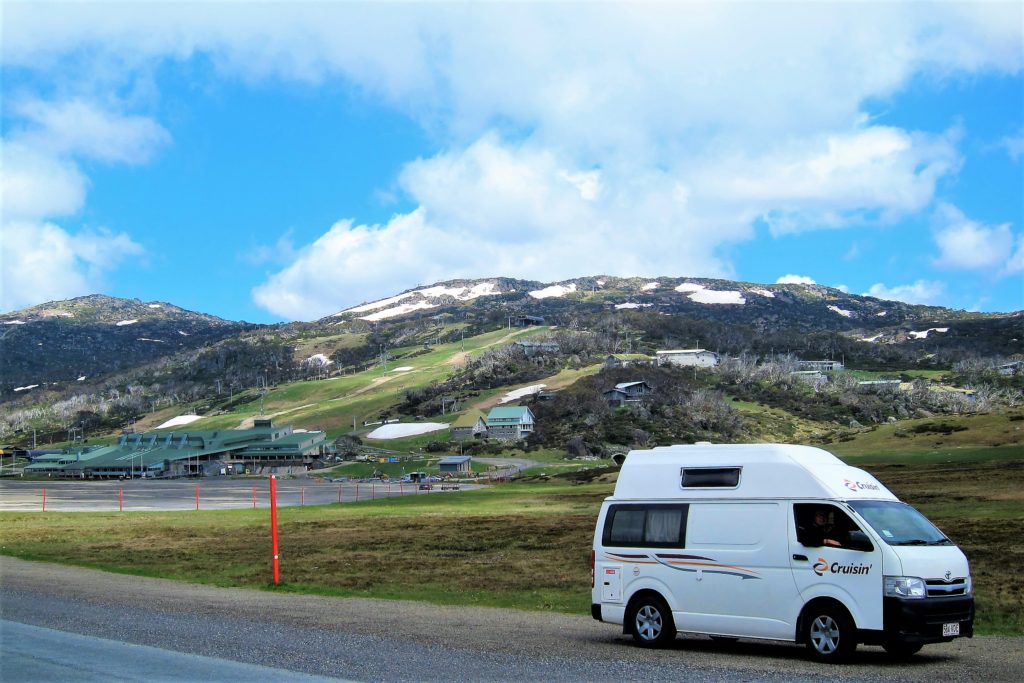
There’s no business like snow business
It’s strange to see snow in Australia. Above is the Perisher Valley ski resort. It’s on the way to Charlotte Pass, from which you can walk to the peak of Mt. Kosciusko, Australia’s highest mountain. We see many masochistic cyclists working their way up to Charlotte Pass, no doubt looking forward to the gravity-powered return trip.
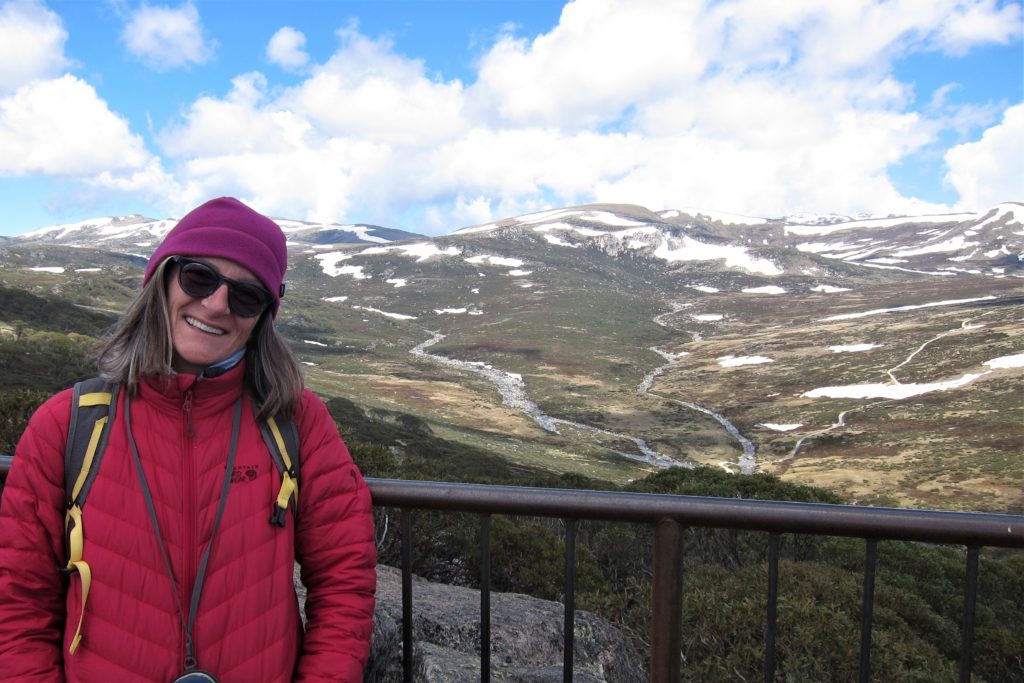
In the background is the Snowy River, a household word in Australia thanks to the poem The Man from Snowy River. The river has its origins around Mt. Kosciusko.
(By coincidence, a few days later we pass through Marlo, Victoria, where the Snowy enters the sea.)
Source of the Snowy River
‘He hails from Snowy River, up by Kosciusko’s side,
Where the hills are twice as steep and twice as rough,
Where a horse’s hoofs strike firelight from the flint stones every stride,
The man that holds his own is good enough.
And the Snowy River riders on the mountains make their home,
Where the river runs those giant hills between…’
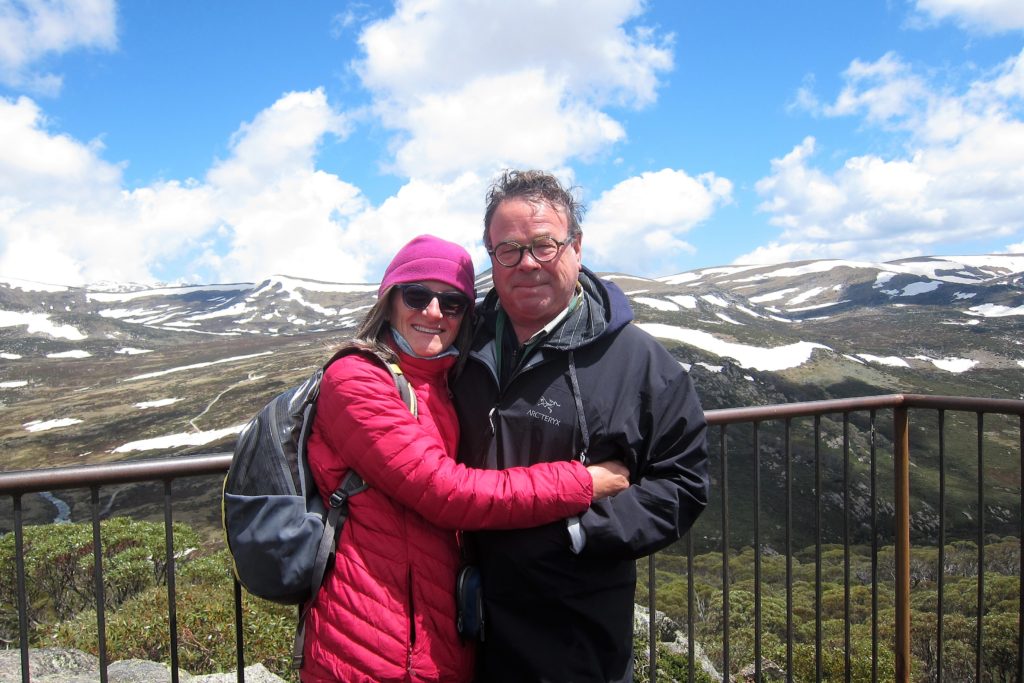
A rare photo with both of us, thanks to passing couple.
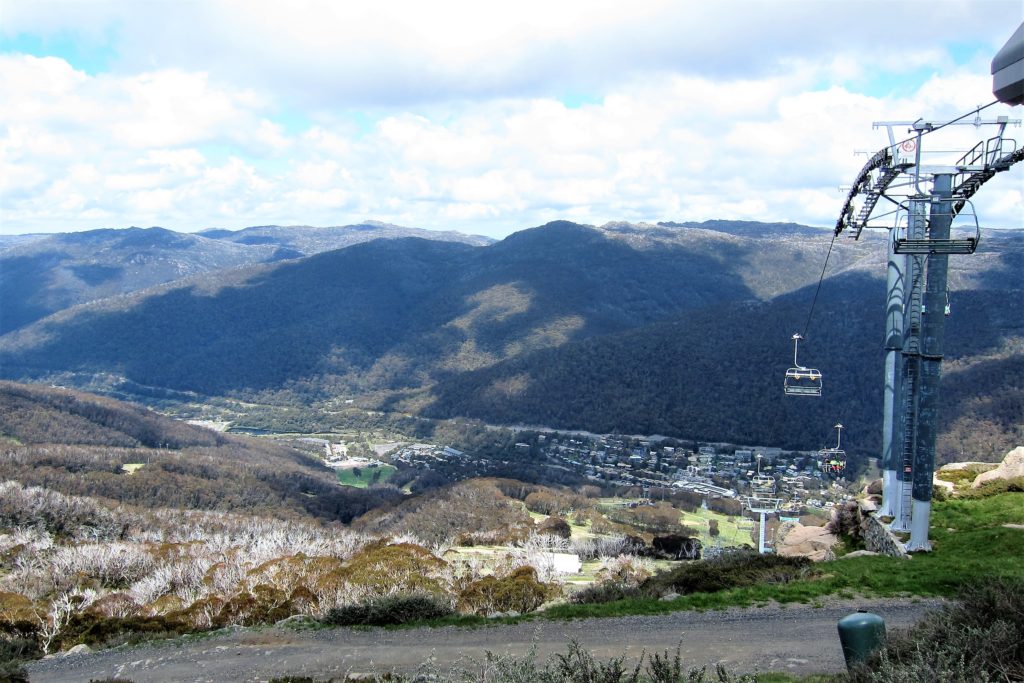
We backtrack to Jindabyne and head to Thredbo on the other side of Mt. Kosciusko. Thredbo is the Whistler of Australia – such as it is – including sky-high prices for everything.
Thredbo from the top of the chair lift
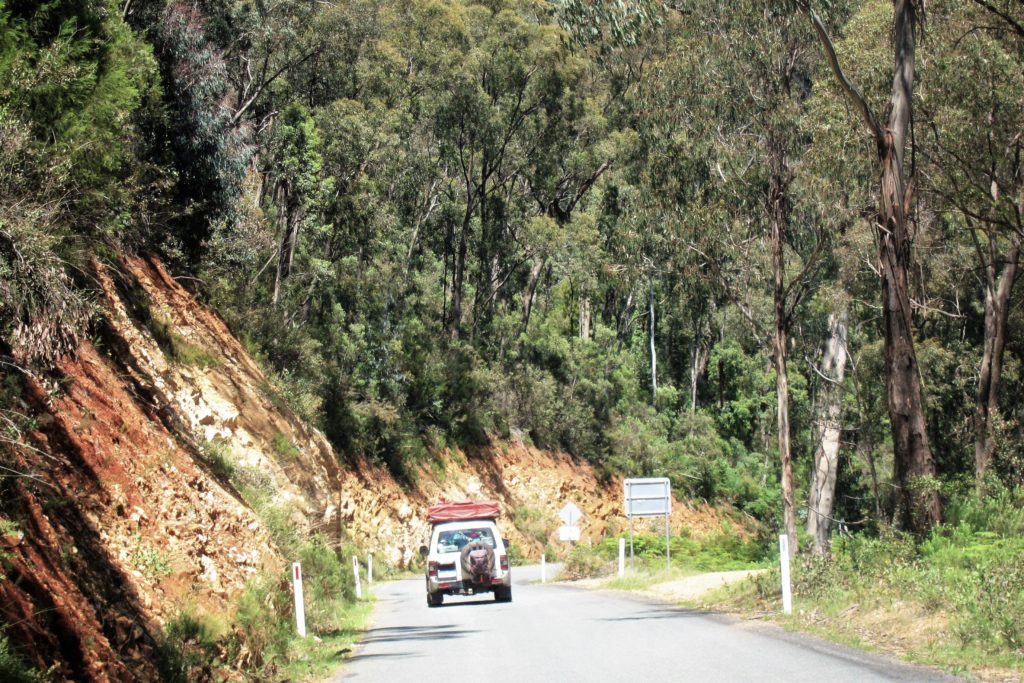
It’s a breathtaking journey from Jindabyne to Omeo on the Great Alpine Way, via Khancoban.
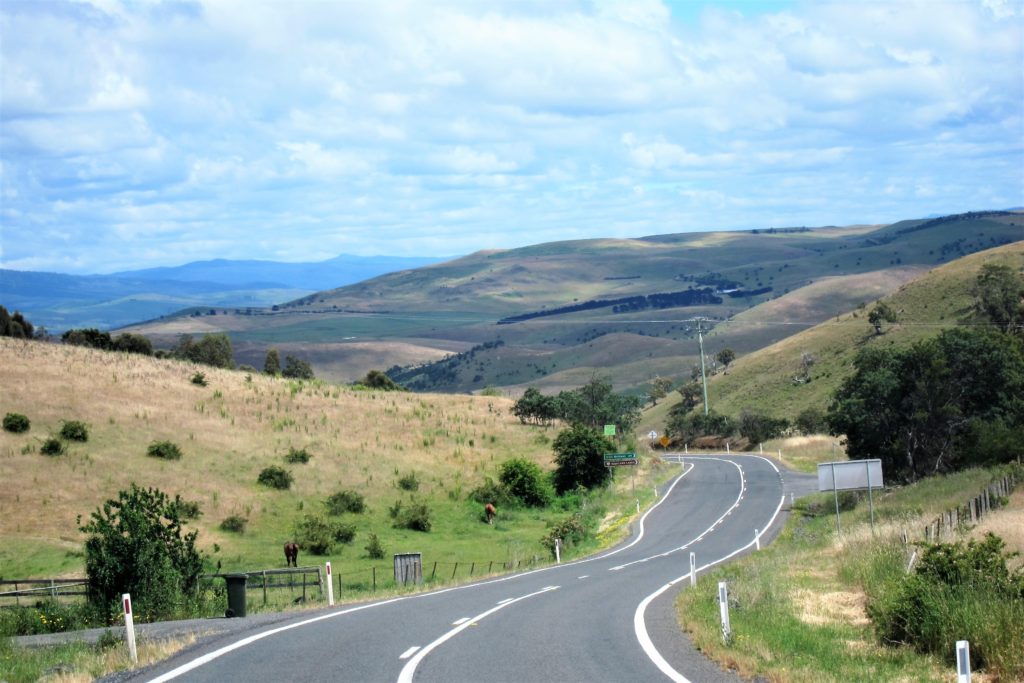
The road less traveled
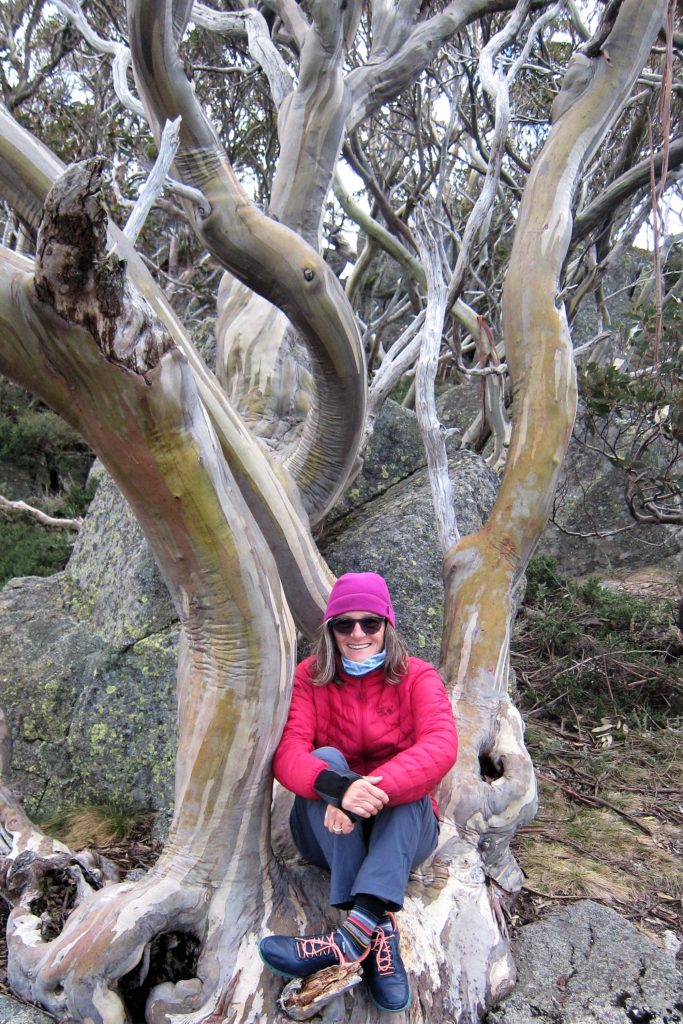
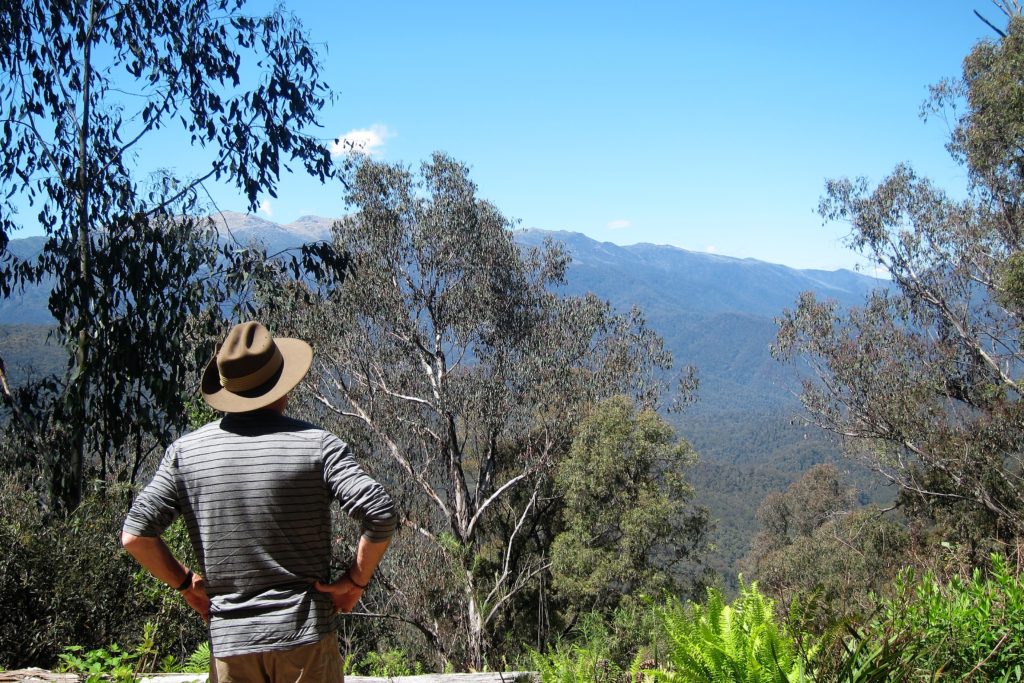
Australian Alps
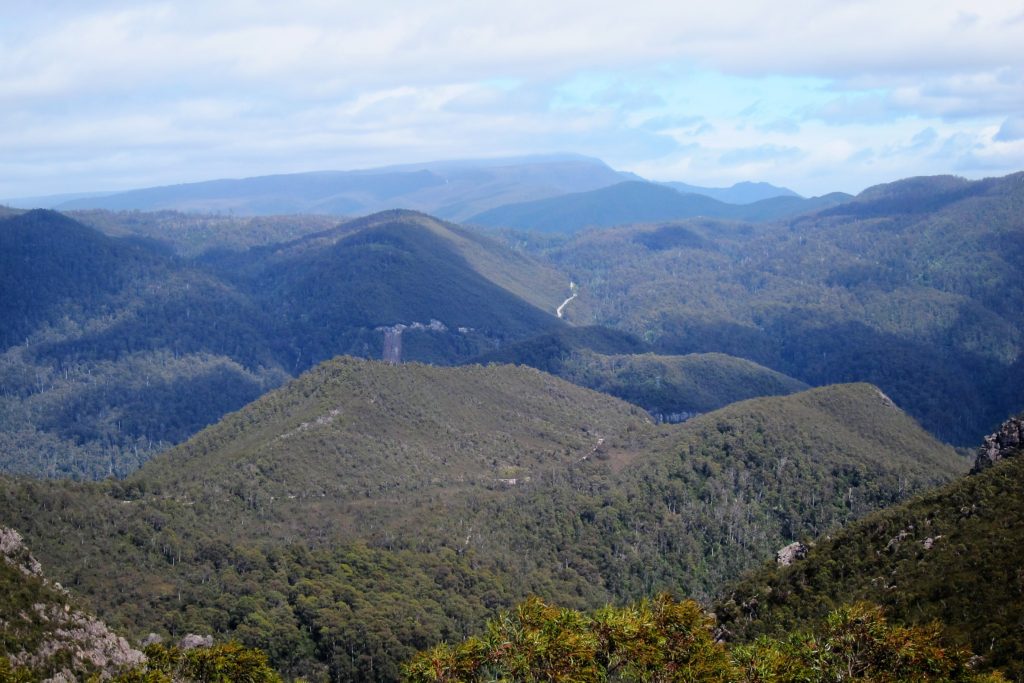
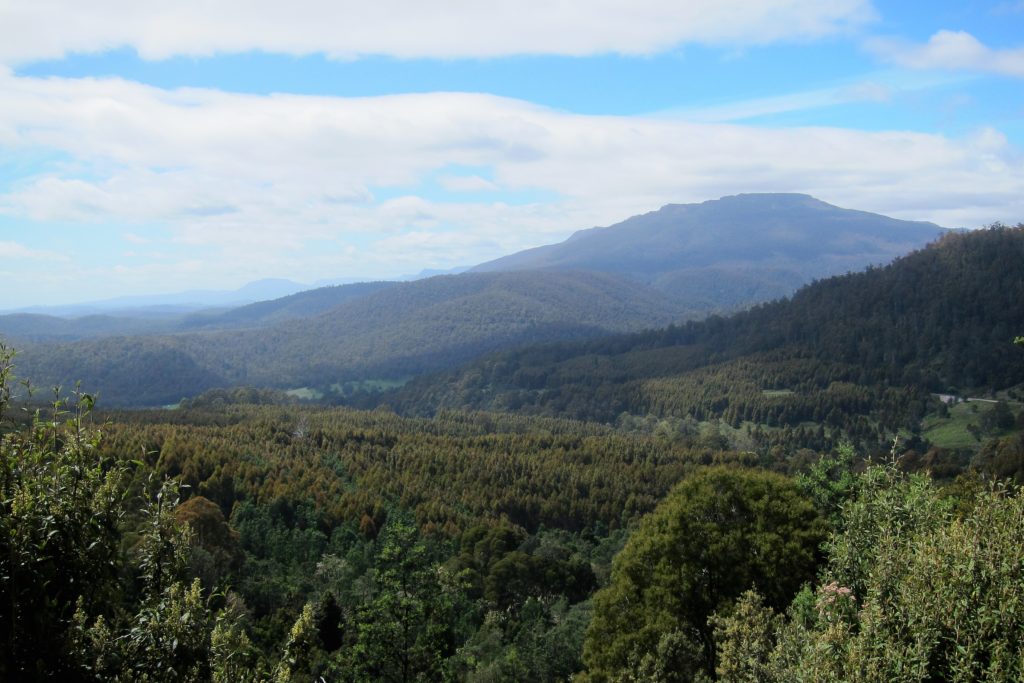
The scenery driving through the mountains is spectacular. We don’t have many pictures because that means stopping every few minutes. You can get an idea of what it looks like here. (Thanks, Google.)
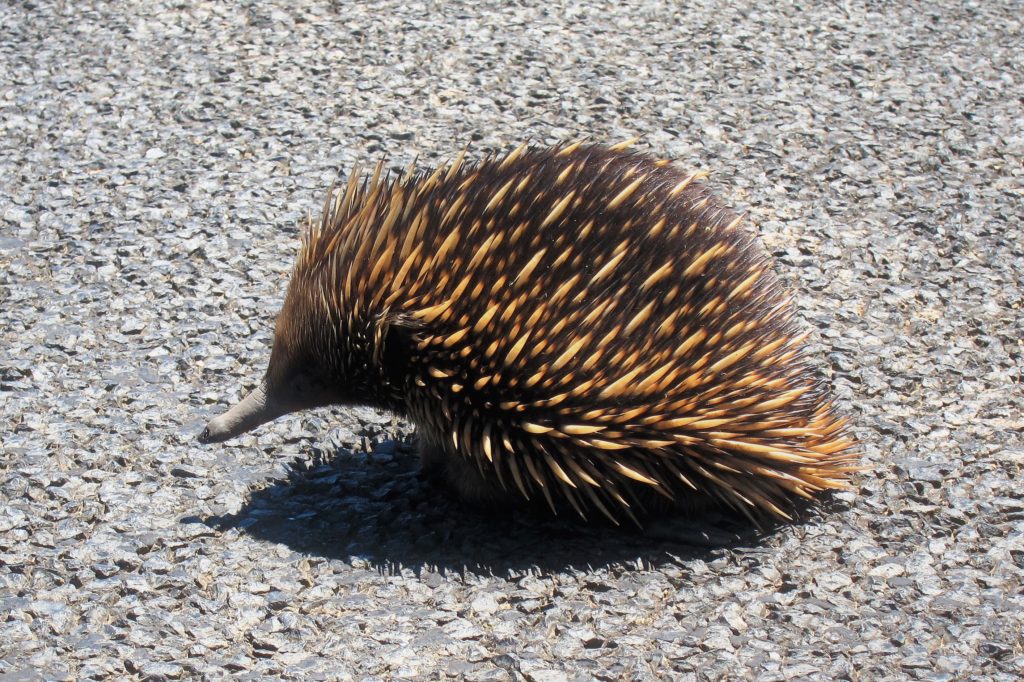
After crossing the Murray River back into the state of Victoria, we spot another echidna and help him cross the road.
Call me Spike
We spend the night in Omeo, Victoria. Our caravan park sits on Livingstone Creek. There are platypus in the river, but we don’t see any.
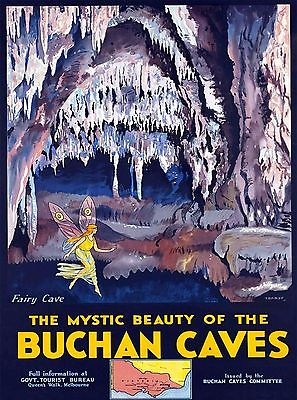
We make a point of visiting the Buchan Caves, after seeing this antique tourist poster in the Australian National Museum.
Fairy Cave, complete with real fairies
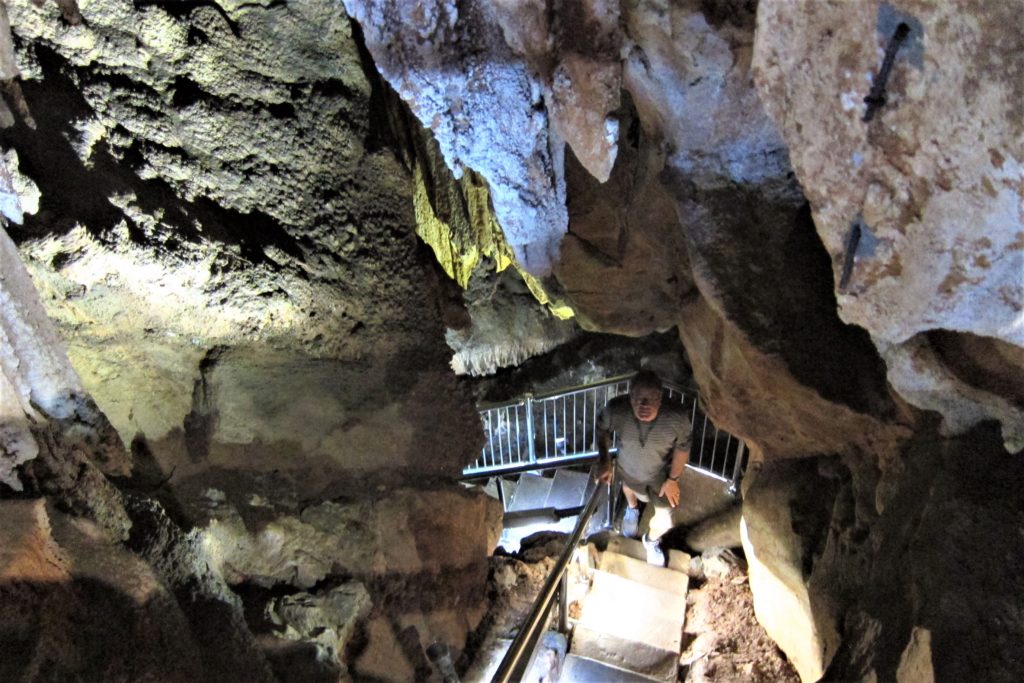
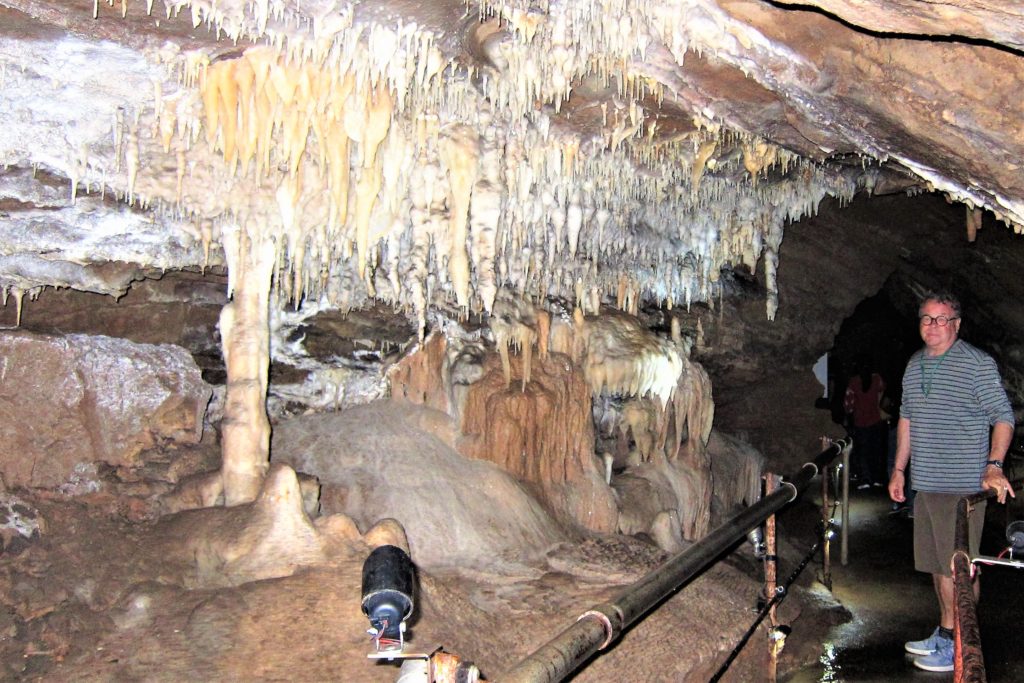
Turns out to be worth it. The formations in these caves are on the mind-blowing side.
Buchan caves
Once again, we can’t stop every few metres to take photos, so we enlist the help of Google images here.
Cave man
Sight or Insight of the Day – Australian Alps
We drive across Gippsland to Wilsons Promontory. At the Tidal River campground where we stay, the wildlife is very tame.
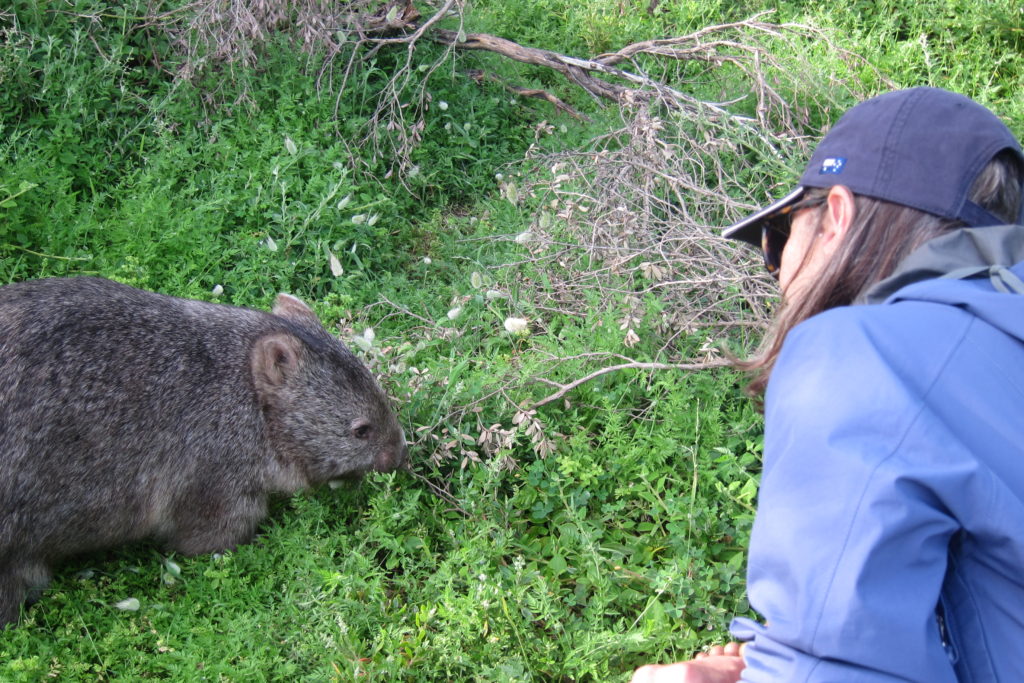
Maria gets up close and personal with a grazing wombat