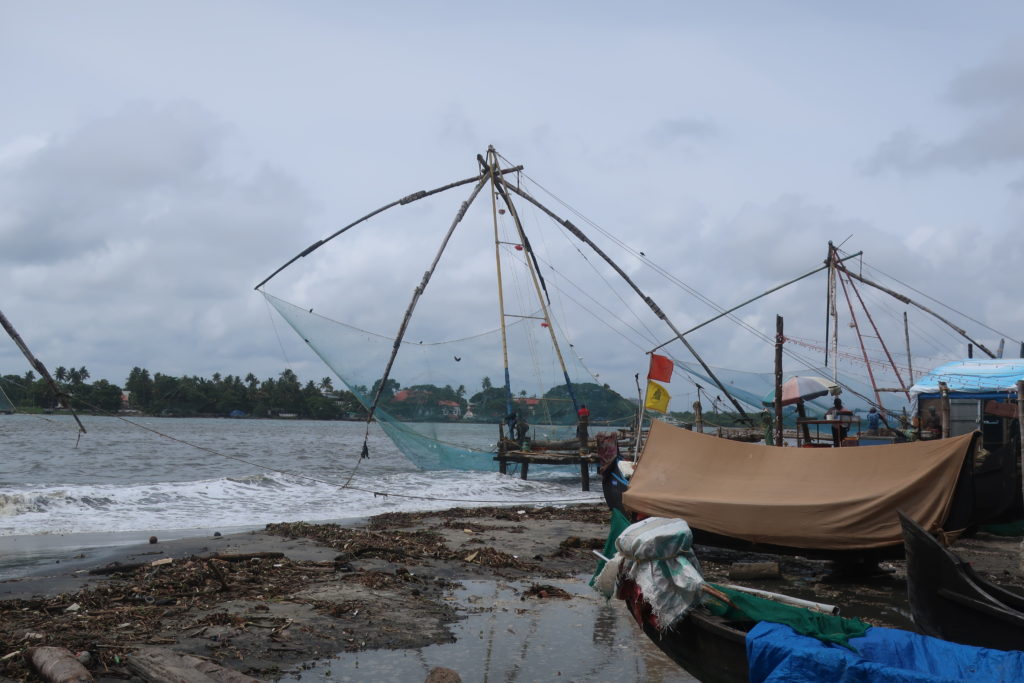
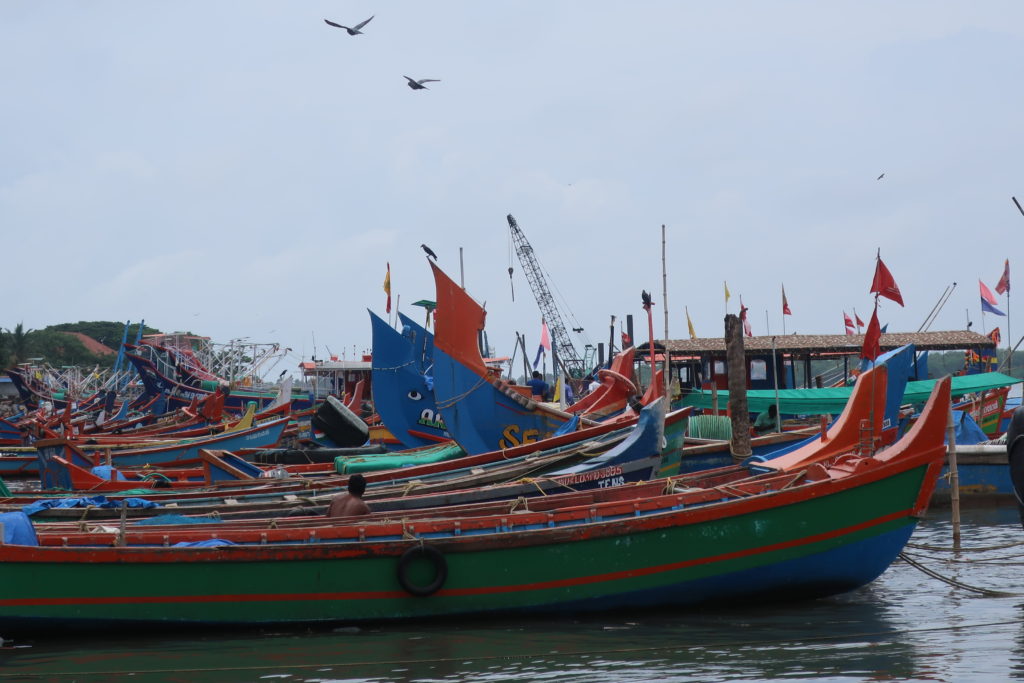
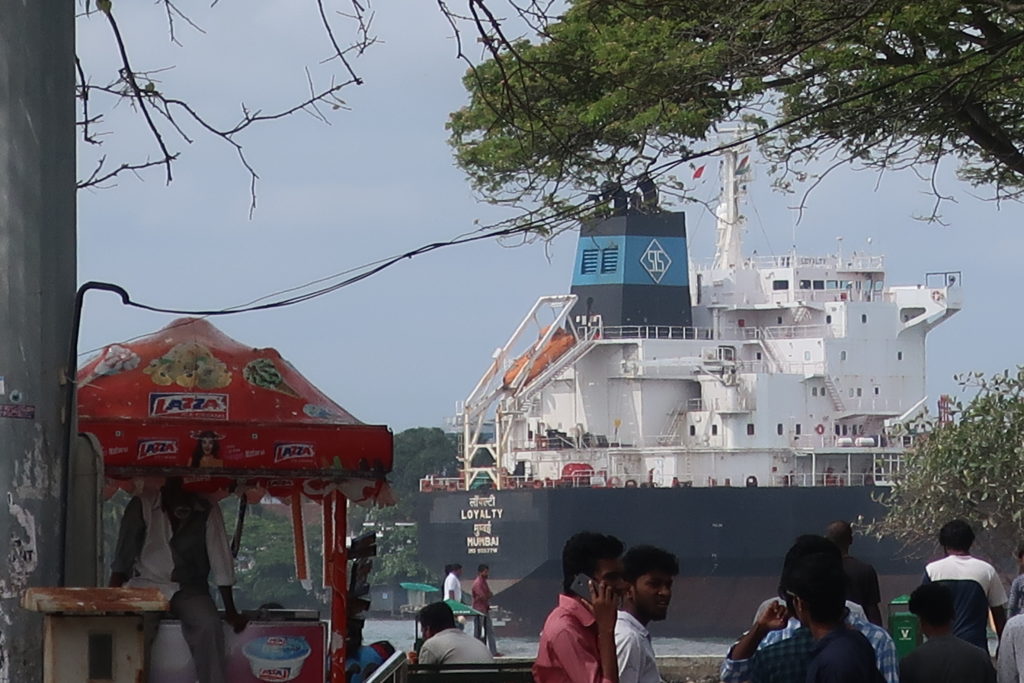
To continue – we arrive in Kochi, in Kerala State, after an overnight train trip from Goa. Here’s a brief roundup.
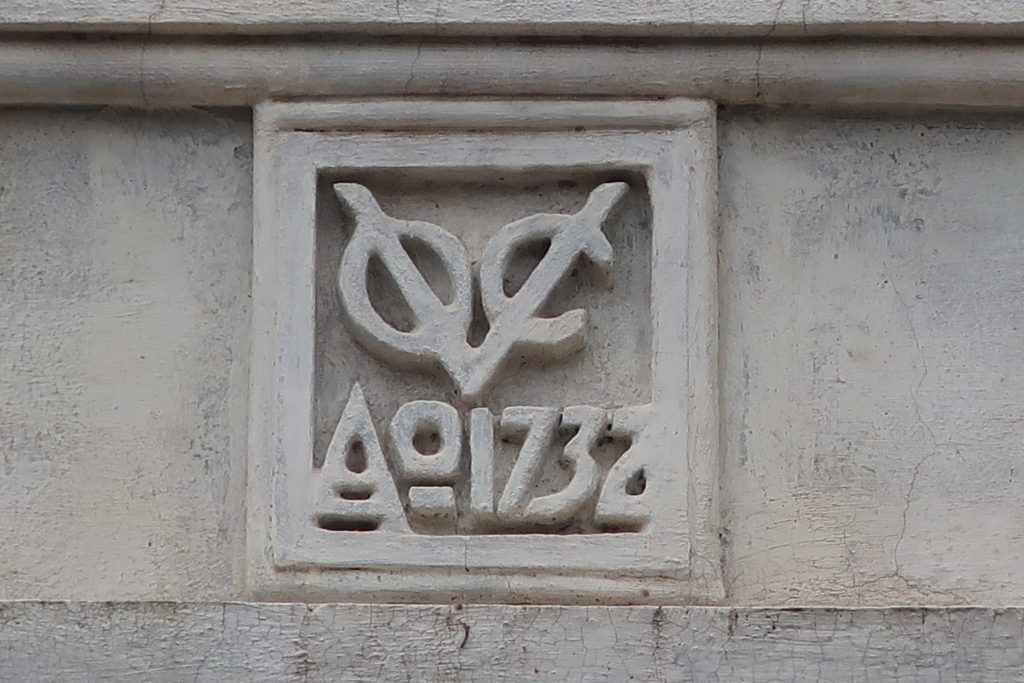
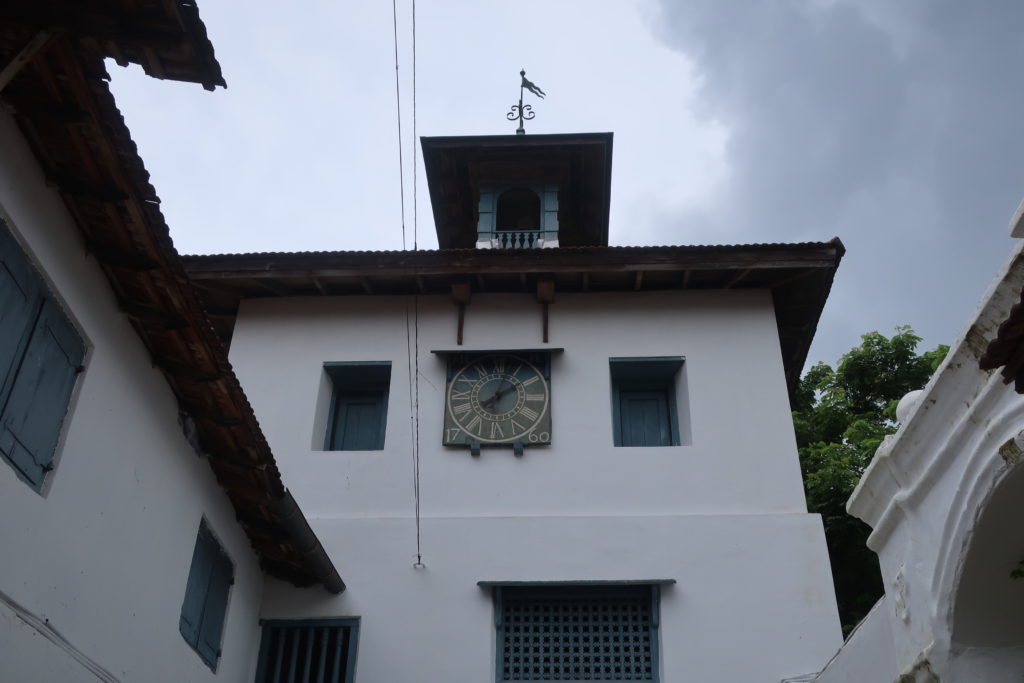
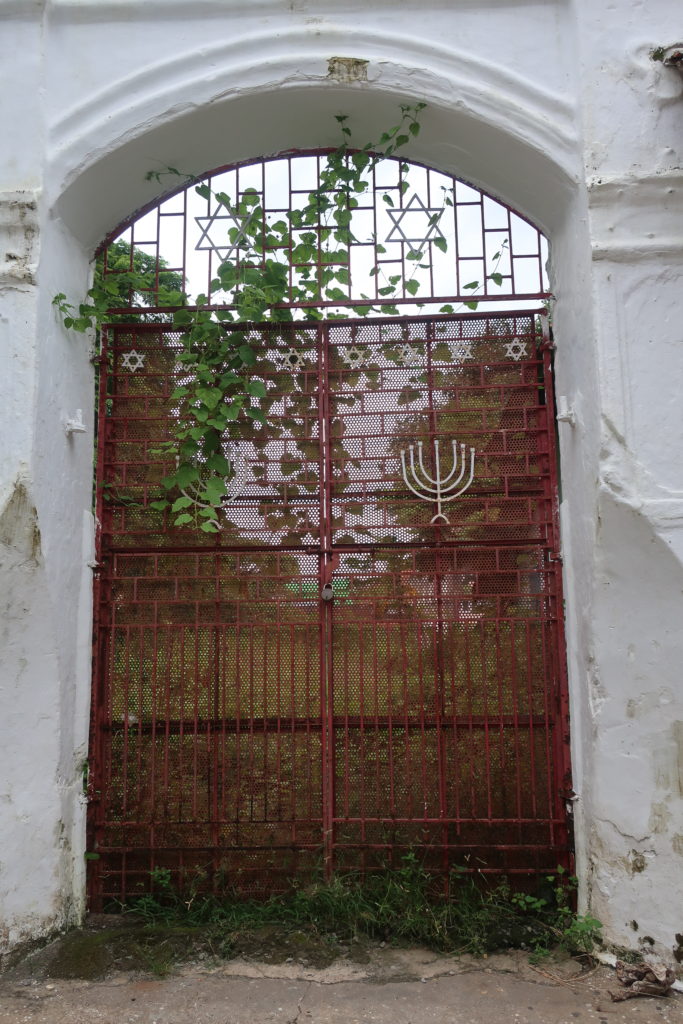
Kochi is an interesting blend of Portuguese, Dutch, and British colonial styles mixed in with a port that was an important spice trading centre on the west coast of India from the 14th century onward.
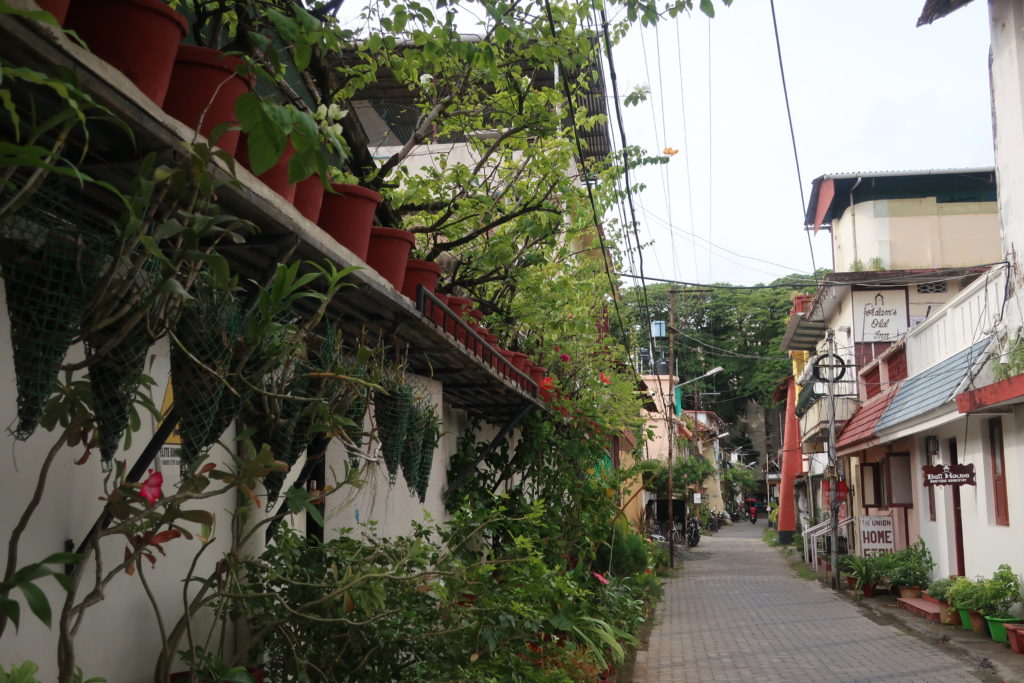
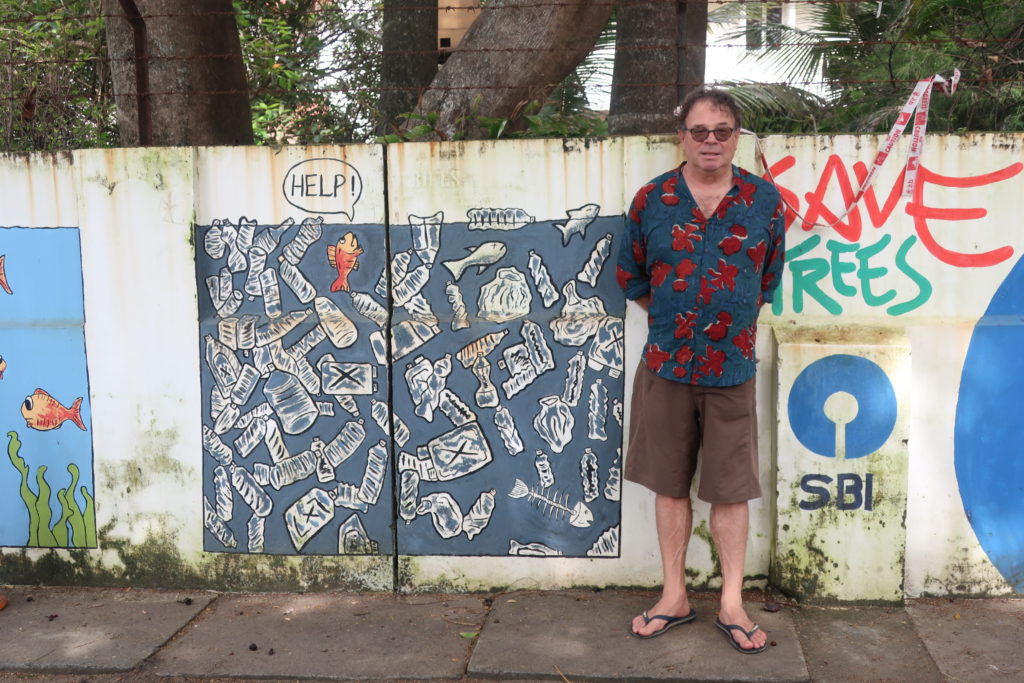
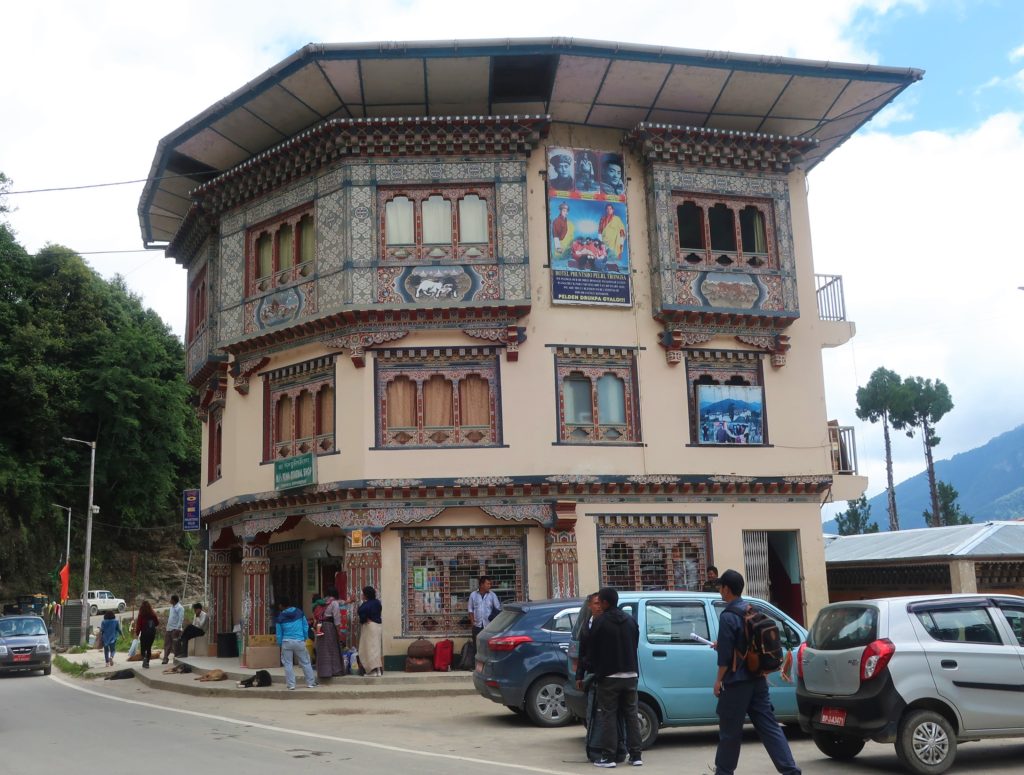
The street of our hotel
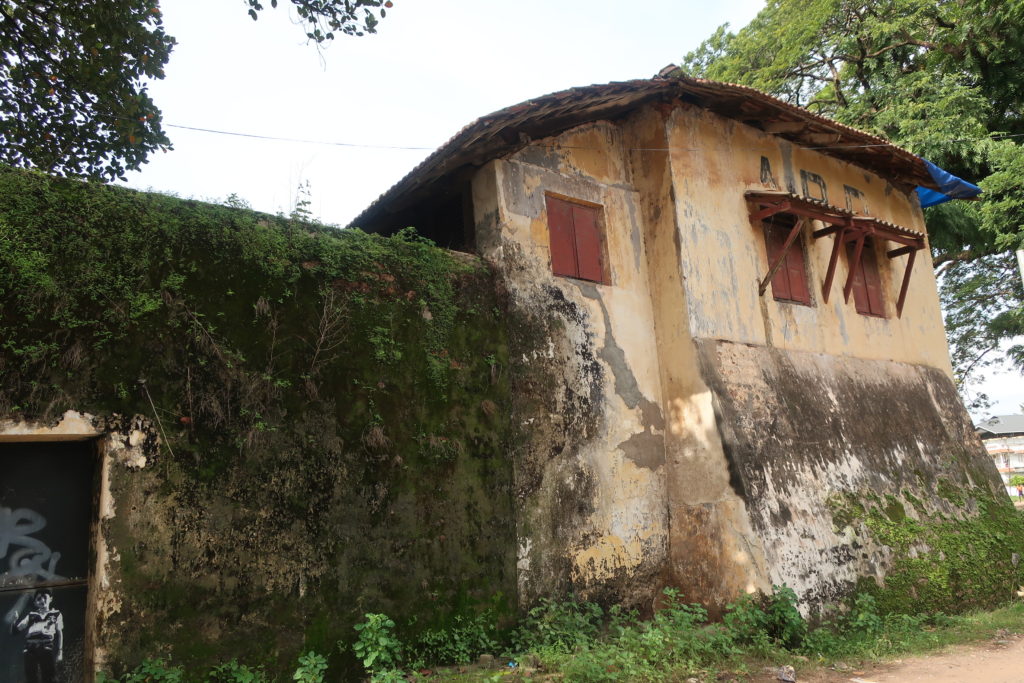
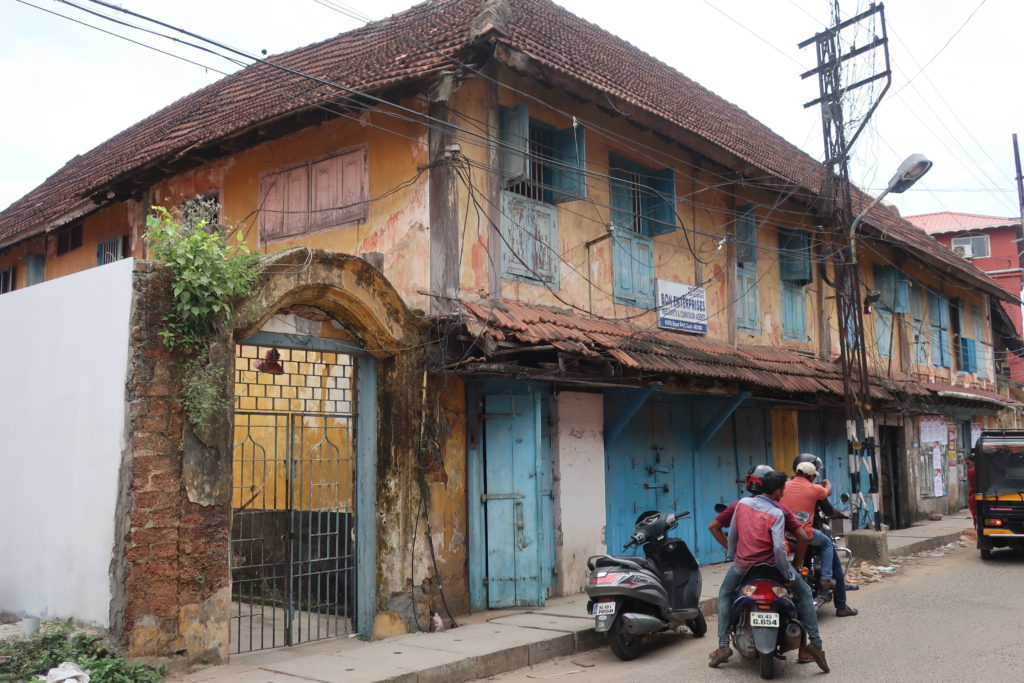
We like it. Lots of old buildings. It seems ‘mellower’ than places in the north.
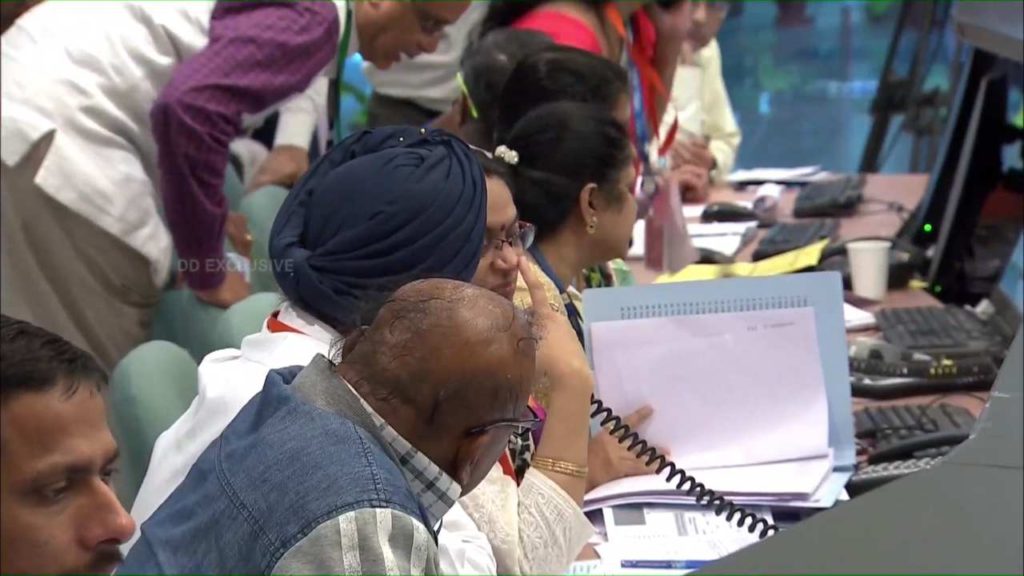
The media in India is full of news about India’s second moonshot, the Chandrayaan-2 mission. It’s not going well.
‘Delhi, we have a problem…’
I cannot for the life of me imagine why a country where you can’t drink water out of the tap wastes its time, money, and resources looking for ‘possible water sources’ on the moon. To impress the world with its technical prowess? The world – not to mention the citizens of India – would be a lot more impressed if India could miraculously join the limited club of nations in which the tap water doesn’t kill you.
Goodness gracious, we are an entire month behind on the blog. How did we ever get to such a state? Well, it doesn’t help that we spend the last couple of weeks incommunicado in the Andaman Islands.
Since our last entry about Ahmedabad, we have done the following:
So, Goa first. We know it’s rainy season, but we go anyway.
Goa, in case you don’t know, is a former Portuguese territory that used to be famous as a hippy Mecca back in the day. It has grown by leaps and bounds into an all-round sun destination for everyone, including Russian drug dealers and their baggage of violence and mayhem.
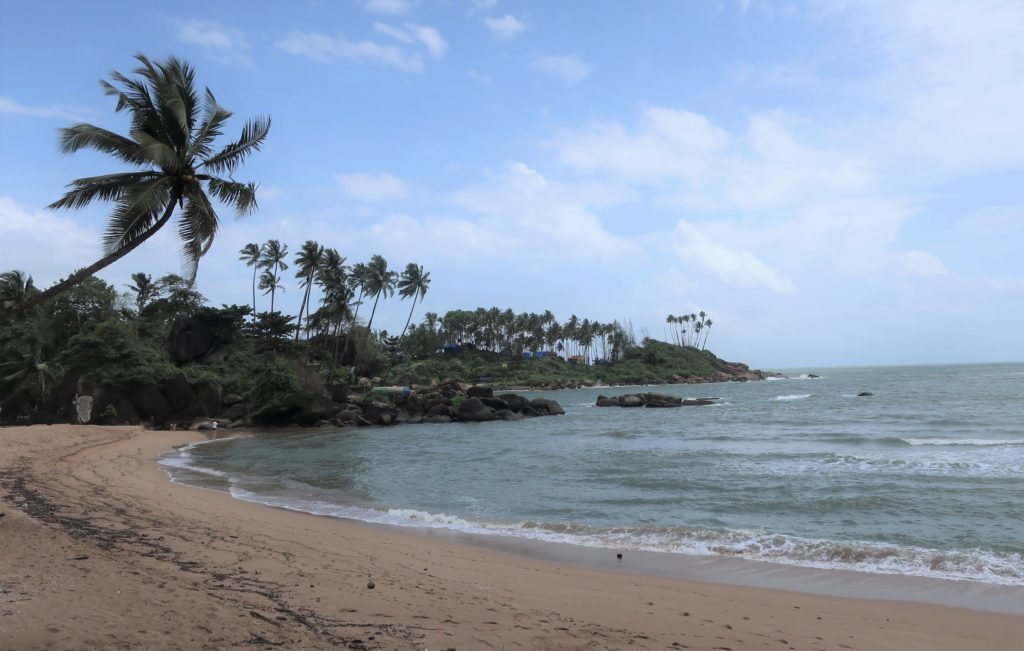
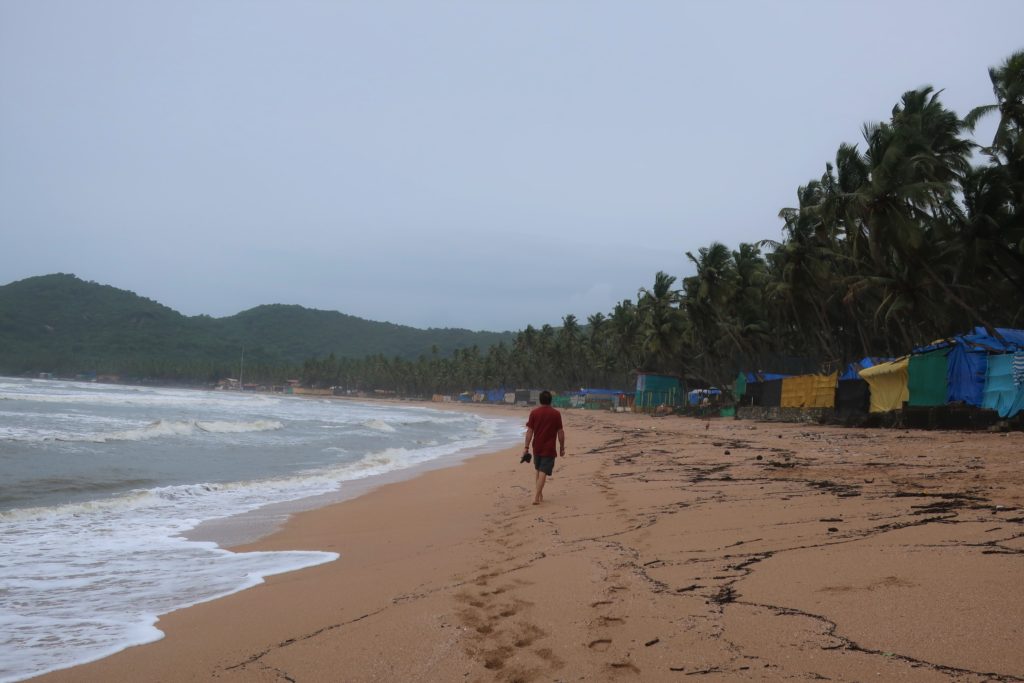
Palolem Beach
There is none of that here during the monsoon season. In Palolem, far in the south of Goa, there is the air of a closed-down fairground. 90% of places are closed for the season, covered with vinyl tarps. The sea is dangerously rough. It rains a lot.
It’s a peaceful change from urban India. We’re happy to sit on our veranda and watch the rain come down in blessed silence. We get to do some exercise.
One day, we hire our driver, Dominic – he picked us up from the airport – for an excursion to the town of Old Goa.
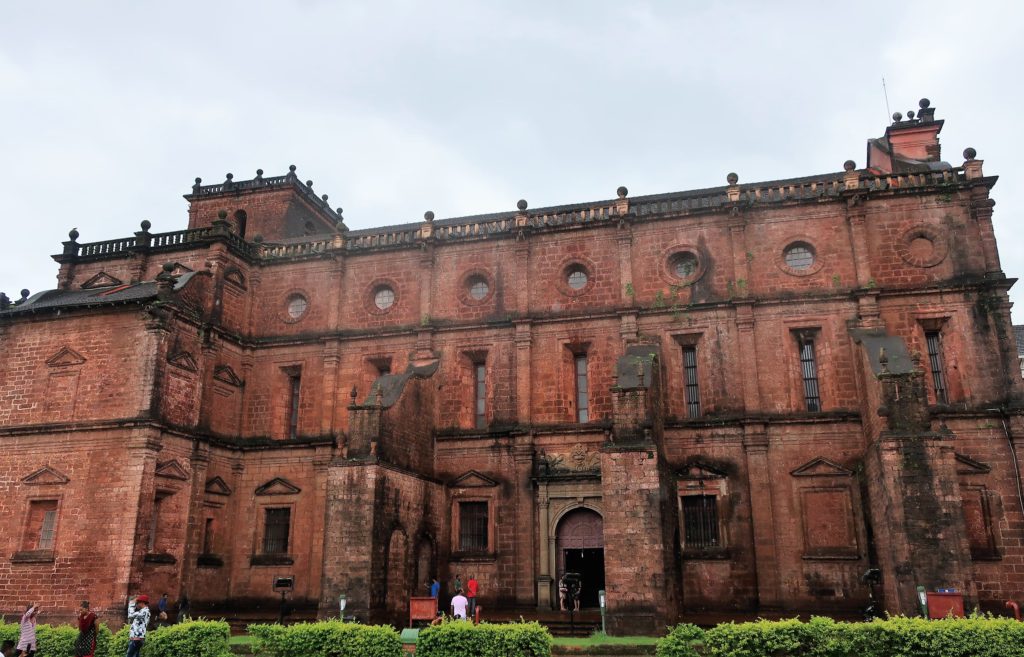
Basilica of Bom Jesus
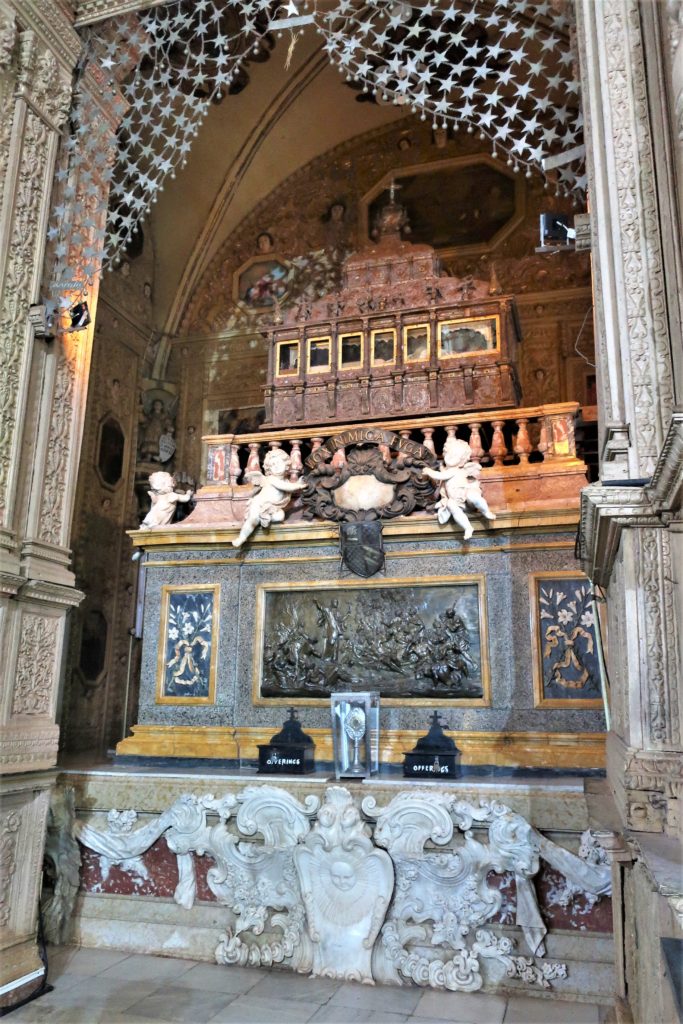
In here lies the body of Saint Francis Xavier. You can see his remains in the windows at the top.
Tomb with a View
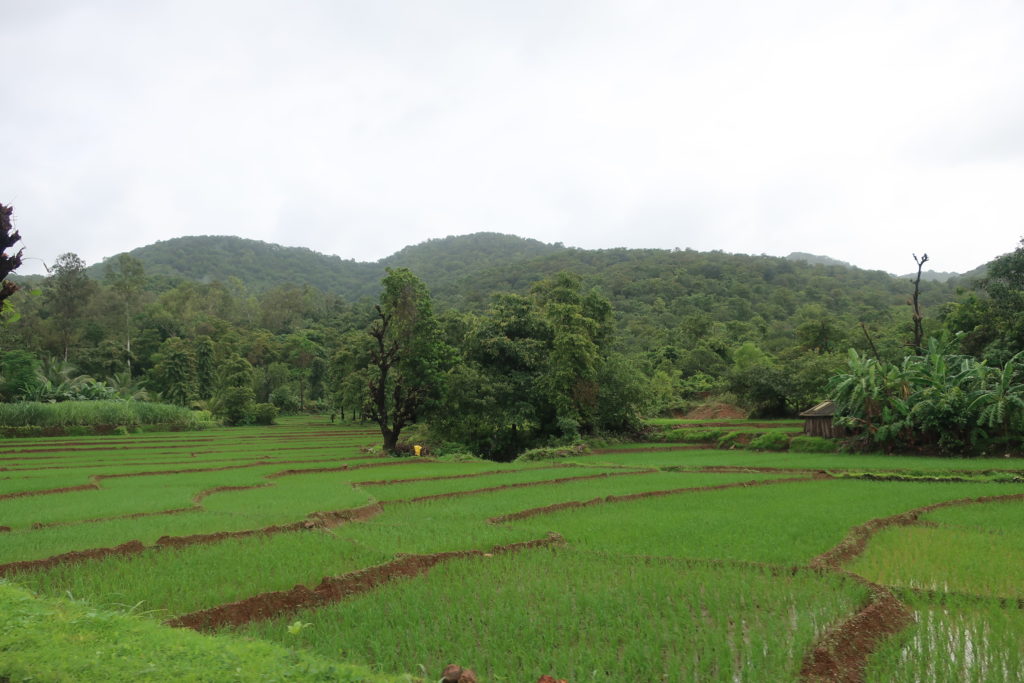
The state of Goa grows a lot of rice, which thrives at this time of year.
How Green Was My Paddy…
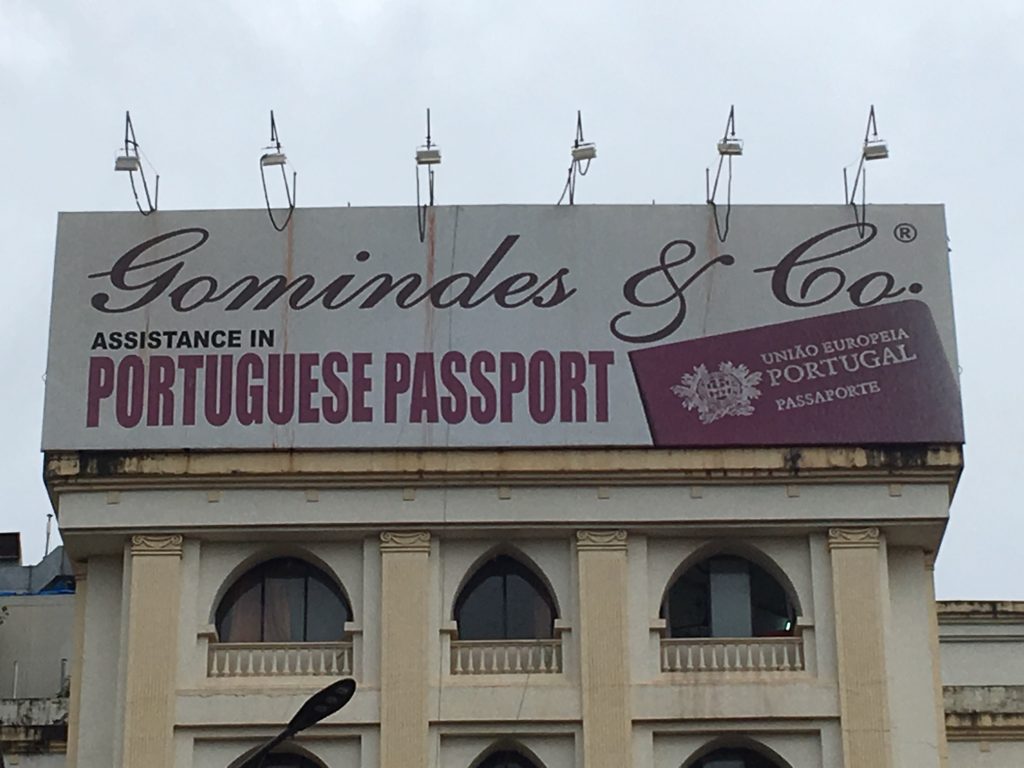
We see several billboards similar to this in Margao. Because ‘Anybody born before 19th December 1961 in Goa, and up to the third generation, are eligible to become a Portuguese citizen.‘ This is a change from most cities that advertise – falsely, in most cases – easy access to citizenship of the UK, Canada, and Australia for one billion, three hundred and twenty-four million, one hundred and seventy-one thousand, three hundred and fifty-four Indians.
New passports for old
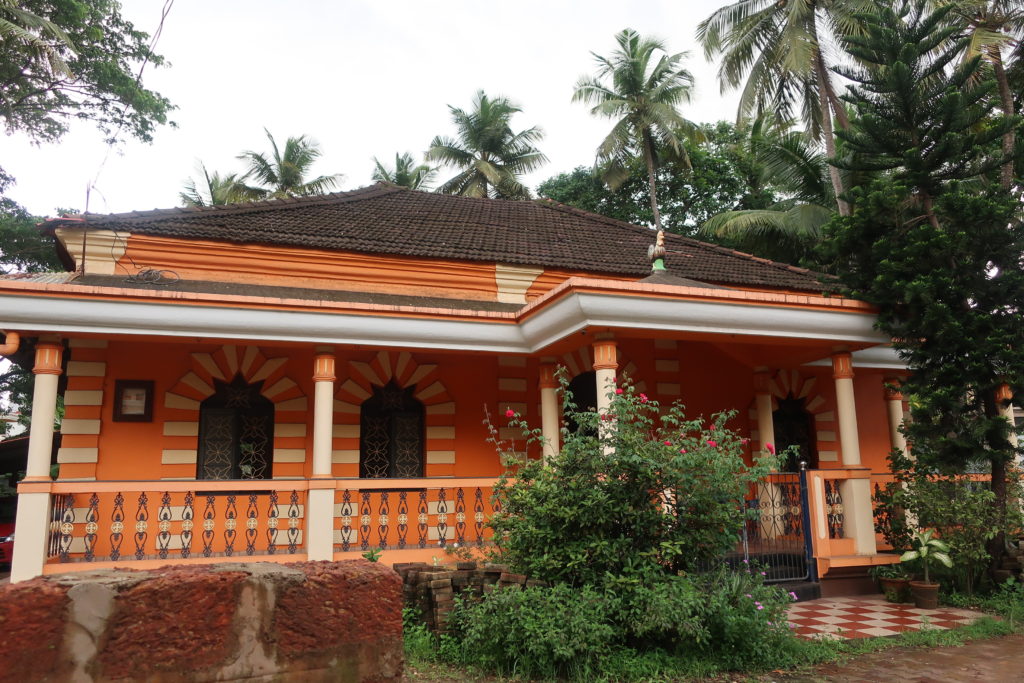
There are still a few well-preserved Portuguese-style buildings in Goa.
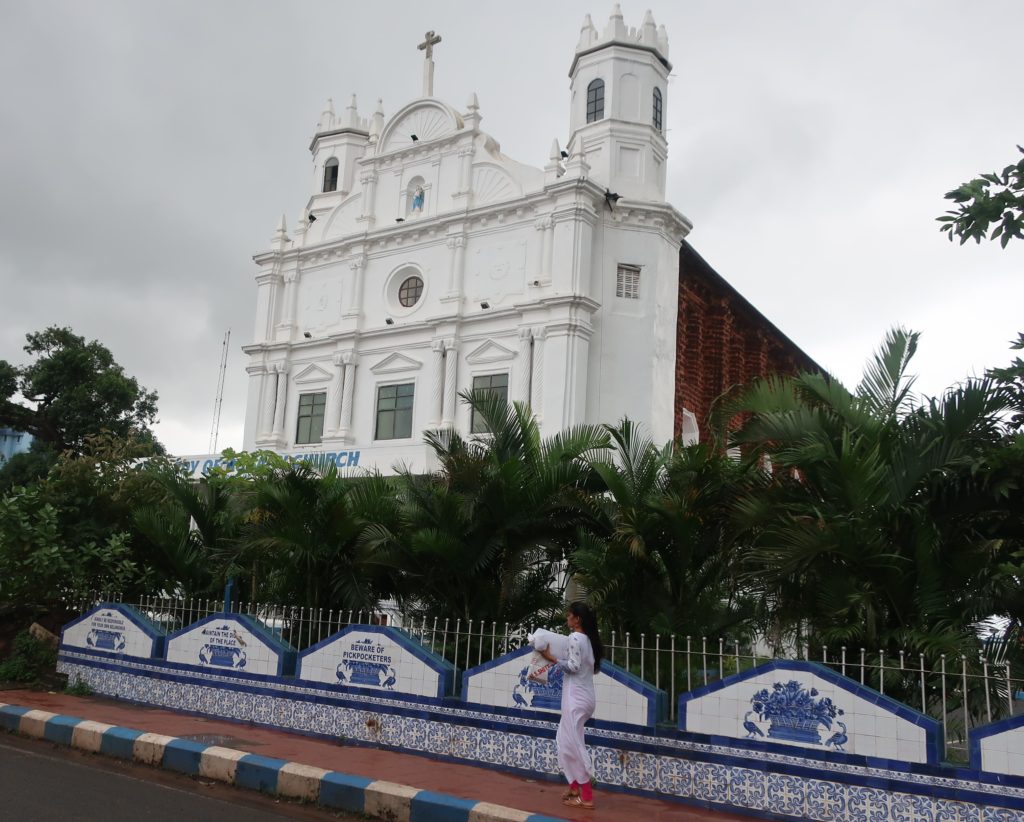
…and lots of churches, of course.
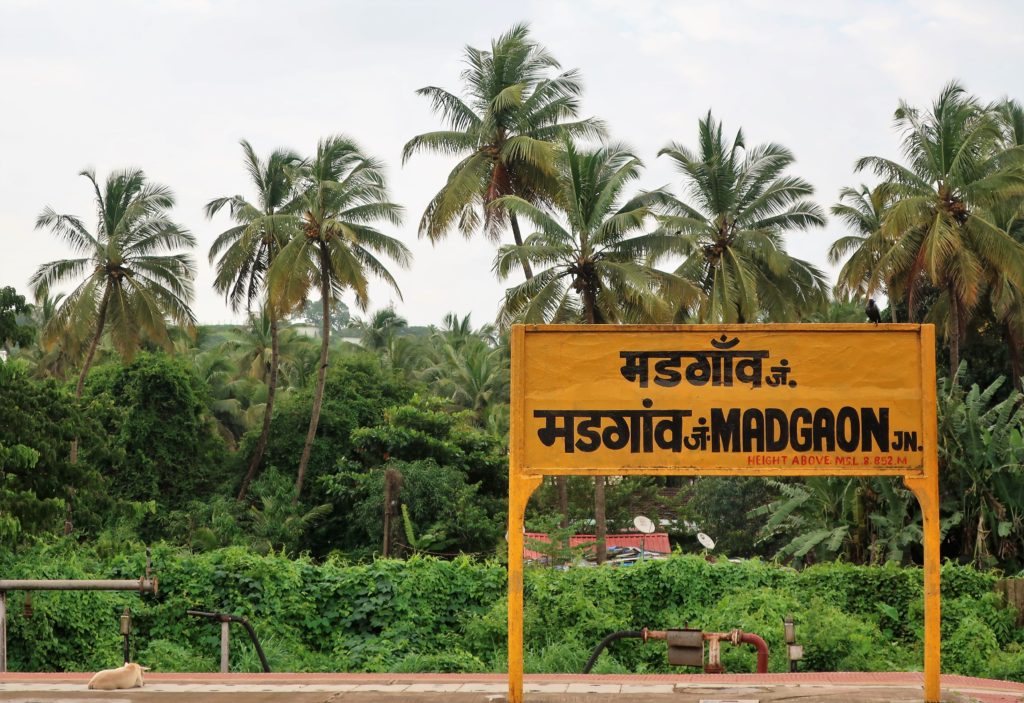
We depart on an overnight train from Margao (known as ‘Madgaon’ locally) to Kochi in Kerala State. We hire Dominic one last time to drive us into town.
We find ourselves way behind on the blog once again. No matter, we’ll try to do a few short entries in succession to catch up.
We take a deluxe bus from Udaipur to Ahmadabad. (Deluxe as in ‘air-conditioned’, ‘clean-ish’, ‘costs more than five dollars’ and ‘doesn’t look like it’s been rolled down a mountainside’.)
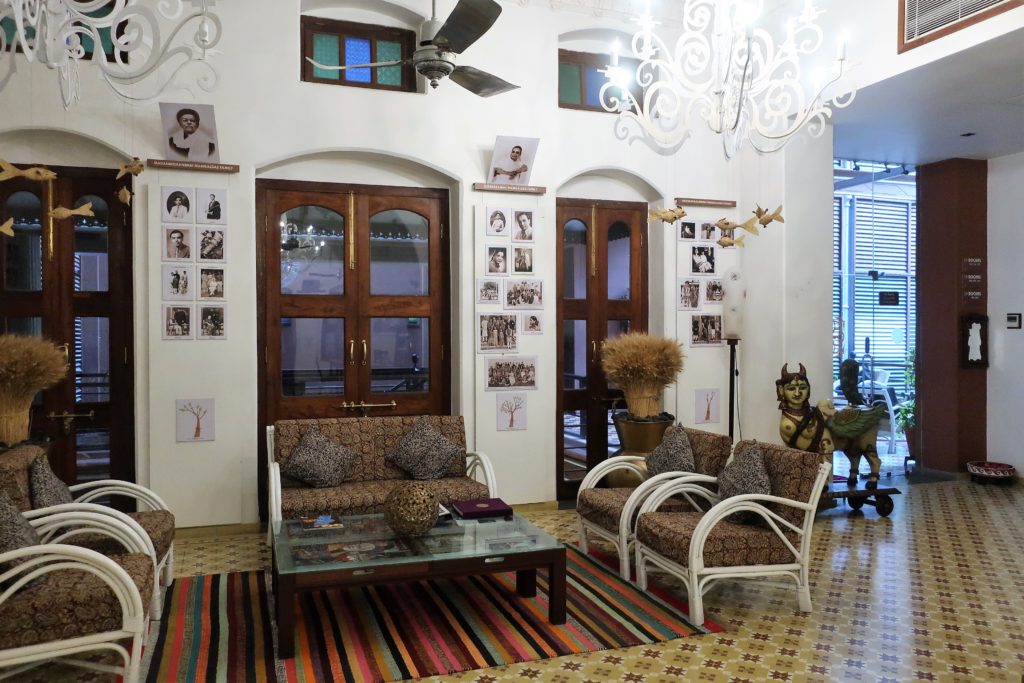
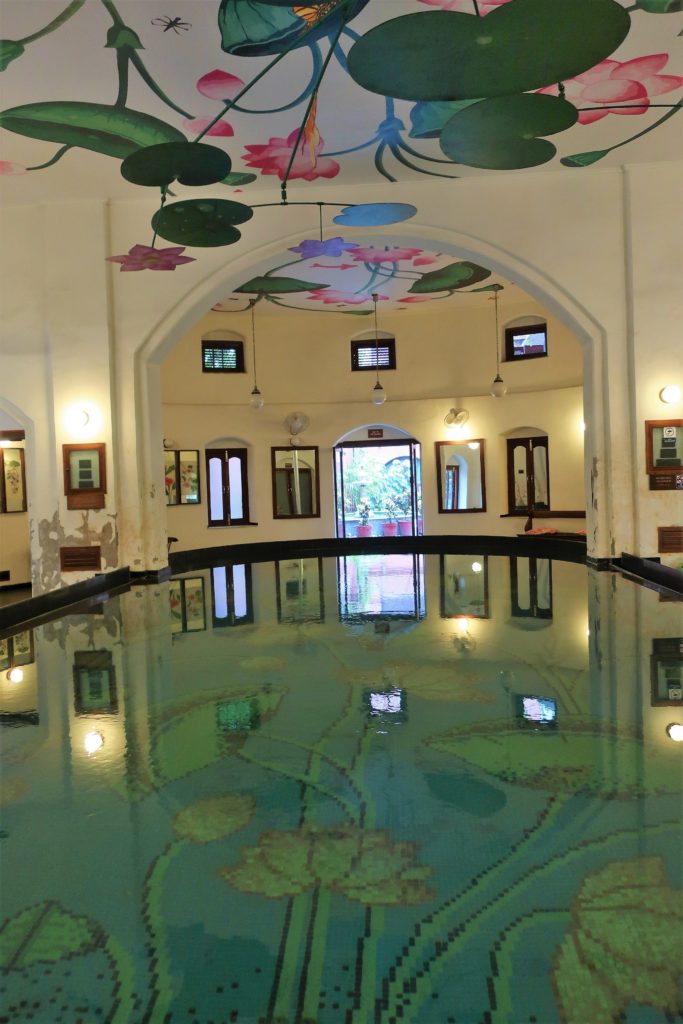
Formerly the home of a Gujurati textile magnate, it’s very comfy. We especially like the Lotus Pool.
Lotus positions
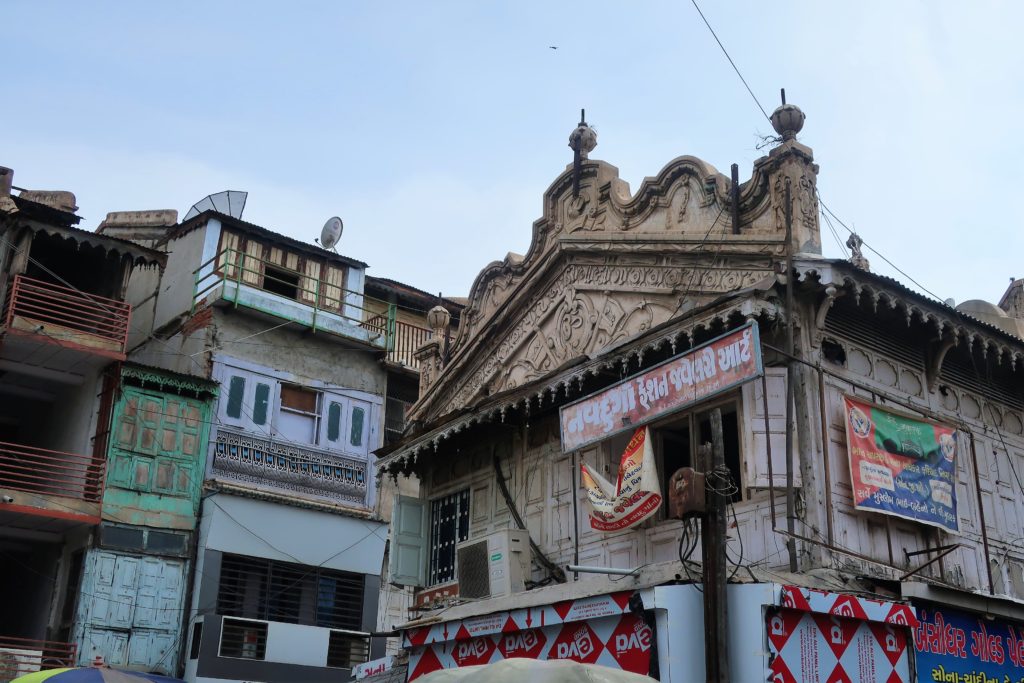
The hotel is at the edge of the old city. The old city is a rabbit warren of streets with many examples of interesting local architecture, including buildings with intricately-carved wooden balconies and decorations. Sadly, most are crumbling into rubble.
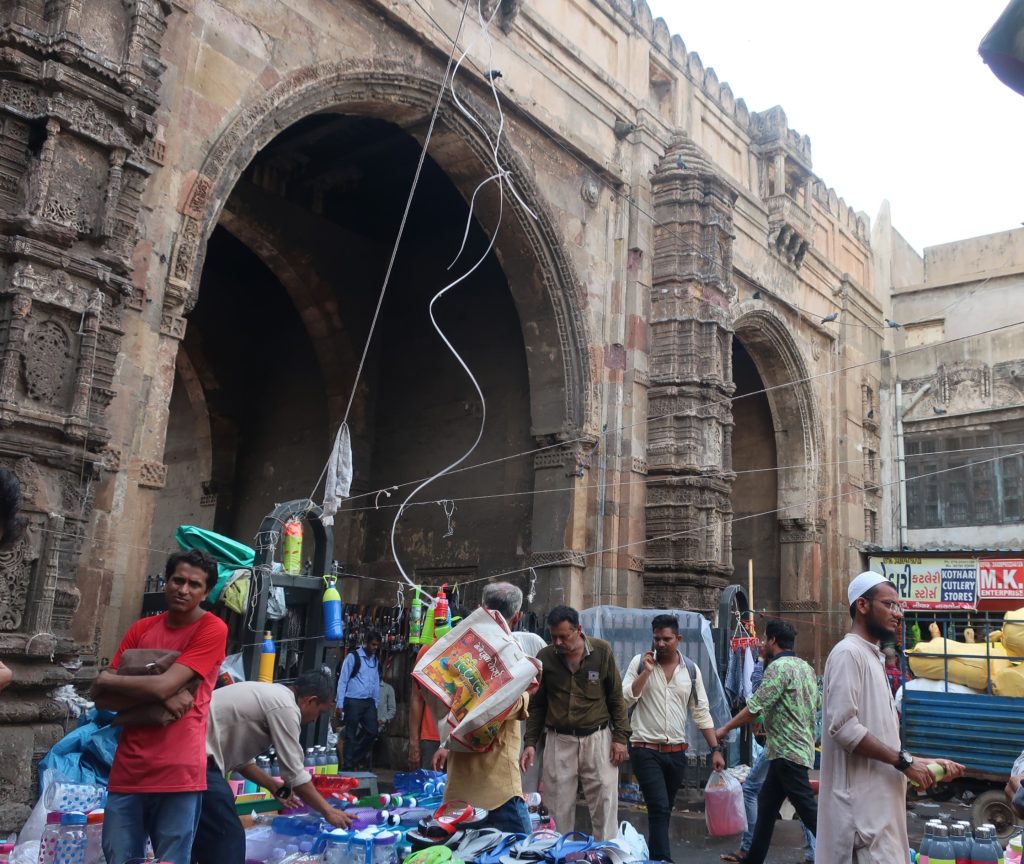
500 years ago, Ahmadabad was founded with city walls and gates. The walls are mostly gone, but the gates remain.
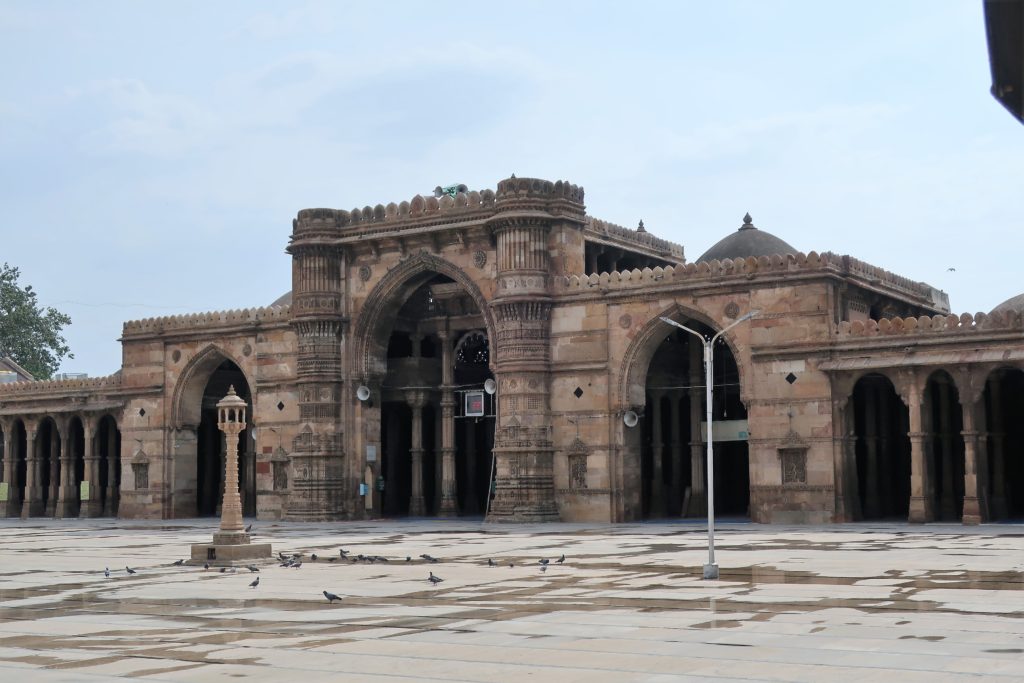
We are persuaded to visit the Jama Masjid mosque. I point out that I’m wearing shorts (unsuitable for visiting places of worship of any kind – friendly reminder to a million Western tourists.) The gatekeeper kindly provides a loaner pair of trousers.
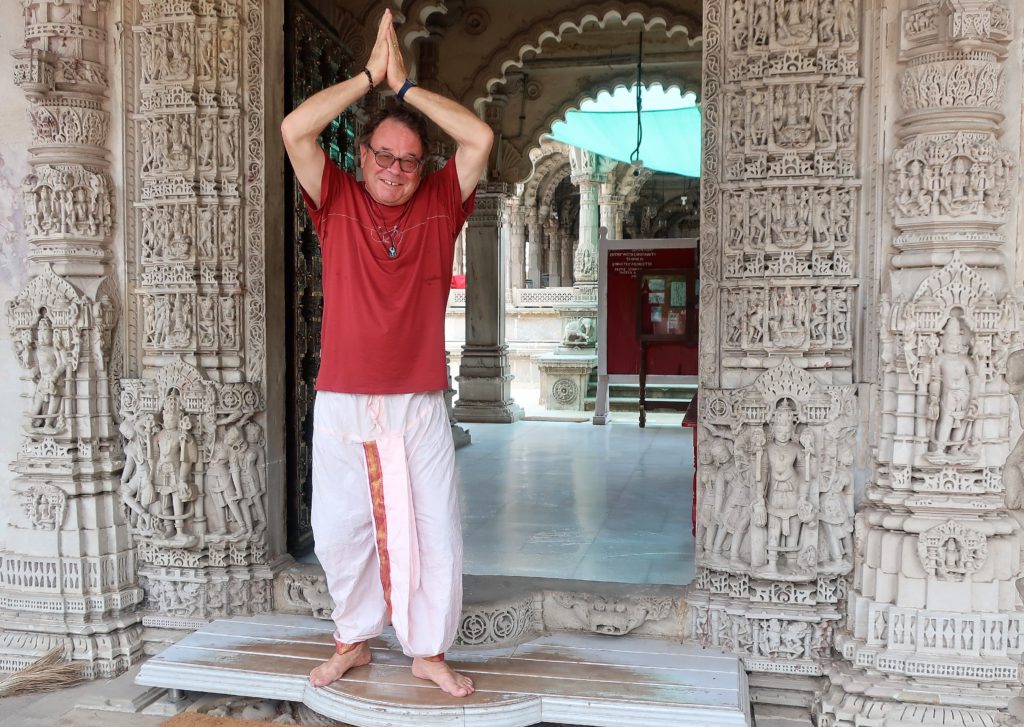
Fortunately, the gatekeeper has pairs of pyjama-like pants for the use of immodestly-dressed visitors.
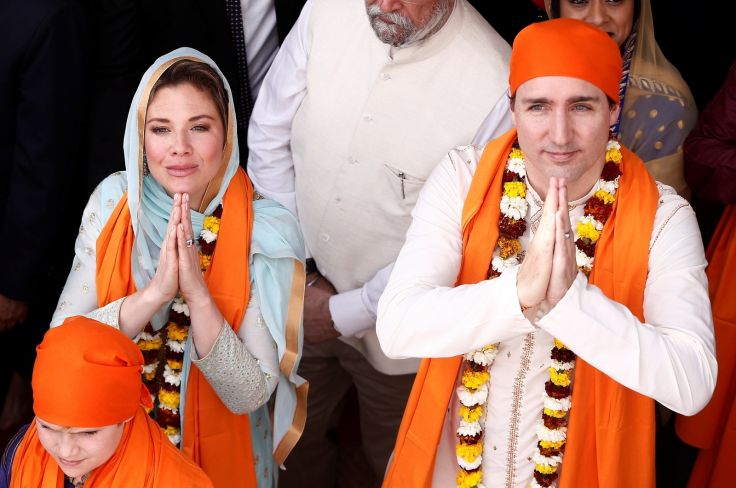
Denis yuks it up for the camera……just like Mr. Trudeau
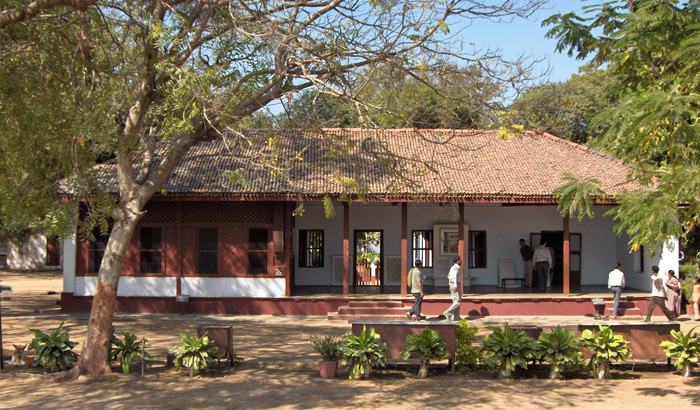
Among Ahmadabad’s claims to fame: Ghandi spent years here at the Sabarmati Ashram. This was his base for toppling the Raj.
2019 is the 150th anniversary of Ghandi’s birth. There are signs and billboards throughout the country.
On the grounds of the ashram is this interesting wood sculpture carved out of a post.
Keep walking
One of Ahmedabad’s biggest attractions is the Calico Museum of Textiles. We try to go, but the process of actually trying to visit this museum is so complex and Byzantine, we eventually give up. Maybe next time.
Sight or Insight of the Day
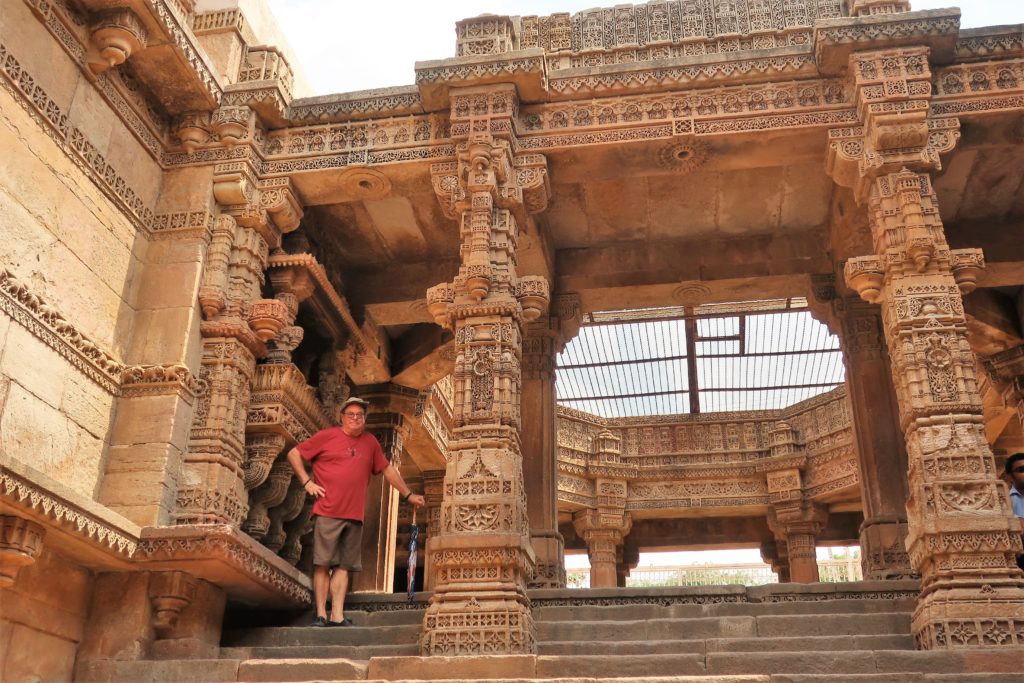
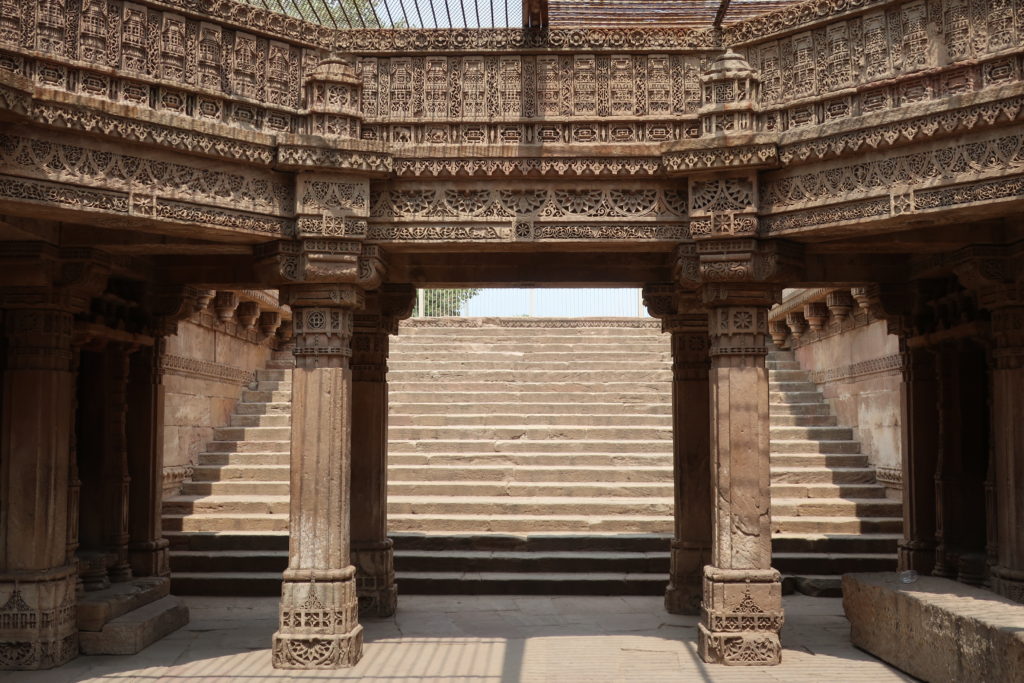
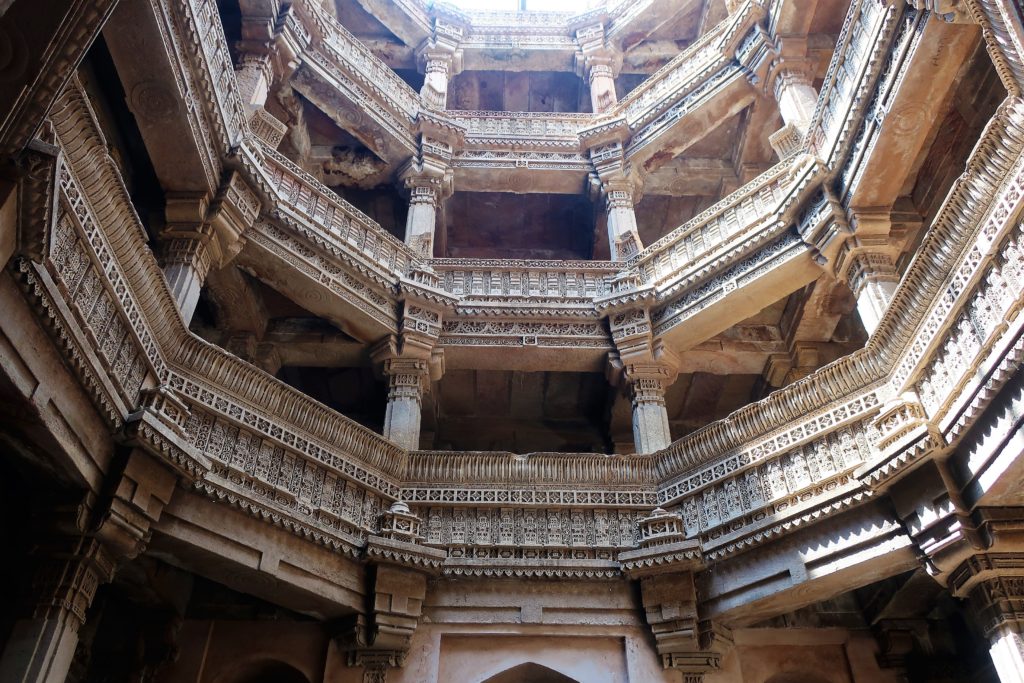
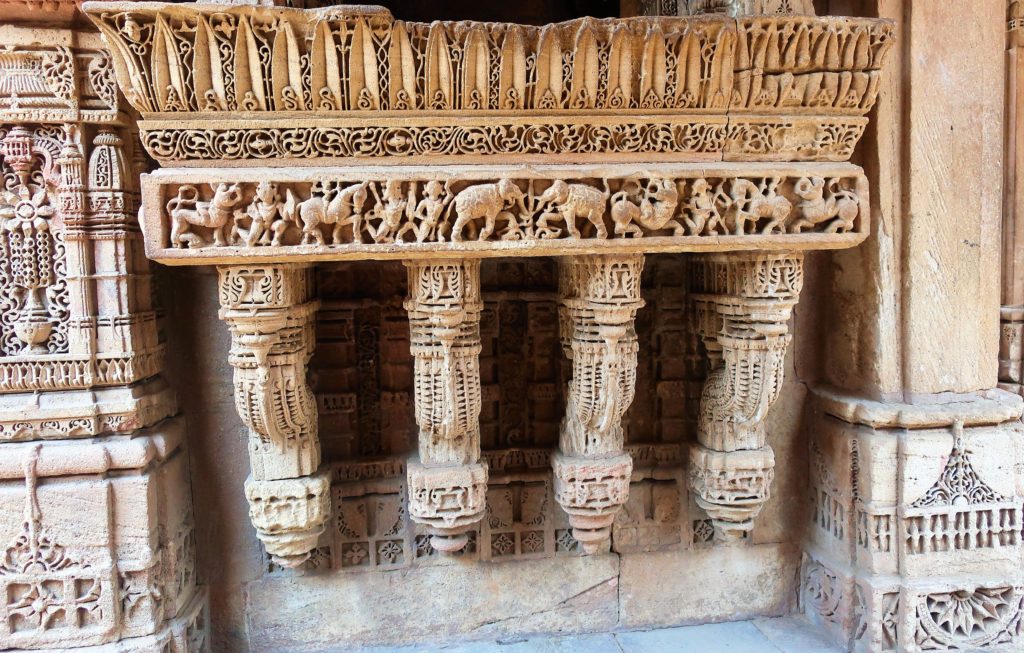
One day, we take a tour with a car and driver, arranged from the hotel. We drive to this place, the Adalaj Stepwell.
We’ve visited these – stepwells – elsewhere in India, but this is the largest and most ornate we’ve seen.
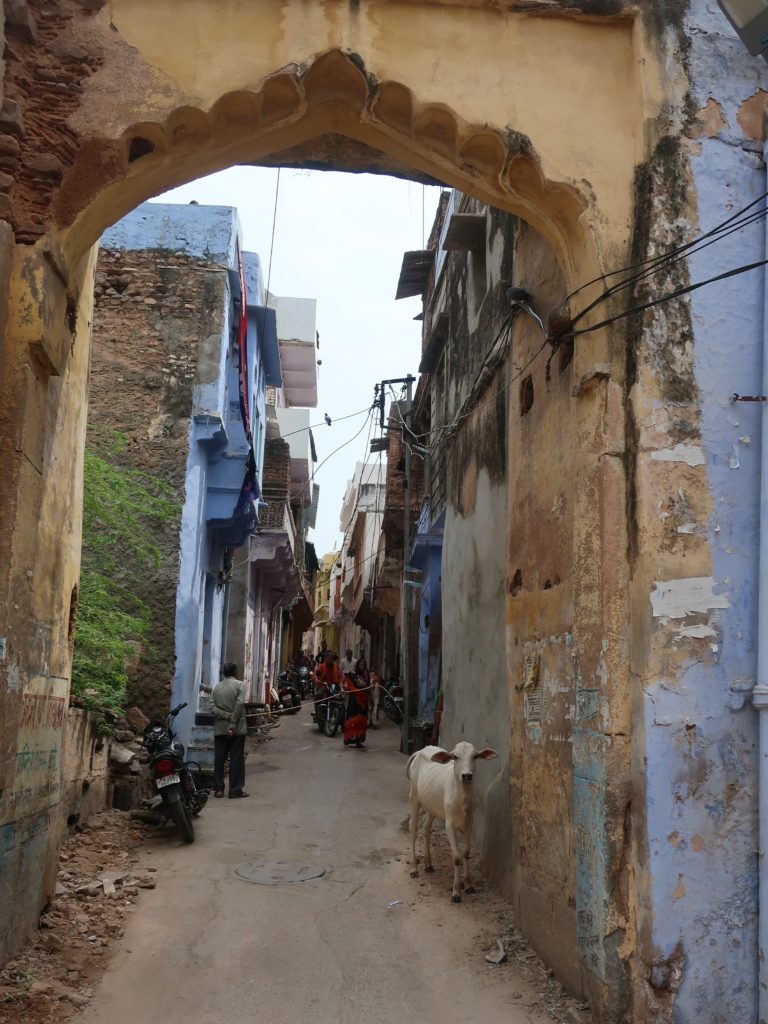
The lanes of Bundi have ‘character’ without the nightmarish aspect of bigger Indian cities.
How Now, Beige Cow?
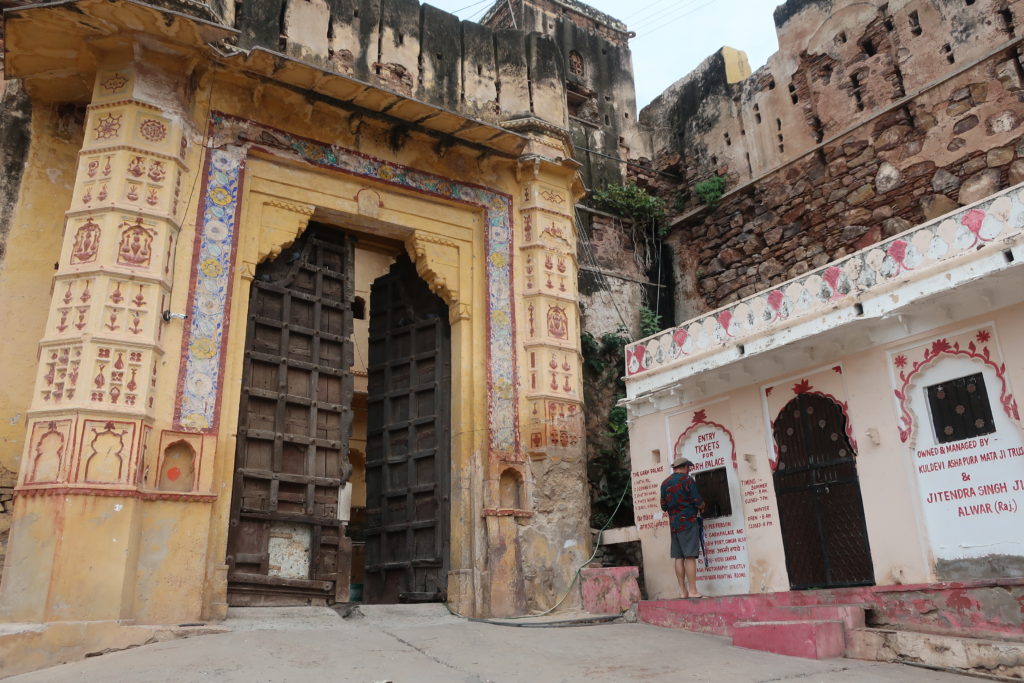
We purchase tickets at the gates of Bundi Palace.
To quote the Lonely Planet guide:
‘ This extraordinary, partly decaying edifice – described by Rudyard Kipling as ‘the work of goblins rather than of men’ – almost seems to grow out of the rock of the hillside it stands on. Though large sections are still closed up and left to the bats, the rooms that are open hold a series of fabulous, fading turquoise-and-gold murals that are the palace’s chief treasure.’
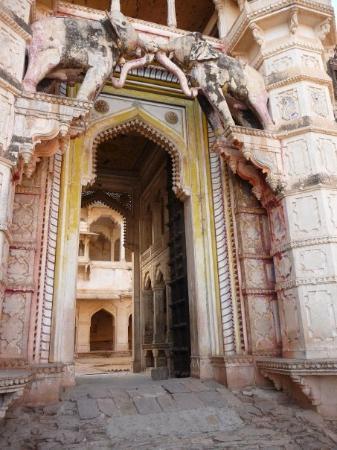
Like most of these palaces, this one has massive gates.
Hathi Pol, or the Elephant Gate
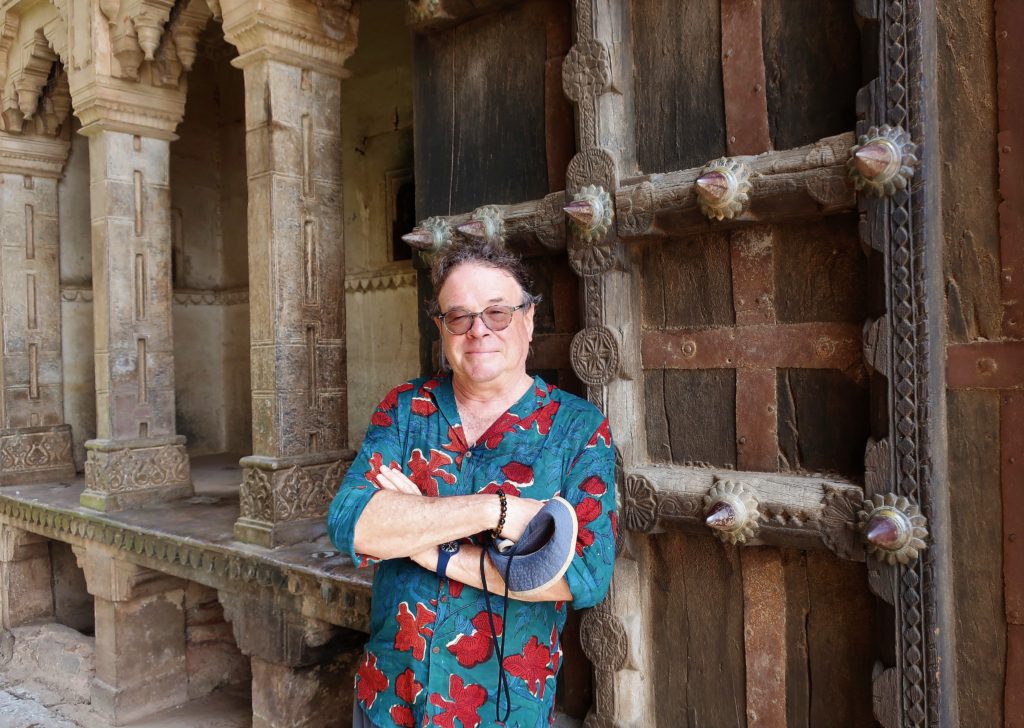
I model my new block-printed shirt from Jaipur.
‘Such are the gates of paradise‘ – William Blake
The builders of these palaces surely knew about the cool breezes you enjoy at this height.
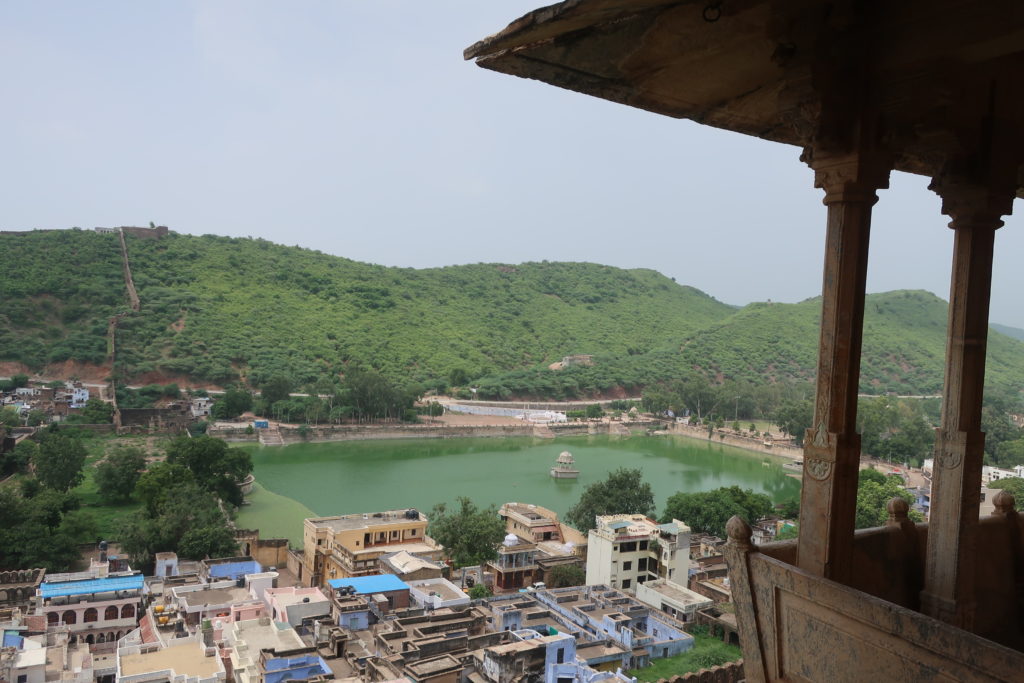
View of Nawal Sagar Lake from the palace
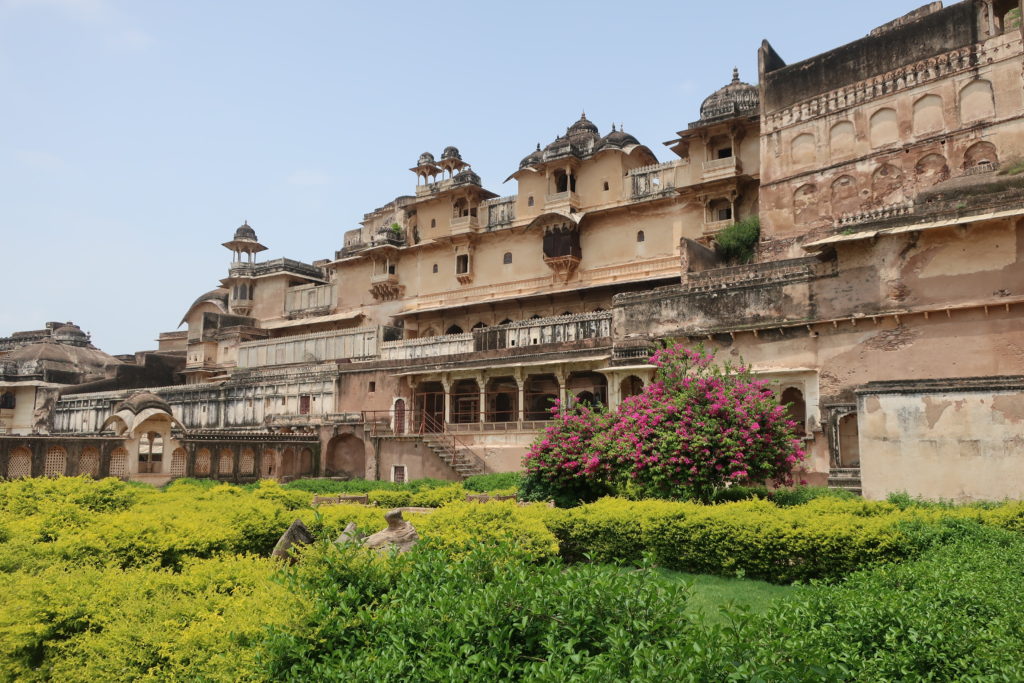
The Chitrasala Palace, part of the larger complex, has painted murals and a garden in the front.
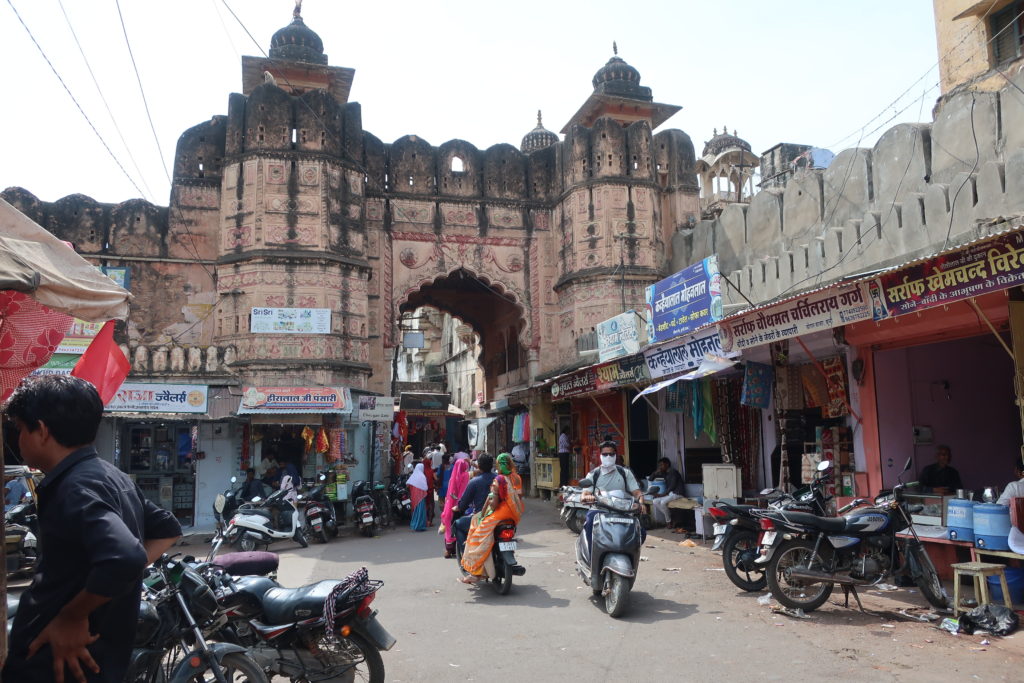
This is the Chogan Gate – the main gate into the old town.
Chogan Gate
As usual, we visit the market.
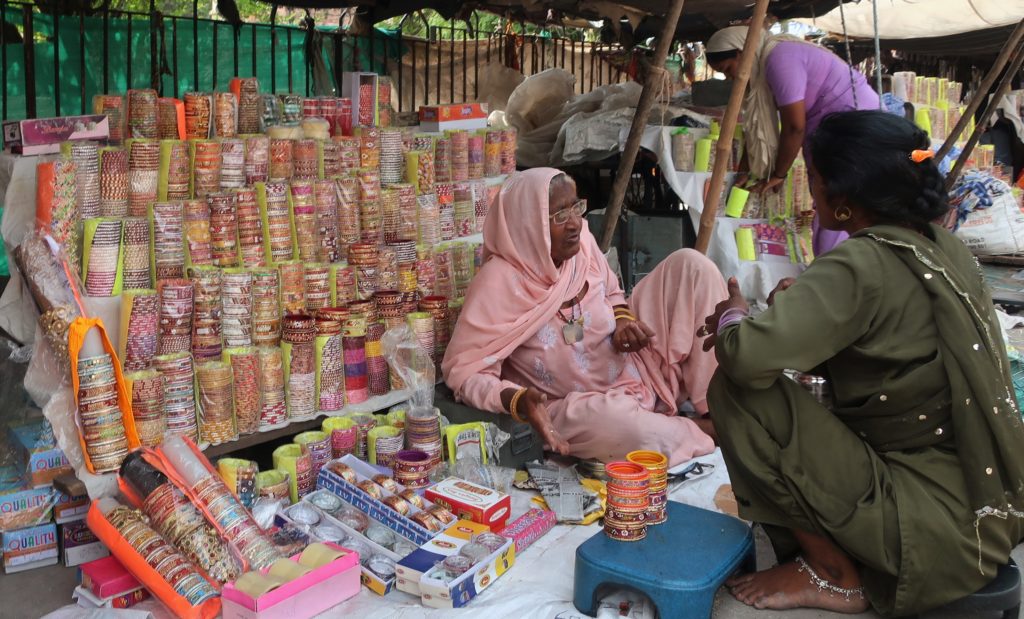
Woman selling bangles
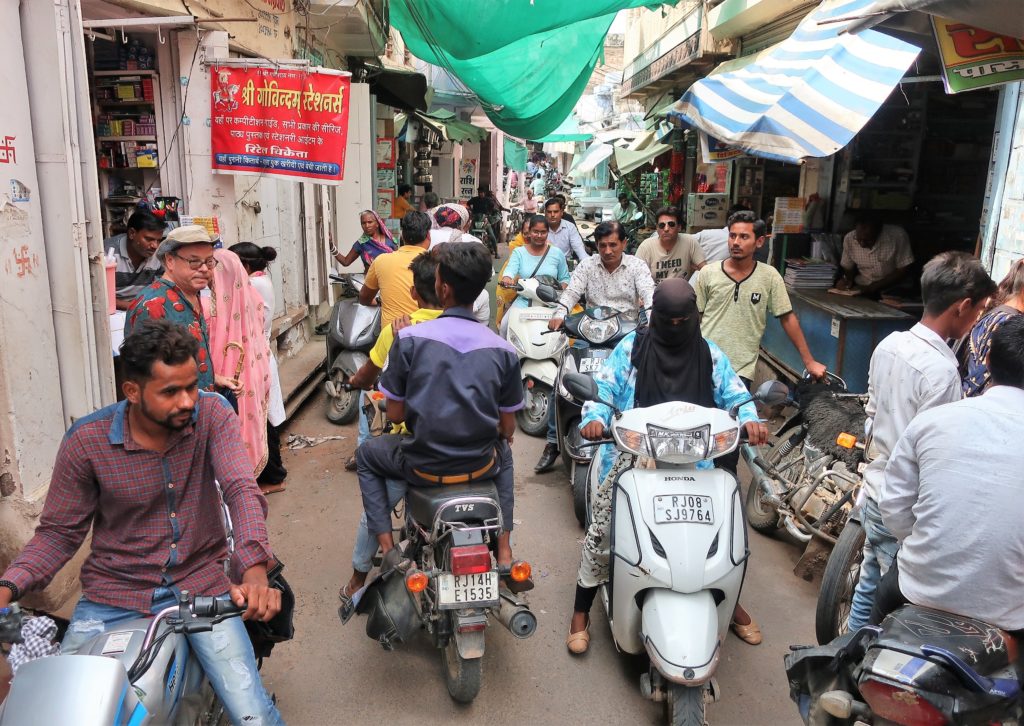
We make our way back to our lodgings against the current of traffic.
Rush hour in Bundi
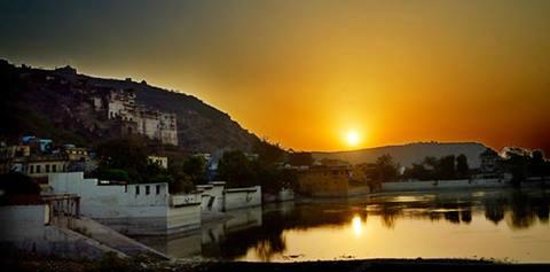
After cooling off, it’s time to enjoy the sunset over Nawal Sagar Lake.
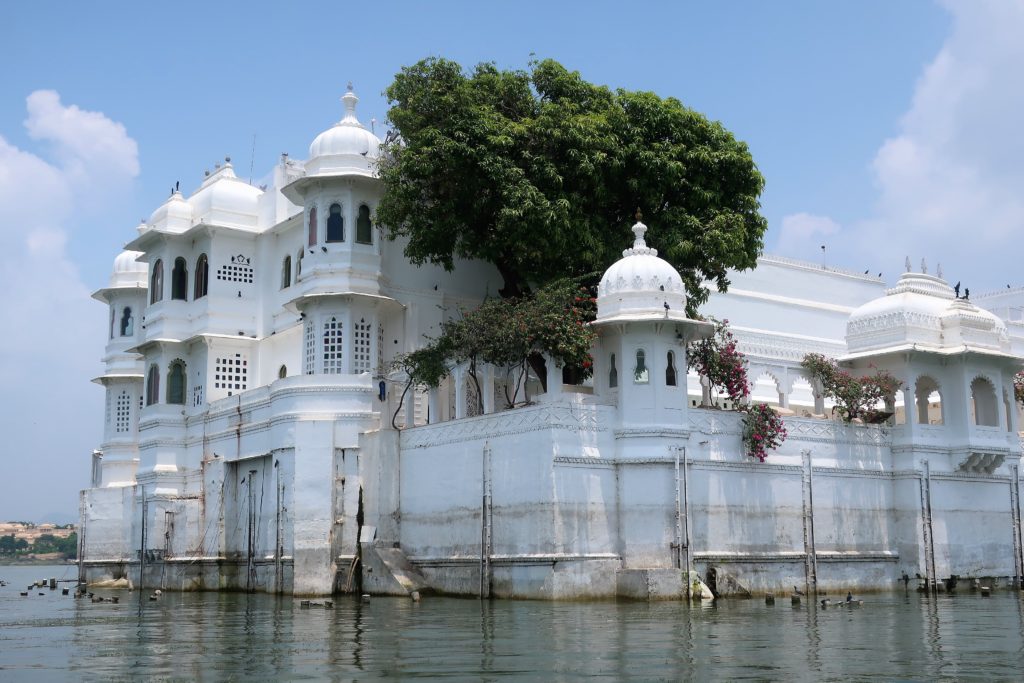
One of the islands on the lake contains a fancy hotel.
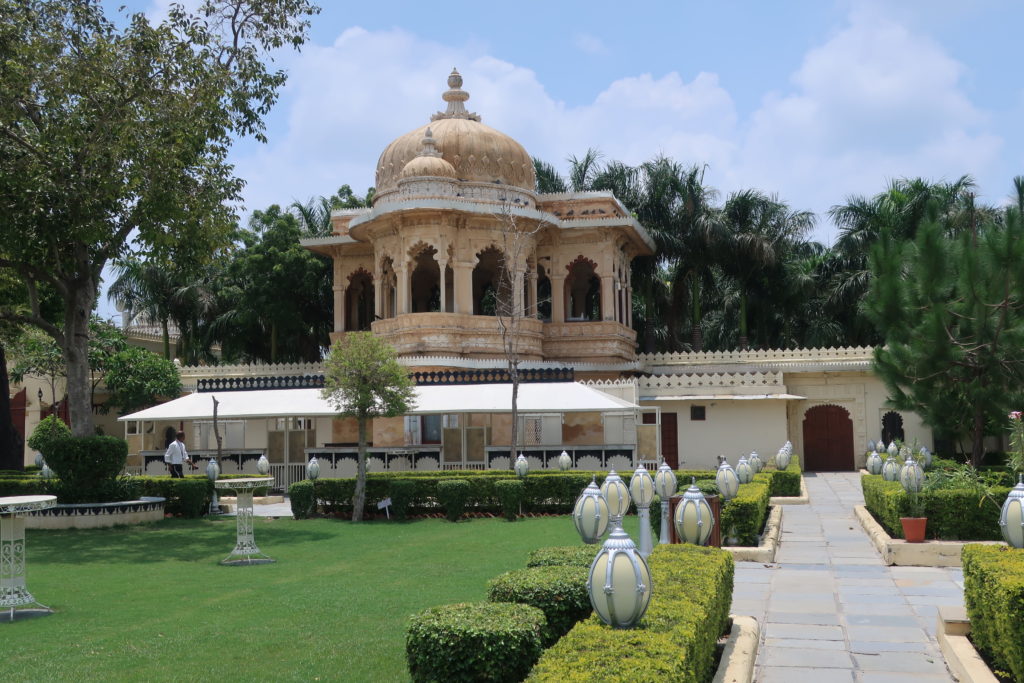
We stroll around the gardens while waiting for our return boat ride.
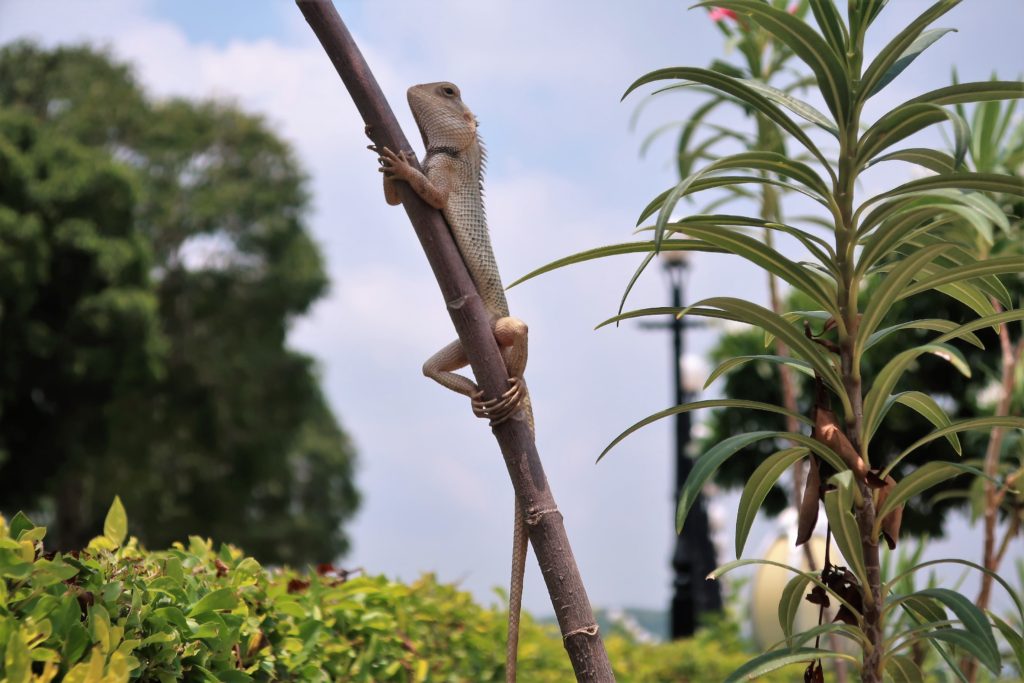
This lizard leaps across our path from a nearby bush before clinging to this stem.
Leapin’ lizards
Sight or Insight of the Day
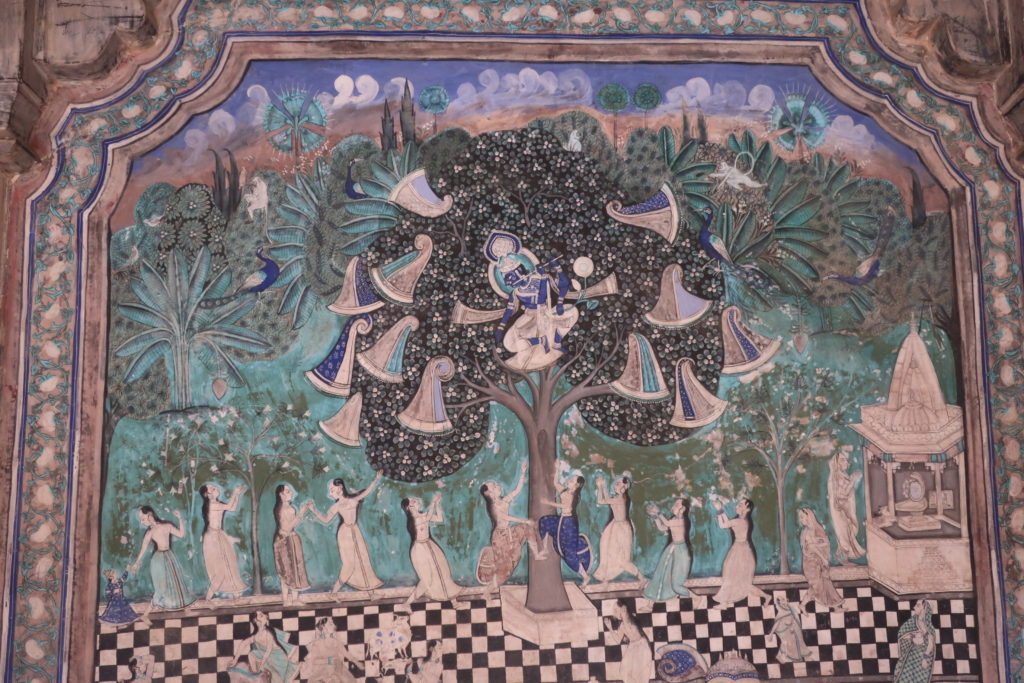
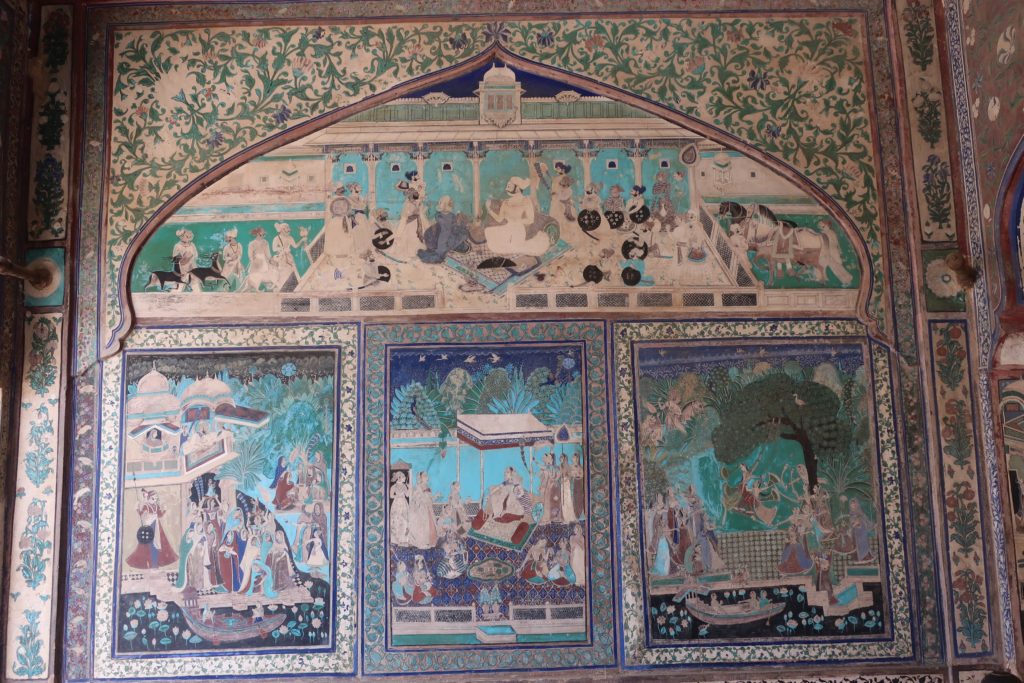
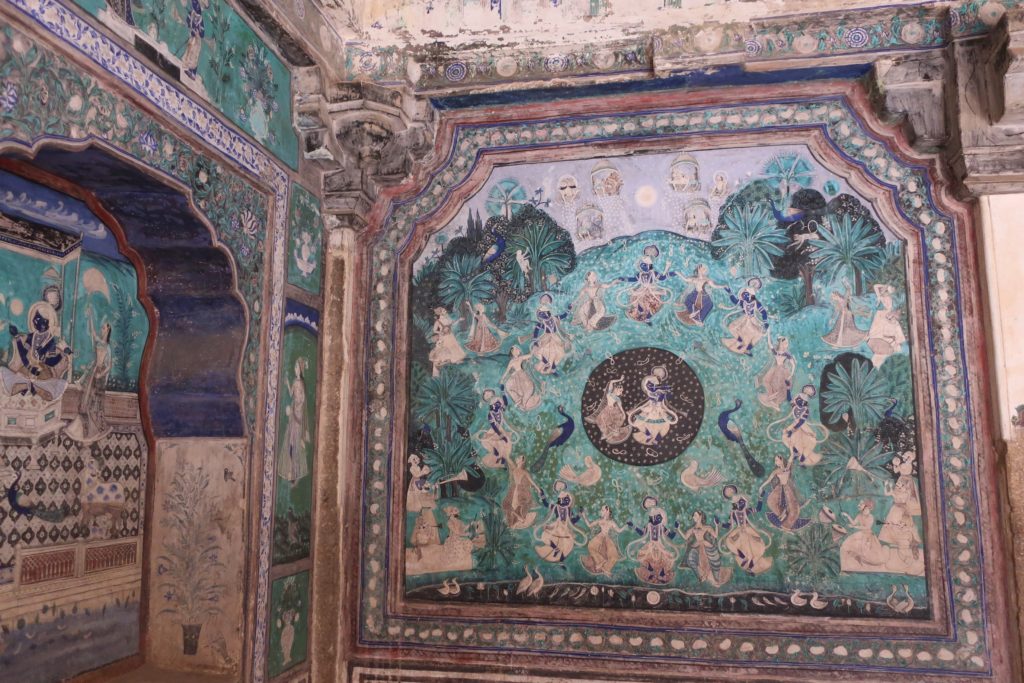
While in Bundi, we see these lovely murals painted on the walls of the Chitrasala Palace.
Depictions of Krishna seem to be a popular theme in Rajastan.
Krishna sits up a tree playing the flute after stealing the clothes of the gopis (milkmaids)
It’s a shame that India has thousands of monuments in need of maintenance or restoration. We suggest (Indian) universities with faculties of archaeology/antiquities begin a program in which classes ‘adopt’ a particular site to maintain or restore.
Some courtly goings-on
For a start, these sites could use more personnel to simply be present to prevent vandalism and provide more oversight: many of these places are full of dark corners where the stench of urine would fell a full-grown rhinoceros in its tracks.
The gopis and Krishna’s girlfriend Rhada dance to his flute
India can obviously afford it. Any nation that has tens of billions of dollars to spend on nuclear weapons can easily spare a few crumbs for the preservation of its heritage, right?
(By the way, about those nuclear reactors we provided? You’re welcome.)
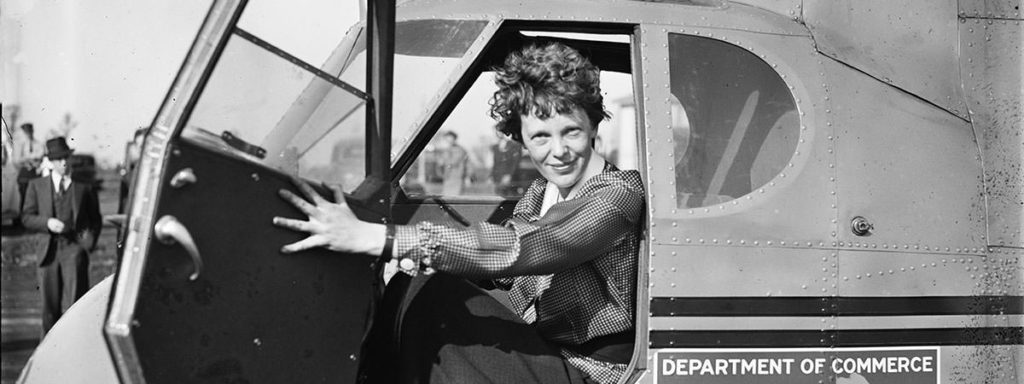
‘ There’s more to life than being a passenger.‘ – Amelia Earhart
Amelia Earhart’s disappearance is one of my favourite historical enigmas. Here’s a small femmage to her, courtesy of J. Mitchell. ‘Then your life becomes a travelogue of picture-postcard charms…’ Indeed.
See you in another life, Amelia.
Anyway, back to Delhi. After a few enervating days in Delhi taking care of business, we go south. First stop is Agra.
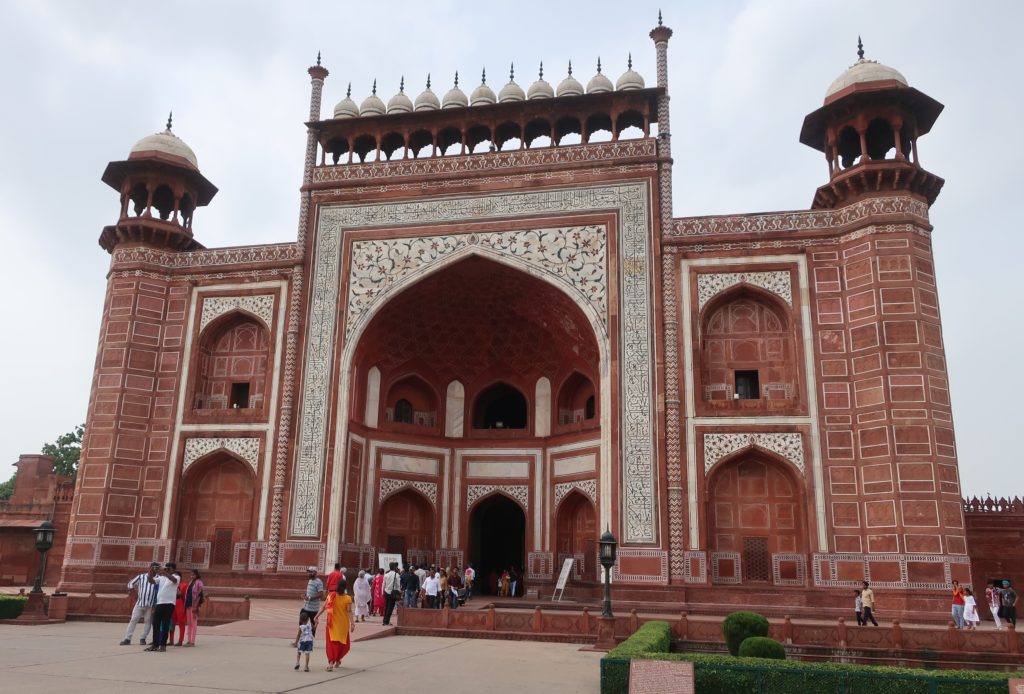
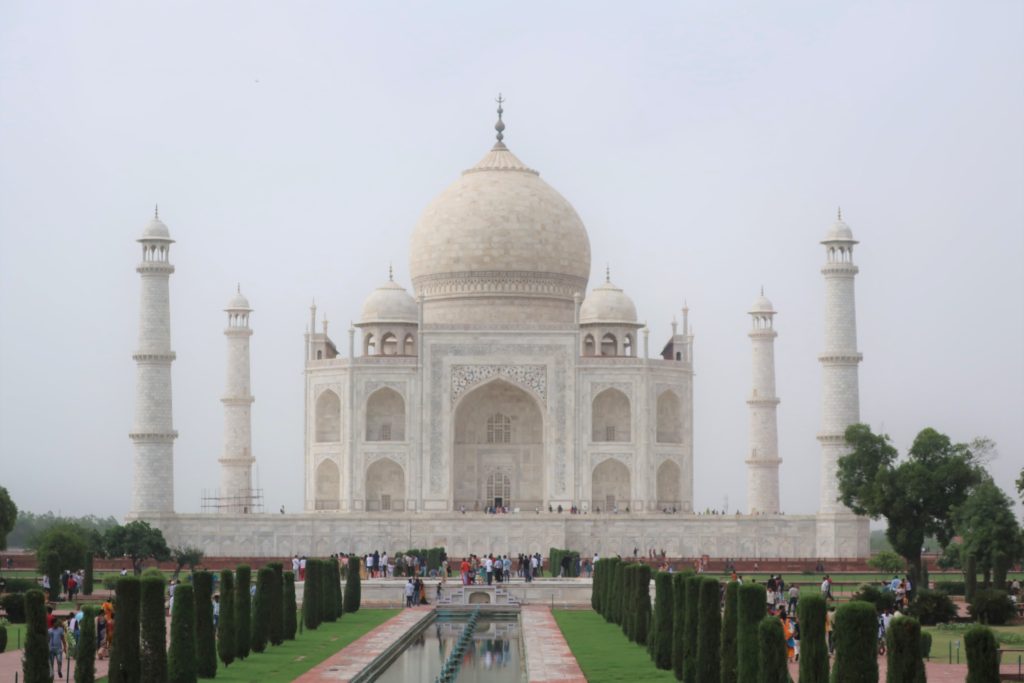
The Southern Gate
The Taj Mahal is one of those tourist sights that is genuinely pretty impressive in real life. Like Ayer’s Rock.
There is controversy about the meaning of Taj Mahal (although ‘mahal‘ certainly means ‘palace.’)
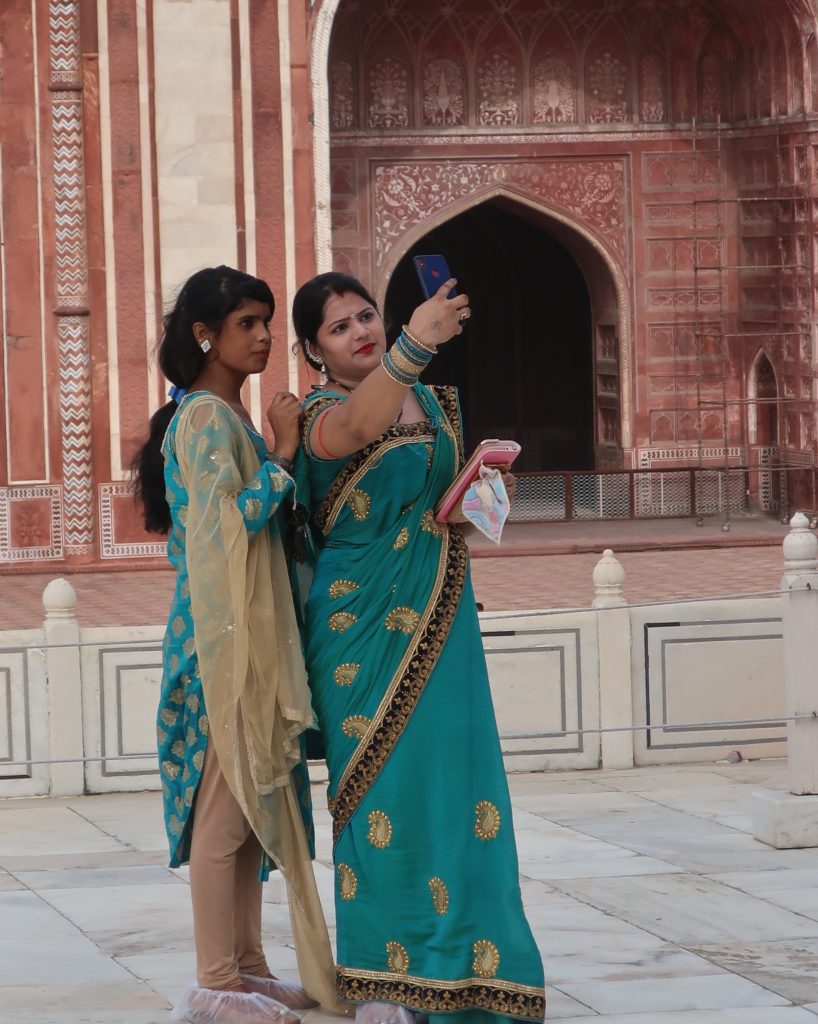
We think this mother-daughter duo are worth a picture.
Say ‘paneer‘
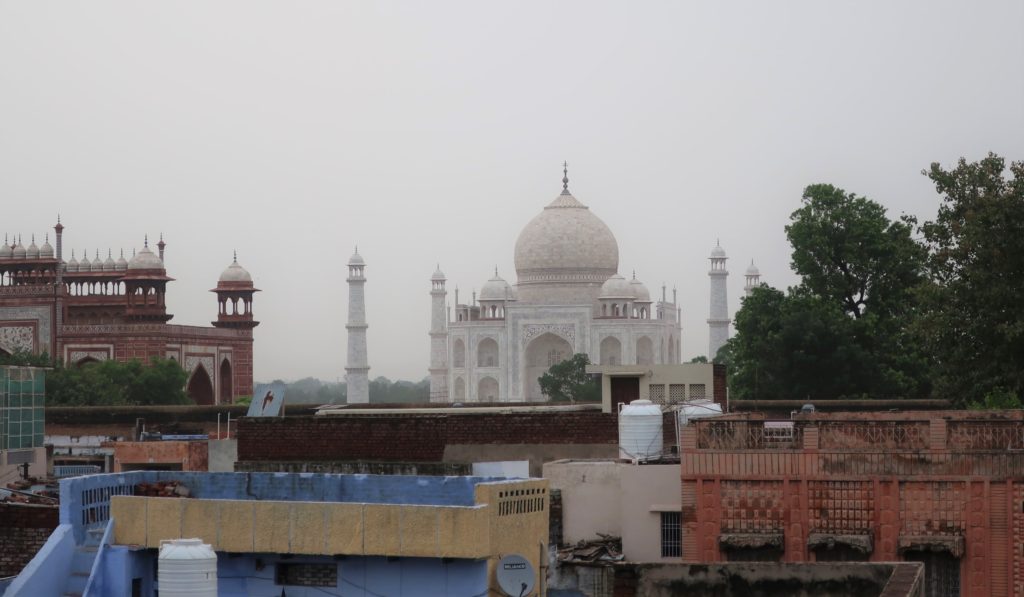
We stay at a cheap place nearby. Great views of the Taj as we sip an evening beer.
Look out for the monkeys, though
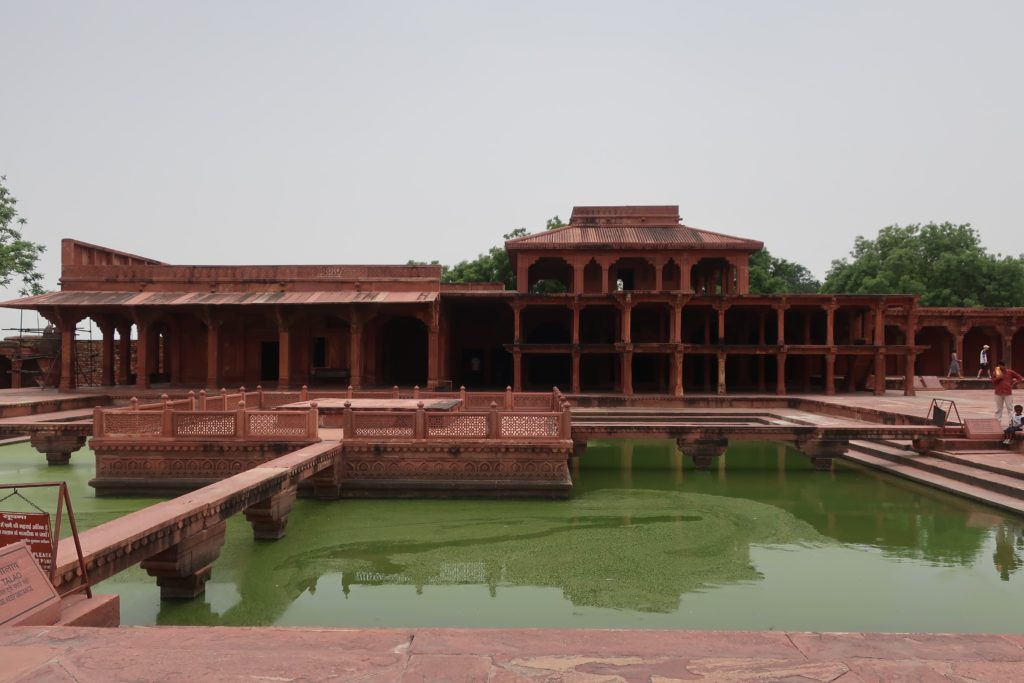
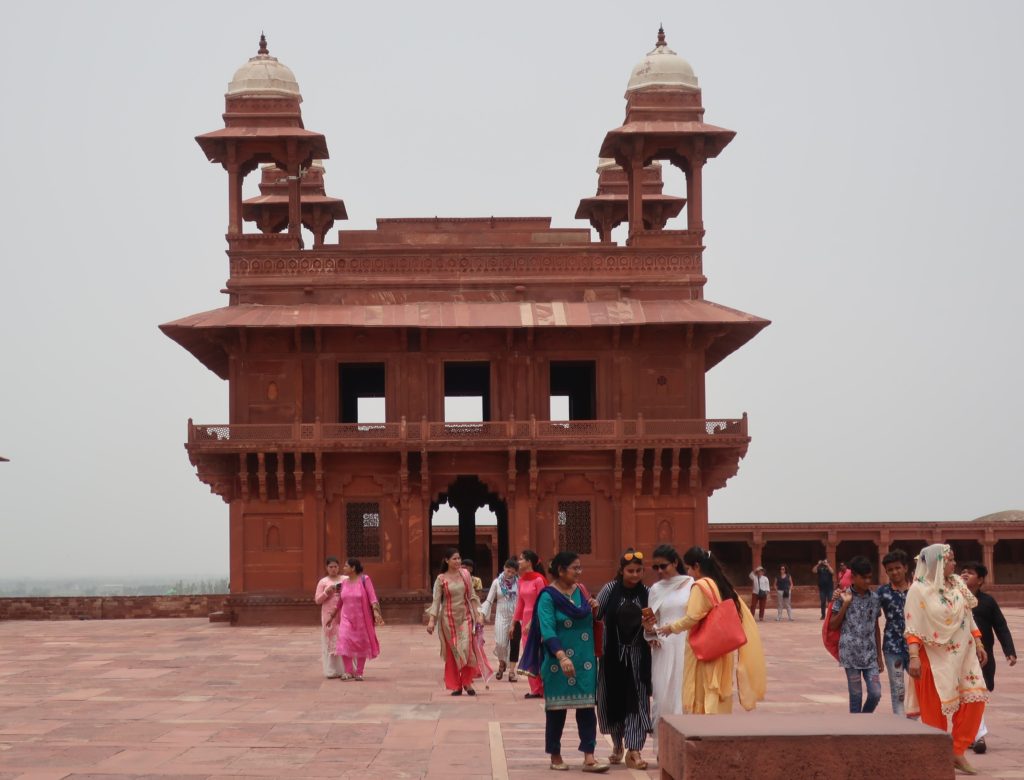
A slow bus takes us to Fatehpur Sikri, the abandoned capital of the remarkable Moghul emperor Akbar.
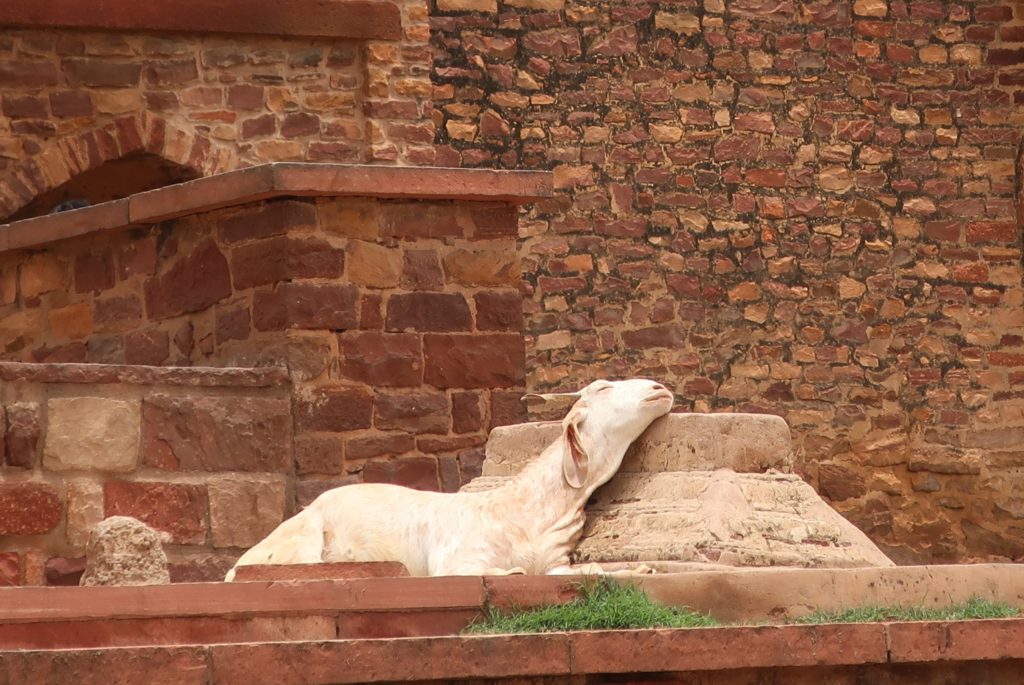
A local goat finds a good place to rest in the heat…
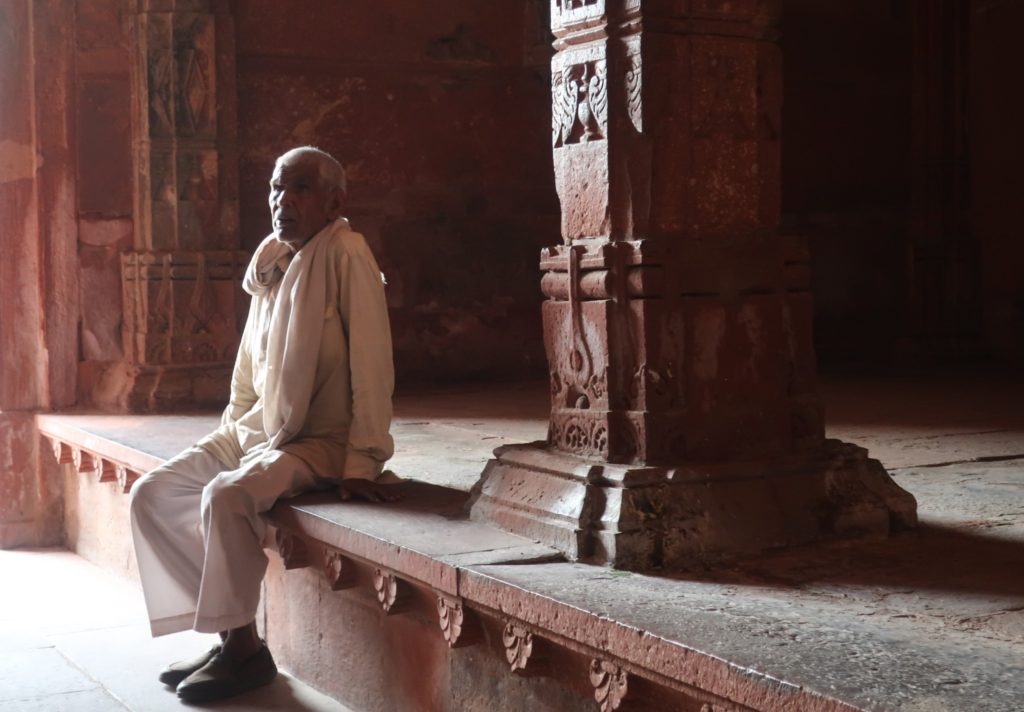
…as does a local older gentleman.
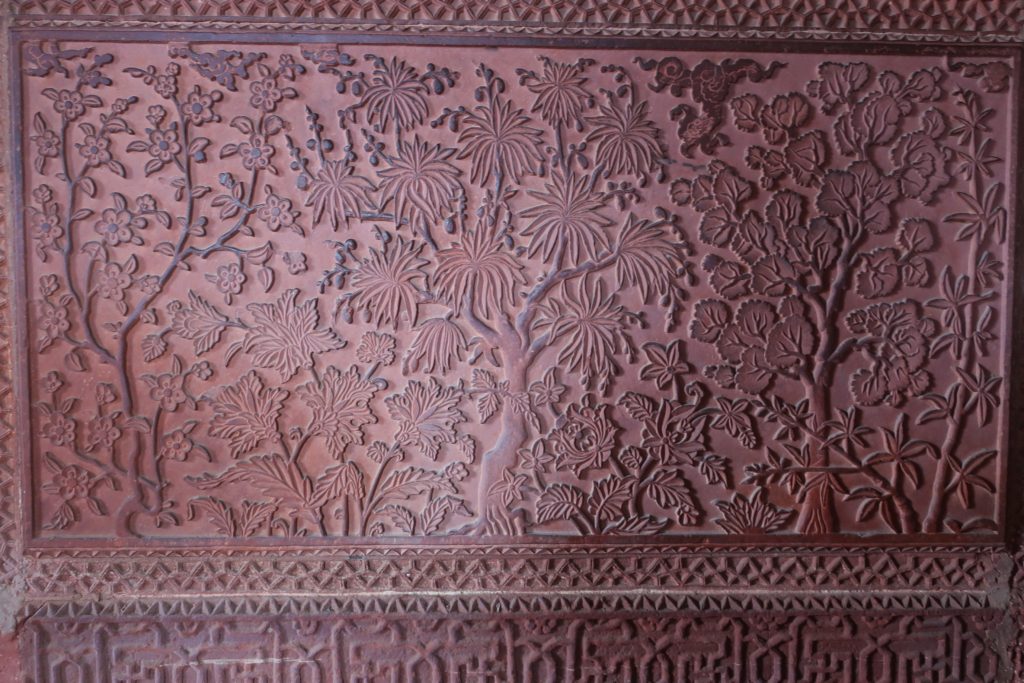
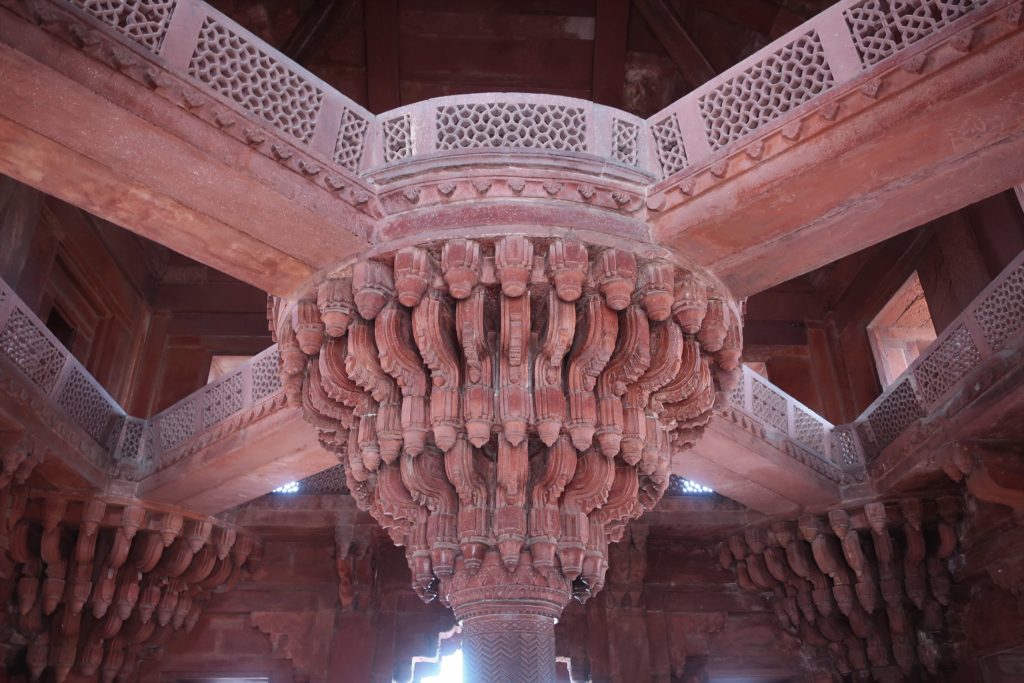
Fine stone-carving is everywhere.
This place hasn’t changed that much since I was last here countless decades ago. Just a lot more people around.
Akbar listened to philosophical debates in this hall. (So they say.)
When I was young, I read the Story of Civilization series. Twice. Still have it. It’s what sparked a lifelong interest in world history.
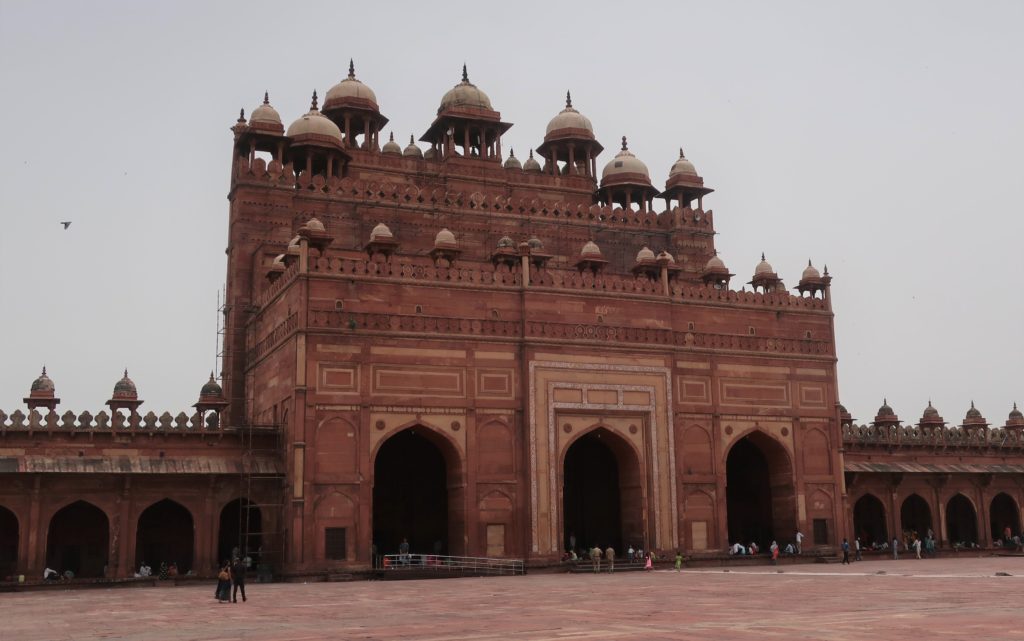
This is the Jama Mosque.
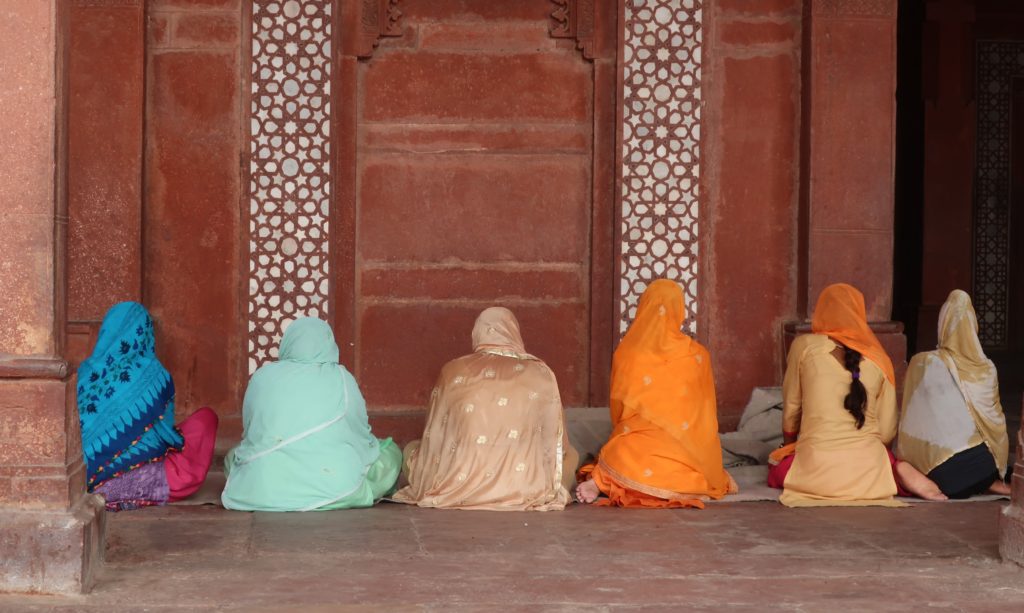
Of course, the women have to pray outside.
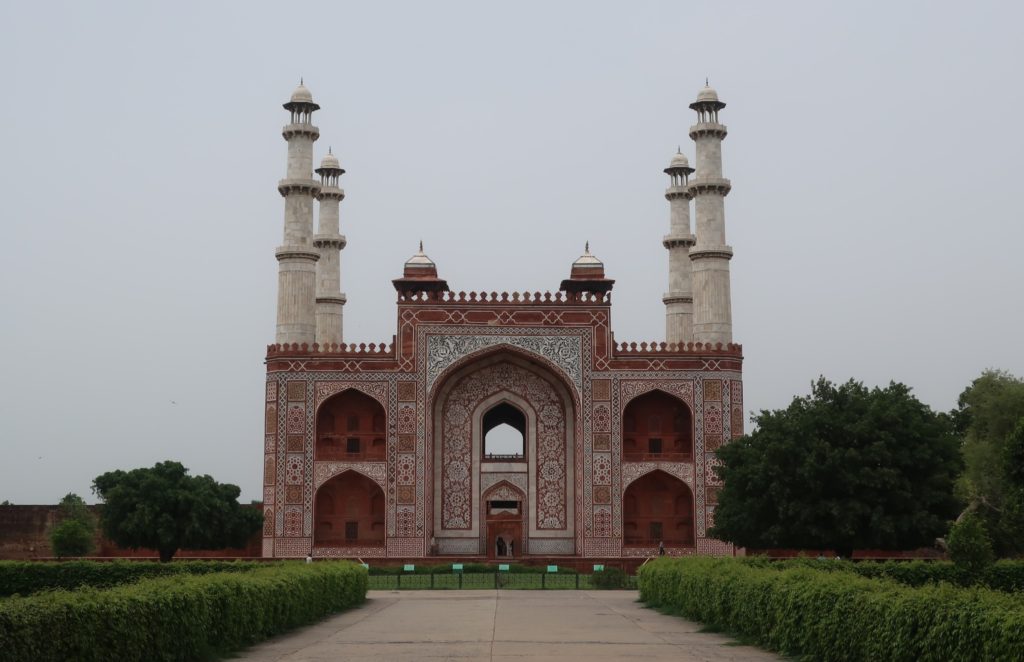
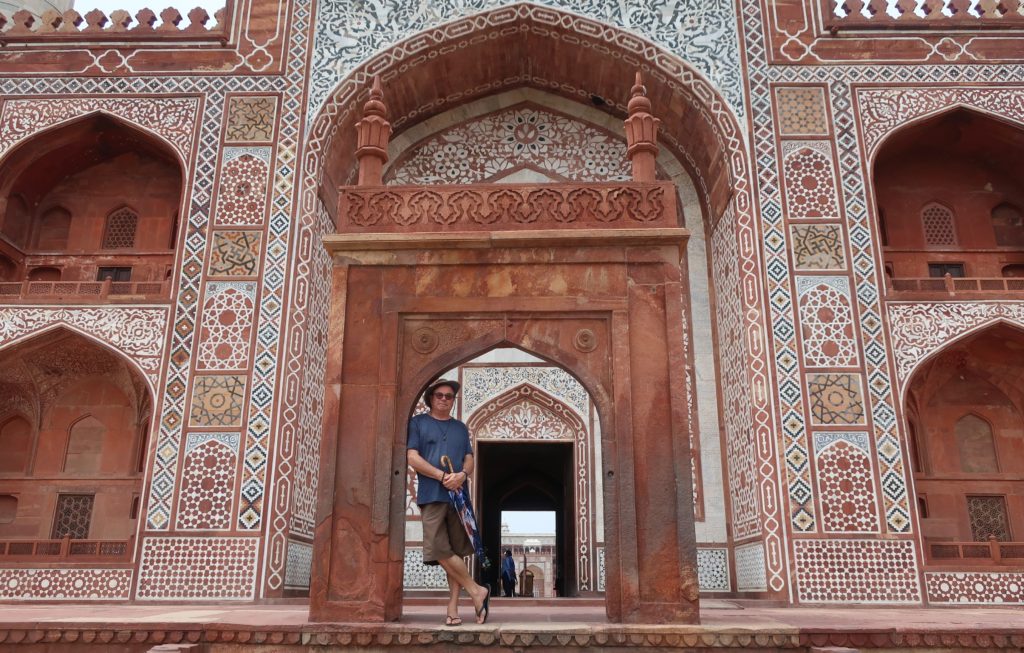
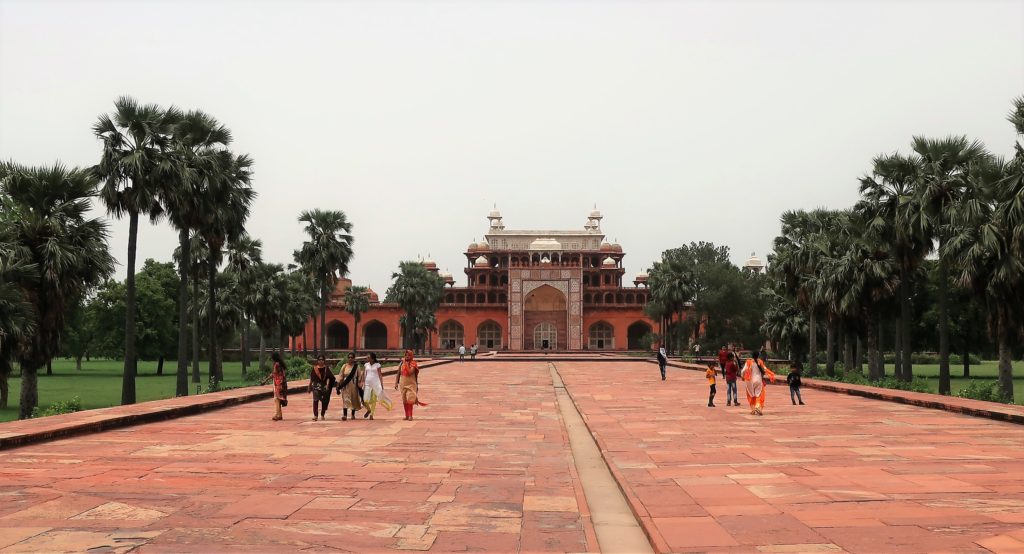
Back to Agra. On another day, we visit Akbar’s Tomb.
It’s in nearby Sikandra. Getting here is quite an experience – like doing just about anything in India.
The beautiful gardens are a respite from the chaos outside the walls.
A fountain would be nice right about here…
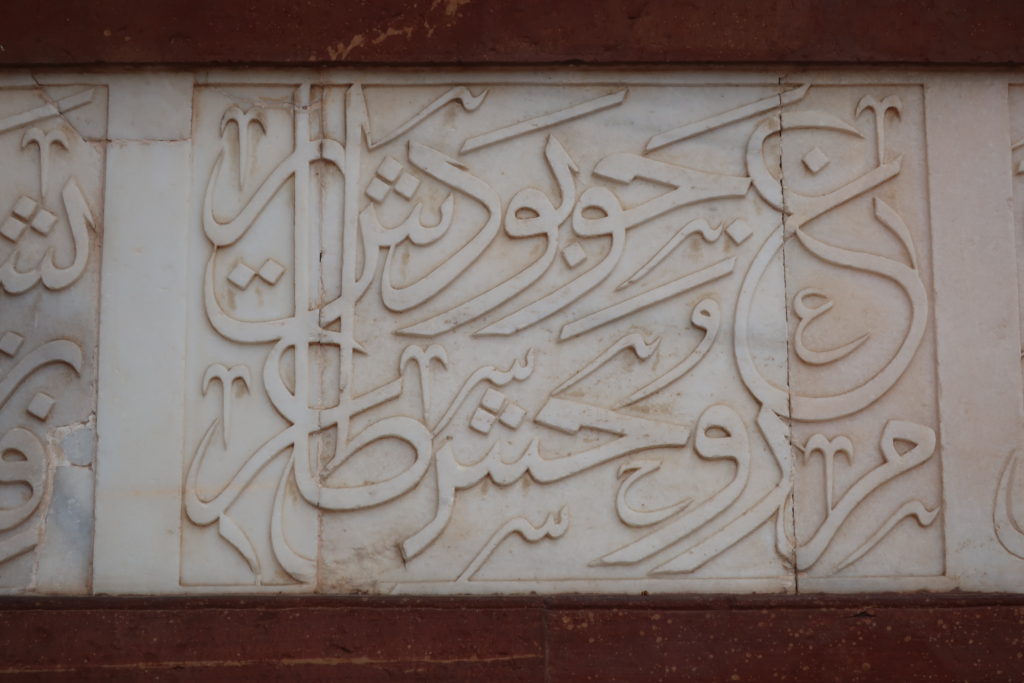
There are quotations in Persian and Arabic on many surfaces.
Calligraphy carved in marble
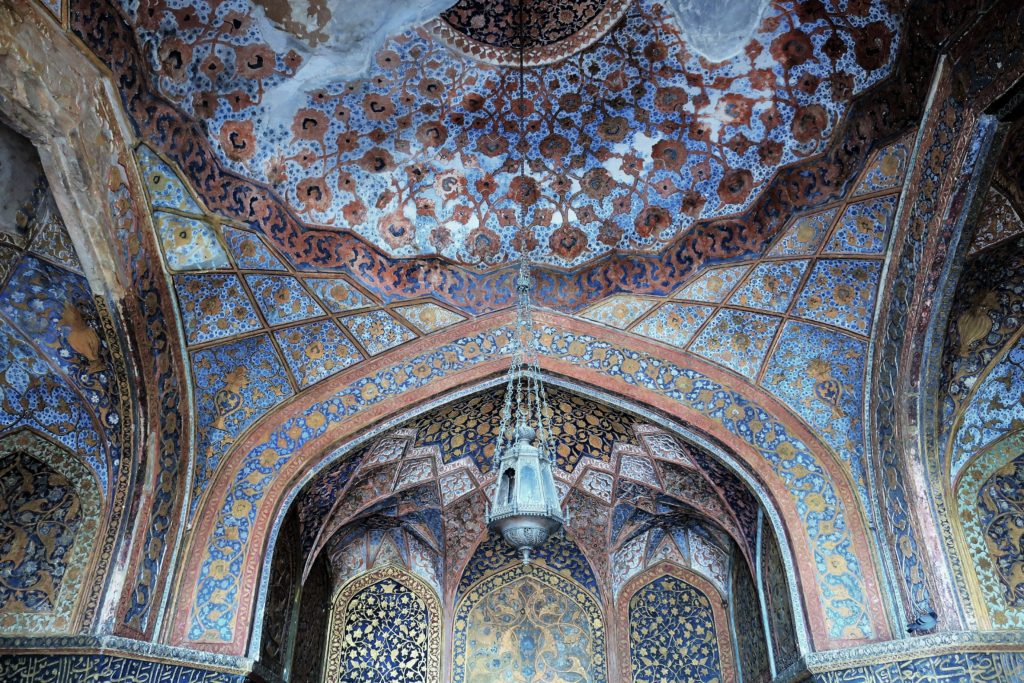
The roof in the entrance preserves its glorious paint job.
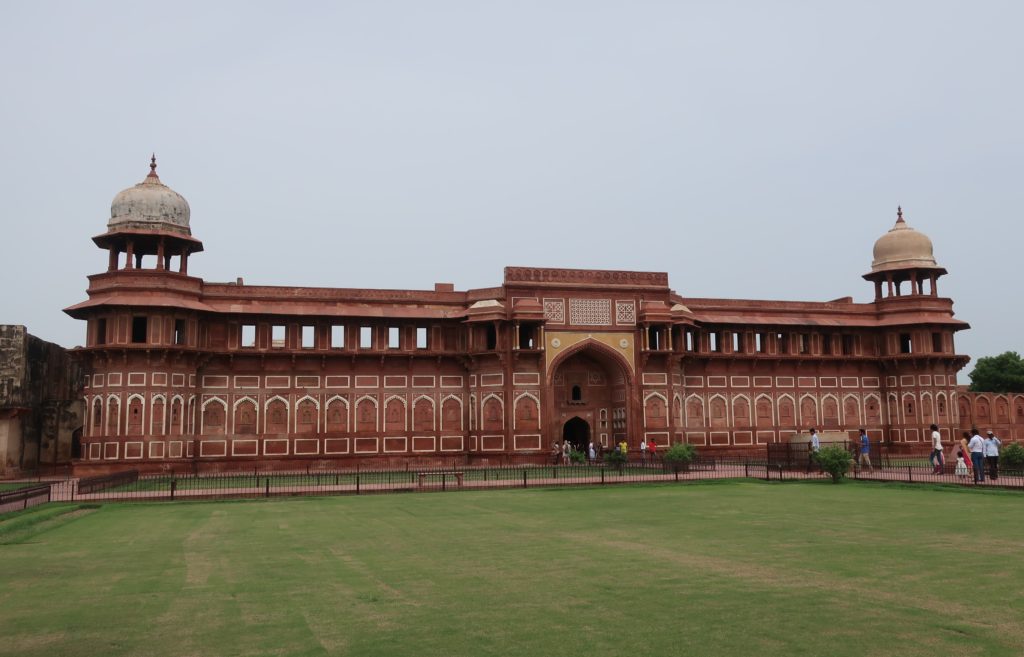
Back in town, we visit the Agra Fort. Akbar also had a hand in the way it looks today. He was a big cheese in this part of the world.
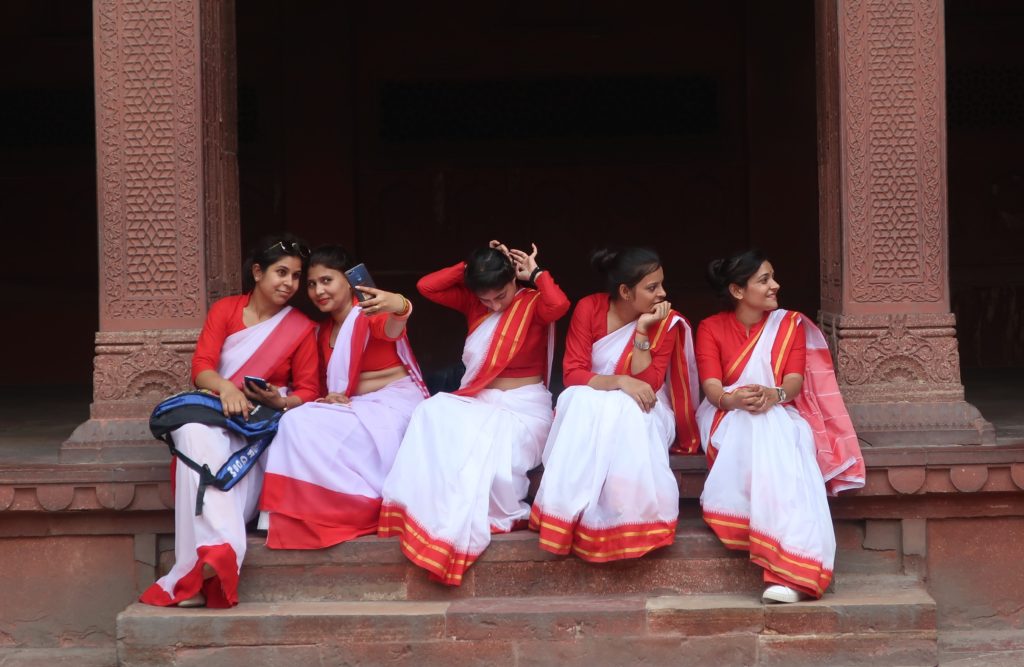
We’re not sure why these girls are dressed alike.
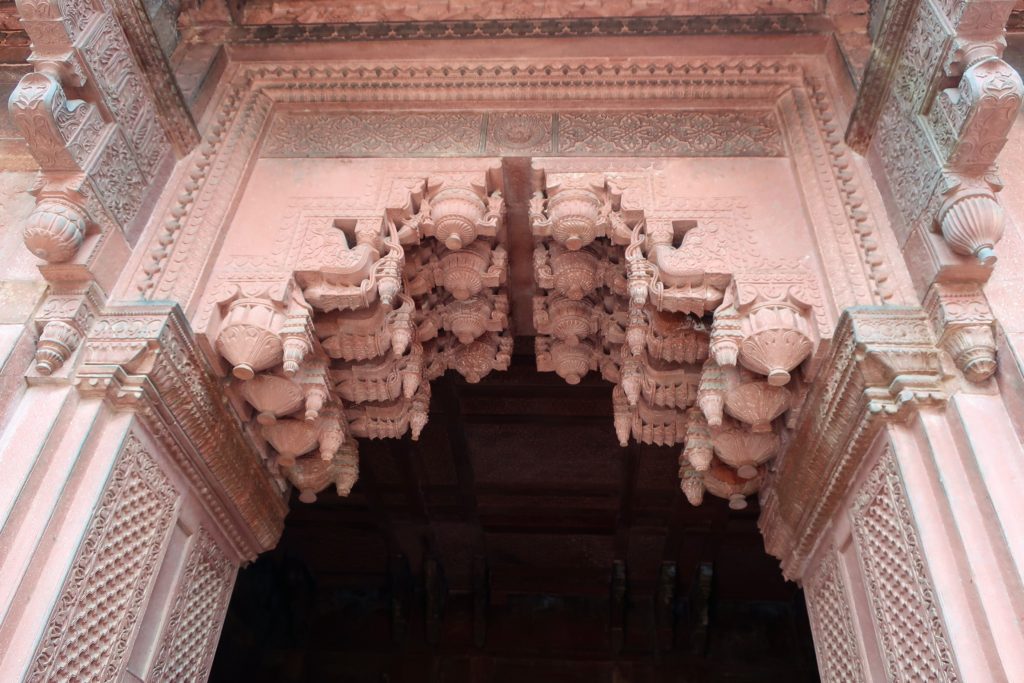
More wonderful stone-carving. Similar buildings in modern times use concrete. Not very impressive, especially when it begins to crumble within a few years.
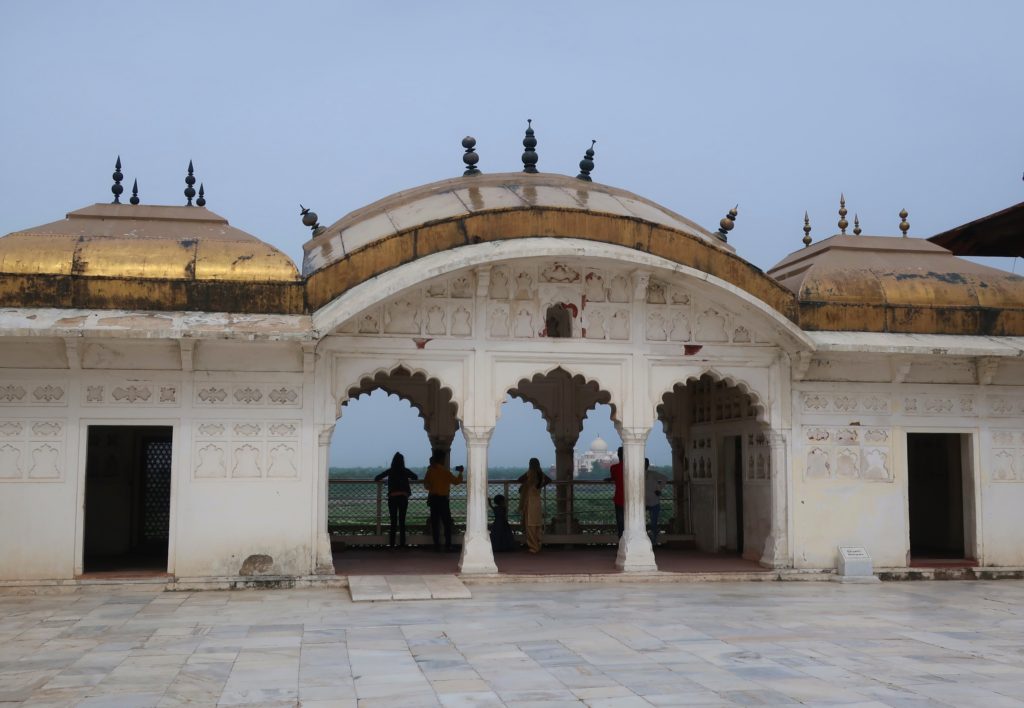
You can see the Taj through these arches, further down the Yamuna (or Jumna or Jamna – take your pick) River.
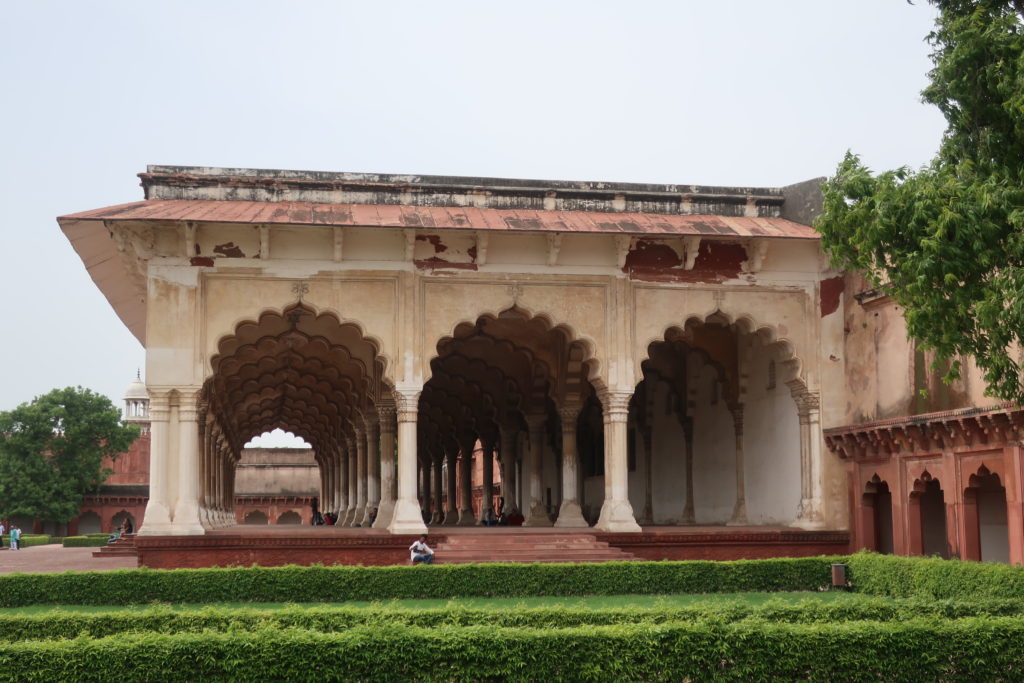
These audience halls are a common feature.
Putting the ‘arch’ in ‘architecture’
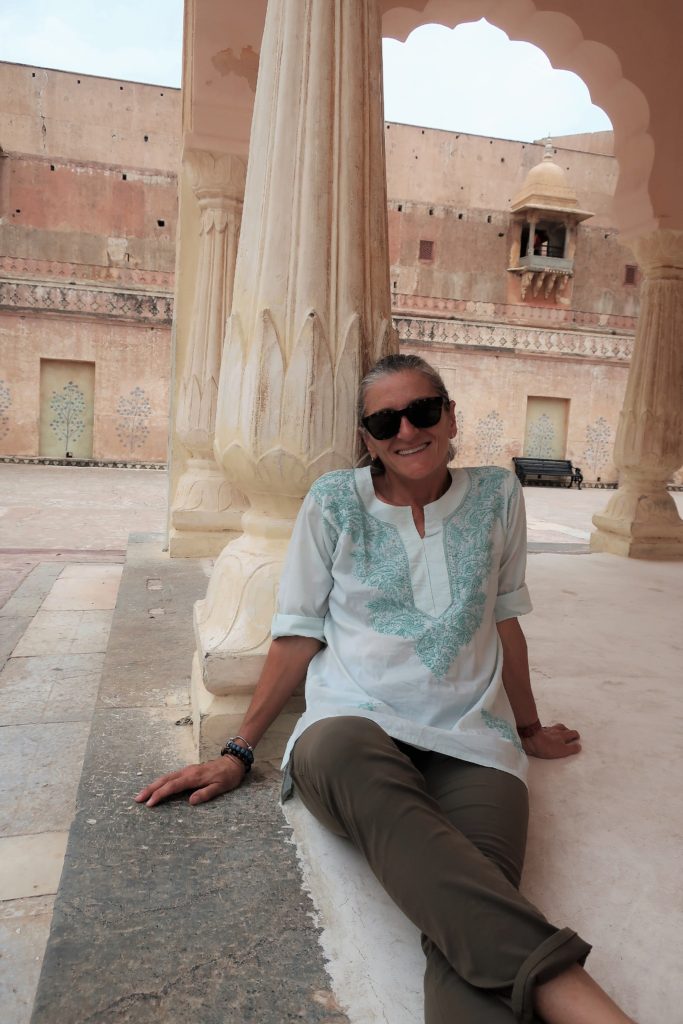
Our next stop is Jaipur. We stay in the Pearl Palace Hotel, the nicest place we’ve stayed so far in India.
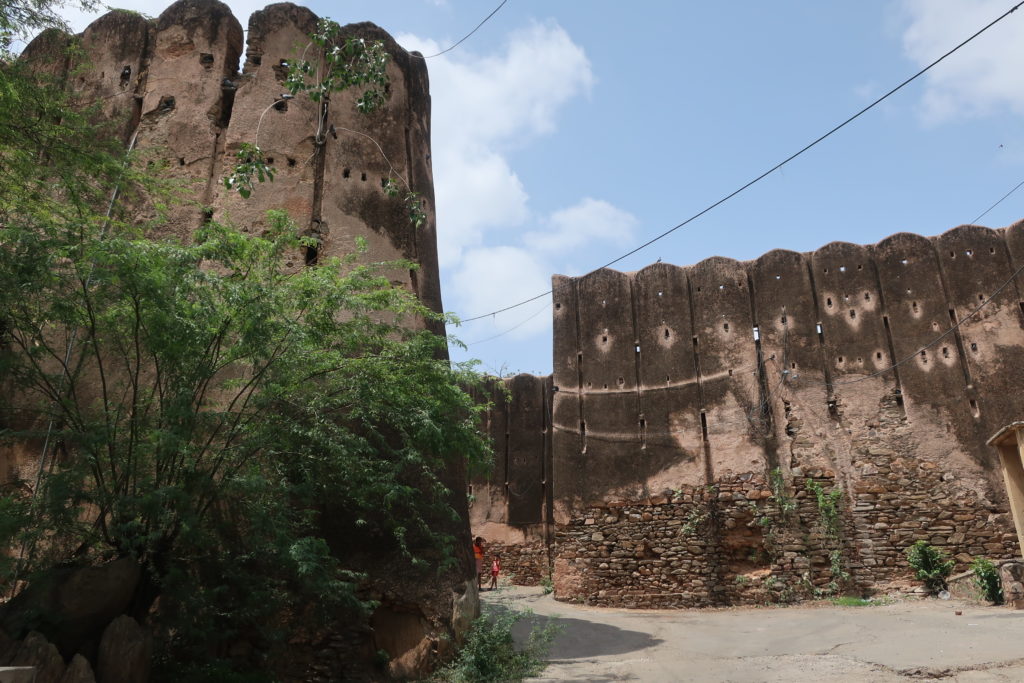
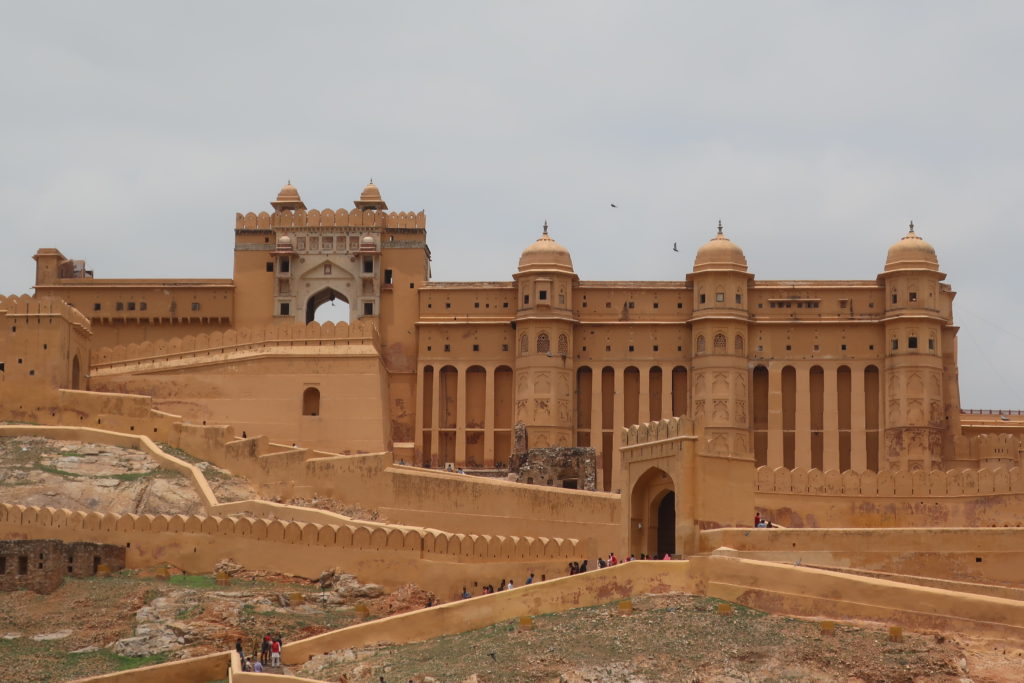
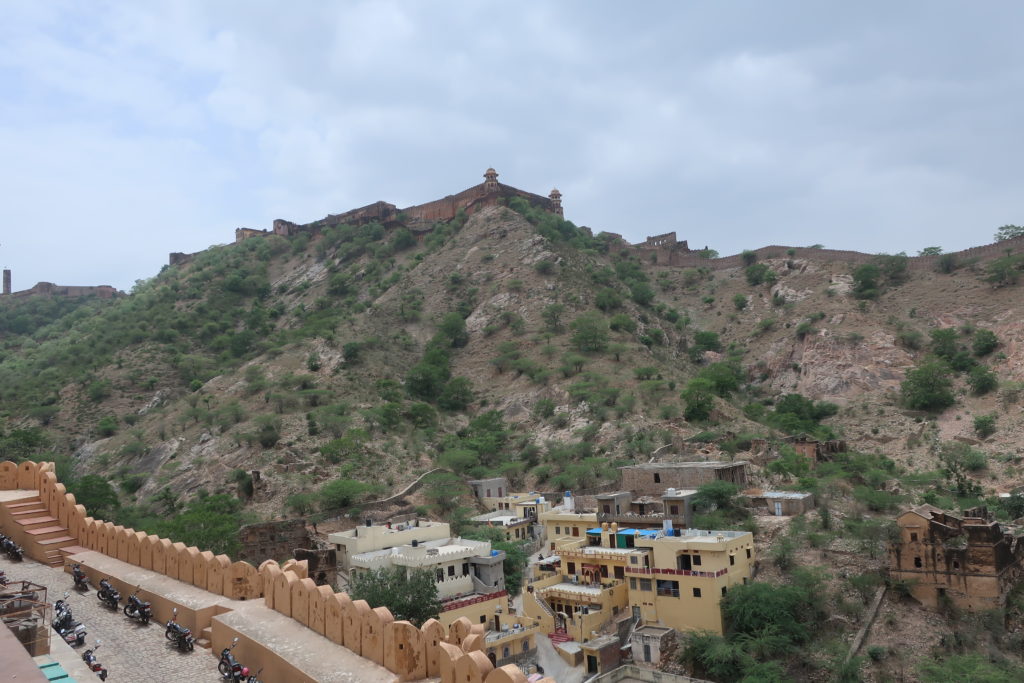
Behind our hotel is Hathroi Fort – old and abandoned, but people still live in it.
Just part of the neighbourhood
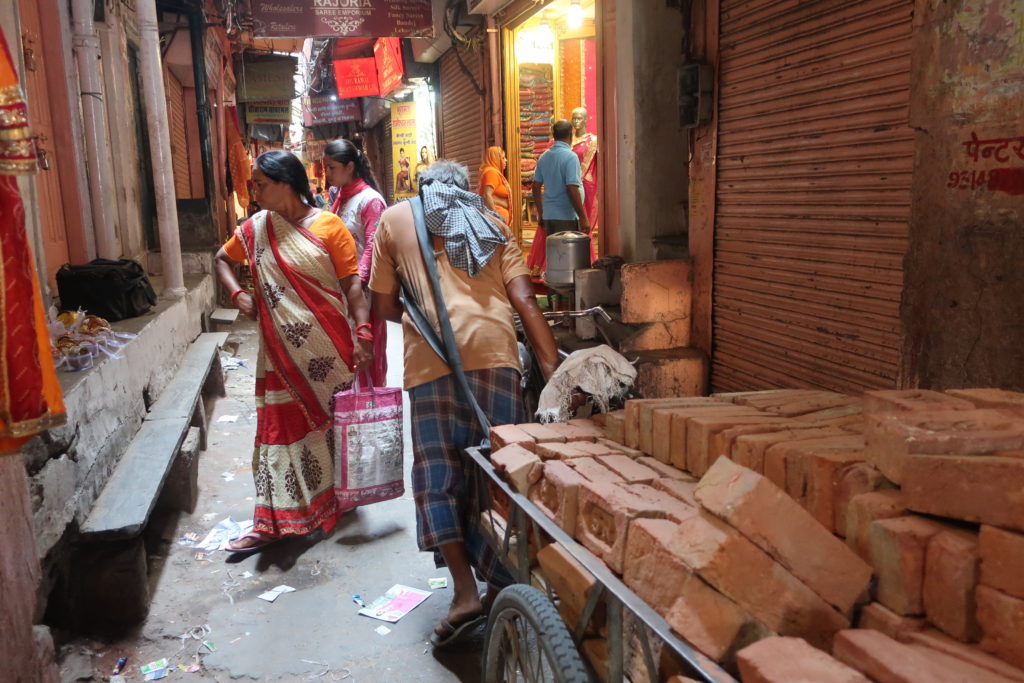
The market in the Old City is worth a look, especially the narrow interior lanes.
This man is hauling about a half-ton of bricks in his cart
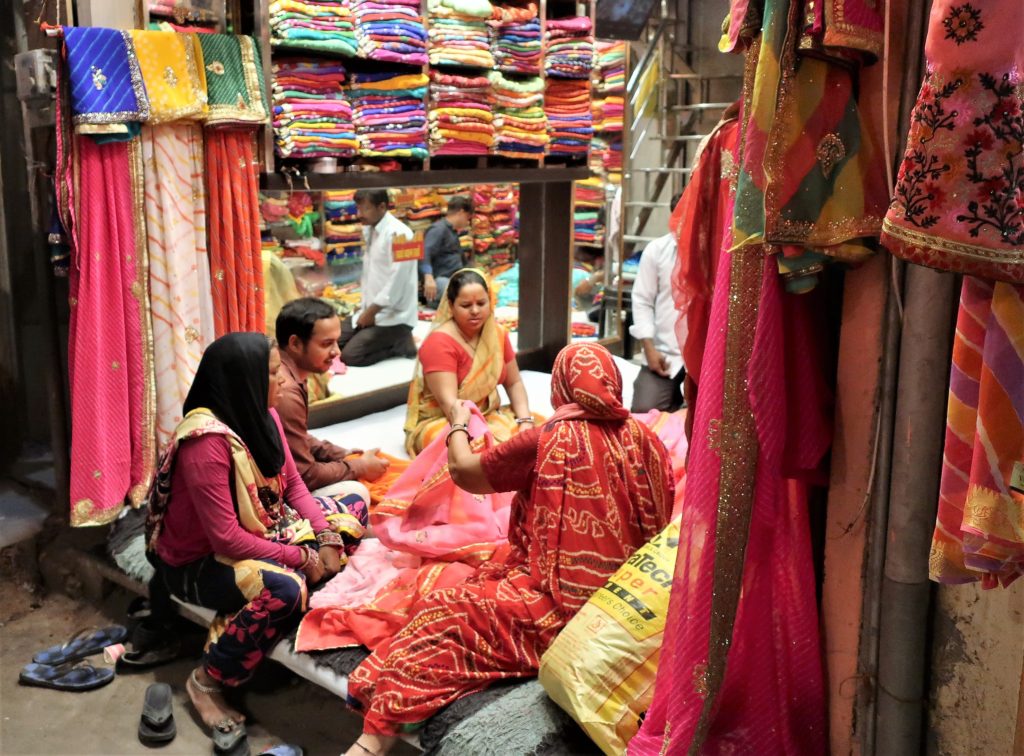
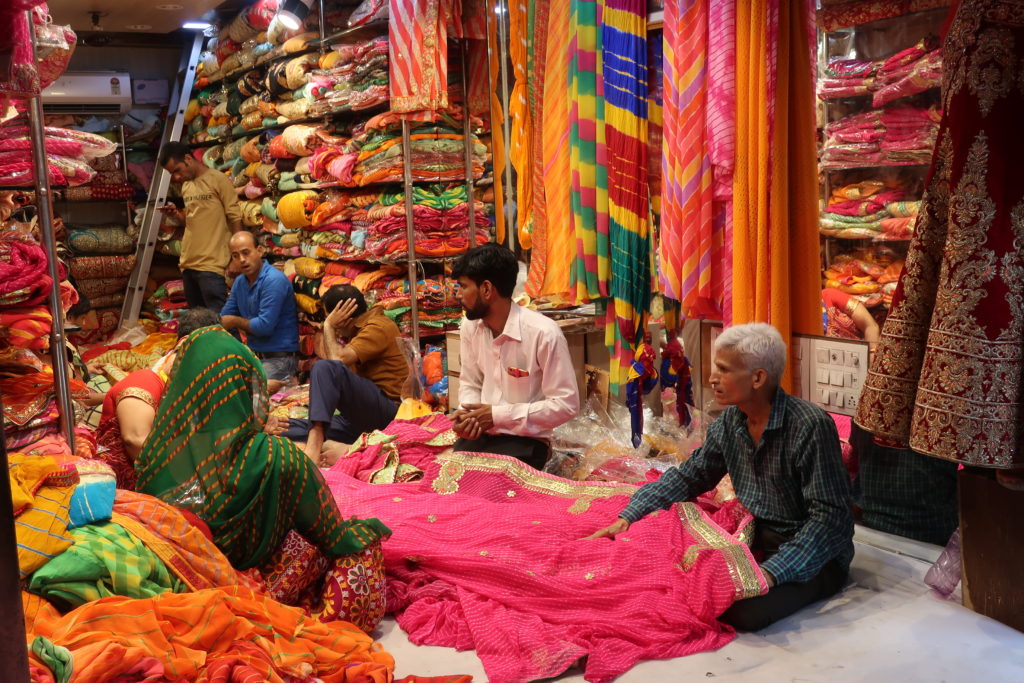
Rajastan is well known for its textiles. In these market stalls, groups of ladies sit as the shopkeeper – or his assistants – pull down bolt after bolt of colourful cloth.
Looking for bargains.
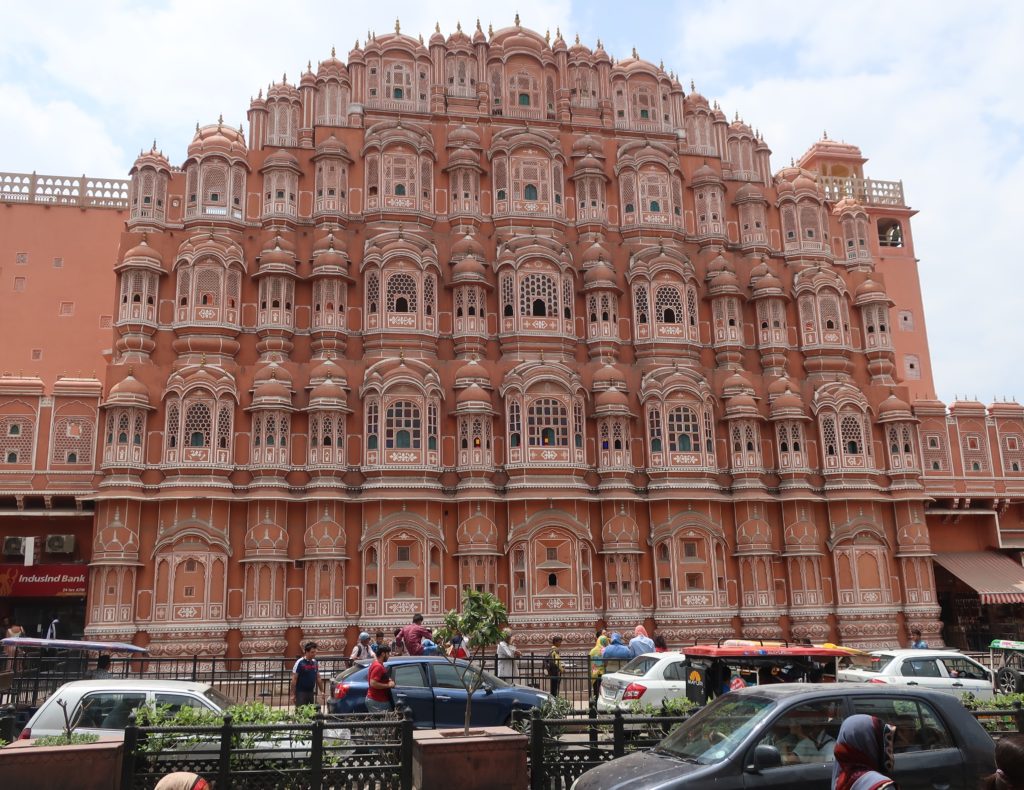
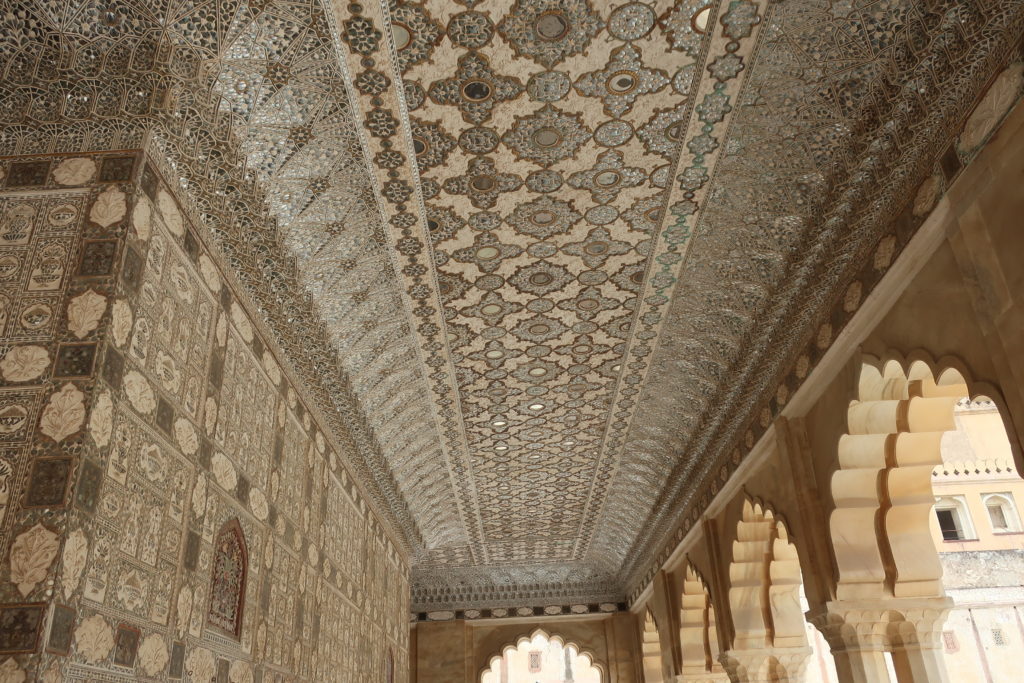
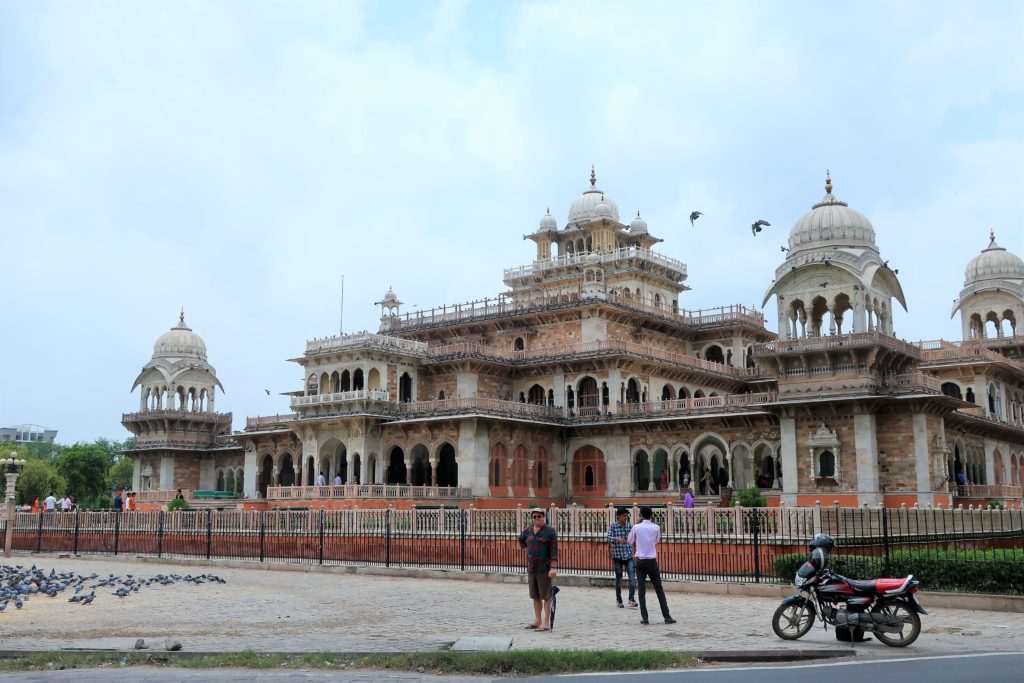
The hawa mahal is one of Jaipur’s iconic buildings.
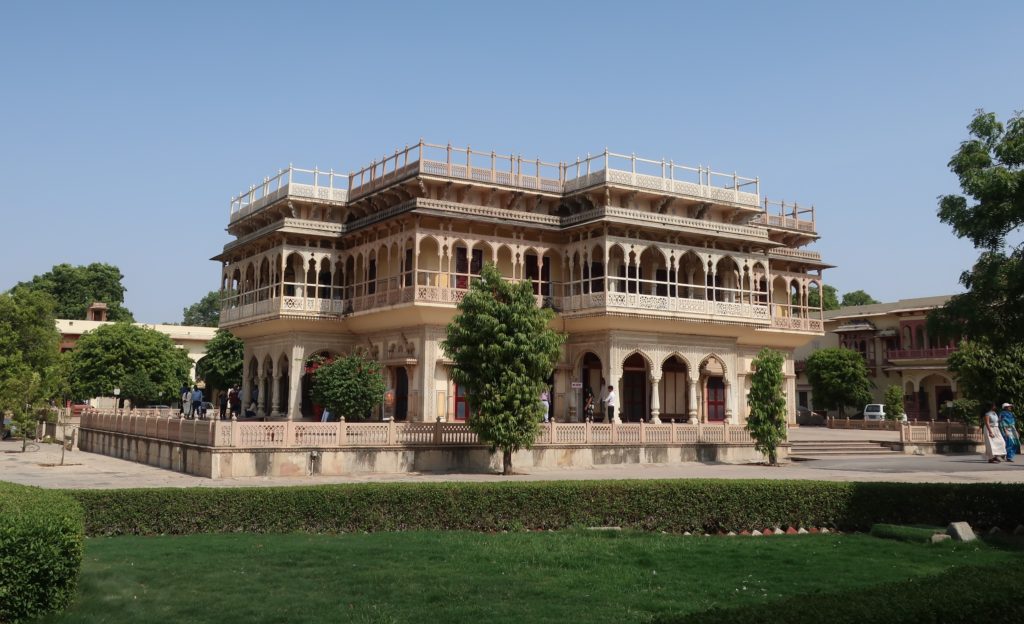
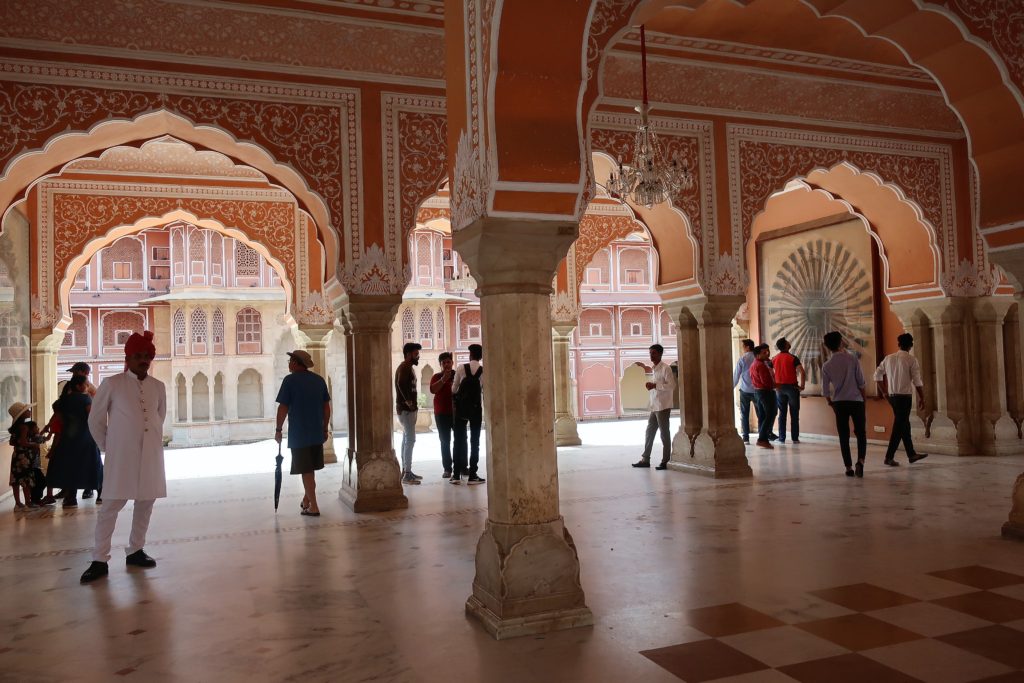
Another part of the palace. Everyone wants to stay out of the sun.
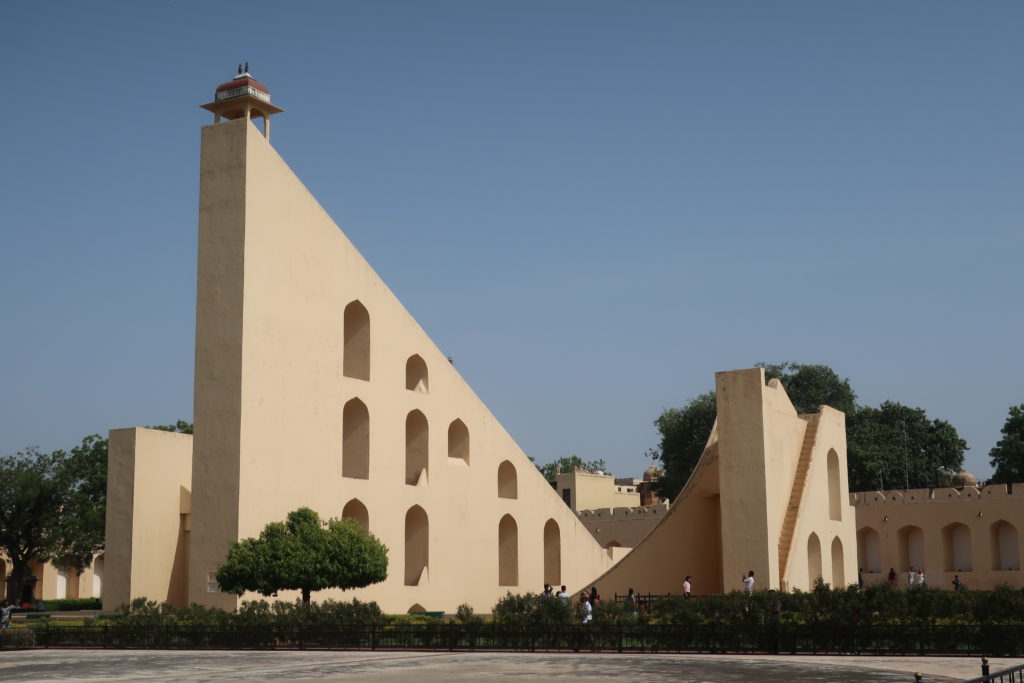
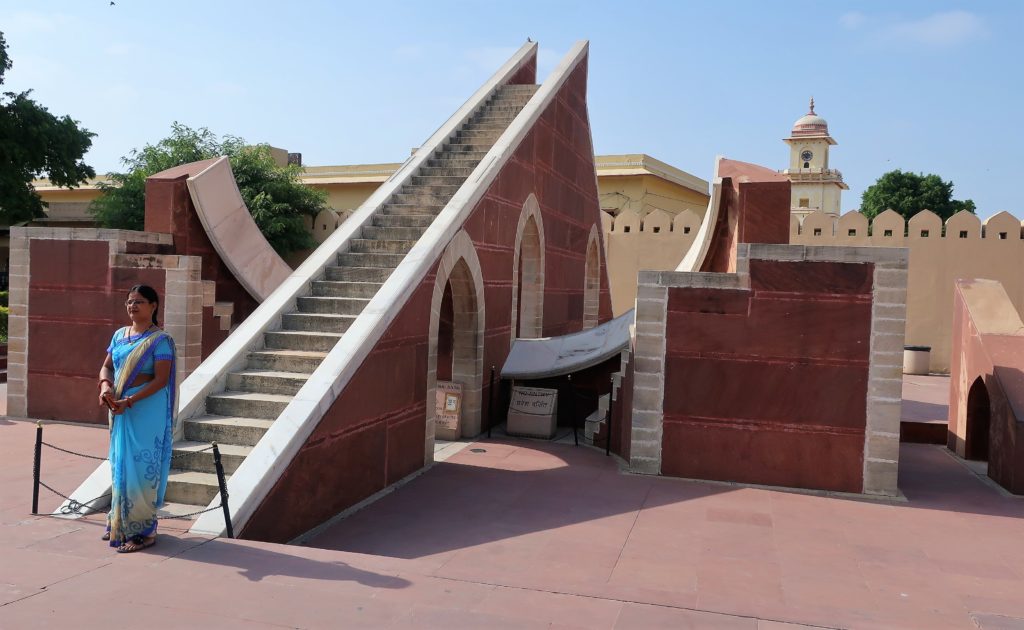
In the area is the famous Jantar Mantar. This is a collection of architectural astronomical instruments built in the early 1700s.
‘There is no royal road to geometry.‘ – Euclid
According to Wikipedia:
The name is derived from jantar (yantra, Sanskrit: यन्त्र, “instrument, machine”), and mantar (from mantrana, Sanskrit: मन्त्रण, “consult, calculate”). Therefore, Jantar Mantar literally means ‘calculating instrument’.
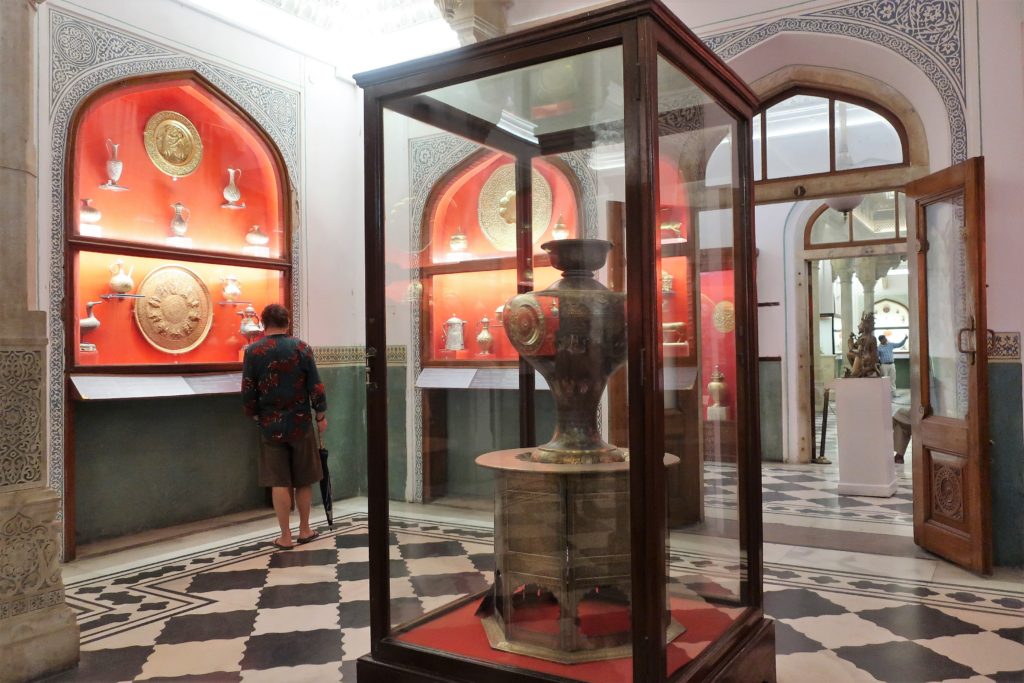
Inside is a good collection, a little bit in need of some curatorial care.
Museum pieces
Sight or Insight of the Day
There are many interesting and wonderful things to see and do in India, but holy smokes, it’s exhausting traveling in this country. We’ve been on a few humble buses and trains in the last few weeks. (It’s not a case of looking for an ‘authentic’ experience of getting down with the locals, like some people carry to a slight extreme – it just turns out to be the only way to get to where we’re going.)
Unless you’re willing to wear blinders, every day brings constant exposure to people spitting, gobbing jets of scarlet betel juice, blowing out snot, lots of public urination (and worse). Wherever you turn, someone is vigorously reaming out a nostril or an earhole. Men are constantly pawing their genitals. 95% of people (read: men) who approach you want something from you. A dead giveaway: the first thing they say is ‘I don’t want anything from you’. (A negative side-effect of this is the guilt you feel when you are rude and snap at the 5% of people who are trying to be genuinely helpful.)
It’s not a place for sensitive souls. (I would say ‘No Country for Old Men’, if I wasn’t so close to being one myself.) And that’s not even getting into the physical environment. Maybe in a later entry.
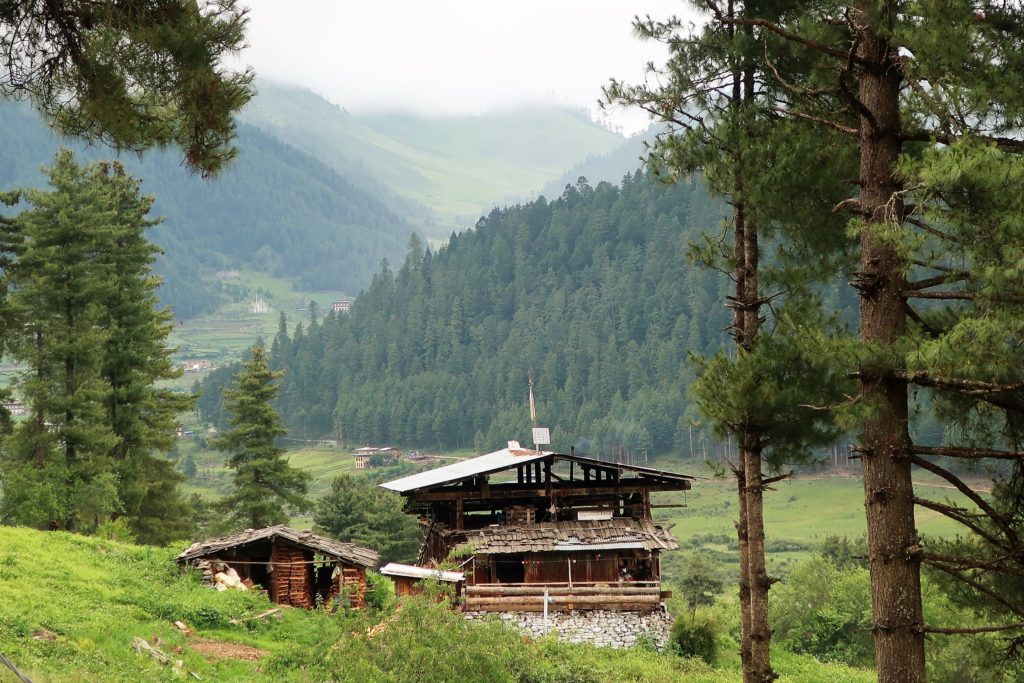
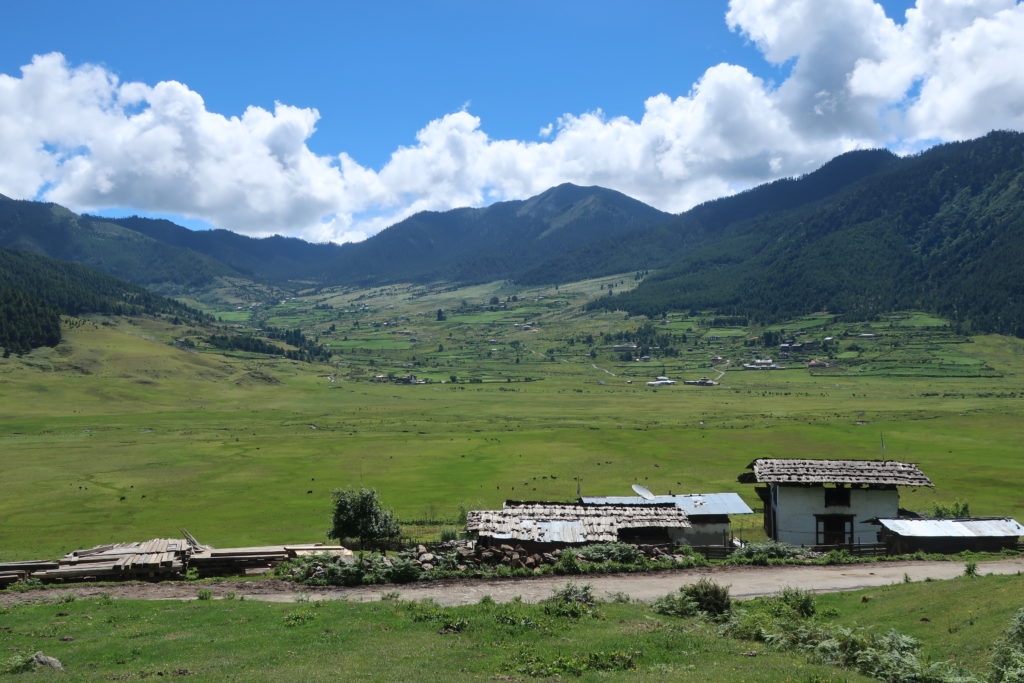
Besides being famous (in Bhutan) for its potatoes, it is also known for a yearly migration of black-necked cranes from late October to mid February.
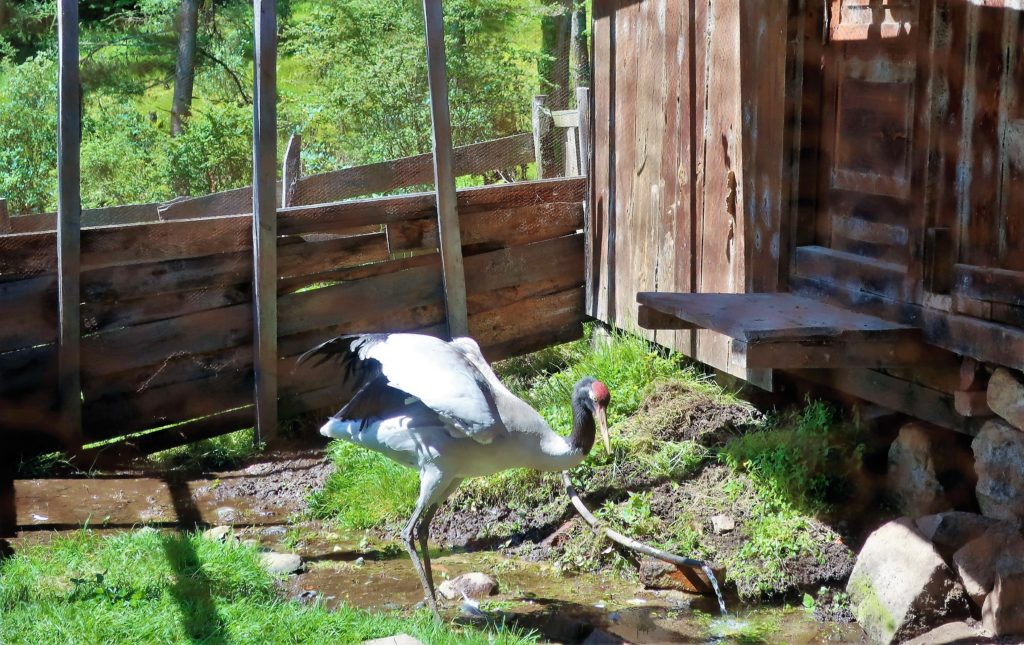
This is Karma. He was attacked by a feral dog and suffered permanent wing damage. He is now a permanent resident of the Black-Necked Crane Visitor Centre.
Karma likes visitors
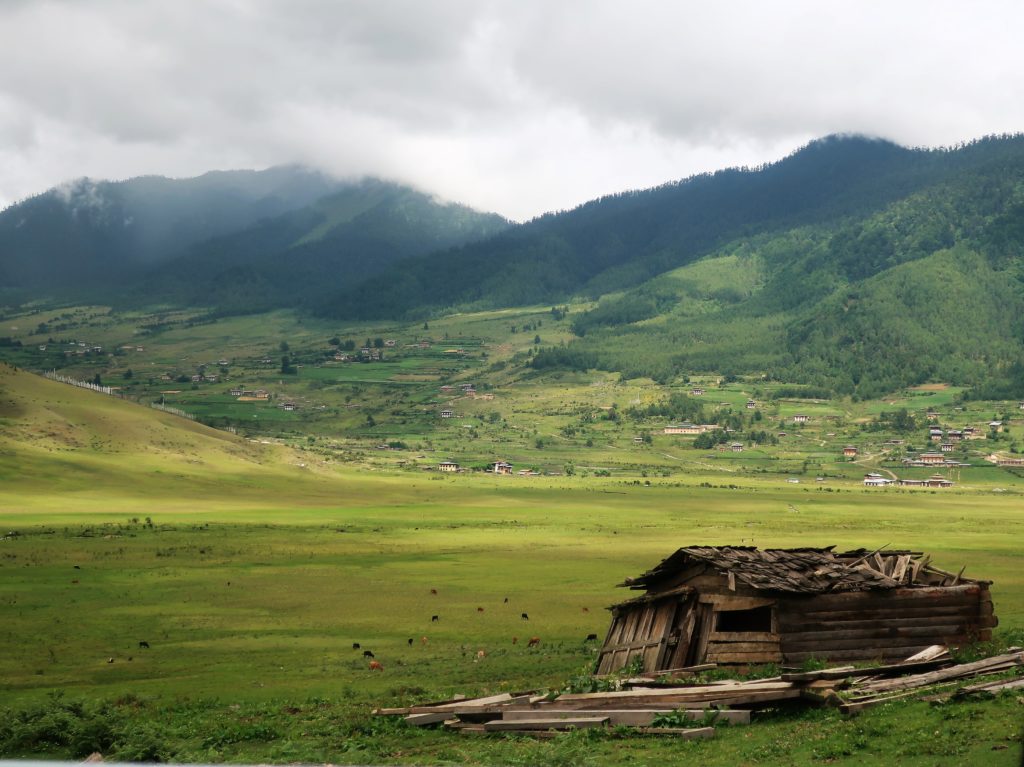
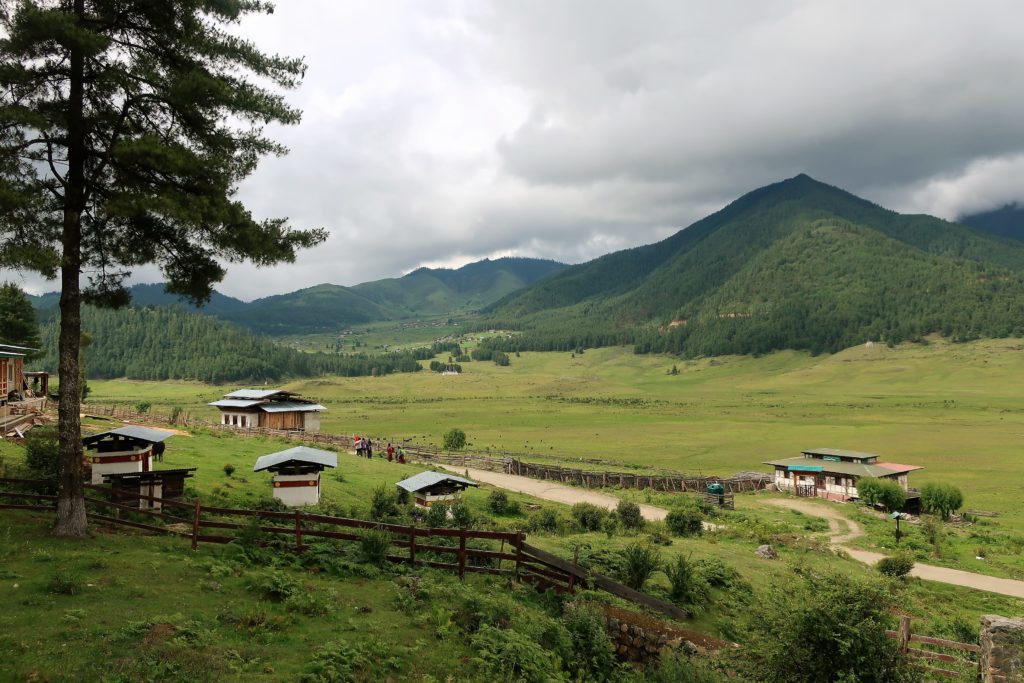
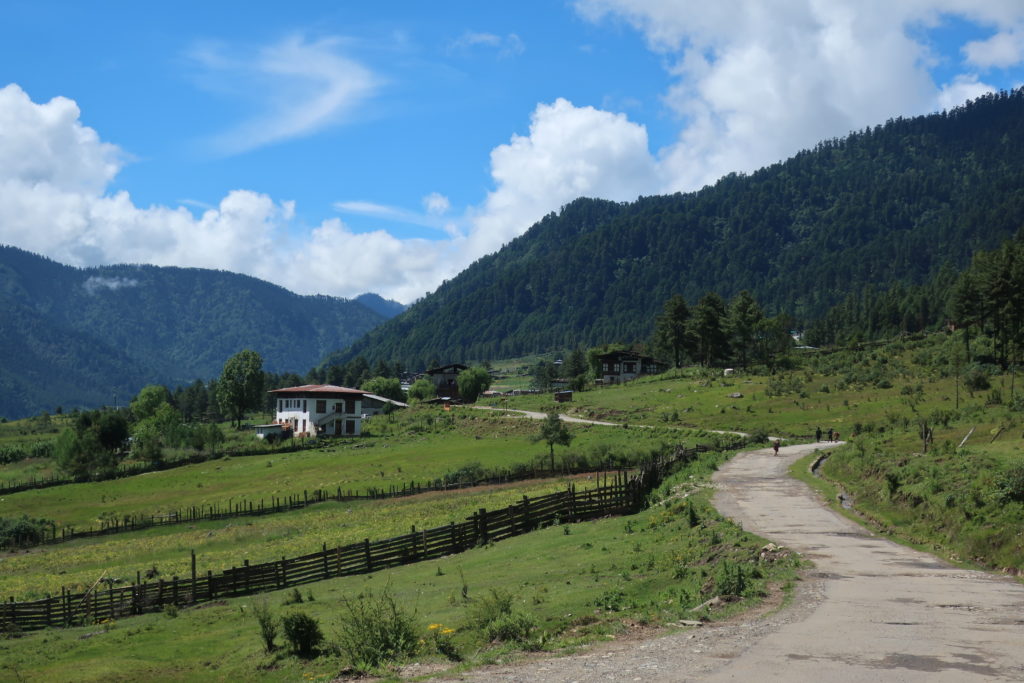
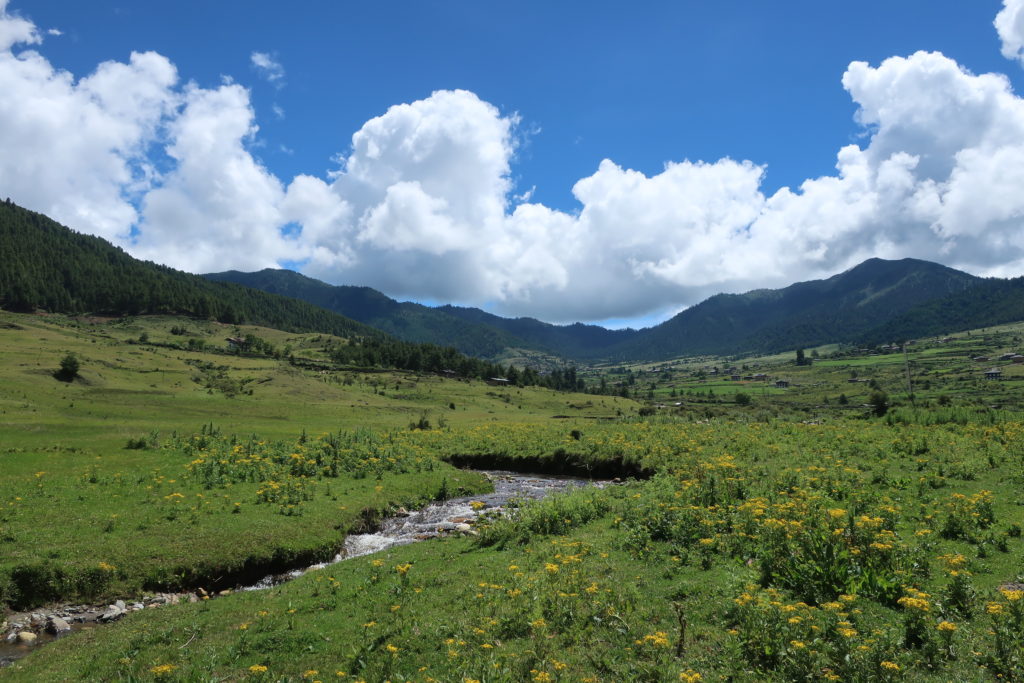
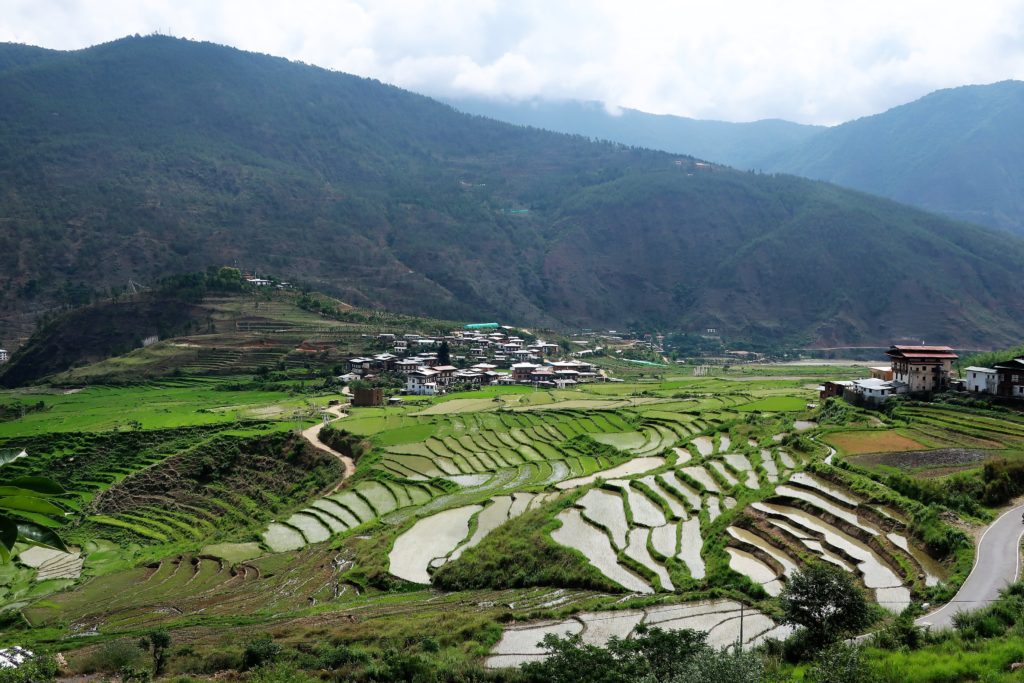
The valley itself is very scenic.
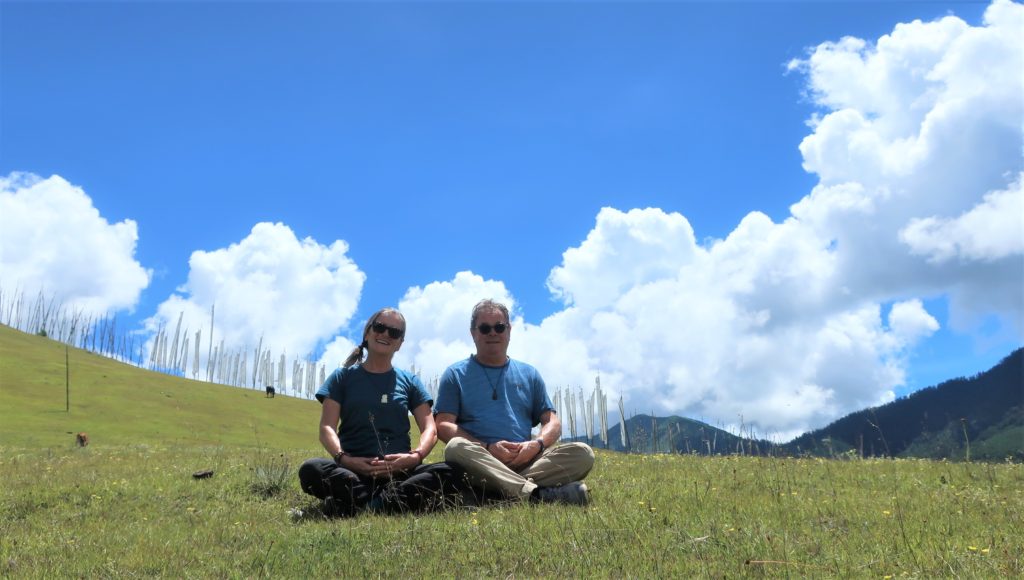
We go for a hike one day. The weather is perfect.
Sunny. Not too hot.
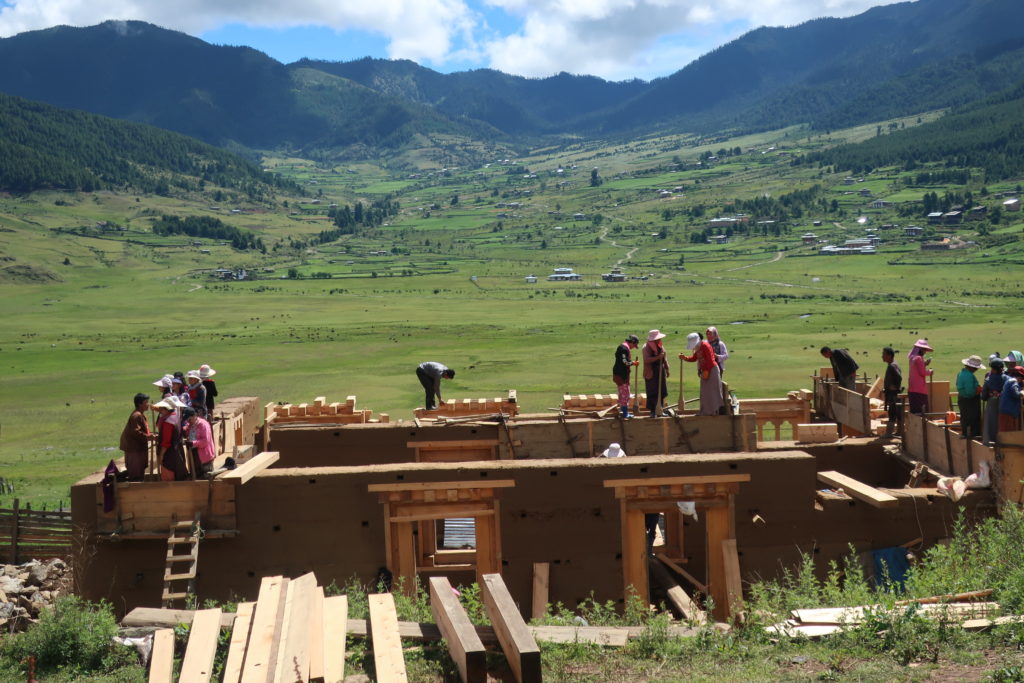
A squad of people are building a rammed-earth house. It’s very rhythmic as the ladies pound the earth down.
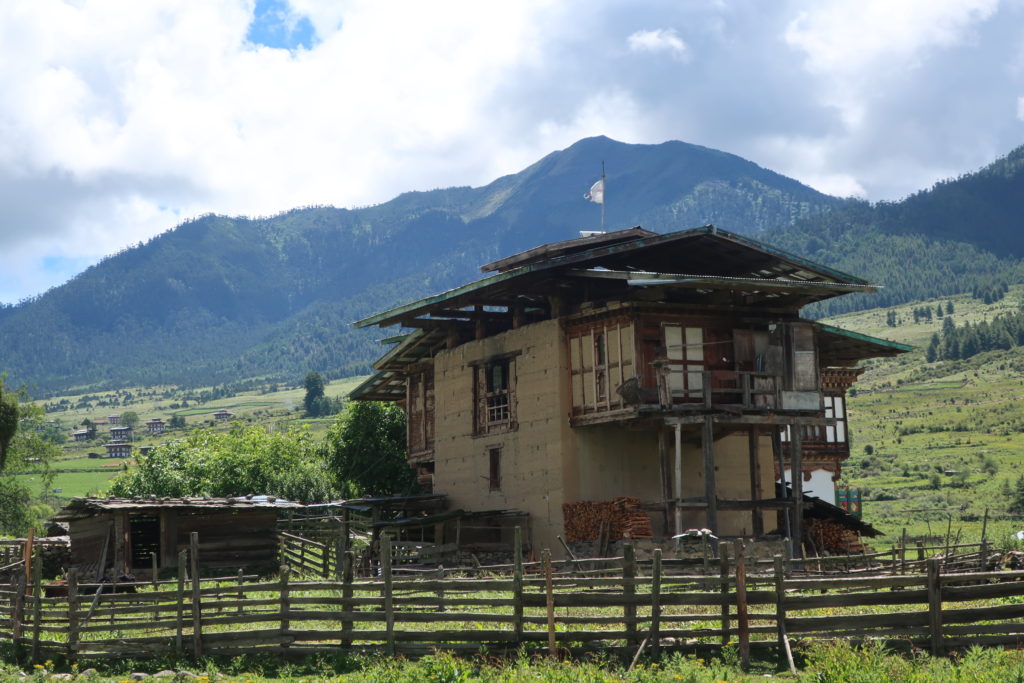
This is what a rammed-earth house looks like when it’s done.
We meet a young couple from Canton, NY on our walk. Practically neighbours. They’re making a tourism video.
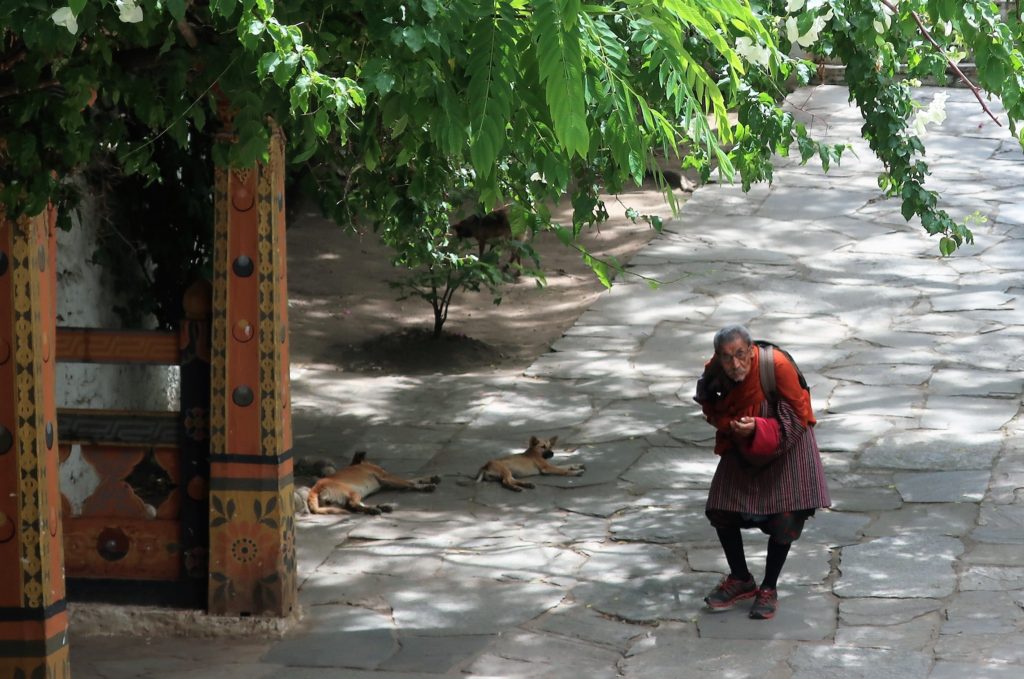
The next day, we hike the Lungchu Tsey pilgrimage trail. This takes several hours. When we finally get to the top, the place is locked and there are no monks in sight. Just a couple of dogs.
We enjoy the view and set off back down the mountain.
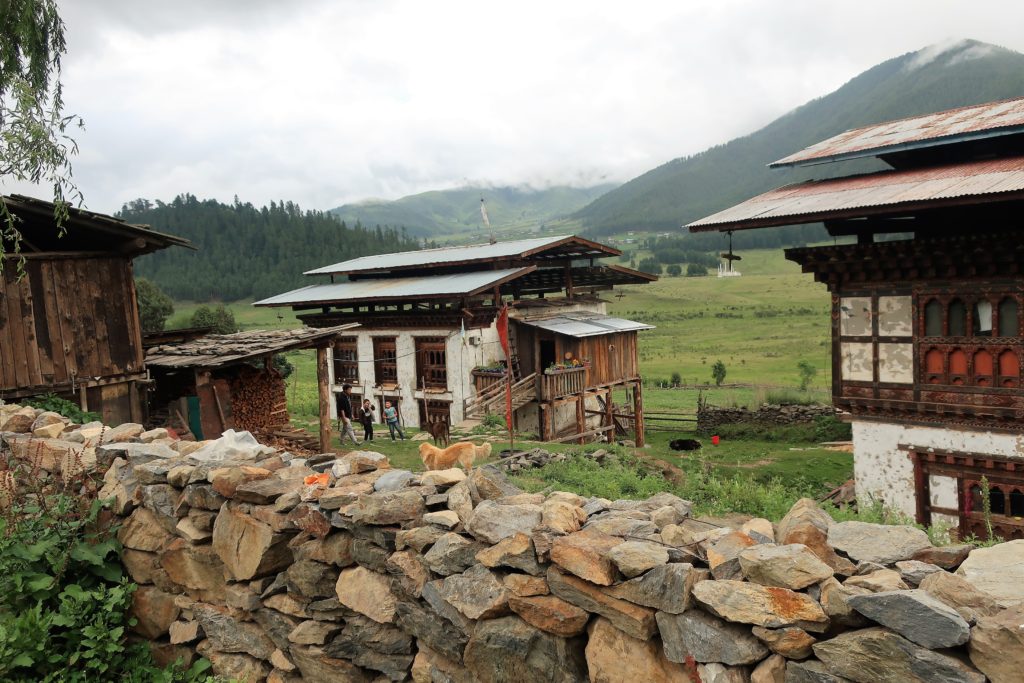
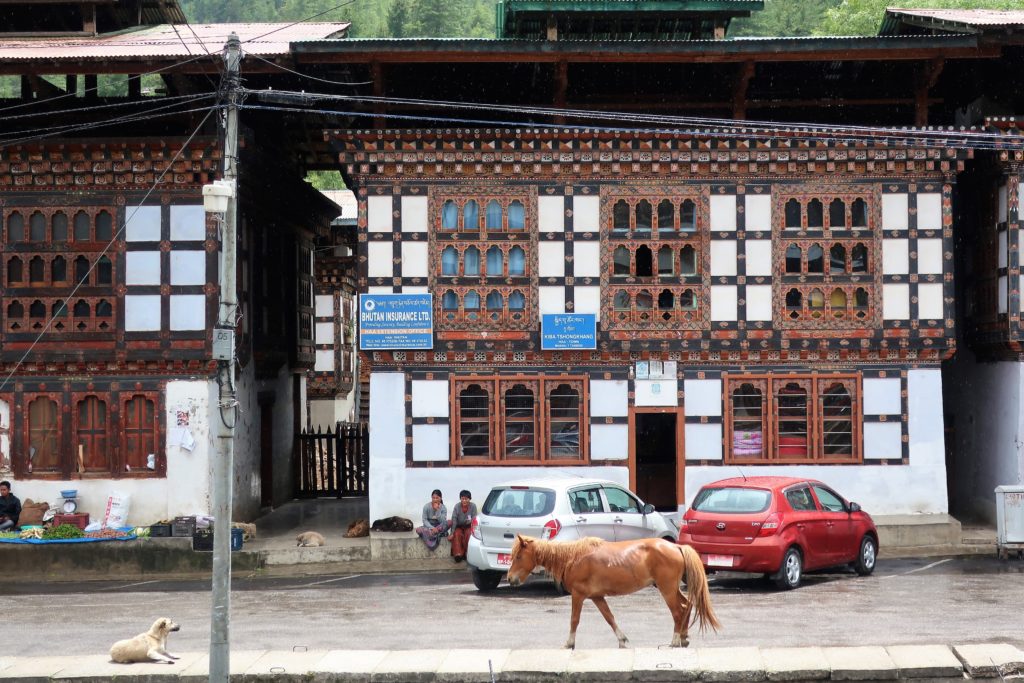
The next day, we drive over the Chelela Pass to Haa.
There is an Indian Army camp in town. This is to discourage incursions
from the imperialist Chinese, who – surprise, surprise – lay claim to
large tracts of the Himalayas that were once ruled by Tibet. Their
logic: any former Tibetan territory must naturally default to China
after that country’s forcible overthrow liberation of Tibet.
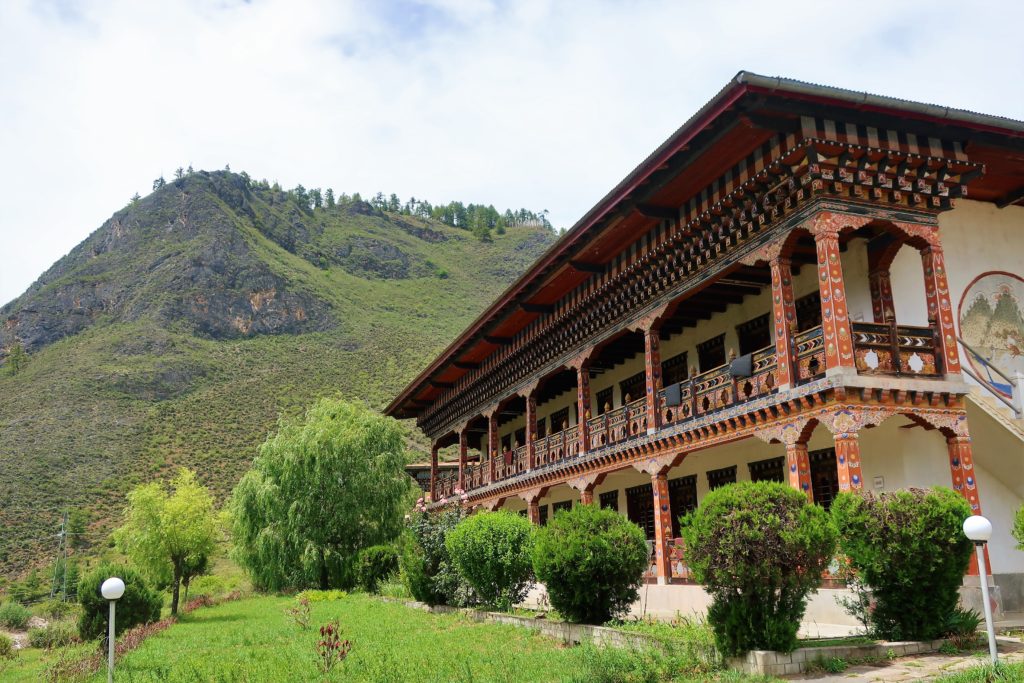
The palatial size of our hotel rooms is a real treat after the space-challenged rooms of Japan.
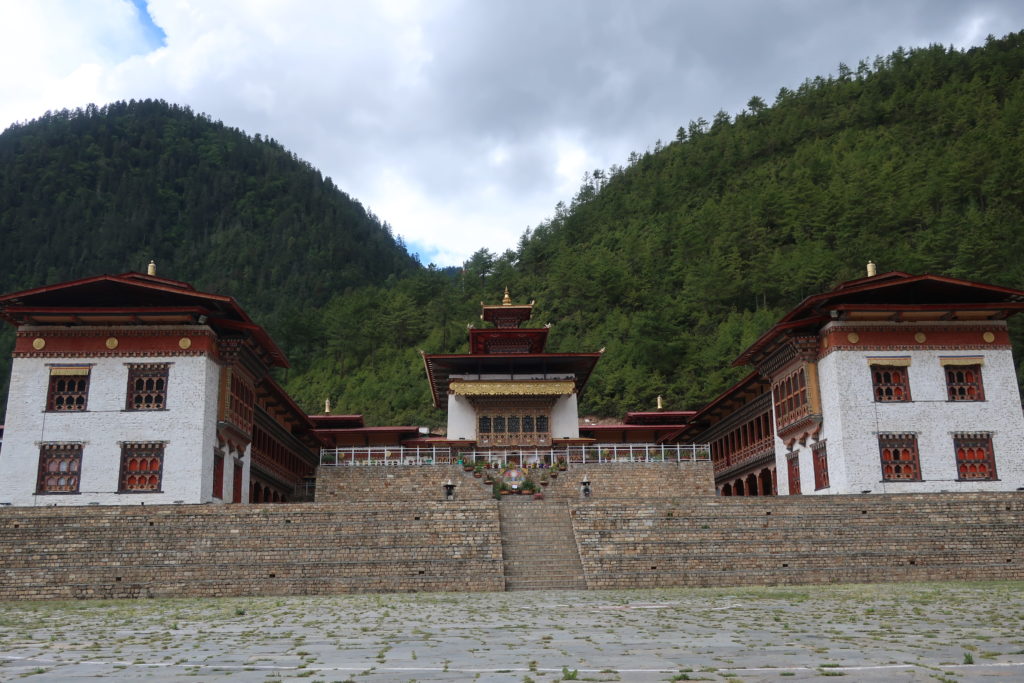
Our quiet hotel awaits
The next day, we head back to Paro over the Chelela Pass.
This time, we stop at the pass and hike to the nearby Kila Gompa nunnery.
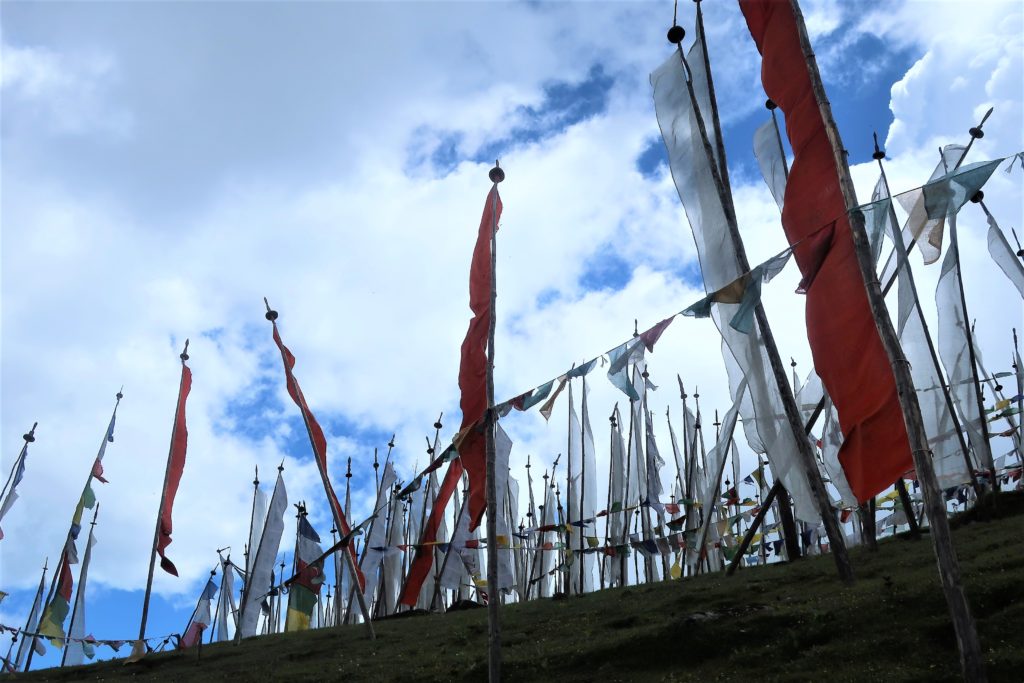
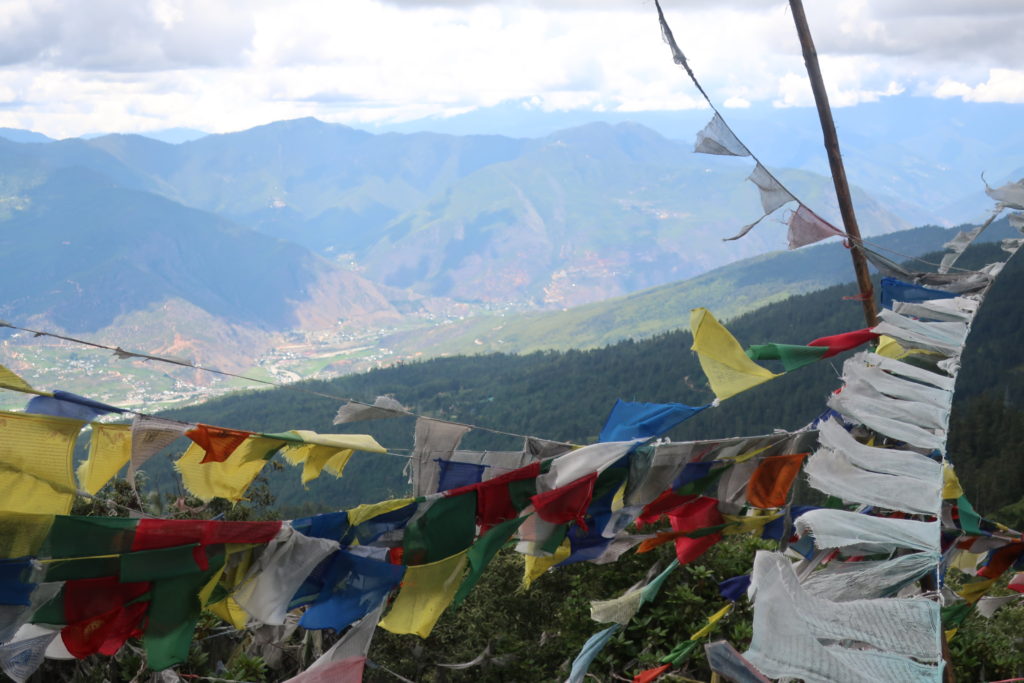
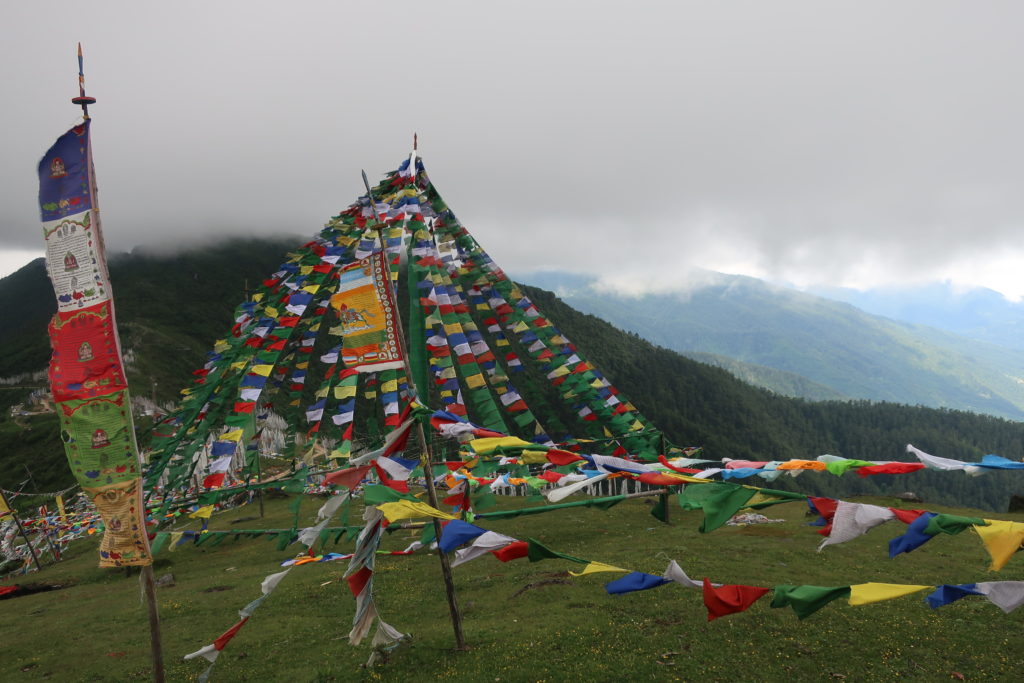
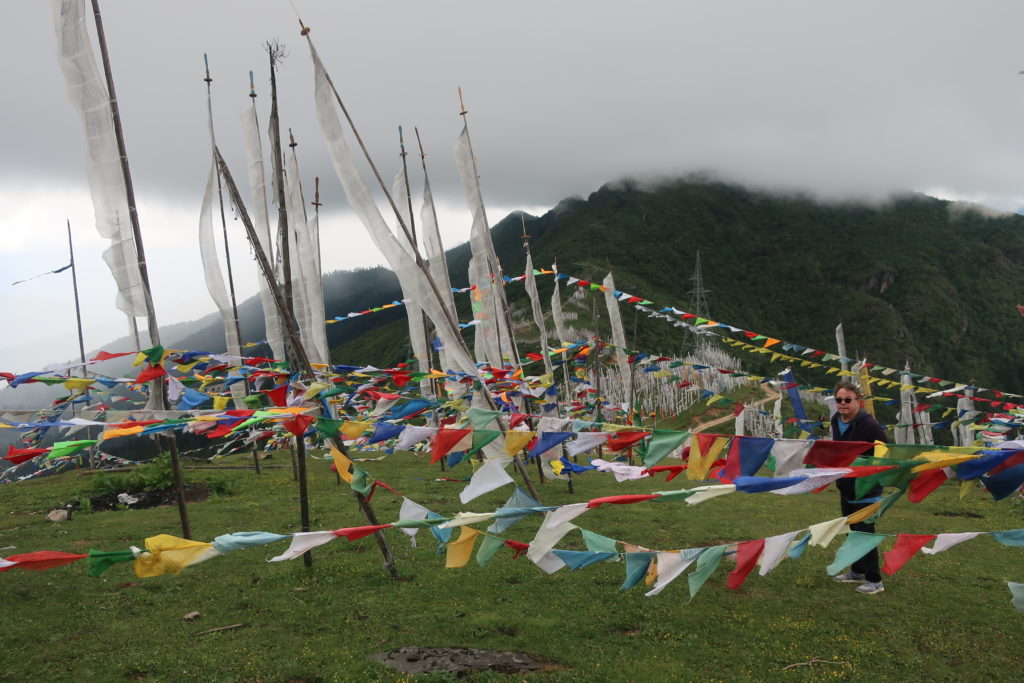
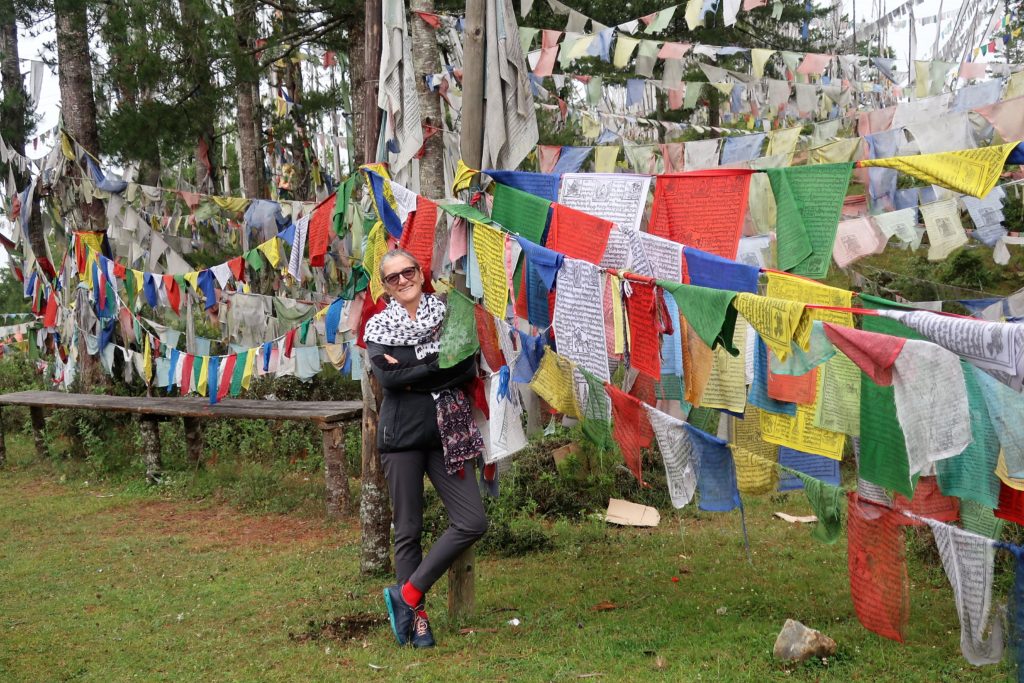
As is common for mountain passes, there is a riot of prayer flags.
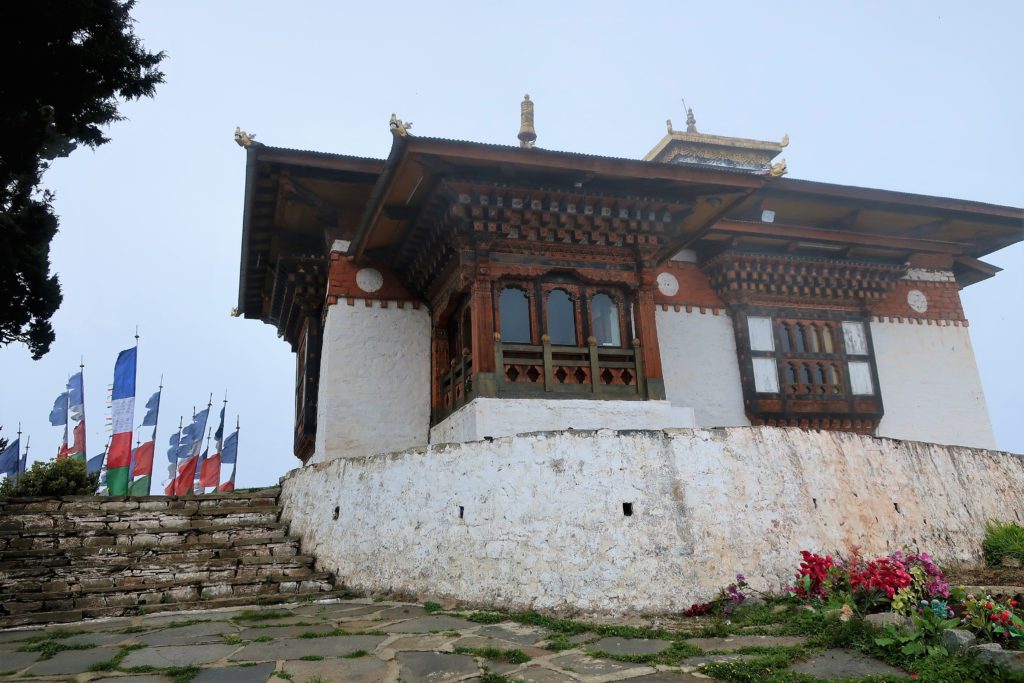
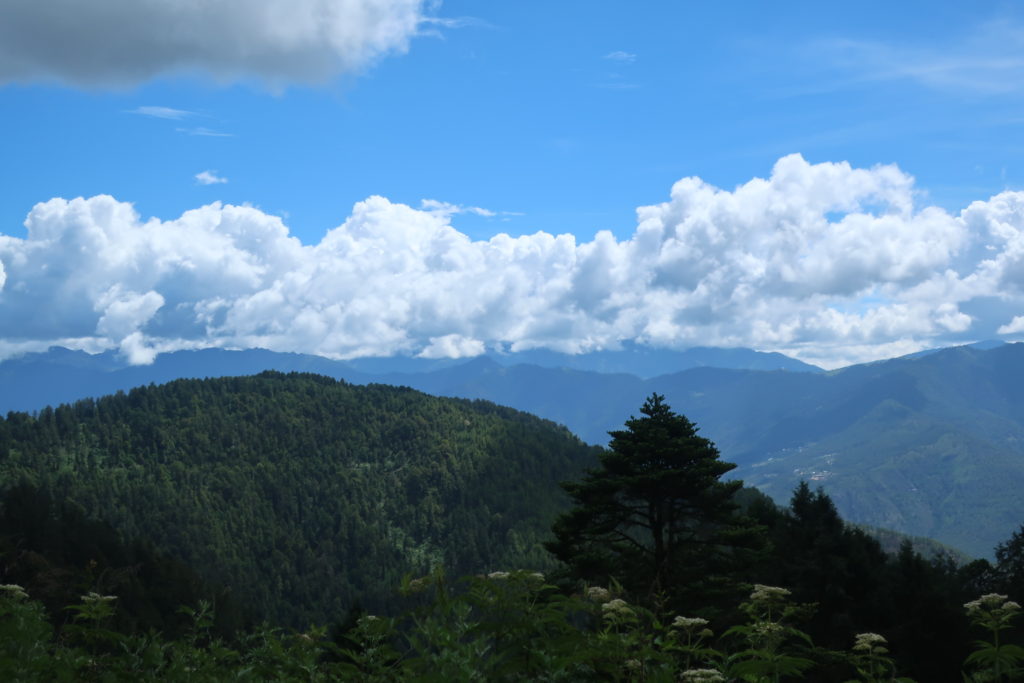
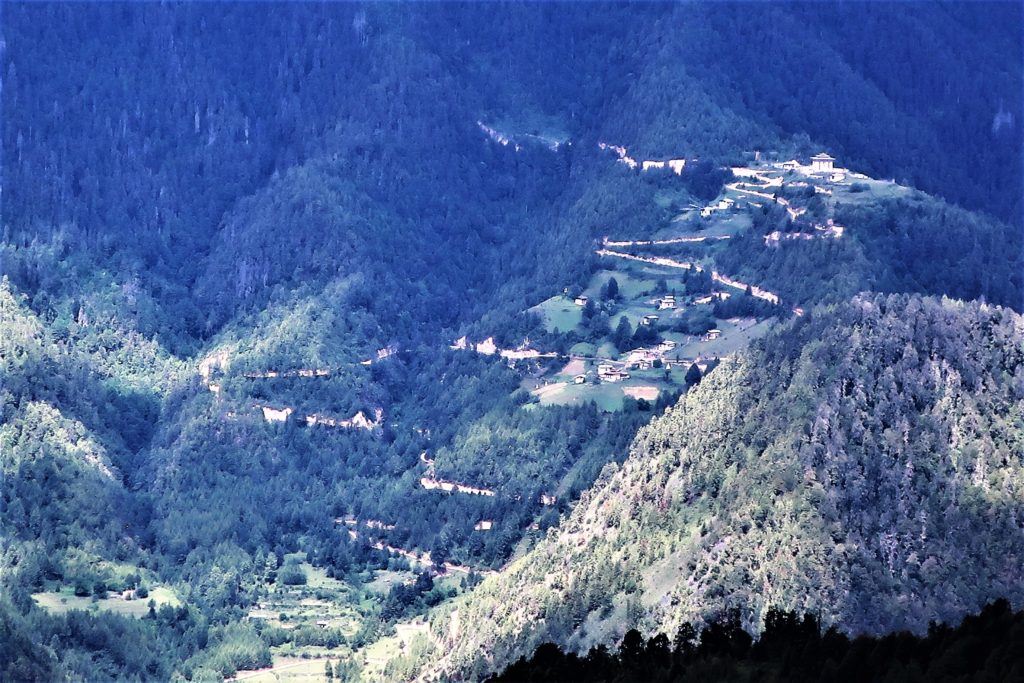
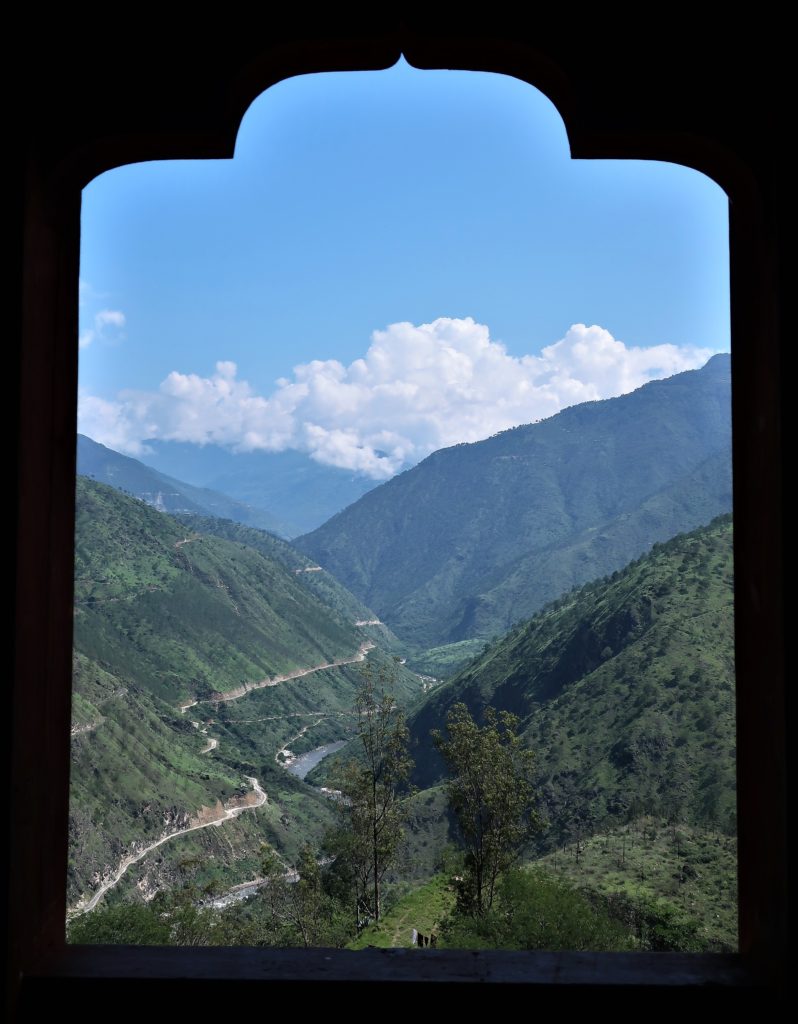
You can see Paro far below.
The crack of a thousand flapping flags is kind of scary.
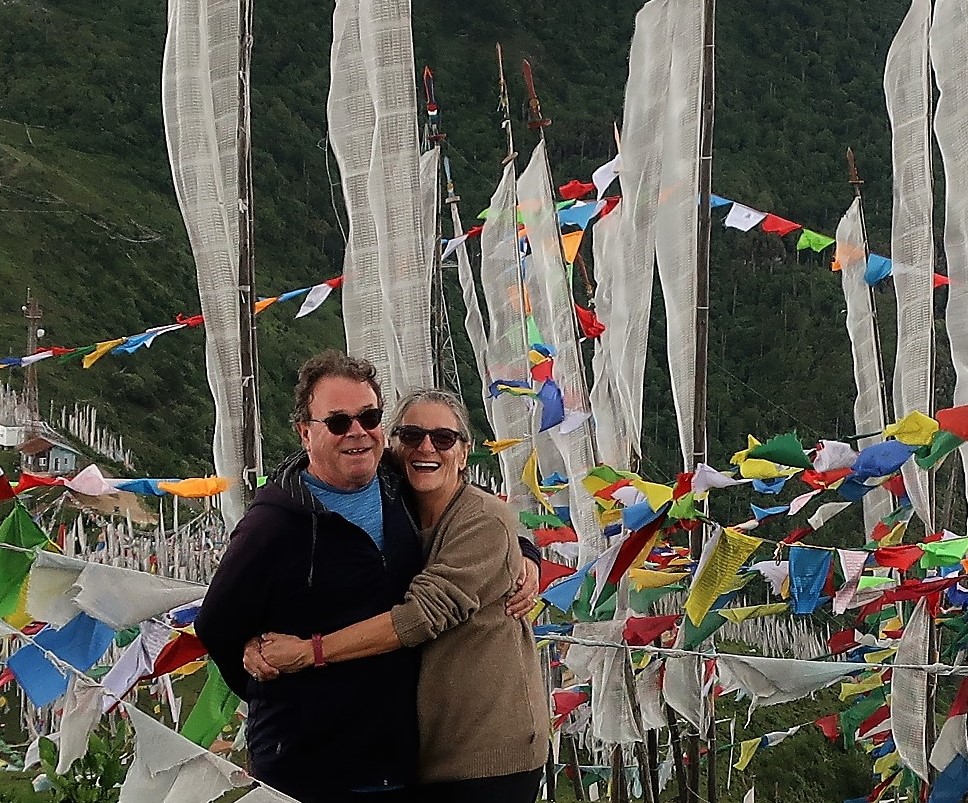
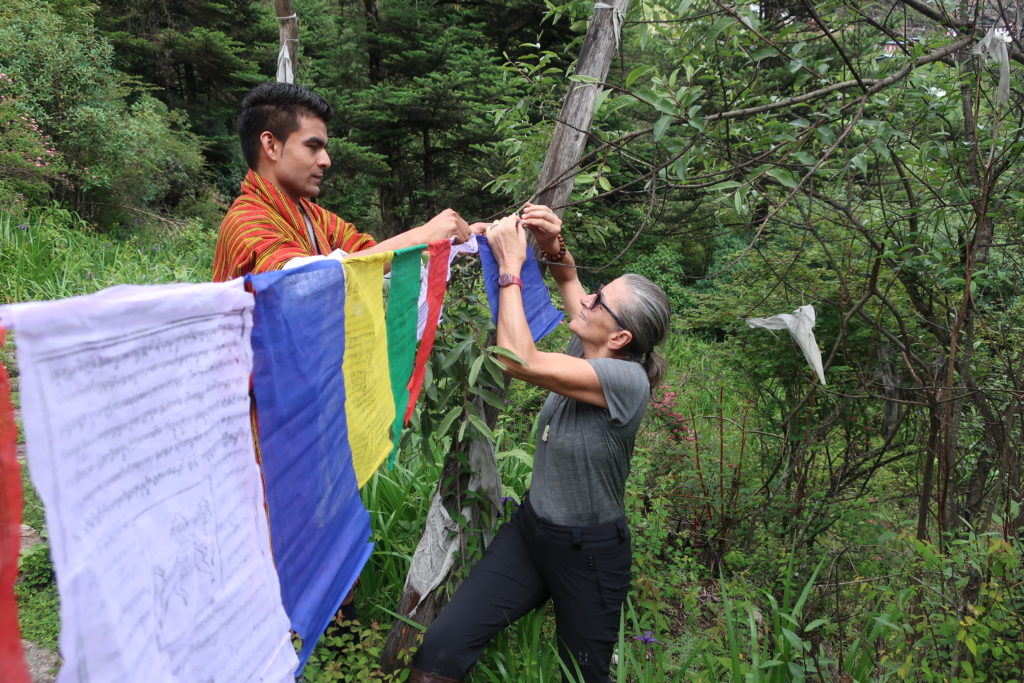
On the hike, we stop to erect a prayer flag ourselves.
Sending happiness to all sentient beings
After an hour or so…
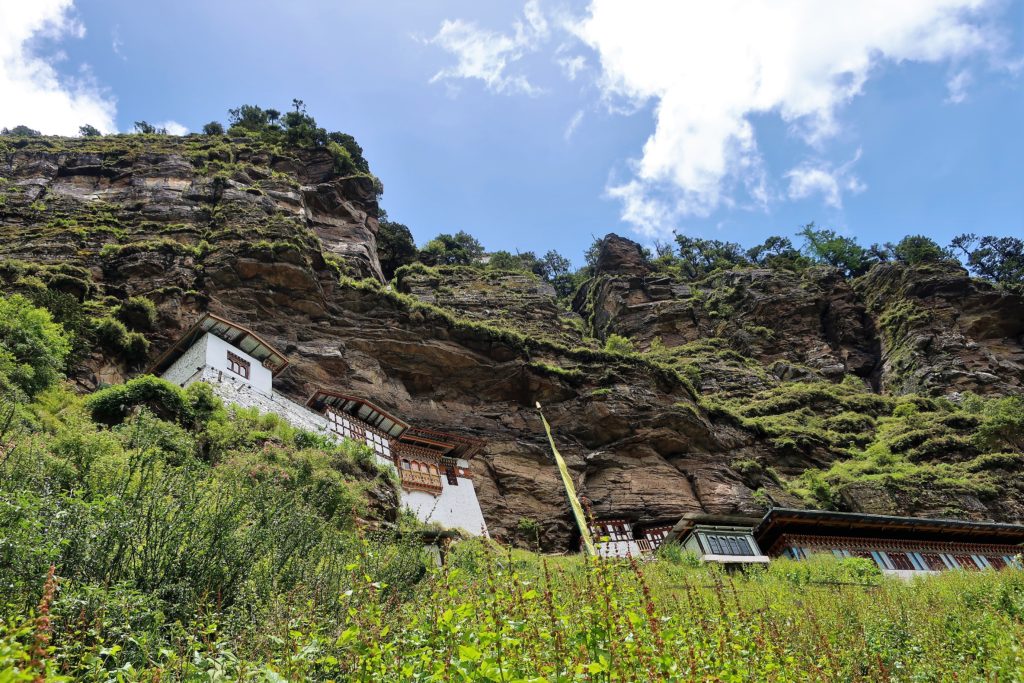
Kila Gompa nunnery
Some people come to this nunnery for meditation retreats.
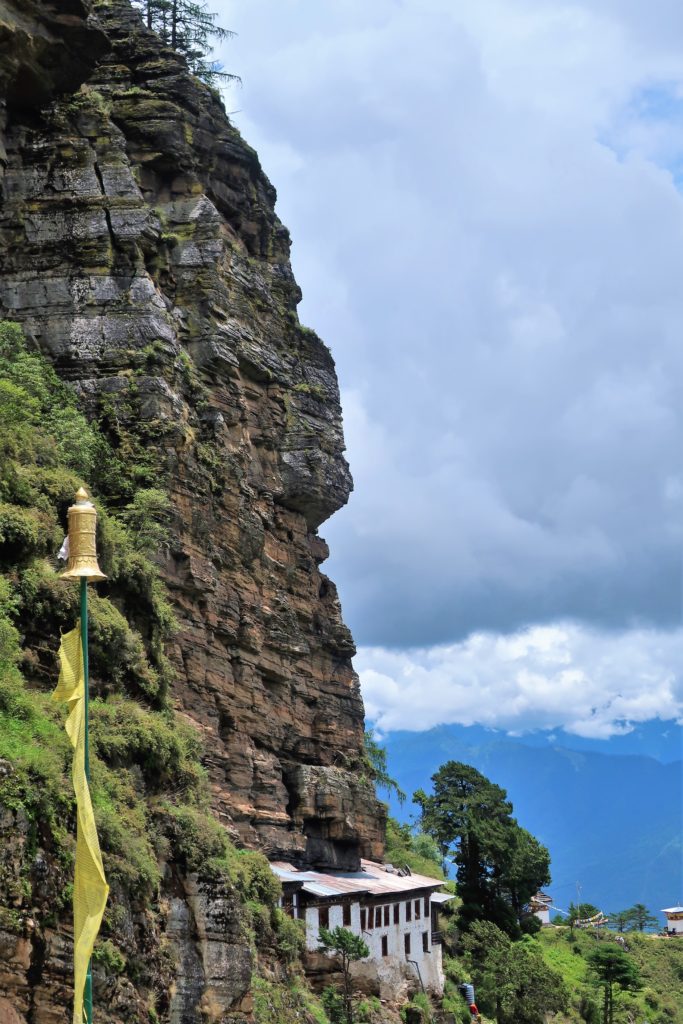
Kila Gompa nunnery
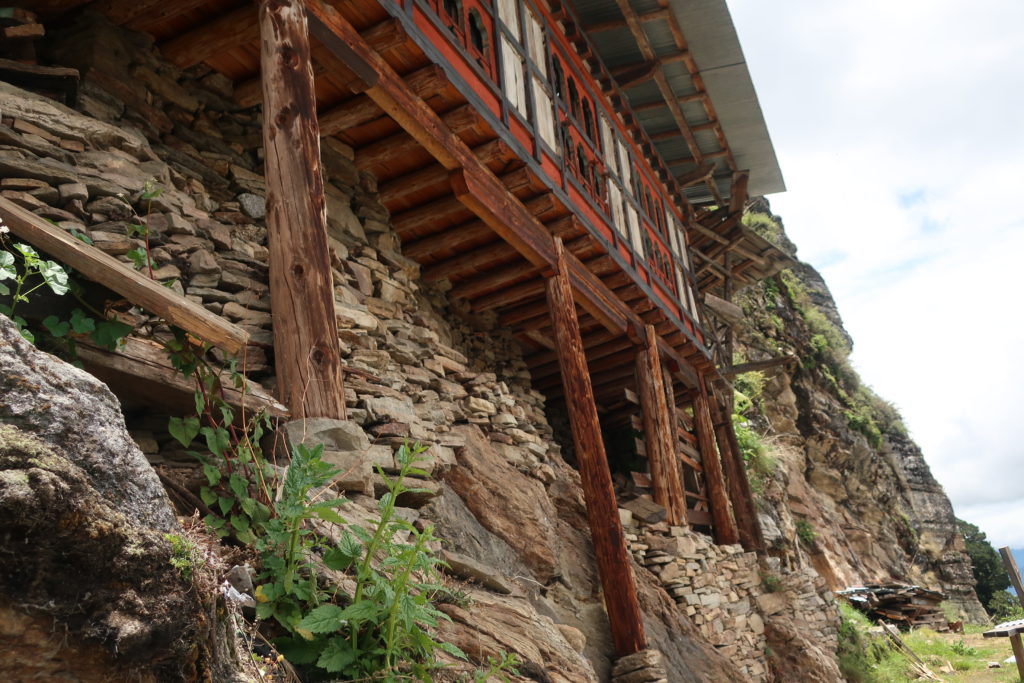
As you can see, some of these structures are, um, precarious, to say the least.
Sight or Insight of the Day
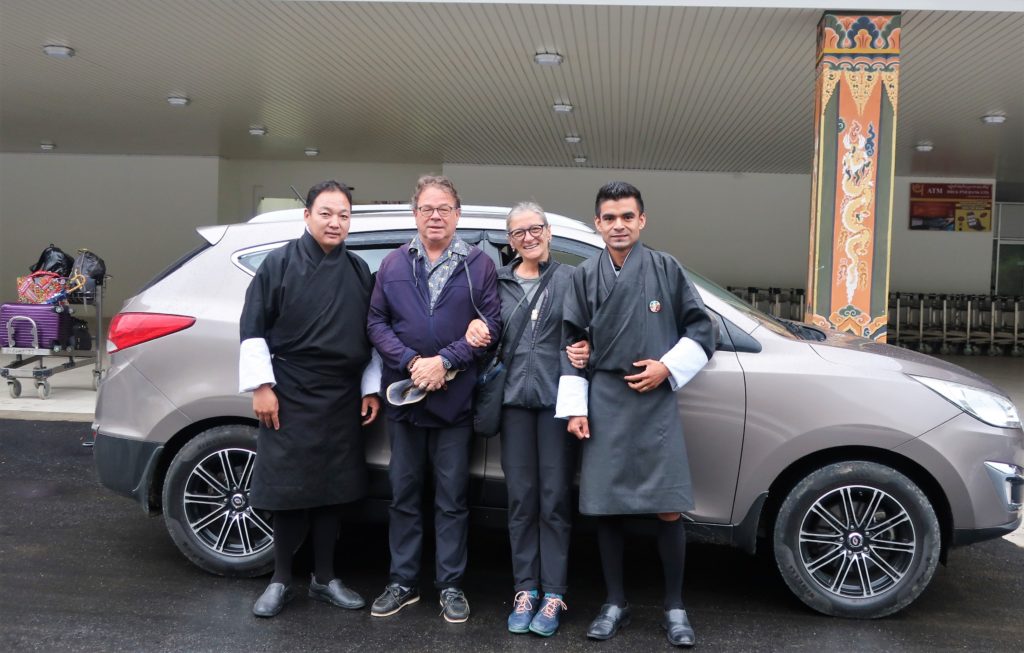
After nearly 2,000 KMs driving around Bhutan, it’s time to part ways with Tula and Mr. Rinsin at Paro Airport.
Our accommodation in Bumthang (pronounced ‘boomTONG’, not ‘BUMthang’, FYI) is in the Tang Valley. Tula, our guide, describes our hostess, Ms. Kunzang Choden, as ‘of a noble family’. She’s also an author, having published ‘Dawa: The Story of a Stray Dog in Bhutan‘. Her husband is Swiss. We have rösti with our dinner.
At home with the princess
On the grounds of the property is the Ogyen Choling museum.
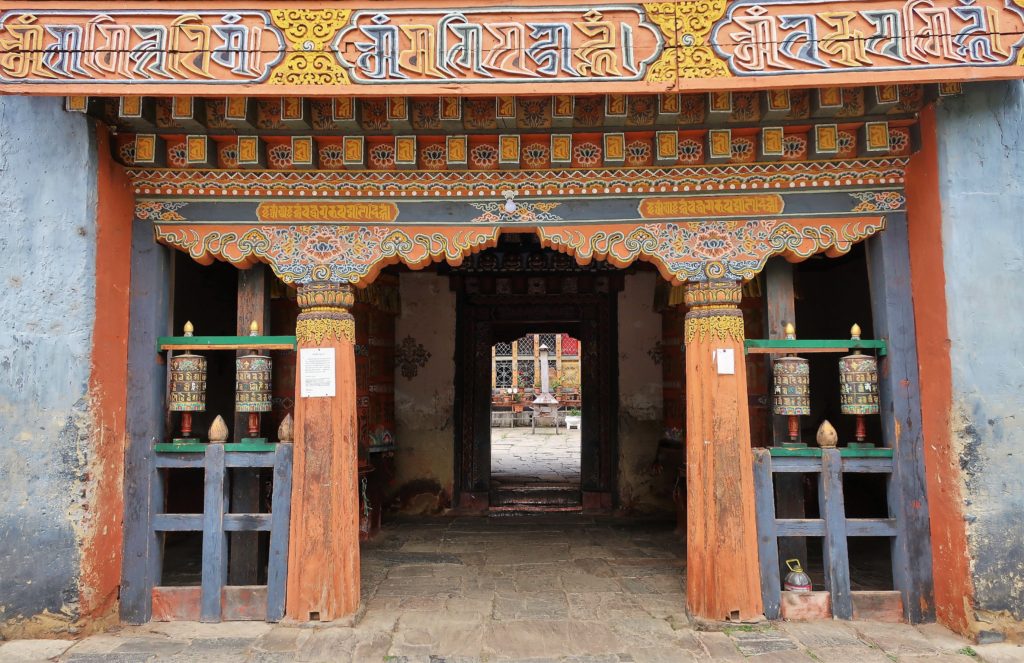
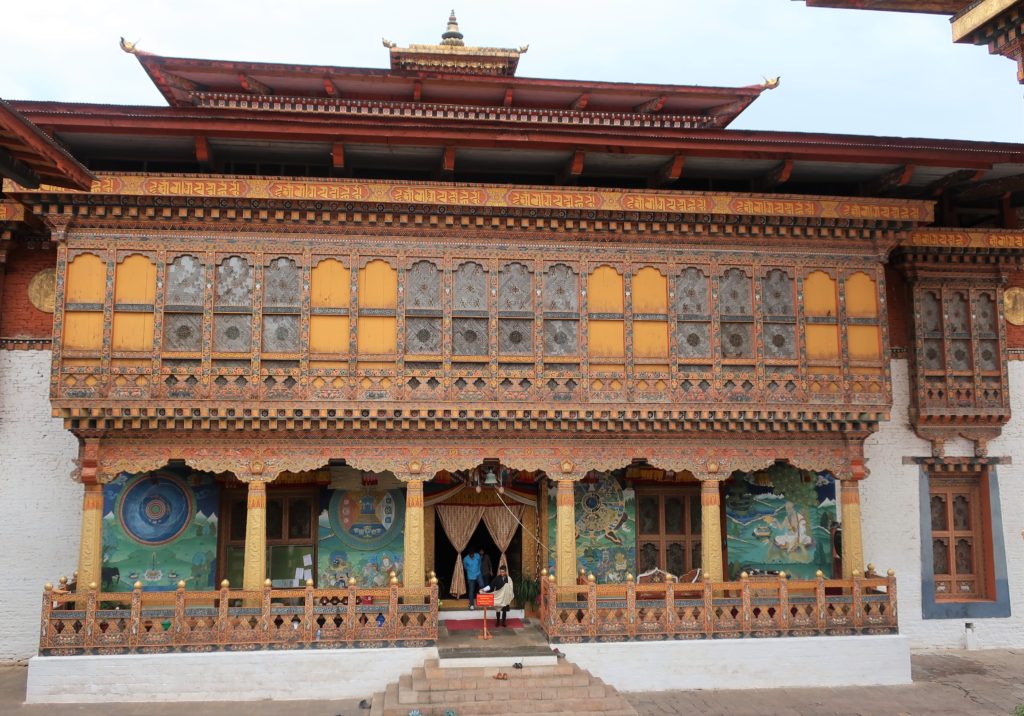
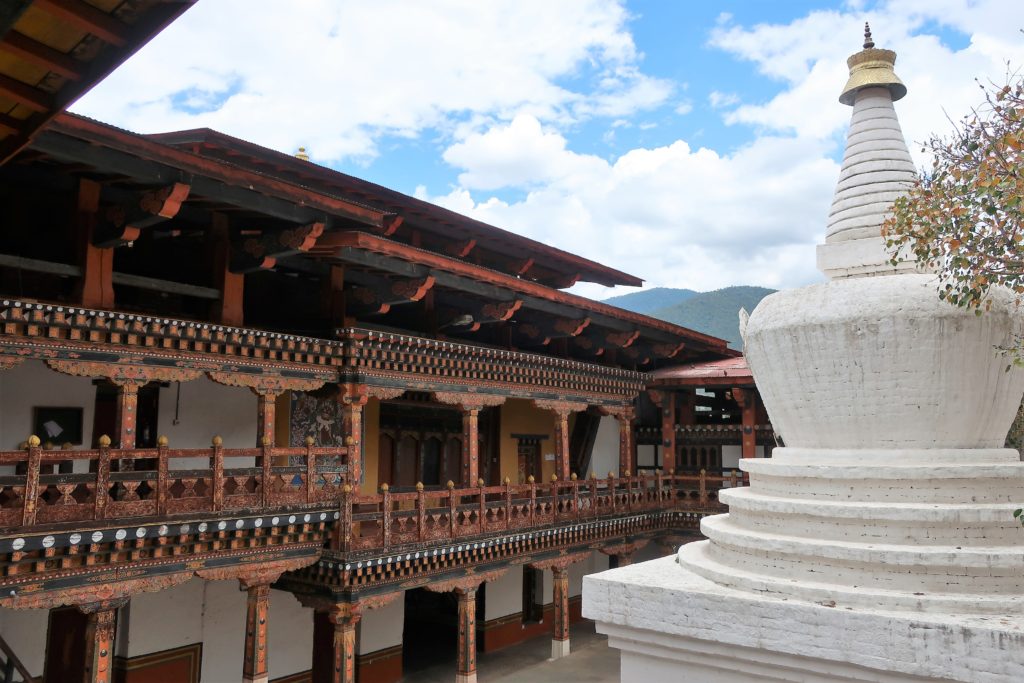
This is the Jampa Lhakhang monastery near Bumthang. It’s famous for staging a mysterious ‘naked dance‘ annually.
Bhutan has a lot of festivals. Peak tourist season (which we are NOT in now) usually means foreign visitors want to see these spectacles performed.
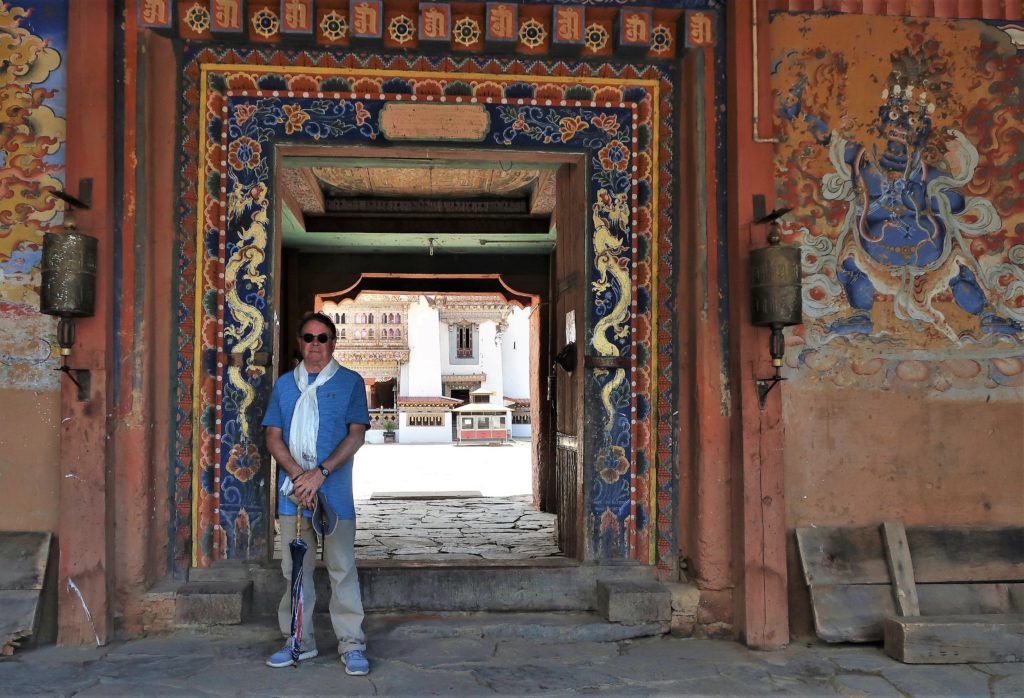
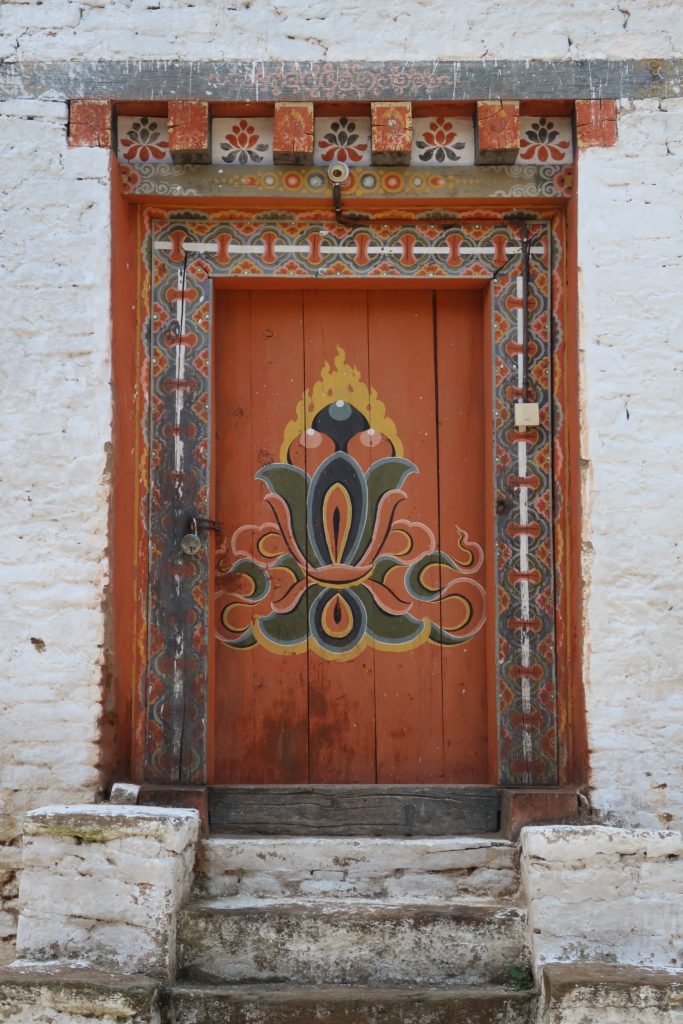
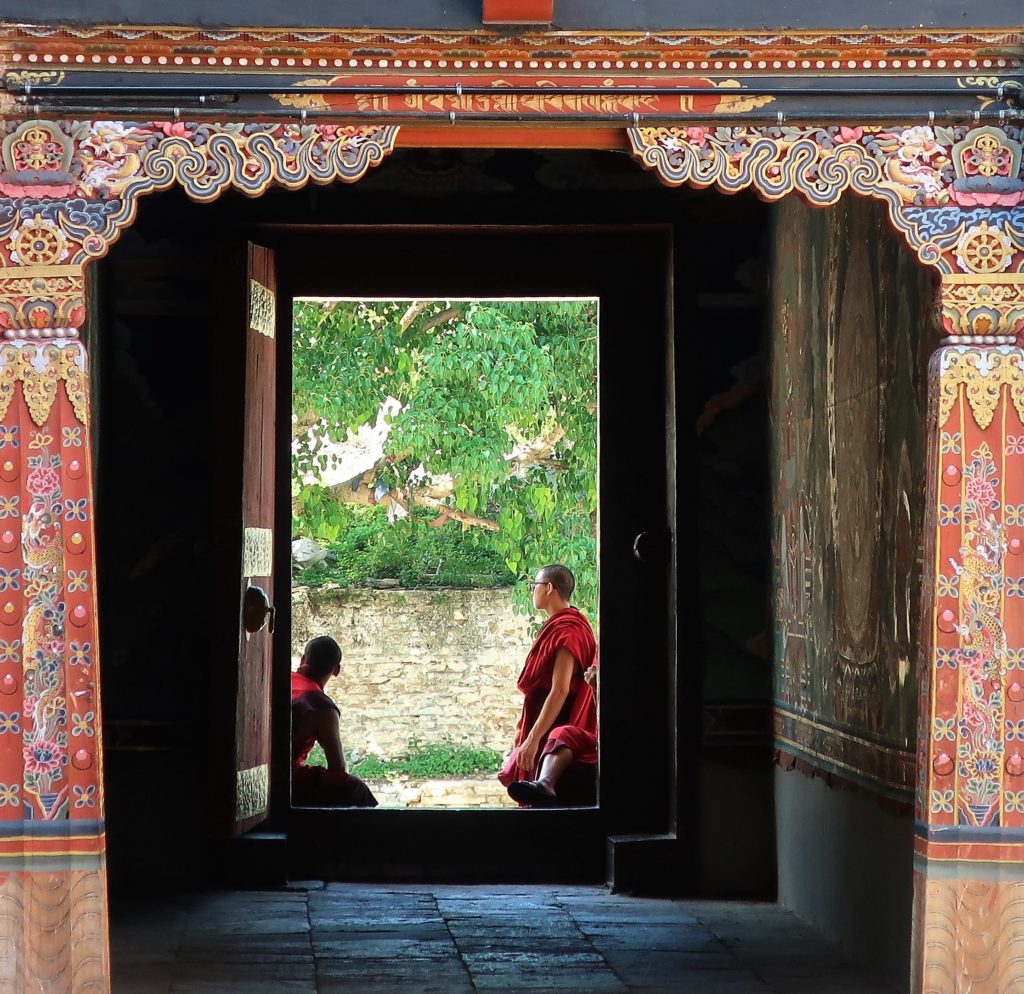
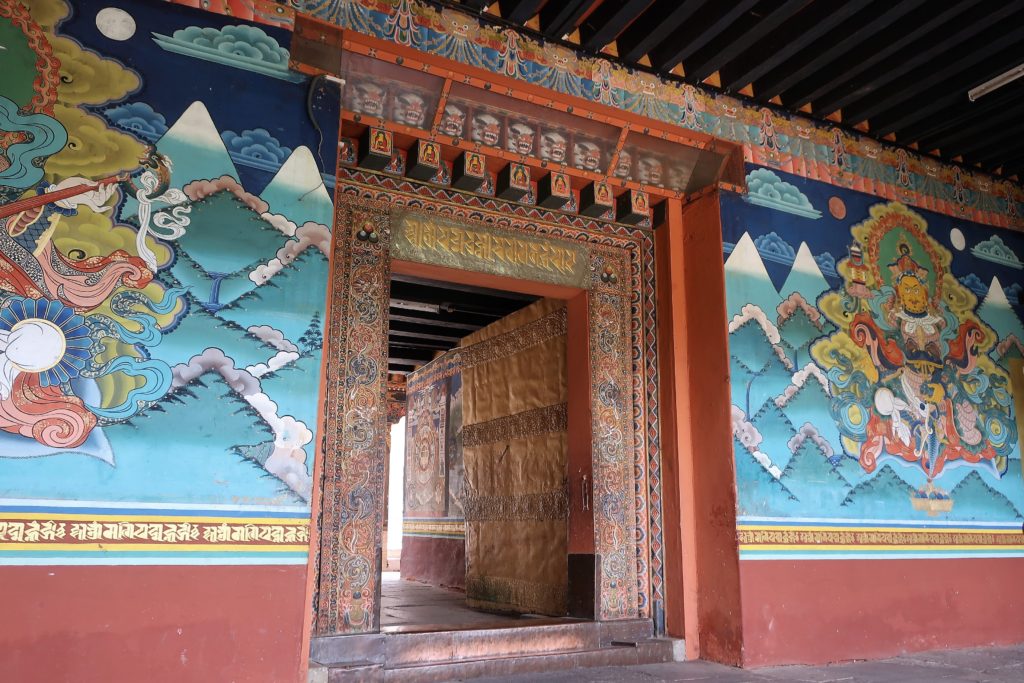
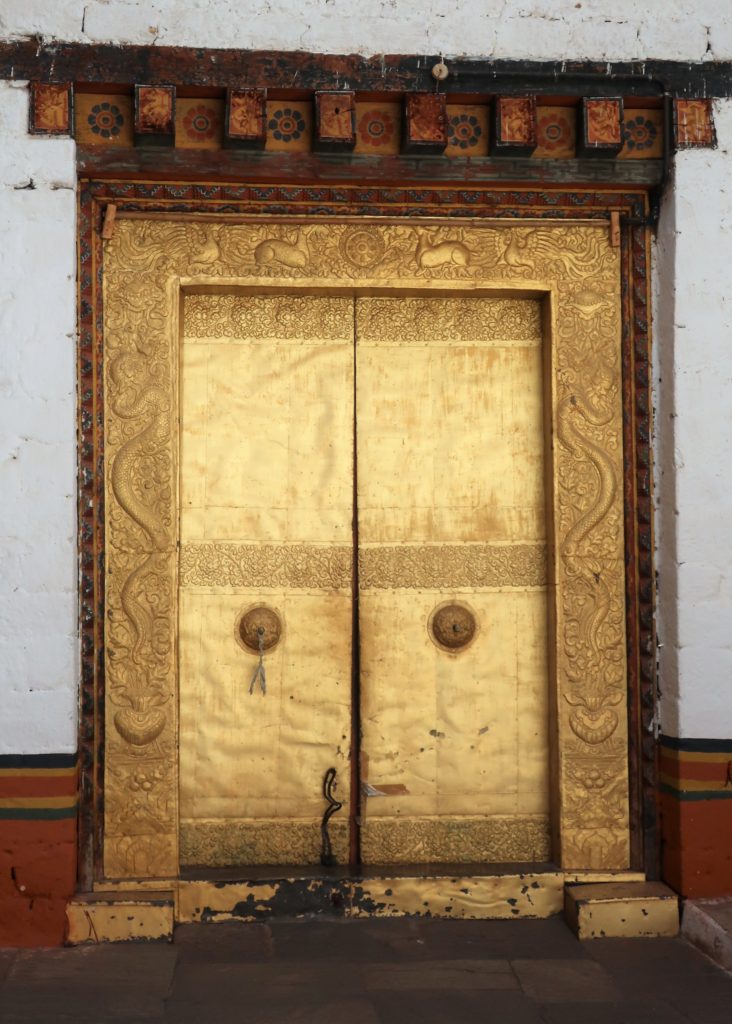
Doorway – Jampa Lhakhang monastery
It’s not something we like to do: Bhutanese people are very sincere about the importance of these dances. We feel that the more they become a tourist attraction, the less vital they become for Bhutanese identity. But that’s just us.
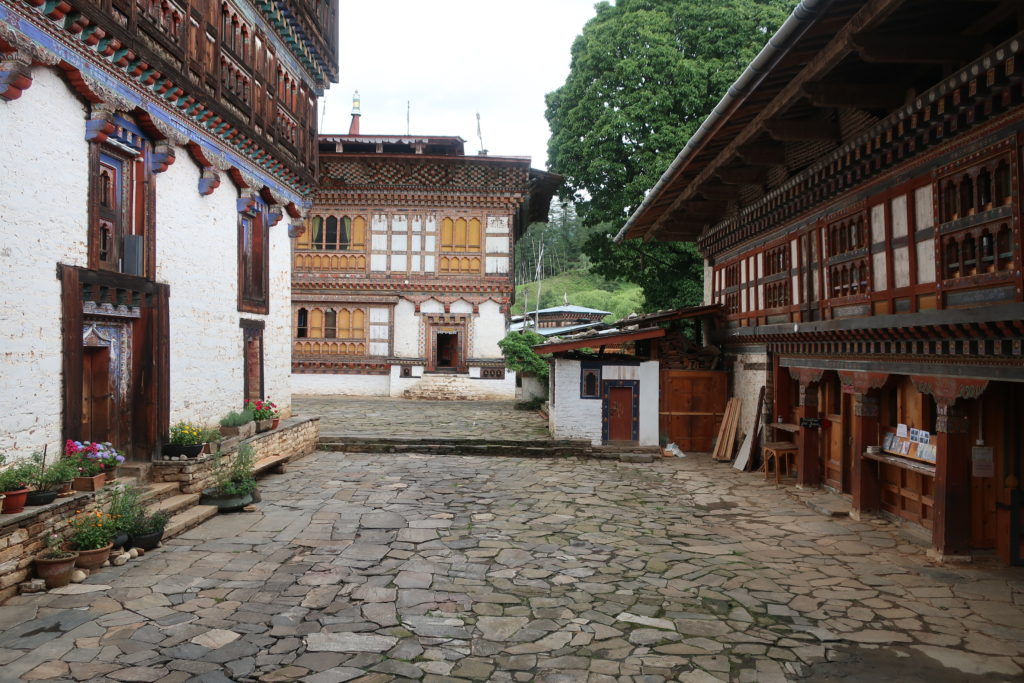
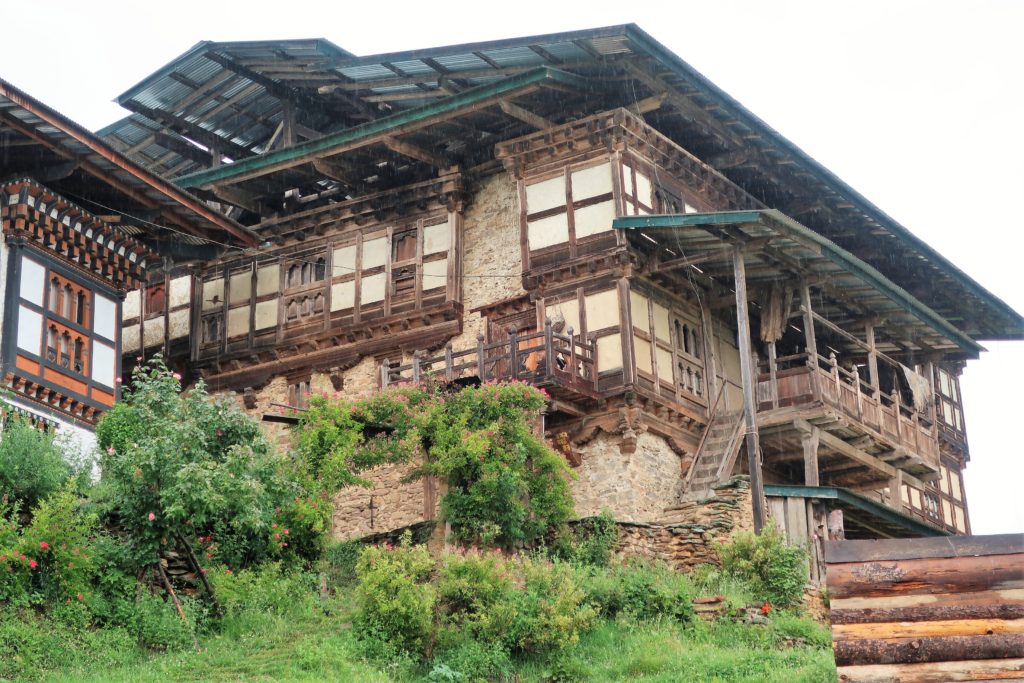
We visit a ‘heritage house’, which portrays traditional everyday life in Bhutan in the past.
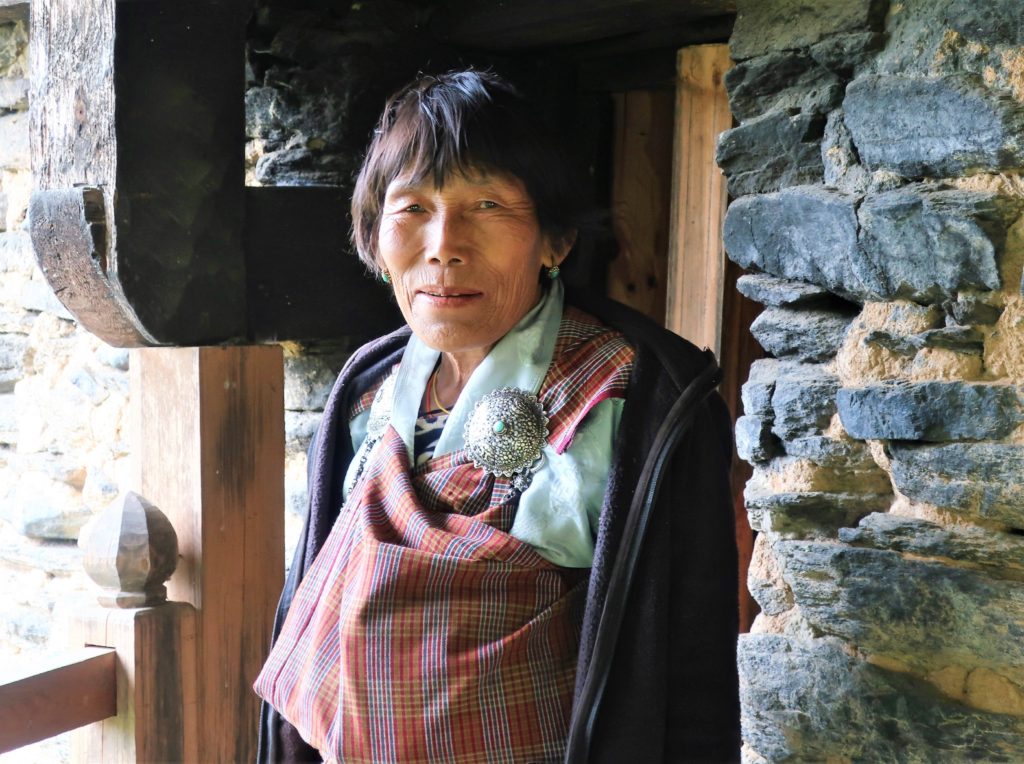
Our hostess is the dignified Ms. Dorji Lhamo.
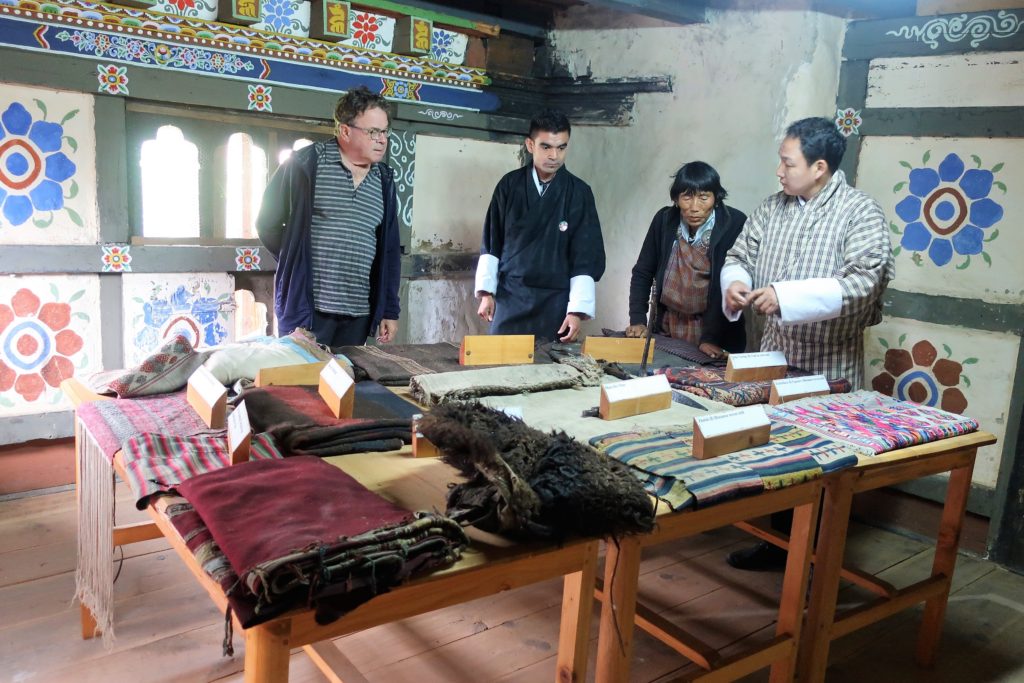
We are shown tools, textiles, and other artifacts.
Mr. Rinsin, our driver, has to interpret Dorji’s eastern dialect
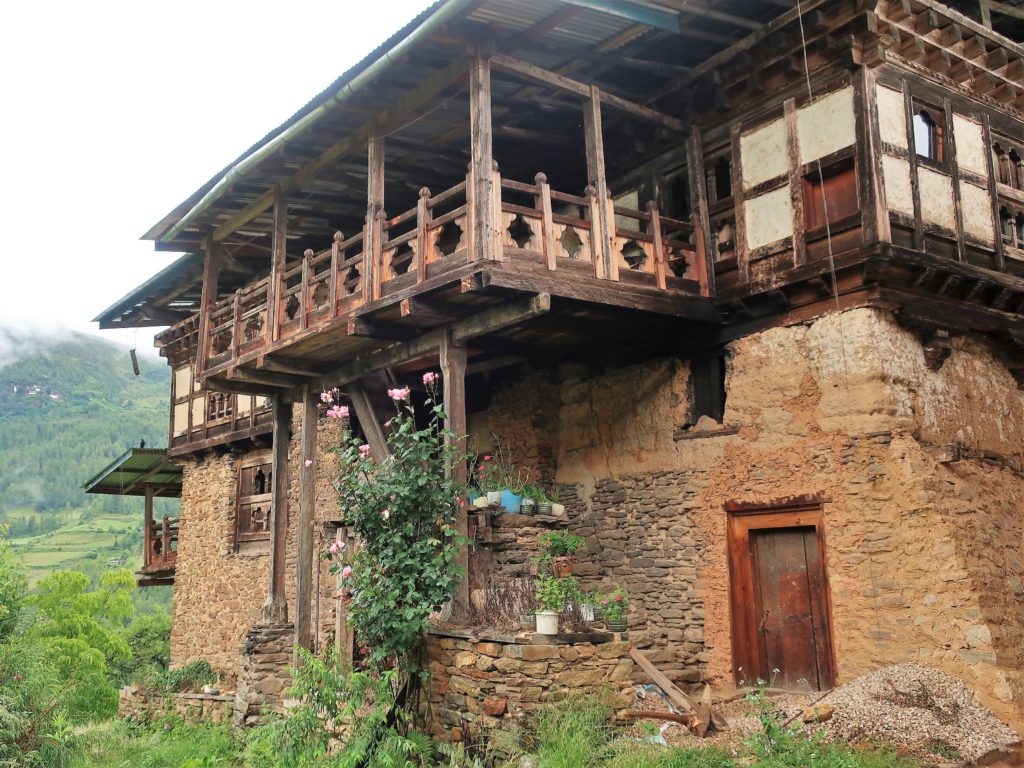
This is the balcony at the rear. Actually, Ms. Lhamo’s house next door doesn’t seem that much different from the ‘heritage house’.
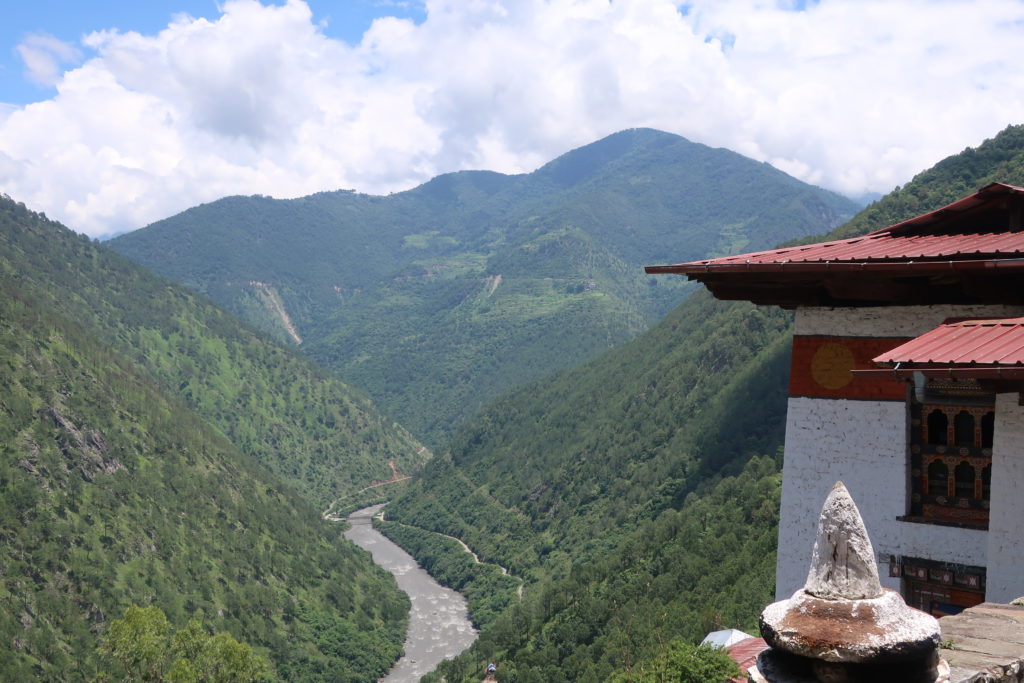
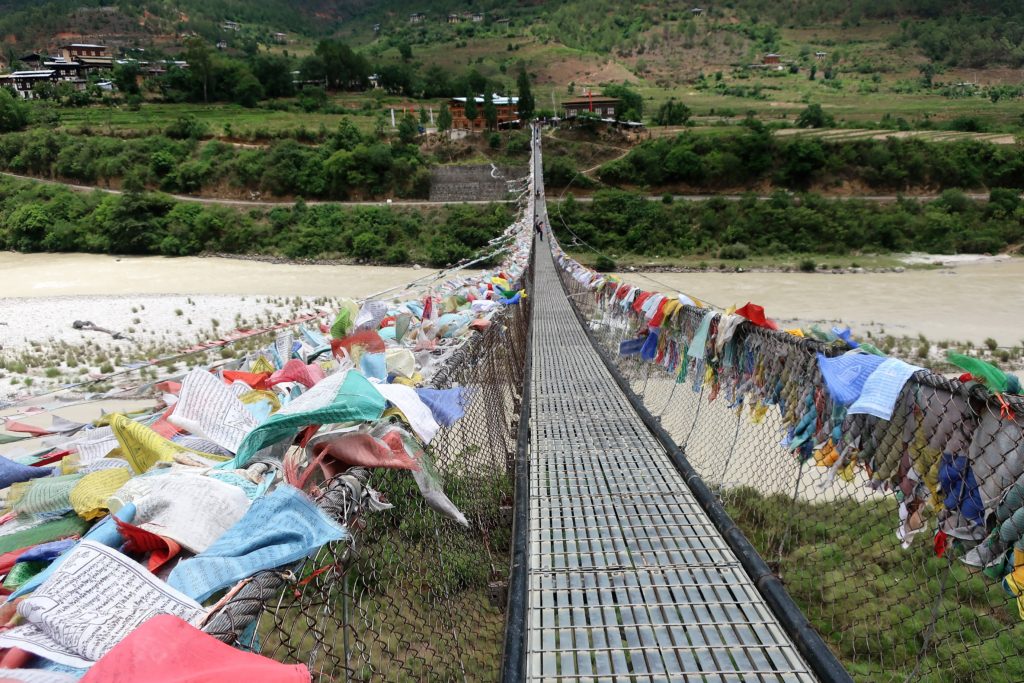
Along the way, we stop to visit a suspension bridge over the swift-flowing Kuri Chhu river.
‘… a way a lone a last a loved a long the / riverrun…‘ – Finnegans Wake, James Joyce
Lhuentse Dzong from below.
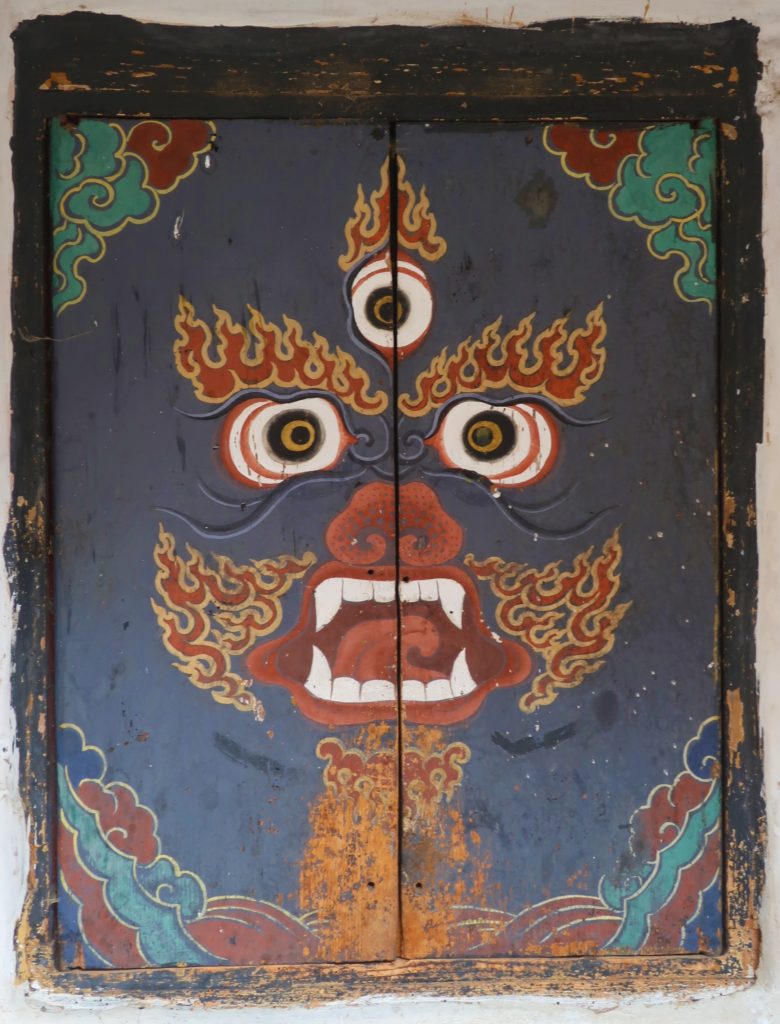
As usual, the doors are photo-worthy.
‘ If the doors of perception were cleansed every thing would appear to man as it is, Infinite. For man has closed himself up, till he sees all things thro’ narrow chinks of his cavern. ‘ – William Blake
And below flows the Kuri Chhu river.
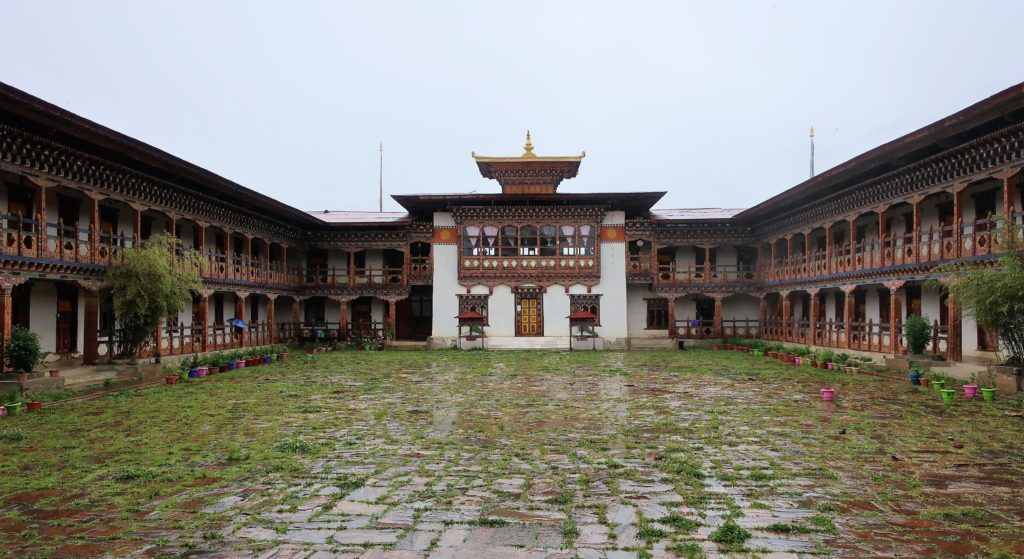
These dzongs often combine the monastery with the local civil government.
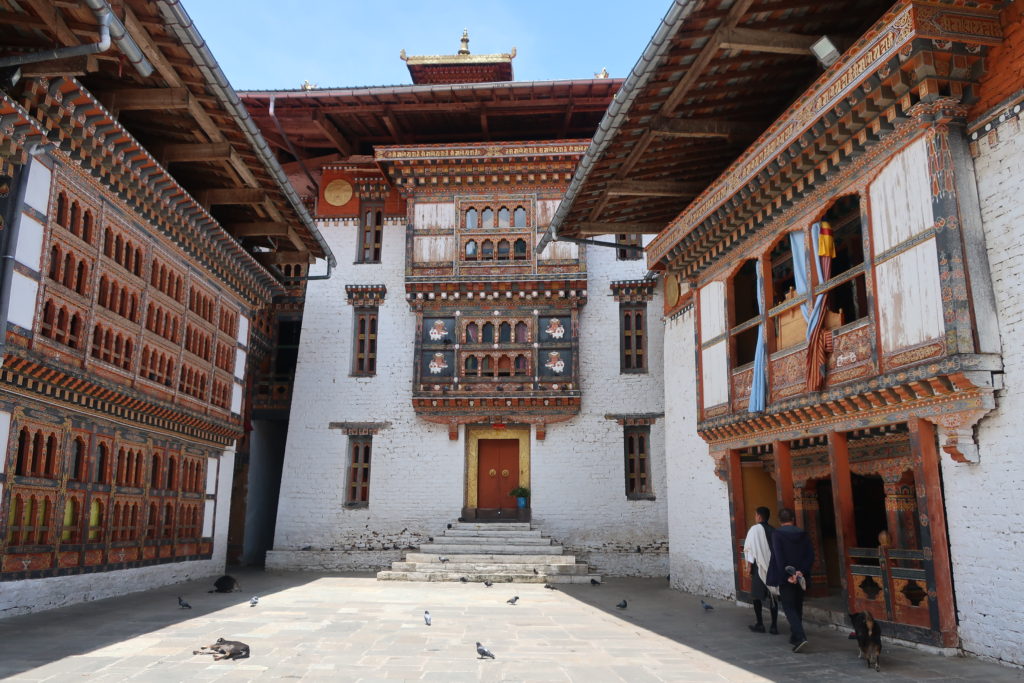
Courtyard – Lhuentse Dzong
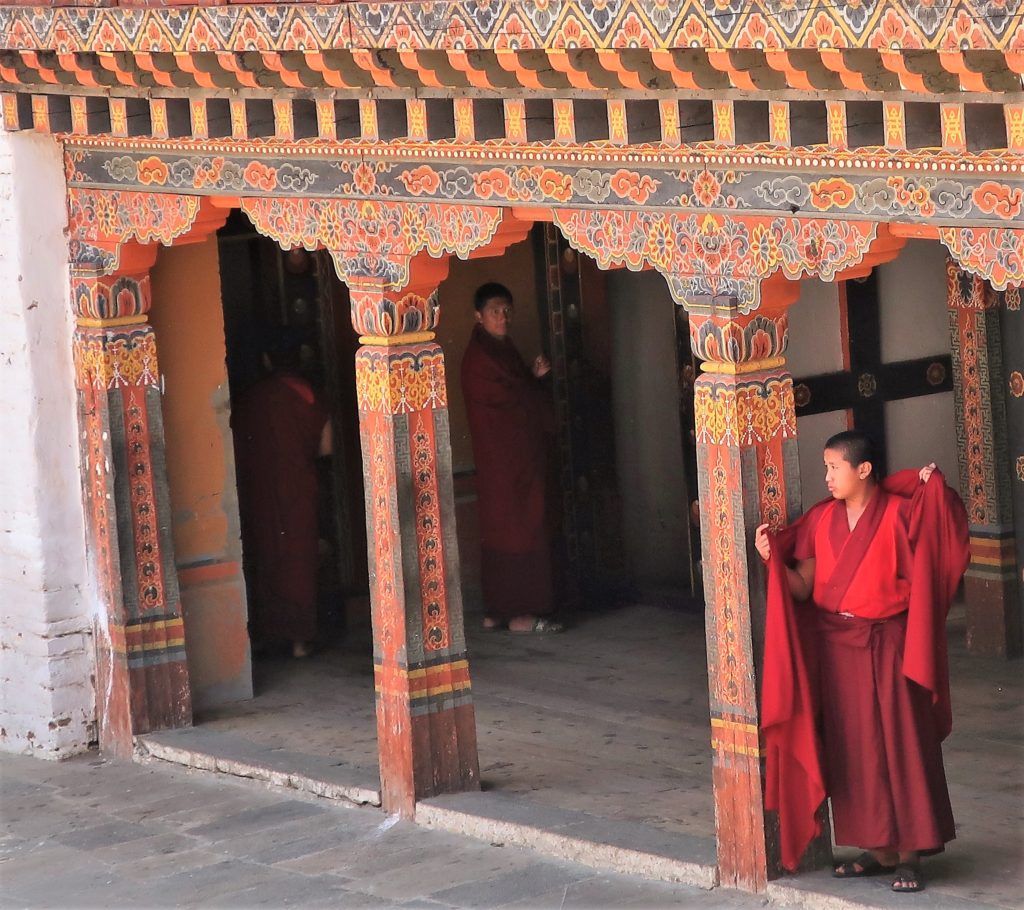
A young monk takes a break from his studies.
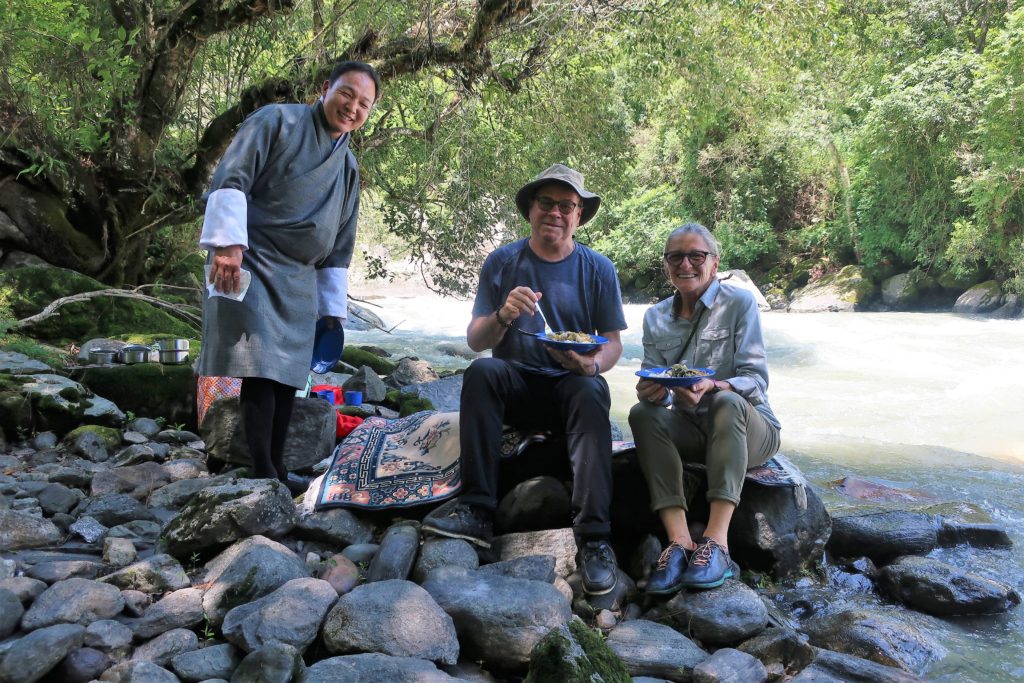
We stop for a picnic lunch along the river.
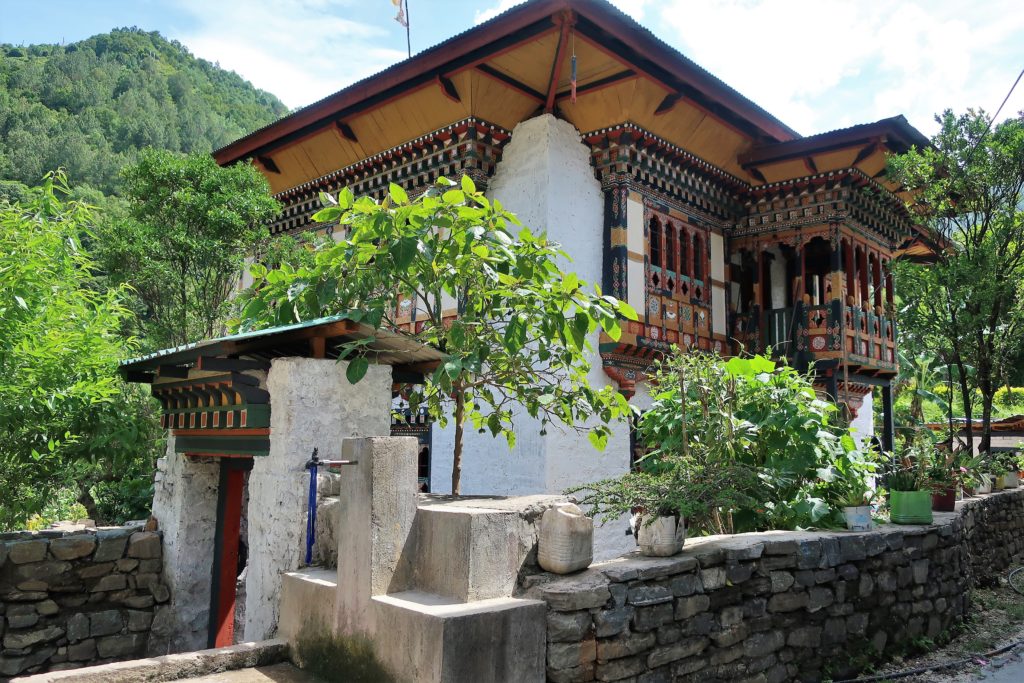
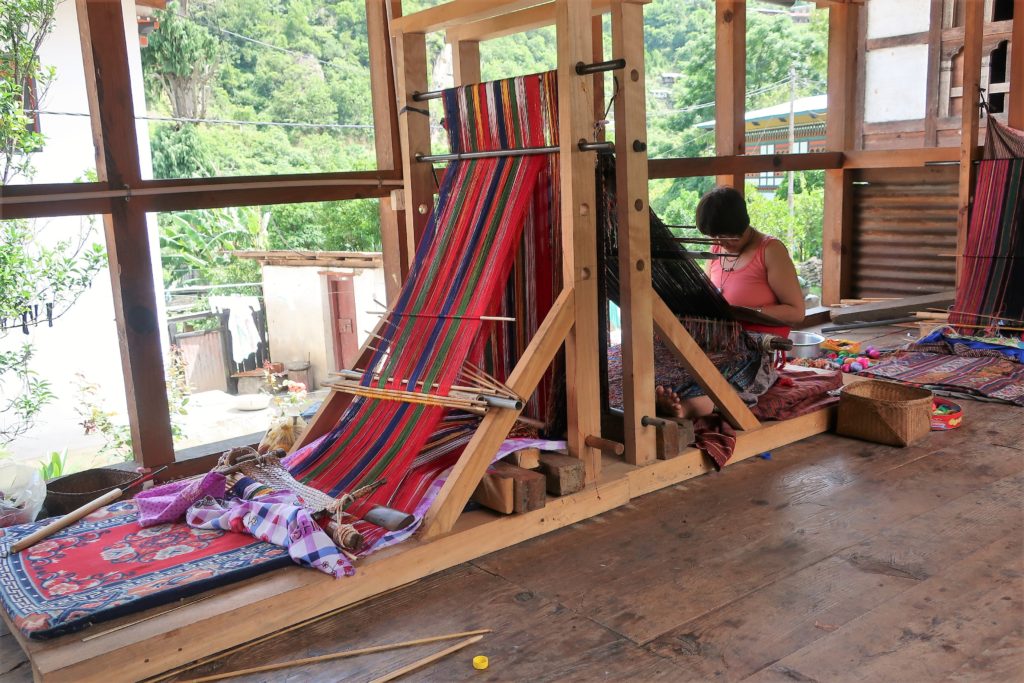
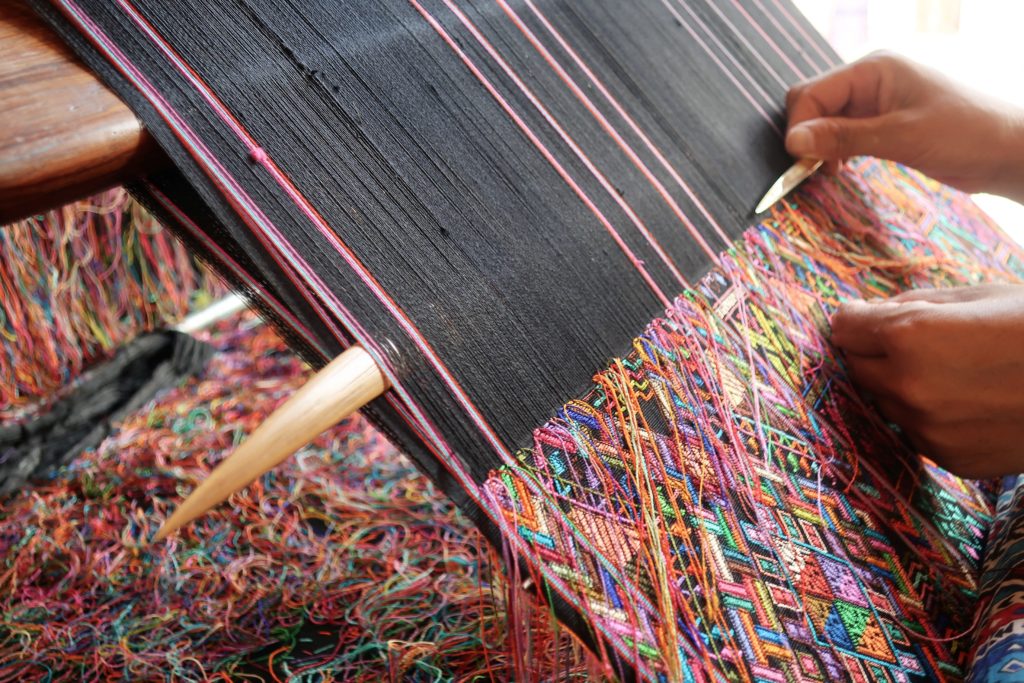
We make a postprandial visit to Khoma, a village where women bring home the bacon by their weaving skills.
House in Khoma
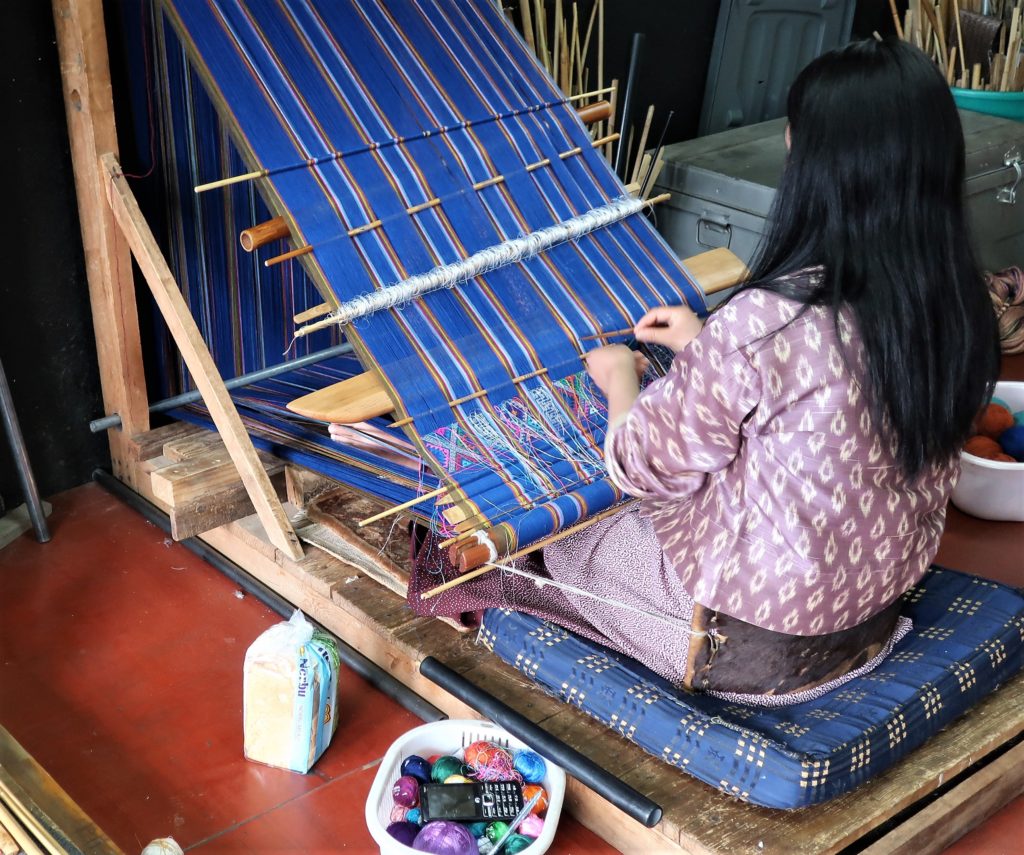
This woman spends about four hours a day at the loom.
That’s besides doing other household work.
Fruit of the Loom
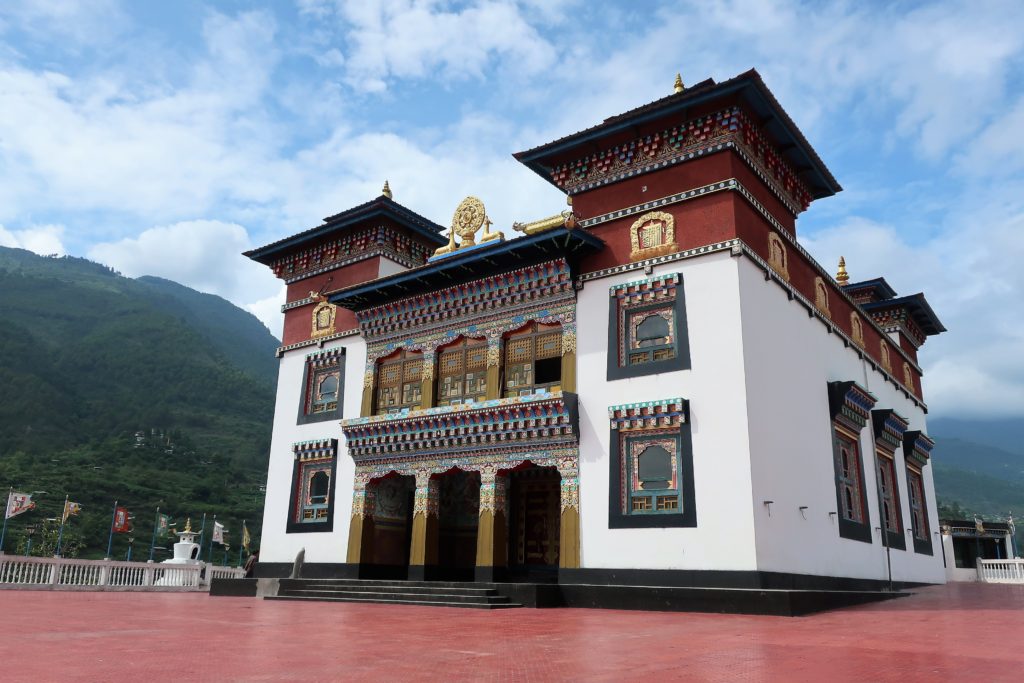
We visit another monastery on top of a mountain.
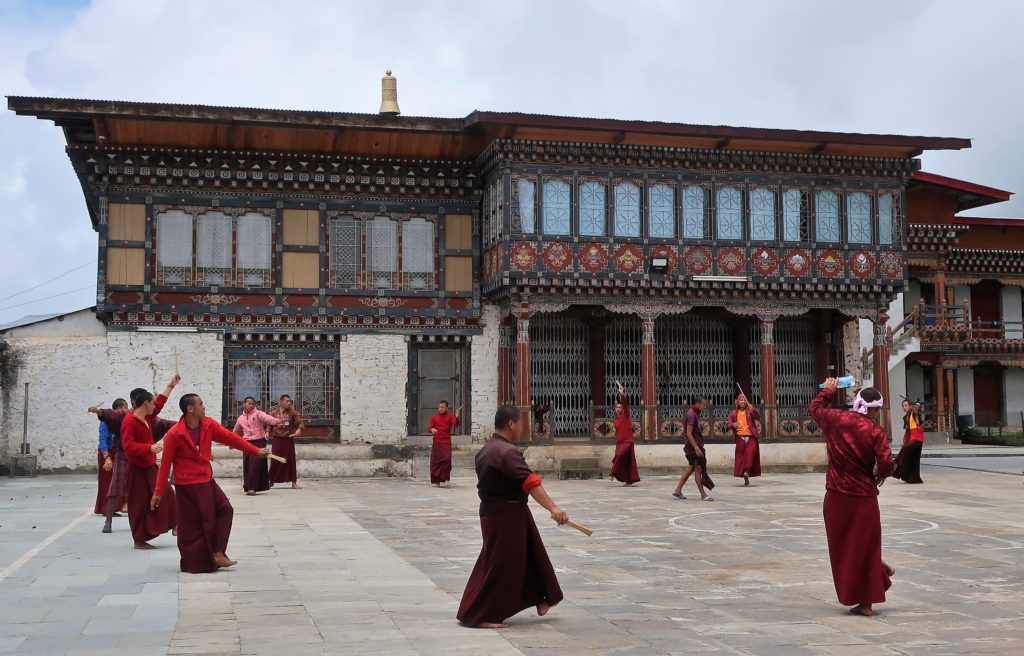
In the courtyard, monks and lay people are practicing for an upcoming dance.
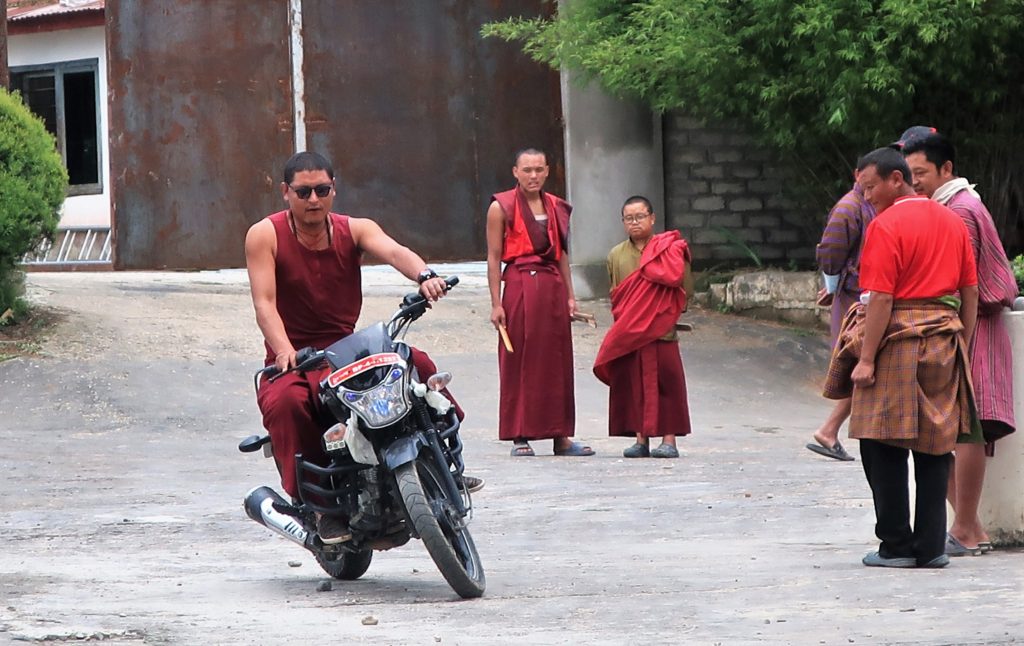
Tula tells us about a politically incorrect Bhutanese saying: ‘Beware of women or monks driving.’
Monk practicing his motorcycle skills for his driving test
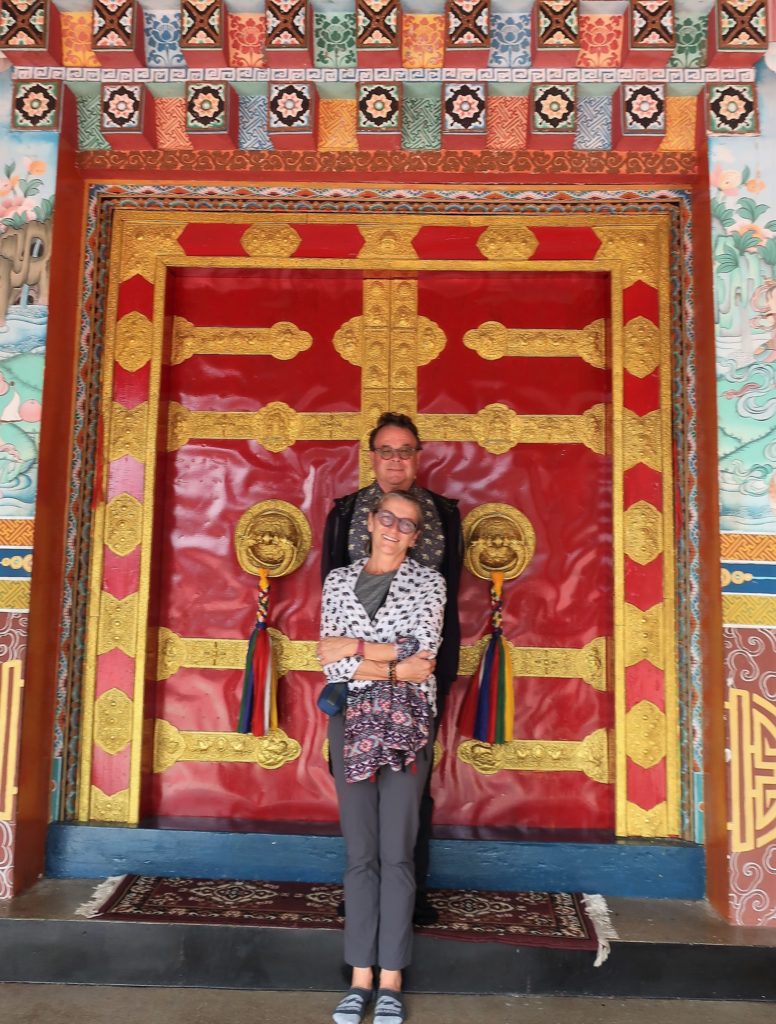
Another fancy door.
Courtesy of Tula
Some monks relax in the garden.
View of the river far below.
This monk is very generous about explaining the history of the monastery.
Thanks for the tour
We arrive back in Trashigang.
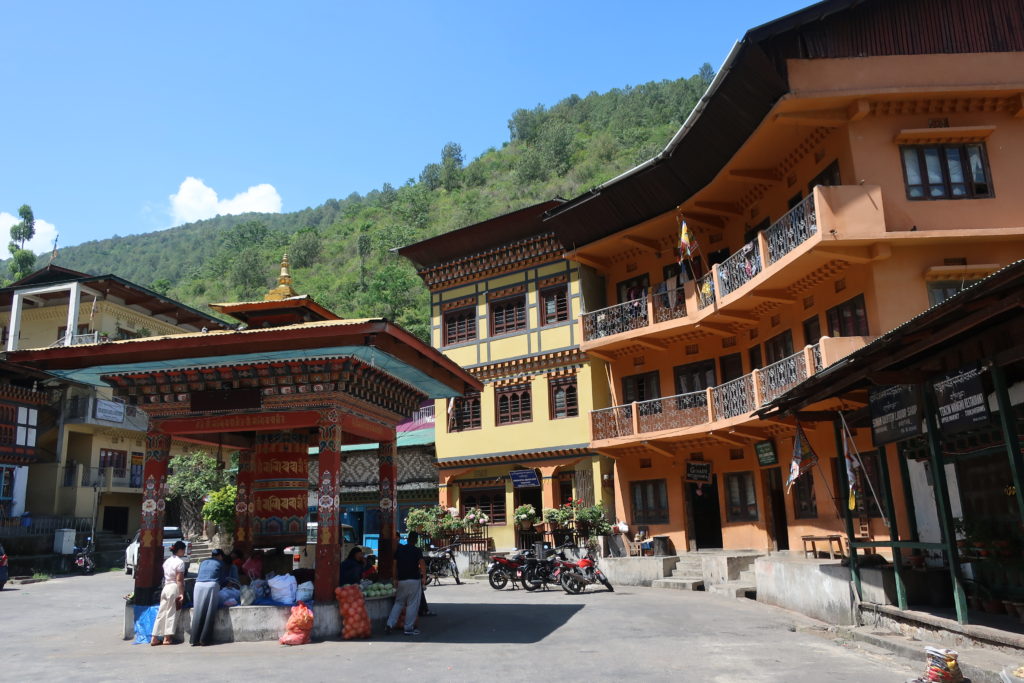
Trashigang
Trashigang looks a bit like an Elizabethan town.
Town square
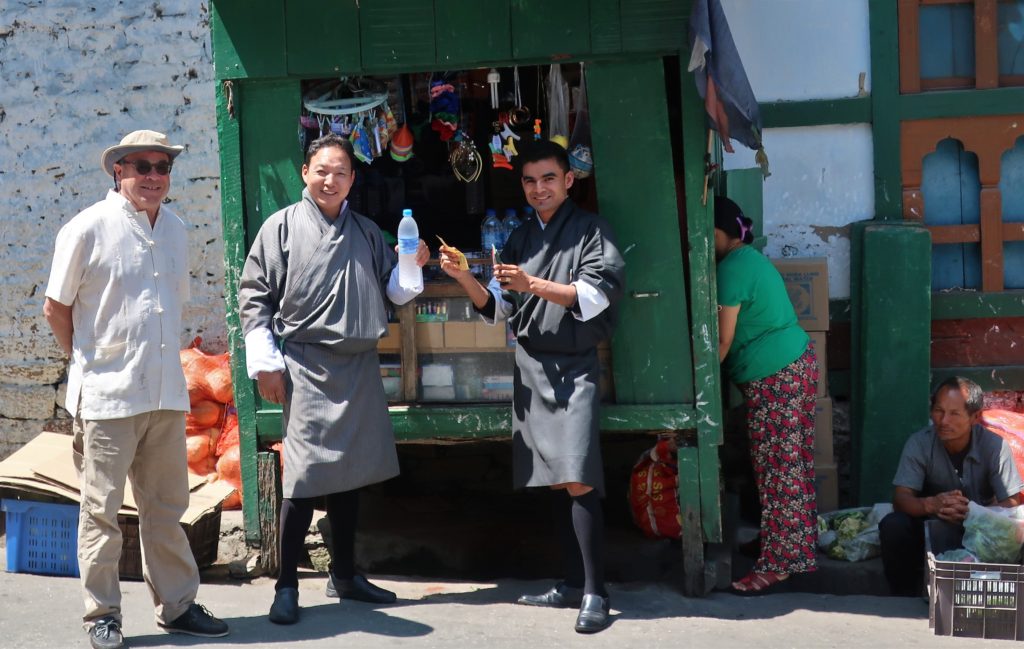
Tula, Mr. Rinsin, and I stock up on water for the road.
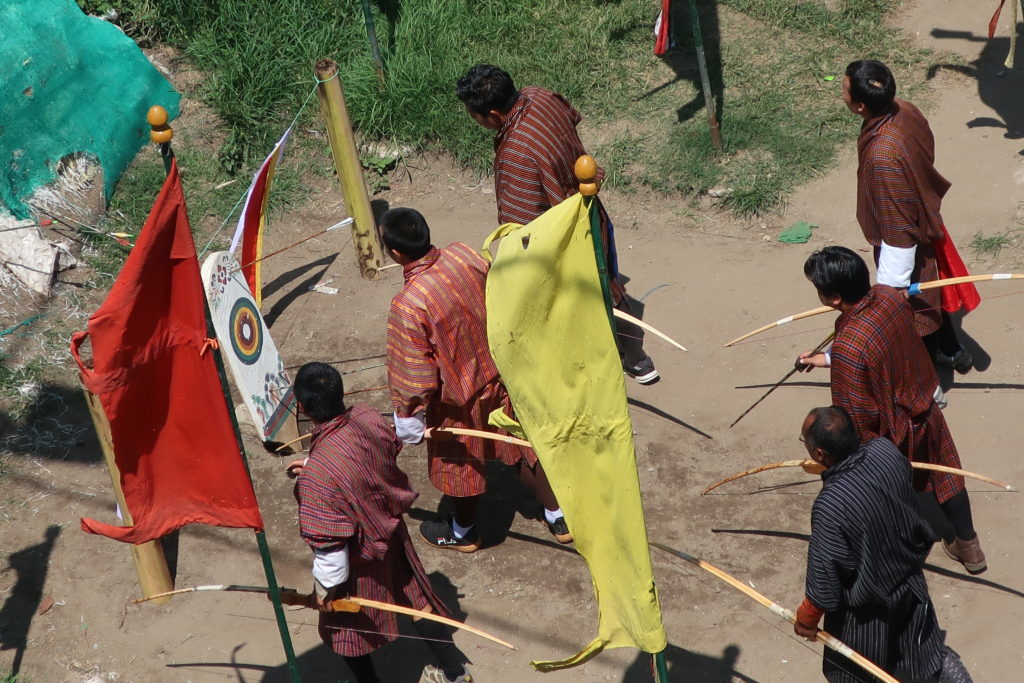
We see a fascinating example of how this works. Rivals shoot from 125 meters (!) away. The opponents do a mocking dance in front of the target, daring the other side to come close to hitting them (while keeping a close eye on the actual trajectory of fired arrows.) When a team does score a bulls-eye, then begins an elaborate dance that looks like a bunch of football players celebrating a touchdown.
Sight or Insight of the Day
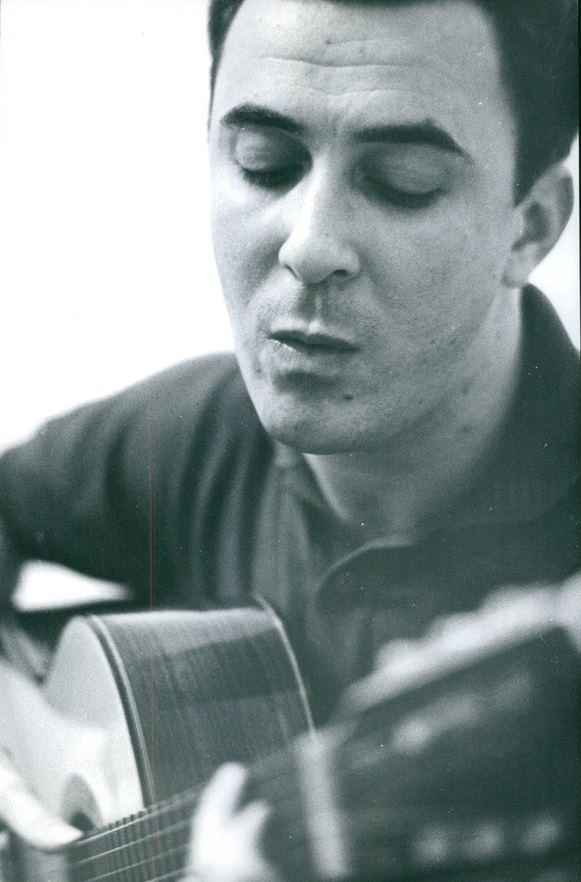
We hear that João Gilberto passed away. Descanse em paz, amigo.
‘ Um cantinho, um violão…‘
This man almost single-handedly brought Bossa Nova to the world. That world is a richer place for containing such classics as ‘Chega de saudade‘ and ‘Corcovado‘.
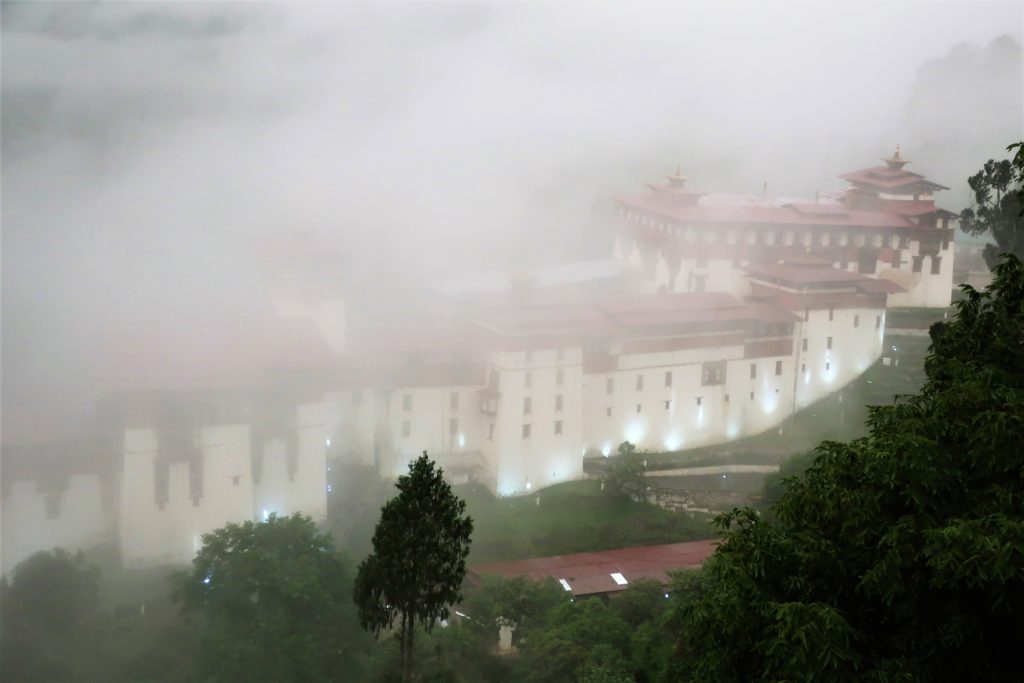
We get a view of the dzong from our hotel room balcony.
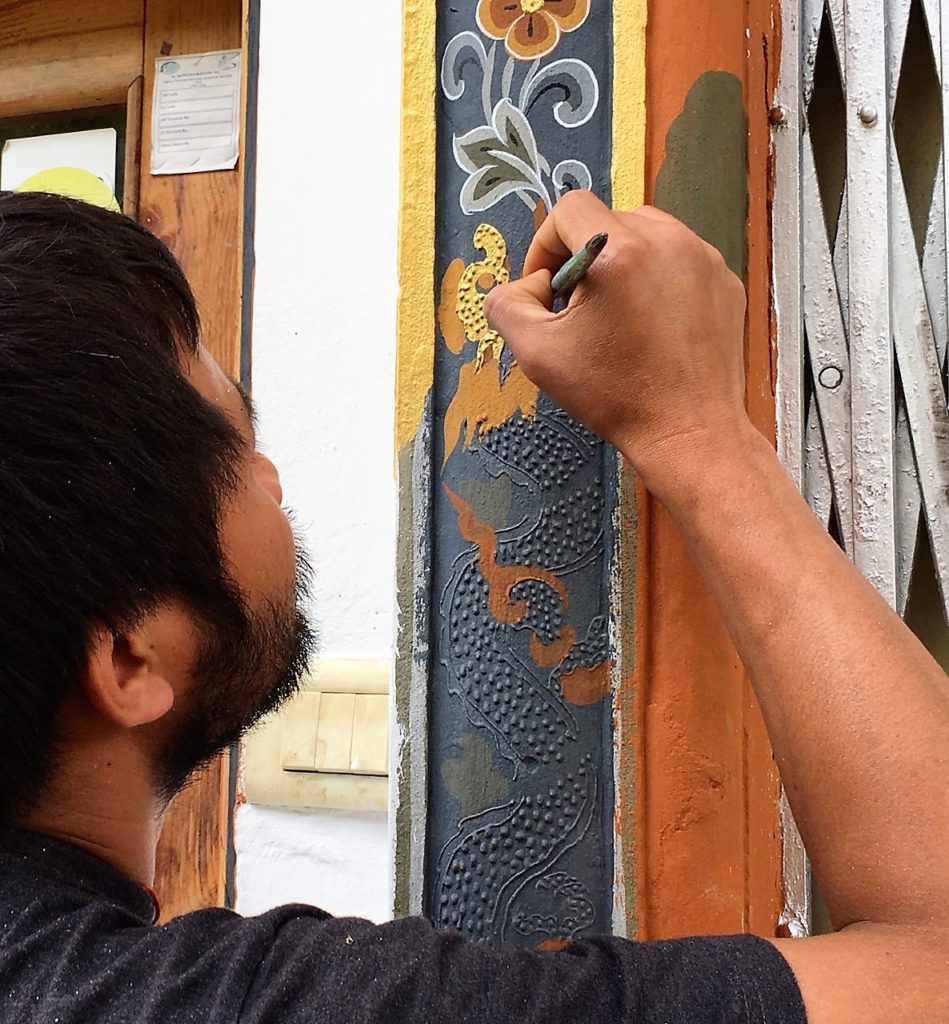
At our hotel, a man paints decorative dragons on the doorway.
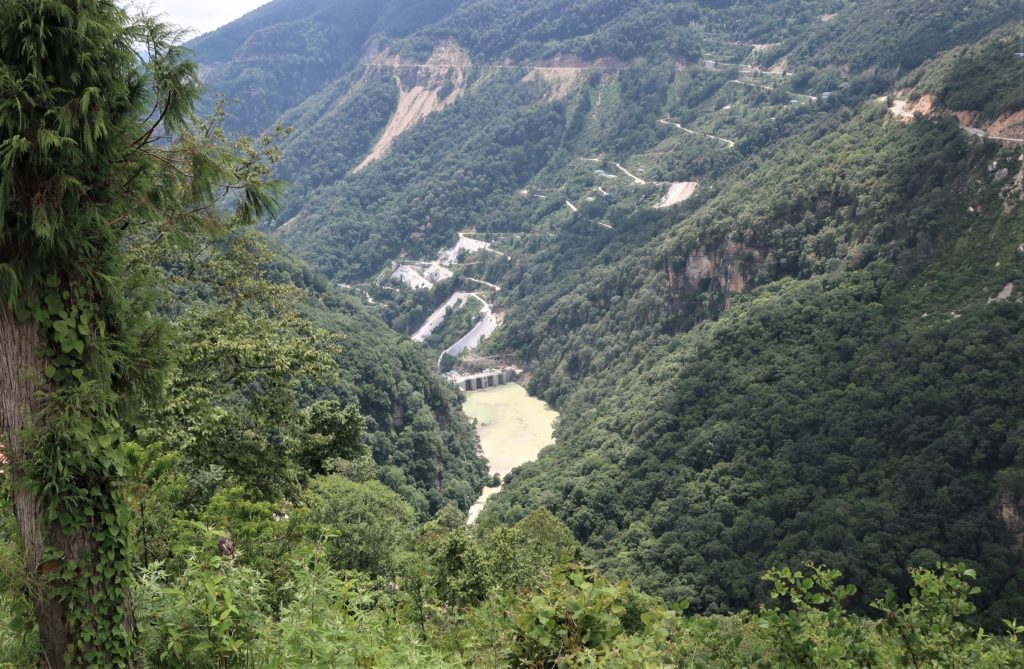
In the valley below is a dam for a hydro-power project.
Hydro exported to India
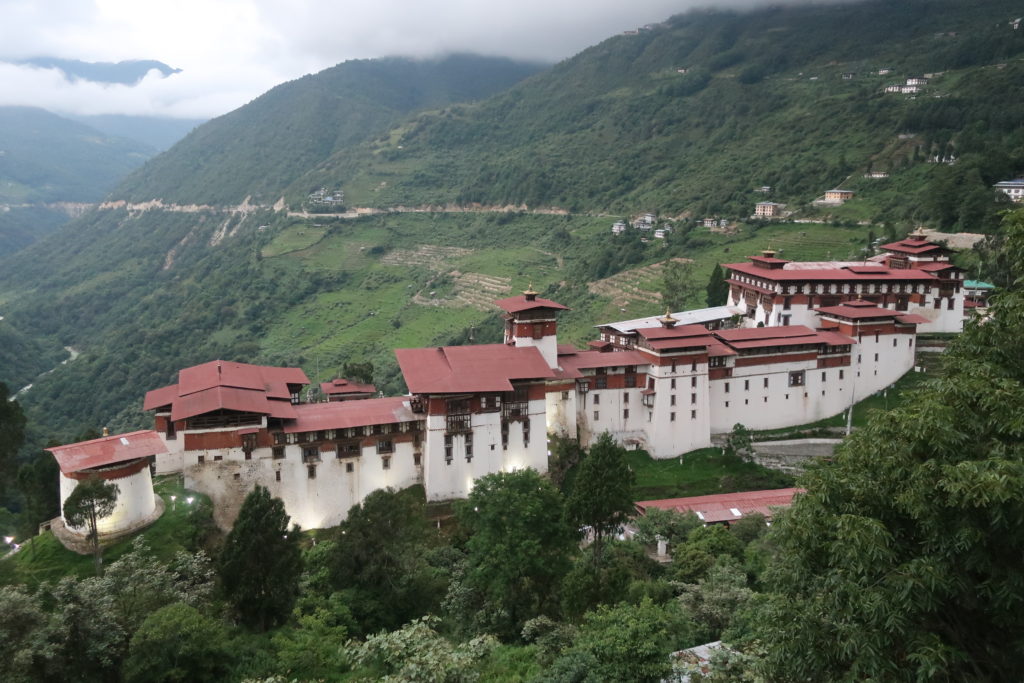
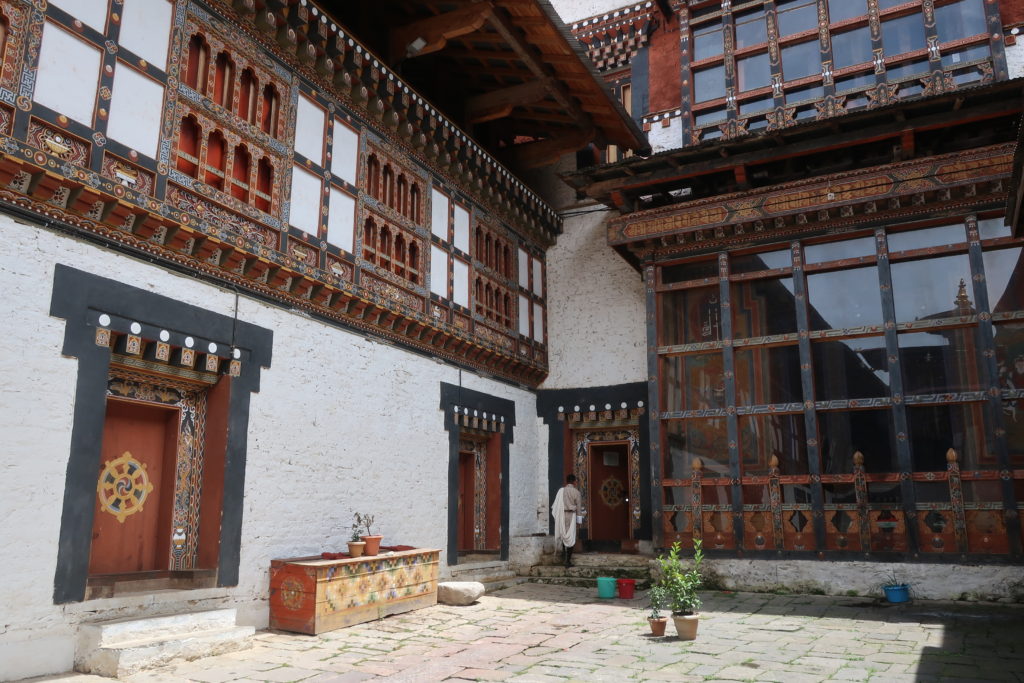
The fortress/monastery is a short stroll away.
Courtyard
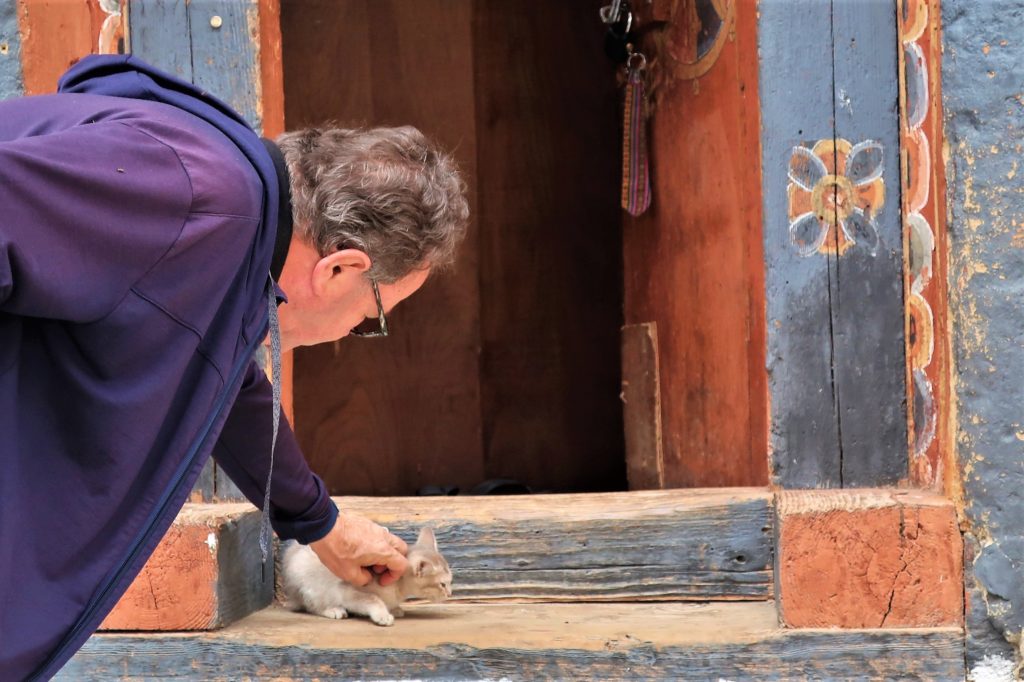
We befriend a kitten.
‘He who is kind to animals, heaven will protect.’ – Gautama Buddha
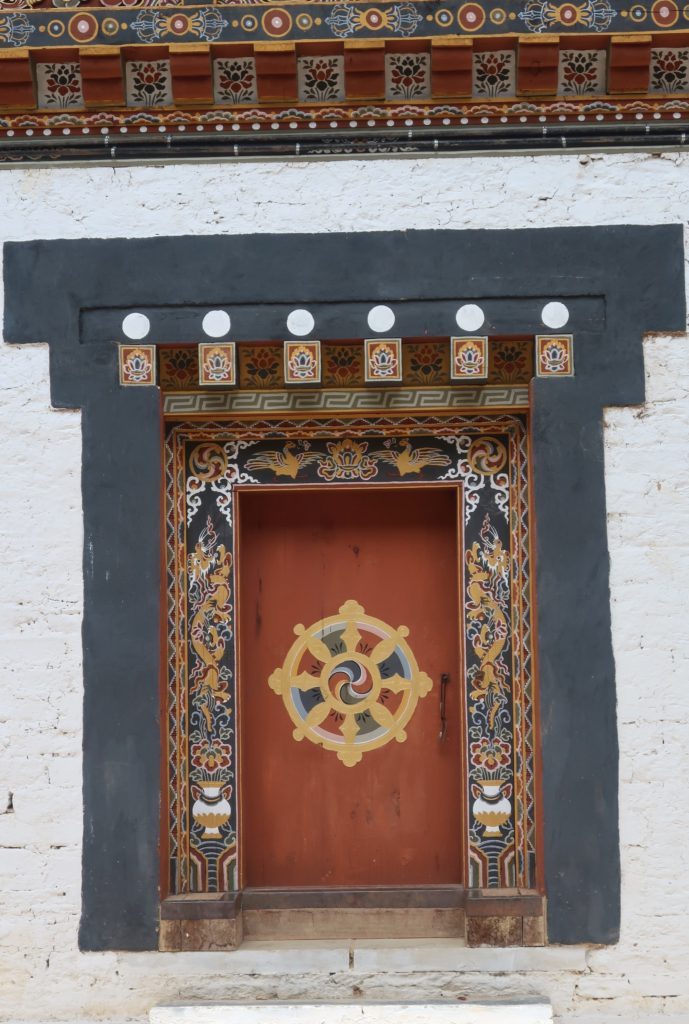
Pretty amazing doors are standard in these places.
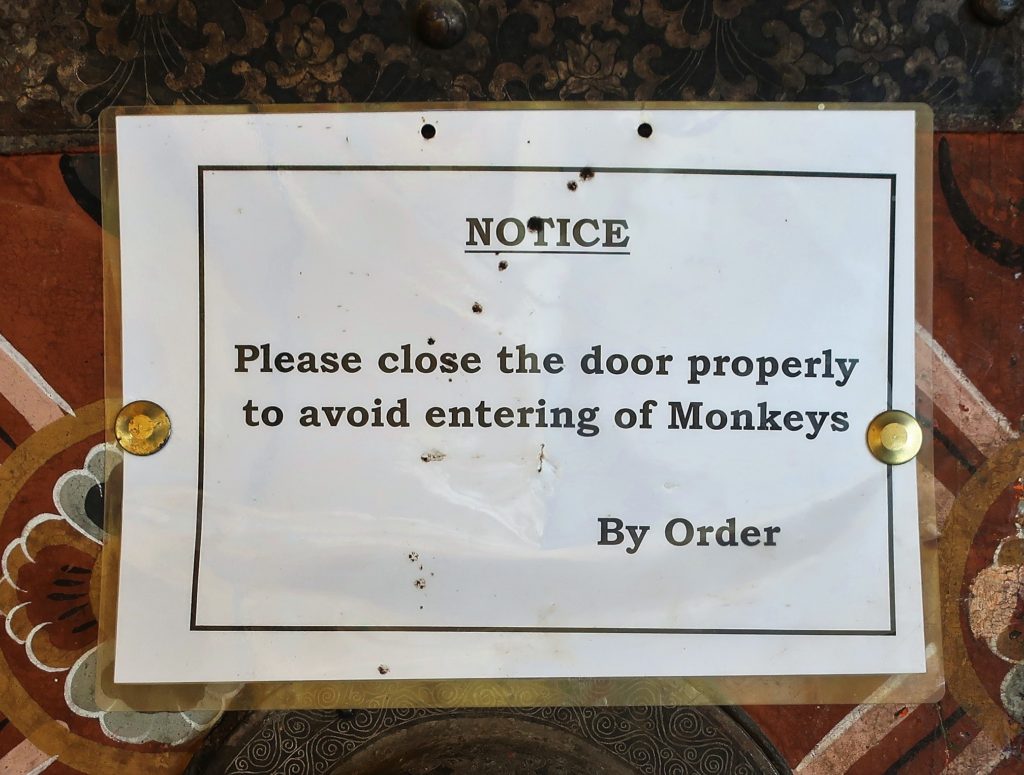
Gotta keep the monkeys out, though.
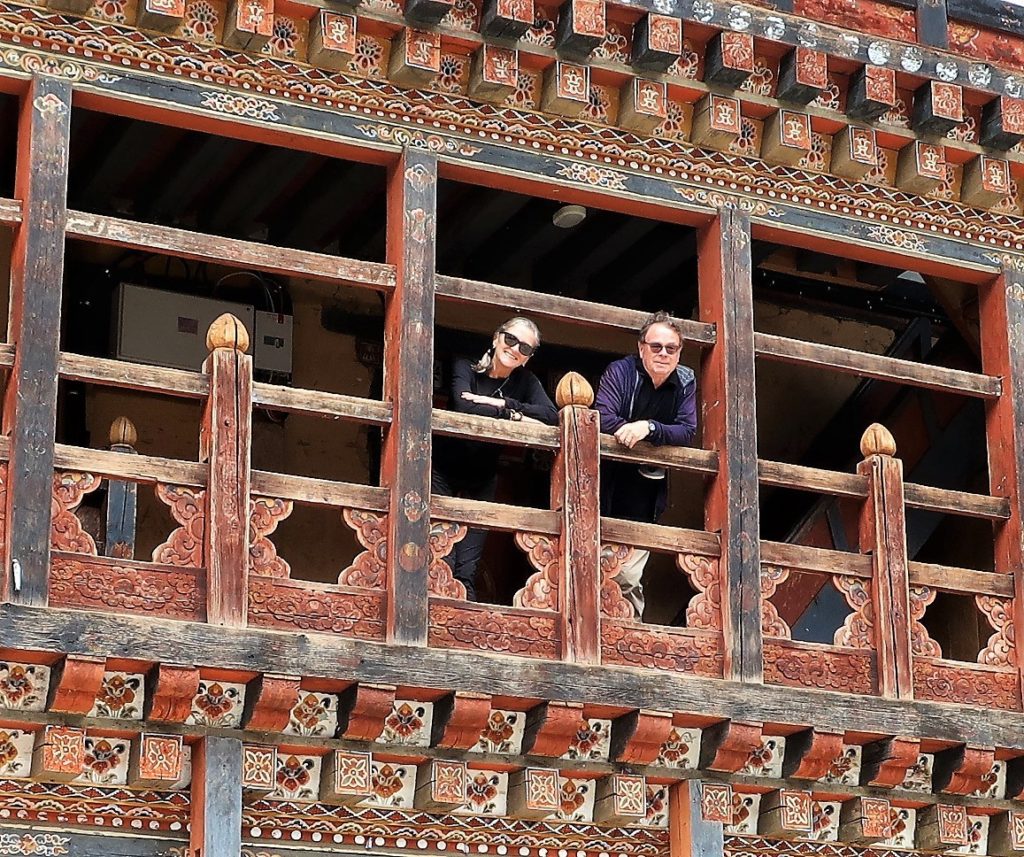
Tula takes this photo as we look out from an ornate upper gallery.
Coming out of the woodwork
Sight or Insight of the Day – Trongsa
We read ‘Beyond the Sky and the Earth‘, by Jamie Zeppa. A quick read, and schmaltzy in the way of most chick-lit, but interesting in that many of its observations are still evident in Bhutan today. (The political tension is much reduced now.)
Bhutan is the kind of place that lends itself to over-romanticization. The country is making hay with its ‘Gross National Happiness‘ initiative – seems like a Bhutan Tourism Board marketing gimmick, really. Bhutan is already a kinder, gentler place than any surrounding country, but that’s probably more because they are a small, Buddhist country rather than anything else.
In tribute, here’s a link to one of my favourite songs about Canada – The Longest Road – from the underappreciated songwriter/guitarist Stephen Fearing. And just so our francophone frères et sœurs don’t feel left out, a lovely version of Un Canadian Errant.
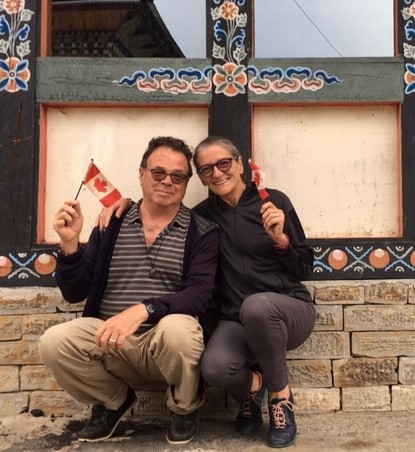
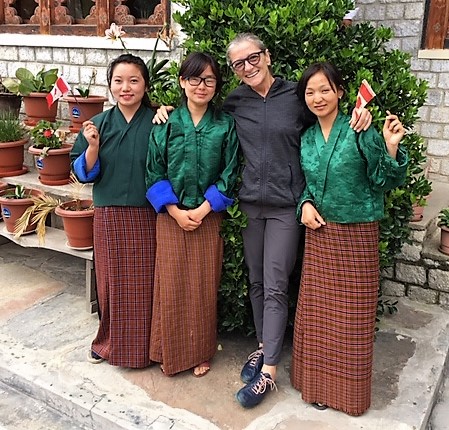
We enlist some hotel staff for a photo opp.
How do you say ‘Happy Canada Day’ in Bhutanese?
So until we are once more in nestled in the bosom of the Canadian motherland, we wish everyone at home a great Canada Day/Bonne Fête du Canada.
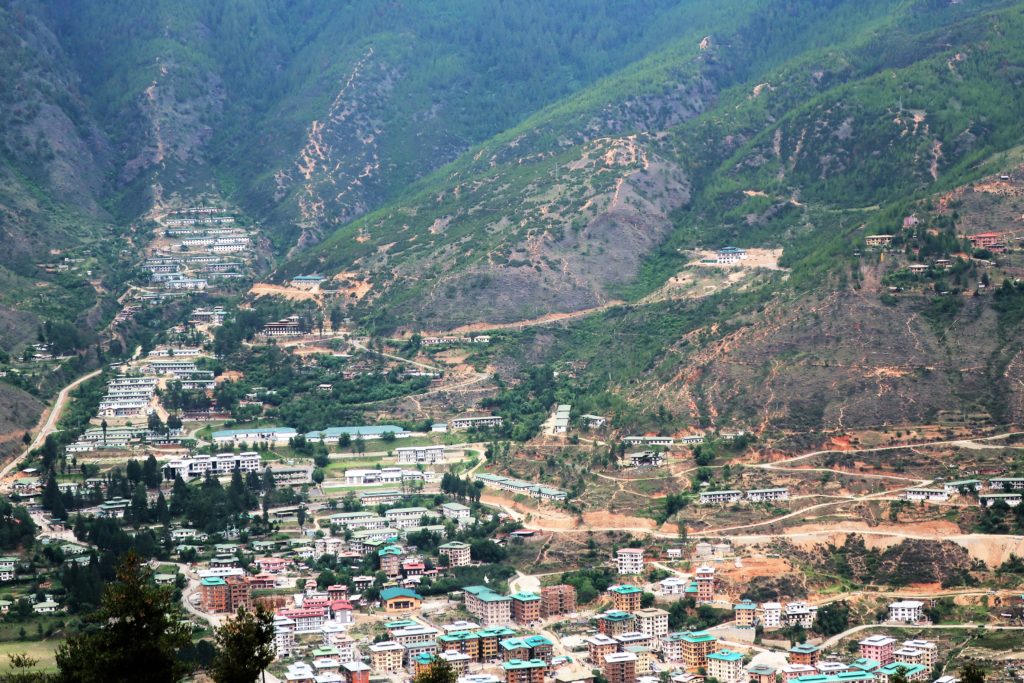
Now, where were we? Oh yeah; from Paro, we drive to the capital city of Thimphu.
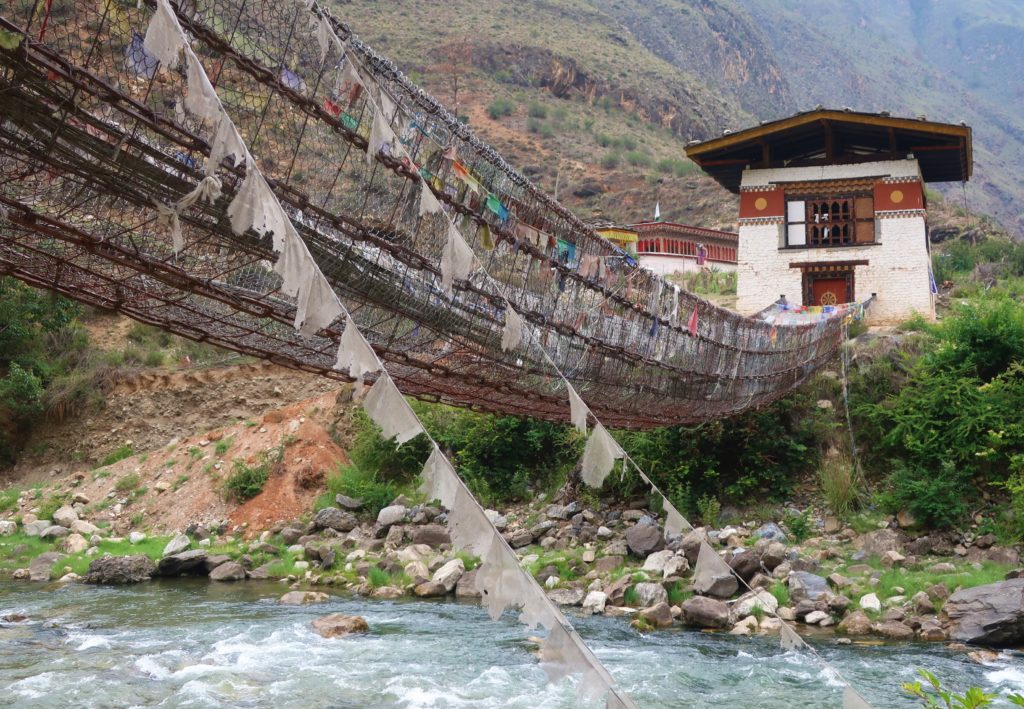
Iron chain bridge
The Tamchog Chakzam (iron chain bridge). According to legend, ‘Drupthob Thangtong Gyalpo was the Tibetan man who built the iron chain bridges in Bhutan in the late 1300s, and is said to have built 108 of these bridges around Tibet and Bhutan.’
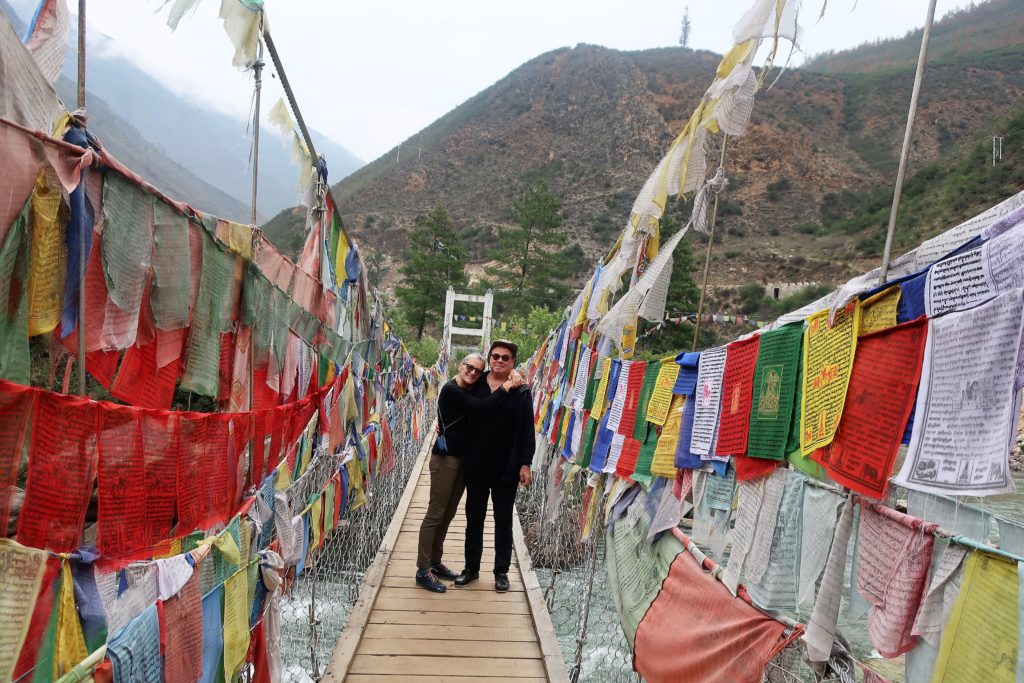
Bridge, tourists, prayer flags
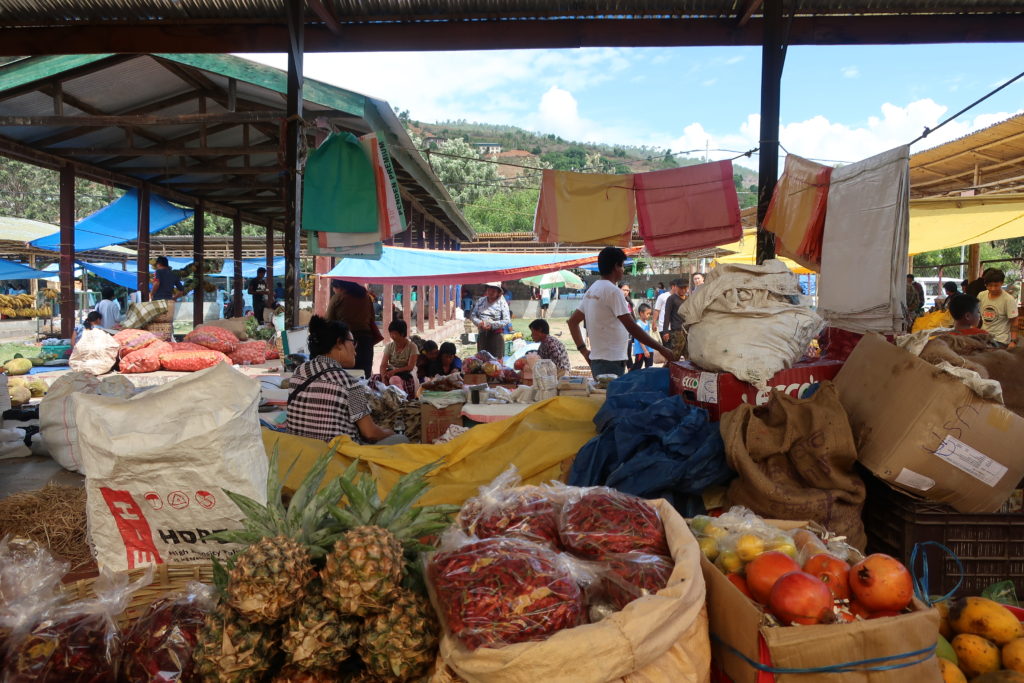
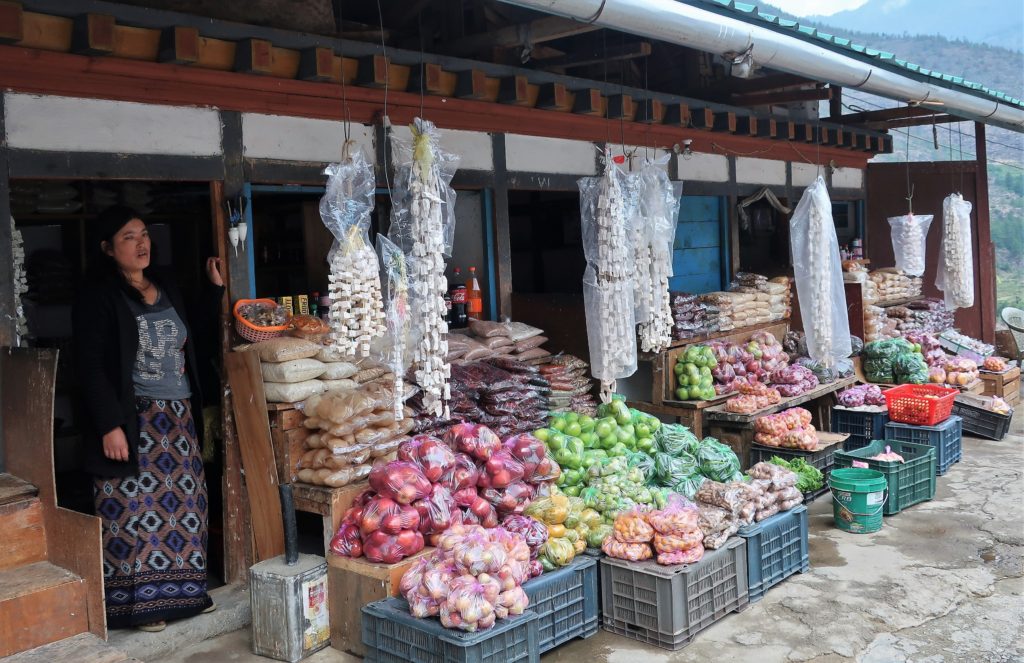
We stop for some fruit along the way. Wrapped in plastic are cubes of local cheese.
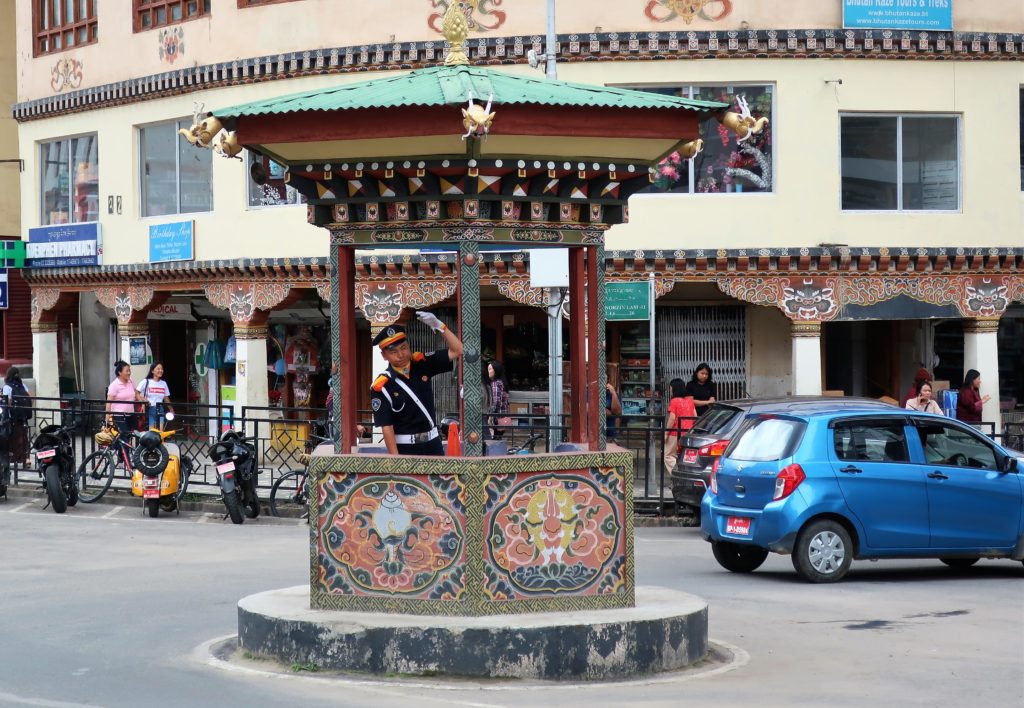
Thimphu is sometimes describes as ‘the only capital city in the world without traffic lights.’ Not quite; we know for a fact that Antananarivo, the capital of Madagascar, has no traffic lights. (Actually, they have hundreds left over from the days of French rule. They just haven’t worked in decades.)
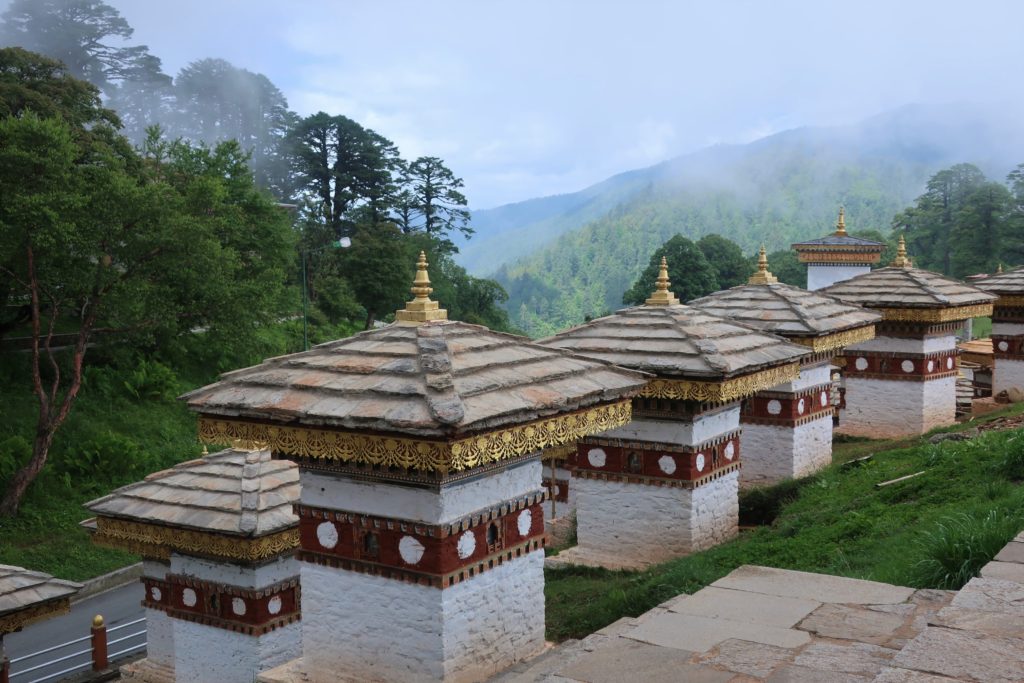
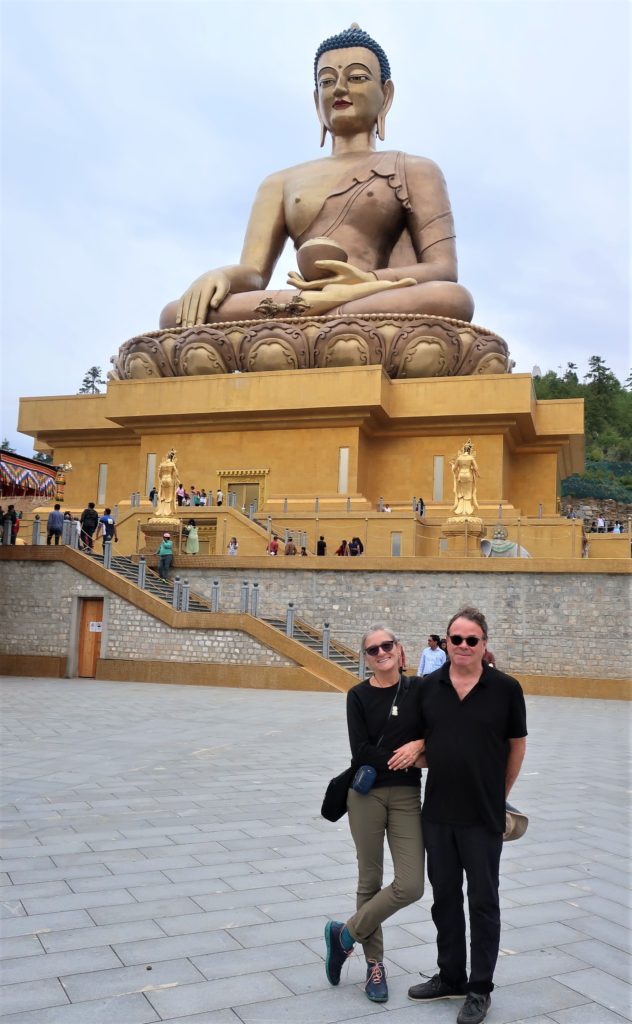
This is the Memorial Stupa, built to commemorate the third King of Bhutan.
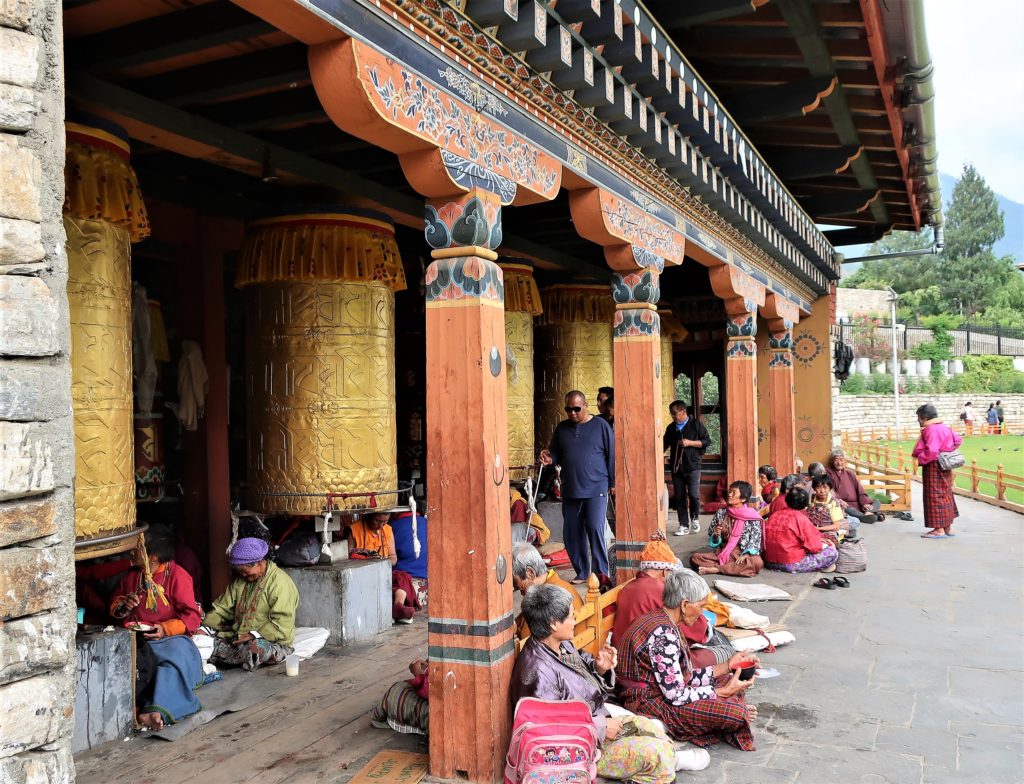
Our guide, Tula, points out an interesting phenomenon. Some people who work in town leave their elderly relatives at the stupa grounds as a sort of ‘daycare for seniors’.
Granddaddy Daycare
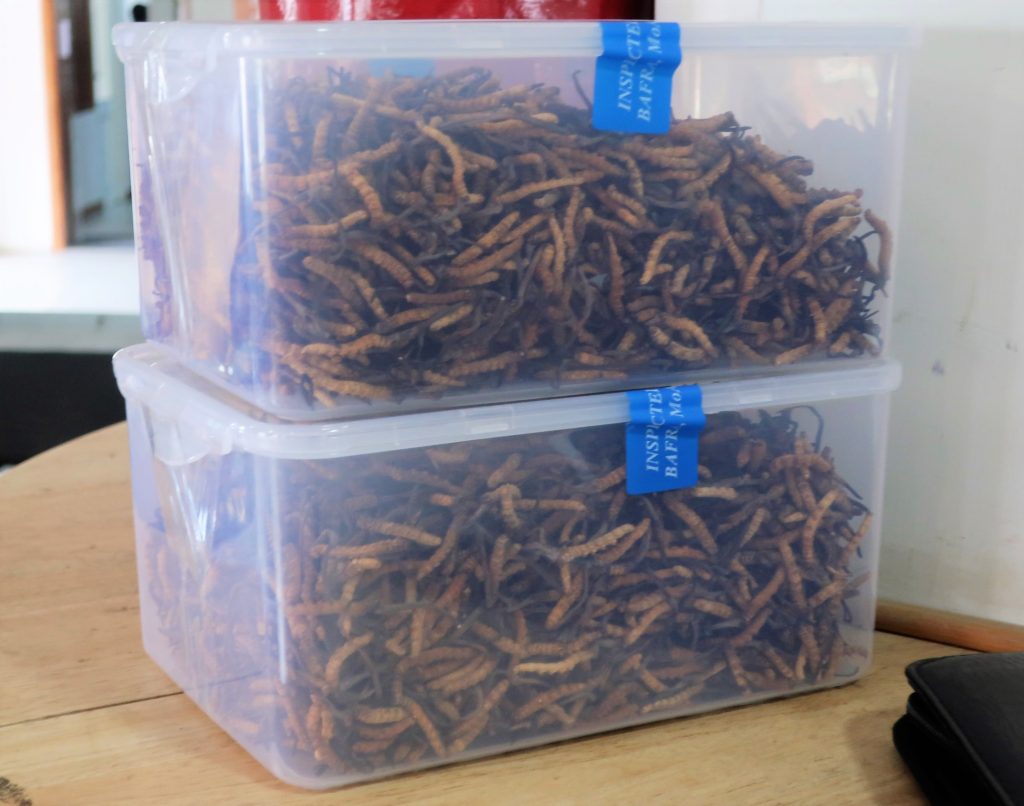
The photo below shows a killer fungus used as medicine in these parts. According to wikipedia:
‘O. sinensis parasitizes the larvae of moths within the family Hepialidae, specifically genera found on the Tibetan Plateau and in the Himalayas, between elevations of 3000 m and 5000 m. The fungus germinates in the living larva, kills and mummifies it, and then a dark brown stalk-like fruiting body which is a few centimeters long emerges from the corpse and stands upright.’
This is taken in a post office. Someone’s going to get a special treat in the mail.
Sight or Insight of the Day
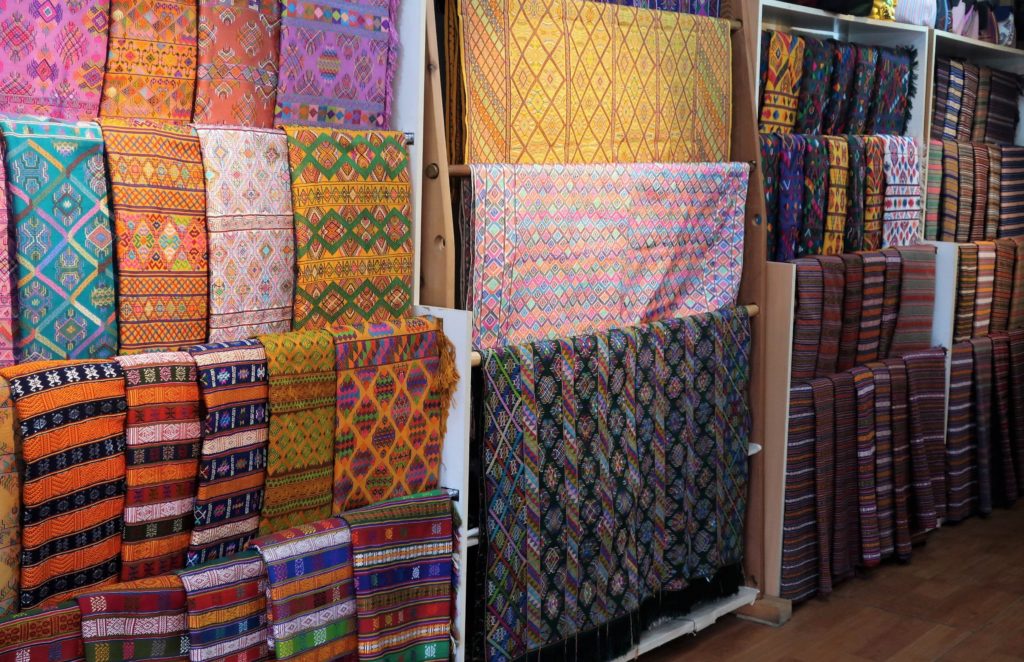
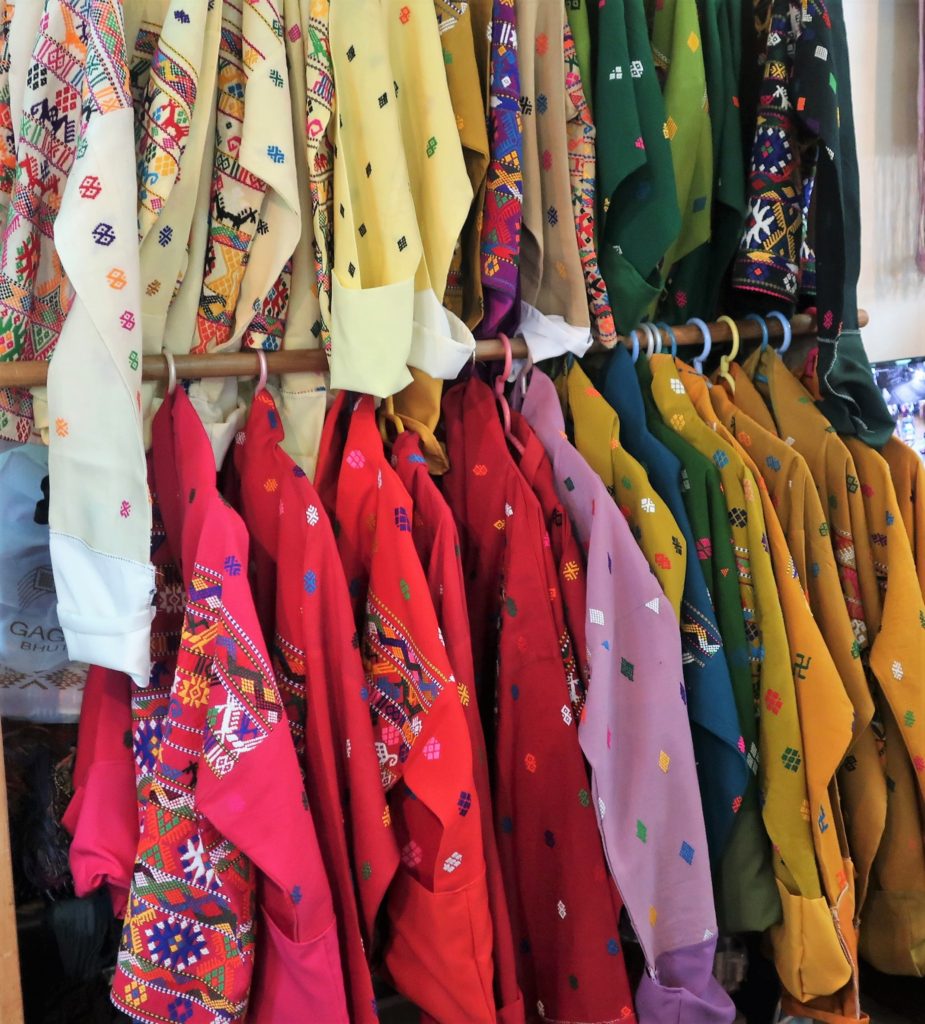
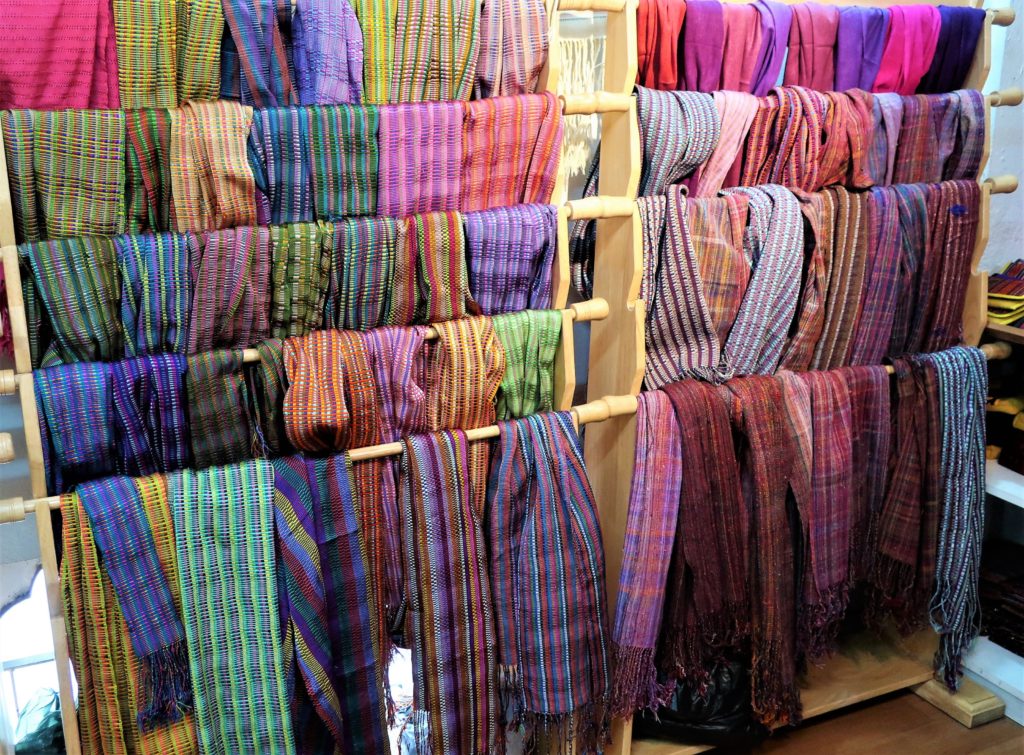
We visit a fair-trade shop that sells Bhutanese textiles and other things at a fixed price.